
China within the emerging Asian multilateralism and regionalism : as perceived through a comparison with the European neighbourhood policy
45
0
0
Texto completo
(2) Documento de Trabajo. Serie Unión Europea Número 47 / 2011. China within the emerging Asian multilateralism and regionalism As perceived through a comparison with the European Neighbourhood Policy Maria-Eugenia Bardaro & Frederik Ponjaert.
(3) El Instituto Universitario de Estudios Europeos de la Universidad CEU San Pablo, Centro Europeo de Excelencia Jean Monnet, es un centro de investigación especializado en la integración europea y otros aspectos de las relaciones internacionales. Los Documentos de Trabajo dan a conocer los proyectos de investigación originales realizados por los investigadores asociados del Instituto Universitario en los ámbitos histórico-cultural, jurídico-político y socioeconómico de la Unión Europea. Las opiniones y juicios de los autores no son necesariamente compartidos por el Instituto Universitario de Estudios Europeos.. Serie Unión Europea de Documentos de Trabajo del Instituto Universitario de Estudios Europeos China within the emerging Asian multilateralism and regionalism As perceived through a comparison with the European Neighbourhood Policy Cualquier forma de reproducción, distribución, comunicación pública o transformación de esta obra solo puede ser realizada con la autorización de sus titulares, salvo excepción prevista por la ley. Diríjase a CEDRO (Centro Español de Derechos Reprográficos, www.cedro.org) si necesita fotocopiar o escanear algún fragmento de esta obra. © 2011, Maria-Eugenia Bardaro & Frederik Ponjaert © 2011, Fundación Universitaria San Pablo CEU CEU Ediciones Julián Romea 18, 28003 Madrid www.ceuediciones.es Instituto Universitario de Estudios Europeos Avda. del Valle 21, 28003 Madrid www.idee.ceu.es ISBN: 978-84-92989-84-3 Depósito legal: M-19759-2011 Maquetación: Servicios Gráficos Kenaf s.l..
(4) Table of contents 1.. INTRODUCTION . . . . . . . . . . . . . . . . . . . . . . . . . . . . . . . . . . . . . . . . . . . . . . . . . . . . . . . . . . . . . . . . . . . . . . . . . . . 5. 2.. THE “EUROPEAN NEIGHBOURHOOD POLICY”: AN ORIGINAL COMPARATIVE TEMPLATE . . . . . . 5 2.1. A Return to Multi-polarity: Ordering Interdependencies through Regions?. . . . . . . . . . . . . . . . . . . . . 6 2.2. Organizing Complexity: “Eclectic Institutionalism”; a Workable Framework wherein to Examine the Implications of Proximity? . . . . . . . . . . . . . . . . . . . . . . . . . . . . . . . . . . . . . . . . . . . . . . . . . . . . . . . 8 2.3. Neighbourhood Policies: A Workable Comparative Framework? . . . . . . . . . . . . . . . . . . . . . . . . . . . . . 10 2.3.1. Which (Reactive) Origins? The ENP: A Response to a Political Necessity. . . . . . . . . . . . . . . . . 10 2.3.2. Which (Blurred) Boundaries? The ENP: A Re-Definition Exercise . . . . . . . . . . . . . . . . . . . . . . . 11 2.3.3. Which (Managerial) Methods? The ENP: A Policy Set to Govern Risks & Opportunities . . . 12. 3.. CHINA’S SOUTHERN PERIPHERY: ASSESSING ITS APPROACH TO ASEAN. . . . . . . . . . . . . . . . . . . . . . 14 3.1. The Relationship’s Historical Roots: Clay or Rock Foundations?. . . . . . . . . . . . . . . . . . . . . . . . . . . . . . 14 3.2. Mutual Perceptions: From Another’s Cold-Shoulder to a Community’s Warm Embrace?. . . . . . . . 17. 4.. CHINA’S NORTHERN PERIPHERIES: CONFRONTING ITS CENTRAL AND NORTHERN EAST ASIAN STRATEGIES . . . . . . . . . . . . . . . . . . . . . . . . . . . . . . . . . . . . . . . . . . . . . . . . . . . . . . . . . . . . . . . . . . 20 4.1. The Relationships’ Historical Roots: Rock or Clay Foundations? . . . . . . . . . . . . . . . . . . . . . . . . . . . . . 20 4.2. Mutual Perceptions: From Another’s Cold-Shoulder to a Community’s Warm Embrace?. . . . . . . . 23. 5.. CONCLUSION . . . . . . . . . . . . . . . . . . . . . . . . . . . . . . . . . . . . . . . . . . . . . . . . . . . . . . . . . . . . . . . . . . . . . . . . . . . . . 24.
(5)
(6) 1. Introduction Although the People’s Republic of China’s (PRC) new found international significance and rapid rise on the global stage have been widely commented, such analyses have tended to focus on global systemic implications (Ikenberry, 2008; Schmidt (ed), 2009; Bergsten, 2008; Breslin, 2005); specific bilateral implications (Hughes, 2009; Terada, 2010); or internal resources. (Shrik, 2007; Hsu, 2009). Only recently has a series of midlevel analyses started to emerge aimed at assessing the PRC’s distinct impact on the regional scene. It seeks to identify how Beijing’s choices will come to shape the distinctive structural features and key policy dynamics of the emerging Asian multilateralism and regionalism. Within this context, the question as to whether the PRC has developed a distinct and identifiable ‘Neighbourhood Policy’ –akin to the efforts deployed by the EU in its own backyard– would certainly contribute towards better understanding the regional implications and calculations associated with the PRC’s rise. In seeking to unpack the PRC’s macro-regional approach, this paper will strive to identify whether China has over the past decade(s) come to develop a coherent set of policies which are aimed at identifying and organizing its neighbourhood(s) in a multilateral fashion. Furthermore, if such a ‘Chinese neighbourhood policy’ can be isolated, it is most likely to be characterized by a distinct set of goals and means rooted in their specific relationship to the state and its borders. This paper therefore sets out to verify the hypothesis that the PRC has generated a specific “Asian Neighbourhood Policy”, the milestones and methods which are akin to the “European Neighbourhood Policy”, but the underlying models of which are radically different.. 2. The “European Neighbourhood Policy”: An Original Comparative Template Within comparative regionalism, an important literature exists that compares East Asian and European experiences of regional cooperation. This body of work has established that both regions have over the past decades experienced in varying fashions a common trend towards neo-regional cooperation. This rise of ‘regionness’ (Hettne, 2000) is a shared global dynamic with very distinct regional expressions (Teló, 2007). Overarching systemic comparisons can establish said common orientation, but fully understanding the underlying distinction between Europe and East Asia requires more focussed, mid-level policy-based comparisons. A promising policy-lens which remarkably has rarely been used up to now is the notion of neighbourhood which carries with it insights into region-building and is premised on a transferable notion of proximity.. Instituto Universitario de Estudios Europeos | 5.
(7) 2.1. A Return to Multi-polarity: Ordering Interdependencies through Regions? As this millennium’s first decade comes to a close the international system continues to be rocked by transformational undercurrents which have only been accentuated by the recent crisis. Over the past three decades, a constant within both the academic and policy-related literature on International Relations (IR) has been the supposition that the tense but uniquely stable bi-polar World Order associated with the Cold War could not survive the specific international context which produced it (Keohane, 1986). If the bi-polar perspectives –both conceptual as well as practical– are antiquated, the exact nature of the subsequently emerging international logic(s) has remained the core controversy of International Relations (IR) studies over the past 3 decades. Fostered through both continued epistemic innovation, and changing international realities, a lively and renewed debate on IR has animated both the academic and policy-making communities. With the dissolution of the stifling, yet also order-generating, straightjacket of the Cold War; a wider range of dynamic variables and uncertainties came to the fore. Beyond the paradigmatically distinct critical approaches, systemically-oriented IR debates have come to be driven by a rehabilitated dialectic between those systemic approaches stressing possible sources of ordering and cooperation; and those highlighting disruptive and conflicting forces. As such, commonly accepted evolutions within the international system –such as: (i) growing interdependencies (Keohane, 1984), (ii) new emerging powers (Santander, 2009), (iii) diminishing distances (Ruggie, 2009), (iv) the increasing free flow of information and technology, or (v) the accelerating impacts of deepening economic globalisation– have invariably been seen as both possible sources of enhanced cooperation, as well as potential new risk factors. This opposition between what one can identify as a largely ‘neo-Kantian’ tradition, and a roughly ‘neoHobbesian’ one has come to frame IR debates (see Tab. 1.1.) over the past decades. Whereas the determined European experience of 5-decades of regional integration is both conceptually and politically intimately linked to neo-Kantian approaches, the uneven and heterogeneous Asian multilateralism calls upon a multitude of conceptual and political discourses, the concerns of which tend to remain neo-Hobbesian at heart. Obviously pluralism and dissonant voices enrich the debate on both sides; nevertheless, both Europe and East Asia appear as the two key areas in the ongoing debate on the future of “regions in the global order”. Each of these two particular regional experiences have come to reflect one side of the fundamental debate in IR, whilst also proving to be the loci of some of the most innovative and enterprising regional efforts. (Telò, 2004). As a result, a comparative analysis of the European and East Asian experiences is of particular value as it confronts two determining cases, each reflecting different paths towards a shared result: increased regional cooperation.. 6 | Instituto Universitario de Estudios Europeos.
(8) Tab.1.1. Key-Postulates underwriting the structuring opposition between neo-Kantian & neo-Hobbesian readings Neo-Kantian. Neo-Hobbesian. Systemic driver of IR. Democratization & economic growth. Stressful security affairs and relative power. Primary instruments. Institutional arbitration & economic instruments. Military power & economic levers. Interdependencies imply. i. Decreased efficiency of military instruments ii. Confusion of policy priorities hierarchy iii. Growing Impact of exogenous factors on internal order. Evaluation of implications of interdependencies. Opportunities for institutionalized Cooperation. Vulnerabilities as number of potential sources of conflict increase. Stabilising factor. Multilateral cooperation. Articulated power hierarchies. In light of the fundamental opposition sketched out above, the literature has increasingly sought to bridge the divide by focussing on mid-range theories aimed at illuminating specific governance efforts within a complex international system see-sawing between stability and change. As the fluid, and even potentially chaotic, nature of the currently emerging international reality has become ever clearer, a significant segment of the aforementioned IR debate has focused on possible stabilizing factors which might contribute towards ordering the newly unleashed interdependent world order. If the first decade of the Post Cold War Period seemed to offer the vision of a short lived “unipolar moment” (Chollet & Goldgeier, 2008) centred on American hegemony (Chollet & Goldgeier, 2008), the subsequent decades have confirmed the premise of an increasingly complex international system. The result is an increasingly byzantine and less predictable world order marked by a multitude of interwoven seats of power with distinct points of reference. Assessing the People’s Republic of China’s (PRC) rise and its implications must therefore be done within the context of a multidimensional international scene (Nye, 2003) characterized by a number of centres of relative gravity (Haass, 2008), and settled through a plurality of cooperative institutions set up at varying levels. (Teló, 2007). Accordingly, this paper limits itself to a single dimension: the implications of China’s rise on the Asian Region as assessed through the institutional forms of neighbourly cooperation. As the regional strategies deployed by Beijing are unpacked through comparison, this paper hopes to offer a better understanding of their implications for the emerging Asian multilateralism and regionalism. As older systemic approaches have been uprooted by changing realities, seemingly established dichotomies such as “West-Rest” (Anderson, Ikenberry & Risse, 2008) or “North-South” (Ross & Chan, 2002; Martin, 2008) have been challenged by evolving political realities. In contrast, the continued impact of geography, and in particular that of ‘proximity’, has emerged as a uniquely enduring independent variable which in various forms and intensities continues to play a central role in contemporary IR (Cohen, 2010). This has given a renewed meaning to historic tendencies to organize world affairs by regional poles. As homogenizing forces associated with globalisation have done away with past distinctions, both analytical as well as strategic thinkers have sought to re-affirm existing differences through regionally organized poles. ‘Proximity’ as an instrumental factor called upon by policymakers –ranging from the 19th century “Monroe Doctrine” to the current “European Neighbourhood Policy”– enjoys a long tradition. Equally, as an analytical tool, ‘proximity’ has been both a consistent independent variable within all weighted models of economic integration – ranging from Balassa to current gravitational models of international trade, as well as a defining factor in the growing literature on (neo-) Regionalism.. Instituto Universitario de Estudios Europeos | 7.
(9) A central organizing principle within the international system is thus the emergence of regional poles, each with its distinct centre of gravity and set of practices (Khan, 2009). While Europe is the most developed form of regional cooperation and integration, most new and quite distinct sprouts of regionalization are found elsewhere, notably in Asia. Although this shared evolution towards prioritizing regional approaches founded on proximity has fostered a global neo-regional dynamic, its heterogeneous institutional consequences reflect its inherent diversities rooted in a wide range of region-specific factors. This analysis will compare the milestones, models and methods distinguishing China in its geographical vicinity to those mobilised by the EU in its neighbourhood. Fig. 1.1. A World of regions and their broader neighbourhoods1. 2.2. Organizing Complexity: “Eclectic Institutionalism”, a workable framework wherein to examine the implications of proximity? Having identified political ‘proximity’ as the definitive independent variable at the core of this analysis, both its methodological and conceptual choices need clarification. First and foremost, as understood in the long tradition of political geography, a given power’s ‘neighbourhood’ is conceived as “a horizontal relation within multilevel governance characterized by proximity” (Seidelmann, 2009). Consequently, the milestones, models, and methods underwriting a given neighbourhood must be explained with reference to a multi-causal approach which recognizes the inherently multi-dimensional and multi-tiered nature of any given ‘neighbourhood policy initiative’ (Smith, 2005). Furthermore, as a product of political geography, a ‘neighbourhood’ is a political reality rooted in the geographical fact of proximity. However, geographic proximity alone is not an absolute and sufficient condition for the establishment of a neighbourhood (Seidelmann, 2009). It is above all a political construct; and it is its institutionalisation which defines and demarcates it. Bearing in mind these two intrinsic features of neighbourhoods –their complex nature and their necessary institutionalisation– the most operable conceptual framework appears to be an “eclectic” approach to the various schools of “institutionalism” (see Tab 1.2.) as defined by V. Schmidt (Schmidt, 2008). At its core is a broader, more sociologically rooted, and. 1. With improvements in technology and transport, the relative importance of geographic proximities vis-à-vis other forms of proximity (i.e. cultural, political, institutional, economic …) has decreased, and the scope and importance of political opportunity judgments have increased markedly with regard to the definition of neighbourhoods. 8 | Instituto Universitario de Estudios Europeos.
(10) dynamic definition of institutions. These are understood as “structures and constructs of meaning internal to agents whose ‘background ideational abilities’ enable them to create (and maintain) institutions while their ‘foreground discursive abilities’ enable them to communicate critically about them, to change (or maintain) them” (Schmidt, 2010: 1). Tab.1.2.The four new institutionalisms2. However, seeing the relatively novel nature of the study object itself – i.e. the notion of a Chinese Neighbourhood Policy (CNP); its structural features and implications must be analysed before its internal dynamics can be ascertained. As a result, this specific inquiry does not seek to ‘endogenize’ the evolution of a prospective CNP, but rather define the contours and assess the structural characteristics of such a Chinese policy in relation to both the wider international system as well as other experiences of neighbourhoods. This analysis will only engage with the three older structure-centric institutionalisms (i.e. historical, sociological and rational institutionalism). These three static lenses will tease out the multi-causal, pluri-facetted, and long-term features around which to organize the subsequent comparative analysis. As stated repeatedly, neighbourhood policies are to be understood as multi-tier and multi-dimensional institutionalized political processes aimed at a region defined by its proximity. The European Neighbourhood Policy (ENP) appears as the most developed, discernible, and self-conscious example of a distinctive and integrated international governance effort towards a wider region. The ENP can therefore function as a heuristically useful point of comparison. Such a comparison must be articulated around the key features of any cogent neighbourhood policy: the (i) historically informed milestones which define its long-term path-dependencies; the (ii) models which define its long-term norms and values; and the (iii) methods associated with the fixed preferences shaped by its long-term incentive structure. Identifying and describing each of these three dimensions within the ENP will produce a workable grid upon which to base our heuristic comparative analysis of the various components of China’s policy initiatives towards its wider region. Fig. 1.2. The European Neighbourhood Policy. 2. Table quoted and drawn from: SCHMIDT Vivien (2010), “Taking ideas and discourse seriously: explaining change through discursive institutionalism as the fourth ‘new institutionalism’”, in European Political Science Review, 2: 1-25 Cambridge University Press. Instituto Universitario de Estudios Europeos | 9.
(11) 2.3. Neighbourhood Policies: A Workable Comparative Framework? 2.3.1. Which (Reactive) Origins? The ENP: A Response to a Political Necessity The end of the Cold War was a critical juncture of particular significance for the EC/EU. It led not only to a whole set of new countries seeking to join the EC/EU, but also to a strong demand for a more intensive European engagement in its wider region. The inherent constraints of the Cold War had implied that East and West on the European continent were separated by impermeable borders (De Giovanni, 2000). This bipolar overlay served the Western Europeans well, for they could make the concept of “Europe” their own without having to consider either its boundaries or its Eastern proximity (Wallace, 1992: 34). However, since the end of the Cold War the EU has continuously struggled with an existential dilemma born from its uncertain final borders (Smith, 2005). The first reference to an EU neighbourhood policy can be found in a 2002 speech delivered by Romano Prodi, the former president of the EC. The Neighbourhood Policy (ENP) was then further outlined by the EC in March 2003 in ”Wider Europe-Neighbourhood“, and adopted by the Thessalonica European Council in June 2003. The ENP is first and foremost a response to the changing composition, shifting borders, and altered geopolitical outlook of the EU born form its eastern enlargement. The ENP is a framework for co-operation between the EU and its North African, Middle Eastern, Eastern European and Caucasian ‘near abroad’ (see Fig. 1.1). Russia has its own special relationship and is not part of the ENP. The common and central goal in relation to this whole group of countries is to promote a set of political, economic and security-related reforms. Having agreed to expand its membership to ten new countries, the EU turned its attention towards the possible consequences of said enlargement. Culminating in the 2004 enlargement, the redefinition of the EU’s proximity definitively changed the meaning and scope of the EU's ‘near abroad’. Previously “distant” countries would from 2004 onwards border the EU. This would raise a host of new concerns. The EU had to tackle a growing need to foster a stable wider neighbourhood so as to avoid the risks arising from sources of instability in its near abroad (Smith, 2005). The potential negative spill-over originating in its near abroad was above all identified as relating to soft security concerns (Aliboni, 2005: 1). Henceforth, the need for policy engagement with this newly defined space would be imperative. Although essential, the EU’s engagement with its new near abroad would pose particular policy challenges as it would no longer be able to rely on its tried-andtested regional governance mechanism: conditional EU accession. The members of this newly identified neighbourhood were not, and are still not, scheduled to join the EU. Accordingly, 2004 marked for the EU the emergence of a new set of challenges regarding its neighbourhood which called for new governance tools. The ENP is clearly disconnected from the issue of potential EU membership. It offers a privileged relationship based on mutual commitment to common values such as democracy and human rights. Although prompted by the need to find an alternative to EU membership as an international governance tool in its near-abroad, the setting up of the ENP was deeply influenced by the politics of eastern enlargement (Kelley, 2006). Judith Kelley even quips that the ENP was fundamentally “New Wine in Old Wine-skins”. The development of said policy has been described as highly path-dependent and “clearly modelled [...] on the enlargement process” (Kelley, 2006: 30). Kelley also points out that the ENP methodology and terminology was inspired by the accession process. The use by the ENP of Action Plans, country reports, monitoring, positive conditionality and socialization all reflect significant policy borrowing from the enlargement process. The enlargement process was clearly the inspiration, starting point and policy-template behind the ENP (EC 2003 & 2004). As such, the ENP was not developed with the neighbours in mind, it was “the result of a process in which the EU was primarily concerned with itself” (Del Sarto & Schumacher, 2005: 10). The ENP represents a reassessment. 10 | Instituto Universitario de Estudios Europeos.
(12) of the EU’s external relations in response to fundamental changes within the EU itself. To sum up, a quick historical institutionalist assessment of the ENP has allowed us to identify its path-dependent policy evolutions. Firstly, the ENP emerged in reaction to two critical junctures: the ’89 end of the bipolar world, and the ’04 enlargement. Subsequently, The ENP advanced mainly in reaction to key exogenous changes. Secondly, the historically determined governance models associated with the ENP are absolutely in line with governance mechanisms associated with enlargement. Finally, its strategic orientations and preferences are dictated by long-standing internal dynamics which characterize the EU’s own existential debate, and not considerations related to target countries.. 2.3.2. Which (Blurred) Boundaries? The ENP: A Re-Definition Exercise Since the creation of the EC/EU, the end-goal of its integration process has always been a matter of much contention. Attempts have been made to model the EU’s evolution along the lines of existing state-centric models; the ‘federalist’ discourse rooted in ‘Westphalian’ state-centred understandings on the one hand; and ‘imperial’ readings centred on the domineering role of a core-Europe along similar lines as those linking core and periphery in world-system theories on the other. Others have sought to capture the sui generis dimension of the EU through novel concepts such as the ‘neo-medieval’ frame offering a fragmented and regionalised vision of a political order (Browning, 2005). These various polity frames are defined by: the level of power concentration, their inherent hierarchies, and the scope of their sovereignty. In the Westphalian perspective the EU is conceived in statist terms. The EU is seen as acquiring the most typical characteristics of a Westphalian state: diplomacy, army, hard external borders, etc. For example, the Schengen border regime can be understood as a statist-type border aimed at preserving the Union’s territorial sovereignty vis-à-vis its neighbours, and likewise dividing the political space into clearly demarcated political units. Empire is a concentric order emphasising core-periphery relationships based on political and economic power. Central here are ideas of the EU as “force for good” (Barbé & Johansson-Nogués, 2008). The Empire framework entails a fuzzier understanding of the political space and its borders. Finally in the neo-medieval model the EU is defined through overlapping authorities, divided sovereignty, and diversified institutional arrangements. Unlike in the Westphalian state, power is not fixed in a single centre and authority is shared. However, similarly to the Empire model, borders are fluid. The Westphalian state evokes a set of cultural and political norms including relatively hard and exclusionary border lines: whilst both the neo-medieval and imperial frameworks involve open and fluid norms associated with soft border zones. According to Zielonka, the scope and the type of the EU’s borders, and by extension its relationship to its neighbourhood, is likely to be the most crucial factor in shaping the nature of the EU as a polity. “The established scope and nature of EU borders will tell us whether the enlarged Union is likely to became a Westphalian superstate or something entirely novel” (Zielonka, 2002:7). Neighbourhood thus becomes a key factor as well as a clear indicator of the underlying models defining a given experience of regional multilateral cooperation. Borders are not simple lines on maps; they can represent an area of division and demarcation; or alternatively one of contact, exchange and integration. Borders have been associated with different terms and have acquired different meanings. As Zielonka points out: “borders are complex institutions shaping the nature of polities they demarcate and to which they belong” (Zielonka, 2006: XX). In his opinion, the EU is unlikely to have fixed and relatively hard borders (Zielonka, 2002). A hard border sharpens the distinction between members and nonmembers, creating an exclusion complex. However, in the era of globalization and interdependence, borders do not necessarily mitigate concerns about terrorism, cross-border crime and migration (Bigo, 2002, Anderson 2002). Instead, hard borders seem at odds with profitable trade and may jeopardize the existing Western system of civic rights and freedom (Mayer, 2002).. Instituto Universitario de Estudios Europeos | 11.
(13) While the EU has done away with its internal borders, its external ones are being tightened. The fact that some EU states have decided to entrust others with the Union’s outer border controls represents a further development of the distinctly European understanding of borders and territoriality (Dardenne, Weerts, 2000). The main European beliefs herein entail an increasing sense of pressing joint concerns with borders, but differentiated levels of responsibility regarding their control. From the outside, the Union seems to be evolving towards a “maze Europe” (Christiansen and Jorgensen 2000: 74) in which soft border zones and cross-border cooperation might flourish. Cultural norms and frameworks at the EU level value less territorial, less physical and less visible borders. (Hassner, 2002) The objective underlying the ENP and other initiatives towards its neighbours are inextricably linked to the main beliefs underwriting the EU. The ENP can be analysed as an attempt to transform the EU’s borders from areas of demarcation and division into zones of exchange and interaction, thus overcoming the inclusion-exclusion logic. The ENP’s objectives regarding the demarcation of the EU’s polity, and its implication regarding its main political values, can be further defined by analysing this policy and its evolution. In this regard the ENP’s central agenda is: “cultivating development and exchange within border-regions [so as to] prevent the emergence of new dividing lines”. The ENP aims at tying its old and new neighbours closely to the EU while simultaneously interconnecting its various neighbours. In conclusion, the setting-up of the ENP, through an understanding of the EU’s outer limits as emerging zones in flux rather than fortified borders, offers some insight into the models shaping the EU’s polity and that which is considered appropriate. The key notions within ENP discourse are trade, foreign policy assistance and reform promotion. The ENP serves as a way of facilitating cross-border relations. In this sense, the EU’s interpretation of the outer limits of its polity resembles the open-ended imperial and neo-medieval frameworks, rather than the hermetic borders of a Westphalian state. Although the ENP is clearly animated by a fluid and open normative understanding of the relationship between the inside and the outside of a polity, this does not mean that the EU’s polity will necessarily evolve towards a neo-medieval or an imperial model. However, the ENP reflects the EU’s awareness that entrenching borders will not only diminish the EU’s attractiveness in the eyes of its neighbours, but also feed the perception of the EU as a fortress. This succinct sociological analysis of the appropriateness of open and fluid borders within the ENP confirms that its underlying normative models are mainly imperial and/or neo-medieval in nature.. 2.3.3. Which (Managerial) Methods? The ENP: A Policy Set to Govern Risks & Opportunities In order to conceptualise different facets of the EU’s approach to its evolving neighbourhood we will here refer to the framework developed by Walters (2004). He identifies four main types of neighbourly relations: (i) the networked (non-)border, (ii) the march, (iii) the colonial frontier, and (iv) the limes. According to Walters, each of these geo-strategic ideal-types identifies a given approach to border regions. Foucher also uses the neologism ‘geo-strategy’ to describe “the application of geographical reasoning to the conduct of war and/or (conflict management)”. (Foucher, 2001: 165) The reference to geo-strategy is made here independently from its traditional military association. Indeed, calculations and problems of a military nature do not animate the current discussions on the EU’s neighbourhood, but rather a series of highly charged socio-political issues, with so-called ‘new’ security. To identify particular geo-strategies is not to assume that these aspirations are necessarily fully accomplished. To refer to a march or a networked (non-) border is not to imply that any borders fully conform to these images, only that this is a possible heuristic reference. Geo-strategy is understood as “a particular way of organising the space of the border. It presupposes many things, including particular definitions of the inside and outside, the type of threat or problem which the border is to address, and the specific accounts of the time and the space of the border”. (Walters, 2004: 675). 12 | Instituto Universitario de Estudios Europeos.
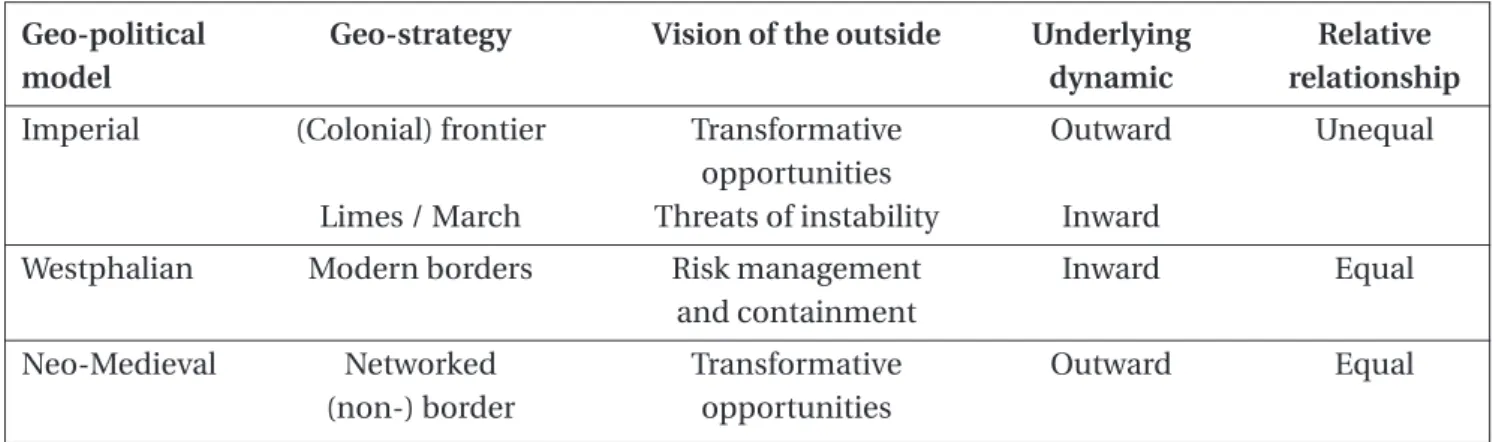
(14) The first geo-strategic ideal-type is the one that resonates with the themes of de-territorialisation and a borderless world. It consists in the removal of border controls from fixed positions along the geographical borderlines. This is not to be confused with the removal of all border controls, as was the case for example following the creation of the ‘Schengen Space’. Networked (non-) borders offer renewed incentive structures wherein traditional border controls are replaced with new forms of regulation. As Walters points out: “this term is meant to convey the sense in which networks of control come to substitute for the functions that were previously physically concentred at the border” (Walter, 2004: 680).This geo-strategy does not identify a clear demarcation between inside-outside. It incentivises sharing responsibility with outsiders and it emphasis a non-traditional and non-spatial view of borders. The march is an archaic name which in many ways pertains to a pre-modern understanding. It was common, instead, to find the march as a neutral demarcation strip or belt. According to Walter, the march is an inter-zone between entities; a buffer zone which aims to protect and insulate the interior. A second pre-modern understanding of borders, steeped in the roman imperial experience, is that of Limes. Limes do not aim to incorporate the outside into the inside. The idea of the Limes is to create a zone of stability and peace, to insulate, as well as to maintain a distinction between the stability and order within, and disorder and barbarism outside (Foucher). As stated, the concept of limes derives from imperial history. According to Walters (2004: 690), “if the space of the march is a area between powers, an interzone, and that of the modern frontier a finite line demarcating and separating territories, then the limes is more like an edge, fringe or limit”. The final two geo-strategic ideal-types are two opposite evolutions of borders within the modern system. A (colonial) frontier is a transformative and dynamic space. Central to this geostrategic model is the potential for transformation of the outside with an eye on making it more similar to the inside even to the point of assimilation. Asymmetrical relationships are set up in which the expanding power assumes a right to define that which is appropriate and just. In contrast, the classical Westphalian border does not seek to organise the projection of an internal agenda on to the neighbouring outside, but seeks to insulate the inside from any external influences. Building upon the distinctions made by Browning and Joenniemi (Browning & Joenniemi) 2008 and the clarification by Anderson (Anderson, 1997) we can recombine the three geopolitical frameworks presented in the previous chapter with their most commonly suited go-strategy. Once operationalized as suggested, these variables (table 1.3.) allow for a better understanding of the incentive structures shaping the ENP and other approaches to neighbourhood. Table 1.3.: Overview of possible frameworks and incentives structuring a neighbourhood policy Geo-political model Imperial. Geo-strategy. Vision of the outside. Underlying dynamic. Relative relationship. (Colonial) frontier. Transformative opportunities Threats of instability. Outward. Unequal. Modern borders. Risk management and containment. Inward. Equal. Networked (non-) border. Transformative opportunities. Outward. Equal. Limes / March Westphalian Neo-Medieval. Inward. An outward dynamic highlights the possibility of aligning the EU’s outside with the Union’s common values. As Prodi (2002) put it, “the aim is to extend to this neighbouring region a set of principles, values and standards which define the very essence of the European Union”. External threats are seen as an opportunity to be seized upon to order the space beyond its borders in attempt to both create good neighbours - namely the kind that. Instituto Universitario de Estudios Europeos | 13.
(15) conform to EU values. (Smith, 2005) The ENP effort to create a ring of friends is aimed at securing the EU’s external periphery. This can be seen as an attempt to create a buffer zone between the EU’s inside and outside (Del Sarto, 2005). The ENP requires the EU’s neighbours to reinforce controls and avert threats before they reach the EU. This reflects a new dimension of how the EU considers its neighbourhood. Through a ring of friends, the EU conveys a centre-periphery approach, which suggests that the main incentive is not the establishment of a network in which all actors are equal but rather a concentric system in which Europe is at the core. Such threat-oriented defensive incentive structures stand in sharp contrast with the oft re-affirmed principled references to “shared interests” and “joint ownership” presented in the official ENP documents. The ENP was initially conceived as a response to growing concerns regarding the stability of the EU and the need to preserve past achievements. Calculations therefore centred on setting up an ENP which would consolidate the EU’s acquis and equip it with new projection means able to respond to perceived external threat in its near abroad before they reach the Union’s internal order. The specific methods developed within said incentive structure has led the ENP towards creating a buffer zone to push threats away from its borders. The outside is therefore conceived in threatening terms. Such calculations seem to favour a Limes or March rationale. In conclusion, the ENP also reflects the EU’s constant perception of its neighbourhood as a source of opportunities. Seizing said opportunities has been the second incentive at the core of the ENP, whether they are to be established jointly through networks or unilaterally through unequal power projection. Yet as the ENP was from the onset conceived as an alternative to enlargement, its frontier logic therefore remains incipient at best. Structurally the ENP favours joint ownership and networked cross-border initiatives when seeking to profit from its neighbourhood. Accordingly, long-term institutionalised rational choices have moulded the ENP into a geo-strategic approach to the EU’s neighbourhood which tends towards a March type when threats are seen as prevalent, and towards a Network logic when opportunities are seen as more important. Variations are the result of case-by-case calculations unilaterally dictated by the EU as a function of the geographical position of the borders and relative concerns associated with it.. 3. China’s Southern Periphery: Assessing its Approach to ASEAN 3.1. The Relationship’s Historical Roots: Clay or Rock Foundations? For centuries China’s regional environment at regular intervals had a rigid hierarchical and hegemonic structure with China at its centre. This Sino-centric world order was based on a clear distinction between civilization (China) and barbarians. In order to contain and isolate barbarian threats, Chinese emperors employed both fortification and a singular form of diplomacy - the “tributary system” (Mazzei, 2007). Beyond the Middle-Kingdom– the “first circle” of the Chinese World Order –the barbarian-vassals who had accepted and partially assimilated the values of the Chinese (Han) civilization would send tributes to the Chinese emperor as a sign of their acceptance of suzerainty (Fairbank, 1957). These “second circle” barbarian-vassals, situated at the periphery of the Empire, provided a march (buffer-zone) ideally suited towards checking potential threats arising from beyond the Middle-kingdom’s direct reach. However, when vassal-barbarian states or groups challenged the centrality and superiority of the Chinese civilization, hegemony had to be restored through direct or indirect Chinese intervention (Bhawan, 2009). The key concern of this imperial. 14 | Instituto Universitario de Estudios Europeos.
(16) regional policy was securing predictable behaviour within its periphery and isolating any destabilizing exogenous forces. Situated in “the third circle”, the outmost barbarians or “yi” were located beyond the “second circle” of vassal-barbarians. This group was perceived as relatively irrelevant due to both their ‘inferior’ nature and their remoteness. Barbarians were not foreign people, but rather uncultivated, outlandish people. Chinese superiority was legitimated on cultural rather than political grounds. Accordingly, China’s environment was written into one of two policy paths from the imperial point of view: in its close proximity a population awaiting relative assimilation into the Chinese world; and beyond that, a relatively inconsequential throng to be benignly neglected. Within this hierarchical framework, China was situated at the centre. In effect, the Chinese World Order was no more than a corollary of the Chinese internal order and, thus, an extended projection of Chinese civilization on the "inter-state" plan (Montessoro, 2009; Bruneau 2006). Such an hierarchically and anti-egalitarian world order was therefore characterized by the absence of state-to-state relations based on the principles of sovereign equality and territorial independence such as would become the defining features of the European Westphalian order. Most South-East Asia states were part of the Sinocentric “greater inter-state system of the China seas” (Bhawan, 2009: 200) which allowed them to send tributes to the imperial court and trade in permitted areas in China. Accordingly, China and SEA share longstanding geographical and cultural relations. Geographically and strategically, Southeast Asia (SEA) is of fundamental importance to China (Goh, 2007). More specifically, the historical determinants of China’s relations with SEA were geographic proximity, monopolistic trade exchanges, ethnic communities and political links. Due to their continued symbolical importance, these historic imperial practices are still shaping the PRC’s definition of its proximity or “regionness”; but they do not weigh on its modern experience thereof. First colonialism, then modernity and finally the Cold War wholly removed all the foundations of the ancient imperial tributary system (Jian, 2008:330-332). In particular, China’s Cold War support for communist insurgencies in the region was a key factor in creating negative feelings and hostility towards Beijing among the non-communist SEA states. As a result, the end of the Cold War represented a propitious juncture for the emergence of a renewed proactive Chinese engagement towards SEA. Significantly, the end of Vietnam’s occupation of Cambodia in 1989 proved to be a critical juncture as it lifted the negative premise which had come to define the ChinaASEAN relation for a decade. The US post-Cold War reprioritization of interest added overall uncertainty to the regional security environment. For both ASEAN and China the early ‘90s were characterized by mutual suspicion regarding their respective interests and intentions; but this period also marks an ever more recognized pressing need to reconsider their relationship. China’s strategic imperatives were twofold: to secure and make stable its southern periphery, and to prevent the creation of a containment coalition. Hence, Goldestein’s assessment of a need for a neo-Bismarkian great strategy focused on both preventing forces emerging against China, and securing sufficient time to concentrate on the country’s internal development (Goldestein: 2005). Moreover, China’s regional engagement is based upon maintaining “harmony” in domestic affairs. Domestic stability is one of the major prerequisites for, and conditions of, China’s successful economic development. Contemporary China’s general attitude towards the world is characterized by the philosophical concept “he butong” - seeking harmony but in keeping with its own distinctiveness. After the “open door” policy gained ascendency in 1978 and China “re-entered” the world community, the “general attitude towards the world order changed from the notion of ni shi ni, wo shi wo (you are you, I am I) during Mao Zedong’s era, to Deng Xiaoping’s new approach that [...] he er bu tong” (J. Nie, 2007: 3). In Beijing’s eyes, this implies a stable international order composed of Westphalian states. Accordingly, the neighbourhood policies developed since have conformed to these principles. On the one hand, China has moved from relative isolation to state-to-state enhanced dialogue; and on the other, domestic affairs remain excluded from said dialogues. Under the combined subverting effects of the dissolution of the bi-polar order and China’s phenomenal rise to power, increasing uncertainties undermined the various strategic calculations in East Asia. Ambiguities regarding China’s position within the world system it had just fully joined remained: would China be a. Instituto Universitario de Estudios Europeos | 15.
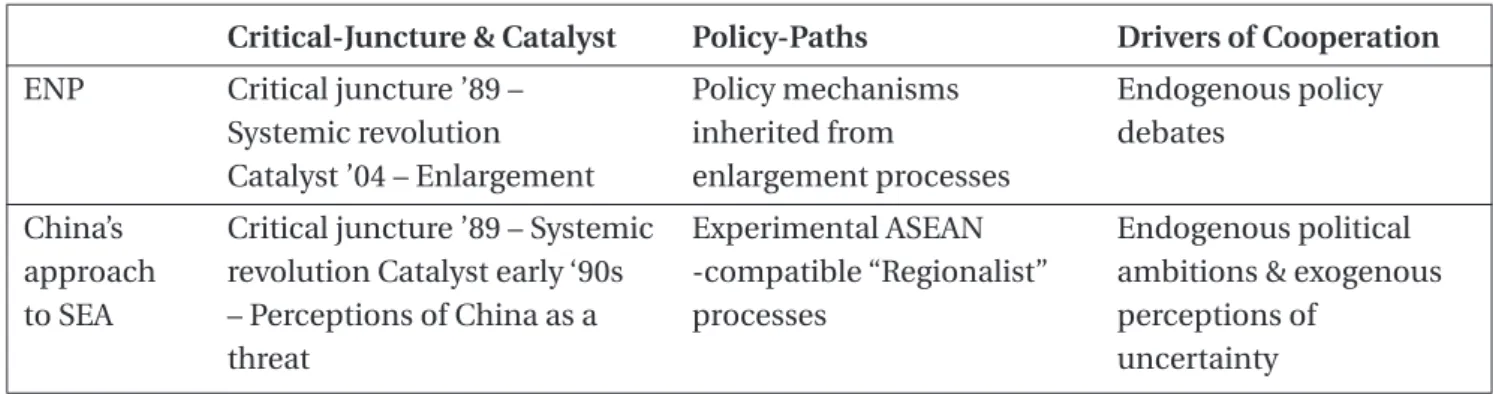
(17) reformist or a revisionist power? Such uncertainties have fed ambient perceptions amongst stake-holders of the current status quo of a ‘China threat’ (Deng, 2006). As this threat-perception of China’s rise gained increasing traction in SEA, it became a major consideration of China’s early Neighbourhood Policy. Ever since the introduction of Deng Xiaoping’s reform and open door policy, the positive and negative challenges of China’s continuous ascent have dominated political and academic debates. In response, Chinese leaders such as Hu Jintao have championed political frameworks emphasizing that China’s rise is everything but a threat. The notions of peace and development (hepingfazhan), peaceful rise (hepingjueqi) or harmonious world (hexieshijie) primarily indicate the desired benign orientation of Chinese foreign policy. In spite of these official statements regarding China’s future path, uncertainties remain strong. Whether China’s affirmed choices are either fundamental or merely rhetorical remains to be seen (Friedberg 2005; Christensen 2007; Ross/Feng 2008). Some analysts highlight China’s charm offensive, its preference for soft power, its increasing public diplomacy, and multilateral engagement; whilst others stress the potential conflicts inherent to future developments resulting from China’s rapid rise (Yee & Storey, 2002). In spite of this uncertainty, the political situation in Asia has been rather stable in the last two decades. As David Shambaugh (2005) states, “Today, China is increasingly seen as a good neighbour, constructive partner, and careful listener. Importantly, it is also increasingly multilateral in its diplomacy” (Shambaugh, 2005: xx). To inspire trust and reduce regional threat perceptions of China, Beijing began in the early ‘90s a policy of “neighbourliness, trustworthiness and partnership” with neighbouring countries (Xing Yue, 2006). In 1993, Chinese Premier Li Peng observed the importance this, stating: “active development of beneficial and friendly relations with neighbouring states, in striving for a peaceful and tranquil surrounding environment, is an important aspect of [China] country’s foreign affairs work”. (Chung, 2008)This statement may be considered a foundational moment for China’s Neighbourhood Policy. The above developed institutional-historical analysis identifies the South East Asian dimension of a possible Chinese Neighbourhood Policy (CNP) towards SEA as essentially a product of two critical developments associated with the early to mid-90’s; the opportunities arising from the new favourable post-Cold War regional environment, and the compelling worries relating to China’s increasing regional prominence. More specifically, Beijing’s fostering of a “good neighbour policy” reflects its willingness to present itself, both regionally and internationally, as a cooperative and non-threatening country. If the European Neighbourhood Policy is a clear reaction to the ’89 and ’04 turning-points, a South East Asian dimension of a CNP would be defined as a gradual response to new exogenous opportunities and threat perceptions. While the initial set-up of China’s approach to SEA can be explained as a result of changed external factors, its subsequent strategy and development are the result of both internal and external dynamics. This stands in contrast to the ENP where both its set-up and its subsequent policy developments are almost exclusively dictated by internal EU concerns and policy debates. Finally, while the ENP is deeply entrenched in policy paths inherited from the enlargement process, China’s approach to the SEA is a key feature of China’s ongoing effort to redefine its international position. Table 2.1. Historical Dimensions Compared: the ENP and China’s approach to SEA Critical-Juncture & Catalyst. Policy-Paths. Drivers of Cooperation. ENP. Critical juncture ’89 – Systemic revolution Catalyst ’04 – Enlargement. Policy mechanisms inherited from enlargement processes. Endogenous policy debates. China’s approach to SEA. Critical juncture ’89 – Systemic revolution Catalyst early ‘90s – Perceptions of China as a threat. Experimental ASEAN -compatible “Regionalist” processes. Endogenous political ambitions & exogenous perceptions of uncertainty. 16 | Instituto Universitario de Estudios Europeos.
(18) In conclusion, one might state that the ENP, as a securely established set of reactive policy practices, has been built upon a ‘rock’ foundation. The EU and its neighbourhood have derived a significantly heightened sense of certainty and predictability from the ENP. However, all players have been locked into rigid and often unresponsive practices. On the contrary, the ‘clay’ foundations of China’s SEA policies are the result of a gradual build-up of initiatives jointly driven by domestic and related concerns. This has resulted in a flexible, adaptable, and non-threatening policy-set. However, such policy initiatives have failed to provide the region with significantly increased predictability, at least partially revealing some fundamental reservations regarding China’s future role in Asia.. 3.2. Mutual Perceptions: From Another’s Cold-Shoulder to a Community’s Warm Embrace? Over the past decades an increasingly well-established China-ASEAN relationship has come to define China’s approach to its southern periphery. Such a recognizably institutionalized relationship implies a set of shared models and an accepted set of recognized methods. As the suspicions that once defined the ASEAN-China relationship started to ebb, mutual cooperation became possible. This emerging neighbourly relationship quickly took off and expanded following both systemic changes and deliberate Chinese trust-building efforts born from China’s re-assessment of its own regional interests. In the early ‘90s, as it took an increasingly positive approach towards regional institutions, China first became ASEAN’s ‘consultative partner’ in ’91 and was subsequently promoted to ‘full dialogue partner’ in 1996. Sino-ASEAN cooperation was institutionalised with the creation of five dialogue mechanisms in the areas of political, scientific, technological, economic, and trade consultations. Later, China began cooperating with ASEAN in its Mekong Basin Development Cooperation, in a wide range of issues including water sharing, the control of illegal migration, drug trafficking, the spread of AIDS, and developing of transport links in the basin, which brings together China and mainland Southeast Asia. In 1994, China joined in setting up the ASEAN Regional Forum, in which it has participated in security dialogue. The ’97 crisis was not a turning-point in China’s approach to South East Asia, but rather a time when its trust-building efforts made great strides. For Southeast Asia, the 1997 financial crisis remains the key regional turning point of the post-Cold War period, and China’s reactions at the time contributed greatly to improving perceptions of Beijing’s positive regional role. Its US$1 billion aid package to Thailand, assurances not to devaluate the Yuan, the extension of trade credits and offers of humanitarian aid were all welcomed as signs of Beijing’s earnest desire to play a constructive leadership role in the region. Concomitantly, ASEAN hopes that China would continue to open its market to help enhance the slackening demand for ASEAN exports were fulfilled as Beijing jump-started the ChinaASEAN FTA negotiations. By this point, ASEAN has already emerged as the 4th largest export market for China. Further positive steps in the China-ASEAN relationship include China’s signing of the protocol to make Southeast Asia a nuclear-free zone (ZOPFAN) in 2001, its willingness to negotiate the Spratlys dispute through ASEAN, and its formal subscription to the ASEAN treaty of amity and cooperation in 2003. Engagement and dialogue have also taken place bilaterally between China and ASEAN through the ASEAN-China Senior Officials Consultations, ASEAN China Joint Cooperation Committee meetings, ASEAN+China framework and regular ASEAN-China summits. Step-by-step, through trial-and error, but on the basis of clearly identified principles, ASEAN and China have sought to build up and institutionalize a shared neighbourly community. A pioneering effort in regional. Instituto Universitario de Estudios Europeos | 17.
(19) community-building in Asia, ASEAN was established in ’67 as a cooperative security initiative, based on reassurance through dialogue and not military deterrence. Rather than impose sanctions, develop ‘conditionalities’ or specific functional problem-solving measures, ASEAN has consistently relied on the promotion of agreed norms and principles to regulate its members’ behaviour (Acharya 2009). This had lead to the emergence of an ASEAN-way discourse on regional multilateral cooperation. This was developed in opposition to both the fatalistic neo-Hobbesian conclusions regarding the likelihood of transformational cooperative outcomes in institutions, and the hubristic neo-Kantian drive towards institutionalized integration (Johnston, 2003). The ASEAN way rests upon a constructivist understanding of the socialisation process, arguing that a regional community can be fostered through formally weak institutions (through familiarity, consensus, consultation, non-coercive argumentation, and avoidance of legalistic rigours with regards to distribution problems in favour of case-by-case arbitration), as the process itself can produce the desired cooperative outcomes with multilateral institutions (Achraya, 2001). This ‘third way’ suggests the endogenous interactive social effects of institutions can lead to high levels of cooperation with low levels of intrusiveness and formality. The decade-long experience of ASEAN in the field of regional multilateral cooperation that is informal, non-confrontational, reciprocal, non-intrusive and thus respectful of its underlying Westphalian premises was increasingly recognized in Beijing, as its own interest in multilateralism grew (Chen, 2010). The ASEAN-way’s defining legal-normative regional model meshed perfectly with the Westphalian state model championed by Beijing. The principles of (i) prohibition on the use of force as a dispute settlement; (ii) the recognition of a certain autonomy at the regional policy level which is not to be a mere secondary discussion venue; (iii) and an absolute respect of the principle of non-intervention (Narin, 2009: 75) quickly emerged as shared foundations on which to build a solid socialization process of China’s multilateralist strategy within its South East Asian neighbourhood policy. China’s engagement through its South East Asian neighbourhood with a growing number of multilateral forums (ASEAN, ARF, ASEAN+3 etc.) involving a growing number of fields has helped to sensitize China to the realities of multilateral cooperation and encourage normative convergence regarding preferred forms and outcomes of regional cooperation. China’s continued involvement in these regional forums – for more than a decade – confirms the progressive institutionalisation of newly socialized behaviours. Whatever China’s initial calculations might have been, its South East Asian Neighbourhood policy has become the main locus where Beijing has crystallized those cooperative methods it deems most appropriate with regards to regional community-building. As such the ASEAN-China relationship - coupled with parallel dialogues such as the China-ARF – has been a powerful socializing experience introducing and partially winning over Beijing to the merits and assurance associated with region-building the ASEAN-way. The crux of China’s pursuit of “amicable, peaceful and prosperous neighbours” lies in its new approach to multilateralism (duojihua), both at the global and regional levels (Lanteigne 2009, 58). Beijing has increasingly incorporated a multilateral perspective focussed on promoting state stabilisation and sovereignty consolidation; enhanced mutual trust through confidence-building measures and reduced uncertainties; and multi-facetted cooperation in any policy field of common interest. In this manner, the Chinese leadership has increasingly strengthened its relations with its South East neighbours through regional multilateral economic and security institutions (Chung 2008, 749; Zheng 2009, 21). The socialization within the China-ASEAN nexus regarding methods of regional multilateral cooperation contributed towards shaping China’s emerging synthesis between its continued attachment to Westphalian sovereignty and the cooperative necessities born from Beijing’s rise and subsequent ‘Great Strategy’. China’s relation with ASEAN states challenges ancient categorization, such as centre-periphery or lord-vassal. These Chinese Neighbourhood policies in themselves illustrate the growing propensity for decisions on issues of common interests to be taken within multilateral arrangements. This represents a shift in China’s regional. 18 | Instituto Universitario de Estudios Europeos.
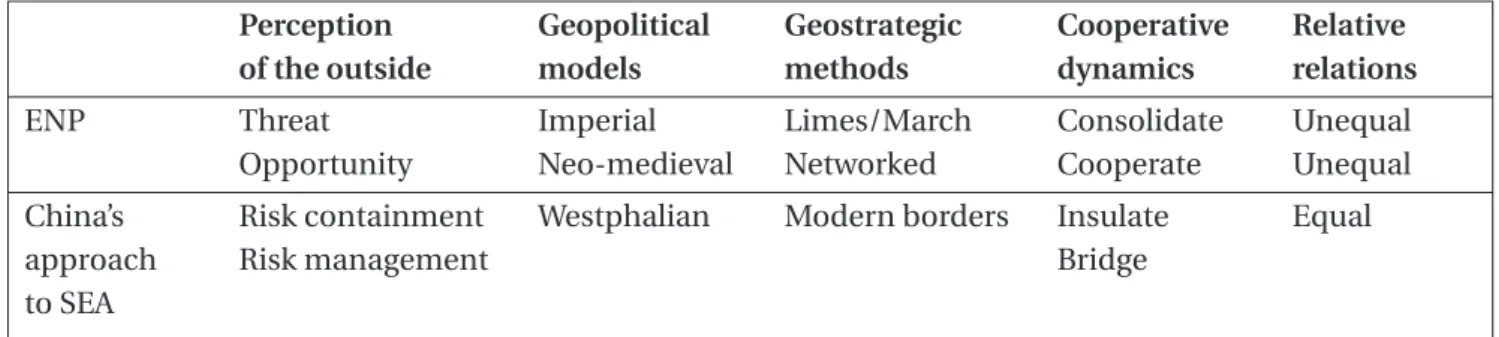
(20) relations towards its neighbours and a significant contribution towards the emerging Asian multilateral and regional practices. In its threat-centric perception the EU has come to mainly perceive its neighbourhood as a necessary buffer zone preventing negative spill over. This has proven particularly true with regards to its southern borders. In contrast, China sees its southern borders as sufficiently resilient as such. It has therefore focused on developing cooperative methods which bridge the border without weakening them. Consequently, borders between China and its ASEAN partners remain unchanged in nature; but their isolating effects are mitigated through cooperative processes which are deemed useful in reducing the inherent uncertainties associated with cross-border relations. At present, China’s South East Asian Neighbourhood policy discourse essentially represents cross-border cooperation, common interest and mutual trust. Through these egalitarian bridging methods, these Chinese neighbourhood initiatives seek to strengthen the states’ modern Westphalian borders whereas the ENP’s practices seek to consolidate its polity through a reinvention of buffering logics akin to Marches. Surprisingly, the ENP seems here more imperially inclined towards its neighbourhood then China. Table 2.2: The “Neighbourly” Models and Methods Associated with the ENP and China’s ASEAN policy Perception of the outside. Geopolitical models. Geostrategic methods. Cooperative dynamics. Relative relations. ENP. Threat Opportunity. Imperial Neo-medieval. Limes/March Networked. Consolidate Cooperate. Unequal Unequal. China’s approach to SEA. Risk containment Risk management. Westphalian. Modern borders. Insulate Bridge. Equal. In summary, as South East Asia becomes involved in the region-building effort, China’s approach to the region is increasingly becoming a constructive contributing factor. The EU, with the ENP, appears to have marginalised the regional dimension in its approach to its neighbours in favour of differentiated bilateralism. Operating on an individual basis the EU through its ENP is cold-shouldering any attempt with its neighbourhood towards regionness. On the contrary, and more strikingly, China’s warm embrace of SouthEast Asian regional community building efforts can be described as an important achievement. Beijing appears to be pursuing a constructive policy towards its neighbourhood and the regional aspirations thereof. Chinese approach is more focussed on long-term structural considerations, whereas various shorter-term threat-considerations dominate the ENP. Moreover, the fact that China’s engagement has persisted beyond its initial inception confirms the fostering of a consistent Chinese practice of multilateralism through regionalism.. Instituto Universitario de Estudios Europeos | 19.
(21) 4. China’s Northern Peripheries: Confronting its Central and Northern East Asian Strategies 4.1. The Relationships’ Historical Roots: Clay or Stone Foundations? When addressing China’s equally historically relationship with its northern peripheries one must first and foremost factor in a longue durée perspective so as to grasp the deep-seated historically determined elements. Akin to the dynamics identified vis-à-vis South East Asia, China’s perceptions and demarcations of its northern periphery are the product of well entrenched historically-influenced neighbourhood discourses and relations. The above described imperial order which affected China’s neighbourhood for millennia was obviously also at play in its northern periphery. Nevertheless, some important distinctions can be made. Historically, a northern neighbouring periphery can be identified as part of the more or less stable “second circle” ensconcing the Middle-Kingdom. Today, still, Beijing’s understanding of the contours of its “proximity”, or the ‘Regional bloc’ wherein it has positioned itself, continue to be forged by the repeated historical practices related to “the nature and linkages of China’s *past+ tributary system” (Adornino, 2005: 1). Both the limits and distinctions defining China’s geopolitical world view are still steeped in its imperial heritage. As a result, current understandings of China’s proximity or neighbourhood continue to reflect: “first, the Sinic Zone, consisting of the most nearby and culturally similar territories, Korea and Vietnam, the Ryūkyū Islands, and, at brief times, Japan; [s]econdly, the Inner Asia Zone, consisting of tributary tribes and states of the nomadic or semi-nomadic peoples of Inner Asia, who were on the fringe of the Chinese culture area” (Fairbank, 1957: 2). So, a two-fold northern neighbourhood has historically occupied the minds of Chinese leaders wherein distinct principles, practices and institutions tended to differentiate between Central Asia on the one hand, and North East Asia on the other. In its dealings with Central Asia –where the Chinese culture-based theory of hegemony had to come to terms with the geographical fact of nomadic inner Asian fighting powers– the use of force became the rule rather than the exception (Fairbank, 1968: 3). In contrast, China’s relations with its North East Asian Neighbouring states (i.e. Japan, the successive Kingdoms of the Korean peninsula, and the Ryukyu Kingdom) were more readily recognized as tributary (Robinson, 2000). China’s relationship with its North East Asian neighbours was however more erratic then with its South East Asian tributary states, as it would experience periods of deep engagement separated by interludes of mutual withdrawal. Such phases of disconnect could even last for centuries, for example two-and-a-half centuries in the case of Japan’s Tokugawa Shogunate. Both of China’s historically defined groups of northern neighbours have long-established linkages with China, but their nature is further typified by distinctive cyclical dynamics. A broader tradition of violence and invasion has regularly disrupted China’s Central Asian neighbourhood; whereas a succession of entanglement and disengagement phases have proven to be the premises of a more volatile relationship towards North East Asia. Understanding today’s rising Chinese power –born in denial of empire but whose medium-term perspectives are often informed by a bi-millenary imperial legacy (Adornino, 2005: 42)– must imply a longue durée component. This helps understand China’s kneejerk perceptions, rather than its specific practices. Accordingly, imperial legacies can help explain China’s instinctive delimitations of its northern neighbourhood; but its contemporary nature and developments are to be understood within the current international context. Interestingly, the ’89 systemic revolution had a very unequal impact on the realities facing China in its northern periphery. If the fall of the USSR can undoubtedly qualify as a systemic shift of critical proportions in Central Asia, its North East Asian impact was quite limited.. 20 | Instituto Universitario de Estudios Europeos.
(22) The end of the Cold War allowed for renewed opportunities for cooperation in Central Asia as old divisions and encrusted enmities were removed with the dissolution of the USSR (Kellner, 2008). Following the ’89 critical juncture, both South East and Central Asia witnessed a marked increase in the depth and breadth of Chinese influence. Subsequently, however both regions saw their paths with regard to cooperation with China diverge. If the end of the bi-polar world opened up the possibility for China to develop a new approach to its Central Asian neighbourhood, only in 2001 did said exercise gain political traction and institutionalized practices. The first decade of the relationship between China and its four most important partners in Central Asia was highly informal, loosely oriented towards security concerns, and mainly explorative in nature. As such, the so-called Shanghai Five Grouping launched in ‘96 is to be seen as an initial trust-building and reacquaintance exercise following the ’89 upheavals. The ‘01 American invasion of Afghanistan was the main catalyst behind the subsequently institutionalised Chinese neighbourhood policy towards Central Asia. (Kellner, 2008) With the so-called Shanghai Cooperation Organisation (SCO), Beijing launched a strategic and coherent central Asian neighbourhood policy responding to the twin challenges of an ever more encroaching American presence, on the one hand; and a heightened international anti-terrorist agenda, on the other. This significant qualitative jump in its relationship with the principal Central Asian power-brokers was launched and orchestrated by Beijing, and thus fully in line with its emerging strategic agenda. The SCO’s development has been relatively isolated from the two other sub-regions (Buzan, 2008) of its neighbourhood. Moreover, it has been mainly driven by exogenous and systemic factors. Clearly construed as a classical intergovernmental multilateral organisation, the SCO is locked into accommodating forms of interactions. Said interactions are strategic, reciprocal, unanimous, and highly contextual. The SCO policy path is not the product of a Chinese re-prioritizing or re-assessment of its central Asian proximity as such, but rather an offshoot born from the confrontation between China’s emerging global geo-strategy and exogenous factors in its own backyard. As a result, China’s interaction with its Central Asian neighbourhood has been essentially a derivative dynamic. North East Asia in contrast remained remarkably unchanged by the end of the Cold War. The major North East Asian Cold War currents of conflict, their symbolic disputes, and sources of distrust all survived the system that produced them (Huang, 2002). These vestigial Cold War traces have prevented a deep Chinese engagement from gradually emerging. The North East Asian dimension of China’s Asia strategy is thus deemed to have only evolved under duress, towards a ‘stunted regionalism’ (Rozman, 2002), without any clear critical juncture which fundamentally “re-shuffled” the cards between China and its North East Asian periphery. China’s approach has been one of stabilisation aimed at defending the status quo in spite of powerful exogenous and endogenous transformational forces. Current Chinese policy initiatives towards North East Asia remain remarkably in line with policy paths set up during the Cold War. However, for these to remain relevant, their regular revision and reaffirmation are called for. These are the two main concerns of China’s North East Asian initiatives, all of which are aimed at either reaffirming the viability of the status quo (series of bilateral and trilateral ‘summiteering’); or bringing it up to date by often belatedly inscribing it into broader regional dynamics defined elsewhere (i.e. the ASEN+3 process leading ultimately to the prospects of an EAC). Joint reaffirmation of the status quo tends to be the standard response to endogenous destabilizing forces born from within the domestic polities involved. As such, it has become a nearly ritualized form of reconciliation and reassurance, most recently deployed following the ‘eventful’ premierships of the PM Koizumi in Japan (Nicquet, 206). This highly symbolic ‘return’ to dialogue after a period of relative dismissal is a structural feature of China’s North East Asian relationship. This cyclical process of dismissal and reacquaintance has been a constant feature of China’s North East Asian policy path, be it during the Cold War (e.g. the tensions surrounding the Nakasone Premiership), during the fluid years marking its demise (e.g. the hardening of relations following the Tian nan Men incidents), or since the emergence of new forms of Asian multilateralism (e.g. the repeated cycles of the 6-party talks since ‘03). The second driver of China’s North. Instituto Universitario de Estudios Europeos | 21.
Figure

+2

Documento similar
This work shows differences in public participation in China and Western countries, conceptually and empirically. To do so, the different philosophical and public
PC2 contrasts Pan and Gorilla within the African apes and hylobatids and Pongo within the Asian apes (Fig. Gorilla and Pongo plot towards positive PC2 scores and hylobatids and
examining the degree of effectiveness of inclusive education programs in private, semi-private and public centers for the neurodiverse L2 classroom; exploring students’
The position of the ostracod species within the morphospace allows the computation and comparison of the morphological disparity in different groups, as well as their
The “benchmark effect” refers to various channels through which prominent international equity and bond market indexes (such as, the MSCI Emerging Mar- kets Index or the MSCI
within the last 5 years, indicating that most of our patients had access to modern PAH agents through the market as well as clinical trial enrollment. Treatment
On the other hand, the mediating variables were attitudes and environmental benefits as perceived by the consumers of sustainable craft products, and the moderating variables were
In particular, this work has tried to examine the growing role of regional multilateralism in Chinese foreign policy, and illustrate how China as a rising power attempts
