
Reduction of maternal mortality due to preeclampsia in Colombia an interrupted timeseries analysis
7
0
0
Texto completo
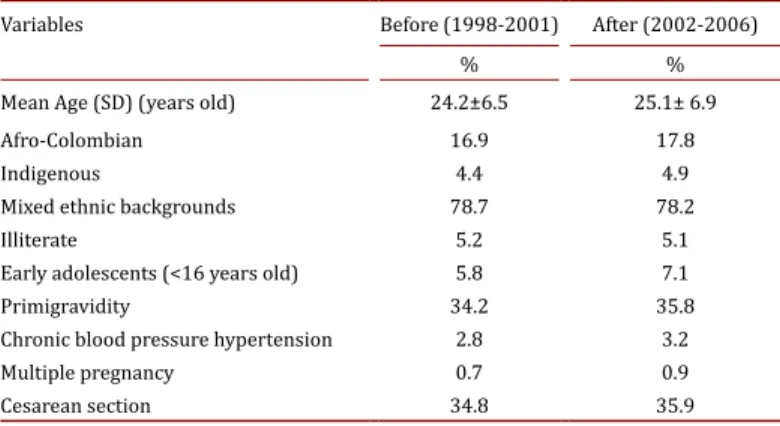
(2) Herrera JA /et al / Colombia Médica - Vol. 45 Nº1 2014 (Jan-Mar). Introduction. 412, April 2000, Ministry of Health and Social Protection).. In developing countries, maternal mortality is a national public health problem1, and reducing it is a millennium development goal. The social and family life implications, the hospital financial costs and the therapeutic management repercussions are very important points to consider in developing countries.. The programmatic strategy to reduce preeclampsia risk included BPSM for ambulatory care, and best medical practices during hospital care in accordance with standard obstetric protocols. The introduction of BPSM was directly supervised by the Ministry of Health and Social Protection. The application of BPSM included obstetric, nutritional, and psychosocial interventions as elements in an innovative and integrative model2-8.. To achieve this goal, a comprehensive prenatal care program based on the bio-psychosocial model (BPSM) was developed, introduced, and implemented as a national standard of healthcare in Colombia. The BPSM was previously reported to impact obstetric and psychosocial risk factors reducing maternal morbidity and mortality2,3. The first population trial was performed in the western region of Colombia (1995-1997) (n= 14,354)4. The implementation of the BPSM in this region was associated with lower maternal mortality rates (range: 60-63 x 105 live newborns) as compared with the remaining geographic regions of the country during the same time (range: 74-100). Similar results were reproduced and validated in national and international trials5-8. The baseline data for maternal mortality in the country was gathered during 1998-1999. In 2000, the government promulgated the standard obstetric protocols for the reduction of maternal mortality at the national level (Resolution 412, April 2000, Ministry of Health and Social Protection). In 2001-2002, health teams throughout the country were trained on the BPSM. During 2002-2006 the BPSM model was introduced as public health policy at the national level. To date, the effectiveness of this national program on maternal mortality is not known. This paper reports the trends and changes in maternal mortality rates before and after introduction and implementation of the BPSM at the national level.. Materials and Methods A quasi experimental study was performed. The Colombian Ministry of Health and Social Protection launched the norms, regulations, adopted the model, and trained the health teams. Adequate implementation of BPSM was verified through official surveillance which also reported coverage on the application of the protocols. Maternal mortality had a dual notification system for epidemiological surveillance of maternal deaths (SIVIGILA system and vital statistics). Since 1992, the country has had an official quality assurance program to ensure good medical care with surveillance of this program provided by the Ministry of Social Protection. The most frequent causes of maternal mortality were evaluated: preeclampsia, eclampsia, HELLP syndrome, postpartum hemorrhage, abruption of placenta, placenta preview, sepsis, complications during labor, and embolism. Actions to improve training among health professionals in rural locations, a decrease in the number of pregnancies lacking medical attention, improved institutional attention during deliveries, improved access to antenatal care, and implementation of a red code for postpartum hemorrhage were all implemented since 2000 in accordance with standard obstetric protocols (Resolution 26. The first introductory step was to train health teams to more fully understand the government guidelines and the methodology of the model (2000-2001). During program introduction, a book concerning the methodology (First Edition, 7300 books ISBN 958-670-095-X) was provided along with scientific support, paper copies of the format for gathering information, and BIOPSICO software to alert professionals regarding obstetric and bio-psychosocial risks. The software was also used to record all information regarding interventions along with the maternal and perinatal outcomes. In at least one follow-up meeting, a second edition of the book (3100, ISBN 958-33-3447-2) was provided, he methodology was reinforced, questions were addressed, and the implementation of the software was evaluated. The books were introduced by the Ministry of Social Protection which included a specific declaration of ethical approbation. Informed consent was not required as BPSM was a national public health policy. A third edition of the book was later provided for the implementation of BPSM (1000 books ISBN 978-958-670-716-9) and provided all prophylactic and medical treatments for specific intervention for pregnant women identified with high risk to develop preeclampsia (20022006) (Table 1). Gestational hypertension was defined as pregnancy-induced hypertension (≥140/90 mm Hg) after twenty weeks of gestation without proteinuria (<300 mg/24 h)1. Preeclampsia was defined as pregnancy-induced hypertension with significant proteinuria (≥ 300 mg/ 24 h)1. Eclampsia was defined as preeclampsia with seizures1. HELLP syndrome was defined as pregnancy-induced hypertension with hemolysis, elevated liver enzymes, and a low platelet count1. Maternal mortality (MM) was defined as maternal death during pregnancy, birth and forty days in puerperium, and not associated with incidental or accidental causes. Data collection The National Department of Statistics (DANE) (www.dane. gov.co/vitalstatistics) collected data on maternal mortality. An epidemiological surveillance committee (COVE) analyzed all maternal deaths. This committee was legislatively established and was composed of the physician in charge of the patient, independent academic gynecologists, epidemiologists, and government officials. This committee analyzed each clinical record, autopsy record, and verbal autopsy to determine the cause of maternal death and associated factors. Statistical methods An interrupted time-series analysis was designed and conducted to analyze the Colombian national maternal mortality data between 1998 and 2006. Using monthly data for those years in cases of.
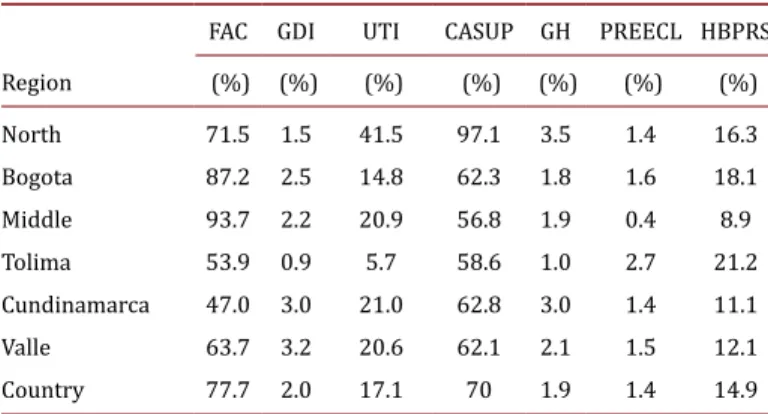
(3) Herrera JA /et al / Colombia Médica - Vol. 45 Nº1 2014 (Jan-Mar) Table 1.Description of a biopsychosocial model for the intervention of prenatal risk.Colombia 2002-2006 Definition of high maternal risk. 1. One or more obstetric risk factors1 and/or high bio-psychosocial risk (≥ 3 points)3 and/or. 2. Abnormal result from the routine and specific laboratory screening and/or 3. Abnormal follow-up of obstetric graphic parameters (< percentile 5 or > percentile 95). Routine screening First trimester: Identification of Obstetric risk factors1 and assessment of routine laboratory test (Hemoglobin and Hematocrit, VDRL, fasting glycemic status, HIV, Blood group and Rh factor, and urine sample) Second and Third trimester: Bio-psychosocial risk assessment3 (Biomedical risk factors and psychosocial risk factors) and specific laboratory tests according to the maternal risk [Urine culture, O’Sullivan screening test (50 g/1 hour) and/or Glucose tolerance test (100 g/3 h)]. An early echography (12-14 weeks of gestational age) to reconfirm gestational age followed by a second echography (24-28 weeks of gestational age) Second half of pregnancy: Assessment and graphic follow-up of the evolution of the maternal weight, uterine height and blood pressure using standard graphics. Routine supplementation. Ferrous sulphate (200 mg/d) from 14 weeks of gestational age up to labor. Folic acid (1 mg/day from 6 weeks of gestational age to 14 weeks of gestational age) Calcium carbonate (600 mg/d) from 18 weeks of gestational age up to labor. Specific intervention for patients with high maternal risk to develop preeclampsia I. Ferrous sulphate (200 mg/d) after 20 weeks of gestational age if the hemoglobin level is ≥11 g/L in the first trimester (to avoid early oxidative stress). II. Folic acid (1 mg/day) from 6 weeks of gestational age up to labor (for development of the placenta and improving the endothelial function) 10,15. III. Calcium citrate (600 mg/d) and conjugated linoleic acid (450 mg/d) from 18 weeks of gestational age up to labor (to improve endothelial function6 and to decrease intracellular free calcium7) IV. ASA (acetyl salicylic acid 75 mg/d) from 18 to 34 weeks of gestational age applied only to patients with the following three clinical conditions: 1. Previous Chronic blood pressure hypertension. 2. Antiphospholipds antibody syndrome. 3. Antecedent of previous early preeclampsia (<34 weeks of gestational age). V. Early detection and treatment of Urinary infection, Gestational Diabetes and High bio-psychosocial risk 2 maternal mortality, we were able to compare trends and changes in national maternal mortality rates. Specifically, we used the techniques developed by Box and Jenkins9, often referred to as the ARIMA models. In this case, an ARIMA impact analysis was used. Intervention components (dummy variables) were constructed to test whether there was any impact of the intervention that could not be accounted for by normal fluctuations and long-term trends. If the C mistake is high there are any evidence that the intervention affected the time-series ((1)/σ2; σ2 = residual variance before of the intervention and after intervention). The maternal mortality rate is defined as the ratio of the number of maternal deaths per 100,000 live births. The general maternal mortality rates included all causes and specific maternal mortality rates were calculated for the most common causes of death (i.e. preeclampsia, HELLP syndrome, complications of labor, hemorrhage, embolism, sepsis and thrombophilia). To determine the appropriate application of the BPSM, we evaluated the proportion of pregnant patients at high risk, those receiving calcium supplements, pregnant women receiving treatment for 27. urinary tract infection and/or gestational diabetes, and those receiving social support when high levels of anxiety were identified. For the multivariate analysis, maternal mortality was the dependent variable. The independent variables were antenatal care during the first trimester, obstetric, nutritional and psychosocial risk interventions. Multiple linear regressions were performed to test the correlations between early prenatal care and the interventions for malnutrition, psychosocial risk and gestational diabetes. Correlation coefficients at their 95% confidence intervals were calculated by using the statistical package SPSS® for Windows (version 20). A p <0.05 was regarded as statistically significant.. Results All pregnant women in antenatal care were included in the study. Table 2 shows socio- demographic and obstetric characteristics for every category. Seventy-four percent of the pregnant women received all protocols designed to prevent the most common causes of maternal morbidity and mortality. The adequate introduction of BPSM was confirmed with the rate of calcium supplementation (range 56.8%-97.1%) for the study population, early identification.
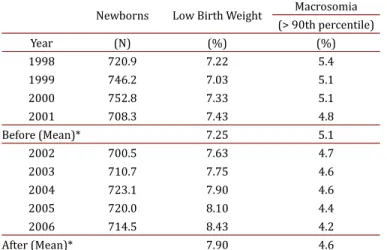
(4) Herrera JA /et al / Colombia Médica - Vol. 45 Nº1 2014 (Jan-Mar) and treatment of bio-psychosocial risk10 (range 8.9%-22.1%), early identification and treatment of urinary tract infections4 (range 5.7%-41.6%), and adequate detection and treatment of gestational diabetes (range 0.9%-3.2%) (Table 3).. 4). The maternal mortality rate due to labor complications as cephalopelvic disproportion, cesarean section and hemorrhage was correlated with the incidence of preeclampsia (adjusted R2= 0.62, CI95%: 0.27-0.94, p= 0.006).. Pregnant women with pre-paid medical insurance who had access to early prenatal care had the lowest incidence of preeclampsia (range 0.4%-1.4%); pregnant women without medical insurance (low socioeconomic status) had a greater incidence of preeclampsia (range 1.4%-3.2%). The application of BPSM was influenced mainly by superimposed preeclampsia versus preeclampsia de novo.. Multiple linear regressions showed that maternal mortality by preeclampsia was not associated to early prenatal care (first trimester) , early identification and treatment of urinary tract infections, nor to early treatment of gestational diabetes (second trimester) (p= 0.11). Furthermore, the above interventions together with calcium supplementation were not correlated to maternal mortality by preeclampsia (p= 0.24). However, a significant correlation was observed with the above interventions together with nutritional supplementation2-7 and improved social support (BPSM) (Table 2) (p= 0.042).. Macrosomia (birth weight >90th percentile for gestational age) has had a significant reduction in the incidence (5.1% to 4.2% , OR = 0.816, CI95%= 0.809 - 0.822) Six years after the implementation of BPSM (2002-2006) the general maternal mortality was reduced 23% (OR= 0.77, CI 95% 0.71-0.82). The slight reduction in birth rates during the period was not associated with the reduction in general maternal mortality (p= 0.83). With the introduction of obstetric protocols (2000-2001), changes in the ratio of maternal mortality was insignificant, in addition with the introduction of BPSM (2002-2006) the reduction in general maternal mortality decreased to 23% (Fig. 1) (interrupted time series analysis, Chi-square= 83.61, p= 0.024) (Table 5), same results were observed with the specific maternal mortality by preeclampsia (3.6% to 45.0% (median: 28.9 x 10⁵ versus 15.9 x 10⁵ live newborns) (interrupted time series analysis, C= 41.40, p = 0.968) (Table 5). The reduction of complications of labor was of 34.4% (median: 8.6 x 10⁵ versus 6.4 x 10⁵ live newborns), by hemorrhage (postpartum, placenta preview and abruption of placenta) of 25% (median:11.3 x 10⁵ to 8.5 x 10⁵ live newborns), by embolism of 3.7% (median 2.8x 10⁵ versus 2.7x 10⁵ live newborns), by sepsis of 2.0% (median 10.2x 10⁵ versus 10.0x 10⁵ live newborns), and by thrombophilia of 1.7% (median 2.87x 10⁵ versus 2.82x 10⁵ live newborns). Incidences of maternal mortality by preeclampsia had a significant reduction (median: 28.9 versus 15.9 x10⁵ live newborns) and by macrosomia (birth weight >90th percentile for gestational age had a significant reduction (5.1% versus 4.2%, respectively) (Table Table 2. Socio-demographic and obstetric characteristic of Colombian pregnant women 1998-2006. Variables. Before (1998-2001). After (2002-2006). Mean Age (SD) (years old). 24.2±6.5. 25.1± 6.9. Mixed ethnic backgrounds. 78.7. 78.2. Primigravidity. 34.2. 35.8. Cesarean section. 34.8. 35.9. Afro-Colombian Indigenous. Illiterate. Early adolescents (<16 years old). Chronic blood pressure hypertension. Multiple pregnancy. *BPSM: bio-psychosocial model. 28. %. 16.9 4.4. 5.2. 5.8. 2.8. 0.7. %. 17.8 4.9. 5.1. 7.1. 3.2. 0.9. Discussion The main cause of maternal mortality in developing countries is preeclampsia, which increases perinatal mortality by fivefold. The problem is of greater concern when we consider that maternal mortality in Colombia is four times higher than in developed countries1. After five years of implementation of BPSM the general maternal mortality remained reduced by 23% (p= 0.024) (Fig. 1), interestingly by preeclampsia (Fig. 2). This study was conducted during a nine-year period (four years before and five years after BPSM) using a dual notification system for epidemiological surveillance of maternal deaths and with a similar system to guarantee the quality of medical care. Prior to 1998, the country only had one epidemiological maternal-death surveillance system. This caused an important bias resulting in under-reporting of maternal deaths that is not found in today’s dual-notification system. Bias was controlled with this dual surveillance system. A potential confounder was the impact of the small reduction in the number of newborns due to family planning on maternal mortality during this time period; this reduction was not correlated to maternal mortality. Another potential confounder was poor quality in medical care which was well-observed and controlled. The highest proportion of biomedical interventions occurred early in prenatal care (Table 4). The observed results were attributed to the implementation of obstetric protocols with nutritional and psychosocial interventions (BPSM). Calcium supplementation alone does not reduce free intracellular calcium and does not improve endothelial function, which can be improved with the combined effect of other nutritional factors6,7,10. Urinary and periodontal infections and gestational diabetes are related to preeclampsia risk associated with oxidative stress and endothelial dysfunction11. Early detection and early treatment can decrease endothelial injury4. Enhancing endothelial function reduces multisystem failure, which is the most common cause of maternal death associated with preeclampsia. Currently, preeclampsia prevention is not possible. This is especially true in developing countries where half of the population is poor and where there are nutritional and psychosocial disadvantages. The Colombian social security system guarantees access and.
(5) Herrera JA /et al / Colombia Médica - Vol. 45 Nº1 2014 (Jan-Mar) Table 3. Biomedical interventions to reduce preeclampsia risk by Colombian regions 2002- 2006. Region. North. Bogota. Middle Tolima. Cundinamarca. Valle. Country. FAC. GDI. UTI. CASUP. 71.5. 1.5. 41.5. 97.1. (%). 87.2. 93.7 53.9. 47.0. 63.7. 77.7. (%) 2.5. 2.2 0.9. 3.0. 3.2. 2.0. (%). 14.8. 20.9 5.7. 21.0. 20.6. 17.1. GH. (%). (%). 62.3. 1.8. 56.8 58.6. 62.8. 62.1 70. 3.5. 1.9 1.0. 3.0. 2.1. 1.9. PREECL HBPRS (%) 1.4. 1.6. 0.4. (%). 16.3 18.1 8.9. 2.7. 21.2. 1.5. 12.1. 1.4. 1.4. 11.1. 14.9. FAC: First antenatal control during the first trimester. GDI: Gestational Diabetes Incidence (ACOG criteria). UTI: Urinary tract infection incidence (Urine culture). CASUP: Linoleic acid and/ or calcium supplementation. GH: Gestational hypertension (pregnancy-induced hypertension without significant proteinuria ≥ 300 mg/24 h) (ACOG criteria). PREECL: Preeclampsia (pregnancy-induced hypertension with significant proteinuria) (ACOG criteria). ACOG: American College of Obstetrics & Gynecology. HBPRS: High Bio-psychosocial Risk (≥3 points)2, 3.. quality in prenatal and hospital care. It is widely accepted that the best hospital care reduces maternal mortality due to preeclampsia, complications of labor, hemorrhage, sepsis, and thrombophilia1. As was observed in this study, general maternal mortality was reduced by 9.0% (Fig. 1) and specific maternal mortality by preeclampsia was reduced by 3.6% (Fig. 2) after the introduction and implementation of the obstetric protocols. An increased number of health teams in the country were trained and monitored. The BPSM has biological plausibility for reducing preeclampsia risk2-8,12, as was demonstrated in different studies and with different national and international populations. Endothelial dysfunction is an early condition present in pregnant women who later develop preeclampsia. It can develop from nutritional deficiencies, metabolic disorders, psychosocial stress, or asymptomatic infections. Inflammation and oxidative stress could be underlying mechanisms that greatly contribute to the development of insulin resistance associated with preeclampsia13. The BPSM included early identification and modification of factors with potential influence on endothelial function14,15 (Table 2).. pregnancy decreases cellular immunological response17, increases C-reactive protein IL1β and IL618-21, and reproduces PE in animals22 (exclusively human disease). The role of these cytokines during normal pregnancy is not entirely understood. Some have been related to the mechanisms involved in the initiation and maintenance of gestation. For instance, tumor necrosis factor (TNFα) and natural killer cells appear to regulate the invasion and growth of trophoblast in maternal and spiral arteries14. The stimulation of the sympathetic nervous system can alter NK cell function, facilitating poor invasion of extra-villous trophoblast23. The role of psychosocial factors in preeclampsia is a growing development22,24-26. The impact of psychosocial factors on the pathogenesis of cardiovascular disease is well documented25,27. Blood pressure assessment, proteinuria screening, and early termination of pregnancy have been successful means to reduce maternal mortality by preeclampsia as was observed with the introduction of the obstetrics protocols (3.6%) (Fig. 1). We believe that the high prevalence of diseases or conditions associated with oxidative stress and endothelial dysfunction can increase the probability of having a multisystem failure if preeclampsia is present. In developing countries the most common cause of maternal mortality by preeclampsia is from a multisystem failure. A decrease in maternal mortality could be related to the action of many factors and many were intervened with the implementation of obstetric protocols (2000-2001) (Figs. 1 and 2); however, with the introduction of BPSM (2002-2006) the reduction in general maternal mortality increased by three times (Fig. 1); interestingly after the implementation of BPSM the reduction of maternal mortality by preeclampsia increased by seven times. The implementation of the National Public Health Plan (Decree 3037 Ministry of Health and Social Protection) (2007-20210) included the BPSM and the maternal mortality by preeclampsia remained low (Fig. 2).. Healthy pregnant women present a certain degree of inflammation and preeclamptic women have an excessive inflammatory response16. Interestingly, high stress and low social support during. Today, prevention of preeclampsia is not possible; however, a reduction in maternal mortality by preeclampsia was observed with the introduction and implementation of obstetric protocols and BPSM. The reduction in maternal mortality by postpartum hemorrhage was associated with the implementation of red code. The national experience of a reduction in maternal mortality due to preeclampsia in a developing country is the main contribution of. Figure 1. General maternal mortality. Colombia 1998-2006. Figure 2. Maternal mortality rates by causes. Colombia 1998-2010. 29.
(6) Herrera JA /et al / Colombia Médica - Vol. 45 Nº1 2014 (Jan-Mar) Table 4. Birth weight with the introduction of a biopsychosocial model (2002-2006) Newborns. Low Birth Weight. 1998. 720.9. 7.22. 2001. 708.3. 7.43. Year. 1999. 2000. Before (Mean)* 2002. 2003. 2004. 2005. 2006. After (Mean)*. (N). 746.2. 752.8. 700.5. 710.7. 723.1. 720.0. 714.5. (%). 7.03. 7.33. 7.25. 7.63. 7.75. 7.90. 8.10. 8.43 7.90. *Before and after implemented of bio-psychosocial model. Macrosomia. (> 90th percentile) (%) 5.4. 5.1. 5.1. 4.8 5.1. Table 5.Interrupted time series analysis. Colombia 1998-2006. Maternal mortality. Model AR (1) General AR (1,1) Preeclampsia AR (1,1) Eclampsia Severe preeclampsia AR (1,1). *Chi square with sixty degree of freedom. Residual Chi-square* Mistake Variance p value 297.489.859 355.796 83.61 0.024 254.261.887 61.422 41.40 0.968 130.794.681 21.549 60.70 0.451 795.657.253 22.621 35.17 0.996. 4.7. 4. Herrera JA, Chaudhuri GC, López-Jaramillo P. Is infection a major risk to preeclampsia. Hypoth Med. 2001;57: 393–7.. 4.4. 5. Herrera JA, Arévalo-Herrera M, Herrera S. Prevention of preeclampsia by linoleic acid and calcium supplementation: A randomized controlled trial. Obstet Gynecol. 1998; 91: 585–90.. 4.6. 4.6. 4.2 4.6. this study. There are clear implications for regional public health care. A limitation of the study is the fact that observational prospective studies can be biased; however, randomized double-blind controlled trials are not possible due to ethical considerations. Community work to evaluate the impact of this model in other populations is still being done. Acknoledgments The authors thank the Ministry of health and Social Protection of the Republic of Colombia, UNFPA and UNICEF for supporting the development of this project. Financial disclosure This research was supported by the Colombian Ministry of Health and Social Protection, UNFPA and UNICEF, above institutions had not any role in study design, data collection and analysis, decision to publish, or preparation of the manuscript. The preliminary results of this research were presented as an abstract at the XIX FIGO World Congress on Gynecology and Obstetrics in Cape Town, South Africa. Conflict of interest The authors report no competing or conflict of interest with the project and participating institutions.. References 1. Mounier-Vehier C, Equine O, Valat-Rigot AS, Devos P, Carré A. Hypertensive syndromes in pregnancy. Physiopathology, definition and fetomaternal complications. Presse Med. 1999; 28: 880–5.. 6. Herrera JA, Shahabuddin AK, Ersheng G, Wei Y, GarcIa RG, López-Jaramillo P. Calcium plus linoleic acid therapy for pregnancy-induced hypertension. Int J Gynaecol Obstet. 2005; 91: 221–7. 7. Herrera JA, Arévalo-Herrera M, Shahabuddin AKM, Ersheng G, Herrera S, García R, et al. Calcium and conjugated linoleic acid reduces pregnancy-induced hypertension and decreases intracellular calcium in lymphocytes. Am J Hypertens. 2006; 19: 381–7. 8. Herrera JA, López-Jaramillo P, Shahabuddin AKM, Faisal M, Ersheng G, Wei Y, et al. Efectos de la suplementación oral con calcio y ácido linoleico conjugado en primigravidas de alto riesgo. Colomb Med. 2004; 35: 31–7. 9. Box GEP, Jenkins GM. Time Series Analysis-Forecasting and Contro. 2nd edition. Holden-Day; San Francisco: 1976. 10. Mislanova C, Martsenyuk O, Huppertz B, Obolenskaya M. Placental markers of folate-related metabolism in preeclampsia. Reproduction. 2001; 142: 467–76. 11. Herrera JA, Parra B, Herrera E, Arce R, López- Jaramillo P, Contreras A. Periodontal disease severity is related to high levels of C-reactive protein in preeclampsia. J Hypertens. 2007; 25: 1459–64. 12. Herrera JA, Hurtado H, Cáceres D. Antepartum biopsychosocial risk and perinatal outcome. Fam Pract Res J. 1992; 12: 391–9.. 2. Herrera JA. Nutritional factors and lateral rest reduce pregnancyinduced hypertension in positive roll-over test primigravidae. Int J Gynaecol Obstet. 1993; 41: 31–5.. 13. Sierra- Laguado J, García RG, Celedón J, Arenas-Mantilla M, Pradilla LP, Camacho PA, et al. Determination of insulin resistance using the homeostatic model assessment (HOMA) and its relation with the risk of developing pregnancy-induced hypertension. Am J Hypertens. 2007; 20: 437–42.. 3. Herrera JA, Salmerón B, Hurtado H. Prenatal biopsychosocial risk assessment and the low birthweight. Soc Sci Med. 1997; 44: 1107–14.. 14. Kanajama N. Trophoblast injury: new biological and pathologic concept in preeclampsia. Croat Med J. 2003; 44: 148–56.. 30.
(7) Herrera JA /et al / Colombia Médica - Vol. 45 Nº1 2014 (Jan-Mar) 15. Fekete K, Berti C, Cetin I, Hermoso M, Koletzko BV, T Decsi. Perinatal folate supply: relevance in health outcome parameters. Matern Child Nutr. 2010; 6: 23–38.. 22. Takiuti NH, Kahhalle S, Zugaib M. Stress in pregnancy: a new Wistar rat model for human preeclampsia. Am J Obstet Gynecol. 2002; 186: 544–50.. 16. Redman C, Sacks G, Sargent I. Preeclampsia: an excessive maternal inflammatory response to pregnancy. Am J Obstet Gynecol. 1990; 180: 499–506.. 23. Garcia-Gómez RG, López-Jaramillo P, Tomaz C. The role played by the autonomic nervous system in the relation between depression and cardiovascular disease. Rev Neurol. 2007; 44: 225–33.. 17. Herrera JA, Alvarado JP, Martínez JE. The psychosocial environment and the cellular immunity in the pregnant patient. Stress Med. 1988; 4: 49–57. 18. Kupferminc MJ, Peaceman AM, Aderka D, Socol ML. Soluble tumor necrosis factor receptors and interleukin-6 levels in patients with severe preeclampsia. Obstet Gynecol. 1996; 88: 420–7. 19. Greer IA, Lyall F, Perera T, Browel F, Macara LM, Cog M. Increased concentrations of cytokines interleukin-6 and interleukin-1 receptor antagonist in plasma of women with preeclampsia: a mechanism for endothelial dysfunction? Obstet Gynecol. 1994; 84: 937–40. 20. Coussons-Read ME, Okun ML, Nettles CD. Psychosocial stress increases inflammatory marker and alter cytokine production across pregnancy. Brain Behav Immun. 2007; 21: 343–50. 21. García RG, Celedón J, Sierra-Laguado J, Alarcón MA, Luengas C, Silva F, et al. Raised C-reactive protein and impaired flow mediated vasodilation precede the development of preeclampsia. Am J Hypertens. 2007; 20: 98–103.. 24. Cardwell MS. Stress: pregnancy implications. Obstet Gynecol Surv. 2013; 68: 119–29. 25. Salvador-Moysén J, Martínez-López Y, M R-AJ, AguilarDurán M, Terrones-González A. Genesis of preeclampsia: an epidemiological approach. ISRN Obstet Gynecol. 2012; 916914. 26. Rozanski A, Blumenthal JA, Kaplan J. Impact of psychological factors on the pathogenesis of cardiovascular disease. Circulation. 1999; 99: 2192–2217. 27. Rosengren A, Hawken S, Ounpuu S, Sliwa K, Zubaid M, Almahmeed WA. Association of psychosocial risk factors with risk of acute myocardial infarction in 11119 cases and 13648 controls from 52 countries (the INTERHEARTH study): casecontrol study. Lancet. 2004; 364: 953–62. 28. Goldenberg RL, McClure M, Macguirre ER, Kamath BD, Jobe AH. Lessons for low-income regions following the reduction in hypertension-related maternal mortality in highincome countries. Int J Gynaecol Obstet. 2011; 113: 91–5.. Colomb Med. 45(1): 25-31. 31.
(8)
Figure
Documento similar