
Studies of Process Intensification for the Recovery of high molecular weight Beta-Glucan from cereals
226
0
0
Texto completo
(2)
(3) ÍNDEX. ABSTRACT. ........................................................................................................................................................................................... 7. AIMS AND CONTENTS ............................................................................................................................................................ 13 CHAPTER 1. OPTIMIZATION OF THE -GLUCAN EXTRACTION CONDITIONS FROM DIFFERENT WAXY BARLEY CULTIVARS ............................................................................................................................................................. 33 CHAPTER 2. ULTRASOUND-ASSISTED EXTRACTION OF -GLUCANS FROM BARLEY .................................. 53 CHAPTER 3. EFFECT OF PRESSURE AND TEMPERATURE ON THE DISSOLUTION OF GLUCAN IN PRESSURIZED HOT WATER .................................................................................................................................. 73. CHAPTER 4. PRESSURIZED HOT WATER EXTRACTION OF -GLUCAN FROM WAXY BARLEY .................89 CHAPTER 5. FIXED-BED EXTRACTION OF -GLUCAN FROM CEREALS BY MEANS OF PRESSURIZED HOT WATER .........................................................................................................................................................109 CHAPTER 6. PURIFICATION AND ISOLATION OF B-GLUCANS FROM BARLEY: DOWNSTREAM PROCESS INTENSIFICATION ........................................................................................................................................................... 131. CHAPTER 7. EVALUATION OF THE -GLUCAN EXTRACTION INTENSIFICATION FROM BARLEY: ENERGY BALANCES OF DIFFERENT EXTRACTION PROCEDURES ................................................................................ 155 CONCLUSIONS............................................................................................................................................................................. 167 RESUMEN .......................................................................................................................................................................................... 173 ANNEX I. STUDY OF THE ENDOGENOUS -GLUCANASE DEACTIVATION BY MEANS OF BOILING ETHANOL ............................................................................................................................................................................ 203. ANNEX II. -GLUCAN ENRICHED PRODUCTS OBTAINED FROM DIFFERENT BARLEY MILLING FRACTIONS AND THEIR MIXTURES ............................................................................................................................................ 211 CURRICULUM VITAE. ÓSCAR BENITO ROMÁN...................................................................................................... 221. 3.
(4)
(5) ÍNDICE DE CONTENIDOS. RESUMEN (INGLÉS) ..................................................................................................................................................................... 7 OBJETIVOS Y CONTENIDOS (INGLÉS) ..................................................................................................................... 13 CAPÍTULO 1. OPTIMIZACIÓN DE LAS CONDICIONES DE EXTRACCIÓN DE -GLUCANOS A PARTIR DE DIFERENTES VARIEDADES DE CEBADA CEROSA EN TANQUE AGITADO ............................................ 33. CAPÍTULO 2. EXTRACCIÓN DE -GLUCANOS ASISTIDA POR ULTRASONIDOS A PARTIR DE CEBADA CEROSA .................................................................................................................................................................................. 53. CAPÍTULO 3. ESTUDIOS DEL EFECTO DE LA PRESIÓN Y TEMPERATURA EN LA DISOLUCIÓN DE -GLUCANOS EN AGUA CALIENTE PRESURIZADA ...................................................................................................... 73. CAPÍTULO 4. EXTRACCIÓN DE -GLUCANOS EN AGUA CALIENTE PRESURIZADA A PARTIR DE CEBADA CEROSA............................................................................................................................................................................ 89. CAPÍTULO 5. EXTRACCIÓN DE -GLUCANOS DE CEREALES EN LECHO FIJO MEDIANTE AGUA CALIENTE PRESURIZADA ...............................................................................................................................................................109 CAPÍTULO 6. ESTUDIOS DE INTENSIFICACIÓN DE LA ETAPA DE PURIFICACIÓN Y CONCENTRACIÓN DE -GLUCANOS EXTRAÍDOS DE CEBADA ....................................................................................... 131 CAPÍTULO 7. EVALUACIÓN DE LA INTENSIFICACIÓN DE LA EXTRACCIÓN DE -GLUCANOS A PARTIR DE CEBADA: BALANCES DE ENERGÍA A LOS DIFERENTES PROCESOS DE EXTRACCIÓN.................. 155. CONCLUSIONES (INGLÉS)................................................................................................................................................. 167 RESUMEN (CASTELLANO) ................................................................................................................................................. 173 ANEXO I. ESTUDIOS DE DESACTIVACIÓN DE -GLUCANASAS MEDIANTE EL EMPLEO DE ETANOL A EBULLICIÓN ................................................................................................................................................................... 203. ANEXO II. PRODUCTOS ENRIQUECIDOS EN -GLUCANOS OBTENIDOS A PARTIR DE FRACCIONES DE MOLIENDA DE CEBADA Y DE SUS MEZCLAS ...................................................................................... 211 CURRICULUM VITAE. ÓSCAR BENITO ROMÁN...................................................................................................... 221. 5.
(6)
(7) ABSTRACT. Studies of process intensification for the recovery of high molecular weight -glucans from cereals.
(8)
(9) Abstract. The aim of this PhD Thesis is to make studies in order to develop an efficient process to produce concentrates rich in controlled molecular weight -glucans, using cereals as raw material. It is expected to obtain high molecular weight -glucans that can be used e. g. as food additive and to obtain low molecular weight -glucans to be used e. g. in active compounds formulation processes. This work was started with the selection of the raw material. It was used barley developed by the Instituto Tecnológico Agrario de Castilla y León (ITACYL; Valladolid, Spain). Two different waxy cultivars from 2006 were used, differing in the composition besides other morphological differences: H13 (hulless, 4.64±0.18% in -glucan) and D24 (hulled, 6.02±0.37% in -glucan). In chapter 1, a literature review was done and it could be concluded that in the literature there was not any work in which the different process parameters affecting the -glucan extraction process were systematically studied. It was selected 55°C as the optimal temperature to extract -glucan, since a compromise between the -glucan solubility and the co-extraction of other species present in the barley (mainly starch) was required, and water was selected as solvent. To study the effect that process parameters had on the extraction yield and molecular weight of -glucan and to find of combination of them that maximize the extraction yield were the aims of this chapter. Particle size (100-250-500m), solvent to solid ratio (5-8-15), stirring rate (200-600-1000rpm) and extraction time (1-3-5hours) were the process parameters studied. After this work it was concluded that particle size had a significantly higher influence on the extraction process than the other parameters studied (stirring rate, extraction time and barley variety), indicating that mass transfer steps are limiting the overall extraction process. The conventional extraction process in the optimal conditions lasted 3 hours (1000rpm stirring rate, solvent to solid ratio of 8 and particle size 100m) had an extraction yield of 62.8% for barley H13 and 73.4% for D24. It was also seen that the molecular weight of the extracted glucan was very low, in the range of 45-55kDa, so in order to increase the MW of the -glucan barley should be pretreated in order to deactivate the endogenous -glucanases and preserve the native high MW of the -glucan. Barley was boiled in aqueous ethanol for two hours and used as raw material. The -glucan extracted from this barley had a significantly higher MW (>400kDa), but the extraction yield decreased dramatically, due to the difficulty to keep the water-barley suspension as a consequence of its high viscosity. Results are shown in annex I. In the annex II, a different pretreatment was tried: barley was milled in order to get different milling fractions, with. 9.
(10) Abstract. different compositions and particle size. It was seen the importance of the fraction used as raw material, as different extraction yields and product compositions were obtained. In order to overcome the mass transfer limitations, which could not be solved in the convectional stirred tank process, new extraction processes were proposed. In chapter 2 glucans were extracted from barley by means of the ultrasound technology (Ultrasound Assisted Extraction – UAE). Ultrasounds are related to mass transfer intensification processes, increasing the extraction yields and reducing the operation times compared to the conventional processes. In this work pretreated barley was used as raw material. Amplitude of oscillation (60-80-100%), cycle (pulsed or continuous sonication) and extraction time (3-10-17 minutes) were the process parameters studied. Results revealed that UAE was an efficient process to extract -glucans, providing higher extractions yields than the conventional CSTR process in much shorter extraction times, up to 10 minutes. Moreover, the specific energy required in the extraction was substantially lower than in the conventional process (here it was 1460kJ/L), which allowed to talk about -glucan extraction intensification. On the other hand, high energy outputs (>500kJ/L) involve an important depolymerization of the -glucan, not providing increases in the extraction yield. As a consequence of these results, the extraction conditions must be carefully selected in order to maximize extraction yield, molecular weight or both simultaneously. Chapters 3 to 5 are related to the extraction of -glucans from pressurized hot water (PHW), in different ways: batch or semi-continuous. PHW term refers to the water in liquid state in the range 100°C (boiling point) to 374°C (critical point) by the application of pressure. The transport properties of water (such as density, surface tension, viscosity and diffusivity) change dramatically when changing pressure and, specially, temperature. In chapter 3, a concentrate of -glucans and starch (36.5% and 25.4%, respectively) was used in order to check its solubility and behavior in the PHW (range of temperature 120 to 170°C and range of times 10 to 300 minutes). It was seen that -glucan could be dissolved in PHW, but once dissolved a rapid degradation of the molecule occurred: a rapid decrease of the MW was observed as well as the presence of sugar degradation products in the solution. In chapter IV it was done the extraction of -glucan from not pretreated barley in a pressurized stirred vessel (batch operation mode). Temperature was changed in the range (135-180°C) and extraction times in the range (15-75 minutes). The experimental conditions were selected to maximize the extraction yield: results done at 155°C for 18 minutes at 50bar led to an extraction yield of 52.7% and MW equal to 200kDa. These results are remarkable, as in one single step high. 10.
(11) Abstract. molecular weight -glucan were extracted in a short extraction process: it was not necessary to perform the deactivation of -glucanases pretreatment. In chapter 5, a flow extraction process was studied, and -glucan was extracted in a 50ml semicontinuous extractor (fixed bed). -glucan extraction yield was similar to that obtained in the batch process in a 4ml/min flow rate of water at 155°C for 105minutes. The major advantage of the fixed-bed extraction process was the preservation and the fractionation of the -glucan in terms of MW during the extraction. The extracted -glucan were in the range 500-100kDa, decreasing when increasing the extraction length. In this process no sugar degradation products, such as HMF, were detected. The extraction of -glucan from other raw materials was also studied (wheat bran). It was observed similar results for wheat bran, in terms of temperature. The results obtained were used to calculate dimensionless numbers that would allow to do scale-up processes for the fixed-bed extraction of -glucan. This research was done at the Technical University Hamburg-Harburg (Hamburg, Germany). In chapter 6 the purification of the extracted glucan was studied (downstream process). The use of water and its lack of selectivity makes that other species present in barley, specially starch, are coextracted unpurifying the liquid extract. Starch was hydrolyzed by means of amylase: it was studied the hydrolysis length, the temperature and the enzyme dose. The results allowed to do the hydrolysis in lower times than usual (only 9 minutes) keeping removal efficiencies higher than 90% with enzyme doses lower than those used in processes found in the literature: 100L/g of starch at 55°C. Traditional processes do the starch hydrolysis at 95°C for 1 hour. In a second step, a significant intensification of the process was achieved by dosing the enzyme during the ultrasound assisted extraction step (7 minutes at 55°C), resulting in a starch removal of 90%. An intensification of the extraction and purification processes was successfully accomplished, as they were done simultaneously in one single step and at the same temperature. In chapter 6 was also studied the separation of the dextrins or sugars formed as a consequence on the starch hydrolysis. These molecules are low molecular weight compared to the -glucan, so a membrane process was used to separate them: diafiltration (polysulfone membrane, MWCO 100kDa) done in a tangential flow cell. This operation way allowed to reduce the concentration of oligosaccharides in the solution by 45% in average (in some cases it was higher than 75%) in short times, with the subsequent increase in the concentration of glucan. Despite the fast fouling of the membrane observed (decrease of the permeability value, recovered after the cleaning process) it was concluded that the use of membranes to 11.
(12) Abstract. purify and concentrate -glucans extracted from barley was technical viable. Finally, in chapter 6 it was concluded that the combination of ultrasounds, enzymatic hydrolysis and membrane technology allowed to obtain high purity -glucans in simple and easy way, compared to the conventional process (time and energy consuming). In chapter 7 special attention was paid on the energy consumed during the different extraction processes proposed in this thesis. It was evaluated the energy required to pretreat the barley (deactivation of -glucanases and milling) and to perform the extraction of the three main processes presented in this work: stirred tank extraction, UAE and bath PHW. The energy consumed was expressed in kWh per gram of -glucan extracted. UAE was seen as the best process, as the lowest energy was consumed (0.14-0.17kWh/g -glucan in 3 to 15.9 minutes processes) which together with the dramatic reduction of the extraction times lead to talk about a real process intensification compared to the stirred tank extraction (3h, 0.27kWh/g glucan). PHW process was seen as the highest energy consumer (6.0kWh/g -glucan). In spite of the good results in extraction time reductions and the lack of pretreatments to obtain high molecular weight (MW) -glucan, PHW resulted to be an unfavorable process form an energetic point of view, mainly due to the low barley to water ratio (1:50) used during the extraction.. 12.
(13) AIMS & CONTENTS. Studies of process intensification for the recovery of high molecular weight -glucans from cereals.
(14)
(15) Aims and Contents. In the recent years there has been an increase in the concern for the control of diseases such as cholesterol, diabetes or obesity by means of natural products. Those natural products that claim to have positive effects on human health are known as nutraceuticals. (13),(14)-D-glucan, a sort of soluble fiber or dietary fiber, is an example of nutraceutical according to the claims issued by the FDA (Federal Drug Administration, USA; FDA, 2005) and the EFSA (European Food Safety Authority): “Regular consumption of -glucans contributes to maintenance of normal blood cholesterol concentrations when ingesting 3g of -glucan per day”. The EFSA report (EFSA, 2010) attributes this health claim to -glucans with molecular weight in the range 50-2000 kDa. These good properties for health make that -glucan can be used as food additive (i.e. Brennan and Cleary, 2007; Jacobs et al, 2004; Simmons and Brennan, 2004) More specifically -glucans are a kind of non-starchy long and linear polysaccharides composed of -D-glucose units. Glucose molecules are linked by means of the O-glucosidic bond: a β-(1→4) in the 70% of the cases that is separated by a single β-(1→3) linkage. The structure of the -glucan in shown in figure 1. This polysaccharide can be found in the cell walls of different cereals, such as oat, barley, rye and, in lesser extent, wheat. The range of concentrations of -glucans in these cereals is 0.5-11% (Cui et al, 2011) nevertheless the presence in cereals such as wheat can be considered as residual (0.5-2%).. Figure 1. Molecular structure of (1→3),(1→4)--D-glucan. From Laroche and Michaud, 2007.. In the literature it is possible to find many different works that attempt to isolate -glucans, particularly from oat. However, in the last years there has been a renewed interest in barley due to the development of new varieties genetically modified (Baik and Ullrich, 2008). These new varieties, known as waxy, have a higher content in -glucan and proteins and lower content in other species such as starch compared to the conventional barleys. The conventional varieties of barley have around 2-3% of -glucans; in turn, in the new waxy varieties the content can be increased up to 7%. The presence of -glucan in higher concentrations, together with the presence of other high value added compounds (such as. 15.
(16) Aims and Contents. antioxidants) have increase the appeal of barley as source of nutraceuticals, versus the traditional uses in brewery or animal feeding. -glucan recovery processes are complex, as they involve many different stages that can be summarized in three (Laroche and Michaud, 2007): pretreatment of the raw material, extraction and finally purification and isolation step. Each of these single stages is described below: 1. Pretreatments. The aim of this stage is to prepare the raw material for the extraction stage. It can be split in two different pretreatments: . Milling and selection of the milling fractions: in this pretreatment the particle size of the grain used as source of -glucan must be reduced in order to facilitate the contact between the solvent and the -glucans, so they can be dissolved. The barley grains can be milled by means of a knives mill: only one milling fraction is obtained. The particle size of the resulting flour will be controlled by changing the length of the milling. On the other hand, if a mill that let the fractionation of the cereal is used, several milling fractions will be obtained, containing each of them a part of the grain. As a consequence each of the generated fractions will have different composition and particle size.. . If the purpose of the treatment is to increase the molecular weight of the extracted -glucan, it is necessary to treat the raw material in a way that the endogenous -glucanases are inactivated. These enzymes are responsible for the depolymerization on the -glucans, and hence responsible for the decrease of their molecular weight.. 2. Extraction. The selection of the solvent, as well as the extraction conditions must be carefully done in order to maximize the selectivity and the extraction yield of the glucans. A deep study of the effect that the extraction parameters have on the glucan is required as well as a deep knowledge of the mechanisms that control the glucan extraction process. The right choice of the extraction conditions will simplify the subsequent purification stage. 3. Purification and isolation of the extracted -glucan. In the extraction stage, in addition to the -glucan, other substances are co-extracted (i.e. starch and proteins). In this. 16.
(17) Aims and Contents. stage it is necessary to develop processes that are helpful to get rid of the co-extracted substances without affecting the structure of the -glucan. Finally, once the -glucan is purified it is necessary to concentrate it: it is necessary to get a solid product rich in glucan. In order to get this high purity -glucan solid, processes such as freeze-drying or spray drying can be used (solvent removal processes). Alternatively an antisolvent can be used in a way that -glucans are precipitated. The antisolvent must be fully miscible with the solvent used in the extraction step, but the -glucan must be complete insoluble in it. In the literature, alcohols have been traditionally used as antisolvents. The formed precipitate, which is rich in -glucans, must be separated from the solution and dried to be used. In order to get all the potential nutraceutical properties that -glucans have, it is necessary to develop processes that let their efficient recovery from the raw materials where they are trapped in low concentrations. In this thesis work the whole -glucan recovery process has been studied from two different varieties of waxy barley. Barley has been selected as source of -glucan due to the interest that this cultivar has for the economy of Castilla y León (Spain). Castilla y León is the greatest producer of barley is Spain (2.1 million of tons in 2012). Two different varieties of barley have be used in this work, developed and selected by the Instituto Tecnológico Agrario de Castilla y León (ITACYL) in the frame of the research project “Development of a technically efficient process for the extraction of -glucan from barley” signed between the ITACYL and the High Pressure Process Research Group (Department Chemical Engineering and Environmental Technology, University of Valladolid). The -glucan recovery process is complex as it has been previously mentioned, and, in spite of the numerous works that can be found in the literature, there is a lack of systematic studies concerning all the parameters (and their interactions) that are involved in the extraction process. The literature revision of the state of the art reveals that -glucans are extracted with water at mild temperatures (25-55°C) and mainly by suspension of the solid matter in the solvent using mechanical agitation (stirred tanks). Table 1 summarizes the extraction conditions used by other authors in the literature. In some of the cases neither the extraction yield nor the molecular weight of the extracted-glucan are reported. Moreover, a discussion of the obtained results based on the mass transfer fundamentals (external transport, internal diffusion and solubility equilibrium) is missed. This information is required from an engineering point of view to understand the -glucan extraction mechanism and to accomplish the scaleup process. The lack of these valuable data complicates the comparison between processes. 17.
(18) Aims and Contents. and the scale-up from laboratory scale to industry. Moreover, another critical parameter for a process to be competitive at industrial scale, the energy consumption, is not reported in any of the works summarized in table 1. Table 1. Operating conditions used by other researchers in the aqueous extraction of -glucan from barley Researcher. Bhatty (1993). Bhatty (1995). Solvent. Max Ext Yield (%). s:f ratio. Ext time (h). T (°C). 61. 10:1. 0.5. 45. 72. 10:1. 81. 50:1. 73-77. 50:1. Water, pH 10 Water, pH 7 NaOH, 4% NaOH, 1N. Sequential:40, 65 and 95 18 Ambient 1. Ambient. Water Water. 16.6 34 a 85 unknown. 10:1 10:1. 0.5 2. 40-55 52. Water. unknown. 8:1. 2. 47. Li et al. (2006) Izydorczyk et al. (2000) Burkus and Temelli, (1998) Papageorgiou et al. (2005). NaOH, 1M Water Several Solvents. unknown 52.7. 20:1 10:1. 3 0.5. 25 25. unknown. 12:1. 0.5. 55. Water. unknown. 10:1. 2. 50. Andersson et al. (1999). Water. 53.3. b. 75:1. 2. 38. Oscarsson et al. (1996). Water. 55.2. b. 75:1. 2. 38. Acidic Media 1M NaOH 1M citric acid water Water + alpha amylase. 44.7 d 78.1 d 80.4 d 83.1. 10:1 7:1 7:1 10:1. 1 1.5 1.5 1.5. RT 55 55 55. NR. 3. 40. Saulnier (1994). Water. Temelli (1997) Lazaridou et al. (2004) Irakli et al. (2004). Bhatty et al. (1991). Ahmad et al (2009). a.. 6:1. d. 81.4. 40. Barley. HL-N-4.5% HL-W-11.3%. HL-N-5.6% HL-W-11.3% HL-4.7% HL-5.1% HL-N-5.7% Not supplied 6 different commercial cultivars Used wheat HL-W-6.9% HL-N-5.4% HL-W-7.0% H-N-4.0% H-W-6.1% HL-W-5.6% H-W-5.4% HL-W-5.8% HL-W-4.7% H-not reported glucan content (soluble dietary fibre 2.86%). -glucan recovered after precipitation. b./c.. Maximum obtained when using waxy hull-less barley maximum -glucan recovery. Shows the efficiency of purification process of -glucan KEY for barley column: H: Hulled; HL: Hull-less; W: Waxy; N: Normal genotype; the figure represents the content of -glucan. d.. A more detailed revision of these works, with a deeper discussion of these variables is presented in chapter 1. 18.
(19) Aims and Contents. Raw material pretreatments, previous to the -glucan extraction, play an important role in the -glucan recovery process. Physical treatments (such as milling and fraction selection) have been performed in order to fractionate the grain cereals to obtain one fraction already rich in -glucan (Kiryluk et al, 2000; Flores et al, 2005). Yoon et al. 1995, have used these milling fractions for extraction with water, revealing differences in viscosity as function of the milling fraction. Fine grinding fractions produced higher viscosity and higher -glucan content extracts than other fractions. One of the main conclusions of the milling works are that the nature of the grain (hulled or hulless) affected the milling process and the -glucan distribution among the milling fractions, since it controls the hardness of the grain. Irakli et al., 2004 introduced the pretreatments with ethanol to inactivate of the endogenous -glucanases. Although the increase of molecular weight of extracted -glucans has been reported, there is no any evidence about the effect of this treatment on the extraction yield. Other pretreatments that can be found in the literature, such as thermal treatments, were specially studied by Izydorczyk et al 2000. Some of the thermal treatments, such as grain steaming or roasting, did have an effect on the -glucan recovery process and on the properties of the -glucan liquid extracts, as viscosity profile was stabilized. Because the viscosity is a function of the -glucan concentration and molecular weight these treatments can enhance the molecular weight of the -glucan or improve the extraction yield or both simultaneously. According to these results, the effect of the pretreatments has to be evaluated over the extraction yield and the molecular weight of the extracted -glucan. Alternative extraction processes (different from stirred tank) to extract -glucans from cereals are not reported in the literature. However processes such as Ultrasound Assisted Extraction show good properties related to the mass transfer improvement (Iida et al, 2008). Despite these good properties, UAE has never been used to extract -glucan from cereals. The use of ultrasounds to enhance extraction processes was extensively reviewed by Vilkhu et al, 2008. These authors summarized a significant amount of applications of this procedure for the extraction of different natural molecules (antioxidants, essential oils, polysaccharides…) from a wide variety of matrices. UAE is a potential method to extract -glucans from cereals. In the literature there is only one attempt to the use of ultrasounds for the -glucan recovery: Izydorczyk et al. 2000 used ultrasounds as a pretreatment; after the sonication of barley a conventional extraction process was carried out. Extraction was improved; nevertheless the energy used was not quantified, and no parameter study was performed.. 19.
(20) Aims and Contents. Another potential alternative method for the -glucan extraction from cereals is the use of Pressurized Hot Water (PHW) as solvent, as probes the huge number of works that claim to use PHW to extract high added value compounds (bioactive and nutraceuticals, essential oils, lipids, carotenoids, proteins, polysaccharides) from plants or food matrixes (Kronholm et al, 2007; Teo et al, 2010; Mustafa and Turner, 2010). More specifically PHW has been used in a few works to extract polysaccharides from natural matrix: Ho et al, 2007 extracted lignans, proteins and carbohydrates from flaxseed meal; Buranov and Mazza, 2010 extracted hemicelluloses from flax shives; Askin et al. 2010 extracted (1-3),(1-6)--D-glucans from Ganoderma lucidum fungus; Cacace and Mazza 2006 used PHW to extract lignans from whole flaxseed; Hata et al, 2008 focused their research in the extraction of total sugars, proteins and antioxidant activity from defatted rice bran and Song et al, 2011 extracted hemicelluloses from spruce woods. PHW term refers to the water in liquid state in the range 100°C (boiling point) to 374°C (critical point) by the application of pressure; the change in temperature and pressure induces changes in the physical properties of the water (i.e. density, viscosity or surface tension) that affect the mass transfer properties and weakens the hydrogen bonds between the polysaccharide and the matrix. Finally, once the -glucans have been extracted it is necessary to separate them from other species that are inevitably co-extracted (such as proteins or starch). Starch has been traditionally treated with -amlyase at temperatures around 90-95°C. Table 2 summarizes the main attempts to get rid of the dissolved starch, but in any of the works shown in this table the concentration of starch in the solution after the extraction is reported. As a basis for the development of purification processes it is required to know the concentrations of the other species that go with the -glucan in the liquid extracts.. 20.
(21) Aims and Contents. Table 2. Enzyme and hydrolysis conditions used by other researchers to remove starch in the -glucan purification process Researcher. Enzyme. Dose (L/mL extract). Bhatty (1993). Termamyl. 10. 96°C, 1h. Bhatty (1995). Termamyl 120L. 1. 96°C, 1h, pH 6.5, 70 ppm CaCl2. Temelli (1997). No enzyme was used. -. -. Burkus, Temelli (1998). Termamyl 120LN. NR. NR. Izydorczyk et al. (1998). -amylase (porcine pancreas-SIGMA). NR. 35°C, 24h, pH 6.5. Izydorczyk et al. (2000) Lazaridou et al. (2004) Irakli et al. (2004) Papageorgiou et al. (2005) Li et al. (2006) Knutsen et al. (2007) Lazaridou et al. (2008). Hydrolysis conditions. -amylase Termamyl 120L. 40U/ml 10. 95°C, 3h, pH 4.5. Termamyl. 7. 90°C, 2h, pH 5.0. Termamyl 120L Thermal stable amylase Termamyl. NR. 90°C, 3h, pH 4.5. 12,5% w/w. -amylse (porcine pancreas-SIGMA). 100U. 6. NR. 90°C, 30min, pH 6.5-7.0 100°C, 2hours 35°C, all night, pH 6.5, 100mM CaCl2. As it can be seen in table 2, starch hydrolysis is done at higher temperature than the extraction step, lasting from 1 to 3 hours. The oligosaccharides and small molecules present in the solution must be separated from the high molecular weight -glucan. Some authors have used dialysis: Lazaridou et al., (Lazaridou et al. 2004), Irakli et al. (Irakli et al., 2004) dialyzed the liquid extract for 3 days; Knutsen and Holtekjølen (Knutsen and Holtekjølen, 2007), dialyzed the sample with 12kDa cut-off semipermeable membrane; Izydorczyk et al. (Izydorczyk et al., 2000) performed an extensive dialysis on the extract to perform this separation. Dialysis is a traditional method for removing microsolutes from solutions; however it is a transport diffusion-controlled process (based on differences in concentrations between two solutions) and intensive in time and economical resources consumption. Other processes based on the membrane technology (such as ultrafiltration or diafiltration) must be considered, in order to provide simple and economically more favorable processes to recover -glucans from cereals. As far as the author’s knowledge, there is only one published paper where UF is used to recover -glucans from a solution (Patsioura et al, 2011). In this work the operation mode was studied together with the effect of the membrane material and the concentration of the feeding solution. According to those authors, polysulfone membrane, transmembrane pressure ≤2bar and -glucan concentrations below 0.6g/L were the optimal conditions to apply the UF to recover -glucans.. 21.
(22) Aims and Contents. The literature review, extensively done and shown in chapters 1 to 7 of this thesis, and summarized in the previous paragraphs, shows that -glucan have been traditionally extracted from cereals with water at ambient pressure using stirred tanks, but there are other processes that can be potentially used to extract -glucans improving mass transfer and reducing time and energy consumptions (process intensification). Moreover, a critical analysis of the previous published works, regarding to the -glucan recovery processes, reveals the need of a research work in which the mechanisms (mass transfer) that control the extraction of -glucan and the interactions between the factors affecting the extraction process are studied. The knowledge about mass transfer mechanism and solubility will lead to the understanding of the -glucan extraction mechanisms and to the development of new processes to obtain tailor-made glucan concentrates (controlled molecular weight) that can be used as food additive or in high value formulation processes. Finally, in order to develop a high scale production of -glucan concentrates, the consumption of energy in the different processes proposed must be evaluated. All these needs regarding the -glucan extraction processes detected after the literature review, are faced in this thesis.. 22.
(23) Aims and Contents. The AIM OF THIS WORK is to make studies in order to develop an efficient process to produce concentrates rich in controlled molecular weight -glucans, using cereals as raw material. It is expected to obtain high molecular weight -glucans that can be used as food additive and to obtain low molecular weight -glucans to be used in active compounds formulation processes. In order to accomplish the aforementioned aim, the following partial objectives have been established: . Selection of the raw material. o. To develop processes to obtain milling fractions differing in the particle size and the composition.. o. To develop processes to obtain various molecular weight -glucans concentrates according to the final use, based on the raw materials and milling fractions selected.. . To develop efficient -glucan extraction processes, evaluated in terms of extraction yield, molecular weight of the extracted -glucan and specific energy consumed: o. To study the process parameters (temperature, pH, particle size, stirring rate, solvent to solid ratio) in a conventional extraction process (stirred tank) and to propose a set of extraction conditions that maximize the extraction yield. To quantify the effect that the proposed extraction conditions have on the molecular weight.. o. To develop extraction processes that enhance the mass transfer and led to the intensification of the -glucan extraction process: . Ultrasound assisted extraction: study of the process parameters (amplitude, cycle and time) and their effect on the molecular weight and extraction yield as a function of the specific energy consumed in the extraction process.. . Pressurized hot water extraction: to develop batch and semicontinuous (fixed-bed) extraction processes using PHW as solvent.. . To study the purification and isolation of the extracted -glucan:. 23.
(24) Aims and Contents. o. To study the removal of the co-extracted starch by means of enzymes amylases. To study the effect that temperature, incubation time and enzyme dose have on the removal efficiency of the starch and on the molecular weight of the -glucan.. o. To study alternative purification processes that involve an intensification of the purification stage.. o. To separate the starch hydrolysis products (low molecular weight) from the solution that contains the high molecular weight-glucan by means of a membrane process (ultrafiltration – diafiltration)-. o. To concentrate/isolate the high purity -glucans by means of antisolvents (precipitation) or by means of spray drying.. 24.
(25) Aims and Contents. This thesis work has been divided in 7 chapters: in each of them it is faced the aforementioned challenges and objectives. In each chapter an extensive literature review was done in order to know the state of the art. The main contents of each chapter are described below. This PhD thesis has started in the frame of a research project financed by the regional government in order to upgrade the cultivar of barley in the region of Castilla y León (Spain) by the extraction of an important biopolymer (-glucan) with a potential use as food ingredient. The literature review performed at the beginning of the PhD work has revealed that most of the papers were focused on oat as raw material, and most of the papers were related to rheological properties of -glucans and their role in diet and health. Water or alkali were used as solvents for the extraction, and the whole process consisted always in a large number of steps performed in stirred tanks, time consuming, with important divergences on experimental results and with limited extraction efficiencies. Most of the works used the conditions published by Wood et al. (1978, 1989) for oat at a laboratory scale. This literature review showed the lack of a process engineering work of the whole process, from the grain to the dry concentrated product, and this was therefore, the main starting point of this PhD thesis. In chapter 1, “OPTIMIZATION OF THE -GLUCAN EXTRACTION CONDITIONS FROM DIFFERENT WAXY BARLEY CULTIVARS”,. the effect of operational variables (temperature, pH, particle size, solvent: flour. ratio, stirring rate and extraction time) on the extraction was studied by using a conventional extractor (stirred tank) and optimized in order to maximize the extraction yield. Although in principle those operational variables do not affect the molecular weight of the extracted glucans, the selection of a suitable pretreatment (selection of milling fraction and/or glucanases deactivation) is a key point to extract -glucans with high molecular weight, that otherwise, they are the most desirable products as food ingredients. The study of these pretreatments is described in Annexes I and II. Results obtained in this chapter revealed that extraction is limited by mass transfer, since diffusion and stirring are the most influent parameters and long extraction times (3 hours) are needed to maximize extraction yield. The co-extraction and gelatinization of starch limits the extraction temperature and therefore the dissolution of -glucans with high molecular weight. In chapter 2, “ULTRASOUND-ASSISTED EXTRACTION OF -GLUCANS FROM BARLEY”, an alternative process to extract -glucans from barley has been studied to overcome the mass transfer limitations found in the conventional batch operation in the stirred tank. In this case, -glucans have been extracted by means of ultrasounds where the phenomenon of cavitation produces intense shear forces and changes in the physical properties that permit the solvent to 25.
(26) Aims and Contents. penetrate deeper in the solid, increasing the diffusion rate of -glucans to the solvent. Ultrasound assisted extraction (UAE) is affected by the amplitude of oscillation, pulses and time, indeed, the energy that effectively is deliver to the extraction mass. Those operational variables have been studied in the case of UAE and their effect on extraction effect and molecular weight is deeply discussed in this chapter. UAE supposes a real intensification of the extraction process in terms of operational time reduction, but maximum extraction yield is still below 70%. Because -glucans are minor components of the barley grain, extraction efficiency must be increased in order to make a competitive process at an industrial scale. Solubility of high molecular weight -glucans can be improved with temperature, and for this purpose, pressurized hot water (PHW), liquid water in the range 100 to 190°C, has been used as solvent in chapters 3 to 5. In chapter 3, “EFFECT OF PRESSURE AND TEMPERATURE ON THE DISSOLUTION OF GLUCAN IN. PRESSURIZED HOT WATER” the dissolution of -glucans and starch in PHW has been. studied, in order to select the range of operational variables (temperature, pressure and time) and limit the hydrolysis of the -glucans. In chapter 4, “PRESSURIZED HOT WATER EXTRACTION OF GLUCANS FROM WAXY BARLEY”,. -glucans have been extracted from barley using PHW in a. pressurized vessel (operation mode: batch). The effect of extraction time, temperature and pressure on the extraction yield and molecular weight of the extracted -glucan has been studied. Two opposite phenomenon must be controlled in this process, the -glucan solubilization from the solid matrix and the hydrolysis of the -glucans in order to preserve the molecular weight. Experimental results have revealed that it is possible to extract high molecular weight -glucans by using PHW as solvent by controlling the hydrolysis and more precisely the severity factor (combination of temperature and time). Moreover, PHW deactivate -glucanases without the need of any pretreatment. In order to improve this process for scaling-up, and to extend this process to other raw materials, in chapter 5, “FIXEDBED EXTRACTION OF. -GLUCAN FROM CEREALS BY MEANS OF PRESSURIZED HOT WATER”, a flow process. was used to extract -glucans from different cereals: barley, wheat bran and de-starched barley. Extraction was done in a fixed-bed extractor (operation mode: semi-continuous), and PHW flowrate, operation time and temperature have been studied in this flow operations, and results are discussed in terms of extraction yield and molecular weight, leading to efficiencies of 87%. The purification and isolation step was studied in chapter 6: “PURIFICATION AND ISOLATION OF -GLUCANS FROM BARLEY: DOWNSTREAM PROCESS INTENSIFICATION”. In this chapter the removal of the co-extracted starch by enzymatic hydrolysis has been studied. Enzyme dosing, pH, temperature and incubation time have been optimized for starch removal from the aqueous 26.
(27) Aims and Contents. extracts. Starch hydrolysis products (dextrins, and simpler sucroses) must be removed from the extract before -glucan concentration, and this step has been successfully performed by a membrane process (ultrafiltration – diafiltration), and results are presented in chapter 6. The next step is solvent removal (-glucan concentration) that has been performed by alcoholic precipitation (antisolvent) or spray drying. Operational conditions have been studied for the both concentration processes. The process engineering point of view of this PhD thesis has been concluded by a final chapter (number 7), “EVALUATION OF THE -GLUCAN EXTRACTION INTENSIFICATION FROM BARLEY: ENERGY BALANCES OF DIFFERENT EXTRACTION PROCEDURES”. where a comparison between the different. extraction processes (stirred tank, ultrasound assisted extraction and batch PHW extraction was done) in terms of intensive energy consumption (kW·h per gram of extracted-glucan) has been carried out. This intensive parameter is a tool to show the viability of each process and its scaling-up.. 27.
(28) Aims and Contents. REFERENCES USED IN THIS SECTION Ahmad, A., Anjum, F.M., Zahoor, T.; Nawaz, H., Din, A. 2009. Physicochemical and functional properties of barley -glucan as affected by different extraction procedures. International Journal of Food Science and Technology 44, 181-187 Andersson, A.A.M., Elfverson, C., Andersson, R., Regner, S., Aman, P., 1999. Chemical and physical characteristics of different barley samples. Journal of the Science of Food and Agriculture 79, 979-986. Askin R., Sasaki M., Goto M. 2010. Recovery of water soluble compounds from Ganoderma lucidum by hydrothermal treatment. Food and Bioproducts Processing 88, 291-297 Baik, B.K., Ullrich, S.E. 2008. Barley for food: characteristics, improvement, and renewed interest. Review. Journal of Cereal Science 48, 233-242 Bhatty, R.S., 1993. Extraction and Enrichment of (1-3),(1-4)--D-Glucan from Barley and Oat Brans. Cereal Chemistry 70(1), 73-77. Bhatty, R.S., 1995. Laboratory and pilot plant extraction and purification of β-glucans from hull-less Barley and oat brans. Journal of Cereal Science 22, 163-170. Bhatty, R.S., McGregor, A. W., Rossnagel, B.G., 1991. Total and acid-soluble -glucan content of hulless barley and its relationship to acid-extract viscosity. Cereal Chemistry 68(3), 221-227. Brennan, C. S., Cleary, L. J. (2007). Utilisation Glucagel® in the -glucan enrichment of breads: A physicochemical and nutritional evaluation. Food Research International 40(2), 291–296 Buranov, A.U., Mazza, G. 2010. Extraction and characterization of hemicelluloses from flax shives by different methods. Carbohydrate Polymers 79, 17-25 Burkus, Z., Temelli, F. (1998).Effect of extraction conditions on yield, composition, and viscosity stability of barley -glucan gum. Cereal Chemistry 75(6),805-809 Burkus, Z., Temelli, F., 1998. Effect of extraction conditions on yield, composition, and viscosity stability of barley -glucan gum. Cereal Chemistry 75(6), 805-809. Cacace J.E., Mazza G. (2006). Pressurized low polarity water extraction of lignans from whole flaxseed, Journal of Food Engineering 77, 1087-1095. Cui, S.W., Wang, Q., Zhang, M. 2011. Chapter 11: -glucans. Renewable Resources for Functional Polymers and Biomaterials. The Royal Society of Chemistry, 319-345. 28.
(29) Aims and Contents. EFSA Panel on Dietetic Products, Nutrition and Allergies (2010). Scientific Opinion on the substantiation of a health claim related to oat beta-glucan and lowering blood cholesterol and reduced risk of (coronary) heart disease pursuant to Article 14 of Regulation (EC) No 1924/2006. EFSA Journal, 8[12] (2010) 1885. FDA, 21 CFR Part 101: Food labeling, health claims; soluble dietary fiber from certain foods and coronary heart disease. Federal Register 70[246] (2005) 76150–76162. Flores, R.A., Hicks, K.B., Eustace, D.W., Phillips, J. 2005. High-starch and high -glucan barley fractions milled with experimental mills. Cereal Chemistry 82(6), 727-733 Hata S., Wiboonsirikul J., Maeda A., Kimura Y., Adachi S. (2008). Extraction of defatted rice bran by subcritical water treatment, Biochemical Engineering Journal 40, 44-53 Ho, C.H.L., Cacace, J.E., Mazza, G. 2007. Extraction of lignans proteins and carbohydrates from flaxseed meal with pressurized low polarity water. LWT-Food Science and Technology 40, 1637-1647 Iida, Y., Tuziuti, T., Yasui, K., Towata, A., &Kozuka, T. 2008. Control of viscosity in starch and polysaccharide solutions with ultrasound after gelatinization. Innovative Food Science and Emerging Technologies, 9, 140–146 Irakli, M., Biliaderis, C.G., Izydorczyk, M.S., Papadoyannis, I.N., 2004. Isolation, structural features and rheological properties of water-extractable -glucans from different Greek barley cultivars. Journal of the Science of Food and Agriculture 84, 1170-1178. Izydorczyk M. S., Storsley, J., Labossiere D., MacGregor A. W., Rossnagel B.G., 2000. Variation in total and soluble -glucan content in hulless barley: effects of thermal, physical and enzymic treatments. Journal of Agricultural and Food Chemistry 48, 982-989. Izydorczyk, M.S.,Macri, L.J.,MacGregor, A.W. (1998). Structure and physicochemical properties ofbarley non-starch polysaccharides-I. Water extractable -glucans and arabinoxylans. Carbohydrate Polymers 35, 249-258 Jacobs, M. S., Izydorczyk, M. S., Preston, K. R., Dexter, J. E. 2008. Evaluation of baking procedures and wheat flours for incorporation of high dietary fibre barley fractions into bread. Journal of the Science of Food and Agriculture 88, 558–568. Kiryluk, J., Kawka, A., Gasiorowski, H., Chalcarz, A., Aniola, J., 2000. Milling of barley to obtain -glucan enriched products. Nahrung 44(4), 238-241. 29.
(30) Aims and Contents. Knutsen, S.H., Holtekjølen, A.K. 2007. Preparation and analysis of dietary fiber constituents in wholegrain from hulled and hull-less barley. Food Chemistry 102, 707–715 Kronholm, J., Hartonen, H., Riekkola, M.L. 2007. Analytical extraction with water at elevated temperatures and pressures, Trends in analytical Chemistry 26, 396-411 Laroche, C., Michaud, P. 2007. New developments and prospective applications for -(1,3) glucans. Recent Patents on Biotechnology 1, 59-73. Lazaridou, A., Biliaderis, C.G., Micha-Screttas, M., Steele, B.R., 2004. A comparative study on structure–function relations of mixed- linkage (1-3), (1-4) linear -D-glucans. Food Hydrocolloids 18, 837–855. Lazaridou, A.,Chornick, T.,Biliaderis, C.G., Izydorczyk, M.S. 2008. Sequential solvent extraction and structural characterization of polysaccharides from the endosperm cell walls of barley grown in different environments. Carbohydrate Polymers 73, 621-639 Li, W., Cui, S.W., Kakuda, Y., 2006. Extraction, fractionation, structural and physical characterization of wheat -D-glucans. Carbohydrate Polymers 63, 408-416. Mustafa, A., Turner, C. 2010. Pressurized liquid extraction as a green approach in food and herbal plants extraction: A review. AnalyticaChimica Acta 703, 8-18 Oscarsson, M., Andersson, R., Salomonsson, A.C., Aman P., 1996. Chemical Composition of Barley Samples Focusing on Dietary Fibre Components. Journal of Cereal Science 24, 161–170. Papageorgiou, M., Lakhdara, N., Lazaridou, A., Biliaderis, C.G., Izydorczyk, MS., 2005. Water extractable (1-3,1-4)-β-D-glucans from barley and oats: An intervarietal study on their structural features and rheological behaviour. Journal of Cereal Science 42(2), 213-224. Patsioura, A., Galanakis, C.M., Gekas, V. 2011. Ultrafiltration optimization for the recovery of -glucan from oat mill waste. Journal of Membrane Science 373, 53-63 Saulnier, L., Gévaudan, S., Thibault, J.F., 1994. Extraction and partial characterisation of βglucan from the endosperms of two barley cultivars. Journal of Cereal Science 19, 171-178 Symons, L.J., Brennan, C.S. 2004. The physicochemical and nutritional evaluation of wheat breads supplemented with (1-3),(1-4)--D-glucan rich fractions from barley. Journal of Food Science 69(6), 463–467. 30.
(31) Aims and Contents. Song T., Pranovich A., Holmbon B. 2011. Effects of pH control with phthalate buffers on hotwater extraction of hemicelluloses from spruce wood. Bioresource Technology 102, 1051810523 Temelli, F., 1997. Extraction and functional properties of barley β-glucan as affected by temperature and pH. Journal of Food Science 62(6), 1194-1197 Teo, C.C., Tan, S.N., Hong Yong, J.W., Hew, C.S., Ong, E.S. 2010. Pressurized hot water extraction (PHWE).Review. Journal of Chromatography A 1217, 2484-2494 Vilkhu, K., Mawson, R., Simons, L., Bates, D. (2008). Applications and opportunities for ultrasound assisted extraction in the food industry - A review. Innovative Food Science and Emerging Technologies 9, 161–169 Wood, P. J., Siddiqui, I. R., Paton, D., 1978. Extraction of high-viscosity gums from oats. Cereal Chemistry 55, 1038-1049 Wood, P. J., Weisz, J., Fedec, P., Burrows, V. D., 1989. Large-scale preparation and properties of oat fractions enriched in (1-3)(1-4)--D-glucan. Cereal Chemistry 66(2), 97–103 Yoon, S.H., Berglund, P.T., Fastnaught, C.E. 1995. Evaluation of selected barley cultivars and their fractions for -glucan enrichment and viscosity. Cereal Chemistry 72(2), 187-190. 31.
(32)
(33) CHAPTER 1. Optimization of the -glucan extraction conditions from different waxy barley cultivars.
(34)
(35) Chapter 1. Stirred Tank Extraction. Optimization of the -glucan extraction conditions from different waxy barley cultivars1. Abstract The purpose of this work is to provide a complete and systematic study of the influence of several operational parameters on the aqueous extraction of -glucan from barley, and to find an optimal combination of factors that maximize the extraction yield. Temperature, pH, extraction time, particle size, stirring rate and solvent:flour ratio were identified as the critical factors affecting the extraction process. Preliminary experiments were useful to set the extraction temperature at 55°C (the maximum extractability of -glucan below gelatinization temperature of starch), and pH close to neutrality. In order to determine the optimal combination of the other four factors, a Taguchi experimental design approach was used: four variables (three levels each one) in L9 orthogonal array. Nine different trials were conducted in duplicate for two different waxy barley cultivars: D24 (hulled; 6.02% -glucan) and H13 (hulless; 4.64% -glucan). The optimal conditions obtained from the signal to noise ratio analysis were: particle size, 100m; solvent:flour ratio equal to 5; stirring rate, 1000rpm and extraction time, 3 hours. The confirmatory experiment conducted in the optimal conditions provided an extraction yield of 73.4±1.2% for barley D24 and 62.3±1.8% for H13, being valid these conditions regardless the composition of the used barley.. Keywords: -glucan extraction, barley, experimental design Abbreviations: Ad.: Dimensionless; -glucan: (1→3), (1→4)--D-glucan; DB: Dry matter Basis. 1. Journal of Cereal Science 53 (2011), 271-276 35.
(36) Stirred Tank Extraction. Chapter 1. 1. INTRODUCTION -glucans are non-starchy polysaccharides composed of (13),(14) mixed linked glucose units. They are located mainly in the cell walls of the endosperm and the aleurone layer of different cereal grains, specially oats and barleys (Irakli et al., 2004). In general, -glucans are a major component of the soluble dietary fibre and they influence the nutritional values and functional properties of food. In that sense, several studies (Newman et al., 1989) have revealed that -glucans are involved in the hypocholesterolaemic properties of oat and barley foods. Although the mechanism is not fully understood, the hypocholesterolaemic properties seem to result from the increased intestinal viscosity created by the -glucan (Bengtsson et al., 1990). Recently, the FDA (Food and Drug Administration, USA) has included -glucans in the list of products that contribute to cholesterol diminution in blood, and it has also indicated how to label the products that contain these polymers, in order to point up the positive effects on human health (Baik et al., 2008). High intakes of cereal fibre (or whole grain) also seem to diminish the coronary heart disease, diabetes (Lu et al., 2004) and risk of cancer (Han et al., 2004). New cultivars, such as waxy barley, are therefore focused on obtaining barley with high -glucan content, which can be introduced into human cereal-based food. In this sense, this represents an opportunity for agriculture-based economics. As -glucan is a minor component (3-7%) of barley grains, it is necessary to develop a procedure for its isolation and concentration. Although the amount of procedures reported in literature is large, all of them can be grouped in two categories as it is suggested by Vasanthan et al. (2008): those experiments carried out in dry conditions, and those performed in wet conditions. Dry processing technologies include dry milling and sieving techniques (Kiryluk et al., 2000), achieving a final product that contains a 15.2% in -glucan, as the best result, and dry milling and air classification (Vasanthan and Bhatty, 1995). Wet procedures are more complex, since they involve at least two or three stages (Brennan, 2005): cereal bran or flour is used as raw material, which is put in contact with a solvent (usually water, aqueous solvent at basic pH or semi-alcoholic solution), obtaining an aqueous extract as a result. This aqueous extract contains other species apart from -glucan (such as starch, proteins and fats), making necessary a purification step. For this purpose, -glucans are precipitated by addition of an alcohol as anti-solvent, or separated by other procedures, for instance freezing-thawing the extract (Morgan, 1998). The precipitate obtained in this way, once isolated and dried, results in a product that contains from 20 to 70% of -glucan.. 36.
(37) Chapter 1. Stirred Tank Extraction. Wet techniques have been traditionally followed, as proves the large amount of results reported. Usually, researchers have used as basis for their experiments the conditions published by Wood et al. (1978, 1989) for oat. Since then, extraction conditions have been repeatedly modified in order to enhance the final extraction yield. Due to the wide range in operational conditions and the differences in the cereal raw material used by authors in the literature, it is very difficult to compare the published results being, sometimes, contradictory. According to literature, temperature, pH, extraction time, solvent:flour ratio and solvent have been identified as the critical parameters on the -glucan extraction performance. In most papers, particle size distribution of flour has not been considered and stirring rate effect has never been studied. The most remarkable operational conditions used by researchers, and the main characteristics of the tested barleys, are presented in table 1. Important differences can be observed, revealing the need of an appropriate study of the extraction variables, suitable for all varieties of barley. Moreover, as far as authors’ knowledge, an experimental design approach (for instance Taguchi’s methodology) to study the optimization of operational variables in the -glucan extraction process has never been published. All in all, the purpose of this work has been to provide a complete and systematic study of the influence of several operational parameters on the aqueous -glucan extraction from barley, and to find an optimal combination of factors that maximize the extraction yield. Temperature, pH, extraction time, particle size, stirring rate and solvent:flour ratio, have been studied in this work for two different barley cultivars, both of them waxy type: D24 (hulled; 6.02% -glucan) and H13 (hulless; 4.64% -glucan).. A Taguchi experimental design approach has been. followed. One of the key points of this methodology is to design a process robust against uncontrollable environmental changes (also known as noise factors). One uncontrollable factor affecting this extraction process is the composition of barley, which can vary for either genetic or environmental reasons (Baik, 2008). By using this methodology, the conditions found as optimal could be applied regardless the composition of barley.. 37.
(38) Stirred Tank Extraction. Chapter 1. Table 1. Operating conditions used by other researchers in the aqueous extraction of -glucan from barley Researcher. Bhatty (1993). Bhatty (1995). Solvent. Max Ext Yield (%). s:f ratio. Ext time (h). T (°C). 61. 10:1. 0.5. 45. 72. 10:1. 81. 50:1. 73-77. 50:1. Water, pH 10 Water, pH 7 NaOH, 4% NaOH, 1N. Sequential:40, 65 and 95 18 Ambient 1. Ambient. Water Water. 16.6 34 a 85 unknown. 10:1 10:1. 0.5 2. 40-55 52. Water. unknown. 8:1. 2. 47. Li et al. (2006) Izydorczyk et al. (2000) Burkus andTemelli, (1998) Papageorgiou et al. (2005). NaOH, 1M Water Several Solvents. unknown 52.7. 20:1 10:1. 3 0.5. 25 25. unknown. 12:1. 0.5. 55. Water. unknown. 10:1. 2. 50. Andersson et al. (1999). Water. 53.3. b. 75:1. 2. 38. Oscarsson et al. (1996). Water. 55.2. b. 75:1. 2. 38. Acidic Media. 44.7. 10:1. 1. RT. Saulnier (1994). Water. Temelli (1997) Lazaridou et al. (2004) Irakli et al. (2004). Bhatty et al. (1991) a.. 6:1. 40. Barley. HL-N-4.5% HL-W-11.3%. HL-N-5.6% HL-W-11.3% HL-4.7% HL-5.1% HL-N-5.7% Not supplied 6 different commercial cultivars Used wheat HL-W-6.9% HL-N-5.4% HL-W-7.0% H-N-4.0% H-W-6.1% HL-W-5.6% H-W-5.4% HL-W-5.8% HL-W-4.7%. -glucan recovered after precipitation. b./c.. Maximum obtained when using waxy hull-less barley KEY for barley column: H: Hulled; HL: Hull-less; W: Waxy; N: Normal genotype; the figure represents the content of -glucan.. 38.
(39) Chapter 1. Stirred Tank Extraction. 2. MATERIALS AND METHODS 2.1. Raw material Two barley cultivars, both of them waxy type, have been used in this work. The variety H13 (commercially known as GALIS) is a hull-less barley with a -glucan content of 4.640.16 % and a 58.53.6% of starch, whereas the variety D24 (commercially designed as FIALI) is a hulled barley with higher content in -glucans (6.020.37%) and lower starch content (50.33.2%). These grains were provided by the ITACyL (Instituto Tecnológico Agrario de Castilla y León; Valladolid, Spain), selected from a larger number of barley varieties that have been developed and grown by themselves in the region of Castilla y León. Both of them correspond to a genetic modification and mixture of the Merlin and Volga barley varieties, and they belong to the 2006 harvests. 2.2. Experimental Section 2.2.1.. Extraction procedure. General procedure for the -glucan extraction is described below: 25g of the desired particle size flour were suspended in the required amount of water to reach the suitable solvent:flour ratio in a jacked glass reactor (1litre, Afora, Spain). Temperature was kept constant (at the desired value) by means of a heating bath (Lauda Ecoline Staredition E100, Lauda, Germany), while solid-liquid mixture was suspended by means of mechanical stirring (Heidolph RZR2021 stirrer, Germany). After the desired extraction time, the resultant mixture was centrifuged (Kubota 5100, Japan) for 10 min at 5500 rpm. Solid material was separated and dried overnight at 105°C (JP Selecta mod.381, oven), being stored in a sealed plastic tube until the moment of being analysed. 2.2.2.-glucan solubility determination The solubility of -glucans has been determined to be compared with the amount of -glucan extracted from barley flours. Solubility represents the maximum amount of -glucan that can be dissolved in water to form a homogenous solution under controlled conditions of temperature, pressure and molecular weight of the polymer. Generally the highest solubility values were achieved with the lowest molecular weight of -glucans. In this work, a 40 kDa molecular weight standard, from Megazyme International Ltd. (Ireland), has been used for the determination of -glucan solubility. This molecular weight is comparable to that obtained from barley H13 and D24 in this work (see section 3.1.1). In the solubility tests, 1 gram of this 39.
(40) Stirred Tank Extraction. Chapter 1. standard was initially added to 150 ml of distilled water, and stirred at the desired temperature. After 5 hours, liquid was centrifuged (5500rpm, 10min) to remove not-dissolved -glucan. -glucan concentration was then measured in the supernatant using the Megazyme assay kit, following a suitable modification of the general procedure. The concentration was expressed as “g of -glucan/100g of solution”. 2.3. Chemical analysis -glucan and starch analysis were conducted using the -glucan enzymatic assay kit “Mixedlinkage beta-glucan” and “Total Starch”, respectively, both of them supplied by Megazyme International Ltd., Ireland. Determination of these two species was done in the exhausted barley recovered after the extraction. The efficiency of the extraction process at different conditions was evaluated in terms of extracted -glucan according to the following definition: Extraction yield (%) . % glucan in raw barley (db) % glucan in exhausted barley (db) % glucan in raw barley (db). 100. (1). Standard method for moisture determination of the samples (SM2540) was taken from APHAAWWA-WPCF, 1992. All results of chemical analysis, performed in duplicate, are reported on a dry matter basis (db). Molecular weight of -glucan was determined by Size Exclusion Chromatography (HPLC-SEC) using a chromatography system that consisted of an isocratic pump (Waters 1515), an automatic injector (Waters 717), guard column (Waters Ultrahydrogel Guard Column) and a GPC column (Waters Ultrahydrogel 1000) and a differential refractive index detector (Waters 410). The column was kept at 35°C, and flow rate of the mobile phase (0.1M NaNO3+0.02% NaN3) was set at 0.6ml·min-1. The -glucan molecular weight standards were purchased from Megazyme International Ltd. (Ireland), and were in the range 40 to 359kDa. 2.4. Optimization based on Taguchi’s experimental design Taguchi experimental design approach has been used for optimization of extraction variables. It is a robust methodology against uncontrollable environmental changes (also known as noise factors), as it is the case of raw material variability. The extraction yield of -glucans (calculated according equation (1)) was the response variable to be maximized. Initially six factors were identified as critical: temperature, pH, extraction time, particle size, stirring rate and solvent:flour ratio (s:f ratio). Temperature and pH where excluded from the orthogonal array and studied separately, according to preliminary results, presented in section 3.1. The four remaining factors, with three different levels were selected to perform the experimental 40.
(41) Chapter 1. Stirred Tank Extraction. design. These factors and levels are: A = Particle Size (100, 250 and 500 m), B = s:f ratio (5, 8, 15; dimensionless), C = Stirring rate (200, 600, 1000 rpm) and D = Extraction Time (1, 3, 5 h). Three levels for each control factor were selected to prevent information losses (the presence of non-linear relation between factors and the output variable). From all the different orthogonal arrays available, an L9 array fitted perfectly. Table 2 presents the orthogonal array selected, as well as the experiment performed in each trial. Barley composition was considered as a noise factor (as composition of barley is uncontrollable), and was set at two levels: variety D24, level 1 and variety H13 as level 2. These changes in composition might affect the extraction process performance, so it is necessary to find an optimal combination of factors and levels not affected by the raw material. Table 2. Experimental L9 (34) orthogonal array with two level noise factor (barley variety). Table includes extraction yield calculated for each of the nine trials and noise level. TRIAL 1. Factors and Levels Particle Size s:f ratio Stirring Rate (ad.) (rpm) (m) 100 5 200. -glucan extraction yield (%) Time (h) 1. 54.0. 50.1. 43.6. 40.4. D24. H13. 2 3 4. 100 100 250. 8 15 5. 600 1000 600. 3 5 5. 65.4 72.4 55.1. 61.4 68.7 57.9. 52.0 59.4 51.5. 51.5 57.4 49.2. 5. 250. 8. 1000. 1. 56.3. 59.4. 44.9. 51.1. 6. 250. 15. 200. 3. 63.1. 61.3. 52.0. 50.0. 7. 500. 5. 1000. 3. 55.3. 53.0. 43.6. 47.2. 8. 500. 8. 200. 5. 38.2. 41.3. 31.5. 30.0. 9. 500. 15. 600. 1. 39.3. 35.3. 35.2. 31.5. All the experiments were carried out, in duplicate, for each variety of barley, leading to a total of 36 experiments for the experimental design. Finally, optimization was done by calculating the signal to noise ratio (S/N ratio), under the condition “larger is better”, and according equation (2). This means that the optimal level of each factor is that one that gives the greatest S/N ratio. In a Taguchi experimental design the S/N ratio is used to evaluate the variation of the response around the mean due to experimental noise. S 1 = −10 log N N. 41. n. i=1. 1 y2. (2).
(42) Stirred Tank Extraction. Chapter 1. 3. RESULTS 3.1. Preliminary results 3.1.1.. Effect of temperature. Extraction temperature was varied in the range 35 to 75°C, for the two varieties of tested barleys, H13 and D24. The rest of the experimental conditions were set constant at a determined level along the different tests (particle size 500m, 5 hours extraction time, solvent:flour ratio of 10 and stirring rate 500rpm). Experimental results have shown a constant increase in the extraction yield of -glucans when increasing the temperature, as it is shown in figure 1a. Similar results have been reported by other researchers, when using either oat or barley as raw material (Wood et al., 1978; Temelli, 1997). Dawkins and Nnanna (1993) suggested that -glucan extraction yield increases linearly with temperature and pH for oat bran and rolled oats. According to the experimental results presented in figure 1a, this linearity does not remain beyond 55 ºC where depletion in the expected extraction yield is observed. Higher temperatures although increase the amount of -glucans extracted, lead to an important raise of the concentration of starch in the liquid extract: from less than 0.1% at 55°C to 1.0% at 65°C and 1.1% at 75°C. This increment in concentration of starch produced an increase of viscosity of the suspension limiting the external transport step. Moreover, solidliquid separation was very difficult since the resulting liquid extract was extremely viscous.. 42.
(43) Chapter 1. Stirred Tank Extraction. Figure 1. (a) Effect of temperature on -glucan extraction yield for two different varieties of barley (Extraction time 5 hours; Particle size 500 m; stirring rate 500rpm and solvent:flour ratio of 10); (b) Comparison of the solubility curve and extraction curve of barley H13. -glucans extracted at different temperatures were isolated from liquid extracts and measured their molecular weight. No significant differences were observed, being around 40 kDa for H13 barley and 55 kDa for D24. The low values of molecular weight measured were attributed to the action of -glucanases, endogenous enzymes involved in depolymerization of -glucans that were not deactivated as previous step to the extraction stage. Solubility experiments were performed with a double purpose: the first one was to validate the behaviour of -glucan with temperature. The second one was to show whether the extraction yield had achieved the maximum at each temperature, or on the contrary there had been other factors that had limited the extraction step. In figure 1b, solubility trend with temperature is compared with the extraction curve of -glucan from barley H13. In this figure, it can be seen that extraction curve is far away from solubility curve, which represents the. 43.
(44) Stirred Tank Extraction. Chapter 1. maximum amount of -glucan that can be dissolved at each temperature. This fact indicates that mass transfer steps are limiting the extraction process. So, in order to improve -glucan extraction processes flour particle size and agitation must be considered for improving internal diffusion and external mass transfer respectively. Solubility curve reveals that maximum solubilisation of -glucans was achieved at 55°C and a further increase of temperature did not contribute to raise significantly the maximum amount of -glucan dissolved. -glucan extraction yield is increased with temperature up to 75°C, but optimum value is 55°C. For temperatures above 55°C, the maximum solubility of -glucans in water does not increase significantly, and co-extraction of starch contaminates the extracts and hinders the stirring and the ulterior solid liquid separation and purification processes. Starch gelatinization, which occurs at 63°C (Wood et al., 1978), was set as a critical parameter limiting the final -glucan recovery, affecting both the extraction performance and later isolation of -glucan. 3.1.2.. Effect of pH. The influence of pH value was also studied. In these experiments, pH was increased by addition of NaOH, 1M. The rest of the experimental conditions were set at a determined level (particle size 500m, 5 hours extraction time, solvent:flour ratio of 10 and stirring rate 500rpm), and were kept constant along the different tests carried out. All the experiments were conducted in duplicate. A slight increase in extraction yield has been observed when water was led to pH 8. This result is in total agreement with some results found in the literature (Bhatty, 1993; Temelli, 1997). Nevertheless, a further increase in pH to values around 11 caused a moderate reduction in the amount of -glucans extracted. Temelli (1997) reported the same trend when studying the pH effect on -glucan recovery at different temperatures. In that work pH was modified in the range 7-10 with Na2CO3; 20% w/v. Independently of the considered temperature, the percentage of the recovered -glucan decreased when pH was above 9. However the same author reported an increment in viscosity with pH at a given temperature. This behaviour suggested that basic pH may inactivate -glucanases causing an increase of molecular weight of the extracted -glucans. This increment of molecular weight could explain the reported decrease in -glucans extractability. 3.2. Optimization Optimization was done according to Taguchi’s methodology presented in section 2.4. Table 2 summarizes the results obtained for the 36 experiments carried out. Figure 2 shows the effect 44.
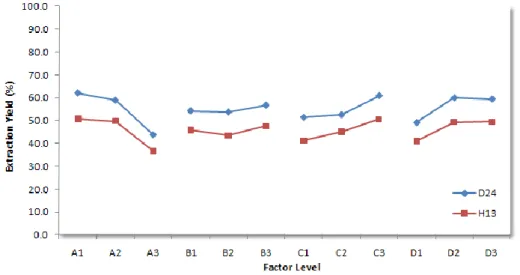
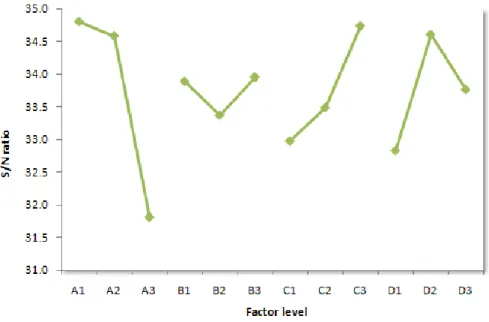
Figure

+7





Documento similar
The effect of the type of salt (sulphate, citrate, phosphate) and its concentration, and PEG molecular weight and its concentration, as well as the effect of the addition of
No obstante, como esta enfermedad afecta a cada persona de manera diferente, no todas las opciones de cuidado y tratamiento pueden ser apropiadas para cada individuo.. La forma
In recycled PLA obtained from slightly degraded PLA, the addition of fibroin obtained by acid hydrolysis and high molecular weight chitosan led to some degradation of the polymer,
Considering that carbohydrate and electrolyte content is similar for both beverages, it could be possible that the high content of protein in milk may be the cause for better
The two SUPRAS investigated were quite similar in extraction yields and antioxidant activity, however, because of the higher concentration of ingredients used for
By properly selecting the enzyme (chitinase, chitosanase or nonspecific enzymes) and the substrate properties (degree of deacetylation, molecular weight, etc.), it is possible to
0.17 wt% of PAA-BRO was considered to be the optimum weight for coating the PBAE/DNA complexes due to their relatively small size, higher stability, and even higher particle
That allow us, by using the well known criteria for parabolicity of rotationally symmetric model manifolds, to obtain Theorem 2.11 and Corollary 2.12 where sufficient and
