Full Terms & Conditions of access and use can be found at
http://www.tandfonline.com/action/journalInformation?journalCode=swoo20
Wood Material Science & Engineering
ISSN: 1748-0272 (Print) 1748-0280 (Online) Journal homepage: http://www.tandfonline.com/loi/swoo20
Optical performance of finished and unfinished
tropical timbers exposed to ultraviolet light in the
field in Costa Rica
Cynthia Salas, Róger Moya & Lupita Vargas-Fonseca
To cite this article: Cynthia Salas, Róger Moya & Lupita Vargas-Fonseca (2016) Optical performance of finished and unfinished tropical timbers exposed to ultraviolet light in the field in Costa Rica, Wood Material Science & Engineering, 11:2, 62-78, DOI: 10.1080/17480272.2014.949855
To link to this article: https://doi.org/10.1080/17480272.2014.949855
Published online: 22 Aug 2014.
Submit your article to this journal
Article views: 77
View related articles
View Crossmark data
ORIGINAL ARTICLE
Optical performance of finished and unfinished tropical timbers
exposed to ultraviolet light in the field in Costa Rica
CYNTHIA SALAS, RÓGER MOYA, & LUPITA VARGAS-FONSECA
Instituto Tecnológico de Costa Rica, Escuela de Ingeniería Forestal, Cartago, Costa Rica
Abstract
This study evaluated wood color change (ΔE*) and the surface quality in 10 tropical wood species painted with three finishes (composed of wax and polyurethane). Two weathering conditions were tested: natural weathering (NW) and artificial weathering (AW). The results showed that the application of these finishes, decreased the luminosity (L*), increased the redness (a*) and the yellowness (b*) parameters in all species.ΔE*, after weathering exposure, was affected significantly byL*,a*, andb, whereas for finished or pretreated wood,L* andb* are the main parameters affectingΔE* in the 10 tropical species studied.ΔE* values found in different finishes and pretreatments are cataloged as total change of color. Other important results were that tropical light colored timber with natural pretreatment produced higherΔE* than dark colored timber. The stains and fungal development were observed in polyurethane finishes in NW, but not in AW. The irregular and mosaic flaws were not observed in any kind of finish or pretreatment of surface. The values of the quality index created, which considered long and short lines and switch flaws, were lowest in NW and in waxy finish, while the highest value was obtained with the polyurethane finish.
Keywords:Lab color systems, color change, surface quality, tropical wood, finishing, coating
Introduction
The environmental conditions of tropical regions, such as high temperature and rainfall throughout the year, as happens in Costa Rica, enable the develop-ment of a great variety of forest plantation timber species (Petit and Montagnini2004). Many of these species have been successfully planted with com-mercial purposes (Nichols and Vanclay2012); how-ever, according to Moya and Muñoz (2010), the lack of knowledge about their wood properties or proces-sing, as well as color change of the finish applied on them, has been an obstacle to their utilization. Studies have been initiated recently on the physical and mechanical properties (Moya and Muñoz2010), their performance during the drying process (Moya et al.2013), and also on the caloric properties (Moya and Tenorio2013) of these species.
On the other hand, tropical timber species have gained importance in the marketing of wood-finishing products (chemical products), formulated to protect the color and quality of the wood surface (Dekaet al.
2008). However, these products had been formu-lated for wood obtained from trees grown under natural conditions. Tropical timber is characterized by high quantity and a variety of wood extractives (Pandey 2005a), which provide resistance to high temperature conditions, the perpendicular incidence of ultraviolet (UV) radiation, and high precipitation levels (Pastore et al. 2004). Meanwhile, timber plantations do not have the same resistance. Planta-tion woods usually have lower resistance values and lower content of extractives than wood from trees growing under natural conditions (Zobel and Spra-gue1998).
There are two large paint factories in Costa Rica (http://www.pinturassur.com/ and http://www.grupo kativo.com/), and other smaller ones that produce finishes and pretreatments for wood. Such products are distributed and used from Mexico to Panama, where tropical species coming from forest planta-tions are currently used.
These paint factories have developed finishes for the tropical region, to protect the wood from the
Correspondence: Róger Moya, Instituto Tecnológico de Costa Rica, Escuela de Ingeniería Forestal, P.O. Box 159-7050 Cartago, Costa Rica. Tel: (506) 2550 9092. Fax: (506) 2550 3315. E-mail:[email protected]
(Received 31 March 2014; revised 25 July 2014; accepted 25 July 2014)
© 2014 Taylor & Francis
intensity of the UV rays, the high relative humidity, and the high levels of precipitation. The polyureth-ane type finishes stand out for the protection of wood from outdoor conditions. These are organic compounds of the urethane prepolymer component, water insoluble, and UV light refractive, in order to reduce weather effects and maintain the quality of wood color (Williams2005). As for oil finishes, they can be dissolved in water, offer UV ray protection, and are water repellent, thus preventing damage to the wood surface (Williams2005).
The finished wood surface is degraded (color changes and degradation), when exposed weather effects (Schnabelet al. 2009). Factors such as solar radiation, temperature, rain, wind, relative humid-ity, heat, pollution, and others accelerate the pro-cess of discoloration and deterioration of the finish (Schaller and Rogez 2007, Deka et al. 2008). Various studies (Schaller and Rogez 2007, Deka et al. 2008, Ahajji et al. 2009) have found that UV light, visible light, and infrared light generate most chemical reactions in the wood components and in the finish itself.
The studies on the deterioration of wood surface finishes usually focus on temperate wood species (Petric et al. 2004, Deka et al. 2008, Ahajji et al. 2009). Due to this orientation, many factories use wood species from temperate climates to establish the characteristics of the finish they produce. In fact, Costa Rican factories usePinus radiataas a standard for studies on the performance of wood finish. However, there are few studies on the performance of finish for tropical woods, such asCedrela odorata, Carapa guianenesis, Tectona grandis, and Acacia mangium (Valverde and Moya2014). The perform-ance of various finishes in natural weathering (NW) and artificial weathering (AW) conditions were studied in these species.
In view of this situation, it is important to understand the behavior of color and the degrada-tion of surface finishes on wood from fast growing plantations – with different treatments and exposed to weathering conditions (natural or artificial) – in order to determine the possible uses and markets for those species, with the convenient finish. Therefore, the present research studies the initial color change when applying 3 different types of pretreatment and finishes formulated for tropical conditions to 10 spe-cies growing under plantation conditions. Also, the present work defines the color change and deteri-oration of these different finishes for each of these 10 plantation species when exposed to AW and NW conditions.
Materials and methods
Site, plantation description, and tree sampling
Ten different pure plantations located in several parts of Costa Rica were studied (Figure 2). The plantation species were A. mangium, Alnus acumi-nata, Bombacopsis quinata, Cupressus lusitanica, Gme-lina arborea, Pinus caribaea, Swietenia macrophylla, T. grandis, Terminalia amazonia, and Terminalia oblonga. The initial planting density was 1111 trees/ ha (3 × 3 m spacing). At the time of evaluation, the age was 9–18 years old and the density was of 495–575 trees/ha. The samples for the finishing trials were extracted from 25-mm thick boards dried to 12% moisture content in conventional kilns; for further information see Moya et al. (2013). All these species are being introduced in the production of outdoor furniture. Twelve boards were used in each species.
Sampling
A total of 104 units of 15 × 7.5 × 0.6 cm were extracted from the 12 dried boards per species. These samples were conditioned at 12% moisture content (22 °C temperature and 67% relative humidity) for 4 weeks before the application of the different finishes and pretreatment. Then all finishes and pretreatment were applied. In total 4 units were tested in each treatment, which means a total of 104 samples per species (3 finishes × 4 surface treat-ments × 4 units + 1 control test × 4 units). The samples selected were free from damages and flaws and only heartwood board was only considered.
Surface preparation and application of finishes and pretreatment
Weathering exposure characteristics
In this study, two kinds of exposure were tested: NW and AW. In NW, wood samples are exposed for 500 days with an inclination of 15° south in an area free of shade and where the rain, sun, and wind impacted directly upon the samples. The test began in June 2011. Wood samples were exposed in the Cartago province of Costa Rica (9°50′59″N; 83°54′37″W) (Figure 2). The site has an altitude of 1380 m.a.s.l. with an annual temperature between 15.0 and 23.9 °C and an average precipitation of 1563.5 mm. The solar radiation in Cartago is 17 MJ/m2. The climatic conditions were widely detailed by Valverde and Moya (2014). For the AW, UV exposure was administered by means of a weathering Q-Lab camera (QUV/spray model). The ASTM G-154
standard was applied for this test (ASTM 2013a). The exposure consisted of 4-hour cycles in two phases: first, 4 hours of UV radiation at 50 °C and 0.71 W/m2(with mercury bulb type UVB 313L and wavelength 310 nm), then a second phase of condensation that took 2 hours and consisted of using evaporated water at 50 °C. The total exposure amounted to 400 hours for each species.
Color determination
This wood characteristic was measured before and after weathering exposure on the finishes’ surface. This means that the surface color was measured on all samples of NW immediately after pretreatment application. Meanwhile, the surface colors of all samples of AW were measured before weathering began. Next, a lapse of time between pretreatment application and color measuring was presented in these samples. Color measuring was done with a Hunter Lab mini Scan XE Plus spectrophotometer. The CIE Lab standardized chromatologic system was used. The range of this measurement is from 400 to 700 nm with an opening at the point of measurement of 11 mm. For the observation of reflection, the specular component was included at a 10° angle, which is normal for the specimen surface (D65/10); a field of vision of 2° (Standard observer, CIE 1931); and an illumination standard of D65 (corresponding to daylight in 6500 K). The mini Scan XE Plus generated three parameters for each measurement, namely, L*(luminosity), a*(redness), and finally b*(yellowness). The color was measured at room temperature in two different measurements,
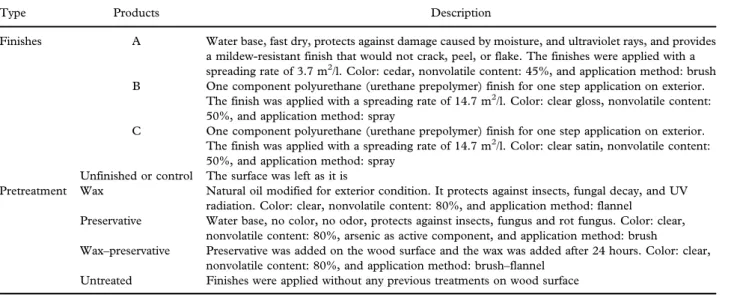
Table I. Finishes studied and coating utilized on the surface of 10 tropical species wood from plantations.
Type Products Description
Finishes A Water base, fast dry, protects against damage caused by moisture, and ultraviolet rays, and provides a mildew-resistant finish that would not crack, peel, or flake. The finishes were applied with a spreading rate of 3.7 m2/l. Color: cedar, nonvolatile content: 45%, and application method: brush B One component polyurethane (urethane prepolymer) finish for one step application on exterior.
The finish was applied with a spreading rate of 14.7 m2/l. Color: clear gloss, nonvolatile content:
50%, and application method: spray
C One component polyurethane (urethane prepolymer) finish for one step application on exterior. The finish was applied with a spreading rate of 14.7 m2/l. Color: clear satin, nonvolatile content:
50%, and application method: spray Unfinished or control The surface was left as it is
Pretreatment Wax Natural oil modified for exterior condition. It protects against insects, fungal decay, and UV radiation. Color: clear, nonvolatile content: 80%, and application method: flannel
Preservative Water base, no color, no odor, protects against insects, fungus and rot fungus. Color: clear, nonvolatile content: 80%, arsenic as active component, and application method: brush
Wax–preservative Preservative was added on the wood surface and the wax was added after 24 hours. Color: clear, nonvolatile content: 80%, and application method: brush–flannel
Untreated Finishes were applied without any previous treatments on wood surface
Plantation wood
Figure 1. Finishes and pretreatment applied on the surface of 10 tropical species wood from plantations.
Figure 2. Initial values for the color parametersL*,a*, andb* of the wood of 10 plantation species in Costa Rica, with 3finishes and different surface treatments.
each one at 2 cm from the ends. The measurement of color was evaluated in the UV radiation phase to avoid measurement errors due to the condensation in AW. Wood samples in NW were evaluated between the 10th and 12th hour in the morning and without any event of rain before the measurement.
Color change (ΔE*)
It was determined by three conditions: (i) color difference between unfinished and finishing treat-ment in each wood species, (ii) color difference between untreated surface and pretreatment in each finish and each species, and (iii) color change for each finish between, after, and before weathering exposure. These differences were determined according to the ASTM D 2244 standard (ASTM 2013b) whose formula is detailed in Equation 1 (ASTM2013b). To catalog theΔE*color variation, Cui et al’s (2004) method was used. It establishes five color change levels perceived by the human eye: if 0 <ΔE*> 0.5 the color change is not perceived by the human eye; if 1.5 <ΔE* > 3.0 the color change is barely perceived; if 3.0 <ΔE* > 6.0 the change is perceived; if 6.0 < ΔE* > 12.0 the color change is quite noticeable by the human eye, and finally, if
ΔE* is higher than 12, then a total color change occurred:
DE ¼qffiffiffiffiffiffiffiffiffiffiffiffiffiffiffiffiffiffiffiffiffiffiffiffiffiffiffiffiffiffiffiffiffiffiffiffiffiffiffiffiffiffiffiffiffiffiðDLÞ2þ ðDaÞ2þ ðDbÞ2 ð1Þ
whereΔE* is the wood color difference, ΔLtheL* before weathering – L* after weathering, Δathe a* before weathering– a* after weathering, andΔbthe b* before weathering– b* after weathering.
Evaluation of the quality of finish
After NW or AW exposures, fungi, stains, or bubbles on finished surface were evaluated. Fungi and stain were evaluated according to their presence or absence, by means of visual inspections: for fungi, presence of fruiting body or spores; for stain, surface color different than the typical color of surface coating after 500 exposures (NW or AW), the presence or absence of fungi, stains, or bubbles on finished surface were evaluated. Fungi and stain presence were evaluated by the presence or absence. Both defects were observed by visual inspections: for fungi presence, fruiting body or spores presence was observed, and for stain, surface color different than typical color of surface coating was observed. The presence of bubbles is evidenced as cracks of the finish coat on the wood surface. In addition, for the evaluation of the quality of finish in each species and
their behavior to weathering (NW as well as AW) the ASTM D-660 standard (ASTM 2013c) was used, that establishes an evaluation for the different kinds of deterioration that finishes face: irregular, long line, short parallels, mosaic, and switch. In general, deterioration is evaluated on an even scale from 2 to 10, in which, as the number approaches 2 it means a greater deterioration of the finish.
Statistical analysis
First, the differences between the control test and each finishing treatment and pretreatment were evaluated. A one-factor (one-way-Anova) analysis of variance per species was applied to finish color parameters. The model included the following sources of variation: finishing (f), pretreatment (c), the interactions between weathering and pretreat-ment (Equation 2). The difference among the averages was assessed through Dunnett’s test with a level of significance of P < 0.05, where the control treatment consists of wood samples without any finishing or pretreatment. Also, the influence of the change in color parameters (ΔL*, Δa* y Δb*) on total color change (AE*) was evaluated using mul-tiple regression analysis (Equation 3) on the wooden surface with different finishes. Each parameter change in the regression was assessed using a significance level of 99%:
Yij¼lþfiþcjþfcijþeij ð2Þ
DE¼DLþDaþDbþeij ð3Þ
where Yij is the single observation of each
color parameter of the ij-wood sample, µ is the overall mean, fis theith-finishing type fixed effect, cisjth-pretreatment fixed effect,f*cijis the random
interaction between the ith finishing type and the jth pretreatment, and eij is the residual random
effect.
sample. Subsequently, SQI behavior was evaluated with exposure time in NW and AW using the following equation:
SQI¼ ðIR0.10Þ þ ðLL0.50Þ þ ðSP0.25Þ
þ ðSS0.15Þ ð4Þ
whereIRis the irregular flaw,LLthe long line flaw, SPthe short parallel flaw, andSSthe switch flaw.
Results
Initial surface color of wood
L* parameter was above 35, varying from 35 to 70; the a* parameter was positive in all cases, varying from 9 to 24, and theb* parameter was also positive, varying from 15 to 50 (Figure 2). A. mangium, S. macrophylla, and T. grandis registered the lowest values in L* parameter (Figure 2a, 2g, and 2h), whereas the rest of the species presented average values higher than those for the previous species. Regarding thea* parameter, the lowest values were for G. arborea, P. caribaea, and the two Terminalia species (Figure 2o, 2p, 2s, and 2t). On the other hand, S. macrophylla presented the highest values (Figure 2q). Last, the b* parameter show no differ-entiation among the various species (Figure 2u-1ad). The application of the different types of finish or pretreatments affects the wood color parameters, in all wood species. TheL* values decreased with the application of finish in all species and in both types of weathering, except G. arborea (Figure 2e), P. caribaea(Figure 2f), andT. grandis(Figure 2h) in some finishes, with some treatments, with finish C. Meanwhile, the a* values increased with the application of finishes to the wood, except in some treatments ofB. quinata,P. caribaea,T. oblonga, and T. grandis (Figure 2m, 2p, 2r, and 2t), where statistical differences were not observed. Concerning the b* parameter, it was found that this value increased in almost of the species and conditions, except inS. macrophylla(Figure 2aa).
In relation to the values obtained for the color change (ΔE*) in the two types of weathering, the values varied from 10.9 to 31.1 (Table II).A. man-gium showed the lowestΔE* and the highest values were found inB. quinataand P. caribaea(Table II). Intermediate values were found in C. lusitanica, G. arborea, P. caribaea, T. grandis, T. amazonia, T. oblonga, A. acuminata, and S. macrophylla. On the other hand,ΔE* values for all of the species were in general lower for the wood with finish A, followed by finishes C and B, with few differences among them (Table II). Moreover, almost color changes (ΔE*) occurred in AW, using the three types of finishes for
Color change due to exposure
As expected, the highest change in all types of finishes and surface treatments for all species was in the samples exposed to NW. Similarly, ΔE* values were higher than 12 for all species and types of finishes with NW exposure (Figure 3).
The highest surface color changes, given by high values of ΔE*, were observed in A. acuminata, C. lusitanica,G. arborea, P. caribaea,S. macrophylla, and the twoTerminaliaspecies (Figure 3b,3d–3g,3i,
and 3j) in NW. A. mangium, B. quinata, and T. grandis (Figure 3a, 3c, and 3h), on the other hand, presented the lowest ΔE* in NW. For AW, the highest ΔE* values, above 12, were found in S. macrophylla (Figure 3g), followed byC. lusitanica withΔE* values close to 12 (Figure 3d).T. amazonia presented values lower than 12 in the A-wax and A-preservative treatments, A and B without treatment, and the control test (Figure 3i). Some treatments with values over 12 were also observed in
Figure 3. Color change (ΔE*) values of 3 types offinishing exposed to NW and AW in 10 wood types from forest plantations.
P. caribaea, specifically with finish A and the control sample (Figure 3f). T. grandis and T. oblonga presented values lower than 12 in almost treatments except the control sample (Figure 3h and 3j). Last, A. mangium,A. acuminata,B. quinata, andG. melina presented ΔE* values under 12 in all treatments (Figure 3a–3c and3e).
Concerning the ΔE* of the different types of finishing (A–C) and the pretreatments applied (wax, preservative–wax, preservative), compared to the control sample after exposure to weathering conditions, AW was found to produce the highest quantity of statistical differences among the species (Figure 3), except for B. quinata which showed no differences (Figure 3c), and A. mangium and G. arborea(Figure 3aand 3e), which presented few differences with the control sample. Regarding NW, it depended on the species, coating, or surface treatment. For A. mangium, a lower ΔE* was only found in the C-untreated treatment (Figure 2a), while P. caribea presented ΔE* values for C-wax and C-preservative that were higher than for the control (Figure 3f). Other species (A. acuminata, B. quinata, C. lusitanica, G. arborea, S. macrophylla, T. grandis, T. amazonia, and T. oblonga) presented greater variation between treatment or coating (Figure 3b–3j).
The ΔE* of the surface of the finish after weath-ering was influenced by the color parameters. The analysis of this influence by means of a multiple regression (Equation 3), showed the following (Table III):
1. For the control sample (without finish), the ΔE* was significantly affected by the luminosity (L*), redness (a*), and yellowness (b*) in the 10 species and in the two types of weathering, except for A. mangium, T. grandis, and G. arborea, showing that some treatments were not affected by these three color parameters. 2. TheL* parameter significantly affected ΔE* in
most treatments.
3. TheΔE* value was significantly affected byL* and b* together in many of the species and types of finish, for example, in T. amazonia, with finishes B and C.
4. In those cases where the luminosity parameter (L*) did not affect the ΔE*, the b* parameter did. For example, in the C-wax treatment for A. mangium, S. macrophylla, T. grandis, and T. amazonia.
5. The cases in which the L* parameter was the only parameter to affect ΔE*, were mostly in AW (22 out of 25).A. magniumdid not present
6. The treatments in which a* and b* affected ΔE* significantly, L* did not affect ΔE*, for example inA. mangiumin NW in C-preservative. 7. In C. lusitanica wood, regardless of the type of finish, theΔE* was significantly affected by the changes inL*,a*, andb*.
8. For NW, as expected, the ΔE* was frequently affected by the change in the three color parameters (L*, a*, and b*) in A finishes, for any type of surface treatment, with the excep-tion ofA. mangium, which was mostly affected byL* andb* together.
Surface quality
According to the surface evaluation, dark and blue stains on the finish appeared in few species and in few treatments. The stains were observed in A. mangium and T. oblonga, in finishes B and C in all surface treatments in AW. This flaw also appeared inP. caribaea in finish C with the C-wax and C-preservative treatments. Concerning fungi on the finished surface, it was not observed in the samples of the different species or finishes exposed to AW. In NW, fungi appeared in almost the entire surface of the finish of all the species, except forA. mangium, with the B-untreated and B-preservative treatments.
In NW, fungi were not observed in all treatments ofT. grandisandT. oblongaandP. caribaeain treat-ments B-untreated and B-preservative (Table IV). Meanwhile, fungi development was an obstacle for an adequate evaluation of surface deterioration in species with light tonalities, such as A. acuminata, B. quinata, G. arborea, P. caribaea, and T. oblonga. Last, bubbles were only observed in samples exposed to AW (Table IV), and they were not observed in 2 of the 10 species studied (B. quinata andG. arborea), nor were they found in the samples of all species with type A finish, or inA. acuminata andT. oblonga with B finish. For almost treatments where bubbles were found, they were observed in 100% of the samples (Table IV).
The evaluation of surface degradation showed that after weathering none of the species with any kind of finish or pretreatment presented the irregular type of flaw or mosaic flaw. Next, the SQI, in which irregular flaw, long and short lines, and switch flaw were evaluated together, showed, as expected, low values in the samples exposed to NW for almost of the species, except in B. quinata, G. arborea, P. caribaea, and T. oblonga with finishes B and C (Figure 4c, 4e, 4f, and 4h), for which the SQI was higher for NW than for AW.
The lowest SQI was found in the different types of finishes of all the species in NW and with finish B in
A. acuminatain NW (Figure 4a). ForA. acuminata, B. quinata, G. arborea, P. caribaea, and T. oblonga, finish A presented lower values than finishes B and C in the different surface treatments (Figure 4b, 4c, 4e, 4f, and 4j). C. lusitanica, S. macrophylla, T. grandis, and T. amazonia, did not show a clear trend in the SQI behavior of the finishes, that was high for some finishes and low for others. The AW analysis found the lowest index in finishes A in C. lusitanica, T. amazonia, and T. oblonga (Figure 4d, 4i, and4j), while the highest SQI value was found in B. quinata, G. arborea, and P. caribaea in finish A (Figure 4c). For A. mangium the highest SQI were found in surfaces treated with preservative in any of the finishes (Figure 4a). In A. acuminata, again the surfaces treated with preservative and preservative– wax in the three types of finishes used, pre-sented the highest SQI. Finish B in S. macrophylla and T. grandis presented the highest SQI values (Figure 4gand4h).
Discussion
Initial color
The positive values found in the initial color of the finishes of the different woods are produced by the combination of white (L*), red (a*), and yellow (b*) tonalities, which reflect the natural color of the wood, since these pretreatments and finishes are almost transparent (Table II). The combination of whites, reds, and yellows is a characteristic pattern of tropical woods (Nishino et al. 1998, Valverde and Moya2014).
The high color variation of tropical woods is attributable to the variation of the different para-meters. The most influencing parameter is luminos-ity (L*). According to this variation, two groups can be established: species withL* > 54 and species with L* < 54 (Nishino et al. 1998). The previous affirmation agrees with the findings for the species studied, since two groups of color were found: a first group including A. mangium, S. macrophylla, and T. grandis, with values ofL* < 54 (Figure 1a,1g, and 1h), are classified as dark colored and a second group including A. acuminata, B. quinata, C. lusita-nica, G. arborea, P. caribaea, T. amazonia, and T. oblonga (Figure 1b–1fand 1i–1j), with values of L* > 54, are classified as light colored.
Perf
Presence of fungi in natural exposure Presence of bubbles in accelerated exposure
Finishes Pretreatment
“–”indicates that no fungi or bubbles were observed with the respective species and treatment.
compounds, UV light absorbents, and antioxidant agents, react chemically with the lignin, cellulose, hemicellulose, and extractives that are present in the
wood (Georgeet al.2005, Williams2005, Schaller and Rogez 2007); the resulting chemical interaction between the wood and finish, causes a change of
magnitude of theL*,a*, andb* parameters (Figure 2), and therefore a variation in theΔE* (Table II), in all of the species studied.
Similarly, the chemical composition of the differ-ent types of finish caused interactions with wood components (Temizet al. 2007), and as a result in some species or surface treatment, one of the three parameters was not significantly affected, as in B. quinata and P. caribaea with finishes B and C. In this case the parameter a* was not significantly influenced (Figure 2m and2p).
Although some parameters did not change in the species (Figure 2), ΔE* is in almost cases higher than 12 units (Table II), that is considered as a total change in color (Nishino et al. 1998). Another important aspect regarding the values of ΔE* is that these were different in all species. However, the treatments applied with finish A presented the lowest values (Table II), followed by C and B. Such result was expected since finish A presents a cedar tonality, while for finishes B and C the formulation was 100% transparent (Table I). Due to this composition, the application of finish A tends to produce a darker color than the one produced by finishes B and C, which cause higher values of ΔE* (higher color change) in woods with high values of L* or light colored woods (A. acuminata, B. quinata, C. lusitanica, G. arborea, P. caribaea, T. amazonia, and T. oblonga). Never-theless, the woods with the lowest values of L*, called dark woods (A. mangium,S. macrophylla, and T. grandis), present a lower ΔE*.
Color change after exposure
Regarding the variation of ΔE* between NW and AW after weathering, the highest values were obtained in NW. In fact,ΔE* showed values above 12 in all cases, regardless of the species or finish (Figure 2), that means a complete change of color. This variation between the two weathering condi-tions is attributable to the fact that with NW there is constant variability of solar radiation (different wave lengths applied: NW produces higher wave length), humidity, rainfall, pollution, and biotic agents that accelerate the color degradation process, while with AW those conditions are controlled, and the influ-ence comes mainly from UV rays (George et al. 2005, Sivrikayaet al.2010). In this regard, Creemers et al. (2002) pointed out the difficulty of reproducing the natural environmental conditions in an artificial test inside a chamber. Because of the adverse conditions present in the NW, the ΔE* is over 12 (Figure 2), and there is a total change in color of the wood (Cuiet al. 2004).
The change of color of the finishes after weath-ering, in both NW and AW (Figure 2), may be explained by the processes of photodegradation of the finish in outdoor conditions (Georgeet al.2005, Deka et al. 2008). Even if the wood is protected, these weather conditions influence the color of the wood surface. First, the degradation of lignin in the wood begins, due to UV light absorption through the finish (Creemers et al. 2002, George et al. 2005), causing the decomposition of the methoxyl groups and the formation of carbonyl and carboxyl chro-moformic groups (George et al. 2005, Deka et al. 2008), as well as the degradation of polyphenolic extractives by the UV light (Pandey2005b). The loss of the lignin and extractives in wood produces a grayish coloration, thus leading to a reduction ofL*. The previous result was confirmed for all species and types of finishing, since the L* parameter affected theΔE* value significantly (Table III).
Last, the variations ofΔE* in the different species (Figure 3) are attributable to the variations in the chemical compounds, mainly the extractives present in each wood type (Chung-Yun and Mon-Lin1988), and its capacity of interaction with the finish (Petric et al.2004, Pandey2005b). The species–finish inter-action in A. mangium and T. grandis (classified as dark colored woods) was probably better in NW, showing lower values ofΔE* (Figure 3aand3h). On the contrary, A. acuminata, C. lusitanica, G. arborea, P. caribaea,T. amazonia, andT. oblonga, with values of L* above 54, and listed as light colored woods, presented less wood–finish interaction, which resulted in higher variations of ΔE* (Figure 3b, 3d–3g, 3i, and3j). However, the high values ofΔE*inB. quinata, which is lighter in color, and the lower values ofΔE*in S. macrophylla, which is darker in color (Figure 3c and3g), do not show the same behavior as the rest of the species. That is to say, high values of color change
ΔE* in light colored and low values of ΔE* in dark color.Figures 5and6show wood color change after NW and AW, respectively, in all species and it can be observed that dark species were less affected, but in light colored species, the color change was severe (Figures 5and6). Such results indicate that the effects of the extractives on these species are different from the effect on other species. For example, the acetylation – which may vary among species – of OH groups, is a strategy used in the chemical formulation of finishes to stop photodegradation (Georgeet al.2005).
high values of ΔE* (Figure 3a–3c and 3e). Such results indicate that the performance of the finish in an artificial condition does not totally reflect the result obtained with NW.
Although the purpose of the finish is to protect the natural wood color (Williams et al. 1999), such protection becomes less effective with time, due to the loss in effectiveness of the lignin stabilizers and
the UV filters of the finishes (George et al. 2005), hence the loss of the color. Based on the above, after 500 days exposure to NW, the finish had probably lost its effectiveness to maintain the color (Figure 5), thus indicating that less days can be better to test the effectiveness in tropical conditions. For example, with the 350 days exposure study carried out for T. grandisandA. mangium, both species used in this work, it was possible to measure the effectiveness of the finish (Valverde and Moya2014).
The analysis of the influence of the color para-meters on color change (ΔE*) showed that L*, a*, andb* have a significant influence on wood that has not received some kind of finish or pretreatment. When a type of finish or pretreatment has been applied,L* andb* have the greatest influence upon ΔE* (Table III). Such behavior is caused by a chemical modification of the surface due to exposure (Chung-Yun and Mon-Lin 1988, George et al. 2005). The UV rays that enter directly, or are let in by the wood surface pretreatment, produce the decomposition of the lignin methoxyl groups and begin to form carbonyl and carboxyl chromoformic groups, added to the degradation of extractives (George et al. 2005, Deka et al. 2008). Because of the loss of lignin and wood extractives, the wood starts to become grayish. This primarily increases the value of parameterL* (Gierlingeret al. 2004, Deka et al. 2008), that is negatively correlated with a* (Moya and Berrocal2010), thus indirectly affecting the value ofΔE*. In addition, although the finishes are made with UV light stabilizers and antioxidants to increase resistance to weathering, maintaining the color is impossible (Moya and Berrocal 2010); the parameters of luminosity (L*) and the yellows (b*) being the most affected. With regard to the reddish parameter (a*), it is generally related to the addition of additives to produce darker colors (Jewitt2000), which is not the case, since the finishes used in the present study are transparent (Table I), so it was expected that this parameter would be unaffected (Table III).
Quality of the surface
One of the limitations of the AW is that due to high temperature and high UV intensity, the development of stains and fungi is impeded (Ghost et al. 2009), whereas with NW, the temperature and relative humidity of tropical conditions help development of stain and fungi (Valverde and Moya 2014). This explains why in NW fungi and stains were observed in almost species and treatments of surface (Table IV). However, this defect on the surface of the finish could be washed away with a bleach
solution (Williams 2005). Bubbles, on the other hand, were only observed in AW in the polyurethane finishes (Table IV). This defect is due to the application of high temperature cycles and water vapor condensation in AW, which slowly break the surface tension of the finish, causing bubbles to be formed by the water trapped in the bottom of the finish (Jewitt2000).
In relation to the quality of the finish surface, the absence of irregular and mosaic, coincides with the results found for other tropical species studied in Costa Rica (Valverde and Moya2014). Such defects usually appear when the finish has been exposed for long periods of time and presents poor adherence to the substrate (Williams and Feist 2001).
Exposure to UV light, with variations of temper-ature and relative humidity, together with exposure to water, generate degradation and erosion processes in the wood which cause defects (long and short lines and switch flaw) on the finish surface, thus reducing the quality of the wood surface (Williams and Feist 2001). However, despite this degradation of the finishes, the SQI presented was higher than for wood without treatment (Figure 4), which is explained by the fact that the finish stops the degradation of lignin (Williams 2005) and the loss of extractives and cellulose in the wood surface (Creemers et al. 2002), if it is not adequately protected (Williams and Feist 2001).
The high SQI obtained with polyurethane finishes (B and C) in NW is attributable to the hard-resistant film this type of finish forms and its good interaction with the wood, whereas with the wax type finish A, probably of low resistance to surface tension and poor response to environment, the formation of flaws and cracks (splits) on the finish is propitiated, which is reflected in the SQI (Evans et al. 2008).
Conclusions
The initial color of the wood from plantation species was different in each species. The lowest values of the L* parameter, under 54, were observed in A. mangium, S. macrophylla, and T. grandis and they were classified as dark colored woods. Species with higher values ofL*, above 54, were cataloged as light colored woods. The finishes changed the values of the color parameters,L* decreased anda* andb* increased for all species. Because of these changes in the parameters, the change of color was cataloged as total change. The greatest change though, was found in the wax finish, because of its cedar pigmentation. Color change (ΔE*) after weathering in wood with any finish or pretreatment was influenced signifi-cantly by L*, a*, and b*, while if finish or pretreat-ment has been applied, L* and b* are the main parameters influencing ΔE* in the 10 tropical species studied. However, it was found that wood color change after weathering and was less affected in species with dark colored wood (A. mangium, S. macrophylla, and T. grandis), but in light colored species (A. acuminata, B. quinata, C. lusitanica, G. arborea,P. caribaea,T. amazonia, andT. oblonga), the color change was severe. Dark woods tended to lighten and light woods tended to darken.
Regarding the evaluation of defects, the stains on the finishes were only present in a few species (A. mangium, P. caribaea, and T. oblonga) and few treatments. No fungi were observed on the finished surface in the different species, or finishes exposed to AW, whereas in NW fungi were observed in almost the totality of the species, except for A. mangium. Bubbles were not observed in natural exposure in any of the finishes, except for polyurethane type finishes. No bubbles were found with wax finishes. The evaluation of the SQI, as expected, showed low values of SQI for the NW samples, except for B. quinata, G. arborea, P. caribaea, and T. oblonga with finishes B and C.
Acknowledgments
The authors wish to thank The Vicerrectoría de Investigación y Extensión of the Instituto Tecnológico de Costa Ricafor its financial support and Grupo Kativo S.A. for their support with finishes.
References
Ahajji, A., Diouf, P. N., Aloui, F., Elbakali, I., Perrin, D., Merlin, A. and George, B. (2009) Influence of heat treatment on antioxidant properties and colour stability of beech and spruce wood and their extractives.Wood Science and Techno-logy, 43(1–2), 69–83.
ASTM (2013a) Standard Practice for Operating Fluorescent Light Apparatus for UV Exposure of Nonmetallic Material (G 154-98)
(Pennsylvania: Book of Standards), 12 p.
ASTM (2013b)Standard Practice for Calculation of Color Tolerances and Color Differences from Instrumentally Measured Color
Coordi-nates (D 2244-02)(Pennsylvania: Book of Standards), 8 p.
ASTM (2013c) Standard Test Method for Evaluating Degree of
Checking of Exterior Paints (D 660-93)(Pennsylvania: Book of
Standards), 4 p.
Chung-Yun, H. and Mon-Lin, K. (1988) Influence of extractives on wood gluing and finishing – A review. Forest Products Journal, 38(1), 52–56.
Creemers, J., de Meijer, M., Zimmermann, T. and Sell, J. (2002) Influence of climatic factors on the weathering of coated wood.European Journal Forest Products, 60, 411–420. Cui, W., Kamdem, P. and Rypstra, T. (2004) Diffuse reflectance
infrared Fourier transform spectroscopy (DRIFT) and color changes of artificial weathered wood.Wood Fiber and Science, 36, 291–301
Deka, M., Humar, M., Rep, G., Kricej, B., Šentjurc, M. and Petric, M. (2008) Effects of UV light irradiation on colour stability of thermally modified, copper ethanolamine treated and non-modified wood: EPR and DRIFT spectroscopic studies.Wood Science and Technology, 42(1), 5–20.
Evans, P. D., Urban, K. and Chowdhury, M. J. A. (2008) Surface checking of wood is increased by photodegradation caused by ultraviolet and visible light.Wood Science and Technology, 42(3), 251–265.
George, B., Suttie, E., Merlin, A. and Deglise, X. (2005) Photodegradation and photostabilitation of wood–The state of art.Polymer Degradation and Stability, 88(2), 268–274. Ghost, S. C., Militz, H. and Mai, C. (2009) Natural weathering of
scoots pine (Pinus sylvestris L.) boards modified with func-tionalized commercial silicone emulsions. Bioresources, 4, 659–673.
Gierlinger, N., Jacques, D., Grabner, M., Wimmer, R., Schwan-ninger, M., Rozenberg, P. and Pâques, L. E. (2004) Colour of larch heartwood and relationships to extractives and brown-rot decay resistance. Trees Structure and Function, 18(1), 102–108.
Jewitt, J. (2000)Great wood finishes(New York: Taunton Press). Moya, R. and Berrocal, A. (2010) Wood colour variation in
sapwood and heartwood of young trees of Tectona grandis
and its relationship with plantation characteristics, site, and decay resistance.Annals of Forest Science, 67(1), 109. Moya, R. and Muñoz, F. (2010) Physical and mechanical
properties of eight species from fast-growth plantation in Costa Rica.Journal Tropical of Forest Science, 22, 317–328. Moya, R. and Tenorio, C. (2013) Fuelwood characteristics and its
relation with extractives and chemical properties of ten fast-growth species in Costa Rica. Biomass and Bioenergy, 56, 14–21.
Moya, R., Urueña, E., Salas, C., Muñoz, F. and Espinoza, O. (2013) Kiln drying behavior of lumber from ten fast-growth plantation species in Costa Rica.Wood Material Science and Engineering, 8(1), 37–45.
Nichols, J. D. and Vanclay, J. K. (2012) Domestication of native tree species for timber plantations: Key insights for tropical island nations.International Forestry Review, 14(4), 402–413. Nishino, Y., Janin, G., Chanson, B., Détienne, P., Gril, J. and Thibaut, B. (1998) Colorimetry of wood specimens from French Guiana.Journal of Wood Science, 44(1), 3–8. Pandey, K. K. (2005a) A note on the influence of extractives on
the photo-discoloration and photo-degradation of wood.
Pandey, K. K. (2005b) Study of the effect of photo-irradiation on the surface chemistry of wood. Polymer Degradation and Stability, 90(1), 9–20.
Pastore, T. C. M., Santos, K. O. and Rubim, J. C. (2004) A spectrocolorimetric study on the effect of ultraviolet irradiation of four tropical hardwoods. Bioresource Technology, 93(1), 37–42.
Petit, B. and Montagnini, F. (2004) Growth equations and rotation ages of ten native tree species in mixed and pure plantations in the humid neotropics. Forest Ecology and Management, 199(2–3), 243–257.
Petric, M., Kricej, B., Humar, M., Pavlic, M. and Tomazic, M. (2004) Patination of cherry wood and spruce wood with ethanolamine and surface finishes.Surface Coatings Interna-tional Part B: Coatings Transactions, 87(3), 195–201. Schaller, C. and Rogez, D. (2007) New approaches in wood
coating stabilization. Journal of Coatings Technology and Research, 4(4), 401–409.
Schnabel, T., Zimmer, B. and Petutschnigg, A. J. (2009) On the modelling of colour changes of wood surfaces. European Journal of Wood and Wood Products, 67(2), 141–149. Sivrikaya, H., Hafizoglu, H., Yasav, A. and Aydemir, D. (2010)
Natural weathering of oak (Quercus petrae) and chestnut (Castanea sativa) coated with various finishes.Color Research Application, 36, 1–24.
Temiz, A., Terziev, N., Eikenes, M. and Hafren, J. (2007) Effect of accelerated weathering on surface chemistry of modified wood.Applied Surface Science, 253(12), 5355–5362. Tolvaj, L. and Mitsui, K. (2005) Light source dependence of the
photodegradation of wood. Journal of Wood Science, 51(5), 468–473.
Valverde, J. C. and Moya, R. (2014) Correlation and modeling between color variation and quality of the surface between accelerated and natural tropical weathering in Acacia
man-gium, Cedrela odorata and Tectona grandis wood with two
coating.Color Research Application. doi:10.1002/col.21826
Williams, R. S. and Feist, W. C. (2001) Duration of wood preweathering: Effect on the service life of subsequently applied paint.Journal of Coatings Technology, 73(9), 65–72. Williams, R. S., Sotos, P. and Feist, W. C. (1999) Evaluation of
several finishes on severely weathered wood. Journal of Coatings Technology, 71(8), 97–102.
Williams, S. (2005) Finishing of wood. In S.Willians (ed.)
Handbook of Wood Chemistry and Wood Composites (New
York: CRC Press), pp. 115–210.