
Facing the challenge : the Lisbon strategy for growth and employment / report of the High Level Group chaired by Wim Kok
54
0
0
Texto completo
(2) Facing the challenge The Lisbon strategy for growth and employment. Report from the High Level Group chaired by Wim Kok. November 2004.
(3) The contents of this publication reflect the opinion of the High Level Group only. This report is available at: http://europa.eu.int/comm/lisbon_strategy/index_en.html The High Level Group can be contacted at the following address: SG-KOK-GROUP/[email protected]. Europe Direct is a service to help you find answers to your questions about the European Union Freephone number:. 00 800 6 7 8 9 10 11 A great deal of additional information on the European Union is available on the Internet. It can be accessed through the Europa server (http://europa.eu.int). Cataloguing data can be found at the end of this publication. Luxembourg: Office for Official Publications of the European Communities, 2004 ISBN 92-894-7054-2 © European Communities, 2004 Reproduction is authorised provided the source is acknowledged. Printed in Belgium PRINTED ON WHITE CHLORINE-FREE PAPER.
(4) Contents. The High Level Group. 5. Executive summary. 6. Chapter One — Why Lisbon?. 8. Introduction. 8. Europe in a changed world. 9. The mixed Lisbon picture. 10. The continued case for Lisbon. 11. External challenges — between a rock and a hard place. 12. Internal challenges — the greying of Europe. 13. The challenge of enlargement. 13. The facts on growth, employment and productivity. 14. Act focused, act together, and act now. 16. Chapter Two — Unblocking the blockages: releasing the potential. 18. What to do?. 18. 1.. Realising the knowledge society. 19. Why the knowledge society?. 19. Attracting and retaining world-class researchers Making R & D a top priority Reaping the full benefits of ICTs Protecting intellectual property to promote innovation. 20 21 22 22. 3.
(5) 2.. 3.. 4.. 5.. Keeping our commitments to the internal market. 23. Why the internal market?. 23. A commitment to faster transposition Removing obstacles to the free movement of services Identifying and removing barriers to competition Making the free movement of goods a reality for all Unleashing the dynamism of financial markets Cutting compliance costs for companies World-class infrastructures for the world's largest internal market. 24 24 25 26 26 27 27. Creating the right climate for entrepreneurs. 28. Why create the right climate for entrepreneurs?. 28. Improving the quality of legislation Increasing the availability of risk capital. 28 29. Building an inclusive labour market for stronger social cohesion. 31. Why build an inclusive labour market?. 31. Increasing the adaptability of workers and enterprises More effective investment in human capital Older workers are key. 32 33 33. Working towards an environmentally sustainable future. 35. Why is the environment a source of competitive advantage for Europe? 35 Environment and competitiveness: exploiting win-win opportunities Working on a sustainable future. Chapter Three — Making Lisbon work Promoting coherence and consistency in implementation Improving the process for delivery Communication Conclusion. Annexes. 4. 35 37. 39 40 42 43 44. 47.
(6) The High Level Group Mandate The European Council held in Brussels in March 2004 invited the Commission to establish a High Level Group headed by Mr Wim Kok to carry out an independent review to contribute to the mid-term review. Its report should identify measures which together form a consistent strategy for the European economies to achieve the Lisbon objectives and targets. The group was to be composed of a limited number of highly qualified individuals able to reflect the views of all stakeholders. Its report was due to be made public and submitted to the Commission by 1 November 2004.. Membership The Task Force was composed of the following members: • Mr Wim Kok (Chairman), former Prime Minister of the Netherlands • Mr Romain Bausch, President and CEO, SES Global (Luxembourg) • Mr Niall FitzGerald, Chairman of Reuters, Chairman of the Trans-Atlantic Business Dialogue • Mr Antonio Gutiérrez Vegara, Member of the Spanish Parliament • Mr Will Hutton (rapporteur), Chief Executive of the Work Foundation • Ms Anne-Marie Idrac, Chairwoman of the Régie autonome des transports parisiens (RATP) • Ms Wanja Lundby-Wedin, President of the Swedish Trade Union Confederation (LÖ) • Mr Thomas Mirow, former Hamburg State Minister, Senior Business Advisor • Mr Bedrich Moldan, Chairman of the Environment Centre (Charles University, Prague) • Mr Luigi Paganetto, Professor of international economics (Rome-Tor Vergata University) • Mr Dariusz Rosati, Professor of economics, Member of the European Parliament since June 2004 • Mr Veli Sundbäck, Senior Vice-President of Nokia, Finland •. Mr Friedrich Verzetnitsch, President of the Austrian Trade Union Federation (ÖGB), Member of the Austrian Parliament. The High Level Group carried out its work from May to October 2004. It met six times and presented its report to the European Commission on 3 November 2004. The Secretariat of the High Level Group was held by the European Commission. Sylvain Bisarre, Director in the Secretariat-General, acted as Secretary, with the support of Jan-Host Schmidt, Director in the Directorate-General for Economic and Financial Affairs, and Olivier Bailly and other members of the Coordination Policies Unit. Jeroen Slaats, policy advisor in the Netherlands Ministry of Foreign Affairs, acted as private secretary to Mr Kok. Paul Adamson contributed to the editing.. 5.
(7) Executive summary In March 2000, European leaders committed the EU to become by 2010 ‘the most dynamic and competitive knowledge-based economy in the world capable of sustainable economic growth with more and better jobs and greater social cohesion, and respect for the environment’. The Lisbon strategy, as it has come to be known, was a comprehensive but interdependent series of reforms. Actions by any one Member State, ran the argument, would be all the more effective if other Member States acted in concert. External events since 2000 have not helped achieving the objectives but the European Union and its Members States have clearly themselves contributed to slow progress by failing to act on much of the Lisbon strategy with sufficient urgency. This disappointing delivery is due to an overloaded agenda, poor coordination and conflicting priorities. Still, a key issue has been the lack of determined political action. The Lisbon strategy is even more urgent today as the growth gap with North America and Asia has widened, while Europe must meet the combined challenges of low population growth and ageing. Time is running out and there can be no room for complacency. Better implementation is needed now to make up for lost time. In this context, if we are to deliver the Lisbon goals of growth and employment then we must all take action. To achieve them will require everyone to engage. This means more delivery from the European institutions and Member States through greater political commitment, broader and deeper engagement of Europe’s citizens, and a recognition that by working together Europe’s nations benefit all their citizens. Each element of the Lisbon strategy is still needed for the success of the whole. Improved economic growth and increased employment provide the means to sustain social cohesion and environmental sustainability. In their turn, social cohesion and environmental sustainability can contribute to a higher growth and employment. For Europe to increase its living standards, it needs to accelerate employment and productivity growth via a wide range of reform policies as well as a wider macroeconomic framework as supportive as possible of growth, demand and employment. No single action will deliver higher growth and jobs. Rather, there are a series of interconnected initiatives and structural changes that through concurrent action in the European Union will release its undoubted potential. This requires urgent action across five areas of policy: •. • •. •. •. 6. the knowledge society: increasing Europe’s attractiveness for researchers and scientists, making R & D a top priority and promoting the use of information and communication technologies (ICTs); the internal market: completion of the internal market for the free movement of goods and capital, and urgent action to create a single market for services; the business climate: reducing the total administrative burden; improving the quality of legislation; facilitating the rapid start-up of new enterprises; and creating an environment more supportive to businesses; the labour market: rapid delivery on the recommendations of the European Employment Taskforce; developing strategies for lifelong leaning and active ageing; and underpinning partnerships for growth and employment; environmental sustainability: spreading eco-innovations and building leadership in eco-industry; pursuing policies which lead to long-term and sustained improvements in productivity through eco-efficiency..
(8) Individual Member States have made progress in one or more of these policy priority areas but none has succeeded consistently across a broad front. If Europe is to achieve its targets, it needs to step up its efforts considerably. The task is to develop national policies in each Member State, supported by an appropriate European-wide framework, that address a particular Member State’s concerns and then to act in a more concerted and determined way. The European Commission must be prepared to report clearly and precisely on success and failure in each Member State. National and European Union policies, including their budgets, must better reflect the Lisbon priorities. In order to ensure that Member States take up their responsibilities, a new focus is required along three lines: more coherence and consistency between policies and participants, improving the process for delivery by involving national parliaments and social partners, and clearer communication on objectives and achievements. In addition, the High Level Group proposes that: • the European Council takes the lead in progressing the Lisbon strategy; • the Member States prepare national programmes to commit themselves to delivery and engage citizens and stakeholders in the process; • the European Commission reviews, reports and facilitates the progress and supports it by its policies and actions; • the European Parliament plays a proactive role in monitoring performance; • the European social partners must take up their responsibility and actively participate in the implementation of the Lisbon strategy. To achieve the goals of higher growth and increased employment in order to sustain Europe’s social model will require powerful, committed and convincing political leadership. Member States and the European Commission must re-double their efforts to make change happen. Far more emphasis must be placed on involving European social partners and engaging Europe’s citizens with the case for change. Greater focus is required to build understanding of why Lisbon is relevant to every person in every household in Europe. Europe has built a distinctive economic and social model that has combined productivity, social cohesion and a growing commitment to environmental sustainability. The Lisbon strategy, refocused on growth and employment in the way this report suggests, offers Europe a new frontier for that economic and social model.. 7.
(9) Chapter One — Why Lisbon? Introduction A strategic goal. In March 2000 the then 15 EU leaders agreed at the Lisbon Spring Council that the EU should commit to raising the rate of growth and employment to underpin social cohesion and environmental sustainability. The US economy, building on the emergence of the so-called ‘new’ knowledge economy and its leadership in information and communication technologies (ICTs), had begun to outperform all but the very best of the individual European economies. Europe, if it wished to protect its particular social model and continue to offer its citizens opportunity, jobs and quality of life, had to act with determination — particularly in the context of the mounting economic challenge from Asia and the slowdown of European population growth. The EU set itself ‘a strategic goal for the next decade: to become the most dynamic and competitive knowledge-based economy in the world capable of sustainable economic growth with more and better jobs and greater social cohesion, and respect for the environment’.. Series of reforms. Actions by any one Member State, ran the argument, would be all the more effective if all other Member States acted in concert; a jointly created economic tide would be even more powerful in its capacity to lift every European boat. The more the EU could develop its knowledge and market opening initiatives in tandem, the stronger and more competitive each Member State’s economy would be. The Lisbon strategy, as it has come to be known, was a comprehensive, interdependent and self-reinforcing series of reforms.. Transitioning the European economy. The arguments supporting that strategy are no less compelling today — indeed more so. Europe needs to innovate on its own behalf. The strength of its knowledge industries and Europe’s capacity to diffuse knowledge across the totality of the economy are fundamental to its success and are key to lifting its growth of productivity to compensate for falling population growth and pay for its social model. Lisbon should be understood as a means of transitioning the European economy, from structures in which it essentially caught up with the world’s best, to establishing economic structures that will allow it to exercise economic leadership. From the outset, the Lisbon reform programme has sought to marry economic dynamism to create higher growth and employment rates with longstanding European concerns to advance social cohesion, fairness and environmental protection. Lisbon aims to raise private and public research and development spending as the centrepiece of a concerted effort to increase the creation and diffusion of scientific, technological and intellectual capital. It aims to foster trade and competition by completing the single market and opening up hitherto sheltered and protected sectors. It aims to improve the climate for enterprise and business. It aims to secure more flexibility and adaptability in the labour market by raising educational and skill levels, pursuing active labour market policies, and encouraging that Europe’s welfare states help the growth of employment and productivity rather than hinder it. And it aims for growth to be environmentally sustainable.. 8.
(10) Create wealth and jobs. Success in the knowledge economy was seen as the key to allowing Europe to remain both open and socially cohesive. Europe did not want to compete both internally as an economic union and externally by initiating a race to lower real wage and non-wage costs so that Member States would find their systems of social cohesion, partnership in the workplace and protection of the environment undermined. The more Europe could sustain itself as a high productivity, high value-added, high employment economy, the better able it would be to create the wealth and jobs that would allow it both to sustain its vital commitment to open markets and to social and environmental Europe.. Advances in technologies and sectors. The Lisbon strategy is sometimes criticised for being a creature of the heady optimism of the late 1990s about the then trendy knowledge economy, neglecting the importance of the traditional industrial strengths of the European economy. To the extent that Lisbon has been interpreted as undervaluing industry, this is a fair criticism. It is vital that Europe retains a strong industrial and manufacturing base as a crucial component of a balanced approach to economic growth. Indeed industrial growth and productivity since industrialisation have always been underpinned by advances in technologies and sectors, and Lisbon is based on this longstanding truth. Conversely, a vigorous knowledge economy necessarily needs a strong high-tech manufacturing sector making high-tech goods at the frontier of science and technology.. Voluntarily coordinating their policies. Lisbon, because of the range of its ambition, covered a number of areas in which the EU had no constitutional competence and which were the preserve of Member States. Therefore, it was designed to proceed by a combination of the traditional ‘Community method’ of EU legislation brought forward by the European Commission and via a new process known as the ‘open method of coordination’. Under this process, Member States agree to voluntarily cooperate in areas of national competence and to make use of best practice from other Member States, which could be customised to suit their particular national circumstances. The European Commission’s role is to coordinate this process by ensuring that Member States have full information about each other’s progress and policies whilst making sure that those areas for which it has competence — notably the single market and competition policy — would reinforce the Lisbon goals by application of the Community method. Moreover, the Commission’s monitoring would stimulate and create the necessary peer pressure to achieve these goals by publicising the results achieved by the individual Member States. The Lisbon strategy would thus deliver much needed growth and jobs while requiring Member States voluntarily to coordinate their policies.. Europe in a changed world The last four years have not been kind to the chances of achieving the Lisbon goals. The ink had scarcely dried on the agreement before the worldwide stock market bubble imploded, the epicentre of which was the collapse of the overvalued prices of American dot.com and telecom shares amid evidence of financial and corporate malpractice. Scepticism mounted about the potential of the knowledge economy. The US suffered two years of economic slowdown and recession and the European economy followed suit. Raising R & D expenditure, for example, is made very much harder in a climate of stagnating output and general pressure on government and corporate budgets.. 9.
(11) European consumer and business confidence. The terrorist attacks on the US on 11 September 2001 and subsequent events further darkened the international climate. Although governments committed to a further round of trade opening negotiations to boost world trade at Doha, turning intentions into concrete measures has proved stubbornly difficult. There has been a worrying growth in bilateral rather than multilateral trade agreements, and tensions between Europe and the US have resulted in some bitter trade disputes. A growing number of worrying environmental events have further increased the unease about the human impact on world climate. Recently, oil prices have increased, due to a combination of higher demand and insecurity surrounding supply, both dampening current economic activity and lowering forecasts for the immediate future. The cumulative impact of all these events has been to sap European consumer and business confidence.. The overall performance has been disappointing. Over the last four years, the overall performance of the European economy has been disappointing. The economic upturn in Europe has been weaker than in the US and Asia over the last two years, in part because of continuing structural weaknesses and in part because the rate of growth of public and private demand has been low. It is true that Europe’s public sector deficits have risen as the so-called automatic stabilisers — rising social security payments and falling tax receipts — have kicked in, but this has been inadequate to counter the cyclical downturn. The room for fiscal manoeuvre in Europe was limited by the weak budgetary positions with which some European Member States entered the economic downturn, insufficiently consolidating their finances during the previous economic upturn. As a consequence the operation of the Stability and Growth Pact could not sufficiently support growth enhancing macroeconomic policies that would have further countered the downward component of the economic cycle.. The execution and delivery not taken seriously enough. Thus many Member States have been caught in a conundrum. Because of structural weaknesses and low demand, national economic performance has been poor. As national economic performance has been poor, it has been more difficult to implement the Lisbon strategy. It has been harder in this low growth environment for some governments to keep their commitments. It must be said, however, on top of that many Member States have not taken the execution and delivery of the agreed measures seriously enough. Completing the single market, for example, has not been given the priority it required. This has kept Europe too far from the goals it must reach.. The mixed Lisbon picture At Lisbon and at subsequent Spring European Councils a series of ambitious targets (1) were established to support the development of a world-beating European economy. But halfway to 2010 the overall picture is very mixed and much needs to be done in order to prevent Lisbon from becoming a synonym for missed objectives and failed promises. However, despite disappointments Lisbon is not a picture of unrelieved gloom, as some like to paint. There has been significant progress in employment between the mid-1990s and 2003. European governments have introduced measures that cumulatively have attempted to remove obstacles to the employment of low-paid workers, stepped up their active 1. (). 10. To monitor the progress on the Lisbon strategy, the Commission and the Council have agreed on a list of 14 indicators. Member States’ performances on these indicators are shown in Annex 1..
(12) labour market polices, and permitted the growth of temporary employment. The employment rate rose from 62.5 % in 1999 to 64.3 % in 2003, although not only full-time employment. Seven Member States of the EU-15 are set to meet the interim target of 67 % by 2005. The overall female employment rate rose to 56 % in 2003. Some countries have been successful in implementing policies targeted at raising the employment rates of older workers, now reaching 41.7 %. Progress beyond employment. Furthermore, there has been progress beyond employment. Member States have progressed in the spread of ICT and Internet use in schools, universities, administration and trade. Household Internet penetration, for example, has risen rapidly, with 12 Member States meeting the targets.. Behind on both scores. On a more pessimistic note, net job creation largely slowed down considerably in recent years and the risk is apparent that the 2010 target of 70 % employment rate will not be reached. The same applies to the target of 50 % for older workers. On the R & D target, only two countries currently have R & D spending exceeding 3 % of GDP; in these same two countries business is achieving the goal of spending the equivalent of 2 % of GDP on R & D. The rest are behind on both scores. Progress in providing every teacher with digital training is very disappointing. Only five countries have exceeded the target for transposing EU internal market directives. On the environment, the decoupling of economic performance from harmful environmental impacts has been only partly successful. For example, the volume of traffic in Europe is rising more rapidly than GDP and congestion is worsening, as are pollution and noise levels, and the continue to damage nature. Most European countries are below their Kyoto targets regarding greenhouse gas emissions with only three countries since 1999 recording visible progress in their reduction. European enlargement, while welcome, has made European-wide achievement of the Lisbon goals even harder. The new Member States tend to have very much lower employment rates and productivity levels; achieving the R & D goals, for example, from a lower base is even tougher than for the EU of the original 15 who signed Lisbon.. The continued case for Lisbon Targets will be seriously missed. Clearly there are no grounds for complacency. Too many targets will be seriously missed. Europe has lost ground to both the US and Asia and its societies are under strain.. Ambition is needed more than ever. Does that mean the ambition is wrong? The answer is no. The ambition is needed more than ever, whether to meet the challenges of enlargement, an ageing population or the intensified global competition — let alone the need to lower current levels of unemployment. Is Lisbon over-ambitious? Again no. Even if every target were to be hit on schedule, Europe would not be on safe ground. Competitor countries and regions are moving on as well, threatening Europe’s position in the global economic league table. Europe must find its place in a global economy, which will nonetheless enable it to uphold its own distinctive choices about the social model that it rightly wants to retain. Whether it is life expectancy, infant mortality rates, income inequality or poverty, Europe has a much better record than the US. The objective of Lisbon is to uphold this record in an environment where the challenges are multiple and growing.. Europe must find its place. 11.
(13) Not one-off objective. Should the 2010 deadline be lifted? Again no. The 2010 deadline is important for signalling and reinforcing the urgent need for action. Setting a new, later deadline would imply that the situation is now less urgent and thus would be wrong. The ongoing challenge of the 2010 deadline is needed to galvanise Member States to make serious efforts at improvement. In any case Lisbon should not be regarded as a one-off objective to be disregarded after 2010 even if every target had been achieved. It is an ongoing process aimed at securing Europe’s future as a high productivity, high value-added, high employment and eco-efficient economy. The process will never end on a single date, rather it will be subject to continual renewal, reappraisal and recommitment. It is all the more important that political leaders show the required determination now to take advantage of the current fragile improvement of the economic climate and rise in business confidence to recover as much as possible of the ground lost over the last four years.. Achieving Europe’s vision. The Lisbon strategy is not an attempt to become a copy-cat of the US — far from it. Lisbon is about achieving Europe’s vision of what it wants to be and what it wants to keep in the light of increasing global competition, an ageing population and the enlargement. It has the broad ambition of solidarity with the needy, now and in the future. To realise this ambition, Europe needs more growth and more people in work.. External challenges — between a rock and a hard place International competition is intensifying, and Europe faces a twin challenge from Asia and the US. The potential rapid growth of the Chinese economy will create not only a new competitor to Europe, but also a vast and growing market. For Europe to take advantage of the opportunity, it needs to have an appropriate economic base, recognising that over the decades ahead competition in manufacturing goods at home and abroad, especially those with a high wage content and stable technologies, is going to be formidable. Indeed China, industrialising with a large and growing stock of foreign direct investment together with its own scientific base, has begun to compete not only in low but also in high value-added goods. Although Chinese wages are a fraction of those in Europe, it is clear that the difference in quality of goods produced in China or the EU is already small or non-existent. India’s challenge is no less real — notably in the service sector where it is the single biggest beneficiary of the ‘offshoring’ or ‘outsourcing’ of service sector functions with an enormous pool of educated, cheap, Englishspeaking workers. Asia’s collective presence in the world trading system is going to become more marked. Responding to the challenges of Asia and the United States. 12. Europe has to develop its own area of specialisms, excellence and comparative advantage which inevitably must lie in a commitment to the knowledge economy in its widest sense — but here it is confronted by the dominance of the US. The US threatens to consolidate its leadership. The US accounts for 74 % of top 300 IT companies and 46 % of top 300 firms ranked by R & D spending. The EU’s world share of exports of high-tech products is lower than that of the US; the share of high-tech manufacturing in total value added and numbers employed in high-tech manufacturing are also lower. In a global economy, Europe has no option but radically to improve its knowledge economy and underlying economic performance if it is to respond to the challenges of Asia and the US..
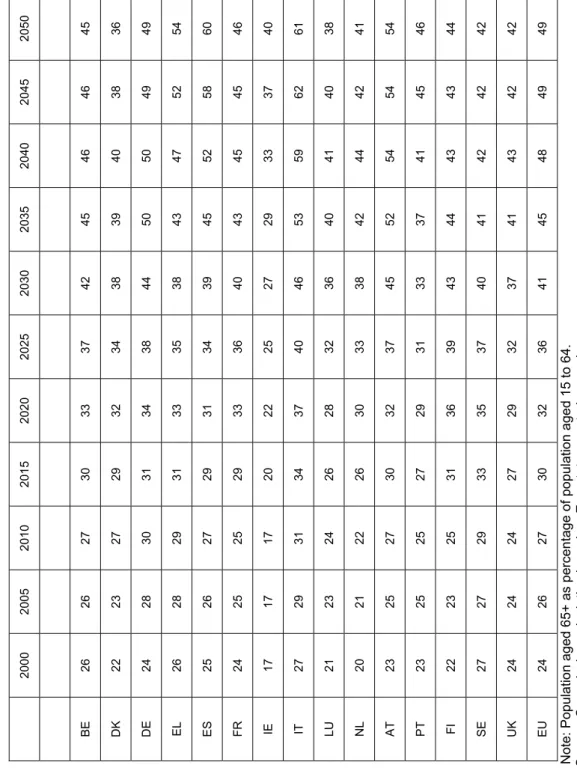
(14) Internal challenges — the greying of Europe Dramatic change in European population. Two forces — declining birth rates and rising life expectancies — are interacting to produce a dramatic change in the size and age structure of Europe’s population. The total population size is projected to fall by 2020 (2). By 2050, the working-age population (15–64 years) is projected to be 18 % smaller than the current one, and the numbers of those aged over 65 years will have increased by 60 %. As a result, the average ratio of persons in retirement compared with those of the present working age in Europe will double from 24 % today to almost 50 % in 2050. This dependency ratio will vary in 2050 from 36 % in Denmark to 61 % in Italy. This development is already at work and in 2015 the EU average dependency ratio will increase to 30 %. The impact is then compounded by the low employment rate of older workers. These developments will have profound implications for the European economy and its capability to finance European welfare systems. Ageing will raise the demand for pensions and healthcare assistance at the same time as it reduces the number of people of working age, to produce the necessary wealth. European Commission projections (3) estimate that the pure impact of ageing populations will be to reduce the potential growth rate of the EU from the present rate of 2–2.25 % to around 1.25 % by 2040. The cumulative impact of such a decline would be a GDP per head some 20 % lower than could otherwise be expected. Already from 2015, potential economic growth will fall to around 1.5 % if the present use of the labour potential remains unchanged. This same ageing will result in an increase in pension and healthcare spending by 2050, varying between 4 and 8 % of GDP (4). Already from 2020, projected spending on pension and healthcare will increase by some 2 % of GDP in many Member States and in 2030 the increase will amount to 4–5 % of GDP. On top of this, the lower economic growth rate will impact negatively on public finances, and this negative impact will commence from 2010.. The challenge of enlargement Enlargement has made inequality and the problems of EU cohesion more pronounced. The EU population has increased by 20 % while the addition to European GDP is only 5 %, resulting in a drop of output per head of 12.5 % in the EU-25. Moreover, the new Member States are characterised by strong regional disparities with wealth concentrated in a small number of regions. The population living in regions with output per head of less than 75 % of the EU has increased from 73 million to 123 million. Targets even more challenging. (2) (3) (4). Equally, as noted earlier, the EU-25 will find some of the Lisbon targets even more challenging than the EU-15. For example, the EU-25 average employment rate has dropped as a consequence of enlargement by almost 1.5 percentage points. The long-term unemployment rate for the EU-25 is 4 % compared with 3.3 % for the EU-15. Some of the environmental targets will also be more difficult to achieve. On some other indicators (e.g. R & D. ‘Budgetary challenges posed by ageing populations’, EPC/ECFIN/655/01 2001. ‘The EU economy: 2002 review’, European Economy No 6/2002, p. 192. ‘The impact of ageing populations on public finances’, EPC/ECFIN/407/04 2003.. 13.
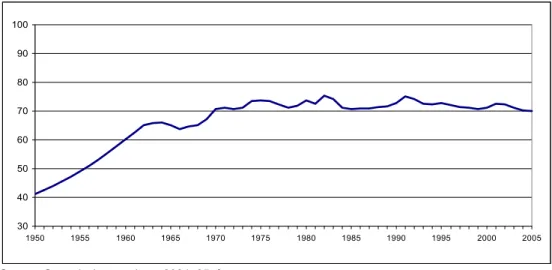
(15) spending as a share of GDP) the new Member States will need to step up their efforts considerably. Catch up with the European average. The positive aspect of enlargement is that it offers the prospect of the new Member States achieving rapid rates of growth in GDP and productivity as they catch up with the European average, so creating an area of economic dynamism in eastern Europe. There is already evidence that this is happening. Output and productivity growth in Estonia, Lithuania, Latvia, Hungary, Poland, Slovenia, Slovakia and the Czech Republic have been above that of the US over the last five years. As they replace redundant ageing technology with state-of-the-art processes they will jump a generation in terms of their technological capacity. There is every prospect of their growth in output and productivity continuing. Nonetheless, their low tax and wage rates attracting inward investment from the rest of the EU are likely to be a source of growing friction. Unless there is some prospect of convergence these tensions will mount. In this respect meeting the Lisbon goals to promote growth and employment in all parts of the EU is vital for its future internal cohesion.. The facts on growth, employment and productivity Europe’s economy, bluntly, is growing less quickly than the US and has suffered recently from a lower rate of productivity growth. The post-war catching-up process of the EU with the US in terms of output per head had come to an end in the mid-1970s (see Figure 1) but then broadly stabilised. However, since 1996 the average annual growth in EU output per head has been 0.4 percentage points below that of the US. From holding its own, Europe is now losing ground. Figure 1: EU GDP per capita in PPS (at constant 1995 prices) (US = 100) 100 90 80 70 60 50 40 30 1950. 1955. 1960. 1965. 1970. 1975. 1980. 1985. 1990. 1995. 2000. 2005. Source: Commission services, 2004–05: forecasts.. Reversal in Europe’s productivity catch-up. 14. This adverse trend in the growth rate of output per head has been accompanied by a reversal in Europe’s productivity catch-up with the US. For the first time in decades, the labour productivity in the EU is on a trend growth path which is lower than that of the US. Over the period 1996–2003,.
(16) the EU-15 productivity growth rate (5) averaged 1.4 %, as opposed to 2.2 % recorded for the US. Figure 2: Labour productivity per hour growth (moving average). 6. Annual % change. 5 4. EU. 3. US. 2 1 0 1966. 1971. 1976. 1981. 1986. 1991. 1996. 2001. Source : EU Commission, AMECO database.. The decline in EU labour productivity growth rates in the mid-1990s can be attributed more or less equally to a lower investment per employee and to a slowdown in the rate of technological progress. The former can be partially explained by the EU’s recent success in employment generation, but the counter-argument is that these newly created jobs tend to be lowproductivity jobs. The latter has been associated with the same reasons Europe is not meeting the Lisbon targets: insufficient investment in R & D and education, an indifferent capacity to transform research into marketable products and processes, and the lower productivity performance in European ICTproducing industries (including office equipment and semiconductors) and in European ICT-using services (such as wholesale and retail trade, financial services) due to a slower rate of ICT diffusion. As a result, the contribution of ICTs to growth was half that observed in the US. This performance is also linked to Europe’s industrial structure, which is based on more low- and medium-tech industries and its difficulty in moving into those sectors with high productivity growth prospects. Better utilisation of labour. In the latter part of the 1990s, the EU experienced an increase in the aggregate numbers of yearly hours worked in contrast to the previous decade. The increase was mainly due to an increase in the number of jobs created, whereas the actual average annual hours worked per person continued to decline. Since 1983, the average hours worked per person has not only decreased more than in both the US and Japan, but it has also run constantly at a lower level due to lower weekly working time and a lower number of working days. To provide a positive contribution to the growth of output per head, a better utilisation of labour is needed, both by increasing employment and by working more hours on a life-time basis. The recent employment growth in Europe, remarked on earlier, has been associated with a decline in hourly productivity growth, while in the US the. (5). Given the generally higher dynamics of the new Member States, the EU-25 average productivity growth was slightly higher over this period but still far behind that in the US.. 15.
(17) growth in employment has been associated with an increase in hourly productivity. If Europe wishes to increase its living standards, it needs to accelerate employment and productivity growth via a wide range of reform policies together with a macroeconomic framework supportive of growth, demand and employment.. Act focused, act together, and act now Focus on growth and employment. At risk — in the medium to long run — is nothing less than the sustainability of the society Europe has built. Europeans have made choices about how to express the values they hold in common: a commitment to the social contract that underwrites the risk of unemployment, ill-health and old age, and provides opportunity for all through high-quality education, a commitment to public institutions, the public realm and the public interest, and that a market economy should be run fairly and with respect for the environment. These values are expressed in systems of welfare, public institutions and regulation that are expensive in a world where low cost and highly efficient producers are challenging the old order. If Europe cannot adapt, cannot modernise its systems and cannot increase its growth and employment fast enough then it will be impossible to sustain these choices. Europe, in short, must focus on growth and employment in order to achieve the Lisbon ambitions.. More urgency is needed. The Lisbon strategy was and is Europe’s best response to these multiple challenges. It represents a framework of ambition and targets which set out the broad direction of necessary change to sustain a European economy that is genuinely innovative, operates at the frontiers of technology and creates the growth and the jobs that Europe needs. The view of the High Level Group is that Lisbon’s direction is right and imperative, but much more urgency is needed in its implementation — and more awareness of the high cost of not doing so. The problem is, however, that the Lisbon strategy has become too broad to be understood as an interconnected narrative. Lisbon is about everything and thus about nothing. Everybody is responsible and thus no one. The end result of the strategy has sometimes been lost. An ambitious and broad reform agenda needs a clear narrative, in order to be able to communicate effectively about the need for it. So that everybody knows why it is being done and can see the validity of the need to implement sometimes painful reforms. So that everybody knows who is responsible.. Europe’s commitment to social cohesion. 16. To restate, Lisbon is about Europe becoming an integrated, competitive, dynamic knowledge-based economy that is among the best in the world. It wants to embed Europe’s commitment to social cohesion and the environment in the core of the growth and jobs generation process so they are part of Europe’s competitive advantage. This cannot be done against a background of stagnating or slowly rising demand. The wider macroeconomic framework, both the pursuit of monetary and fiscal policy, must be as supportive of growth as possible. In light of this, the High Level Group supports the recent proposed reforms by the European Commission of the Stability and Growth Pact. These reforms offer the flexibility to pursue economic policies that lessen the impact of the economic cycle without losing sight of the importance of stability. Strengthening governments’ fiscal positions in the current fragile upturn is required in order to have more latitude in any subsequent downturn with increased spending or sustainable.
(18) tax cuts. The need is to give business the confidence to invest and innovate in the knowledge that the over-riding objective is to sustain the current upswing and with it the chances of implementing Lisbon. For achieving the Lisbon strategy will benefit every Member State. The principle underpinning the European Union is well established: Europeans better hang together or they will hang separately. The single market in goods and services promotes trade that benefits every Member State. The euro creates a monetary union of predictable, stable low interest rates and low inflation that benefits every Member State. No single European country can achieve an improved environment in isolation; and the better the European economy performs, the more investment flows to every Member State to take advantage of the improved general European business climate. In the same way, the effects of building a European knowledge economy spill over to benefit all. Must act now. Lisbon is a strategy that is best pursued collectively by all Europe if the maximum benefits are to be yielded. In order to ensure the benefits, Member States must take their responsibility and take ownership of the process. The European Commission must be prepared to ‘name and shame’ those that fail as well as to ‘fame’ those that succeed. Too much is at stake to respect the sensibilities of those who hinder the pursuit of the common European good. And the EU’s common policies, including its budgets, must reflect the Lisbon priorities. If Europe is to achieve its goals, it must act single-mindedly and with focus; and it must act now.. 17.
(19) Chapter Two — Unblocking the blockages: releasing the potential What to do? Each element contributes. There is no single magic bullet that will deliver the higher growth and jobs that Europe urgently needs. Rather there are a series of interconnected initiatives and structural changes that through their cumulative reinforcement by simultaneous implementation in every Member State will provide both the comprehensiveness and force to release the undoubted potential that exists in the European economy. Each element of the Lisbon strategy contributes to the success of the whole. Necessarily Member States start from differing positions. This requires an interpretation of the Lisbon goals within individual national contexts and challenges, rather than as a blanket injunction to improve every economic indicator regardless of individual national positions — otherwise the strategy will make no sense to public opinion in individual Member States.. Five broad priority areas. However, there are five broad priority areas of policy where the European Union and individual Member States need to make progress to help both ensure its own economic dynamism and the vigour of the whole European economy from which each Member State benefits. The realisation of the knowledge society, the completion of the internal market and promotion of competition, including services and financial services, the establishment of a favourable climate to business and enterprise, building an adaptable and inclusive labour market, and the vigorous promotion of win-win environmental economic strategies are together sources of economic growth and higher productivity. And all, in the view of the High Level Group, are more likely to take place against a background of growth supporting macroeconomic policies.. Perhaps achievement in two or even three. Perhaps individual Member States can boast achievement in two or even three of these policy priority areas. None can boast success in all five, which is what is required if Lisbon’s ambition — after all no more than giving Europe’s citizens the opportunity and quality of life they want — is to be achieved. The task is to convince Europe’s leaders and publics intellectually of Lisbon’s case; to develop policies in each Member State, supported by an appropriate European-wide framework, that address particular Member State’s circumstances; and then to act in a more determined way than we have so far witnessed. In conclusion: it is not the pursuit of any one of these objectives that will raise Europe’s productivity and growth, but all of them — obviously tailored to the particular position of national economies. And the more buoyant the wider economy, the easier it will be to introduce difficult reforms. The rest of this chapter contains specific recommendations, with which government leaders can show their commitment to a strategy for growth and employment.. 18.
(20) 1.. Realising the knowledge society. The Lisbon strategy calls for: information society: defining a regulatory framework for electronic communications; encouraging the spread of ICTs; creating conditions for e-commerce; supporting European leadership in mobile communications technologies; research: setting up of an area of research and innovation; boosting spending on R & D to 3 % of GDP; making Europe more attractive for its best brains; promoting new technologies; education and human capital: halving the number of early school leavers; adapting education and training systems for the knowledge society; fostering lifelong learning for all; promoting and facilitating mobility.. Why the knowledge society? The Lisbon European Council rightly recognised that Europe’s future economic development would depend on its ability to create and grow highvalue, innovative and research-based sectors capable of competing with the best in the world. The evidence is overwhelming that the higher research and development expenditure, the higher subsequent productivity growth. One of the preconditions for any increase in European productivity growth is to raise R & D spending. Studies demonstrate that up to 40 % of labour productivity growth is generated by R & D spending and that there are powerful spillover effects into other areas of the economy, depending on the way in which the money is spent. One of the most disappointing aspects of the Lisbon strategy to date is that the importance of R & D remains so little understood and that so little progress has been made. The production and diffusion of knowledge. However, the knowledge society is a larger concept than just an increased commitment to R & D. It covers every aspect of the contemporary economy where knowledge is at the heart of value added — from high-tech manufacturing and ICTs through knowledge intensive services to the overtly creative industries such as the media and architecture. Up to 30 % of the working population are estimated in future to be working directly in the production and diffusion of knowledge in the manufacturing, service, financial and creative industries alike. A large proportion of the rest of the workforce will need to be no less agile and knowledge based if it is to exploit the new trends. Europe can thus build on its generally strong commitment to create a knowledge society to win potential world leadership. The possibilities for wider economic structures to create the network economy and society and a fundamental re-engineering of business processes are being opened up by ICTs. They permit every step in value generation to become smarter. Value is being created less in the simple transformation of inputs into outputs but more in fundamentally enlisting the new capacity and competences created by ICTs to meet individualised and complex customer needs — whether business-to-business or business-toconsumer relationships.. 19.
(21) Successful companies are becoming more networked, customer focused and agile. More and more value generation lies in distribution, financing, marketing and service rather than manufacturing the original product — important though that remains. Knowledge and the potential of ICTs penetrate every link in the economic chain, not just the manufacturing core. Europe’s knowledge society. However, neither Europe’s knowledge society in general nor its ICT sector in particular are as strong as they need to be to achieve this vision. Whether in patent applications, numbers of scientific researchers, universities’ standing in international rankings, numbers of Nobel Prize winners or references in scientific papers, Europe trails the US. The opportunity to create global standards is insufficiently seized. The European IT sector represents 6 % of European GDP compared with 7.3 % in the US (6), while European investment in IT capital goods has consistently lagged behind the US by around 1.6 % of GDP in the recent past (7). Fortunately, there are some strengths too. Europe produces nearly twice as many science and engineering graduates as the US. There are individual sectors, such as civil aerospace, mobile phones and power engineering, where Europe is strong. Too much of US technological advantage is concentrated in defence and defence-related sectors. What is now required is a recognition of the importance of the knowledge society to Europe’s future and a determination to build it.. Attracting and retaining world-class researchers Scientists continue to leave. Europe needs to dramatically improve its attractiveness to researchers, as too many young scientists continue to leave Europe on graduating, notably for the US. Too few of the brightest and best from elsewhere in the world choose to live and work in Europe. Further developing a system of mutual validation of national quality assurance and accreditation processes would be an important step in the right direction. It would reduce the administrative obstacles to mobility within the EU that European researchers continue to face. Obstacles relate to social security entitlements and the recognition of qualifications. More also needs to be done to facilitate the entry of researchers and their dependants from outside the EU through simplified, fast-track work permit and visa procedures. In order to increase attractiveness, there are also financial questions requiring attention. Member States need to urgently address the problem of funding for universities. If Europe wants to attract more of the world’s best researchers, the question of improving their research environment and remuneration needs to be addressed now.. Drive technology transfer and innovation. (6) (7). 20. Creative interaction between universities, scientists and researchers on the one hand and industry and commerce on the other, which drives technology transfer and innovation, is necessarily rooted in the close physical location of universities and companies. There is already ample evidence around the world that high-tech clusters are built on this interaction, but ‘ideopolises’ — for example, Helsinki, Munich and Cambridge — go further. They have an array of other supporting factors — notably a sophisticated communications and transport infrastructure, financial institutions willing to provide the. ‘The economic future of Europe’, Olivier Blanchard, Working Paper 04-04, MIT. Between 1995 and 2001, investment in IT capital goods ran at 1.6 % of GDP less than the US. Francesco Daveri, Why is there a productivity problem in the EU?, Centre for European Policy Studies..
(22) necessary risk capital to entrepreneurs and specialists in technology transfer, supportive public authorities that facilitate the network structures driving creative interaction — and are attractive environments for knowledge workers. ‘Ideopolises’ are emerging as the cities at the heart of dynamic, high-growth knowledge-based regions.. Key recommendations The EU needs to draw more of the best and brightest researchers in the world by raising its attractiveness. Therefore, the 2005 Spring European Council should agree to prepare an action plan to reduce the administrative obstacles for moving to and within the EU for world-class scientists and researchers and their dependants. This action plan should be implemented by spring 2006. Fast-track work permit and visa procedures should be introduced for researchers and the mutual recognition of professional qualifications must be improved.. Making R & D a top priority There is overwhelming evidence of the vital importance of boosting R & D as a prerequisite for Europe to become more competitive. To fail to act on that evidence would be a fundamental strategic error — yet too many Member States remain worryingly complacent and need to instil a much greater sense of urgency. Strengthen the science base. Major structural obstacles still lie in the way of higher levels of R & D spending, both private and public. Tax incentives for newly founded small and medium-sized enterprises (SMEs) that invest in research should be encouraged. Public support for R & D at the EU and national levels should be boosted, particularly on key technologies that drive economic growth, both to strengthen the science base and to increase the leverage effect on R & D investment by the private sector. Public–private partnerships should be facilitated and encouraged as a means of boosting investment. Europe’s science base should be strengthened by funding and coordinating long-term basic research ranked by scientific merit via the creation of a European Research Council. At the same time, Member States and the Commission should look at ways in which public procurement could be used to provide a pioneer market for new research and innovation-intensive products and services. In addition, increased efforts should be mobilised at national and EU level by all concerned stakeholders to promote technological initiatives based on Europe-wide public–private partnerships.. 21.
(23) Key recommendation To foster scientific excellence, the European Parliament and the Council should agree by the end of 2005 (within the scope of the seventh framework programme for research) on the establishment of an autonomous European Research Council (ERC) to fund and coordinate long-term basic research at European level.. Reaping the full benefits of ICTs In order to ensure future economic growth, the EU needs a comprehensive and holistic strategy to spur on the growth of the ICT sector and the diffusion of ICTs in all parts of the economy. The top priority is to implement the eEurope action plan, which calls for measures to promote e-commerce, e-government and e-learning. Furthermore, the regulatory framework for electronic communications adopted in 2002 should be fully implemented and strictly enforced, so that competition is more effective in driving down prices for consumers and businesses. This demands closer cooperation between the European Commission, national competition authorities and national regulatory authorities. The strategy must also focus on boosting by 2010 the accessibility of broadband to at least 50 %. Its take-up remains slow and patchy in too many Member States. More must be done to bring down access prices, provide new content to stimulate demand, and accelerate the rollout of broadband networks, especially in rural areas. Efforts should focus not only on fixed broadband networks but also on wireless networks (3G and satellites). The latter offers cost-effective high-speed Internet access to bridge the digital divide and thus contribute to the objectives of social and regional cohesion. Development of standards. Furthermore, Europe needs a regulatory framework that stimulates the development of standards that can drive the development and diffusion of new technologies within and outside the EU.. Key recommendation Member States should give more and better follow-up to the eEurope 2005 action plan, in order to reap the full benefits of ICTs. In particular, more progress is required in the area of e-government. Member States must also boost the accessibility of broadband to reach at least 50 % by 2010.. Protecting intellectual property to promote innovation Reap the rewards. 22. Companies will only invest in innovation and R & D if they have the certainty that they will be able to reap the rewards of that investment. An essential prerequisite for this is a legal framework for the protection of intellectual property rights that is accessible at low cost to Europe’s SMEs and academic institutions — something which is manifestly not the case at present. Most urgently, the EU should adopt the pending proposal on the patenting of computer-implemented inventions, and of course, the Community patent..
(24) Key recommendation The time has come for the Council to adopt the Community patent or drop it. Agreement should be reached on this fundamentally important piece of legislation before or at the 2005 Spring European Council. The agreement must ensure that the Community patent really does reduce the complexity, time and costs of protecting intellectual property. This is why the High Level Group appeals to the European Council to overcome the outstanding language issue.. 2.. Keeping our commitments to the internal market. The Lisbon strategy calls for: ensuring effective transposition of EC law: accelerating transposition of EC legislation (98.5 %); removing obstacles to the free movement of services in the EU; completing the internal market for network industries: progressively liberalising markets and network industries, notably gas and electricity (2007); postal services (2006); rail transport (2008); and airspace; completing the internal market for financial services (2005); ensuring fair and uniform application of competition and State aid rules: reducing State aid to 1 % of GDP; defining the new mergers regime and take-over bid rules; and updating public procurement rules.. Why the internal market? An area without internal frontiers. Facilitating free movement of persons, goods, services and capital in an area without internal frontiers is a crucial mechanism that generates economic growth. The internal market permits those companies and sectors that have relative competitive strengths to build on their specialist advantages and grow. This becomes a self-reinforcing trend. Resources are used by those most capable of using them, who in turn can build up economies of scale so lowering costs and prices. There is a general uplift in real incomes, profits and innovation. Sustainable economic growth has always been associated with market opening and strong growth in trade. Europe’s internal market has worked to support this twin interaction of growth in trade and national economies. Separating out the effects of the internal market from other factors is difficult, but the European Commission estimates (8) that after 10 years of the internal market European GDP is 1.8 % higher than it would have otherwise been and 2.5 million more jobs have been created. This contribution amounts almost to 10 % of the EU potential growth rate on an annual basis. But the effects are weakening as attempts to complete the internal market in goods and create one in services have stalled. Intra-EU trade in. (8). SEC(2002) 1417, ‘The internal market — 10 years without frontiers’.. 23.
(25) manufactured goods has been shrinking since 2001, and it is the same story in services. Another indicator of the incomplete internal market is that prices vary so widely across the EU — price convergence is a long way short of US levels (9). At the same time, the EU has become less attractive as a place to invest. Foreign investors continue to invest in the EU, but more money leaves the EU than comes in. Better market integration would make the EU more attractive to potential investors from inside the Union and from third countries. Further market integration. Continuing to open Europe’s markets in goods and services, and conversely resisting protectionist pressures, is thus fundamental to Europe’s growth prospects — but the internal market programme is felt to be yesterday’s business and does not receive the priority it should. This is a fatal policy error. There is enormous scope for further market integration and greater economic gains for both consumers and enterprises. Along with investment in R & D, completing the internal market is the key to boosting productivity and innovation.. A commitment to faster transposition Show the same One of the most persistent obstacles is the failure of too many Member commitment States to act on the commitments they make in the Council within the. agreed time limit. There is little benefit in governments agreeing to measures in Brussels if they do not then show the same commitment when it comes to implementing those measures at national level. In spite of the European Council’s repeated calls for zero tolerance for excessive delays in transposition, this remains a huge problem. Every directive that is late in being implemented by a Member State reduces the competitiveness of the entire Union; there is no excuse for this and it must no longer be tolerated. Furthermore, in too many cases, implementing legislation is not in line with the original directive or is excessively complex. This negates the benefits intended to stem from a single set of rules and often places unnecessary burdens on business. In both cases, the repeat offenders know who they are.. Key recommendations At the beginning of 2005, the Commission should produce a full list of internal market legislation still awaiting transposition in each of the 25 Member States, to be annexed to the Spring European Council conclusions. This list should be sorted by Member State, beginning with the worst offender. In the light of this scoreboard, the 2005 Spring European Council should set a final deadline by which transposition should be completed.. Removing obstacles to the free movement of services Creation of a single market in services. (9). 24. Removing the many blockages is crucial, and not only in the internal market for goods. Europe’s services sector accounts for 70 % of economic activity in the EU. Most of the new jobs generated between 1997 and 2002 were in. The internal market scoreboard shows EU price divergences in groceries as 80 % higher than in the US, with an even bigger difference for transport services. Price convergence is a good indicator of market integration..
(26) the services sector, yet services only account for 20 % of Europe’s trade. Largely because of a wide range of legal and administrative barriers, Europe remains fragmented into separate national markets. Many of these markets are effectively closed for business to potential competitors based elsewhere in what should be a single market. As a result, prices are too high, productivity growth is too low and levels of intra-EU trade in services are lower than a decade ago (10). This situation has to change and it has to change now. Clearly, special attention should be paid to concerns in society, as it would be inconsistent with the Lisbon model to achieve competitiveness gains at the price of social dumping. It must be ensured that removing obstacles for the free movement of services serves the interest of consumers.. Key recommendation The European Parliament and the Council should agree on legislation to remove obstacles to the free movement of services by the end of 2005. There must then be a clear commitment on the part of Member States to ensure that national rules are not used as an excuse to hinder or block service providers based in other Member States; the Commission should treat the enforcement of this requirement as a priority.. Identifying and removing barriers to competition The advantages for consumers. Even in supposedly liberalised sectors such as network utilities, incumbent operators continue to dominate national markets, often limiting the advantages for consumers. In order to foster further liberalisation and open more sectors to EU-wide competition, the European Commission should carry out sector-wide enquiries to identify barriers to competition, including the effect of State aid. This should ensure that effective competition exists not only on paper but also in practice, especially where local rules have the effect of preventing competitors from entering into the national market. The impact of regulation on competition and ultimately on consumers should be systematically reviewed so as to ensure that it does not unnecessarily impede economic activity. In close cooperation with national competition and regulatory authorities, the Commission should subsequently find effective and innovative means of removing these barriers. In the first instance, attention should focus on high-value-added sectors and network utilities, which are vital to the health of the European economy. This will assist in creating an environment where the most competitive companies reap the rewards of innovation and efficiency, driving down prices and increasing consumer choice. In the energy sector, new legislation providing clear liberalisation targets in electricity and gas markets has been put in place. Member States are required to open the electricity and gas markets for all non-household customers by July 2004, and for all customers by July 2007. It is crucial that all Member States comply fully with this obligation. Ensuring a true level playing field in the electricity and gas sectors will allow eco-efficient innovations to be taken up in these newly liberalised markets and encourage investments by new entrants.. (10) COM(2003) 238, p. 10.. 25.
(27) Making the free movement of goods a reality for all Obstacles continue to exist. A range of obstacles also continues to exist to the free movement of goods — obstacles that must no longer be tolerated. Free movement continues to be hindered by a range of local rules, often applied arbitrarily and in clear contradiction to the mutual recognition principle that is the cornerstone of the internal market. Furthermore, even in areas where technical rules have been harmonised, like construction materials or machinery, the slow development of technical standards has meant that obstacles have remained in place much longer than necessary. The Commission must dedicate appropriate resources to identifying and pursuing infringements by the Member States in this area. It should use its synthesis report to inform the Spring European Council each year of ongoing obstacles to the free movement of goods in each Member State and should treat the removal of these obstacles as a top political priority. This is worthwhile; the estimated cost of the non-application of the mutual recognition principle is around EUR 150 billion.. Unleashing the dynamism of financial markets Dynamic and highly competitive financial markets are not only desirable in themselves — they are an essential driver of growth in all other sectors of the economy and must be a cornerstone of efforts to boost the EU’s economic performance. To deliver significantly lower costs to business and consumers, a financial services action plan (FSAP) was presented in 1999 as a package of legislative and non-legislative measures to create an EU market for wholesale financial services, to create and open retail markets, and to put in place prudential rules and supervision. Successful integration of financial services. The FSAP — to be fully implemented by 2005 — should be supplemented by measures to reduce barriers to cross-country clearing and settlement and to facilitate the integration of retail financial markets, in particular by reducing restrictions to more flexible mortgage financing in a number of Member States. Moreover, a successful integration of financial services markets requires enhanced convergence also in the supervisory practices. At present, the coexistence of too many regulatory supervisors in Europe is not conducive to such convergence. However, in the context of the FSAP, a process of enhanced coordination between national supervisors has started. The High Level Group calls upon the Commission to assess progress of supervisory practices in financial services. This assessment should be presented to the European Council in spring 2006 and should, if necessary, include proposals to speed up the process of convergence. Clearing and settlement of transactions is the backbone of the financial system. While national arrangements for this are generally efficient, they combine inefficiently at the EU level. Accordingly, a cross-border transaction is unnecessarily complex and can cost many times more than the corresponding services for a domestic transaction. In order to facilitate cross-border trade in securities, integrated and efficient clearing and settlement arrangements at the EU level are required. In turn these would deliver a powerful impetus to the process of financial integration. Facilitating the integration of retail financial markets is a natural follow-up to the FSAP to ensure lower costs, greater efficiency, more access to credit on more competitive terms and more consumer friendliness — and also to help SMEs have better access to finance. In particular, reducing restrictions on. 26.
(28) refinancing mortgage debt and offering improved possibilities to finance a larger proportion of the purchase price of property via more generous and cheaper mortgage loans could extend home ownership and also boost consumption. Transaction costs on housing are too high in most Member States. More flexible housing markets would encourage labour mobility and the development and efficiency of the financial services sector, empower home-buyers and support more consumer spending.. Key recommendations The Council should adopt the remaining FSAP legislation before spring 2005. Member States should, before the end of 2005, transpose the relevant FSAP measures into national law. The Commission should draw up a strategy for reducing barriers to crossborder clearing and settlement before the Spring 2005 European Council. The Commission should also, before the end of 2005, present an analysis and suggestions for action to facilitate the integration of retail financial markets.. Cutting compliance costs for companies The integration of financial markets must be complemented by a modern and efficient European company law and corporate governance system which enables businesses to organise themselves effectively on a European scale. The harmonisation of the corporate tax base throughout the Union would significantly cut the administrative burden on companies operating in several Member States and should be agreed without delay, along the lines of the recent Commision’s proposal. Similar measures specifically designed to reduce the tax compliance costs faced by SMEs should also be adopted, notably the introduction of a one-stop shop for companies to deal with their EU-wide VAT obligations.. World-class infrastructures for the world's largest internal market Europe’s level playing field remains cluttered with infrastructural obstacles. For too many companies, accessing areas of the internal market on the other side of the continent is effectively impossible. For others, the nonavailability of broadband, either at accessible prices or at all, is an equally significant structural disadvantage compared with competitors elsewhere. Internal market needs to be connected. More urgently than ever in the light of enlargement, Europe’s internal market needs to be connected. Many of the new Member States are not only on the periphery of the internal market geographically; they are also in desperate need of expanded and modernised infrastructures. There needs to be more targeted investment in infrastructure coupled with more effective competition in areas like electronic communications, energy and transport to drive down costs for businesses wherever they are located. The Quick Start programme for priority infrastructural projects, agreed by the European Council in December 2003, should be implemented without further delay.. 27.
(29) 3.. Creating the right climate for entrepreneurs. The Lisbon strategy calls for: a regulatory climate conducive to investment, innovation and entrepreneurship: facilitating access to low-cost finance, improving bankruptcy legislation, taking into account SMEs’ specificities (2000), improving the industrial framework, encouraging responsible corporate governance; lower costs on doing business and removal of red-tape: developing a better regulation strategy at both European and national level (2001), reducing time and costs for setting up a company.. Why create the right climate for entrepreneurs? Europe requires entrepreneurship. Increased knowledge and an open internal market do not automatically drive innovation, competitiveness and growth. It requires entrepreneurship to design new products and services and take advantage of market opportunities to create value for customers. Increasingly, new firms and SMEs are the major sources of growth and new jobs. Entrepreneurship is thus a vocation of fundamental importance, but Europe is not ‘entrepreneur-minded’ enough. It is not attractive enough as a place in which to do business. There are too many obstacles for entrepreneurs and therefore Europe misses many opportunities for growth and employment. Much can and must be done to improve the climate for business.. Improving the quality of legislation Overall burden of rules and regulations. A first obstacle for entrepreneurs is the overall burden of rules and regulations imposed on businesses. Although regulation is often launched with the best of intentions, there is now a growing feeling that a tipping point has been reached in which the gains from incremental regulation are outweighed by the costs — especially among manufacturers. There needs to be a gear change. The present situation leaves insufficient room for risk taking and demands too much attention and resources from the entrepreneur. Removing this obstacle calls for less regulation, but even more importantly better and smarter regulation. A balance must be struck between regulation and competition. For example, without contract law not many transactions would take place. It is clear that across the board deregulation is not the answer: many regulations aim to increase confidence of entrepreneurs and customers alike, and can be a source of competitive advantage. But it is necessary for decision-makers to be well informed about the consequences of their decisions on competitiveness. The High Level Group, therefore, believes that greater attention must be given to ensuring that evaluations of key legislative measures are conducted prior to final adoption. The European Parliament, the Council and the European Commission agreed on an interinstitutional agreement on ’Better lawmaking’ in 2002. The Commission committed to improving the quality of legislative proposals, as well as consulting all interested parties and conducting extended socioeconomic and environmental impact assessments of proposed. 28.
Figure
Documento similar
MD simulations in this and previous work has allowed us to propose a relation between the nature of the interactions at the interface and the observed properties of nanofluids:
Government policy varies between nations and this guidance sets out the need for balanced decision-making about ways of working, and the ongoing safety considerations
No obstante, como esta enfermedad afecta a cada persona de manera diferente, no todas las opciones de cuidado y tratamiento pueden ser apropiadas para cada individuo.. La forma
The expansionary monetary policy measures have had a negative impact on net interest margins both via the reduction in interest rates and –less powerfully- the flattening of the
Keywords: iPSCs; induced pluripotent stem cells; clinics; clinical trial; drug screening; personalized medicine; regenerative medicine.. The Evolution of
In the previous sections we have shown how astronomical alignments and solar hierophanies – with a common interest in the solstices − were substantiated in the
teriza por dos factores, que vienen a determinar la especial responsabilidad que incumbe al Tribunal de Justicia en esta materia: de un lado, la inexistencia, en el
Even though the 1920s offered new employment opportunities in industries previously closed to women, often the women who took these jobs found themselves exploited.. No matter
