
Environmental Impact Caused by Effluents of Biogas Factories of Small and Medium Scale
14
0
0
Texto completo
(2) Revista Ciencias Técnicas Agropecuarias, ISSN -1010-2760, E-ISSN: 2071-0054, Vol. 26. No. 4 (October-November-December, pp. 95-108), 2017. Some of th e environmental impacts of th is prod uction are air pol l ution, l oss of biod iversity , w ater pol l ution d ue to d irect d umping of contaminating untreated w astes tow ard s w ater bod ies used f or irrigation or consumption. Th e emissions to th e environment generated by a porcine f arm can be originated in th e ow n f arm, or during the storage, treatment or application of the purín (pig manure). Th ey can be d irect emissions to th e soil , to und erground and superficial waters, as manure; or emissions to the air, as gases, scents, pow d er or noise. Th e most important emissions are th ose rel ated w ith nitrogen ( N) and ph osph orus ( P ). Th ey provok e th e ph enomenon of eutroph ication or nutrient enrich ment of w ater. It causes a q uick grow th of al gae or aq uatic superior pl ants, prod ucing negative d y sf unctions in th e bal ance of biol ogical popul ations l iving in th e aq uatic environment and in w ater q ual ity . Th ey al so provoke the phenomenon of acidification of soils and waters and those pH variations affect the ecosystem. (Espejo & Garcia, 2010) Togeth er w ith th e invigoration of l aw s rel ated to resid ual w ater d umping, it is necessary th at al l h uman environmentally degrading activities establish efficient decontamination sy stems. In Cuba, unf ortunatel y , th ere is a l ittl e ad vance in d econtaminating sy stems f or porcine w astew aters. F irstl y , it is necessary to promote th e d evel opment of tech nol ogies to improve th e q ual ity of th e d isch arges, ad apted to th e d omestic socioeconomic contex t. ( Q uintero et al., 2002). M ost of th e biol ogical processes used h ave f ocused on organic matter removal ( anaerobic d igesters and anaerobic pond s). Th ese porcine w astew ater treatments h ave been mainl y biol ogical and v ery l ittl e ch emical ( Escal ante, 2002). Th e h and l ing of th ese w astew aters h as been a probl em since l ong time ago d ue to th e great investments necessary in treatment pl ants f or w ater d econtamination bef ore its pouring into a superficial source. Because of that, it has been necessary to investigate innovative tech niq ues to treat th ese w astes at l ow costs, l ik e th e treatment w ith aq uatic pl ants ( B arba, 2002). Th e species of “ H y acinth of w ater” ( Eichhornia crassipes) and th e l entil of w ater ( Lemna minor) h ave been used bef ore f or th e d econtamination or red uction of pol l utant l evel s in th e w ater ( Arenas et al., 2011). A logical solution is treating the effluents with a passive ty pe tech nol ogy th at need s very l ittl e tech nical intervention. The bio-filtration process on organic support may be one of these solutions (Garzon et al., 2012). Regard ing th e previousl y mentioned , th e great current d issemination of biogas f acil ities of smal l f ormat to prod uctive scal e in th e central provinces of Cuba and k eeping in mind th e few studies published on the use and final disposition of effluents ( d igestate) in th ese f acil ities, it is necessary to und ertak e an ex h austive stud y o f th is th ematic. B ased on al l af orementioned , th e obj ect of stud y of th is investigation is centered in th e ( d igestate) smal l -scal e anaerobic digesters effluents and the most utilized technologies in the central region of Cuba. Th e general obj ective w as to d etermine th e pol l ution grade of the effluents (digestate), as well as their qualities like biofertilizers. Study case: biodigesters effluents that use fixed d ome tech nol ogies.. 96. Algunos de los impactos ambientales de esta producción son: contaminación del aire, la pérdida de la biodiversidad de especies, la contaminación del agua por vertimientos directo al medio sin tratamiento ad ecuad o h acia cuerpos receptores d e cuencas d e ríos, presas que son utilizadas para regadíos o el consumo. L as emisiones al med io ambiente generad as por una granj a d e porcino se pued en originar en l a propia granj a, o bien d urante el almacenamiento, tratamiento o aplicación del purín. Pueden ser emisiones directas al suelo, aguas subterráneas y superficiales, básicamente en forma de purín; o emisiones al aire, en forma de gases, ol ores, pol vo o ruid o. L as emisiones má s importantes son las relacionadas con el nitrógeno (N) y el fósforo (P), que fomentan especialmente los fenómenos de: 1) eutrofización o enriquecimiento de nutrientes en el agua (el aumento de la concentración de compuestos de nitrógeno y fósforo provoca un crecimiento acel erad o d e l as al gas o l as pl antas acuá ticas superiores, causand o trastornos negativos en el equilibrio de las poblaciones biológicas presentes en el medio acuático y en la propia calidad del agua); y 2) acidificación de suelos y aguas (la reacción ácida de los d istintos compuestos prod ucen variaciones d el pH q ue af ectan al ecosistema en general) (Espejo y García, 2010). Los procesos biológicos utilizados en su mayoría se han enfocado en la remoción de materia orgánica (digestores anaerobios, lagunas anaerobias y facultativas). Utilizando para el tratamiento de las aguas residuales porcinas en su gran parte procesos biológicos y muy poco los químicos (Escalante y Paat, 2002). El manej o d e estas aguas resid ual es h a sid o d esd e tiempo atrá s un probl ema d ebid o a l as grand es inversiones q ue d eben d e realizarse en plantas de tratamiento con el fin de depurar esta agua antes de su vertimiento a una fuente superficial. De allí ha surgido l a necesid ad d e investigar técnicas innovad oras para el tratamiento d e estos d esech os, a baj os costos, como es el caso d el tratamiento con pl antas acuá ticas ( B arba, 2002). L as especies d e “ J acinto d e agua” ( Eichhornia crassipes) y l a l entej a d e agua ( Lemna minor) se han usado previamente para la descontaminación o reducción d e l os nivel es d e contaminantes en el agua ( Arenas et al., 2011). Una solución lógica es la de tratar los efluentes con tecnologías de tipo pasivo que necesitan muy poca intervención técnica. El proceso de biofiltración sobre medio de soporte orgánico representa una de estas soluciones (Garzón et al., 2012). Ante l a probl emá tica ex puesta en el trabaj o y d ebid o a l a gran diseminación actual de instalaciones de biogás de pequeño f ormato a escal a prod uctiva en l as provincias central es d e Cuba, y teniend o en cuenta l os pocos estud ios publ icad os sobre el uso y disposición final de los efluentes (digestatos) de estas instalaciones, se h ace necesario acometer un estud io ex h austivo d e esta temá tica. P or tod o l o antes mencionad o el obj eto d e estud io d e esta investigación se centra en los efluentes (digestatos) que salen de l os d igestores anaerobios d e peq ueñ a escal a y d e l as d if erentes tecnologías más utilizados en la región central de Cuba. Por esta razón, en este trabajo se plantea el siguiente obj etivo general : Obj etivo general : Determinar el grado de inocuidad de los efluentes (digestatos); asi como sus cualidades como biofertilizantes. Estudio de caso: efluentes de biodigestores que emplean tecnologías de cúpula fija..
(3) Revista Ciencias Técnicas Agropecuarias, ISSN -1010-2760, E-ISSN: 2071-0054, Vol. 26. No. 4 (October-November-December, pp. 95-108), 2017. METHODS. MÉTODOS. Th e w ork w as carried out using biod igesters of d if f erent technologies located in the private sector of Sancti Spíritus and V il l a Cl ara provinces, betw een November 2015 and M ay 2016. A qualitative diagnosis of the analyzed biodigesters was perf ormed tak ing into account th e tech nol ogy ty pe, th e substrates of th e anaerobic d igestion, as w el l as oth er observed ch aracteristics ( Tabl e 1). It w as carried out by means of d irect observation in th e pl ace and th e interview w ith th e biod igesters operator and h is rel atives.. El trabajo se realizó utilizando biodigestores de diferentes tecnologías ubicados en el sector privado de las provincias de Sancti Spíritus y Villa Clara, en el período comprendido entre l os meses d e noviembre 2015 y m ay o d el 2016. Se realizó un diagnóstico cualitativo de los biodigestores analizados donde se tuvo en cuenta el tipo de tecnología, el sustrato de la digestión anaerobia; así como otras características observadas. (Tabla 1). Esto se realizó mediante la observación directa en el lugar y l a entrevista con el operad or d el biod igestor y sus f amil iares.. TABLE 1. Biodigesters Selected for the Study TABLA 1. Biodigestores elegidos para el estudio Biodigesters Operator. Geographical Location. J orge Toboso. M anacas. F ixe d dom. e. P ig manure. Volume of the Reactor 12 m3. CPA”13 de Marzo”. Cabaiguan. F ixe d dom. e. P ig manure. 12 m3. Áriel Domínguez. M anacas. F ixe d dom. e. P ig manure. 12 m3. Technology Type. Substrate. Descriptions of the Secondary Filters and the Experimental Pools (Bio Filter) to Small Scale for the Valuation of Effluents. Descripción de los filtros secundarios y las piscinas experimentales (biofiltro) a pequeña escala para la valoración de los efluentes. For the construction of the secondary filters, plastic bottles of 1500 mL of capacity w ere used . Th ey w ere cut on th e bottom and stuf f ed w ith a vol ume of 500 cm3 of zeolite, 500 cm3 of w ash ed sand of construction and 500 cm3 of construction rubbl e. Th e covers of th e bottl es w ere punctured to al l ow th e d rainage of th e effluents poured in the different experimental variants to evaluate. The pools of the bio filter were built by clipping plastic containers of 5 gal l ons of capacity , l eaving an active vol ume of 850 mL . Three secondary filters and four pools (bio filters) were made.. Para la construcción de los filtros secundarios se utilizaron botel l as pl á sticas d e 1500 mL d e capacid ad . L as mismas f ueron cortad as por su parte inf erior y rel l enad as con un vol umen d e 500 cm3 de zeolita, 500 cm3 de arena lavada de construcción y 500 cm3 de gravilla de construcción. Las tapas de las botellas fueron barrenadas para permitir el drenaje de los efluentes vertidos en l as d if erentes variantes ex perimental es a eval uar. L as piscinas del biofiltro fueron construidas recortando envases plásticos de 5 gal ones d e capacid ad , d ej and o un vol umen activo d e 850 mL . Se realizaron tres filtros secundarios y cuatro piscinas (biofiltros).. Diagnosis of the Current State of Anaerobic Biodigesters of Different Technologies Installed on a Small Scale Samples of the influent and the effluents were taken of each biodigesters and they were put in flasks previously washed with 3 % sod ium h y poch l orite. F or each biod igesters, th ree biol ogical samples were taken. Later on, the samples were homogenized by a gitation and stored a t 4° C. These samples were characterized according to the following parameters: Total Sol id , V ol atil e Sol id , pH , Ch emical Ox y gen Demand s ( DQ O) and B iol ogical Ox y gen Demand ( DB O) according to Standard Method (1995). In the case of effluents analysis, they will be analyzed in the primary filter (to the exit of the biodigester) and later on to the secondary filters (filter of gravel, sand and zeolite) and third (bio filter that uses Lemna minor pl ant).. Diagnostico del estado actual de biodigestores anaerobios de diferentes tecnologías instalados a pequeña escala De cada biodigestor se tomaran muestras de los afluentes y los efluentes en frascos previamente lavados con hipoclorito d e sod io al 3 % . P or cad a biod igestor se tomaron tres muestras biológicas. Posteriormente las muestras fueron homogenizadas por agitación y almacenadas a 4°C. Estas muestras fueron caracterizadas según los parámetros: solidos totales, solidos volátiles, pH, demanda química de oxigeno (DQO) y Demanda biológica de oxigeno (DBO) según los ( Cl esceri et al., 1999). En el caso del análisis de los efluentes estos serán analizados en el filtro primario (a la salida del biodigestor) y posterior a su paso por los filtros secundario (filtro de grava, arena y zeolita) y terciario (biofiltro que utiliza la planta, lemna minor).. Physical-Chemical and Microbiological Characteristics of the Influent and Effluents of the Studied Biodigesters. Determination of ph in Influents and Effluents. Características físico-químicas y microbiológicas de los afluentes y efluentes de los biodigestores objeto de estudio. Determinación del pH en los afluentes y los efluentes. pH sampl es w ere tak en to th e ex it of each biod igester and after going by the secondary and tertiary filters, respectively,. Se tomaron muestras d e pH a l a sal id a d e cad a biod igestor y después de pasar por los filtros secundarios y terciarios, res-. 97.
(4) Revista Ciencias Técnicas Agropecuarias, ISSN -1010-2760, E-ISSN: 2071-0054, Vol. 26. No. 4 (October-November-December, pp. 95-108), 2017. using sample takers for these; as well as a pH meter, model 780 M etroh m, Sw iss mod e. Th e sampl es w ere transported to th e l aboratory f or th e d etermination of th e af orementioned parameter. Th ey took th ree repetitions of pH f or biod igester analyzed in each of the levels analyzed.. pectivamente, utilizando tomas muestras para estos efectos; asi como un pH metro, mod el o 780 M etroh m, Sw iss mod e. L as muestras se transportaron al laboratorio para la determinación d el pará metro mencionad o. Se tomaron tres repeticiones d el pH por biodigestor analizado en cada uno de los niveles analizados.. Determination of the Pathogen Microbial Load in Influent and Effluents. Determinación de la carga microbiana patógena en los afluentes y los efluentes. Influents and effluents were collected in plastic bottles of 1500 mL , and th ey w ere tak en q uick l y to th e microbiol ogy l aboratory of th e P rovincial Center of H y giene and Epid emiol ogy of Santa Cl ara, V il l a Cl ara, w h ere total col if orms, th ermo tol erant col if orms and Pseudomonas aeruginosas w ere d etermined . In th is case, l ater anal y ses are repeated af ter th eir passing th rough primary , second ary and tertiary filters (bio filter), once stabilized the load and with a residence hydraulic time similar of 21 days. Three flows or different loads from effluents (100, 200 and 300 mL) will be object of evaluation. With the values obtained, it is analyzed if the effluents fulfill the established norms NC-27:1999 and NC-1095:2015.. Se colectaron los afluentes y efluentes en pomos plásticos de 1500 mL, y se llevaron rápidamente al laboratorio de microbiología d el Centro P rovincial d e H igiene y Epid emiol ogia d e Santa Cl ara, V il l a Cl ara, d ond e se d eterminaran col if ormes total es, col if ormes termo tol erantes y pseud omonas aeruginosas. En este caso se repiten los análisis posteriores a su paso por los filtros primarios, secundarios y terciarios (biofiltro), una vez estabilizada la carga y con un tiempo de residencia hidráulica igual a 21 días. Serán objeto de evaluación tres flujos o cargas diferentes de efluentes (100, 200 y 300 mL). Con los valores obtenidos se analiza si los efluentes cumpl en con l as normas establ ecid as, NC 27: 1999 y NC 1095: 2015. Calculation of Biomass Growth and Productivity Biomass Selected Lentil of Water (Lemna minor) in the Bio Filter F or th e cal cul ation of th e sel ected biomass grow th and prod uctivity th ree pl astic pond s w ere used moistened w ith 50 mL of d istil l ed w ater, in w h ich th ree d if f erent ex perimental variants w il l be carried o ut, w h ich a re d escribed ne x t: • 1st variant: to ad d col onies of Lemna minor ( 9.3 7 g) and 100 mL of pig effluent collected to the exit of the biodigester, later to their step for the secondary filter; • 2th variant: to ad d col onies of Lemna minor ( 9.3 7 g) and 200 mL of pig effluent collected to the exit of the biodigester, later to their step for the secondary filter; • 3 th variant: to ad d col onies of Lemna minor ( 9.3 7 g) and 3 00 mL of pig effluent collected to the exit of the biodigester, later to their step for the secondary filter. • Control : to ad d col onies of Lemna minor ( 9.3 7 g) and 3 00 mL of common w ater ( captured in an artisan w el l ). In al l variants obj ect of investigation, th e initial pol l uting l oad w as d il uted in th e same proportion ( 1:1) w ith common w ater. L ater on, to counteract th e natural perspiration of w ater th at took pl ace in th e pl astic pool s, prod uct of th e ph otosy nth esis activity of Lemna minor pl ants, 3 20 mL of w el l w ater w ere ad d ed every w eek in each of th em. Af ter a hydraulic residence time of 21 days in the bio filters, micro al gae ( Lemna minor) w ere col l ected and w eigh ed in an anal y tic scal e Denver Instrument, mod el IF -23 4. Th e area of prol if eration of th em w as al so observed in th e respective pl astic pond s. Th ese tests w ere carried out und er semicontrol l ed cond itions at l aboratory l evel ( l ocal of l aboratory ), w h ere temperature and environmental pressure w ere d ail y measured . In each ex perimental variant eval uated tripl icate tests w ere carried out.. 98. Calculo del crecimiento y productividad de la biomasa seleccionada lenteja de agua (Lemna minor) en el biofiltro P ara el cá l cul o d el crecimiento y prod uctivid ad d e l a biomasa seleccionada se utilizaron tres lagunas plásticas humectad as con 50 mL d e agua d estil ad a, en l as cual es se proced erá a realizar tres variantes experimentales diferentes, las cuales se describen a continuación: • 1ra variante: agregar col onias d e lemna minor ( 9,3 7 g) y 100 mL de efluente porcino colectado a la salida del biodigestor, posterior a su paso por el filtro secundario; • 2d a variante: agregar col onias d e lemna minor ( 9,3 7 g) y 200 mL de efluente porcino colectado a la salida del biodigestor, posterior a su paso por el filtro secundario; • 3 ra variante: agregar col onias d e lemna minor ( 9,3 7 g) y 3 00 mL de efluente porcino colectado a la salida del biodigestor, posterior a su paso por el filtro secundario. • Control : agregar col onias d e lemna minor ( 9,3 7 g) y 3 00 mL de agua común (captada de un pozo artesano). En todas las variantes objeto de investigación, la carga contaminante inicial será diluida en la misma proporción (1:1) con agua común. Posteriormente para contrarrestar la evo transpiración natural de agua que se producirán en las piscinas pl á sticas, prod ucto d e l a activid ad f otosintética d e l as pl antas d e lemna minor se agregará cad a semana 3 20 mL d e agua d e pozo en cada una de ellas; transcurridos un tiempo de residencia hidráulica de 21 días en los biofiltros, se colectaran las micro al gas ( lemna minor) y se pesaran en una balanza analítica Denver Instrument, mod el o SI-23 4. Ad emá s se observará el á rea d e proliferación de estas en las respectivas lagunas plásticas. Estas pruebas se realizaran en condiciones semi-controladas a nivel d e l aboratorio ( l ocal d e l aboratorio), d ond e se tiene previsto monitorear temperatura y presión ambiental diariamente. En cada una de las variantes experimentales a evaluar se realizaran l as pruebas por tripl icad o..
(5) Revista Ciencias Técnicas Agropecuarias, ISSN -1010-2760, E-ISSN: 2071-0054, Vol. 26. No. 4 (October-November-December, pp. 95-108), 2017. Calculation of the Flow in Influent and Effluents. Cálculo del flujo o caudal de afluentes y efluentes. The calculation of effluents entrance flow for each biogas f actory varies d epend ing on th e ty pe of animal ex crete used as substrate f or th e biod igesters w ork , of th e number of avail abl e animal s as w el l as of th e biogas necessities to obtain in th e instal l ation. One of th e meth od ol ogies f or th eir d etermination is based on the calculation of volumetric flow. For that, it is necessary to know the volume of effluents delivered per unit of time ( L / s).. El cálculo del caudal de entrada de efluentes para cada instalación de biogás varía en dependencia del tipo de excretas de animal utilizadas como sustrato para el trabajo del biodigestor; del número de animales disponibles; así como de las necesidades de biogás a obtener en la instalación. Una de las metodologías para su determinación se basa en el cálculo del flujo a caudal volumétrico. Para lo cual es necesario conocer el volumen de los efluentes que se entrega en la unidad de tiempo ( L / s).. Quantitative Production of Effluents Flow (Digestate) in the Pig Facility of UCLV The practical determination of effluents flow in this study w as carried out in th e piggery f arms bel onging to “ M arta Abreu” Central University of Las Villas. The possible effluents were calculated depending on the volumetric flow to be measured to th e ex it of th e ch utes of th e tw o piggery f arms in operation, w h ich tribute th em tow ard an ox id ation pond th ey possess. F or th e above-mentioned , using a pl astic test tube and a chronometer, the volumetric flow of the piggery farm effluents w ere d etermined b y u sing th e f ol l ow ing ex pression 1. Q = V / t, L / s.. ( 1). W eh re: Q - Effluents expense, L/s; V - Effluents volume measured in the test tube, L; t - Time to fill the test tube, s.. Determination of the Characteristics of the Effluents Obtained in Each Biodigesters. Properties as Bio Stimulants Th ree month -stagnant ef f l uents w ere tak en. Th ese w ere eval uated w ith d if f erent d egrees of d il ution in w ater ( 50% , 75% and 90% ). Nex t, 50 mL of th e d if f erentl y d il uted ef f l uent w ere poured into th ree 100 mL of capacity beak ers and in each of th ese beak ers 15 seed s of bl ack beans (Phaseolus vulgaris L , variety B AT-3 04) registered seed w ith a w el l -k now n germination percent ( 80 % germination), w ere ad d ed . B eak ers w ith th eir contents w ere l ef t to rest d uring f our h ours und er th ese cond itions. L ater on, th ese seed s soak ed in th e ef f l uents in th e respective magentas, to a reason of f ive seed s per magenta, w ere sow ed . Th ree magentas by d il ution ( treatment) w ere used . P aral l el to it, th e same meth od ol ogy w as perf ormed , but using common w ater f or th e absol ute control . It w as al so proved w ith a standard control (constituted by three fertilized magentas) w ith nitrogen, ph osph orus and potassium ( N, P , K ), in equivalent dose to the one utilized at production level ( 600 k g/ h a). A compl ete f ormul a of N-P -K ( 8-24-16) w as used. The utilized magentas for the seed had 400 g of soil capacity , previousl y h umid if ied w ith a f iel d capacity of 80% of h umid ity . F inal l y , th e magentas w ere pl aced und er semi-control l ed cond itions w h ere th ey received natural il l umination. Th e variabl es of pressure and room temperature w ere monitored . Af ter tw o w eek s, th e germination. Producción cuantitativa del flujo de efluentes (digestato) en el plantel porcino de la UCLV La determinación práctica del flujo de los efluentes en este estudio, se realizara en el plantel porcino de la Universidad Central “ M arta Abreu” d e l as V il l as. Se cal cul ara l os posibl es efluentes en dependencia del flujo volumétrico a medir a la salida de las canaletas de las dos naves en explotación, las cuales tributan estos hacia una laguna de oxidación que posee el pl antel porcino. P ara l o anterior, apoy ad os con una probeta plástica y un cronometro, se determinara el flujo volumétrico de los efluentes del plantel porcino. Mediante la expresión (1). Q = V / t, L / s. ( 1). donde : Q- gasto de efluentes, L/s; V- volumen de efluentes medidos en la probeta, L; t- tiempo de l l enado de l a probeta, s.. Determinación de las características de los efluentes obtenidos en cada biodigestor. Propiedades como bioestimulantes Se toman los efluentes pacificados durante tres meses. Estos serán evaluados con diferentes grados de dilución en agua (50%, 75% y 90%). A continuación se vierten 50 mL del efluente con el grado de dilución objeto de investigación en tres beaker de 100 mL d e capacid ad y en cad a uno d e estos beak er se añ ad en 15 semil l as d e f rij ol negro ( Phaseola vulgaris L, varied ad B AT-3 04) semilla registrada con un porciento de germinación conocido (80% de germinación), dejándose reposar durante cuatro horas en estas cond iciones. P osteriormente será n sembrad as estas semil l as imbuidas en los efluentes en las respectivas magentas a razón de 5 semillas por magenta, serán utilizadas un total de 3 magentas por dilución (tratamiento). Paralelo a ello, se ejecuta la misma metodología pero utilizando agua común para el control absoluto, también se probara con un control está nd ar ( constituid o por 3 magentas fertilizadas) con nitrógeno, fosforo y potasio (N, P, K), en dosis equivalentes a las utilizadas a nivel de producción (600 kg/ha). Se utilizara una formula completa de N-P-K (8-24-16). Las magentas utilizadas para la siembra tienen 400 g de capacidad de suelo enrazado, previamente humedecido con una capacidad d e campo d e 80% d e h umed ad . F inal mente se col ocaran l as magentas en cond iciones semi-control ad as d ond e recibirá n il uminación natural, serán monitoreadas las variables de presión y temperatura ambiente. Al cabo d e d os semanas se d eterminará. 99.
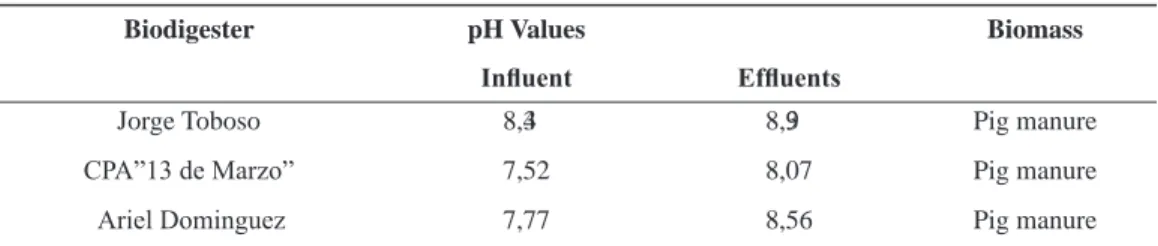
(6) Revista Ciencias Técnicas Agropecuarias, ISSN -1010-2760, E-ISSN: 2071-0054, Vol. 26. No. 4 (October-November-December, pp. 95-108), 2017. percent w as d etermined in th e val ued treatments and in th e control s accord ing to th e investigated d egree of d il ution.. el porciento de germinación en los tratamientos evaluados y en los controles de acuerdo al grado de dilución investigado.. Microbiologic Analysis of Soil. Análisis microbiológico del suelo. Th e ef f ect of th e stud ied ef f l uents on th e microbiol ogy of th e soil w as d etermined . On th at purpose, 1g soil sampl es ( brow n w ith carbonate) w ere tak en f rom each of th e val ued magentas in th eir d if f erent treatments. L ater on, soil microbiol ogy tests ( mush rooms, bacteria and actinomy cetes) w ere carried out, th ree repl icas w ere investigated per treatment. F or th e above-mentioned , th e protocol s and proced ures established in specialized laboratory, according to Mayea et al. ( 2004), w ere carried out.. Se determinó el efecto que provoca sobre la microbiología del suelo, de los efluentes objeto de investigación. Para ello, se tomaron muestras d e suel o ( pard os con carbonato) en cad a una d e l as magentas eval uad as ( 1g) en sus d if erentes tratamientos, posteriormente se realizaron pruebas microbiológicas de suelo ( h ongos, bacterias y actinomicetos), f ueron investigad as tres répl icas por tratamiento. P ara l o anterior, se siguieron l os protocol os y proced imientos establ ecid os en l aboratorio especializado para tales efectos de acuerdo con Mayea et al. ( 2004).. Análisis estadístico. Statistical Analysis F or statistical anal y ses of th e investigation resul ts, 8.0. Statgraph ics prof essional statistical pack age w as used .. Para los análisis estadísticos de los resultados de las investigaciones se procederá a utilizar el paquete estadístico prof esional Statistica, 8.0 ( StatSof t, 2007).. RESULTS AND DISCUSSION. RESULTADOS Y DISCUSIÓN. Diagnosis Results of the Current State of Anaerobic Biodigesters with Different Technologies Installed to Small Scale. Resultados del diagnóstico del estado actual de biodigestores anaerobios de diferentes tecnologías instalados a pequeña escala. Th e resul ts of th e d iagnosis of th e biod igesters sampl e val ued sh ow ed th at th ey are onl y used f or cook ing, tw o of th em present a regul ar constructive state and onl y in one of th em, a secondary filtrate is carried out; however, none of these has a tertiary filtrate of the effluents (digestate). These results coincide w ith th at reported b y S osa ( 2015). See Tabl e 2.. Los resultados del diagnóstico de las instalaciones evaluadas muestra que estas solo se utilizan para la cocción, de ellas 2 presentan un estad o constructivo regul ar y sol o en una d e el l as se realiza un filtrado secundario, sin embargo en ninguna de estas existe un filtrado terciario de los efluentes (digestatos). Estos resul tad os coincid en con l o reportad o por ( Sosa, 2015). Tabl a 2.. TABLE 2. Qualitative Analysis of Each Biodigesters TABLA 2. Análisis cualitativo de cada biodigestor. CPA”13 de Marzo”. F ixe d dom. e. Constructive condition of the plant P ig manure Good. J orge Toboso. F ixe d dom. e. P ig manure. Regul ar. F ood c ooki ng. Ángel Domínguez. F ixe d dom. e. P ig manure. Regul ar. F ood c ooki ng. Biodigestor Operator. 100. Technology Type. Substrate. Biogas End Use F ood c ooki ng. Other observations The effluents (digestate) are filtered ( seconda ry) and t he y s pil l to an oxi da tion pond The effluents (digestate) are spill to an oxi da tion pond The effluents (digestate) are spill to an oxi da tion pond. Results of the Chemical and Microbiological Characterization of the Influents and Effluents of the Biodigesters. Resultados de la caracterización química y microbiológica de los afluentes y efluentes de los biodigestores objeto de estudio. Results of pH Values in the Influents and the Effluents. Resultados de la determinación del pH en los afluentes y los efluentes. The results of pH in the influents (7.52-8.34) and the effluents (8.07-8.56) coincide with the results obtained by other investigators (Negrín & Jiménez, 2012) and they are in th e establ ish ed range f or th is substrates ty pe ( pig manure). See Tabl e 3 .. Los resultados del pH en los afluentes (7,52-8,34) y los efluentes (8,07-8,56), coinciden con los resultados obtenidos por otros investigadores (Negrin y Jiménez, 2012) y están en el rango establ ecid o para este tipo d e sustrato ( ex creta porcina). Tabl a 3 ..
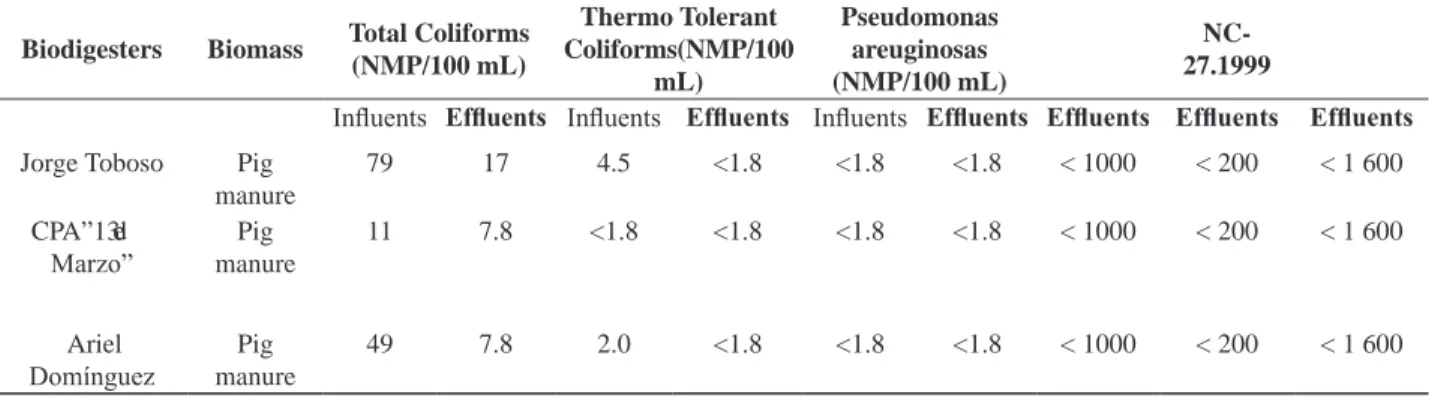
(7) Revista Ciencias Técnicas Agropecuarias, ISSN -1010-2760, E-ISSN: 2071-0054, Vol. 26. No. 4 (October-November-December, pp. 95-108), 2017. TABLE 3. pH Analysis of Influent and Effluents TABLA 3. Análisis pH afluente y efluentes Biodigester. pH Values. Biomass. Influent. Effluents. J orge Toboso. 8,34. 8,39. P ig manure. CPA”13 de Marzo”. 7,52. 8,07. P ig manure. Ariel Dominguez. 7,77. 8,56. P ig manure. Results of the Microbial Pathogen Load in Influents and Effluents Th e resul ts of th e microbial l oad ( total col if orms, th ermo tol erant col if orms and Pseudomonas aeruginosas) at the inlet and exit of the analyzed biodigesters (primary f il trate), sh ow l ow contamination, bel ow th at specif ied in th e Cuban norm, w h ich is in contrad iction w ith previous scientific works made by Sosa (2015) and Martinez et al. ( 2014). See Tabl e 4. Th e obtained resul ts to th e ex it of th e second ary and tertiaries filters showed that this system is able to lower more th e pol l uting l oad until val ues very bel ow th e permissibl e limits fixed by Cuban norm. However, in the biodigesters located in Ariel Domínguez’s farm, there is a contradiction when the effluents (digestate), in total coliforms and in th ermo tol erant col if orms, l eave more pol l uted th an w h en th ey enter, w h ich is not common in th is ty pe of instal l ation. Neverth el ess, in th e oth er tw o biod igesters ( “ J orge Toboso” and “13 de Marzo”), this phenomenon is not presented and it can be affirmed that the bio filters, show the effectiveness of th e sy stem and it al l ow s to pred ict its positive ef f ect, of being used in our biogas f acil ities. Th e l oad of 100 mL , it coul d not be eval uated by reagent l ack s in th e l aboratory . See Tabl e 5.. Results of the Growth and Productivity of the Biomass Selected Lentil of Water (Lemna minor) in the Bio Filter Th e resul ts ref erred to th e grow th and prod uctivity of th e biomass selected as sanitary bio filter (Lemna minor) sh ow ed th at th ey are unabl e to grow and reprod uce und er th ese severe cond itions of contamination. Th ey w ere l oad s of 100, 200 and 300 mL of effluents diluted in proportion 1:1 with water in the experimental pool, in which, a maximum of 600 mL (effluent + w ater) w as managed as active vol ume. Th is resul t can be caused by f actors l ik e w ater in th e pool d oes not circul ate, th e investigated pol l uting l oad s are very severe w ith rel ationsh ip to th e q uantity of Lemna minor eval uated ( 9.3 7 g), th e ph otosensitivity of Lemna minor is very h igh , w h ich mak es th at, in occasions, th e pool s k eep very l ittl e w ater, propitiating cel l s and pl ant tissue senescence or d eath . M ay be th ese pl ants need a more d il uted pol l uting l oad . Th ere w as al so l ack of an el ectro-mech anical sy stem of air f eed ing ( ox y genation). F uture w ork s sh oul d eval uate th ese q ueries.. Resultados de la determinación de la carga microbiana patógena en los afluentes y los efluentes L os resul tad os d e l a carga microbiana ( col if ormes total es, col if ormes termo tol erantes y pseud omonas aeruginosas) a l a entrada y salida de los biodigestores analizados (filtrado primario), muestra una baja contaminación, por debajo de lo estipulado en la norma cubana, lo cual está en contradicción con trabajos anteriores efectuados por Martínez et al. ( 2014) y Sosa ( 2015). Tabl a 4. En el caso de los resultados obtenidos a la salida de los filtros secundarios y terciarios mostró que este sistema es capaz de bajar en may or med id a l a carga contaminante h asta val ores muy por debajo de los límites permisibles que fija la norma cubana, sin embargo en el biodigestor ubicado en la finca de Ariel Domínguez, se presenta una contradicción cuando los efluentes (digestato) tanto en l os col if ormes total es como en l os col if ormes termo tol erantes salen más contaminados que cuando entran, lo cual no es común en este tipo de instalación. Sin embargo, en los otros dos biodigestores (Jorge Toboso y 13 de Marzo), este fenómeno no se presenta y se puede afirmar que el biofiltro, muestra la efectividad del sistema y permite predecir su efecto positivo, de ser utilizado en nuestras instal aciones d e biogá s. L a carga d e 100 mL , no pud o ser eval uad a por carencias d e reactivo en el l aboratorio. Tabl a 5.. Resultados del crecimiento y productividad de la biomasa seleccionada lenteja de agua (Lemna minor) en el biofiltro L os resul tad os ref erid os al crecimiento y prod uctivid ad d e la biomasa seleccionado como biofiltro sanitario (Lemna minor), mostraron q ue l as mismas son incapaces d e crecer y reprod ucirse bajo estas condiciones severas de contaminación (cargas de 100, 200 y 300 mL) de efluentes diluidos en proporción 1:1 con agua, en l as piscinas ex perimental es en l as cual es se manej aron como volumen activo un máximo de 600 mL (efluente + agua). Este resul tad o pued e estar motivad o por l os siguientes f actores: el agua en las piscina no circula; las cargas contaminantes investigadas son muy severas con relación a la cantidad de Lemna minor ( 9,3 7 g) evaluada; la actividad fotosintética de la Lemna minor es muy el evad a, l o cual h ace q ue en ocasiones l as piscinas se q ued en con muy poca agua, propiciand o q ue l as cél ul as y tej id os d e l a pl anta necrosen y se produzca la senescencia de las misma; quizás estas pl antas necesiten q ue l a carga contaminante tenga una may or grad o de dilución en agua; carencia de un sistema electro-mecánico de alimentación de aire (oxigenación). Estas interrogantes tendrán que ser evaluadas en próximos trabajos.. 101.
(8) Revista Ciencias Técnicas Agropecuarias, ISSN -1010-2760, E-ISSN: 2071-0054, Vol. 26. No. 4 (October-November-December, pp. 95-108), 2017. Results of the Quantitative Production of the Effluents Flow (Digestate) in the Pig Facility at UCLV. Resultados de la producción cuantitativa del flujo de efluentes (digestato) en el plantel porcino de la UCLV. Th e obtained resul ts f rom ex pression 1 w ere 0.018 L / s of effluents for 24 pigs (3 reproducers and 21 feed). That mensuration w as carried out outsid e of th e cl eaning time of th e instal l ation. Th at ind icator d oes not sh ow th e ef f ective q uantity of effluents going to the oxidation pond. For these calculations, th e q uantity and d uration of th e actual d ail y cl eanings sh oul d be k ept in mind . Th ese resul ts are l igh tl y in contrad iction w ith those outlined by Martinez (2015), which state that the flow of w ater used in th e cl eaning of pig f acil ities is in th e ord er of 0.0019 L / s as average.. Una vez determinado los cálculos por la expresión (1). Los resultados obtenidos fueron 0,018 l/s de efluentes para una cantidad d e cerd os d e 24 ( tres reprod uctoras y 21 ceba). Se d ebe d estacar q ue esta medición se realizó fuera del horario de limpieza de la instalación. Por tal motivo es un indicador que no muestra la cantidad efectiva de efluentes que se dirigen a la laguna de oxidación. Para estos cálculos se debe tener en cuenta: la cantidad y duración de las limpiezas efectuadas diariamente. Estos resultados están ligeramente en contradicción con los planteados por Martínez (2015), donde se plantea que el flujo de agua utilizado en la limpieza de instalaciones porcinas está en el ord en d e l os 0,0019 l / s como promed io.. Results of the Properties of the Effluents like Bio Stimulating The results referred to the use of the effluents (digestate) as bio stimulating (biofertilizers) show that the pig effluents pacified during three months and diluted in 90% with water, reach th e biggest germination percent ( 80% ). Th ese resul ts are above th e ones reach ed w ith th e d il utions of 50% and 75% in al l th e val ued treatments, as w el l as w ith regard to th e absol ute and stand ard control s, respectivel y . Simil ar results using cattle bio solids (caw effluents) coming from biodigesters have been reached by Negrin & Jimenez (2012). See Tabl e 6.. Resultados de las propiedades de los efluentes como bioestimulantes Los resultados referidos a la utilización de los efluentes (digestatos) como bioestimulantes (biofertilizantes) muestran que los efluentes porcinos pacificados durante tres meses y diluidos en 90% con agua, alcanzan los mayores porcientos de germinación (80%), estando por encima de los resultados alcanzados con las diluciones de 50% y 75% en todos los tratamientos evaluados; así como con respecto a l os control es absol uto y está nd ar respectivamente. Resultados semejantes utilizando biosólidos pecuarios (efluentes vacunos) procedentes de biodigestores han sido alcanzados por Negrin y Jiménez (2012). Tabla 6.. TABLE 4. Microbiologic Analysis of Influent and Effluents to Exit of the Biodigesters Analyzed TABLA 4. Análisis microbiológico de los afluentes y efluentes a la salida del biodigestor analizado Biodigesters. J orge Toboso. Biomass. Thermo Tolerant Pseudomonas NCColiforms(NMP/100 areuginosas 27.1999 mL) (NMP/100 mL) Influents Effluents Influents Effluents Influents Effluents Effluents Effluents Total Coliforms (NMP/100 mL). Effluents. 79. 17. 4.5. < 1.8. < 1.8. < 1.8. < 1000. < 200. < 1 600. CP A” 13 de Marzo”. P ig manure P ig manure. 11. 7.8. < 1.8. < 1.8. < 1.8. < 1.8. < 1000. < 200. < 1 600. Ariel Domínguez. P ig manure. 49. 7.8. 2.0. < 1.8. < 1.8. < 1.8. < 1000. < 200. < 1 600. TABLE 5. Microbiologic Analysis of the Effluents with Different Pollutants Loads and After Its Pass Through the Bio Filter TABLA 5. Análisis microbiológico de los efluentes con diferentes cargas contaminantes y posterior a su paso por el biofiltro Biodigesters. J orge Toboso CP A” 13 de Marzo”. 102. Biomass. P ig manure ( 300 m L ) P ig manure ( 300 m L ). Total Coliforms (NMP/100 mL). Thermo Tolerant Coliforms (NMP/100 mL). Pseudomonas areuginosas (NMP/100 mL). NC-27. 1999. Influents. Effluents. Influents Effluents Influents Effluents Effluents Effluents Effluents. 79. 6,8. 4.5. < 1.8. < 1.8. < 1.8. < 1000. < 200. < 1 600. 11. 38. < 1.8. 2. < 1.8. < 1.8. < 1000. < 200. < 1 600.
(9) Revista Ciencias Técnicas Agropecuarias, ISSN -1010-2760, E-ISSN: 2071-0054, Vol. 26. No. 4 (October-November-December, pp. 95-108), 2017. Biodigesters. Ariel Domínguez J orge Toboso CP A” 13 de Marzo”. Biomass. P ig manure ( 300 m L ) P ig manure ( 200 mL ) P ig manure ( 200 mL ). Total Coliforms (NMP/100 mL). Thermo Tolerant Coliforms (NMP/100 mL). Pseudomonas areuginosas (NMP/100 mL). NC-27. 1999. Influents. Effluents. Influents Effluents Influents Effluents Effluents Effluents Effluents. 49. 280. 2.0. 23. < 1.8. < 1.8. < 1000. < 200. < 1 600. 79. 15. 4.5. 15. < 1.8. ne. < 1000. < 200. < 1 600. 11. 26. < 1.8. 26. < 1.8. ne. < 1000. < 200. < 1 600. Ariel Domínguez J orge Toboso. P ig manure ( 200 mL ) P ig manure ( 100 mL ). 49. 350. 2.0. 350. < 1.8. ne. < 1000. < 200. < 1 600. ne. ne. ne. ne. ne. ne. < 1000. < 200. < 1 600. CP A” 13 de Marzo” Ariel Domínguez. P ig manure ( 100 mL ) P ig manure ( 100 mL ). ne. ne. ne. ne. ne. ne. < 1000. < 200. < 1 600. ne. ne. ne. ne. ne. ne. < 1000. < 200. < 1 600. ne- not eval uated. TABLE 6. Effluents Germination Analysis TABLA 6. Análisis del porcentaje de germinación con diferentes grados de dilución del efluente Effluents Effluents Effluents diluted Absolute Standard Diluted Absolute Standard Diluted Absolute Standard Treatment Biomass to 50%. Control Control to 75%. Control Control to 90%. control control (biodigesters) Germination (%) (%) Germination (%) (%) Germination (%) (%) Percent (%) Percent (%) percent (%) J orge Toboso P ig 40 66,66 53,3 53,3 100 53,3 53,3 80 73,3 manure CP A" 13 de P ig 3,3 66,66 53,3 66,66 100 53,3 100 80 73,3 Marzo" manure Ariel P ig 3,3 66,66 53,3 40 100 53,3 100 80 73,3 Domínguez manure. Results with Regard to the Polluting Load (DQO) of the Valued Substrates. Resultados con respecto a la carga contaminante (DQO) de los sustratos evaluados. Th e resul ts rel ated w ith th e pol l uting l oad to th e ex it of the biodigesters (primary filtrate), show that the polluting l oad ( DQ O) beh aves bel ow th e norm onl y in th e case of th e biod igester instal l ed in th e property of J orge Toboso ( 607,72 mg O2/ L ), being in th e oth er tw o cases, above th e Cuban norm ( NC-27: 1999). See Tabl e 7.. L os resul tad os rel acionad os con l a carga contaminante a la salida del biodigestor (filtrado primario), muestran que la carga contaminante ( DQ O), sol o se comporta por d ebaj o d e l a norma en el caso del biodigestor instalado en la finca de “Jorge Toboso” ( 607,72 mgO2/ L ), estand o en l os otros d os casos por encima d e l a norma cubana NC 27: 1999. Tabl a 7.. TABLE 7. Pollutants Loads (DQO) of the Valued Substrates to Inlet and Exit the Biodigesters TABLA 7. Carga contaminantes (DQO) de los sustratos evaluados a la entrada y salida el biodigestor. Biodigesters. DQO (mgO2/L). DQO (mgO2/L). N.C.27:1999. J orge Toboso. Influents 5432,72. Effluents 607,72. Effluents < 700. CPA”13 de Marzo”. 3038,64. 15653,60. < 700. Ariel Domínguez. 6537,68. 1639,02. < 700. 103.
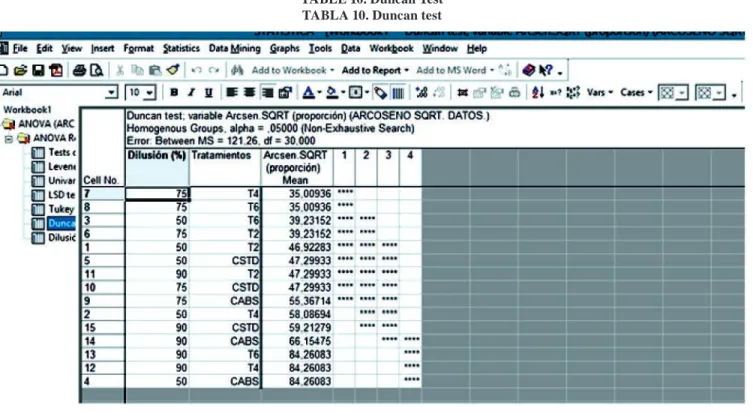
(10) Revista Ciencias Técnicas Agropecuarias, ISSN -1010-2760, E-ISSN: 2071-0054, Vol. 26. No. 4 (October-November-December, pp. 95-108), 2017. 104. Th e resul ts ref erred to th e h igh d isch arge pol l utant l oad of the effluents (digestate) to the exit of the biodigesters coincide w ith oth er resul ts obtained by oth er auth ors l ik e Espinosa ( 2013 ) and S osa ( 2015). Th e resul ts rel ated w ith th e pol l uting l oad ( DQ O) of th e val ued substrates bef ore d if f erent l oad s and l ater to th e tertiary f il trate ( bio f il ter) are presented in Tabl e 8. Th ere, it can be appreciated th at, in th e cases of f l ow s of l oad betw een 3 00 mL and 200 mL , onl y in th e case of th e biodigester located in the CPA”13 de Marzo”, this indicator is above th at specif ied by th e Cuban norm ( NC-27: 1999). Th at sh ow s th at th e bio f il ter using aq uatic pl ants, such as Lemna minor, is a good sol ution f or th e d econtamination of th e ef f l uents ( d igestate) coming f rom anaerobic biod igesters, since th is sy stem is abl e to ach ieve percentages of pol l uting l oad ( DQ O) removal in a range f rom 8% to 69% . Th e l oad of 100 mL coul d not be eval uated d ue to th e reagent l ack s in th e l aboratory .. L os resul tad os ref erid os a l a al ta carga contaminante d e l os efluentes (digestato) a la salida de los biodigestores coinciden con otros resul tad os obtenid os por otros autores como Espinosa ( 2013 ) y S osa ( 2015). L os resul tad os rel acionad os con l a carga contaminante ( DQ O) d e l os sustratos eval uad os ante d if erentes cargas y posterior al filtrado terciario (biofiltro). Se presentan en la Tabla 8, de la misma se puede apreciar que en los casos de flujos de carga d el ord en d e l os 3 00 mL y 200 mL , sol o en el caso d el biodigestor ubicado en la CPA” 13 de Marzo”, este indicador está por encima d e l o estipul ad o por l a norma cubana NC 27: 1999. Lo cual muestra que el biofiltro utilizando plantas acuáticas, tal es como es el caso d e l a ( Lemna minor) es una buena solución para la descontaminación de los efluentes (digestatos) proced entes d e biod igestores anaerobios, y a q ue este sistema es capaz de lograr porcientos de remoción de la carga contaminante ( DQ O) en un rango d e 8% h asta 69% . L a carga d e 100 mL , no pud o ser eval uad a por carencias d e reactivo en el l aboratorio.. Results with Regard to the Microbiologic Analysis of the Soil. Resultados con respecto al análisis microbiológico del suelo. In Tabl e 9, th e resul ts obtained in th e microbiol ogic anal y sis of th e soil are appreciated . Th ere mush rooms, bacteria and actinomy cetes w ere obj ect of investigation. Of th e anal y sis of Tabl e 3 .9 it can be appreciated th at in treatment 2 ( J orge Toboso), th e max ima val ues of th e present mush rooms appeared at 48 h ours ( 21 x 105). H ow ever, at 72 h ours, th e biggest val ues ( 22,3 3 x 10⁵) are presented in treatment 4 (“13 de Marzo”). In the case of bacteria, th e resul ts sh ow th at, in th e stand ard control , th e biggest val ues ( 1,3 3 x 10⁹) are observed at 48 h ours, d ecreasing th at beh avior at 72 h ours. W ith regard to th e actinomy cetes, th e biggest val ues ( 41 x 105) are presented in treatment 6 (Ariel Domínguez), 10 d ay s l ater, w h ich sh ow s a great variabil ity in th e beh avior of th e d if f erent treatments ( 2, 4 and 6) ref erred to th e impact of ef f l uents in th e soil , rel ated to th e popul ation of mush rooms, bacteria and actinomy cetes. Th ese resul ts are prel iminary and th ey can be usef ul f or f uture investigations th at d emonstrate if th ese f actors can cause an increment or d ecrement of soil f ertil ity . On th e oth er h and , it is w el l k now n th at th e biggest constituents in th e bio sol id s are represented by the oxidizable organic matter (MO), calcium ( Ca), nitrogen ( N) and ph osph orous ( P ), cond itioned by th e h igh organic l oad s present in pig and cattl e ex cretes mainl y , rel ated w ith th e al imentary base of th ese species. ( Negrin & Jiménez, 2012).. En l a Tabl a 9 se aprecian l os resul tad os obtenid os en el análisis microbiológico del suelo, fueron objeto de investigación, hongos, bacterias y actinomicetos. Del análisis de la Tabla 9 se pued e apreciar q ue en el tratamiento 2 ( J orge Toboso), se presentan l os má x imos val ores d e h ongos presentes, a l as 48 h oras ( 21 x 105), sin embargo a l as 72 h oras, l os may ores val ores ( 22,33 x 10⁵), se presentan en el tratamiento 4 (13 de Marzo). En el caso d e l as bacterias, l os resul tad os muestran q ue en el control está nd ar se observan l os may ores val ores ( 1,3 3 x 10⁹) a l as 48 h oras, red uciénd ose ese comportamiento a l as 72 h oras. Con respecto a l os actinomicetos, l os may ores val ores ( 41 x 105) se presentan en el tratamiento 6 (Ariel Domínguez), a los 10 días de realizado, lo cual muestra una gran variabilidad en el comportamiento d e l os d if erentes tratamientos ( 2, 4 y 6) referidos al impacto que provocan los efluentes en el suelo, relativo a la población de hongos, bacterias y actinomicetos. Estos resul tad os son prel iminares y pued en servir para investigaciones f uturas, d ond e se d emuestre si estos f actores pued en provocar un incremento o d ecremento d e l a f ertil id ad d el suel o. P or otra parte, es conocid o q ue l os may ores constituy entes de los biosólidos están representados por la materia orgánica oxidable (MO), el calcio (Ca), el nitrógeno (N) y el fósforo (P), cond icionad o por l a al ta carga orgá nica presente en l as ex cretas del ganado porcino y vacuno principalmente, en relación con la base alimentaria de estas especies (Negrin y Jiménez, 2012).. Results of the Statistical Analysis. Resultados del análisis estadístico. Th e d ata of th e germination percent obtained f or d if f erent degrees of effluents dilution (digestate) for analyzed biod igesters, once transf ormed to sin-1 of th e sq uare root of th e proportion sh ow th at th e ef f ect th at more impacts on it, is th e d egree of d il ution. Th at can be appreciated in Tabl e 10. Of th e val ued treatments, th e best resul ts are obtained in th e case of treatments 4 (13 de Marzo) and 6 (Ariel Domínguez). Los datos del porciento de germinación obtenidos para diferentes grados de dilución de los efluentes (digestatos) por biodigestor analizado, una vez transformados a sen-1 de la raíz cuadrada de la proporción muestran que el efecto que más incide en la misma, es el grado de dilución. Esto se puede apreciar en l a Tabl a 10 También se d ebe d estacar q ue d e l os tratamientos eval uad os, l os mej ores resul tad os se obtienen en el caso d e l os.
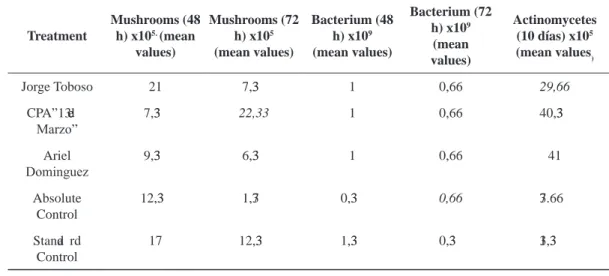
(11) Revista Ciencias Técnicas Agropecuarias, ISSN -1010-2760, E-ISSN: 2071-0054, Vol. 26. No. 4 (October-November-December, pp. 95-108), 2017. for dilutions of 90%, finding significant differences with the oth er treatments, ex cept w ith regard to th e absol ute control ( CAB S) d il ute to 50% . Th is can be appreciated in Tabl e 10 ( Duncan test) and 11 ( M eans val ues of Arcosin SQ RT ( proportion)).. tratamientos 4 (13 de Marzo) y 6 (Ariel Domínguez) para diluciones del 90%, encontrándose diferencias significativas con los d emá s tratamientos, ex cepto con respecto al control absol uto ( CAB S) d il uid o al 50% . Esto se pued e apreciar en l as Tabl as 10 (Duncan test) y 11 (Medias del Arcoseno SQRT (proporción)). TABLE 8. Substrates DQO before Different Loads and After the Tertiary Filtrate (Bio Filter) TABLA 8. (DQO) de los sustratos evaluados ante diferentes cargas y posterior al filtrado terciario (biofiltro) ST (%) Biodigesters. DQO (mgO2/L). oTS (%). Biomass. DQO (mgO2/L). N.C.27:1999. Influents. Effluents. Influents. Effluents. Influents. Effluents. Effluents. 1,59. 0,24. 47,53. 84,94. 607,72. 423,56. < 700. J orge Toboso. P ig manure ( 300 m L ). CPA”13 de Marzo”. P orcino ( 300 mL ). 3,23. 6,77. 66,48. 56,76. 15653,60. 1565,36. < 700. Ariel Dominguez. P ig manure ( 300 m L ). 3,85. 0,53. 71,08. 52,71. 1639,02. 681,39. < 700. J orge Toboso. P ig manure ( 200 mL ). 1,59. 0,24. 47,53. 84,94. 2012,4. 280,8. < 700. CPA”13 de Marzo”. P ig manure ( 200 mL ). 3,23. 6,77. 66,48. 56,76. 19188. 1544,4. < 700. Ariel Dominguez. P ig manure ( 200 mL ). 3,85. 0,53. 71,08. 52,71. 4258,8. 967,2. < 700. J orge Toboso. P ig manure ( 100 mL ). ne. ne. ne. ne. ne. ne. CPA”13 de Marzo”. P ig manure ( 100 mL ). ne. ne. ne. ne. ne. ne. Ariel Dominguez. P ig manure ( 100 mL ). ne. ne. ne. ne. ne. ne. ne- not eval uated. TABLE 9. Microbiologic Soil Analysis TABLA 9. Análisis microbiológico de suelo. Treatment. J orge Toboso. Mushrooms (48 Mushrooms (72 Bacterium (48 h) x105. (mean h) x105 h) x109 (mean values) (mean values) values) 21. Bacterium (72 h) x109 (mean values). Actinomycetes (10 días) x105 (mean values). 7,33. 1. 0,66. 29,66 40,33. CP A” 13 de Marzo”. 7,33. 22,33. 1. 0,66. Ariel Dominguez. 9,33. 6,33. 1. 0,66. 41. Absol ute Control. 12,33. 1,37. 0,33. 0,66. 37.66. 12,33. 1,33. 0,33. 31,33. Standa rd Control. 17. 105.
(12) Revista Ciencias Técnicas Agropecuarias, ISSN -1010-2760, E-ISSN: 2071-0054, Vol. 26. No. 4 (October-November-December, pp. 95-108), 2017. TABLE 10. Duncan Test TABLA 10. Duncan test. TABLE 11. Mean Values of Arcosin SQRT (proportion) TABLA 11. Medias del Arcoseno SQRT (proporción). CONCLUSIONS •. 106. In the analyzed biodigesters the microbial load (total colif orms, th ermo tol erant col if orms and Pseudomonas aeruginosas) to the inlet and exit of the analyzed biodigesters (primary filtrate), shows a low contamination, below that •. CONCLUSIONES En los biodigestores analizados la carga microbiana (colif ormes total es, col if ormes termo tol erantes y pseud omonas aeruginosas) a l a entrad a y sal id a d e l os biod igestores analizados (filtrado primario), muestra una baja contaminación,.
(13) Revista Ciencias Técnicas Agropecuarias, ISSN -1010-2760, E-ISSN: 2071-0054, Vol. 26. No. 4 (October-November-December, pp. 95-108), 2017. •. •. •. •. •. specified in the Cuban norm, which is in contradiction with previous works made by Sosa (2015) and Martínez et al. ( 2014). Th e obtained resul ts to th e ex it of th e second ary and tertiaries filters show that this system is able to reduce the polluting l oad val ues very bel ow th e permissibl e l imits establ ish ed by th e Cuban norm ( NC-27: 1999). Th e resul ts ref erred to th e grow th and prod uctivity of the biomass selected as sanitary bio filter (Lemna minor), sh ow ed th at th ey are unabl e to grow and reprod uce und er th ese severe cond itions of contamination ( l oad of 100, 200 and 300 mL of effluents diluted in proportion 1:1 w ith w ater). The results referred to the use of effluents (digestate) as bio stimulant (bio fertilizers) show that pig effluents pacified d uring th ree month s and d il uted in 90% w ith w ater, reach th e biggest germination percent ( 80% ). It is above th e resul ts reach ed w ith th e d il utions of 50% and 75% in al l th e val ued treatments, w ith regard to th e absol ute and stand ard control s, respectivel y . The bio filter using aquatic plants, such as Lemna minor is a good solution for the decontamination of the effluents ( d igestate) coming f rom anaerobic biod igester, since th is sy stem is abl e to ach ieve percent of pol l uting l oad ( DQ O) removal in a range f rom 8% to 69% . Soil microbiol ogic anal y sis resul ts, sh ow ed a great variabil ity in th e beh avior of th e d if f erent treatments ( 2, 4 and 6) ref erred to th e impact of ef f l uents on th e soil , rel ative to th e popul ation of mush rooms, bacteria and actinomy cetes. Th ese resul ts are prel iminary and th ey can be good f or f uture investigations, th at d emonstrate if th ese f actors can cause an increment or d ecrement of soil f ertil ity . •. •. •. •. •. por d ebaj o d e l o estipul ad o en l a norma cubana, l o cual está en contradicción con trabajos anteriores efectuados por (Sosa, 2015) y (Martinez et al., 2014). Los resultados obtenidos a la salida de los filtros secundarios y terciarios muestran que este sistema es capaz de bajar en mayor med id a l a carga contaminante h asta val ores muy por d ebaj o d e los límites permisibles que fija la norma cubana (NC-27: 1999). L os resul tad os ref erid os al crecimiento y prod uctivid ad d e l a biomasa seleccionado como biofiltro sanitario (Lemna minor), mostraron q ue l as mismas son incapaces d e crecer y reprod ucirse bajo estas condiciones severas de contaminación (cargas de 100, 200 y 300 mL) de efluentes diluidos en proporción 1:1 con agua. Los resultados referidos a la utilización de los efluentes (digestatos) como bioestimulantes (biofertilizantes) muestran que los efluentes porcinos pacificados durante tres meses y diluidos en 90% con agua, alcanzan los mayores porcientos de germinación (80%), estando por encima de los resultados alcanzados con las diluciones de 50% y 75% en todos los tratamientos evaluados; asi como con respecto a los controles absol uto y e stá nd ar respectivamente. El biofiltro utilizando plantas acuáticas, tales como es el caso d e l a ( Lemna minor) es una buena solución para la descontaminación de los efluentes (digestatos) procedentes de biodigestores anaerobios, ya que este sistema es capaz de lograr porcientos de remoción de la carga contaminante ( DQ O) en un rango d e 8% h asta 69% . Los resultados referidos al análisis microbiológico del suelo, mostró una gran variabilidad en el comportamiento de los d if erentes tratamientos ( 2, 4 y 6) ref erid os al impacto q ue provocan los efluentes en el suelo, relativo a la población d e h ongos, bacterias y actinomicetos. Estos resul tad os son prel iminares y pued en servir para investigaciones f uturas, d ond e se d emuestre si estos f actores pued en provocar un incremento o d ecremento d e l a f ertil id ad d el suel o.. REFERENCES / REFERENCIAS BIBLIOGRÁFICAS ARENAS, A.D.; LUÉ-MERÚ, M.; TORRES, G.: “Evaluación de la planta Lemna minor como biorremediadora de aguas contaminadas con mercurio” , Avances en Ciencias e Ingeniería, 2( 3 ): 1-11, 2011, ISSN: 0718-8706. B ARB A, L .E.: Fito remediación en el tratamiento de aguas residuales con metales pesados, [en línea], Ed . U niversid ad d el V al l e, Cal i, Col ombia, 16 p., 2002, Disponible en: http://www.bvsde.paho.org/bvsaar/e/fulltext/gestion/fitore.pdf, [Consulta: 20 de enero de 2016]. CLESCERI, L.S.; GREENBERG, A.E.; EATON, A.D.; FRANSON, M.A.H. (eds.): Standard methods for the examination of water and wastewater, [en línea], Ed . American P ubl ic H eal th Association - American W ater W ork s Association - W ater Environment F ed eration, U SA, 19 p., 1999, ISB N: 0-87553 -23 5-7, Disponible en: https://www.mwa.co.th/download/file_upload/SMWW_10900end.pdf, [Consulta: 26 de septiembre de 2016]. ESCALANTE, V.E.; PAAT, J. de los A.: Tratamiento de efluentes de una granja porcícola en el estado de Campeche, [en línea], Ed . U niversidad Autónoma de Campeche, Morelos, México, 6 p., 2002, Disponible en: http://www.bvsde.paho.org/bvsaidis/mexico26/ii-034.pdf, [Consulta: 20 de enero de 2016]. ESPEJO, C.; GARCÍA, R.: “Tratamiento de purines de ganado porcino en España para minimizar la contaminación de suelos y su impacto ambiental ” , [en línea], En: Congreso Internacional sobre Desertificación «ICOD 2009», Ed . U niversid ad d e M urcia, M urcia, Españ a, pp. 673 -676, 2010, Disponible en: http://congresos.um.es/icod/icod2009/paper/view/5391/5181, [Consulta: 20 de enero de 2016]. ESP INOSA, N.: Evaluación integral de la producción de biogás en la finca agropecuaria «San Antonio», U niversid ad Central d e L as V il l as «Marta Abreu», Trabajo de Diploma, Villa Clara, Cuba, 123 p., 2013. FIGUEROA, Y.V.; CRIOLLOS, C.Y.C.D.C.; DIÉGUEZ, S.F.; PÉREZ, J.L.E.I.; DEL TORO, P.Y.; ARIAS, T.; MORALES, F.D.Y.G.; PINEDA, A.; DEL RÍO, J.; PÉREZ, R.C.Y.A.: “El Instituto De Investigaciones Porcinas, Su Aporte A La Porcicultura Cubana Y Los Nuevos Desafíos Para El Futuro. Vilda Figueroa. Efecto De La Sustitución Del Maíz Por Miel Rica De Caña De Azúcar En El Balance De Energía Y Nitrógeno De Cerdos En Crecimiento. Carmen María Mederos”, Revista Computadorizada de Producción Porcina, 1( 1): 67, 1994, ISSN: 1026-9053 .. 107.
(14) Revista Ciencias Técnicas Agropecuarias, ISSN -1010-2760, E-ISSN: 2071-0054, Vol. 26. No. 4 (October-November-December, pp. 95-108), 2017. MARTÍNEZ, C.; MARAÑON, E.; CUPULL, R.; DELGADO, V.: “Studies at the biogas plant called «Niña Bonita»”, En: VI Edición de la Conferencia Científica Internacional sobre Desarrollo Agropecuario y Sostenibilidad «Agrocentro 2014», Ed . U niversid ad Central d e Las Villas «Marta Abreu», Villa Clara, Cuba, p. 8, 2014, ISBN: 978-959-250-973-3. M ARTÍ NEZ , C.M .: Instalaciones y equipos especializados en la producción avícola y porcina. En su: Instalaciones agropecuarias. Fundamentos y elementos de cálculo, Ed . F él ix V arel a, L a H abana, Cuba, 3 60 p., 2015, ISB N: 978-959-250-643 -5. MAYEA, S.; NOVO, R.; BOADA, I.; SILVEIRA, E.; SORIA, M.; MORALES, Y.; VALIÑO, A.: Microbiologia agrícola, Ed . F él ix V arel a, L a H abana, Cuba, 284 p., 2004, ISB N: 959-258-749-3 . NEGRIN, B.A.; JIMÉNEZ, P.Y.: “Evaluación del efecto agronómico del biosólido procedente de una planta de tratamiento por digestión anaerobia d e resid ual es pecuarios en el cul tivo d el f rij ol ( Phaseolus vulgaris L )” , Cultivos Tropicales, 3 3 ( 2): 13 -19, j unio d e 2012, ISSN: 0258-593 6. OFICINA NACIONAL DE NORMALIZACIÓN: Vertimiento de aguas residuales a las aguas terrestres y al alcantarillado. Especificaciones, no. NC 27, L a H abana, Cuba, p. 11, 1999. OFICINA NACIONAL DE NORMALIZACIÓN: Microbiología del agua. Detección y enumeración de coliformes. Técnicas del número más probable (NMP), no. NC 1095, L a H abana, Cuba, p. 23 , 2015. SOSA, C.M .: Parámetros de control y monitoreo del proceso en digestores anaerobios de pequeña escala y diferentes tecnolgías, U niversid ad Central de Las Villas «Marta Abreu», Trabajo de Diploma, Santa Clara, Cuba, 80 p., 2015. STATSOF T: STATISTICA (data analysis software system), [en línea], (Versión 8.0), [Windows], Ed. StatSoft, Inc., US, 2007, Disponible en: http:// www.advanceduninstaller.com/STATISTICA-8_0_725_0-CS-8f88bacd1d2fadeea33a8c7bb4efc714-application.htm.. Received: 3 0/ 01/ 2017. Approved: 11/ 09/ 2017. Carlos M. Martínez-Hernández, Prof. Titular, Universidad Central de Las Villas “Marta Abreu”(UCLV), Carretera a Camajuaní km.5.5. CP: 54830, Santa Cl ara, V il l a Cl ara, Cuba. Tel : 53 -42-281692. F ax : 53 -42-281608. E-mail : carl osmh @ ucl v.ed u.cu Yosiel Francesena-López, E-mail : carl osmh @ ucl v.ed u.cu Yaser García-López, E-mail : carl osmh @ ucl v.ed u.cu Nilda Rosa Martínez-Flores, E-mail : carl osmh @ ucl v.ed u.cu Note: the mention of commercial equipment marks, instruments or specific materials obeys identification purposes, there is not any promotional commitment rel ated t o th em, neith er f or th e auth ors nor f or th e ed itor.. 108.
(15)
Figure


+4

Documento similar