UNIVERSIDAD DE CUENCA
Facultad de Filosofía, Letras y Ciencias de la Educación
Departamento de Investigación y Postgrados
Maestría en Lingüística Aplicada a la Enseñanza del Inglés como Lengua
Extranjera
Effects of Direct Focused and Indirect Focused Feedback on Sentence
Fragments, Noun-pronoun Agreement, and Run-on Sentences in writing tasks
of A2 EFL students at Universidad de Cuenca
Trabajo de titulación previo a la obtención del título de Magíster en Lingüística Aplicada a la Enseñanza del Inglés como Lengua Extranjera.
Autor:
Lcdo. Jorge Mauricio Villavicencio Reinoso C.I. 0105079909
Correo: [email protected]
Directora:
Dra. Juanita Catalina Argudo Serrano C.I. 0102810249
RESUMEN
El presente trabajo de investigación cuasi-experimental estudia los efectos de la
retroalimentación enfocada directa e indirecta en errores gramaticales relacionados a oraciones seguidas sin puntuación, concordancia sustantivo-pronombre, y oraciones fragmentos en escritos de estudiantes nivel A2 de la Universidad de Cuenca durante el semestre octubre 2018 – enero 2019. El estudio se enmarca dentro de la teoría Hipótesis del Output Comprensible establecida por Swain en el año 1985. La muestra utilizada fue de 58 participantes (hombres=28;
mujeres=30) asignados a dos grupos de tratamiento y un grupo de control. El tratamiento involucró 6 tareas escritas; mismas que recibieron retroalimentación de tipo enfocada-directa en el primer grupo de tratamiento (n=20), y de tipo enfocada-indirecta en el segundo grupo de tratamiento (n=19) en los errores gramaticales mencionados anteriormente. El grupo de control (n=19) no recibió retroalimentación. Para la medición de los efectos de los tipos de
retroalimentación y la falta de los mismos, se tomó el primer y último escrito como prueba preliminar y posterior respectivamente. Pruebas no paramétricas, debido a la distribución no normal de los datos, fueron aplicadas, y se encontró que las dos técnicas de retroalimentación tuvieron un impacto positivo y significativo en la corrección de errores de oraciones seguidas sin puntuación y fragmentos. Después de comparar y analizar los resultados de las dos técnicas de retroalimentación, se encontró que dichas técnicas produjeron efectos positivos similares en los dos tipos de errores anteriores. Finalmente, se reporta que el grupo de control no presentó cambios significativos.
ABSTRACT
This quasi-experimental study reports the effects of Direct Focused and Indirect Focused Feedback on Sentence Fragments, Noun-pronoun Agreement, and Run-on Sentences in Writing Tasks of A2 EFL Students at Universidad de Cuenca during the period of October 2018 – January 2019. The study was framed by Swain’s Output Hypothesis (1985). The sample employed was comprised of 58 participants (male=28; female=30) who were assigned to two treatment groups and one control group. The first treatment group (n=20) received direct focused feedback, and the second treatment group (n=19) received indirect focused feedback on the aforementioned grammatical errors. The control group (n=19) did not receive feedback. The two feedback strategies were applied on six different writing tasks during the treatment, and the first and last task were employed as the pre- and post-test, respectively. As the data were not normally distributed, non-parametric tests were applied to measure the effects of the two feedback
techniques. The statistical analysis indicated that both feedback types produced significant changes in terms of run-on sentences and sentence fragments; though, there were no significant changes in terms of noun-pronoun agreement. Moreover, after comparing the statistical results of both feedback strategies, it was found that direct and indirect focused feedback had equally significant effects. Finally, the control group did not present any changes in the grammatical targets.
TABLE OF CONTENTS
1.3. Research Questions ... 16
1.4. Objectives ... 17
1.4.1 General ... 17
1.4.2 Specific ... 17
1.5. Significance of the study ... 18
2. CHAPTER II: Theoretical Framework ... 20
2.1 Interlanguage and Fossilization ... 21
2.2 Output Hypothesis ... 22
2.2.1 The noticing/triggering function ... 24
2.2.2 The hypothesis-testing function... 25
2.2.3 The metalinguistic function ... 26
2.3 Treatable and untreatable errors ... 27
2.3.1 Noun-pronoun agreement ... 28
2.3.2 Sentence fragments ... 29
2.3.3 Run-on sentences ... 30
2.4 Written Corrective Feedback ... 32
2.4.1 Focused and Unfocused Approach ... 33
2.4.2 Typology of Written Corrective Feedback ... 35
3. CHAPTER III: Literature Review ... 41
3.1 Focused vs. Unfocused ... 42
3.2 Direct vs. Indirect Feedback... 45
3.2.1 Research evidence supporting Indirect Feedback ... 45
3.2.2 Research evidence supporting Direct Feedback ... 48
4. CHAPTER IV: Methodology ... 57
4.1 Research approach and design ... 58
4.2 Context and participants ... 59
4.3 Choice of target structures... 63
4.4 Ethical concerns ... 65
4.5 Exclusion criteria... 66
4.6 Instruments ... 67
4.7 Treatment procedures ... 68
4.7.1 First phase ... 68
4.7.2 Second phase ... 70
4.7.3 Third phase ... 71
4.7.4 Fourth phase ... 74
4.8 Data analysis ... 75
4.9 Avoiding execution flaws... 75
5. CHAPTER V: Results ... 78
5.1 Pretest results... 79
5.2 Posttest results ... 80
5.2.1 RQ1 ... 80
5.2.2 RQ2 ... 82
6. CHAPTER VI: Discussion and conclusions ... 85
6.1 Discussion ... 86
6.1.1 RQ1 ... 86
6.1.2 RQ2 ... 91
6.2 Limitations and Recommendations ... 95
6.3 Conclusions and Pedagogical Implications ... 96
REFERENCES ... 98
APPENDIXES ... 107
APPENDIX A: Permission from the Institute of Languages, Universidad de Cuenca... 108
APPENDIX B: Demographic questionnaire ... 109
APPENDIX C: Likert-type survey ... 110
APPENDIX D: Validation of the Likert-type survey ... 112
APPENDIX F: Consent form ... 116
APPENDIX G: American English in Mind Placement Test ... 117
APPENDIX H: Sample of a Writing Topic ... 121
LIST OF TABLES
Table 1. Types of indirect feedback ... 40
Table 2. Gender of study participants ... 61
Table 3. Major of study participants ... 62
Table 4. Age of study participants ... 62
Table 5. Hometown of study participants ... 62
Table 6. Pretest results ... 80
Table 7. Posttest results: Direct focused feedback... 81
Table 8. Posttest results: Indirect focused feedback ... 81
Table 9. Posttest results: Control group ... 82
Table 10. Difference between the pretest and the postest ... 83
ACKNOWLEDGEMENT
First, I would like to thank Universidad de Cuenca for providing the opportunity to continue my professional growth. Also, I would like to thank Juanita Argudo, M.A., my thesis advisor for her shared knowledge, provided guidance, and given support throughout this time. Likewise, I am more than grateful to Elisabeth Rodas, M.A. who kindly lent me material on my dissertation’s topic. Equally important, I appreciate the willingness of my participants to be part of this research. Last but not least, I would like to thank my parents for all the support throughout this stage and, in general, throughout my life. Without them, I would have nothing.
DEDICATION
To Jaime and Ruth, who have endowed me with all the values and perseverance to continue this path called life.
1.
Introduction
1.1. Introduction
Acquisition, of either a first or second language, is not an error-free process of learning; on the contrary, errors are inevitable and may emerge not only in speaking but also in writing since they can be of phonological, morphological, lexical, or syntactic nature (Touchie, 1986).
In writing, a common concern in its teaching-learning process stems from the usage of grammar since grammatical errors may be one reason to cause communication failure
(Sermsook, Liamnimitr & Pockakorn, 2017). This problem with communication due to cohesion issues becomes even more evident in second language (L2) acquisition since L2 writing is
certainly more challenging (Jodaie & Farrokhi, 2012) and intimidating as creating a written piece requires background information on a topic, organizational skills, mastery of grammar and punctuation, and accurate word choices (Ministerio de Educación del Ecuador, 2016a). Consequently, if a learner does not meet any aforementioned writing requirement,
communication failure may result. Sermsook et al. (2017) exemplify communication failure in L2 writing, due to a syntactic error, as follows: She name is Mook meaning Her name is Mook. Grammatical inaccuracies, hence, can cause difficulty in understanding a message.
Khomeijani, 2012), findings from studies have not, yet, been conclusive as to which feedback strategy works best. Therefore, it has become a need to conduct more studies on feedback strategies in the field of L2 Writing (Kassim & Ng, 2014; Nematzadeh & Siahpoosh, 2017; Westmacott, 2017) to gain more insights.
1.2. Problem Statement
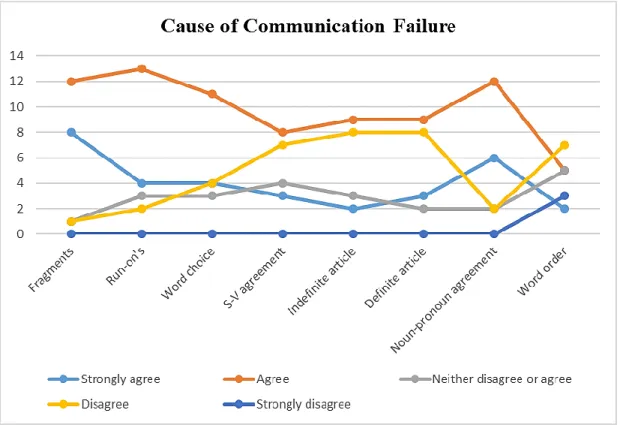
Writing is a complex skill to develop (Nematzadeh & Siahpoosh, 2017), and this complexity is reflected in students’ frequent struggle to accurately apply grammar rules in compositions (Ferris & Hedgcock, 2005). In fact, problems with grammar in writing tasks of English as a Foreign Language (EFL) students at University of Cuenca were acknowledged by 22 teachers at the Institute of Languages of the university in a Likert-type survey on frequent grammatical errors (further details in section 4.3). Specifically, the survey showed that sentence fragments, run-ons, and noun-pronoun agreement errors were regularly made. Additionally, the results of the survey revealed that the teachers considered those errors as reasons for
communicative breakdowns. Indeed, Sermsook et al. (2017), as well as Farrokhi (2012), state that grammatical errors can lead to communication failures.
be a clear and dramatic failure’’ (p. 271). Truscott’s (1996) idea of WCF as ineffective is supported, to some extent, by Wahyuni’s (2017) study. Wahyuni (2017) expresses that neither direct nor indirect feedback makes a difference in writing accuracy. However, Wahyuni (2017) acknowledges that the interpretation of her results should be made with care since her study presents some flaws, such as students’ confusion in interpreting the provided feedback and students’ low proficiency level. Although there are few opponents of WCF, research indicating its benefits in grammatical accuracy, as well as its advocates, is robust (Atmaca, 2016; Farshi & Safa, 2015; Ferris, 2006; Hosseiny, 2014; Nematzadeh & Siahpoosh, 2017; van Beuningen, De Jong & Kuikem, 2008; Westmacott, 2017).
Evidence in favor of WCF is vast, yet there is not a consensus on which feedback strategy is the most effective. Sermsook et al.’s (2017) review article on WFC strategies highlights that direct and indirect feedback are the two mostly-debated types, and since several studies (Abedi, Latifi & Moinzadeh, 2010; Aghajanloo, Mobini & Khosravi, 2016;
Hashemnezhad & Mohammadnejad, 2012; Jamalinesari, Rahimi, Gowhary & Azizifar, 2015) have yielded different results as to the effects of these two types of feedback, authors urge further research in this field. Additionally, there have been inconclusive results in regard to which feedback approach -focused or unfocused- is better. Farrokhi and Sattapour (2012) and Sheen et al. (2009), after comparing focused and unfocused feedback, conclude that the former is more beneficial, whereas Ellis, Sheen, Murakami, and Takashima (2008) argue that both
Siahpoosh (2017) affirm that there is a need of further studies specifically devoted to the analysis of focused feedback as there is not ample evidence in this field.
Although there are plenty of English-as-a-Second Language (ESL) studies conducted on WCF which still suggest further research on it, there is still an even larger gap in literature regarding real EFL contexts; therefore, research in authentic EFL writing environments is required (Westmacott, 2017). As a matter of fact, after a quest on Repositorios de Acceso Abierto del Ecuador (RRAAE), only one unpublished master’s thesis by Escudero and Cundar (2016), partly focusing on the role of WCF, appeared in the database. Consequently, teachers at University of Cuenca do not have a study conducted in their context that may provide insights as to how to react to grammatical errors in writing. Thereupon, the need of researching on the impact of direct focused and indirect focused feedback on grammatical errors in EFL writing.
1.3. Research Questions
This study addresses the following research questions:
1. What effects do direct focused feedback and indirect focused feedback have on sentence fragments, noun-pronoun agreement, and run-on sentences in writing tasks of A2 EFL students at University of Cuenca?
1.4. Objectives 1.4.1 General
1. To determine the effects of direct focused feedback and indirect focused feedback on sentence fragments, noun-pronoun agreement, and run-on sentences in writing tasks of A2 EFL students at University of Cuenca
2. To compare the effects of direct focused feedback and indirect focused feedback on sentence fragments, noun-pronoun agreement, and run-on sentences in writing tasks of A2 EFL students at University of Cuenca
1.4.2 Specific
1. To determine students’ general English proficiency level through the application of a placement test before the treatment to avoid the flaw of lack proficiency-level
measurement in WCF research
2. To determine the effects of direct focused feedback on sentence fragments, noun-pronoun agreement, and run-on sentences in writing tasks of A2 EFL students at University of Cuenca through a statistical comparison of a pretest and a posttest after the treatment 3. To determine the effects of indirect focused feedback on sentence fragments,
noun-pronoun agreement, and run-on sentences in writing tasks of A2 EFL students at
University of Cuenca through a statistical comparison of a pretest and a posttest after the treatment
1.5. Significance of the study
L2 writing is certainly a challenging skill to acquire (Jodaie & Farrokhi, 2017), and that is confirmed, in part, by students’ grammatical errors during its development (Ferris &
Hedgcock, 2005). Not only are these errors present in the writing skill, but they are also present in Speaking (Swain, 2008). Thus, there must be other reasons, apart from grammatical
innacuracies, for analyzing L2 writing and hopefully improving it through WCF.
According to Nematzadeh and Siahpoosh (2017), one of the reasons for focusing on the development of writing is that writing has become pivotal in L2 acquisition since it allows learners to apply new acquired knowledge and, at the same time, promotes its own development. The importance of writing is also highlighted by El Ministerio de Educación del Ecuador that states that teachers cannot overlook the development of writing (2016b) because writing serves academic and professional purposes (2016a). Bitchener and Ferris (2012), for their part, remark the significance of writing as the means to prove if second language acquisition has occurred. Accordingly, teachers are equipped with a means to be, first, informed as to what extent students master grammar and, second, to make decisions as to what needs adjustments (Bitchener & Ferris, 2012).
To illustrate Bitchener and Ferris’s (2012) position, after teachers are informed of
grammatical errors, they usually decide to provide WCF to help students polish their weaknesses (Nematzadeh & Siahpoosh, 2017). Indeed, WCF is advocated by Ferris (2010) as a tool to overcome errors in writing by making them noticeable to learners, prevent error fossilization and, thus, allow linguistic competence development (Ferris, 2004).
2.
Theoretical Framework
The focus of this study was to determine the effects produced by direct and indirect focused WCF on run-on sentences, sentence fragments, and noun-pronoun agreement errors of A2 EFL writers; consequently, the participants’ written output was considered for analysis. As written output was targeted, the study was framed by Swain’s (2008) Output Hypothesis which considers output as the opportunity to realize the existence of language gaps in learners’
interlanguage after feedback provision. With this in mind, the Output hypothesis, as well as the concepts of interlanguage and fossilization, is explained. The concepts of interlanguage and fossilization are included as the former describes the level of L2 development including errors produced by learners, and the latter describes incorrect language productions due to lack of feedback (Selinker, 1972). Additionally, the concepts of the grammatical errors targeted in this study and their general classification categories -treatable and untreatable- are explained. Finally, two specific WCF strategies -direct and indirect- and one feedback approach -focused feedback- are addressed in this section.
2.1 Interlanguage and Fossilization
means of writing. Hence, the authors state that the omission of the -s marker is a global error in learners’ interlanguage as it occurs regardless of the learners’ mother tongue.
Selinker (1972) acknowledges that the interlanguage developed by L2 learners continuously changes as more input is provided to learners. Accordingly, this process is not regular but uneven since after making progress, learners stop and then continue progressing. However, this uneven process may cease at some point. In other words, learners do not continue making progress in acquiring an L2; thus, they plateau. This event is what Selinker (1972) calls Fossilization which can occur when learners are not exposed to second language instruction or do not receive appropriate feedback to notice differences between their interlanguage and the target language.
2.2 Output Hypothesis
Swain (2008) reports that the information-processing theory, which stresses the
importance of input in learning (Mitchell & Myles, 2004), was dominant and accounted for L2 acquisition at the onset of the 80’s. Following this theory, Krashen (1985) proposes the
Comprehensible Input Hypothesis which sees comprehensible input as the catalyst of second language acquisition. According to Mitchell and Myles (2004), Krashen’s (1985) hypothesis views input as responsible for L2 acquisition provided input is comprehensible to learners, and there is a predisposition on their part to acquire a second language. Considering comprehensible input as the means to acquire an L2, Krashen (1984) identifies that the effectiveness of
speaking and writing were at a lower level of development. Based on this, Swain (2008) proposes the Output Hypothesis as an alternative to the Comprehensible Input Hypothesis for understanding L2 acquisition.
Swain (2008) postulates her Output Hypothesis which results from her observations of immersion programs where students mostly spoke in English rather than in the target language, French. Swain (2008) stresses that the small amount of speech produced by the French-program learners was not accurate, and teachers did not require students to produce grammatically correct speech. With these notions, Swain (2008) sees the need and importance of feedback. Swain (2008) explains that when students receive feedback, they are led to modify inaccurate language productions, and this modification requirement becomes stronger when feedback comes from teachers rather than from peers. Swain (2008) defines the output hypothesis as a modification process of language productions in which learners are engaged and output as the modified version of a previous inaccurate-language production in terms of grammar, informational content, and/or sociolinguistic or discourse features.
Swain (2008) divides her hypothesis into three functions which are the stages learners can be involved in to produce improved output. These three stages are the noticing/triggering function, the hypothesis-testing function, and the metalinguistic function.
2.2.1 The noticing/triggering function
At this stage, Swain (2008) explains that students strive to produce a target-language feature and realize or notice that they present difficulty producing the feature; consequently, students are driven to find a solution. In an attempt to produce an accurate version of the target-language feature, students create a version based on their own knowledge of the target-language (2008); that is, learners are engaged in L2 cognitive processes which create new knowledge or consolidate previous knowledge (Swain & Lapkin, 1995). As explained by Donesch-Jezo (2011), language production, at the noticing/triggering stage, entails the use of previously-acquired language features in a context different from the context they were learnt.
An example of this stage is the case of Martha, an EFL student. While Martha was writing about her childhood memories, she realized that she did not know the past form of the verb go. To overcome this difficulty, she applied her previous knowledge of the past tense rule of regular verbs; hence, she wrote goed. Although this past version of the verb go was not correct, it was evident that Martha, initially, noticed her linguistic problem, then performed cognitive processes to solve it, and she finally produced improved output. Swain (2008) explains that a linguistic gap is the impossibility of producing the target-language feature due to lack of linguistic knowledge as in Martha’s case. In addition, Swain (2005) highlights that when a learner presents a linguistic gap, the teacher’s task is to make the linguistic gap salient enough so that learners become aware that still there is something they need to acquire to reach the
writing piece, marked goed as incorrect, and when Martha reviewed the corrections, she noticed that she had to acquire something else in the L2 to produce an accurate version of goed. In this manner, the noticing/triggering function takes place once again.
2.2.2 The hypothesis-testing function
Donesch-Jezo (2011) recognizes the importance of feedback coming from either the learners’ peers or the teacher in the hypothesis-testing function since after learners produce the language, they receive feedback indicating whether the language production was accurate or needs modification. Shehadeh (2003) argues that after learners realize, with or without feedback, that they possess linguistic gaps, they are provided with opportunities to test out their hypotheses as to what the correct target-language forms are. According to Donesch-Jezo (2011), learners engage in negotiating with either their peers or teacher during hypothesis testing, and this negotiation could result in output modification. Output modifications produced by learners reflect their hypotheses regarding how to say or write their message (Swain, 2008).
Swain (2000) illustrates the hypothesis-testing function through the case of two 8-year-old French learners who were involved in a writing task of retelling a read-aloud text. Sophie and Rachel intended to write the phrase new threats in French, and since they did not know whether
learners were not aided by feedback; instead, they used their own linguistic knowledge to both realize that they possessed a linguistic gap and test out their hypotheses. As revealed by
Donesch-Jezo (2011), there may be times when learners do not have available feedback sources, and then learners rely on their previous knowledge of the language to test out their hypotheses. After learners find a solution, which may be confirmed by available resources (Shehadeh, 2003) such as a dictionary, a peer, or a teacher, the process of testing ends.
2.2.3 The metalinguistic function
Swain (2008) declares that the metalinguistic function is the reflective stage in the development of interlanguage because learners use language itself to reflect on their or others’ produced output. In other words, language acts as a mediator in L2 acquisition (Swain, 1995). Swain (2008) reasons that a learner’s reflection process starts in collaboration with his/her peers, and then it becomes individual since the learner, first, co-constructs knowledge to solve
linguistic gaps, and then individual internalization of new knowledge takes place. Besides, Donesch-Jezo (2011) observes that the metalinguistic function can provide teachers with information related to learners’ language-form hypotheses and learning strategies to understand language; for this reason, Swain (1995) recommends that teachers should include activities which promote on language form and maintain the objective of conveying meaning at the same time.
continues its development (Swain, 2008). Swain (2008) concedes that this process of modifying inaccurate output results in the internalization of correct language forms.
2.3 Treatable and untreatable errors
The provision of WCF involves the selection of error categories, and this, as reported by Saavedra and Campos (2018), depends on the students’ needs and on the nature of errors (Ferris, 2006). With regard to the nature, Ferris (2011) frames grammatical faults into two categories: treatable and untreatable errors. The category of treatable errors is related to not applying a grammar rule governing a linguistic feature (Ferris, 2011). Among these types of errors are verb tense and form, subject-verb agreement, article usage, noun-pronoun agreement, plural and possessive noun endings, sentence fragments, run-on sentences, capitalization, and spelling (Ferris, 2011). For instance, the sentence Martha love snakes contains a subject-verb agreement error since the third person marker (-s) in the verb is not included. The second category, i.e., untreatable errors, is related to idiosyncrasy, and students require a fuller knowledge of the language for correcting these errors (Ferris, 2011). Among these types of errors are unidiomatic sentence structure, word choice, and idioms (Ferris, 2011). For instance, the sentence Patrick told to me about his school contains an unidiomatic sentence structure error as there is an extra word (to) (Ferris, 2011). This error might be made by an EFL learner from a Spanish speaking country who is unaware that the verb tell means contara in Spanish. Due to this unawareness, the learner adds to to express contar a in English.
Concerning this study, run-ons, fragments, and noun-pronoun agreement errors were selected as the study’s targets after finding out they were frequently made in writing at
2.3.1 Noun-pronoun agreement
A pronoun is a word that substitutes for a noun, when the noun is mentioned for a second or more times, to avoid repetition (UVU Writing Center, n.d.).
For example,
Without pronouns: Martin considers that Martin should wash Martin’s car.
With pronouns: Martin considers that he should wash his car.
The UVU Writing Center (n.d.) classifies pronouns into the categories of:
a. Demonstrative (this, that, these, those)
b. Indefinite (anybody, somebody, something, nothing, no one, among others) c. Reflexive (myself, yourself, himself, herself, itself, ourselves, themselves) d. Interrogative (who?, whom?, whose?, which?, what?, among others) e. Personal (I, you, he, she, it, we, they)
f. Possessive (my, your, his, her, its, our, their) g. Relative (who, which, that, among others)
Hacker, Sommers, and Carbajal Van Horn (2011) state that a pronoun has to agree with its antecedent in number and gender; otherwise, there is an error of noun-pronoun agreement. An antecedent is a noun to which a pronoun refers or for which it substitutes (UVU Writing Center, n.d.). The subsequent sentences illustrate noun-pronoun agreement errors.
Gender error: Monique is wearing his new earrings.
In this example, there is gender disagreement between the pronoun and its antecedent as the female possessive pronoun is her and not his.
In this example, there is number disagreement between the pronoun and its antecedent as the plural possessive pronoun is their and not its.
2.3.2 Sentence fragments
Hacker et al. (2011) point out that, whereas a sentence contains at least one independent clause which has a subject and a verb and can stand alone, a sentence fragment intends to stand as a sentence; though, it cannot for the following reasons:
a. Absence of a verb
A sentence is considered a fragment when it does not have a verb (Hacker et al., 2011). For example,
Students usually busy at the end of the semester.
Singleton (2005) comments that this is fixed by the addition of a verb as follows: Students areusually busy at the end of the semester.
b. Absence a subject
A fragment occurs when there is not a subject (Hacker et al., 2011). For example, Immediately popped their flares and life vests.
Singleton (2005) indicates that this is repaired by the addition of a subject as follows: Pilotsimmediately popped their flares and life vests.
Commands, nonetheless, are not considered a fragment although they do not have a written subject, and this is because their subject (you) is understood (Hacker et al., 2011).
For example, (you) Sit down
Specifically, this is the case of phrases. A phrase, which is a group of words, pretends to stand as a sentence; though, it is not a sentence (Hacker et al., 2011).
For example, Running for the bus
Singleton (2005) comments that this is fixed by the addition of an independent clause as follows:
Running for the bus, Itrippedandtwistedmy ankle.
d. There is one subordinate clause standing as a sentence
Although a subordinate clause contains a subject and a verb, it is not a sentence since it starts with a subordinator, such as when, because, while, although, or if (Hacker et al., 2011). The subordinator makes the subordinate clause be dependent and require an independent clause to work as a sentence (Hacker et al., 2011).
For example,
Whenthe cat leaped onto the table.
Singleton (2005) indicates that this is repaired by the addition of an independent clause as follows:
Whenthe cat leaped onto the table, we had just sat down.
2.3.3 Run-on sentences
Hacker et al. (2011) explain that a sentence contains at least one independent clause and add that when independent clauses are inaccurately connected, run-on sentences occur. The authors classify run-on sentences into two types: fused and comma splice.
Hacker et al. (2011) describe this type of run-on as having independent clauses together with neither a punctuation mark nor a coordinating conjunction. A coordinating conjunction joins two independent clauses and can be and, but, or, nor, for, so, or yet (Hacker et al., 2011).
An example of a fused sentence is
Air pollution poses risks to all humans it can bedeadly for asthma sufferers.
From there, it can be noticed that there are two independent clauses (one in blue and one in green) joined with neither punctuation nor a coordinating conjunction.
b. Comma-splice sentences
Hacker et al. (2011) define this type of run-on as using commas to connect independent clauses with no coordinating conjunction.
For example,
Air pollution poses risks to all humans,it can bedeadly for asthma sufferers.
A comma splice can also occur when the independent clauses are connected by a word that is preceded by a comma and is not a coordinating conjunction (Hacker et al., 2011).
For example,
Air pollution poses risks to all humans, however, it can bedeadly for asthma sufferers.
To correct run-on sentences, Hacker et al. (2011) suggest five options:
1. Add a coordinating conjunction, preceded by a comma, between two independent clauses. For example,
Air pollution poses risks to all humans, butit can bedeadly for asthma sufferers.
2. Use a semicolon to separate two independent clauses. For example,
Air pollution poses risks to all humans;it can bedeadly for asthma sufferers.
Air pollution poses risks to all humans; however, it can bedeadly for asthma sufferers.
4. Place a period to separate two independent clauses. For example,
Air pollution poses risks to all humans.It can bedeadly for asthma sufferers.
5. Add a subordinator to one clause and place a comma after the subordinated clause. For example,
Although air pollution poses risks to all humans, it can bedeadly for asthma sufferers.
2.4 Written Corrective Feedback
According to Ferris, Pezone, Tade and Tinti (1997), a critical practice of teachers is to respond to students’ writing. This practice is currently fulfilled by teachers through the provision of WCF (Ferris, 2010). From Kassim and Ng’s (2014) perspective, WCF seems to have become pivotal in second language learning; therefore, it has been researched for decades to test both its role and efficacy in L2 development.
Corrective feedback is applied to written linguistic errors (Sheen & Ellis, 2011), and its importance is supported by Almasi and Tabrizi (2016). Almasi and Tabrizi (2016) state that learners are benefited from writing practice and revision stages, and they expect feedback from either the teacher or peers since it provides learners with insights into what they have accurately written and what needs correction. Consequently, learners use feedback to correct their errors during the revision stage and, hence, create a final draft. Keh (1990) maintains that WCF is input information coming from the teacher to the learner’s written output to carry out writing revision, and according to Richards and Schmidt (2010), this input information can come in the form of comments or other options from the teacher as well as from other people. The ultimate goal of feedback, as conceived by Bitchener and Ferris (2012), “… should be to help student writers build awareness, knowledge, and strategic competence so that they can develop skills to better monitor their own writing in the future” (p. 140).
2.4.1 Focused and Unfocused Approach
There are two approaches WCF can adopt. On the one hand, the first feedback approach is known as unfocused written corrective feedback. This unfocused strategy, according to Ellis et al. (2008), is seen as a broad category of WCF since every error is targeted by teachers in a learner’s written production. As a result, this correction strategy is carried out regardless of error types (van Beuningen, 2010). For instance, a teacher can provide feedback on grammatical, spelling, and organizational errors at the same time, or the teacher can target grammatical errors and provide feedback, at the same time, on tense, subject-verb agreement, article usage,
possessive adjectives, adverb usage, among others. The unfocused practice has become popular in writing lessons, so it is being applied on a regular basis (Ellis et al., 2008). From this
since they tend to analyze every error unlike other students who omit reviewing corrections. This feedback approach is useful when teachers do not have a preconceived number of errors to correct on (Ferris, 2011).
On the other hand, the second feedback approach is known as focused written corrective feedback. Ellis et al. (2008) define focused feedback as an intensive correction strategy targeting one error or error category. When it focuses on one single error, it is said to be highly focused WCF, whereas it is less focused when it targets more than one error, but still it has a limited range of errors to correct. This means that errors which are not part of the targets are not corrected at all (van Beuningen, 2010). For instance, a teacher can focus on grammatical errors such as subject-verb agreement and article usage at the same time, and errors belonging to other types are not corrected. Ferris (2011) reasons that this approach is effective in education since it provides precise information regarding frequent errors of learners that teachers have noticed. Further, this approach can maintain learners’ motivation in learning as they do not see a paper full of corrections. All in all, the two feedback approaches -focused and unfocused- are related to the number of errors teachers correct in learners’ writing pieces (Ferris, 2011).
According to van Beuningen, De Jong, and Kuiken (2012), the unfocused approach, also known as comprehensive feedback, is considered a common practice in comparison to focused feedback. In writing, teachers’ tendency is to correct every grammatical error of a students since they do not usually have a record of learners’ frequent errors (Ferris, 2011). Besides, this
As a result, students can have a written product which is free of not only grammar errors but also organizational, word choice errors, among others. On the contrary, Ellis et al. (2008) state that learners are more engaged in realizing errors and comprehending corrections when there is a limited number of corrections rather than a comprehensive correction approach. Ferris (2011) agrees on this claim since she considers that students, generally, are more benefited from a specific number of frequent errors they can correct rather than a number of scattered corrections on a paper. Ferris (2011) affirms that most students do not feel engaged in revising every error, and they tend to look at the corrected paper and forget it. Furthermore, Ellis et al. (2008) recognize that the selective or focused approach may greatly foster accuracy development. For these reasons, a focused approach may be more beneficial.
2.4.2 Typology of Written Corrective Feedback
After revising the two feedback approaches -focused and unfocused- a teacher can adopt, and the types of errors -treatable and untreatable- an EFL writer can make, it is essential to present the different strategies through which WCF can be provided to enhance students’ grammatical accuracy. For this purpose, the following classification, based on the work of Ellis (2008), is presented.
2.4.2.1 Electronic Feedback
Wahyuni (2017) remarks that this feedback strategy requires the use of computers to “generate immediate evaluative feedback on student’s writing” (p. 46). As electronic feedback is computer-based, problems of access to technological devices, on the part of students, can occur. Additionally, Wahyuni (2017) emphasizes that not only is limited access an issue, but also unwillingness of some teachers to use technology.
2.4.2.2 Reformulation
Ellis (2008) clarifies that the purpose of this feedback strategy is to reword the work of an EFL writer so that it can be similar to a work done by a native writer. This rewording is carried out by a native language user, and it is expected to maintain the message the EFL writer
intended. After EFL writers receive their work, they decide which reformulations they maintain (Ellis, 2008).
Reformulation intends to help learners acquire accurate language forms and choices by means of revising their re-written papers (Wahyuni, 2017). However, Wahyuni (2017)
determines that “this type of feedback is impractical, if not possible” (p. 46) since this demands EFL teachers to have English native speakers willing to rewrite students work. Besides, in case the class teacher is a native speaker, “the [teacher] would need extra hours rewriting the entire compositions” (Wahyuni, 2017, p. 46). This rewriting task means a time-consuming and exhausting process for EFL teachers or native speakers.
2.4.2.3 Metalinguistic Feedback
feedback strategy is directed towards the learners’ explicit knowledge of the language to understand the type of error made.
Metalinguistic feedback can be provided by means of error codes, which explain the nature of the error and are written down above the error or in the margin (Ellis, 2008). Example 1, taken from Ellis (2008), illustrates error code use.
Example 1
Also, metalinguistic feedback can be provided through brief grammatical descriptions (Ellis, 2008). Example 2, taken from Ellis (2008), exemplifies this strategy.
Example 2
2.4.2.4 Direct and Indirect Feedback
process. Notwithstanding, the direct and indirect strategies are similar in the fact that they can take the form of either oral or written feedback (Sermsook et al., 2017).
a. Direct feedback
Nguyen et al. (2015) explain that direct feedback refers to supplying the correct form with no further explanation of the correction, so there is a replacement of the incorrect form (Saadi & Saadat, 2015). Hosseiny (2014), for her part, states that direct feedback has an internalization effect since the learner incorporates the correct form into his/her knowledge; consequently, teachers expect students to incorporate the given corrections into their work when they are either revising or rewriting (Ferris, 2011).
Farrokhi and Sattarpour (2012) propose that the strategy of direct feedback can be applied as follows:
1. An extra word/phrase/morpheme can be crossed out. 2. A required word/phrase/morpheme can be added.
3. Rarely, there is addition of a metalinguistic reference, i.e., referring students to a grammar resource such as a book.
Farrokhi and Sattarpour’s (2012) description of the application of direct feedback can be illustrated through Example 3, which was taken from Ellis (2008).
Ellis (2008) asserts that direct feedback is beneficial because it provides students with clear guidance as to how to correct errors when they are unable to perform self-correction. Furthermore, Ferris and Roberts (2001) suggest that direct feedback is a suitable strategy for low-level students since they do not possess enough linguistic knowledge to find error solutions. Ferris (2011) adds that this feedback strategy is appropriate to treat idiosyncratic or complex errors since these types of structures are not usually governed by rules and are difficult to explain. Furthermore, if a low-level student makes this type of error, and the teacher provides vague corrections, such as error codes, the learner will not be able to understand the correct form of the error (Ferris, 2011).
b. Indirect Feedback
The strategy of indirect feedback refers to the action of pointing out that an error has occurred in a student’s written work, but there is no provision of the correct language form (Nematzadeh & Siahpoosh, 2017) unlike direct feedback. According to Ellis et al. (2008), the indirect strategy motivates students to perform self-correction, and a large amount of cognitive engagement occurs (Ferris, 2011). Hence, students are engaged in problem-solving tasks from which they build their own linguistic knowledge as Swain’s (2008) hypothesis-testing function evidences it.
Farrokhi and Sattarpour (2012) provide options to apply indirect feedback as follows:
1. The error is circled or underlined.
2. The number of errors made in a line is jotted down in the margin. 3. A code is used to show the location and type of an error.
Example 4, taken from Ellis (2008), illustrates Farrokhi and Sattarpour’s (2012) and Ellis’s (2008) options for indirect feedback.
Example 4
In the same line, Wesmacott (2017) presents a classification of different types of indirect feedback strategies. Table 1 details the types.
Table 1
Types of indirect feedback (Wesmacott, 2017)
Ellis (2008) states that the indirect feedback strategy motivates students to carry out reflection processes on errors since this strategy does not provide the correction of errors nor all the information to correct errors. Ellis’s (2008) claim is supported by Hosseiny (2014) who warns that indirect feedback provides scarce information for correcting errors; as a consequence, students are actively involved in mental processes during correction. One drawback of indirect feedback, nonetheless, is that after students hypothesize a correct version of an error, they are not sure whether the new version is accurate or not (Hosseiny, 2014). Notwithstanding, students may be able to confirm their hypotheses in future writing tasks; thus, the development of
3. Literature Review
Reviewing the existent body of literature leads to picture the current state of the ongoing debate on WCF strategies. With that intention in mind, this section outlines the results and methodology of several studies conducted on direct and indirect WCF strategies and on the focused and unfocused WCF approaches. The included studies in this section were grouped according to either the feedback approach or feedback strategy they employed. This grouping followed the suggested literature review organization in the studies of Almasi and Tabrizi (2016), Aghajanloo et al. (2016), Nematzadeh and Siahpoosh (2017), and Sheen et al. (2009).
3.1 Focused vs. Unfocused
The results of studies either comparing the effects of focused and unfocused written corrective feedback or focusing on only one approach have been inconclusive. Thereupon, it can be stated that there is not a consensus on which approach works better, and authors, therefore, urge for more research on these approaches by either comparing them or focusing on one at a time. Furthermore, authors suggest adding more than one grammatical target in focused feedback groups during research (Ellis et al., 2008; Farrokhi & Sattapour, 2012; Frear & Chiu, 2015; Sheen et al., 2009).
practice could contribute to improve grammatical accuracy without the need of WCF provided writing tasks engaged learners in accuracy issues as the study of Sheen et al. (2009) did. Farrokhi and Sattapour (2012) agreed, on the findings of Sheen et al. (2009), that focused feedback on English articles fared better than unfocused feedback after conducting a study with 60 high-proficiency EFL participants from Iran. Farrokhi and Sattapour (2012) applied The Test of English as a Foreign Language (TOEFL) to assure that participants had the same language proficiency level and employed a pretest-treatment-posttest study design in which participants wrote five narrative tasks and the number of inaccuracies regarding definite and indefinite articles were tallied.
Similar to the conclusions of Farrokhi and Sattapour (2012), a previous study by Farrokhi and Sattapour (2011) found direct focused feedback to be better than unfocused feedback for improving accuracy of English articles in both high and low proficiency level students from Iran. The study involved 120 EFL participants who were divided into two groups of language
proficiency (high and low) after administering a TOEFL proficiency test. Subsequently, the high-level proficiency group was further divided into three groups of 20 participants each; thus, there were 2 treatment groups (focused and unfocused feedback) and a control group (no feedback). The same division procedure was applied to the low proficiency level group. The participants, during the treatment, produced two stories (one as a pretest and one as a posttest) based on picture prompts and five rewriting-fables activities. Apart from the benefits of focused feedback, Farrokhi and Sattapour (2011) also determined that unfocused feedback was not valuable enough to be used in class.
Unlike Farrokhi and Sattapour (2011), Aghajanloo et al. (2016), through a comparative study with a pretest-posttest design, confirmed that unfocused feedback with a direct strategy of crossing out errors and providing their correct versions was beneficial and preferred by the majority of their participants. Aghajanloo et al.’s (2016) conclusions were drawn from an attitude questionnaire and TOEFL-based writing tasks of 120 EFL participants whose ages ranged from 14 to 18 years and who were part of four study groups: focused direct, unfocused direct, focused indirect, and unfocused indirect. Aghajanloo et al. (2016) demonstrated that, although the intermediate participants in the four treatment groups improved, the unfocused direct feedback fared better than the other three groups in terms of general writing performance.
approaches had equally significant effects on the use of prepositions after a 12-week period of feedback provision. The authors’ claim derived from the statistical analysis of a pretest, post-, and delayed posttest of 90-upper-intermediate ESL students from Malaysia who wrote three 200-word descriptions of graphic prompts related to technological themes. The study of Kassim and Ng (2014), notwithstanding, presented a flaw similar to Ellis et al.’s (2008), specifically the second flaw.
As it can be seen, the findings of the reviewed studies above have not been conclusive yet. Consequently, a gap regarding focused and unfocused feedback approaches remains.
3.2 Direct vs. Indirect Feedback
3.2.1 Research evidence supporting Indirect Feedback
that, since there was no difference between these two techniques, teachers have the option to use underlining as feedback. Thereupon, grading could become faster and easier, and mistakes made by teachers while grading could decrease as well. Another conclusion drawn by Ferris and Roberts (2001) was that errors related to sentence structure, such as run-ons or fragments, were not accurately corrected during the editing phase of the response. For this reason, teachers should determine whether indirect feedback is suitable for these types of errors or not. Finally, although the control group was able to correct some errors, the correction range was limited compared to the feedback groups in Ferris and Roberts’ (2001) work.
By means of a comparative study, Abedi et al. (2010) examined the effects of direct and indirect feedback on general writing performance of 30 pre-intermediate EFL learners in Iran. The study’s methodological procedures involved two treatment groups: a direct feedback group, which had errors underlined and corrected, and an indirect feedback group, which had errors underlined and explained by error codes. The participants had to write 8 short essays and edit them after feedback provision. The first and last essay were the pre- and post-test, respectively. Whereas the results of the direct group did not present an important improvement in writing, the indirect feedback group benefited learners in general writing accuracy.
effects in the long run (improved writing performance in new tasks) compared to direct feedback since learners are not spoon-fed rather they employed their previous knowledge to correct an error, and, thus, building of their own linguistic understanding ensues (Swain, 2008). To
conclude, Eslami (2014) suggested that since the indirect feedback strategy required students to have enough linguistic knowledge to correct errors themselves, a focused approach might be better for low-level students.
In agreement with Eslami’s (2014) suggestion of a focused approach for indirect
feedback, Jamalinesari el al. (2015) also argued that teachers should focus correction on a limited number of categories after studying the effects of direct and indirect feedback on eight error types, i.e., third person singular, plural -s, regular and irregular past tense, subject-verb agreement, parts of speech, present prefer simple, passive verbs, and articles. The 20 low-intermediate EFL participants from Iran wrote 10 consecutive essays, and their progress was measured throughout the 10 tasks by assigning a score over 20 to each error type. Jamalinesari et al. (2015) attested that improved linguistic accuracy derived from the indirect feedback strategy in new writing tasks. In other words, the indirect feedback group outperformed the direct feedback group. Notwithstanding, the researchers acknowledged that continuous progress of linguistic accuracy from task to task was non-existent; on the contrary, accuracy levels differed from task to task.
3.2.2 Research evidence supporting Direct Feedback
Comparable to the case of indirect feedback, there have been findings in favor of direct feedback in L2 learning as well. To begin with, van Beuningen et al. (2008), who led a study encompassing 62 low-proficient learners of Dutch attending two secondary schools in the
Netherlands, researched the effects of direct and indirect feedback strategies on word from, word choice, spelling, word order, addition or omission of a word, incomplete sentences, punctuation, and capitalization. The participants, whose L1 was Arabic and Turkish, were in two treatment groups: direct and indirect feedback and two control groups: writing practice and no-feedback. The direct group had errors marked and corrected, and the indirect group had errors underlined or coded. With respect to the control groups, the writing-practice group had no feedback but 2 extra writing tasks, and the no-feedback group, naturally, did not receive feedback. Data were elicited through 4 writing tasks based on Biology topics, and the data analysis unveiled that provision of direct and indirect feedback had positive short-term effects, and only direct
feedback had long-term effects. According to Ferris (2006), long-term effects of WCF strategies refer to improved writing performance in new tasks, whereas short-term effects refer to writing improvement from one draft to another of one writing task.
The findings of Shirazi and Shekarabi’s (2014) work revealed that provision of WCF was, generally, effective to improve accuracy of prepositions, adjectives, and noun phrases of 60 Iranian low-proficiency learners of Japanese compared to no feedback provision. Furthermore, the researchers, specifically, affirmed that direct feedback had a better impact compared to indirect feedback since the former strategy provided learners with clear corrections, whereas the latter one did not provide enough information to correct errors. Because of the scarce
participants may not have known how to correct errors or understood teachers’ feedback. The authors further ascertained that all errors cannot be addressed with the same feedback strategy as errors may require a different treatment. As a matter of fact, indirect feedback was effective to correct adjective inaccuracies but not preposition or noun-phrase errors in Shirazi and
Shekarabi’s (2014) study. The conclusions of Shirazi and Shekarabi (2014) were reached after analyzing 8 expository essays created by participants in a control group (no-feedback provision) and in an experimental group (direct and indirect feedback).
Similarly, Hashemnezhad and Mohammadnejad (2012) confirmed the benefits of direct feedback over indirect feedback after comparing their effects on verb tense, prepositions, and relative pronouns of 80 intermediate-EFL learners in Iran. The researchers, after analyzing right-answer provision (direct feedback) and error codes (indirect feedback) in 4 writing tasks, stressed that WCF aided students to find errors easily. Further, they indicated that adults are more
benefited from feedback than children as adults were more concerned about errors. The
researchers also established that direct feedback was a better strategy than indirect feedback for proficient users as the majority of their errors belong to the untreatable type such as preposition usage (Ferris, 2011).
or intermediate-proficient learners as these students’ knowledge is not sufficient to amend errors, and, as a consequence, learners may evade correction.
Equally important findings are the ones obtained by Aghajanloo et al. (2016) after carrying out a feedback study involving 120 intermediate-EFL participants from Iran divided into four treatment groups: focused direct, unfocused direct, focused indirect, and unfocused indirect feedback. The four feedback techniques proved to significantly enhance the participants’ writing performance after statistically comparing two writing tasks (pretest and posttest) based on TOEFL topics. Aghajanloo et al. (2016) endorsed that the most effective feedback strategy was unfocused direct feedback for teaching English writing; conseqeuntly, its application was suggested. By means of an attitude questionnaire, the participants declared that unfocused direct feedback was the most beneficial strategy as it allowed them to address all their errors.
As described above, researchers advocate for the benefits that direct feedback could have on enhancing accuracy of different grammatical points, such as word choice, punctuation, verb tense, and article usage, in EFL contexts. Furthermore, it is noted that the benefits of direct feedback are spread to the learning of other second languages, such as Dutch and Japanese, as indicated by van Beuningen et al. (2008) and Shirazi and Shekarabi (2014). Overall, direct feedback is proposed as a pedagogical tool to help students improve their grammatical accuracy.
3.2.3 Research evidence supporting both Indirect and Direct Feedback
fill-in-the-blanks TOEFL tests on definite and indefinite articles. The tests of the two
experimental groups received direct feedback (first group) in the form of correct answers and indirect feedback (second group) through underlining errors only. After the statistical analysis of the pre- and posttest (first and final test), it was demonstrated that both strategies were beneficial to aid grammatical accuracy in writing unlike no-feedback provision. Also, Hosseiny (2014) affirmed that there was not a significant difference between the impact of direct and indirect feedback on grammatical accuracy. Finally, she recommended that teachers ought to be trained in applying these both WCF strategies in class. Additionally, she exhorted that learners must be instructed in using received feedback so that they could enhance their writing performance.
Nematzadeh and Siahpoosh (2017), for their part, had three research groups, and the feedback focus was on general writing ability, i.e., form and content. The 73 EFL Iranian
participants produced 10 writing tasks from the TOEFL exam, and the first and last task were the pre- and posttest, respectively. Whereas one experimental group received direct feedback
through provision of correct answers, the other group received indirect feedback through underlining. Once again, the statistical analysis of the pre- and posttest showed that both direct and indirect feedback helped students improve, and there was not a significant difference between the techniques.
In addition, there have been studies focusing on short-term and long-term effects of direct and indirect feedback. Rahimi and Asadi (2014) analyzed the influence of feedback in form and content. The form targets under study were verb errors, noun ending errors, article errors, wrong word, and sentence structure errors of 44-intermediate EFL Iranian learners who were assigned to two treatment groups and one control group. The subjects wrote three
content, indirect feedback (2nd experimental group) through underlining and error codes on form and content, and no-specific feedback strategy on content and organization (the control group). Each essay was edited by the learners after feedback provision, and a final version was produced. After counting the number of errors of each task and applying the ANOVA test, the researchers concluded that both experimental groups had significantly better effects in grammatical accuracy in the short term unlike the control group. Concerning long-term effects, both direct and indirect feedback were equally effective to improve form correctness in comparison to the control group which was not fruitful in the end.
Another case of long-term and short-term findings is the study by van Beuningen et al. (2012). They examined whether writing accuracy of 268 secondary-school learners of Dutch in the Netherlands improved because of direct unfocused and indirect unfocused feedback. The participants, whose L1 was Turkish and Spanish, were divided into four groups: the direct group receiving correct forms of errors, the indirect group receiving the location and type of errors through codes, the self-correction group which did not receive feedback but reviewed the writing tasks, and the additional writing practice group which had extra tasks. In total, the groups
completed 4 writing tasks except the writing-practice group which completed 5 (1 as extra practice) based on Biology topics. Four tasks of each group served as a pretest, treatment, immediate posttest, and delayed posttest, respectively. The results revealed that WCF was beneficial to correct errors during revision stages, and students were able to learn from an
use of direct feedback to address grammatical errors so that internalization of linguistic knowledge instantly ensues.
3.3 The case against Written Corrective Feedback
The preceding research studies have found statistically significant benefits in either or both feedback strategies; nonetheless, the study conducted by Salimi and Ahmadpour (2015), after comparing two treatment groups, i.e., direct and indirect feedback, and a control group involving no feedback provision, found that none of the treatment groups made a statistically significant improvement in writing accuracy after applying a t-test comparing the means of a pre- and post-test of 30 intermediate EFL students from Iran. The pre- and post-test were two separate writing tasks which received direct feedback (corrections) and indirect feedback (indicating errors). The researchers attributed the lack of statistical significance due to the fact that there was a small number of students and stressed that although there was not statistical significance, both techniques aided to improve accuracy in the short term when the means of the groups were considered. Furthermore, Salimi and Ahmadpour (2015) highlighted that when they compared the means of accuracy regardless of p-value, the direct feedback group outperformed the indirect group in long-term effects.
One main opponent of WCF is Truscott. Truscott (1996), in his review article, analyzed the findings of 1 French as L2, 1 Spanish as L2, 4 EFL, and 4 ESL studies focusing on grammar correction in writing and concluded that error correction was ineffective and should be
abandoned as the results of the studies did not favor WCF. Truscott’s (1996) arguments against WCF were based on the following points summarized by Hirschel (2011):
2. Teachers do not use a specific way of marking errors, and there are times when teachers incorrectly identify items as errors when they are not. As a result, WCF becomes inconsistent.
3. Learners’ readiness to solve specific grammatical issues is not taken into consideration when WCF is provided.
4. WCF may be confusing to learners due to inconsistency in feedback strategies. 5. WCF can keep students from experimenting new grammatical structures since they
would prefer to not make errors.
Additionally, Truscott (2007) supported his 1996 claim about the inefficacy of WCF after conducting a meta-analysis which considered the effect size of past studies. The studies included in Truscott’s (2007) meta-analysis were 1 French as L2, 1 Spanish as L2, 1 EFL, and 5 ESL. Truscott (2007) determined that in case WCF had any effect on accuracy, the effect would be too small to be judged as favorable. Finally, the researcher maintained that teachers should devote time to more productive writing teaching tasks rather than to the application of WCF.
In general, Truscott (1996) saw WCF as a waste of time and energy. Furthermore, he stated that WCF had a harmful effect. Notwithstanding, Truscott’s (1996) arguments could be solved by implementing the following suggestions in regard to ways WCF application.
2. The second argument is also addressed by Ferris (2002), who suggested focused feedback to clearly identify a limited number of errors. Besides, Ferris (2002) recommended furnishing teachers with training sessions in feedback provision. 3. Ferris (2011) acknowledged that it was mandatory that teachers know what types of
errors were common among L2 writers so that those errors were addressed as a class. Similarly, teachers had to take into account both L1’s influence and different levels of proficiency. All things considered, an individualized feedback provision, based on students’ needs, could take place. At last, application of a focused approach might be suitable to target common errors of a class (Ferris, 2002).
4. According to Ferris (2011), teachers must be consistent with the way they provided feedback, and this could be reached by using one WCF strategy on a regular basis. For example, teachers can use indirect feedback with only codes or underlining along with a focused approach to treat grammatical inaccuracies.
5. Lastly, in order to help students continue experimenting with the language, there could be writing tasks that receive WCF and others which do not (Ferris, 2002).
difference between the first and last (8th) writing task. Furthermore, Wahyuni (2017) endorsed the claim that cognitive styles “do not significantly influence the way students [. . .] understand the given feedback, revise or improve’’ (p. 50) their writing tasks; hence, ‘‘[t]he students’ cognitive styles do not affect the mastery of students’ linguistics knowledge’’ (p. 50). Nonetheless, Wahyuni (2017) admitted that her study suffered some limitations; therefore, results had to be interpreted with care. Among the limitations she observed were participants’ confusion in interpreting the provided feedback, participants’ low proficiency level, teacher’s inexperience to teach writing at that level, and absence of question-answer sessions to solve participants’ doubts.
After this literature review, it becomes clear, on the one hand, that several studies have yielded positive results with regard to both direct and indirect feedback (Ferris & Roberts, 2001; Hosseiny, 2014; Saverstani & Pishkar, 2015; van Beuningen et al., 2008). On the other hand, there are findings which deem WCF as not significantly helpful for students’ writing
4.
Methodology
This chapter presents information related to the study’s research approach and design, context and participants, choice of target structures, treatment procedures, instruments, and data
This chapter describes the processes applied to design the study and carry out the treatment. There is a description of how the sample was selected, what instruments were used, how the independent variables were assigned, how data were collected, and what statistical procedures were employed.
The subsequent description of research procedures aimed to determine the effects of direct focused feedback and indirect focused feedback on run-on sentences, noun-pronoun agreement, and sentence fragments. For this purpose, 2 research questions demarcated study.
1. What effects do direct focused feedback and indirect focused feedback have on sentence fragments, noun-pronoun agreement, and run-on sentences in writing tasks of A2 EFL students at University of Cuenca?
2. To what extent are the effects of direct focused feedback and indirect focused feedback on sentence fragments, noun-pronoun agreement, and run-on sentences in writing tasks of A2 EFL students at University of Cuenca different from each other?
4.1 Research approach and design
This quantitative study had a quasi-experimental research design developed with three intact classes. Randomization was not feasible as assigning 58 A2 EFL students at University of Cuenca to the three study groups would have involved schedule problems for meeting. Students, for their part, were from different majors and had different academic schedules. Therefore, applying random assignment was not feasible. Macky and Gass (2005) recognize that
interest in participating, and available population to the researcher. Furthermore, Macky and Gass (2005) stress that “if the effects of a particular instructional method are investigated, an existing classroom [i.e., intact classes] may be the most ecologically sound setting for the research” (p. 143).
The three intact classes, in this study, were divided into two treatment groups and one control group. Since there were two experimental groups and one control group, the study
adopted a control-group pretest/posttest design in which the control group took the same pre- and post-test as the experimental groups, but it did not receive the treatment (Macky & Gass, 2005). As regards the variables, the independent variables were direct focused feedback (DFF), indirect focused feedback (IFF), and no feedback provision, and the dependent variables were sentence fragments, noun-pronoun agreement, and run-on sentences.
Finally, the study’s objective was to determine the impact the two independent variables had on run-ons, fragments, and noun-pronoun agreement errors. As a result, a quantitative design was required. Ary, Jacobs, Sorensen, and Razavieh (2010) affirm that a quantitative design is appropriate when researchers are interested in explaining an existent or non-existent causal relationship between variables.
4.2 Context and participants