
Developing bottom up skills to attain spoken word recognition through phonics
97
0
0
Texto completo
(2) THE IMPACT OF PHONICS ON SPOKEN WORD RECOGNITION. 2. Developing Bottom-up Skills to Attain Spoken Word Recognition through Phonics. Astrid MUÑOZ CORREDOR. Research Report submitted in partial fulfillment of the requirements for the degree of Master in English Language Teaching – Autonomous Learning Environments. Directed by Pedro Pablo MALDONADO CHACÓN Department of Foreign Languages and Cultures Universidad de La Sabana Chía, Colombia April 2016.
(3) THE IMPACT OF PHONICS ON SPOKEN WORD RECOGNITION. 3. Declaration. I hereby declare that my research report entitled: Developing Bottom-up Skills to Attain Spoken Word Recognition through Phonics. . is the result of my own work and includes nothing which is the outcome of work done in collaboration except as declared and specified in the text;. . is neither substantially the same as nor contains substantial portions of any similar work submitted or that is being concurrently submitted for any degree or diploma or other qualification at the Universidad de La Sabana or any other university or similar institution except as declared and specified in the text;. . complies with the word limits and other requirements stipulated by the Research Subcommittee of the Department of Languages and Cultures;. . has been submitted by or on the required submission date.. Date: April 19th 2016. Signature: Print Name: Astrid Muñoz Corredor.
(4) THE IMPACT OF PHONICS ON SPOKEN WORD RECOGNITION. 4. Abstract The purpose of this research study was to analyze the impact explicit instruction on phonics has on basic English as a Foreign Language (EFL) learners’ ability to recognize the English sounds in order to identify the spoken words. This ability is part of bottom-up listening skills. Listening is the first skill any learner uses in the process of acquiring any language. Participants received instruction on five vowels /æ e ɪ ɒ ʌ/ and the consonants /θ/ and /ð/. The lessons they attended had a structure based on phonemic awareness and phonics instruction routines. Other studies have focused on “Phonics” but they have mostly explored its implications on reading skills. The present study recognizes “listening” as the skill that first opens the door to foreign language learning and as well as positiviely impacting the acquisition of other language skills and systems. Therefore, this study focuses on listening and the results suggest that phonics is an effective method for assisting EFL learners to comprehend the aural input. By the end of the implementation, all the participants had significant improvement in their ability to recognize English spoken words. Other effects of this type of instruction were the gradual improvement of participants’ pronunciation and spelling skills. Keywords: listening, bottom-up processing, word recognition, comprehensible input, phonemic awareness, and phonics..
(5) THE IMPACT OF PHONICS ON SPOKEN WORD RECOGNITION. 5. Resumen El propósito de esta investigación cualitativa era analizar el impacto que la instrucción explícita en “Phonics” tiene sobre el reconocimieto de los sonidos del inglés en aprendices básicos de este como lengua extranjera y así poder identificar la palabra oral. Esta destreza hace parte de las habilidades de escucha bajo el enfoque ascendente. Los participantes recibieron instrucción en cinco sonidos vocalicos /æ e ɪ ɒ ʌ/ y dos consonánticos /θ/ y /ð/ a través de lecciones estructuradas bajo los parámetros de las rutinas que desarrollan la conciencia fonémica e instrucción en “Phonics”. Otros estudios que han trabajado “phonics” se han enfocado en sus implicaciones sobre la habilidad lectora principalmente. Otros estudios se han enfocado en el uso de phonics en el aprendizaje de la lengua nativa y extranjera, sin embargo, se han dedicado a explorar sus implicaciones sobre la habilidad lectora. El presente estudio reconoce la habilidad de la escucha como la primera que abre las puertas al aprendizaje de la lengua extranjera y como la responsable de irradiar positivamente a las demás habilidades y sistemas de la lengua. Por tanto, este estudio se concentra en la habilidad de la escucha y sus resultados sugieren que la instrucción en “Phonics” es un método efectivo que ayuda a los estudiantes básicos del inglés como lengua extranjera a acceder a su forma oral ya que para el término de la implementación, la mayoría de los participantes en este estudio experimentaron una mejoría significativa en su habilidad para reconocer las palabras del inglés que escuchaban . Otros efectos de este tipo de instrucción fueron la mejora gradual de los participantes pronunciación y escritura (ortografía). Palabras claves: Habilidad de escucha, procesamiento ascendente, reconocimiento de palabras, comprehensible input, conciencia fonémica, y “phonics”..
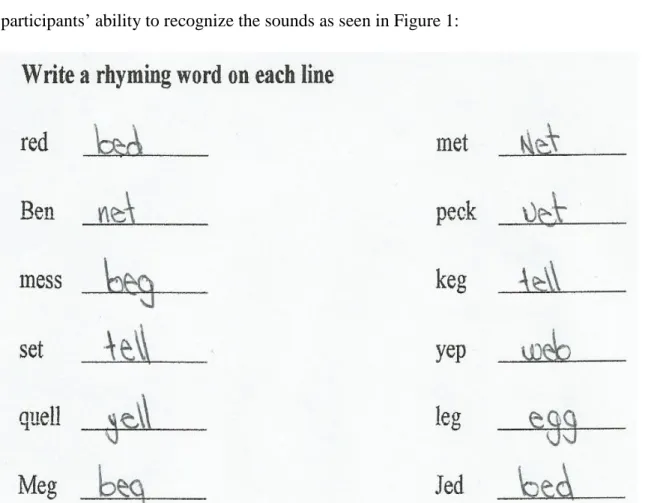
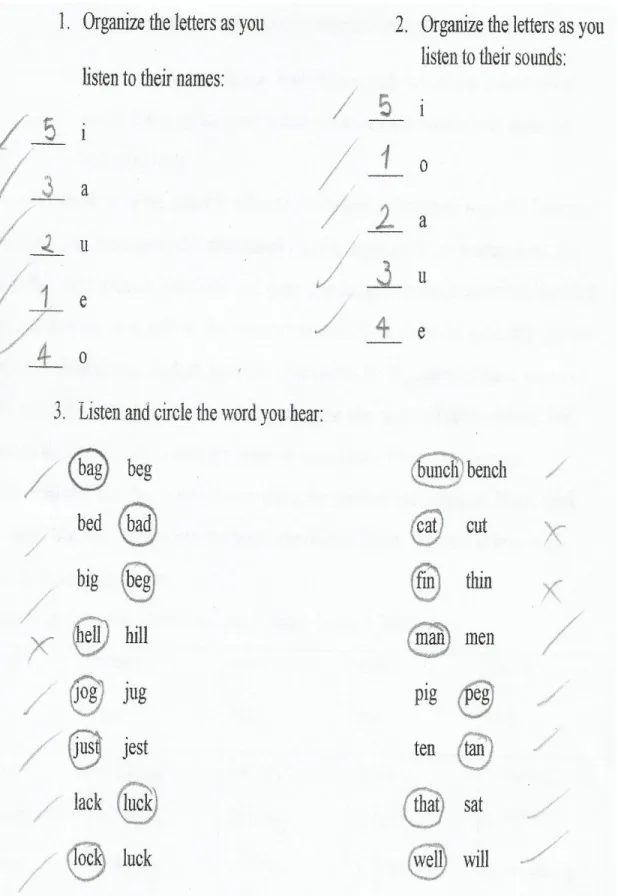
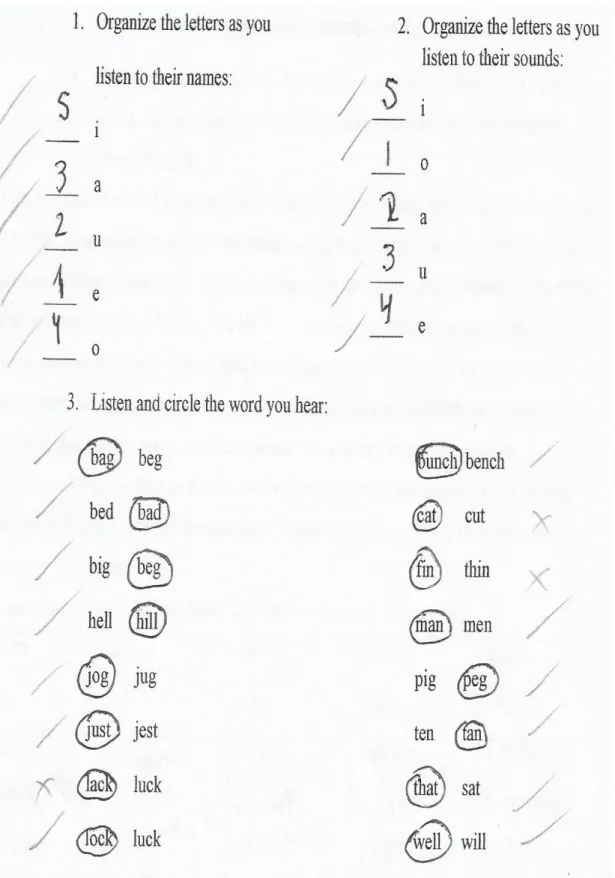
(6) THE IMPACT OF PHONICS ON SPOKEN WORD RECOGNITION. 6. Table of Contents Abstract ................................................................................................................................... 4 Resumen ................................................................................................................................. 5 Table of Contents ................................................................................................................... 6 Table of figures ....................................................................................................................... 9 Table of tables ........................................................................................................................ 9 Chapter 1: Introduction ......................................................................................................... 10 1.1. Introduction to the study ............................................................................... 10. 1.2. Rationale of the study ................................................................................... 11 1.2.1 Needs analysis and problem statement ............................................. 11 1.2.2 Justification of problem’s significance ............................................. 12 1.2.3 Strategy proposed to address problem .............................................. 13. 1.3. Research question and objective .................................................................. 14. 1.4. Conclusion .................................................................................................... 14. Chapter 2: Theoretical Framework ....................................................................................... 16 2.1. Introduction .................................................................................................. 16. 2.2. Definitions .................................................................................................... 16 2.2.1 Listening ........................................................................................... 16 2.2.2 Bottom-up Processing ....................................................................... 17 2.2.3 Word recognition .............................................................................. 18 2.2.4 Comprehensible input ....................................................................... 20 2.2.5 Phonological awareness .................................................................... 21 2.2.6 Phonics .............................................................................................. 22. 2.3. State of the art ............................................................................................... 24.
(7) THE IMPACT OF PHONICS ON SPOKEN WORD RECOGNITION 2.4. 7. Conclusion .................................................................................................... 25. Chapter 3: Research Design ................................................................................................. 26 3.1. Introduction .................................................................................................. 26. 3.2. Type of study ................................................................................................ 26. 3.3. Context and participants ............................................................................... 27 3.3.1 Ethical considerations ....................................................................... 27 3.3.2 Role of the researcher ....................................................................... 28. 3.4. Data collection instruments .......................................................................... 28 3.4.1 Questionnaire .................................................................................... 29 3.4.2 Listening tests ................................................................................... 30 3.4.3 Follow-up interviews ........................................................................ 30. 3.5. Conclusion .................................................................................................... 31. Chapter 4: Pedagogical Intervention and Implementation ................................................... 32 4.1. Introduction .................................................................................................. 32. 4.2. Visions of language, learning, and curriculum ............................................. 32 4.2.1 Vision of language ............................................................................ 32 4.2.2 Vision of learning ............................................................................. 33 4.2.3 Vision of curriculum ......................................................................... 33. 4.3. Instructional design ...................................................................................... 34 4.3.1 Lesson planning ................................................................................ 34 4.3.2 Implementation ................................................................................. 35 4.3.2.1. 4.4. Timeline .......................................................................... 37. Conclusion .................................................................................................... 38. Chapter 5: Results and Data Analysis .................................................................................. 39.
(8) THE IMPACT OF PHONICS ON SPOKEN WORD RECOGNITION. 8. 5.1. Introduction .................................................................................................. 39. 5.2. Data management procedures ....................................................................... 39 5.2.1 Validation.......................................................................................... 39 5.2.2 Data analysis methodology ............................................................... 40. 5.3. Categories ..................................................................................................... 43 5.3.1 Overall category mapping ................................................................. 43 5.3.2 Discussion of categories ................................................................... 46 5.3.2.1. Phonics facilitated the recognition of sounds and written forms ............................................................................... 46. 5.3.2.1.1. Pronunciation .................................................................. 53. 5.3.2.1.2. Spelling ........................................................................... 54. 5.3.2.2. Phonics enhances phonemic awareness .......................... 55. 5.3.2.3. Modified input aids the decoding or bottom-up listening process ............................................................................ 56. 5.3.3 Core category .................................................................................... 57 5.4. Conclusion .................................................................................................... 59. Chapter 6: Conclusions and Pedagogical Implications ........................................................ 60 6.1. Introduction .................................................................................................. 60. 6.2. Comparison of results with previous studies’ results ................................... 61. 6.3. Significance of the results ............................................................................ 66. 6.4. Implementation challenges and research limitations .................................... 69 6.4.1 Challenges with implementing phonics-based strategies in the classroom .......................................................................................... 69 6.4.2 Limitations of the current study ........................................................ 70.
(9) THE IMPACT OF PHONICS ON SPOKEN WORD RECOGNITION. 9. 6.5. Further research ............................................................................................ 70. 6.6. Conclusion .................................................................................................... 72. References ............................................................................................................................ 73 Appendix A: Consent letters................................................................................................. 84 Appendix B: Questionnaire .................................................................................................. 87 Appendix C: Listening test .................................................................................................. 89 Appendix D: Lesson plan sample ......................................................................................... 74 Appendix E: Matrix sample................................................................................................. 79. Table of figures Figure 1 Artifact Participant 1 April 24th 2015........................................................ 48 Figure 2 Artifact Participant 4 April 27th 2015........................................................ 49 Figure 3 Artifact Participant 6 April 27th 2015........................................................ 50 Figure 4 Artifact Participant 8 April 27th 2015........................................................ 51 Figure 5 Artifact Participant 10 April 27th 2015...................................................... 52 Figure 6 Artifact Participant 19 April 30th 2015...................................................... 54 Figure 7 Artifact Participant 17 April 30th 2015...................................................... 55 Figure 2 Digital document used to organize the data collected ................................ 79 Table of tables Table 1 Implementation timeline ............................................................................. 38 Table 2 Open coding ................................................................................................ 44 Table 3 Preliminary categories and subcategories ................................................... 45 Table 4 Final categories ........................................................................................... 46 Table 5 Core category .............................................................................................. 58.
(10) THE IMPACT OF PHONICS ON SPOKEN WORD RECOGNITION. 10. Chapter 1: Introduction 1.1. Introduction to the study Humans perceive the world through their senses. Of the senses, sight and hearing. are the most used by language learners. However, hearing and listening are different (Rost, 2002). Hearing is the perception of sound and listening goes beyond the mere perception and incorporates attention and intention (Hinkel, 2011; Rost, 1994; Rost, 2005; Rost, 2002). In addition, listening is a skill, while hearing is a sense (Beck & Flexer, 2011). The purpose of this research project was to move from hearing to listening in the language learning process. Listening is an endless source of information and due to its spontaneous and real time nature (Buck, 2001) it is not as time consuming as reading. This skill was the means by which traditions were collected and remembered before writing came into being and even today it is by listening that you receive most of the information you have access to (Emanuel et al., 2008 p. 26). It is also the first skill a learner uses when learning a language (Rost, 2005). There is no doubt that listening is a highly complex process (Buck, 2001; Vandergrift, 2011; Vandergrift & Goh, 2012). It requires different skills depending on the purpose the listener has (Moore, 1953). This may be evidence that listening requires explicit instruction when it is about learning a foreign language along with the fact that learners need to know what they are doing and what is the purpose for doing it (cognitive clarity) (Cunningham & Cunningham, 2002; Downing, 1979). However, teachers rarely explicitly teach how to listen to the foreign language (Flowerdew & Miller, 2005). This is something taken for granted. Despite the fact that listening is the key to learning both mother and foreign language (Rost, 2005), it has not.
(11) THE IMPACT OF PHONICS ON SPOKEN WORD RECOGNITION. 11. received the attention it deserves (Vandergrift, 2007). Because of its under appreciation, it has even been called “the Cinderella skill” by Nunan (2002). And for many years, listening techniques have been blended as part of a very slow and unfinished evolution (Rost, 2002). Language students are rarely provided with the strategies to succeed in the listening tasks, but they are supposed to decode what they hear in the classroom (Vandergrift & Goh, 2012). Every class they deal with new and different sounds and they make an effort to understand the message in them. This is when listening produces anxiety (Arnold, 2000; Vandergrift & Goh, 2012) and becomes an obstacle to learning a language instead of being a tool to do so. In light of the previous arguments, this research proposes a strategy for A1 learners to recognize the words they hear and increase the amount of information they can access in the bottom-up processing model of listening. 1.2. Rationale of the study 1.2.1. Needs analysis and problem statement. The participants in this research were 17 seventh graders from I.E.D. Pío XII Técnica en Turismo Guatavita-Colombia. Their listening comprehension problems provided inspiration for this initiative. Empirical evidence and the instruments used during the needs analysis phase (a questionnaire and a listening test) confirmed that they were in level A1 according to Common European Framework. However, Ministerio de Educación Nacional determined that seventh graders should be in A2 (Ministerio de Educación Nacional, 2006). These learners did not receive appropriate acoustic input during their elementary school years, as language teachers are rarely hired to work at this level in public schools in Colombia. Content teachers are the ones teaching the English classes at this.
(12) THE IMPACT OF PHONICS ON SPOKEN WORD RECOGNITION. 12. level. Therefore, most of the contact these learners had had with English had been with written English. This can be one of the reasons why they did not make appropriate connections between the word and its pronunciation. Two possibilities arose. They may know the meaning of the word but they simply do not identify it because the English pronunciation of words is not necessarily associated with their written representations (McCartney, 2006) or they neither know the meaning nor the pronunciation. By the time project implementation started, these learners had been in high school for one year and a half. However, they had not received explicit instruction on listening strategies to solve their listening problems. The needs analysis showed that most of them were not able to solve tasks related to spoken word recognition. This provided support for the idea that their bottom-up foreign language listening skills were not well-developed and their foreign language lexical knowledge was restrained. 1.2.2. Justification of problem’s significance. Previous studies have indicated that listening is one of the keys to successfully learning a foreign language and there are some practical arguments to be made for working on listening skills. To begin with, listening is first in the natural order in the process that humans follow when learning their first and subsequent second languages (Saxton, 2010). It provides indispensable input to the learner (Brown, 2007) and helps to develop other language skills (Vandergrift & Goh, 2012). Secondly, based on the input they received, learners start practicing sounds, then words, and then sentences, which means that the first stages are related to bottom-up processing. The latter is also supported by the general stages of linguistic development (Saxton, 2010). In light of the above, word recognition is.
(13) THE IMPACT OF PHONICS ON SPOKEN WORD RECOGNITION. 13. vital to the language learning process when learning a first language and this is also the basis for foreign language learning (Vandergrift & Goh, 2012). The seventh graders in this study were in the initial stages of the foreing language learning process. They had not received appropriate and/or sufficient acoustic input but they had a prior knowledge that could be used to define the semantic relationship between the written form of a word and its meaning. Therefore, it was necessary to establish new connections that extended beyond the visual plane and delved into phonetic reference. It was expected that this group of learners would be able to use not only the teacher’s input but also that offered by the class material as a real means to bridge the gap between their ability to recognize written words and their ability to establish a connection between the written words and their pronunciation. 1.2.3. Strategy proposed to address problem. The listening process requires different types of knowledge (Vandergrift & Goh, 2012). Each knowledge type can be applied in two different directions: from the lowest level to the highest level (bottom-up) or from the highest level to the lowest level (topdown) (Buck, 2001). For the purpose of this study we are going to concentrate on two of the three components of the linguistic knowledge: phonological knowledge and, to a lesser extent, on semantic knowledge. A large portion of A1 English learners have foreign language listening comprehension problems. These are caused by cognitive and/or affective factors (Vandergrift & Goh, 2012). This research study focuses on the cognitive factors (however, affective factors were not disregarded) that do not allow A1 foreign language learners to establish a mental association between the written forms of some words and their.
(14) THE IMPACT OF PHONICS ON SPOKEN WORD RECOGNITION. 14. pronunciation (word recognition) (Hinkel, 2011). This may be caused by poor linguistic and semantic knowledge, which in turn, can be affected by factors such as L1 interference (Vandergrift & Goh, 2012) and not recognizing word boundaries because of the speech rate (Hinkel, 2011). Additional factors include little or no input, and/or a restricted range of vocabulary. Instruction is considered as a facilitating condition to learning the foreign language and it can make the difference between successful and unsuccessful learners (SavilleTroike, 2006). Therefore, giving formal instruction on phonics may help A1 English learners to recognize the words they hear. Phonics instruction can also lead to increased learner autonomy. They will become less dependent on the teacher as they will be able to better decode aural input and not have to rely on the teacher for it. This would lead to increased listening comprehension as well as increased speaking skills (pronunciation and fluency). 1.3. Research question and objective The objective of this study is to determine how phonics can help A1 (CEFR). English learners to recognize the sounds of spoken English. The analysis of the problem previously described led to the following question: to what extent can the A1 (CEFR) learners’ bottom-up listening skill of spoken word recognition be affected by using explicit phonics instruction? 1.4. Conclusion As pointed out throughout this chapter, being able to understand oral input is an. important factor when learning a foreign language (Vandergrift & Goh, 2012). It is mainly by listening that all of us learnt our mother tongue and it is through listening that we receive input in order to strengthen the foreign language learning process (Krashen, 1982)..
(15) THE IMPACT OF PHONICS ON SPOKEN WORD RECOGNITION. 15. The understanding of the topic will help us to tackle the problem in a more effective and efficient way. Therefore the second chapter will explore in detail the basic constructs this study required (listening, bottom-up processing, word recognition, comprehensible input, phonemic awareness, and phonics)..
(16) THE IMPACT OF PHONICS ON SPOKEN WORD RECOGNITION. 16. Chapter 2: Theoretical Framework 2.1. Introduction The previous chapter referred to the description of the problem at hand. The most. relevant constructs to the present research will be discussed in this chapter. Listening, bottom-up processing, word recognition, comprehensible input, phonemic awareness, and, in order to consolidate them, phonics will be further analysed as the theoretical basis for this research. 2.2. Definitions 2.2.1. Listening. Listening is such a complex process (Buck, 2001) which requires other processes to take place before comprehension can be achieved. Rost (2002) presents four processes that have to occur for complete listening comprehension to take place: the neurological, linguistic, pragmatic, and psycholinguistic processes. The neurological component is related to the auditory system’s optimal functioning that allows humans to hear. The linguistic component is related to the perception of speech in which the frequency, tone, duration and intensity help listeners to categorize and make sense of them all while the listener integrates other verbal and non-verbal clues as well. Pragmatic processing deals with the intentions of the speaker and their contexts and culture (pragmatics). Finally, the psycholinguistic component is related to the mental processes that results in comprehension of the aural input where schemas and memory are activated (Rost, 2002). These processes can only occur when there is a linguistic environment conducive to providing the listener with input (Krashen, 1982; Rost, 2002). In the case of foreign.
(17) THE IMPACT OF PHONICS ON SPOKEN WORD RECOGNITION. 17. language learning, this linguistic environment has to be recreated mostly, but not exclusively, in the language classrooms. The more exposure a learner has to a foreign language, the better their listening performance will be. Aditionally, as comprehension is the end goal of listening, learners will see an increase in their overall listening comprehension. Comprehension is essential to learn the foreign language (Rost, 2002) and it is a sign of a complete process that went beyond the physiological level (hearing) and reached the cognitive level (listening) (Rost, 2002). Listening for perception and listening for comprehension (Ur, 1984) are two dimensions in which listening skills can be explored in language classrooms. “Listening for perception” is the dimension that this research study focuses on. It deserves special attention as it may be the factor that permits listeners to recognize and then make sense of what they hear. In order to delve into the perception stage, it is required to address the linguistic processing where the central process is word recognition (Rost, 2002). Rost (1994) drew up a list of skills for listening and the first two he included were discriminating between sounds and recognizing words (p.142). These can be said to form the base of the pyramid, so to speak, of listening comprehension. These skills are part of bottom-up listening skills, which is one of the two views (top-down and bottom-up processing) of listening (Nunan, 2002). 2.2.2. Bottom-up Processing. The bottom-up processing model considers the listening decoding process to start at the smallest unit level and to move to the complete text (Nunan, 2002; Nunan, 1999). Therefore, decoding starts with phonemes, phonemic units, words, phrases, utterances, and texts. (Nunan, 2002). In this type of processing, the listener constructs meaning by linking.
(18) THE IMPACT OF PHONICS ON SPOKEN WORD RECOGNITION. 18. small units such as phonemes, words, clauses and sentences (Richards & Schmidt, 2013). Listeners access and analyze those small units in a herarchical and consecutive organization until it results in comprehension (Richards, 2008). This analysis, of course, involves decoding (Vandergrift, 2011). In the end the listener constructs meaning by accretion (Vandergrift, 2011). Rost (2002) claims that the most difficult issue about listening is being able to recognize a word, which is part of bottom-up listening skills. When students recognize just a very small percentage of the words in a foreign language speech, they can feel like they are listening to "gobbledygook." They only recognize very few words, though they are not enough to make clear inferences or to use a compensatory strategy for understanding. This is why bottom-up processes are key in the acquisition of effective top-down processes (Paul, 1996). How to teach these types of text processing in the most effective way, is still something research has to deal with. There are very few studies on this issue and there are even fewer in Colombia (Martínez, 2011; Valbuena, 2014). 2.2.3. Word recognition. The neurological, the linguistic, the pragmatic and, the psycholinguistic are different processes that are involved in the complex listening process in order to fully complete it (Rost, 2002) (See Listening). Under the linguistic processing, there is a central process: word recognition, which is considered by Rost (2002) as basis for aural text comprehension. Buck (2001) and Rost (2002) agree that listeners can understand a word by completing two tasks: recognizing or identifying the word and after that, understanding its meaning. The first of these two tasks is highly complex (Rost, 2002; Weber & Cutler,.
(19) THE IMPACT OF PHONICS ON SPOKEN WORD RECOGNITION. 19. 2004) because second or foreign language listeners have to deal with the characteristics of the spoken text. Aspects such as speech rate, pauses, hesitations, fillers, and reduced forms pose a challenge for the learner (Richards, 2008). It can also be challenging due to the fact that learners’ phoneme perception is innacurate and because phonemic categories are difficult to acquire once learners have left their childhood years behind (McCartney, 2006; Weber & Cutler, 2004). Some authors have been interested in the word recognition process and they have proposed models that explain this process. Rost (2002) and Massaro (1994) summarize them: . Logogen model: there is a unit in the model which is the “logogen”. It is a device that accumulates linguistic and contextual information in order to produce a response (Morton, 1969).. . Cohort model: word recognition progresses phoneme by phoneme and each one of them act as an exclusion parameter for candidate words (cohorts) (Marslen-Wilson, 1987).. . TRACE model: it uses units organized in phonetic features, phonemes and words. “Features activate phonemes which activate words” (Massaro, 1994). In this model the bottom-up process is the basis (McClelland & Elman, 1986).. . Fuzzy logic model: words go through three operations (feature evaluation, feature integration, and decision) that help listeners to achieve word recognition (Massaro, 1994)..
(20) THE IMPACT OF PHONICS ON SPOKEN WORD RECOGNITION. 20. Regardless of the model, three processes are part of word recognition: finding a candidate, calculating its meaning, and locating a reference in the context (Rost, 1994). During the first of these processes, listeners have an initial lexical contact (Frauenfelder & Tyler, 1987) in which they access the speech wave and it generates representations in their minds. Phonemes are the units that allow listeners to access the speech (Pisoni & Luce, 1987) and later, to identify word boundaries. This allows listeners to activate a word candidate (Rost, 2005). All in all, word recognition is a means to reach comprehension (Hall, 2006). 2.2.4. Comprehensible input. The more that learners are exposed to foreign language, the better results they are going to have in their learning process. Rost (1994) states that listening provides input for the learner. This, along with the fact that listening is a major source of language input, makes listening a skill that really deserves more attention in language classrooms. Rost explains in detail the role of listening in foreign language acquisition in his work, “Teaching and researching listening” (2002). He states that to understand the messages of aural texts, listeners have to access spoken foreign language. It may be argued that reading also offers input but the frequency and the amount of input is another aspect to consider as listening can offer a great amount of exposure to language, even more than reading since we listen much more than we read. But neither the amount of input nor the frequency can guarantee to have a major effect on learning the foreign language if that input does not have an essential characteristic: it must be comprehensible. Krashen’s “Input Hypothesis” (Krashen, 1982) states that the learners must be provided with “comprehensible input”, which is language that is just a little bit above their.
(21) THE IMPACT OF PHONICS ON SPOKEN WORD RECOGNITION. 21. level (i+1). By doing this, they can understand input but at the same time they can learn something from it. However, decoding the sounds is the primary process in order to access comprehensible input. This affirmation is made based on the processes Rost (2002) presents for listening comprehension to occur. This means that listeners have to develop phonemic awareness so that they can achieve comprehension of aural texts. 2.2.5. Phonological awareness. Trehearne (2003) defines phonological awareness as “the area of oral language that relates to the ability to think about the sounds in a word rather than just the meaning of a word” (p. 117). Foreign language learners with phonological awareness need to be conscious about the way spoken English is composed (words, syllables, sounds) (Trehearne et al., 2003). Rhyme awareness, syllable awareness, word awareness, and sound awareness are components of the phonological awareness (Trehearne et al., 2003). This research study focuses on the last component, also known as phonemic awareness. It is related to the knowledge about words and how to blend and segment phonemes (Cunningham & Cunningham, 2002; Trehearne et al., 2003). In order to manipulate phonemes (blending and segmenting), it is important that learners have knowledge about the relations between phonemes and graphemes. This is even more important for Spanish speakers who are learning English as a foreign language due to the different nature of these languages’ orthographies. English and Spanish have different levels of transparency between the correlation of graphemes and phonemes. Spanish orthography has a one-to-one correlation while English does not have this type of correlation. This phenomenon is called “orthography depth,” which is the straightforward connection between the phonology of a language and its.
(22) THE IMPACT OF PHONICS ON SPOKEN WORD RECOGNITION. 22. writing system (Frost & Katz, 1989). As Spanish speakers are used to a transparent link between these two aspects, the complexity of the English orthography (Farmer, Ellis, & Smith, 2006; Hall, 2006) may pose a challenge when learning the language. English has a deep orthography as one letter can represent different phonemes and one phoneme can be represented by different graphemes (Dombey, 2006; Frost, 1994). Having this information and receiving instruction on it would increase the cognitive clarity (Cunningham & Cunningham, 2002) Spanish speaking EFL learners have regarding this aspect of the language. In order to decode the spoken word, it is essential to recognize its sound and to establish a mental connection between its graphic representation, its sound and its meaning. This may guarantee the comprehension of the aural English at the word-level (bottom-up listening skills). In order to accomplish aural comprehension, it is necessary to develop “phonological awareness” in the foreign language learners. They have to be able to recognize the words when listening to them but they also should be able to employ them (Trehearne et al., 2003; Wagner et al., 1997). 2.2.6. Phonics. Cove (2006) summarizes the history of phonics starting from the alphabetic method, which was used to teach reading by instructing learners to recognize the letters of the alphabet, both the upper and lower case letter forms. In 1450 the “hornbook” appeared in England and it was the harbinger of a change from alphabetic instruction to phonics instruction. During the mid-nineteenth century, phonics instruction started to replace the alphabetic method. Phonics placed an emphasis on the sounds of isolated letters, family words and on silent reading. Then, phonics used the word as a basic learning unit. It was.
(23) THE IMPACT OF PHONICS ON SPOKEN WORD RECOGNITION. 23. not until the first half of the twentieth century that phonics was integrated with meaningful reading instead of just doing practice drills. After all this evolution, phonics became the teaching of sounds of a language and its connection to graphemes (Torgerson, Brooks, & Hall, 2006). Phonics works with letters or groups of letters and their corresponding sound. These relations are taught to children when they are learning how to read. Phonics also has to do with phonemes, which are the smallest meaningful units of sound in a language. They are predictably related to graphemes. Phonics instruction has been used to improve reading and writing skills and several studies have demonstrated its efficacy for these purposes (Ehri, Nunes, Stahl, & Willows, 2001). There are different types of phonics instruction: synthetic phonics, analytic phonics, embedded phonics, analogy phonics, onset-rime phonics, and phonics through spelling (National Institute of Child Health and Human Development (NICHD), 2000). . Synthetic phonics instruction teaches children to change graphemes into phonemes and to blend them to shape new words.. . Analytic phonics teaches children to analyze the relationships between letter sounds in a word they have already identified.. . Embedded phonics uses the context clues integrated with the phoneme-grapheme correspondences to identify words.. . Analogy phonics uses parts of words learners already know to teach them new words.. . Onset-rime phonics teaches children to break words into onsets (consonants that precede the vowel or the initial consonants in a word i.e. “spl” in split) and rimes.
(24) THE IMPACT OF PHONICS ON SPOKEN WORD RECOGNITION. 24. (the vowel and the consonants that follow it i.e. “it” in split) (National Institute of Child Health and Human Development (NICHD), 2000) . This type of instruction allows them to blend those parts to say a particular word. All in all, the purpose of phonics instruction is to provide learners with sufficient alphabetic knowledge in order for them to progress in their reading process and the comprehension of the written language (National Institute of Child Health and Human Development (NICHD), 2000). 2.3. State of the art Listening has captured the attention of several researchers; some of them have. condensed their findings into products the purpose of which, is to improve the strategies to teach English as a second or foreign language (Buck, 2001; Rost, 1994; Rost, 2002; Ur, 1984). With regard to the use of phonics, several studies have analyzed the use of this method for teaching reading skills. The National Reading Panel (2000) includes 38 studies, all of them focused on evaluating the impact of phonics on the reading process. A strategy emerged in order to solve the issues about understanding the language at the word level. The phonemic awareness studies started to show that giving formal instruction on phonics had a positive impact on reading and writing (spelling) (Ehri et al., 2001; Perfetti, C. A., Beck, I., Bell, L. C., & Hughes, C., 1987; Trehearne et al., 2003). Other authors that have done research on phonics instruction are Denton, Anthony, Parker, and Hasbrouck (2004), Farokhbakht and Nejadansari (2015), Johnston and Watson (2004) Johnston, McGeown, and Watson (2012), Noltemeyer, Joseph, and Kunesh (2013). In Colombia there is a scarcity of research studies dealing with phonics. Martinez (2011) studied the use of phonics instruction on EFL learners’ literacy skills. Valbuena.
(25) THE IMPACT OF PHONICS ON SPOKEN WORD RECOGNITION. 25. (2014) is also interested in the phonics instruction and how it affects learners’ phonemic awareness. Li, Chen and Kirby’s study (Li, Cheng, & Kirby, 2012) had the purpose to investigate the relationship between learners’ phonological awareness and their listening skills. All the studies mentioned, included certain components that this research covers. However, they use them with different purposes, different populations, or in different contexts. The phonemic awareness and phonics instruction have only been applied to the reading skill, except for Li, Chen and Kirby’s study with Chinese English immersion students (Li et al., 2012). Therefore, there is still room to discover the real effect of using phonics as a way to raise PA, in order to develop word recognition in A1 level English as a foreign language learners. The effects of formal instruction on this aspect have not been examined in a Colombian context. 2.4. Conclusion The listening skill provides a lot of support to the foreign language learning process,. but it should be explored further, especially the main components of this research: bottomup listening skills, phonemic awareness and phonics. In this chapter I have presented the main constructs of this research and some studies related to the present one. In the next chapter, some of the main characteristics of this study will be explored..
(26) THE IMPACT OF PHONICS ON SPOKEN WORD RECOGNITION. 26. Chapter 3: Research Design 3.1. Introduction Having summed up the background of the main constructs relevant for the present. research study, it has become clear that there is much more to explore about the development of the listening skill. Accordingly, the purpose of this study is to explore the impact of phonics at the bottom-up processing level on the recognition of spoken words. In this chapter the participants, the instruments, and the procedures are described in detail. 3.2. Type of study This study has its foundations in the principles of action research (Blaxter, Hughes,. & Tight, 2010; Burns, 2010; Cohen, Manion, & Morrison, 2007; McNiff, Lomax, & Whitehead, 1996) . Therefore, it arises from reflecting on a problem in the teaching practice. The intervention uses a systematic process and it seeks solutions or improvements for the problem the researcher is addressing without ignoring the theoretical bases to support the creation, the design, and the implementation of the study (Burns, 2010; Tomal, 2010). This study focused on developing new and effective ways to deal with the difficulties participants in this study had with recognizing spoken words. This group of learners had not developed their phonological awareness of the English language due to the amount and the quality of the exposure to English. It did not emphasize on training them to notice the features of oral language input (English phonemes). The researcher used formal phonics instruction as a way to train A1 EFL learners to effectively use their bottom-up listening skills with the purpose of recognizing the spoken words (Verhelst, Van Avermaet, Takala, Figueras, & North, 2009)..
(27) THE IMPACT OF PHONICS ON SPOKEN WORD RECOGNITION 3.3. 27. Context and participants The participants in this research study were 17 seventh graders from I.E.D. Pío XII. Técnica en Turismo Guatavita-Colombia. This is a public school that offers 3 English classes a week for this grade. These students received English language instruction during elementary school. However, none of the teachers who delivered the English class spoke English or was trained as a language teacher. Some of them simply had a relatively low knowledge of the language. They merely had some familiarity with vocabulary or grammatical structures. Consequently, the participants in this research were exposed to very little or no aural input before they moved on to the secondary school where they had access to English instruction delivered by language teachers. 3.3.1. Ethical considerations. The researcher explained the purpose of this research project to the principal of I.E.D. Pío XII Técnica en Turismo. After explaining the key aspects about the voluntary nature of the students’ participation in the project such as the fact that participants could withdraw from the project without any penalty and the possible positive effects of the implementation on participant’s English language performance, the principal approved the implementation of this research study (See Appendix A). Once the project was approved by the principal, participants’ parents were contacted in order to explain all the conditions for their children’s participation in the study and they had the opportunity to ask for clarification about any point of the project at any time of implementation. Aspects such as privacy, anonymity, confidentiality of the personal, and academic data collected (Blaxter et al., 2010) received special attention and clarification..
(28) THE IMPACT OF PHONICS ON SPOKEN WORD RECOGNITION. 28. After all conditions were clarified, parents received a consent letter (See Appendix A) and this agreement was returned, signed by them as proof of their consent. 3.3.2. Role of the researcher. Researchers normally do not have the major role in a research project as they are tipically external observers. In action research, the researcher has a double role: participant and observer. This is why the nature of his/her decisions is more complex. The researcher has to find a balance between his/her roles as there is no clear-cut boundary between the teacher and the researcher. However, sometimes the researcher has to be detached from his/her teacher role during the analysis of the data stage and, some other times, it is necessary to overlap these roles in order to achieve introspection due to the fact that this type of study requires the researcher to be personally involved (Tomal, 2010). The researcher has to fit the nature of the action research, that is why he/she has to be reflective, resourceful, organized and skillful because qualitative research requires analysis. It uses different sets of methods or practices and it implies systematic processes (Burns, 1999; Burns, 2010; Denzin & Lincoln, 1998). This was the case for this particular study. The researcher’s tasks in this reseach study ranged from identifying the problematic situation to drawing of conclusions and anticipating the opportunities the research project offers for further research. 3.4. Data collection instruments This study used three non-observational instruments in order to collect data (Burns,. 1999). The instruments were: a questionnaire, listening tests, and a follow-up interview. They were piloted in a group with very similar characteristics to the participants in this.
(29) THE IMPACT OF PHONICS ON SPOKEN WORD RECOGNITION. 29. research study in order to verify the clarity and effectiveness of the questions created to collect data. Based on this piloting it was necessary to refine the instruments to redirect the data collection process gathering data regarding spoken word recognition. 3.4.1. Questionnaire. Questionnaires are effective and quick means for gathering data (J. D. Brown, 2001; Burns, 1999) and they are suitable for different participants and topics. However, respondents tend to not answer all the questions in this type of instrument (Dörnyei & Taguchi, 2010). The questionnaire used in this study had to go through a series of modifications in order to respond to the needs of the research process. It was necessary to do three types of adjustments: a) to broaden some response options because the way they were designed was not based on the Linkert’s scale (See Appendix B), b) some other questions were excluded because the data they were going to gather was not relevant for the purposes of the study and c) other questions were refined because they were not relevant to the focus of this research. The questionnaire administered had three purposes: to explore their perceptions on how competent they were at identifying and then writing out spoken words (questions 1,5, and 6) to ascertain whether these learners had a strategy they used for completing listening tasks in the foreign language (English) (questions 3, 4, 7, and 8), and to detect the major difficulties affecting their ablity to understand spoken English (questions 2 and 9) (See Appendix B)..
(30) THE IMPACT OF PHONICS ON SPOKEN WORD RECOGNITION 3.4.2. 30. Listening tests. For the purposes of this study, the researcher needed to measure participants ability to recognize spoken words and/or write them. Therefore, the test administered to the group was an aptitude test (Tomal, 2010). Tests used in this research project can also be classified as criterion-referenced tests (Cohen et al., 2007) because they provided information about what learners could or could not do. The listening test included questions that were designed for the purpose of establishing their bottom-up listening skills (See Appendix C). This instrument placed an emphasis on phonemes and words. Tests covered the identification of phonemes and their graphemes (questions 1 and 3) (See Appendix C). Some other questions were aimed at evaluating and developing learners’ ability to classify isolated words according to their short vowel sound (question 3) (See Appendix C) or according to the type of interdental fricative phoneme (voiced or voiceless) of the word. Finally, tests were designed in order to evaluate learner’s ability to recognize spoken words in context and establish a relationship with the graphemes (questions 4-7) (See Appendix C). 3.4.3. Follow-up interviews. Interviews are the appropriate instrument to expand on the most relevant aspects that the other instruments found or about those aspects that the test and the questionnaire did not find (Tomal, 2010). Interviews are flexible instruments where interpretation of the context around the interviewee arises (Cohen et al., 2007). Since guided or semi-structured interviews allow the researcher probe deeply and follow up on any new discovery or interesting response made by the participants (Burns, 2010), this study used such an instrument..
(31) THE IMPACT OF PHONICS ON SPOKEN WORD RECOGNITION. 31. Interviews administered in the present research study had questions about participants’ perceptions of the value of the listening instruction and the support that they had received and most importantly about the listening process that they carried out in order to achieve the proposed tasks (spoken word recognition). 3.5. Conclusion The appropriate instruments for gathering data within the framework of the action. research premise set the proper conditions for a sound implementation of the research study. The analysis of the context and the participants provides extra support to the problematic situation the researcher identified and shows a more detailed picture of the problematic situation and the possible effectiveness of the strategy to solve it. The following chapter will discuss the researcher’s reflection upon the study and compliance to the appropriate ethical research standards..
(32) THE IMPACT OF PHONICS ON SPOKEN WORD RECOGNITION. 32. Chapter 4: Pedagogical Intervention and Implementation 4.1. Introduction This chapter describes the pedagogical intervention, the purpose of which was to. analyze the effect of phonics on the recognition of the spoken words as part of A1 (CEFR) language learners bottom-up listening skills. During implementation, the participants dealt with the short vowel sounds, voiceless interdental fricative, as well as voiced interdental fricative. The timeline and the body of the lessons is also described in this chapter where the learners were introduced to phonics instruction, and a practice stage where they put into action the new knowledge about the English phonemes. 4.2. Visions of language, learning, and curriculum 4.2.1. Vision of language. This study views this component of language (words) as a whole constructed by smaller units. These units establish a knowledge network where learners intertwine what they already know and what they learn (Brown, 2007). Connectionism, also refered to as Parallel Distributed Processing (PDP) (Gasser, 1990), makes it possible for the learners to pay attention to various things that are happening at the same time or to process information in parallel (McClelland, Rumelhart, & Hinton, 1986). This description matches the cognitivism school of thought. Regarding the present study, these small units are the English phonemes and the whole is the word. It was intended that learners, after the implementation of this research project, would be able to use the knowledge about English phonemes to recognize words that contain them in multiple and in new combinations. For this particular case, this could.
(33) THE IMPACT OF PHONICS ON SPOKEN WORD RECOGNITION. 33. facilitate progress at different levels: phonemic awareness, listening comprehension and eventually vocabulary, and grammar structures. 4.2.2. Vision of learning. Behind teaching and learning a language there is a complex theoretical network that provides reasons for deciding on certain procedures in teaching practice. The approach is one of the main principles a teacher takes into account. For the purposes of this study, the comprehension approach is the one that rules all the implementation and the conception of learning behind this project. This approach fits this research project because it emphasizes on the listening skill as a means for learning the language. Therefore, providing instruction on word recognition could facilitate access to the aural input. Moreover, this type of instruction can raise lifelong learning as learners can apply the strategy learnt when required, fostering autonomy (Field, 2010). Phonics instruction should be considered as one of the components of the language teaching that allows learners to reach comprehension, but not the only one. This is just the first stage. The purpose is to foster a natural development of the productive skills (Field, 2010). 4.2.3. Vision of curriculum. I.E.D. Pío XII as a public Colombian educational institution, has adopted the National Curricular Guidelines. These guidelines establish that the foreign language learning process should be strategic so that it can become a means for learners to improve their communicative competence as well as becoming skillful in integrating knowledge. The curricular guidelines also state that learners must acquire or develop four competences: textual, illocutionary, sociolinguistic, and grammatical competences (Bachman, 1990). The.
(34) THE IMPACT OF PHONICS ON SPOKEN WORD RECOGNITION. 34. latter includes the phonology/graphology, which is the component that helps learners reach the physical representations of the language: sounds or written symbols (Bachman, 1990). The last point that the curricular guidelines mention has to do with new ways to learn in a world with a wide variety of new technologies. This research was planned for learners to be able to access the aural input which in turn will give them access to most of the information available today thanks to the implementation of the ICTs in the language classroom and outside it. 4.3. Instructional design 4.3.1. Lesson planning. Most of the lessons delivered during the implementation of this research project had three main components: phonemic awareness, phonics, and practice. The first component refers to the identification of the individual sounds through a rhyme routine, oddity tasks, oral blending, oral segmentation, and phonemic manipulation (See Appendix D). The second component, phonics instruction, was accomplished primarily with phonics cards as the main support material in order to establish a connection between phonemes and graphemes. In the third component, learners reached the practice stage in which they showed their abilities to identify the words they hear and they tested to check if they could access their written form and sometimes their meaning. The lessons had this structure because the main focus of this research project was listening. Starting with a phonemic awareness stage, before phonics instruction, was an appropriate sequence to structure the lesson in such a manner so that the student would have to think of the sounds in a spoken word as a prerequisite for understanding how sound and letters are interrelated in print (Trehearne et al., 2003). The practice stage at the end of.
(35) THE IMPACT OF PHONICS ON SPOKEN WORD RECOGNITION. 35. the lesson was included in order to evaluate the effectiveness of the phonics instruction and to assess the learners’ performance in the recognition of the spoken words. Finally, all the lessons followed a fixed structure as one of the main principles of phonics is to create a routine so that classroom management and instruction becomes more effective. 4.3.2. Implementation. Based on the needs analysis, seven sounds were chosen to be the focus of the implementation which was divided into eight sections. During the first section, participants’ alphabetic knowledge was reinforced by including tucker singing and some sample words for each letter. In sections 2-8, participants received explicit phonics instruction in a specific sound during each one of the sections as follows: 1. Recognizing the alphabet and its sounds 2. Mid central lax unrounded (stressed). /ʌ/. 3. Voiceless interdental fricative. //. 4. Low front lax unrounded. /æ/. 5. Mid front tense unrounded. /e/. 6. High front lax unrounded. /ɪ/. 7. Mid-high back tense rounded. /ɒ/. 8. Voiced interdental fricative. /ð/. These sounds were chosen among the about 40 English phonemes because, firstly vowels are acquired and utilized earlier in children’s speech (McCartney, 2006) and, secondly, they represent the major challenge regarding the differences in the phonological system between English and Spanish. Spanish has just 5 vowel phonemes while English has 16 depending on the dialect (Deterding, 2004). Regarding the consonants, the voiced.
(36) THE IMPACT OF PHONICS ON SPOKEN WORD RECOGNITION. 36. and voiceless interdental fricative do not exist in the participants’ mother language phonological system and the physical position of the tongue required in order to pronounce these sounds represents another challenge for this group of learners. In each section, the implementation included phonemic awareness activities: Rhyme routine: in this stage the teacher provided learners with examples of pairs of words that rhyme and that contained the studied sound. The teacher had to clearly state the reason why they rhymed so that learners could decide whether or not the rest of the pairs also rhymed. Oddity tasks: here the learners had to identify the word, out of a group of three or four, that did not contain the studied sound. Oral blending and oral segmentation: learners joined together words by adding sounds or groups of sounds. They also separated the sounds or groups of sounds in a word to identify its components. Phonemic manipulation: in this stage learners manipulated some sounds in the word in order to transform it into a different one. They used substitution, addition, deletion and reversal to do so. After the stages mentioned above learners reached the explicit phonics instruction routine that consists of three stages: decoding, encoding, and handwriting. In the decoding stage, learners listened to the sounds in a word and the whole word while the teacher pointed out its graphemes. Phonics cards were also used here, which contained the letter of the alphabet, a picture related to the sample word and related to its sound, as well as clues to understand the written representation of that phoneme. In the encoding stage, the teacher pronounced the phonemes in a word and counted them on his/her fingers. Learners identified the word and write it down. In the handwriting stage, learners had to write the.
(37) THE IMPACT OF PHONICS ON SPOKEN WORD RECOGNITION. 37. graphemes. Typically, the teacher provides examples and writing lines. However, this latter stage was rarely used during the implementation as participants were seventh graders who already knew how to hand-write. Original phonics instruction includes a short story related to the phoneme for learners to remember its sound. Unfortunately, this research study did not have access to those stories. Therefore, the researcher showed the phonics card, modeled the phoneme, and reinforced this by singing the tucker singing part related to the phoneme at hand. Finally, the researcher pronounced a word that included the phoneme studied and learners had to encode it using the phonics cards they previously received. As each participant had one or two phonics cards at most, they were supposed to use their phonemic awareness to identify if the word the teacher pronounced had the letter on the card in his/her hands. At the end of each drill, a group of learners were standing in front of the class showing the cards to their classmates in the correct order so that they could read the word pronounced. The implementation tried to maintain the sequence of the vowels. However, in order to avoid confusion between their mother tongue /u/ and the English phoneme /ʌ/, this letter was moved to the first place, changing the standard order. Likewise, the voiced and voiceless interdental fricative phonemes were also separated so that learners did not confuse them. 4.3.2.1. Timeline. The research study was implemented in 25 lessons as follows:.
(38) THE IMPACT OF PHONICS ON SPOKEN WORD RECOGNITION. 38. Table 1 Lessons. Activity. 1-2. Recognizing the alphabet and its sounds. 3. Alphabet phonics. 4-7. Short /u/ sound. 8-10. Voiceless th diagraph. 11-13. Short /a/ sound. 14-16. Short /e/ sound. 17-19. Short /I/ sound. 20-22. Short /o/ sound. 23-25. Voiced th diagraph. Table 1 Implementation timeline 4.4. Conclusion A solid and supported view of the whole situation in language teaching and learning. offers a more structured implementation process and the opportunity to discover the reasons behind the researcher’s decisions. This chapter presented the general outline of the lessons and a detailed explanation about the implementation process. It also incuded the philosophical background of the visions the researcher has of language, learning and curriculum. The next chapter will report on data analysis and findings..
(39) THE IMPACT OF PHONICS ON SPOKEN WORD RECOGNITION. 39. Chapter 5: Results and Data Analysis 5.1. Introduction The analysis of the gathered information is described in this chapter. The validation. process and the principles used in order to analyze the data are here detailed. From the analysis stage, codes and categories emerged that conceptualize the raw material (collected data) to fit the purposes of the research study (Flick, 2009). These categories are also described in this section. 5.2. Data management procedures The documents collected during the implementation of this research project were. organized in separated sections in a physical folder. The information extracted from the instruments was inserted into a digital document in order to facilitate the data analysis stage (Appendix E). The names of the participants were replaced by an assigned code with the purpose of maintaining the participants’ anonymity. 5.2.1. Validation. Typically, during and after the process of analyzing data, researchers grasp phenomena (Cohen et al., 2007) and foresee and shape its theoretical support. However, it is difficult to prove if the researchers were accurate in their interpretations of the data (Flick, 2009). Thus, validating the relationships established between indicators or the patterns found is essential to provide support to the assumptions and inferences made by the researcher and for the effectiveness of the research study (Cohen et al., 2007; Flick, 2009). There is a wide variety of validation types: . Content validity.
(40) THE IMPACT OF PHONICS ON SPOKEN WORD RECOGNITION . Construct validity. . Ecological validity. . Cultural validity. . Catalytic validity. . Consequential validity. . Criterion-related validity. . Triangulation (Cohen et al., 2007). 40. This research study was validated by triangulating the data collection instruments that are questionnaires, follow-up interviews and listening tests. 5.2.2. Data analysis methodology. The research process results in collecting a great amount of data. At the analysis stage, the research follows the six steps to analyze and interpret the data: organizing and preparing, exploring, coding, reporting, interpreting, and validating (Creswell, 2013). These steps are not a fixed sequence but they can be addressed and re-addressed at any moment during the data analysis (p. 237). However, analyzing data also requires a methodology that can guide the researchers’ work. One of the most predominant methodologies that serves the purpose of analyzing qualitative data is the Grounded Theory (GT). The Grounded Theory was developed by Glaser and Strauss (1967). In this methodology, theory is discovered through data by extracting the meaning from participants’ words, artifacts, documents and/or observations and by constant comparison, uncovering the concepts behind the collected data (Lingard, Albert, & Levinson, 2008; Locke, 2001; Strauss, 1987). This stage is not only about organizing the data but organizing the ideas in it (Strauss, 1987)..
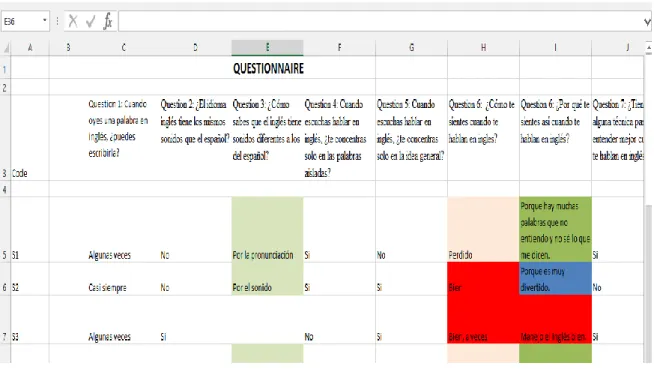
(41) THE IMPACT OF PHONICS ON SPOKEN WORD RECOGNITION. 41. The concept-indicator nature of the Grounded Theory makes the researcher analyze the data from the bottom-up. This process sometimes requires analyzing words, phrases or lines. By following this type of analysis, it is possible to discover similarities during the conceptualization of data, and similarities between behavioral actions or events (indicators). The connections established between indicators give rise to patterns understood as coding (Locke, 2001; Strauss, 1987) which is the main process in GT (Flick, 2009). Coding has at least three stages and they have received different names. However the following are common when analyzing data under the GT principles (Flick, 2009): . Open or initial coding (Charmaz, 2006). . Theoretical coding (B. G. Glaser, 1978), axial coding (Strauss, 1987) or focused coding (Charmaz, 2006). . Selective coding (B. G. Glaser, 1978). These types of coding help the researcher to refine the data and identify the core categories. The open coding process starts with brainstorming in which the researcher’s intuition is essential. This type of coding provides the vocabulary or terminology that the researcher can use in order to refer to the data (Corbin & Strauss, 2008). Strauss (1987) mentions four guidelines for a successful open coding. The first one is to ask the following questions about the data: “What study are these data pertinent to?”, “What category does this incident indicate?” and “What is actually happening in the data?” The second is to examine the data carefully. The third guideline is to stop coding for a moment in order to write a theoretical memo. The last one is to avoid giving relevance to “face sheets” before the analysis provides evidence of their importance..
(42) THE IMPACT OF PHONICS ON SPOKEN WORD RECOGNITION. 42. The next coding step is axial coding. However, as it establishes relationships between codes, it can be done simultaneously with the final part of the open coding stage or alternate with it (Corbin & Strauss, 2008; Strauss, 1987). Finally, the selective coding takes place although it can start earlier during the first coding stages. In this coding stage the researcher establishes connections between the categories resulting from the axial coding. The final goal of this stage is to find the core category (Strauss, 1987) Once the coding stage has finished, the analysis process continues with the discovery of the core category. Some features of this core category are: it must be central and frequently found in the data, it has to be easily associated with the rest of the categories and result in generating theory and variance (Strauss, 1987). In the course of the data analysis, it is highly advisable to make constant comparisons, which is the main principle when it is about analyzing data (Corbin & Strauss, 2008; Lingard et al., 2008; Locke, 2001; Strauss, 1987). This helps to find relationships among categories which soon will result in discovering the core category. This research project was developed under the Grounded Theory principles explained above. In addition to that, GT accepts quantitative data analysis approaches (McGhee, Marland, & Atkinson, 2007). Therefore, this research project included a mixed method quantitative and qualitative data analysis since both of them can offer a more general view of the problematic situation and the quantitative analysis can support the qualitative one (Flick, 2009)..
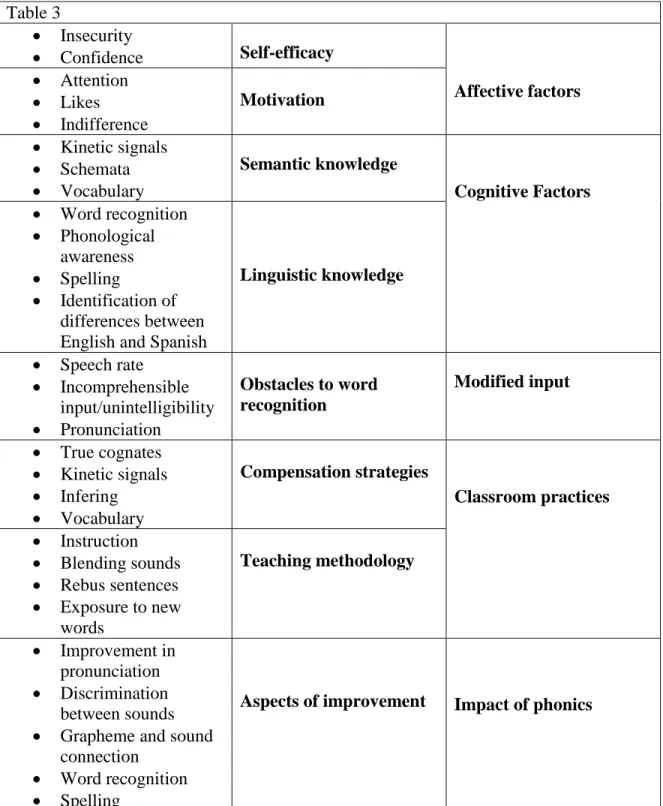
(43) THE IMPACT OF PHONICS ON SPOKEN WORD RECOGNITION 5.3. 43. Categories 5.3.1. Overall category mapping. Once the data was collected, it was organized in a digital file (See Appendix E) as part of analysis preparation (Dörnyei, 2007). After that stage, analysis began with coding the information. Saldaña (2009) defines code as “a word or short phrase that symbolically assigns a summative, salient, essence-capturing, and/or evocative attribute for a portion of language-based or visual data” (p. 3). This helped not only for the previous purpose, but it also reduces the amount of data and synthetizes it (Charmaz, 2006; Saldaña, 2009). After reflecting on the data, connections among pieces of data were identified. The codes deciphered from the collected data are shown on Table 2. Then, the data analysis moved from codes to categories (Creswell, 2013; Flick, 2009; Saldaña, 2009). Constant comparison was still the main principle in order to integrate codes into categories (see Table 3). Coding, categorization and subcategorization were refined several times as part of the process of data analysis. The amount of information was drastically reduced and answers to the research question started to emerge. The selective coding process resulted in the categories is shown on Table 4..
(44) THE IMPACT OF PHONICS ON SPOKEN WORD RECOGNITION. Table 2 Table 2 Open coding. Pronunciation improvement Discrimination between sounds Blending sounds Rebus sentences Exposure to new words Identification of sounds Grapheme and phoneme connection Sound similarities Instruction Word complexity Speech rate Localization of the word in a sentence Familiarity with the word Words in a speech Kinetic signals Vocabulary Inferring Incomprehensible input/unintelligibility Identification of differences between English and Spanish Word recognition Pronunciation Attention Likes Insecurity Confidence Linguistic knowledge Indifference Phonological awareness Schemata Explicit instruction Strategy for learning True cognates Spelling. 44.
(45) THE IMPACT OF PHONICS ON SPOKEN WORD RECOGNITION Table 3 Insecurity Confidence Attention Likes Indifference Kinetic signals Schemata Vocabulary Word recognition Phonological awareness Spelling Identification of differences between English and Spanish Speech rate Incomprehensible input/unintelligibility Pronunciation True cognates Kinetic signals Infering Vocabulary Instruction Blending sounds Rebus sentences Exposure to new words Improvement in pronunciation Discrimination between sounds Grapheme and sound connection Word recognition Spelling. Self-efficacy Motivation. Affective factors. Semantic knowledge Cognitive Factors. Linguistic knowledge. Obstacles to word recognition. Modified input. Compensation strategies Classroom practices. Teaching methodology. Aspects of improvement. Table 3 Preliminary categories and subcategories. Impact of phonics. 45.
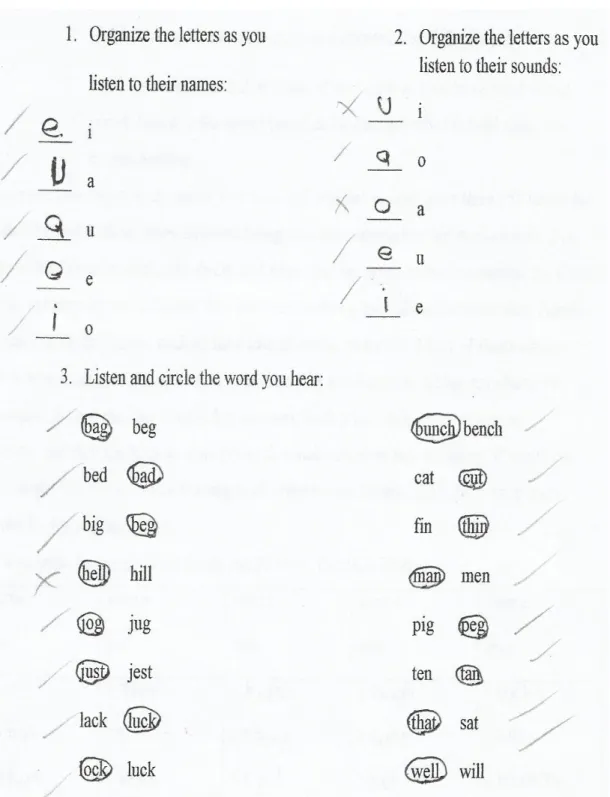
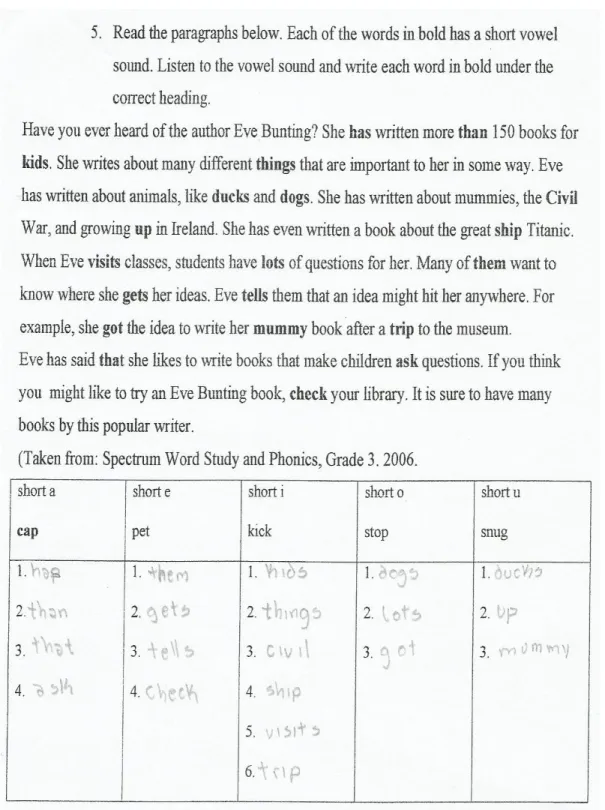
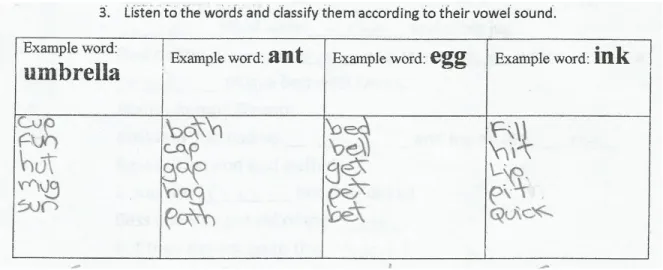
(46) THE IMPACT OF PHONICS ON SPOKEN WORD RECOGNITION Table 4 Subcategories Impact of phonics instruction Successful classroom practices on phonics Knowledge provided to successful phonics instruction Input requirements to successful recognition of sounds. Categories Phonics facilitated the recognition of sounds and written forms Phonics enhances phonological awareness. 46. Core category Explicit phonics instruction helps students to enhance the recognition of the foreign language sounds. Modified input aids the decoding or bottom-up process. Table 4 Final categories 5.3.2. Discussion of categories. Once the open coding, axial coding, and selective coding stages were completed, three categories were identified: Phonics facilitated the recognition of sounds and written forms, phonics enhanced phonemic awareness and modified input aids the decoding or bottom-up process. These categories are the result of a systematic process in which the researcher went backward and forward on data in order to refine the quality of the analysis. 5.3.2.1. Phonics facilitated the recognition of sounds and written forms. This research project found that phonics as a classroom practice can help EFL learners to familiarize themselves with English phonemes. It also helped students to recognize the phonemes despite the fact that children have a phoneme discriminative ability that declines as they develop (McCartney, 2006; Weber & Cutler, 2004). Explicit phonics instruction could be the difference between frustrated learners lost in a new world of sounds and learners that can cope with the phonological challenge that learning English poses with its approximately 40 phonemes (McCartney, 2006). Phonemic routines (segmenting, blending, deleting, substituting, and rhyming) and phonics instruction (decoding, encoding, and handwriting) were effective tools for achieving the goal that had been set for this.
Figure
+6

Documento similar
English borrowed an immense number of words from the French of the Norman invaders, later also from the court French of Isle de France, appropriated a certain number of affixed
In the preparation of this report, the Venice Commission has relied on the comments of its rapporteurs; its recently adopted Report on Respect for Democracy, Human Rights and the Rule
Given that most studies focus on the promotion of hybrid vehicle sales in the U.S market (and not the impact on prices), the objective of this study was to analyze the impact of a
Public archives are well-established through the work of the national archive services, local authority-run record offices, local studies libraries, universities and further
The study was designed to investigate the usage and its frequency of language learning memory strategies by those students who are learning English as a
The aim of this paper is to demonstrate that reading authentic literary material in the English as a Foreign Language (EFL) classroom can improve students’ language learning skills as
More particularly, the aim of this study was to survey the effect of instruction of a pedagogical proposal based on conceptual metaphors of the domain of emotions
languages of study: Spanish, Catalan and English as a foreign language. Learners’
