ESCUELA DE INGENIERÍAS INDUSTRIALES
DEPARTAMENTO DE INGENIERÍA QUÍMICA Y
TECNOLOGÍA DEL MEDIO AMBIENTE
TESIS DOCTORAL:
CONVERSION OF CELLULOSIC BIOMASS
TOWARDS ADDED VALUE PRODUCTS
OVER BIFUNCTIONAL CATALYSTS
Presentada por Alberto Romero Camacho
para optar al grado de
doctor con mención internacional por la
Universidad de Valladolid
Dirigida por:
Memoria para optar al grado de Doctor, con
Mención Doctor
Internacional,
presentada por el Ingeniero Químico:
Alberto Romero Camacho
Siendo el tutor en la
Universidad de Valladolid:
Dra. Gloria Esther Alonso Sánchez
En la
Universidad Politécnica de Madrid:
Dr. Antonio Nieto-Márquez Ballesteros
Y en el
Institut de recherches sur la catalyse et
l'environnement de Lyon
(Francia):
Dra. Nadine Essayem
UNIVERSIDAD DE VALLADOLID
ESCUELA DE INGENIERÍAS INDUSTRIALESSecretaría
La presente tesis doctoral queda registrada en el folio Nº______
del correspondiente Libro de Registro con el Nº__________
Valladolid, a _______ de _________________ de 2017
Profesora Titular de Universidad
Departamento de Ingeniería Química y Tecnología del Medio Ambiente
Universidad de Valladolid (UVa)
y
Antonio Nieto Márquez Ballesteros
Profesora Titular de Universidad (interino)
Escuela Técnica Superior de Ingeniería Y Diseño Industrial (ETSIDI)
Universidad Politécnica de Madrid (UPM)
CERTIFICAN QUE:
ALBERTO ROMERO CAMACHO ha realizado bajo su dirección el trabajo “CONVERSION OF CELLULOSIC BIOMASS TOWARDS ADDED VALUE PRODUCTS OVER BIFUNCTIONAL CATALYSTS”, en el Departamento de Ingeniería Química y Tecnología del Medio Ambiente de la Escuela de Ingenierías Industriales de la Universidad de Valladolid. Considerando que dicho trabajo reúne los requisitos para ser presentado como Tesis Doctoral expresan su conformidad con dicha presentación.
Valladolid a _____ de_____________ de 2017.
BIOMASS TOWARDS ADDED VALUE PRODUCTS OVER BIFUNCTIONAL CATALYSTS” presentada por Alberto Romero Camacho y en cumplimiento con lo establecido por el Real Decreto 861/2010 (BOE 28.01.2011) ha acordado conceder por
la calificación de .
Valladolid, a de de 2017
PRESIDENTE SECRETARIO
ABSTRACT 1
INTRODUCTION 7
AIMS 27
CHAPTER I:Conversion of biomass into sorbitol: cellulose hydrolysis on MCM-48 and
D-Glucose hydrogenation on Ru/MCM-48 31
CHAPTER II: SCW hydrolysis of cellulosic biomass as effective pretreatment to catalytic production of hexitols and ethylene glycol over Ru/MCM-48 55 CHAPTER III: Bimetallic Ru:Ni/MCM-48 catalysts for the effective hydrogenation of
D-Glucose into sorbitol 83
CHAPTER IV: One-pot catalytic hydrolysis/hydrogenation of cellobiose into hexitols
over Ru/Al-MCM-48 117
CHAPTER V:Catalytic conversion of d-glucose into short-chain alkanes over Ru-based
catalysts 151
CONCLUSIONS 183
FUTURE WORK 189
ABSTRACT (SPANISH) 193
APPENDIX:Business Plan 219
ACKNOWLEDGEMENTS 255
RESUMEN (INGLÉS) 1
INTRODUCCIÓN 7
OBJETIVOS 27
CAPÍTULO I:Conversión de biomasa en sorbitol: hidrólisis de celulosa sobre MCM-48
e hidrogenación de D-Glucosa sobre Ru/MCM-48 31
CHAPTER II: Hidrólisis en agua supercrítica de biomasa lignocelulósica como pretratamiento a la producción de hexitoles y etilenglicol sobre Ru/MCM-48 55 CHAPTER III: Catalizadores bimetálicos Ru:Ni/MCM-48 para la hidrogenación
selectiva de D-Glucosa en sorbitol 83
CHAPTER IV: Hidrólisis/Hidrogenación (“one-pot”) de celobiosa en hexitoles sobre
Ru/Al-MCM-48 117
CHAPTER V:Conversión catalítica de D-Glucosa para producir alcanos de cadena corta
sobre catalizadores de rutenio 151
CONCLUSIONES 183
TRABAJO FUTURO 189
RESUMEN (ESPAÑOL) 193
ANEXO:Plan de negocio 219
AGRADECIMIENTOS 255
A
BSTRACT
:
C
ONVERSION OF CELLULOSIC BIOMASS
TOWARDS ADDED VALUE PRODUCTS
3
In view of the current problems such as global warming, high oil prices, more severe environmental laws and other geopolitical consequences surrounding the use of fossil feedstocks, the efficient conversion of cellulosic biomass towards chemicals, energy and fuels, has achieved a good piece of attention. In this sense, the use of heterogeneous catalysts could allow to develop environmentally clean processes working under relatively mild conditions, for the selective production of high added value products from cellulosic biomass.
In the present thesis, Ru and Ni deposited on mesoporous silica materials (MSM) were evaluated in order to produce sugar alcohols, ethylene glycol and straight-chain alkanes. Differing from other catalytic supports such as activated carbon, which have been highly used as support material for biomass conversion, not many works have reported the use of MSM for this purpose. The thermal and mechanical stability and the interesting pore structure of catalysts based on MSM, make them promising candidates for their application in conversion of biomass, being an interesting alternative to overcome diffusional problems in this kind of applications. This PhD thesis has been structured in five chapters. In each of them, a literature review was done in order to know the main achievements and challenges previously reported about the selected topic. In addition, the partial objectives and the obtained results were presented and discussed. The main content of each chapter is described below.
4
According to the previous results, Ru/MCM-48 stands as a promising candidate for the conversion of cellulose into hexitols (sorbitol and mannitol). Thus, in Chapter 2, one – pot hydrolytic hydrogenation of cellulose was studied using Ru/MCM-48 (4 wt. % Ru). Alternatively, Supercritical water (SCW) hydrolysis in ultrafast reactors was performed at 400 ºC – 25 MPa and extremely low reaction times ~ 0.20 s to partially depolymerize cellulose with high selectivity to sugars (70 % w·w-1) avoiding degradation reactions. From this SCW hydrolysis step, although the 100% of cellulose was converted, a high yield of the hydrolysed products were detected as oligosaccharides. The hydrogenation of the liquid product from SCW hydrolysis of cellulose over Ru/MCM-48 allowed to complete the hydrolysis of oligosaccharides to monomeric sugars and maximize the yield to hexitols by changing experimental parameters such as temperature and reaction time. A greater yield to hexitols was obtained by the subsequent hydrogenation of the liquid product from cellulose hydrolysis in SCW (49 %) than using the one – pot catalytic hydrogenation from untreated cellulose (21 %). Ru/MCM-48 showed better behaviour than standard Ru/C during the hydrogenation processes, under comparable experimental conditions in all the cases. Thus, Ru/MCM-48 was also tested in the hydrogenation of the product from sugar beet pulp (SBP) hydrolysis in SCW. SBP was used in order to evaluate the behaviour of a real biomass in the proposed two-steps process. A yield to hexitols of 15 % was achieved by hydrogenation of SBP hydrolysates, ethylene glycol was the main compound in the liquid product with a yield of 21 % and glycerol was also obtained as by-product. These results have shown the potential of coupling the SCW hydrolysis with the hydrogenation using Ru/MCM-48 as catalyst for the production of biomass derived alcohols.
5
desorption at programmed temperature of ammonia (NH3– TPD) and Atomic Absorption (AA) and tested in the liquid phase hydrogenation of D-Glucose into sorbitol in the temperature range 120 – 140 ºC under 2.5 MPa of H2 pressure. The catalyst so prepared presented a total metal loading of ca. 3 % (w·w-1), where Ru:Ni ratios spanned the range of 0.15 – 1.39 (w·w-1). Ru:Ni/MCM-48 catalysts with Ru:Ni ratios higher than 0.45 enhanced the specific activity of the monometallic Ni/MCM-48 in the hydrogenation of D-Glucose to sorbitol, increasing the reaction rate and showing complete selectivity to sorbitol. Activation energy values of 36 KJ·mol-1 and 70 KJ·mol -1 were obtained for Ni/MCM-48 and 48 (0.45). In addition, Ru:Ni/MCM-48 (0.45) demonstrated a good stability after three reaction cycles, standing as a good option for the effective hydrogenation of carbohydrate sugars into sugar alcohols.
The experimental work corresponding to the first three chapters were carried out at the University of Valladolid, within the High Pressure Processes Group. However, next two chapters were developed in the Institut de recherches sur la catalyse et l'environement de Lyon (Lyon, France) within a three-month stay, where different mesoporous catalyst were prepared and tested for biomass conversion purposes. In
Chapter 4, bifunctional Ru/Al-MCM-48 was prepared by wet impregnation method
6
was also developed, which predicted well the concentration of the different compounds involved in the proposed reaction pathway. Specific reaction rates and activation energy values were also obtained for the different steps of the catalytic process. In addition, mass transfer effects were evaluated in detailed.
I
:
C
ONVERSION OF CELLULOSIC
BIOMASS INTO CHEMICALS OVER
9
2.1.THESIS FRAMEWORK
The present work is included into CATHYCEL project financed by the Spanish Government of Science and Innovation (MICINN, CTQ2011-27347) entitled “Synthesis of catalysts in supercritical carbon dioxide for the selective conversion of cellulose into commodities” and leaded by Dr. Gloria Esther Alonso Sánchez from University of Valladolid (UVa). Dr. Antonio Nieto-Márquez from Technical University of Madrid (UPM) who is the co-director of this PhD thesis, was included in the team work of this project. Cathycel project had a total duration of 43 months, starting on January of 2012. The total funding received for this national project was 145.200 €.
The current challenge in conversion of cellulosic biomass towards fine chemicals is focused on the development of green and economically competitive processes. In general terms, the global process of conversion of cellulose into chemicals consists on at least two different steps: hydrolysis of cellulose and further reaction pathways to use the glucose as platform molecule. Hydrogenation is one possibility of valorization since biomass is a strongly oxygenated raw material. Heterogeneous catalysis represents a key point to develop such kind of processes. Therefore, the development of novel, cheaper and more selective heterogeneous catalysts seems to be a very important task.
Different transition metals such as Ni, Ru, Fe or Co have been introduced into many supports. In these terms, Ru-based catalysts, which are cheaper than other noble metals such as Pd and Pt, has shown reasonable high activity and selectivity in hydrogenation reactions [1]. In addition, Ru-based catalysts have performed a good catalytic behaviour in order to convert cellulose into sorbitol under hydrogen atmosphere [2]. Tungsten and nickel based catalyst also shown high yields to ethylene glycol production using cellulose as raw material [3, 4].
10
production of sugar alcohols. ii) Develop a “green” technology for the preparation of supported metal catalyst based on supercritical carbon dioxide.
The project supports the following specific objectives:
1. Study of the effect of the different experimental parameters in the deposition of metals (Ru, W, Ni) over different supports (TiO2, activated carbon, mesoporous silica) using sc-CO2. Temperature, and pressure of CO2, as well as concentration and the type of metal precursor are studied. In addition, the experimental conditions and methodology in order to reduce metal particles and operational time are also considered.
2. Characterization of the prepared catalytic materials. Different properties of the materials are analysed, such as morphology, cristallinity, textural properties, dispersion of the active metal on the support, oxidation state, etc. 3. Catalytic activity tests of the synthesized materials. Catalytic activity of the
synthesized materials are evaluated in the hydrolysis of cellulose in hot compressed water (HCW), as well as in the hydrogenation of cellulose and its related model compounds, such as cellobiose, glucose and fructose. Catalytic activity of the materials prepared in sc-CO2 is compared to that obtained by catalyst synthesizes by conventional methods in the laboratory.
4. Proposal of reaction pathways for the studied catalytic processes.
In this thesis, the aspects related with objectives 2, 3 and 4 of CATHYCEL project have been developed. Therefore, in the present research work catalytic conversion of cellulose and its related model compounds into sugar alcohols over mesoporous metal catalysts prepared by wet impregnation method, have been carried out.
2.2.CONVERSION OF CELLULOSIC BIOMASS INTO CHEMICALS OVER METAL CATALYSTS
11
Differing from fossil fuels such as petroleum or coal, cellulose comprises a high content of oxygen in its structure (c.a. 50 wt. %) besides hydrogen and carbon elements, which is a great advantage in order to synthesize oxygen-containing chemicals like sugar alcohols [7]. The present introduction shows some alternatives for the conversion of cellulose and their related model compounds into sugar alcohols over different metal catalysts.
2.2.1. HYDROGENATION OF D-GLUCOSE
As it was listed by the U.S Department of Energy [8], sorbitol is one of the top 12 bioderived building blocks, that can be easily converted into fuels and chemicals [9, 10]. More than 800.000 ton·y-1 of sorbitol are produced by catalytic hydrogenation of the carbonyl group of D-Glucose (Scheme 1) [11]. Sorbitol is a large-scale industrial product, which is used for a wide range of applications, such as additive in many industrial products, mainly in paper, cosmetic and food industry. In addition, it is also employed as building block for synthesizing fine chemicals such as vitamin C.
Mo-12
promoted materials were more robust against deactivation. In essence, nickel-based catalysts prone to deactivate by leaching and sintering, resulting in a decrease in the catalytic activity. Moreover, leached nickel is an important disadvantage when the desired product is used for food, medical or cosmetic applications, since its removal from the final solution resulting in additional costs to the overall production process [9].
D-Glucose hydrogenation was also developed in continuous processes, such as in trickle-bed reactors [18, 19]. Differing from the discontinuous process, supported nickel catalysts were employed for this purpose. Déchamp et al. carried out the hydrogenation of D-Glucose solution (40 wt. %) towards sorbitol over Kieselguhr-supported nickel catalyst (48.4 wt. % Ni) at 8 MPa and 130 ºC, where the catalytic material demonstrated a poor activity around 5 mmol·h-1·gNi-1 [18]. The specific reaction rate decreased even more when time on stream was increasing, owing to the progressive leaching of Ni and SiO2 in the aqueous reaction media. Kusserow et al. reported the preparation of Ni/SiO2 by aqueous impregnation using nickel ethylenediamine as metal precursor, demonstrating high resistance to leach after 5 h on stream [19]. However, Ni/SiO2 showed lower activity and selectivity to sorbitol in comparison with other similar commercial catalysts.
Scheme 1. D-Glucose hydrogenation into sorbitol
13
literature: Ru > Ni > Rh > Pd [24]. Therefore, the best catalytic performance was found for ruthenium-supported catalysts.
Ruthenium has been dispersed over different kind of supports showing 50-fold higher catalytic activity than nickel, under comparable experimental conditions. Ruthenium over activated carbon (Ru/C) offer an interesting alternative to nickel catalyst, since they have demonstrated that Ru is not dissolved, being stable to leaching in the reaction media, under the reaction conditions for D-Glucose hydrogenation [9, 11]. Hoffer et al. reported the use of Ru/C for this purpose, concluding that the activity of ruthenium was proportional to its specific surface area and independent of the preparation procedure [25].
14
2.2.2. Hydrogenolysis of cellobiose
For the hydrolytic hydrogenation of cellobiose, two competing reaction mechanisms have been observed (Scheme 2).
Scheme 2. Proposed reaction pathway for the catalyticconversion of cellobiose into sorbitol by Neghadar et al. [30].
Cellobiose can be converted to sorbitol following the cleavage of the glycosidic (C– O–C) bonds, via hydrolysis of cellobiose into glucose and the consecutive hydrogenation of glucose to sorbitol. However, different authors have reported other alternative reaction route for the conversion of cellobiose to sorbitol. Under acid experimental conditions and using supported metal catalyst, cellobiose either undergoes hydrolysis to glucose or as an alternative pathway proceeds through the hydrogenation of the C–O bond on one of the glucose rings leading to cellobitol (3-β-D-glucopyranosyl-D-glucitol). Then, cellobitol can be hydrolysed to sorbitol and glucose [7].
Some efforts related to the catalytic conversion of cellobiose towards sorbitol have been reported in the literature. Deng et al. studied conversion of cellobiose into sorbitol over Ru/CNT using different concentrations of HNO3, where different key factor of the
Sorbitol
H2
Glucose
H+
H2
Cellobiose
Degradation products
Cellobitol (3-β-D-glucopyranosyl-D-glucitol)
H+
15
16
sorbitol was 8-fold lower than using the fresh catalyst. The catalyst was active for the hydrogenation of cellobiose to cellobitol, but it deactivated for the subsequent hydrolysis of cellobitol to sorbitol. Recently, Almeida et al. studied the catalytic behaviour of bifunctional RuNPs/A15 (3 wt. % Ru) [35]. Experimental results pointed that 80 % of yield to sorbitol was obtained at 150 ºC 4 MPa and 5 h, which is higher than the yield of sorbitol achieved using the physical mixture of Ru/C (5 wt. %) and Amberlyst 15.
2.2.3. Conversion of cellulose into hexitols
Conversion of cellulose into hexitols consist of two different steps: 1) Hydrolysis of
cellulose into glucose, where acidity of the reaction medium plays an important role in
order to improve the rate of this step and 2) hydrogenation of glucose, which is performed over active metals such Ru, Rh, Pd, Ni. Cellulose is a highly complex and stable polysaccharide, consisting on β-1,4-glycosidic linkages and organized in microcrystalline domains. These facts hinder its hydrolysis towards D-Glucose, except by enzymes under mild conditions, while D-Glucose is easily degraded under harsh reaction conditions (subcritical water at 180 – 260 ºC) [36] due to the presence of a hemiacetal group in its chemical structure [37]. Thus, this trade-off is a key factor for the catalytic conversion of cellulose. In addition, collisions between cellulose and solid acid catalysts have represented an important challenge for the hydrolytic conversion of cellulose.
Regarding the difficulty to convert cellulose to platform molecules, physical and chemical treatments combined with catalytic reactions have been proposed [38, 39]. Pre-treatments such as ball-milling have been extensively used to overcome the low reactivity of cellulose, by decreasing its particle size and crystallinity, resulting in an important improvement of the accessibility of the substrate to the active sites of the catalysts during hydrolysis step. In this sense, crystallinity is the key factor regarding cellulose reactivity in hot compressed water, while particle size only plays a secondary role [40].
17
aforementioned challenges related to D-Glucose degradation under the selected reaction conditions. Thus, cellulose is firstly hydrolysed to glucose, which is subsequently hydrogenated into thermally more stable products (sugar alcohols) than D-Glucose, avoiding its degradation before hydrogenation step.
Scheme 3. One-pot hydrolysis/hydrogenation of cellulose over supported metal catalysts.
Fukuoka et al. demonstrated for the first time in 2006 that supported metal catalysts can convert cellulose towards sugar alcohols over Pt/γ-Al2O3 (2.5 wt. %) by an environmentally friendly method such as one-pot process [37]. In that research work, the authors achieved a yield of sorbitol around 25 % and a yield of mannitol of 6 % was also obtained converting microcrystalline cellulose at 190 ºC, 5 MPa H2 and 24 h. Kobayashi et al. tested Pt/BP2000 (BP2000: carbon black, Cabot) increasing the yield to hexitols up to 43 % using microcrystalline cellulose (80 % crystallinity) at similar experimental conditions than that used for Pt/γ-Al2O3 [42]. In addition, the same authors study the influence of ball-milling of cellulose in the final yield to hexitols. The use of 2 days ball-milled cellulose using Pt/BP2000 (2 wt. %) resulted in an important increase of the yield to hexitols from 43 to 58 %, since the lower crystallinity of cellulose after 2 days of ball-milling (22 %) allows enhancing cellulose conversion. Other noble metals such as Ru, Rh, Pd and Ir were also deposited over BP2000 in the same research work, but Ru/BP2000 demonstrated being also effective for the conversion of cellulose into hexitols, while Rh, Pd and Ir gave lower amounts of hexitols.
Most of the subsequent research on this field has been developed over ruthenium supported catalysts. Luo et al. tested Ru/C (4 wt. %) for the conversion of microcrystalline cellulose at 245 ºC, 6 MPa and 30 min, obtaining a yield to hexitols around 39 %. Both the high activity of ruthenium and the severe experimental condition selected in that work, promoted hydrogenolysis of the so obtained sorbitol to other
H2O, H2
H+, Metal Sorbitol
C6, C5, C4 polyols
Ethylene glycol
18
byproducts (11 % sorbitan, 5 % xylitol, 6 % erythritol, 6 % glycerol, 7 % propylenglycol, 6 % ethylene glycol). Bifunctional sulfonic acid-functionalized Ru/SiO2-SO3H (3 wt. % Ru), combining Brønsted acidic sites and metal sites, was also employed for the conversion of 30 h ball-milled cellulose and a high yield of hexitols of 68 % was produced, at 150 ºC, 4 MPa H2 and 10 h [43]. Xi et al. used a mesoporous niobium phosphate supported ruthenium bifunctional catalyst Ru/NbOPO4 (5 wt. % Ru) for the conversion of ball-milled cellulose at 170 ºC, 4 MPa H2 and 24 h [44]. Ru/NbOPO4 demonstrated an excellent catalytic performance (69 % yield to sorbitol) associated to the synergic effect between mesoporous niobium phosphate for hydrolysis of cellulose step and ruthenium nanoparticles for hydrogenation step. In addition, Ru/NbOPO4 was very stable to recycling after several runs. A supported ruthenium on ordered mesoporous carbon Ru/CMK-3 (2 wt. % Ru) reported by Kobayashi et al., produced hexitols with a yield of 45 % from ball-milled cellulose at 190 ºC and 18 h, using 2-propanol as source of hydrogen [45].
Although ruthenium based catalysts have shown promising results, their high price limits their use at industrial scale for the hydrolytic hydrogenation of cellulose. Thus, nickel based catalysts have been tested for the catalytic conversion of cellulose into hexitols. Liang et al. studied the catalytic hydrogenation of cellulose over Ni/ZSM-5 (40 wt. % Ni) at 240 ºC, 4MPa and 4 h, achieving a yield to hexitols of 49 %. This result was comparable to that obtained by Ding et al. [46], where a yield of hexitols of 53 % was obtained from the conversion of microcrystalline cellulose at 225 ºC, 6 MPa H2 and 1.5 h over Ni2P/AC (16 wt. %). In that case, the excess of phosphide presented in the catalyst was able to promote hydrolysis of cellulose, while nickel catalysed the hydrogenation step. Recently, Kobayashi et al. reported the catalytic performance of carbon-supported Ni catalyst Ni(50)/KB (50 wt. %) gave 64% yield of hexitols (sorbitol 57% and mannitol 6.8%) with 71% selectivity based on the conversion of cellulose (90%) [47]. Thus, Ni(50)/KB was very active for the catalytic production of hexitols from cellulose, being fairly durable. In that work it was observed that Ni loading was a key factor in this process, since higher nickel loadings enhanced both hexitols yields and durability of the catalyst.
19
drawbacks, different bimetallic catalysts have been proposed in the literature, combining noble metals such as Rh, Pt, Pd, Ir and Ru with Ni [48]. Shrotri et al. shown that the addition of small amounts of Pt to Ni catalysts resulted in a significantly enhance of the specific catalytic activity [49]. Those authors improved the yield to hexitols over bimetallic Pt-Ni/Al2O3 (32.4 %) up to 6.5-folds in comparison with monometallic Ni/Al2O3 (5 %), at 200 ºC, 5 MPa H2 and 6 h. In addition, Pt-Ni deposited over mesoporous β-zeolite was also tested in that research work, obtaining even higher yield to hexitols (36.6 %) than that achieved over Pt-Ni/Al2O3. Bimetallic combination of Pt-Ni promoted the protonation of water and H2, which spills over to nickel sites creating in situ acid sites to enhance hydrolysis of cellulose step. Pang et al. reported the conversion of microcrystalline cellulose at 245 ºC, 6 MPa and 0.5 h, over bimetallic Rh-Ni dispersed on mesoporous three-dimensional carbon (Rh-Ni/MC, 1 wt. % Rh and 5 wt. %) [50]. Rh-Ni/MC gave a maximum yield to hexitols of 59.8 %.
20
References
1. Sapunov, V.N., et al., d-Glucose Hydrogenation over Ru Nanoparticles
Embedded in Mesoporous Hypercrosslinked Polystyrene. The Journal of
Physical Chemistry A, 2013. 117(20): p. 4073-4083.
2. Deng, W., et al., Conversion of Cellulose into Sorbitol over Carbon Nanotube-Supported Ruthenium Catalyst. Catalysis Letters, 2009. 133(1): p. 167.
3. Ji, N., et al., Direct Catalytic Conversion of Cellulose into Ethylene Glycol
Using Nickel-Promoted Tungsten Carbide Catalysts. Angewandte Chemie,
2008. 120(44): p. 8638-8641.
4. Zhao, G., et al., Catalytic Conversion of Cellulose to Ethylene Glycol over
Tungsten Phosphide Catalysts. Chinese Journal of Catalysis, 2010. 31(8): p.
928-932.
5. Dabbawala, A.A., D.K. Mishra, and J.-S. Hwang, Selective hydrogenation of D-glucose using amine functionalized nanoporous polymer supported Ru
nanoparticles based catalyst. Catalysis Today, 2016. 265: p. 163-173.
6. Shuttleworth, P.S., et al., Applications of nanoparticles in biomass conversion to
chemicals and fuels. Green Chemistry, 2014. 16(2): p. 573-584.
7. Zheng, M., et al., Mechanism and Kinetic Analysis of the Hydrogenolysis of
Cellulose to Polyols, in Reaction Pathways and Mechanisms in Thermocatalytic
Biomass Conversion I: Cellulose Structure, Depolymerization and Conversion
by Heterogeneous Catalysts, M. Schlaf and Z.C. Zhang, Editors. 2016, Springer
Singapore: Singapore. p. 227-260.
8. Wang, S., et al., Ru–B amorphous alloy deposited on mesoporous silica nanospheres: An efficient catalyst for d-glucose hydrogenation to d-sorbitol.
Catalysis Today, 2015. 258, Part 2: p. 327-336.
9. Corma, A., S. Iborra, and A. Velty, Chemical Routes for the Transformation of
21
10. Murillo Leo, I., et al., Selective conversion of sorbitol to glycols and stability of
nickel–ruthenium supported on calcium hydroxide catalysts. Applied Catalysis
B: Environmental, 2016. 185: p. 141-149.
11. Besson, M., P. Gallezot, and C. Pinel, Conversion of Biomass into Chemicals
over Metal Catalysts. Chemical Reviews, 2014. 114(3): p. 1827-1870.
12. Schimpf, S., C. Louis, and P. Claus, Ni/SiO2 catalysts prepared with ethylenediamine nickel precursors: Influence of the pretreatment on the catalytic
properties in glucose hydrogenation. Applied Catalysis A: General, 2007. 318:
p. 45-53.
13. Heinen, A.W., J.A. Peters, and H. van Bekkum, Hydrogenation of fructose on
Ru/C catalysts. Carbohydrate Research, 2000. 328(4): p. 449-457.
14. Mishra, D.K. and J.-S. Hwang, Selective hydrogenation of mannose to d-mannitol using NiO-modified TiO2 (NiO-TiO2) supported ruthenium catalyst.
Applied Catalysis A: General, 2013. 453: p. 13-19.
15. De, S. and R. Luque, Nanomaterials for the Production of Biofuels, in
Nanomaterials for Sustainable Energy, Q. Li, Editor. 2016, Springer
International Publishing: Cham. p. 559-582.
16. Chen, B., et al., New developments in hydrogenation catalysis particularly in
synthesis of fine and intermediate chemicals. Applied Catalysis A: General,
2005. 280(1): p. 17-46.
17. Gallezot, P., et al., Glucose hydrogenation on promoted raney-nickel catalysts. Journal of Catalysis, 1994. 146(1): p. 93-102.
18. Déchamp, N., et al., Kinetics of glucose hydrogenation in a trickle-bed reactor. Catalysis Today, 1995. 24(1): p. 29-34.
19. Kusserow, B., S. Schimpf, and P. Claus, Hydrogenation of Glucose to Sorbitol
over Nickel and Ruthenium Catalysts. Advanced Synthesis & Catalysis, 2003.
345(1-2): p. 289-299.
20. Mishra, D.K., et al., Selective hydrogenation of d-glucose to d-sorbitol over HY
zeolite supported ruthenium nanoparticles catalysts. Catalysis Today, 2014.
22
21. Lazaridis, P.A., et al., d-Glucose hydrogenation/hydrogenolysis reactions on
noble metal (Ru, Pt)/activated carbon supported catalysts. Catalysis Today,
2015. 257, Part 2: p. 281-290.
22. Sanz-Moral, L.M., et al., Tuned Pd/SiO2 aerogel catalyst prepared by different
synthesis techniques. Journal of the Taiwan Institute of Chemical Engineers,
2016. 65: p. 515-521.
23. Zhang, X., et al., Platinum-Catalyzed Aqueous-Phase Hydrogenation of
d-Glucose to d-Sorbitol. ACS Catalysis, 2016: p. 7409-7417.
24. Wisnlak, J. and R. Simon, Hydrogenation of Glucose, Fructose, and Their
Mixtures. Industrial & Engineering Chemistry Product Research and
Development, 1979. 18(1): p. 50-57.
25. Hoffer, B.W., et al., Carbon supported Ru catalysts as promising alternative for
Raney-type Ni in the selective hydrogenation of d-glucose. Catalysis Today,
2003. 79–80: p. 35-41.
26. Maris, E.P., et al., Metal Particle Growth during Glucose Hydrogenation over Ru/SiO2 Evaluated by X-ray Absorption Spectroscopy and Electron Microscopy.
The Journal of Physical Chemistry B, 2006. 110(15): p. 7869-7876.
27. Arena, B.J., Deactivation of ruthenium catalysts in continuous glucose
hydrogenation. Applied Catalysis A: General, 1992. 87(2): p. 219-229.
28. Mishra, D.K., et al., Liquid phase hydrogenation of d-glucose to d-sorbitol over the catalyst (Ru/NiO–TiO2) of ruthenium on a NiO-modified TiO2 support.
Catalysis Today, 2012. 185(1): p. 104-108.
29. Zhang, J., et al., Efficient conversion of d-glucose into d-sorbitol over MCM-41 supported Ru catalyst prepared by a formaldehyde reduction process.
Carbohydrate Research, 2011. 346(11): p. 1327-1332.
30. Negahdar, L., et al., Kinetic investigation of the catalytic conversion of
cellobiose to sorbitol. Applied Catalysis B: Environmental, 2014. 147: p.
23
31. Deng, W., et al., Conversion of cellobiose into sorbitol in neutral water medium
over carbon nanotube-supported ruthenium catalysts. Journal of Catalysis,
2010. 271(1): p. 22-32.
32. Zhang, J., et al., Direct conversion of cellobiose into sorbitol and catalyst
deactivation mechanism. Catalysis Communications, 2012. 29: p. 180-184.
33. Li, J., et al., Simultaneous hydrolysis and hydrogenation of cellobiose to sorbitol in molten salt hydrate media. Catalysis Science & Technology, 2013. 3(6): p. 1565-1572.
34. Niu, Y., et al., Ru supported on zirconia-modified SBA-15 for selective
conversion of cellobiose to hexitols. Microporous and Mesoporous Materials,
2014. 198: p. 215-222.
35. Almeida, J.M.A.R., et al., Screening of mono- and bi-functional catalysts for the one-pot conversion of cellobiose into sorbitol. Catalysis Today.
36. Sasaki, M., et al., Reaction kinetics and mechanism for hydrothermal degradation and electrolysis of glucose for producing carboxylic acids.
Research on Chemical Intermediates, 2011. 37(2): p. 457-466.
37. Fukuoka, A. and P.L. Dhepe, Catalytic Conversion of Cellulose into Sugar
Alcohols. Angewandte Chemie International Edition, 2006. 45(31): p.
5161-5163.
38. Rinaldi, R. and F. Schüth, Acid Hydrolysis of Cellulose as the Entry Point into
Biorefinery Schemes. ChemSusChem, 2009. 2(12): p. 1096-1107.
39. Yabushita, M., H. Kobayashi, and A. Fukuoka, Catalytic transformation of
cellulose into platform chemicals. Applied Catalysis B: Environmental, 2014.
145: p. 1-9.
40. Yu, Y. and H. Wu, Effect of ball milling on the hydrolysis of microcrystalline
cellulose in hot-compressed water. AIChE Journal, 2011. 57(3): p. 793-800.
41. Kobayashi, H., et al., Conversion of cellulose into renewable chemicals by
supported metal catalysis. Applied Catalysis A: General, 2011. 409–410: p.
24
42. Kobayashi, H., et al., Synthesis of sugar alcohols by hydrolytic hydrogenation of
cellulose over supported metal catalysts. Green Chemistry, 2011. 13(2): p.
326-333.
43. Zhu, W., et al., Efficient hydrogenolysis of cellulose into sorbitol catalyzed by a bifunctional catalyst. Green Chemistry, 2014. 16(3): p. 1534-1542.
44. Xi, J., et al., Direct conversion of cellulose into sorbitol with high yield by a novel mesoporous niobium phosphate supported Ruthenium bifunctional
catalyst. Applied Catalysis A: General, 2013. 459: p. 52-58.
45. Kobayashi, H., et al., Transfer hydrogenation of cellulose to sugar alcohols over
supported ruthenium catalysts. Chemical Communications, 2011. 47(8): p.
2366-2368.
46. Ding, L.-N., et al., Selective Transformation of Cellulose into Sorbitol by Using
a Bifunctional Nickel Phosphide Catalyst. ChemSusChem, 2010. 3(7): p.
818-821.
47. Kobayashi, H., et al., Control of selectivity, activity and durability of simple
supported nickel catalysts for hydrolytic hydrogenation of cellulose. Green
chemistry, 2014. 16(2): p. 637-644.
48. Li, Y., et al., Advances in hexitol and ethylene glycol production by one-pot
hydrolytic hydrogenation and hydrogenolysis of cellulose. Biomass and
Bioenergy, 2015. 74: p. 148-161.
49. Shrotri, A., et al., Conversion of cellulose to polyols over promoted nickel catalysts. Catalysis Science & Technology, 2012. 2(9): p. 1852-1858.
50. Pang, J., et al., Catalytic conversion of cellulose to hexitols with mesoporous
carbon supported Ni-based bimetallic catalysts. Green Chemistry, 2012. 14(3):
p. 614-617.
51. Geboers, J., et al., Hydrolytic hydrogenation of cellulose with hydrotreated
caesium salts of heteropoly acids and Ru/C. Green Chemistry, 2011. 13(8): p.
25
52. Geboers, J., et al., Efficient catalytic conversion of concentrated cellulose feeds
to hexitols with heteropoly acids and Ru on carbon. Chemical Communications,
2010. 46(20): p. 3577-3579.
53. Geboers, J., et al., Efficient hydrolytic hydrogenation of cellulose in the presence
of Ru-loaded zeolites and trace amounts of mineral acid. Chemical
A
IMS
C
ONVERSION OF CELLULOSIC BIOMASS
TOWARDS ADDED VALUE PRODUCTS
29
The general aim of this work is to study the catalytic behaviour of mesoporous noble metal-based catalysts for the effective conversion of cellulose and its related model compounds into chemicals. Mesoporous silica materials were chosen as catalytic supports due to their appropriate porous structure to solve diffusional problems of large molecules in catalytic applications and their stability under hydrothermal conditions. According to their remarkable activity for hydrogenation processes, Ru and Ni were selected as active metals.
With this general aim, the present thesis comprises the following partial goals:
• Synthesis of mesoporous silica materials as catalytic supports.
Different mesoporous silica supports were synthesized by conventional sol-gel method. In this sense, the synthesis of MCM-48 and Al-MCM-48 was performed. In addition, acidified MCM-48 with a heteropolyacid (MCM-48/TPA) was also prepared.
• Synthesis of monometallic Ru- and Ni-based catalysts.
Both ruthenium and nickel were deposited over MCM-48 by classical wet impregnation method. Ruthenium was also deposited over Al-MCM-48 and MCM-48/TPA using the same preparation method.
• Synthesis of bimetallic Ru:Ni-based catalysts.
Ruthenium and nickel were deposited together over MCM-48 by consecutive impregnation steps.
• Characterization of the so obtained supports and metal catalysts.
The prepared catalytic materials were characterized in order to study their features, such as textural properties, morphology, metal dispersion over the support, metal-support interactions, metal state, acidity and metal loading.
• Design and construction of an experimental setup in order to study the conversion of biomass in a hydrothermal medium under hydrogen atmosphere.
30
o Hydrolysis of cellulose over different catalytic materials. Study of the influence of acidity of MCM-48, TiO2 and commercial Ru/C in this reaction step.
o Hydrogenation of D-Glucose to hexitols over Ru/MCM-48, commercial Ru/C and Ru deposited over commercial TiO2, Ni/MCM-48 and Ru:Ni/MCM-48. Calculation of specific reaction rates and activation energy values. Recycling of the prepared catalysts.
o Hydrolysis/hydrogenation of cellobiose over Ru/Al-MCM-48. Study of the effect of temperature and pressure of H2 to maximize final yield to hexitols. Development of a kinetic model and the reaction mechanism covering the studied experimental conditions.
o One-pot hydrogenation of cellulose to hexitols. Catalytic behaviour of Ru/MCM-48 against commercial Ru/C. Development of a kinetic model and detailed study of mass transfer limitations.
o Ultrafast Supercritical Water (SCW) Hydrolysis of cellulose + hydrogenation of the so obtained products (two-steps process). Use of SCW hydrolysis as cellulose pre-treatment to enhance production of hexitols. Comparison between one-pot and two-step process.
o Checking the two-steps process (SCW hydrolysis + catalytic hydrogenation) for the synthesis of alcohols from a real lignocellulosic biomass (Sugar Beet Pulp).
C
1
C
ONVERSION OF BIOMASS INTO
SORBITOL
:
C
ELLULOSE HYDROLYSIS
ON MCM
-48
AND D
-
GLUCOSE
33
CONVERSIONOFBIOMASS INTO SORBITOL:CELLULOSE HYDROLYSIS
ONMCM-48ANDD-GLUCOSEHYDROGENATIONONRU/MCM-48
Abstract
Mesoporous silica was prepared by the sol-gel method and characterized by means of Small Angle X-Ray Scattering, Scanning Electron Microscopy, Light Scattering, adsorption/desorption of N2 and acid-base titration. This material was tested in cellulose hydrolysis, showing a good catalytic response, attributable to surface acidity, which promoted D-glucose production. MCM-48 supported ruthenium nanoparticles were prepared by the wet impregnation method and characterized using X-Ray Diffraction, Transmission Electron Microscopy, adsorption/desorption of N2, acid-base titrations, Temperature Programmed Reduction and Atomic Absorption, and tested in the hydrogenation of D-Glucose into sorbitol. Its behavior was compared with Ru deposited on commercial TiO2 and with commercial Ru/C, revealing both high activity and selectivity to D-Sorbitol, standing as a promising candidate for future scale-up and one-pot conversion of biomass.
Keywords
Ru/MCM-48, biomass hydrogenation, hydrolysis of cellulose, sorbitol, glucose. + H2
RU
MCM-48 OH
O
H OH
O
H H
H OH
H OH
CELLULOSE
D-GLUCOSE
+ H2O
SORBITOL
34
1. INTRODUCTION
Currently, due to the depletion of fossil fuels and the problems arising from global warming, the use of renewable resources as feedstock for chemicals, fuels and energy has achieved a good piece of attention [1, 2]. In this sense, polyols from the hydrogenation of biomass are versatile compounds with a wide range of uses. Biomass comprises various plant components, such as cellulose, hemicelluloses and lignin. Average composition of lignocellulosic materials is 34-50% cellulose, 19-34% hemicelluloses and 11-30% lignin [3]. Cellulose is the most common source of biomass and is nowadays considered as a promising substitute to fossil fuels for the sustainable production of fuels and chemicals. Due to its complex structure, with β-1,4-glycosidic bonds of D-Glucose, it is neither soluble in water, nor digestible by human beings and consequently not suitable for nutritional purposes [4]. There are several alternatives for its valorization. Hydrolytic hydrogenation of cellulose into D-Sorbitol appears as a very attractive alternative in this field because D-Sorbitol is the sugar alcohol with the most widespread uses in food industry, personal care products, cosmetics, medical and industrial applications [5].
35
an important role in these reactions. Regarding mesoporous silica, MCM-41 has a hexagonal array of unidirectional pores, while MCM-48 has an ordered cubic structure based on a narrow tridimensional pore network [17]. Thus, interwoven and branched pore structure from MCM-48 seems to be an interesting alternative to solve diffusional problems of large molecules in catalytic applications [18].
The aim of this work is the preparation of a solid bifunctional catalyst using MCM-48 as the support and ruthenium as the metal phase. MCM-MCM-48 provides a high surface area acid structure with good diffusional properties for the hydrolytic step, while ruthenium acts as the active phase for the hydrogenation of D-Glucose. With this aim, Ru has been deposited on a MCM-48 prepared in the laboratory and compared with a Ru deposited on a commercial TiO2 and with a standard commercial Ru/C. Thus, the individual steps of cellulose transformation into D-Sorbitol are studied, in order to gain further understanding of the role of support acidity and ruthenium activity in cellulose hydrolysis and D-Glucose hydrogenation, respectively. Linking the best results from hydrolysis and hydrogenation steps, it will be possible to choose the most appropriate catalytic system for further one-pot hydrolytic hydrogenation.
2. EXPERIMENTAL
2.1.SUPPORT AND CATALYSTS PREPARATION
Synthesis of mesoporous silica MCM-48 has been carried out using a conventional hydrothermal pathway similar to the procedure described by Schumacher et al [17, 18]. Firstly, n-Hexadecyltrimethylammonium bromide template (CH3(CH2)15N(Br)(CH3)3 ≥ 98%, Sigma – Aldrich) was dissolved in the mixed solution of 42 cm3 of distilled water, 13 cm3 of aqueous ammonia (20% as NH
36
ruthenium (III) chloride anhydrous (RuCl3.anhydrous, Strem Chemicals Inc.) and the corresponding support were sonicated in water previously to their mixture during ten minutes. Then, ruthenium trichloride solution and a dispersion containing MCM-48 or TiO2 were mixed and heated with a rate of 1 ºC·min-1 from room temperature to 105 ºC using a Stuart model SD162 heating plate. The impregnation finished when the solvent was completely evaporated. Then, catalysts were dried overnight at 105 ºC. Finally, the samples were reduced under H2 atmosphere at 150 ºC. A commercial Ru/C catalyst (Ruthenium, 5% on activated carbon, reduced, 50 % water wet paste (EscatTM 4401)) has been used for comparison purposes. This catalyst was supplied in its reduced form.
2.2.SUPPORT AND CATALYST CHARACTERIZATION
Small Angle X-Ray Scattering (SAXS) and X-Ray Diffraction (XRD) were performed in a Bruker Discover D8 diffractometer using the Cu Kα radiation (λ = 0.15406 nm). The diffraction intensities were measured, for XRD, over an angular range of 30° < 2θ < 90° with a step size of 0.03° and a count time of 2 s per step. In case of SAXS, 2° < 2θ < 6º was selected as angular range with a step size of 0.02° and a count time of 1 s per step. Surface area/porosity measurements of the supports and the different catalysts were conducted using a Quantasorb Sorption System (Quantachrome Instruments) with N2 (at -196 ºC) as sorbate. Prior to analysis, the samples were outgassed overnight at 350 ºC for silica and titanium materials, while carbonaceous samples were outgassed at 180 ºC. Total specific surface areas were determined by the multipoint BET method at P/P0≤ 0.3, total specific pore volumes were evaluated from N2 uptake at P/P0 ≥ 0.97. Temperature Programmed Reduction (TPR) profiles were
37
each case and the mean Ru particle sizes were obtained from the following expression (Eq. 1) [19] .
𝑑𝑑̅𝑠𝑠 =∑ 𝑛𝑛𝑖𝑖 ·𝑑𝑑𝑖𝑖 3 𝑖𝑖
∑ 𝑛𝑛𝑖𝑖 𝑖𝑖 ·𝑑𝑑𝑖𝑖2
(1)
where d�s is surface-area weighted diameter and ni is the number of ruthenium particles
with a diameter di. Since chemical reactions occurs on catalyst surface, surface-area weighted diameter is selected as the most meaningful parameter to obtain mean Ru particles sizes for catalysis purposes. Scanning electron microscopy (SEM) analyses were obtained using a JEOL JSM 820 unit with a voltage of 10 kV. Acid–base titrations were performed by immersing 25 mg of solid in 100 cm3 NaCl 0.1 M, acidified with 1 cm3 HCl 0.1 M with constant stirring. A 0.1 M NaOH solution was used as the titrant, added dropwise and the pH was monitored using a Crison pH-meter. The starting NaCl (+HCl) solution served as a blank. Light scattering (LS) was used for determining grain size distribution of MCM-48. Metal loading was determined by atomic absorption (AA) using a VARIAN SPECTRA 220FS analyzer. Digestion of the samples was performed with HCl, H2O2 and HF using microwave at 250 ºC.
2.3.CELLULOSE HYDROLYSIS EXPERIMENTS
38
using an ice bath to rapidly stop the reaction. After that, the product mixture is centrifuged and the supernatant solution is then filtered prior to analysis by High Performance Liquid Chromatography (HPLC). The column used for the HPLC was Shodex SH-1011 at 50 °C, using sulphuric acid (0.01 N) as the mobile phase with a rate of 0.8 cm3·min−1. A Waters IR detector 2414 was used to identify the sugars and their derivatives. D-Glucose yield (%) was obtained as a result of dividing moles of carbon from D-Glucose in the reaction product by moles of carbon present in the starting cellulose (Eq. 2).
𝑌𝑌𝐷𝐷−𝐺𝐺𝐺𝐺𝐺𝐺𝐺𝐺𝐺𝐺𝑠𝑠𝐺𝐺(%) = 𝑚𝑚𝑚𝑚𝑚𝑚𝑚𝑚𝑚𝑚𝑚𝑚𝑚𝑚𝑚𝑚𝐶𝐶𝐶𝐶𝑖𝑖𝑛𝑛𝑖𝑖𝑛𝑛 𝐷𝐷𝐶𝐶𝑚𝑚𝑚𝑚𝐺𝐺𝑚𝑚𝑚𝑚𝐺𝐺𝑚𝑚-𝐺𝐺𝑚𝑚𝐺𝐺𝐺𝐺𝑚𝑚𝐺𝐺𝑚𝑚
0 · 100 (2)
2.4.D-GLUCOSE HYDROGENATION TESTS
Catalytic hydrogenation of D-Glucose was performed in the experimental setup described above. Hydrogenation tests were carried out in the temperature range 80–120 ºC at 2.5 MPa H2 pressure using a stirring rate of 1400 rpm. Prior to reaction catalysts were activated in situ by reducing under H2 atmosphere at 150ºC during 30 minutes. D-Glucose/Ru ratio (w/w) was kept in 42 in all the experiments. After flushing the reactor with N2 for 10 minutes, H2 is fed and reactor is heated up to the desired reaction temperature. Once the set point is reached a solution of 7.35 g·dm-3 D-Glucose is pumped. At the end of the experiments, recovery of the catalyst was made by filtering the product solution using a vacuum pump. Hydrogenation products were analyzed by HPLC. The HPLC column used was SUGAR SC-1011 from Shodex at 80 °C and a flow of 0.8 cm3·min-1 using water Milli-Q as the mobile phase. A Waters IR detector 2414 was used to identify sugars, polyols and their derivatives. D-Glucose conversions, D-Sorbitol and D-Manitol yields and selectivities were calculated using equations 3, 4 and 5.
𝑋𝑋𝐷𝐷−𝐺𝐺𝐺𝐺𝐺𝐺𝐺𝐺𝐺𝐺𝑠𝑠𝐺𝐺(%) =𝑚𝑚𝑚𝑚𝑚𝑚𝑚𝑚 (𝐷𝐷-𝐺𝐺𝑚𝑚𝐺𝐺𝐺𝐺𝑚𝑚𝐺𝐺𝑚𝑚𝑚𝑚𝑚𝑚𝑚𝑚𝑚𝑚 (0𝐷𝐷)-− 𝑚𝑚𝑚𝑚𝑚𝑚𝑚𝑚𝐺𝐺𝑚𝑚𝐺𝐺𝐺𝐺𝑚𝑚𝐺𝐺𝑚𝑚 (𝐷𝐷-𝐺𝐺𝑚𝑚𝐺𝐺𝐺𝐺𝑚𝑚𝐺𝐺𝑚𝑚𝑓𝑓)
0) · 100 (3)
𝑆𝑆𝑆𝑆𝐺𝐺𝑆𝑆𝑆𝑆𝑖𝑖𝑆𝑆𝐺𝐺𝐺𝐺(%) = 𝑚𝑚𝑚𝑚𝑚𝑚𝑚𝑚 (𝐷𝐷-𝐺𝐺𝑚𝑚𝐺𝐺𝐺𝐺𝑚𝑚𝐺𝐺𝑚𝑚𝑚𝑚𝑚𝑚𝑚𝑚𝑚𝑚 (𝑆𝑆𝑚𝑚𝑆𝑆𝑆𝑆𝑖𝑖𝑆𝑆𝑚𝑚𝑚𝑚)
0)− 𝑚𝑚𝑚𝑚𝑚𝑚𝑚𝑚 (𝐷𝐷-𝐺𝐺𝑚𝑚𝐺𝐺𝐺𝐺𝑚𝑚𝐺𝐺𝑚𝑚𝑓𝑓) · 100 (4)
𝑌𝑌𝑆𝑆𝐺𝐺𝑆𝑆𝑆𝑆𝑖𝑖𝑆𝑆𝐺𝐺𝐺𝐺(%) = 𝑚𝑚𝑚𝑚𝑚𝑚𝑚𝑚𝑚𝑚𝑚𝑚𝑚𝑚𝑚𝑚 ( (𝐷𝐷𝑆𝑆𝑚𝑚𝑆𝑆𝑆𝑆𝑖𝑖𝑆𝑆𝑚𝑚𝑚𝑚-𝐺𝐺𝑚𝑚𝐺𝐺𝐺𝐺𝑚𝑚𝐺𝐺𝑚𝑚)
0) · 100 =
𝑋𝑋·𝑆𝑆
39
In order to test catalyst reusability, after its recovery from reaction media, the solid catalyst was washed several times with deionized water and dried at 105 ºC overnight. Then, the catalyst was reactivated under TPR conditions and tested again in D-Glucose hydrogenation.
3. RESULTS AND DISCUSSION
3.1.CHARACTERIZATION OF SUPPORTS
The prepared MCM-48 consists on a conglomeration of pseudo-spherical particles in the micron range, as shown in Figure 1A. Light Scattering results for MCM-48 showed a monodisperse particle size distribution, where d (0.1), d (0.5) and d (0.9) parameters mean that ten, fifty or ninety percent of the particles had that size or lower, respectively (Figure 1B).
Figure 1. (A) Scanning electron micrograph and (B) differential and cumulative particle size distribution (d(0.1)=10.1 µm, d(0.5)=229.4 µm and d(0.9)=777.5 µm) of MCM-48.
MCM-48 structure was characterized by means of Small Angle X-Ray Scattering (SAXS). Figure 2A shows SAXS pattern of MCM-48. Calcined MCM-48 exhibits three main diffraction peaks at 2θ = 2.55⁰, 2.94⁰ and 4.92⁰, that can be assigned to (211), (220) and (332) planes. This indicates a high quality of the cubic phase belonging to a Ia3d symmetry [18, 20].
A typical N2 adsorption/desorption isotherm at -196 ºC of the calcined MCM-48 material is shown in Figure 2B. According to the IUPAC classification [21], the isotherm can be classified as a type IV, where a sharp increase in the volume of nitrogen adsorbed was observed at P/P0 in the range of 0.1 – 0.35 and 0.9 – 0.99. This kind of
A
10 100 1000
0 1 2 3 4 5
Particle Size (µm)
40
isotherm is typical of mesoporous silica materials. No hysteresis was observed between adsorption and desorption branches, therefore MCM-48 shows a reversible type IV isotherm, comparable to those reported by [22]. MCM-48 usually presents type H1 hysteresis loops, however, it has been reported that in the limit of small mesopores (2-4 nm) or with increasing temperature, the capillary condensation occurs without hysteresis, and the separation of parallel H1 branches increase with increasing pore size. Figure 2C depicts a unimodal mesoporous pore size distribution for MCM-48 with maximum centered at 3.6 nm, consistent with the absence of hysteresis [23].
Figure 2. (A) SAXS pattern of MCM-48 support, (B) N2 adsorption/desorption isotherms of MCM-48
and (C) pore size distribution.
Textural properties and acidity measurements for MCM-48 and TiO2 are presented in Table 1. BET surface area and pore volume for MCM-48 were 1594 m2·g-1 and 0.9 cm3·g-1, respectively. Similar BET surface area and pore volume values were obtained by Wu et al. for MCM-48 prepared by hydrothermal method [24]. The TiO2 used as support showed, as expected, lower porosity than MCM-48. Acid-base titrations
0.0 0.2 0.4 0.6 0.8 1.0
0 20 40 60 80 100 120 Adsorption Desorption V ads ( cm 3) P/Po B
0 5 10 15 20 25 30 35 40
0,0 0,1 0,2 0,3 0,4 0,5 0,6 0,7 0,8 P or e s iz e di st ri but ion ( cm 3 ·g -1 ·nm -1 )
dp (nm)
C
2.0 2.5 3.0 3.5 4.0 4.5 5.0 5.5 6.0
(332) (220) (211) A Int ens ity ( a. u)
41
demonstrated that MCM-48 was more acidic than TiO2, which will be important in the cellulose hydrolysis step, where acidity improves biomass conversion into sugars. MCM-48 acidity is due to terminal silanol groups (Si-OH) which show weak acidic sites [25]. Surface properties of TiO2 change depending on the preparation method. However, in general, TiO2 (anatase) is classified into a weak acidic metal oxide, where the acid sites are Lewis in nature [26].
Table 1. Textural properties and acid-base characterization of MCM-48 and TiO2.
Sample S
BET
(m2·g-1)
Vp
(cm3·g-1)
NaOH consumption
(cm3·g-1)
MCM-48 1594 0.90 5.74
TiO2 53 0.10 2.22
3.2.CHARACTERIZATION OF RU-BASED CATALYSTS
Figure 3 shows the H2-TPR profiles of the Ru/MCM-48 and Ru/TiO2 catalysts. TPR curves presented similar single reduction peaks at ca. 125 ºC and 145 ºC for Ru/MCM-48 and Ru/TiO2, respectively. These peaks correspond to the reduction of Ru3+ to Ru0 [27]. Reduction temperature was higher for Ru/TiO2, suggesting a stronger interaction of Ru nanoparticles with TiO2 support. Consequently, 150 ºC was selected as common reduction temperature for both catalysts, which ensures the activation of ruthenium.
0 100 200 300 400 500 600 700 800
Ru/MCM48
T
C
D
s
ignal
(
a.
u)
Temperature (؛C)
Ru/TiO2
42
XRD patterns for Ru-based catalysts are shown in Figure 4 (A). A characteristic metallic diffraction peak was observed at 2θ = 43.8º (JCPDS No. 06–0663) in Ru/MCM-48 and Ru/C samples, indicating the presence of Hexagonal Close Packing (HCP) Ru0 nanoparticles. In the case of Ru/TiO2, and given the high intensity of anatase diffraction peaks, the corresponding to Ru0 nanoparticles is better observed in Figure 4B, in the range 2θ = 42 – 47º. Low intensity diffraction peaks were observed in all cases, characteristic of Ru0 nanoparticles well-distributed on the support.
Figure 4. (A) XRD patterns of reduced catalysts and (B) expanded region for Ru/TiO2.
Figure 5 shows TEM micrographs of Ru/MCM-48, Ru/TiO2 and Ru/C catalysts. Figure 5A shows that Ru nanoparticles are homogenously distributed on the spherical MCM-48 support. However, TiO2 particles are irregular in shape and size and Ru nanoparticles are agglomerated and not homogenously distributed on this support, as it is shown in Figure 5B. Finally, commercial Ru/C (Figure 5C) exhibits a good dispersion of Ru nanoparticles on activated carbon.
A counting of ruthenium nanoparticles from TEM images was performed. Histograms in Figure 6 show ruthenium particle size distributions for the three catalysts. In addition, Table 2 shows statistics from ruthenium particle size histograms, where mean Ru particle sizes were calculated from equation 1.
The three catalysts showed surface-area weighted diameters in a very narrow interval, and the following trend of increasing mean can be established: Ru/MCM-48 < Ru/TiO2 < Ru/C. Additionally, Ru/MCM-48 exhibits the narrowest particle size distribution, with Ru-nanoparticles in the range 1.18-3.84 nm, showing the smallest standard deviation value. Ru/C catalyst presents the broadest particle size distribution,
41 42 43 44 45 46 47 48
Int ens ity ( a. u)
2θ (degrees)
B
30 40 50 60 70 80 90
Int ens ity ( a. u. )
2θ (degrees)
Ru/TiO2
Ru/C Ru/MCM-48
Ru0
(101)
43
with Ru nanoparticles in the range 0.46-7.13 nm, while Ru nanoparticles are between 0.85 and 6.26 nm in Ru/TiO2.
Figure 5. Transmission electron microscopy micrographs of (A) Ru/MCM-48, (B) Ru/TiO2 and (C)
Ru/C.
Table 2.Statistical summary of ruthenium particle size distributions.
Catalyst Minimum
(nm)
Maximum
(nm) 𝐝𝐝̅𝐬𝐬
a
(nm)
σmb
Ru/MCM-48 1.18 3.84 2.50 0.49
Ru/TiO2 0.85 6.26 2.96 0.81
Ru/C 0.46 7.13 3.40 1.22
a Based on TEM measurements and Equation 1
b Standard deviation values from mean diameter. 𝜎𝜎=� 1
𝑛𝑛−1·∑𝑛𝑛𝑖𝑖=1(𝑑𝑑𝑖𝑖− 𝑑𝑑̅)2
A
B
44
Figure 6. Ruparticle size distributions in the catalysts.
BET surface area of MCM-48 decreased from 1594 to 1456 m2·g-1 upon Ru introduction, and pore volume shifted from 0.90 to 0.47 cm3·g-1, indicating an important blockage of the porous network. In the case of TiO2, which presented a much lower surface area/porosity, the formerslightly decreased from 53 to 43 m2·g-1, while pore volume remained almost the same (Table 3).
Table 3.Textural, metal loading and acid-base characterization of ruthenium catalysts.
Catalyst Ru
(%)
SBET
(m2·g-1)
Vp
(cm3·g-1)
NaOH consumption
(cm3·g-1)
Ru/MCM-48 4.04 1453 0.47 5.74
Ru/TiO2 3.98 43 0.11 1.66
Ru/C 5.00 759 0.50 1.88
In addition, acidity value of Ru/MCM-48 was not modify after ruthenium deposition over MCM-48. However, a slight decrease of NaOH consumption was observed for Ru/TiO2, since deposition of Ru nanoparticles over titania resulted in a partial blockage of surface groups which are responsible for the acidity features of the catalyst.
0 1 2 3 4 5 6 7
0 10 20 30 40 50
Particle size (nm)
Ru/MCM-48
0 1 2 3 4 5 6 7
0 10 20 30 F requenc y ( % ) Ru/TiO2
0 1 2 3 4 5 6 7
0 10 20
45
3.3.HYDROLYSIS OF CELLULOSE
Cellulose hydrolysis was studied on the supports, which are responsible of the acidity of the catalysts. In the case of Ru/C, no equivalent bare support could be obtained, so the supported catalyst was used instead. Cellulose hydrolysis conditions are described in section 2.3 and hydrolysis results are presented in Table 4.
Table 4. Cellulose hydrolysis tests. a Reaction time (t (min)).b Glucose Yield (%).
t (min)a D-Glucose (ppm) Y D-Glucose (%)b
No catalyst
0 184 2.2
5 277 3.3
15 328 3.9
30 474 5.6
MCM-48
0 819 9.8
5 971 11.6
15 1159 13.8
30 1182 14.1
TiO2
0 89 1.1
5 198 2.4
15 175 2.1
30 270 3.2
Ru/C
0 19 0.2
5 25 0.3
15 9 0.1
30 5 0.2
46
compound (10.2 % HMF yield) after 30 min. This behavior is comparable with the results reported by Chareonlimkun et al., where the main product of cellulose hydrolysis over TiO2 was HMF [30]. Ru/C exhibited a poor yield to D-Glucose during hydrolysis, lower than the corresponding to MCM-48, TiO2 and in the absence of catalyst, and a maximum yield to D-glucose of 0.3 % was obtained after 5 min, detecting by-products such as fructose, glyceraldehydes, glycolaldehyde, lactic and formic acid at extended reaction times. Results presented above demonstrate that MCM-48 is a good catalyst to promote the hydrolysis of cellulose, whose acidity from silanol groups improves D-Glucose production.
3.4.HYDROGENATION OF D-GLUCOSE
Kinetic tests were carried out at temperatures between 80–120 ºC, 2.5 MPa H2, 1400 rpm, using Ru/MCM-48, Ru/TiO2 and Ru/C as catalysts. In preliminary tests, several screening experiments were performed in order to determine the most convenient temperature range. At temperatures above 120 ºC total conversion of D-Glucose was obtained in few minutes and a decrease in sorbitol yield was observed as a result of thermal degradation of D-Glucose and sorbitol isomerization into mannitol during this process. Therefore, 80-120 ºC was selected as optimal reaction temperature range. Preliminary experiments also confirmed that the process was not limited by mass transfer when stirring rate was 1400 rpm and catalyst particles were smaller than 70 µm, neither limited by H2 diffusion when pressure was adjusted to 2.5 MPa.
Figure 7. (A) Pseudo-first order fitting and (B) evolution of D-Glucose hydrogenation as a function of time-on-stream at 100 ºC and 2.5 MPa H2. ▲Ru/MCM-48, ■Ru/C and ● Ru/TiO2.
0 20 40 60 80 100
0 20 40 60 80 100
X G
lucose
(%)
t (min)
B
0 2 4 6 8 10 12 14 16 18 20 22
47
Given the excess of H2 employed, a pseudo-first order dependence respect to D-Glucose was observed in this reaction, in good agreement with the previously reported by other authors [13, 31]. For instance, Figure 7A shows pseudo-first order fittings at 100 ºC and 2.5 MPa H2 using Ru/MCM-48, Ru/TiO2 and Ru/C, with correlation coefficients R2 ≥ 0.989.
Figure 7B shows the effect of reaction time on D-Glucose conversion at 100 ºC using Ru/MCM-48, Ru/TiO2 and Ru/C. Conversion increased fast to approach practically total conversion after ca. 40 min. A sorbitol selectivity of 100 % was achieved in all cases. Kinetic constants are given in Table 5. Ru/C shows the highest reaction rate at each temperature. Ru/TiO2 had a similar kinetic constant to Ru/MCM-48 at 80 ºC and approaches that of Ru/C at 120 ºC. This behavior is illustrated in Figure 8A.
Activation energy values and pre-exponential factors (Table 6) have been calculated from Arrhenius plots in Figure 8A. It should be noted that activation energies obtained can be associated to kinetic control [32]. According to these results, it was not possible to make a relationship between reaction rate and activation energy because pre-exponential factor was not constant for all the catalysts. The activation energy for Ru/MCM-48 was the smallest, since this catalyst did not show significant changes in kinetic constants by changing reaction temperature. However, Ru/TiO2 showed the highest activation energy value, being more sensitive to changes in temperature. A clear trend of increasing pre-exponential factor with increasing activation energy is observed. This behavior is attributed to a compensation phenomenon, behavior that is sometimes observed when the same reaction is conducted over different catalysts, under different reaction pressures, or with a set of related reactions over a fixed catalyst. In these cases, a correlation between activation energy and the pre-exponential factor is observed (Eq. 6).
𝐿𝐿𝑛𝑛 (𝐴𝐴) =𝑆𝑆·𝐸𝐸𝐸𝐸+𝐶𝐶 (6)
48
𝑇𝑇𝑖𝑖𝑠𝑠𝐺𝐺 = 1 (� 𝑆𝑆·𝑅𝑅) (7)
Figure 8. (A) Arrhenius plots of D-Glucose Hydrogenation, ▲Ru/MCM-48, ■ Ru/C and ● Ru/TiO2 and
(B) compensation plot.
Temperature at which the reaction rate is the same for the different catalytic systems. Graphically, Tiso can be obtained as the intersection of the Arrhenius plots
corresponding to different systems. Thus, if we apply it to Arrhenius parameters obtained in this work, a good fit to the compensation plot can be observed (Figure 8B), having a calculated Tiso = 93 ºC, according to Eq. 7. However, the intersection of
Arrhenius plots in our study was not common for the three catalysts, but they rather behaved as individual pairs at 80 ºC for Ru/TiO2 and Ru/MCM-48 and at 120 ºC for Ru/TiO2 and Ru/C. It has been distinguished in the literature between isokinetic phenomenon, where a single Tiso exists, and compensation phenomenon, when such an
exclusive isokinetic temperature cannot be observed, but Arrhenius parameters vary sympathetically [34], as it is the case of the present data.
Table 6. Activation energy and pre-exponential factor from Arrhenius plots.
Catalyst Ea
(KJ·mol-1)
A
(dm3·g-1·min-1) R
2
Ru/MCM-48 44.87 5.00·105
0.989
Ru/C 51.68 1.70·107
0.999
Ru/TiO2 86.11 6.05·1011 0.995
40 50 60 70 80 90
12 14 16 18 20 22 24 26 28 Ln A Ea (KJ/mol·K)
Ln [A] = -1,015 + 0,328 · Ea
R2 = 0,984
B
2,50 2,55 2,60 2,65 2,70 2,75 2,80 2,85 -2,5 -2,0 -1,5 -1,0 -0,5 0,0 0,5 1,0 ln ( k)
1 / T ·103 (K-1)
49
Ru/MCM-48 was recovered after each experiment in order to study the recycling and reusability of this catalyst in D-Glucose hydrogenation at 120 ºC after three cycles. Results confirmed that catalytic activity of Ru/MCM-48 remained constant and sorbitol yield was 90 % in all cases. Based on the Scherrer equation, Ru crystallite sizes were derived from XRD analyses, showing values of 2.70 and 2.74 nm, before and after the reaction, respectively, confirming the stability of the active phase.
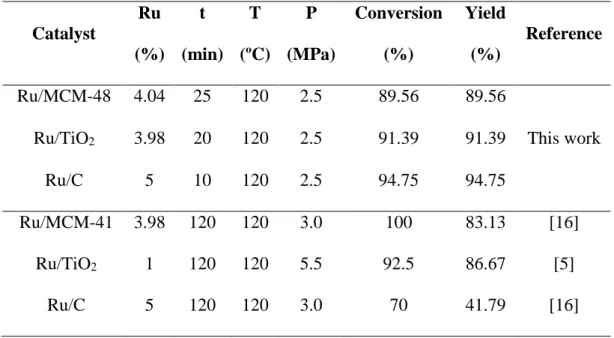
Table 7. Comparison of different catalysts on the hydrogenation of D-Glucose.
Catalyst
Ru
(%) t
(min) T
(ºC) P
(MPa)
Conversion
(%)
Yield
(%)
Reference
Ru/MCM-48 4.04 25 120 2.5 89.56 89.56
This work Ru/TiO2 3.98 20 120 2.5 91.39 91.39
Ru/C 5 10 120 2.5 94.75 94.75
Ru/MCM-41 3.98 120 120 3.0 100 83.13 [16]
Ru/TiO2 1 120 120 5.5 92.5 86.67 [5]
Ru/C 5 120 120 3.0 70 41.79 [16]