BP Lam et al. Treatment regimens for non-alcoholic fatty liver disease S51
www.medigraphic.com
Annals of Hepatology 2009; 8(1): Supplement: S51-S59
Annals of
Hepatology
Treatment regimens for non-alcoholic
fatty liver disease
Brian P. Lam;Zobair M. Younossi
Center for Liver Diseases at Inova Fairfax Hospital, Falls Church, VA.
Abbreviations:
Non-alcoholic fatty liver disease (NAFLD); Non-alcoholic steatohepatitis (NASH); Tumor necrosis factor (TNF); Thiazolidinedione (TZD); N-Acetyl-cysteine (NAC); Ursodeoxycholic acid (UDCA); Angiotensin receptor blocker (ARB); Homeostatic model assessment (HOMA); Roux-en-Y gastric bypass (RYGB); Laparoscopic adjustable gastric banding (LAGB); Vertical banded gastroplasty (VBG); Peroxisomal proliferator activated receptor (PPAR).
Address for correspondence: Zobair M. Younossi, M.D., M.P.H.
Center for Liver Diseases at Inova Fairfax Hospital 3300 Gallows Road, Falls Church, VA 22042 Telephone: (703) 776-2540, Fax: (703) 776-4388 E-mail: [email protected]
Manuscript received and accepted: 1 February 2009
Abstract
With the growing epidemic of obesity and diabetes, more attention has been placed on metabolic syndrome and its associated hepatic manifestation, non-alcoholic fatty liver disease (NAFLD). Within the spectrum of clinico-pathologic conditions known as NAFLD, only a minority of patients has the histological features char-acteristic of non-alcoholic steatohepatitis (NASH), which has the potential to progress to cirrhosis and hepatocellular carcinoma. Therefore, diagnosis and therapy should target patients with NASH. Current treatment recommendations include weight loss and the reversal of other components of metabolic syn-drome, but several other treatment modalities are un-der investigation. To date, no pharmacologic treat-ment has been reliably shown to be effective for NASH. This article reviews all available treatment modalities, including lifestyle changes, bariatric surgery, weight loss medications, insulin sensitizers, lipid lowering agents, antioxidants, cytoprotective agents, and other novel treatments.
Key words: NAFLD, NASH, treatment.
Introduction, epidemiology, and natural history
Since first described by Ludwig in 1980, non-alcoholic fatty liver disease (NAFLD) has progressed from a poorly understood liver disease to one with more well defined boundaries. NAFLD is one of the most common causes of chronic liver disease in the Western world, and its preva-lence is likely to parallel the increasing prevapreva-lence of dia-betes, obesity, and other components of metabolic syn-drome. NAFLD is now accepted as the hepatic component of the metabolic syndrome. NAFLD includes a spectrum of clinicopathologic entities ranging from simple steatosis to non-alcoholic steatohepatitis (NASH), with the possibility of progression to cirrhosis and hepatocellular carcinoma.1,2
These entities are differentiated by histological features, and have in common the presence of hepatic steatosis and the absence of excessive alcohol consumption.
Estimates of the incidence and prevalence of NAFLD and NASH are limited by the lack of reliable non-invasive screening modalities. For example, a large proportion of patients with NAFLD and NASH may have normal transaminase levels. Sonography can often identify steatosis, but only if it involves 33% or more of the hepatic parenchyma.3 Sonography is also
suboptimal for evaluating obese patients. Proton mag-netic resonance spectroscopy is an expensive tool, not suited for large scale population screening.4
Nonethe-less, estimates of the prevalence of NAFLD in the United States range from 3% to 34% in adults and ap-proximately 10% in children.4,5 Estimates of
preva-lence in other parts of the world are as high as 36.9%.6
The prevalence of NAFLD in morbidly obese patients can be as high as 75% to 100%.7
Evidence regarding the natural history and progres-sion of NASH indicates that simple steatosis does not typically progress to advanced liver disease. Only a mi-nority of NAFLD patients may have the histologic fea-tures consistent with steatohepatitis.8-12 Liver-related
morbidity and mortality occurs exclusively in cases of advanced fibrosis and cirrhosis. Evidence from tertiary medical centers, sequential biopsy series, and popula-tion-based studies suggest that 10% to 15% of patients with NASH progress to cirrhosis, putting them at risk for liver-related death.1,2 Progressive liver disease also occurs
more frequently in NAFLD patients with components of
Artemisa
www.medigraphic.com
metabolic syndrome such as insulin resistance.13 Addi-tionally, patients with NAFLD and diabetes mellitus, have more aggressive disease and may be at risk for in-creased liver-related mortality.2,13
Identifying treatment candidates
Treatment of NAFLD requires a consideration of which patients require treatment. Because not all cases progress to advanced liver disease, and because the goal of treatment is to improve liver-related outcomes from a liver standpoint efforts should be focused on patients with steatohepatitis and not simple steatosis. Several approaches have been used to differentiate simple ste-atosis and steatohepatitis. The clinical presentation of patients with simple steatosis is similar to the presen-tation in NASH, therefore clinical presenpresen-tation cannot reliably distinguish between the two. Demographic and clinical parameters such as age, gender, race, body mass index, dyslipidemia, or diabetes cannot reliably differentiate between simple steatosis and steatohepati-tis.1 Steatohepatitis cannot be reliably identified by simple serum tests, or the current generation of serum markers of fibrosis, or combination panels for fibrosis. Several NASH diagnostic biomarker panels have been developed but their accuracy is either limited or yet to be fully validated.14 The few studies that have exam-ined the diagnostic ability of imaging studies have largely concluded that radiological means are insuffi-cient as well.15-19 Measuring liver stiffness by transient elastography may accurately predict hepatic fibrosis in patients with hepatitis C; however, the utility of elas-tography is limited in NASH because obese body habi-tus greatly limits the accuracy of elastography.20,21
Currently, liver biopsy remains the "imperfect gold standard" for diagnosis and staging. Despite the inva-siveness, cost, inconvenience, perioperative risk, and the potential for sampling error, no other modality produces the same measure of detail about the presence and sever-ity of fibrosis. Because standardized pathologic proto-cols for histologic staging of NAFLD have been well de-lineated, liver biopsy continues to be the most reliable diagnostic and prognostic modality. No reliable recom-mendations indicate which NAFLD patients should un-dergo biopsy for diagnoses and staging of NASH, al-though persistent transaminase elevations or the pres-ence of metabolic syndrome or type 2 diabetes may strengthen the case for biopsy. Weighing the potential risks and benefits of liver biopsy remains in the hands of individual clinicians and patients.
Identifying therapeutic targets
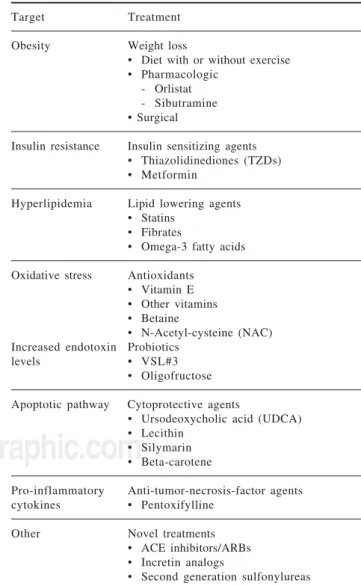
The following discussion of NAFLD and NASH patho-genesis briefly identifies areas potentially amenable to in-tervention and reviews potential treatment modalities. The
pathogenesis of NAFLD and NASH is a complex process involving many pathways. Several factors, including med-ications, parenteral nutrition, toxins, and certain surgical procedures can lead to the development of fatty liver, sometimes called secondary NAFLD. We focus here on the type of NAFLD typically associated with insulin resis-tance, which is sometimes referred to as primary NAFLD.6
The "multi-hit" hypothesis of NASH development in the setting of insulin resistance includes a hepatic pro-cess and one or several non-hepatic propro-cesses. The "first hit" is a hepatic process involving increased hepatic mac-rosteatosis due to increased insulin resistance. Three spe-cific mechanisms are increased de novo hepatic lipogen-esis, decreased hepatic oxidation of free fatty acids, and decreased lipid export from the liver. Proposed "second hits" are non-hepatic processes including oxidative stress, apoptosis, and increased pro-inflammatory cytok-ines. In addition, adipocytes release cytokines such as leptin, resistin, interleukin-6, tumor necrosis factor alpha (TNF-α), and others. For more details on this topic,
read-Table I. Potential targets for therapeutic treatment. Target Treatment
Obesity Weight loss
• Diet with or without exercise • Pharmacologic
- Orlistat - Sibutramine • Surgical
Insulin resistance Insulin sensitizing agents • Thiazolidinediones (TZDs) • Metformin
Hyperlipidemia Lipid lowering agents • Statins
• Fibrates
• Omega-3 fatty acids
Oxidative stress Antioxidants • Vitamin E • Other vitamins • Betaine
• N-Acetyl-cysteine (NAC) Increased endotoxin Probiotics
levels • VSL#3 • Oligofructose
Apoptotic pathway Cytoprotective agents
• Ursodeoxycholic acid (UDCA) • Lecithin
• Silymarin • Beta-carotene
Pro-inflammatory Anti-tumor-necrosis-factor agents cytokines • Pentoxifylline
Other Novel treatments • ACE inhibitors/ARBs • Incretin analogs
www.medigraphic.com
ers are referred to recent review articles on the subject.2 Nevertheless, pathways potentially involved in the pathogenesis of NAFLD are promising targets for thera-peutic intervention.
Treatment
Because insulin resistance participates in the patho-genesis of NASH, we first discuss therapies targeting obe-sity and insulin sensitivity. Several studies examine the effect of weight loss on NASH, either by lifestyle, phar-macologic, or surgical measures. Later we discuss: Lipid Lowering Agents, Antioxidants, Cytoprotective Agents, Anti-TNF Agents, and Novel Treatments.
Weight loss by lifestyle changes
Patients with NAFLD or metabolic syndrome are en-couraged to adopt a program of diet and exercise with the goal of weight loss as a first step in their treatment. Many studies have examined the effects of weight loss achieved by diet with or without exercise; however, most enrolled fewer than 50 subjects. A relatively large study by Suzuki and colleagues examined the effect of weight loss due to lifestyle change upon elevated ALT levels.22 Records from annual employee health checkups showed that 348 men out of 1,546 employees had elevated ALT in the ab-sence of concomitant liver disease. Weight loss of at least 5% was significantly associated with improved ALT lev-els, and maintaining this 5% weight loss was significantly associated with sustained ALT improvement. However, histologic criteria were not used to diagnose NAFLD and only 6% of the cohort was able to achieve a weight loss of 5% or more; for these reasons, the conclusions may not be applicable to most NAFLD patients. Because lifestyle changes associated with diet and exercise are so difficult to maintain for most patients, attention has turned to other means of achieving sustainable weight loss.
Weight loss by pharmacologic measures
The medications orlistat and sibutramine are used for the treatment of obesity and have been studied for their effects on steatohepatitis. Hussein and colleagues con-ducted an open-label study in which fourteen patients underwent liver biopsy before and after treatment with six months of orlistat 120 mg tid.23 At the end of six months, ten patients (70%) had reduced fatty infiltration, and inflammation improved by two grades in 22% and one grade in 50% of patients. Fibrosis improved two grades in three patients (21%) and one grade in seven pa-tients (50%). Improvement was also noted in transami-nases levels, total cholesterol, triglycerides, LDLs, and insulin resistance index. Although the size of the cohort was small, the findings include histological data from paired liver biopsies.
In a similar study in ten obese patients with biopsy-proven NASH, Harrison and colleagues found that after six months of orlistat treatment, steatosis improved in some patients.24 Improvements were also noted in body weight, hemoglobin A1C, and transaminases. The au-thors noted that improvements in steatosis, fibrosis, and hemoglobin A1C were generally associated with a weight loss of 10% or more. A study by Sabuncu and col-leagues noted improvements in insulin resistance (mea-sured by HOMA scores), AST, ALT, GGT and sonograph-ic findings in a six-month open label trial of sibutramine or orlistat in combination with a low calorie diet.[74] Thirteen patients were treated with sibutramine and twelve patients were treated with orlistat. Liver biopsies were not performed.
Weight loss by surgical measures
Most of the work on histological improvement after weight loss relies on patients who have had bariatric sur-gery. Jejunoileal bypass for treatment of obesity has largely been abandoned due to poor postoperative out-comes. Jejunoileal bypass has been associated with high rates of mortality, more often than not due to liver fail-ure. Biliopancreatic diversion with or without duodenal switch is the only form of bariatric surgery still in use that aims at effecting weight loss through malabsorption of macronutrients. A single observational study involv-ing 104 patients who had liver biopsies at time of initial surgery and at surgical revision showed that overall fi-brosis scores were unchanged in the majority of patients but decreased in 11 patients found to have cirrhosis upon initial biopsy.25
www.medigraphic.com
other study showed that 30 of 60 patients had NASH findings upon initial biopsy, whereas only 6 showed these findings upon subsequent biopsy.36 In a review of 19 studies on the histological effects of gastric bypass on NAFLD, Verna and Berk reported that bariatric sur-gery usually improves steatosis,37 but the evidence for improvement in NASH features was less uniform. These authors also noted occasional reports of regressed cir-rhosis.
On the other hand, some authors are still concerned that, the risk of liver disease progression due to rapid weight loss within the first few postoperative months makes the role of bariatric surgery in the treatment of NAFLD and NASH unclear. Nevertheless, further study of this issue requires trials with larger numbers of paired bi-opsies, clearer indications, follow-up liver bibi-opsies, and clearer histological endpoints.
Insulin sensitizing agents
Among the insulin sensitizing agents used for the treatment of NASH, thiazolidinediones (TZDs) have been studied the most and have shown the most favor-able results. TZDs such as pioglitazone and rosiglita-zone act as peroxisomal proliferator activated receptor-γ (PPAR-γ) agonists. Studies have also been conducted with troglitazone, which has since been withdrawn from the market due to issues of hepatotoxicity.38 TZDs in-crease fatty acid oxidation and dein-crease fatty acid pro-duction within the liver. Insulin sensitivity is improved both peripherally and within the liver. Several studies on the effects of TZDs on NAFLD and NASH report fa-vorable results,39-46 including improved transaminases and steatosis. A large, recently published study by Aithal and colleagues randomized 74 nondiabetic, bi-opsy-proven NASH patients to receive pioglitazone 30 mg qd or placebo with standard diet and exercise for 12 months.39 Sixty-one patients (30 placebo, 31 pioglita-zone) had follow-up biopsies, and pioglitazone treated patients showed significant improvements in hepatocel-lular injury, Mallory bodies, and fibrosis. Improved necroinflammation is a common finding in such studies, with the exception of a 48-week placebo-controlled trial of rosiglitazone by Ratziu and colleagues.40 The effect of TZDs on fibrosis is variable, improving in some, un-changed in others, but not worsening.
The favorable results observed with TZDs requires prospective, randomized, controlled trials before these agents can be routinely recommended. Side effects must also be kept in mind, as mild weight gain and lower extremity edema have been reported.39 The re-cent controversy over the possibility of increased car-diac risk with use of rosiglitazone also must be taken into consideration.
Several studies have examined the utility of metform-in metform-in the management of NAFLD and NASH. Metformmetform-in’s
mechanisms of action include decreasing hepatic gluco-neogenesis, increasing peripheral and hepatic insulin sensitivity, slowing intestinal glucose absorption, and re-ducing serum lipid levels and hepatic fatty acid oxida-tion. At least seven trials have examined the effect of metformin upon NAFLD and NASH.47-53 Only the trials by Uygun et al., and Bugianesi et al., were randomized con-trolled trials48,51. The study by Uygun et al, randomized 36 patients to either caloric restriction alone or caloric re-striction plus metformin.48 Significant improvement in transaminases, insulin, and C-peptide levels were noted in the metformin group, and although more improvement in necroinflammatory activity was noted in the metform-in group, the difference was not statistically significant. Bugianesi and colleagues randomized 55 patients to re-ceive metformin 2000 mg daily for 12 months, 28 pa-tients to receive vitamin E 800 IU daily, and 27 papa-tients to diet alone.51 Due to concerns raised by the ethics com-mittee, only 17 patients treated with metformin under-went biopsy at the end of treatment, but significant de-creases in steatosis, necroinflammation, and fibrosis were reported. Several studies have reported improved inflam-mation but not much improvement in fibrosis. Again, the strength of these conclusions about metformin’s efficacy is limited by the lack of adequately powered, random-ized, placebo controlled trials with histological data from paired biopsies.
Lipid lowering agents
Interest in the use of antihyperlipidemic agents for NAFLD stems from the role of dyslipidemia in metabolic syndrome and its association with NAFLD. Fatty acid metabolism abnormalities are likely to contribute to the development of NAFLD. Statins competitively inhibit hepatic hydroxymethyl-glutaryl coenzyme A (HMG-CoA) reductase, thereby decreasing cholesterol produc-tion and reducing serum cholesterol. The use of statins in patients with chronic liver disease has raised concerns about the potential for of hepatotoxicity, but most agree that the incidence of significant hepatotoxicity is ex-ceedingly rare and statin use in the setting of compensat-ed liver disease is essentially safe.54-56
www.medigraphic.com
hepatic steatosis were noted in the patients treated with st-atins. The study also reported that only four of the 17 pa-tients treated with statins showed progression of their fi-brosis stage on follow-up biopsy. These findings are pre-liminary and the number, size, and design of the studies are suboptimal. No conclusions can yet be drawn about the efficacy of metformin for NAFLD treatment.
There is some suggestion that fibrates, such as clofi-brate, gemfibrozil, and fenofibrate may have some ben-efit in NAFLD treatment. A 12-month pilot study com-paring 24 NASH patients treated with ursodeoxycholic acid (UDCA) to 16 biopsy-proven NASH patients treat-ed with clofibrate nottreat-ed significant improvement in ALT, GGT, and histologic amounts of steatosis with UDCA. Significant improvements in alkaline phos-phatase levels were only noted with Clofibrate.59 A four-week study showed that gemfibrozil improved ALT levels, but histological data was not obtained.60 Be-cause pioglitazone, a PPAR-γ agonist with weak PPAR-α activity, has shown some benefit in NAFLD treat-ment, it is possible that fenofibrate may have some ben-efit as well, due to its PPAR-α activity; this however has not been evaluated in any trials.61
Antioxidants
Oxidative stress is considered a major contributor as the "second hit" in the pathogenesis of NAFLD and NASH, justifying the study of several antioxidants in NAFLD treatment. Many of these studies have examined the effects of vitamin E. Alpha-tocopherol, the form of vi-tamin E that is preferentially metabolized in humans, in-hibits transforming growth factor beta1, which is thought to contribute to fibrosis progression; six of the nine stud-ies reviewed showed improved transaminases.44,62-66 How-ever, only three of the studies examined histological changes. Hasegawa’s one-year study of open-label vita-min E in 10 patients with NAFLD and 12 patients with NASH reported improvement in transaminases and histo-logical findings in the NASH cohort.63 Kugelmas’ pilot study of diet and aerobic exercise with or without vita-min E in 16 patients showed no additional benefit with vitamin E.64 A small pilot study by Sanyal and col-leagues showed that vitamin E alone was not as effective as vitamin E with pioglitazone. Significant improve-ments in steatosis, ballooning and pericellular fibrosis were noted on the follow-up biopsies of the 10 patients treated with vitamin E and pioglitazone.45 A placebo-controlled double-blind study by Harrison and col-leagues randomized 49 patients with biopsy-proven NASH to receive either vitamin E 1,000 IU qd and vita-min C 1,000 mg qd or placebo for 6 months. On follow-up biopsy, a statistically significant improvement was noted in fibrosis score, although inflammation grade re-mained unchanged.68 So far, these data are of mixed qual-ity; the study sizes are small and the results range from
heterogeneous to conflicting. A large randomized, multi-center, double-blinded, placebo-controlled trial of piogl-itazone and Vitamine E is currently in progress by inves-tigators from NASH Network.69 These researchers have enrolled 247 patients who will receive pioglitazone 30 mg qd, vitamin E 800 IU qd or placebo for 96 weeks. The primary outcome, improvement according to defined his-tological criteria, will be based on paired liver biopsies. The results are expected to shed more light on the effica-cy of treatment with vitamin E.
Other antioxidants such as betaine and N-acetyl-cys-teine (NAC) have also been studied for their purported antifibrotic effects.72-75 Betaine, a metabolite of choline, increases S-adenosyl-L-methionine (SAM) levels, which contributes to cellular membrane integrity and protects against fatty infiltration in animal models.70,71 Abdel-malek and colleagues examined the effects of betaine an-hydrous for oral solution bid for 1 year in 10 patients with biopsy proven NASH.72 Seven patients completed the study, and although statistically significant ments were noted in transaminases levels, the improve-ment in the amount of steatosis, histological inflamma-tion and fibrosis were not statistically significant. In a subsequent study by the same investigators, betaine was not shown to be efficacious (personal communication with Dr. Abdelmalek 2008).
Gulbahar and colleagues conducted a small study on the effects of NAC in 11 patients and reported improve-ments in transaminases, but no histological data was ob-tained.74 NAC shows some benefit in a variety of liver conditions, reports of its use in NASH treatment are scarce and preliminary.
Some researchers have surmised that endotoxins pro-duced by gut flora may also contribute to oxidative stress in the liver, and that alterations in that flora may have beneficial effect upon the liver. Most of the support comes from results in animal models.76,77 Only two small open label studies have been conducted with probiotics in patients with NAFLD.78,79 A study by Loguercio and colleagues showed that VSL#3 is well-tolerated in pa-tients with NAFLD, alcoholic cirrhosis, and chronic hep-atitis C.79 Various serum markers of hepatic damage showed improvement after 120 days of treatment, but no biopsies were performed. Oligofructose, an indigestible insulin-type fructan, decreases hepatic uptake of tria-cylglycerol in rats.80 An eight-week double-blind cross-over pilot study by Daubioul et al. randomized seven pa-tients with biopsy-proven NASH to receive either oligof-ructose or maltodextrine, which served as a placebo.81 Insulin levels improved after four weeks of therapy and transaminases improved after eight weeks.
Cytoprotective agents
pa-www.medigraphic.com
ESTE DOCUMENTO ES ELABORADO POR MEDI-GRAPHIC
tients. UDCA is a naturally occurring bile acid be-lieved to have cytoprotective and immunomodulator properties and may decrease apoptosis.82 UDCA has long been used in the treatment of primary sclerosing cholangitis and primary biliary cirrhosis, and its ad-verse effect profile is generally benign. Initial pilot studies showed improvements in transaminases and steatosis;83-85 however, these results were not con-firmed in a large randomized placebo-controlled trial by Lindor and colleagues.86 One hundred sixty-six bi-opsy-proven NASH patients were randomized to re-ceive either UDCA at 13-15 mg/kg daily for two years; 126 patients completed the two year study and 107 follow-up biopsies were performed. Histological im-provement was not significantly different between the two groups. Other studies have also reported that UDCA monotherapy is no better than placebo.87,88 A six-week, double-blind, placebo-controlled trial by Mendez-Sanchez and colleagues randomized 14 obese women to receive UDCA 1200 mg qd and 13 to re-ceive placebo.87 All patients were also placed on a 1200-calorie diet. UDCA and dietary restriction were not superior to dietary restriction alone. These results with cytoprotective agents have been disappointing, but UDCA may have some benefit when used in com-bination with other agents such as vitamin E.89 Studies are also underway to determine whether higher dosag-es of UDCA are as safe and might be more efficacious. UDCA’s benign side effect profile suggests that further study of its use as an adjunct in NASH treatment should be conducted. The potential benefits of other cytoprotective agents such as lecithin, silymarin, beta-carotene, and metadoxine might also be examined.
Anti-TNF agents
Other potential components targeting the "second hit" in the pathogenesis of NAFLD include those agents im-proving necrosis, inflammation, and fibrogenesis caused by a number of pro-inflammatory adipocytokines, in-cluding tumor necrosis factor alpha (TNF-α).90 Pentoxi-fylline, a xanthine derivative that affects blood viscosi-ty, is currently approved for the treatment of claudica-tion. It has also been shown to inhibit TNF-α.91 Two small open-label trials have examined the safety and effi-cacy of pentoxifylline in NASH patients. These initial tri-als show improvement in transaminases after 12 months of open-label pentoxifylline, with 18 patients in a trial by Satapathy and colleagues and 20 patients in a trial by Adams and colleagues.92,93 Satapathy and colleagues ob-tained histological evidence of improvement in 2007, in a trial treating 9 patients with biopsy-proven NASH with pentoxifylline 400 mg tid for 12 months.94 Significant transaminase improvement was again noted. Upon follow-up liver biopsy, improvement in steatosis and lobular in-flammation was noted in 55% of patients, decreased stages
according to Brunt’s criteria was noted in 67% of patients, and fibrosis improved in four out of the six patients with fibrosis at baseline. Further investigation with larger, well-designed clinical trials would be helpful.
Other novel treatments
Attempts to find other safe and efficacious treatments for NAFLD and NASH include investigations of the an-giotensin receptor blockers (ARB) telmisartan and irbe-sartan. The insulin sensitizing properties of these agents results from stimulation of PPARγ.95 In a study by Yoko-hama et al., seven patients with NASH and hypertension were treated with 50 mg daily of the ARB losartan for 48 weeks.96 Significant improvements were noted in the lev-els of transforming growth factor beta1, serum markers of hepatic fibrosis, and ferritin. Five patients showed de-creased necroinflammation upon follow-up biopsy and four patients showed decreased fibrosis.
Preliminary studies with animal models and case reports in humans show that incretin analogs may also be of benefit in NAFLD treatment. Incretin analogues, such as exenatide and sitagliptin, increase glucose-dependant insulin secre-tion, decrease inappropriate glucagon secresecre-tion, and in-crease satiety by delaying gastric emptying.97,98
Second generation sulfonylureas, such as repaglinide and nateglinide, have also been considered as possible NAFLD treatment options. Ten diabetic patients with bi-opsy-proven NASH were randomized by Morita and col-leagues to receive nateglinide 270 mg daily with diet and exercise or diet and exercise alone for 20 weeks.99 In the nateglinide group, improvements were noted in post-prandial glucose, hemoglobin A1C, glucose tolerance test results, liver function tests, and imaging and histo-logical findings of NAFLD. Suffice it to say, these and other possible treatment options require further study and validation.
Conclusion
www.medigraphic.com
recommended for routine use in clinical practice. For now, clinicians may focus on treating the comorbid con-ditions associated with metabolic syndrome and revers-ing factors that predispose patients for NAFLD and NASH. In the absence of clearly superior treatments, NAFLD and NASH patients may appropriately be re-ferred to clinical trials.
References
1. Matteoni CA, Younossi ZM, Gramlich T, Boparai N, Liu YC, McCullough AJ. Nonalcoholic fatty liver disease: a spectrum of clinical and pathological severity. Gastroenterology 1999; 116(6): 1413-9.
2. Kim C, Younossi Z. Nonalcoholic fatty liver disease: a manifes-tation of the metabolic syndrome. Cleve Clin J Med 2008; 75(10): 721-8.
3. Saadeh S, Younossi ZM, Remer EM, Gramlich T, Ong JP, Hurley M, Mullen KD, Cooper JN, Sheridan MJ. The utility of radiologi-cal imaging in nonalcoholic fatty liver disease. Gastroenterology
2002; 123(3): 745-50.
4. Browning JD, Szczepaniak LS, Dobbins R, et al. Prevalence of hepatic steatosis in an urban population in the united states: im-pact of ethnicity. Hepatol 2004; 40(6): 1387-1395.
5. Ruhl CE, Everhart JE. Epidemiology of nonalcoholic fatty liver.
Clin Liver Dis 2004; 8(3): 501-19, vii.
6. Ong JP, Younossi ZM. Epidemiology and Natural history of NAFLD and NASH. In: Younossi ZM, Gitlin N, et al, editors. Clinics in Liver Disease Volume 11, Issue 1 (February 2007) -Copyright© 2007 W. B. Saunders Company.
7. Bellentani S, Saccoccio G, Masutti F, Croce LS, Brandi G, Sasso F, Cristanini G, Tiribelli C. Prevalence of and risk factors for hepatic steatosis in Northern Italy. Ann Intern Med 2000; 132: 112-117.
8. Teli MR, James OFW, Burt AD, et al. The natural history of nonal-coholic fatty liver. A follow-up study. Hepatol 1995; 22: 1714-19. 9. Dam-Larsen S, Franzmann M, Anderson IB, et al. Long term prognosis of fatty liver disease and death. Gut 2004; 53: 750-5. 10. Powell EE, Cooksley WG, Hanson R, et al. The natural history of nonalcoholic steatohepatitis: a follow-up study of forty-two pa-tients for up to 21 years. Hepatol 1990; 11: 74-80.
11. Ekstedt M, Franzén LE, Mathiesen UL, Thorelius L, Holmqvist M, Bodemar G, Kechagias S. Long-term follow-up of patients with NAFLD and elevated liver enzymes. Hepatol 2006; 44(4): 865-73.
12. McCullough AJ. The epidemiology and risk factors of NASH. In: Farrell GC, George J, Hall P, et al, editors. Fatty liver disease: NASH and related disorders. Oxford (UK): Blackwell Publish-ing; 2005: 23-37.
13. Marchesini G, Bugianesi E, Forlani G, Cerrelli F, Lenzi M, Manini R, Natale S, Vanni E, Villanova N, Melchionda N, Rizzetto M. Nonalcoholic fatty liver, steatohepatitis, and the metabolic syn-drome. Hepatol 2003; 37(4): 917-23.
14. Younossi ZM, Jarrar M, Nugent C, Randhawa M, Afendy M, Stepanova M, Rafiq N, Goodman Z, Chandhoke V, Baranova A. A novel diagnostic biomarker panel for obesity-related nonalco-holic steatohepatitis (NASH). Obes Surg 2008; 18(11): 1430-7. 15. Charatcharoenwitthaya P, Lindor KD. Role of Radiologic Mo-dalities in the Management of Non-alcoholic Steatohepatitis. In: Younossi ZM, Gitlin N, et al, editors. Clinics in Liver Disease -Volume 11, Issue 1 (February 2007) - Copyright© 2007 W. B.
Saunders Company.
16. Mathiesen UL, Franzen LE, Aselius H, et al. Increased liver echogenicity at ultrasound examination reflects degree of steato-sis but not of fibrosteato-sis in asymptomatic patients with mild/moder-ate abnormalities of liver transaminases. Dig Liver Dis 2002; 34: 516-522.
17. Saadeh S, Younossi ZM, Remer EM, et al. The utility of radio-logical imaging in nonalcoholic fatty liver disease. Gastroenter-ology 2002; 123: 745-750.
18. Brunt EM, Neuschwander-Tetri BA, Oliver D, et al. Nonalcoholic steatohepatitis: histologic features and clinical correlations with 30 blinded biopsy specimens. Hum Pathol 2004; 35: 1070-1082. 19. Ataseven H, Yildirim MH, Yalniz M, et al. The value of
ultra-sonography and computerized tomography in estimating the his-topathological severity of nonalcoholic steatohepatitis. Acta Gastroenterol Belg 2005; 68: 221-225.
20. Foucher J, Chanteloup E, Vergniol J, et al. Diagnosis of cirrhosis by transient elastography (FibroScan): a prospective study. Gut
2006; 55: 403-408.
21. Ziol M, Handra-Luca A, Kettaneh A, et al. Noninvasive assess-ment of liver fibrosis by measureassess-ment of stiffness in patients with chronic hepatitis C. Hepatol 2005; 41: 48-54.
22. Suzuki A, Lindor K, St Saver J, Lymp J, Mendes F, Muto A, Okada T, Angulo P. Effect of changes on body weight and lifestyle in nonalcoholic fatty liver disease. J Hepatol 2005; 43(6): 1060-6. 23. Hussein O, Grosovski M, Schlesinger S, Szvalb S, Assy N. Orlistat
reverse fatty infiltration and improves hepatic fibrosis in obese patients with nonalcoholic steatohepatitis (NASH). Dig Dis Sci
2007; 52(10): 2512-9.
24. Harrison SA, Fincke C, Helinski D, Torgerson S, Hayashi P. A pilot study of orlistat treatment in obese, non-alcoholic steatohepatitis patients. Aliment Pharmacol Ther 2004; 20(6): 623-8.
25. Kral JG, Thung SN, Biron S, et al. Effects of surgical treatment of the metabolic syndrome on liver fibrosis and cirrhosis. Surgery 2004; 135(1): 48-58.
26. Liu X, Lazenby AJ, Clements RH, Jhala N, Abrams GA. Resolu-tion of nonalcoholic steatohepatitis after gastric bypass surgery.
Obes Surg 2007; 17(4): 486-92.
27. Furuya CK Jr, de Oliveira CP, de Mello ES, Faintuch J, Raskovski A, Matsuda M, Vezozzo DC, Halpern A, Garrido AB Jr, Alves VA, Carrilho FJ. Effects of bariatric surgery on nonalcoholic fatty liver disease: preliminary findings after 2 years. J Gastroenterol Hepatol 2007; 22(4): 510-4.
28. de Almeida SR, Rocha PR, Sanches MD, Leite VH, da Silva RA, Diniz MT, Diniz Mde F, Rocha AL. Roux-en-Y gastric bypass improves the nonalcoholic steatohepatitis (NASH) of morbid obesity. Obes Surg 2006; 16(3): 270-8.
29. Barker KB, Palekar NA, Bowers SP, Goldberg JE, Pulcini JP, Harrison SA. Non-alcoholic steatohepatitis: effect of Roux-en-Y gastric bypass surgery. Am J Gastroenterol 2006; 101(2): 368-73. 30. Clark JM, Alkhuraishi AR, Solga SF, et al. Roux-en-Y gastric bypass improves liver histology in patients with non-alcoholic fatty liver disease. Obes Res 2005; 13(7): 1180-1186.
31. Ranlov I, Hardt F. Regression of liver steatosis following gastroplasty or gastric bypass for morbid obesity. Digestion 1990; 47(4): 208-214.
32. Luyckx FH, Desaive C, Thiry A, et al. Liver abnormalities in severely obese subjects: effect of drastic weight loss after gastroplasty. Int J Obes Relat Metab Disord 1998; 22(3): 222-226.
33. Stratopoulos C, Papakonstantinou A, Terzis I, et al. Changes in liver histology accompanying massive weight loss after gastroplasty for morbid obesity. Obes Surg 2005; 15(8): 1154-1160.
34. Jaskiewicz K, Raczynska S, Rzepko R, et al. Nonalcoholic fatty liver disease treated by gastroplasty. Dig Dis Sci 2006; 51(1): 21-26.
35. Dixon JB, Bhathal PS, Hughes NR, et al. Nonalcoholic fatty liver disease: improvement in liver histological analysis with weight loss. Hepatol 2004; 39: 1647–54.
36. Dixon JB, Bhathal PS, O’Brien PE. Weight loss and non-alco-holic fatty liver disease: falls in gamma-glutamyl transferase con-centrations are associated with histologic improvement. Obes Surg
www.medigraphic.com
37. Verna EC, Berk PD. Role of fatty acids in the pathogenesis ofobesity and fatty liver: impact of bariatric surgery. Semin Liver Dis 2008; 28(4): 407-26.
38. Menon KVN, Angulo P, Lindor KD. Severe cholestatic hepatitis from troglitazone in a patient with nonalcoholic steatohepatitis and diabetes mellitus. Am J Gastroenterol 2001; 96(5): 1631-1634.
39. Aithal GP, Thomas JA, Kaye PV, Lawson A, Ryder SD, Spendlove I, Austin AS, Freeman JG, Morgan L, Webber J. Randomized, placebo-controlled trial of pioglitazone in nondiabetic subjects with nonalcoholic steatohepatitis. Gastroenterology 2008; 135(4): 1176-84.
40. Ratziu V, Charlotte F, Jacqueminet S, et al. One year randomized placebo-controlled double-blind trial of rosiglitazone in nonal-coholic steatohepatitis: results of the Pilot trial. Hepatol 2006; 44 (Suppl 1).
41. Caldwell SH, Hespenheide EE, Redick JA, et al. A pilot study of a thiazolidinedione, troglitazone, in nonalcoholic steatohepatitis.
Am J Gastroenterol 2001; 96(2): 519-525.
42. Neuschwander-Tetri BA, Brunt EM, Wehmeier KR, et al. Im-proved nonalcoholic steatohepatitis after 48 weeks of treatment with the PPAR-gamma ligand rosiglitazone. Hepatol 2003; 38(4): 1008-1017.
43. Promrat K, Lutchman G, Uwaifo GI, et al. A pilot study of pioglitazone treatment for nonalcoholic steatohepatitis. Hepatol 2004; 39(1): 188-196.
44. Shadid S, Jensen MD. Effect of pioglitazone on biochemical indices of non-alcoholic fatty liver disease in upper body obe-sity. Clin Gastroenterol Hepatol 2003; 1(5): 384-387. 45. Sanyal AJ, Mofrad PS, Contos MJ, et al. A pilot study of vitamin
E versus vitamin E and pioglitazone for the treatment of nonalco-holic steatohepatitis. Clin Gastroenterol Hepatol 2004; 2(12): 1107-1115.
46. Belfort R, Harrison SA, Brown K, et al. A placebo-controlled trial of pioglitazone in subjects with nonalcoholic steatohepatitis. N Engl J Med 2006; 355(22): 2297-2307.
47. Marchesini G, Brizi M, Bianchi G, et al. Metformin in non-alco-holic steatohepatitis. Lancet 2001; 358(9285): 893-894. 48. Uygun A, Kadayifci A, Isik AT, et al. Metformin in the treatment
of patients with non-alcoholic steatohepatitis. Aliment Pharmacol Ther 2004; 19(5): 537-544.
49. Duseja A, Murlidharan R, Bhansali A, et al. Assessment of insulin resistance and effect of metformin in nonalcoholic steatohepatitis-a preliminsteatohepatitis-ary report. Indian J Gastroenterol 2004; 23(1): 12-15. 50. Nair S, Diehl AM, Wiseman M, et al. Metformin in the treatment of non-alcoholic steatohepatitis: a pilot open label trial. Aliment Pharmacol Ther 2004; 20(1): 23-28.
51. Bugianesi E, Gentilcore E, Manini R, et al. A randomized con-trolled trial of metformin versus vitamin E or prescriptive diet in nonalcoholic fatty liver disease. Am J Gastroenterol 2005; 100(5): 1082-1090.
52. Schwimmer JB, Middleton MS, Deutsch R, et al. A phase 2 clini-cal trial of metformin as a treatment for nondiabetic paediatric nonalcoholic steatohepatitis. Aliment Pharmacol Ther 2005: 21(7): 871-879.
53. Loomba R, Lutchman G, Kleiner D, et al. Pilot study of metformin in patients with nonalcoholic steatohepatitis. Hepatol
2006; 44: 260.
54. Browning JD. Statins and hepatic steatosis: perspectives from the Dallas Heart Study. Hepatol 2006; 44(2): 466-71.
55. Gómez-Domínguez E, Gisbert JP, Moreno-Monteagudo JA, García-Buey L, Moreno-Otero R. A pilot study of atorvastatin treatment in dyslipemidic, non-alcoholic fatty liver patients. Ali-ment Pharmacol Ther 2006; 23(11): 1643-7.
56. Lewis JH, Mortensen ME, Zweig S. Efficacy and safety of high-dose pravastatin in hypercholesterolemic patients with well-com-pensated chronic liver disease: results of a prospective, random-ized, double-blind, placebo-controlled, multicenter trial. Hepatol
2007; 46: 1453-1463.
57. Rallidis LS, Drakoulis CK, Parasi AS. Pravastatin in patients with nonalcoholic steatohepatitis: results of a pilot study. Atheroscle-rosis 2004; 174: 193-196.
58. Ekstedt M, Franzen LE, Mathiesen UL. Statins in non-alco-holic fatty liver disease and chronically elevated liver enzymes: a histopathological follow-up study. J Hepatol 2007; 47: 135-1 4 135-1 .
59. Laurin J, Lindor KD, Crippin JS, et al. Ursodeoxycholic acid or clofibrate in the treatment of non-alcohol-induced steatohepatitis: a pilot study. Hepatol 1996; 23(6): 1464-1467.
60. Basaranoglu M, Acbay O, Sonsuz A. A controlled trial of gemfibrozil in the treatment of patients with nonalcoholic steatohepatitis. J Hepatol 1999; 31(2): 384.
61. Zambon A, Cusi K. The role of fenofibrate in clinical practice.
Diab Vasc Dis Res 2007; 4 Suppl 3: S15-20.
62. Lavine JE. Vitamin E treatment of nonalcoholic steatohepatitis in children: a pilot study. J Pediatr 2000; 136(6): 734-738. 63. Hasegawa T, Yoneda M, Nakamura K, et al. Plasma transforming
growth factor-beta1 level and efficacy of alpha-tocopherol in patients with non-alcoholic steatohepatitis: a pilot study. Aliment Pharmacol Ther 2001; 15(10): 1667-1672.
64. Kugelmas M, Hill DB, Vivian B, et al. Cytokines and NASH: a pilot study of the effects of lifestyle modification and vitamin E.
Hepatol 2003; 38(2): 413-419.
65. Kawanaka M, Mahmood S, Niiyama G, et al. Control of oxida-tive stress and reduction in biochemical markers by vitamin E treatment in patients with nonalcoholic steatohepatitis: a pilot study. Hepatol Res 2004; 29(1): 39-41.
66. Ersoz G, Gunsar F, Karasu Z, et al. Management of fatty liver disease with vitamin E and C compared to ursodeoxycholic acid treatment. Turk J Gastroenterol 2005; 16(3): 124-128. 67. Vajro P, Mandato C, Franzese A, et al. Vitamin E treatment in
pediatric obesity-related liver disease: a randomized study. J Pediatr Gastroenterol Nutr 2004; 38(1): 48-55.
68. Harrison SA, Torgerson S, Hayashi P, et al. Vitamin E and vitamin C treatment improves fibrosis in patients with nonalcoholic steatohepatitis. Am J Gastroenterol 2003; 98(11): 2485-2490. 69. Chalasani NP, Sanyal AJ, Kowdley KV, Robuck PR, Hoofnagle
J, Kleiner DE, Unalp A, Tonascia J; NASH CRN Research Group. Pioglitazone versus vitamin E versus placebo for the treatment of non-diabetic patients with non-alcoholic steatohepatitis: PIVENS trial design. Contemp Clin Trials 2009; 30(1): 88-96.
70. Barak AJ, Beckenhauer HC, Junnila M, Tuma DJ. Dietary betaine promotes generation of hepatic S-adenosylmethionine and pro-tects the liver from ethanol-induced fatty infiltration. Alcohol Clin Exp Res 1993; 17: 552-555.
71. Kwon do Y, Jung YS, Kim SJ, Park HK, Park JH, Kim YC. Impaired sulfur-amino acid metabolism and oxidative stress in nonalcoholic fatty liver are alleviated by betaine supplementa-tion in rats. J Nutr 2009; 139(1): 63-8.
72. Abdelmalek MF, Angulo P, Jorgensen RA, Sylvestre PB, Lindor KD. Betaine, a promising new agent for patients with nonalco-holic steatohepatitis: results of a pilot study. Am J Gastroenterol
2001; 96: 2711-2717.
73. Patrick L. Nonalcoholic fatty liver disease: relationship to insulin sensitivity and oxidative stress. Treatment approaches using vitamin E, magnesium, and betaine. Altern Med Rev 2002; 7: 276-291. 74. Nugent C, Younossi ZM. Evaluation and management of
obe-sity-related non-alcoholic fatty liver disease. Nature Clinical Prac-tice Gastroenterology & Hepatology 2007; 14(8): 432-441. 75. Pamuk GE, Sonsuz A. N-acetylcysteine in the treatment of
non-alcoholic steatohepatitis. J Gastroenterol Hepatol 2003; 18(10): 1220-1.
76. Li Z, Yang S, Lin H, Huang J, Watkins PA, Moser AB, Desimone C, Song XY, Diehl AM. Probiotics and antibodies to TNF inhibit inflammatory activity and improve nonalcoholic fatty liver dis-ease. Hepatol 2003; 37(2): 343-50.
non-www.medigraphic.com
alcoholic steatohepatitis model in mice. Hepatology. 2008 Dec29. [Epub ahead of print].
78. Lirussi F, Mastropasqua E, Orando S, Orlando R. Probiotics for non-alcoholic fatty liver disease and/or steatohepatitis. Cochrane Database Syst Rev 2007 24;(1): CD005165.
79. Loguercio C, Federico A, Tuccillo C, Terracciano F, D’Auria MV, De Simone C, Del Vecchio Blanco C. Beneficial effects of a probiotic VSL#3 on parameters of liver dysfunction in chronic liver diseases. J Clin Gastroenterol 2005; 39(6): 540-3. 80. Daubioul CA, Taper HS, De Wispelaere LD, et al. Dietary
oligofructose lessens hepatic steatosis, but does not prevent hypertriglyceridemia in obese zucker rats. J Nutr 2000; 130(5): 1314-1319.
81. Daubioul CA, Horsmans Y, Lambert P, Danse E, Delzenne NM. Effects of oligofructose on glucose and lipid metabolism in pa-tients with nonalcoholic steatohepatitis: results of a pilot study.
Eur J Clin Nutr 2005; 59(5): 723-6.
82. Lazaridis KN, Gores GJ, Lindor KD. Ursodeoxycholic acid ‘mechanisms of action and clinical use in hepatobiliary disor-ders’. J Hepatol 2001; 35(1): 134-146.
83. Laurin J, Lindor KD, Crippin JS, et al. Ursodeoxycholic acid or clofibrate in the treatment of non-alcohol-induced steatohepatitis: a pilot study. Hepatol 1996; 23(6): 1464-1467.
84. Kiyici M, Gulten M, Gurel S, Nak SG, Dolar E, Savci G, Adim SB, Yerci O, Memik F. Ursodeoxycholic acid and atorvastatin in the treatment of nonalcoholic steatohepatitis. Can J Gastroenterol
2003; 17(12): 713-8.
85. Guma C, Viola L. [Ursotherapy in hepatobiliary diseases] Acta Gastroenterol Latinoam 1992; 22(3): 205-6.
86. Lindor KD, Kowdley KV, Heathcote EJ, et al. Ursodeoxycholic acid for treatment of nonalcoholic steatohepatitis: results of a randomized trial. Hepatol 2004; 39(3): 770-778.
87. Mendez-Sanchez N, Gonzalez V, Chavez-Tapia N, et al.: Weight reduction and ursodeoxycholic acid in subjects with nonalco-holic fatty liver disease. A double-blind, placebo-controlled trial.
Ann Hepatol 2004; 3(3): 108-112.
88. Vajro P, Franzese A, Valerio G, et al. Lack of efficacy of ursodeoxycholic acid for the treatment of liver abnormalities in obese children. J Pediatr 2000; 136(6): 739-743.
89. Dufour JF, Oneta CM, Gonvers JJ, Bihl F, Cerny A, Cereda JM, Zala JF, Helbling B, Steuerwald M, Zimmermann A; Swiss Associa-tion for the Study of the Liver. Randomized placebo-controlled trial of ursodeoxycholic acid with vitamin e in nonalcoholic steatohepatitis. Clin Gastroenterol Hepatol 2006; 4(12): 1537-43. 90. Tilg H, Diehl AM. Cytokines in alcoholic and nonalcoholic
steatohepatitis. N Engl J Med 2000; 343(20): 1467-76. 91. Duman DG, Ozdemir F, Birben E, Keskin O, Ek io lu-Demiralp
E, Celikel C, Kalayci O, Kalayci C. Effects of pentoxifylline on TNF-alpha production by peripheral blood mononuclear cells in patients with nonalcoholic steatohepatitis. Dig Dis Sci.
2007 Oct;52(10):2520-4. Epub 2007
92. Satapathy SK, Garg S, Chauhan R, et al. Beneficial effects of tumor necrosis factor-alpha inhibition by pentoxifylline on clinical, bio-chemical, and metabolic parameters of patients with nonalcoholic steatohepatitis. Am J Gastroenterol 2004; 99(10): 1946-1952. 93. Adams LA, Zein CO, Angulo P, et al. A pilot trial of pentoxifylline
in nonalcoholic steatohepatitis. Am J Gastroenterol 2004; 99(12): 2365-2368.
94. Satapathy SK, Sakhuja P, Malhotra V, Sharma BC, Sarin SK. Beneficial effects of pentoxifylline on hepatic steatosis, fibrosis and necroinflammation in patients with non-alcoholic steatohepatitis. J Gastroenterol Hepatol 2007; 22(5): 634-8. 95. Vitale C, Mercuro G, Castiglioni C, et al. Metabolic effect of
telmisartan and losartan in hypertensive patients with metabolic syndrome. Cardiovasc Diabetol 2005; 4: 6-14.
96. Yokohama S, Yoneda M, Haneda M, et al. Therapeutic efficacy of an angiotensin II receptor antagonist in patients with nonalco-holic steatohepatitis. Hepatol 2004; 40(5): 1222-1225. 97. Ding X, Saxena NK, Lin S. Exendin-4, a glucagon-like
protein-1 (GLP-protein-1) receptor agonist, reverses hepatic steatosis in ob/ob mice. Hepatol 2006; 43: 173-181.
98. Tushuizen ME, Brunck MC, Pouwels PJ. Incretin mimetics as a novel therapeutic option for hepatic steatosis. Liver Int 2006; 26: 1015-1017.
99. Morita Y, Ueno T, Sasaki N, et al. Nateglinide is useful for nonal-coholic steatohepatitis (NASH) patients with type 2 diabetes.