Hepatotoxicity by drugs and dietary supplements:
safety perspectives on clinical and regulatory issues
Rolf Teschke*
* Department of Internal Medicine II, Division of Gastroenterology and Hepatology, Klinikum Hanau, Teaching Hospital of the Johann Wolfgang Goethe-University Frankfurt/Main, Germany.
ABSTRACT
Hepatotoxicity by drugs and dietary supplements (DDS) is a rare and unpredictable event but with the risk of a life-threatening clinical course when it occurs. It may emerge despite intensive chemical, toxicologi-cal and observational studies that indicate no hepatotoxic signals. This suggests major clinitoxicologi-cal and regula-tory issues that must be addressed in the area of accurate testing, reporting, and accessibility of reliable data. Consequently, in a clinical setting, safety concerns are key elements in the treatment of patients, and require that the diagnosis of DDS hepatotoxicity clearly be established. Causality of DDS hepatotoxicity may be pursued using a diagnostic algorithm consisting of a pre-test, a main-test as the scale of the upda-ted CIOMS (Council for International Organizations of Medical Sciences), and a post-test. The results of these tests are then sent item by item to the National Health Agency, where the case will undergo further evaluation for pharmacovigilance, strategic aspects and safety issues. After this analysis, all items of the tests are included in the regulatory database freely accessible to the health and scientific community. With this diagnostic and regulatory algorithm the risk of misdiagnoses and inappropriate regulatory measu-res may be minimized and the safety improved. In conclusion, DDS hepatotoxicity is a rare but is a poten-tially life-threatening entity requiring a reliable diagnosis with the aid of a diagnostic algorithm, and a thorough pharmacovigilance evaluation by national and international health agencies. Safety aspects in DDS hepatotoxicity represent a major clinical and regulatory issue and should consequently be addressed.
Key words: Hepatotoxicity. Drugs. Dietary supplements. Safety perspectives. Regulatory agencies.
Correspondence and reprint request: Rolf Teschke, M.D. Department of Internal Medicine II
Klinikum Hanau Teaching Hospital of the
Johann Wolfgang Goethe University of Frankfurt/Main Leimenstraße 20
D-63450 Hanau Germany
Tel.: +49-6181/296-4200 Fax: +49-6181/296-4211
E-mail: [email protected]
Manuscript received: July 2, 2009. Manuscript accepted : July 2, 2009. INTRODUCTION
Hepatotoxic reactions by exogenous compounds have attracted common attention, since they are of clinical relevance and may well to be studied experi-mentally in the liver as it is the most important tar-get organ for toxic and metabolic events.1-5
Compounds with an overt hepatotoxic potency will certainly not reach the market for human use.
However, problems may arise when chemical subs-tances or herbal products initially lack experimental hepatotoxicity controls, but subsequently show toxic reactions in the liver of a few users, after being mar-keted.5
Despite various precautious measures, hepato-toxicity by drugs and dietary supplements (DDS) does occur and then it represents a major clinical, regulatory and safety issue.3-10 Synthetic drugs as
well as herbal drugs commonly undergo intensive chemical, toxicological and observational studies re-garding possible liver toxicity before regulatory approval is sought.3,11 Since dietary supplements,
in-cluding herbal ones, are far less or not regulated at all, intensive studies with respect to possible hepato-toxic side effects are not performed.6,12-18
It is commonly accepted that DDS hepatotoxicity is a rare event and deserves balanced safety conside-rations for patients, physicians, regulatory agencies and manufacturers.5 In the past, safety concerns
understood that the use of most, if not virtually all, DDS in general may carry the rare risk for hepato-toxicity-1,5-10
The present review will focus on clinical appro-aches to firmly diagnose DDS hepatotoxicity in expo-sed patients, using a diagnostic algorithm with a structured quantitative causality assessment method. Further points of consideration are the development of a liver specific standard case input reporting sys-tem to the national regulatory agency and the stan-dardization of the structured input of regulatory actions of pharmacovigilance. Equally important is the regulatory data information strategy to other na-tional and internana-tional regulatory agencies, to the WHO and to other interested health care providers and scientists, allowing free access to the regulatory database. There still exist various shortcomings in the process of the diagnostic and regulatory algori-thm which are to be resolved on safety grounds and in the interest of the patients and our society.
CLINICAL CHALLENGES AND SAFETY CONCERNS
DDS hepatotoxicity is normally a rare event in a few susceptible individuals7,8,18,21-29 with the risk of
life-threatening outcome even in the era of liver transplantation.21,23,27 Safety concerns relate not
only to regulatory supervised synthetic and herbal drugs.6,19 They are also directed to dietary
supple-ments including herbal ones lacking the same regu-lations as those in the regulated drug status.6,8,19 In
any health care setting increased liver values in pa-tients under DDS use represent a major clinical cha-llenge. Particularly, a temporal association between DDS intake and the emerging liver disease is cer-tainly not the only criterion for the correct diagno-sis of DDS hepatotoxicity.
Symptoms such as icterus, pruritus, fatigue, weight loss, right upper abdominal discomfort, dark urine, and pale stool are found in patients with DDS hepatotoxicity30,31 as well as in those with other
for-ms of liver diseases. Therefore, by clinical assess-ment a differentiation between DDS hepatotoxicity and DDS unrelated liver disease is not possible. The diagnosis of DDS hepatotoxicity may only be esta-blished when other liver diseases have carefully been excluded. This is a cumbersome approach in view of some hundreds of possible liver diseases with vario-us etiologies. The correct diagnosis is essential in order to discontinue the suspected DDS and to mini-mize the risk of acute liver failure requiring liver transplantation.
ROLE OF BIOMARKERS AS DIAGNOSTIC AID
There is no biomarker available that attributes li-ver disease firmly to the observed group of DDS as causative agents, although some toxicological para-meters, genetic assessment and immological tests and features may be helpful in a few patients. Under dis-cussion are DDS levels, genetic polymorphism of cytochrome P450, the lymphocyte transformation test and immunological parameters.5 Other new
tech-nologies related to transcriptomics, proteomics and metabolomics may emerge and facilitate predicting and diagnosing DDS hepatotoxicity in the future.6,32
In few patients with DDS hepatotoxicity, are the results of a positive rechallenge test, which is consi-dered the “gold standard” for the diagnosis of hepa-totoxicity, available. This test, however, has commonly been abandoned in the clinical assessment due to high risks, but some results for few DDS are still available from unintentional rechallenges.5
AD-HOC CAUSALITY ASSESSMENT
Variousad-hoc causality assessments of assumed DDS hepatotoxicity have been published in the past. They were presented by physicians or scientists as case reports or case series and by regulatory agen-cies, but some of the results have been questioned, found not to be reproducible or were of low quali-ty.5,17,20,21,26,33-40 Indeed, diagnoses of liver diseases
unrelated to DDS have been established such as he-mochromatosis,41 Wilsons’s disease,22,42 autoimmune
hepatitis,20,22,42,43,44 primary biliary cirrhosis,20
over-lap syndrome,20 virus hepatitis,22,41,42 CMV,45 EBV,45
HSV,20,44 ischemic hepatitis,22,41-43 cardiac
hepatopa-thy,41 chronic liver disease,45 liver cirrhosis,45 fatty
liver,45 non-alcoholic liver disease,20,22,42 alcoholic
li-ver disease,22,42,43 Gilbert’s syndrome,45 tumors,22,41,42
lymphoma,45 bile duct diseases,22,42,43 pancreatitis,20
systemic sepsis,22,42,43 chlamydial infection,41 thyroid
disease,20,22,42 and postictal.45 It is evident from these
reports that ad-hoc causality assessments of suspec-ted DDS hepatotoxicity are not the appropriate tools for establishing the correct diagnosis. Consequently, various qualitative and quantitative causality assess-ment methods have been developed.5,46-52
DIAGNOSTIC ALGORITHM
Figure 1. Clinical diagnostic and regulatory algorithm for patients with suspected hepatotoxicity by drugs and dietary supplaments (DDS).
Suspected DDS hepatotoxicity
Laboratory evaluation:
Hepatocellular or cholestatic (± hepatocellular) injury
Pre-test for qualitative causality assessment
Main-test for quantitative causality assessment
Post-test for exclusion of rare diagnoses
Data transfer to regulatory agency and manufacturer pharmacovigilance evaluation
Final causal assessment
↓
↓
↓
↓
↓
↓
Suspected liver injury by drugs and dietary supplements
Simultaneous measurement of serum ALT and ALP activity, each expressed as a multiple of the upper limit of the normal range (N)
Calculation of the ratio (R) of the multiple of N of ALT: ALP
ALT > 2N alone or R ≥ 5 ALP > 2N alone or R ≤ 2 ALT > 2N combined with increased ALP and 2 < R < 5
Hepatocellular injury Cholestatic injury Cholestatic-hepatocellular injury
Pre-test for hepatocellular injury Pre-test for cholestatic (± hepatocellular) injury
Main-test for hepatocellular injury Main-test for cholestatic (± hepatocellular) injury
Post-test
Figure 2. Differentiation of the hepatocellular and the cholestatic (± hepatocellular) injury by laboratory assessment in pa-tients with suspected hepatotoxicity by drugs and dietary supplements.
↓
↓
↓
↓ ↓
↓
↓ ↓ ↓
↓ ↓
↓
(Figure 1).5 Prerequisite for the diagnosis of DDS
hepatotoxicity are values for alanine aminotransfe-rase (ALT) and/or alkaline phosphatase (ALP) to be
at least two N (N corresponds to the upper limit of the normal range).5 Other values such as aspartate
aminotransferase (AST), gamma-glutamyltranspep-tidase (GGT), or bilirubin are not considered of diag-nostic value in this particular disease entity. DDS hepatotoxicity may exhibit a hepatocellular, choles-tatic or mixed form of liver injury, and differentia-tion of these entities is required for further causality evaluation (Figure 2). Therefore, serum activities of alanine aminotransferase (ALT) and alkaline phos-phatase (ALP) are measured on the day the diagno-sis of DDS hepatotoxicity is suspected. Each activity is expressed as multiple of the upper limit of the normal range (N), and the ratio (R) of ALT: ALP is calculated. Liver injury is:
• Hepatocellular, when ALT > 2N alone or R ≥ 5. • Cholestatic when there is an increase of ALP >
2N alone or when R ≤ 2.
• Of the mixed type when ALT > 2N, ALP is in-creased and 2 < R < 5.
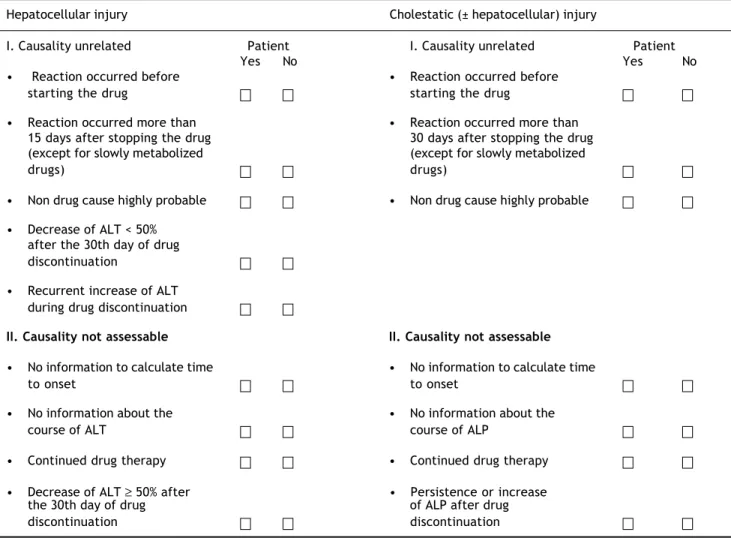
The first step of the causality algorithm in toxic liver disease by DDS represents the qualitative oriented pre-test for the hepatocellular or the cho-lestatic (± hepatocellular) type of injury.5 This test
clarifies with few questions whether causality is un-related or unassessable (Table 1).
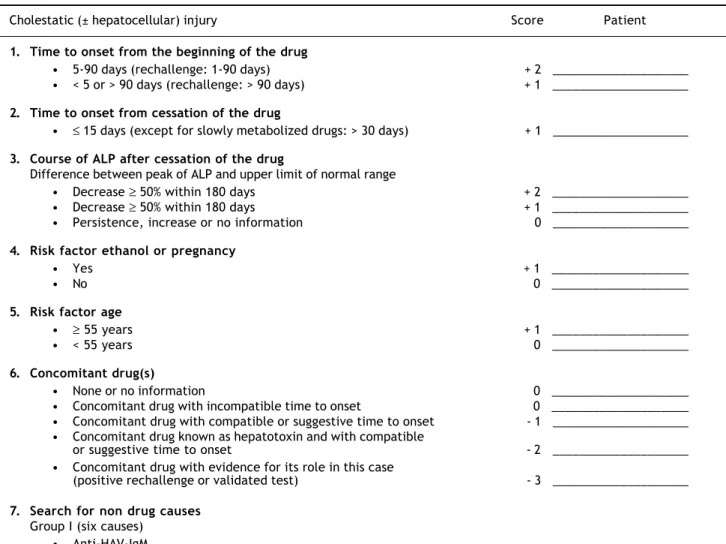
The second step of the structured causality asses-sment may be achieved by the main-test (Tables 2 and 3)5,44 as the updated quantitative CIOMS
sca-le.41,49 For the main-test,5,44 a slightly modified
CIO-MS scale was used because some updates regarding precision and diagnostic procedures were necessary.5
Assessment by the CIOMS scale was shown to be
as-sociated with a good validation regarding sensitivity (86%), specificity (89%), positive predictive value (93%), and negative predictive value (78%).41 In
addition, there was no overlap between the cases and the controls. The quantitative CIOMS scale was based on results obtained following drug re-exposu-re41 and is worldwide accepted.20,22,42,44,53,54 It was
derived from an international consensus meeting of experts who defined various parameters such as time to onset, course of improvement of laboratory data after drug discontinuation, risk factors, concomi-tant drug, search for nondrug causes, previous in-formation on hepatotoxicity of the drug, and
Table 1. Pre-test.
Hepatocellular injury Cholestatic (± hepatocellular) injury
I. Causality unrelated Patient I. Causality unrelated Patient
Yes No Yes No
Reaction occurred before Reaction occurred before starting the drug starting the drug
Reaction occurred more than Reaction occurred more than 15 days after stopping the drug 30 days after stopping the drug (except for slowly metabolized (except for slowly metabolized
drugs) drugs)
Non drug cause highly probable Non drug cause highly probable Decrease of ALT < 50%
after the 30th day of drug discontinuation
Recurrent increase of ALT during drug discontinuation
II. Causality not assessable II. Causality not assessable
No information to calculate time No information to calculate time
to onset to onset
No information about the No information about the course of ALT course of ALP
Continued drug therapy Continued drug therapy Decrease of ALT ≥ 50% after Persistence or increase
the 30th day of drug of ALP after drug discontinuation discontinuation
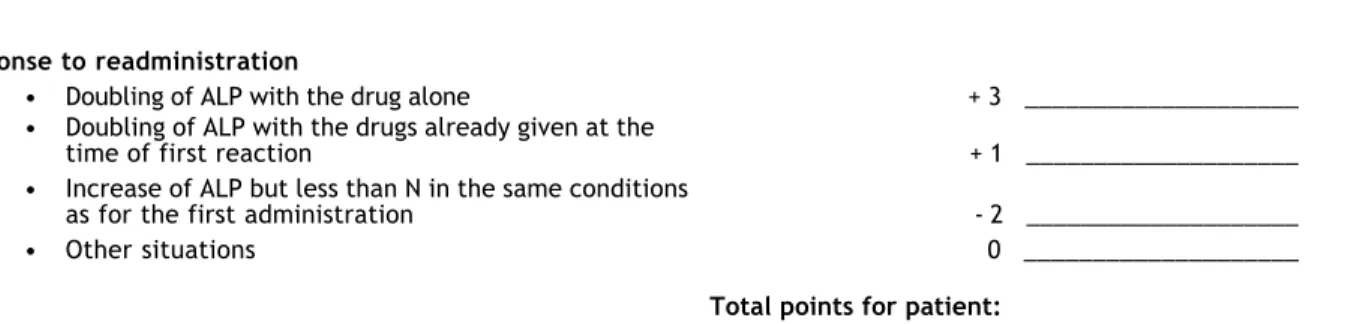
Table 2. Main-test for cholestatic (± hepatocellular) injury (right side).
Cholestatic (± hepatocellular) injury Score Patient
1. Time to onset from the beginning of the drug
5-90 days (rechallenge: 1-90 days) + 2 ____________________ < 5 or > 90 days (rechallenge: > 90 days) + 1 ____________________
2. Time to onset from cessation of the drug
≤ 15 days (except for slowly metabolized drugs: > 30 days) + 1 ____________________
3. Course of ALP after cessation of the drug
Difference between peak of ALP and upper limit of normal range
Decrease ≥ 50% within 180 days + 2 ____________________ Decrease ≥ 50% within 180 days + 1 ____________________ Persistence, increase or no information 0 ____________________
4. Risk factor ethanol or pregnancy
Yes + 1 ____________________
No 0 ____________________
5. Risk factor age
≥ 55 years + 1 ____________________ < 55 years 0 ____________________
6. Concomitant drug(s)
None or no information 0 ____________________ Concomitant drug with incompatible time to onset 0 ____________________ Concomitant drug with compatible or suggestive time to onset - 1 ____________________ Concomitant drug known as hepatotoxin and with compatible
or suggestive time to onset - 2 ____________________ Concomitant drug with evidence for its role in this case
(positive rechallenge or validated test) - 3 ____________________
7. Search for non drug causes
Group I (six causes) Anti-HAV-IgM
Anti-HBc-IgM/HBV-DNA Anti-HCV-IgM/HCV-RNA
Hepatobiliary sonography/color Doppler sonography of liver vessels Alcoholism (AST/ALT ≥ 2)
Acute recent hypotension history (particularly if underlying heart disease) Group II
Complications of underlying disease(s)
Infection suggested by PCR and titer change for: CMV (Anti-CMV-IgM/IgG)
EBV (Anti-EBV-IgM/IgG) HSV (Anti-HSV-IgM/gG) VZV (Anti-VZV-IgM/IgG) Evaluation of group I and II
All causes-groups I and II reasonably ruled out + 2 ____________________ The six causes of group I ruled out + 1 ____________________ Five or four causes of group I ruled out 0 ____________________ Less than four causes of group I ruled out - 2 ____________________ Non drug cause highly probable - 3 ____________________ 8. Previous information on hepatotoxicity of the drug
9. Response to readministration
Doubling of ALP with the drug alone + 3 ____________________ Doubling of ALP with the drugs already given at the
time of first reaction + 1 ____________________ Increase of ALP but less than N in the same conditions
as for the first administration - 2 ____________________ Other situations 0 ____________________
Total points for patient:
The term drug is used for synthetic drugs, herbal drugs, and dietary supplements including herbal ones. ALT: Alanine aminotrans-ferase. AST: Asparate aminotransferase. HAV: Hepatitis A virus. HBc: Hepatitis B core. HBV: Hepatitis B virus. HCV: Hepatitis C virus. CMV: Cytomegalovirus. EBV: Epstein Barr virus. HSV: Herpes simplex virus. VZV:Varicella zoster virus. Total points/ causality: ≤ 0 = Excluded. 1-2 = Unlikely. 3-5 = Possible. 6-8 = Probable. >8 = Highly probable.
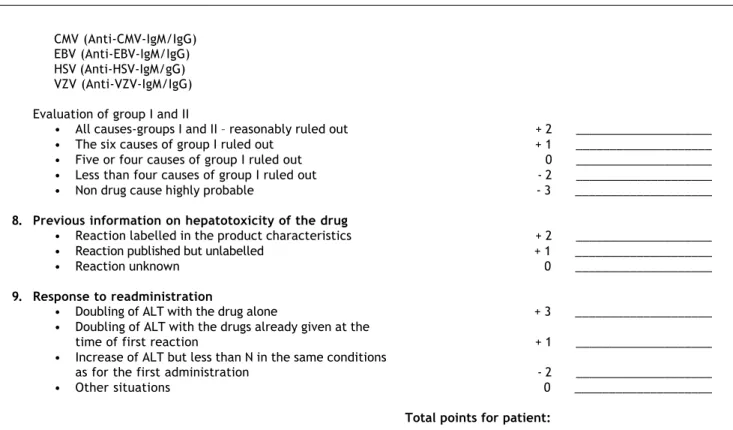
Table 3. Main-test for hepatocellular injury (left side).
Hepatocellular injury Score Patient
1. Time to onset from the beginning of the drug
5-90 days (rechallenge: 1-15 days) + 2 ____________________ < 5 or > 90 days (rechallenge: > 15 days) + 1 ____________________
2. Time to onset from cessation of the drug
≤ 15 days (except for slowly metabolized drugs: > 15 days) + 1 ____________________
3. Course of ALT after cessation of the drug
Difference between peak of ALT and upper limit of normal range
Decrease ≥ 50% within 8 days + 3 ____________________ Decrease ≥ 50% within 30 days + 2 ____________________ No information 0 ____________________ Decrease ≥ 50% after the 30th day 0 ____________________ Decrease < 50% after the 30th day or recurrent increase - 2 ____________________
4. Risk factor ethanol
Yes + 1 ____________________
No 0 ____________________
5. Risk factor age
≥ 55 years + 1 ____________________ < 55 years 0 ____________________
6. Concomitant drug(s)
None or no information 0 ____________________ Concomitant drug with incompatible time to onset 0 ____________________ Concomitant drug with compatible or suggestive time to onset - 1 ____________________ Concomitant drug known as hepatotoxin and with compatible
or suggestive time to onset - 2 ____________________ Concomitant drug with evidence for its role in this case
(positive rechallenge or validated test) - 3 ____________________
7. Search for non drug causes
Group I (six causes) Anti-HAV-IgM
Anti-HBc-IgM/HBV-DNA Anti-HCV-IgM/HCV-RNA
Hepatobiliary sonography/color Doppler sonography of liver vessels Alcoholism (AST/ALT ≥ 2)
Acute recent hypotension history (particularly if underlying heart disease) Group II
Complications of underlying disease(s)
CMV (Anti-CMV-IgM/IgG) EBV (Anti-EBV-IgM/IgG) HSV (Anti-HSV-IgM/gG) VZV (Anti-VZV-IgM/IgG) Evaluation of group I and II
All causes-groups I and II reasonably ruled out + 2 ____________________ The six causes of group I ruled out + 1 ____________________ Five or four causes of group I ruled out 0 ____________________ Less than four causes of group I ruled out - 2 ____________________ Non drug cause highly probable - 3 ____________________
8. Previous information on hepatotoxicity of the drug
Reaction labelled in the product characteristics + 2 ____________________ Reaction published but unlabelled + 1 ____________________ Reaction unknown 0 ____________________
9. Response to readministration
Doubling of ALT with the drug alone + 3 ____________________ Doubling of ALT with the drugs already given at the
time of first reaction + 1 ____________________ Increase of ALT but less than N in the same conditions
as for the first administration - 2 ____________________ Other situations 0 ____________________
Total points for patient:
Table 4. Post-test.
Differential diagnosis Diagnostic parameters Diagnostic exclusion patient 1. Autoimmune hepatitis (AIH) Typ I Gamma globulins, ANA, SMA, AAA, SLA/LP,
anti-LSP, anti-ASGPR Yes No Partial
2. Autoimmune hepatitis (AIH) Typ II Gamma globulins, anti-LKM-1 (CYP 2D6),
anti-LKM-2 (CYP 2C9), anti-LKM-3 Yes No Partial 3. Primary biliary cirrhosis (PBC) AMA, anti PDH-E2 Yes No Partial 4. Primary sclerosing cholangitis (PSC) p-ANCA, MRC Yes No Partial 5. Autoimmune cholangitis (AIC) ANA, SMA Yes No Partial 6. Overlap syndromes see 1-5 Yes No Partial 7. Wilsons disease Copper excretion (24 h urine)
Ceruloplasmin in serum, free copper in serum, Coombs-negative hemolytic anemia, hepatic copper content, Kayser-Fleischer-Ring, neurologic-psychiatric
diagnostic, genotyping Yes No Partial 8. Hereditary hemochromatosis Serum ferritin, total iron-binding capacity,
genotyping for C2824 and H63D mutation,
hepatic iron content Yes No Partial 9. Porphyria Porphobilinogen in urine, total
porphyrines in urine Yes No Partial 10.α1 Antitrypsin deficiency α1 Antitrypsin in serum Yes No Partial
11. Non-alcoholic steatohepatitis Adipositas, insulin resistence, hepatomegaly,
12. Toxic liver diseases Toxicological assessment by occupational and
household toxins Yes No Partial 13. Hepatitis E anti-HEV-IgM, anti-HEV-IgG, HEV-RNA Yes No Partial 14. Other viral infections Specific serology Yes No Partial
Adenovirus Coxsackie-B-Virus Echovirus Measlesvirus Rubellavirus Flavivirus Arenavirus Filovirus Parvovirus HIV
15. Additional infections diseases Specific assessment Yes No Partial Bacteria
Parasites Worms Mycosis
16. Systemic diseases Specific assessment Yes No Partial M. Boeck
Amyloidosis
Lymphoma and other malignant tumors Sepsis
17. Celiac disease TTG antibodies, endomysium antibodies,
duodenal biopsy Yes No Partial 18. Addisons disease Plasma cortisol Yes No Partial 19. Thyroid diseases TSH basal, T4, T3 Yes No Partial
20. Heat stroke Shock, hyperthermia Yes No Partial 21. Grand mal seizures Status epilepticus (duration > 30 min) Yes No Partial 22. Rare intoxications Toxin screening Yes No Partial 23. Cocaine, ecstasy and Toxin screening Yes No Partial
other amphetamines
24. Anorexia nervosa Clinical context Yes No Partial 25. Cardiopulmonary diseases Cardiopulmonary assessment Yes No Partial
Congestive heart disease Myocardial infarction Cardiomyopathy
Cardiac valvular dysfunction Pulmonary embolism
Pericardial diseases
Arrhythmia by hemorrhagic-shock
26. Other diseases Clinical context Yes No Partial
ANA: Antinuclear antibodies. SMA: Smooth muscle antibodies. AAA: Anti-actin antibodies. SLA: Soluble liver antigen. LP: Liver-pancreas antigen. LSP:
Liver specific protein. ASGPR: Asialo-glycoprotein-receptor. LKM: Liver kidney microsomes. CYP: Cytochrome P450. AMA: Anitmitochondrial antibodies.
response to readministration.49 It provides with
each of these parameters a range of scores. The total score is than computed and may be divided into ran-ges that represent the causality as being highly pro-bable, propro-bable, possible, unlikely or excluded.
The third step of the diagnostic algorithm repre-sents the post-test (Table 4)5,44 for exclusion of
va-rious other acute and also chronic liver diseases not yet considered in the main-test (Tables 2 and 3).
QUALITATIVE CAUSALITY ASSESSMENT
For the diagnosis of DDS hepatotoxicity, the application of qualitative causality assessments has not found wide spread acceptance, since no data re-garding specificity, sensitivity and predictive value are available.5,46-48 On a qualitative basis, however,
some items may exclude the diagnosis of DDS hepa-totoxicity. The following qualitative criteria are hel-pful for a quick assessment that can be used in a setting of the pre-test (Table 1):5 causality is
unrela-ted in hepatocellular injury when the reaction occu-rred before starting the drug; when the reaction occurred more than 15 days after stopping the drug with the exemption of slowly metabolized drugs; when a non-drug cause is highly probable; when the decrease of ALT is < 50% after the 30th day of drug discontinuation; or when there is a recurrent in-crease of ALT during drug discontinuation. When a cholestatic (± hepatocellular) injury is evident (Fi-gure 2), somewhat different criteria have to be applied in the pre-test (Table 1).
STRUCTURED QUANTITATIVE CAUSALITY ASSESSMENT
Provided the pre-test gives no signal for an unre-lated causality, the assessment should be continued with the main-test (Figure 1, Tables 2 and 3) as the scale of the updated CIOMS.5 The update includes
va-rious modifications for reasons of precision and ac-tualization. In the main-test there are no more qualitative items5 as in the CIOMS scale.49 Moreover,
confirmation of the exclusion of hepatitis B and C is achieved by the inclusion of hepatitis B virus –DNA and hepatitis C virus– RNA.5 Similarly the use of
co-lour Doppler sonography for the assessment of hepa-tic vessels has been added. For the exclusion of infection by cytomegalovirus (CMV), Epstein Barr vi-rus (EBV), herpes simplex vivi-rus (HSV), and varicella zoster virus (VZV), the determination of polymerase chain reaction as well as IgM and IgG antibodies
with subsequent titer changes is required on grounds of precision. The main-test with its updated items has been applied in two recent case studies.20,44
Causality in DDS hepatotoxicity may also be eva-luated by one of the other quantitative and liver spe-cific scales, which differ quite substantially regarding various criteria.5 A primarily quantitative
causality assessment represents the quantitative scale of CIOMS which has only a few qualitative ite-ms49 and was updated recently.5 Purely quantitative
is the scale of MV, acronym for the authors Maria and Victorino.50 The causality assessment of AD,
acronym for the authors Aithal and Day,43 includes
three approaches, namely the qualitative CIOMS system, the MV scale, and liver histology. The eva-luation by ARD, acronym for the authors Aithal, Rawlins and Day,51 performs without liver histology
and uses in the first step some criteria of the quali-tative rather than the quantiquali-tative CIOMS and sub-sequently the MV scale. Finally, the grading system of TTK, acronym for the first authors Takamori, Takikawa, Kumagi, et al.52 is worth mentioning.
The diagnostic significance of all these scores has been discussed in detail, leading to the conclusion that the main-test as the updated quantitative CIO-MS scale with various modifications for reasons of precision and actualization is best to be used for ca-ses of DDS hepatotoxicity.5 Certainly, the main-test
as well as the other quantitative causality assess-ment methods have the limitation that most but not all DDS unrelated liver disease may be excluded.
EXCLUSION OF RARE DISEASES
With the qualitative post-test, other and rare he-patic and extrahehe-patic diseases might be evaluated (Table 4).5 Before the post-test was establish to
con-sider a variety of differential diagnoses,5 no
systema-tic approach had been undertaken to solve this problem to exclude other DDS unrelated diseases. Consequently, various other liver diseases may have been overlooked, as shown by the long list of missed diagnoses.20,22,41-45
MEDICAL REPORTING
When DDS hepatotoxicity is suspected, the trea-ting physician or other health care providers com-monly notify the national regulatory agency, possibly also the manufacturer.5 The reporting system should
CIO-MS scale itself has been applied in various published reports,20,22,42,44,53 but there are no data available to
what extent the scale is at present being used for the information of the regulatory agencies21,33,37,55 or the
WHO.21 It appears, however, that the quality of
medi-cal reporting is, in general, mostly insufficient regar-ding data supply, exclusion of DDS unrelated liver disease, and causality assessment.33,37
There should also be an obligation to use and pu-blish the results of a diagnostic algorithm such as the pre-test, main-test, and post-test item by item in any case report accepted by a medical journal. This approach may reduce scientific discussions whether a DDS is really hepatotoxic or not. Poor data pre-sentation was evident, for instance, in published case reports of assumed hepatotoxicity by black co-hosh, a herbal drug for menopausal symptoms.44,56
REGULATORY ASSESSMENT
AND PHARMACOVIGILANCE EVALUATION
The crucial point in DDS hepatotoxicity evalua-tion is how regulatory agencies meet the challenges of causality assessment and pharmacovigilance eva-luation. For a reliable assessment the agencies will have to use the diagnostic algorithm (pre-test, main-test, post-test) which may be best provided by the re-porting physician or should be applied by its own, with the data available. Certainly, regulatory causa-lity assessment may be cumbersome, but inevitable to avoid major discussions as shown in the past.20,36,39 Data from several individual cases of
sus-pected DDS hepatotoxicity will be combined by the regulatory agency to assess possible signals of toxi-city as basis for further strategies related to phar-macovigilance. These include also quality assessment of synthetic drugs and herbal drugs, and in the latter group especially the question of plant quality as shown recently.20,55,57,58
DATA COMMUNICATION BY REGULATORY AGENCIES
There are different approaches of the various re-gulatory agencies8,17,33,35,37,55,56 and health
organiza-tions, such as the WHO,21 for handling cases of
suspected DDS hepatotoxicity. It appears that not all data is reported to the scientific communi-ty,8,17,21,33,37,55,56 and when they are available, there
are major differences regarding the quantity and quality of their information. For instance, state-ments of causality assessstate-ments are shown with few examples.
The WHO database presents information on cases with assumed hepatotoxicity by synthetic drugs.21
An evaluation of the data quality reveals, however, that a thorough causality assessment such as with the CIOMS scale has not been done, and the presen-ted data were not suitable for a subsequent causality assessment. It appears that the WHO database is not that helpful in assessing causality of the broad spectrum of toxic liver disease by synthetic drugs. The problem of the WHO database may be the result of poor quality input data supply without a thorough quantitative causality assessment being performed by the various national regulatory agencies.
The German regulatory agency (BfArM, Bun-desinstitut für Arzneimittel und Medizinprodukte, Bonn) concluded in an ad-hoc based causality asses-sment that in 26 cases from Germany and Switzer-land with liver disease a possible, probable or highly probable causality exists for kava, a herbal anxioly-tic drug.33 The regulatory data presentation was
poor, lacking both a thorough quantitative causality assessment and information to substantiate the clai-med causality8,20,57 and this was only partially
possi-ble even for the British Medical Control Agency (MCA)34,36 and EMEA (European Medicine
Agen-cy).35,36 When additional data were obtained,
causa-lity assessed with the updated quantitative CIOMS scale for kava ± co-medication was possible, proba-ble or highly probaproba-ble in only assessed eight cases, in seven of these there was a daily kava overdose and/or a prolonged treatment.20 Due to the low
qua-lity of regulatory data presentation and the resul-ting causality evaluation,8,33 a worldwide discussion
emerged over the regulatory shortcomings.8,20,36,57 A
new regulatory approach for a structured causality assessment in cases with assumed hepatotoxicity by kava, co-medicated drugs and dietary supplements is recommended under these circumstances.
Poor data presentation by various national regu-latory agencies was another problem for the evalua-tion of liver disease possibly linked to the use of black cohosh, a herbal drug used to treat postmeno-pausal symptoms.17,55 In 30 patients a possible
cau-sality was described using the disease unspecific Naranjo scale rather than the liver disease specific quantitative CIOMS scale. No data are presented to exclude other drug unrelated liver diseases17,55 and
the conclusions arrived at are not substantiated by the presented information.17,39
analy-zed a total of 40 cases using the quantitative CIOMS scale and concluded that only four cases showed some degree of causality. The presented data of the-se four patients were the basis of further analysis showing that causality was probable in two patients and possible in the other ones when the CIOMS sca-le was applied item by item.44 Therefore, the
regula-tory issue in suspected DDS hepatotoxicity should generally include the results item by item of the quantitative main-test or the CIOMS scale for a va-lid causality assessment.
These few examples clearly show that national regulatory agencies are responsible to present de-tailed information and data of a structured quanti-tative causality assessment in the form of the main-test or the CIOMS scale in all patients with suspected DDS hepatotoxicity. This regulatory approach is essential to circumvent perpetuated discussions with the scientific community about ca-ses of patients with suspected DDS hepatotoxicity. It is also inevitable that the data of all patients with DDS hepatotoxicity be presented in the regu-latory database with the quantitative main-test or the CIOMS scale including item by item informa-tion, and that all interested health care providers and scientists have free access to all data required for causality assessment.
CLINICAL, REGULATORY AND SCIENTIFIC ISSUES
At the very end of the evaluation process of cases with DDS hepatotoxicity various questions have to be answered. They include:
• Was the alleged DDS convincingly responsible for the hepatic reaction or not?
• Were there sufficient data for causality assess-ment by the main-test or the scale of the quanti-tative CIOMS?
• Has the main-test or the CIOMS scale been sub-mitted item by item to the national regulatory agency to be entered into the regulatory database item by item, available to all interested health care providers and scientists?
• Was the regulatory action based on this case (and others) adequate regarding the issue of pharmacovigilance?
• Were the case reports submitted for publication in scientific journals substantiated regarding causality by the use of the quantitative main-test or the CIOMS scale, and was item by item pre-sented to be published?
CONCLUSION
Cases with assumed DDS hepatotoxicity repre-sent major clinical, regulatory and scientific is-sues that require first a thorough structured quantitative causality assessment, necessitate se-cond a regulatory assessment for pharmacovigi-lance perspectives and should third facilitate open discussions to reach a scientific basis for a con-sensus between all involved parties. These include primary care physicians, treating hospital physi-cians, other health care providers, regulatory agencies, manufacturers and interested scientists. This algorithm with a common and structured approach to data analysis, data accuracy, data co-llection, data reporting and analysis is essential to meet safety concerns of possible hepatotoxic side effects because of DDS use, and to insure that a correct hepatotoxicity diagnosis is made.
REFERENCES
1. Zimmerman HJ. Hepatotoxicity. Lippincott Williams & Wilkins, Philadelphia; 1999.
2. Pugh AJ, Barve AJ, Falkner K, Patel M, McClain CJ. Drug-indu-ced hepatotoxicity or drug-induDrug-indu-ced liver injury. Clin Liver Dis
2009; 13(2): 277-94.
3. Lee WM. Drug-induced hepatotoxicity. N Engl J Med 2003; 349: 474-85.
4. Papay JI, Clines D, Rafi R, Yuen N, Britt SD, Walsh JS, Hunt CM. Drug-induced liver injury following positive drug recha-llenge. Regul Toxicol Pharmacol 2009; 54(1): 84-90.
5. Teschke R, Schwarzenboeck A, Hennermann KH. Causality as-sessment in hepatotoxicity by drugs and dietary supplements.
Br J Clin Pharmacol 2008; 66: 758-66.
6. Willett KL, Roth RA, Walker L. Workshop overview: hepato-toxicity assessment for botanical dietary supplements. Toxi-col Sci 2004; 79: 4-9.
7. Teschke R, Genthner A, Wolff A. Kava hepatotoxicity: Compa-rison of aqueous, ethanolic, acetonic kava extracts and kava-herbs mixtures. Ethnopharmacol 2009; 123: 378-84.
8. Teschke R, Wolff A. Kava hepatotoxicity: Regulatory data se-lection and causality assessment. Dig Liver Dis 2009. doi:10.1016/i.dld.2009.04.003.
9. Maddrey WC. Drug-induced hepatotoxicity. J Clin Gastroen-terol 2005; 39: S83-S89.
10. Larrey D, Pageaux GP. Drug-induced acute liver failure. Eur J Gastroenterol Hepatol 2005; 17: 141-3.
11. Peters TS. Do preclinical testing strategies help predict human hepatotoxic potentials? Toxicol Pathol 2005; 33: 146-54.
12. Woodward KN. The potential impact of the use of homeopa-thic and herbal remedies on monitoring the safety of prescrip-tion products. Human Exp Toxicol 2005; 24: 219-33.
13. De Smet PAGM. Herbal medicine in Europe relaxing regulatory standards. N Engl J Med 2005; 352: 1176-8.
14. Comar KM, Kirby DF. Herbal remedies in gastroenterology. J Clin Gastroenterol 2005; 39: 457-68.
16. De Smet PAGM. Herbal remedies. N Engl J Med 2002; 347: 2046-56.
17. Techke R, Bahre R, Genthner A, Fuchs J, Schmidt-Taenzer W, Wolff A. Suspected black cohosh hepatotoxicity - Challenges and pitfalls of causality assessment. Maturitas 2009. doi:10.1016/i.maturitas.2009.05.006.
18. Lewis JD, Strom BL. Balancing safety of dietary supplements with the free market. Ann Intern Med 2002: 136: 616-8. 19. Watkins PB. Idiosyncratic liver injury: challenges and
appro-aches. Toxicol Pathol 2005; 33: 1-5.
20. Teschke R, Schwarzenboeck A, Hennermann KH. Kava hepato-toxicity: A clinical survey and critical analysis in 26 suspected cases. Eur J Gastroenterol Hepatol 2008; 20: 1182-93. 21. Björnsson E, Olsson R. Suspected drug-induced liver fatalities
reported to the WHO database. Dig Liver Dis 2006; 38: 33-8. 22. Andrade RJ, Lucena MI, Fernández MC, Pelaez G, Pachkoria K,
Garcia-Ruiz E, et al. Drug-induced liver injury: an analysis of 461 incidences submitted to the Spanish registry over a 10-year period. Gastroenterology 2005; 129: 512-21.
23. Björnsson E, Olsson R. Outcome and prognostic markers in se-vere drug-induced liver disease. Hepatology 2005; 42: 481-9. 24. de Abajo FJ, Montero D, Madurga M, Rodriguez LAG. Acute
and clinically relevant drug-induced liver injury: a population based case-control study. Br J Clin Pharmacol 2004; 58: 71-80.
25. Durazo FA, Lassman C, Han SHB, Saa S, Lee NP, Kawano M, et al. Fulminant liver failure due to usnic acid for weight loss. Am J Gastroenterol 2004; 99: 950-2.
26. Teschke R, Gaus W, Loew D. Kava extracts: safety and risks including rare hepatotoxicity. Phytomedicine 2003; 10: 440-6. 27. Estes JD, Stolpman D, Olyaei A, Corless CL, Ham JM, Schwartz JM, et al. High prevalence of potentially hepatotoxic herbal supplement use in patients with fulminant hepatic failure.
Arch Surg 2003; 138: 852-8.
28. Adachi M, Saito H, Kobayashi H, Horie Y, Kato S, Yoshioka M, et al. Hepatic injury in 12 patients taking the herbal weight loss aids Chaso or Onshido. Ann Intern Med 2003; 139: 488-92.
29. Graham DJ, Drinkard CR, Shatin D. Incidence of idiopathic acute liver failure and hospitalized liver injury in patients treated with troglitazone. Am J Gastroenterol 2003; 98: 175-9.
30. Bleibel W, Kim S, DSilva K, Lemmer ER. Drug-induced liver in-jury: review article. Dig Dis Sci 2007; 52: 2463-71.
31. Chang CY, Schiano TD. Review article: drug hepatotoxicity.
Aliment Pharmacol Ther 2007; 25: 1135-51.
32. Watkins PB, Seeff LB. Drug-induced liver injury: summary of a single topic clinical research conference. Hepatology 2006; 43: 618-31.
33. BfArM (Bundesinstitut für Arzneimittel und Medizinprodukte, Bonn. Federal Institute for Drugs and Medicinal Products in Germany). Available at: http://www.bfarm.de/de/arzneimit-tel/am_sicher/stufenpl/Besch-kava-Final.pdf [Accessed: June 14, 2002].
34. MCA (Medicine Control Agency). Line listing February 14, 2002.
35. EMEA (European Medicine Agency). Line listing July 10, 2002. 36. Schmidt M, Morgan M, Bone K, McMillan J. Kava: a risk-benefit
assessment. In: Mills M, Bone K (eds.). The essential guide to herbal safety. St. Louis, MO: Elsevier Churchill Livingstone; 2005, p. 155-221.
37. EMEA. Assessment of case reports connected to herbal medi-cinal products containing cimicifugae racemosae rhizoma (black cohosh, root). Available at: http:// www.emea.europa.eu/pdfs/human/hmpc/26925806en.pdf. [Accessed: July 18, 2006].
38. Teschke R. Questions regarding causality in presumed black cohosh hepatotoxicity. Del Med J 2008; 80: 233-4.
39. Teschke R. Letter to the Editor: United States Pharmacopeia review of the black cohosh case reports of hepatotoxicity.
Menopause 2009; 16: 214.
40. Teschke R. Letter to the Editor: Liver failure associated with the use of black cohosh for menopausal symptoms. Med J Aust
2009; 190: 99-100.
41. Bénichou C, Danan G, Flahault A. Causality assessment of ad-verse reactions to drugs II. An original model for validation of drug causality assessment methods: case reports with posi-tive rechallenge. J Clin Epidemiol 1993; 46: 1331-6.
42. Lucena MI, Camargo R, Andrade RJ, Perez-Sanchez CJ, San-ches de la Cuesta F. Comparison of two clinical scales for cau-sality assessment in hepatotoxicity. Hepatology 2001; 33: 123-30.
43. Aithal PG, Day CP. The natural history of histologically proved drug induced liver disease. Gut 1999; 44: 731-5.
44. Teschke R, Schwarzenboeck A. Suspected hepatotoxicity by cimicifugae racemosae rhizoma (black cohosh, root): critical analysis and structured causality assessment. Phytomedicine
2008; 16: 72-84.
45. Aithal GP, Rawlins MD, Day CP. Accuracy of hepatic adverse drug reaction reporting in one English health region. BMJ
1999; 319: 1541.
46. Danan G, Benichou C, Begaud B, Biour M, Couzigou P, Evreux JC, et al. Critères dimputation dune hépatite aiguë à un mé-dicament. Résultats de réunions de consensus. Gastroenterol Clin Biol 1987; 11: 581-5.
47. Danan G. Consensus meetings on: causality assessment of drug-induced liver injury. J Hepatol 1988; 7: 132-6.
48. Bénichou C. Criteria of drug-induced liver disorders. Report of an international consensus meeting. J Hepatol 1990; 11: 272-6. 49. Danan G, Bénichou C. Causality assessment of adverse
reac-tions to drugs I. A novel method based on the conclusions of international consensus meetings: application to drug-induced liver injuries. J Clin Epidemiol 1993; 46: 1323-30.
50. Maria VAJ, Victorino RMM. Development and validation of a cli-nical scale for the diagnosis of drug-induced hepatitis. Hepa-tology 1997; 26: 664-9.
51. Aithal GP, Rawlins MD, Day CP. Clinical diagnostic scale: a use-ful tool in the evaluation of suspected hepatotoxic adverse drug reactions. J Hepatol 2000; 33: 949-52.
52. Takamori Y, Takikawa H, Kumagi T, Watanabe M, Shibata A, Hisamochi A, et al. Assessment of the diagnostic scale for drug induced liver injury (DILI) by the international consensus mee-ting (ICM) and a proposal of it modifications. Hepatology
2003; 38(Suppl. 1): 703A.
53. Andrade RJ, Camargo R, Lucena MI, González-Grande R. Cau-sality assessment in drug-induced hepatotoxicity. Expert Opin Drug Saf 2004; 3: 329-44.
54. Lewis JH. Drug-induced liver disease. Curr Opin Gastroente-rol 2002; 18: 307-13.
55. Mahady GB, Low Dog T, Barrett ML, Chavez ML, Gardiner P, Ko R, et al. United States Pharmacopeia review of the black cohosh case reports of hepatotoxicity. Menopause 2008; 15: 628-35.
56. Teschke R, Bahre R, Fuchs J, Wolff A. Black cohosh hepato-toxicity: quantitative causality evaluation in suspected nine cases. Menopause 2009. DOI:10.1097/ GME.0b013e31819d3904.
57. Teschke R, Schwarzenboeck A, Akinci A. Kava hepatotoxicity: a European view. N Zeal M J 2008; 121:1283; ISSN 1175 8716. Available at: http://www.nzma.org.nz/journal/121-1283 58. Schmidt M. Quality criteria for kava. HerbalGram 2007;