
Antecedents and consequences of corporate entrepreneurship: an international study
291
0
0
Texto completo
(2) ANTECEDENTS AND CONSEQUENCES OF CORPORATE ENTREPRENEURSHIP: AN INTERNATIONAL STUDY. Doctoral thesis. Author Supervisor Andreu Turro David Urbano. International Doctorate in Entrepreneurship and Management. January 2016.
(3) 2.
(4) TABLE OF CONTENTS. PREFACE ABSTRACT 1. INTRODUCTION 1.1. Problem statement and research objectives 1.2. Research contributions 1.3. Linking corporate entrepreneurship to Human Capital Theory, Resource Based Theory and Institutional Economics 1.4. Structure of the research 2. CORPORATE ENTREPRENEURSHIP: A SYSTEMATIC LITERATURE REVIEW AND FUTURE RESEARCH AGENDA 2.1. Introduction 2.2. Corporate entrepreneurship literature 2.3. Methodology 2.4. Results 2.5. Discussion 2.6. Conclusion 3. CONDITIONING FACTORS FOR CORPORATE ENTREPRENEURSHIP: AN INTERNAL APPROACH 3.1. Introduction 3.2. Conceptual framework 3.3. Methodology 3.4. Results and discussion 3.5. Conclusion 4. CONDITIONING FACTORS FOR CORPORATE ENTREPRENEURSHIP: AN ENVIRONMENTAL APPROACH 4.1. Introduction 4.2. Conceptual framework 4.3. Methodology 4.4. Results and discussion 4.5. Conclusion 5. CONDITIONING FACTORS FOR CORPORATE ENTREPRENEURSHIP: A MULTILEVEL APPROACH 5.1. Introduction 5.2. Conceptual framework 5.3. Methodology 5.4. Results 5.5. Discussion 5.6. Conclusion. 7 10 12 13 15 18 21 26 27 28 30 31 42 47 50 51 52 56 58 64 66 67 68 74 77 81 83 84 85 91 95 99 101. 3.
(5) 6. CONDITIONING FACTORS FOR CORPORATE ENTREPRENEURSHIP IN THE CONTEXT OF AN ECONOMIC CRISIS 6.1. Introduction 6.2. Conceptual framework 6.3. Methodology 6.4. Results and discussion 6.5. Conclusion 7. CONDITIONING FACTORS FOR CORPORATE ENTREPRENEURSHIP: A GENDER PERSPECTIVE 7.1. Introduction 7.2. Conceptual framework 7.3. Methodology 7.4. Results 7.5. Discussion 7.6. Conclusion 8. CORPORATE ENTREPRENEURSHIP IN THE SPANISH CONTEXT: A REGIONAL ANALYSIS 8.1. Introduction 8.2. Conceptual framework 8.3. Methodology 8.4. Results and discussion 8.5. Conclusion 9. ANTECEDENTS AND CONSEQUENCES OF CORPORATE ENTREPRENEURSHIP: EVIDENCE FOR EUROPEAN COUNTRIES 9.1. Introduction 9.2. Conceptual framework 9.3. Methodology 9.4. Results 9.5. Discussion 9.6. Conclusion 10. CONCLUSIONS 10.1. Main conclusions 10.2. Implications 10.3. Recommendations 10.4. Limitations and future research lines REFERENCES APPENDIX. 103 104 105 112 116 121 123 124 125 132 136 139 142 144 145 147 154 156 165. 168 169 170 175 179 186 189 191 192 197 200 202 205 252. 4.
(6) LIST OF TABLES AND FIGURES. 5.
(7) LIST OF TABLES Table 2.1. Journals and published articles per year Table 2.2. Most cited articles Table 2.3. Authors sorted by number of publications Table 2.4. Countries and published articles Table 2.5. Type of analysis in the articles Table 2.6. Main statistical technique used in the analyzed articles Table 2.7. Origin of the databases used in the quantitative articles Table 3.1. Description of the variables Table 3.2. Correlation matrix Table 3.3. Logistic regression. Dependent variable: Corporate entrepreneurship Table 4.1. Description of the variables Table 4.2. Correlation matrix Table 4.3. Logistic regression. Dependent variable: Corporate entrepreneurship Table 5.1. Description of the variables Table 5.2. Correlation matrix Table 5.3. Multilevel logit. Dependent variable: Corporate entrepreneurship Table 6.1. Description of the variables Table 6.2. Correlation matrix Table 6.3. Multilevel logit. Dependent variable: Corporate entrepreneurship Table 7.1. Description of the variables Table 7.2. Correlation matrix Table 7.3. Multilevel logit. Dependent variable: Corporate entrepreneurship Table 8.1. Description of the variables Table 8.2. Correlation matrix Table 8.3. Description of the sample Table 8.4. Logistic regression. Dependent variable: Corporate entrepreneurship Table 9.1. Description of the variables Table 9.2. Correlation matrix Table 9.3. Estimation results of the simultaneous equation model Table 10.1. Summary of the main results of the research. 33 34 35 35 37 37 37 57 60 63 77 79 80 94 96 98 115 118 120 135 138 141 156 157 158 163 178 180 182 194. LIST OF FIGURES Figure 1.1. Main phases of the thesis Figure 2.1. Authors’ origin vs citations Figure 2.2. Author origin vs database origin Figure 2.3. Intellectual structure of corporate entrepreneurship research Figure 5.1. Moderating effect of entrepreneurial culture on opportunity recognition Figure 8.1. Direct effect of opportunity on corporate entrepreneurship Figure 8.2. Direct effect of fear of failure on corporate entrepreneurship Figure 8.3. Moderating effect of fear of failure on corporate entrepreneurship (low income regions) Figure 10.1. Theoretical model for the antecedents and consequences of corporate entrepreneurship. 25 36 38 41 99 159 161 165 200. 6.
(8) PREFACE. 7.
(9) PREFACE When I became a university student at the age of 18, I quickly realized that the idea of pursuing a career in academia was something very appealing to me. I remember discussing with other students the pros and cons of working at a university and I could only see advantages. I liked everything: working with people from around the world that are experts in their fields, the idea of spending working time to learn new things, having the opportunity to meet some very smart and wise people, the informal and friendly relationships some professors had with each other and with some students… There was something special about the life and atmosphere at university beyond being irreverently young at that time. What I did not know back then is the extent to which pursuing a life in academia requires huge personal, intellectual and emotional effort and commitment. After five years (two for the Master’s in research and three working on my thesis), I can state categorically that I would not have written my thesis without the help and support provided by many other people. Hence, I would like to spend this very first section of the thesis expressing my thanks and gratitude to them. First, I thank my PhD supervisor, David Urbano, for his active support during these last years. David has always been there and I have felt accompanied throughout the process. His wise comments and advice have definitely had a fundamental impact on the overall outcome and have made it possible for us to publish some articles in international journals. In addition, beyond his academic support, I am also grateful for his personal support, offering encouragement and motivation and reminding me at all times that this process is senseless if you cannot enjoy “the journey”. I would also like to thank the Business Economics Department (from the Universitat Autònoma de Barcelona) and all the professors I had the pleasure to learn from. I would especially like to thank Dr Diego Prior, Dr Josep Rialp, Dr Alex Rialp, Dr Joan Lluís Capelleras and Professor Pere Caba for their advice, suggestions and help during the process. I would also like to thank Mireia Cirera, Laura Sans and Marta San José for sheding light on all the administrative and paperwork-related aspects, especially considering that I am a complete disaster in such matters. I would like to express my gratitude to the Department of Innovation and Entrepreneurship at Imperial College Business School (London, UK) for accepting me 8.
(10) as a visiting researcher. In particular, I would like to thank Dr Mike Wright for supervising my work during my stay in London. Overall, working at another university in a different environment gave me a better understanding of the way academic research works internationally. Indeed, I consider research stays should be mandatory in all PhD programmes. Thank you also to Maria Noguera and to the “Centre d’Iniciatives Emprenedores Universitàries” for allowing me to collaborate with them and enabling me to understand the real problems and challenges new companies face. I am also thankful to the PhD committee for their comments and suggestions that have contribute to improving my thesis and helped me become a better researcher. I would also like to thank all the anonymous reviewers and editors of the journals who have contributed to improving the overall quality of the thesis. Related to is, I am also grateful to Claudia Alvarez, whose comments and advice on Chapters 3 and 8 played a crucial role in publishing them. Ultimately, beyond the professional environment, other people have had a fundamental role in this process. First, I would like to thank my family and friends for their patience and for always supporting me regardless of which decisions I take in life. Finally, I would like to express my profound gratitude to Berta for her unconditional support and for helping me keep things in perspective.. Andreu Turró Sol Bellaterra, January 2016. 9.
(11) ABSTRACT. 10.
(12) ABSTRACT It is widely agreed that corporate entrepreneurship is a crucial element in organizational and economic development due to its beneficial effects on the revitalization and performance of firms. Consequently, both policy makers and researchers have shown particular interest in understanding this phenomenon. The main objective of this investigation is to examine the antecedents and consequences of corporate entrepreneurship. The methodology used is quantitative and based mainly on data from the Global Entrepreneurship Monitor (GEM). These data are complemented with other sources of information, such as the International Monetary Fund (IMF), the Doing Business project and the EU-EFIGE/Bruegel Unicredit database. Several statistical techniques are used in the thesis: logistic regression, generalized linear multilevel logistic regression and a two-stage probit. In addition, the research is grounded in three different theoretical frameworks: Human Capital Theory, ResourceBased Theory and Institutional Economics. The main findings of this research show how a set of different factors at different levels of. analysis. (individual,. company. and. environmental). condition. corporate. entrepreneurship. In addition, the moderating effect of informal institutions is highlighted throughout the research. Subsequently, the results confirm the positive relationship between engaging in corporate entrepreneurship activities and firm growth. Finally, this thesis has theoretical and practical implications. From a theoretical point of view, the research may contribute to the generation of knowledge as some aspects in this field remain understudied. Similarly, it might contribute to the advancement of Human Capital Theory, Resource-Based Theory and Institutional Economics as these frameworks have rarely been used in this particular context. From a policy maker and practitioner point of view, the study has implications for managers who are interested in fostering and promoting corporate entrepreneurship in their companies. Equally, the results could also be helpful to government policies that are meant to support the development of entrepreneurial initiatives in established companies (in particular for companies operating in different institutional contexts). Keywords: Corporate entrepreneurship, intrapreneurship, Human Capital Theory, Resource-Based Theory, Institutional Economics. JEL: B52, L25, L26, M13 11.
(13) CHAPTER 1 INTRODUCTION. 12.
(14) 1. INTRODUCTION. 1.1. Problem statement and research objectives There is consensus among scholars that entrepreneurship is a key determinant of firm, regional and national economic performance (Gupta et al., 2004). Thus, in the last few decades researchers have paid attention to the role of entrepreneurship in productivity, employment and economic and social development (Wennekers et al., 2005). Entrepreneurship research has been expanding its boundaries by exploring and developing explanations and predictions of entrepreneurship phenomena in terms of events, such as new venture creation, innovation and entrepreneurial organizations (Antoncic and Hisrich, 2003). In this regard, many authors have highlighted that established firms must adopt entrepreneurial strategies (Ireland et al., 2009) as a path to revitalizing existing organizations and making them more innovative. Given its importance to corporate vitality and wealth generation in today’s global economy, corporate entrepreneurship has generated considerable attention in research (Dess et al., 2003). Past studies from several complementary fields, such as management, strategy, finance, entrepreneurship and marketing, have contributed to a better understanding of complex and dynamic entrepreneurship within established organizations (Hornsby et al., 2013). Corporate entrepreneurship is considered to facilitate a firm’s efforts to exploit its current competitive advantages, as well as explore new opportunities and the competencies required to pursue them successfully. Hence, it has also been considered to contribute to the evolution of a firm’s corporate strategy (Ireland et al., 2003) by building new capabilities and businesses that enable renewal, foster strategic change and enhance a company’s profits and growth (Zahra and Hayton, 2008; Narayanan et al., 2009). Overall, there is agreement in the literature on the positive effect corporate entrepreneurship has on firm performance (Zahra, 1991), especially in firms that operate in hostile and dynamic/turbulent environments (Covin and Slevin, 1991). The concept of corporate entrepreneurship has been evolving over the last 25 years (Peterson and Berger, 1972). Terms such as intrapreneuring (Pinchot, 1985), corporate entrepreneurship (Guth and Ginsberg, 1990), corporate venturing (Vesper, 1990), and internal corporate entrepreneurship (Schollhammer, 1982) have been used to describe 13.
(15) the phenomenon. Perhaps one of the broadest and most widely accepted definitions of intrapreneurship is “entrepreneurship within an existing organization” (Antoncic and Hisrich, 2001, p. 496). Overall, corporate entrepreneurship has become a flourishing research field because it is widely advocated as a means of organizational innovation and has many other advantages at both the organizational and individual level (Antoncic and Hisrich, 2001; Phan et al., 2009). This has led a significant number of researchers to study the antecedents of corporate entrepreneurship activity (e.g., Guth and Ginsberg, 1990; Zahra, 1991; Antoncic and Hisrich, 2001; Zahra et al., 2009). Their discussions have emphasized the importance of a variety of sources, such as the firm’s environment (Covin and Slevin, 1989), its organizational culture (Zahra, 1991) and structure (Miller, 1983) or the presence of some strategic leaders in the firm (Guth and Ginsberg, 1990). In addition, the development of entrepreneurial activities within established companies has been investigated in different contexts, for instance Canada (Thornhill and Amit, 2000), some Eastern European countries (Filatotchev et al., 1999), France (Messeghem, 2003), Germany (Plambeck, 2012), Netherlands (Wakkee et al., 2010), Turkey (Ağca et al., 2012), Slovenia (Antoncic and Hisrich, 2001), Italy (Iacobucci and Rosa, 2005), Spain (Farinós et al., 2011), Thailand (Sebora and Theerapatvong, 2010), Sweden (Brundin et al., 2008), Switzerland (Tajeddini and Mueller, 2012) or the USA (Zahra, 1991). Overall, these studies identify different types of factors at different levels of analysis that can have an influence on corporate entrepreneurship: individual (employee) factors, company-related factors and environmental factors (Zahra, 1991). Despite all this, there are some aspects in the literature analysing the antecedents of corporate entrepreneurial activity that might require further understanding, as the role of some of the conditioning factors has not always been clear. In particular, the effect of some environmental antecedents (i.e. culture and legal matters) might be studied in more detail. An enhanced explanation of this is provided in the next section (and within the different chapters that form this thesis). In addition, knowledge of the consequences of developing corporate entrepreneurship activities has also been considered to require more study (Phan et al., 2009). Research on the effects of corporate entrepreneurship for firm growth and performance is normally focused in a specific context (US firms), which could limit the generalization of the results.. 14.
(16) Overall, the main objective of this investigation is to examine the antecedents and consequences of corporate entrepreneurship. In this regard, this thesis places particular emphasis on different levels of analysis, specific contexts and theoretical frameworks. The specific objectives of the research are outlined below, with each specific objective corresponding to a different research phase: 1) To explore the content and evolution of corporate entrepreneurship research and to develop and suggest an agenda for future research (phase 1). 2) To. examine. the. internal. and. environmental. antecedents. of. corporate. entrepreneurship activity (phase 2). 3) To analyse the role of a set of corporate entrepreneurship specificities – in economic crisis, taking a gender perspective and through regional analysis (phase 3). 4) To study the effect of corporate entrepreneurship on firm growth (phase 4).. The methodology used in the research is quantitative and fundamentally based on data from the Global Entrepreneurship Monitor (GEM). More specifically, two different GEM tools are used in the investigation, the Adult Population Survey and the National Experts Surveys. In addition, this information is complemented with data from the International Monetary Fund (IMF), from the Doing Business project (developed by the World Bank) and from the EU-EFIGE/Bruegel Unicredit database. The period of time covered in the different chapters of the thesis ranges from 2003 to 2011. The thesis combines several research techniques: systematic literature review, logistic regression, generalized linear multilevel logistic regression and a two-stage probit model. Finally, the research is grounded in three different theoretical frameworks: Human Capital Theory (HCT), Resource-Based Theory (RBT) and Institutional Economics (IE). In the third section of this introduction, further information on the relationship between these theories and corporate entrepreneurship is provided.. 1.2. Research contributions The objectives outlined in the previous section relate to the existence of some areas in the corporate entrepreneurship field where further knowledge may be generated. In this section, an overview of the main academic and practical reasons that justify each 15.
(17) specific goal is presented. In addition, the specific research gap addressed in each of the chapters is highlighted. The first specific objective of this research (Chapter 2) explores the content and evolution of corporate entrepreneurship research and aims to develop an agenda for future research. From this perspective, the research benefits from the fact that there are very few recent systematic literature reviews in this field, although a very significant part of the overall research on corporate entrepreneurship has been published recently. In addition, reviews are considered to play an important role in the development of a research field by summarizing published work in a specific area and offering new ideas (Wales et al., 2013). Ultimately, the different areas for further research outlined could contribute to the development of future investigations. The second specific objective examines the role of internal (individual and companyrelated) and external (environmental) antecedents for corporate entrepreneurship activity. In this case, the research is grounded in HCT (Chapter 5), RBT (Chapter 3) and IE (Chapters 4 and 5). Specifically, the use of these theoretical frameworks might be one of the contributions of this phase of the research as most quantitative studies in the field are not explicitly grounded in any theory. In particular, the results contribute to the operationalization of the variables related to these theories which have generated some discussion among scholars (Dutta et al., 2005). Previous literature studying the antecedents of entrepreneurial activity in established companies differentiates between factors at different levels of analysis. Therefore, aspects such as certain person-related values or having organizational support (Antoncic and Hisrich, 2001), organizational learning (Dess et al., 2003) and the appropriate management of the company’s strategic resources (Ireland et al., 2003) have been conceptualized as corporate entrepreneurship antecedents at an internal level. Similarly, competitive intensity and the rate of technological change (Ireland et al., 2009) and industry growth or market dynamism (Antoncic and Hisrich, 2001) have been highlighted as conditioning factors at an environmental level. This thesis contributes to the discussion by showing the effect of a specific set of internal and environmental factors. In addition, some of these environmental factors have rarely been tested empirically (such as culture) and play a significant role. Furthermore, some of these factors also play a moderating role between other antecedents and corporate entrepreneurship. 16.
(18) The third specific objective aims to study the role of the factors conditioning corporate entrepreneurship in three specific cases. In Chapter 6, the focus is placed on how an economic crisis affects the antecedents of corporate entrepreneurship. Surprisingly, the literature in the entrepreneurship field has not participated much in the debate about the causes and effects of an economic downturn for new business creation. Following this reasoning, some authors agree that an economic downswing should have a negative effect on entrepreneurship in established companies (Klapper and Love, 2011) due to factors such as financial markets uncertainty or rising unemployment (Tsai and Kuo, 2011). Others, however, suggest that recessions are propitious for firms to innovate (Filippetti and Archibugi, 2011). The results contribute to this discussion by showing few but significant differences in the antecedents of corporate entrepreneurship between a period of crisis and a period without it. The results also contribute to the existing literature by showing the differences between men and women when developing corporate entrepreneurship activities (Chapter 7). Literature on individual entrepreneurship has studied the role of gender when creating new businesses extensively (Debrulle et al., 2014); however, to the best of my knowledge, the corporate entrepreneurship literature has not studied this issue. Therefore, the research benefits from this and provides evidence on the factors that affect men and women when developing corporate entrepreneurship initiatives. In addition, in Chapter 8 the research draws attention to the Spanish case and its different regions. In this respect, the thesis contributes by showing relevant differences depending on the level of economic development of the region. Hence, it is shown that public policies aimed at fostering corporate entrepreneurship should differ depending on the region. Finally, the fourth and last specific objective deals with the consequences of corporate entrepreneurship, more specifically focusing on the effect of companies’ entrepreneurial activities on firm growth (Chapter 9). Although researchers agree that corporate entrepreneurship has a positive effect on firm performance, the wide majority of studies use data only for US companies (Keil et al., 2008). In addition, there are very few multicountry studies focusing on this issue (for an exception, see Zahra and Hayton, 2008). Hence, this chapter contributes by testing the results with data for seven European countries. Ultimately, previous research has already highlighted the importance of. 17.
(19) developing cross-cultural research, as it contributes to the generalization of concepts and theories (Hills and LaForge, 1992).. 1.3. Linking corporate entrepreneurship to Human Capital Theory, Resource Based Theory and Institutional Economics Despite the growing attention paid to corporate entrepreneurship, a significant proportion of existing quantitative studies do not make explicit use of any theoretical framework (for more information, see Chapter 2 of this thesis). In this section, the rationale behind the theoretical frameworks used and their relationship to corporate entrepreneurship is explained. Individual-level studies of corporate entrepreneurship have taken into account the role of human capital (Parker, 2011; Guerrero and Pena-Legazkue, 2013). In addition, human capital has been studied in many fields and therefore there are several different definitions (Kungwansupaphan and Siengthai, 2012). Some researchers define human capital as the knowledge, skill and abilities that reside within individuals and are utilized by them (Schultz, 1961), or as the knowledge, skills, competencies and experiences related to the task at hand (Dess and Picken, 1999). In the organizational context, Joia (2000) defines the concept of human capital as the sum of the expertise and skills of the employees of an organization. Dakhli and De Clercq (2004) argue that human capital is embodied in the people’s skills, knowledge and expertise that can be improved especially by education and work experience. In addition, a distinction is often made in the literature between generic and specific components of human capital. Generic human capital relates to the general knowledge acquired by individuals through both formal education and professional experience. Specific human capital consists of capabilities that entrepreneurs and corporate entrepreneurs can apply directly to the entrepreneurial job in the newly created firm (Colombo and Grilli, 2005). Some studies that have examined human capital in the strategy literature have focused on human capital as the resources of the firm (e.g., Hitt et al., 1997; Alpkan et al., 2010). From this perspective, human capital resources include the “training, experience, judgment, intelligence, relationships, and insight of individual managers and workers in a firm” (Barney, 1991, p. 101). Overall, HCT suggests that firms with a higher degree of human capital developed through access to employees with higher education and 18.
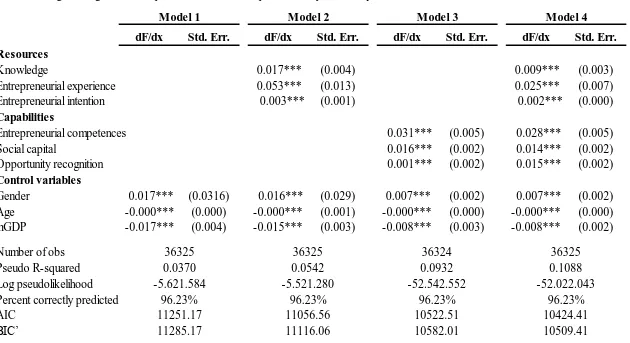
(20) expansive personal experience achieve higher performance (Barney, 1991). Hence, human capital is considered an important source of competitive advantage (Coleman, 1998; Javalgi and Todd, 2011). In addition, previous research on the relationship between organizational elements and corporate entrepreneurship has also focused on the characteristics of internal organizational environments and their relationships with entrepreneurship in existing organizations (Schollhammer, 1982; Pinchot, 1985; Antoncic and Hisrich, 2001; Parker, 2011). From this perspective, RBT defines a company as a unique collection of resources and capabilities that cannot be bought and sold freely on the market. Hence, differences in resources, capabilities, or basic competences are a source of a sustainable competitive advantage (Penrose, 1959). This approach views the firm as a historically determined collection of assets or resources which are tied semi-permanently to the firm’s management (Wernerfelt, 1984). Some users of RBT distinguish resources which can be fully appropriated, such as physical capital or brand names, from less tangible assets, such as organizational routines and capabilities (Lockett and Thompson, 2001). Similarly, distinctions may be drawn between static and dynamic resources (Dierickx and Cool, 1989). The logic of generating and sustaining rents suggests that these are derived from the services of durable resources that are relatively important to customers and are simultaneously superior, imperfectly mobile, imperfectly imitable, specialized, imperfectly substitutable and unable to be appropriated entirely by others when they are non-tradeable or are traded in imperfect trading markets (Rumelt, 1984; Barney, 1991; Peteraf, 1993). RBT has often been used in the traditional entrepreneurship literature to gain a better understanding of venture processes and strategic orientations (Ray et al., 2004). In addition, there are many empirical papers that study entrepreneurial factors using RBT (see Hult and Ketchen, 2001, among others). However, in the corporate entrepreneurship literature, most studies do not use a specific theoretical framework (see Ahuja and Lampert, 2001, among others). Yet in recent years, increasing attention has been focused on the combination and management of resources which enable the firm to pursue new business opportunities (Zahra et al., 1999) and develop innovative actions (Castrogiovanni et al., 2011) and which lead to more effective processes (Meyskens et al., 2010). These studies are consistent with the traditional RBT approach, which 19.
(21) emphasizes the importance of a firm’s resources as drivers of its growth (Penrose, 1959), high profits (Wernerfelt, 1984) and competitive advantage (Barney, 1991). In addition, most studies in the corporate entrepreneurship literature also highlight the importance of the environment (Guth and Ginsberg, 1990; Antoncic and Hisrich, 2001; Ireland et al., 2003). For instance, Guth and Ginsberg (1990) consider the effects of the competitive,. technological,. social. and. political. environment. on. corporate. entrepreneurship. In the individual entrepreneurship literature, the role of the environment has been widely studied using an IE approach (Bruton et al., 2010). IE suggests that human behaviour is influenced by the institutional environment (North, 1990, 2005). Hence, institutional theory is traditionally concerned with how people and organizations better secure their positions and legitimacy by conforming to the rules and norms of the institutional environment (Meyer and Rowan, 1991). There are many definitions of institutions. Scott (2008) suggests that institutions consist of cognitive, normative and regulative structures and activities that provide stability and meaning in social behaviour. These institutions are derived from rules, such as regulatory structures, governmental agencies, laws, courts, professions and scripts and other societal and cultural practices that exert compliance pressures (Di Maggio and Powell, 1983). Overall, these institutional patterns strongly influence economic behaviour (North, 1990), organizational behaviour (Tello et al., 2010) and innovation and entrepreneurship (Baumol, 1996). Most scholars follow North’s (1990) definition, according to which institutions can be formal, such as political and economic rules and contracts, or informal, such as codes of conduct, conventions, attitudes, values and norms of behaviour. Formal institutions are subordinate to informal institutions in the sense that they are the deliberate means used to structure the interactions of a society in line with the norms and values that make up its informal institutions. North’s definition implies that policy making which attempts to change the formal institutions of society without measures to adjust the informal institutions in compatible ways will have marginal success (Bruton et al., 2010). The application of institutional theory has proven to be especially helpful to entrepreneurial research (Pinchot, 1985) and therefore IE has been widely used in the field of entrepreneurship (Aidis et al., 2008; Welter and Smallbone, 2011) and research relating the institutional environment to entrepreneurship is attracting growing attention (Lim et al., 2010; Liñán et al., 2011). However, in the corporate entrepreneurship field, 20.
(22) limited attention has been paid to the influence of the institutional environment (Camelo-Ordaz et al., 2012); this is even more striking if we consider that many authors have deemed the environment an important antecedent for corporate entrepreneurship (Sathe, 2003).. 1.4. Structure of the research This section presents a more detailed overview of the contents of the thesis, which is divided into four phases and eight chapters (plus the introduction and conclusion chapters). Specifically, the main objectives and methodologies of each phase are highlighted. The investigation starts with a literature review phase (Chapter 2) in which the current state of the art is assessed and subsequently several areas for potential future research are proposed. Based on some of these ideas for future investigation, phase 2 (Chapters 3, 4 and 5) focuses on the role of some conditioning factors for corporate entrepreneurship at different levels of analysis (internal and environmental). In phase 3 (Chapters 6, 7 and 8), we deepen the analysis of corporate entrepreneurship antecedents by studying its effect in three different specific contexts (economic crisis, the role of gender and regional analysis). Finally, in phase 4 (Chapter 9), the consequences of corporate entrepreneurship for firm growth are studied.. Phase 1: Literature review Chapter 2 develops a systematic literature review focusing on the corporate entrepreneurship phenomenon. The study provides an analysis of the historic evolution and current situation of the research in the corporate entrepreneurship field. This information is later used to propose several areas where further research might be developed. The papers studied were found through the Social Sciences Citation Index (SSCI), which is available online through the Web of Science service. The search was conducted according to the terms in the literature most commonly used to describe the entrepreneurial. activities. that. occur. within. the. organization:. “corporate. entrepreneurship”, “intrapreneurship”, “corporate venture”, “corporate venturing”, 21.
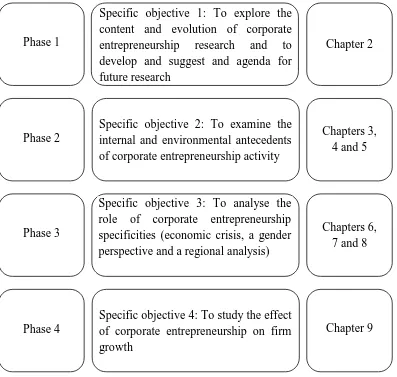
(23) “internal corporate entrepreneurship” and “internal entrepreneurship” (Antoncic, 2007). All the articles with one of these words in the title, abstract or text were selected to be studied in the research. Overall, a total of 186 different papers were analysed. The results of the study show the importance of the number of publications and impact factors of the main journals, authors, articles, countries, research techniques and types of studies in this field. The results confirm that despite the development of the literature in this field in recent years, there is still room for further research. In this respect, the study differentiates between three main lines of future investigation: corporate entrepreneurship dimensions, antecedents and consequences. Based on some of these areas for potential future research, phases 2 and 3 place emphasis on research on the antecedents of corporate entrepreneurship and phase 4 expands the literature to consider the consequences of corporate entrepreneurship.. Phase 2: Internal and environmental antecedents of corporate entrepreneurship In phase 2, the effect of different conditioning factors on corporate entrepreneurship is examined. Specifically, the investigation focuses on internal factors (Chapter 3) and environmental factors (Chapter 4) and then a general multilevel model with both internal and environmental factors is tested (Chapter 5). Chapter 3 explicitly uses RBT to test a model that aims to investigate how a set of different factors considered internal (company-related) increase (or decrease) the probability of engaging in corporate entrepreneurial activities. The research applies a logistic regression analysis and GEM data for 39 countries in year 2008. The study demonstrates how the six factors studied (knowledge, previous entrepreneurial experience, having the intention to start up a new business, considering that one has the necessary entrepreneurial competences, knowing other entrepreneurs and being able to identify business opportunities in the short term) have a positive and significant impact on corporate entrepreneurship and none of the hypotheses posed can be rejected. Chapter 4 makes explicit use of IE to examine the environmental (external) factors that condition entrepreneurship in established firms. This study applies a logistic regression technique and a GEM database for the years 20042008 with information for 62 countries. The results highlight the impact of environmental factors on corporate entrepreneurship. Specifically, the role of four different factors is tested: culture and 22.
(24) media exposure (informal factors), the number of procedures necessary to create a new business and access to finance (formal factors). All of them appear to be significant. In addition, informal factors (culture and media) also have an indirect effect as they behave as moderators between formal factors and corporate entrepreneurship. Chapter 5 presents an integrated model that includes both internal and environmental factors. In addition, in this case a generalised linear multilevel logistic regression technique and GEM data for 67 countries for the period 2003–2011 is used. In this chapter, Human Capital Theory (HCT, for individual level factors) and IE (for environmental level factors) are used. The results show that having previous entrepreneurial experience, being able to identify business opportunities (individual factors), being involved in an entrepreneurial culture and living in a country where policy makers support the creation of new firms (environmental factors) have a direct impact on corporate entrepreneurship. In addition, institutional culture has a significant indirect (moderating) effect.. Phase 3: Corporate entrepreneurship specificities In phase 3 the emphasis is placed on the behaviour of corporate entrepreneurship antecedents in three different specific contexts. Therefore, in Chapter 6 the research focuses on the effect of an economic crisis, in Chapter 7 the role of gender is studied and, finally, in Chapter 8 the case of Spain and the differences between its different regions are examined. Chapter 6 examines the effect of the antecedents of corporate entrepreneurship differentiating between two different levels of analysis (individual and environmental) and considering two different periods of time (before the crisis and during the crisis). In this case, a generalized linear multilevel logistic regression technique is applied to GEM data for the period 2003–2011 and for 14 different countries. The results show the direct impact that a set of individual-level factors (previous entrepreneurial experience and the capability to recognize opportunities) and environmental-level factors (living in an entrepreneurial. culture. and. government. regulations). have. on. corporate. entrepreneurship. Besides, few but some differences between the two periods of time studied are highlighted. Ultimately, culture is also shown to have an indirect (moderating) effect on corporate entrepreneurship. 23.
(25) Chapter 7 places emphasis on the role of gender. More specifically, the research applies a generalized linear multilevel logistic regression technique and GEM data for the period 2003–2011 and for 14 different countries. The results show significant differences depending on gender. Specifically, the individual level factors studied (previous entrepreneurial experience and knowing other entrepreneurs) and the environmental aspects (involvement in an entrepreneurial culture and government regulations) have a direct effect on the likelihood of developing corporate entrepreneurship activities. In addition, the role of culture is reinforced again as it plays a direct and indirect (moderating) effect. Chapter 8 examines the influence of internal and environmental conditioning factors on corporate entrepreneurship in Spain; specifically, the differences between three regions are emphasized. In this case, the research applies a logistic regression analysis to individual-level data from the 2011 GEM. The results show relevant differences in the impact that a set of variables (being able to identify business opportunities, social capital, having a fear of failure and educational level) have on corporate entrepreneurship depending on the region of analysis. Finally, the moderating role of informal institutions is underlined again in this chapter; in this case, having a fear of failure moderates the relationship between the rest of the variables and corporate entrepreneurship.. Phase 4: Corporate entrepreneurship consequences In the final phase, the research draws attention to the effect of corporate entrepreneurship on firm growth. Hence, Chapter 9 studies not only the effect of a set of factors on corporate entrepreneurship but the consequences of developing entrepreneurial initiatives for firm growth. In this case, a two-stage probit least squares technique is applied to data from the EU-EFIGE/Bruegel-UniCredit dataset for the year 2008 with information for seven European countries. The results show the effect of six different factors on corporate entrepreneurship (international experience, having foreign executives, having employees with fixed-term contracts, labour regulations, access to external financing and training). In addition, it is confirmed that developing entrepreneurial activities within established companies has a positive effect on firm growth.Finally, Figure 1.1 summarizes the different phases of the thesis.. 24.
(26) Figure 1.1. Main phases of the thesis. Phase 1. Specific objective 1: To explore the content and evolution of corporate entrepreneurship research and to develop and suggest and agenda for future research. Chapter 2. Phase 2. Specific objective 2: To examine the internal and environmental antecedents of corporate entrepreneurship activity. Chapters 3, 4 and 5. Phase 3. Phase 4. Specific objective 3: To analyse the role of corporate entrepreneurship specificities (economic crisis, a gender perspective and a regional analysis). Specific objective 4: To study the effect of corporate entrepreneurship on firm growth. Chapters 6, 7 and 8. Chapter 9. 25.
(27) CHAPTER 2 CORPORATE. ENTREPRENEURSHIP:. A. SYSTEMATIC LITERATURE REVIEW AND FUTURE RESEARCH AGENDA. 26.
(28) 2. CORPORATE ENTREPRENEURSHIP: A SYSTEMATIC LITERATURE REVIEW AND FUTURE RESEARCH AGENDA. 2.1. Introduction As mentioned above, in the last few years research in the corporate entrepreneurship field has increased significantly, however, some authors consider that there are some aspects that still need to be understood (Hornsby et al., 2009; Phan et al., 2009). For instance, Kuratko and Audretsch (2013, p. 324) state that “the theoretical and empirical knowledge about the domain of corporate entrepreneurship and the entrepreneurial behavior on which it is based are key issues that warrant a deeper understanding.” In this regard, there are very few systematic literature reviews focusing specifically on the corporate entrepreneurship phenomenon (Dess et al., 2003; Narayanan et al., 2009; Phan et al., 2009; Kuratko and Audretsch, 2013). Moreover, some of these articles focus on some specific areas of the corporate entrepreneurship phenomenon, and thus they do not provide a global perspective on the literature in this field. For instance, Narayanan et al. (2009) examine corporate venturing and propose an organising and integrative framework that can guide future research. Dess et al. (2003) try to identify emerging issues in corporate entrepreneurship by focusing on its role in inducing and cultivating organisational learning. Phan et al. (2009) also suggest future research, arguing, in particular, for the need to appreciate the heterogeneity of corporate entrepreneurship in relation to new contexts (and to suggest strategies for such contexts). In addition, although a very significant part (around one third) of the overall corporate entrepreneurship research has been published in the last five years, most literature reviews were published before that. Therefore, they are missing an important part of the knowledge and advances generated in the field. Reviews are considered significant in the development of a research field by summarising the major contributions in the literature (Bland et al., 1995). In addition, analysing the bibliometric structure of a specific body of literature allows for increased objectivity (compared with other forms of literature review) and enables the researcher to sift through large amounts of data (Wallin, 2012). Bibliometrics (combined with author citation analysis techniques) has served to identify the academic groups that are formally related within specific research areas (Teixiera and Mota, 2012). These types of techniques have found some advocates 27.
(29) in the fields of entrepreneurship and innovation (Schildt et al., 2006; Keupp and Gassmann, 2009; Alvarez et al., 2014). However, to our knowledge, this approach has not yet been undertaken in the specific corporate entrepreneurship literature. The objective of this chapter is twofold; on the one hand, it aims to explore the content and evolution of corporate entrepreneurship research, and, on the other hand, it develops and suggests an agenda for future research. The systematic literature review analyses a total of 186 papers published in the top journals of the management and entrepreneurship fields. The results of the chapter show the importance of the number of publications and impact factors of the main journals, authors, articles, countries, research techniques and type of studies in this field. In addition, through a citation and co-citation analysis, we provide a map that explains the intellectual structure of the corporate entrepreneurship phenomenon. Overall, this information is used to highlight potential future research. In this regard, the study differentiates between three main lines for future investigation: corporate entrepreneurship dimensions, antecedents and consequences. The rest of the chapter is structured as follows. In the next section we provide an introduction to the literature on corporate entrepreneurship. In section 2.3, we detail the methodology of the study (journals selection and systematic literature review). Section 2.4 describes the main findings. Finally, we position our findings in relation to existing literature and suggest future research directions.. 2.2. Corporate entrepreneurship literature Corporate entrepreneurship research focuses on ways in which companies could create new businesses that generate new revenue streams and value for shareholders (Narayanan et al., 2009). In this regard, the concept of corporate entrepreneurship has evolved over the last decades and several definitions have appeared. For instance, Guth and Ginsberg (1990) explained that corporate entrepreneurship summarises two different types of phenomena: new venture creation within existing organisations and the transformation of on-going organisations through strategic renewal. One of the most extensively used definitions is that by Sharma and Chrisman (1999, p. 18). They define it as “the process whereby an individual or a group of individuals, in association with an existing organisation, create a new organisation or instigate renewal or innovation 28.
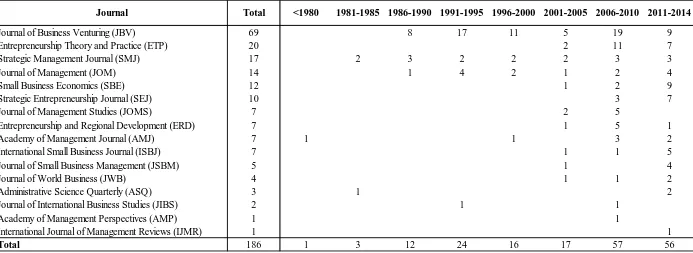
(30) within that organisation”. Other authors, such as Antoncic and Hisrich (2001, p. 497) use an even broader definition as they consider it to be “entrepreneurship within an existing organization”. Overall, organisations that exhibit corporate entrepreneurship are viewed as dynamic, flexible entities able to take advantage of new opportunities when they arise (Morris et al., 2008). Among such organisations, there is an acceptance of risk and an understanding that the outcomes of innovation are uncertain (Bloodgood et al., 2015). Corporate entrepreneurship is concerned with various forms of newness (e.g. organisational renewal, innovation, and establishing new ventures) and affects organisational survival, growth and performance (Zahra, 1991; Dess et al., 2003). Research has focused on which conditioning factors have an effect on the development of intrapreneurial initiatives. The literature has highlighted at least three different types of factors at different levels that can influence corporate entrepreneurship: environmental, company related and individual. For instance, in Guth and Ginsberg’s (1990) model, they explain the influence of the environment (competitive, technological, social and political), the organisation (strategy, structure, process and values) and the existence of strategic leaders on corporate entrepreneurship. Similarly, Antoncic and Hisrich (2001) differentiate explicitly between environmental and organisational (including person-related) factors. Other theoretical models such as Zahra et al. (2009) or Morris et al. (2011) follow similar approaches by grouping the conditioning factors at these different levels of analysis. The relationship between corporate entrepreneurship and firm performance has also been of research interest over the past four decades. There is general agreement that corporate entrepreneurship can renew a company’s capabilities and increase its capacity to acquire and use new competencies that improve performance (Zahra et al., 2000; Gerasymenko et al., 2015). In fact, Antoncic and Hisrich (2001, p. 504) state that “organizations that engage in intrapreneurial activities are expected to achieve higher levels of growth and profitability than organizations that do not”. Overall, research shows that companies become involved in corporate entrepreneurship for several reasons: to seize opportunities that complement or extend their existing business, to utilise resources more effectively, to motivate employees and increase morale or to retain managerial talent (Pinchot, 1985; Zahra, 1991). These factors can result in the creation of new businesses that can generate new revenue streams that. 29.
(31) enhance a company’s productivity, competitive position and profitability (Guth and Ginsberg, 1990).. 2.3. Methodology As performed by other authors in the management and entrepreneurship fields (Schildt et al., 2006; Choi et al., 2012, among others), the Social Sciences Citation Index (SSCI) (available online through the Web of Science service) was used to search for empirical and theoretical papers. The search was conducted according to the most commonly used terms in the literature to describe the entrepreneurial activities that occur within the organisation: “corporate entrepreneurship”, “intrapreneurship”, “corporate venture”, “corporate. venturing”,. “internal. corporate. entrepreneurship”. and. “internal. entrepreneurship” (Antoncic, 2007). We searched for these words in the title, abstract and text of the articles. Since the objective was to study the literature on corporate entrepreneurship globally, we did not limit the search to any specific period of time. Hence, the oldest paper dates back to 1969 (Westfall, 1969) and the most recent were published in 2014 (the search ended in January 2015). The first search round focused on the 10 journals with the highest five-year impact factor in the Journals Citations Report (JCR)1 (Alvarez et al., 2014; Busenitz et al., 2014). These are: Academy of Management Review (AMR, 2013 five-year impact factor of 9.698), Academy of Management Journal (AMJ, 8.443), Journal of Management (JOM, 8.027), Administrative Science Quarterly (ASQ, 7.057), Strategic Management Journal (SMJ, 5.929), Journal of International Business Studies (JIBS, 5.534), Journal of Management Studies (JOMS, 5.196), International Journal of Management Reviews (IJMR, 4.468), Academy of Management Perspectives (AMP, 3.766) and Journal of World Business (JWB, 3.039). This first search round yielded 250 articles, however, only 56 remained as many (194) were discarded because they did not use any of the keywords required. Subsequently, the search was extended to the seven entrepreneurship and small business journals indexed in the JCR. These are: Journal of Business Venturing (JBV, 2014 fiveyear impact factor of 4.571), Entrepreneurship Theory and Practice (ETP, 3.899), 1. The journals are part of the Business and Management categories. Initially, we searched in the Finance and Economics categories as well. However, no articles were found in them. For the same reason, the Marketing and Consumer research journals were also dismissed.. 30.
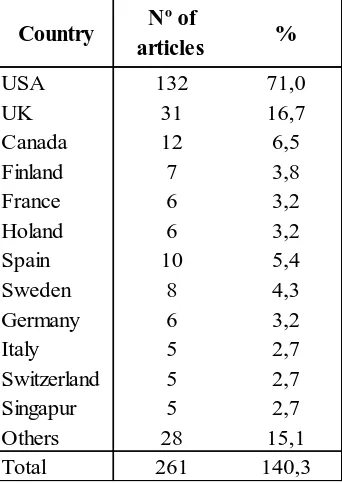
(32) Strategic Entrepreneurship Journal (SEJ, 2.724), Small Business Economics (SBE, 2.621), Journal of Small Business Management (JSBM, 2.298), International Small Business Journal (ISBJ, 1.938), Entrepreneurship and Regional Development (ERD, 1.633). In this second round, out of a total of 299 articles, 130 remained. Overall, this research consisted of 186 papers2. The bibliometric approach used in this chapter refers to the mathematical and statistical analysis of patterns that appear in the publication and use of documents (Diodato, 1994). Particularly, we use a citation and a co-citation technique. Both methods are considered to be indicators of scientific communication and flows of knowledge between domains and disciplines (Garfield, 1979). In addition, they have been used to map the intellectual structure of various fields of research such as the diffusion of innovations (Cottrill et al., 1989), macroeconomics (McCain, 1983) or strategic management (Ramos-Rodriguez and Ruiz-Navarro, 2004; Shafique, 2013). Citation analysis is based on the assertion that citations can be used as indicators of present and past activities of scientific work (Garfield, 1983). Hence, it is based on the idea that authors cite those documents they consider to be important for their research. Similarly, co-citation analysis of documents records the number of papers that have cited any particular pair of documents and it is interpreted as a measure of similarity of content of the two documents (Ramos-Rodriguez and Ruiz-Navarro, 2004).. 2.4. Results The results of literature reviews are often explained by differentiating between their quantitative and qualitative analysis (Clark et al., 2014). From a quantitative point of view, research describes, measures and counts the main results of the analysis. This may include the sources of publication, authors, articles, citations or publishing countries (Alvarez et al., 2014). On the other hand, a qualitative analysis (e.g. content analysis) of the results includes the study of the main topics and trends, generally by explaining whether and how the content of the topic has changed over time (Clark et al., 2014).. 2. For more information on the papers studied please see the appendix.. 31.
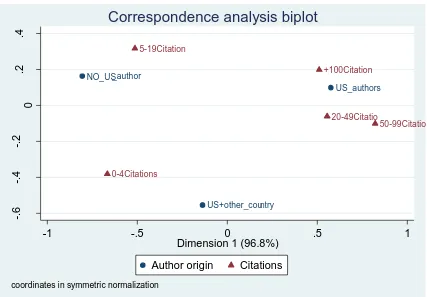
(33) Descriptive analysis When studying the number of articles per journal and year (table 2.1), results show that in the last decade research in the corporate entrepreneurship field has increased significantly. In the period 2006–2010, 57 papers were published, more than three times the number of articles that came out in the previous five years (17 articles in 2001– 2005). This trend continued as in 2011, 2012, 2013 and 2014, 56 papers were published. Therefore, more than 60% of research in the corporate entrepreneurship field published in top journals has appeared in the last nine years (113 papers out of the 186 studied came out in 2006 or later). The publication of some special issues has contributed to this tendency in recent years. Our research found two special issues on corporate entrepreneurship. The first dates back to 1990 in SMJ and the second to 2009 in JBV. In addition, in 2010, ERD published a special issue on “Entrepreneurial families and family firms”, in which some articles considered the corporate entrepreneurship phenomenon (Casillas and Moreno, 2010; Marchisio et al., 2010). Similarly, in 2011, ETP published a special issue on the topic of entrepreneurial orientation (Covin and Lumpkin, 2011). Finally, table 2.1 also shows that JBV accounts for the vast majority of publications (37% of the articles; 69 out of 186 papers). Moreover, JBV, SMJ and JOM are the most consistent journals over time as they have been publishing on corporate entrepreneurship continuously since the 1980s.3 To analyse the impact of the articles we used the number of total citations according to the SSCI. The most cited article by far is the one by Burgelman (1983) (649 citations), which reports the process by which a diversified major company transforms R&D activities into new businesses through corporate venturing. This work is followed by the relatively new paper of Ahuja and Lampert (2001) (422 citations) and Zahra and Covin (1995) (336 citations). Table 2.2 presents information on the most cited articles.. 3. It should be noted that not all the journals studied have been part of the JCR list all the time.. 32.
(34) Table 2.1. Journals and published articles per year Journal Journal of Business Venturing (JBV) Entrepreneurship Theory and Practice (ETP) Strategic Management Journal (SMJ) Journal of Management (JOM) Small Business Economics (SBE) Strategic Entrepreneurship Journal (SEJ) Journal of Management Studies (JOMS) Entrepreneurship and Regional Development (ERD) Academy of Management Journal (AMJ) International Small Business Journal (ISBJ) Journal of Small Business Management (JSBM) Journal of World Business (JWB) Administrative Science Quarterly (ASQ) Journal of International Business Studies (JIBS) Academy of Management Perspectives (AMP) International Journal of Management Reviews (IJMR) Total. Total 69 20 17 14 12 10 7 7 7 7 5 4 3 2 1 1 186. <1980. 1981-1985 1986-1990 1991-1995 1996-2000 2001-2005 2006-2010 2011-2014. 2. 8. 17. 11. 3 1. 2 4. 2 2. 5 2 2 1 1 2 1. 1. 1 1 1 1. 19 11 3 2 2 3 5 5 3 1 1. 1 1. 1. 3. 12. 24. 9 7 3 4 9 7 1 2 5 4 2 2. 1 1 16. 17. 57. 1 56. 33.
(35) Table 2.2. Most cited articles Article Burgelman (1983) Ahuja and Lampert (2001) Zahra and Covin (1995) Birkinshaw (1997) Zahra (1996) Zahra (1991) Zahra (1993) Guth and Ginsberg (1990) Barringer and Bluedorn (1999) Dess et al. (2003) Stopford and Baden-Fuller (1994) Antoncic and Hisrich (2001) Zahra et al. (2000) Westhead and Wright (1998) Yiu et al. (2007) Zahra and Garvis (2000) Zahra (1996) Lyon et al. (2000) Walter et al. (2006) Hornsby et al. (2002). Total citations in SSCI 649 422 336 270 254 229 229 221 179 163 161 157 153 144 133 132 128 124 121 117. Overall, the articles reviewed are written by 327 authors. Hence, on average, each article has 1,76 authors. The most prolific in terms of publications are Zahra (16 articles) and Covin (nine articles). Table 2.3 shows that, for instance, the 16 articles published by Zahra have produced 1985 citations in SSCI, which represents 24% of the total citations produced by the 186 articles studied. In addition, in 71% of these articles at least one of the authors is from a US university (table 2.4). This percentage is more than four times higher than the following country, the UK (16,7%); 31 articles (out of 186) have at least one author from a British university. This prevalence of American (and Anglo-Saxon) based researches has already been highlighted by some authors as a possible gap for future research (Antoncic, 2007).. 34.
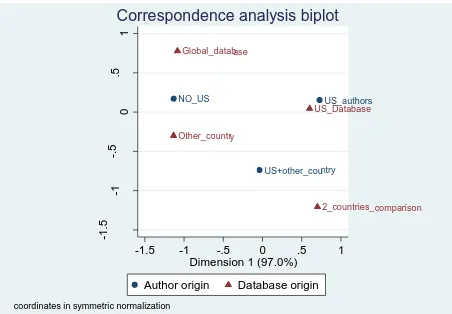
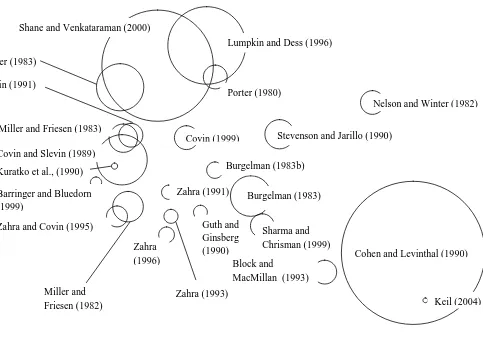
(36) Table 2.3. Authors sorted by number of publications Nº of articles 16 9 6 6 5 5 5 5 5 4 4 4. Author Zahra, SA Covin, JG McMillan, IC Wright, M Kuratko, DF Dushnitsky, G Keil, T Maula, MVJ Shepherd, DA Simsek, Z Sykes, HB Birkinshaw, J. Nº of citations 1985 681 300 240 320 232 196 149 98 129 105 310. Overall % Author's citations affiliation 24,0 USA 8,2 USA 3,6 USA 2,9 UK 3,9 USA 2,8 USA/UK 2,4 Canada/ Finland 1,8 Finland 1,2 USA 1,6 USA 1,3 USA 3,7 Sweden/UK. Table 2.4. Countries and published articles4 Country. Nº of articles. %. USA UK Canada Finland France Holand Spain Sweden Germany Italy Switzerland Singapur Others Total. 132 31 12 7 6 6 10 8 6 5 5 5 28 261. 71,0 16,7 6,5 3,8 3,2 3,2 5,4 4,3 3,2 2,7 2,7 2,7 15,1 140,3. In addition, we explored the relationship between the author’s country of origin 5 and the number of citations per paper, and we found significant differences (chi-square = 47,35 with 185 degrees of freedom). The papers whose authors are only from US universities 4. The total number of articles (261) does not match the above tables (186) because an article can have multiple authors. In addition, in table 4 the percentage is calculated for the real number of articles (186), this way data shows the percentage of papers that have at least one author from a specific country of origin. Finally, the authors country refers to the country associated with the first affiliation institution in which he/she was developing his/her scientific activity at the time of publication and not the country of origin or residence. 5 The author’s country refers to the country associated with the first affiliation institution in which he/she was developing his/her scientific activity at the time of publication and not the country of origin or residence.. 35.
(37) have an average of 62 citations. The papers whose authors are a combination of US authors and authors from other countries have an average of 32 citations. Finally, when the authors are from non US universities, they have an average of 25 citations. Part of these significant differences may be explained by the longer tradition of publishing among US universities (older papers tend to have more citations and older papers are written mainly by US authors). A graphical representation helps to visualise this relationship. Figure 2.1 presents the scatter diagram between the authors’ country of origin and the number of citations per paper. For each variable on the graph, the distances between the category points reflect the relationship between the categories with similar categories being closer to each other.. Figure 2.1. Authors’ origin vs citations. .4. Correspondence analysis biplot. .2. 5-19Citation +100Citation. NO_US_author. 0. US_authors. 50-99Citatio. -.4. -.2. 20-49Citatio. 0-4Citations. -.6. US+other_country. -1. -.5. 0 Dimension 1 (96.8%) Author origin. .5. 1. Citations. coordinates in symmetric normalization. As shown in table 2.5, most papers are empirical (79%) and quantitative (65,6%). In addition, we studied the differences in the number of citations among qualitative and quantitative papers and found no significant differences. Qualitative researches have an average of 49 citations, whereas quantitative works have an average of 43.. 36.
(38) Table 2.5. Type of analysis in the articles Type of article Empirical Quantitative Qualitative Both (quanti+quali) Theoretical Introduction to special issue Literature review Presentation of a theoretical model Other. Nº of articles. %. 147 120 24 3 39 5 24 9 1. 79,0 64,5 12,9 1,6 21,0 2,7 12,9 4,8 0,5. The main technique applied is a multiple regression (50,4% of the cases, see table 2.6) typically coming from a database on US companies or individuals (65%, see table 2.7). Following this reasoning, it is remarkable that less than 8% of the databases have information at a multi country level.. Table 2.6. Main statistical technique used in the analyzed articles Main research tecnique Multiple regression model Logit, probit, tobit and negative binomial regression models Variance and covariance analysis (ANOVA, ANCOVA, MANOVA, MANOCOVA) Panel data models Structural Equation models Combination of multiple regression & logit, probit, tobit or binomial regression Other Total. Nº of articles. %. 62 15 13 14 10 4 5 123. 50,4 12,2 10,6 11,4 8,1 3,3 4,1 100,0. Table 2.7. Origin of the databases used in the quantitative articles Database origin USA 3 or more different countries Spain 2 different countries Italy Sweden Ireland Japan China Others Total. Nº of articles 80 10 7 4 3 4 2 2 2 9 123. % 65,0 8,1 5,7 3,3 2,4 3,3 1,6 1,6 1,6 7,3 100,0. 37.
(39) In this regard, figure 2.2 shows information on the significant relationship that exists between the authors’ affiliation and the databases they use. Overall, the lack of global data use could hamper the generalisation of the results and the development of the existing theoretical frameworks. Figure 2.2. Author origin vs database origin. 1. Correspondence analysis biplot. NO_US. 0. US_authors US_Database. -.5. Other_country. -1. US+other_country. 2_countries_ comparison. -1.5. Dimension 2 ( 3.0%). .5. Global_database. -1.5. -1. -.5 0 .5 Dimension 1 (97.0%). Author origin. 1. Database origin. coordinates in symmetric normalization. Finally, following previous literature (Ramos-Rodriguez and Ruiz-Navarro, 2004; Schildt et al., 2006; Teixiera and Motta, 2012; Wallin, 2012), figure 2.3 shows the main intellectual structure of corporate entrepreneurship research (only the most co-cited researches are shown in the graph). Specifically, the size of the points is proportional to the frequency of citation, and documents with similar co-citation profiles tend to show up close to each other (in clusters). That is, if two articles are cited in the same paper, they are considered to be closely related to each other either because they belong to the same topic area or their topic areas are closely connected (Schildt et al., 2006). Thus, works that are closely related to others tend to occupy a central position in the “intellectual space”, while those that are only loosely related tend to appear on the periphery. Therefore, it is easy to see wether intellectual groups are central or peripheral (Ramos-Rodriguez and Ruiz-Navarro, 2004). Overall, most works are placed in the top. 38.
(40) left space, thus, indicating that these papers tend to be cited together. For this reason, some seminal works on individual entrepreneurship and strategy research appear close to each other in the graph (e.g. Porter, 1980; Miller, 1983; Shane and Venkataraman, 2000). Subsequently, we find some of the most cited papers in the more specific corporate entrepreneurship field. These highlight the relationship between corporate entrepreneurship and strategy (Burgelman, 1983b; Barringer and Bluedorn, 1999), the effect of corporate entrepreneurship on firm performance (Zahra, 1991; Zahra, 1993) or, in some cases, they discuss the main definitions and issues in the field (Guth and Ginsberg, 1990; Sharma and Chrisman, 1999). In the bottom right hand side, we find some more recent papers emphasising the work of Dushnitsky and Lenox. Ultimately, corporate venturing is the most studied dimension of corporate entrepreneurship among the papers in figure 2.3.. Content analysis The results show that the main research questions associated with corporate entrepreneurship have evolved over time. The main objectives of the first studies in the field (published during the 1960s and 1970s) were to explain how to stimulate the development of corporate entrepreneurship activities (Westfall, 1969). Later, in the 1980s, the literature was mainly concerned with the organisational renewal process and the combination of resources necessary to commit to develop an innovative project (Schollhammer, 1982; Burgelman, 1983; Pinchot, 1985). In addition, the first papers focusing on the compensation and incentive practices for venture managers were published (Block and Ornati, 1987) in this period. In the late 1980s, the researchers also started studying the relationship between performance and engagement in corporate entrepreneurship activities (McMillan and Day, 1988; Miller et al., 1988; Shortell and Zajac, 1988; Siegel et al., 1988). During the 1990s, the positive effect of corporate entrepreneurship on firm performance became more evident. Furthermore, corporate entrepreneurship was more clearly associated with the creation of new businesses within established companies (Zahra, 1991; Bosma et al., 2013). During this decade, some papers focused on the antecedents of corporate entrepreneurship activity (Sykes, 1990; Zahra, 1991). Generally, researchers examined company related factors (i.e. Gupta and Sapienza, 1992), although. 39.
(41) some started taking into account the role of environmental factors (Tsai et al., 1991). For instance, Morris et al. (1993) studied the effect of culture on corporate entrepreneurship and innovation. Similarly, in these years some researchers made for the first time explicit use of some theoretical frameworks such as Population Ecology (Tsai et al., 1991) or Resource-Based View (McGrath et al., 1994). As explained in the previous section, the number of articles published at the beginning of the twenty first century increased significantly. This led researchers to study a much greater number of topics: the role of managers at different hierarchical levels for corporate entrepreneurship (Zahra et al., 2000; Hornsby et al., 2002; Hornsby et al., 2009), international corporate entrepreneurship (Zahra and Garvis, 2000), corporate entrepreneurship in family firms (Kellermanns and Eddleston, 2006) or the development of some theoretical models explaining different areas of corporate entrepreneurship (Kuratko et al., 2005; Ireland et al., 2009). Overall, in the first decade of the century, corporate entrepreneurship was established as a set of entrepreneurial actions by which individuals make judgements informed by a degree of uncertainty (McMullen and Shepherd, 2006; Kuratko and Audretsch, 2013). Besides, entrepreneurial culture and strategy were highlighted as fundamental for the development of entrepreneurial projects in changing environments. In the last five years, the different dimensions that constitute the corporate entrepreneurship phenomenon have become more evident as researchers increasingly study them separately. Particularly, the corporate venturing dimension is the most researched (Stopfod and Baden-Fuller, 1994). In addition, several studies have focused on the differing nature of corporate entrepreneurship activities compared with those of individual entrepreneurship (e.g. Parker, 2011; Bertoni et al., 2013; Martiarena, 2013). Finally, results also show that most studies are not grounded on any explicit theoretical framework. Specifically, only 26,9% of the articles studied (50 out of 186) make explicit use of an existing theoretical framework (84% – 42 out of 50 – are empirical). Resource-Based Theory is the most used framework (15 papers) followed by Agency Theory (seven papers) and by Institutional Economics (five papers). Ultimately, it is noteworthy that in the last five years researchers seem to have realised this lack of theoretical framework as almost half of the papers were published recently (52%). Specifically, 26 (out of 50) were published in 2011 or later.. 40.
(42) Figure 2.3. Intellectual structure of corporate entrepreneurship research. Shane and Venkataraman (2000) Lumpkin and Dess (1996) Miller (1983) Covin (1991). Porter (1980) Nelson and Winter (1982). Miller and Friesen (1983) Covin (1999). Stevenson and Jarillo (1990). Covin and Slevin (1989) Burgelman (1983b). Kuratko et al., (1990). Zahra (1991). Barringer and Bluedorn (1999) Zahra and Covin (1995) Zahra (1996) Miller and Friesen (1982). Burgelman (1983). Guth and Sharma and Ginsberg Chrisman (1999) (1990) Block and MacMillan (1993) Zahra (1993). Cohen and Levinthal (1990). Keil (2004) Dushnitsky and Lenox (2005) Dushnitsky and Lenox (2005b). Dushnitsky (2006) Siegel et al. (1988) Wadhwa and Kotha (2006). 41 Katila et al. (2008).
(43) 2.5. Discussion Overall, a chronologic analysis of the literature on corporate entrepreneurship shows that research can be grouped into three main areas: corporate entrepreneurship dimensions (Guth and Ginsberg, 1990; Covin and Slevin, 1991; Ireland et al., 2009; Phan et al., 2009; Covin and Lumkpin, 2011), corporate entrepreneurship antecedents (Marvel et al., 2007; Simsek et al., 2007; Yang et al., 2009; Zahra et al., 2009) and corporate entrepreneurship consequences (Zahra, 1991; Zahra, 1993; Zahra and Hayton, 2008; Bojica and Fuentes, 2012).. Corporate entrepreneurship dimensions Despite the growth of the corporate entrepreneurship field in the last decades, the literature still does not agree completely on which are its main dimensions (Ireland et al., 2009). In addition, the relationship between corporate entrepreneurship and the entrepreneurial orientation construct (Miller, 1983; Covin and Slevin, 1991) has not been studied in depth. However, some scholars consider entrepreneurial orientation to be an aspect of the “larger” topical domain of corporate entrepreneurship (Covin and Lumkpin, 2011). In this regard, Lumpkin and Dess (1996, p. 136) state that “firms that want to engage in successful corporate entrepreneurship need to have an entrepreneurial orientation”. Based on this, researchers usually classify corporate entrepreneurship into three to five dimensions (Covin and Slevin, 1991; Fayolle et al., 2010) – new business venturing, product, service and process innovativeness, self-renewal and proactiveness (Guth and Ginsberg, 1990; Zahra, 1993; Covin and Miles, 1999) are the most common. In addition, some researchers also consider the risk taking dimension as a component of corporate entrepreneurship (Agca et al., 2012). Others, such as Phan et al. (2009), consider that innovation and corporate venturing activities, on the one hand, and renewal and the ability to compete and take risks, on the other, are two distinct but related phenomena. Some authors such as Kuratko and Audretsch (2009) define this latter aspect of corporate entrepreneurship as strategic entrepreneurship. Overall, corporate venturing is the most visible and researched dimension of corporate entrepreneurship, since it is associated with new business creation of an existing organisation (Stopfod and Baden-Fuller, 1994).. 42.
(44) The results of the study show that there are few works studying the dissimilarities among the different forms of corporate entrepreneurship (for an exception, see Verbeke et al., 2007). However, since entrepreneurial activities are essential if companies are to adapt to changes, a fuller appreciation of the factors that determine such activities should have both theoretical and practical implications (Zahra et al., 1999). The lack of studies in this particular area reflects lack of consensus on the main forms of the entrepreneurship that occur within established companies. For instance, although radical innovation and corporate entrepreneurship are normally considered to be two distinct phenomena, some of the research on corporate entrepreneurship has begun to draw from this literature (Phan et al., 2009). Overall, efforts to clarify the domain of corporate entrepreneurship should also shed light on the determinants and effects of these different types of entrepreneurial initiatives. In addition, there have recently been some attempts to compare the nature of corporate entrepreneurship (intrapreneurship) and independent entrepreneurship as two separate phenomena (instead of the former being a sub-field of entrepreneurship) (Martiarena, 2013). Hence, the antecedents that make individuals choose between becoming selfemployed or corporate entrepreneurs have been well documented (Hellman, 2007; Kacperczyk, 2012). However, some issues could be further explored. For instance, a better understanding of the design of contracts and work environments that minimise the risk that the employees seek to avoid by starting their own ventures, could generate interesting findings for managers (Parker, 2011). In addition, both independent entrepreneurship and corporate entrepreneurship, it is agreed, are important drivers of economic growth. However, the net effect of both types of ventures is not clear. Therefore, further studies could investigate and compare the performance of internal versus external ventures to assess better their weights and impacts on economic growth (Kacperczyk, 2012). Similarly, despite the fact that some authors have explained that corporate entrepreneurship can be relevant for large corporations as well as small and medium sized enterprises (Carrier, 1994), there are few studies focusing on the different sizes of corporate entrepreneurial projects. There is little information on the extent to which major and minor intrapreneurial initiatives have the same characteristics; on their contribution to the general economy and to firm performance; or on their antecedents.. 43.
Figure
+7
Documento similar
The major journals included in this analysis are the International Marketing Review (IMR), Journal of International Business Studies (JIBS), Journal of World Business (JWB), Journal
Each protein on the lattice has an orientation, and for every different orientation there is a subset of points in the interaction crown where the protein can form strong
and Dushnitsky, G., Venture capital, corporate venture capital, angel investment, crowdfunding and accelerators: a review and roadmap of entrepreneurial equity financing
International Journal of Oral and Maxillofacial Surgery International Journal of Orthopaedic and Trauma Nursing International Journal of Osteopathic Medicine.. International
The present dissertation aims to contribute to the international business and marketing literature by shedding light on the export behaviour and performance of small and medium
It is a new light on entrepreneurship decisions, since majority of the economics literature on entrepreneurial decisions in the micro scale concentrates on the
No obstante, como esta enfermedad afecta a cada persona de manera diferente, no todas las opciones de cuidado y tratamiento pueden ser apropiadas para cada individuo.. La forma
The purpose of this work is to identify those disciplines involved and their leading authors, to offer an integrative definition of the corporate brand, and to identify
