Facultad de Educación
Programa de Magister en la Enseñanza del Inglés como Lengua Extranjera
USING FACEBOOK GROUP AS A LEARNING TOOL TO DEVELOP 11TH GRADERS' WRITING SKILLS AND ENHANCE MOTIVATION
Tesina para optar al grado de Magister en Enseñanza del Inglés como Lengua Extranjera
Autor:
KATHERINNE IBÁÑEZ SCHMIDLIN Profesor Guía:
José Gabriel Brauchy Concepción – Chile
DEDICATORY
I dedicate this work to God for giving me strength and perseverance during this process and especially this long process of hard work.
ACKNOWLEDGMENT
TABLE OF CONTENTS
CHAPTER I ... 1
1.1 INTRODUCTION ... 1
1.1.1 Description of the research problem and justification ... 2
1.1.2 Background of the study ... 4
1.2 Objectives ... 6
3.1.1 Learning English in Chile ... 12
3.1.2 EFL Writing ... 13
3.1.3 Information and communication technology (ICT) in education ... 20
3.1.4 Use of social networks and Facebook in education ... 20
3.1.6. Collaborative writing in Facebook Group ... 26
3.1.6.1 Corrective Feedback... 26
3.1.7. Facebook and motivation ... 30
CHAPTER IV... 33
4.1 METHODOLOGICAL FRAMEWORK ... 33
4.1.1 Methodology ... 33
4.1.2 Type and Scope ... 34
4.1.3 Sample... 34
4.1.4 Data Collection Instruments ... 35
4.1.6 Ethical Concerns ... 40
CHAPTER V ... 42
5.1 ANALYSIS AND DISCUSSION ... 42
5.1.1 Introduction ... 42
5.2. Quantitative Analysis ... 42
5.2.4 Discussion ... 59
5.3 Qualitative Analysis ... 61
5.3.1 DISCUSSIONS... 72
CHAPTER VI... 76
6.0 CONCLUSIONS AND SUGGESTIONS ... 76
6.1 Conclusions... 76
6.2 Suggestions ... 77
REFERENCES ... 78
APPENDIX ... 84
TABLE OF FIGURE Figure 1: Criterion 1 ...43
Figure 2: Criterion 2 ... 43
Figure 3: Criterion 3 ... 44
Figure 4: Criterion 4 ... 44
Figure 5: Total Mean ………... 45
Figure 6: Criteria Rubric percentages ... 46
Figure 7: Criteria Rubric increase ... 47
Figure 8: Students' answers A1... 48
Figure 9: Students' answers A2 ……... 48
Figure 10: Students' answers A3... 49
Figure 12: Students answers A5... 50
Figure 13 Students' answers A6 ... 51
Figure 14: Students' answers B1 ... 52
Figure 15: Students' answers B2 ... 52
Figure 16: Students' answers B3. ... 53
Figure 17: Students' answers B4... 53
Figure 18: Students' answers B5... 54
Figure 19: Students' interaction Q1 ... 55
Figure 20: Students' interaction Q2 ... 56
Figure 21: Students' interaction Q3 ... 56
Figure 22: Students' interaction Q4 ... 57
Figure 23: Students' interaction Q5 ... 56
Figure 24: Domain I …... 64
Figure 25: Domain II ………... 66
Figure 26: Domain III ... 69
INDEX OF TABLE Table 1 ... 38
Table 2 ... 42
Table 3 ... 55
Table 4 ... 62
Table 5 ... 63
Table 7 ... 63
Table 8 ... 64
Table 9 ... 64
Table 10 ... 65
Table 11 ... 65
Table 12 ... 65
Table 13 ... 66
Table 14 ... 66
Table 15 ... 67
Table 16 ... 67
Table 17 ... 67
Table 18 ... 67
Table 19 ... 68
Table 20 ... 68
Table 21 ... 68
Table 22 ... 68
Table 23 ... 69
Table 24 ... 69
Abstract
This research study lied in a mixed-method descriptive study. It was conducted in a Catholic school located in Talcahuano and examined the overall 11th graders´ perceptions on the use of Facebook Group as a motivating learning tool to develop writing skills. Two writing tests and a questionnaire with closed and opened questions were given to twenty-two participants. Moreover, the researcher used a checklist to check participants' interaction. Data collected was analyzed quantitatively and qualitatively. Findings contributed to evidence 11th graders´ perceptions on the use of Facebook Group as a motivating learning tool to develop writing skills. Finding also showed that Facebook Group is a familiar and an outstanding learning tool to help to improve writing skills by immediate and peer feedback. Therefore, the use of the Facebook platform as a learning tool could be incorporated by teachers.
Resumen
Este estudio con paradigmas mixto, cuantitativo y cualitativo se llevó a cabo en un colegio católico en la comuna de Talcahuano. Este estudio examino las percepciones generales en estudiantes de tercer año medio sobre el uso de Grupo de Facebook como una herramienta motivadora para el desarrollo de la habilidad de escritura. A los veinte y dos participantes de les aplico dos pruebas de escritura y un cuestionario con preguntas cerradas y abiertas. Además el investigador utilizó una lista de cotejo para examinar la interacción de los participantes durante la investigación. Los datos recogidos fueron analizados cuantitativa y cualitativamente. Los principales hallazgos contribuyeron para evidenciar las percepciones generales en estudiantes de tercer año medio sobre uso del Grupo de Facebook como una herramienta motivadora para el desarrollo de la habilidad de escritura; éstos también indicaron que el grupo de Facebook es una herramienta familiar y conocida para los estudiantes para el mejoramiento de la escritura, debido a la retroalimentación inmediata que se puede otorgar. Además, es una opción que los profesores pueden incluir en sus clases.
CHAPTER I 1.1 INTRODUCTION
This chapter provides a brief view of the whole content of this research, which examines the overall 11th graders' perceptions on the use of Facebook Group as a motivating learning tool to develop writing skills. It came out as the evidence of lack of motivation to write in English as a Foreign Language (EFL) students.
This is a mixed- method descriptive study which evidences data collected analysis related to examine the overall 11th graders' perceptions on the use of Facebook Group as a motivating learning tool to develop writing skills. Sampling was twenty-two 11th graders. In data collection, participants were given writing assessment tests as pretest-posttest. Classmates gave peer feedback during the process. Finally, they answered a semi-structured questionnaire. Furthermore, researcher observed participants' interactions and provided feedback in the Facebook Group using a checklist.
1.1.1 Description of the research problem and justification
Some years ago, the Chilean English curriculum gave emphasis to the development of receptive skills (reading and listening), being productive skills (writing and speaking) neglected; nevertheless that event has changed, highlighting the four language skills ( Planes y Programas 3° Medio,2015).
Students, specifically 11th graders, are reluctant to practice and produce speaking and writing competences. As a teacher, my students have been encouraged to be involved in the writing process and production; however, they are reluctant to develop writing skills.
Teaching and learning EFL writing is a hard task, "Writing is one the most challenging, and difficult skills for EFL learners to master" (Asadifard & Koosha, 2013, p. 1572). Even more, when the emphasis was on preparing students to take SIMCE, what has been the perspective, those last years; Hussein (2015) claimed that:
teachers find themselves teaching to prepare students to the final exam rather than helping them to develop their language skills. Learners see learning English not as a chance to.acquire
language, but as an avenue for passing the grade level they study. So, they tend to memorize language vocabulary and structures as well as some passages of written English so as to pass the final exam. (p.100)
Moreover, Harmer (2004) evidenced in his research students' lack of vocabulary and lack of interest in learning writing with traditional strategy, highlighting that to write does not mean just to write something on blank paper.
Motivation is also an issue as students do not feel motivate to write. Harmer (2004) stated that “the students are reluctant to write because they rarely write, even in their own language”
reluctance to the fact that students are not equipped with necessary linguistic knowledge and skills to write" (as cited in Asadifard & Koosha , 2013, p.1572).
Dealing with writing reluctance, the teacher’s role is to engage students in writing. According to Harmer (2001) “One of our (teachers') principal roles in writing tasks will be to motivate the students, creating the right conditions for the generation of ideas, persuading them to the usefulness of the activity, and encouraging them to make as much effort as possible for maximum benefit” (p.261).
On the contrary, students may need to show not only collaborative skills to promote writing tasks, but also feel motivated and socialize ideas with others. Consequently, writing in English is a skill that has to be considered and taught successfully.
Today, it is a fact the massive usage of social networks among teenagers. According to Yunus and Salehi (2012), teenagers are devoted to a variety of technological gadgets and feel ready to participate with their peers in open posting forums.
During lessons, students have access to Internet through their mobile phones and their favourite highest worldwide social network is ‘Facebook’. Aydin (2012), Kabilan, Ahmad and Abidin (2010) stated that through Facebook, students enjoy writing comments on common topics, and enjoy sharing their status of what they are doing.
Then, the use of social networks could be beneficial; Blattner and Fiori (2009) described that joining Groups “in which users share similar interests,” has “pedagogical potentials” that can be utilized “in language classes in varieties of constructive manners” (pp.19-20).
Collaborative work among students by contributing with ideas and helping students with the mechanic of language is a significant issue that can be reached through the use of Facebook social network.
Finally, it is fundamental to obtain students' perceptions of the benefits of the usage of Facebook as a learning tool. Students’ beliefs reveal personal points of views to infer in the
learning process and personal methods toward the target language.
1.1.2 Background of the study
This research is conducted at a denominational, co-educational, state subsidized monolingual school located in Talcahuano. The school's mission is:
to prepare young students with strong academic and moral base through a humanistic Christian ... education, inspired on Blessed Paulina Von Mallinckrodt legacy of serving others and framed on a ...teaching and learning process that promotes competences, abilities and attitudes development that ...enables them to the contribution in society (Jara, 2015, pp.5-6).
In relation to the school's vision Jara (2015) stated that the school's job is:
to prepare young students to feel identified with intellectually, emotionally and morally ...committed with the construction of a more humane. Furthermore, in the School Mission
...and Project- Proyecto Educativo Institucional (2014)-, one of the fourteen principles and values ...that inspired the school project is their concern to establish a dialogue of faith and values so as to ...accomplish a connection between our beliefs and culture (p.6).
The English Language role has a central role in the school curriculum, so it is taught from preschool to the 12th grade, with a range of two hours in elementary levels and four hours in
secondary levels.
isolation. The main focus is on students can communicate effectively through real language functions and they can discover the vocabulary or grammar patterns by themselves. For example, “talking about daily routines” in which present simple tense and vocabulary is embedded.
Regarding teaching in those ways, helpful tools as British textbooks and iTools and books are used in doing classroom work. Moreover, school promotes the usage and improvement of English language though workshops and contest as well.
The school English program is based on Chilean National Curriculum contents from Ministry of Education, but it adds more cognitive elements as well as integrative skills development in English lessons.
The current research is focused on examining 11th graders’ perceptions in writing, linguistically, they are able to understand main topics as professions, technology, health issues. Also, they are able to produce language by giving their opinion, specific topics, producing text on personal interest topics, and describing events in written form.
The reason to carry out this study lied on lack of the students' motivation in writing and the benefits to increase motivation when social media sites are used.
1.2 Objectives
1.2.1 General objective
To examine the overall 11th graders´ perceptions on the use of Facebook Group as a motivating learning tool to develop writing skills.
1.2.2 Specific Objectives
1. To identify what makes the use of Facebook Group work as a motivating learning tool for 11th graders´ student.
2. To identify what makes the use of Facebook Group work a collaborative learning tool to develop 11th graders´ writing skills.
3. To identify what makes the use of Facebook Group work as a learning tool to develop 11th graders´ writing skills.
4. To determine the overall 11th graders´ perceptions on the use of Facebook Group as a motivating and collaborative learning tool to develop writing skills.
5. To raise awareness on the use of Facebook Group as a motivating and collaborative learning tool to develop 11th graders' writing skills.
1.3 Research questions 1.3.1 General Question.
1.3.2 Specific Questions.
1. What makes the use of Facebook Group work be a motivating learning tool for 11th
graders' students?
2. What makes the use of Facebook Group work as a collaborative learning tool to develop 11th graders' writing skills?
3. What makes the use of Facebook Group work as a learning tool to develop 11th graders’ writing skills?
CHAPTER II
This chapter presents a battery of studies related with the topic studied, use of Facebook to improve writing.
2.1 REFERENCIAL FRAMEWORK
Facebook as a learning tool has been a subject of study for many authors, especially in teaching English as a Second or Foreign Language and focusing on writing skills. EFL students do not have several opportunities to put into practice English meaningfully outside the classroom. However, Facebook with its practical functions such as commenting, posting, a sharing is able to become a platform that connects English speaking setting and generates a variety of meaningful language learning activities.
A study entitled “The Effectiveness of Facebook Groups on Teaching and Improving
Writing: Students' Perceptions” led by Yunus and Salehi (2012), investigated the Malaysian students' perceptions on the effectiveness of Facebook Groups for teaching and improving writing. The students’ perceptions were measured through a questionnaire comprising 10
close-ended items. The findings demonstrated that "Facebook Groups" is a useful tool to improve students' writing skills. Authors defined some advantages of integrating social networking services in ESL writing classrooms such as enhancing outside classroom interaction and education between the students and the teacher; increasing students’ motivation in using and learning English; teaching students’ thinking and writing skills; and helping students to build and
improve their vocabulary. On the other hand, a disadvantage is that the use of Facebook creates students’ distraction.
towards the use of Facebook activity as a complement to language classroom. Moreover, Rusli and Ahmad (2012) demonstrated that Facebook is considered a tool for communication by commenting and giving feedback to other's writing tasks.
In the same year, another study directed by Suthiwartnarueput and Wasanasomsithi (2012) revealed that students demonstrated their positive attitudes towards using Facebook as a useful tool for grammar and writing learning, the aauthors concluded that Facebook really improves ccompetence in both areas, as Facebook with its interactive features gave them tools to discuss with their teachers and classmates. A total of 83 first-year university EFL students in Thailand took part in the study, which examined the effects that Facebook had on the writing skills of the learners. Many of the students interviewed agreed on the benefits that Facebook contributed in communicating with their teacher and peers.
Later, Lovell & Palmer (2013) evidenced through their research that the use of Facebook as a writing tool allowed that all students are able to participate in Facebook discussion. The authors also proved that students’ commitment rose. Facebook is seemed by the authors as an
engaging, interactive and supportive platform that allows students to write their first draft of a writing task.
Furthermore, Saengsawang (2013) examined undergraduates’ learning achievement and
their attitudes towards learner autonomy and Facebook Group activities usage. This study showed students’ positive attitudes towards integrating Facebook to an English course. The
findings revealed that students had positive features of Facebook Group language learning; however, one half of participants showed preference for the face-to-face setting compared to the Facebook Group setting. In relation to the results of the 10-item survey created by the researchers, the participants came to the conclusion that Facebook contributes the progress of their English writing skills.
Wasoh (2014) demonstrated that undergraduate students of an EFL writing class from a university in Thailand considered Facebook an effective mean for language learning which enhances students’ writing skills. In addition, Facebook built positive attitudes of students in language learning. Chang (2014) suggested that a useful language learning activities on Facebook can be Project-based learning (PBL); the author showed that Facebook and its collaborative tools help EFL learners to process their knowledge when writing tasks are done.
Le (2014) compared the way ESL and EFL Vietnamese students use Facebook to learn English as well as attitudes towards Facebook. EFL students tend to use Facebook as a learning tool more than ESL students. Furthermore, EFL students are more motivated in using of this tool than ESL students.
Dizon (2015) revealed in his study that students had positive views on using Facebook to learn English. Findings demonstrated that Japanese students perceive Facebook as a useful tool for language learning.
CHAPTER III 3.1 LITERATURE REVIEW
This chapter presents the review of the theoretical studies which covers the general concept of learning English as a foreign language (EFL) in Chile, EFL writing, social networks in education, Facebook and Facebook Group feature as learning tool, peer feedback in writing and motivation.
3.1.1 Learning English in Chile
English as a universal language is considered vital for success in today’s world. Chilean Ministry of Education (MINEDUC) modified Decreto Supremo de Educación in 2009 and teaching English language became a compulsory subject in the school’s curriculum from fifth grade above.
The Education Ministry has made an effort through the English governmental program “English Opens Doors Program” (EODP) to motivate students and teachers to learn and improve
quality and availability of English by didactic ways since 2004. Matear (2008) explained that the EODP joined pre-service, in-service teachers and MINEDUC joined to work as a team.
Learning a foreign language in a monolingual country is a challenge that requires attempt in terms of mastering the four skills: speaking, listening, reading and writing.
3.1.1.1 11th graders' Curriculum
Nowadays, the 11th grade National EFL Curriculum (2015) suggests that teachers should develop a communicative approach in the classroom and involve students in their learning process. 11th
graders curriculum is based on what the Common European Framework of Reference for Languages (CEFR) claimed, hat students have to be prepared to develop communicative competence and use the language in meaningful situations. Consequently, activities presented in this curriculum are based on CEFR proposals; those established standards and criteria in relation to English language skills.
In terms of teaching writing skill, CEFR requires that students to be able to write complex and expanded texts such as essays, reports and descriptions, which can evidence coherent ideas, effective vocabulary, accuracy in grammar, and spelling.
In order to assess writing skills, the curriculum stated that not every single spelling and grammar mistake has to be checked, accepting those errors when ideas are clear.
3.1.2 EFL Writing
grammar, vocabulary, handwriting, spelling, layout, and punctuation” (p.255). The teaching of
writing has been influenced by two different approaches. These are the product approach and the process approach (Harmer, 2003). What this research seeks is to develop writing as a product. 3.1.2.1 Writing as a product
Under this approach writing is based on tasks where the student imitates, copies or transforms models provided by the teacher and/or textbook (Harmer, 2003).
3.1.2.2 Writing as a learning process
This approach engages different steps before getting to a final product, the model of White and Arndt (1991) is in a few words explained below.
White & Arndt 1991 (cited in Harmer, 2003) suggested a writing model that is understood as a recursive process composed by five different interrelated stages, which are:
Drafting, structuring (ordering information, etc.), reviewing (checking context, editing), focusing (ensure you are getting the message across you want to get across), generating ideas and evaluation (assessing the draft and /or subsequent drafts) (p. 258).
The following diagram shows White and Arndt model.
In White & Arndt’s writing model, writing is understood as a process where the sub-processes of prewriting, editing, rewriting and publishing students’ work is indispensable during
processes the teacher has the possibility to provide students feedback, which allows them to produce a higher-quality piece of writing. Considering the most important features of the writing process, the current study proposes that students focus on form or on a specific linguistic aspect within a written task which involves planning, editing and revising (Harmer 2003, p. 258).
Another essential aspect is feelings, which means, how you feel when you are writing; the feeling of fun in writing is able to motivate students to write more and more so that their writing skills improve. Moreover, practice writing regularly will build the students' writing habit. This writing habit is very important because when it has been built; students will get used in writing without spending much effort thinking writing as a burdensome activity.
In terms of facilitating the writing process, students have to take into consideration what topic they want to write about, who the audience is and what the purpose of the writing is, so a battery of possibilities has to be given to the students in order to enhance their writing.
EFL writing in Chilean classroom evidences that many times the development of writing skills is not efficiently done, as it required time for students and teachers. So appropriate tasks as well as effective methodology is indispensable.
There are varied approaches of writing instructions such as the product approach, the process approach, the genre approach and the integrated approach.
following the model. Therefore, in this approach, writing plays a key role in developing students' writing skills in terms of grammatical and syntactical forms.
The product approach has four stages: familiarization, in which students learn the model of texts and highlight the characteristics of the genre they include; controlled writing, it involves controlled practice of the highlighted text characteristics; organizing ideas, in this stage, ideas are prepared; and the end of the product the writing process is finished.
According to Al-Mahrooqi et al. (2015) claimed that EFL/ESL writing is the major concern for teacher and textbooks writers; Luchine's study (2010) indicated that the "composing task for most ESL/EFL students is especially difficult because its process calls for a wide range of cognitive and linguistic strategies of which they are mostly unaware" (as cited in Al-Mahrooqi, 2014, p.354).
Writing process gives possibilities to students develop ideas; consequently, it is essential that teachers produce suitable writing tasks in order to improve that skill. Furthermore, an important aspect is the focus on the mechanics of language to produce an effective message to the reader; however, previous steps in the writing process: "Pre-writing to develop ideas; drafting to increase fluency and expression; sharing to get feedback; revision to apply feedback; editing to produce conventional writing; publishing to make work available with others (twice a month on average); assessing to understand strengths and weaknesses and determine goals for improvement" are presented (Peha,1995,p.2; Bae,2011).
students will get used to write without spending much effort either thinking writing as a burdensome activity.
In terms of facilitating students’ improvement of writing skills, students have to take into consideration what topic they want to write about, who the audience is and the purpose of the writing, so a battery of possibilities have to be given in order to enhance their writing.
EFL writing in Chilean classroom evidences that many times the development of writing skill is not efficiently done, as it is required time for students and teachers. So appropriate tasks and also effective methodology is necessary.
In terms of developing writing skills through social media, Pascopella and Richardson's 2009 study claimed that writing training that uses social networking facilitates to keep students engaged (as cited in Aydin, 2014, p. 35). By the same token, While (2009) stated that an online setting supports teenagers to try novel modes of composition.
3.1.3.1 Assessing writing
Peha (1995) made the differences between assessment and evaluation, defining assessment "as the gathering of information for the purpose of guiding instruction"(p.30); on the other hand, evaluation is defined as a judgment made based upon the information gathered through assessment.
3.1.3.1.1 Formative versus Summative Writing Assessment
Formative assessment focuses on improving writing by giving students information on their progress in writing while still learning.
Hussein (2015) "Formative assessment can be given either by one-way communication from the teacher to the learner, or peers"(p.148).
Summative writing assessment reflects results of writing achievement. Formative assessment intends to encourage and improve students' writing performance.
In this research, both types of assessment are used; formative assessment in the pre-test, in addition to peer and teacher feedback and summative writing assessment was used in the post-test.
In order to assess post- writing test, an analytic scoring rubric, which gives specific feedback along many writing dimensions, is used. Hussein (2015) stated that “In writing assessment, rubrics are used for attaining a standardized, accurate, and applicable evaluative feedback to the learners"(p. 148). Furthermore, the same author claimed that it is essential to use rubric as “are often necessary when teachers want to measure learners' writing performance in a more objective and meaningful way" (Hussein, 2015,p.149). Through rubrics, students are notified of the expected writing performance.
Mertler (2001) stated that an analytic rubric is a precise type of scoring instrument which has to be with individual scoring criteria that emphasize expected pre-established performances, to evaluate students’ work on performance assessment.
often derived from models of language proficiency and second language acquisition" (pp. 216-217).
It focused on four criteria, the first one was Organization of Ideas, it referred to establish clear focus, provide relevant information and demonstrate flow of ideas. Ruegg and Sugiyama (2013) indicated that "Many analytic rating scales for the assessment of writing, organization is one of the analytic rating scales"(p.1). The second category is Expression; it was about using effective language and required vocabulary (Future tense and holiday expressions in this case). Then, Convention criterion was considered in the rubric, it alluded to logical control of sentence formation, and reasonable control of mechanics including use of capitalization, punctuation, and spelling. The last criterion Length mentioned that the number or words required, which ranged from 100 words to 120 words.
Rubric criteria were selected from teacher's requirement of the writing task. Khongput (2010) claimed that is a hard task for teachers tries to adhere to the criteria they have. The author in his study concluded that many teachers concern on maintaining reliability of the marking. The vast majority of teachers recognize that they do not to have prejudices at the moment of marking writing.
Furthermore, the rubric has four descriptors, strong, developing, and emerging and beginning and the scores ranged from 4 points to 1 point. Hussein (2015) stated "in the development of rubrics and the descriptors for each scale level are of critical importance for the validity of writing assessment" (p.149).
3.1.3 Information and communication technology (ICT) in education
Information and communication technology (ICT) is understood as “a set of
technological tools and resources to communicate and to create, disseminate, store and manage information that may become an important contribution to the educational field” (Blurton, 2002, p. 1). ICTs have been succeeded during the last years, online social networks have called the attention to teachers as an alternative aid for language teaching and learning, so at school setting, the use of ICT contributes to learning success as long as they are used appropriately.
The teaching and learning process has changed from a teacher centered to a student centered approach. Students' role is a more active, and the teacher's roles is as a facilitator of learning.
3.1.4 Use of social networks and Facebook in education 3.1.4.1 Social Networks
ICTs have been succeeded during the most recent years, online social networks have called the attention to teachers as an alternative aid for language teaching and learning. Barlett-Bragg (2006) defined social networks as a "range of applications that increases group interactions and shared spaces for collaboration, social connections, and aggregates information exchanges in a web-based environment"(p.3). Social networking sites have included a great variety of technical features such as profile, friend list, private messaging, photo and video-sharing and commenting box. During the last five years, these are most used social networks: Facebook, Twitter, Whatsapp and Instagram “(n.a," Leading social networks worldwide as of January 2016, ranked by number of active users", 2016).
sites. In addition, Eteokleous, Ktoridou, Stavrides and Michaelidis (2012) defined the increasing use of social networking sites among college students has become a global phenomenon. Moreover, Wang et al. (2012) referred that the three top social media tools that college students used were Facebook, Wikipedia and YouTube, for social engagement, direct communication, speed of feedback, and relationship building.
According the web site "Statista" a web page that is responsible for analyzing data of diverse studies and state statistic results, by August 2015, "Facebook was the first social network to surpass 1 billion registered accounts"; and by June 2014, "Facebook ranked first with 144.7 million unique visitors from Latin American countries"(n.a," Leading social networks worldwide as of January 2016, ranked by number of active users", 2016).
Yunus at al. (2012) defined the use of social networks allowed young people found an audience of peers good at communicating and giving feedback to the topics posted on their walls. 3.1.4.2 Facebook as a learning tool
Facebook is, a personalized profile, described as an online social networking site in which people have the possibility to share personal information and photographs as well as connect and communicate with friends by chatting, posting to each other's walls, sending messages, and creating and joining groups to interact within the online community too, so granting users to have entire control over its content.
3.1.4.3 Advantages of using Facebook
Some common advantages of using Facebook are the Facebook background is interested, the use of Facebook decrease students’ stress level and improves students’ commitment.
study for many authors, mainly in relation to teach English as a second or foreign language and focusing on writing skills. Therefore, EFL students do not have several opportunities to practice English meaningfully outside the classroom. Facebook with its useful functions such as sharing, posting, noting and commenting can become a platform that connects English speaking setting and generates a variety of meaningful language learning activities.
Blattner and Fiori (2009) stated teachers have to benefit from the fact that Facebook is an integral part of many students’ e-routine” (p. 21). In addition, Kabilan et al. (2010) described
that Facebook users are continually sharing information, interacting with each other and collaborating. The combination of these features show the reason that Facebook is believed to be a powerful resource to facilitate English language instruction. However, the use of Facebook could be unsuitable for formal teaching and learning activities.
Furthermore, according to Boon & Sinclairand, 2009 and Roblyer, McDaniel, Webb, Herman &Witty, 2010, Facebook can be used as an educational tool in a variety of teaching and learning contexts at diverse levels (as cited in Aydin, 2012, p.25).
3.1.4.4 Disadvantages of using Facebook
3.1.4.5 Facebook Group
Adopting the use of Facebook as a learning tool, it is essential to realize the variety of features that this website has available to be used. By the purpose of the current study, the focus is on Facebook Group feature. Facebook Group works by three privacy ways, a group could be "open", "close" and "secret". Miron and Ravid (2015) declared that Facebook closed and secret groups were introduced at 2010 facilitating the formation of closed, course-specific communities, where, teacher and students are part of the group members. Facebook Group usage allows sharing of information, documents, pictures, links to websites, etc. Closed groups, what is used in the present research, can be found in a search within Facebook.
Moreover, Blattner and Fiori (2009) described that joining Groups “in which users share similar interests,” has “pedagogical potentials” that can be utilized “in language classes in varieties of constructive manners” (pp.19-20). In addition, according to the authors, Facebook Group helps
to motivate and improve the performance of language learners by providing a range of activities which focal point is on language contexts and communication. These activities are on Facebook Group where students have possibilities to join without difficulty and are able to communicate or discuss in the target language through wall posts, where their writings can be viewed and on which feedback can be given. The authors also stated that, "Facebook Group provides a space where ideas are posted in view of all, to be open to criticism as well as praise" (Blattner and Fiori, 2009, p. 3).
3.1.5. Facebook Group as a tool to develop writing.
Facebook Group as a feature gives a lot of possibilities for students to practice and improve their writing skills. Blattner and Fiori (2009) described that joining Groups “in which users share similar interests,” has “pedagogical potentials” that can be utilized “in language
classes in varieties of constructive manners” (pp.19-20). In addition, according to the authors, Facebook Group helps to motivate and improve the performance of language learners by providing a range of activities which focal point is on language contexts and communication. These activities are on Facebook Group where students have the possibilities to communicate or discuss in the target language through wall posts, where their written expressions can be observed and on which feedback can be given.
Furthermore, White (2009) investigated freshmen university students. The research lasted five weeks; each week a questions was posted on Facebook Group for discussion. In terms of writing improvement, feedback was given. Findings revealed affirmative progresses in grammar and spelling aspect. Students decreased mistakes since they had learned from the posts what mistakes they had made. Also, they were conscious of it and used it as grammar suggestion for other writing tasks.
Yunus at al. (2012) also stated that, "Facebook Group provides a space where ideas are posted in view of all, to be open to criticism as well as praise" (p. 3). At the same time Facebook Group gives a lot of possibilities for students to practice and improve their writing skills.
Students learned mechanic language ( grammar, vocabulary, spelling) and enhanced their writing skills by having the possibilities to read the classmates’ comments and posts, to recognize their own and their peers’ writing mistakes and give feedback, to discuss with Facebook friends grammar problems and to reply to classmates’ comments and post (Shih,
2011; Yunus et al., 2012).
In relation to Facebook Group feature, Miron and Ravid, (2015) indicated that in 2010 Facebook closed and secret groups were introduced, enabled the creation of closed, course-specific communities, where only the professor, and students are the group members. The use of Facebook Group permits to share pictures, information, documents, videos, and links to websites, etc. Facebook group is seemed as suitable platform for cooperative and/or collaborative learning.
Although most authors emphasizes in the positive impact of using Facebook in writing, there are some researches that evidence negative impacts. Shih (2011) showed in his study, that many students had proposed that Facebook is inappropriate for formal teaching and learning activities. In Shih’s (2011), some students evidenced the disadvantages of using Facebook to
learn English writing, as students do not make an effort to write well by themselves, trusting just in online correction.
3.1.6. Collaborative writing in Facebook Group
Hyland & Hyland's 2006 study declared that feedback is seen as an attempt to help second language learners improve their writing skills, which is directed to a real audience (as cited in Rouhi & Samiei, 2010). Richards & Lockhart stated that feedback is the “key for encouraging and consolidating learning” (as cited in Rouhi & Samiei, 2010, p. 481).
The use of feedback is seen as a core to support writing tasks, within a context where learning is considered a social practice, with specific purposes, for a real audience.
3.1.6.1 Corrective Feedback
In terms of feedback, corrective feedback has been used when writing pieces are evaluated. Two types of written corrective feedback are involved, the feedback which pays attention to content and organization and the one which is focused on specific grammatical errors. Subsequently different kinds of corrective feedback can be distinguished within the writing context. They are: focused versus unfocused, metalinguistic versus non-metalinguistic and direct versus indirect feedback.
3.1.6.2 Focused and unfocused feedback
Ellis (2009), Rouhie and Samiei (2010) stated that the teacher has the possibility to choose between two types of written corrective feedback to indicate students’ errors. Also, the
teacher can correct all the errors (unfocused feedback) or, just a specific one (focused feedback). Focused feedback concerns on "a single linguistic feature can have a beneficial effect on interlanguage development” (as cited in Sheen 2007, p. 256). However, unfocused feedback deals “involves providing correction on a wide range of errors in each piece of students’ written
3.1.6.3 Metalinguistic versus non metalinguistic feedback
Metalinguistic feedback will be understood as the type of feedback which the information given is, it means, the teacher gives grammatical explanations of the errors. However, non-metalinguistic feedback is related to correct student’s utterance without providing any further explanation.
3.1.6.4 Direct and indirect feedback
In direct corrective feedback, the teacher provides to the student’s error and provides the
correct form. Otherwise, indirect corrective feedback is used when the teacher shows the student that she/he has made an error, without giving the right answer.
3.1.6.5 Feedback through media
Yunus at al. (2012) manifested the use of chat feature of Facebook Group allows to obtain feedback immediately, so students are able to receive comments to what they have posted. In relation to the impact of peer feedback, Wichadee (2015) explored how integrating Facebook with peer feedback in groups supports student learning, and the nature of feedback students received on their writing, and examines their attitudes towards the use of Facebook for peer feedback. The results showed students' positive attitude on the use of Facebook for peer feedback in the English class.
improving students' writing skills and English organization (grammar, content and vocabulary), as well as students' attitude and motivation. Also, students could progress in their English writing skills and knowledge not only from the in-class teaching but also from cooperative learning.
Miron and Ravi (2015) stated that collaborative learning is the way of considering group members capacities and contributions, being the entire member responsible for group’s
actions. On the another hand, authors also referred to cooperative learning , which is described series of procedures which facilitate people interact together in terms of achieving a specific purpose or develop a product. Moreover, students on collaborative writing tasks interact with other the common goal of developing the language competence; for example writing for real purpose to a specific audience.
Yunus at al. (2012) also found that the Facebook usage allows students to give feedback to the topics posted on their walls and to receive comments to what they have posted.
In relation to the impact of peer feedback, Wichadee (2015) explored how integrating Facebook with peer feedback in groups supports student learning, and the nature of feedback students received on their writing, and examines their attitudes towards the use of Facebook for peer feedback. The results showed students' positive attitude on the use of Facebook for peer feedback in the English class.
3.1.6.6 Peer feedback
peer feedback. The results showed students' positive attitude on the use of Facebook for peer feedback in the English class.
Shih (2011) examined the effectiveness of incorporating blended learning approach with Facebook and peer assessment for college writing, in an English writing class at a university in Taiwan. The 23 students participated in the study; students were in charge for posting their weekly tasks, assessing the writing of their peers, and giving feedback and comments. The results of that study demonstrated that students had possibilities to post their writing tasks on Facebook receiving feedback from their classmates in the group, so this method was successful on improving students' writing skills and English organization (grammar, content and vocabulary), as well as students' attitude and motivation. Also, students could progress in their English writing skills and knowledge not only from the in-class teaching but also from cooperative learning.
Miron and Ravid (2015) stated that collaborative learning is the way of considering group members capacities and contributions, being the entire member responsible for group’s actions.
On the other hand, authors also referred to cooperative learning, which is described series of procedures which facilitate people interact together in terms of achieving a specific purpose or develop a product. Moreover, students on collaborative writing tasks interact with other the common goal of developing the language competence; for example writing for real purpose to a specific audience.
Yunus at al. (2012) also found that the Facebook usage allows students to give feedback to the topics posted on their walls and to receive comments to what they have posted.
students received on their writing, and examines their attitudes towards the use of Facebook for peer feedback. The results showed students' positive attitude on the use of Facebook for peer feedback in the English class.
3.1.7. Facebook and motivation 3.1.7.1 Motivation
Motivation is very important in learning something. It gives students the power to be successful in their learning. Harmer (2001) indicates that “motivation is some kind of internal drive which pushes someone to do things in order to achieve something” (p.51).
As it is emphasized at the contextual idea of the research, motivation plays an essential role at the moment of developing writing skill development.
Dörnyei (1998) indicated that motivation is an essential factor that influence in the success of a second language learning. Furthermore, motivation is distinguished between extrinsic and intrinsic motivation (Harmer, 2001, p.51). Extrinsic motivation is motivation which comes from outside. For example the author gives some examples; need to pass an exam, the hope of financial reward, and the possibility of future travel (Harmer, 200, p.51).In contrast, intrinsic motivation is motivation which comes from the individual himself/herself. For example, Harmer (2001) stated that “a person might be motivated by the enjoyment of the learning process itself or by a desire to make themselves feel better” (p.51).
Littlejohn (2008) denoted four aspects which affect students’ motivation; the aspects are
The third concept concerns on the magnitude of self or identity in influencing motivation. The last concept relates to the chances that students are exposed in class. If they achieve success levels, motivation increase impact is great.
In order to analyse previous factors, the author made interviews in terms of disclosing student’s attitudes toward English lessons. The main conclusions evidenced that students are not
motivated at all with their lessons; they do not express any interest. They do not know the reasons and mainly the benefits of studying English.
It is evident that not all students have strong intrinsic motivation in learning something, so they need to be aided to improve their intrinsic motivation. “The students’ motivation in learning can be affected and influenced by the society they live in, people who are closed to them, the teacher, and the teaching learning method” (Harmer, 2001, p. 52).
White (2009) in the research “The use of Facebook to improve motivation and academic writing” was focused on the way that Facebook can be used to improve the motivational level of
Muñoz (2009) manifested that social networks permit students to see teacher profiles, which has personal information, interests, background, and “friends,” which can improve student
motivation and affective learning.
Furthermore, Wasoh (2014) also demonstrated in his study that Facebook could help them to increase their motivation and build confidence in learning EFL writing as well.
To sum up, motivation is essential for students which allow them to be success. Every student is different so his/her level of motivation is diverse too.
CHAPTER IV 4.1 METHODOLOGICAL FRAMEWORK
This chapter discusses the method of investigation. It describes type of data, subject of the study, instrument for collecting data, procedures of collecting data, procedures for analyzing data, and technique for reporting data.
4.1.1 Methodology
This research was a mixed methods study design, which evidenced a battery of events to examine the overall 11th graders' perceptions on the use of Facebook Group as a motivating learning tool to develop writing skills. In order to achieve this main objective, four instruments were selected which involved the analysis of students' writing skills performance and their opinions about the use of the Facebook Groups as a learning tool. For that reason, 11th graders were asked to take a writing test and participate in discussions through Facebook wall to interact with classmates and give feedback, consider classmates' contributions and take a second writing test and finally, students were asked to answer a structured face-to-face questionnaire, which included closed-questions and opened-questions to gather students' opinions and perceptions about the use of FB Group as a learning tool.
This study was a One-Group Pretest-Posttest, Pre-experimental design, as “It includes a pre-test measure followed by a treatment and a posttest for a single group” (Creswell, 2003, p. 168).
The quantitative data were the statistical analysis of the results of tests through scoring rubrics, checklist, and questionnaire. The qualitative data referred to the analysis of students' writing based on analytic rubric criteria, in order to compare and identify improvement, and the description of opened-questions in questionnaire.
From a qualitative paradigm, Robson's 2002 study stated that a qualitative research implicates a battery of evidences that considers the experience, opinions and feeling of individual and the data collected describe attitudes and beliefs (as cited in Ritchie, Lewis, Nicholls and Ormstom 2013, p 20)
4.1.2 Type and Scope
The participants of the research agree to a non-probabilistic sampling, as the sample was selected by the researcher by convenience, as it is a group already formed, and it is not selected randomly (Wilson, 2009; Griffee, 2012), as all students belong to the same class, third secondary level students. Moreover, the type of study followed a cross sectional descriptive design, as the research and collection of data were carried out in a specific time (Cohen, Manion and Morrison 2011).
4.1.3 Sample
The participants of this research belonged to one group of 11th graders students from a
intermediate. As all students are under the age of 18, identities were confidential, and a code was assigned to them according their register number.
4.1.4 Data Collection Instruments
In order to achieve the general objective, to examine and determine the overall 11th graders' perceptions on the use of Facebook Group as a motivating learning tool to develop writing skills, four instruments were used: tests, rubrics, questionnaire, and checklist.
4.1.4.1Test/Piece of writing
To identify what makes the use of Facebook Group works as a learning tool to develop 11th graders’ writing skills. A writing test was used as a pre-test and post-test. To assess the progress of writing, an analytic scoring rubric was used.
A pre-test was given to diagnose the students’ weaknesses at the beginning of the intervention, and a post-test was given to measure achievement and improvement at the end of the intervention
The test content is based on the curriculum, and it is the same format writing test that students already know. A method of “summated scores” was used. To get final scores, an
analytic general rubric was used. It was adapted to from a general writing rubric from Al-Mahrooqi (2014).
& Morrison, 2011). Suggestions were made in terms of clarifying instructions as well as descriptions, so the pre-test and pos-test were modifying (See Appendix A).
Writing tests were applied at the beginning and at the end of the intervention in terms of comparing results compared in order to establish the progress of students’ level of proficiency. To assess the progress an analytic rubric was used. Also, a comparison of linguistic aspects was made.
The aspects considered in the rubric were organization of ideas, expression, convention and length. The same rubric is used in both writing activities.
4.1.4.2 An analytic rubric
An analytic rubric was used to assess the students’ writing performance before and after
the treatment. Mertler (2001) stated that an analytic rubric is a precise type of scoring instrument which has to be with individual scoring criteria that emphasize expected pre-established performances to evaluate students’ work in performance assessment.
The analytic rubric had 4 levels of performance:
Score Category
1 BEGINNING
2 EMERGING
3 DEVELOPING
4 STRONG
Table 1. Rubric levels of performance.
4.1.4.3 Open-close questionnaire
To identify what makes the use of Facebook Group works a motivating learning tool for 11th graders a questionnaire was used. It is defined as "Questionnaires typically as respondent to quantify their answer by circling a number, thereby providing numerical data that can be statically analyzed. Alternatively, questionnaire items may be open ended and provide qualitative data" (Griffee, 2012. p.67).
The questionnaire was given to students at the final session of the research, to get information about students' motivation and perceptions toward the use of Facebook Group as a learning tool to develop writing.
4.1.4.3.1 Piloting: Questionnaire
Once the survey questionnaire was modified, it was given to four teachers of English. They analyzed each section and they related them with research question and the questionnaire objective. Some recommendations were given in order to improve the validity of the questionnaire and those were taken into consideration (See Appendix B).
At the end of the process, the whole sample answered the questionnaire. The questionnaire has two sections of closed-questions (Section A and B), and one section of opened-questions (Section C), which contributes to the authenticity and reliability of the section. Section A consisted of seven items related to the frequency of use of Facebook; Section B is composed by five items associated to the students' perceptions and motivation towards the use of Facebook Group in learning writing and peer feedback. Section C was about three opened questions about students' opinions and perceptions about motivation increase in writing; the benefits of peer collaboration and the inclusion of FB Group as a learning tool.
4.1.4.4 Checklist
To identify what makes the use of Facebook Group works as a collaborative learning tool to develop 11th graders’ writing skills and to determine the overall 11th graders' perceptions of the use of Facebook Group as a motivating and collaborative learning tool to develop writing skills. Moreover, to raise awareness of the benefit of using of Facebook Group as a motivating and collaborative learning tool to develop 11th graders' writing skills.
account when the final draft was written. Moreover, the checklist had two indicators, it generated numerical data analysis.
A pilot of the checklist was given to four teachers of English to ensure that questions could fix to the instrument objective. They proposed some aspects to improve instruction. Those aspects were considered and the checklist was adapted before using as observation instrument of patterns. The observation using the modified checklist was made after the pre-test and before the post-test (See Appendix C).
4.1.5. Procedures
The collection of the data was between November and December, 2015. The selected sample was considered the suitable class to apply the research due to the lack of motivation in writing. This sample consisted of 22 participants from a third grade of a subsidized school.
All the activities were planned in advance (See Appendix D). Teacher created a Group page for the class. Muñoz (2009) suggested that an individual page can be created particularly for the class. This allows that students find other classmates through this page, and also they suggested classmates to be incorporated, communicate with their classmates and teacher, and discuss relevant class information.
was assessed by using scoring rubric then, they were encouraged to give their peer feedback; the researcher who was in charge of the Facebook Group uploaded some writing tips there was a discussion about the topic. The intervention was implemented in a computer lab and in their homes during two week after those two weeks (five lessons) of participation in the Facebook Group, students were asked to take the post-test, considering the unfocused feedback given by the teacher and the focused feedback given by their peers in the pre-test. Each student had to check, edit and rewrite the pre-test adding more words (120) and most important, taking into consideration the corrections that peers gave them through Facebook Group. Therefore, students had to take a writing test twice.
At the end of this process students were asked to respond twelve closed -item questionnaire with a section with open questions in order to identify students' perceptions and opinions about the use of Facebook Group as a learning tool.
Finally, the researcher identified the students' feedback contributions using a checklist. 4.1.6 Ethical Concerns
The principal of school as well as academic coordinator was informed of the project and three consent letters were sent, one for each of the mentioned person and to the parents to ask for permission to do research (See Appendix E).
The participants and their parents/ tutors were informed of the purpose and main
objective of this study. They were familiarized with the procedures of the research and how the results were going to be analyzed.
CHAPTER V 5.1 ANALYSIS AND DISCUSSION
5.1.1 Introduction
The data collected analysis was divided in relation to the paradigms. Therefore a quantitative analysis is presented based on numerical information; the mean scores of participants in post-test were calculated and compared to determine increase in each of the rubric criteria. In relation to closed-questions in the questionnaire which indicated the frequency of student’s usage of FB Group, statistical information was gathered. Moreover, students'
interactions in FB Group and peer feedback were measured with a checklist, which was also represented numerically. On the other hand, a qualitative analysis of students' writing performance was compared in the pre-test and post-test. This data was related to the answers given by students in open-ended questions the questionnaire
5.2. Quantitative Analysis 5.2.1 Analytic Rubric
To identify what makes the use of Facebook Group works as a learning tool to develop 11th graders´ writing skills participants took two writing tests a pre-test at the beginning of the research and a post-test at the end. To assess those two writing tests an analytic scoring rubric was used. The rubric has four criteria: organization of ideas, expression, convention and length. The descriptors are strong, developing, emerging and beginning and the rating scale of those descriptors ranged from 4 points to 1 point.
Table 2
Four out of twenty two students did not take the pre- test, which means they did not accomplish the writing task. So the data analyzed eighteen students.
The first criterion assessed was Organization of Ideas, in the pre-test eight out of eighteen students got the four points, the highest score. When comparing the pre-test with the post-test, nine students increased their scores, eighth students kept the same score than in the pre-test, and four students got four or three points, without taking the pre-test.
In the second criterion, Expression, four students got four points in the pre-test, and in the post-test nine students added more points in their scores, seven students maintained their similar scores.
The last category is Length which is related to the expansion and quantity of words in the writing piece in the pre-test eighteen students obtained the highest score, so in the post- test sixteen students got the same score in both tests, and two students increased their scores.
Figure 1 below shows the mean of students’ scores in the criterion Organization of ideas, and its corresponding percentages.
Figure 1: Criterion: Mean of scores in Organization of Ideas
In the pre-test, in the first criterion Organization of Ideas, students got 2.0 as average of score and in the post-test, they got 3.7.
Figure 2 below shows the mean of students’ scores in the criterion of Expression, and its corresponding percentages.
Figure 2: Criterion: Expression
0,0 1,0 2,0 3,0 4,0
Pre-test Post-test
2,8
3,7
Mean Organization of Ideas
In the second criterion “Expression”, in the pre-test on average was 2.7 and in the post-test was 3.3.
Figure 3 below shows the mean of students’ scores in the criterion Convention, and its corresponding percentages.
Figure 3: Criterion: Convention
In the criterion of Convention, the students’ average was 2.4 in the pre-test and in the post test, it was of 3.4.
Figure 4 below shows the mean of students’ scores in the criterion Length, and its corresponding percentages.
In the last criterion Length, students got 3.4 as average in the pre-test and 3.8 as average in the post-test.
Figure 5 below shows the mean of students’ total scores in the four criteria, and its corresponding percentages.
Figure 5: Criteria: Mean total score
As mean of the total score students got 11.4 out of 16 points in the pre-test and 14.2 out of 16 points was the total average in the post-test.
Figure 6: Criteria Rubric Percentages
For instance, Convention criterion increase more as the students improved their performance about the use of language. However, Length criterion increased less as the level of students’ performance did not require too much effort.
To sum up, twelve students, which is equal to 55% of students, increased their scores in the Organization of Ideas and Expression criteria.
In the third criterion Convention, 68% of students improved their results, it equated to fifteen students.
In the last criterion Length, the increase was less, just five students increased their score; it is equivalent to 23%.
As an overview of each criterion, sixteen students which are equal to 73% increased their scores in the criteria.
0%
10%
20%
30% 1
Total Mean
Lenght
Convention
Expression
Figure 7: Criteria Percentage Increase
As a conclusion, twelve students increased their scores from the pre-test to the post-test, four students maintained their scores, four students had a high score but just did one writing piece, pre-test or pos-test, and one student decreased his score.
5.2.2. Questionnaire
To identify what makes the use of Facebook Group work as a motivating learning tool for 11th graders' students and to raise awareness on the use of Facebook Group as a motivating and collaborative learning tool to develop 11th graders' writing skills, a questionnaire with close-items and open-questions were answered by twenty-two participants.
The students' preferences and frequencies of closed-item included in the questionnaire were represented into percentages.
In order to analyze the data gathered in the survey, the closed questions were organized under the following domains:
Frequency in the Use of Facebook features
Frequency and experience in the use of Facebook Group 0% 20% 40% 60% 80%
INCREASE IN POST-TEST
55% 55%
68% 23%
73%
Average score
Lenght
Convention
Expression
In the core domain, Frequency in the use of Facebook features, students answered six closed questions, (1) I use Facebook, (2) I listen to English song shared in Facebook wall, (3) I watch videos in English shared in Facebook wall, (4) I read posts and articles in English shared in Facebook wall, (5) I post status in English, (6) I write comments in English in friends’ wall. In this domain a Likert scale of frequency (never, hardly ever, sometimes, often and always) was used.
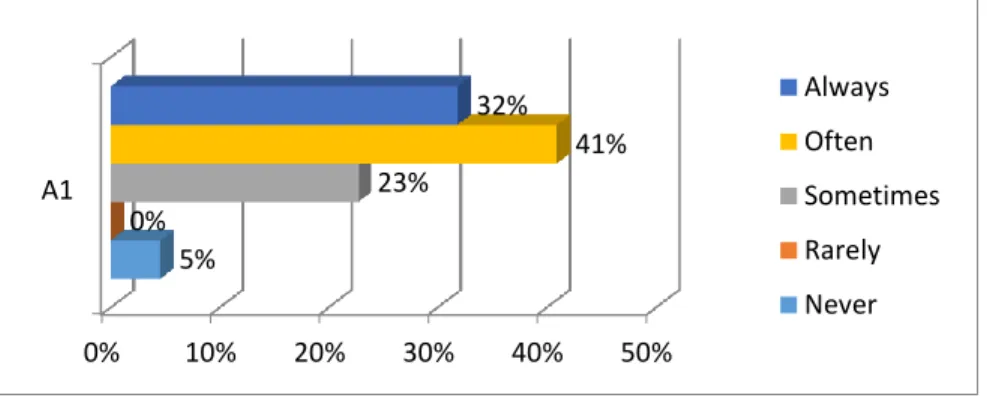
Figure 8 below shows students’ percentages in relation to use Facebook. A1: I use Facebook
Figure 8: Percentages of students’ preferences to use Facebook
The graph shows that 41% of participants indicated that they often use Facebook, 32% of participants declared they always use Facebook; 23% of participants pointed that they sometimes use Facebook, 5% of participants declared that Facebook was never used. Figure 9 below shows students’ percentages in relation to use listen to English song shared in Facebook wall.
A2: I listen to English song shared in Facebook wall
Figure 9: Percentages of students’ preferences to listen to English song