Article
Effectiveness of A Multifactorial Intervention in
Increasing Adherence to the Mediterranean Diet
among Patients with Diabetes Mellitus Type 2: A
Controlled and Randomized Study (EMID Study)
Rosario Alonso-Domínguez1,* , Luis García-Ortiz2 , Maria C. Patino-Alonso3,
Natalia Sánchez-Aguadero1 , Manuel A. Gómez-Marcos4,† and JoséI. Recio-Rodríguez5,6,†
1 Primary Care Research Unit, The Alamedilla Health Center, Biomedical Research Institute of
Salamanca (IBSAL), Castilla and León Health Service (SACYL), Department of Nursing and Physiotherapy, University of Salamanca, Spanish Network for Preventive Activities and Health Promotion (redIAPP), 37003 Salamanca, Spain; [email protected]
2 Primary Care Research Unit, The Alamedilla Health Center, Biomedical Research Institute of
Salamanca (IBSAL), Castilla and León Health Service (SACYL), Department of Biomedical and Diagnostic Sciences, University of Salamanca, Spanish Network for Preventive Activities and Health
Promotion (redIAPP), 37003 Salamanca, Spain; [email protected]
3 Biomedical Research Institute of Salamanca (IBSAL), Castilla and León Health Service (SACYL), Department of Statistics, University of Salamanca, Spanish Network for Preventive Activities and Health
Promotion (redIAPP), 37003 Salamanca, Spain; [email protected]
4 Primary Care Research Unit, The Alamedilla Health Center, Biomedical Research Institute of
Salamanca (IBSAL), Castilla and León Health Service (SACYL), Department of Medicine, University of Salamanca, Spanish Network for Preventive Activities and Health Promotion (redIAPP), 37003 Salamanca, Spain; [email protected]
5 Biomedical Research Institute of Salamanca (IBSAL), Spanish Network for Preventive Activities and Health Promotion (redIAPP), 37003 Salamanca, Spain; [email protected]
6 Faculty of Health Sciences, University of Burgos, 09001 Burgos, Spain * Correspondence: [email protected]; Tel.: +34 923-231-859 † These authors contributed equally to this work.
Received: 26 November 2018; Accepted: 10 January 2019; Published: 14 January 2019
Abstract:The Mediterranean diet (MD) is recognized as one of the healthiest dietary patterns and has benefits such as improving glycaemic control among patients with type 2 diabetes (T2DM). Our aim is to assess the effectiveness of a multifactorial intervention to improve adherence to the MD, diet quality and biomedical parameters. The EMID study is a randomized and controlled clinical trial with two parallel groups and a 12-month follow-up period. The study included 204 subjects between 25–70 years with T2DM. The participants were randomized into intervention group (IG) and control group (CG). Both groups received brief advice about healthy eating and physical activity. The IG participants additionally took part in a food workshop, five walks and received a smartphone application for three months. The population studied had a mean age of 60.6 years. At the 3-month follow-up visit, there were improvements in adherence to the MD and diet quality of 2.2 and 2.5 points, compared to the baseline visit, respectively, in favour of the IG. This tendency of the improvement was maintained, in favour of the IG, at the 12-month follow-up visit. In conclusion, the multifactorial intervention performed could improve adherence to the MD and diet quality among patients with T2DM.
Keywords: Mediterranean diet; type 2 diabetes; health education; information and communication technologies
1. Introduction
The term “Mediterranean diet” refers to the eating habits traditionally followed by peoples living around the Mediterranean Sea [1]. It is characterized by the high consumption of vegetables, monounsaturated fatty acids (mainly from olive oil), fruits, whole grains, legumes and fish; moderate consumption of dairy products, fish and red wine; and low consumption of red or processed meats [2,3].
The Mediterranean diet is recognized as one of the healthiest dietary patterns [4]. It is associated with significant improvements in glycaemic control and weight loss [5], as well as with the prevention of cardiovascular diseases, cancer and diabetes mellitus type 2 (T2DM) [6–8] due to its antioxidant and anti-inflammatory effects. It has been suggested that the benefits of this pattern T2DM are the result of its effect on insulin sensitivity and resistance, satiety factors and hormone secretion [9], in addition to the high fibre content and low glycaemic index of its components.
Numerous studies have carried out interventions with the aim of increasing adherence to the Mediterranean diet [10,11]. The systematic review by Maderuelo-Fernández et al. [12] showed that the most effective interventions were carried out by trained personnel focused on a population with a disease. More specifically, the interventions carried out by Cubillos et al. [13] and Gomez-Huelgas et al. [14] achieved a two-point increase in adherence to the Mediterranean diet among patients with T2DM. The review byÁlvarez-Bueno et al. [15] also showed that multifactorial interventions were the most effective because improvement in lifestyle habits, such as a healthy diet and increased physical activity, are cornerstones in the treatment of T2DM [16].
Kim et al. [17] showed an inverse correlation between dietary improvement and glycaemic control markers. Therefore, diet quality should also be taken into account when assessing the diets of patients with T2DM. Murray et al. [18] concluded that the quality of the diet was lower among this population than the healthy population, even though no differences in the individual intake of macronutrients was detected.
With the advances in new technologies, consideration is needed to determinate how they can best be incorporated as new tools into multifactorial interventions. Mullet et al. [19] concluded that 70% of mHealth interventions were effective in improving diet quality. More specifically, subgroups of the diabetic population that used cell phones obtained greater benefit [20]. Although studies have used mHealth to help improve diet in the diabetic population [21], we have not found interventions that included a smartphone application with the aim of increasing adherence to the Mediterranean diet in this population.
The objective of this study is thus to assess the effectiveness of a multifactorial intervention involving a food workshop and a smartphone application in improving adherence to the Mediterranean diet and diet quality among patients with T2DM.
2. Materials and Methods 2.1. Study Design
The EMID study [22] (Effectiveness of a multifactorial intervention based on an application for smartphones, a nutritional workshop and heart-healthy walks, in patients with T2DM in primary care) is a randomized, controlled clinical trial with two parallel groups and a follow-up period of 12 months. The study was carried out in the field of primary health care, in the Alamedilla Research Unit, which belongs to the Research Network on Preventive Activities and Health Promotion (redIAPP) and the Biomedical Research Unit of Salamanca (IBSAL).
2.2. Participants
The inclusion criteria were age between 25 and 70 years, T2DM, agreement to participate in the study and signing an informed consent document after receiving information about the study. As diagnostic criteria for T2DM, we followed the latest recommendations of the American Diabetes Association: fasting plasma glucose above 126 mg/dL or two-hour plasma glucose above 200 mg/dL during an oral glucose tolerance test (using a glucose load containing the equivalent of 75 g anhydrous glucose dissolved in water) or glycosylated haemoglobin over 6.5%. In all cases, these tests were repeated to confirm the results in the absence of unequivocal hyperglycaemia. Additionally, patients were also considered as having T2DM if they had the classic symptoms of hyperglycaemia or hyperglycaemic crisis (i.e., random plasma glucose above 200 mg/dL) [23].
The exclusion criteria were a history of cardiovascular events, musculoskeletal pathology that prevents walking and clinically demonstrable neurological or neuropsychological disease, which would prevent the subject from visiting the health centre.
2.3. Common Advice
All participants received standardized counselling for 10 min about healthy eating and physical activity. The food section lasted five minutes and focused on the use of the plate method and recommendations to help comply with the Mediterranean diet. Five minutes were also used to give advice to help comply with current international recommendations regarding physical activity. A brochure was given to the participants for support in both areas.
2.4. Randomization and Masking
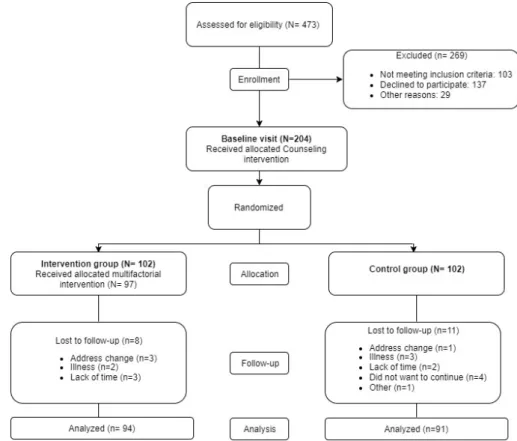
Participants were randomized at 1:1 into the control group (CG) (102) or the intervention group (IG) (102). The randomization was performed after obtaining informed consent and was not revealed prior to group assignment. The allocation sequence was generated by an independent researcher using the software Epidat 4.0 (Consellería de Sanidade, Santiago de Compostela, Spain) (Figure1).
Nutrients 2018, 10, x FOR PEER REVIEW 4 of 16
Figure 1.
Flow-chart of the EMID Study: enrolment of the participants and completion of the study.
Due to the nature of the intervention, the participants could not be blinded. However, the researcher who carried out the intervention in the study group was different from the person responsible for the assessment and standardized counselling. In addition, the person responsible for the statistical analysis remained blinded throughout the study. During the follow-up visits, patients were told that they should not use other health technologies. Moreover, the application was not made available online until the end of the study so that the control group could not access it.
2.5. Intervention
A multifactorial intervention was carried out with groups of 10 participants consisting of a food workshop, a smartphone application and heart-healthy walks. To impart this multifactorial intervention, three nurses from the health centre were instructed in two one-hour training classes on how to carry out the interventions in a standardized manner (what points should be treated, in what order and for how long).
2.5.1. Food Workshop
The food workshop was a theoretical and practical workshop that lasted 90 minutes and focused on improving adherence to the Mediterranean diet. The workshop covered the following topics: benefits of a healthy diet, food groups, components of the Mediterranean diet, recommended culinary techniques, the use of the plate method and the importance of food labelling for patients with diabetes. Adherence to the food workshop was assessed by the attendance or lack thereof.
2.5.2. Smartphone Application (EVIDENT II)
Due to the nature of the intervention, the participants could not be blinded. However, the researcher who carried out the intervention in the study group was different from the person responsible for the assessment and standardized counselling. In addition, the person responsible for the statistical analysis remained blinded throughout the study. During the follow-up visits, patients were told that they should not use other health technologies. Moreover, the application was not made available online until the end of the study so that the control group could not access it.
2.5. Intervention
A multifactorial intervention was carried out with groups of 10 participants consisting of a food workshop, a smartphone application and heart-healthy walks. To impart this multifactorial intervention, three nurses from the health centre were instructed in two one-hour training classes on how to carry out the interventions in a standardized manner (what points should be treated, in what order and for how long).
2.5.1. Food Workshop
The food workshop was a theoretical and practical workshop that lasted 90 min= and focused on improving adherence to the Mediterranean diet. The workshop covered the following topics: benefits of a healthy diet, food groups, components of the Mediterranean diet, recommended culinary techniques, the use of the plate method and the importance of food labelling for patients with diabetes. Adherence to the food workshop was assessed by the attendance or lack thereof.
2.5.2. Smartphone Application (EVIDENT II)
A one-hour group workshop was held to instruct the participants in the use of the EVIDENT II application (intellectual property registry number SA-81-14) (CGB, Salamanca, Spain), which was installed on a mobile phone that was provided for them to use for three months. This application was designed by software engineers in collaboration with dieticians and physical activity experts with the aim of promoting adherence to the Mediterranean diet and it has already been used in previous studies [24,25]. The application was configured with the data of each participant (age, sex, weight, height and stride distance). After entering food intake and daily exercise data, it would provide detailed information on nutritional deviations in terms of both diet composition and the number of calories, with the aim of encouraging a change of habits. The cell phone was returned after three months, at follow-up visit for both groups. Subsequently, the stored information was downloaded. Adherence to the smartphone app was assessed by the number of days of recordings in the device. After this three-month intervention period, the subjects did not have access to the EVIDENT II app because it was not freely available online.
2.5.3. Heart-Healthy Walks
Once a week for 5 weeks, the subjects performed 10 min of warm-up, walked 4 km on flat terrain and performed 10 min of stretching and relaxation. In order to make the walks qualify as aerobic exercise (50–70% maximum heart rate) [26], participants were divided into two groups according to on intensity. The approximate speed was 6 km/hour for the group walking at moderate intensity (5 metabolic equivalents (METs)) and 3–4 km/hour for the group walking at low intensity (2.5 METs). Adherence to heart-healthy walks was evaluated by the number of days, planned in the intervention that the subjects attended to perform them.
2.6. Outcome Measures and Follow-Up
total score of the Diet Quality Index (DQI) questionnaire [28] and the clinical variables were treated as secondary endpoints.
2.6.1. Adherence to the Mediterranean Diet
The main result variable was measured using the validated fourteen-item MEDAS questionnaire, developed by the PREDIMED group, which includes 12 questions about the frequency of food consumption and two questions about typical eating habits for the Spanish population [27]. Each question was scored with zero or one point. One point was given for using olive oil as the main fat for cooking, preferring white meat to red meat and daily consumption of four or more tablespoons (one tablespoon = 13.5 g) of olive oil (including oil used for frying, dressing salads, etc.), two or more servings of vegetables, three or more pieces of fruit, less than one serving of red meat or sausage, less than one serving of animal fat and less than one cup (one cup = 100 mL) of carbonated or sugary drinks. One point was also given for weekly intake of seven or more glasses of wine, three or more servings of legumes, three or more servings of fish, two shop-bought pastries or fewer, three or more servings of nuts and two or more helpings of sofrito (a traditional sauce made with tomato, garlic, onion or leeks and sautéed with olive oil). The final score range was 0 to 14 points, with 9 or more points indicating suitable adherence to the Mediterranean diet [27].
2.6.2. Diet Quality Index
The diet was assessed with the DQI [28]. This questionnaire covers 18 food groups, labelled one, two or three depending on whether their consumption is beneficial (eating more results in a higher score) or harmful to health (eating more produces a lower score). Food groups are classified into three categories according to the recommended frequency of use. The first category includes eight foods and their response types are “less than once a day,” “once a day” or “more than once a day.” The second category has seven foods and their responses are “less than four times a week,” “four to six times a week” or “at least once a day.” Finally, in the third category, there are three foods, which are classified as “less than twice a week,” “two to three times a week” or “four or more times a week” [28]. Scores range from 18 to 54 points, with a higher score representing higher diet quality and 40 or more points indicate a suitable quality of diet.
2.6.3. Clinically Relevant Measures
Other variables were measured, including drug use, blood pressure, postprandial glucose, weight, height, waist circumference (WC) and biochemical parameters (total serum cholesterol, LDL-cholesterol, HDL-cholesterol). Body mass index (BMI) was calculated by dividing the weight (kg) by the square of the height (m2). The body shape index (ABSI) was estimated with the following equation: ABSI = WC (m)/(BMI2/3×height (m)1/2). A detailed description of the way in which these variables were measured was published with the study protocol [22].
2.7. Sample Size Calculation
2.8. Ethical Considerations
The study was approved by the Clinical Research Ethics Committee of the Health Area of Salamanca on 28 November 2016. All procedures were performed in accordance with the ethical standards of the institutional research committee and with the 2013 Declaration of Helsinki [29]. All patients signed written informed consent documents prior to participation in the study. The trial was registered at ClinicalTrials.gov with identifier NCT02991079.
2.9. Statistical Analysis
Continuous variables are presented as means±standard deviations and qualitative variables are presented using a frequency distribution. To compare categorical variables at baseline between IG and CG the chi-squared test or Fisher exact test was carried out as appropriate and quantitative variables were compared using the student’st-test. The ANCOVA test was used to compare the changes between the IG and the CG, adjusting for the basal measurement of each variable. Repeated-measures analysis of variance was used to analyse group interaction effects on changes in the Mediterranean diet and DQI scores using the General linear Model (GLM) procedure. For the bilateral contrast of hypotheses, an alpha risk of 0.05 was set as a limit of statistical significance. The data were analysed using the statistical software SPSS for Windows version 25.0. (IBM Corp, Armonk, NY, USA).
3. Results
3.1. Sample Selection
Among the 1291 subjects with T2DM between 25–70 years old seen at the La Alamedilla Health Centre, 473 were selected by stratified random sampling. Subsequently, 103 were excluded because they did not meet the inclusion criteria, 137 did not want to be included in the study and 29 were excluded for other reasons. Finally, 204 subjects were included in the study. There were 19 subjects who were lost in follow up (11 in the CG and 8 in the IG,p> 0.05). The reasons for dropping out are detailed in the flowchart in Figure1.
3.2. Demographic and Clinical Characteristics of the Included Subjects
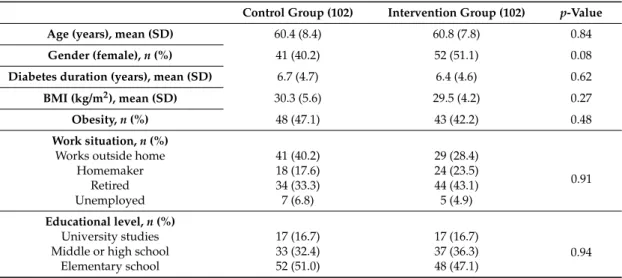
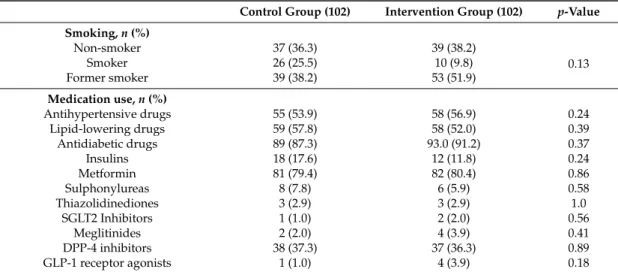
Table1presents the baseline characteristics of the participants. The study population had an average age of 60.6±8.1 years and 45.6% (N= 93) were women. At the baseline visit, there were no significant differences between the groups in terms of demographic characteristics.
Table 1.Baseline characteristics of patients.
Control Group (102) Intervention Group (102) p-Value
Age (years), mean (SD) 60.4 (8.4) 60.8 (7.8) 0.84
Gender (female),n(%) 41 (40.2) 52 (51.1) 0.08
Diabetes duration (years), mean (SD) 6.7 (4.7) 6.4 (4.6) 0.62
BMI (kg/m2), mean (SD) 30.3 (5.6) 29.5 (4.2) 0.27
Obesity,n(%) 48 (47.1) 43 (42.2) 0.48
Work situation,n(%)
Works outside home 41 (40.2) 29 (28.4)
0.91
Homemaker 18 (17.6) 24 (23.5)
Retired 34 (33.3) 44 (43.1)
Unemployed 7 (6.8) 5 (4.9)
Educational level,n(%)
University studies 17 (16.7) 17 (16.7)
0.94 Middle or high school 33 (32.4) 37 (36.3)
Table 1.Cont.
Control Group (102) Intervention Group (102) p-Value
Smoking,n(%)
Non-smoker 37 (36.3) 39 (38.2)
0.13
Smoker 26 (25.5) 10 (9.8)
Former smoker 39 (38.2) 53 (51.9)
Medication use,n(%)
Antihypertensive drugs 55 (53.9) 58 (56.9) 0.24
Lipid-lowering drugs 59 (57.8) 58 (52.0) 0.39
Antidiabetic drugs 89 (87.3) 93.0 (91.2) 0.37
Insulins 18 (17.6) 12 (11.8) 0.24
Metformin 81 (79.4) 82 (80.4) 0.86
Sulphonylureas 8 (7.8) 6 (5.9) 0.58
Thiazolidinediones 3 (2.9) 3 (2.9) 1.0
SGLT2 Inhibitors 1 (1.0) 2 (2.0) 0.56
Meglitinides 2 (2.0) 4 (3.9) 0.41
DPP-4 inhibitors 38 (37.3) 37 (36.3) 0.89
GLP-1 receptor agonists 1 (1.0) 4 (3.9) 0.18
Variables are given as means±standard deviations, numbers and %.pvalue differences between control group and intervention group. Abbreviations: IQR: Interquartile Range; SD: Standard Deviation; BMI: Body Mass Index; SGLT2: Sodium-glucose co-transporter-2; DPP-4: Dipeptidyl peptidase 4; GLP-1: Glucagon-like peptide-1.
3.3. Adherence to the Intervention
The adherence to the food workshop was 82.3% (84/102 subjects). The majority of the subjects (63.7%, 65/102 subjects) carried out between 4 to 5 heart-healthy walks. The average use of the application was 35 days and most of the subjects (69.6%, 71/102) used it for 31 to 60 days.
3.4. Effect of the Intervention
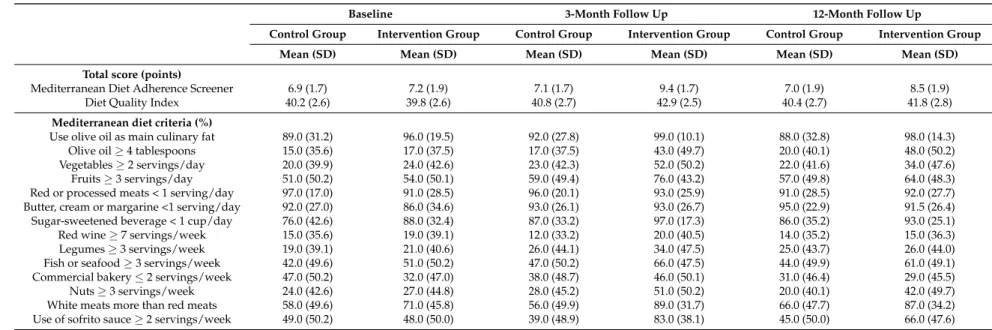
In the CG, the scores of the adherence to the Mediterranean diet showed few variations throughout the study (6.9, 7.1 and 7.0 points, respectively) and the same thing happened in the quality of the diet (40.2, 40.8 and 40.4 points, respectively). However, in the IG, an increase in adherence to the Mediterranean diet was observed in the follow-up visits with respect to the baseline visit (7.2, 9.4 and 8.5 points, respectively), as well as in the quality of the diet (39.8, 42.9 and 41.8 points, respectively), as shown in Table2.
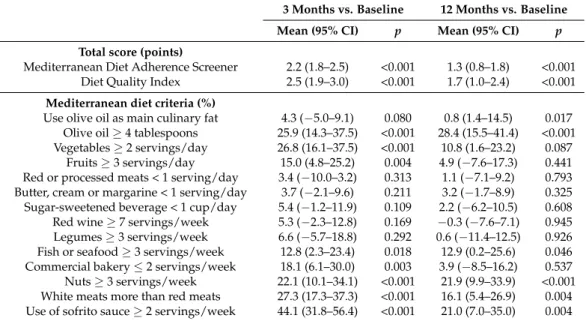
Table3shows the intergroup modifications that occurred in the follow-up visits with respect to the baseline visit. At the 3-month follow-up visit, compared to the baseline visit, there was an improvement in the adherence to the Mediterranean diet and the quality of the diet of 2.2 points (1.8–2.5) and 2.5 points (1.9–3.0), respectively, in favour of the IG. In the same way, these improvements were maintained in the follow-up visit at 12 months, with an increase of 1.3 points (0.8–1.8) in the adherence to the Mediterranean diet and 1.7 points (1.0–2.4) in the quality of the diet, with respect to the baseline visit (p< 0.01 for all). At the 3-month follow-up visit, 82.7% of the IG participants increased their MEDAS questionnaire score by at least 1 point, while in the CG this value was 31.3%; at the 12-month follow-up visit, 61.9% of the IG participants and 38.5% of the CG participants reached this increase.
Table 2.Adherence to the Mediterranean diet and diet quality throughout the study.
Baseline 3-Month Follow Up 12-Month Follow Up
Control Group Intervention Group Control Group Intervention Group Control Group Intervention Group
Mean (SD) Mean (SD) Mean (SD) Mean (SD) Mean (SD) Mean (SD)
Total score (points)
Mediterranean Diet Adherence Screener 6.9 (1.7) 7.2 (1.9) 7.1 (1.7) 9.4 (1.7) 7.0 (1.9) 8.5 (1.9)
Diet Quality Index 40.2 (2.6) 39.8 (2.6) 40.8 (2.7) 42.9 (2.5) 40.4 (2.7) 41.8 (2.8)
Mediterranean diet criteria (%)
Use olive oil as main culinary fat 89.0 (31.2) 96.0 (19.5) 92.0 (27.8) 99.0 (10.1) 88.0 (32.8) 98.0 (14.3)
Olive oil≥4 tablespoons 15.0 (35.6) 17.0 (37.5) 17.0 (37.5) 43.0 (49.7) 20.0 (40.1) 48.0 (50.2)
Vegetables≥2 servings/day 20.0 (39.9) 24.0 (42.6) 23.0 (42.3) 52.0 (50.2) 22.0 (41.6) 34.0 (47.6)
Fruits≥3 servings/day 51.0 (50.2) 54.0 (50.1) 59.0 (49.4) 76.0 (43.2) 57.0 (49.8) 64.0 (48.3)
Red or processed meats < 1 serving/day 97.0 (17.0) 91.0 (28.5) 96.0 (20.1) 93.0 (25.9) 91.0 (28.5) 92.0 (27.7) Butter, cream or margarine <1 serving/day 92.0 (27.0) 86.0 (34.6) 93.0 (26.1) 93.0 (26.7) 95.0 (22.9) 91.5 (26.4) Sugar-sweetened beverage < 1 cup/day 76.0 (42.6) 88.0 (32.4) 87.0 (33.2) 97.0 (17.3) 86.0 (35.2) 93.0 (25.1)
Red wine≥7 servings/week 15.0 (35.6) 19.0 (39.1) 12.0 (33.2) 20.0 (40.5) 14.0 (35.2) 15.0 (36.3)
Legumes≥3 servings/week 19.0 (39.1) 21.0 (40.6) 26.0 (44.1) 34.0 (47.5) 25.0 (43.7) 26.0 (44.0)
Fish or seafood≥3 servings/week 42.0 (49.6) 51.0 (50.2) 47.0 (50.2) 66.0 (47.5) 44.0 (49.9) 61.0 (49.1)
Commercial bakery≤2 servings/week 47.0 (50.2) 32.0 (47.0) 38.0 (48.7) 46.0 (50.1) 31.0 (46.4) 29.0 (45.5)
Nuts≥3 servings/week 24.0 (42.6) 27.0 (44.8) 28.0 (45.2) 51.0 (50.2) 20.0 (40.1) 42.0 (49.7)
White meats more than red meats 58.0 (49.6) 71.0 (45.8) 56.0 (49.9) 89.0 (31.7) 66.0 (47.7) 87.0 (34.2)
Table 3.Intergroup modifications of the diet parameters in the follow-up visits compared to the baseline visit.
3 Months vs. Baseline 12 Months vs. Baseline
Mean (95% CI) p Mean (95% CI) p
Total score (points)
Mediterranean Diet Adherence Screener 2.2 (1.8–2.5) <0.001 1.3 (0.8–1.8) <0.001 Diet Quality Index 2.5 (1.9–3.0) <0.001 1.7 (1.0–2.4) <0.001
Mediterranean diet criteria (%)
Use olive oil as main culinary fat 4.3 (−5.0–9.1) 0.080 0.8 (1.4–14.5) 0.017 Olive oil≥4 tablespoons 25.9 (14.3–37.5) <0.001 28.4 (15.5–41.4) <0.001 Vegetables≥2 servings/day 26.8 (16.1–37.5) <0.001 10.8 (1.6–23.2) 0.087
Fruits≥3 servings/day 15.0 (4.8–25.2) 0.004 4.9 (−7.6–17.3) 0.441 Red or processed meats < 1 serving/day 3.4 (−10.0–3.2) 0.313 1.1 (−7.1–9.2) 0.793 Butter, cream or margarine < 1 serving/day 3.7 (−2.1–9.6) 0.211 3.2 (−1.7–8.9) 0.325 Sugar-sweetened beverage < 1 cup/day 5.4 (−1.2–11.9) 0.109 2.2 (−6.2–10.5) 0.608 Red wine≥7 servings/week 5.3 (−2.3–12.8) 0.169 −0.3 (−7.6–7.1) 0.945 Legumes≥3 servings/week 6.6 (−5.7–18.8) 0.292 0.6 (−11.4–12.5) 0.926 Fish or seafood≥3 servings/week 12.8 (2.3–23.4) 0.018 12.9 (0.2–25.6) 0.046 Commercial bakery≤2 servings/week 18.1 (6.1–30.0) 0.003 3.9 (−8.5–16.2) 0.537 Nuts≥3 servings/week 22.1 (10.1–34.1) <0.001 21.9 (9.9–33.9) <0.001 White meats more than red meats 27.3 (17.3–37.3) <0.001 16.1 (5.4–26.9) 0.004 Use of sofrito sauce≥2 servings/week 44.1 (31.8–56.4) <0.001 21.0 (7.0–35.0) 0.004
pvalue differences between intervention group and control group. Significant difference:p< 0.05. An analysis of covariance adjusting for baseline was used to examine the significance of differences.
Figure2shows the evolution of the percentage of compliance of the Mediterranean diet and the DQI index in the IG and CG. At the follow-up visits at 3 and 12 months, the number of subjects with suitable adherence to the Mediterranean diet (MEDAS score ≥9 points) in the IG increased significantly compared to the CG. In the same way, there was an increase in the IG of the number of subjects with a suitable quality of diet (DQI score≥40 points), with respect to the CG. This difference was significant in the follow-up visit at 3 months. (Nutrients 2019, 11, x FOR PEER REVIEW p< 0.05 for all). 2 of 16
Figure 2. Changes in the number of subjects with suitable adherence to the Mediterranean diet and quality of diet. The chi-squared test or Fisher exact test was carried out.
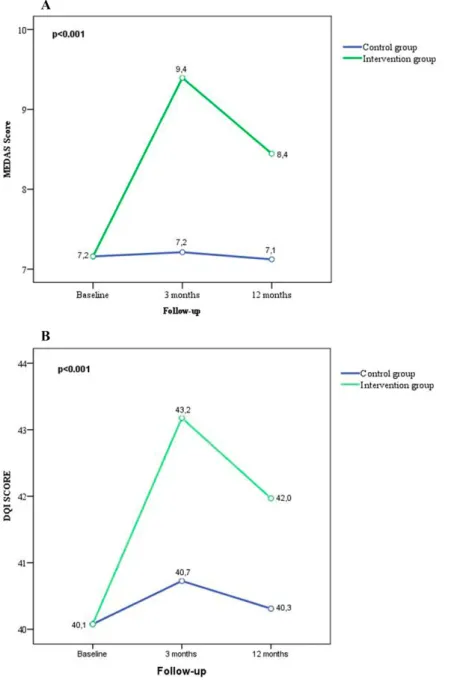
In addition, a significant interaction effect (p < 0.001) was found between the IG and the changes in adherence to the Mediterranean diet and diet quality throughout the 12 months of follow-up. (Figure 3).
In addition, a significant interaction effect (p< 0.001) was found between the IG and the changes in adherence to the Mediterranean diet and diet quality throughout the 12 months of follow-up. (Figure3).
Nutrients 2019, 11, x FOR PEER REVIEW 3 of 16
Figure 3.
Changes in the MEDAS score and the DQI score tasks in response to the multifactorial
intervention. Repeated-measures ANOVA was been performed with adjustment for the baseline visit. MEDAS: Mediterranean Diet Screener; DQI: Diet Quality Index.
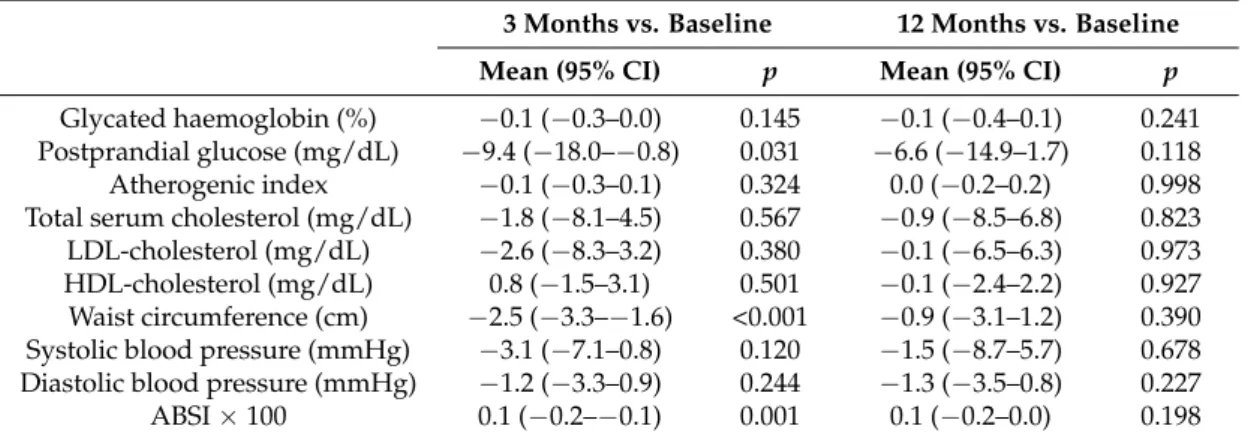
Finally, without significant changes in the consumption of antidiabetic drugs, the following improvements were observed at the 3-month follow-up visit compared to the baseline visit: a postprandial glucose improvement of −9.4 mg/dL (−18.0–−0.8), a waist circumference improvement of −2.5 cm (−3.3–−1.6) and a BMI improvement of −0.3 kg/m2 (−0.6–0.0) in favour of the IG (p < 0.05 for
all; Table 4 and Table 5). The improvements of some of the clinical parameters were maintained at the follow-up visit at 12 months compared to baseline, such as a postprandial glucose improvement of −6.6 mg/dL (−14.9–1.7), waist circumference improvement of −0.9 cm (−3.1–1.2) and systolic blood pressure improvement of −1.5 mmHg (−8.7–5.7) However, the results did not reach statistical significance (p > 0.05).
Table 4. Clinical variables throughout the study.
Figure 3. Changes in the MEDAS score and the DQI score tasks in response to the multifactorial intervention. Repeated-measures ANOVA was been performed with adjustment for the baseline visit. MEDAS: Mediterranean Diet Screener; DQI: Diet Quality Index.
blood pressure improvement of−1.5 mmHg (−8.7–5.7) However, the results did not reach statistical significance (p> 0.05).
Table 4.Clinical variables throughout the study.
Baseline 3-Month Follow Up 12-Month Follow Up
Control
Mean (SD) Mean (SD) Mean (SD) Mean (SD) Mean (SD) Mean (SD)
Glycated
haemoglobin (%) 6.8 (1.2) 6.9 (1.2) 6.8 (1.1) 6.8 (1.0) 7.0 (1.3) 6.9 (1.1) Postprandial glucose
(mg/dL) 147.6 (35.5) 149.2 (39.0) 148.9 (37.8) 140.0 (31.7) 148.3 (34.1) 143.2 (29.0) Atherogenic index 3.8 (1.1) 3.5 (1.0) 3.7 (1.1) 3.4 (1.0) 3.6 (1.1) 3.4 (1.1)
Total serum
cholesterol (mg/dL) 176.4 (31.7) 178.8 (30.3) 173.1 (29.0) 173.7 (30.6) 173.0 (32.5) 174.8 (34.0) LDL-cholesterol
(mg/dL) 100.4 (28.6) 101.8 (30.0) 97.9 (24.9) 97.2 (27.9) 94.9 (25.3) 95.6 (31.6) HDL-cholesterol
(mg/dL) 50.3 (14.8) 54.4 (14.1) 49.8 (13.6) 54.0 (14.6) 51.4 (13.5) 54.1 (14.8) Waist circumference
(cm) 104.9 (13.1) 102.2 (11.5) 105.5 (13.0) 100.4 (11.0) 104.2 (16.0) 101.2 (11.8) Systolic blood
pressure (mmHg) 135.0 (33.2) 133.2 (15.9) 131.2 (16.4) 127.1 (15.9) 130.3 (16.4) 126.2 (15.8) Diastolic blood
pressure (mmHg) 80.5 (9.6) 80.8 (9.0) 79.7 (9.6) 78.8 (9.5) 80.6 (8.8) 79.4 (8.5) ABSI×100 8.5 (0.5) 8.5 (0.4) 8.5 (0.6) 8.3 (0.4) 8.5 (0.7) 8.4 (0.4)
Abbreviations: LDL: Low density lipoprotein; HDL: High density lipoprotein; ABSI: A Body Shape Index.
Table 5.Intergroup modifications of the clinical parameters in the follow-up visits compared to the baseline visit.
3 Months vs. Baseline 12 Months vs. Baseline
Mean (95% CI) p Mean (95% CI) p
An analysis of covariance adjusting for baseline was used to examine the significance of differences. pvalue differences between intervention group and control group. Significant difference:p< 0.05. Abbreviations: CI: Confidence Interval; LDL: Low density lipoprotein; HDL: High density lipoprotein; ABSI: A Body Shape Index.
4. Discussion
The main findings of the study were that a multifactorial intervention involving a food workshop and a smartphone application produced improved adherence to the Mediterranean diet and diet quality among patients with T2DM in comparison to standard treatment.
Similarly, when breaking down the adherence to the Mediterranean diet by item, the results are in line with those published by Salas-Salvado et al. [10] and Estruch et al. [34]. In addition, in this study, the preference for white meat over red meat and the consumption of homemade sofrito at least twice a week were modified. Several studies have explained the clinical implication that the increases in Mediterranean diet items could have independently. Guasch-Ferréet al. [35], linked the increase in the consumption of 10 g per day of olive oil to a 16% reduction in cardiovascular risk. Furthermore, according to Salas-Salvado et al. [10], the consumption of nuts has a beneficial effect on insulin resistance, blood pressure, dyslipidaemia and functions that influence the modulation of inflammation and endothelial function. Moreover, eating fish [36] and sofrito [37] is related to beneficial effects on cardiovascular risk factors. Kim et al. [38], linked a reduction in the consumption of red meats to an improvement in insulin sensitivity.
These changes in dietary habits resulted in changes in the clinical variables. These changes correspond to those achieved by other multifactorial interventions such as that of Jiang et al. [39], who observed a decrease in postprandial glycaemia (10.7±3.2 vs. 5.8±2.1 mmol/L) in the IG after 12 months of follow-up, through changes in diet, exercise and a psychological approach. In the same way, several studies [39–42] have managed to significantly improve BMI among other parameters through a multifactorial intervention based on changes in diet and exercise in subjects with T2DM. Finally, we think that the results obtained in this work could be pioneering, since as far as we know, this study is the first to analyse the effects of a multifactorial intervention on diet in subjects with T2DM based on a food workshop and a smartphone application, as well as achieving improvement in the MEDAS and the DQI questionnaire.
This study has several limitations that should be considered when interpreting our results. First, the exposure to the intervention was short (three months). In addition, the multifactorial nature of the intervention means that it is not possible to know which component produced the change in the study group. Furthermore, the main findings of the study are based on patients’ responses on nutrition questionnaires. Finally, although the recommendation was made not to use other mobile applications, we have no guarantee that the participants did not do so.
5. Conclusions
The results of this study suggest that the proposed multifactorial intervention involving a food workshop and a smartphone application are moderately effective in improving adherence to the Mediterranean diet and diet quality among patients with T2DM.
Author Contributions:R.A.-D., J.I.R.-R. and M.A.G.-M. conceived and designed the research. R.A.-D., J.I.R.-R. L.G.-O. and N.S.-A. performed the research. M.A.G.-M. and M.C.P.-A. analysed the data. L.G.-O. and M.C.P.-A. contributed materials and analysis tools. R.A.-D., M.A.G.-M., M.C.P.-A. and J.I.R.-R. wrote the paper.
Funding:This study is supported by funding grants from the Regional Health Management through the 2016 grants to carry out research projects in biomedicine, health management and socio-health care (GRS 1276/B/16), the 2016 program for the professional development of nurses in their research activity (BOCYL-D-11022016-2) and the 2015 incentive program for nurses who have completed their residency (ORDER SAN / 360/2015). The study was also co-financed by the Carlos III Health Institute and the European Regional Development Fund (ERDF) (RD 16/0007/0003).
Acknowledgments: We are grateful to all the professionals participating in EMID Group: Rosario Alonso-Domínguez, Manuel Ángel Gómez-Marcos, María Carmen Patino-Alonso, Luis García-Ortiz, José Ignacio Recio-Rodriguez, Natalia Sánchez-Aguadero, Carmen Castaño-Sánchez, Sandra Conde-Martín, María Carmela Rodríguez-Martin, Sofía Pascual-Sánchez, Elsa Ruiz-Fernández, Cristina Lugones-Sánchez, María Dolores Muñoz-Jiménez, Teresa Vicente-García, Ernesto Sánchez-Méndez, Patricia Martín-González, José Ángel Maderuelo-Fernández and Emiliano Rodríguez-Sánchez.
References
1. Keys, A.; Menotti, A.; Karvonen, M.J.; Aravanis, C.; Blackburn, H.; Buzina, R.; Djordjevic, B.S.; Dontas, A.S.; Fidanza, F.; Keys, M.H.; et al. The diet and 15-year death rate in the seven countries study.Am. J. Epidemiol. 1986,124, 903–915. [CrossRef] [PubMed]
2. Kastorini, C.M.; Milionis, H.J.; Esposito, K.; Giugliano, D.; Goudevenos, J.A.; Panagiotakos, D.B. The effect of Mediterranean diet on metabolic syndrome and its components: A meta-analysis of 50 studies and 534,906 individuals.Am. J. Cardiol.2011,57, 1299–1313. [CrossRef] [PubMed]
3. Trichopoulou, A.; Martinez-Gonzalez, M.A.; Tong, T.Y.; Forouhi, N.G.; Khandelwal, S.; Prabhakaran, D.; Mozaffarian, D.; de Lorgeril, M. Definitions and potential health benefits of the Mediterranean diet: Views from experts around the world.BMC Med.2014,12, 112. [CrossRef] [PubMed]
4. Babio, N.; Toledo, E.; Estruch, R.; Ros, E.; Martinez-Gonzalez, M.A.; Castaner, O.; Bullo, M.; Corella, D.; Aros, F.; Gomez-Gracia, E.; et al. Mediterranean diets and metabolic syndrome status in the PREDIMED randomized trial.CMAJ2014,186, E649–E657. [CrossRef] [PubMed]
5. Huo, R.; Du, T.; Xu, Y.; Xu, W.; Chen, X.; Sun, K.; Yu, X. Effects of Mediterranean-style diet on glycemic control, weight loss and cardiovascular risk factors among type 2 diabetes individuals: A meta-analysis. Eur. J. Clin. Nutr.2015,69, 1200–1208. [CrossRef] [PubMed]
6. Ajala, O.; English, P.; Pinkney, J. Systematic review and meta-analysis of different dietary approaches to the management of type 2 diabetes.Am. J. Clin. Nutr.2013,97, 505–516. [CrossRef] [PubMed]
7. Estruch, R.; Ros, E.; Martinez-Gonzalez, M.A. Mediterranean diet for primary prevention of cardiovascular disease.N. Eng. J. Med.2013,369, 676–677. [CrossRef] [PubMed]
8. Sofi, F.; Macchi, C.; Abbate, R.; Gensini, G.F.; Casini, A. Mediterranean diet and health status: An updated meta-analysis and a proposal for a literature-based adherence score.Public Health Nutr.2014,17, 2769–2782. [CrossRef]
9. Salas-Salvado, J.; Guasch-Ferre, M.; Lee, C.H.; Estruch, R.; Clish, C.B.; Ros, E. Protective Effects of the Mediterranean Diet on Type 2 Diabetes and Metabolic Syndrome.J. Nutr.2016,146, 920S–927S. [CrossRef] 10. Salas-Salvado, J.; Fernandez-Ballart, J.; Ros, E.; Martinez-Gonzalez, M.A.; Fito, M.; Estruch, R.; Corella, D.;
Fiol, M.; Gomez-Gracia, E.; Aros, F.; et al. Effect of a Mediterranean diet supplemented with nuts on metabolic syndrome status: one-year results of the PREDIMED randomized trial.Arch. Intern. Med.2008, 168, 2449–2458. [CrossRef]
11. Sotos-Prieto, M.; Cash, S.B.; Christophi, C.A.; Folta, S.; Moffatt, S.; Muegge, C.; Korre, M.; Mozaffarian, D.; Kales, S.N. Rationale and design of feeding America’s bravest: Mediterranean diet-based intervention to change firefighters’ eating habits and improve cardiovascular risk profiles.Contemp. Clin. Trial.2017,61, 101–107. [CrossRef]
12. Maderuelo-Fernandez, J.A.; Recio-Rodriguez, J.I.; Patino-Alonso, M.C.; Perez-Arechaederra, D.; Rodriguez-Sanchez, E.; Gomez-Marcos, M.A.; Garcia-Ortiz, L. Effectiveness of interventions applicable to primary health care settings to promote Mediterranean diet or healthy eating adherence in adults: A systematic review.Prev. Med.2015,76, S39–S55. [CrossRef] [PubMed]
13. Cubillos, L.; Estrada Del Campo, Y.; Harbi, K.; Keyserling, T.; Samuel-Hodge, C.; Reuland, D.S. Feasibility and Acceptability of a Clinic-based Mediterranean-style Diet Intervention to Reduce Cardiovascular Risk for Hispanic Americans With Type 2 Diabetes.Diabetes Educ.2017,43, 286–296. [CrossRef] [PubMed]
14. Gomez-Huelgas, R.; Jansen-Chaparro, S.; Baca-Osorio, A.J.; Mancera-Romero, J.; Tinahones, F.J.; Bernal-Lopez, M.R. Effects of a long-term lifestyle intervention program with Mediterranean diet and exercise for the management of patients with metabolic syndrome in a primary care setting.Eur. J. Intern. Med.2015, 26, 317–323. [CrossRef] [PubMed]
15. Alvarez-Bueno, C.; Cavero-Redondo, I.; Martinez-Andres, M.; Arias-Palencia, N.; Ramos-Blanes, R.; Salcedo-Aguilar, F. Effectiveness of multifactorial interventions in primary health care settings for primary prevention of cardiovascular disease: A systematic review of systematic reviews. Prev. Med. 2015, 76, S68–S75. [CrossRef] [PubMed]
17. Kim, J.; Cho, Y.; Park, Y.; Sohn, C.; Rha, M.; Lee, M.K.; Jang, H.C. Association of dietary quality indices with glycemic status in korean patients with type 2 diabetes.Clin. Nutr. Res.2013,2, 100–106. [CrossRef] [PubMed]
18. Murray, A.E.; McMorrow, A.M.; O’Connor, E.; Kiely, C.; Mac Ananey, O.; O’Shea, D.; Egana, M.; Lithander, F.E. Dietary quality in a sample of adults with type 2 diabetes mellitus in Ireland; a cross-sectional case control study.Nutr. J.2013,12, 110. [CrossRef] [PubMed]
19. Muller, A.M.; Alley, S.; Schoeppe, S.; Vandelanotte, C. The effectiveness of e-& mHealth interventions to promote physical activity and healthy diets in developing countries: A systematic review.Int. J. Behav. Nutr. Phys. Act.2016,13, 109. [PubMed]
20. Pal, K.; Eastwood, S.V.; Michie, S.; Farmer, A.; Barnard, M.L.; Peacock, R.; Wood, B.; Edwards, P.; Murray, E. Computer-based interventions to improve self-management in adults with type 2 diabetes: A systematic review and meta-analysis.Diabetes Care2014,37, 1759–1766. [CrossRef]
21. Holmen, H.; Torbjornsen, A.; Wahl, A.K.; Jenum, A.K.; Småstuen, M.C.; Årsand, E.; Ribu, L. A Mobile Health Intervention for Self-Management and Lifestyle Change for Persons With Type 2 Diabetes, Part 2: One-Year Results From the Norwegian Randomized Controlled Trial RENEWING HEALTH.JMIR mHealth uHealth 2014,2, e57. [CrossRef] [PubMed]
22. Alonso-Dominguez, R.; Gomez-Marcos, M.A.; Patino-Alonso, M.C.; Sanchez-Aguadero, N.; Agudo-Conde, C.; Castano-Sanchez, C.; Garcia-Ortiz, L.; Recio-Rodriguez, J.I. Effectiveness of a multifactorial intervention based on an application for smartphones, heart-healthy walks and a nutritional workshop in patients with type 2 diabetes mellitus in primary care (EMID): Study protocol for a randomised controlled trial.BMJ Open2017,7, e016191. [CrossRef] [PubMed]
23. American Diabetes Association. Classification and Diagnosis of Diabetes: Standards of Medical Care in Diabetes-2018.Diabetes Care2018,41, S13–S27. [CrossRef] [PubMed]
24. Recio-Rodriguez, J.I.; Agudo-Conde, C. Short-Term Effectiveness of a Mobile Phone App for Increasing Physical Activity and Adherence to the Mediterranean Diet in Primary Care: A Randomized Controlled Trial (EVIDENT II Study).J. Med. Int. Res.2016,18, e331. [CrossRef] [PubMed]
25. Recio-Rodriguez, J.I.; Martin-Cantera, C.; Gonzalez-Viejo, N.; Gomez-Arranz, A.; Arietaleanizbeascoa, M.S.; Schmolling-Guinovart, Y.; Maderuelo-Fernandez, J.A.; Perez-Arechaederra, D.; Rodriguez-Sanchez, E.; Gomez-Marcos, M.A.; et al. Effectiveness of a smartphone application for improving healthy lifestyles, a randomized clinical trial (EVIDENT II): Study protocol.BMC Public Health2014,14, 254. [CrossRef] 26. Krader, C.G. American Diabetes Association. Diabetes clinical practice recommendations focus attention on
individualization of care.Med. Econ.2014,91, 22. [PubMed]
27. Fernandez-Ballart, J.D.; Pinol, J.L.; Zazpe, I.; Corella, D.; Carrasco, P.; Toledo, E.; Perez-Bauer, M.; Martinez-Gonzalez, M.A.; Salas-Salvado, J.; Martin-Moreno, J.M. Relative validity of a semi-quantitative food-frequency questionnaire in an elderly Mediterranean population of Spain. Br. J. Nutr. 2010, 103, 1808–1816. [CrossRef] [PubMed]
28. Schroder, H.; Benitez Arciniega, A.; Soler, C.; Covas, M.I.; Baena-Diez, J.M.; Marrugat, J. Validity of two short screeners for diet quality in time-limited settings.Public Health Nutr.2012,15, 618–626. [CrossRef]
29. World Medical Association Declaration of Helsinki: Ethical principles for medical research involving human subjects.JAMA2013,310, 2191–2194. [CrossRef] [PubMed]
30. Zazpe, I.; Sanchez-Tainta, A.; Estruch, R.; Lamuela-Raventos, R.M.; Schroder, H.; Salas-Salvado, J.; Corella, D.; Fiol, M.; Gomez-Gracia, E.; Aros, F.; et al. A large randomized individual and group intervention conducted by registered dietitians increased adherence to Mediterranean-type diets: The PREDIMED study. J. Am. Diet. Assoc.2008,108, 1134–1144. [CrossRef] [PubMed]
31. Esposito, K.; Maiorino, M.I.; Ceriello, A.; Giugliano, D. Prevention and control of type 2 diabetes by Mediterranean diet: A systematic review.Diabetes Res. Clin. Pract.2010,89, 97–102. [CrossRef] [PubMed] 32. Riccardi, G.; Giacco, R.; Rivellese, A.A. Dietary fat, insulin sensitivity and the metabolic syndrome.Clin. Nutr.
2004,23, 447–456. [CrossRef] [PubMed]
34. Estruch, R.; Ros, E.; Salas-Salvado, J.; Covas, M.I.; Corella, D.; Aros, F.; Gomez-Gracia, E.; Ruiz-Gutierrez, V.; Fiol, M.; Lapetra, J.; et al. Primary prevention of cardiovascular disease with a Mediterranean diet.N. Eng. J. Med.2013,368, 1279–1290. [CrossRef] [PubMed]
35. Guasch-Ferre, M.; Hu, F.B.; Martinez-Gonzalez, M.A.; Fito, M.; Bullo, M.; Estruch, R.; Ros, E.; Corella, D.; Recondo, J.; Gomez-Gracia, E.; et al. Olive oil intake and risk of cardiovascular disease and mortality in the PREDIMED Study.BMC Med.2014,12, 78. [CrossRef]
36. Alhassan, A.; Young, J.; Lean, M.E.J.; Lara, J. Consumption of fish and vascular risk factors: A systematic review and meta-analysis of intervention studies.Atherosclerosis2017,266, 87–94. [CrossRef]
37. Valderas-Martinez, P.; Chiva-Blanch, G.; Casas, R.; Arranz, S.; Martinez-Huelamo, M.; Urpi-Sarda, M.; Torrado, X.; Corella, D.; Lamuela-Raventos, R.M.; Estruch, R. Tomato Sauce Enriched with Olive Oil Exerts Greater Effects on Cardiovascular Disease Risk Factors than Raw Tomato and Tomato Sauce: A Randomized Trial.Nutrients2016,8, 170. [CrossRef]
38. Kim, Y.; Keogh, J.B.; Clifton, P.M. Consumption of red and processed meat and refined grains for 4weeks decreases insulin sensitivity in insulin-resistant adults: A randomized crossover study.Metab. Clin. Exp. 2017,68, 173–183. [CrossRef]
39. Jiang, X.; Fan, X.; Wu, R.; Geng, F.; Hu, C. The effect of care intervention for obese patients with type II diabetes.Medicine2017,96, e7524. [CrossRef]
40. Hayashino, Y.; Suzuki, H.; Yamazaki, K.; Goto, A.; Izumi, K.; Noda, M. A cluster randomized trial on the effect of a multifaceted intervention improved the technical quality of diabetes care by primary care physicians: The Japan Diabetes Outcome Intervention Trial-2 (J-DOIT2).Diabetes Med.2016,33, 599–608. [CrossRef]
41. Johansen, M.Y.; MacDonald, C.S.; Hansen, K.B.; Karstoft, K.; Christensen, R.; Pedersen, M.; Hansen, L.S.; Zacho, M.; Wedell-Neergaard, A.S.; Nielsen, S.T.; et al. Effect of an Intensive Lifestyle Intervention on Glycemic Control in Patients with Type 2 Diabetes: A Randomized Clinical Trial.JAMA2017,318, 637–646. [CrossRef] [PubMed]
42. Paula, T.P.; Viana, L.V.; Neto, A.T.; Leitao, C.B.; Gross, J.L.; Azevedo, M.J. Effects of the DASH Diet and Walking on Blood Pressure in Patients With Type 2 Diabetes and Uncontrolled Hypertension: A Randomized Controlled Trial.J. Clin. Hypertens.2015,17, 895–901. [CrossRef] [PubMed]