
A Reference Model for Virtual Organizations Planning and Launching Edición Única
137
0
0
Texto completo
(2) INSTITUTO TECNOLÓGICO Y DE ESTUDIOS SUPERIORES DE MONTERREY CAMPUS MONTERREY DIVISIÓN DE INGENIERÍA Y ARQUITECTURA PROGRAMA DE GRADUADOS EN INGENIERÍA Los miembros del comité de tesis recomendamos que el presente proyecto de tesis presentado por el Ing. Jesús Ricardo Camacho Bernal sea aceptado como requisito parcial para obtener el grado académico de maestro en ciencias con especialidad en:. SISTEMAS DE MANUFACTURA Comité de tesis. __________________________________. Dr. David Apolinar Guerra Zubiaga ASESOR. _________________________________. Dr. Arturo Molina Gutiérrez SINODAL. __________________________________. M.C. Nathalíe Galeano Sánchez SINODAL APROBADO. __________________________________. Dr. Federico Viramontes Brown Director del Programa de Graduados en Ingeniería Mayo de 2005.
(3) DEDICATORIA A DIOS. A MIS PAPÁS. Por los valores que inculcaron en mi, por todos los esfuerzos realizados por ustedes para brindarme la oportunidad de estudiar, por apoyarme en cualquier situación fuese mala o buena, sin ustedes está meta no hubiera sido posible alcanzarla.. A MI PAPÁ Gracias por tu apoyo incondicional y por ser mi gran ejemplo de lucha, dedicación y honestidad. A MI MAMÁ Gracias por tus consejos, tu apoyo en los momentos difíciles, por los principios que me inculcaste y por darme la oportunidad de ser tu más grande admirador y amigo.. A MIS HERMANAS ROCÍO Y ADRIANA Por todo su cariño. Por compartir conmigo momentos inolvidables que ayudaron a forjar el carácter necesario para lograr está meta.. A MI TÍA MAGY (Q.E.P.D), MI TÍO RUBÉN (Q.E.P.D) Y RUBÉN. Por participar en el proceso de mi formación personal mediante sus consejos.. A MI NANA CHILIN Por todos lo momentos compartidos durante este sueño y siempre confiar en mi.. A MI NOVIA BÁRBARA Por se parte de mi vida durante la obtención de esta meta, por tu amor, paciencia, cariño y comprensión. Te amo.. A TODOS. Gracias por compartir conmigo este sueño..
(4) AGRADECIMIENTOS Al Dr. David Guerra. Por su valiosa participación en el proceso de desarrollo de está tesis mediante sus acertados consejos y ser más que un asesor, un amigo.. Al Dr. Arturo Molina Por darme la oportunidad de participar en su grupo de investigación, por compartir conmigo su valiosos conocimientos y participar en el proceso de evaluación de esta tesis.. A la M.C. Nathalie Galeano Por su valiosos comentarios y sugerencias.. Al Proyecto ECOLEAD e IBM SUR GRANT Por el apoyo económico brindado para la realización de este trabajo.. A mis amigos de la maestría en manufactura y del centro de innovación en diseño y tecnología: Roberto Rosas, Polo Villareal, Gerardo Trejo, Mateo Metrop, Camilo Araque, Nathalíe Galeano, Manuel Ocampo, Begoña Vigo, Nuria, Joaquín Aca, David Concha, Andrés Valverde, José Luis Mendoza, Karla Madrigal, Sara de la Cerda, Analía García, Roberto Medina, Luis Guizar, Karen Barraza , Eduardo Sánchez, Elías Olivares, Nicolás Peñaranda, Ricardo Mejía, Iván Pulido, Roberto Delgado y José Luis Serrano.. A mis amigos de la maestría en sistemas ambientales: Berenice Zapien, Freddy Méndez, Erik Pardo, Simón Valdez, Juan Anaya, Natalia, Francisco Maytorena, David Naranjo, Marco Antonio León, Álvaro Gonzáles y Erika Flores.. Al Dr. Martin tØlle Por los valiosos conocimientos proporcionados.. A mis profesores por todas sus enseñanzas: Dr. Mario Martínez, Dr. Jorge Cortés, Dr. José Luis González Velarde, Dr. Jorge Limón, MC. Eduardo García, Dr. Noel León, Dr. Neale Smith y Dr. Slava Kalashnikov.
(5) SUMMARY Nowadays, enterprises faces a lot of new challenges due to globalization, enterprise should be enough competitive in order to maintain or increase their market share, all these factors have lead to the generation of new organizational forms. One of these new forms is the Virtual Organization. The advanced developed in ICT tools during the last decade have reduced the impact of the distance factor in business. For these reasons the planning and launching of Virtual Organizations have been a key issue in nowadays scientific community. The presented research describes a reference model for planning and launching of Virtual Organizations. The reference model has three main elements: the first element of the reference model are (1) six modules which define the guidelines for VO planning and launching, The modules are: (1.1) Collaboration Opportunity analysis, (1.2) Partners selection, (1.3) Preliminary VO planning, (1.4) Detailed VO planning, (1.5) VO set up and (1.6) Scheduling; The second elements is a (2) mechanism for knowledge capturing and sharing during VO planning and launching and (3) a multidimensional modelling approach. The main results obtained were: a 1) a methodology for VO planning and launching that support a systematic approach during VO planning and launching, 2) a basic structure for knowledge capturing and sharing in inter-enterprise environments and 3) A reference model for VO planning and launching which enable rapid creation of VO by providing a modular approach that allow the integration of different methods, models and tools. The major conclusions this research are: a) it was possible to achieve a systematic approach during VO planning and launching stages and b) It was shown that through reference model it is possible to develop a particular planning and launching approach for VO specific characteristics. As a result, the use of systematic approach during the creation of Virtual Organizations will be the key to develop competitive Virtual Organizations.. I.
(6) CONTENTS SUMMARY.................................................................................................................................................... I CONTENTS ................................................................................................................................................. II LIST OF FIGURES.................................................................................................................................... IV LIST OF TABLES...................................................................................................................................... VI LIST OF TERMS ......................................................................................................................................VII CHAPTER 1. - INTRODUCTION ..............................................................................................................1 1.1 1.2 1.3 1.4 1.5. CONTEXT ......................................................................................................................................1 AIMS AND OBJECTIVES..................................................................................................................2 SCOPE ...........................................................................................................................................3 RESEARCH ENVIRONMENT ............................................................................................................3 THE STRUCTURE OF THE THESIS ....................................................................................................5. CHAPTER 2. - LITERATURE REVIEW ..................................................................................................6 2.1 INTRODUCTION ......................................................................................................................................6 2.2 VIRTUAL ORGANIZATIONS .....................................................................................................................6 2.2.1 The Concept of Virtual Organization............................................................................................6 2.2.2 VO Characteristics........................................................................................................................8 2.2.3 VO Topologies ............................................................................................................................10 2.2.4 Support Infrastructure.................................................................................................................11 2.2.5 Emerging support technologies...................................................................................................11 2.2.5 VO Related work .........................................................................................................................12 2.2.6 International projects related with VO’s ....................................................................................14 2.3 KNOWLEDGE MANAGEMENT. ..............................................................................................................15 2.3.1 The concept of Knowledge ..........................................................................................................17 2.3.2 Knowledge types .........................................................................................................................18 2.3.6 Knowledge Management Models description .............................................................................18 2.4 ENTERPRISE REFERENCE ARCHITECTURES ...........................................................................................19 2.4.1 General Concepts........................................................................................................................19 2.4.2 Review of reference architecture: CIMOSA, PERA, GERAM and VERAM................................21 2.5 LITERATURE REVIEW DISCUSSION.......................................................................................................28 CHAPTER 3. - VIRTUAL ORGANIZATIONS PLANNING AND LAUNCHING REFERENCE MODEL........................................................................................................................................................30 3.1 VO FRAME ELEMENTS. ........................................................................................................................30 3.1.1 VO Frame description.................................................................................................................30 3.1.2 VO Frame: Phases. .....................................................................................................................32 3.1.3 VO Frame: Modelling Approach ................................................................................................36 3.1.4 VO Frame: Knowledge capturing and sharing mechanism ........................................................38 3.2 VO FRAME ELEMENTS INTEGRATION...................................................................................................40 CHAPTER 4. - THE USE OF GERAM TO FORMALIZE VO PLANNING AND LAUNCHING REFERENCE MODEL ..............................................................................................................................46 4.1 USING GERAM TO FORMALIZE VO FRAME. .......................................................................................46 4.1.1 Identification of GERAM components in VO Frame...................................................................46 4.2.2 Description of GERAM components used in VO Frame .............................................................49 CHAPTER 5. - STUDY CASES ................................................................................................................54 5. 1 INTRODUCTION ...................................................................................................................................54 5. 2 IECOS MODEL DESCRIPTION ..............................................................................................................54 5. 3 STUDY CASE: AEROSPACE MAINTENANCE TOOLING FABRICATION. ..................................................60. II.
(7) 5.3.1 Description..................................................................................................................................60 5.3.2 Collaboration Opportunity Analysis ...........................................................................................60 5.3.3 Preliminary VO planning............................................................................................................61 5.3.4 Partners Selection .......................................................................................................................62 5.3.5 Detailed VO planning .................................................................................................................64 5.3.6 VO Set up ....................................................................................................................................66 5.3.7 Scheduling...................................................................................................................................67 5.3.8 VO modelling approach. .............................................................................................................68 5.4 STUDY CASE: AEROSPACE MAINTENANCE TOOLING EQUIPMENT EMBODIMENT DESIGN. ....................73 5.4.1 Description..................................................................................................................................73 5.4.2 Collaboration Opportunity Analysis ...........................................................................................74 5.4.3 Preliminary VO planning............................................................................................................75 5.4.4 Partners Selection .......................................................................................................................76 5.4.5 Detailed VO planning .................................................................................................................77 5.4.6 VO Set up ....................................................................................................................................78 5.4.7 Scheduling...................................................................................................................................80 5.4.8 VO modeling approach ...............................................................................................................81 CHAPTER 6. - RESULTS, CONCLUSIONS AND FURTHER WORK ...............................................86 6.1 RESULTS. .............................................................................................................................................86 6.2 CONCLUSIONS......................................................................................................................................86 6.3 FURTHER WORK. ..................................................................................................................................88 REFERENCES ............................................................................................................................................90 APPENDIXES............................................................................................................................................106 APPENDIX 1 GERAM COMPONENTS DESCRIPTION ..................................................................................106 APPENDIX 2 VO FRAME ENTERPRISE ENGINEERING TOOLS ....................................................................109 APPENDIX 3 EFFORTS MADE TO ENABLE KNOWLEDGE CAPTURING AND SHARING IN VO PLANNING AND LAUNCHING .............................................................................................................................................122. III.
(8) LIST OF FIGURES Figure 1. ECOLEAD pillars (Ecolead, 2004)...................................................................................4 Figure 2 Topologies for VO’s ........................................................................................................10 Figure 3 Knowledge drivers (adapted from Mason and Pauleen, 2003) ........................................17 Figure 4 Knowledge spectrum (Leonard and Sensiper, 1998) .......................................................18 Figure 5 CIMOSA Modelling Framework (ESPRIT Consortium, 1993) ......................................22 Figure 6 Different layers of PERA (Williams, 1992).....................................................................23 Figure 7 Description of GERAM Reference Architecture (GERAM, 1998) .................................25 Figure 8 GERAM Framework Components (GERAM, 1998)......................................................26 Figure 9 VERAM Components (Globemen, 2002)........................................................................28 Figure 10 Elements that support VO Frame...................................................................................31 Figure 11 VO Frame phases ...........................................................................................................32 Figure 12 VO Model elements (Adapted from Molina, 2004).......................................................37 Figure 13 Knowledge Domains effect in VO knowledge ..............................................................39 Figure 14 Knowledge domains structure (Adapted from Guerra, 2004)........................................40 Figure 15 VO Frame structure........................................................................................................42 Figure 16 VO Frame Instantiation..................................................................................................43 Figure 17 VO Frame model............................................................................................................44 Figure 18 GERAM Components in VO Frame (Adapted from Carrasco, 2003) ...........................46 Figure 19 VO Frame interaction during GERAM instantiation process. .......................................47 Figure 20 VO life cycle adapted to GERAM life cycle..................................................................48 Figure 21 Modeling views in the VO Creation stages....................................................................48 Figure 22 Roles in the Virtual Organization (Katzy and Schuh, 1997)..........................................49 Figure 23 IECOS models business processes according to VO Frame ..........................................55 Figure 24 IECOS scheduling process information view model .....................................................56 Figure 25 IECOS scheduling process functional view ...................................................................57 Figure 26 IECOS Organizational view model................................................................................58 Figure 27 IECOS Resource view model.........................................................................................59 Figure 28 VO Frame phases development scheme .......................................................................60 Figure 29 Aerospace Maintenance Equipment...............................................................................61 Figure 30 Partners search and selection structure ..........................................................................63 Figure 31 Product Work Breakdown Structure. .............................................................................64. IV.
(9) Figure 32 VO activities linear responsibility charts .......................................................................65 Figure 33 VO Contracting issues and responsibilities....................................................................65 Figure 34 VO topology...................................................................................................................66 Figure 35 VO scheduling inter-enterprise diagram ........................................................................67 Figure 36 Use case diagram representing IECOS organizational view..........................................68 Figure 37 Activity diagram representing IECOS functional view .................................................69 Figure 38 Sequence diagram used to represent IECOS information view. ....................................70 Figure 39 IECOS resource model instantiation process .................................................................71 Figure 40 Class diagram used to represent IECOS resource view .................................................71 Figure 41 Integration of VO Frame modeling views into VO model ((Adapted from Molina, 2004).........................................................................................................................72 Figure 42 VO Frame development scheme ....................................................................................74 Figure 43 Aerospace Maintenance Inspection Equipment Variant 1 .............................................75 Figure 44 Product Work Breakdown Structure. .............................................................................77 Figure 45 linear responsibility chart..............................................................................................78 Figure 46 VO topology...................................................................................................................79 Figure 47 VO scheduling inter-enterprise diagram ........................................................................80 Figure 48 Smarteam workflow for advanced development stage ..................................................81 Figure 49 Use case diagram representing VO Frame organizational view ....................................82 Figure 50 Activity diagram representing VO Frame functional view............................................82 Figure 51 Sequence diagram used to represent VO Frame information view................................83 Figure 52 IECOS resource model instantiation process .................................................................84 Figure 53 Class diagram used to represent VO Frame resource view............................................85 Figure 54 Integration of VO Frame modeling views into VO model (Adapted from Molina, 2004) ..................................................................................................................................85 Figure 55 Knowledge repository-VO members interaction .........................................................123 Figure 56 Knowledge repository interface ..................................................................................124 Figure 57 Knowledge repository-VO members interaction .........................................................126. V.
(10) LIST OF TABLES Table 1 Traditional Business Structures versus Virtual Organization structure (Walters, 2000).....8 Table 2 VO main related research work made the last years ........................................................13 Table 3 Examples of European Project in VE/VO (Camarinha-Matos and Afsarmanesh, 2003)..15 Table 4 Knowledge Management perspectives (Kakabadse et al, 2003) .......................................19 Table 5 Description of VO Frame phases ......................................................................................35 Table 6 Methods and tools that can be used in VO Frame.............................................................36 Table 7 VO Frame phases relationship with the four modeling views...........................................41 Table 8 UML diagrams selected for IECOS model........................................................................54 Table 9 Function based product decomposition .............................................................................62 Table 10 Function based product decomposition ...........................................................................76. VI.
(11) LIST OF TERMS VO.- Virtual Organization VBE..- Virtual Breeding Environment CNO.- Collaborative Networked Organization UML.- Unified Modelling Language ICT.- Information and Communication Technology KM.- Knowledge Management GERAM.- Generic Enterprise Architecture and Methodology PERA.- Purdue Enterprise Reference Architecture KM.- Knowledge Management PDM.- Product Data Management. VII.
(12) Chapter 1. - Introduction 1.1 Context 21st century companies are faced with the increasing demands from the market. These demands are among other things derived from technological innovations and the corresponding development towards a global marketplace. Due to globalization, heightened competition and pressure on firms to be adaptive and innovative; several new emerging paradigms have emerged in recent year as an answer to the fast changing environmental challenges, paradigms such as virtual manufacturing, lean enterprise, agile manufacturing, fractal company, and holonic manufacturing. Introduction of these concepts have made them face successive “waves of restructuring” during the last decade (Camarinha-Matos et al, 2005) The increasing significance of the so-called ‘New economy´, also referred to as the digital and knowledge economy push towards further concentration on corporate competencies while exploiting and developing these competencies in inter-organizational networks facilitates by advanced information and communication technologies (ICTs). The introduction of new information and communication technologies (specially World Wide Web) offer the possibilities of finding new ways of working and learning, new products and services, and even entire new enterprises. Also, the socio-economical, political and technological developments of the last two decades have drastically changed the way business is conducted at national, as well as international level. The distance factor has been eliminated while custom restrictions and market protectionism have attempted to persist (Camarinha-Matos and Afsarmanesh, 2004). Emergence of the Virtual Organization paradigm falls in the natural sequence of the evolution processes developed during the last decade. The need to remain competitive in the open market forces companies to seek “world class” status and therefore, to. 1.
(13) concentrate on their core competencies while searching for alliances when additional resources are needed to fulfil business opportunities (Camarinha-Matos et al, 2005). The idea of Virtual Organization (VO) was not developed by a single researcher; rather it is concept that has matured through a long evolution process. Some of the early references first introducing the terms like virtual company, virtual enterprise, or virtual corporation go back to the early 1990’s. However, concepts and definition related to the VO paradigm are evolving and the terminology is not yet fixed. There is not even a common definition for the VO concept that is agreed by the researchers in this area (Camarinha-Matos et al, 2005). In this work a definition developed The research work reported in this thesis contributes to the area of Virtual Organizations theoretical foundation by the creation of a mechanism for VO planning and launching. The mechanism is a reference model composed by three main elements, a modular structure which defined the guidelines for planning and launching in an inter-enterprise environment, a modelling approach and special emphasis have been placed in investigating a suitable knowledge structure which enable knowledge capture and sharing in a Virtual Organization.. 1.2 Aims and Objectives The aim of this research work is to create a reference model to provide an integrative and systematic approach during VO planning and launching stages. In achieving this aim, the major objectives of the research are: 1. To create a reference model that supports VO planning and launching 2. To identify methods and tools that supports VO planning and launching. 3. To describe the reference model according to GERAM elements 4. To demonstrate the use of the reference model in particular VO’s. 2.
(14) 1.3 Scope This research is made in the context of VO planning and launching. This research explores how VO planning and launching can be systematized using reference models. VO planning and launching is very wide and this research thesis is developed at a general level of VO planning and launching stages. Hence Manufacturing Virtual Enterprises have been targeted as Virtual Organizations with strong emphasis on Aerospace Products Manufacturing and Engineering. It is important that Aerospace Products Manufacture and Analysis is only been used to show how the components of the reference models helps during VO planning and launching. However, the approach can be extended beyond Aerospace Products Manufacturing and Engineering. There are different tools to support VO planning and launching; a majority of them are ICT tools focused on project planning and knowledge management, in this work a manual assisted approach is used to show reference model implementation, this work is focused in the conceptual level of VO planning and launching.. 1.4 Research Environment This section of the research work presents the environment in which this work was developed and provides a description of the tools used to develop and validate the concepts of the research work. The research presented on this thesis is a part of ECOLEAD1 project. ECOLEAD project is expected to significantly impact industrial competitiveness and social structures mechanisms, by providing means to effectively exploit opportunities deriving from the deployment of Virtual Organizations, and by designing and enabling new professional work paradigms, capable of enacting the Knowledge-based Society (ECOLEAD, 2004).. 1. ECOLEAD: European COllaboraitive Networked Organizations LEADership Initiative. 3.
(15) ECOLEAD vision: “In ten years, in response to fast changing market conditions, most enterprises and specially the SMEs will be part of some sustainable collaborative networks that will act as breeding environments for the formation of dynamic virtual organizations.”. a). e). d). c). b). Figure 1. ECOLEAD pillars (Ecolead, 2004) Figure 1 depicts the pillars of Ecolead; these pillars are the main research lines of Ecolead. The three vertical pillars represent the most fundamental and inter-related focus areas that are the basis for dynamic and sustainable networked organizations: Breeding Environments, Dynamic Virtual Organizations, and Professional Virtual Communities. These areas are support by two horizontal structures: (1) the Theoretical Foundation for collaborative networks and the (2) ICT Infrastructure that support and affect the three vertical pillars. The research presented in this thesis is focused in developing the theoretical foundation (horizontal structure a)) for VOs planning and launching (pillar d) & e)).. 4.
(16) 1.5 The structure of the thesis The structure of the thesis is organized into five chapters. Chapters 1 provides the introduction to the research work outlining aims, objectives, scope of the research and a description of the research environment in which the work was developed. Chapter 2 presents a literature review of the relevant areas related with Virtual Organization, Knowledge Management and Reference Architectures. It starts defining VO general concepts and relevant areas to VO planning and launching are analyzed, Knowledge management concepts are presented and finally reference architectures issues are presented. Chapter 3 presents the proposed reference model for Virtual Organization Planning and Launching. In this chapter the elements of the reference model are described and finally the use of the reference model is described. Chapter 4 shows a formalization of the reference model according to GERAM elements. The formalization describes how GERAM elements were instantiated into VO Frame. Chapter 5 describes the implementation of the reference model in two study cases developed. It starts describing how the reference model was implemented within a VBE2 context in the first study case and finally a second study case developed outside a VBE is presented. Chapter 6 summarizes the results and conclusions obtained of the experiences in using the reference model for VO planning and launching in two study cases. Finally at the end of this thesis a group of appendixes is included. 2. VBE: VO Breeding Environment (VBE): A VBE represents an association (also known as a cluster) or pool of organizations and their related supporting institutions that have both the potential and the will to cooperate with each other through the establishment of a “base” long-term cooperation agreement and interoperable infrastructure. When a business opportunity is identified by one member (acting as a broker), a subset of these organization can be selected and thus forming a VO (Camarinha-matos et al, 2004). 5.
(17) Chapter 2. - Literature Review 2.1 Introduction In this chapter a literature review of the themes involved in the process of planning and launching of Virtual Organizations is presented, the first part presents a general overview of the main concepts related with Virtual Organizations, research made within virtual organization main themes and international projects where Virtual Organizations have been the main research theme. The second part provides a general view of knowledge management general concepts, differences between data, information and knowledge and knowledge models developed till today. The third part presents a review of the concepts related with enterprise reference architectures is presented, in last stage action research is presented as research methodology, all this review is made in order to integrate these concepts in a reference model within the Virtual Organizations environment.. 2.2 Virtual organizations 2.2.1 The Concept of Virtual Organization In an era where rapid changes have been guided by trends such as mass customization, agility, globalization of markets, supply sources and increasing demand for extended products and services are shifting the competitive focus of organizations, based on this, organizations are beginning to co-operate in many different ways (Saabeel et al, 2002). Virtual organization is one of this new organization schemes. VO is a term being used to describe how different organizations come together to explore business opportunities, and collaborating on a temporary basis (Katzy and Obozinky, 1999). Several definitions have been developed for Virtual Organization, Mainly, the definitions are in line with the other, but the emphasis may vary (Camarinha-matos, 2003). The following are examples of these definitions:. 6.
(18) “A Virtual Organisation is a combination of various parties (persons and/or organisations) located over wide geographical areas which are committed to achieving a collective goal by pooling their core competencies and resources. The partners in a Virtual Organisation are dependent upon electronic connections (ICT infrastructure) for the co-ordination of their activities.” (Bultje, 1998). "VO's (virtual organizations), refers to a new organizational form characterized by a temporary or permanent collection of geographically dispersed individuals, groups or organization departments not belonging to the same organization – or entire organizations, that are dependent on electronic communication for carrying out their production process." (Travica, 1997) “A stable network of enterprises whose purpose is to set up Virtual Enterprises (VE) in which the partners are connected to each other through their core competencies and market strategies. VE’s are supported by Information Technology” (Bremer et al, 2001) The definition before mentioned show that there is not defined a standard definition for VO, in this research work the definition used was the following: “Temporary alliances of organizations that come temporary alliances of organizations that come together to share skills or core competencies and resources in order to better respond to business opportunities and produce value-added services and products, and whose cooperation is supported by computer networks (ECOLEAD, 2004)”. Virtual Organizations have been under study for more than a decade, during this time several generic characteristics have been defined, table 2 shows these characteristics and the authors related with the definitions of these characteristics:. 7.
(19) Table 1 Traditional Business Structures versus Virtual Organization structure (Walters, 2000) 2.2.2 VO Characteristics Virtual organizations have the following characteristics (Jagers et al, 1998): •. Boundary crossing. The products can only be produced through the co-operation of multiple specialists. Small organizations must (eventually) realize that only through co-operation does the possibility exist of living up to this market demand. Co-operation between independent branches of the organization shall take place in the form of a network type of virtual organization. This collaboration can take place through the pooling of core competencies and/or the combination of working methods utilized by the participating parties. Those participating in a virtual organization are entirely dependent upon each other during this collaboration. •. Complementary core competencies / the sharing of resources. Market difficulties and demands which confront individual organizations can no longer be solved or met by the solitary organization. The participants in a virtual organization complement each other, making it possible to deliver a product or complete a project collaboratively. The objective from the individual participant's standpoint is to procure non critical core competencies or activities (from the other participants) with which to achieve greater results than would be possible for the solitary party.. 8.
(20) •. Geographic dispersion. Because communication between participants is taken care-of by ICT, the work location is no longer significant. It is possible to communicate within seconds on a world-wide scale. •. Changing participants. The virtual organization can be composed differently each day. On one day a certain organization may be part of the network, forming the virtual organization along with other networks. The following day the virtual organization could be composed of other organizations. •. Partner equality. Increased dependence in virtual organizations leads to a greater equality in participant relations. Each partner in this collaborative effort plays his own role, contributes to the improvement of the end product and forms a link, regardless of location, in the functional process of the virtual organization. •. Electronic communication. The essence of the virtual organization is to break up the unity of time, location and trade. The often changing and geographically dispersed collaborations that have come into existence are based on information and communication technology (ICT) applications. This is an essential prerequisite for the proper functioning of virtual organizations and is largely recognized as being a 'conditio sine qua non'. The possibilities of the virtual organization grow ever larger as a direct result of ICT. •. Temporariness. Opinions are divided regarding whether a temporary nature is a specific characteristic of the virtual organization. Some authors postulate the temporary nature of the virtual organization. On the other hand, virtual organizations can be of a temporary nature but can also be functional without the perspective of being finite.. 9.
(21) One example in which one can speak of the temporariness of the virtual organization, is in the event of project completion. The virtual organization could also have an undetermined duration; the organization will remain functional for as long as customer demand exists and/or the participants find their collaboration to be beneficial. 2.2.3 VO Topologies Most of VO types can be described in a topology; a topology thus describes the top-level structure of the network architecture. For VO’s there are three types of topologies (Voster project 2001, Ahuja and Carley 1999). The topologies are described in figure 2.. Figure 2 Topologies for VO’s. In a supply chain topology, the partners’ interaction pattern mainly follows a chain. In a. star topology all partners interact with one central hub or strategic centre. In the third topology, partners show high peer-to-peer interaction between all nodes (Voster project 2001). Comparing projects revealed that supply chain topology projects assume the existence of very long-term partnership networks amongst the partner firms, while projects that assume star topology networks allow for a more rapid reconfiguration of the partner network. Projects with peer-to-peer network topologies are different again; relying on personal networks and social relationships to a much higher degree than the other two network types, which primarily work at the level of the firm.. 10.
(22) 2.2.4 Support Infrastructure. According to Camarinha-Matos and Afsarmanesh (2003), the VO infrastructure shall play the role of an enabler of the interoperation and integration among the various participants, which can be considered at various levels: Level 1 – Basic communications and information exchange, including safety, business Transactions and technical information transactions. Level 2 – Application integration, supporting the interoperability among enterprise application tools running at different enterprises. Level 3 – Business integration, including support for distributed business process coordination. Level 4 – Teams integration, including facilities to support collaboration among professional teams composed of members from different enterprises / organizations. 2.2.5 Emerging support technologies. Last years have been quite fertile in terms of a fast proliferation of new ICT tools and standards aimed at facilitating different aspects of collaborative networks. The emergence of a large and growing number of standards and technologies represent potential enabling factors, such as for instance (Camarinha-Matos and Afsarmanesh, 2003, Camarinha et al, 2004): •. Open interoperable underlying network protocols (TCP/IP, CORBA-IIOP, HTTP, RMI, SOAP). •. Open distributed object oriented middleware services (J2EE Framework, CORBA Framework, ActiveX Framework),. •. Information / object exchange mechanisms and tools (XML, ebXML, WSDL), Standardized modelling of business components, processes and objects (EJBs, AG and OMGs Business Objects and Components). •. Business Process Modelling Tools and Languages (UML, UEML, WfMC XMLbased Business Language, PSL). 11.
(23) •. Open and standard business process automation and Workflow Management Systems (WfMC, OMG-JointFlow, XML-WfMC standards, many commercial products). •. Standard interfacing to federated multi-databases (ODBC, JDBC). •. Intelligent Mobile Agents (FIPA, OMG-MASIF, Mobile Objects). •. Open and standard distributed messaging middleware systems (JMS, MSMessage Server, MQSeries, FIPA-ACC),. •. XML-Based E-Commerce Protocols (BizTalk, CBL, OASIS, ICE, RosettaNET, OBI, WIDL). •. Web Integration Technologies (Servlets, JSP, MS-ASP, XSL). Information and Communication Technologies progress fast, suggesting new opportunities for development and broad adoption of new collaborative networked organizations. But as a consequence of this fast evolution, technologies and products have very short life-time, what represents a major obstacle for SMEs (Camarinha et al, 2004). 2.2.5 VO Related work Virtual Organizations have been under study for most than a decade, during this decade several themes were identified in order to support the Virtual Organization foundation, the table 2 shows these main themes as columns and the work made by several authors as rows, and this table show how this topics have been studied by academics along these years. 12.
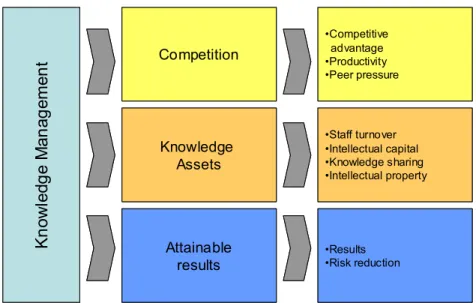
(24) VO performance measure. Trust building. VO launching. ICT support tools. VO partnership forms. VO planning. Knowledge management. VO structure and topology. Contracting. Negotiation. Partners search and selection. Coordination and collaboration. Brokering. Risk Management. AUTHORS Augusta et al, 2001 Avila et al, 2002 Belak et al, 2003 Bernus et al, 2002 Bonini et al, 2002 Burgwinkel 2002 Buzon et al, 2004 Camarinha-matos and Abreu, 2004 Camarinha-matos, 2003 Eisentraut et al, 2001 Fischer and Rehm, 2004 Gerber et al, 2004 Grabowsky and Roberts, 1999 Hieber et al, 2002 Holton, 2001 Horts et al, 2004 Ignatiadis and Tarabanis, 2004 Katzy and Dissel, 2001 Kazi and Hannus, 2003 Lackenby and Seddighi, 2002 Laurikkala and Tanskanen, 2002 Mejia et al, 2002 Mejia et al, 2004 Mezgar, 2004 Noran 2004 Preece, 2001 Presley et al, 2001 Prikladnicki R., 2004 Rabelo et al, 2004 Ren et al, 2004 Rittembruch et al, 1998 Scherle et al, 2004 Seifert and Eschenbaecher, 2004 Tolle M. 2004 Valikangas and Puttonen, 2003 Valikangas et al, 2000 Weib and Trunko, 2002 Zhou et al, 2003. X X X X X X X X X. X X X. X X. X X X. X X. X X X X. X. X. X X X X X X. X. X. X X X X. X. X X X. X. X. X. X. X X X X. X. Table 2 VO main related research work made the last years As is showed in table 2, most of the works oriented to provide VO theoretical foundation has been developed in specific topics, few works has been made in order to integrate the topics related with VO planning and launching, the most representative work made in the integration of these topics during the last years is a PhD dissertation (TØlle, 2004) from Denmark Technical University.. 13.
(25) Based on the review presented in table 2, a lot of work has been made in particular topics included in VO planning. However, there is a research opportunity in the integration of these topics into reference models in order to provide an integral approach in VO planning and launching. The research work presented in this thesis provides an integrative approach for the elements involved in VO planning. The integration is achieved through a reference model. The reference model differs from TØlle’s (2004) work in the application level where the research work was developed. TØlle’s (2004) work was developed for a specific type of VO (Virtual Enterprise); the work presented here is focused in all types of VO’s.. The work presented in this thesis integrates the work made from other. researchers into a generic structure for VO planning and launching. 2.2.6 International projects related with VO’s Several attempts have been done in order to generate, systematize and consolidate the knowledge about Virtual Organizations. The THINKcreative project was one of the first initiatives to introduce the concept of Collaborative Networked Organization (CNOs) as a more general concept to encompass various collaborative forms such as virtual organization, virtual enterprise, professional virtual community, etc (Camarinha-matos, 2004). THINKcreative identified and briefly analyzed some potential theories and approaches developed in other disciplines that could form the basis for the desired theoretical foundation. THINKcreative also discussed the concept of emergence in complex self-organizing systems and briefly analyzed the potential contribution of areas such as theories of complexity, multi-agent systems, self-organizing systems and evolving networks, and holistic approaches. An attempt to organize and categorize reference models for VOs can be found in TØlle, Bernus, and Vesterager (2002), and Zwegers, TØlle and Vesterager (2003) as a result of the GLOBEMEN project.. 14.
(26) A contemporary initiative, the VOmap roadmapping project, also pointed out the importance of a theoretical foundation for advanced virtual organizations (CamarinhaMatos and Afsarmanesh, 2003, Camarinha-Matos and Afsarmanesh, 2004). This project aimed at identifying and characterizing the key research challenges needed to fulfil the vision, required constituency, and the implementation model for a comprehensive European initiative on dynamic collaborative virtual organizations. One example of effort to systematize and consolidate the existing empiric knowledge on virtual organizations, mainly based on the achievements of a large number of European projects, was carried out by the VOSTER project. Some other projects developed in the VE/VO field are shown in table 3:. Table 3 Examples of European Project in VE/VO (Camarinha-Matos and Afsarmanesh, 2003). 2.3 Knowledge Management. Nowadays, Knowledge Management (KM) is currently receiving a lot of attention from practitioners and academics, and is being addressed by a broad range of academics literature and popular press (Kakabadse et al, 2003). However, while the literature is. 15.
(27) revealing in particular aspects of KM models, a better understanding of the multidisciplinary characteristics of KM Models have been identified (Guerra, 2004). During the last century, researchers began to explore KM, first were economist (Hayek, F.A, 1989, Marshall 1997), organizational theory (March and Simon, 1958) and philosophy (Polanyi, 1966). There are many definitions and models of KM, each adding new insights to a crucial, but nebulously defined field (Kakabadse et al, 2003). Several authors have tried to define KM, definitions presented KM as a systematic and explicit management of knowledge related activities, practices, programs and policies within the enterprise the enterprise (Wiig, 2000), For others, KM is a ‘conscious strategy of getting the right knowledge to the right people at the right time and helping people share and put information into action in ways that strive to improve organizational performance’ (O’Dell and Jackson, 1998). From a general perspective KM can be described as a set of activities oriented to provide the knowledge required to people involved in a decision making process. According to Pentland (1995), KM consists of four sets of knowledge processes: (1) knowledge creation, (2) knowledge organization and storage/retrieval, (3) knowledge transfer, and (4) knowledge application. In this research work, only the first two processes are considered, further activities should be focused in improving the integration of these four processes within VO life cycle. Based in a survey study Mason and Pauleen (2003) defined three main drivers of KM, these drivers have subcategories, the figure 3 shows the before mentioned structure:. 16.
(28) Knowledge Management. Competition. •Competitive advantage •Productivity •Peer pressure. Knowledge Assets. •Staff turnover •Intellectual capital •Knowledge sharing •Intellectual property. Attainable results. •Results •Risk reduction. Figure 3 Knowledge drivers (adapted from Mason and Pauleen, 2003) 2.3.1 The concept of Knowledge During the last decade, knowledge was conceptualized in different manners, for some authors knowledge was ‘economic ideas’ (Wiig, 1995) or ‘intellectual capital’ (Stewart, 1997). In the last year some authors have explored the knowledge concept in order to obtain more understanding about this concept (Guerra, 2004). The terms knowledge, information and data are concepts that are commonly used in KM literature, is important to clearly identify the differences between these three concepts. Based on the definitions developed by several authors it is possible to identify the differences between knowledge, information and data. Data represents observations of facts out of the context that are, therefore, not directly meaningful (Zack, 1999). Information results from placing data within some meaningful content often form of a message (Zack, 1999). Knowledge, as a ‘justified true belief’, is that which people believe and value on the basis of the meaningful and organized accumulation of information through experience, communication or inference (Dretske, 1981; Lave, 1988; Blacker, 1995).. 17.
(29) 2.3.2 Knowledge types According to Leonard and Sensiper (1998) knowledge types can be represented in a knowledge spectrum (See figure 4), “at one extreme it is almost completely tacit, that is, semiconscious and unconscious knowledge held in peoples’ heads and bodies. At the other end of the spectrum, knowledge is almost completely explicit, or codified, structured, and accessible to people other than the individuals originating it. Most knowledge, of course, exists in between the extremes”.. Figure 4 Knowledge spectrum (Leonard and Sensiper, 1998). Nowadays, tacit and explicit knowledge are the types of knowledge that more have been explored by researchers, however a third type of knowledge called implicit knowledge is under study, according to Guerra (2004), implicit provides a link between tacit and explicit knowledge, this mean that implicit knowledge is the type of knowledge that can be articulated but has not. 2.3.6 Knowledge Management Models description Literature and praxis reveal that there are many KM models as there are practitioners and theorist alike – from specialized functional or packaged KM models of business functions to diffused KM, such as in terms of different grouping (Kakabadse et al, 2003). The main models are the philosophy model, Cognitive model, Network model, Community Model and Quantum Model, the Table 4 shows provides a summary of each model:. 18.
(30) Table 4 Knowledge Management perspectives (Kakabadse et al, 2003). 2.4 Enterprise reference architectures 2.4.1 General Concepts This research work is developed in the context of Architectures, Reference model Methodologies and Models. It is important to differentiate these concepts within Enterprise Integration Engineering context. Enterprise Integration cannot be bought (Bernus et al, 1996); it must be tailored to the specific needs of each company. The integration of a company is not only a technological matter about integrating applications and equipment. Therefore companies need a guideline to or methodology to succeed in this task. Architecture refers to an organized set of elements with clear relationships to one another, which together form a whole defined by its finality (Vernadat, 1996). Reference Architectures are intellectual paradigms which facilitate analysis and accurate discussion and specification of a given area of discourse, they provide a way of viewing, conceiving. 19.
(31) and talking about an issue. Most representative reference architectures are: PERA, CIMOSA and GERAM. A framework refers to a collection of elements put together for some purpose (Vernadat, 1996). A methodology is a set of methods, models and tools to be used in a structured way to solve a problem (Vernadat, 1996) and a model is a representation of description of an entity or a system, describing only the aspects considered to be relevant in the context of its purpose (International Standard Organization, 1997). According to Williams (1994) to be valuable an Enterprise Reference Architecture should be able to supply answers or solutions to all or most of the following requirements: 1. Show the evolution of an enterprise development program through its life cycle. 2. Guide all the parties in the different areas of the enterprise for a diverse type of industries. 3. Incorporate different views to describe the entire enterprise. 4. Describe the place of the human in the organization. 5. The architecture should be independent of the technology employed. 6. Present a method for the breakdown of all system functions into their inherent generic functions. 7. Provide a common structure to be used by individual enterprise as a particular architecture. 8. Provide guidelines for the development of new standards. During the years many reference architectures have been developed by private, governmental and standards organizations, these last years the focus on the development of this architectures have been in generic architectures for all kind of device, system or enterprise. The following section presents the most important Reference Architectures.. 20.
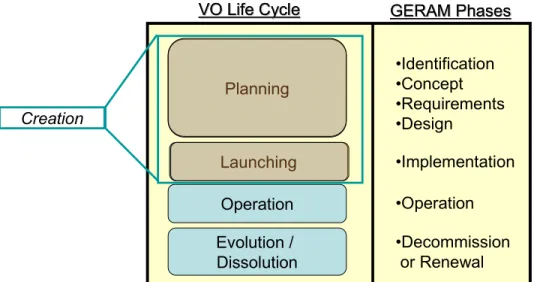
(32) 2.4.2 Review of reference architecture: CIMOSA, PERA, GERAM and VERAM 2.4.2.1 CIMOSA CIMOSA (Open Systems Architecture for CIM) has been developed by AMICE as part of ESPRIT projects jointly financed by the European Commission and 30 project partners since 1986. “The goal of CIMOSA is to help companies to manage change and integrate their facilities and operations to face worldwide competition and to compete in price, quality, and delivery time” (Vernadat, 1996). CIMOSA provides three interrelated concepts (Bernus et al, 1996): •. Modelling framework. •. System life cycle and environments. •. Integrating infrastructure. CIMOSA recognizes previous efforts in enterprise integration especially in the manufacturing industry and draws from the experience already gained in enterprise modelling and computer systems integration. “CIMOSA provides a reference architecture in its modelling framework for the specific description of a particular enterprise. CIMOSA facilitates a system life cycle which guides the user through model engineering and model execution. Model engineering and model execution is supported by the CIMOSA integrating infrastructure” (ESPRIT Consortium AMICE, 1993). The figure 5 shows the CIMOSA framework.. 21.
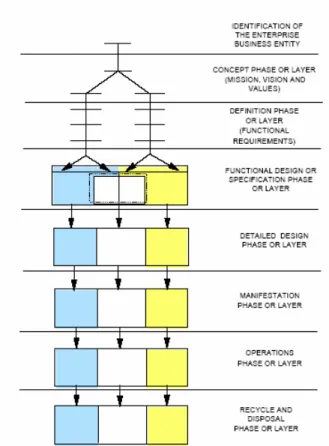
(33) Figure 5 CIMOSA Modelling Framework (ESPRIT Consortium, 1993) CIMOSA have been validated in many ESPRIT projects (Kosanke et al., 1999) with substantial benefits some of the industries in which have been applied are: FIAT (Automotive), Magneti Marelli Ricambi (Automotive), Koehler (Paper production), Traub (Machine tools) and Elval (Aluminium casting). 2.4.2.2 PERA PERA (Perdue Enterprise Reference Architecture) and its related methodology work stated in 1989 in Purdue University (Williams, 1992). PERA is characterized by its layering structure. It has been created to cover the full enterprise life cycle from inception and mission definition down to its operational level and final plant obsolescence. Each layer describes a task phase. Each phase is informally described by a technical document as a set of procedures for user’s applications group through all the phases of the enterprise development program (Vernadat, 1996). Figure 6 presents the different layers description among the system life cycle.. 22.
(34) Figure 6 Different layers of PERA (Williams, 1992) PERA most important concept is the life cycle, the life cycle starts with the identification of the business entity that is the object that it is going to be analyzed. Then in the concept phase, the architecture describes mission, vision and values of the entity. The definition phase defines basic requirements for manufacturing personnel and information policies on one side, and product and manufacturing units on the other side. Next, the functional design layer defines functional requirements, instrumentation and control diagrams, management and union mandated requirements, and plant layout. The Detailed design layer is concerned with detailed physical design. The manifestation layer corresponds to plant installation. The operational layer corresponds to day-to-day exploitation of the plant and continuing process development and maintenance layout (Vernadat, 1996) PERA has been used in industrial applications. The most famous example, The Flour Daniel Company used PERA in their project work. They have used PERA to present a framework around which much of their current work practices can be organized (Williams, 1995).. 23.
(35) 2.4.2.3 GERAM In 1990 the IFAC/IFIP Task force on architecture on Enterprise Integration was formed. The objective of this task force was to select the best architecture from the existing ones to be used ad a single universally accepted architecture in the field of Enterprise Integration, the principal architectures that analyzed by the task force were CIMOSA, PERA and GRAI-GIM During the analysis of this architecture, the following conclusions were defined: •. There are many architectures or frameworks for Enterprise Integration. •. Many of them have similar concepts presented in different types of graphical models.. •. None of the architectures cover completely all the aspects required by the Task Force. •. The Task Force did not pick a single methodology, because each one has unique characteristics.. •. The Task Force decided to create a new model formed with the sum of the useful characteristics of each architecture.. Based on this, the Task Force developed GERAM (Generic Enterprise Reference Architecture and Methodology), “The purpose of GERAM is to serve as a reference for the whole community concerned with the area of enterprise integration providing definitions of the terminology, a consistent modelling environment, a detailed methodology, promoting good engineering practice for building reusable, tested, and standard models, and providing a unifying perspective for products, processes, management, enterprise development, and strategic management” (Vernadat, 1996). During year 2000 GERAM was accepted as an annex to ISO 15704: 2004 which is a standard that establish the requirements for enterprise reference architectures and methodologies.. 24.
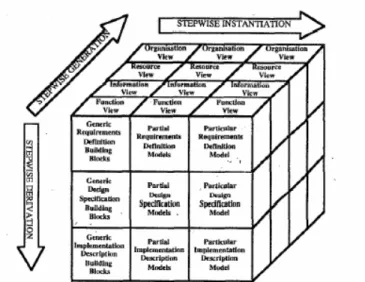
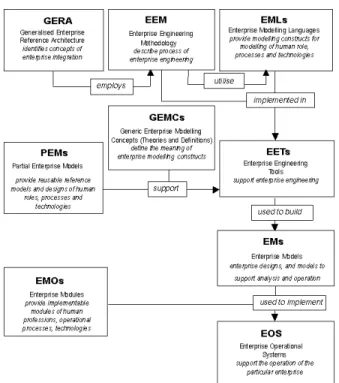
(36) GERAM includes the most important elements of the architectures before mentioned, in the case of GERAM; the reference architecture has three major elements that must be considered. Firstly, the life cycle establishes the stages of the enterprise development program, secondly the views used to represent the entity dynamics and finally is the instantiation process; figure 7 shows these three elements:. Figure 7 Description of GERAM Reference Architecture (GERAM, 1998). GERAM provides a description of all the elements recommended in enterprise integration engineering and thereby sets the standard for the collection of tools and methods from which any enterprise would benefit to more successful initial integration design, and the change processes which may occur during the enterprise operational lifetime. It does not impose any particular set of tools or methods, but defines the criteria to be satisfied by any set of selected tools and methods (GERAM, 1999). Figure 8 shows the major tools and methods needed for GERAM:. 25.
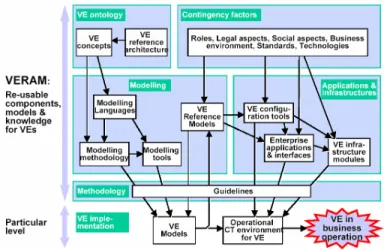
(37) Figure 8 GERAM Framework Components (GERAM, 1998) Due the differences founded in the operation of particular organizations, has been identified that enterprise modelling is not only applicable for one particular organization, enterprise modelling concepts can be used to describe operations of EE’s (Extended Enterprises) and VE (Virtual Enterprises) as well (Kosanke et al, 1999). Based on this, the design of this type of organization may need personalized versions of Enterprise Engineering Methodologies (EEM), Enterprise Modelling Languages (EML) and Enterprise Engineering Tools (EET). It is important to mention that the architectures analyzed previously are not suitable for the creation, launching and maintenance of a VO. For this reason they do not address the needs of a VO like cluster formation, partners search and information exchange between partners. 2.4.2.4 VERAM VERAM (Virtual Enterprise Reference Architecture and Methodology) have been created in the IMS GLOBEMEN Project. VERAM organizes all the knowledge about the. 26.
(38) formation and operation of Virtual Enterprise (Zwegers et al, 2003) and this is a specialization of GERAM (ISO 15704:2000). VERAM was created using GERAM as basis, but VERAM in developed within a VE context. VERAM structure the elements that support modelling formation/setup, management and ICT support of VE’s, such as reference models, and supporting tools and infrastructures. Regarding to VERAM, this architecture includes the same way the GERAM concepts related with entity life cycle and life history, and recursiveness. As regards to the views concepts of GERAM, the entity purpose view has been systematically applied. In addition, the views concepts have been used as follows Entity Model Contents Views (Functional, information, resource and organization) by referencing when needed. The Entity Implementation view has not been used explicitly but is nevertheless dealt with through systematic application of a traditional Industrial Engineering Work preparation approach to the preparation of VE’s. Lastly, the Entity Physical Manifestation View component “software” was dealt with due to the fact that all industrial demonstrators were software projects (Vesterager et al, 2000). Figure 9 shows the main components of VERAM, this architecture has three layers, in figure 9 VERAM first layer is the only one that is shown. This layer includes VERAM component that are used during the application of the architecture in practice. It consist of those tools, applications, applications and models that can be used during the formation and operation of VE’s (TØlle et al, 2002). 27.
(39) Figure 9 VERAM Components (Globemen, 2002) The purpose of the architecture is to structure a knowledge body that support future work in the area of global engineering and manufacturing in enterprise networks. The architecture aims to solve the problems of VE formation, operation and maintenance. In addition to operate and set up a virtual enterprise from a dynamic enterprise network.. 2.5 Literature Review Discussion Based on the performed review about Virtual Organization, The author has noticed: •. The concept of Virtual Organizations have been under studied during several years, this provides a good conceptual, it is important to mention that concepts has knowledge exchange, negotiation and contracting must need further years of research in order to provide a good conceptual foundation to the VO.. •. During the last years complex ICT support tools are been developed, based on this tools the VO concept achieved a more agile concept. Although these tools help the improve VO dynamic, this tools do not achieve the entire life cycle of a VO.. •. Researches on knowledge management are focused on the development of the technologies that will support knowledge sharing process among the Virtual Organization.. 28.
(40) •. Few researchers have explored how reference architectures should provide a basis for Virtual Organization creation and launching.. •. A remaining open issue is to cover the legal issues related to VO; this is made in order to provide a strong basis for topics such as intellectual property, responsibilities and agreements.. •. Another remaining issue in VO’s is related to the establishment of appropriate performance metrics and partners selection methods for VO’s.. Nowadays VO faces the challenge of establish the theoretical and technological infrastructure that provide enough support to achieve well structured methods for planning and launching of Virtual Organization. Virtual organizations (VO) have been rapidly growing within collaborative business environment. VOs seem to have a lack of integration among all the topics that this concept comprises, and this in an important issue to be tackled. There are just a few works where an integrated approach of VO creation and launching is considered. Based on this, there is need to develop work related to VO planning and launching. Due to the dynamic nature of Virtual Organizations a reference model which involves all types of these organizations is needed. Thus, a good opportunity is the creation of a novel approach that enables an integrative perspective during VO planning and launching. As a result, this research work intends to tackle the major issues already mentioned in this analysis. The author of this thesis proposes a reference model for planning and launching of virtual organizations. The reference model looks to integrate important elements during VO planning and launching.. 29.
(41) Chapter 3. - Virtual Organizations Planning and Launching Reference Model The research work included in this chapter describes a reference model for VO planning and launching (VO Frame), within this reference model all the issues related with VO creation are proposed using a systematic approach. Most of this research work is based on the work made by TØlle (2004), Camarinha-Matos (2005) and experiences obtained from IECOS3 operation. As the reference model is deployed during Virtual Organizations lifecycle, a Systematic approach for VO planning and launching is achieved. In the reference model are included all the mentioned themes in chapter 2 (Knowledge management, Enterprise reference architectures, Virtual Organizations) as major components of the reference model in order to provide a integrative tool that involves all major components that influence during VO planning and launching. The chapter is structured as follows, the first section presents a brief description of the elements that support VO Frame; the following three sections provide a detailed description of the three element of VO Frame. Finally, a section were the integration and use of VO Frame elements is shown.. 3.1 VO Frame elements. 3.1.1 VO Frame description The reference model has a structure based on GERAM elements. Using GERAM is possible to develop a reference model with a robust theoretical foundation and to achieve an Enterprise Integration Engineering approach during VO planning and 3. IECOS is brokering firms located in Monterrey, México, The competencies of the firm are: Constructions systems, Supply and Engineering services. IECOS looks to integrate the competencies of their network partners.. 30.
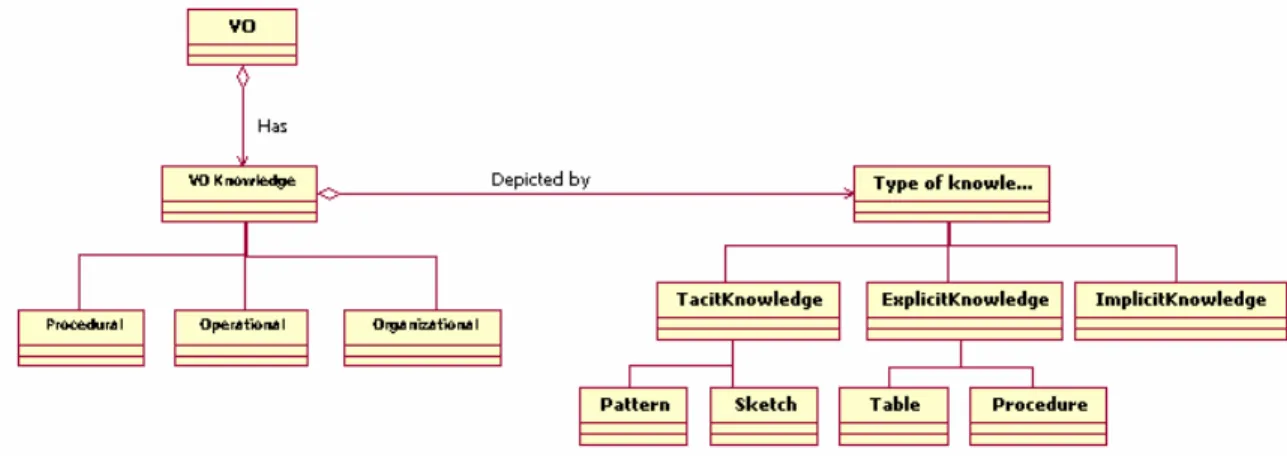
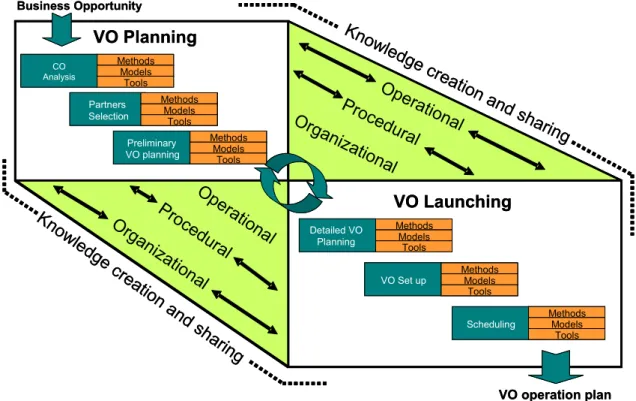
(42) launching. Figure 10 shows how the reference model (VO Frame) is supported by three components. The first component is a set of six phases (CO analysis, Partners selection, Preliminary VO planning, Detailed VO planning, VO set up and Scheduling) that defines the guidelines for VO planning and launching based on methodological aspects defined in TØlle (2004) and ECOLEAD (2005), the second element is a multidimensional modelling approach composed by four modelling views, through the modelling approach it is possible to represent the interactions of all the elements involved in VO planning and launching stages, finally, the third element is a mechanism that allows knowledge capturing and sharing during VO planning and launching, throughout this element is possible to capture the knowledge created during the development of the activities required by the six phase included in VO frame first element.. VO FRAME. Business Opportunity. CO Analysis. Methods Models Tools Partners Selection. Methods Models Tools Preliminary VO planning. Methods Models Tools. Detailed VO Planning. Methods Models Tools. VO Set up. Methods Models Tools. Scheduling. Phases. Methods Models Tools. VO operation plan. Organization view. Functional view. I ECOS. CSI M. G ust avo Levy. H ule y plastico d el Nor te. T homson de Mexico. Anver Cor p. 1 : \ Se ndMachinedPa rtsInf o\ 2 : \ DefineP rocessinTim e\. VO Model. 3 : \G etEstim atedPr ocessin gTime \ 4 : \G etPr oductInf o665B- 665D \. 5 : \ Get AviabilityOrder \ 6 : \ Get DeliveryT ime\ 7 : \S endRu bber Produ ct Specification s\ 8 : \ De finePr ocessing Time\. 9 : \G etDe li ver yTime \ 10 : \G etPr oducInf o-82 002- B\ 11 : \G etA via bilit yOr der \ 12 : \G etD elive ryTim e\ 13 : \ GetP roduct InfoH C- S109\ 14 : \G etA via bilit yOr der \ 15 : \ GetD eliveryT ime\ 16 : \ Sto reA llI nfoD DN- C2 70055- 1\. 17 : \ Integ rate DDN -C 27005 5-1I nfoin Gant t\. Information view. Knowledge capturing and sharing. Resource View. Modeling approach. Figure 10 Elements that support VO Frame In the following sections, a detailed description of VO Frame is presented. The description sequence is: 1. VO Frame: Phases 2. VO Frame: Modelling approach 3. VO Frame: Knowledge capturing and sharing mechanism.. 31.
(43) 3.1.2 VO Frame: Phases. To provide a flexible methodological approach during VO planning and launching, VO frame has six phases: (1) Collaboration Opportunity analysis, (2) Partners selection, (3) Preliminary VO planning, (4) Detailed VO planning, (4) VO set up. The purpose of these phases is to establish the basic guidelines for VO planning and launching activities. The phases included in VO frame can be customized according to specific VO requirements. Phase’s customization is based in three elements: (1) methods used in the phase, (2) tools that support the activities required in the phase and (3) models that represents the dynamics of the phase. Figure 11 describe the structure of VO Frame phase and how methods, tools and models are included in each VO Frame phase. Business Opportunity. CO Analysis. Methods Models Tools Partners Selection. Methods Models Tools Preliminary VO planning. Methods Models Tools. Detailed VO Planning. Methods Models Tools. VO Set up. Methods Models Tools. Scheduling. Methods Models Tools. VO operation plan. Figure 11 VO Frame phases. 32.
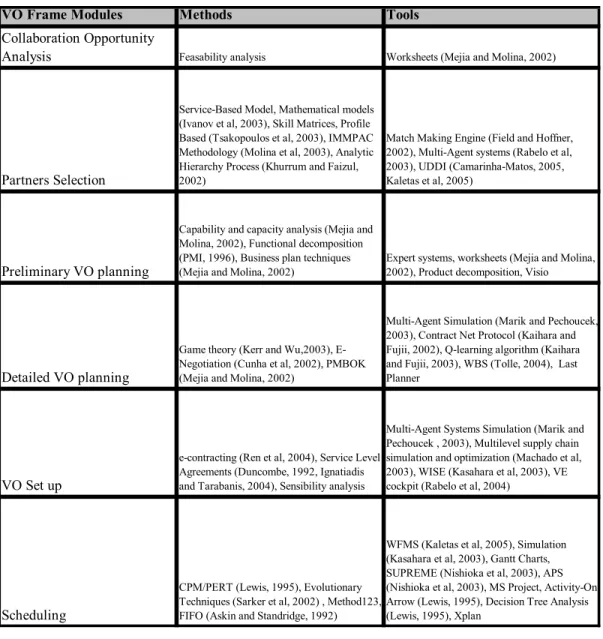
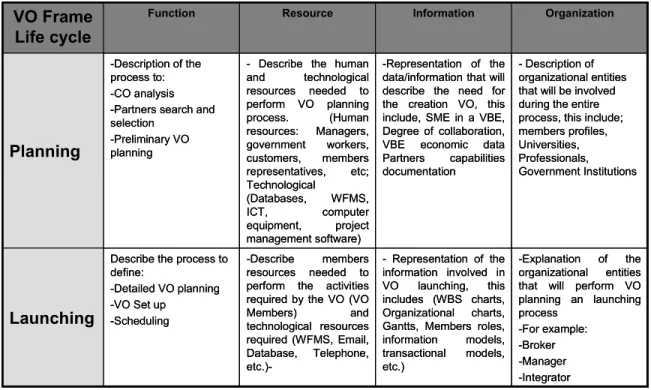
(44) In VO Frame, two overall types of use of their six modules are being envisioned: 1) General use (Step-by-step): Using the modules step-by-step from top to bottom can support the set up of more formalised VOs. This could either be an enterprise already operating in a sort of networked environment but where a need for further preparation and clarification is needed in order to be able to set up effective VOs efficiently, i.e. in a competitive manner with regards to e.g. time, cost and quality. 2) Selected use (pick relevant activities): As an alternative to using the whole list step-by-step, selected activities can also be used to support within a certain sub-part. This could be the case if a more formal enterprise network has already been established. In this case the list in general can work as a kind of checklist and serve as inspiration for how the network could be configured or prepared in a different matter. If a need for reconfiguration is identified then the list could be used in more detail to support one or more of the described activities. VO Frame modules define general guidelines for VO planning and launching, table 5 presents a detailed description of each VO frame module according to figure 13. Phase. Description. Collaboration. Include all the activities required when a partner in confronted. Opportunity analysis. (CO) with a collaboration opportunity, this phase includes activities such as: network capabilities assessment, Scope definition, CO classification, CO representation and feasibility analysis.. Partners Search and Partners search and selection includes assessing if the partner Selection. possesses enough capabilities, i.e. have knowledge and experience to fulfil the type of works as well as have needed capacity at the request time. In this phase are included activities such as: Members capabilities assessment, definition of search mechanism, specification of preferences, etc.. 33.
(45) The more extensively the partners have been assessed in the network the less assessment needs to be done as a part of the VO and vice versa. Preliminary Planning. VO This phase defines a rough VO plan in order to establish the basis for a more detailed VO planning; this rough plan can be used during partners search and selection to optimize the selection of partners. In this phase should developed activities such as identification of required competencies, preliminary VO modelling, Simulation, task decomposition, preliminary topology definition, etc.. Detailed. VO This phase uses the rough plan developed in the previous stage. planning. as basis. In this phase the activities must be developed in order to define the negotiation activities to be made, assign roles and responsibilities, definition of operating and contracting rules.. VO Set up. Set up of a VO highly depends on the type and level of work preparation already determined in VO planning stages. The more the VO planning has been developed , less work has to be made during VO set up and more it can be an instantiation of previously prepared VOs, the set up includes: •. Set up VO infrastructure, e.g. a multitier (partner) project structure, define access rights and interfaces with partner’s legacy systems.. •. Deploy VO rules, template to be used, Reference Models to instantiate in the specific situation, other tools, etc.. •. Contractual issues (Contracting process), e.g. contract. 34.
Figure
+7
Documento similar
For example, in (Ju´lvez, Bemporad, Recalde, & Silva 2004) hybrid control techniques based on Mixed Logic Dynamical systems (Bemporad & Morari, 1999) are applied to
We propose to model the software system in a pragmatic way using as a design technique the well-known design patterns; from these models, the corresponding formal per- formance
Each lamp contains a single LED source mounted in an axial bore. Light from the LED passes through a ground glass diffuser followed by a 5mm diameter aperture and a
It is clear that human motion provides use- ful information for people detection and independent from appearance information, so we also present an integrated system which combines
This is accomplished by means of an object oriented continuous simulation language, called OOCSMP, and a Java generating compiler for this language called C-OOL.. This compiler is
Continuous improvement does not mean that the changes made are the sole responsibility of employees, management need to be fully involved in facilitating process improvements
The domain engineering process was used by the authors and, as a result, (A. Alonso, Álvarez, Pastor, de la Puente & Iborra, 1997) a Domain Specific Software Architecture (DSSA)
2 Neural Model Structure: Self-organizing and Fast Mapping The proposed architecture is based on two interconnected neural models that se- quentially project the 3D final
