
Programmatic human papillomavirus testing in cervical cancer prevention in the Jujuy Demonstration Project in Argentina: a population based, before and after retrospective cohort study
12
0
0
Texto completo
(2) Articles. Research in context Evidence before this study The initial search to define the study protocol covered PubMed between Jan 1, 2002, and Dec 31, 2010. The search was extended to Jun 30, 2018, when writing the manuscript. Relevant publications with the key terms “cervical cancer”, “HPV testing”, “cervical cancer screening”, “clinical trials”, and “self-collection” were reviewed for quality and relevance. Only studies written in English or Spanish were considered. We found that much of the evidence about the effect of human papillomavirus (HPV) testing comes from randomised controlled trials, and to our knowledge no study has assessed how HPV testing has performed in realworld programmatic conditions of middle-income settings compared with cytology-based screening. Added value of this study This study analysed results from the Jujuy Demonstration Project, which ran from 2012–14, and was one of the first population-based HPV testing projects done in a middle-income setting.. vaccination, HPV testing could accelerate elimination of cervical cancer.9 Cervical cancer prevention in Argentina has historically faced the same organisational problems as most countries in Latin America.10 The National Program on Cervical Cancer Prevention (NPCCP) was relaunched in 2008 and in 2010 a decision was made to introduce HPV testing for screening.11 Jujuy, a province with high cervical cancer mortality (11∙8 per 100 000 in 2008–10) was chosen for implementation of the Jujuy Demonstration Project (JDP),11 a 4-year population-based study led by the Argentinian National Cancer Institute, done during 2011–14 to evaluate large-scale programmatic introduction of HPV testing. Descriptions of the JDP planning phase (2011), and the first year of screening (2012) were previously published.11 In this Article, we present the final results of the JDP. We aimed to evaluate how effective HPV-based screening was in increasing detection of precancerous cervical lesions compared with cytology-based screening.. evaluate the effect of HPV testing on detection of cervical intraepithelial neo plasia of grade 2 or worse (CIN2+). Non-randomised methods are increasingly used to evaluate population health interventions,12 and PSM ensures that the average characteristics of the intervention and comparison groups are similar, which is deemed sufficient to obtain an unbiased effect.13 Such methods are particularly suitable when randomisation is not feasible and to produce data for the effect of interventions in realworld settings. Additionally, we analysed improvement of key indicators related to programme organisation. The Jujuy setting has been extensively described else where.8,11 The province is located in northwest Argentina and has around 673 000 inhabitants; 85% of the population live in urban areas and 32% are poor; its public health system includes a tertiary referral hospital, 300 primary health-care centres, 18 diagnostic centres, and five treatment services. Health services are free for the population not covered by the social security sector (eg, informal workers and their families).. Methods. Cytology-based screening procedures. The JDP was population-based and implemented by the NPCCP in the province of Jujuy, Argentina, to evaluate the introduction of HPV testing as programmatic, primary screening.11 The JDP involved 1 year of planning (from Jan 1 to Dec 31, 2011) and 3 years of screening (between Jan 1, 2012, and Dec 31, 2014). On Jan 1, 2012, all Jujuy public health institutions changed the primary screening method for cervical cancer prevention from cytology-based screening to HPV testing. We used a before-and-after, retrospective cohort study, and a pre-post design, combined with propensity score matching (PSM), to. A situational analysis done in 200714 showed that in Jujuy, cervical screening coverage was low, information systems were unreliable, information on follow-up and treatment was missing, and providers had low adherence to programmatic norms and recommendations. Cytology results were read in six laboratories, which processed in total around 22 000 annual samples without quality controls. Before 2012, cytology-based screening was recom mended in Argentina for women aged 25 years and older, every 3 years after two consecutive negative Papanicolaou (Pap) smear tests, but annual screening was common. Study design and participants. e773. Implications of all the available evidence Results from the Jujuy Demonstration Project study are very important for similar settings implementing or considering implementing HPV testing. The study showed that, compared with cytology, programmatic HPV testing doubled detection of cervical intraepithelial neoplasia of grade 2 or worse (CIN2+) lesions, confirming available evidence from randomised controlled trials. In addition, introduction of HPV testing can facilitate the programme and health service reorganisation needed to improve programme indicators. Therefore, although the positive predictive value was lower and the colposcopy referral frequency was higher in the HPV testing group compared with the cytology group, adherence to colposcopy was similar in both groups. Further analysis should provide supportive evidence showing that the increased detection of CIN2+ lesions in this first round of screening represents early detection and not overdiagnosis, as shown by studies with longer follow-up.. www.thelancet.com/lancetgh Vol 7 June 2019.
(3) Articles. HPV-based screening procedures In 2012, the JDP introduced HPV testing (Hybrid Capture 2; Germantown, MD, USA) for primary screening11 of women aged 30 years and older, irrespective of previous screening history. JDP protocols have been described elsewhere.11 Briefly, women who were HPV-positive were triaged with cytology-based screening. Individuals whose samples were classified as ASCUS or worse (ASCUS+) were referred to colposcopy and biopsy if needed. Women with histologically confirmed CIN2+ were referred for treatment. Women who were HPV negative were recommended re-screening in 5 years. HPV testing and cytology triage were collected simul taneously, but cytology was read only if the individual was HPV-positive. Women who were HPV-positive but had normal cytology were recommended re-screening in 18 months. Women younger than 30 years continued to undergo cytology-based screening. The Jujuy primary health-care system employs more than 700 full-time community health workers, who visit around 110 000 households (70% of total provincial households) twice each year for health-related tasks including promotion of HPV testing.11 On the basis of the EMA study,8 which showed a four-times increase in screening uptake due to self-collection, the strategy of selfcollection offered by community health workers during home visits was scaled up in 2014.15 The strategy targeted women aged 30 years and older from households visited by community health workers, who had not been screened in the previous 5 years, and with public health coverage. Women who were HPV-positive who used self-collection tests had to attend health centres for cytology triage. At present, self-collection is in use in four Argentinian provinces.. Data sources Since 2010 in Jujuy, any instance of screening, diagnosis, or treatment using public health services has been registered in the national screening information system (SITAM).16 The HPV laboratory used SITAM to manage samples at entry; the samples of individuals that did not comply with the recommended age range or screening frequency were not processed. Women were informed about why their test was not analysed and were reminded of the date of their next HPV test. The protocol was approved by the CEMIC Institutional Review Board www.thelancet.com/lancetgh Vol 7 June 2019. (protocol number 1186). De-identification of the data bases protected the identity of participants. Verbal informed consent was obtained according to the national regulations for standard medical practices (Patient’s Rights Act 26.529). Specific consent was not required for statistical analysis of aggregated de-identified data. We extracted data from SITAM for the purposes of this analysis.16 Colposcopies, biopsies, and treatments not registered in SITAM were considered lost to follow-up, including those done in private services without con firmation by the provincial programme. Information on health insurance was obtained from the National Database on Health Insurance.. Outcomes We compared key programmatic indicators using the reach, effectiveness, adoption, implementation, and maintenance (RE-AIM) framework,17 specifically developed to expand assessment of interventions beyond efficacy to multiple criteria. This analysis might better 25 000 Number of women screened. practice. Colposcopy, and biopsy if needed, was recom mended for women with atypical squamous cells in whom high-grade or worse lesions could not be excluded (atypical squamous cells for which high-grade squamous intraepithelial lesions cannot be ruled out or worse [ASC-H+], high-grade squamous intraepithelial lesion, or cancer). Women with atypical squamous cells of undetermined significance (ASCUS) or low-grade squa mous intraepithelial lesions (LSIL) were recommended for re-screening in 6 or 12 months.. Proportion of target population. 20 000 15 000 10 000 5000 0. 70%. 69%. 2010. 2011. 63%. 63%. 63%. 2012. 2013. 2014. Year of screening. Figure 1: Screened women by year, Jujuy 2010–14. Cytology-based period HPV-based period 2010–11 (n=29 631) 2012–14* (n=49 565) Age (years). 42·9 (10·3). 43·1 (10·4). 30–34. 7851 (26·5%). 12 582 (25·4%). 35–44. 10 478 (35·4%). 17 923 (36·2%). 45–54. 6624 (22·4%). 10 775 (21·7%). 55–64. 3711 (12·5%). 6486 (13·1%). 967 (3·3%). 1799 (3·6%). 65 and older Health insurance. 8783 (29·6%). 17 902 (36·1%). 20 848 (70·4%). 31 663 (63·9%). No. 9052 (30·5%). 18 456 (37·2%). Yes. 20 579 (69·5%). 31 109 (62·8%). Private or social Public Target population†. Data are n (%) or mean (SD). HPV=human papillomavirus. *Clinician-collected and self-collected tests combined. †Yes=women aged 30–64 years with public health insurance; No=women aged 30–64 years with private or social health insurance and those aged 65 years or older with any health insurance.. Table 1: Sociodemographic characteristics of screened women, Jujuy 2010–14. e774.
(4) Articles. Total screened aged ≥30 years Test-positive. Clinician-collected (2012–14). Self-collected (2014). Cytology (2010–11). 44 700. 4865. 29 631. 6111 (13·7%). 633 (13·0%). 1178 (4·0%). Detection by screening CIN2+. 552 (1·23%). 35 (0·72%). CIN2. 91 (0·20%). 7 (0·14%). 55 (0·19%). CIN3*. 405 (0·91%). 21 (0·43%). 158 (0·53%) 23 (0·08%). CA. 236 (0·80%). 56 (0·13%). 7 (0·14%). CIN2+ detection rate (per 1000 screened women). 12·3. 7·2. 8·0. CIN3+ detection rate (per 1000 screened women). 10·3. 5·7. 6·1. Detection by follow-up of HPV-positive women with negative cytology CIN2+. 106 (0·24%). 0. NA. CIN2. 21 (0·05%). 0. NA. CIN3*. 81 (0·18%). 0. NA. 4 (0·01%). 0. NA. CIN2+ detection rate (per 1000 screened women). 2·4. 0·0. NA. CIN3+ detection rate (per 1000 screened women). 1·9. 0·0. NA. Overall CIN2+ detection rate (per 1000 screened women). 14·7. 7·2. 8·0. Overall CIN3+ detection rate (per 1000 screened women). 12·2. 5·7. 6·1. CA. Referral to colposcopy Overall positive predictive value. 1663 (3·7%). 150 (3·1%). 10·8%. 5·5%. 403 (1·4%) 20·0%. Data are n or n (%), unless otherwise specified. HPV=human papillomavirus. CIN=cervical intraepithelial neoplasia. CA=carcinoma. NA=not applicable. *CIN3 includes adenocarcinoma in situ.. Table 2: Screening performance indicators by type of tests. identify the translatability and public health effect of health promotion interventions, balancing the emphasis on internal and external validity.17,18 The RE-AIM frame work is particularly appropriate for assessing the public health effect of the intervention as a function of the five factors that comprise the RE-AIM acronym, all of which are considered necessary for success.17 In assessing reach (defined as the proportion of individuals who receive or are affected by a policy or programme17), our goal was to evaluate how HPV testing influenced the capacity of the provincial programme to achieve high screening coverage. We defined coverage as the proportion of women aged 30–64 years with public health insurance screened at least once in each period of the estimated number of target women (2-year cytology period n=39 000; 3-year HPV period n=58 500, according to the National Census 2010). For the HPV testing period, we measured coverage including women that had clinician-collected tests and coverage including both women who had a clinician-collected test and those who submitted a self-collected test. Our primary effectiveness outcome was histologically confirmed CIN2+ detection among women aged 30 years or older screened between Jan 1, 2010, and Dec 31, 2014. When referring to effectiveness, we followed the definition of Rabin and Brownson,19 which refers to the effect of an intervention that has shown efficacy when it is delivered under real-world conditions. Detection was calculated as follows: (1) proportion of women who underwent cytology-based screening who had CIN2+ detected of the total number of women who underwent cytology-based screening; and (2) proportion of women. 29 631 total cytology samples. 28 453 negative cytology samples. 775 ASCUS or LSIL samples. 403 ASC-H+ samples. 100 women with ASC-H+ at follow-up. 135 women without colposcopy. 368 women with colposcopy or biopsy. 132 women with normal biopsy or CIN1 lesions. 236 women with CIN2+ lesions. 46 women without treatment. 190 women with treatment. Figure 2: Follow-up of women with ASC-H or worse lesions detected by cytology, Jujuy 2010–11 ASC-H+=atypical squamous cells for which high-grade squamous intraepithelial lesions cannot be ruled out or worse. ASCUS=atypical squamous cells of undetermined significance. CIN=cervical intraepithelial neoplasia. LSIL=low-grade squamous intraepithelial lesions.. e775. www.thelancet.com/lancetgh Vol 7 June 2019.
(5) Articles. 44 700 women had a clinician-collected test. 6111 women were HPV-positive. 92 women had unsatisfactory cytology. 109 women were without cytology. 4247 women had normal cytology. 2509 women had a secondary HPV test. 1663 women had triage 1657 women had abnormal cytology 6 women underwent coloscopy triage. 423 women without coloscopy because of loss to follow-up. 1240 women with coloscopy. 56 women were without available results. 289 women had normal results. 895 women had abnormal results. 48 women without biopsy. 847 women with biopsy in PHS. 295 women with normal biopsy or CIN1 lesions. 552 women with CIN2+ lesions. 89 women without treatment data. 473 women with treatment. Figure 3: Follow-up of women who were HPV-positive who had clinician-collected tests, Jujuy 2012–14 CIN=cervical intraepithelial neoplasia. HPV=human papillomavirus. PHS=public health system.. who underwent HPV screening (including both cliniciancollected and self-collected tests) who had CIN2+ detected of the total number of women who underwent HPV screening. CIN2+ lesions detected by HPV testing also included those detected at 18-month follow-up in women who were HPV-positive but had normal cytology at the original screening. The proportion of women who had CIN3+ lesions detected was also calculated. The positive predictive value for HPV testing was calculated at both baseline and follow-up at 18 months. Histological confirmation was considered the gold standard. We calculated odds ratios (ORs) and 95% CIs to assess the CIN2+ detection effectiveness of HPV compared with cytology, and calculated CIN2+ detection rate (per www.thelancet.com/lancetgh Vol 7 June 2019. 1000 screened women) through a descriptive before-andafter analysis using two periods: (1) the 2-year cytologybased screening period preceding the introduction of HPV testing, 2010–11; and (2) the HPV period, 2012–14. Adoption refers to the intention to use an innovation or evidence-based practice.20 For each period we measured the following: the proportion of primary health-care centres that provided the screening method of the total number of primary health-care centres; the proportion of women screened within the recommended age range (aged 25 years or older for cytology-based screening, and 30 years or older for HPV screening) of the total number of women who were screened; and the proportion of women who were over-screened of the total number of e776.
(6) Articles. 4865 women used self-collection tests. 633 women were HPV-positive. 36 women were negative for HPV on their second test. 16 women had a colposcopy. 439 women were cytology triaged. 48 women were without available results. 10 women had normal samples. 6 women had abnormal samples. 257 women had normal samples. 134 women had abnormal samples. 45 women without colposcopy. 89 women with colposcopy. 8 women were without available results. 33 women had normal results. 3 women without a biopsy. 6 women had a biopsy. 2 women had normal biopsy or CIN1 lesions. 48 women had abnormal results. 4 women had CIN2+ lesions. 45 women with biopsy. 14 women had normal biopsy or CIN1 lesions. 4 women had treatment. 31 women had CIN2+ lesions. 7 women without treatment. 24 women with treatment. Figure 4: Follow-up of women who were HPV-positive who did self-collected tests, Jujuy 2014 CIN=cervical intraepithelial neoplasia.. women who were screened. Over-screening was defined as screening done more than once per year for cytologybased screening; and more than once in the 3-year period for HPV screening. Implementation refers to the extent to which a programme is delivered as intended.20 In each period, we measured four outcomes. The first was laboratory organisation—ie, the number of laboratories processing the primary screening test. The second was changes in sample quality—ie, the proportion of inadequate cytology e777. samples of the total number of cytology samples (2010–11); and the proportion of HPV samples discarded at the laboratory of the total number of HPV samples (2012–14). We additionally measured the proportion of inadequate cytology-based triage samples of the total number of cytology triage samples. The third was completion of follow-up, which was split into four parts: (1) the proportion of women with a positive Pap test result who had a colposcopy of the total number of women with a positive test result (ie, for the cytology www.thelancet.com/lancetgh Vol 7 June 2019.
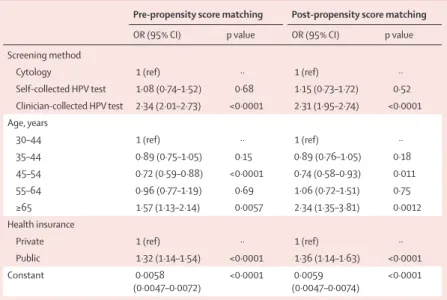
(7) Articles. period, the proportion of women with ASC-H+ cytology that complied with colposcopy of the total number of women who had ASC-H+; for the HPV period, the proportion of HPV-positive women with ASCUS+ who had a colposcopy of the total number of HPV-positive women with ASCUS+); (2) the proportion of HPVpositive women with normal cytology who complied with follow-up at 18 months (HPV period) and the proportion of women with ASCUS or LSIL who complied with follow-up at 12 months (cytology period); and (3) for the HPV period we also measured the proportion of women with self-collection HPV-positive tests who had triage (cytology or colposcopy). The fourth was the proportion of women who received treatment of the total number of women with CIN2+ lesions. Maintenance is the extent to which a programme or policy becomes institutionalised or part of the routine organisation practices and policies.18 We presented the number of new women tested for HPV (both with clinician-collected and self-collection tests) in 2015–17, after the JDP was finalised.. Statistical analysis Mean age as a continuous variable was compared between the cytology-based period and HPV-based period using the Wilcoxon rank-sum test. Multivariable logistic regression was used to measure the magnitude of the effect of HPV testing on CIN2+ detection compared with cytology-based screening, after adjusting for age and health insurance status. To account for potential selection into the intervention group and minimise bias, we developed a second model using PSM. Included variables were age (in years) and health insurance status. Functionality of PSM requires datasets with no missing values. To handle missing data, we used average imputation for age (six missing cases) and random imputation for health insurance (13 missing cases). The matching algorithm chosen was the nearest neighbour algorithm, using a caliper value of 0∙1 SD. We used R statistical software (version 3.5.0) for all analysis, and Matchit R Package (version 3.0.2) for the PSM.. Role of the funding source The funder had no role in study design, data collection, analysis, or writing of the report. The corresponding author had full access to all data in the study and had final responsibility for the decision to submit for publication.. Results Between Jan 1, 2010, and Dec 31, 2014, 79 196 women aged 30 years and older were screened; 29 631 women underwent cytology-based screening in 2010–11, and 49 565 women were tested for HPV in 2012–14. All women were included in the analysis. Most cytologybased screened women were screened in 2011 (17 185 www.thelancet.com/lancetgh Vol 7 June 2019. Pre-propensity score matching. Post-propensity score matching. OR (95% CI). OR (95% CI). p value. p value. Screening method Cytology. 1 (ref). Self-collected HPV test. 1·08 (0·74–1·52). 0·68. ··. 1 (ref) 1·15 (0·73–1·72). 0·52. ··. Clinician-collected HPV test. 2·34 (2·01–2·73). <0·0001. 2·31 (1·95–2·74). <0·0001. Age, years 30–44. 1 (ref). 35–44. 0·89 (0·75–1·05). 0·15. ··. 0·89 (0·76–1·05). 1 (ref). 0·18. ··. 45–54. 0·72 (0·59–0·88). <0·0001. 0·74 (0·58–0·93). 0·011. 55–64. 0·96 (0·77–1·19). 0·69. 1·06 (0·72–1·51). 0·75. ≥65. 1·57 (1·13–2·14). 0·0057. 2·34 (1·35–3·81). 0·0012. Health insurance Private. 1 (ref). Public. 1·32 (1·14–1·54). <0·0001. ··. 1 (ref) 1·36 (1·14–1·63). <0·0001. ··. Constant. 0·0058 (0·0047–0·0072). <0·0001. 0·0059 (0·0047–0·0074). <0·0001. CIN=cervical intraepithelial neoplasia. OR=odds ratio. HPV=human papillomavirus.. Table 3: Logistic regression of CIN+ detection frequency with and without propensity score matching. [58·8%] of 29 631) and most HPV tested women were screened in 2012 (22 515 [45·4%] of 49 565); figure 1). Among the 49 565 women who were tested for HPV, 44 700 (90·2%) had clinician-collected tests and 4865 (9·8%) used self-collection tests. In 2014, when selfcollection screening was introduced, the method represented 38·1% (4865 of 12 779) of all screening tests in the study sample. Compared with women who underwent cytology-based screening, a lower proportion of women who were HPV tested (both clinician-collected and self-collection tests) had public health insurance and were from the target population (table 1). Although the mean age of the two groups was numerically similar, according to the Wilcoxon rank-sum test, individuals who underwent cytology-based screening were significantly younger than those who underwent HPV screening (42·9 years vs 43·1 years; p=0∙013). Among the 4865 women who used self-collection tests, 3520 (72·4%) had public health insurance, and 3265 (67·1%) were from the target population. Figures 2–4 show the follow-up of screened women for method of screening. Screening performance indicators by type of test are shown in table 2. CIN2+ was detected in 236 (0·8%) of 29 631 women who had undergone cytology-based screening, (figure 2) and the positive predictive value was 20·0%. CIN2+ was detected in 552 (1·23%) of 44 700 women who had undergone clinician-collected tests in the first round of screening. 2509 (59·1%) of the 4247 women who were HPV-positive with normal cytology were re-screened (figure 3); CIN2+ was detected in 106 (0·24%) individuals in this group. Overall, 658 CIN2+ lesions were detected through clinician-collected tests, and the positive predictive value was 10·8%. 35 CIN2+ lesions were identified among e778.
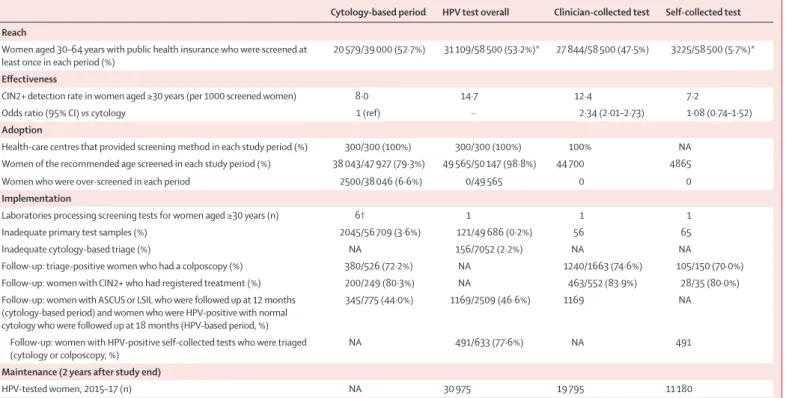
(8) Articles. Cytology-based period. HPV test overall. Clinician-collected test. 20 579/39 000 (52·7%). 31 109/58 500 (53·2%)*. 27 844/58 500 (47·5%). Self-collected test. Reach Women aged 30–64 years with public health insurance who were screened at least once in each period (%). 3225/58 500 (5·7%)*. Effectiveness CIN2+ detection rate in women aged ≥30 years (per 1000 screened women). 8·0. Odds ratio (95% CI) vs cytology. 1 (ref). 14·7 ··. 12·4 2·34 (2·01–2·73). 7·2 1·08 (0·74–1·52). Adoption Health-care centres that provided screening method in each study period (%) Women of the recommended age screened in each study period (%) Women who were over-screened in each period. 300/300 (100%). 300/300 (100%). 38 043/47 927 (79·3%). 49 565/50 147 (98·8%). 2500/38 046 (6·6%). 0/49 565. 100%. NA. 44 700. 4865. 0. 0. Implementation Laboratories processing screening tests for women aged ≥30 years (n) Inadequate primary test samples (%) Inadequate cytology-based triage (%). 6†. 121/49 686 (0·2%). NA. Follow-up: triage-positive women who had a colposcopy (%). 380/526 (72·2%). Follow-up: women with CIN2+ who had registered treatment (%). 200/249 (80·3%). Follow-up: women with ASCUS or LSIL who were followed up at 12 months (cytology-based period) and women who were HPV-positive with normal cytology who were followed up at 18 months (HPV-based period, %). 345/775 (44·0%). Follow-up: women with HPV-positive self-collected tests who were triaged (cytology or colposcopy, %). 1. 2045/56 709 (3·6%). 156/7052 (2·2%) NA NA 1169/2509 (46·6%). NA. 491/633 (77·6%). 1. 1. 56. 65. NA 1240/1663 (74·6%) 463/552 (83·9%). NA 105/150 (70·0%) 28/35 (80·0%). 1169. NA. NA. 491. 19 795. 11 180. Maintenance (2 years after study end) HPV-tested women, 2015–17 (n). NA. 30 975. CIN2+=cervical intraepithelial neoplasia of grade 2 or worse. NA=not applicable. ASCUS=atypical squamous cells of undetermined significance. LSIL=low-grade squamous intraepithelial lesions. HPV=human papillomavirus. *Self-collected testing was introduced in 2014, so its contribution to reach is based on 1 year only. †In 2010; the number of cytology laboratories was reduced to three in 2012.. Table 4: Reach, effectiveness, adoption, implementation, and maintenance (RE-AIM) measurement. women using self-collection tests (figure 4), and the positive predictive value was 5·5%. Of the 257 women who used self-collection tests who were HPV-positive with normal cytology, 41 (16%) were re-screened, but no CIN2+ lesions were identified in this group. Overall, 693 (1·4%) of 49 565 women who underwent HPV testing (including both clinician-collected and self-collection tests) had CIN2+ lesions detected. The proportion of individuals who were referred for colposcopy was 403 (1·4%) of 29 631 for cytology-based screening (figure 2), 1663 (3·7%) of 44 700 for clinician-collected tests, and 150 (3·1%) of 4865 for self-collection tests. Results from the multivariate logistic regression and PSM are shown in table 3. The odds of being diagnosed with a CIN2+ lesion were higher when using cliniciancollected testing than with cytology-based screening, after controlling for age and health insurance (OR 2·34; 95% CI 2·01–2·73; p<0·0001). After PSM, the odds of a CIN2+ result using HPV testing were similar to before PSM. The odds of being diagnosed with a CIN2+ lesion were similar for women who used self-collection tests and those using cytology-based screening, both before and after PSM (table 3). Analysis including only individuals with CIN3+ lesions did not change results (clinician-collected HPV testing vs cytology, OR 2∙54, 95% CI 2·14–3·03; p<0·0001; self-collection HPV testing vs cytology, OR 1·20, 95% CI 0·8–1·75; p=0∙34). We ran additional models evaluating the possible inter action e779. between method of screening and the variables of age and health insurance status. In these models, the interaction terms were not statistically significant, whereas all other variables remained statistically significant—as in the model without interaction. Key programmatic indicators assessed by before-andafter analysis using the RE-AIM framework are shown in table 4. Regarding reach, estimated coverage was 52·7% for the cytology period (20 579 of 39 000), and 47·5% for the HPV period (27 844 of 58 500) when only women who had clinician-collected tests were considered, and 53·2% if both clinician-collected and self-collection tested women are included (31 109 of 58 500). 100% of health-care centres adopted the screening method in each period. The percentage of screened women within the recommended age range was higher in the HPV period: 98·8% (aged 30 years and older) versus 79·3% in the cytology period (aged 25 years and older). Over-screening was 0·0% in the HPV period and 6·6% in the cytology period. The implementation of the programme involved six laboratories processing cytology-based screening tests in 2009; this number was reduced to three by 2011. In 2012, a central HPV-cytohistology laboratory was created. The percentage of inadequate samples of the primary screening test was reduced from 3·6% (cytology period) to 0·2%. The percentage of women with ASC-H+ with colposcopy was similar among women screened www.thelancet.com/lancetgh Vol 7 June 2019.
(9) Articles. in the HPV period (clinician-collected 74·6% vs self-collection 70·0%) to those screened in the cytologybased period (72·2%). In total, 491 (77·6%) women with HPV-positive self-collection tests were triaged. The percentage of treated CIN2+ lesions was similar in all three groups, around 80%. The percentage of rescreening of women who were HPV-positive with normal cytology at 18 months (46·6%) was similar to the percentage of re-screening of women with ASCUS or LSIL at 12 months in the cytology-based period (44·0%). Regarding effectiveness, CIN2+ detection rates were 12·3 per 1000 screened women for clinician-collected tests, 7·2 per 1000 screened women for self-collected tests, and 8·0 per 1000 screened women for cytology tests. When compared with cytology, clinician-collected testing detected more cases of CIN2+, whereas no significant differences were observed between self-collected tests and cytology tests. For maintenance, during 2015–17, 30 975 women who were new to the screening programme were HPV-tested: 19 795 (63·9%) with clinician-collected tests and 11 180 (36·1%) with self-collection tests. The number of women who were new to the screening programme who were HPV-tested was similar in each year (data not shown).. Discussion To our knowledge, these are the first systematic results of HPV testing introduced as a population-based public health policy for cervical cancer screening in a middleincome setting. Our findings advance the existing public health literature by showing that effective screening with HPV testing in real-world programmes of middleincome settings is feasible. This is particularly important given the global call for cervical cancer elimination launched by WHO.21 Clinician-collected HPV testing significantly increased detection of CIN2+ lesions when compared with cytologybased screening, supporting the results from the first year of the JDP.11 Randomised controlled trials have also showed an increase in CIN2+ detection with HPV testing compared with cytology-based tests in trials done in highincome settings.22–24 In our study, detection of CIN2+ was based on pathological diagnoses done within the Jujuy public health system. Therefore, our results showed what can realistically be achieved by HPV testing in middleincome settings. The JDP implied improvements in programmatic organisation, which might be a possible explanation for the increased CIN2+ detection frequency. A refresher course was provided to colposcopists in provincial public health centres, probably increasing their diagnostic accuracy. Also, the fact that women referred for colposcopy were all HPV-positive might have increased the colposcopist’s alertness. Laboratory centralisation and cytologists knowing that slides were from women who were HPV-positive might have improved cytological diagnosis.25 Cytology-based screening has been a main www.thelancet.com/lancetgh Vol 7 June 2019. factor in explaining the lack of effectiveness of screening in low-income and middle-income countries.4 Problems are related to its low to moderate sensitivity, but also to organisational problems faced by health systems due to the complexity of cytology-based screening. An analysis of the programmatic effect of introducing HPV testing showed that HPV testing is an opportunity to change inefficient components of screening programmes.26 Therefore, HPV testing has been recommended as a strategy to simplify and improve screening organisation.27 Some concerns exist about the increased CIN2+ detection frequency representing overdiagnosis of lesions that would not have progressed to invasive cancer.28 Although our study did not evaluate this issue, evidence has shown that the increased sensitivity of HPV testing for CIN2+ reflects earlier detection rather than overdiagnosis.28–29 Sasieni30 has pointed out that because HPV testing prevents substantially more cancers than cytology-based screening, even if some of the CIN2+ lesions will not progress, we should accept a small increase in the numbers of women treated for CIN to achieve that benefit. In the JDP, only women with histologically confirmed CIN2+ lesions were treated. Over-referral to colposcopy has been pointed out as a major problem in HPV testing, which is related to the test’s low specificity.31 Over-referral also depends on the screening protocol, and is higher when all women who are HPV-positive are referred for colposcopy.32 In the JDP, only women who were HPV-positive with abnormal cytology were referred for colposcopy. It has also been shown that, with appropriate protocols, increased referral is limited to the first round of screening with HPV testing28 and that in successive rounds referral will be lower than in cytology-based screening. In Argentina, the reco mmendation of the main scientific societies33 for cytology-based screening is referral to colposcopy after ASCUS+ diagnosis, a widespread practice among gynaecologists from all over the country despite programmatic recommendations.34 Therefore, the HPV testing protocol probably resulted in a more efficient use of colposcopy given that it was provided to women who were high risk (ie, individuals who were HPV-positive and had abnormal cytology). However, close monitoring of the implications for colposcopy services should be done in each setting before introducing HPV testing. The low specificity of HPV testing can also have a negative psychosocial impact in women.31 To reduce this effect, the JDP communication strategy emphasised the fact that HPV infection is a common and prevalent condition, and that HPV positivity did not mean cancer.35 Despite the increase in colposcopy referral, completion of colposcopy was higher in the clinician-collected testing group (75%) than in the cytology group (72%). Studies done in Latin America and the Caribbean have reported a wide range of adherence to colposcopy after abnormal cytology (21–99%).36,37 In Jujuy, a patient navigation programme provides support to women who are e780.
(10) Articles. HPV-positive and have abnormal cytology to facilitate their access to follow-up or treatment.37 Also, the province had capacity to respond to the increase in colposcopies resulting from the HPV testing strategy. However, adherence to colposcopy was lower in women who used self-collection tests. In addition, only 69% of those women had cytology triage compared with 98% of women who underwent clinician-collected tests. This result was mainly because clinician-collected tests and cytology-based tests were taken simultaneously, whereas women who used self-collection tests needed to undergo a subsequent visit to a health centre for triage. This additional visit is a major drawback of self-collection tests. Low compliance to follow-up among women with positive self-collection tests has been reported for other settings.38 Several studies are evaluating triage alter natives (eg, methylation, genotyping, among others) to reduce the number of steps in the diagnostic process.25 Meanwhile, strategies that facilitate women’s access to triage need to be devised. Low coverage is a major problem in middle-income settings. Our results showed no effect in coverage after introduction of HPV testing, probably because health authorities had already given high priority to increasing coverage in the period preceding HPV testing. However, clinician-collected screening has coverage limitations due to socioeconomic, cultural, and institutional barriers faced by women, and the high number of women who were screened in the first year of the JDP could not be replicated in following years. Self-collection tests offered by community health workers during home visits were introduced in 2014 to counteract this coverage decrease.15 In 2014, self-collection represented 38% of total HPV testing and, if we consider the whole JDP, 10% of screening in the target population was achieved through self-collection. Among women who used self-collection tests, the CIN2+ detection frequency was 7·2 per 1000 screened women, lower than detection by clinician-collected tests. This figure is lower than that reported in studies in other countries39 and in the EMA study in Argentina.8 This decreased detection seen with self-collection tests is probably due to loss to triage but also to the significantly lower sensitivity of Hybrid Capture 2 on self-collection samples than with cliniciancollected samples.39 When compared with cytologybased tests, self-collection tests did not show significant differences in CIN2+ detection, but this might be due to the low amount of self-collection tests included in the analysis. A study of programmatic self-collection in Jujuy showed that self-collection testing allowed for the increase in screening uptake among socially vulnerable women who were under-screened, a group with the highest risk of cervical cancer.15 Thus, the possibility of self-collection testing constituted a substantial advantage of HPV testing for the increase of coverage, despite CIN2+ detection being hampered by the loss to triage. e781. The JDP was done over a 3-year period. Given that in Argentina the recommended screening frequency for women who are HPV-negative is every 5 years, coverage targets might be attainable if the 5-year interval is used instead. An estimation of coverage if women HPV-tested in 2015–16 were included supports this. We estimated coverage including HPV tested women during 2015–16 and results showed that 75% of the target population was screened in the 5-year period. HPV testing has introduced a subgroup of women who are HPV-positive but have normal cytology. In our study, 59% of these women were re-screened and, among them, less than half had persistent HPV infection at repeated testing. Follow-up of these women contributed an additional 15% of CIN2+ lesions detected overall, con firming the importance of this step of the algorithm. Low compliance with repeated testing was common in several studies.40 Adherence to follow-up depends on several factors, including type of recommended follow-up. A review of studies showed that around 90% of women complied with follow-up if they were immediately referred for colposcopy based on their screening tests alone.40 Follow-up was considerably lower when women who were HPV-positive were recommended to first undergo repeated testing 6–18 months after initial screening than women who were immediately referred for colposcopy.40 However, colposcopy for women who are HPV-positive and have normal cytology is not recom mended due to its complexity and cost, and the low sensitivity and specificity of the method.27,41 As most HPV infections disappear in 12–24 months,42 re-screening of these women at 18 months seems a reasonable strategy to reduce costs and avoid overtreatment. However, time elapsed between screening and retesting can constitute a barrier to rescreening adherence. Our results showed that introduction of HPV testing allowed for reorganisation of the laboratory network. A key issue was the installation of the HPV-testing laboratory as part of central cytology-pathology-HPVtesting. Cytology laboratories in middle-income settings face problems linked to quality control, decentralisation in small laboratories, and lack of technical staff, among others.43 HPV testing not only changed the function of cytology from screening to triage, but also facilitated laboratory centralisation by prompting the political decisions needed for reorganisation of human resources and the referral network. These changes would have probably been more difficult to implement if HPV testing had not been introduced. Low adherence to cytology screening guidelines has been widely reported.9 In an HPV screening scenario, this low adherence to guidelines might result in ineffective use of resources, inappropriate screening of young women, overtreating lesions that normally clear within a few months,6 and potential harm such as adverse pregnancy outcomes.44 Over-screening was eliminated with HPV testing, and screening done on individuals www.thelancet.com/lancetgh Vol 7 June 2019.
(11) Articles. outside of the recommended age range was greatly reduced. HPV protocols were established through a participatory process with the main scientific societies of Argentina.11 Also, samples not complying with the recommended age range or frequency for screening were not processed, which has discouraged screening outside of national recommendations. Analysis of maintenance showed that HPV testing continued after the JDP and became the standard primary screening method. Integrating activities into existing health systems has been identified in the literature as an important factor for successful scale-up.45 On the basis of results from the JDP, a decision was made by the national Ministry of Health to expand HPV testing. At present, eight of 24 provinces have primary HPV testing, and six other provinces will introduce it by 2020. A key limitation of the study concerned cytology-based screening data only being available for the 2 years before introduction of HPV testing. A longer medical history from cytology-based screening records might have changed results. Overscreening might be underestimated, as the analysed period was shorter than the recommended intervals. Also, our study might be affected by selection bias because PSM controls for measured confounders, but, unlike randomisation, does not control for unmeasured or unknown confounders. Finally, our study design did not allow the measurement of detection of CIN2+ in subsequent rounds of screening, and we were not able to measure the effect of HPV testing on cervical cancer incidence. In summary, HPV testing resulted in increased detection of CIN2+ lesions in a middle-income setting. This increased detection was achieved in the context of programme reorganisation that included laboratory and referral network reorganisation, use of self-collection to increase coverage, and development of mechanisms to assure adherence to guidelines. Our study provides key, real-world evidence for low-income and middle-income countries to incorporate HPV testing. Contributors SA originally conceived the study and secured research support. SA was the principal investigator and study coordinator. MP was the investigator in charge of monitoring and evaluation. JG and MP did all statistical analysis, wrote the description of the statistical analysis, and (in consultation with coauthors) produced the figures and tables. RH and RL made substantial contributions to the conception, design, and analysis of the study. OM is chief of the HPV Laboratory in Jujuy. CF is Chief of the Cervical Pathology Service at Pablo Soria Hospital. AC was the coordinator of the Provincial Program on Cervical Cancer Prevention. VS was largely involved with project implementation. LT made substantial contributions to study design and implementation. All authors were involved in interpretation of data and critical revision of the manuscript. Declaration of interests We declare no competing interests. Acknowledgments This Article presents independent research funded by the Argentinian National Cancer Institute. The analysis of follow-up was partly funded by the National Argentinian Council of Scientific and Technologic Research (Project PIP 0337/2013). The views expressed are our own and not necessarily those of the Argentinian National Cancer Institute,. www.thelancet.com/lancetgh Vol 7 June 2019. the Ministry of Health, or Jujuy’s Ministry of Health. We thank the team of the National Program of Cervical Cancer Prevention for its participation during the project. We also would like to acknowledge Mariana Curotto and Julieta Zalacain Colombo for their assistance during the analysis, and Maria Antonia Rodriguez for her comments on the first version of the manuscript. References 1 Bray F, Ferlay J, Soerjomataram I, Siegel RL, Torre LA, Jemal A. Global cancer statistics 2018: GLOBOCAN estimates of incidence and mortality worldwide for 36 cancers in 185 countries. CA Cancer J Clin 2018; 68: 394–424. 2 Gustafsson, L, Pontén J, Bergström R, Adami HO. International incidence rates of invasive cervical cancer before cytological screening. Int J Cancer 1997; 71: 159–165. 3 International Agency for Research on Cancer–WHO. IARC handbook on cervical cancer prevention. Volume 10. Cervix Cancer Screening. Lyon: IARC Press; 2005. 4 Sankaranarayanan R, Budukh A, Rajkumar R. Effective screening programmes for cervical cancer in low- and middle-income developing countries. Bull World Health Organ. 2001; 79: 954–62. 5 Sankaranarayanan R, Nene BM, Shastri SS, et al. HPV screening for cervical cancer in rural India. N Engl J Med 2009; 360: 1385–94. 6 Herrero R, Ferreccio C, Salmerón J, et al. New approaches to cervical cancer screening in Latin America and the Caribbean. Vaccine 2008; 26 (suppl 11): L49–58. 7 Lazcano-Ponce E, Lorincz AT, Cruz-Valdez A, et al. Self-collection of vaginal specimens for human papillomavirus testing in cervical cancer prevention (MARCH): a community-based randomised controlled trial. Lancet 2011; 378: 1868–73. 8 Arrossi S, Thouyaret L, Herrero R, et al. Effect of self-collection of HPV DNA offered by community health workers at home visits on uptake of screening for cervical cancer (the EMA study): a population-based cluster-randomised trial. Lancet Glob Health 2015; 3: e85–94. 9 Sankaranarayanan R, Qiao YL, Keita N. The next steps in cervical screening. Womens Health (Lond) 2015; 11: 201–12. 10 Arrossi S, Paolino M, Sankaranarayanan R. Challenges faced by cervical cancer prevention programs in developing countries: a situational analysis of program organization in Argentina. Rev Panam Salud Publica 2010; 28: 249–257. 11 Arrossi S, Thouyaret L, Laudi R, et al. Implementation of HPV testing for cervical cancer screening in programmatic contexts: the Jujuy demonstration project in Argentina. Int J Cancer 2015; 137: 1709–18. 12 Tougher S, Dutt V, Pereira S, et al. Effect of a multifaceted social franchising model on quality and coverage of maternal, newborn, and reproductive health-care services in Uttar Pradesh, India: a quasi-experimental study. Lancet Glob Health 2018; 6: e211–221. 13 Khandker SR, Koolwal GB, Samad HA. Handbook on impact evaluation: quantitative methods and practices. World Bank. 2010. http://bit.ly/1d2Ve8m (accessed April 18, 2019). 14 Arrossi S, Paolino M. Proyecto para el mejoramiento del Programa Nacional de Prevencion de Cancer de Cuello Uterino en Argentina [in Spanish]. Informe final: Diagnóstico de situación del Programa Nacional y Programas Provinciales. Buenos Aires: Organización Panamericana de la Salud, 2008. http://www.msal.gov.ar/inc/ recursos-de-comunicacion/proyecto-para-el-mejoramiento-delprograma-nacional-de-prevencion-de-cancer-de-cuello-uterino-enargentina/ (accessed April 18, 2019). 15 Arrossi S, Paolino M, Thouyaret L, Laudi R, Campanera A. Evaluation of scaling-up of HPV self-collection offered by community health workers at home visits to increase screening among socially vulnerable under-screened women in Jujuy Province, Argentina. Implement Sci 2017; 12: 17. 16 WHO. WHO Compendium of innovative health technologies for low-resource settings, 2011–2014. 2015. http://apps.who.int/ medicinedocs/documents/s22283en/s22283en.pdf (accessed April 19, 2019). 17 Glasgow RE, Vogt TM, Boles SM. Evaluating the public health impact of health promotion interventions: the RE-AIM framework. Am J Public Health 1999; 89: 1322–27. 18 Gaglio B , Shoup JA, Glasgow RE. The RE-AIM framework: a systematic review of use over time. Am J Public Health 2013; 103: e38–46.. e782.
(12) Articles. 19. 20. 21. 22. 23. 24 25 26 27 28 29 30 31. 32 33. e783. Rabin BA, Brownson RC. Developing the terminology for dissemination and implementation research. In: Brownson RC, Colditz G, Procter E, eds. Dissemination and implementation research in health. New York: Oxford University Press, 2012: 23–54. Proctor E, Brownson R. Measurement issues in dissemination and implementation research. In: Brownson RC, Colditz G, Procter E, eds. Dissemination and implementation research in health. New York: Oxford University Press, 2012. WHO. WHO Director-General calls for all countries to take action to help end the suffering caused by cervical cancer. 2018. https://www.who.int/reproductivehealth/DG_Call-to-Action.pdf (accessed April 19, 2019). Leinonen MK, Nieminen P, Lönnberg S, et al. Detection rates of precancerous and cancerous cervical lesions within one screening round of primary human papillomavirus DNA testing: prospective randomised trial in Finland. BMJ 2012; 345: e7789. Ronco G, Giorgi-Rossi P, Carozzi F, et al. Efficacy of human papillomavirus testing for the detection of invasive cervical cancers and cervical intraepithelial neoplasia: a randomised controlled trial. Lancet Oncol 2010; 11: 249–57. Arbyn M, Ronco G, Anttila A, et al. Evidence regarding human papillomavirus testing in secondary prevention of cervical cancer. Vaccine 2012; 30 (suppl 5): F88–99. Wentzensen N, Schiffman M, Palmer T, Arbyn M. Triage of HPV positive women in cervical cancer screening. J Clin Virol 2016; 76 (suppl 1): S49–55. Arrossi S. El impacto de la prueba de VPH en los programas de tamizaje en América Latina: el caso de Argentina. Salud Publica Mex 2019; 61: 86–94 (in Spanish). Herrero R. Cervical cancer screening in low and middle-income countries. HPV World 2017; 1: 6–9. Ronco G, Giorgi Rossi P. Role of HPV DNA testing in modern gynaecological practice. Best Pract Res Clin Obstet Gynaecol 2018; 47: 107–18 Elfström K, Smelov V, Johansson ALV, et al. Long term duration of protective effect for HPV negative women: follow-up of primary HPV screening randomised controlled trial. BMJ 2014; 348: g130. Sasieni P. The difference in sensitivity between HPV testing and cytology for detecting current and future CIN2+ increases over time. Evid Based Med 2014; 19: 184. Melnikow J, Henderson JT, Burda BU, Senger CA, Durbin S, Weyrich MS. Screening for cervical cancer with high-risk human papillomavirus testing: updated evidence report and systematic review for the US Preventive Services Task Force. JAMA 2018; 320: 687–705. Lazcano-Ponce E, Lőrincz AT, Torres L, et al. Specimen self-collection and HPV DNA screening in a pilot study of 100,242 women. Int J Cancer 2014; 135: 109–16. Maciel, A and Castaño. Guías de manejo 2015 Citología anormal y lesiones intraepiteliales cervicales, 2015. 2015. http://www.colpoweb. org/docs/2015/Guias-de-manejo-2015.pdf (accessed April 19, 2019).. 34. 35. 36 37. 38. 39. 40 41. 42 43. 44. 45. Ministerio de Salud de la Nación. Recomendaciones para el tamizaje, seguimiento y tratamiento de mujeres para la prevención del cáncer cervico-uterino en el marco de la incorporación de la prueba de VPH. 2011. http://www.msal.gob.ar/images/stories/bes/ graficos/0000000017cnt-manual_recomendaciones_tamizaje_2015_ baja.pdf (accessed April 18, 2019). Arrossi S, Curotto M, Thouyaret L, Paolino M, Cuberli M, Laudi R. Manual para la implementación del test de VPH en contexto programático. 2016. http://www.msal.gob.ar/images/stories/bes/ graficos/0000000906cnt-2016-11-08-manual-para-la-implementaciontest-vph-en-contexto-programatico.pdf (accessed April 19, 2019). Murillo R, Almonte M, Pereira A, et al. Cervical cancer screening programs in Latin America and the Caribbean. Vaccine 2008; 26 (suppl 11): L37–48. Paolino M, Arrossi S. Analysis of the reasons for abandoning the follow-up and treatment process in women with pre-cancerous cervical lesions in the province of Jujuy: implications for health management. Salud Colect 2012; 8: 247–61 (in Spanish). Sancho-Garnier H, Tamalet C, Halfon P, et al. HPV self-sampling or the pap-smear: a randomized study among cervical screening non-attenders from lower socioeconomic groups in France. Int J Cancer 2013; 133: 2681–87. Arbyn M, Smith SB, Temin S, Sultana F, Castle P. Collaboration on self-sampling and HPV testing. Detecting cervical precancer and reaching underscreened women by using HPV testing on self-samples: updated meta-analyses. BMJ 2018; 363: 4823. Rebolj M, Lynge E. Incomplete follow-up of positive HPV tests: overview of randomised controlled trials on primary cervical screening. Br J Cancer 2010; 103: 310–14. Poli UR, Gowrishankar S, Swain M, Jeronimo J. Triage of women testing positive with the careHPV Test on self collected vaginal samples for cervical cancer screening in a low-resource setting. J Glob Oncol 2018; 4: 1–7. Lazcano-Ponce E, Lörincz AT, Salmerón J, et al. A pilot study of HPV DNA and cytology testing in 50,159 women in the routine Mexican Social Security Program. Cancer Causes Control 2010; 21: 1693–700. Lazcano-Ponce EC, Alonso de Ruiz P, López-Carrillo L, et al. Validity and reproducibility of cytologic diagnosis in a sample of cervical cancer screening centers in Mexico. Acta Cytol 1997; 41: 277–84. Arbyn M, Kyrgiou M, Simoens C, et al. Perinatal mortality and other severe adverse pregnency outcomes associated with treatment of cervical intraepithelial neoplasia: meta-analysis. BMJ 2008; 337: a1284. Atun R, de Jongh T, Secci F, Ohiri K, Adeyi O. Integration of targeted health interventions into health systems: a conceptual framework for analysis. Health Policy Plan 2010; 25: 104–11.. www.thelancet.com/lancetgh Vol 7 June 2019.
(13)
Figure


+3
Documento similar