
TítuloDeveloping a system for advanced monitoring and intelligent drug administration in critical care units using ontologies
11
0
0
Texto completo
(2) 1. Introduction Cardiac Intensive Care Units (CICUs) are a specific type of Intensive Care Unit (ICU) exclusively addressed to recover patients who either have just come out from the operating theatre or are affected by serious cardiac illnesses. The aim is to get patients well and stable enough so they can be moved to a less intensive care environment. Patients in CICUs are surrounded by a battery of instruments that perform different monitoring tasks, generating lots of low-level summary data. The clinician must synthesize and interpret this information in a short period of time in order to make a rapid, but adequate decision about the dosage of drugs to be supplied in order to stabilize each patient. Nevertheless, the human factor sometimes leads to imprecisions or mistakes in the decision making process that represent a barrier to the optimal recovery of patients. In general, experts in health environments are exposed to long working hours, extended days and shift-work schedules besides high workload and psychological strain [1]. These factors cause that occasionally clinicians are not able to analyze in detail all the parameters provided by the monitoring devices during a period of time. When experts have to make rapid decisions, they do not have the enough time to look for the most accurate information in clinical guidelines, so they often make decisions on the basis of their knowledge and previous experience and, sometimes, this procedure is a source of treatment errors. We believe that the development of an intelligent system that provides decision support to experts in CICUs, could help to decrease the number of treatment mistakes and improve the recovery process. During the last decades, a variety of systems aimed to imitate medical experts in their activity were proposed. This type of systems, whose ability to solve problems lies mainly in the knowledge they have, are called knowledge based systems (KBSs) or expert systems (ESs) when they are based on knowledge from an expert in a specific domain. Knowledge used by expert systems has been traditionally represented in several ways (e.g. production rules, semantic nets, frames, etc.) but, since the Semantic Web was born [2], a new knowledge representation technique, known as “ontologies”, has been gaining more and more relevance in the Artificial Intelligence (AI) community. Knowledge represented using ontologies can be processed by computers, making it possible to interpret and manage large amounts of information automatic and semantically. This work presents an ontology-based expert system designed to provide decision support at CICUs. On the basis of the patient’s vital signs and an ontology that formalizes the expert’s knowledge, the system is able to provide a recommendation about the treatment that should be administered to achieve the fastest possible recovery. The system has been developed in collaboration with experts from the Service of Anesthesiology, Resuscitation and Intensive Care of the Meixoeiro Hospital,1 which is one of the most important hospitals in the north-west region of Spain, and is being tested in the CICU of such hospital. 1.1. Artificial intelligence techniques for medical decision support One of the multiple subareas of Artificial Intelligence (AI) is concerned with the development of a special type of computer systems that use expert knowledge and reasoning techniques to assist humans in performing specific intellectual tasks. This kind of systems are widely known as Knowledge Based Systems (KBSs), or Expert Systems (ESs), when they are based on knowledge from an expert in a specific domain. The process of building an expert system is commonly 1http://chuvi.sergas.es. Fig. 1. Basic structure of a rule-based expert system (adapted from [3]). known as knowledge engineering. This implies knowledge acquisition from a human or other source and coding it into the knowledge base of the expert system..
(3) Fig. 1. Basic structure of a rule-based expert system (adapted from [3]).. The main parts of an expert system include a knowledge base and an inference engine. The knowledge base contains the facts of the system, while the inference engine is a software that tries to derive answers from the knowledge base. The inference engine is considered the “brain” of the expert system and it is used to obtain new conclusions from the information contained in the knowledge base. A rule-based expert system (see Fig. 1) is one whose knowledge base contains the domain knowledge coded in the form of rules. It has five components: the knowledge base, which contains the set of rules that represent the domain knowledge; the fact base, which contains an initial set of facts depending on the actual task to be solved; the inference engine, which links the rules given in the knowledge base with the fact base and performs reasoning to reach a solution; explanation facilities, which enable the user to ask the expert system how a particular conclusion is reached; and the user interface, which enables the communication between the user and the expert system [3]. Since ESs were born, one of their main fields of application has been medicine, mainly because of the potential benefits that can be obtained from using them. Generation of real time alarms and notifications, diagnosis support, detection of errors and inconsistencies treatment plans, or recognition and interpretation of medical images, are just some examples of the different roles that ESs may play in medicine. First contributions in the field of ESs were made by the AI community in the late 50s and early 60s, when several programs aimed at general problem solving were written. However, the first generation of clinical decision support approaches date back to the early 1970s, when some wellknown systems were proposed. Popular examples are AAPHelp [4], designed to support the diagnosis of acute abdominal pain, INTERNIST-I [5], a rule-based expert system aimed to provide diagnostic support in the domain of internal medicine and MYCIN [6], a very powerful system for diagnosing blood infections and recommending their antibiotic therapies, which has been described as the first convincing demonstration of the power of the rulebased approach in the development of robust clinical decision support systems [7]. Since 70s, several expert systems have been proposed to solve diverse problems in medical domains, including intensive care environments. Some recent examples are: an expert system for electroencephalogram monitoring in the pediatric ICU [8], a fuzzy logic system to regulate mean arterial pressure [9], an expert system for detection of breast cancer [1], a system for improving specificity of alarms in critical care environments [10], a hybrid approach using case-based reasoning and rule-based reasoning for decision support in ICUs [7] and a recommendation system for anti-diabetic drugs selection [11]..
(4) Despite of previous work, to the best of our knowledge no expert system has been developed to monitor and control patients at CICUs. In addition, most of the systems developed so far use traditional knowledge representation techniques that are not adequate for sharing the expert’s knowledge with other professionals and to reuse it in other similar systems. 1.2. Ontologies and bio-ontologies In Philosophy, the word Ontology (with capital “o”) has been used since the Ancient Greek era to refer to “the science of what is, of the kinds and structures of objects, properties, events, processes and relations in every area of reality” [12]. Philosophical Ontology has taken many forms along history, and different schools of philosophy have offered different approaches, but the main goal of this discipline is a definitive and exhaustive classification of all entities. Towards the end of the 20th and beginning of the 21st centuries, the term “ontology” (or ontologies) gained usage in computer science to refer to a research area in the subfield of Artificial Intelligence primarily concerned with the semantics of concepts and with expressive (or interpretive) processes in computer-based communications. Ontologies define the basic terms and relations of a domain of interest, as well as the rules for combining these terms and relations. They are used for communication between people and organizations by providing a common terminology over a domain. In this context, there are many definitions of ontology, and these definitions have evolved over the years. Gruber offered one of the first definitions of ontology in 1993, as follows [13]: “An ontology is an explicit specification of a conceptualization”. Gruber’s definition became the most frequently referenced one in the literature, and became the base definition for those working in this area [14]. Nowadays, ontologies are widely considered as a practical way to conceptualize information that is expressed in electronic format, and are being used in many applications including the Semantic Web, e- Commerce, data warehouses, or information integration and retrieval. The basic idea behind these applications is to use ontologies to reach a common level of understanding or comprehension within a particular domain (e.g., a particular industry, medicine, housing, car repair, finances, etc.). In bio-domains, like biochemistry or biomedicine, ontologies are constituted by defined biological concepts and the relationships between them. The common strategy involves the ontology-based annotation of primary data, which is the association of elements from ontologies (i.e. concepts and relationships) to data, so that ontologies can be used both by humans and computers to share, search and navigate across genetic, phenotype and disease information [15]. Such ontologies, widely known as “bio-ontologies”, are being increasingly used in a variety of bioinformatics applications, ranging from semantic annotation and search to large-scale analysis. In the biomedical field, ontologies are viewed as the essential component to structure and reuse the huge amount of knowledge about genes, diseases, biomedical processes, etc. that has been generated during the last years [16]. This necessity has led to the development of multiple biomedical ontologies, which are stored in large-scale ontology repositories available for researchers. Currently, the most popular repository of biomedical ontologies is the NCBO’s BioPortal [17], a web-based, open resource that contains more than 300 ontologies with knowledge related to different biomedical topics (anatomy, gene products, immunology, phenotype, etc.) in different organisms (human, plant, mouse, microbe, etc.). One of the most successful example of bio-ontology is Gene Ontology (GO) [18], whose aim is to address the need for consistent descriptions of gene products across species and databases. GO is composed by three ontologies, that describe gene products in terms of their related biological processes, cellular components and molecular functions in a species-independent way. In the area of cancer, the US National Cancer Institute (NCI) maintains a widely used ontology, known as the NCI Thesaurus [19]. The aim of the NCI Thesaurus is to integrate molecular and clinical cancer related information with a controlled terminology, providing a structured representation of key cancer-related concepts in fields such as drugs, therapies, pathways, cellular processes, etc..
(5) Another popular and widely used ontological resource is the Unified Medical Language System (UMLS) Metathesarus [20], developed and maintained by the US National Library of Medicine (NLM). UMLS is a large compilation of names, relationships, and associated information from a variety of bio-ontologies (including Gene Ontology and the NCI Thesaurus). Current UMLS statistics [21] show that the latest release of the Metathesaurus (2012AA) contains over 10 million names for more than 2 million concepts, from 166 different contributing sources. As the number, size and scope of available bioontologies grow, so is the number of ontology repositories meant to index and organize ontologies for researchers. Nowadays, the most popular example is BioPortal [17], which is an open repository of biomedical ontologies that provides access via Web services and Web browsers to ontologies developed in different formats. In addition, it provides multiple functionalities to work with ontologies, such as the ability to browse, search and visualize them. At the time of writing this work, BioPortal contains more than 300 biomedical ontologies classified into 40 different categories (e.g. Biological Process, Anatomy, Health, Protein, etc.). With respect to the existing sources for the intensive care domain, during the last decade some researchers have worked to structure and standardize existing knowledge by means of ontologies (e.g. [22,23]). However, despite previous efforts, there is no ontology addressed to cover the cardiac intensive care domain. With this in mind, the expert system we present in this paper as well as the ontology that provides the underlying expert’s knowledge, constitute an innovate contribution in the field of medical expert systems.. 2. Development of the expert system The expert system was built on the basis of knowledge used by experts from the Cardiac Intensive Care Unit (CICU) of the Meixoeiro Hospital (Vigo, Spain) in their daily work. At this section, we firstly explain the methods followed to extract the expert’s knowledge and represent it formally as an ontology. After that, we present the architecture of the system and explain how it works. 2.1. Knowledge engineering When developing an expert system, the first step is the extraction and characterization of the knowledge and skills of the domain experts. This task is considered the major bottleneck in the system development process [24]. We held several periodic meetings with the CICU experts, who were asked to describe in detail the procedures they employ to monitor and treat patients. These interviews allowed to acquire a wide set of documented information (interview transcripts, scientific papers, diagrams, technical manuals, etc.) about the protocols followed in the CICU to treat patients, as well as regarding the technical details of the medical devices used at the CICU (patient monitor and drug infusion pumps). Then, we reviewed this information and tried to identify the key concepts (e.g. Mean Arterial Pressure, infusion pump, dobutamine, etc.), as well as the relations between those concepts (e.g. nitroglycerin is a vasodilator agent) and the set of inference rules that guide the decision making process. The knowledge capture process was guided by CommonKADS [25], which is the leading methodology to support structured knowledge engineering. After that, we checked if the concepts used at the CICU were already contained in other existing biomedical ontologies. Carrying out this process manually is a hard and time-consuming task, so we used a biomedical ontology selection tool (the BIOSS system2 [26,27]) to determine if the concepts used at the CICU were already represented in any existing ontologies. We observed that the most part of the concepts were distributed in different ontologies. Also, some concepts were not previously defined in existing ontologies. As an example, the MeSH ontology (version 2009_02_13) contains the concepts “dobutamine” and “infusion pump”, but it does not contain the.
(6) concept “Mean Arterial Pressure”, which is contained in the NCI Thesaurus ontology (version 2008_05D). Due to this, we decided to build a new ontology, specifically addressed to represent knowledge related to the cardiac intensive care units domain. According to the knowledge-reusing principles proposed by the OBO Foundry [28], we referenced the concepts contained in other ontologies and created the concepts that had not been previously defined. The ontology was written in Ontology Web Language (OWL) [29]. OWL is the recommended knowledge representation language for building ontologies for the SemanticWeb. OWL provides computational reasoning capabilities across ontologies, which can be used to infer new knowledge from existing information. OWL semantics is based on a subset of description logics (DLs) that facilitates the description of concepts with an emphasis on decidability of reasoning tasks, which can be executed by an automatic reasoner. We selected Protégé [30] as the ontology building tool. The ontology building process was guided by Methontology [31], the most popular methodology for ontology development, following a bottom-up approach and the OBO Foundry principles. The inference rules were written in the Semantic Web Rule Language (SWRL) [32], which is the rule representation language recommended by the SemanticWeb community and allows to express rules on the basis of ontology concepts. The resulting ontology has been called C3O (Cardiac Critical Care Ontology). It contains 27 well defined concepts (classes) frequently used by experts in the area of CICUs, as well as 6 different kinds of relations among these concepts and a set of inference rules that guide the decision making process. Figure 2 shows an example of rule used by the expert system in natural language and in the Semantic Web Rule Language.. Fig. 2. Example of rule written in natural language and SWRL.. 2.2. Architecture of the expert system Each patient in the CICU is connected to a TV-like screen (patient monitor) which continuously acquires and displays different measures that represent body activities, such as heart rate, mean arterial pressure, cardiac index, etc. The patient is also connected to one or several infusion pumps, containing the drugs used to stabilize him/her. The drugs used at the CICU are classified into two groups: vasodilators and amines. On the one hand, vasodilators, as the name implies, relax the smooth muscle in blood vessels, which causes the vessels to dilate and decreases blood pressure. Examples of vasodilator drugs commonly used at CICUs are nitroglycerin and nitroprusside. On the other hand, amines as dobutamine, noradrenaline, adrenaline and dopamine have vasoconstriction properties. They cause contraction of muscle cells in the walls of blood.
(7) vessels, narrowing their internal diameter and raising blood pressure. CICU physicians monitor physiologic patient parameters on a regular basis and modify the infusion rate at the drug infusion pumps to assure the patient’s stability. Sometimes, they have to integrate several rapidly changing physiologic parameters into a clear and qualitative mental image of a patient’s current state and take a decision about the amount of the drugs to be administered in a short period of time. As previously explained, the expert system proposed in this paper is aimed to provide support to physicians in these decisions. The architecture of the system is shown in Fig. 3. The system was built using Java technology guided by the Unified Software Development Process [33]. It has been designed to work with Philips CMS Series patient monitors and Alaris IVAC TIVA infusion pumps, because those are the devices used at the CICU of the Meixoeiro Hospital. However, it can be easily adapted to work with other models of patient monitors or pumps. In the following, the main steps involved in the expert system’s execution, are explained.. Fig. 3. Architecture and workflow of the expert system. (Colours are visible in the online version of the article; http://dx.doi.org/10.3233/KES-130254). 2.2.1. Data acquisition from CICU devices The expert system acquires the values of the patient’s vital signs from the monitor, as well as the current drug infusion rates from the pumps in real time, through the RS232 serial interface. We have implemented an API (Monitor Communications API) that allows the expert system to establish a communication with the Philips CMS monitor and retrieve the patient data according to the MECIF (Medical Computer Interface) protocol, which is described in [34]. We also have implemented an API (Pumps Communication API) to communicate with the Alaris IVAC TIVA infusion pumps, in order to acquire the value of the current infusion rate (e.g. 1.4 ml/h) and the pump state (i.e. stopped or infusing). In addition, this API also allows to remotely modify these parameters, through the serial port. The Pumps Communication API has been developed according to the Alaris Host Command Protocol (HCP), which is described in [35]. 2.2.2. Reasoning process The system’s knowledge is stored in two independent structures: the knowledge base and the facts base. The knowledge base contains the expert’s knowledge, formally represented as the C3O ontology classes, properties and inference rules. The facts base contains all the temporal data corresponding to the values monitored from the patient and the drug infusion rates during a particular period of time. It consists on multiple instances of the C3O ontology.
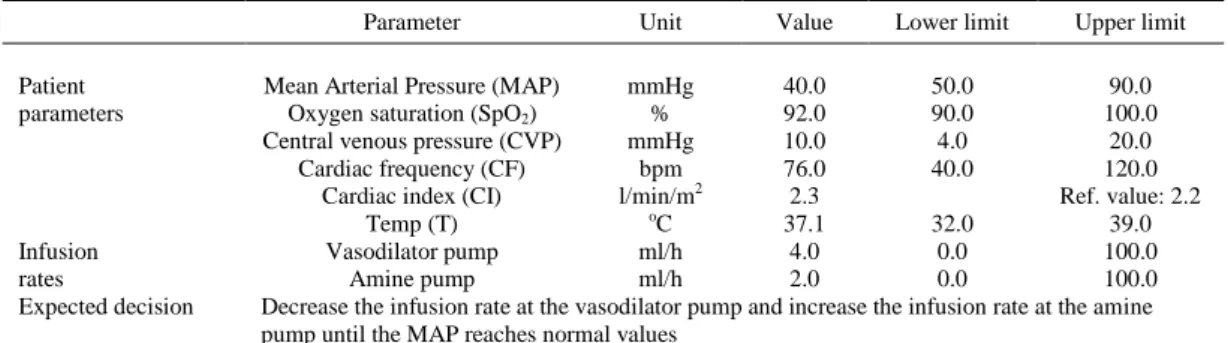
(8) classes, created from the input data. The knowledge base and the facts base are loaded by the inference engine by means of the Jena Framework. We selected the Pellet Reasoner inference engine [36], which is the leading choice for systems that require to reason with OWL ontologies. On the basis of the loaded knowledge, the inference engine executes the reasoning process and provides the medical expert with a recommendation about the patient’s treatment. 2.2.3. Drug infusion rates modification The doctor receives the system’s recommendation through the system’s Graphical User Interface (GUI), which also shows the patient’s vital signs and the status of the infusion pumps. Then, the doctor decides either accept the system’s recommendation or reject it. If the system recommends to change the drug infusion rates and the doctor rejects the advice, the infusion rates remain as they were. If he/she accepts the system’s recommendation, the system communicates with the infusion pumps to achieve the necessary modifications. All monitored data and decisions are stored into a PostgreSQL database for further analysis.. 3. Evaluation and results Evaluation of expert systems comprises two main stages: evaluation of the intrinsic properties of the ES (technical evaluation) and evaluation of its actual use and utility (user’s evaluation or assessment). In the same way, technical evaluation is divided in two tasks: verification and validation. In this section, we describe how the expert system was verified and validated. User’s evaluation reflects the acceptance of the system by the end users and its performance in the field, and it will be suggested as a future work. Verification of an expert system refers to building the system correctly, that is, determining that the system is built according to its specifications. It is addressed to detect internal inconsistencies in the knowledge base. This stage was carried out by the development team according to the requirements extracted from the medical experts. Validation refers to building the right system. It is the process of determining that the system actually performs the real-world tasks for which it was intended. It is important for the human expert to validate that the advice given by the expert system is sound. In order to validate the system, we defined a set of 14 real scenarios, or test cases, representative of the CICU domain. Then, we executed the system and compared the system’s output with the expected output, provided by a medical expert. Each test case consisted on a set of input parameters (values of patient’s vital signs and pump infusion rates) and an expected output (decision). The test cases were created on the basis of real data, collected at the CICU and inserted into the system by means of a software application. An example of one of these test cases is shown in Table 1. After executing all test cases, the system was able to achieve an overall precision of 100% (see Table 2)..
(9) Table 1. Example of test case. The MAP value (40.0) is lower than its lower limit (50.0). Other patient parameters have normal values. In this situation, the decision would be to decrease the vasodilator infusion rate and increase the amine infusion rate Parameter Patient parameters. Infusion rates Expected decision. Unit. Value. Lower limit. Upper limit. Mean Arterial Pressure (MAP) mmHg 40.0 50.0 90.0 Oxygen saturation (SpO2) % 92.0 90.0 100.0 Central venous pressure (CVP) mmHg 10.0 4.0 20.0 Cardiac frequency (CF) bpm 76.0 40.0 120.0 Cardiac index (CI) l/min/m2 2.3 Ref. value: 2.2 o Temp (T) C 37.1 32.0 39.0 Vasodilator pump ml/h 4.0 0.0 100.0 Amine pump ml/h 2.0 0.0 100.0 Decrease the infusion rate at the vasodilator pump and increase the infusion rate at the amine pump until the MAP reaches normal values. Table 2. Summary of validation results Parameter. Value. Number of test cases Correct decisions Incorrect decisions Precision. 14 14 0 100%. 4. Conclusions and future work In this work, an expert system for the CICU domain has been developed. The system is based on expert knowledge, which has been formalized in the form of the C3O ontology. This ontology contains the main concepts used by experts in CICUs, the relationships between these concepts and the set of inference rules that guide the decision making process. The C3O ontology in OWL format is publicly available at http://tinyurl.com/7jtkoh6. To the best of our knowledge, this is the first time that knowledge to treat patients at CICUs has been formally represented as an ontology and used as the basis to build an expert system. Intensive care environments are particularly suited to the implementation of expert systems because of the wealth of available data and the inherent opportunities for improving inpatient care. Experts in these environments are very interested in the development of such kind of systems because they make their daily work easier and help them to avoid mistakes in patients’ treatment. At the moment, ontologies are the most popular knowledge representation technology. Nevertheless, expert systems as the proposed in this paper are still in an early stage. The development of ontology-based medical expert systems can be useful to overcome heterogeneity, facilitating knowledge understanding and reusing by other experts and systems. As the most immediate future work, we are designing a clinical study to be achieved at the CICU of the Meixoeiro Hospital that will allow to compare and analyze the evolution of a group of patients monitored without the system with respect to a group of patients monitored with the support of the expert system. Other work is related to adapting the system’s communication APIs to the new models of devices used at the CICU of the Meixoeiro Hospital. Philips CMS monitors are being substituted by Philips MP Series monitors and Alaris IVAC TIVA infusion pumps are being replaced by Alaris GH models. These new models are based on different communication protocols, so the system’s communication APIs will have to be updated..
(10) In addition, another line that we are exploring is to take advantage of some of the techniques and languages for the representation and dissemination of existing clinical protocols (e.g. [37]) to establish a reference method that facilitates the systematic translation of protocols written on paper to information formalized through ontologies, as well as their sharing and collaborative editing through the Internet.. Acknowledgements Work supported by the Carlos III Health Institute (grant FIS-PI10/02180), the Ibero NBIC Network (ref. 209RT0366) funded by CYTED, and grants CN2012/217 (REGICC), CN2011/034 (“Programa de consolidación y estructuración de unidades de investigación competitivas”) and CN2012/211 (“Agrupación estratégica”) from the Xunta de Galicia. Work also cofounded by FEDER (European Union). We would like to thank the staff of the Service of Anesthesiology, Resuscitation and Intensive Care of the Meixoeiro Hospital for their kind help and valuable collaboration.. References [1] M. Karabatak and M.C. Ince, An expert system for detection of breast cancer based on association rules and neural network, Expert Systems with Applications 36 (2009), 3465– 3469. [2] T. Berners-Lee et al., The semantic Web, Scientific American 284 (2001), 34–43. [3] M. Negnevitsky, Artificial intelligence: A guide to intelligent systems: Addison-wesley longman, 2005. [4] F.D. Dombal et al., Human and computer-aided diagnosis of abdominal pain: Further report with emphasis on performance of clinicians, British Medical Journal 1 (1974), 376–380. [5] R.A. Miller et al., INTERNIST-I, an experimental computerbased diagnostic consultant for general internal medicine, New England Journal of Medicine 307 (1982), 468–476. [6] E.H. Shortliffe, Computer-based medical consultations: MYCIN, Elsevier New York, 1976. [7] K.A. Kumar et al., Hybrid approach using case-based reasoning and rule-based reasoning for domain independent clinical decision support in ICU, Expert Systems with Applications 36 (2009), 65–71. [8] Y. Si et al., An expert system for EEG monitoring in the pediatric intensive care unit, Electroencephalography and Clinical Neurophysiology 106 (1998), 488–500. [9] H. Ying and L.C. Sheppard, Regulating mean arterial pressure in postsurgical cardiac patients, a fuzzy logic system to control administration of sodium nitroprusside, Engineering in Medicine and Biology Magazine, IEEE 13 (1994), 671–677. [10] J.M. Blum et al., Specificity improvement for network distributed physiologic alarms based on a simple deterministic reactive intelligent agent in the critical care environment, Journal of Clinical Monitoring and Computing 23 (2009), 21–30. [11] R.C. Chen et al., An recommendation system based on domain ontology and SWRL for anti-diabetic drugs selection, Expert Systems with Applications (2011). [12] B. Smith, Ontology: Philosophical and computational, in: The Blackwell Guide to the Philosophy of Computing and Information, L. Floridi, ed., Oxford: Blackwell Publishers, 2003. [13] T.R. Gruber, A translation approach to portable ontology specifications, Knowledge Acquisition 5 (1993), 199–220. [14] J.M. Vázquez et al., Ontology alignment overview, in: Encyclopedia of Artificial Intelligence 3 (2008), 1283–1289. [15] M. Martínez-Romero et al., Artificial intelligence techniques for colorectal cancer drug metabolism: Ontologies and complex networks, Current Drug Metabolism 11 (2010), 347–368. [16] Y.A. Lussier and O. Bodenreider, Clinical ontologies for discovery applications, in: Semantic Web: Revolutionizing Knowledge Discovery in the Life Sciences, B.C.J. O and C. K-H, eds, New York: Springer, 2007, pp. 101–119. [17] N.F. Noy et al., BioPortal: Ontologies and integrated data resources at the click of a mouse, Nucleic Acids Research 37 (2009), W170–W173..
(11) [18] M. Ashburner et al., Gene ontology: Tool for the unification of biology, Nature Genetics 25 (2000), 25–29. [19] National Cancer Institute, Enterprise Vocabulary Services, (17 February 2012), Available: http://www.cancer.gov/cancertopics/terminologyresources. [20] O. Bodenreider, The unified medical language system (UMLS): Integrating biomedical terminology, Nucleic Acids Research 32 (2004), 267–270. [21] National Library ofMedicine, Unified Medical Language System Statistics – 2012AA Release, (4 September), Available: http://www.nlm.nih.gov/research/umls/knowledge_sources/ metathesaurus/release/statistics.html. [22] S.L. Moigno et al., Terminology extraction from text to build an ontology in surgical intensive care, 2002, p. 430. [23] N.D. Keizer et al., Analysis and design of an ontology for intensive care diagnoses, Methods of Information in Medicine 38 (1999), 102–112. [24] R.R. Hoffman, The problem of extracting the knowledge of experts from the perspective of experimental psychology, AI Magazine 8 (1987), 53. [25] G. Schreiber, Knowledge engineering and management: The CommonKADS methodology: The MIT Press, 2000. [26] M. Martínez-Romero et al., A multi-criteria approach for automatic ontology recommendation using collective knowledge, in: Recommender Systems for the Social Web, Springer-Verlag, 2012, pp. 89–104. [27] M. Martínez-Romero et al., An approach for the automatic recommendation of ontologies using collaborative knowledge, Lecture Notes in Artificial Intelligence 6277 (2010), 74–81. [28] B. Smith et al., The OBO foundry: Coordinated evolution of ontologies to support biomedical data integration, Nature Biotechnology 25 (2007), 1251–1255. [29] L.W. Lacy, Owl: Representing information using the web ontology language, Trafford Publishing, 2005. [30] N.F. Noy et al., Creating semantic web contents with protege-2000, Intelligent Systems, IEEE 16 (2001), 60–71. [31] M. Fernández et al., Building a chemical ontology using methontology and the ontology design environment, IEEE Intelligent Systems and Their Applications 14 (1999), 37–46. [32] I. Horrocks et al., SWRL: A semantic web rule language combining OWL and RuleML, W3C Member Submission 21 (2004), 79. [33] I. Jacobson et al., The unified software development process–the complete guide to the unified process from the original designers, Rational Software Corporation, US (1999). [34] Philips, RS232 computer interface programming guide for philips CMS patient monitoring system & V24 and V26 patient monitors, 2003. [35] ALARIS Medical Systems, IVAC syringe pumps P5000, Technical service manual, Pub No. 5000PB00004 Issue 5, England1998. [36] E. Sirin et al., Pellet: A practical owl-dl reasoner, Web Semantics: Science, Services and Agents on the World Wide Web 5 (2007), 51–53. [37] V. Maojo et al., A JAVA-based multimedia tool for clinical practice guidelines, Studies in Health Technology and Snformatics 43 (1997), 348..
(12)
Figure
![Fig. 1. Basic structure of a rule-based expert system (adapted from [3]).](https://thumb-us.123doks.com/thumbv2/123dok_es/7393485.378748/3.892.320.573.125.334/fig-basic-structure-rule-based-expert-adapted.webp)

Documento similar
