
TítuloEfficacy and safety of intermittent intravenous outpatient administration of levosimendan in patients with advanced heart failure: the LION‐HEART multicentre randomised trial
15
0
0
Texto completo
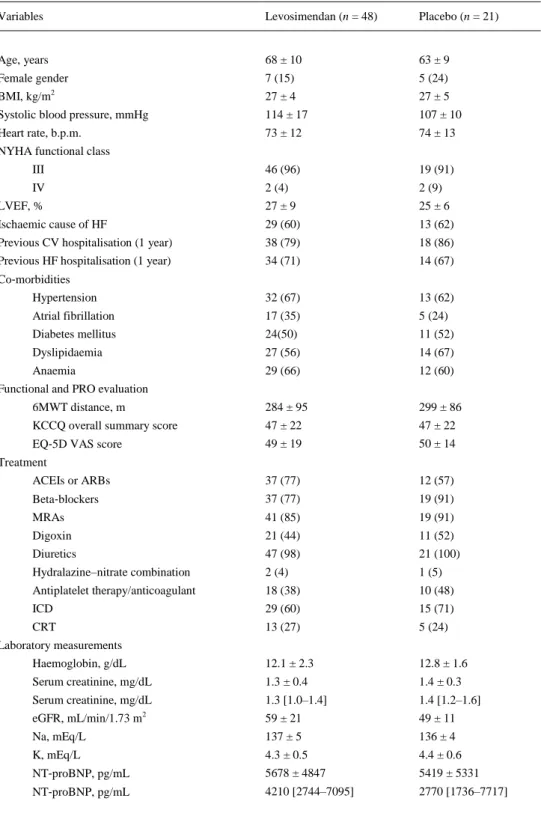
(2) Introduction Heart failure (HF) is a progressive condition with a highly negative impact on the health care systems, and advanced HF represents a segment of patients with higher risk of death and hospitalisation and poorer health‐related quality of life (HRQoL).1-3 Advanced HF is defined by the presence of objective evidence of cardiac dysfunction, poor functional capacity, recurrent episodes of systemic and/or pulmonary congestion that translate into recurrent hospitalisations, impaired HRQoL and persistence of these features despite attempts to optimise therapy.3 Beyond the guideline‐recommended drug and device therapy, specific therapeutic options are limited and quite often fail to slow disease progression in many of these patients. The more complex advanced therapies such as long‐term mechanical circulatory support and/or heart transplant (HTx) are only available for a very limited number of patients with advanced HF. Thus, new therapeutic approaches capable of slowing down or preventing clinical progression and avoiding hospitalisation are an unmet need.3,4 The use of repetitive or continuous infusions of inotropic drugs to provide periods of intermittent haemodynamic relief in patients with advanced HF has been associated with improvements in symptoms and has been considered an attractive approach.4 However, data from several studies and meta‐analyses of randomised trials evaluating the safety and efficacy of beta‐adrenergic agonists and phosphodiesterase inhibitors in patients with HF suggest that this approach might not be safe. 5 In contrast with other inotropes, the inodilator levosimendan promotes sensitization of the contractile apparatus to calcium ions without increasing the levels of intracellular calcium. 6 Levosimendan has additional effects, mediated by its effect on the ATP‐dependent potassium channel at the vascular level, promoting vasodilatation, and at the mitochondrial level, promoting cardioprotection. 6,7 Due to the pharmacological properties of levosimendan, its long‐lasting derived metabolites and its positive haemodynamic and cardioprotective effects, a pulsed or intermittent use of levosimendan has been suggested by some authors as an interesting therapeutic strategy in patients with advanced HF. 7,8 Previous trials testing this strategy have been mostly open‐label, uncontrolled or single‐centre studies,8 and well‐designed randomised controlled trials have shown neutral results. 9,10 Therefore, there are still uncertainties regarding the efficacy and safety of intermittent infusions of levosimendan and their potential impact on the outcomes in patients with advanced HF. Thus, the aim of our study was to evaluate the clinical impact of outpatient administration of intermittent intravenous infusions of levosimendan in patients with advanced HF. In this study, the primary endpoint of efficacy was the effect of ambulatory intravenous infusions of levosimendan compared to placebo, on the serum concentrations of N‐terminal pro‐B‐type natriuretic peptide (NT‐ proBNP) throughout the 12‐week treatment period. Secondary endpoints included safety, patient‐reported outcomes and clinical events..
(3) Methods The LION‐HEART study (Levosimendan® Intermittent administration in Outpatients: effects on Natriuretic peptides in advanced chronic HEART failure) was a multicentre, double‐blind, randomised, parallel‐group, placebo‐controlled trial evaluating the efficacy and safety of intravenous administration of intermittent doses of levosimendan in outpatients with advanced chronic HF. Study design and oversight Between November 2010 and December 2012, 69 patients fulfilling the inclusion criteria were enrolled from 12 recruiting centres in Spain (Figure 1 and Section H of the online supplementary Appendix). The study protocol was approved by the institutional review boards of each participating centre and conducted in accordance with the principles of the Declaration of Helsinki, International Conference on Harmonization Good Clinical Practice, and local and national regulations. All enrolled patients had provided written informed consent before any study‐related procedure was undertaken. Information on study investigators, committee members, registration and monitoring of the study is provided in Sections A–C of the online supplementary Appendix.. Figure 1. Flow chart of screening, randomisation and follow‐up of the study.
(4) Study population, eligibility and recruitment The study protocol and design are summarised in the supplementary material online, Figure S1. The main inclusion criteria were: age > 18 years, left ventricular ejection fraction <35% (measured in the previous 6 months) and clinical diagnosis of advanced chronic HF. 3 A more detailed description of the study design, inclusion and exclusion criteria are provided in Section D of the online supplementary Appendix. Randomisation, blinding and therapy Eligible patients were randomised at a 2:1 ratio to receive either levosimendan or placebo. The placebo had the same appearance as levosimendan to ensure that the treatment was concealed from both the investigators and the study patients. Levosimendan or placebo was administered every 2 weeks by a 6‐hour intravenous infusion (0.2 μg/kg/min, without bolus) for 12 weeks (6 cycles) in an ambulatory administration setting that allowed non‐invasive monitoring of vital signs. All measurements were taken prior to the infusion (pre‐infusion) and 24 hours after initiation if the infusion (post‐infusion). Additional key data on randomisation and therapy are provided in Section E of the online supplementary Appendix. Data collection and evaluation of the efficacy and safety endpoints Baseline information was obtained for stable patients, including the relevant clinical and demographic information. All the data including clinical events was re‐evaluated every 2 weeks for the first 3 months and every 4 weeks during the next 3 months. The primary endpoint of efficacy in the LION‐HEART study was the effect of 6 cycles of ambulatory 6‐hour intravenous infusions of levosimendan every 2 weeks on the serum concentrations of NT‐proBNP throughout the 12‐week treatment period, in comparison with placebo. Measurements of NT‐proBNP levels were performed locally using an immunoassay based on chemiluminescence, employing the Elecsys® System (Roche Diagnostics, Rotkreuz, Switzerland). This method was used in all centres. Key secondary safety and efficacy objectives comprised functional variables, patient‐reported outcomes and clinical events including hospitalisation, death and other terminal events such as HTx and left ventricular assist device (LVAD) implant. Additional information on clinical data collection and other key aspects of safety and efficacy data are summarised in Section F of the online supplementary Appendix. Statistical analyses Data analysis was performed following an intention‐to‐treat strategy. For the primary efficacy analysis, a comparison of the area under the curve (AUC) of the NT‐proBNP values (expressed as pg.day/mL) throughout the treatment period (from the baseline visit 1 to visit 7 at week 12) and the pre– post mean treatment difference was conducted, according to treatment allocation and taking into account patients who had died or were hospitalised at that time. Treatment groups were compared with respect to these primary endpoints using ANCOVA adjusted for baseline measurements and ANOVA, respectively. Repeated measures ANCOVA adjusted for baseline was used to compare treatment groups with respect to follow‐up NT‐proBNP values; the treatment‐by‐time interaction was examined in a sensitivity analysis. ANCOVA adjusted for baseline was also used to evaluate relative changes in NT‐proBNP from baseline to the end of the treatment period at week 12..
(5) Missing NT‐proBNP values were imputed using last observation carried forward for patients who were known to be alive and not hospitalised for that specific period. If a patient was hospitalised or had a terminal event, the highest preceding NT‐proBNP value for this particular patient was imputed. For the secondary efficacy and safety analyses, differences between treatments in the rate of occurrence of clinical endpoints were tested using Cox proportional hazards regression; hazard ratios (HR) and associated 95% confidence intervals (CI) estimated from the models are presented. Kaplan– Meier survival curves comparing time to the first event by means of a log‐rank test for the composite event of all‐cause death or HF hospitalisation between both groups were also generated. The cumulative risk of HF hospitalisation taking all‐cause death into account as a competing risk was assessed using a Fine–Gray extension of the Cox regression model implemented in the cmprsk R package.11 Changes in continuous outcomes representing secondary efficacy and safety endpoints were analysed using repeated measures ANCOVA adjusted for baseline measurements. Additional information on statistical aspects of the study is provided in Section G of the online supplementary Appendix. All statistical tests and CI were constructed with a type I error level of 5% with no adjustments for multiplicity, and a P‐value of ≤0.05 was considered statistically significant. SPSS version 18.0 (IBM, Armonk, NY, USA) and the R software version 3.0.1 (R Foundation for Statistical Computing, Vienna, Austria) were used for statistical analyses.. Results Baseline characteristics Baseline data of the patients are summarised in Table 1. Overall, 69 patients (48 receiving levosimendan and 21 placebo) were included in the study. Both groups were well balanced for most demographic data and clinical characteristics. However, the patients in the levosimendan group were older than in the placebo group [median (interquartile range) 70 (63–75) years vs. 66 (57–68) years, P = 0.025] and tended to have better renal function than placebo patients [median (interquartile range) estimated glomerular filtration rate 55 (45–79) mL/min/1.73 m2 vs. 51 (43–56) mL/min/1.73 m2, P = 0.095]..
(6) Table 1. Demographics and baseline characteristics of the overall study population according to treatment group Variables. Levosimendan (n = 48). Placebo (n = 21). Age, years. 68 ± 10. 63 ± 9. Female gender. 7 (15). 5 (24). BMI, kg/m2. 27 ± 4. 27 ± 5. Systolic blood pressure, mmHg. 114 ± 17. 107 ± 10. Heart rate, b.p.m.. 73 ± 12. 74 ± 13. III. 46 (96). 19 (91). IV. 2 (4). 2 (9). LVEF, %. 27 ± 9. 25 ± 6. Ischaemic cause of HF. 29 (60). 13 (62). Previous CV hospitalisation (1 year). 38 (79). 18 (86). Previous HF hospitalisation (1 year). 34 (71). 14 (67). Hypertension. 32 (67). 13 (62). Atrial fibrillation. 17 (35). 5 (24). Diabetes mellitus. 24(50). 11 (52). Dyslipidaemia. 27 (56). 14 (67). Anaemia. 29 (66). 12 (60). 6MWT distance, m. 284 ± 95. 299 ± 86. KCCQ overall summary score. 47 ± 22. 47 ± 22. EQ‐5D VAS score. 49 ± 19. 50 ± 14. ACEIs or ARBs. 37 (77). 12 (57). Beta‐blockers. 37 (77). 19 (91). MRAs. 41 (85). 19 (91). Digoxin. 21 (44). 11 (52). Diuretics. 47 (98). 21 (100). Hydralazine–nitrate combination. 2 (4). 1 (5). Antiplatelet therapy/anticoagulant. 18 (38). 10 (48). ICD. 29 (60). 15 (71). CRT. 13 (27). 5 (24). Haemoglobin, g/dL. 12.1 ± 2.3. 12.8 ± 1.6. Serum creatinine, mg/dL. 1.3 ± 0.4. 1.4 ± 0.3. Serum creatinine, mg/dL. 1.3 [1.0–1.4]. 1.4 [1.2–1.6]. eGFR, mL/min/1.73 m2. 59 ± 21. 49 ± 11. Na, mEq/L. 137 ± 5. 136 ± 4. K, mEq/L. 4.3 ± 0.5. 4.4 ± 0.6. NT‐proBNP, pg/mL. 5678 ± 4847. 5419 ± 5331. NT‐proBNP, pg/mL. 4210 [2744–7095]. 2770 [1736–7717]. NYHA functional class. Co‐morbidities. Functional and PRO evaluation. Treatment. Laboratory measurements. Data are expressed as mean ± standard deviation, as number (percentage), or as median [interquartile range]. ACEI, angiotensin‐converting enzyme inhibitor; ARB, angiotensin receptor blocker; BMI, body mass index; CRT, cardiac resynchronisation therapy; CV, cardiovascular; eGFR, estimated glomerular filtration rate; EQ‐5D VAS, visual analogue scale of the Euro Quality of Life 5‐dimension instrument; ICD, implantable cardioverter‐defibrillator; K, potassium; KCCQ, Kansas City Cardiomyopathy Questionnaire; LVEF, left ventricular ejection fraction; 6MWT, 6‐minute walking test; MRA, mineralocorticoid receptor antagonist; Na, sodium; NT‐proBNP, N‐terminal pro‐B‐type natriuretic peptide; NYHA, New York Heart Association; PRO, patient‐reported outcome..
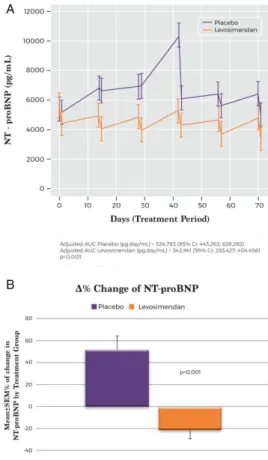
(7) Administration of the study drug The number of patients who received each scheduled cycle is shown in Figure 1. A total of 61 patients (88%) received all the scheduled drug infusions. Cumulative mean levosimendan dose per patient was 30.3 ± 8.9 mg [median: 31.5 mg (Q25–Q75: 27.2–35.3)]. Primary outcome Primary endpoint analysis was performed evaluating 828 possible NT‐proBNP measurements. Among these, only 26 (3.1%) measurements were imputed. The baseline‐adjusted AUC of NT‐proBNP levels (in pg.day/mL) over time was significantly smaller in patients treated with levosimendan than in the placebo group [344 × 10,3 95% CI 283 × 103–404 × 103 vs. 535 × 10,3 95% CI 443 × 103–626 × 103; P = 0.003) (Figure 2A). When more stringent imputation rules were applied to missing assessments following terminal events, such as assigning the highest observed change from baseline over all patients for every missing assessment following a terminal event, similar results were observed.. Figure 2. (A) Baseline‐adjusted mean N‐terminal pro‐B‐type natriuretic peptide (NT‐proBNP) levels (pg/mL) and associated 95% confidence intervals (CI) by visit and treatment group. Comparison of the baseline‐adjusted area under the curve (AUC, in pg.day/mL) of NT‐proBNP levels by treatment group using ANCOVA test. Comparison of baseline‐adjusted NT‐proBNP (pg/mL) pre–post differences by treatment group using ANOVA test: pre–post mean difference placebo = 1320 pg/mL (95% CI 140; 2500); pre–post mean difference levosimendan = –1446 pg/mL (95% CI –222; –666) (P < 0.001). (B) Baseline‐adjusted relative (percentage) change in NT‐proBNP from baseline to the end of treatment, by treatment group [marginal means ± standard error of the mean (SEM)].
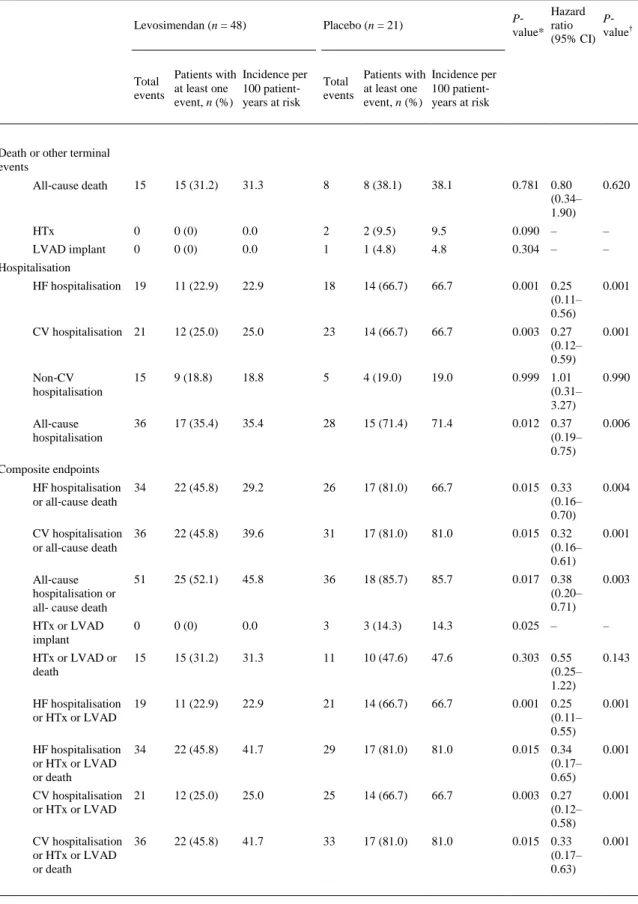
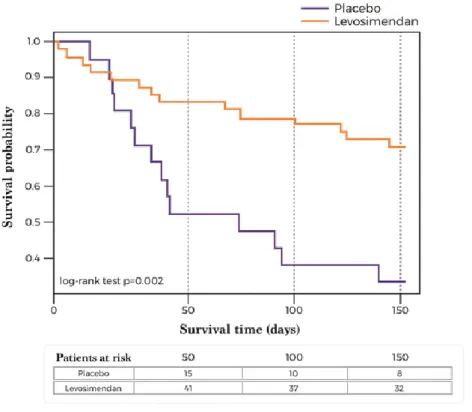
(8) The results based on AUC using log‐transformed values were also significant (P = 0.0185). The exclusion of one extreme value at visit 4 (week 7 of the study, 42 days after the first cycle) also yielded significant results (P = 0.0018). Furthermore, the unadjusted reduction in the NT‐proBNP levels from baseline to the end of treatment at week 12 was significantly greater in the levosimendan group than in the placebo group (P = 0.007) (Figure 2A). Analysis of repeated follow‐up NT‐proBNP values adjusted for baseline NT‐proBNP showed a significantly lower mean NT‐proBNP in the levosimendan group over the follow‐up period (P = 0.004). The addition of a treatment‐by‐time interaction to the model was statistically significant (P < 0.0001), consistent with a slight mean increase over time in the placebo group and a mean decrease in the levosimendan group (Figure 2A). The baseline‐adjusted mean change in NT‐proBNP from baseline to week 12 was 1320 (95% CI 140– 2500) pg/mL in the placebo group and –1446 (95% CI –222; –666) pg/mL in the levosimendan group (P < 0.001). Analyses with ANCOVA tests, when individual NT‐proBNP data were log‐transformed, showed similar results (P < 0.001). In sensitivity analyses of the primary endpoint including age and renal function as covariates, the results were consistent with the original models. The proportion of patients experiencing a clinically relevant reduction in NT‐proBNP levels (>25% from the baseline value) was significantly higher (P = 0.002, Fisher's exact test) in the levosimendan (48%) than in the placebo group (9%). Due to the low number of observations, we have included the P‐ values obtained with the Fisher's exact test. The mean percentage reduction in NT‐proBNP levels was also significantly greater in the levosimendan group (P < 0.001) (Figure 2B). Secondary outcomes The distribution of clinical events according to treatment allocation is shown in Table 2. During the study, 15 patients (31%) in the levosimendan group and 8 patients (38%) in the placebo group died (P = 0.781). In the placebo group, two patients underwent HTx, and one received an LVAD implant, while this did not occur in the levosimendan group (P = 0.025). The rate of all terminal events (HTx, LVAD implant or death) was 48% (n = 10) in the placebo group and 31% (n = 15) in the levosimendan group (P = 0.303). The patients experienced 64 hospitalisations for any cause, 44 cardiovascular (CV) hospitalisations and 37 HF hospitalisations. Patients assigned to levosimendan experienced a significant reduction in the rate of HF hospitalisation (HR 0.25, 95% CI 0.11–0.56; P = 0.001) in comparison with the patients assigned to placebo (Table 2). The improvement in HF hospitalisation rate also translated into a significant reduction in CV hospitalisation, all‐cause hospitalisation and the composite endpoints between hospitalisation (all‐cause, CV or HF) and death or other terminal events (Table 2 and Figure 3). We also performed a competing‐risks regression analysis of HF hospitalisation, considering all‐cause death a competing event. In this analysis, and in agreement with the original results, levosimendan was associated with a significant reduction in the risk of HF hospitalisation throughout the study in comparison with placebo (HR 0.40, 95% CI 0.199–0.822; P = 0.012)..
(9) Table 2. Clinical secondary pre‐specified endpoints according to treatment group Hazard P‐ P‐ ratio value* value† (95% CI). Levosimendan (n = 48). Placebo (n = 21). Patients with Incidence per Total at least one 100 patient‐ events event, n (%) years at risk. Patients with Incidence per Total at least one 100 patient‐ events event, n (%) years at risk. All‐cause death. 15. 15 (31.2). 31.3. 8. 8 (38.1). 38.1. 0.781 0.80 (0.34– 1.90). 0.620. HTx. 0. 0 (0). 0.0. 2. 2 (9.5). 9.5. 0.090 –. –. LVAD implant. 0. 0 (0). 0.0. 1. 1 (4.8). 4.8. 0.304 –. –. 19. 11 (22.9). 22.9. 18. 14 (66.7). 66.7. 0.001 0.25 (0.11– 0.56). 0.001. CV hospitalisation 21. 12 (25.0). 25.0. 23. 14 (66.7). 66.7. 0.003 0.27 (0.12– 0.59). 0.001. Death or other terminal events. Hospitalisation HF hospitalisation. Non‐CV hospitalisation. 15. 9 (18.8). 18.8. 5. 4 (19.0). 19.0. 0.999 1.01 (0.31– 3.27). 0.990. All‐cause hospitalisation. 36. 17 (35.4). 35.4. 28. 15 (71.4). 71.4. 0.012 0.37 (0.19– 0.75). 0.006. 34. 22 (45.8). 29.2. 26. 17 (81.0). 66.7. 0.015 0.33 (0.16– 0.70). 0.004. CV hospitalisation 36 or all‐cause death. 22 (45.8). 39.6. 31. 17 (81.0). 81.0. 0.015 0.32 (0.16– 0.61). 0.001. All‐cause hospitalisation or all‐ cause death. 51. 25 (52.1). 45.8. 36. 18 (85.7). 85.7. 0.017 0.38 (0.20– 0.71). 0.003. HTx or LVAD implant. 0. 0 (0). 0.0. 3. 3 (14.3). 14.3. 0.025 –. –. HTx or LVAD or death. 15. 15 (31.2). 31.3. 11. 10 (47.6). 47.6. 0.303 0.55 (0.25– 1.22). 0.143. HF hospitalisation or HTx or LVAD. 19. 11 (22.9). 22.9. 21. 14 (66.7). 66.7. 0.001 0.25 (0.11– 0.55). 0.001. HF hospitalisation or HTx or LVAD or death. 34. 22 (45.8). 41.7. 29. 17 (81.0). 81.0. 0.015 0.34 (0.17– 0.65). 0.001. CV hospitalisation 21 or HTx or LVAD. 12 (25.0). 25.0. 25. 14 (66.7). 66.7. 0.003 0.27 (0.12– 0.58). 0.001. CV hospitalisation 36 or HTx or LVAD or death. 22 (45.8). 41.7. 33. 17 (81.0). 81.0. 0.015 0.33 (0.17– 0.63). 0.001. Composite endpoints HF hospitalisation or all‐cause death. CI, confidence interval; CV, cardiovascular; HF, heart failure; HTx, heart transplant; LVAD, left ventricular assist device. Comparison between both groups using *Kaplan–Meier (P‐value corresponds to a log‐rank test) and †Cox regression methods..
(10) Figure 3. Kaplan–Meier survival curves (time to the first event) for the composite event of all‐cause death or heart failure hospitalisation. P‐value according to log‐rank test. Analysis of safety and tolerability is shown in Table 3 and in the online supplementary Table S1. Adverse events (AE) and serious adverse events (SAE) occurred in 57 (83%) and 51 (74%) of patients, respectively. However, drug‐related AE were observed only in 7 patients (10%). There were no significant differences between the assignment groups in terms of SAE, non‐serious AE or drug‐related AE. Interestingly, drug‐related SAE or AE leading to study drug withdrawal tended to be lower in the levosimendan group. The rate of patients needing an interim or permanent withdrawal of drug infusions did not differ between the two groups. The proportion of patients needing reduction or discontinuation of the infusion due to significant arterial hypotension (<80 mmHg or <100 mmHg with symptoms) was larger in the levosimendan than in the placebo group, but there were no statistically significant differences (Table 3 and online supplementary Figure S2). The ANCOVA tests for repeated measures, adjusted for baseline measurements, showed no significant difference in systolic blood pressure values between the two groups during the treatment period (P = 0.314; online supplementary Figure S3). Feasibility of drug administration is shown in the supplementary online Table S2. The number of patients who received the 6 cycles of treatment was significantly higher (P = 0.044) in the levosimendan (45 patients, 94%) than in the placebo group (16 patients, 76%)..
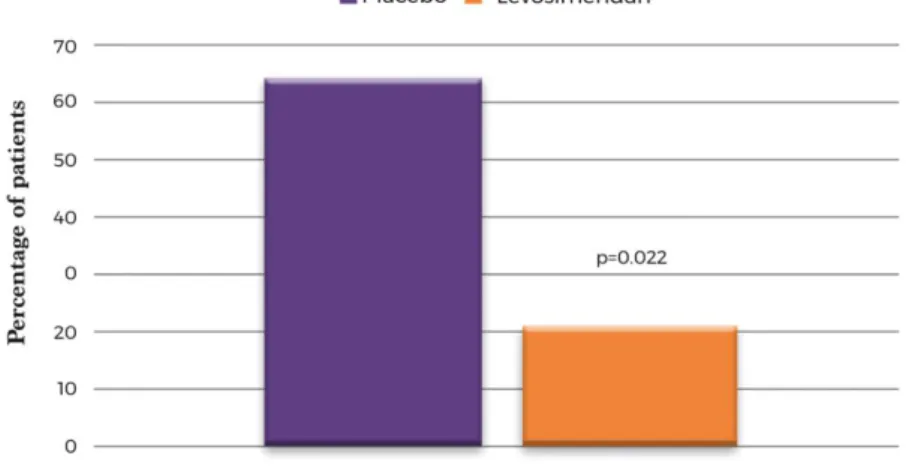
(11) Table 3. Description of adverse events and tolerability according to treatment group Levosimendan (n = 48). Placebo (n = 21). P‐value. Any AE. 37 (77.1). 20 (90.9). 0.204. SAE. 32 (66.7). 19 (86.4). 0.152. Drug‐related AE. 5 (10.4). 2 (9.1). 0.999. Drug‐related SAE. 3 (6.2). 2 (9.1). 0.646. AE leading to drug withdrawal. 2 (4.2). 4 (18.2). 0.073. Temporary discontinuation of infusion. 1 (2.1). 0 (0.0). 0.999. Permanent discontinuation of infusion. 5 (10.4). 3 (14.3). 0.692. Reduction or discontinuation due to arterial hypotensiona. 7 (14.9). 2 (9.5). 0.712. Safety, n (%). Tolerability, n (%). AE, adverse event; SAE, serious adverse event. a Systolic blood pressure < 80 mmHg or <100 mmHg with symptoms.. No differences were observed in heart rhythm parameters and rhythm disturbances between the two groups during the first cycle of administration of the study drug. In this period, new‐onset atrial fibrillations were not observed. Changes in the parameters of renal (estimated glomerular filtration rate, P = 0.226) and liver functions (alanine and aspartate transaminases, P = 0.583 and P = 0.202, respectively) were similar in the two groups. For the patient‐centred outcomes, adjusted analyses with the imputation of missing data did not show significant changes in New York Heart Association (NYHA) class (P = 0.841) or in EQ‐5D visual analogue scale (VAS) scores (P = 0.474) in the two groups throughout the study. However, in analyses without imputation and after 6 months of follow‐up, the patients on levosimendan were more likely to improve by at least one NYHA class (odds ratio 4.3, 95% CI 1.1–18.3; P = 0.042). They also were less likely to experience a clinically significant decline in HRQoL according to EQ‐5D VAS [5/24 levosimendan patients (21%) vs. 7/11 placebo patients (63%), P = 0.022] (Figure 4).. Figure 4. Proportion of patients reporting a clinically significant decline in their self‐reported quality of life at 6 months of follow‐ up, according to treatment group. A clinically significant decline was considered a reduction of 5 points (minimal clinically important difference) on the EQ‐5D visual analogue scale between the baseline and visit 10 (6 months).
(12) Discussion In the LION‐HEART study, treatment of 6 cycles of intermittent infusions of levosimendan administered to outpatients with advanced chronic HF significantly reduced NT‐proBNP levels (primary endpoint of the study) in comparison with placebo. This positive effect translated into clinical improvements: compared to the placebo group, the levosimendan patients experienced a significant reduction in the risk of hospitalisation, mainly driven by a significant reduction in HF‐related hospitalisations. Moreover, the composite endpoints including hospitalisation (all‐cause, CV or HF) and death or other terminal events were also significantly lower in the levosimendan group. Consistently with these findings, a significant decline in HRQoL over time was more common in placebo patients. Importantly, the safety and tolerability of levosimendan were similar to those of placebo. Although beneficial clinical effects of intermittent use of levosimendan in advanced HF have been previously suggested,8-10 our study is the first multicentre trial showing positive results in both primary (decrease in natriuretic peptide levels) and key secondary endpoints such as hospitalisation. These results could be explained by the haemodynamic and cardioprotective effects of levosimendan,6,7 which might improve left ventricular performance without increasing oxygen consumption.12 We could hypothesise that intermittent exposure to levosimendan provided short periods of haemodynamic relief. This might have caused a reduction in natriuretic peptide concentration and a decrease in the number of clinical events. Since previous studies have shown that 6‐hour infusions of a similar dose of levosimendan do not sustain the haemodynamic effect after 2 weeks, 13 the intermittent episodes of haemodynamic relief cannot be the only explanation of our results. However, we might also hypothesise that an intermittent exposure to levosimendan slows the progression of the disease due to its cardioprotective effects. One might speculate that the preservation of cardiac function prevents new episodes of haemodynamic deterioration. This, in turn, would translate into a reduction in the number of HF‐related events and a relative preservation of HRQoL.14,15 Despite some similarities between our study and the LevoRep study, the latter has failed to demonstrate a positive effect for its primary endpoint, although a positive trend for secondary clinical endpoints was reported.9 Several aspects related to the LevoRep study design might explain the differences between these two studies. In particular, the number of treatment cycles was larger in the LION‐HEART study (6 cycles) than in the LevoRep study (4 cycles). This resulted in a two‐fold increase in the mean cumulative dose of levosimendan per patient in our study (30.3 ± 8.9 mg) in comparison with the LevoRep results (14.3 ± 4.7 mg). The use of NT‐proBNP as the primary endpoint in our study was sustained by two main reasons. Firstly, natriuretic peptide levels are correlated with the haemodynamic status of the patients,16 and the changes in their levels mimic the changes in the overall cardiac performance in response to therapeutic interventions. For this reason, the changes in NT‐proBNP levels have also been used as primary endpoints in other studies. 17 However, this biomarker has been reported as an imperfect surrogate of clinical events.18 Secondly, the LION‐HEART trial was designed as a proof‐of‐ concept study: we were testing the use of levosimendan with a dose, duration of infusion, interval between infusions and clinical setting (outpatients with advanced HF) that had not been tested before. Thus, demonstrating the proof‐of‐concept that this administration scheme would translate into a measurable biological effect was a key aspect of the study. In this regard, the evaluation of changes in the NT‐proBNP levels throughout the treatment using an AUC approach helped to define the biological impact of this therapeutic strategy (mitigation of the neurohormonal burden imposed by advanced HF) and correlate these changes with improved clinical outcomes. An additional important message of our study is that the administration of levosimendan following the regime proposed in the LION‐HEART is safe and well tolerated. No differences were found in adverse event rates, both serious and non‐serious, between the levosimendan and placebo groups. The proportion of deaths tended to be lower for the patients allocated to levosimendan than in the placebo group (31% vs. 38%), although this trend was not statistically significant. This is in contrast with other studies of acute HF, where the administration of levosimendan was associated with a non‐significant increase in the number of fatal events in comparison with placebo. 18,19 Excessive hypotension associated with the use of bolus of levosimendan might explain this difference..
(13) The treatment was well tolerated and, in fact, the proportion of patients that received the 6 cycles of treatment tended to be higher in the levosimendan group. Importantly, there were no differences between the percentages of patients in the two groups needing an interruption in the infusion procedure due to significant hypotension. A similar level of safety and tolerability has been reported in the LevoRep study.9 Based on that, the repetitive 6‐hour outpatient infusions of levosimendan in advanced HF seem to be a feasible approach. This is very important considering the limited available therapeutic options for such patients. Study limitations The LION‐HEART study was powered to evaluate the differences in NT‐proBNP levels between the two allocation groups over the treatment period. However, our study was not powered to evaluate the differences in clinical events, symptoms and patient‐reported outcomes. Given the calculated sample size, all these evaluations were planned as exploratory. However, the findings for these secondary endpoints were consistent with the results for the primary endpoint and were statistically significant despite the limited sample size. Although there were no safety signals, a much larger, adequately powered study is needed to ensure that levosimendan does not cause more hypotension, arrhythmias and mortality than the placebo and to confirm its effects on the clinical outcomes observed in the LION‐HEART study.. Conclusions This exploratory pilot study demonstrated that an intermittent administration of levosimendan to ambulatory patients with advanced systolic HF was safe, significantly decreased the level of natriuretic peptides and was associated with clinical benefits. Larger studies are needed to confirm the safety and efficacy of this therapeutic strategy and its effect on clinical and patient‐reported outcomes.. Funding This work was supported by an unrestricted research grant from Orion Pharma. The funding source had no influence on the preparation of the study protocol, data management, analyses of data or publication process of this study. The sponsor of the trial was the Hospital del Mar Medical Research Institute (Barcelona, Spain).. Conflict of interest: J.C.C., N.M, J.M.G.P. and A.S. received personal fees from Orion Pharma. J.S.C. received fees for lectures from Orion Pharma. J.C.C., N.M., J.M.G.P., D.P.F., J.L.L.R., J.B. and M.G.C.L. report grants from Orion Pharma during the present study. F.G.V. was participating in a clinical trial sponsored by Orion Pharma during the present study. The other authors declare no conflicts of interest.. Supplementary Information Additional supporting information may be found online in the Supporting Information section at the end of the article. Appendix. Supplementary material. Table S1. Description of serious and non-serious adverse events following the MedRA classification and according to treatment. Table S2 . Analysis of the feasibility and heart rhythm safety of the study drug administration. Figure S1. Diagram summarizing the study protocol and design. Figure S2. Percentage of patients in the two treatment groups needing a reduction or interruption of treatment due to significant hypotension (defined as systolic blood pressure < 80 mmHg or <100 mmHg associated with symptoms). Figure S3. Comparison of systolic blood pressure values and 95% confidence interval by visit and treatment group using ANCOVA for repeated measures..
(14) References 1.. 2.. 3.. 4. 5.. 6. 7.. 8.. 9.. 10.. 11. 12.. 13.. 14.. 15.. 16.. Comín‐Colet J, Anguita M, Formiga F, Almenar L, Crespo‐Leiro MG, Manzano L, Muñiz, Chaves J, de Frutos T, Enjuanes C; VIDA‐IC (Quality of Life and Heart Failure in Spain: Current Situation) Multicenter Study Researchers. Health‐related quality of life of patients with chronic systolic heart failure in Spain: results of the VIDA‐IC study. Rev Esp Cardiol (Engl Ed) 2016;69:256–271. Farré N, Vela E, Clèries M, Bustins M, Cainzos‐Achirica M, Enjuanes C, Moliner P, Ruiz S, Verdú‐Rotellar JM, Comín‐Colet J. Medical resource use and expenditure in patients with chronic heart failure: a population‐based analysis of 88 195 patients. Eur J Heart Fail 2016;18:1132–1140. Metra M, Ponikowski P, Dickstein K, McMurray JJ, Gavazzi A, Bergh CH, Fraser AG, Jaarsma T, Pitsis A, Mohacsi P, Böhm M, Anker S, Dargie H, Brutsaert D, Komajda M; Heart Failure Association of the European Society of Cardiology. Advanced chronic heart failure: a position statement from the Study Group on Advanced Heart Failure of the Heart Failure Association of the European Society of Cardiology. Eur J Heart Fail 2007;9:684–694. Young JB, Moen EK. Outpatient parenteral inotropic therapy for advanced heart failure. J Heart Lung Transplant 2000;19(8 Suppl.):S49–S57. Thackray S, Easthaugh J, Freemantle N, Cleland JG. The effectiveness and relative effectiveness of intravenous inotropic drugs acting through the adrenergic pathway in patients with heart failure – a meta‐regression analysis. Eur J Heart Fail 2002;4:515–529. Pollesello P, Papp Z. The cardioprotective effects of levosimendan: preclinical and clinical evidence. J Cardiovasc Pharmacol 2007;50:257–263. Papp Z, Édes I, Fruhwald S, De Hert SG, Salmenperä M, Leppikangas H, Mebazaa A, Landoni G, Grossini E, Caimmi P, Morelli A, Guarracino F, Schwinger RH, Meyer S, Algotsson L, Wikström BG, Jörgensen K, Filippatos G, Parissis JT, González MJ, Parkhomenko A, Yilmaz MB, Kivikko M, Pollesello P, Follath F. Levosimendan: molecular mechanisms and clinical implications: consensus of experts on the mechanisms of action of levosimendan. Int J Cardiol 2012;159:82–87. Nieminen MS, Altenberger J, Ben‐Gal T, Böhmer A, Comin‐Colet J, Dickstein K, Edes I, Fedele F, Fonseca C, García‐González MJ, Giannakoulas G, Iakobishvili Z, Jääskeläinen P, Karavidas A, Kettner J, Kivikko M, Lund LH, Matskeplishvili ST, Metra M, Morandi F, Oliva F, Parkhomenko A, Parissis J, Pollesello P, Pölzl G, Schwinger RH, Segovia J, Seidel M, Vrtovec B, Wikström G. Repetitive use of levosimendan for treatment of chronic advanced heart failure: clinical evidence, practical considerations, and perspectives: an expert panel consensus. Int J Cardiol 2014;174:360–367. Altenberger J, Parissis JT, Costard‐Jaeckle A, Winter A, Ebner C, Karavidas A, Sihorsch K, Avgeropoulou E, Weber T, Dimopoulos L, Ulmer H, Poelzl G. Efficacy and safety of the pulsed infusions of levosimendan in outpatients with advanced heart failure (LevoRep) study: a multicentre randomized trial. Eur J Heart Fail 2014;16:898–906. Cleland JG, Eha J, Belenkov Y, Kivikko M, Põder P, Sarapohja T. Oral levosimendan in patients with severe chronic heart failure – the PERSIST study. Eur J Heart Fail 2008;10:1246– 1254. Scrucca L, Santucci A, Aversa F. Competing risk analysis using R: an easy guide for clinicians. Bone Marrow Transplant 2007;40:381–387. Nieminen MS, Akkila J, Hasenfuss G, Kleber FX, Lehtonen LA, Mitrovic V, Nyquist O, Remme WJ. Hemodynamic and neurohumoral effects of continuous infusion of levosimendan in patients with congestive heart failure. J Am Coll Cardiol 2000;36:1903–1912. Kleber FX, Bollmann T, Borst MM, Costard‐Jäckle A, Ewert R, Kivikko M, Petterson T, Pohjanjousi P, Sonntag S, Wikström G. Repetitive dosing of intravenous levosimendan improves pulmonary hemodynamics in patients with pulmonary hypertension: results of a pilot study. J Clin Pharmacol 2009;49:109–115. Mentz RJ, Kjeldsen K, Rossi GP, Voors AA, Cleland JG, Anker SD, Gheorghiade M, Fiuzat M, Rossignol P, Zannad F, Pitt B, O'Connor C, Felker GM. Decongestion in acute heart failure. Eur J Heart Fail 2014;16:471–482. Comín‐Colet J, Enjuanes C, Verdú‐Rotellar JM, Linas A, Ruiz‐Rodriguez P, González‐Robledo G, Farré N, Moliner‐Borja P, Ruiz‐Bustillo S, Bruguera J. Impact on clinical events and healthcare costs of adding telemedicine to multidisciplinary disease management programmes for heart failure: Results of a randomized controlled trial. J Telemed Telecare 2016;22:282–295. Iqbal N, Wentworth B, Choudhary R, Landa Ade L, Kipper B, Fard A, Maisel AS. Cardiac biomarkers: new tools for heart failure management. Cardiovasc Diagn Ther 2012;2:147–164..
(15) 17.. 18.. 19.. Solomon SD, Zile M, Pieske B, Voors A, Shah A, Kraigher‐Krainer E, Shi V, Bransford T, Takeuchi M, Gong J, Lefkowitz M, Packer M, McMurray JJ; Prospective comparison of ARNI with ARB on Management Of heart failUre with preserved ejectioNfracTion (PARAMOUNT) Investigators. The angiotensin receptor neprilysin inhibitor LCZ696 in heart failure with preserved ejection fraction: a phase 2 double‐blind randomised controlled trial. Lancet 2012;380:1387–1395. Packer M, Colucci W, Fisher L, Massie BM, Teerlink JR, Young J, Padley RJ, Thakkar R, Delgado‐Herrera L, Salon J, Garratt C, Huang B, Sarapohja T; REVIVE Heart Failure Study Group. Effect of levosimendan on the short‐term clinical course of patients with acutely decompensated heart failure. JACC Heart Fail 2013;1:103–111. Mebazaa A, Nieminen MS, Packer M, Cohen‐Solal A, Kleber FX, Pocock SJ, Thakkar R, Padley RJ, Põder P, Kivikko M; SURVIVE Investigators. Levosimendan vs dobutamine for patients with acute decompensated heart failure: the SURVIVE randomized trial. JAMA 2007;297:1883–1891..
(16)
Figure

+3
Documento similar