
A cholesterol rich diet causes a greater hypercholesterolemic response in pregnant than in nonpregnant rats and does not modify fetal lipoprotein profile / M A Munilla and E Herrera
8
0
0
Texto completo
(2) Nutrient Requirements and Interactions. A Cholesterol-Rich Diet Causes a Greater Hypercholesterolemic Response in Pregnant Than in Nonpregnant Rats and Does Not Modify Fetal Lipoprotein Profile1,2 M. A. Munilla and E. Herrera3 Faculty of Experimental Sciences, University of San Pablo-CEU, E-28668 Madrid, Spain. KEY WORDS: • cholesterol • pregnancy • lipoproteins • rats • hepatic lipase. Maternal hyperlipidemia during normal pregnancy in women is due primarily to triglycerides, with smaller rises in phospholipids and cholesterol (Montelongo et al. 1992). Increments in plasma triglycerides during late gestation are found in all the lipoprotein fractions, whereas the changes in cholesterol content are more moderate (Alvarez et al. 1996). It has even been reported that cholesterol levels in women with heterozygous familial hypercholesterolemia decrease to normal levels during pregnancy (Mabuchi et al. 1985). An exaggerated increase in plasma triglycerides associated with a mild increase in plasma cholesterol has also been found during late gestation in rats (Argiles and Herrera 1981). Whereas the factors contributing to maternal hypertriglyceridemia are well established, the reason for the preservation against an exaggerated rise in plasma cholesterol levels is not yet completely understood. Such preservation has been related to the estrogen-induced increase in LDL degradation through LDL receptors (Knopp et al. 1994).. Cholesterol is essential as a structural component of membranes and for the biosynthesis of steroid hormones. During fetal life, cholesterol requirements are probably fulfilled both by hepatic synthesis (Carr and Simpson 1984, Leoni et al. 1984) and placental transfer (Chevallier 1964), although others reported that maternal transfer of cholesterol is minimal (Parker et al. 1983). When lipoprotein metabolism in pregnant rats is severely altered by hypocholesterolemic drugs, the fetus is greatly affected. When cholesterol biosynthesis is inhibited by statin in pregnant rats, fetal viability becomes strikingly compromised (Hrab et al. 1994), indicating that the fetus requires cholesterol. Reductions of maternal cholesterol levels in the rat by feeding a nonabsorbable bile acid-binding resin have been shown to increase fetal hepatic 3-hydroxy-3-methylglutaryl coenzyme A reductase activity (Haave and Innis 1988), demonstrating that fetal cholesterol metabolism is not autonomous but responds to changes in maternal cholesterol metabolism. However, no studies have been carried out to establish the effects of a cholesterol-rich diet (CRD)4 on the lipoprotein profile in pregnant rats and its consequences to the fetus. Feeding a cholesterol-enriched diet to nonpregnant rats causes hyperlipidemia (Fungwe et al. 1993, Tebib et al. 1994). Although the effect on circulating lipoproteins is very variable. 1 Supported in part by a grant from the Commission of the European Conmunities (EUROLIP, from BIOMED-1) and from the Dirección General de Investigación CientıB fica y Técnica, Ministerio de Educación y Cultura of Spain (grant PM950044-C02). 2 The costs of publication of this article were defrayed in part by the payment of page charges. This article must therefore be hereby marked ‘‘advertisement’’ in accordance with 18 USC section 1734 solely to indicate this fact. 3 To whom correspondence should be addressed: Dr. Emilio Herrera, Universidad San Pablo-CEU, Ctra. Boadilla del Monte km 5.30, E-28660 Madrid, Spain. 4 Abbreviations used: CD, control diet; CRD, cholesterol-rich diet; FFA, free fatty acids; HL, hepatic lipase (EC 3.1.1.3).. 0022-3166/97 $3.00 q 1997 American Society for Nutritional Sciences. Manuscript received 5 February 1997. Initial review completed 27 March 1997. Revision accepted 18 July 1997. 2239. / 4w2a$$0012. 09-29-97 15:34:15. nutra. LP: J Nut. November. Downloaded from jn.nutrition.org at Universidad San Pablo on August 29, 2006. ABSTRACT To determine whether pregnancy modifies the hyperlipidemic response to a cholesterol-rich diet, pregnant and virgin rats were fed a semisynthetic diet supplemented (CRD) or not (CD) with 2% cholesterol and 1% cholic acid and studied at d 20 of treatment and/or gestation. Plasma triglycerides, free fatty acids and glycerol and liver triglycerides were greater in pregnant than in virgin rats fed CRD. The increase in both plasma and liver cholesterol caused by CRD did not differ in the two groups. In rats fed CD, hepatic lipase activity in liver was lower in pregnant than in virgin rats, while in those fed CRD, virgin rats had lower activity than those fed CD. Plasma VLDL-triglycerides were higher and LDL-triglycerides lower in pregnant than in virgin rats fed CD. Among those fed CRD, pregnant rats had a higher triglyceride concentration in VLDL and HDL than virgin rats. Cholesterol concentration was higher in VLDL and IDL and lower in HDL in both groups fed CRD than in those fed CD, while cholesterol level in LDL was higher only in pregnant rats fed CRD than in those fed CD. Whereas placental cholesterol concentration was higher in pregnant rats fed CRD than CD, maternal CRD intake did not modify fetal plasma lipoprotein concentrations, fetal body weight or litter size, indicating a lack of cholesterol transfer by the rat placenta. Results therefore show a greater responsiveness to CRD in pregnant than in virgin rats, and we propose that CRD promotes greater liver VLDL-production and lower LDL removal in pregnant than in virgin rats. J. Nutr. 127: 2239–2245, 1997..
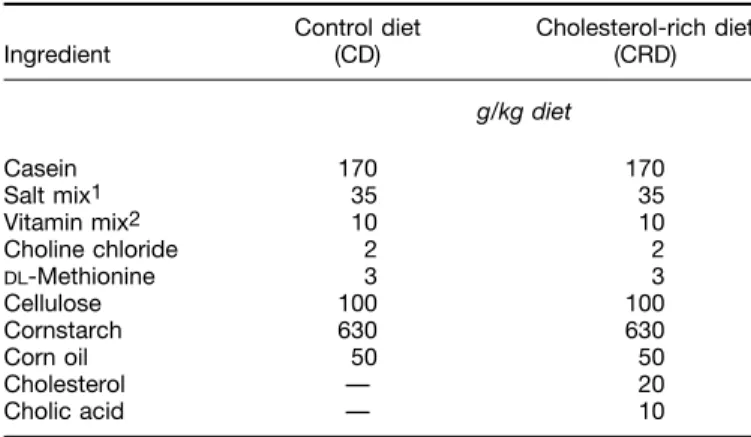
(3) MUNILLA AND HERRERA. 2240. TABLE 1 Composition of experimental diets Control diet (CD). Ingredient. Cholesterol-rich diet (CRD) g/kg diet. Casein Salt mix1 Vitamin mix2 Choline chloride DL-Methionine Cellulose Cornstarch Corn oil Cholesterol Cholic acid. 170 35 10 2 3 100 630 50 — —. 170 35 10 2 3 100 630 50 20 10. and depends on the dose and time of treatment, specific increases in cholesterol and triglycerides have been detected in liver (Fungwe et al. 1993, Tebib et al. 1994). This effect has been interpreted to be a consequence of the stimulatory effect cholesterol has on triglyceride synthesis, which seems to result from 1) a direct effect of cholesterol on promoting esterification of fatty acids and 2) an enhanced availability of fatty acids due to both a decrease in fatty acids oxidation and an enhancement of its synthesis (Fungwe et al. 1993, Liu et al. 1995). This study was conducted to determine whether pregnancy modifies the responsiveness to a cholesterol-rich diet and how fetal growth and the lipoprotein profile in dams and fetuses are affected.. TABLE 2 MATERIALS AND METHODS Animals. Female Sprague Dawley rats from our animal quarters were initially fed a standard nonpurified diet (B&K Universal, Barcelona, Spain) and housed under controlled light and temperature conditions (12-h light:dark cycle; 22–237C). The experimental protocol was approved by the Animal Research Committee of the Universty San Pablo-CEU in Madrid, Spain. When the rats weighed 160–180 g, some were mated, and the day spermatozoids appeared in vaginal smears was considered day 0 of gestation. Half of the pregnant rats were fed a control semisynthetic diet (CD) whereas the other half was fed the same diet supplemented with 2% cholesterol and 1% sodium cholate (CRD). Other age-matched rats were virgins and were fed either CD or CRD. Composition of the diets is detailed in Table 1. Rats were housed in collective cages (4/cage), with free access to the assigned diet and tap water for 20 d. Daily food intake was not measured directly and was only roughly estimated because a considerable loss of food was detected. However, there were no apparent differences in food intake of rats fed CRD and CD (data not shown). On d 0 of the experiment, blood was collected from the tip of the tail into heparinized receptacles. On d 20 rats were decapitated, and trunk blood was collected in ice-chilled tubes containing 1 g/L of Na2-EDTA. The two uterine horns were immediately dissected and weighed with their contents to obtain the whole conceptus weight.. / 4w2a$$0012. 09-29-97 15:34:15. Effect of cholesterol-rich (CRD) or control (CD) diets on body and liver weights in virgin and pregnant rats1 Diet. Pregnancy. Initial body weight. Final body weight. Liver weight. g CD CRD CD CRD. 0 0 / /. 169 161 165 177. { { { {. 5 7 11 7. 212 191 311 322. { { { {. 6a 7a 11b 7b. 7.0 9.4 11.1 12.3. { { { {. 0.5a 0.6b 0.6bc 0.3c. 2 1 2 ANOVA2 Diet Pregnancy Diet 1 pregnancy Residual mean square. NS NS NS 509.9. NS S NS 417.8. S S NS 1.711. 1 Values are expressed as means { SEM, n ¢ 7. Tukey’s test was used to determine differences between groups after ANOVA. Different letters in a column indicate significant differences (P ° 0.05). 2 ANOVA: effect significant, S (P ° 0.05) or non significant, NS (P ú 0.05).. nutra. LP: J Nut. November. Downloaded from jn.nutrition.org at Universidad San Pablo on August 29, 2006. 1 Salt mix (g/kg diet): dibasic calcium phosphate, 17.5; magnesium oxide, 0.84; potassium citrate monohydrate, 7.7; potassium sulfate, 1.82; sodium chloride, 25.9; chromium potassium sulfate, 0.019; cupric carbonate, 0.05; potassium iodate, 0.0003; ferric citrate, 2.1; manganese carbonate, 0.1225; sodium selenite, 0.0003; zinc carbonate, 0.056. 2 Vitamin mix (mg/kg diet): retinyl palmitate, 2.4; cholecalciferol, 0.025; dl-a-tocopheryl acetate, 50.0; menadione sodium bisulfite, 0.8; biotin, 0.22; cyanocobalamin, 0.01; riboflavin, 6.6; thiamin hydrochloride, 6.6.. Placentas and livers were quickly removed and placed into liquid nitrogen before freezing at 0807C until analysis. Fetuses were weighed and decapitated, and their blood was collected as indicated above. Blood from all the fetuses coming from the same dam was pooled and processed in parallel to that of the adults. Tissue samples. Plasma was separated by centrifugation at 1500 1 g for 15 min at 47C. Plasma samples collected on d 0 were kept frozen until processed, but those collected on d 20 were used fresh and subjected immediately to sequential ultracentrifugation in a Beckman TL-100 ultracentrifuge (Beckman Instruments España, Madrid, Spain) with a Beckman TLA 100.2 rotor. VLDL were separated at 224,000 1 g for 3 h at d Å 1.006 kg/L. Successive fractions were brought to the appropiate density with solid KBr (d Å 1.019 kg/L for isolation of IDL, d Å 1.063 kg/L for LDL and d Å 1.21 kg/L for HDL) and centrifugued at 224,000 1 g for 3 h, except for isolation of HDL, which took 6 h. Supernatants were recovered by tube slicing, and, after appropriate dilution, triglyceride and cholesterol concentrations were determined by enzymatic methods with commercial kits (#B7648 and #B-7576, respectively, Meranini Diagnostics, Florence, Italy). Plasma glycerol concentration was measured by the method of Garland and Randle (1962), and commercial kits were used to determine plasma concentrations of triglycerides, cholesterol (Merdnini, Italy) and free fatty acids (#994-75409, Nako Chemicals, Neuss, Germany). Portions of frozen livers (Ç200 mg) were minced and homogenized in 2 mL of 0.2 mol Tris-HCl/L, pH 8.5, and 1-mL aliquots of homogenates were used to prepare acetone-ether powders at 0207C. The defatted preparations were dried under N2 atmosphere and dissolved in 1 mL each of cold 0.05 mol NH4OH-NH4Cl/L, pH 8.1, to evaluate hepatic lipase activity (Huttunen et al. 1979). Lipids were extracted from portions of frozen placentas and livers (Folch et al. 1957), and once phospholipids had been eliminated with alumina in isopropylalcohol, samples were processed for analysis of total cholesterol (Boehringer Manheim, Manheim, Germany) and triglycerides (Sigma, St. Louis, MO.). Statistics. Data are expressed as means { SEM. Data were log transformed since it was necessary to achieve equal variance among means. Treatment effects (diet and pregnancy) were analyzed by twoway ANOVA, using a computer solfware package (Systat Version 5.03, Wilkinson, Evanston, IL). When treatment effects were significantly different (P ° 0.05), means were tested by Tukey’s test, and linear regressions were calculated by the least-squares method (Quaresima et al. 1996). Differences between two groups were analyzed by Student’s t test..
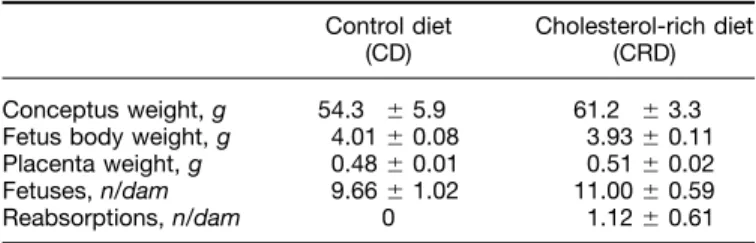
(4) CHOLESTEROL-RICH DIET IN PREGNANT RATS. TABLE 3 Effect of cholesterol-rich (CRD) or control (CD) diets on fetal and placental weights in pregnant rats1 Control diet (CD) Conceptus weight, g Fetus body weight, g Placenta weight, g Fetuses, n/dam Reabsorptions, n/dam. 54.3 4.01 0.48 9.66. { { { { 0. 5.9 0.08 0.01 1.02. Cholesterol-rich diet (CRD) 61.2 3.93 0.51 11.00 1.12. { { { { {. 3.3 0.11 0.02 0.59 0.61. 1 Values are means { SEM. Differences between CD (n Å 7) and CRD (n Å 7) groups were not significant (P ú 0.05) by t test.. RESULTS. / 4w2a$$0012. 09-29-97 15:34:15. Due to the different effects caused by both CRD and pregnancy on triglyceride and cholesterol concentrations in plasma lipoprotein fractions, we calculated their respective ratios in order to detect differences in their intrinsic compositions. As shown in Table 5, feeding CRD decreased the triglyceride/ cholesterol ratio in VLDL and IDL and enhanced it in HDL, whereas pregnancy only had a significant effect in decreasing the triglyceride/cholesterol ratio in LDL, which was not significantly affected by CRD. The triglyceride/cholesterol ratio was higher for VLDL and lower for LDL in pregnant than virgin rats fed CD, whereas there were no significant differences in any of the lipoprotein fractions from pregnant versus virgin rats fed CRD (Table 5). Since some of the differences in the lipoprotein composition could be caused by changes in hepatic lipase activity (HL), this was also measured. Both experimental conditions (feeding CRD and pregnancy) decreased HL activity. This activity was lower in pregnant than in virgin rats fed either diet, and although HL activities in rats fed CRD were always lower than in those fed CD, this difference was significant only for virgin rats (Table 5).. FIGURE 1 Plasma cholesterol and triglyceride concentrations in pregnant and virgin rats fed cholesterol-rich (CRD) and control (CD) diets for 20 d. Values are means { SEM of 7–8 rats/group. Pairwise differences were analyzed by Tukey’s test after ANOVA. Different letters indicate significant differences between groups (P ° 0.05). Two-way analysis of variance after log transformation showed that CRD had a significant effect on both plasma cholesterol and triglycerides, whereas pregnancy had a significant effect only on triglycerides. The interaction between diet and pregnancy was not significant for either variable.. nutra. LP: J Nut. November. Downloaded from jn.nutrition.org at Universidad San Pablo on August 29, 2006. The final body weight of virgin and pregnant rats fed CRD were not different from those of rats fed CD (Table 2). Liver weights were greater in virgin rats fed CRD than in those fed CD and were greater in pregnant than in virgin rats. Conceptus, fetus and placenta weights, the number of pups per litter and the number of reabsorptions did not differ between pregnant rats fed the CRD or the CD (Table 3). Neither plasma cholesterol nor triglyceride concentrations differed among the four groups on day 0 of the experiment (data not shown). On d 20, plasma cholesterol concentrations were not different between virgin and pregnant rats fed CD, but they were higher in both groups fed CRD (Fig. 1). Plasma triglyceride concentrations were greater in pregnant than in virgin rats fed CD, and they were even greater in pregnant rats fed CRD than CD (Fig. 1). Both plasma free fatty acid (FFA) and glycerol concentrations were enhanced by feeding CRD (Table 4). Plasma concentrations of both FFA and glycerol were significantly greater in pregnant rats fed CRD than in those fed CD, whereas in virgin rats, the effect of CRD was only significant for FFA. Mean values for both FFA and glycerol concentrations of pregnant rats fed CRD were more than double those of virgin rats fed the same diet. In rats fed CD, liver concentrations of both cholesterol and triglycerides were slightly higher in pregnant than in virgin rats, although differences were only significant for triglycerides (Table 4). Feeding CRD had a significant effect on both liver cholesterol and triglyceride concentrations, whereas pregnancy significantly affected only liver triglyceride concentration, which was higher in pregnant than in virgin rats (Table 4). Placental cholesterol concentration of rats fed CRD was higher than in those fed CD, but placental triglyceride concentration did not differ in the two groups (Table 4). In rats fed CD, cholesterol concentrations in plasma VLDL, IDL, LDL and HDL did not differ significantly between virgin and pregnant rats (Fig. 2). In virgin and pregnant rats fed CRD, cholesterol concentrations in both plasma VLDL and IDL were significantly higher than in those fed CD. Plasma LDL cholesterol was higher in pregnant rats fed CRD than CD and than virgin rats fed either diet. However, in both pregnant and virgin rats fed CRD, HDL-cholesterol was significantly lower than in those fed CD (Fig. 2). In rats fed CD, plasma VLDL triglyceride concentrations were higher and LDL triglycerides were lower in pregnant than in virgin rats (Fig. 3). Feeding CRD enhanced only plasma IDL-triglyceride concentrations in virgin rats compared to those fed CD, but in pregnant rats fed CRD, plasma VLDL, LDL and HDL triglycerides were higher than in those fed CD (Fig. 3).. 2241.
(5) MUNILLA AND HERRERA. 2242. TABLE 4 Plasma free fatty acids (FFA) and glycerol, and liver and placental cholesterol and triglycerides in pregnant and virgin rats fed cholesterol-rich (CRD) and control (CD) diets1 Plasma Diet. Pregnancy. Liver. FFA. Glycerol. Cholesterol. Placenta Triglycerides. mmol/L CD CRD CD CRD. 0 0 / /. 455 1532 680 3527. { { { {. 53a 210b 52a 480c. Cholesterol. Triglycerides. mmol/g wet tissue 241 401 284 878. { { { {. 10a 30a 14a 157b. 7.8 131 9.2 127. { { { {. 0.3a 11b 0.2a 7b. 7.9 19.9 14.1 42.5. { { { {. 0.6a 2.6b 0.9b 6.1c. 9.6 { 0.5a 20.9 { 3.5b. 4.7 { 0.6 5.7 { 0.6. 2 1 2 ANOVA2 S NS NS 0.024. S NS S 0.017. S NS NS 0.005. S S NS 0.019. 1 Values are expressed as means { SEM, n ¢ 7. Tukey’s test was used to determine differences between groups after ANOVA. Different letters in a column indicate significant differences (P ° 0.05). 2 ANOVA after log transformation: effect significant, S (P ° 0.05) or non significant, NS (P ú 0.05).. FIGURE 2 Plasma lipoprotein cholesterol concentrations in pregnant and virgin rats fed cholesterol-rich (CRD) and control (CD) diets for 20 d. Values are means { SEM of 7–8 rats/group. Pairwise differences were analyzed by Tukey’s test after ANOVA. Different letters indicate significant differences between groups (P ° 0.05). Two-way analysis of variance after log transformation showed that the CRD had a significant effect on VLDL, IDL, LDL and HDL cholesterol, whereas pregnancy had a significant effect on LDL and HDL cholesterol. The interaction between diet and pregnancy was significant only for LDL.. / 4w2a$$0012. 09-29-97 15:34:15. nutra. LP: J Nut. November. Downloaded from jn.nutrition.org at Universidad San Pablo on August 29, 2006. Diet Pregnancy Diet 1 pregnancy Residual mean square.
(6) CHOLESTEROL-RICH DIET IN PREGNANT RATS. 2243. TABLE 5 Triglycerides to cholesterol ratios in plasma lipoproteins and hepatic lipase (HL) activity in pregnant and virgin rats fed cholesterolrich (CRD) and control (CD) diets1 Triglycerides/cholesterol Diet. Pregnancy. VLDL. IDL. LDL. HDL. HL in liver pkat/g2. mol/mol CD CRD CD CRD. 0 0 / /. 4.34 0.30 6.90 0.50. { { { {. 0.63b 0.11a 0.70c 0.15a. 7.41 0.22 3.91 0.15. { { { {. 0.70b 0.07a 1.88b 0.05a. 0.671 0.302 0.141 0.064. { { { {. 0.181b 0.087ab 0.016a 0.019a. 0.011 0.047 0.016 0.049. { { { {. 0.001a 0.007b 0.002a 0.007b. 173.8 93.4 76.7 59.3. { { { {. 15.7c 5.5b 8.01ab 4.9a. 2 1 2 ANOVA3 Diet Pregnancy Diet 1 pregnancy Residual mean square. S NS NS 0.013. S NS NS 0.069. NS S NS 0.005. S NS NS 0. S S NS 0.011. 1 Values are expressed as means { SEM, n ¢ 7. Tukey’s test was used to determine differences between groups after ANOVA. Different letters in a column indicate significant differences (P ° 0.05). 2 pkatals: pmol of substrate transformed per second. 3 ANOVA after log transformation: effect significant, S (P ° 0.05) or non significant, NS (P ú 0.05).. / 4w2a$$0012. 09-29-97 15:34:15. nutra. LP: J Nut. November. Downloaded from jn.nutrition.org at Universidad San Pablo on August 29, 2006. FIGURE 3 Plasma lipoprotein triglyceride concentrations in pregnant and virgin rats fed cholesterol-rich (CRD) and control (CD) diets for 20 d. Values are means { SEM of 7–8 rats/group.Pairwise differences were analyzed by Tukey’s test after ANOVA. Different letters indicate significant differences between groups (P ° 0.05). Two-way analysis of variance after log transformation showed that CRD had a significant effect on VLDL, IDL, LDL and HDL triglycerides, whereas pregnancy had a significant effect on VLDL, LDL and HDL triglycerides. The interaction between diet and pregnancy was not significant in any of the studied variables..
(7) MUNILLA AND HERRERA. 2244. TABLE 6 Plasma total and lipoprotein cholesterol and triglycerides in fetuses of rats fed cholesterol-rich (CRD) and control (CD) diets1 Cholesterol Plasma. VLDL. IDL. LDL. HDL. 0.80 { 0.18 0.64 { 0.07. 0.31 { 0.04 0.38 { 0.08. 0.28 { 0.04 0.28 { 0.02. 0.06 { 0.01 0.07 { 0.01. mmol/L CD CRD. 1.19 { 0.23 1.10 { 0.12. 0.04 { 0.02 0.04 { 0.01. 0.04 { 0.01 0.04 { 0.01 Triglycerides mmol/L. CD CRD. 0.5 { 0.05 0.54 { 0.03. 0.10 { 0.01 0.12 { 0.01. 0.06 { 0.01 0.08 { 0.01. In fetal plasma, LDL triglycerides and LDL cholesterol were the main lipoprotein components (Table 6), whereas in adult rats the most abundant lipoproteins were either VLDL or HDL, depending on the experimental condition of the animals or even on the lipid moiety considered (see Figs. 2 and 3). Fetal plasma concentrations of both triglyceride and cholesterol and their respective distributions in the different lipoprotein fractions did not differ between fetuses of rats fed either CRD or CD (Table 6), although all these variables were affected by the different diets in the dams. DISCUSSION This study shows that a cholesterol-rich diet fed for 20 d causes a greater hypertriglyceridemic response in pregnant than in virgin rats, further enhancing the hypertriglyceridemic condition of the 20-d pregnant rat. The effect mainly corresponds to an increase in both VLDL and HDL triglyceride concentrations. However, the increase of plasma cholesterol concentrations caused by CRD was similar in pregnant and virgin rats, although LDL cholesterol concentrations in pregnant rats fed CRD were much higher than in any of the other groups. Despite the profound alteration in maternal lipoproteins produced by this diet, no differences were detected in the plasma cholesterol or triglyceride concentrations of fetuses nor in fetal lipoprotein profiles. These findings in virgin rats fed 2% cholesterol and 1% cholic acid diet confirm and extend those reported by others feeding diets enriched with different amounts of cholesterol, ranging between 0.5% (Fungwe et al. 1993 and 1994) to 4% (Räisänen-Sokolowski et al. 1994) for different periods of times, supplied or not with cholic acid. Our results show that while the triglyceride/cholesterol ratio of VLDL, IDL and LDL was lower in rats fed CRD than CD, the opposite effect was observed in HDL. These findings are consistent with those reported by Fungwe et al. (1992 and 1993) in virgin rats under similar dietary conditions. The lower HDL cholesterol level found in rats fed CRD, and the proportional enrichment in triglycerides of these particles may be related to decreased HL activity reported here, since this enzyme controls the conversion of triglyceride-rich HDL2 into triglyceride-poor HDL3 (Kuusi et al. 1982). The effect of CRD decreasing HL activity reported here agrees with results of Sultan et al. (1995) in nonpregnant rats showing that a cholesterol/cholate-enriched diet decreases HL gene expression.. / 4w2a$$0012. 09-29-97 15:34:15. The accumulation of both cholesterol and triglycerides in the liver of virgin rats fed CRD also agrees with similar changes consistently found by others using diets containing a wide range of cholesterol levels (Fungwe et al. 1993 and 1994, Sérougne et al. 1995, Sultan et al. 1995, Tebib et al. 1994). Under these conditions, triglyceride synthesis is enhanced, but cholesterol synthesis in the liver is extremely low (Jeske and Dietschi 1980, Sérougne et al. 1987), and although hepatic LDL and HDL receptors are decreased (Jackson et al. 1994), the great entry of cholesterol into the circulation seems to be enough to enhance liver uptake. The high plasma FFA and glycerol concentrations found in rats fed CRD could be a consequence either of the enhancement of adipose tissue lipolytic activity, or of a breakdown of circulating triglyceride-rich lipoproteins by lipoprotein lipase stimulated by an increase of substrate, or to both. Although our results do not resolve which of these possibilities is correct, they indicate an enhanced supply of lipolytic products to the liver of the rats fed CRD, which will also contribute to the accumulation of triglycerides in the liver of these rats. To our knowledge, the effects of a cholesterol-rich diet during pregnancy have never been reported before. Our results show a greater effect on most variables of CRD in pregnant than in virgin rats, and there are few a specific differences that are worth discussing. In rats fed CD, the increase in estrogens occurring during gestation prevents a dramatic increase in plasma LDL cholesterol levels because estrogens enhance LDL receptor activity (Srivastava et al. 1993). However, our results show that CRD increases plasma LDL cholesterol concentrations in pregnant rats but not in virgin rats. This unexpected hypercholesterolemia during pregnancy could be explained by assuming cholesterol feeding drastically decreases LDL receptor expression and activity (Jackson et al. 1994), counteracting the protective effects of estrogens and resulting in the exaggerated increase of LDL cholesterol concentrations detected in pregnant rats fed CRD. Another possible explanation could be that an increased rate of entry of cholesterol-bearing lipoproteins into the circulation contributes to the exaggerated increase in LDL cholesterol seen in pregnant rats fed CRD. Direct experiments are required to test these hypotheses. In virgin rats, feeding CRD has a mild effect on increasing both plasma VLDL triglyceride and liver triglyceride concentrations. In contrast, this diet further increases the highest values of these two variables in pregnant rats; therefore, it may be concluded that CRD has a greater effect promoting liver. nutra. LP: J Nut. November. Downloaded from jn.nutrition.org at Universidad San Pablo on August 29, 2006. 1 Values are means { SEM. Differences between CD (n Å 7) and CRD (n Å 7) groups were not significant (P ú 0.05) by t test..
(8) CHOLESTEROL-RICH DIET IN PREGNANT RATS. ACKNOWLEDGMENT The authors thank Beatriz Ramos for her editorial help.. LITERATURE CITED Alvarez, J. J., Montelongo, A., Iglesias, A., Lasunción, M. A. & Herrera, E. (1996) Longitudinal study on lipoprotein profile, high density lipoprotein subclass, and postheparin lipases during gestation in women. J. Lipid Res. 37: 299– 308. Argiles, J. & Herrera, E. (1981) Lipids and lipoproteins in maternal and fetus plasma in the rat. Biol. Neonate 39: 37–44. Carr, B. R. & Simpson, E. R. (1984) Cholesterol synthesis by human fetal hepatocytes: effects of hormones. J. Clin. Endocrinol. Metab. 58: 1111–1116. Chevallier, F. (1964) Transferts et synthese du cholesterol chez le rat au cours de sa croissance. Biochim. Biophys. Acta, 84: 316–339. Folch, J., Lees, M. & Sloane Stanley, G. H. (1957) A simple method for the isolation and purification of total lipids from animal tissues. J. Biol. Chem. 22: 24–36.. / 4w2a$$0012. 09-29-97 15:34:15. Fungwe, T. V., Cagen, L. M., Cook, G. A., Wilcox, H. G. & Heimberg, M. (1993) Dietary cholesterol stimulates hepatic biosynthesis of triglyceride and reduces oxidation of fatty acids in the rat. J. Lipid Res. 34: 933–941. Fungwe, T. V., Cagen, L. M., Wilcox, H. G. & Heimberg, M. (1992) Regulation of hepatic secretion of very low density lipoprotein by dietary cholesterol. J. Lipid Res. 179–191. Fungwe, T. V., Fox, J. E., Cagen, L. M., Wilcox, H. G. & Heimberg, M. (1994) Stimulation of fatty acid biosynthesis by dietary cholesterol and of cholesterol synthesis by dietary fatty acid. J. Lipid Res. 35: 311–318. Garland, P. B. & Randle, P. J. (1962) A rapid enzymatic assay for glycerol. Nature 196: 987–988. Haave, N. C. & Innis, S. M. (1988) Induction of 3-hydroxy-3-methylglutaryl coenzyme A reductase activity in foetal rats by maternal cholestyramine feeding. J. Dev. Physiol. 10: 247–255. Hrab, R. V., Hartman, H. A. & Cox, R. H., Jr., (1994) Prevention of fluvastatininduced toxicity, mortality, and cardiac myopathy in pregnant rats by mevalonic acid supplementation. Teratology 50: 19–26. Huttunen, J. K., Ehnholm, C., Kinnunen, P.K.J. & Nikkilä, E. A. (1979) An immunochemical method for the selective measurement of two triglyceride lipases in human post-heparin plasma. Clin. Chem. 63: 335–347. Jackson, K. A., Suter, D.A.I. & Topping, D. L. (1994) Oat bran, barley and malted barley lower plasma cholesterol relative to wheat bran but differ in their effects on liver cholesterol in rats fed diets with & without cholesterol. J. Nutr. 124: 1678–1684. Jeske, D. J. & Dietschi, J. M. (1980) Regulation of rates of cholesterol synthesis in vivo in the liver and carcass of the rat measured using [3H] water. J. Lipid Res. 21: 364–376. Johansson, M. B. (1983) Lipoproteins and lipids in fetal, neonatal and adult rat serum. Biol. Neonate 44: 278–286. Jurevics, H. A., Kidwai, F. Z. & Morell, P. (1997) Sources of cholesterol during development of the rat fetus and fetal organs. J. Lipid Res. 39: 723–733. Knopp, R. H., Zhu, X. & Bonet, B. (1994) Effects of estrogens on lipoprotein metabolism and cardiovascular disease in women. Atherosclerosis 110: S83– S91. Kuusi, T., Nikkilä, E. A., Tikkanen, M. J., Taskinen, M. R. & Ehnholm, C. (1982) Function of hepatic lipase in lipoprotein metabolism. In: Atherosclerosis VI (Schettler, G., Gotto, A. M., Middelhoff, G., Hanicht, A.J.R. & Jurutka, K.R., eds.), pp. 628–632. Springer Verlag, Berlin. Leoni, S., Spagnuolo, S., Conti Devirgiliis, L., Dini, L., Mangiantini, M. T. & Trentalance, A. (1984) Cholesterolgenesis and related enzymes in isolated rat hepatocytes during pre- and postnatal life. J. Cell Physiol. 118: 62–66. Liu, C. H., Huang, M. & Huang, P. C. (1995) Sources of triacylglycerol accumulation in livers of rats fed a cholesterol-supplemented diet. Lipids 30: 527– 531. Mabuchi, H., Sakai, Y., Watanabe, A., Haba, T., Koizumi, J. & Takeda, R. (1985) Normalization of low-density lipoprotein levels and disappearance of xanthomas during pregnancy in a woman with heterozygous familial hypercholesterolemia. Metabolism 34: 309–315. Montelongo, A., Lasunción, M. A., Pallardo, L. F. & Herrera, E. (1992) Longitudinal study of plasma lipoproteins and hormones during pregnancy in normal and diabetic women. Diabetes 41: 1651–1659. Neary, R. H., Kilby, M. D., Kumpatula, P., Game, F. L., Bhatnagar, D., Durrington, P. N. & O’Brien, P.M.S. (1995) Fetal and maternal lipoprotein metabolism in human pregnancy. Clin. Sci. 88: 311–318. Parker, C. R., Jr., Deahl, T., Drewry, P. & Hankins, G. (1983) Analysis of the potential for transfer of lipoprotein-cholesterol across the human placenta. Early Hum. Dev. 8: 289–295. Pitkin, R. M., Connor, W. E. & Lin, D. S. (1972) Cholesterol metabolism and placental transfer in the pregnant rhesus monkey. J. Clin. Invest. 51: 2584– 2592. Quaresima, V., Pizzi, A., De Blasi, R. A., Ferrari, A. & Ferrari, M. (1996) Influence of the treadmill speed/slope on quadriceps oxygenation during dynamic exercise. Adv. Exp. Med. Biol. 388: 231–235. Räisänen-Sokolowski, A., Tilly-Kiesi, M., Ustinov, J., Mennander, A., Paavonen, T., Tikkanen, M.J. & Häyry, P. (1994) Hyperlipidemia accelerates allograft arteriosclerosis (chronic rejection) in the rat. Arterioscler. Thromb. 14: 2032– 2042. Schlag, B. & Winkler, L. (1978) Concentration and composition of serum lipoproteins in the fetal rat. Acta Biol. Med. Ger. 37: 233–237. Sérougne, C., Felgines, C., Férézou, J., Hajri, T., Bertin, C. & Mazur, A. (1995) Hypercholesterolemia induced by cholesterol- or cystine-enriched diets is characterized by different plasma lipoprotein and apolipoprotein concentrations in rats. J. Nutr. 125: 35–41. Sérougne, C., Férézou, J. & Rukaj, A. (1987) A new relationship between cholesterolemia and cholesterol synthesis determined in rats fed an excess of cystine. Biochim. Biophys. Acta 921: 522–530. Srivastava, R.A.K., Baumann, D. & Schonfeld, G. (1993) In vivo regulation of low-density lipoprotein receptors by estrogen differs at the post-transcriptional level in rat and mouse. Eur. J. Biochem. 216: 527–538. Sultan, F., Benhizia, F., Lagrange, D., Will, H. & Griglio, S. (1995) Effect of dietary cholesterol on activity and mRNA levels of hepatic lipase in rat. Life Sci. 56: 31–37. Tebib, K., Besançon, P. & Rouanet, J.-M. (1994) Dietary grape seed tannins affect lipoproteins, lipoprotein lipases and tissue lipids in rats fed hypercholesterolemic diets. J. Nutr. 124: 2451–2457. Wasfi, I., Weinstein, I. & Heimberg, M. (1980) Hepatic metabolism of [1-14C]oleate in pregnancy. Biochim. Biophys. Acta 619: 471–481.. nutra. LP: J Nut. November. Downloaded from jn.nutrition.org at Universidad San Pablo on August 29, 2006. production of VLDL in pregnant rats. This is not surprising given the enhanced capability of the livers of pregnant rats to secrete VLDL (Wasfi et al. 1980). This hypothesis also explains the higher amount of triglycerides found in HDL of pregnant rats fed CRD, since under normal pregnant conditions, enhanced liver production of VLDL triglycerides is also associated with a greater transfer of triglycerides from VLDL to HDL, as previously found in women (Alvarez et al. 1996). The predominance of LDL over other lipoproteins in the lipoprotein profile of rat fetuses at 20 d gestation is consistent with that described by us and other authors (Argiles and Herrera 1981, Johansson 1983, Schlag and Winkler 1978) and is different from the lipoprotein profiles of adult rats. This study shows for the first time that maternal hyperlipidemia developed in rats fed CRD does not affect fetal plasma lipid levels or the fetal lipoprotein profile. Although a compensatory response by the fetal cholesterol metabolism to maternal hypercholesterolemia cannot be discarded, as it has been shown to occur under conditions of hypocholesterolemia (Haave and Innis 1988), such a possibility appears unlikely in the present conditions. The striking accumulation of cholesterol in the placenta of the pregnant rats fed CRD without an effect on fetal cholesterol levels indicates a lack of placental cholesterol transfer to the fetus. This has been a very controversial matter since early studies suggested an important contribution of maternal cholesterol to fetal plasma and tissue cholesterol accretion (Pitkin et al. 1972). More recent studies report minimal transfer of maternal cholesterol (Neary et al.1995, Parker et al. 1983); however, no direct studies have been conducted to answer this issue. If there was any placental transfer of cholesterol, it would depend on the plasma maternal/fetal gradient. In this study the gradient goes from 1.5 in rats fed CD to 10.7 in those fed CRD; therefore, if there was any placental transfer of cholesterol, the fetal lipoprotein profile would be expected to be altered as a result of such an enormous cholesterol gradient. Since it has been recently reported that the rat fetus synthesizes nearly all of its own cholesterol (Jurevics et al. 1997), the possibility also exists that a compensatory reduction of cholesterol synthesis in fetuses of dams fed CRD as a consequence of enhanced placental cholesterol transfer would have resulted in the lack of change in serum cholesterol reported here in these fetuses. However, if this were the case, changes in fetal cholesterol synthesis would have modified fetal lipoprotein profiles, as in adults. Our results show that there is not such an alteration in plasma lipoprotein levels or composition in fetuses of rats fed CRD, indicating that, at least in fetal rats, cholesterol requirements are not fulfilled by placental cholesterol transfer, and fetal cholesterol synthesis seems to be sufficient for this need.. 2245.
(9)
Figure


Documento similar
porpuses such as; reviewing vocabulary already checked or for introducing new vocabulary about food and drink and as a support for teaching how to order food in a
Volanesorsen reduced mean apolipoprotein C-III levels from baseline by 84% after 3 months of therapy and by 83% after 6 months of therapy (P<0.001 for both comparisons),
ApoAV reduces plasma triglycerides by inhibiting very low density lipoprotein-triglyceride (VLDL-TG) production and stimulating lipoprotein lipase-mediated VLDL-TG hydrolysis. 156)
This in turn invites a re-drawing of Giannobile’s catalogue (see below) to allow the possibility that the central elements are in fact the figure appearing on the obverse
In this description iot included differen- ces in activity rates associated to different levels of s t icnption according to education achievements of the labour population
17,18 Contrary to graphene, the band gap in ML-MDS separating the valence and conduction bands is naturally large and due to the absence of inversion symmetry in ML-MDS the
Methods: This cross-sectional observational study assessed the prevalence of two atherogenic dyslipidemia markers, high triglyceride levels and low high-density lipoprotein
First, by taking advantage of the modular description of gene networks, we have proposed a simple three component mod- ule as a general platform to test the influence that
