
3D world creation with dark atmosphere Walpurgis Night: The Dark World
95
0
0
Texto completo
(2) Abstract This project presents an RPG/adventure video game based on Nordic mythology with 3D graphics. With an open world concept, the player will be able to explore and interact with different elements found in it. The game mechanics will be centered around the use of lights in the player’s favor and a time trial present in the game. The project is going to be developed using Unity 3D game engine, 3D graphics and motion capture programs.. 1.
(3) Contents 1 Technical Proposal 1.1. 9. Introduction . . . . . . . . . . . . . . . . . . . . . . . . . . . . . . . . . . . . . . . .. 9. 1.1.1. 9. Shared Content . . . . . . . . . . . . . . . . . . . . . . . . . . . . . . . . . .. 1.2. Motivation. . . . . . . . . . . . . . . . . . . . . . . . . . . . . . . . . . . . . . . . .. 10. 1.3. Influences . . . . . . . . . . . . . . . . . . . . . . . . . . . . . . . . . . . . . . . . .. 10. 1.3.1. Art influences . . . . . . . . . . . . . . . . . . . . . . . . . . . . . . . . . . .. 10. 1.3.2. Narrative influences . . . . . . . . . . . . . . . . . . . . . . . . . . . . . . .. 12. 1.3.3. Mechanics influences . . . . . . . . . . . . . . . . . . . . . . . . . . . . . . .. 12. Research and Mythology . . . . . . . . . . . . . . . . . . . . . . . . . . . . . . . . .. 14. 1.4.1. Nordic Mythology and Walpurgis Night . . . . . . . . . . . . . . . . . . . .. 14. 1.4.2. Basic Introduction to this Walpurgis Night: The Dark World mythology . .. 16. 1.5. Game Preview . . . . . . . . . . . . . . . . . . . . . . . . . . . . . . . . . . . . . .. 16. 1.6. Goals . . . . . . . . . . . . . . . . . . . . . . . . . . . . . . . . . . . . . . . . . . .. 17. 1.7. Related Subjects . . . . . . . . . . . . . . . . . . . . . . . . . . . . . . . . . . . . .. 17. 1.7.1. 3D Design - VJ1216 . . . . . . . . . . . . . . . . . . . . . . . . . . . . . . .. 17. 1.7.2. Software Engineering - VJ1224 . . . . . . . . . . . . . . . . . . . . . . . . .. 18. 1.7.3. Conceptual Design - VJ1222 . . . . . . . . . . . . . . . . . . . . . . . . . .. 18. 1.7.4. Video game art - VJ1223 . . . . . . . . . . . . . . . . . . . . . . . . . . . .. 18. 1.7.5. Character design and animation - VJ1226 . . . . . . . . . . . . . . . . . . .. 18. 1.7.6. Artificial Intelligence - VJ1231 . . . . . . . . . . . . . . . . . . . . . . . . .. 19. Tools . . . . . . . . . . . . . . . . . . . . . . . . . . . . . . . . . . . . . . . . . . . .. 19. 1.8.1. 2D Art. . . . . . . . . . . . . . . . . . . . . . . . . . . . . . . . . . . . . . .. 19. 1.8.2. 3D Art. . . . . . . . . . . . . . . . . . . . . . . . . . . . . . . . . . . . . . .. 19. 1.8.3. Video game implementation . . . . . . . . . . . . . . . . . . . . . . . . . . .. 20. 1.8.4. Animation . . . . . . . . . . . . . . . . . . . . . . . . . . . . . . . . . . . . .. 20. 1.8.5. Documentation and final presentation . . . . . . . . . . . . . . . . . . . . .. 20. Tasks . . . . . . . . . . . . . . . . . . . . . . . . . . . . . . . . . . . . . . . . . . .. 20. 1.10 Risks . . . . . . . . . . . . . . . . . . . . . . . . . . . . . . . . . . . . . . . . . . . .. 22. 1.10.1 Budget . . . . . . . . . . . . . . . . . . . . . . . . . . . . . . . . . . . . . .. 22. 1.11 Walpurgis Night . . . . . . . . . . . . . . . . . . . . . . . . . . . . . . . . . . . . .. 22. 1.4. 1.8. 1.9. 2 Game Design. 23. 2.1. Introduction . . . . . . . . . . . . . . . . . . . . . . . . . . . . . . . . . . . . . . . .. 23. 2.2. Walpurgis Night History . . . . . . . . . . . . . . . . . . . . . . . . . . . . . . . . .. 23. 2.3. Walpurgis Night: The Dark World History . . . . . . . . . . . . . . . . . . . . . . .. 23. 2.4. Characters . . . . . . . . . . . . . . . . . . . . . . . . . . . . . . . . . . . . . . . . .. 24. 2.5. Enemies . . . . . . . . . . . . . . . . . . . . . . . . . . . . . . . . . . . . . . . . . .. 24. 2.
(4) 2.6. Interaction: NPCs and objects . . . . . . . . . . . . . . . . . . . . . . . . . . . . .. 24. 2.7. Game mechanics . . . . . . . . . . . . . . . . . . . . . . . . . . . . . . . . . . . . .. 24. 3 Game Development. 25. 3.1. Input detection . . . . . . . . . . . . . . . . . . . . . . . . . . . . . . . . . . . . . .. 26. 3.2. Character movement . . . . . . . . . . . . . . . . . . . . . . . . . . . . . . . . . . .. 26. 3.3. Camera . . . . . . . . . . . . . . . . . . . . . . . . . . . . . . . . . . . . . . . . . .. 27. 3.4. Target Enemy Mode . . . . . . . . . . . . . . . . . . . . . . . . . . . . . . . . . . .. 27. 3.5. Dialogue Manager . . . . . . . . . . . . . . . . . . . . . . . . . . . . . . . . . . . .. 28. 3.6. Basic attack . . . . . . . . . . . . . . . . . . . . . . . . . . . . . . . . . . . . . . . .. 29. 3.7. Introduction scenes and Main Menu . . . . . . . . . . . . . . . . . . . . . . . . . .. 29. 3.8. Head Look Controller . . . . . . . . . . . . . . . . . . . . . . . . . . . . . . . . . .. 29. 3.9. Enemy AI . . . . . . . . . . . . . . . . . . . . . . . . . . . . . . . . . . . . . . . . .. 30. 3.10 Light Mechanics . . . . . . . . . . . . . . . . . . . . . . . . . . . . . . . . . . . . .. 32. 3.10.1 Lantern . . . . . . . . . . . . . . . . . . . . . . . . . . . . . . . . . . . . . .. 32. 3.10.2 Diamonds . . . . . . . . . . . . . . . . . . . . . . . . . . . . . . . . . . . . .. 32. 3.10.3 Pedestal . . . . . . . . . . . . . . . . . . . . . . . . . . . . . . . . . . . . . .. 32. 3.10.4 Special objects . . . . . . . . . . . . . . . . . . . . . . . . . . . . . . . . . .. 33. 3.11 NPC interaction . . . . . . . . . . . . . . . . . . . . . . . . . . . . . . . . . . . . .. 33. 3.12 Magic . . . . . . . . . . . . . . . . . . . . . . . . . . . . . . . . . . . . . . . . . . .. 33. 3.13 Inventory and Pick up objects . . . . . . . . . . . . . . . . . . . . . . . . . . . . . .. 34. 3.14 Change between Valkyries . . . . . . . . . . . . . . . . . . . . . . . . . . . . . . . .. 35. 3.15 Valkyrie class . . . . . . . . . . . . . . . . . . . . . . . . . . . . . . . . . . . . . . .. 35. 3.16 Valkyries’ life and mana . . . . . . . . . . . . . . . . . . . . . . . . . . . . . . . . .. 36. 3.17 Enemy health . . . . . . . . . . . . . . . . . . . . . . . . . . . . . . . . . . . . . . .. 36. 3.18 Game Controller . . . . . . . . . . . . . . . . . . . . . . . . . . . . . . . . . . . . .. 36. 4 Game Art. 36. 4.1. Color palettes . . . . . . . . . . . . . . . . . . . . . . . . . . . . . . . . . . . . . . .. 37. 4.2. Old Walpurgis Night art . . . . . . . . . . . . . . . . . . . . . . . . . . . . . . . . .. 37. 4.2.1. Old concept arts . . . . . . . . . . . . . . . . . . . . . . . . . . . . . . . . .. 37. 4.2.2. Old art in game. . . . . . . . . . . . . . . . . . . . . . . . . . . . . . . . . .. 38. . . . . . . . . . . . . . . . . . . . . . . . . . . . . . . . . . .. 39. Concept Art . . . . . . . . . . . . . . . . . . . . . . . . . . . . . . . . . . .. 39. 2D Art . . . . . . . . . . . . . . . . . . . . . . . . . . . . . . . . . . . . . . . . . . .. 42. 4.4.1. Game Title and Main menu . . . . . . . . . . . . . . . . . . . . . . . . . . .. 42. 3D Art . . . . . . . . . . . . . . . . . . . . . . . . . . . . . . . . . . . . . . . . . . .. 42. 4.5.1. Character . . . . . . . . . . . . . . . . . . . . . . . . . . . . . . . . . . . . .. 42. 4.5.2. Scenery . . . . . . . . . . . . . . . . . . . . . . . . . . . . . . . . . . . . . .. 44. Texturize . . . . . . . . . . . . . . . . . . . . . . . . . . . . . . . . . . . . . . . . .. 45. 4.3. New Walpurgis Night 4.3.1. 4.4. 4.5. 4.6. 3.
(5) 4.7. 3D models in game . . . . . . . . . . . . . . . . . . . . . . . . . . . . . . . . . . . .. 5 Animation 5.1. 5.2. 45. Motion Capture . . . . . . . . . . . . . . . . . . . . . . . . . . . . . . . . . . . . . .. 45. 5.1.1. Configuration . . . . . . . . . . . . . . . . . . . . . . . . . . . . . . . . . . .. 47. After Motion Capture . . . . . . . . . . . . . . . . . . . . . . . . . . . . . . . . . .. 51. 6 Results 6.1. 45. 55. Gameplay demo . . . . . . . . . . . . . . . . . . . . . . . . . . . . . . . . . . . . . .. 56. 7 Testing and evaluation. 56. 8 Conclusions. 57. 8.1. Future work . . . . . . . . . . . . . . . . . . . . . . . . . . . . . . . . . . . . . . . .. 58. 8.1.1. Near future . . . . . . . . . . . . . . . . . . . . . . . . . . . . . . . . . . . .. 58. 8.1.2. Walpurgis Night . . . . . . . . . . . . . . . . . . . . . . . . . . . . . . . . .. 58. 9 Deviations. 59. 4.
(6) List of Figures 1. How cel-shading looks in Wind Waker and the light influence. . . . . . . . . . . . .. 10. 2. More games that influenced in the cel-shading styel. . . . . . . . . . . . . . . . . .. 11. 3. Art deco . . . . . . . . . . . . . . . . . . . . . . . . . . . . . . . . . . . . . . . . . .. 12. 4. In game image of TLZ: Majora’s Mask where the time indicator is visible . . . . .. 13. 5. Lightning Returns Final Fantasy XIII in game image . . . . . . . . . . . . . . . . .. 13. 6. Amnesia and the use of the lantern . . . . . . . . . . . . . . . . . . . . . . . . . . .. 14. 7. Metal Gear Solid and the use of stealth . . . . . . . . . . . . . . . . . . . . . . . .. 14. 8. Risks Table . . . . . . . . . . . . . . . . . . . . . . . . . . . . . . . . . . . . . . . .. 22. 9. Budget Table . . . . . . . . . . . . . . . . . . . . . . . . . . . . . . . . . . . . . . .. 22. 10. Characters magics. . . . . . . . . . . . . . . . . . . . . . . . . . . . . . . . . . . . .. 25. 11. Characters stats. . . . . . . . . . . . . . . . . . . . . . . . . . . . . . . . . . . . . .. 25. 12. Left: original tree root - Right: edited tree root . . . . . . . . . . . . . . . . . . . .. 30. 13. Inside Light tree . . . . . . . . . . . . . . . . . . . . . . . . . . . . . . . . . . . . .. 31. 14. Dialogue . . . . . . . . . . . . . . . . . . . . . . . . . . . . . . . . . . . . . . . . . .. 33. 15. Inventory with marker . . . . . . . . . . . . . . . . . . . . . . . . . . . . . . . . . .. 35. 16. first color palette. . . . . . . . . . . . . . . . . . . . . . . . . . . . . . . . . . . . . .. 37. 17. Old valkyries concept arts. . . . . . . . . . . . . . . . . . . . . . . . . . . . . . . . .. 37. 18. Cathedral concept art. . . . . . . . . . . . . . . . . . . . . . . . . . . . . . . . . . .. 38. 19. The Cathedral . . . . . . . . . . . . . . . . . . . . . . . . . . . . . . . . . . . . . .. 38. 20. Some buildings . . . . . . . . . . . . . . . . . . . . . . . . . . . . . . . . . . . . . .. 38. 21. The old Valkyrie. . . . . . . . . . . . . . . . . . . . . . . . . . . . . . . . . . . . . .. 39. 22. Concept art of the new Valkyries . . . . . . . . . . . . . . . . . . . . . . . . . . . .. 39. 23. Enemies concept . . . . . . . . . . . . . . . . . . . . . . . . . . . . . . . . . . . . .. 40. 24. Concept art of world . . . . . . . . . . . . . . . . . . . . . . . . . . . . . . . . . . .. 40. 25. Old main menu . . . . . . . . . . . . . . . . . . . . . . . . . . . . . . . . . . . . . .. 41. 26. Title concept art . . . . . . . . . . . . . . . . . . . . . . . . . . . . . . . . . . . . .. 41. 27. Final title art . . . . . . . . . . . . . . . . . . . . . . . . . . . . . . . . . . . . . . .. 42. 28. Final main menu . . . . . . . . . . . . . . . . . . . . . . . . . . . . . . . . . . . . .. 42. 31. Valkyrie with textures . . . . . . . . . . . . . . . . . . . . . . . . . . . . . . . . . .. 44. 35. Difference in-game between shaders. . . . . . . . . . . . . . . . . . . . . . . . . . .. 46. 36. Mocap recording for The Last of Us. . . . . . . . . . . . . . . . . . . . . . . . . . .. 46. 37. OptiTrack cameras. . . . . . . . . . . . . . . . . . . . . . . . . . . . . . . . . . . . .. 47. 38. Motive interface. . . . . . . . . . . . . . . . . . . . . . . . . . . . . . . . . . . . . .. 47. 39. Camera calibration.. . . . . . . . . . . . . . . . . . . . . . . . . . . . . . . . . . . .. 48. 40. Dressing the actor. . . . . . . . . . . . . . . . . . . . . . . . . . . . . . . . . . . . .. 48. 41. Skeleton creation while t-posing. . . . . . . . . . . . . . . . . . . . . . . . . . . . .. 49. 42. A real pose and how it looks in Motive. . . . . . . . . . . . . . . . . . . . . . . . .. 49. 5.
(7) 43. A real pose and how it looks in Motive. . . . . . . . . . . . . . . . . . . . . . . . .. 50. 44. Skeleton testing . . . . . . . . . . . . . . . . . . . . . . . . . . . . . . . . . . . . . .. 51. 45. Final Valkyrie with skeleton . . . . . . . . . . . . . . . . . . . . . . . . . . . . . . .. 51. 47. Weight of the back . . . . . . . . . . . . . . . . . . . . . . . . . . . . . . . . . . . .. 52. 46. Shoulder pad bones . . . . . . . . . . . . . . . . . . . . . . . . . . . . . . . . . . . .. 52. 48. Control rig of the valkyrie . . . . . . . . . . . . . . . . . . . . . . . . . . . . . . . .. 53. 49. Model following motion capture animation. . . . . . . . . . . . . . . . . . . . . . .. 53. 50. Graph editor . . . . . . . . . . . . . . . . . . . . . . . . . . . . . . . . . . . . . . .. 53. 51. Red9 on screen . . . . . . . . . . . . . . . . . . . . . . . . . . . . . . . . . . . . . .. 54. 52. Animation in motion builder . . . . . . . . . . . . . . . . . . . . . . . . . . . . . .. 54. 53. FCurves of the animation . . . . . . . . . . . . . . . . . . . . . . . . . . . . . . . .. 54. 54. Light details . . . . . . . . . . . . . . . . . . . . . . . . . . . . . . . . . . . . . . . .. 55. 55. Light lightning scenery objects . . . . . . . . . . . . . . . . . . . . . . . . . . . . .. 55. 56. Overview of the tree and the particles . . . . . . . . . . . . . . . . . . . . . . . . .. 56. 57. Rock emitting light after interaction with lantern . . . . . . . . . . . . . . . . . . .. 56. 58. Blue light . . . . . . . . . . . . . . . . . . . . . . . . . . . . . . . . . . . . . . . . .. 56. 6.
(8) List of Tables 2. Tasks chart . . . . . . . . . . . . . . . . . . . . . . . . . . . . . . . . . . . . . . . .. 20. 3. Gantt chart . . . . . . . . . . . . . . . . . . . . . . . . . . . . . . . . . . . . . . . .. 21. 4. Bugs table . . . . . . . . . . . . . . . . . . . . . . . . . . . . . . . . . . . . . . . . .. 57. 5. Hour deviation table . . . . . . . . . . . . . . . . . . . . . . . . . . . . . . . . . . .. 59. 6. Final budget table . . . . . . . . . . . . . . . . . . . . . . . . . . . . . . . . . . . .. 60. 7.
(9) Nomenclature. Nomenclature Acronyms / Abbreviations 2D. —. Two dimensions.. 3D. —. Three dimensions.. AI. —. Artificial Intelligence. BT. —. Behavior Tree. GB. —. Gigabytes. Demo. —. Demonstration (as demonstration version). GDD. —. Game Design Document. GPU. —. Graphics Processing Unit. GUI. —. Graphical User Interface. Indie. —. Independent (as Independent video game). Mocap. —. Motion Capture. NPC. —. Non-Playable Character. PC. —. Personal Computer. PS4. —. PlayStation 4. RPG. —. Role-Playing Game. TFG. —. Final thesis. TLoZ. —. The Legend of Zelda. Toon. —. Cartoon. VCS. —. Version Control System. 8.
(10) Key words RPG, 3D, Fantasy, Mythology, Atmosphere, Time. 1. Technical Proposal. This chapter presents an expansion of the technical proposal, introducing the motivations behind it, goals, tools, basic references and planning.. 1.1. Introduction. This TFG development is bounded with the wish of developing and completing a project which was started in group with two other classmates last year; with huge narrative work but never completed. Walpurgis Night is a game that blends two video game genres, role-play and adventure. In this game, the Ragnarok[1] has to be stopped and to do that the player will have to complete a series of dungeons, controlling a group of fighters, the Valkyries[2], each one with unique abilities and combat style. The goal is to face the enemies, an organization which plans to destroy the world, and then to rebuild it, becoming then their new deities, and ruling like so. To prevent that, the twelve Valkyries will need to be reunited before midnight on Walpurgis Night[3] and invoke the deity Walburga[4], providing earth her protection. Brunilda’s[5] mission, the main character, is to bring together the Valkyries that have been kidnapped and confined in all of nine Yggdarsil[6] worlds. This project will be based on the Svartalfheim[7] world, the player will find themselves in an underground open scene, controlling the three main Valkyrie (Gemini, Pisces and Aries) in their mission to free one of their sisters-in-arms, discovering what happened in this world and mastering new abilities. Stealth will be an important factor in order to complete the level, as well as puzzle solving based on strategy and environment interaction. Being an underground world, light’s existence will be scarce, and therefore the game mechanics will revolve around it. Time is going to be important too, the player will have to race against it, because time passes and the world will change slightly because of it. 1.1.1. Shared Content. The complete video game contains the nine worlds, but only these three are going to be developed: • Jotunheim[8], The homeland of the ice giants, based on strategy and completing puzzles and challenges. • Niflheim[9], Fog’s world, based on stealth and using distraction techniques. • Svartalfheim[7], Kingdom of the Dark Elves, stealth, strategy and environment interaction level. Since the three projects are part of the same video game, some content will be the same: • 3d Models of: 1. Three main Valkyries. 2. Basic body structure. 3. Objects. 4. Weapons. • User interface. • Menus.. 9.
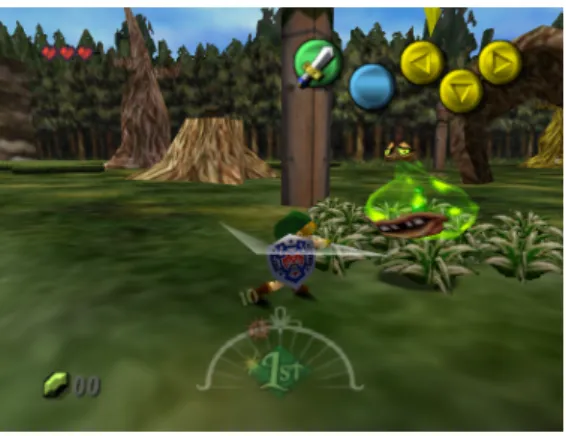
(11) • Basic AI. • Sound effects and music. In the Annex. 1.2. Motivation. As stated in the introduction, one of the ideas that motivates mostly working on this project is to keep working on the video game that was born last year, making it evolve and adapted to new tools and skills. This game will be a mix between role-play[10] and adventure[11] genres. These kind of games are very loved and appreciated by fans, always having a place in the market and evolving non-stop. Every year, games that leave a mark in any way are released, and more people start to enjoy them. An important feature is how the narrative, such as exploration, puzzles, challenges and abilities. In addition, these games, artistically have a complex world, visually well defined, attractive and alive. It’s unusual to find scenes where lights are scarce and used as game mechanics. This is typical of horror games, such as survival horror, adding to the lack of light is dark or dull colors and with a closed range variety of colors. Besides, in this genre a mixed main characters group is common, representing different stereotypes. In this situation, the main group is all female. Hardly ever video game with these features are developed, so the game’s history will attract the attention of players that don’t identify easily with the genre standards. These genres are characterized by a puzzle solving and combat mechanics, the importance of the story, narrative and setting, exploration and quests, characters with abilities, combats and the presence of items (which can be manipulated) and an inventory. But the most important the relevance of a good narrative and history and all of the related features that give depth to these kind of games.. 1.3 1.3.1. Influences Art influences. The most remarkable influence for Walpurgis Night is the The Legend Of Zelda saga, specifically The Legend of Zelda: Wind Waker. Originally developed and published for the Nintendo GameCube[12] in 2002/2003, it was the first game in the series to use Cel-Shading[13], giving the game a cartoon-like appearance and used to hide or mask system limitations.. (a) Cel-shading with outdoors lightning. (b) Artificial Light. Figure 1: How cel-shading looks in Wind Waker and the light influence. Cel-shading, also called toon shading, is a 3D technique that uses a specific shading technique, replacing conventional rendering shading gradients with a simplified version of flat colors and shadows, trying to recreate hand-drawn art and animation, moreover, it also uses outlines to simulate drawing lines. Nowadays, this simplified version of this style evolved, artists started to add special colored textures, giving a different look to the style, more cartoonish but realistic in its way. One of the first games to implement it was Jet Set Radio (2000)[14], this game had real-time Cel-shading, with black thick outlines and flat colors and real-time shadows. After this, 10.
(12) toon shading became popular, and many games used and perfected this technique, like Zelda Wind Waker, Okami[15] or Tales Of saga[16]. . .. (a) Okami. (b) Jet Set Radio. (c) Tales of Vesperia. Figure 2: More games that influenced in the cel-shading styel. In Wind Waker they added simple textures, enough to give the idea of detail but not too much. Effects such as particles and hits are easily represented with 2D drawings that look like cartoons, they can be found when an enemy dies, a bomb explodes, Link hits an enemy or an object. . . Elements like the effect of wind use this style too. Clothes, hair, flags, leaves, trees and loose objects are affected by real-time cloth simulation. In cel-shading there’s a feature that Wind Waker does not implement and is an outline around the objects, characters and elements in the world. In its HD re-master everything was improved, adding more visual effects like advanced lightning effects and shadows. In addition, and specifically, in Walpurgis Night: The Dark World, an important influence based on this game is the use of bright and vibrant colors, but used correctly and with good color palettes. So this game is easily one of the most important influences for Walpurgis Night. Other games that influenced this project’s art style are games that, like Wind Waker, use a toon shader or lively colors and have a distinct trait that separates them from others, such as: • Rime (2017)[17], developed by the Spanish company Tequila Works using Unreal Engine 4, this game adds more complex textures to the toon shading. It is a game based on puzzles and world discovery with really detailed scenes, its lights and colors are based on Joaquin Sorolla’s work. • Journey (2012)[18] an indie video game developed by Thatgamecompany with PhyreEngine, uses the simple toon shading but with a very beautiful color palette. It can be a single player or a cooperative on-line multi-player adventure game. This game tried to evoke emotions of smallness and wonder, and the dynamic response of the music to the player’s actions helps recreate the atmosphere and give depth to the game. • Other Zelda games like Skyward Sword or Breath of the Wild, these two are extremely different to Wind Waker with a more serious art style but keeping the base of and evolving the toon shader. In Walpurgis Night: The Dark World, one influence not related to video games is Art Deco, because some of its ideas and concepts are similar to dwarf details.. 11.
(13) Figure 3: Art deco. 1.3.2. Narrative influences. Walpurgis Night has a huge narrative and history development work, but to achieve this the creators were influenced by a set of games in the early stages of the project to make it complete, with depth and coherence. Some of those games that influenced the pursuit of a fulfilling history are: • The Final Fantasy saga[19], always with complete stories, long and appealing, giving the player hour and hours of enjoyment. • Tales of Symphonia and Tales of Saga, these games have twists that always move further the narrative and catch off guard the player. • Golden Sun[20], this saga has only three games, unlike the other examples. Its history is complete and rich too. 1.3.3. Mechanics influences. There are two kind of influences when talking about mechanics in Walpurgis Night, the ones related to the complete game and the ones related to The Dark World, the complete influences influence The Dark world too of course, but not the other way around. Infuences in Walpurgis Night The gameplay and mechanics of Walpurgis Night are highly influenced by games such as the Final Fantasy saga, the The Legend Of Zelda saga, Golden Sun or Tales of series. The Legend Of Zelda is a saga of action/adventure genre developed by Nintendo. It is famous for its mechanics associated to puzzle solving using different objects or tools found in the game, those tools can also be used as weapons or have other uses. The Legend of Zelda games feature a mixture of puzzles, strategic action gameplay, and exploration. These elements have remained constant throughout the series, but with refinements and additions featured in each new game. You are frequently rewarded for solving puzzles or exploring areas. Most Zelda games involve locating and exploring dungeons, in which puzzles are solved and enemies fought, then defeating the dungeon’s boss. Each dungeon usually has one major item inside, most of which are required to advance to the boss. There is a game in this previously mentioned saga that also has a time mechanic like Walpurgis Night, this game being The Legend Of Zelda: Majora’s Mask (2000)[21]. Link, the main character of the saga, is not free to wander around a dungeon forever. After three in-game days, he must play the Song of Time to travel back three days to resume his adventure. All progress made through dungeons and side quests will be reset, meaning they can be completed again. Even dungeon bosses can be re-fought. If the three days pass the moon will crash against the city and destroy. 12.
(14) everything and kill everyone. Because of this, the player has to think about how to manage their time to avoid running out of it.. Figure 4: In game image of TLZ: Majora’s Mask where the time indicator is visible Another game that uses the time mechanic is a recent installment of the Final Fantasy saga, and last one of the trilogy of Final Fantasy XIII. That game is Lightning Returns: Final Fantasy XIII (2014)[22]. The player has a maximum of fourteen days to finish the game and certain areas, quests, people, and events are only accessible during specific times of day. Time management is an important element of gameplay. If time runs out before all five main quests are completed, the Apocalypse will occur and the player will be given an option to restart the game from the beginning.. Figure 5: Lightning Returns Final Fantasy XIII in game image Final Fantasy saga is made up of role-playing games with varying gameplay, settings and stories between each installment, retaining plot and gameplay elements throughout, focusing on fantasy and science fiction settings. Some games changed their genre to other ones like MMORPGs, tactical role-playing games, action role-playing games, and fighting games. Another games that in one way or another influenced are the Tales of Symphonia saga developed by Bandai Namco and Golden sun by Camelot, both of them RPG games. All these games have influenced the game mechanics. Influences in Walpurgis Night: The Dark World Firstly as this project uses light and darkness as a mechanic some of the games that influenced it are survival-horror games. Amnesia: The Dark Descent (2010)[23] developed by Frictional Games is a first person survivalhorror video game where the protagonist has to explore a dark castle. In this castle there are monsters and other creatures that the player will have to avoid and puzzles to solve. Being in darkness too long, witnessing unsettling events, or staring at monsters will reduce the protagonist’s sanity, causing visual and auditory hallucinations and drawing the attention of monsters. Light 13.
(15) sources help restore sanity, the protagonist can light candles and other elements, or use an oilburning lantern. Elements to light the light sources are limited and using the lantern or standing in a light source makes the player more noticeable to monsters. This means that the player must balance the amount of time spent in light and shadow.. Figure 6: Amnesia and the use of the lantern With the use of light and darkness comes another type of mechanic, stealth and infiltration, the ability to move without making loud noises and avoid attracting enemies’ attention is one of the main mechanics of the Metal Gear saga. Metal Gear[24] is a saga developed and published by the company Konami and created by Hideo Kojima, the first game was released on 1987. Is an action-adventure game and almost the first to introduce stealth. Is a third-person game (firstperson in special moments) where the player takes control of a special forces operative assigned to find a superweapon called "Metal Gear". Another traits of these series are cinematic cutscenes, intricate storylines, offbeat and fourth wall humor, and exploration of political and philosophical themes, with references to Hollywood films to add flavor. There are sequels and prequels and this saga is very beloved by the fans and known worldwide.. Figure 7: Metal Gear Solid and the use of stealth. 1.4 1.4.1. Research and Mythology Nordic Mythology and Walpurgis Night. Walpurgis Night is characterized for joining different concepts of mythology that alone have sense in a unique world where a relationship with sense between all of them was created. Here will be explained some of the main concepts. Valkyries In Norse mythology, valkyrie ("chooser of the slain") are female figures who choose those who may die and those who may live in battle. Selecting among half of those who die in battle, the. 14.
(16) valkyries bring their chosen ones to the afterlife hall of the slain, Valhalla, ruled over by the god Odin. There are theories that propose a relation between the valkyries, the norns, and the dísir, all of which are supernatural figures associated with fate. All of the Valkyries that appear in this project are somewhat based on real Valkyries. All of them are shield-maidens, or how they called women that fought like men. Some of those valkyries are famous, is the case of Brunilda. The names of the Valkyries of the game are: Brunild, Prudr, Gudr, Hilda, Skuld, Mist, Herja, Svipul, Alrune, Svanhuit, Eir and Goll. All of them real names of Valkyries. Yggdrasil and the nine worlds Yggdrasil is an immense mythical tree that connects the nine worlds in Norse cosmology. This tree is holy, and is in the center of the cosmos. The nine worlds are found in its different parts from the roots to the branches, and creatures and animals live in it. These are the nine worlds: • Asgard, home of the Gods ruled by the Odin. • Alfheim, home of the light elves. • Nidavellir/Svartálfaheim, home of the Dwarves and the Dark elves. • Midgard (Earth), home of humans. • Jötunheim, home of the giants. • Vanaheim, home of the nature. • Niflheim, world of the fog. • Muspelheim, world of fire and lava. • Helheim, home of the dead Zodiac Signs and Alchemy Alchemy has a part called Alchemical symbols[25]. These symbols were used to denote some elements and compounds and varied between alchemists. For this game, the real concept was the association of some of those symbols with the Zodiac signs, concretely the alchemical process. These are sometimes expressed as chemical operations, as in some cases there were twelve of these they were assigned to the zodiac signs. The assignation was: • Calcination - Aries • Congelation - Taurus • Fixation - Gemini • Dissolution - Cancer • Digestion - Leo • Distillation - Virgo • Sublimation - Libra • Separation - Scorpio • Incineration - Sagittarius • Fermentation - Capricorn • Multiplication - Aquarius • Projection - Pisces 15.
(17) Goddess Walpurga This goddess is in reality a french saint called Walpurga or Walburga, she was canonized on May 1, so that date became her day. The eve of May 1 is called by the folklore Walpurgis Night. Walpurgis Night Walpurgis Night is how the night of 30 April is called, it is the eve of the feast day of the Saint Walpurga (in this project, a goddess). The translation of the original name in German means "Witches’ Night" and is the night where all the witches will meet and perform satanic rituals. It appears in the folklore throughout Europe, in the Netherlands, Germany, the Czech Republic, Slovenia, Sweden, Lithuania, Latvia, Finland, and Estonia. This is where the term Witches for the project appears and its relationship with the goddess Walpurga. Ragnarök According to Norse mythology, Ragnarök ("Fate of the Gods" and "Twilight of the Gods") is a series of events including a great battle, foretold to ultimately result in the death of a number of major gods, the occurrence of various natural disasters, and the subsequent submersion of the world in water. Afterward, the world will resurface anew and fertile, the surviving and returning gods will meet, and the world will be repopulated by two human survivors. Ragnarök is an important event in Norse mythology, and has been the subject of scholarly discourse and theory throughout the history of Germanic studies. For this project Ragnarök is artificially triggered and all the gods die, only one surviving, Walpurga. The two humans that allegedly survive in the original are in this case the rulers of the organization that triggers the artificial Ragnarök. 1.4.2. Basic Introduction to this Walpurgis Night: The Dark World mythology. The biggest font of information about Nordic Mythology is the Codex Regius[26], an Icelandic manuscript/codex which contains the called Eddas. These are two, the Prose Edda[27] and the Poetic Edda[28]. It is unclear which one of them was written first, but not that both of them are connected by a common source. Poetic Edda is a collection of anonymous poems meanwhile the Prose Edda was written by a man called Snorri Sturluson[29]. Both Eddas talk about the world of this project, but is addressed differently. Nidavelir[30] (low fields) is how this world is called in the Poetic Edda, and is where the famous dwarfs[31] live, they are known for their abilities as blacksmiths and living in caves underground. In the Prose Edda, this world is called Svartalfheim (homeland of the Black Elves[32]) and is where the dark elves live. Both of them were thought as a labyrinthine, subterranean complex of mines and forges.. 1.5. Game Preview. This difference remarked in the previous sub-section makes the existence of two types of enemies in the history and game possible: dwarfs and dark elves. The dwarfs will be basic enemies, always carrying a light because they can’t see in the dark. Legends say if the sunlight touches them they will turn into stone, that’s why they live underground. Next, the dark elves are an improved version of the dwarfs, with better senses, faster and deadlier. Both enemies can be killed with basic attacks (physical attacks) or using abilities (magic attacks). Moreover, scattered around the level, the player will be able to find NPCs, being able to interact with them. The character will have a health bar and a mana/magic bar, displaying the amount of life and magic that remains, being able to use objects to fill them when they decrease their level. The objects that the player will have initially will be the lantern and the different weapons associated to each Valkyrie. The lantern will be extremely important in Svartalfheim, obtained in a previous world in the complete game, will be a normal lantern without special characteristics.. 16.
(18) When the character equips it any other action which are neither walking, running or crouching will be blocked, only being able to light up an area around them. In certain history point, the player will learn a new ability related with the lantern: apply magic to it, being this an important asset to complete the level. Every Valkyrie will have a different weapon and base power, as well as a unique color associated with the zodiac sign that they represent. This means that the color of the lantern will change between the colors of each Valkyrie, having different magic effects. It’s important to repeat that when the lantern is in use the player won’t be able to defend themselves, killing the enemy implies unequipping the lantern and being surrounded by almost darkness, relying upon the few lights on the area/dwarfs and hence, fighting will become a difficult task. When magic is used, mana will be consumed, the amount per second will vary depending on its color, thus, its use will be finite. The player will have to coordinate when to employ the lantern to light up the scene or the path and when to apply magic, having to figure out the use correctly. Along the scene there will be a set of lights strategically distributed. Some of them will be lit from the beginning and others will have to be light up. In addition to those artificial lights there will be crystal seams and rocks that will emit a low intensity light by themselves. To advance in the game, it is necessary to complete puzzles. One of them will be a labyrinth related to the famous forge of Nidavellir. Nevertheless, the player will have to control the course of time, as time goes by and midnight approaches some mechanics will change. Using time as a mechanic with weight in the narrative of a video game its not common, although a really famous example is The Legend of Zelda: Majora’s Mask.. 1.6. Goals. The big concept of this project is to apply the knowledge acquired during the degree and apply it to create a video game with a defined style and mechanics, these are the main goals of the project: • Present a functional level and according to the narrative as well as artistically consistent. • Design and implement a smooth light mechanic • Create NPC behaviors related with light presence and which kind and passing of time. 1.7. Related Subjects. This section explains the relation between this project development and some classes of the degree. 1.7.1. 3D Design - VJ1216. This class’s main objective was teaching how to model 3D objects with a computer, focusing on polygon meshes and adding textures and materials to them. Also how to use 3D modeling programs and applying all of it to use it in video games. This project is going to be in a 3D style, this means that this class was of utmost importance because is the basis of all the of art that will be in the project. Learning outcomes: • E04 - Analyze the technical characteristics of 3D design tools. • E04 - Use three-dimensional modeling applications for video games. • E04, IR07, IR13 - Explain the principles that allow the definition of three-dimensional graphic elements.. 17.
(19) 1.7.2. Software Engineering - VJ1224. Software Engineering class was really importante in the develpment of walpurgis night, teaches the fundamental concepts and activities to develop a video game, how to desing it, how to organize the work flow. Tehcniques of planification and team communication and work. Learning outcomes: • IR01, IR02, IR04, IR16 - Designing video games. • IR01, IR02, IR04, IR16, G01 - Properly apply agile methodologies to the development of video games. • IR01, IR02, IR04, IR16, G01 - Define video game development plans. • IR01, IR02, IR04, IR16 - Explain the engineering and software management challenges involved in video game development. 1.7.3. Conceptual Design - VJ1222. The aim of this class was to seek balance between all the ingredients that make up the video game and find perfect solutions. Moreover, and very important, establish an order to the creative process integrating methods to give sense to projects and the connection with the development of them. This course was one of the three classes where Walpurgis Night was born, in this one, working in the narrative and design documents. Learning outcomes • E15 - Define rules that harmonize with technological possibilities and provide fluidity, as well as dynamics of the game as protagonists in the construction of the design. • E15, G05 - Know and control all the elements and objects involved in the configuration of a game and the ability to establish a harmonic balance between them. • E15, G10 - Design scenarios and balanced environments for game development. • E15, G10 - Design systems of balance between the game mechanics, the objectives to be fulfilled and the possible conflicts inside and outside the game. • E15, G10, G05 - To develop in a precise, orderly and clear way all the information related to the design of a video game project. 1.7.4. Video game art - VJ1223. The artist has to be able to capture the ideas from the Game Design Document, giving the concept art the same atmosphere and art style of the project. So, throughout this course, the students work studying the main aspects of the professional functions of the art for video games, going through all the stages of the art creation process for a video game. In this class, all of the graphic and visual aspects of Walpurgis Night were developed, such as color palettes, main art style (although it has changed), basic designs... Learning outcomes E09, G09 - Control the graphical tools to create representations with high level of detail. E09, G10 - Create environments with definition of lights, shadows, textures and environmental effects. E09, G10 - Create characters characterized and textured. 1.7.5. Character design and animation - VJ1226. This class works with two concepts in one: character design and computer animation. Character design is addressed from a practical and technical point of view. Low poly modeling, rigging and textures creation. Also, technical features of the modeling applications are studied and 18.
(20) how are the applied to video games Animation is approached from a theoretical view. The class deals with the most practical and habitual techniques, key concepts and algorithms that animators and developers can use to specify and generate movement of objects in 3d in an interesting way. This class was one of the three were Walpurgis Night was born, so it has a big influence in the project. Learning outcomes • E06 - Explain the basics of computer animation. • E06 - Explain the principles of character creation. • E06, IR07, IR13 - Analyze the technical characteristics of the character modeling tools and 3D animation. • E06, IR07, IR13 - Use character modeling and animation applications in the context of video games. 1.7.6. Artificial Intelligence - VJ1231. This class introduces the student to AI techniques to familiarize them with their fundamentals and offering an updated view of the tools that are used today in the design of video games. After the theoretical introduction to AI different concepts and techniques aimed at covering the points of interest in the context of video games are learned, such as the movement of artifacts, the search for ways, decision-making, strategy, tactics and learning, among others. In this project this course takes in important role when working on the enemies AI because they will use behavior trees. Learning outcomes • IR06, IR08, IR15 - Know how to solve video game problems using artificial intelligence techniques. • IR15 - Know how to define particular artificial intelligence techniques for video games. • IR15 - Know how to explain and differentiate artificial intelligence techniques.. 1.8. Tools. This section lists all the applications and programs that will be used in the design and development of the project. 1.8.1. 2D Art. Adobe Photoshop [33] : for creating concepts, drawing 2D elements and preparing the textures. This application was used previously in some of the art classes of the degree 1.8.2. 3D Art. Blender[34], Maya[35] These two programs are for the creation of 3D world elements, such as characters, objects, scenery, applying textures to models, materials, lights... Blender is a free 3D program, runs without any problems on Mac and do not overloads the computer. Maya is used as Blender, both of them for supporting each other and complement the work.. 19.
(21) Table 2: Tasks chart. 1.8.3. Video game implementation. Unity 3D[36], MonoDevelop[37] Programming all the mechanics and structure of the projects, these two programs where previously learned in the degree. 1.8.4. Animation. OptiTrack [38], Maya, MotionBuilder[39] First, motion capture the animations and after that apply the results to the characters, fix mistakes and prepare them for Unity. OptiTrack is the program that the motion capture uses. Maya and MotionBuilder can support motion capture for applying it to the character and after that editing and fixing it. 1.8.5. Documentation and final presentation. Overleaf [?], Word[40], Excel[41], Power Point,[42] For writing the documents Overleaf is the platform of final choice, but Word ensures working on the project when there is no Internet connection. Excel for table creations and Power Point for the presentation, all of these programs are already known.. 1.9. Tasks. Work will start the moment that the proposal is accepted, although, designing scenery elements, enemies and other things has started. Every fifteen days art and programming tasks will be fairly distributed, leaving time for other activities such as testing and researching.. 20.
(22) Table 3: Gantt chart. 21.
(23) The chart 2 presents hour distribution and dependency of the tasks and the figure 3 is the Gantt chart.. 1.10. Risks. Figure 8: Risks Table The table 8 shows the risks of the project development and how to prevent them. 1.10.1. Budget. This sections presents an estimation of the costs associated with developing this project, divided accordingly with every field.. Figure 9: Budget Table The amount of money per hour in 9 is an approximation based on salary in the United States and Europe.. 1.11. Walpurgis Night. Walpurgis Night was born in the third year of the degree, as a project developed for three classes of that year, those classes are: Software engineering - VJ1224, Video game art - VJ1223 and Video game design - VJ1222. As mentioned above in the chapter of Related Subjects, those courses handled a variety of video game designing and development. There was a playing demo and developing documents (like the Game design document among other ones), so it was a complete work of designing. Unlike this project, that has been developed with Unity, this was developed using Visual Studio[43] and Cocos 2d-x[44]. Cocos uses C++ and is used to create 2D games, works with 22.
(24) sprites and those can be animated, also includes audio libraries, physics systems... but despite all of that, it was not enough to the development of this game being a project with so many details and so big and the work was very slow as every little change involved waiting until the code compiled. As being limited to make a 2D game, the art style decided was pixel art with classic games influences. And the level developed for the project was the first one of the game called Midgard (world of humans). The design of it consisted of the Valkyrie base, the cathedral, a tavern, the city with a market, the enemy base and a dungeon where another Valkyrie was locked. Regardless, only the cathedral, the market and the tavern were implemented but there were enemies, NPCs and a small challenge.. 2 2.1. Game Design Introduction. Disclaimer this introduction is not inside the complete design document The Player, in WN:TDW will be immersed in a world which has lost its light over the years, playing as the Valkyries, main characters of this story. This world, one of the nine worlds of Yggdrasil, is called Svartalfheim, kingdom of the Dark Elves. It’s a world full of secrets, mysteries and challenges, since the first Ragnarok many things changed. Dwarfs, former habitants, suffer under Ivaldi’s[45] cruelty, a dark elf from unknown origin that made disappear the real king and took its place. One of the Valkyrie was captured and handled to him, she’s locked somewhere in Svartalfheim, and it is the player who has to save her.. 2.2. Walpurgis Night History. Eight o’clock of April 30th of an unknown year. This night is known as Walpurgis Night, or Witches Night. These witches will gather and stretch one more year the agony of mankind. That is why Lifthrasir[46], an organization of heroes entrusted with the protection of the world order will do whatever it takes to stop these witches, one of the solutions capture them. However, that is not completely true, after this organization killed every god with an artificial Raganrök they established their hierarchy, being the new rulers. But, not every god died, Walpurga, goddess of magic and alchemy survived. She knew about the organization plans and tried to prevent them with her twelve fighters, the Valkyries, these warriors knew basic alchemy abilities, but even with that they could not stop it. And now, the organization, as every god was not killed, wants to trigger a second Ragnarök to rule alone the new start of humankind. These Valkyries thanks to the heroes are regarded as witches, and every year they meet to keep humankind hope until the next year. If at midnight of April 30th they are not together, the organization will complete the second Ragnarök. In those 4 hours Brunilda, Valkyrie of Gemini, will have to free her teammates which were locked by the heroes in the nine worlds of the great tree Yggdrasil. And, time is ticking against Brunilda and her sisters-in-arms.. 2.3. Walpurgis Night: The Dark World History. Svartalfaheim, formerly known as Nidavelir, was the great kingdom of the dwarves, they where famous by their skill as blacksmiths and living underground. They lived under the reign of Hreidmar[47], a fair and loved king. But after the first Ragnarok, a huge magical energy was released and he disappeared, after that a new ruler appeared, his name was Ivaldi. He was everything that Hreidmar was not, cruel, tyrant and power hungry, and more important he was not a dwarf, he was the first dark elf. He transformed in dark elves those dwarves who accepted his ruling and created his own army, those who rejected him as a king and started an uprising where either frozen in time and space or forced to become work slaves. Moreover, Ivaldi decided to change his 23.
(25) world’s name from Nidavelir to Svartalfhaeim, as a reminder of his power over his subjects. Now, this dark world is a reign of fear and darkess where things are not where used to be anymore.. 2.4. Characters. The main characters are a group of Valkyries, these are: • Brunilda: Gemini. Fixation. Ability to create anything that she thinks with her mind. She creates a replica that sends to help her other sisters-in-arms. Uses a dagger. • Prudr: Pisces. Projection. She can improve any substance qualities. She can make her spear become the mighty Gungnir[48], Odin’s sphere. She is very spiritual. • Gunr: Aries. Calcination. As her name says, her power burns with a lot of intensity. She loves war and fighting and uses an axe. • Skuld: Virgo. Distillation. Locked in Svartalfheim. Her power is associated with the ability to subtraction of the magic/soul of different objects or entities. Uses a scepter.. 2.5. Enemies. There are two main enemies in this game, dwarfs and dark elves. • Dwarfs: The most basic enemies in this world. They always carry a light, because they can not see in the dark. The only wear a simple piece of protection in their chest and a helmet, their clothes are tatty and soiled. Their weapon is a huge two-edged axe. These enemies will see the player if is inside their light zone, or if they are using the lantern. The legends say that they live underground because the sun light can turn them into rock. • Dark Elves:These enemies are the strong enemies in the level, they are an improved version of the dwarfs, with better senses, faster and deadly. They wear flashy clothes and armor in a polished look, flaunting their power. Their weapon is a lightweight sword. They are able to see in the dark, so they will see the player when uses the lantern and when not.. 2.6. Interaction: NPCs and objects. There are two kind of NPCs in this level, all of them are dwarfs but narrative related some of them are "frozen" in time. • Normal NPC: dwarfs that are still surviving in Ivaldi’s reign of terror, they have organized a small rebellion, waiting until the perfect moment to strike comes and the days of terror can end. Interaction with them will be normal. They will provide information or give the player objects. They dress as the dwarf enemies so it will be difficult to distinguish them. • Frozen NPC: the player will find something of orange color floating in specific points of the world, those objects when are inside the orange color light will change and a dwarf will appear. Those dwarves have been frozen by Ivaldi, so they do not know the actual situation of their world but they can provide a different type of information that will help the player. As they were frozen at the beginning of everything they are dressed with the untouched version of the enemies clothes, but without armor.. 2.7. Game mechanics. The specific game mechanics of these project will be basically explained here, for more information see Appendix II - GDD. The basic mechanic only used in this project is the use of the lantern.. 24.
(26) Figure 10: Characters magics.. Figure 11: Characters stats. When the player will not be able to attack if the lantern is in use. It has two modes, normal mode and magic mode. Normal mode lights an area around the Valkyrie. Magic mode varies with the Valkyrie and its color. This is related to their zodiac sign, and the effects are related to mythology and their alchemical process and personality. Any color of the magic mode can make special rocks on the scene absorb energy to light up the area. • Pisces - light sea green: freezes dark elves, makes special clues appear on walls or surfaces, the dwarfs will see it from a long distance. • Aries - red: turns the dwarfs into stone, can give false clues to the player. The dark elves will see it from a long distance. • Gemini - Orange: brings the frozen dwarfs back to this time. Both enemies can see this light from a medium distance. • Virgo - Blue: removes temporarily the magic protection of something. Another mechanic is a puzzle that will need to be solved finding the three remaining crystals that are hidden on the scene, those crystals must be put on a pedestal to open the bridge to continue the level. The position of the crystals varies: • One is in property of a dark elf, the player can kill it or can try to steal the crystal. • One is found on a box • One is in property of an NPC, interacting with the NPC will give it to the player. And the last one, the labyrinth key, found inside the labyrinth in one of the many small vaults, this key opens the door to the central chamber where Virgo is locked. The key can be collected killing all the enemies or using stealth.. 3. Game Development. In this section of the project, programming task will be explained in depth. It’s important to stress that part of the implementations will be used in the complete project, by Irene Pérez and Ángel Torres, as well as, Walpurgis Night: The Dark World will implement scripts by them. In this section, it will be advisable to take a look at the Appendix I, where the division of the tasks is shown in a table and the organization of the group part is expressed. 25.
(27) For the group part scripts that are relevant to the gameplay and mechanics were programmed, such as the camera, and the player movement, target enemy mode and basic attack, dialogue controller, game intro (moon scene and name project) and menus, making the character turn its head towards the locked enemy or object. And a task of utmost importance; merging, fixing and adapting all the scripts and prefabs from everyone in the base project.. 3.1. Input detection. Basically, this task was adapting Unity to work with Dualshock4[49] (play Station 4 controller) and detect its inputs. This controller has 18 buttons and two joysticks. There are two types of inputs, buttons and axis. A button can be pressed and held, and its input can be button, button down and button up. An axis has a value between –1 and 1, the neutral position is 0; its input being detected differently than the input of a button. In addition to the two joysticks, 6 of the 18 buttons that the dualshock4 has are axis too. This means that, for an accurate detection of the axis programming a lock was necessary. Without a lock one input that the player could consider only as one action could be counted by the program as more than one, causing performance problems. A lock is a mechanism that controls and limits the access to a shared resource. In this case, the problem comes from the buttons that are axis especially using the lantern and inventory interactions. When the correct input is detected and the player lifts their finger from the button a Boolean that controls the lock turns false, and only when that Boolean is false the actions linked to that button will take place and the Boolean becomes true. This happens like a loop every time that the function or the update are called, so the input is detected correctly and accuracy problems are avoided.. 3.2. Character movement. It is important to remark that the members of the complete project decided to use Unity’s Third Person Controller as a base script for the movement. That said, the script was edited and adapted completely to how it ended being used in the project The player using the left joystick of the controller can run around the world, this means that the default action when moving is running. If the player wants to walk, they need to press the same joystick and hold it while moving. The character can also crouch and walk while crouching, this kind of movement works with the stealth mechanic. All of these movements have sounds associated to them, and the volume changes with the movement. Also, the player can defend themselves of the enemy attacks, and only half the damage will be subtracted. In essence, character movement is divided into two scripts, ThirdPersonUserControl and ThirdPersonCharacter. ThirdPersonUserControl controls the player’s input and camera movement relative to the character while they move. Update and FixedUpdate in this script control inputs detection to two different actions, crouch and basic movement. The basic difference between time detection of both is that, basic movement is detected as axis, and need a more precise input, moreover, it’s important to use FixedUpdate when dealing with a rigidbody. For the crouch action, being only a one call animation and movement that keeps active as the boolean is true, using the Update function is enough and works properly. Third Person Character works with the rigidbody, initializing all of its components, also, controls the input of the action defense. This action can be performed two ways, if the button is only pressed once it will be a fast defense, but if the button is held down the defense will be up until the player lifts their finger. As the rigidbody is in this script, the actions like walking and crouching that were detected in. 26.
(28) the other script are performed. Scaling the capsule collider when crouching and avoid standing in lower rooms are in this script and finally and most important the update of the animator on the basic animations (walking, turning and coruching).. 3.3. Camera. The camera in this game takes an important role, in an rpg/adventure genre being able to use the camera, as a mechanic of the game is important. That why, this camera is third person based and interactive, which means that follows the player’s movements but allows to change its rotation so the player can control it. The camera position is behind the character and slightly above. This position allows the player to see the 3D avatar of the character. It is possible to rotate the camera 360 degrees around the character, and even up and down. This gives the player the change to observe and analyze the scenery and situation in the game. That said, one of the most problems with this kind of cameras is collision with scene elements like walls, this camera script implements a function that avoids going trough walls and tall objects. It can also, be centered behind the character if the player wants, repositioning and also when in Target Enemy Mode turns the character to be facing the enemies. It is important to remark that the player has the ability to change between a group of Valkyries, the camera object is a child of the active Valkyrie so when changing characters the camera reassigns itself, making the new Valkyrie its parent, so all the Valkyries use the same camera. The first step to develop the camera was, trying to work with joystick input for a better precision and working with that input in degrees. Working with eulerAngles was the solution. The input to change this values is in LateUpdate. Contrary to what people think, camera should be implemented in it, because LateUpdate is called every frame, and then if a camera is tracking the character movements these are updated in FixedUpdate or Update, so the camera needs to update after these other actions. The camera can rotate freely around the character in the X axis but is restricted in Y. Using a special function called ClampAngle the camera input in the y axis is limited, so the camera is not allowed to rotate over or underneath the character and be upside-down. After that, an important feature of the camera is avoid passing trough walls and objects, this camera uses raycast to detect if there is a collision and then applies an offset to avoid that problem, this offset makes the camera approach the character smoothly until the detection of the wall stops and then returns to the original distance. There are three more properties, the camera can return to its original position behind the character pressing a button, when the character crouches the camera lowers its height to match the new character position in space. Finally when in Target Enemy Mode the character turns its rotation to face the forward of the camera.. 3.4. Target Enemy Mode. The player when engaging in battle can enter in a battle mode called Target Enemy Mode, this mode allows them to lock an enemy as a target and focus their attacks on the enemy locked. This action is possible while holding L1 button and then when the enemies enter the range of this mode be locked pressing R3. Every enemy has over his head, its live and a color indicator, this indicator changes its color and is a visual feedback of the status of the enemy in this mode. Its color is blue if the enemy is no inside the range or not in target mode, the color changes to yellow if it is in the range, so is possible to target him; and if the enemy is targeted the color will be red. This mode is activated from the camera, when the input of button L1 is detected and accordingly a Boolean is changed, this Boolean turns on Target Mode. This is an action that is active while the button is held down. Target mode basically is a child of the camera that contains a box collider. This collider, works. 27.
(29) as a range, to determine which enemies are inside it and then make them possible targeting enemies. Every time that an enemy enters the collider, is added to a list of gameobjects of enemiesInRange, and every time that an enemy exits is removed from the list (also when they die). The character will target the closest enemy, and after that targeting will move from one enemy to another depending on its distance to the character, this because the list of enemies reorders itself. If there are enemies inside the range, a function to start locking will be called, when target enemy button is pressed the first enemy of the list will be selected and be locked. With every change of enemy selected and enemy in range or not in range, the colors of the indicators change automatically.. 3.5. Dialogue Manager. Being able to interact with an NPC found in the scene is important in this kind of games, the player needs to be able to interact with the world and learn about it, so speaking with an NPCs gives the game a different level of depth. In this game when the character approaches an NPC with dialogue an indicator appears in the screen, telling the player that if the button X is pressed the interaction will start. This function is divided in two scripts, the one that controls the dialogue and dialogue canvas and the one that has the lines of text and that belongs to every NPC and activates the interaction. When the player interacts with the NPC, sends the Dialogue Manager its dialogue lines and a the bool isSpeaking turns true, this bool works as an action blocker when is true certain inputs won’t be detected and enemies won’t attack, making the dialogue action the important action in the scene. Dialogue Manager is in charge of process every sentence that the NPC contains and show it in the dialogue panel text. Every sentence is wrote in screen one by one and separately. A significant feature is that they are written word by word at a prefixed speed, but if the player holds the interaction button (X) pressed, the speed will increase. A visual indicator will appear at the end of every sentence to know if the dialogue continues or is complete. The script has a function (called from the script of the NPC) where the NPC lines arrive and are added to a List of strings and when addDialogue turns true all the process starts. In the Update after the dialogue lines are received the animation is forced to be idle and the panel found in the canvas is turned on with the name of the NPC and a blank space for the text, if there is not text being shown then the Coroutine 1 to start is called. If the dialogue with the NPC arrived to its end and one more input of the X button is detected then the script resets the previous changes to their original value, hiding the panel and making possible the interaction again. The first Coroutine called is StartDialogue. Waits a little bit before starting to show the text and the process of it. The number of lines is counted and an index to know in which line the dialogue is currently is created. The important part begins with a while that will loop while the index is smaller than the number of lines or there is not a string being written. Inside the while, if no string is being revealed then another Coroutine starts and this one with the pertinent line. The second Coroutine is the one that shows character by character the string on the screen, it is like the first one but RECORRE the string. So while the index is smaller than the length a new word is added to the Text from the screen. When all the string is revealed the while ends and the first Coroutine sends the next line. This process keeps going until all lines of the NPC are shown, after that when is end of dialogue and X is pressed the interaction ends. 1A. coroutine is the unity method that allows to start a parallel action. When the coroutine is created it runs at the same time as the main code without affecting it, but the coroutine can be paused and can be made to wait until some events take place(like wait until some time has passed or a boolean turned true...), and after that it can keep running. 28.
(30) 3.6. Basic attack. The player can attack an enemy with the Valkyrie and her weapon, this action is when the character is near an enemy and presses button O, the action of attacking will start and subtract life from the enemy. The range of attack and type of weapon vary from one Valkyrie as well as the damage and speed. Piscis uses a spear and Virgo a scepter, so their basic attacks are similar. Physical and basic attack has two scripts that make the action of attack an enemy possible. In this case is also important to keep in mind that when the player uses the lantern, the attack action cannot be executed, so the first script is connected to the lantern script, which contains a Boolean to know if the lantern is on or off and attack can be used. To use the basic attack two conditions must be met, that the cool-down time is completed and that the lantern is off. Cool-down depends on the Valkyrie stats, and it is the time that the player has to wait to attack again. When these two conditions are true, and the input of the button to attack is detected attack is called. This attack is in a script that varies with the player weapon, but basically triggers the attack animation hurts the enemy and when completed makes it return to the idle or walking animation. To hurt the enemy, the weapon has a collider, this collider is a trigger that when detects that the object inside it is an enemy and the player is attacking it, it will lose the amount of damage that the actual Valkyrie does.. 3.7. Introduction scenes and Main Menu. There are two scenes before the main menu starts, the first one is an introduction to the project and the second one is the moon changing from its white/yellowish color to blood red, representing the change of the moon in Walpurgis Night. The player can skip this scene if they want, going directly to the main menu. With the left joystick the player can move between options and select them with X button. They can start a new game or load it, change options such as different volumes (master, music and SFX), learn about the project and creators and exit the game. In the scene of the moon there are four scripts: - The first one is a script that makes possible to the player to skip the moon scene, if the input of the button O is detected the scene will change to main menu with a fade to black. - Next is a simple script controlling that “Press O to skip” turns on and off, making it blink. - Also, the moon changes colors but in reality changes between two materials, and accessing the renderer of the sphere with the texture of the moon a lerp is applied and the transition between materials starts. Moreover, this script controls when to start the next scene (main menu) after the change is completed. - Finally, in the moon scene and main menu scene there is music playing, and this script controls if the scene is skipped to stop the music, but with a fade avoiding an abrupt silence Main menu has 4 more scripts that handle different parts: - In the main menu there are twelve spheres with the zodiac signs inside them, these spheres are floating and rotating, the script changes its rotation with the passing of time. At the start of the script with a random is decided if they will rotate to right or left. - In the menu of options, there are a group of sliders, those sliders control the volume of Master Volume, Music and Special Effects, and the value of those sliders is passed to the AudioMixer. - Another script controls that the music starts to play, the volume starts to increase with a lerp to make it gradually and soothing to the ear. - Finally the last script passes to the event system if a button is selected.. 3.8. Head Look Controller. This part was implemented using an asset from the AssetStore called Head Look Controller. This controller is used when the player enters Target Enemy Mode, and handles the movement of the head when an enemy is locked. The Valkyrie will turn her head and follow the enemy moves like watching him.. 29.
(31) The asset works selecting the desired joints which you want to move and for each joint affected applies a rotation to the target of the action. The turning of the head will found the best angle to look at the enemy, from right to left, but inside of an angle limit. This is handled in the LateUpdate with a foreach that calculates the amount of turning of the joints to turn and the desired angle. With Pisces, the bending was wrong the froward sight of the script was edited for the actions of running, standing in idle and crouching, at least to make the character look foorward and not to the floor.. 3.9. Enemy AI. The base enemy AI was programmed by a teammate using the asset PandaBT, for this project a variation of the basic behavior tree to add the enemy actions linked to the light mechanics. In this subsection the changes applied to the AI will be explained, those changes are for introducing light related behaviors. The enemy has a basic AI where it will be patrolling the scene, if it sees the player it will start attacking them, and if the enemy hears something then it will take a look at left and right to try and found where that sound came from. If the enemy is following the player and the player is trying to flee, if the player is fast enough to hide behind a wall or something and the enemy can not see them then it will go. When hearing, the enemy can hear sounds from a minimum to a maximum which means that running, walking and crouching can make a difference.. Figure 12: Left: original tree root - Right: edited tree root The 12 shows two trees that are the same but change slightly, but before explaining the changes the symbols will be described. • Root: The starting point of the behavior tree. • While: will make the actions inside it if its first child is met. • Negation: Not, like it sounds, deny an action. • Action: The task. • Selector: (fallback) runs its child one by one as long as they fail. If succeed with its first successful child, it fails when all fail. • Subtree: An identifier related to another tree. • Sequence: runs its child one by one as long as they succeed. If succeed with all are successful, it fails with the first one that fails. That said, both trees from 12 do the same things save from the added subtree in the second one. So basically what those trees do: While the game is not on pause, then a selector that starts 30.
(32) to going through every subtree of the selector, if a subtree fails goes to the next one, keeps going through every subtree until finds one that succeeds and when that the tree is completed the fallback exits and the root is called again restarting the process.The pause action is a boolean that changes its value when the pause button is pressed in game and the pause menu is opened, this has the purpose of stopping the AI behaviors if the pause menu is activated, avoiding problems with the enemies.. Figure 13: Inside Light tree The figure 13 finally shows the tree related to light mechanics, this tree starts with a selector, that selector controls if its children fail or not. The first child is a sequence; that sequence will keep doing the actions/task that has like children if they keep being met. The first one is inside, inside returns a boolean that calculates the distance between the enemy and the player, if is less than a given number this returns true, so the next thing that the tree needs to check is if the Valkyrie has her light and if that light is also the color that affects the enemy (in this case is the dwarf so the color that affects him is red). And if this task returns true too, then the last action of this sequence is making the enemy wait 10 seconds (this is the effect that the red light has on this enemies). If any of this tasks return false, then the sequence will fail, and then the selector will move to its second child, the next sequence. Now its time to check if the enemy is seeing the valkyrie, if it is seen, then checks if the Valkyrie has the color light on (red again in this tree). If its on it continues to a while, this while is special, because checks if the Valkyrie has a line of sight to the enemy, if it has one then the enemy has to flee because to avoid being affected by the magic. This calls the action set destination cover, where checks for a place to hide where the Valkyrie can not see him. And then once the destination is set moves to it. Also, the sight distance and hear distance change with every type of enemy, also, depending on different circumstances those values will change. In both cases it will increase its value when light the normal light of the lantern is on, when the color light is sea green it only will increase the sight distance of the dwarf and when is red of the Dark Elf. When orange or blue both of them will increase. The Dark Elf as a better version of the dwarf can see in the dark so for starters its sigh distances is much bigger than the dwarf. Also hear distance as he can hear in a larger range than the dwarf. The tasks only commented above will be explained in depth down below. The tasks of the first sequencer are pretty simple, so moving to the next one, the Enemy Seen was programmed by the teammate that made the basic AI and as move to destination (but in this tree for making it easier to understand its behavior it has been changed to move to cover). The asset helped to develop the next tasks. Enemy is in line of sight takes the valkyrie position, then the enemy and uses another function to see if the valkyrie can see the enemy. This function takes both positions and makes a ray from the valkyrie to the position of the enemy, if the collider hit is the enemy collider this means that the valkyrie has in sight the enemy and the enemy is in danger,. 31.
Figure



+7






Documento similar
The degeneracy condition is automatically satisfied if the equations of motion are second order, but that is not strictly necessary (different conditions appear when there
The results have been used to constrain the pair production of dark matter particles in models with a heavy mediator, and large extra dimensions in the context of the
As we have seen, even though the addition of a cosmological constant to Einstein’s eld equations may be the simplest way to obtain acceleration, it has its caveats. For this rea-
In 2013 the company employed over 350 people and was still managed by the fifth generation of the Garay family, a point of reference in Spanish industrial activity.. La indu-
Although there is a well motivated model that can explain observations, neither dark matter nor dark energy are known elements, so it is important to use the large amount of
As in other pieces of work, the Report made by the World Economic Forum takes as a starting point the reference of the United Nations Sustainable Development Goals and goals
There will be a creation of a new model of attractiveness that will help the small province of Catalonia just like the one in Zaccaria, Romano & Puertas (2020) research
There will be the recognition of the province of Girona as a potential tourist destination, a catalogue of the most appealing Dark Tourism products in Girona, the
