Recovery of proteins from piggery wastewater using
Scenedesmus
spp. photobioreactors
Mako Tagawa
Master Thesis
1
Contents
Abstract ... 3
Introduction ... 5
I. Importance of Wastewater treatment ... 5
II. Piggery wastewater treatment with algae-bacteria processes ... 5
III. Cultivation conditions and species selection... 5
IV. The utilization of biocomponents from microalgae biomass with wastewater treatments ... 6
V. Presence of bacteria and nutrient elements in wastewater ... 7
Objective ... 7
Materials and Methods ... 8
I. Experimental set-up and operation (Experimental system) ... 8
II. Algal-bacterial inoculum, medium and piggery wastewater ... 9
III. Sampling procedure ... 10
IV. Analytical procedures ... 10
V. Enzymatic hydrolysis for protein extractions ... 12
VI. Calculation ... 13
VII. Statistic analysis ... 13
Results ... 14
TSS/VSS, Optical density ... 14
pH, Temperature, Evaporation rate, DO concentration ... 14
TOC/IC/TN ... 14
Microscopy analysis ... 15
Biomass compositions in our photobioreactors and TL photobioreactor ... 15
The extracted protein contents of Scenedesmus spp. in PWW by enzymatic hydrolysis ... 16
2
Productivity of biochemical components in our reactors ... 16
Discussion ... 17
I. Operational conditions of our small photobioreactors ... 17
II. The growth of microalgae in algae-bacteria process ... 17
III. The relationship between Optical density and TSS ... 18
IV. Biomass composition of Scenedesmus spp. in PWW treatment ... 19
V. The extraction of PWW treated microalgae biomass for protein products ... 21
VI. Productivity of chemical components in Scenedesmus spp. ... 21
Conclusions ... 22
Acknowledgments ... 23
Table ... 24
Figure ... 27
Appendix ... 41
3
Abstract
Algal-bacteria process is a low-cost and environmentally friendly alternative process for wastewater
treatment. Currently, Algae biomass as biofuels and high value-added compounds have attention to be
produced with wastewater treatments. The macromolecular composition of this biomass grown in
wastewater treatment photobioreactors is a key information in order to select alternatives of valorization.
The presence of bacteria and the wastewater components such as high concentration of carbon, nitrogen
and heavy metals or the environmental conditions influence remarkably the algal biomass compositions. In
this study, we set up a photobioreactors system and studied the evolution of algae-biomass, and the
efficiency of wastewater treatment. We aimed to clarify the fluctuations of biomass based on green algae
Scenedesmus spp. grown in non-sterilized piggery wastewater (PWW) and in synthetic water. Results from small 3L laboratory scale indoor photobioreactors were compared with 360L outdoor pilot plant thin layer (TL) photobioreactors and closed tubular (TB) reactor located in Almeria using also
Scenedesmus species.
Four laboratory experiments, 3L small open photobioreactors (15.8 cm depth, 15.5 cm internal
diameter) were designed and performed with high repeatability. They were placed inside a water bath under
artificial lights, 1053±32 μmol m-2 sec-1, 12h light: 12h dark. Scenedesmus sp. was used as inoculum and
two reactors were fed with Modified Bristol medium (MBM) and other two with PWW. Feeding rate was
set 500 mL d-1 (Hydraulic retention time; HRT 6 day), and pH 8 was maintained in the photobioreactors by
supplying CO2. The removal rate of COD and TN were 83.6 % and 74.5%, respectively, in reactors treating
PWW. The dissolved oxygen (DO) concentration in PWW resulted 0 mg L-1 while DO 14.8-17.1 mg L-1
were determined in MBM condition. This process did not require oxygen supply to remove pollutants by
bacteria. It is thought that low-cost operation was possible due to the presence of bacteria for algae based
wastewater treatment.
The results showed high protein productivity on algae-bacteria biomass grown in PWW, related with
high growth rate of microalgae. TSS during steady state achieved values of around 0.5 L-1 with synthetic
medium and 1.8 g L-1 with PWW, respectively.
Biomass compositions analysis showed similar values between MBM and PWW in laboratory reactors.
In PWW feed photobioreactors, biomass with 54.6 % of proteins and 14.7 % of lipids was obtained. In
MBM feed photobioreactors, biomass with 51.6 % of proteins and 14.2 % of lipids was obtained.
Combining biomass growth and composition, protein productivities of 0.97 g L-1 were obtained from
4
high carbohydrate content 43.5%, 43.0% of proteins contents, 9.6% of lipids contents, probably because
the different light precedence and intensity. The pigments contents in PWW were lower than medium
substrate (MBM, BM) in both of reactors. Chl-a, Chl-b, Carotenoids were 9.4%, 3.2%, 2.6% in MBM and
1.5%, 0.8%, 0.3% in PWW in laboratory reactors. The presence of heavy metals in PWW probably worked
as the oxidative stress. Oxidative stress can degrade protein and lipids such as pigments. But these results
were required further research.
The extracted protein contents by enzymatic hydrolysis were maximum 12% with Protamax, 90 min
of retention time in PWW biomass from TL photobioreactor. Lipids contents showed similar values before
5
Introduction
I.
Importance of Wastewater treatment
Recent years, the world's water shortage is growing by increasing in population. While 1.4 billion km3 of water exist on the earth, only 0.76% (1,064,000 km3) is available to humans, which is 70%
used for agriculture (Sato et al., 2013). On the other hand, about 2 million tons (about 0.002 km3) of
water are used daily by humans and discharged as wastewater in municipal, domestic, agricultural and industrial activities. These effluents are drained into the river after wastewater treatment. Developed countries treat about 70% of wastewater, developing countries treat 28 to 38% and undeveloped countries about 8% (Sato et al., 2013). Therefore, strict environmental regulations are forcing the transition to advanced wastewater treatment. Current wastewater treatment uses aerobic biological and physical techniques for most wastewater treatment. However, alternative technologies that have lower costs and lower environmental impact are required (Li et al., 2015).
II.
Piggery wastewater treatment with algae-bacteria processes
An algal-bacteria process with high organic matter removal rate can be mentioned as an alternative technology for wastewater treatment with low cost and low environmental impact (Cuellar-Bermudez et al., 2017). In this process, the algae use contaminants such as N, P, and carbon to grow and produce oxygen (Muñoz and Guieysse, 2006; Dalrymple et al., 2013). Organic matter is removed by bacteria to consume oxygen which is produced by algae. Also, carbon dioxide produced by bacteria in the waste solution is consumed by algae. Algae also can remove heavy metals. This has been reported to improve removal efficiency compared to treatment with bacteria alone.
In general, agricultural wastewater is characterized by high N, P content compared to other drainages (Mobin and Alam, 2014). In Europe, many swine wastewater containing high concentrations of organic matter, nutrients, solids, and heavy metals are released. The annual production of pork in Europe is 23.5 million tons, and it is indicated that it is the world's second-largest pig producer in 2015. Therefore, the amount of swine drainage is 214.34 million to 342 million cubic meters (4-8 L-1 d-1 pig)
annually. Recently, piggery wastewater (PWW) treatment by algae-bacteria process have a potential to remove harmful substances environmentally and economically (García et al., 2017; 2018).
III.
Cultivation conditions and species selection
6
utilization of algae biomass (Mobin and Alam, 2014). It is depends on the reactor design and algae species used (Chen et al., 2015). Open raceway ponds use sunlight as energy source and the depth is usually no more than 30 cm deep to allow for efficient penetration of light (Mobin and Alam, 2014). Closed photobioreactor have three advantages of reducing the water loss due to evaporation and culture dilution due to precipitation or rain and improvement of carbon dioxide gas contact efficiency (Kumar et al., 2015). Open photobioreactor is more suitable for operation and scale-up and lower cost than closed photobioreactor (Muñoz and Guieysse, 2006). Long term operation with PWW under optimum environmental conditions were conducted in high rate algal ponds (Godos et al., 2009).
Mixed native algae species were recommended to use in large-scale production in wastewater treatment because of their robust and high productivity (Chen et al., 2015). It is usually difficult to prioritize algae with slow growth rates due to the size of the algae and bacteria. Therefore, the selection of algal species has been considered to maintain high algal productivity. Scenedesmus species can predominant due to their rapid growth rate in algae-bacteria process (Abeliovich and Weisman, 1978; Park et al., 2012)
IV.
The utilization of biocomponents from microalgae biomass with wastewater
treatments
In addition to removal of pollutants by algae-bacteria process, cost reduction of the treatment process by useful utilization of algal biomass is attentional (Mobin and Alam, 2014). Algae biomass have been investigated to improve the economics of biorefinery (Chew et al., 2017). Algal biomass is known for its higher production per unit area than land plants. Now that alternative fuels for petroleum are being sought, the use of algae can be considered as one of the important solutions that contribute to greenhouse emissions. From these facts, it has been studied to use algal biomass of algal-bacteria coexistence process for bioethanol and biodiesel (Sydney et al., 2011).
Microalgae have attention from two aspects of the resource for producing bioethanol by bacteria and the direct utilization of biocomponents such as the food, chemicals, medical products, cosmetics, nutritional supplements (Chew et al., 2017). Microalgae can convert CO2 to carbohydrate, lipids,
7
From these reason, it is expected the couple utilization of biofuels and protein utilization. Protein are structured peptides which is binned amino-acids. Recently, soy bean is of interest as a source of bioactive peptides (Minh, 2015; Thi et al., 2017). Also, hydrolyzed protein may be used as an ingredient in fire extinguishers. There are possibility to use protein source from algae biomass for them.
V.
Presence of bacteria and nutrient elements in wastewater
The use of wastewater in algal-bacterial processes are significantly different in elemental composition, light environment, and dissolved oxygen concentration in each wastewater.
While bacteria exist in the wastewater, they consume dissolved oxygen (DO) with pollutants. Since the medium has used as a substrate, DO have been accumulated or maintained at 100% air saturation in the photobioreactors (Peng et al., 2013). High concentrations of DO in the culture medium cause algae growth stress (Marquez et al., 1995; Raso et al., 2012). The effect of low DO is not clear, but this situation can occur in wastewater where bacteria are present. Changes in DO concentration may also differ depending on the reactor design (Peng et al., 2013).
PWW contains high concentrations of nutrients and numerous metals such as Zn, Cu, Cr, Hg, Pb, and metalloids As. PWW inhibit or promote the growth of microalgae are used as diluted to alleviate the limitation of the light availability (Chen et al., 2015). Metals are typically used as growth promoters and (De la Torre et al., 2000; Abe et al., 2008) bio-absorption by algal cells can occur (Kaplan et al., 1987). Non-essential heavy metal such as Hg, As, Pb, Cr cause negative effects in microalgae cells. The metals effect on microalgae growth and biomass were reviewed in Miazek et al., 2015 Also, the protein extraction should be considered to use the hydrolyzed protein for an ingredient. The extraction method are different with the sample components. These samples contain several types of bacteria and algae and also metals.
Objective
8
grown in non-sterilized piggery wastewater and in synthetic water.
In this study, we set up the laboratory scale of Scenedesmus spp. photobioreactor to feed both of PWW and synthetic water. We evaluate the efficiency of our system for wastewater treatment with algae biomass production. We analyze the effect of elements compositions (pollutants) on algae growth and biomass. We compare two types of enzyme, Protamax and Alcarase with optimum retention time for proteins fraction valorization.
Materials and Methods
I.
Experimental set-up and operation (Experimental system)
Continuous cultures were designed in this experiment. Forth 3L small open photobioreactors (15.8 cm depth, 15.5 cm internal diameter) were settled inside a water bath under artificial lights (Fig. 1). The light intensity 913±23 μmol m-2 sec-1 and 1053±32 μmol m-2 sec-1 were measured by A
LI-250A light meter (LI-COR Biosciences, Germany) in pre-culture and the experiments. The water inside the water bath was circulated by Compatible Control CC1 (Huher, Germany) to maintain temperature 25℃ to prevent becoming high temperature by light. 12h light: 12h dark condition was chosen for light condition. Feeding rate was set 500 mL d-1 (Hydraulic retention time; HRT 6 day) by
using pomp 2058 (WATSON-MARLOW, United Kingdom). The water immersion pumps are used for mixing inside reactors. The cultures of pH were automatically maintained at pH 8 by a Crison multimeter M44 control unit (Crison Instruments, Spain) which supplying CO2 during all of the
experiments. Optimal pH 8 for nutrient removal and algal growth were chosen from reference (Muñoz and Guieysse, 2006).
For the design of supply nutrients in continuous culture with Scenedesmus spp., pre-culture were conducted in all of reactors from initial day to 44th day (Day44 in Fig. 4). Bristol medium which was
added trace metal of F/2 medium was used as substrate until Day 16. In pre-culture, TSS/VSS showed a similar value between R1, R2, R3, R4. TSS in all of the reactors increased from 0.07±0.01 to 0.46±0.09 g L-1 until the Day 8. However, the growth limitation of Scenedesmus sp. were conformed
from Day 15 to Day 19 while TN concentration in effluent decreased (Appendix). Therefore, the new medium was used from Day 17, named modified Bristol medium (MBM; Table 2). TSS/VSS increased again after Day 22 because MBM which is two times higher NANO3 medium were used. TSS/VSS
9
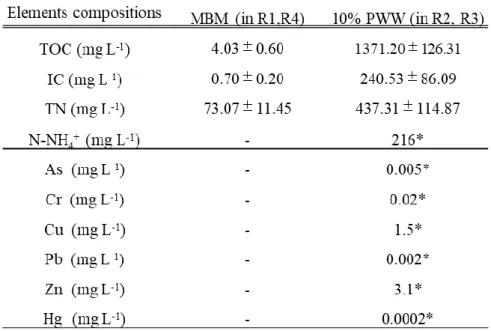
averaged 0.56±0.24, 0.74±0.15, 0.56±0.09, 0.35±0.18 g L-1 in R1, R2, R3, R4, respectively. In the experiment, MBM (Table 2) and 10% PWW were started to feed as substrate, when algae were steady state in pre-culture (the initial day; Day 44 in Fig.4).
The samples of thin layer (TL) open photobioreactor (5 cm depth) with 10%PWW, and closed tubular (TB) photobioreactor with Bristol medium were used for comparing biomass compositions in different photobioreactor. These reactor were settled for continuous culture outside. More details for TL photobioreactor, TSS were 1.3-1.4 g L-1 with TOC/ IC/ TN 45.0, 18.6, 441 mg L-1,Cu /Zn /As /Pb
/Cr /Hg 1.7, 13.9, 0.1, 0.03, 0.4, 0.0008 mg L-1 . Dilution rate of 0.3 d-1 (HRT 3.3 day) was considered
(Morales-Amaral et al., 2015).
Fig.1 Photograph of forth open photobioreactors and experimental set-up. After 44 day of preculture, the experiment was conducted for 20 day. In the experiment, PWW or MBM were fed as substrate. Left side upper reactor is R2, right side below is R3 in PWW conditions. Left side below is R1 and right side upper one is R4 in MBM conditions.
II.
Algal-bacterial inoculum, medium and piggery wastewater
10
MBM containing (mM) NaNO3 5.88; CaCl2・2H2O 0.17; MgSO4・7H2O 0.3; K2HPO4 0.43;
KH2PO4 1.29; NaCl 0.43; FeCl3・6H2O 1.17×10⁻²; Na2EDTA 2H2O 1.17×10⁻²; CuSO4 5H2O 3.93
×10-5; Na2 MoO4 2H2O 2.60×10⁻⁵; ZnSO4 7H2O 7.65×10⁻⁵; CoCl2 6H2O 4.20×10⁻⁵; MnCl2 4H2O
9.10×10⁻⁴ were fed to R1, R4, respectively. The TOC/IC/TN concentration in MBM averaged 4.03±
0.60, 0.70±0.20, 73.07±11.45 mg L-1 during experiments (Table 2).
10% PWW were fed to R2, R3, respectively. Dilution factor of 10% PWW was selected from previous researches which were succeed to keep predominant of algae (García et al., 2018). 10%PWW were prepared by centrifuge the PWW 10000 rpm, 10 min and mixed with water. The DOC/IC/TN concentration in 10%PWW averaged 1371.20±126.31, 240.53±86.09, 437.31±114.87 mg L-1 during experiments (Table 2). Even if PWW were centrifuged, small amounts of solids (TSS
0.65±0.17g L-1; VSS 98.45±1.75% in 10% PWW) were contained. 10% PWW absorbed 2.33±0.06
m-1 of light at 680nm while MBM didn’t absorb any wavelength of light. absorbance of 10% diluted
PWW was shown in Fig. 1.
III.
Sampling procedure
Environmental conditions except for light were checked every day in the morning and afternoon (9:30 and 18:30). DO were measured by OXI 330i oximeter and pH were measured by a Crison M44 multimeter and a Crison pH 28 meter. Influents and effluents flowrate were measured every time when effluent samples were recovery one or two times per week. Samples were saved for analysis of TSS/VSS and optical density and liquid phase analysis. Then, residual samples were centrifuged 10000 rpm, 5 min by Legend RT+ (Thermo Scientific, United States). The pellet was saved in a deep freezer at - 80℃ until the time when samples were lyophilized for cellular compositions analysis.
IV.
Analytical procedures
11
emission spectroscopy (ICP-OES), As/Cr/Pb with Multielemental Quantitative Analysis by Mass spectrometry (ICP-MS) and Hg with Direct analysis by Atomic absorption spectroscopy (DMA-80). Biomass analysis were conducted during the steady state because they were needed to get enough biomass amount for analysis. Microscopic analysis was conducted with samples before biomass analysis.
Total lipids were extracted from dry biomass. 200 mg of lyophilized dry samples were measured and mixed with Al2O3 in a ratio 1:1 and grind manually for 15 minutes each sample. Weigh 200mg
(100mg biomass) in falcon in duplicate and extracted lipid with 3mL of chloroform-methanol 2:1. Mix and centrifuge 5 min at 3600 rpm. The supernatants were corrected as many times as necessary, until the color is clear, and the precipitate turns white-ash which means pigments have been totally removed. Add 3mL of 0.1M HCl and 0.3 mL of MgCl2 0.5% to separate proteins in collected supernatants. Mix
and centrifuge 5 min at 3600 rpm and recovery the black phase of supernatants which is lipid extractants. Pasteur glass pipettes were used for transfer extractants to the pre-weighted glass tubes. Organic chemicals except for lipids in glass tubes were evaporated in a fume hood and total lipids were weighted after 24 hours. Total lipids contents were determined by equation (1).
Lipid content (%)(w w⁄ ) = Weightlipids+tube (g) − Weightempty tube (g) Weight dry samples (g)
∙∙∙ (1)
Pigments were analyzed with the dry biomass which is already grinded and mixed 1:1 (w/w) of biomass and alumina in lipids analysis. Weight 4 mg of sample in Eppendorf which is covered with tin foil in triplicate. After 1 mL of methanol were added to each, vortex were used each samples for 1 min. The samples were heated at 60℃ for 30 min in the thermo block and let them reach room temperature. The samples were stored in the fridge (4℃) for 24 hours. Next day, centrifuge samples at 10000 rpm for 3 min and recover the supernatant. These supernatant were measured the absorbance in scan mode from 200 to 700 nm with spectrometer. Chlorophyll a (Chl-a), Chlorophyll b (Chl-b), Carotenoids content in methanol were calculated the following equation, and pigments concentration were calculated with the equation (2).
Chl a = 16.72𝐴665.2− 9.16𝐴652.4
Chl b = 34.09𝐴652.4− 15.28𝐴665.2
12
Pigments content (%)(w w⁄ ) = 𝐶𝑜𝑛𝑐𝑒𝑛𝑡𝑟𝑎𝑡𝑖𝑜𝑛 𝑜𝑓 𝑝𝑖𝑔𝑚𝑒𝑛𝑡 (mg L) × 𝑉𝑜𝑙𝑢𝑚𝑒𝑀𝑒𝑂𝐻 (mL) Weight dry samples (g)
∙∙∙ (2)
Organic nitrogen assay were conducted by the Total Kjeldahl nitrogen method and converted to protein content by nitrogen-protein conversion factor 5.95 (López et al., 2010). 100 mg of dry sample and 25 mL of distilled water were mixed in each digestion tube with one dielectric piece. Add 3mL of H2SO4 98% two times (to avoid heat up) and one Kjeldahl catalyst (Cu) tablet which is 0.3% in
CuSO4・5H2O. Digestion tubes in the digestor connect the form collector and proceed program 20
min up to 150℃. After the samples being checked no form foams, program 370℃ for 60 min were proceed. If the digestion of samples were not completed, the program at 370℃ repeated two or three times with adding water and H2SO4 3mL.
Digested samples were distillated by Kjel Flex K-360 (Fisher Scientific, United States). 0.05M or 0.1M H2SO4were added until the color change from green to purple. Added volume were used for
gaining nitrogen content in equation (3).
Nitrogen content (%) = (𝑁𝐻4
+(𝑚𝑜𝑙 𝐿−1× 𝐴𝑑𝑑𝑒𝑑 𝑣𝑜𝑙𝑢𝑚𝑒 (𝐿) × 14.007 (𝑔 𝑚𝑜𝑙−1 𝑁)
𝑊𝑒𝑖𝑔ℎ𝑡𝑑𝑟𝑦 𝑠𝑎𝑚𝑝𝑙𝑒𝑠 (𝑘𝑔)
∙∙∙ (3)
Carbohydrate were analyzed from the dry biomass. Weight 300 mg of samples in a 250 mL Erlenmeyer flask. Add H2SO4 72% (w/w) 3 mL and cover the flask with tin foil. Put the flasks in a thermostatic bath at 30℃ for 1 hour. Take out the flasks from the bath and add 84 mL of distilled water to each flask in order to dilute sulfuric acid from 72% to 4% (w/w), and mixed gently. Covered again with more tin foil and put the flasks in the autoclave, Liquids 121℃ for 59 min. Take the flasks out from the autoclave and let them reach room temperature. Filtrate sample through 0.22 μm filters into HPLC vials. Freeze until analysis.
V.
Enzymatic hydrolysis for protein extractions
13
bottles were placed on the rotary shaker until the temperature reached 50℃ and 1:100 ratio of enzyme: substrate (125 mg) of Protamex or 5:100 of enzyme: substrate (0.625 mL) of Alcalase were added. Bottles were stirred at 200 rpm and 50℃, for the required reaction time (90 or 120 or 240 min). pH was adjusted again after hydrolysis to the original optimum pH of each enzyme. Samples were centrifuged at 18500×g, 4 ℃ for 15 min. Save both of the supernatant (the sample contains extracted protein) and the pellets in deep freezer -85℃. Lyophilize of pellets were conducted to get the dry samples.
To get the dry samples of supernatants, the rotavapor were used over 2 hours at 50℃ to remove water from the samples. The samples were saved in deep freezer – 85℃ again. Lyophilize of sample were conducted to get the dry samples for the supernatants
VI.
Calculation
TN removal rate (%) in both conditions of MBM and PWW and TOC/IC removal rate (%) in PWW were calculated according to equation (3) in order to know the efficiency for wastewater treatment.
RE (%) =(𝐶𝑓𝑒𝑒𝑑× 𝑄𝑓𝑒𝑒𝑑) − (𝐶𝑒𝑓𝑓𝑙𝑢𝑒𝑛𝑡× 𝑄𝑒𝑓𝑓𝑙𝑢𝑒𝑛𝑡) (𝐶𝑓𝑒𝑒𝑑× 𝑄𝑓𝑒𝑒𝑑)
× 100 ∙∙∙ (3)
The optical density was subjected to regression analysis with the explanatory variable as optical density (680 nm) and the target variable as TSS. At this time, the intercept was set to 0. This calculation was performed in order to know if optical density is an appropriate alternative to TSS analysis. The estimated extracted protein contents in supernatants were calculated from the protein contents in peletts by using the result of Kjeldahl methods before extraction process, 50.9% of protein contents:
Estimated extracted protein contents in supernatants (%)
= 50.9 (%) − 𝑝𝑟𝑜𝑡𝑒𝑖𝑛 𝑐𝑜𝑛𝑡𝑒𝑛𝑠 𝑖𝑛 𝑝𝑒𝑙𝑒𝑡𝑡𝑠 (%)
VII.
Statistic analysis
14
Results
TSS/VSS, Optical density
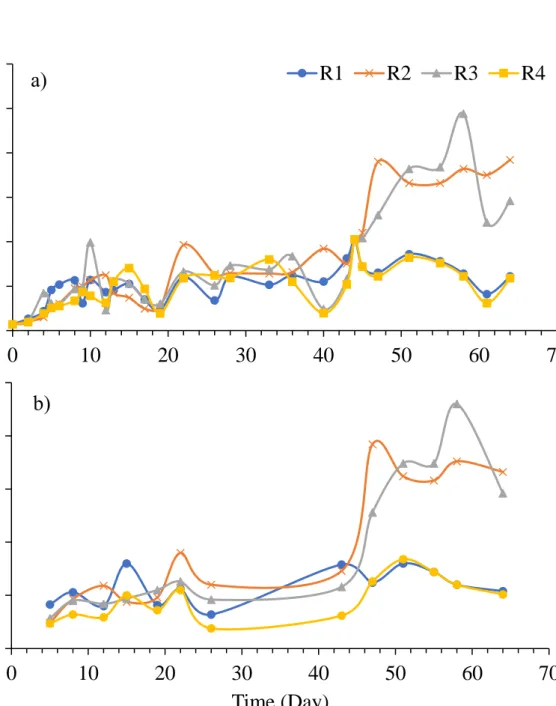
In the experiments, TSS in R2 and R3 increased after starting to feed PWW while TSS in R1 and R4 maintained value from pre-culture. TSS/VSS showed a steady state after the 11th day (Day 55 in
Fig. 4) and continuous culture were maintained in all of reactors. TSS during steady state was averaged from 14, 17, 20th day (Day 58, 61, 64 in Fig. 4) and valued 0.55±0.13, 1.83±0.09, 1.71±0.65, 0.50±0.17
g L-1 in R1, R2, R3, R4, respectively. VSS during steady state were averaged from 11, 14, 20th day
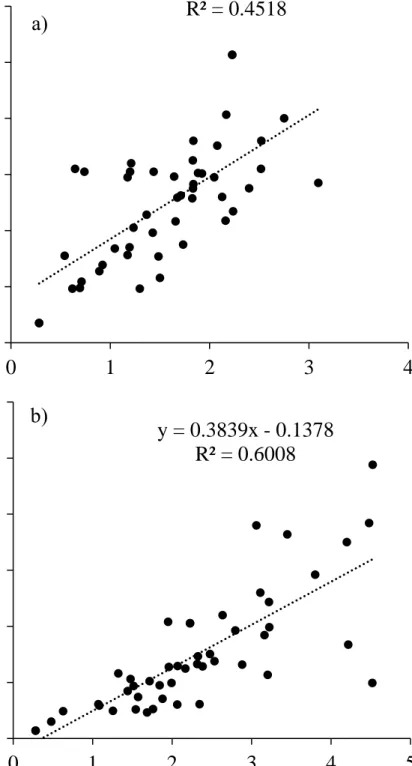
(Day 55, 58, 64 in Fig. 4) and valued 0.62±0.09, 1.67±0.09, 1.83±0.43, 0.61±0.11 g L-1 in R1, R2, R3, R4, respectively. The data of optical density (680nm) were compared to TSS (Fig. 5). Correlation coefficients between optical density and TSS in MBM and PWW were 0.67 and 0.78, respectively. Regression analysis was performed on each data to show a regression equation of y = 0.3023x, y = 0.3346x.
pH, Temperature, Evaporation rate, DO concentration
pH ranged from 7.08 to 8.0 in all reactors and showed a similar value between morning and afternoon. The temperature of all reactors during the experiment were higher values than during preculture and ranged from 20.1℃ to 31.2℃ in all days (Fig. 2). During the experiment, the temperature of all reactors was also different between morning and afternoon (Table 3). Evaporation rate were averaged 22.9%, 25.3%, 23.3%, 25.0% in R1, R2, R3, R4 respectively.
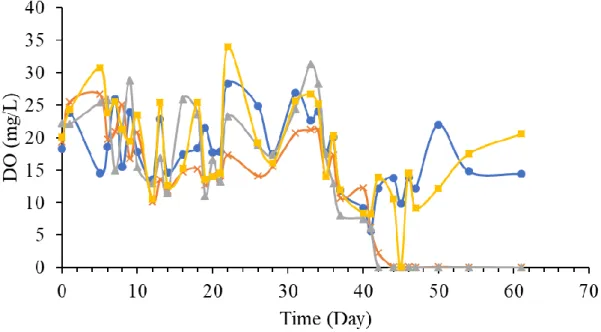
The operational conditions during steady state were showed in Table 3. DO concentration showed different values between morning and afternoon (Fig. 3). In the pre-culture, averages of DO concentration were 16.0, 15.6, 15.6, 16.5 mg L-1 in the morning and 18.9, 16.7, 18.8, 19.5 mg L-1 in
the afternoon in R1, R2, R3, R4 (Table 3). However, these values decreased until >7.5 mg L-1 before
starting experiments. In the experiments, average of R1, R2, R3, R4 were 11.6, 0.50, 0.18, 10.3 mg L -1 in the morning and 14.1, 0.30, 0.0, 12.3 mg L-1 (except for Day 0) in the afternoon respectively.
TOC/IC/TN
15
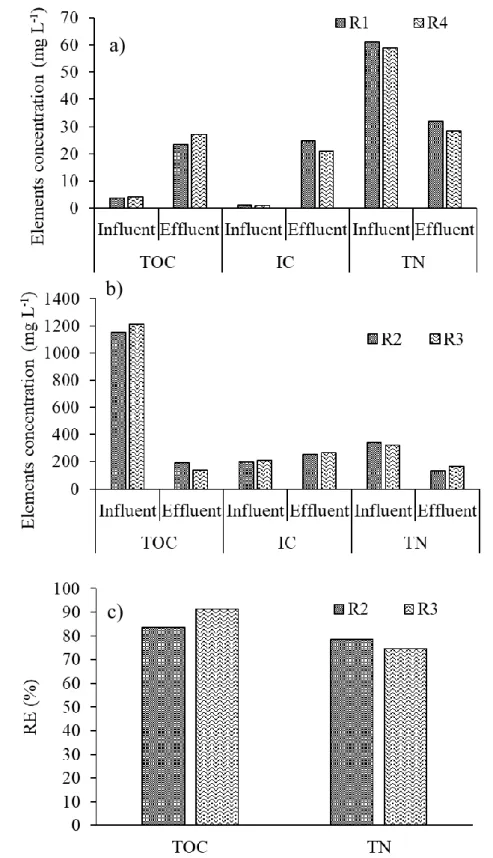
1350, 1420 mg L-1 in R1, R4, R2, R3, respectively. The removal rate of TOC/TN in PWW condition
resulted in 91.4% and 74.5%, respectively (Fig. 6-c).
TN concentration in effluents was lower than influents in all of the reactor (Fig. 6). TN concentration in effluents showed 31.9, 28.29 mg L-1 in R1, R4 and 134.1, 164.9 mg L-1 in R2, R3
while the influent concentrations were 61.2, 58.8, 341.2, 320.2 mg L-1 in R1, R4, R2, R3, respectively. Removal rate (RE) of TN between all of the reactors showed similar values during pre-culture and the experiment (Appendix Fig. 12)
Microscopy analysis
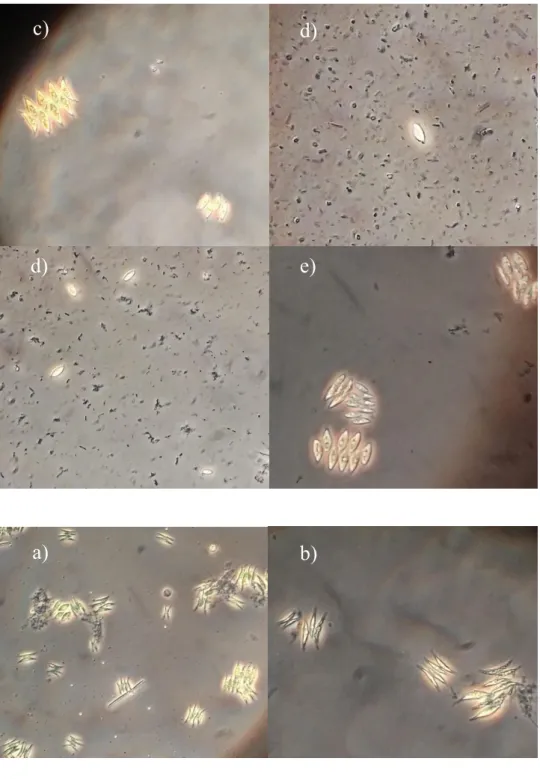
Periodical microscopy analysis of biomasses revealed that Scenedesmus acuminatus was the predominant microalgae specie in the inoculum samples (Fig.7-e). The sample at 17th and 20th (Day
61 and 64 in Fig.4) during steady state were revealed that Scenedesmus spp. were predominant microalgae species in all of reactors during steady states. Scenedesmus dimorphus were mainly observed in the R2 and R3 (Fig. 7-b,c). Scenedesmus obliquus were mainly observed in the R1 and R4 (Fig. 7-a,d).
Biomass compositions in our photobioreactors and TL photobioreactor
Biomass compositions during steady state were showed similar values between MBM and PWW in our small reactors (Fig.8). Only the Lipid contents were ranged from 11.9% to 16.4%, protein contents were ranged from 51.1% to 55.0%, ash contents were ranged from 11.5 % to 13.6% in MBM and PWW conditions. Carbohydrate in pre-culture was averaged 20.9±5.03 % (Fig. 8). The carbohydrates of samples in the both of MBM and PWW conditions were analyzed but the data were not stable. Therefore, the carbohydrate content was estimated to be the total biomass amount minus the lipid and protein, ash content. The protocol should be checked for the carbohydrate analysis.
16
The extracted protein contents of
Scenedesmus
spp. in PWW by enzymatic hydrolysis
The extracted protein contents showed almost lower than 10% in both of Alcarase and Protamax (Fig.11). The extracted lipids contents were also low in all of samples (Fig. 11). We got several problems in the results. First problem, the samples were difficult to be homogenized after lyophilized and before analysis (Fig. 13). Secounds, the values had big differences between samples in duplicate. Therefore, we couldn’t get the average of each samples. However, the samples by Alcarase extraction seems higher than Protamax extracted samples for both of protein and lipids.
The protein contents in the pellets after enzymatic extraction and estimated protein
contents in the supernatants
Almost protein contents were remained in the pellets and not extracted (Fig. 14-a). As for lipids contents, the lipid contents were 9.4 % before extraction process so all of lipids contents were not extracted. The reason that lipid contents in all of samples were higher than 9.4 % (Fig. 14-b) is due to the technique mistake. The recovery of lipids which contain small particles were difficult in the lipids extraction process. Probably, the data of lipids contents showing the weight of small particles with lipids.
The extracted protein contents were estimated 12% with Protamex, 90 min conditions as a maximum (Fig 14-c). The amount of the remain of protein content were showed difference with enzyme and retention time. In the extraction by Protamax hydrolysis, longer retention time showed the reduction of protein extraction. In the extraction by Alcalase hydrolysis, longer retention time showed more amounts of protein extraction.
Productivity of biochemical components in our reactors
Lipid and protein productivity in PWW conditions were higher than MBM conditions (Fig. 10). MBM conditions showed similar values with pre-culture. Lipid and protein productivities were 0.26 and 0.97g L-1 in PWW conditions, 0.08 and 0.27 g L-1 in MBM conditions, 0.08 and 0.34 g L-1 in
17
Discussion
I.
Operational conditions of our small photobioreactors
TSS during steady state was averaged from 14, 17, 20th day (Day 58, 61, 64 in Fig. 4) and valued
0.55±0.13, 1.83±0.09, 1.71±0.65, 0.50±0.17 g L-1 in R1, R2, R3, R4, respectively. R1 and R4 have
similar results and R2 and R3 other, there is a high repeatability in this system, which proves the good performance of our experimental set-up. RE in R2 and R3 were calculated for determining the water quality of this photobioreactor (Fig. 6-c). COD and TN RE of >83.6 % and> 74.5% were obtained with PWW treatments in this study. In this experiment, the RE of COD were higher than in TN compared to the previous study. Average COD and TN RE of 76 ± 11% and 88 ± 6% were reported in a previous study (Godos et al., 2009).
Operational conditions during steady state of experiments were described in Table 3. The DO concentration in PWW were maintained 0 mg L-1 while DO 14.8-17.1 mg L-1 were produced in MBM
conditions (Table 3, Fig. 3). In both conditions, photosynthesis occurred by algae in the reactors (equation 4; Peng et al., 2013). 8~32 mg L-1 (100~400% air saturation) of DO accumulation is
commonly observed in microalgal cultures (Peng et al., 2013). DO are usually accumulated in photobioreactor while the consuming rate might be different between reactor design which has different light availability.
n𝐶𝑂2+ 𝑛𝐻2𝑂 + 𝑙𝑖𝑔ℎ𝑡 → (𝐶𝐻2𝑂)𝑛+ 𝑛𝑂2∙∙∙ (4)
However, low DO concentration in PWW conditions suggest that oxygen reacted to biodegrade organic pollutant by aerobic bacteria. Bacteria remove DO by their respiration (Muñoz and Guieysse, 2006; Dalrymple et al., 2013). Since wastewater contains bacteria, the algae-bacteria process is showing the reduction of oxygen in a photobioreactor, high-rate oxidation ponds (Abeliovich and Weisman, 1978). Therefore, this reduction in DO concentration suggest that bacteria consumed oxygen and proved that algae could provide the oxygen for the reduction of COD in the reactors.
In this experiment, DO supply by algae was effective. DO concentrations in MBM conditions suggest that algae in PWW could supply the oxygen approximately <17.1 mg L-1 in R2 and R3. This
process did not require the oxygen supply to remove organic matter in the reactor. It is thought that low-cost operation for wastewater treatment was possible due to the presence of algae.
II.
The growth of microalgae in algae-bacteria process
18
state (Fig. 4). Even if the substrate of 10% PWW contained 0.59±0.27g L-1 of TSS affect to the data
of TSS in PWW conditions, the result of TSS in PWW show higher values than MBM conditions. From this reason, it was considered that the growth rate of algae in PWW was higher than MBM. Microalgae biomass increase by consuming elements such as nitrogen, phosphate, carbon source with light energy (equation 5,6;Dalrymple et al., 2013). Generally, the growth of microalgae in NH4+is
faster than NO3- (Harrison et al., 1990). It is possible to consider that higher concentration of NH4+
promote the growth of algae in PWW conditions because MBM doesn’t have NH4+.
The differential of TN concentration between influent and effluent were 29.3, 30.5 mg L-1 in R1,
R4 and 207.2, 155.3 mg L-1 in R2, R3, respectively (Fig. 6-b). These differential values prove that
microalgae and bacteria in PWW conditions consumed nutrients more than MBM conditions.
16𝑁𝐻4++ 92𝐶𝑂2+ 92𝐻2𝑂 + 14𝐻𝐶𝑂3−+ 𝐻𝑃𝑂42−→ℎ𝑣 𝐶106𝐻263𝑂110𝑁16𝑃 + 106𝑂2⋯ (5)
16𝑁𝑂3−+ 124𝐶𝑂2+ 140𝐻2𝑂 + 𝐻𝑃𝑂42−→ℎ𝑣 𝐶106𝐻263𝑂110𝑁16𝑃 + 138𝑂2+ 18𝐻𝐶𝑂3−⋯ (6)
In MBM conditions, accumulated DO might limit the growth of algae in the reactors. Bacteria in PWW conditions might produce higher CO2 concentration with higher DO concentration. High
CO2/O2 ratio affected to fix carbon source (Kliphuis et al., 2011). Bacteria help algae growth by CO2
production in the symbiotic consortium of bacteria-microalgae (Abeliovich and Weisman, 1978), and not only because of higher elements concentration in the substrate. The DO removal in PWW may promote photosynthesis of algae and enhance consuming nutrients by algae from substrate.
Also, the consumption of organic matter may have also resulted in increased growth rates. The growth of Scenedesmus varies by species. Some species can consume the specific organic matter in the wastewater while others cannot.
III.
The relationship between Optical density and TSS
The maximum optical density in MBM is 3.09, whereas, in the PWW, the maximum optical density is 4.53 (Fig. 5). These data proved that the presence of microalgae in PWW even if the substrate of 10% PWW absorbed 2.33±0.06 m-1 of light at 680nm. This result followed the TSS data which
showed the over 0.59±0.27g L-1, the concentration of 10%PWW substrates.
19
Generally, Chl-a pigment which absorb light at 680 nm, the maximum peak is an indicator of algal concentration. However, it has become clear that it is necessary to use different regression equations when determining TSS using optical density.
The optical density in PWW showed higher values than values in MBM. It was considered that the optical density at 680 nm in MBM is only showing the growth of microalgae while the growth of microalgae and the increase of DOC from 10% PWW are showing in PWW conditions. 10% PWW absorbed 2.33±0.06 m-1 of light at 680nm while Medium didn’t absorb any wavelength of light.
Therefore, it is considered that the difference in regressions was depended on the substrate.
Also, it might be required that the over 2.33±0.06 m-1 of optical density in PWW is used another
single regression analysis because they will show only the growth of microalgae like MBM conditions.
IV.
Biomass composition of
Scenedesmus
spp. in PWW treatment
The biomass compositions were compared between PWW and MBM from our small reactors and TL reactor in Almeria university. Generally, the protein contents increased with high concentration of nitrogen source and NH4+ are more efficiency compared to NO3- (Piorreck et al., 1984). It seems lower
lipid content than protein content when use wastewater as a substrate (Table 1). However, the protein contents of Scenedesmus spp. in PWW and MBM were showed similar compositions during steady state in our reactor (Fig. 8). The presence of ammonia oxidizing bacteria (AOB) and nitrate bacteria (NOB) may convert from NH4+ to NO3- in our reactors. The RE of TN showed similar values between
MBM and PWW in our reactors. Also, Lipid contents showed <16.4% in both of PWW and MBM. For biofuel production, a lipid content exceeding 20% are considered to be necessary while some researcher suggest 40% (Dalrymple et al., 2013). Therefore, the protein contents in algae biomass will be required to use with biofuels. It is suggested that the algae biomass have same compositions under same conditions such as pH, temperature, light intensity even if DO and feed compositions were different.
20
intensity. Generally, sun light can reach 2000 μmol m-2 sec-1 outside and height on this reactor is
very low.
There are several possibilities as the reason that the carbohydrate increase. The first possibility is that a N deficiency has occurred (Zhu et al., 2014). The carbohydrate content increased in Chlorella vulgaris with 10% PWW under heterotrophic and mixotrophic conditions due to N depletion in batch-culture (Wang et al., 2015). It also can be considered the supply of light enhance the photosynthesis which absorb N source. Generally, the growth limitation by nutrient deficiency also occur under the light limitation (Harrison et al., 1990). However, it is unlikely that our result occurred in a nutrient rich substrate, MBM and PWW.
It may depend on the supply of CO2 by bacteria because the carbohydrate in MBM didn’t increase
under the high light due to TL photobioreactor (Fig. 8). The presence of bacteria in PWW is thought to promote algal photosynthesis by release from high DO concentrations. From this reason, the result suggested that the combined effect of high light and elements compositions in PWW. This situation can change the ratio of C/N assimilation rate.
The second possibility is the presence of heavy metals in PWW. PWW contains zinc (Zn), copper (Cu), arsenic (As) and the removal of Zn by algae was confirmed in previous study (García et al., 2018). Algae can alleviate the toxicity of heavy metal by carbohydrate. When the light is increased, the high absorption of heavy metals were observed in previous studies. The algae may accumulate the carbohydrate in order to alleviate the toxic of heavy metals under the high light. Therefore, it is considered that the high absorption of heavy metal occurred in PWW of TL photobioreactor due to high light, and increased carbohydrate content to alleviate the toxic of heavy metal.
Also, the results of pigments might be affected by the metals. The pigments contents in PWW conditions were decreased in both of our reactors and TL reactor (Fig. 9). Our PWW contains some metals Cu, An also heavy metal such as As, Cr, Pb, Hg (Table 2). Absorption of metals inside cells via metal transport systems occurred in microalgae cells (Monteiro et al., 2012). Metal in microalgae cells can cause formation of reactive oxygen species (ROS) such as hydroxyl (・OH), superoxide anion (O2・-), singlet oxygen (O2*) and hydrogen peroxide (H2O2) (Pinto et al., 2003; Miazek et al., 2015).
ROS can oxidize protein, lipids such as Chl-a, Chl-b, carotenoids. The capacity of initial metals concentration depends on species. The decrease in pigments content were observed with Cu, Zn, Hg in the previous study (Küpper et al., 1998; Zhou et al., 2012). About Zn2+, it might not be a stress
10-21
75 mg L-1. Oxidative stress can be overcoming by antioxidants enzymes in the low concentration of
metal (Tripathi et al., 2006).
V.
The extraction of PWW treated microalgae biomass for protein products
The results of extracted protein and lipids contents were considered to have error because the data were difference between duplicate samples (Fig 11). The both of protein and lipids contents were very low in the results even if they have error in the duplicate. There are two possibilities from these results. First idea, it is considered that the supernatant samples had big amounts of carbohydrate which can make low contents of lipids and proteins. Seconds, the evaporation of NH4+ occurred during the
process of evaporator (Fig 12). NH4+ can dissolved in water and evaporate when the water contents
maximum NH3. Third, the samples were not homogenized before analysis (Fig. 13). We need to know
what the problem and the real values of the enzymatic extraction was. Therefore, the protein and lipids contents in the pellets samples were analyzed (Fig. 14).
The maximum 12% of extracted protein contents was estimated to calculate the values of Protamex, 90 min. This value was different result from the extracted protein and lipid contents (Fig. 11) but the common results were lower values than the results of Kieldahl. The suit extraction methods were required for algal biomass because the protein contents by Kjeldahl methods showed 50.9% of protein contents (Fig. 11). The idea for the improvements of this extraction are cell broke. To get the higher extraction, we can break the cell due to ultrasonicate or grind or using chemicals because microalgae have strong cell wall. The one of the problem was temperature because the enzyme were putted in the bottle at 40℃. The maximum temperature of rotary shaker was 60 degree and took time to be the samples 40℃ for over 1 hour. The experiments were conducted lower temperature due to the technic problem. It might affect the data which were lower extraction. We need to try the different ratio of enzyme and samples, temperature for the enzyme reactions to know the suit operation (Silva et al., 2014; Thi et al., 2017). Also, the relationship between heavy metals and enzymatic hydrolysis were required to know (Li et al., 2016).
VI.
Productivity of chemical components in
Scenedesmus
spp.
22
Euglena sp. is reported to be 24.6% (w / w) higher than Spirogyra sp. 18.4% and Phormidium sp. (Ramachandra et al., 2013).
Higher protein content (averaged 52.8±1.8 %) than lipid showed that the potential of utilization of protein with carbohydrate in this species. The protein in algae biomass have an attention because they have Emulsifying action (Ba et al., 2016) and antioxidant action (Samarakoon and Jeon, 2012). In addition to their use as biofuels, the use of proteins as functional antioxidants and the usefulness of high value-added peptides have been reported (Samarakoon and Jeon, 2012; Medina et al., 2015; Ejike et al., 2017). Biomass productivity are explained by the growth rate of algae and the contents of biochemical components in each wastewater and species (Pittman et al., 2011). Our results showed that the biomass productivity in algae-bacteria process of PWW treatment was higher than MBM due to higher growth rate of algae. The maximum lipid productivity of 110.56 mg-1 L-1 d-1 in Chlorella
zofingiensis showed by Zhu et al., 2013 when initial COD of PWW was diluted to 1900mg/L. The protein productivity 0.97 g L-1 in PWW were higher than lipids and carbohydrate in this experiment.
Conclusions
In this study, the cultivation of Scenedesmus spp. with non-sterilized PWW were evaluated in small scale photobioreactors. The results showed the combined effect of the presence of bacteria and the elements compositions such as high concentration of nutrients and heavy metals on algal biomass. The algae-bacteria process by using PWW enhanced the growth rate of algae and obtained higher protein productivity 0.97 g L-1 in PWW than MBM conditions. In the algae-bacteria process, bacteria
23
Acknowledgments
I am so grateful for studying in university of Valladolid particularly in Department of
Chemical Engineering and Environmental Technology where I have found a great support from
all people there.
Foremost, I would like to express my deepest gratitude to my thesis advisors Professor Silvia
Bolado Rodriguez for continuous support of my master study and research. I deeply appreciate
to Professor Raul Munoz Torre and Professor Pedro Garcia Encina for supporting. I am also
grateful to Professor Victor Shinichi Kuwahara for giving the opportunity to join the program.
I worked with Javiera Collao for setting up reactors during five months, the experiments for enzymatic hydrolysis were conducted with Ana Lorenzo-Hernando and Ioanna Peitzika. I am deeply appreciate for them.
Mako Tagawa
24
25
27
Figure
0.000
2.000
4.000
6.000
8.000
10.000
12.000
14.000
200
400
600
800
1000
A
b
so
rb
an
ce
Wavelength (nm)
28
29
30
Figure 4. Time course of (a) Total suspended solids (TSS) and (b) Volatile
suspended solids (VSS). The experiments were conducted from Day44 to Day 64.
0.00
0.50
1.00
1.50
2.00
2.50
3.00
0
10
20
30
40
50
60
70
T
SS
(g
/L
)
R1
R2
R3
R4
0.00
0.50
1.00
1.50
2.00
2.50
0
10
20
30
40
50
60
70
V
SS
(g
/L
)
Time (Day)
a)
31
y = 0.3839x - 0.1378
R² = 0.6008
0.00
0.50
1.00
1.50
2.00
2.50
3.00
0
1
2
3
4
5
T
SS
(g
/L
)
Optical Density (680nm)
y = 0.2211x + 0.1487
R² = 0.4518
0.00
0.20
0.40
0.60
0.80
1.00
1.20
0
1
2
3
4
T
SS
(g
/L
)
Figure 5. Relationship between TSS and optical density by single
regression analysis. a) MBM conditions b) PWW conditions
a)
32
Figure 6. a) The concentration of TOC/IC/TN in the influent and
effluents at Day 61 (17
thday in the experiment).b) The removal rate
of TOC/TN at Day 61 (17
thday in the experiment) in PWW
conditions.
a)
b)
33
Figure 7. Microscopy analysis were conducted at 17
thand 20
th(Day 61 and
64 in Fig.4) during steady state. a) R1 b) R2 c) R3 d) R4, e) inoculums
samples d) The mixed sample of all of the reactors at the initial day (Day44
in fig. 4).
a)
b)
a)
d)
d)
c)
34
Figure 8. The biomass compositions of our reactor and Thin-layer (TL), Tubular
reactor (TB) photobioreactor in Almeria university. Lipid, protein and Ash contents
were analyzed. The mark ** showing the significant difference (Turkey Kramer,
p<0.01 )
0
10
20
30
40
50
60
Lipid
Protein
Ash
Bi
o
m
as
s
co
m
p
o
si
ti
o
n
(w
/w
) (%
)
Pre-culture (our reactor)
MBM (our reactor)
10%PWW (our reactor)
Almeria university (TL) MBM
Almeria university (TL) 10%PWW
**
(TB) BM
35
0
2
4
6
8
10
12
Chla
Chl-b
Carotenoids
Pi
g
m
en
ts
co
n
ten
ts
(%)
MBM
PWW
MBM(TL)
PWW(TL)
0
0.01
0.02
0.03
0.04
0.05
0.06
Chl-a (g/L)
Chl-b (g/L)
Cartotenoids (g/L)
Pig
m
en
ts
p
ro
d
u
ct
iv
it
y
(g
L
-1)
Figure 9. a) The pigments contents of our reactor and TL photobioreactor in
Almeria university. b) The pigments productivity in our reactors.
a)
36
0.00
0.25
0.50
0.75
1.00
1.25
1.50
1.75
2.00
MBM
MBM
PWW
Pre-culture
Experiment
Experiment
Pro
d
u
ct
iv
it
y
(g
L
-1
)
SSV (g/L)
Lipid (g/L)
Protein (g/L)
Figure 10. The biomass productivity (VSS) and the productivity of biochemical
compounds, lipids and protein in our reactors.
37
0
2
4
6
8
10
12
14
90
120
240
Alcalase1
Alcalase2
0
1
2
3
4
5
6
7
8
90
120
240
Retention times (min)
Alcalase1
Alcalase2
0.00
10.00
20.00
30.00
40.00
50.00
90
120
240
E
x
tract
ed
L
ip
id
co
n
ten
ts
(%
)
Retention times (min)
Protamax1
Protamax2
0
10
20
30
40
50
60
70
80
90
120
240
E
x
tract
ed
p
ro
tei
n
cont
en
ts
(%
)
Protamax1
Protamax2
38
39
40
Figure 14. The result of enzymatic extraction of PWW biomass in TL
photobioreactor. a) The protein contents in pellets after the extraction.b) The lipids
cotents in peletts after the extractions.c) The estimated protein contents in the
supernatants after the extractions.
a)
b)
41
Appendix
Table 4. Light intensities in pre-culture and the experiment.
Light intensity
Pre-culture
Experiments
R1
886.2
1028
R2
936.8
1097.5
R3
901.5
1058.4
R4
927.9
1029.5
Ave.
913.1
1053.35
42
43
0
1
2
3
4
5
6
7
0
10
20
30
40
50
60
70
O
D
(6
8
0
n
m
)
Time (Day)
44
45
0
50
100
150
200
0
10
20
30
40
50
60
70
T
N
(m
g
/L
)
R1
R2
R3
R4
Figure 14. The concentration and removal rate of TN in the all of
experiment.
0
20
40
60
80
100
120
0
10
20
30
40
50
60
70
RE
of
T
N
(%
)
46
References
Abe K., M. Komada and A. Ookuma (2008). Efficiency of removal of nitrogen, phosphorus, and zinc from
domestic wastewater by a constructed wetland system in rural areas: A case study. Water Science and
Technology. 58(12): 2427–2433.
Abeliovich A. and D. Weisman (1978). Role of heterotrophic nutrition in growth of the alga Scenedesmus
obliquus in high-rate oxidation ponds. Applied and Environmental Microbiology. 35(1): 32–37.
Ba F., A.V. Ursu, C. Laroche and G. Djelveh (2016). Haematococcus pluvialis soluble proteins: Extraction,
characterization, concentration/fractionation and emulsifying properties. Bioresource Technology.
200: 147–152.
Chen G., L. Zhao and Y. Qi (2015). Enhancing the productivity of microalgae cultivated in wastewater
toward biofuel production: A critical review. Applied Energy. 137: 282–291.
Chew K.W., J.Y. Yap, P.L. Show, N.H. Suan, J.C. Juan, T.C. Ling, D.J. Lee and J.S. Chang (2017).
Microalgae biorefinery: High value products perspectives. Bioresource Technology. 229: 53–62.
Cuellar-Bermudez S.P., G.S. Aleman-Nava, R. Chandra, J.S. Garcia-Perez, J.R. Contreras-Angulo, G.
Markou, K. Muylaert, B.E. Rittmann and R. Parra-Saldivar (2017). Nutrients utilization and
contaminants removal. A review of two approaches of algae and cyanobacteria in wastewater. Algal
Research. 24: 438–449.
Dalrymple O.K., B. Gilles, T. Halfhide, Q. Zhang, I. Udom, S. Ergas and J. Wolan (2013). Wastewater use
in algae production for generation of renewable resources: a review and preliminary results. Aquatic
Biosystems. 9(1): 2.
Ejike C.E.C.C., S.A. Collins, N. Balasuriya, A.K. Swanson, B. Mason and C.C. Udenigwe (2017).
Prospects of microalgae proteins in producing peptide-based functional foods for promoting
cardiovascular health. Trends in Food Science and Technology. 59: 30–36.
García D., E. Posadas, S. Blanco, G. Acién, P. García-Encina, S. Bolado and R. Muñoz (2018). Evaluation
of the dynamics of microalgae population structure and process performance during piggery
wastewater treatment in algal-bacterial photobioreactors. Bioresource Technology. 248: 120–126.
García D., E. Posadas, C. Grajeda, S. Blanco, S. Martínez-Páramo, G. Acién, P. García-Encina, S. Bolado
and R. Muñoz (2017). Comparative evaluation of piggery wastewater treatment in algal-bacterial
photobioreactors under indoor and outdoor conditions. Bioresource Technology. 245(August): 483–
490.
Godos I. de, S. Blanco, P.A. García-Encina, E. Becares and R. Muñoz (2009). Long-term operation of high
rate algal ponds for the bioremediation of piggery wastewaters at high loading rates. Bioresource
Technology. 100(19): 4332–4339.
Harrison P.J., P.A. Thompson and G.S. Calderwood (1990). Effects of nutrient and light limitation on the
biochemical composition of phytoplankton. Journal of Applied Phycology. 2(1): 45–56.
47
Chlorella spp. Applied and environmental microbiology. 53(12): 2953–2956.
Kliphuis A.M.J., D.E. Martens, M. Janssen and R.H. Wijffels (2011). Effect of O2:CO2 ratio on the primary
metabolism of Chlamydomonas reinhardtii. Biotechnology and Bioengineering. 108(10): 2390–2402.
Kumar K., S.K. Mishra, A. Shrivastav, M.S. Park and J.W. Yang (2015). Recent trends in the mass
cultivation of algae in raceway ponds. Renewable and Sustainable Energy Reviews. 51: 875–885.
Küpper H., F. Küpper and M. Spiller (1998). In situ detection of heavy metal substituted chlorophylls in
water plants.: 123–133.
la Torre A.I. De, J.A. Jiménez, M. Carballo, C. Fernandez, J. Roset and M.J. Muoz (2000). Ecotoxicological
evaluation of pig slurry. Chemosphere. 41(10): 1629–1635.
Li W.-W., H.-Q. Yu and B.E. Rittmann (2015). Extracting carbon, nitrogen and phosphorus from
wastewater could generate resources and save energy. Nature. 528(7580): 29–31.
Li Y., F. Xue, J. Li, S. Xu and D. Li (2016). Migration and transformation rule of heavy metals in sludge
during hydrolysis for protein extraction.: 5352–5360.
López C.V.G., M. del Carmen Cerón García, F.G.A. Fernández, C.S. Bustos, Y. Chisti and J.M.F. Sevilla
(2010). Protein measurements of microalgal and cyanobacterial biomass. Bioresource Technology.
101(19): 7587–7591.
Marquez F.J., K. Sasaki, N. Nishio and S. Nagai (1995). Inhibitory effect of oxygen accumulation on the
growth of Spirulina platensis. Biotechnology Letters. 17(2): 225–228.
Medina C., M. Rubilar, C. Shene, S. Torres and M. Verdugo (2015). Protein fractions with
techno-functional and antioxidant properties from Nannochloropsis gaditana microalgal biomass. Journal of
Biobased Materials and Bioenergy. 9(4): 417–425.
Miazek K., W. Iwanek, C. Remacle, A. Richel and D. Goffin (2015). Effect of Metals , Metalloids and
Metallic Nanoparticles on Microalgae Growth and Industrial Product Biosynthesis : A Review.:
23929–23969.
Minh N.P. (2015). Alcalase hydrolysis of bioactive peptides from soybean. 3(2): 19–29.
Mobin S. and F. Alam (2014). Biofuel Production from Algae Utilizing Wastewater. Australasian Fluid
Mechanics Conference.(December): 1–7.
Monteiro C.M., P.M.L. Castro, F.X. Malcata, I. Instituto, A. Carlos, O. Campos, C. Maia and P.--A.S. Pedro (2012). Metal Uptake by Microalgae : Underlying Mechanisms and Practical Applications.
Morales-Amaral M. del M., C. Gómez-Serrano, F.G. Acién, J.M. Fernández-Sevilla and E. Molina-Grima
(2015). Outdoor production of Scenedesmus sp. in thin-layer and raceway reactors using centrate
from anaerobic digestion as the sole nutrient source. Algal Research. 12(November): 99–108.
Muñoz R. and B. Guieysse (2006). Algal-bacterial processes for the treatment of hazardous contaminants:
A review. Water Research. 40(15): 2799–2815.
Park K.C., C. Whitney, J.C. McNichol, K.E. Dickinson, S. MacQuarrie, B.P. Skrupski, J. Zou, K.E. Wilson,
48
microalgae isolates from Saskatchewan, Canada: Potential applications for wastewater remediation
for biofuel production. Journal of Applied Phycology. 24(3): 339–348.
Peng L., C.Q. Lan and Z. Zhang (2013). Evolution , Detrimental Effects , and Removal of Oxygen in Microalga Cultures : A Review. 32(4)
Pinto E., T.C.S. Sigaud-Kutner, Maria A. S. Leiao, O.K. Okamoto, D. Morse and P. Colepicolo (2003).
Heavy metal–induced oxidative stress in algae. 1018: 1008–1018.
Piorreck M., K. Baasch and P. Pohl (1984). Biomass production, total protein, chlorophylls, lipids and fatty
acids of freshwater green algae under different nitrogen regimes. 23(2): 207–216.
Pittman J.K., A.P. Dean and O. Osundeko (2011). The potential of sustainable algal biofuel production
using wastewater resources. Bioresource Technology. 102(1): 17–25.
Ramachandra T. V., M. Durga Madhab, S. Shilpi and N. V. Joshi (2013). Algal biofuel from urban
wastewater in India: Scope and challenges. Renewable and Sustainable Energy Reviews. 21: 767–
777.
Raso S., B. van Genugten, M. Vermuë and R.H. Wijffels (2012). Effect of oxygen concentration on the
growth of Nannochloropsis sp. at low light intensity. Journal of Applied Phycology. 24(4): 863–871.
Samarakoon K. and Y.J. Jeon (2012). Bio-functionalities of proteins derived from marine algae - A review.
Food Research International. 48(2): 948–960.
Sato T., M. Qadir, S. Yamamoto, T. Endo and A. Zahoor (2013). Global, regional, and country level need
for data on wastewater generation, treatment, and use. Agricultural Water Management. 130: 1–13.
Silva C.M., R. Aline and C. Prentice (2014). Comparing the hydrolysis degree of industrialization
byproducts of Withemouth croaker ( Micropogonias furnieri ) using microbial enzymes. 21(5): 1757–
1761.
Sydney E.B., T.E. da Silva, A. Tokarski, A.C. Novak, J.C. de Carvalho, A.L. Woiciecohwski, C. Larroche
and C.R. Soccol (2011). Screening of microalgae with potential for biodiesel production and nutrient
removal from treated domestic sewage. Applied Energy. 88(10): 3291–3294.
Thi N., Q. Hoa, D. Thi, A. Dao and V. Nam (2017). Release bioactive peptides from enzymatic
hydrolysated soybean by Alcalase and Protamax using response surface methodology. 55(2): 137–
149.
Tripathi B.N., S.K. Mehta, A. Amar and J.P. Gaur (2006). Oxidative stress in Scenedesmus sp . during
short- and long-term exposure to Cu 2 + and Zn 2 +. 62: 538–544.
Wang Y., W. Guo, H.W. Yen, S.H. Ho, Y.C. Lo, C.L. Cheng, N. Ren and J.S. Chang (2015). Cultivation
of Chlorella vulgaris JSC-6 with swine wastewater for simultaneous nutrient/COD removal and
carbohydrate production. Bioresource Technology. 198: 619–625.
Zhou G.J., F.Q. Peng, L.J. Zhang and G.G. Ying (2012). Biosorption of zinc and copper from aqueous
solutions by two freshwater green microalgae Chlorella pyrenoidosa and Scenedesmus obliquus.
49
Zhu L., Z. Wang, Q. Shu, J. Takala, E. Hiltunen, P. Feng and Z. Yuan (2013). Nutrient removal and
biodiesel production by integration of freshwater algae cultivation with piggery wastewater treatment.
Water Research. 47(13): 4294–4302.
Zhu S., Y. Wang, W. Huang, J. Xu, Z. Wang, J. Xu and Z. Yuan (2014). Enhanced Accumulation of
Carbohydrate and Starch in Chlorella zofingiensis Induced by Nitrogen Starvation. Applied