
Total quality culture management in the Mexican service sector
244
0
0
Texto completo
(2) Copyright. by Sergio Levín Kosberg 1997. 11.
(3) l. T. E. S. M. - C.. C. 1\/L. BIBTJIOTECA. COHCCION DE NEGOCIOS Y i'.lTA DIRtCCJON TOTAL QUALITY CULTURE MANAGEMENT IN THE MEXICAN SERVICE SECTOR. by. Sergio Levín Kosber , M.P.A., M.I.A., B. A.. CAMPUS e f/.. MEXICO. i · ·. BJBLIOTRCA DISSERTATION. Presented to the Instituto Tecnológico y de Estudios Superiores de Monterrey Campus Ciudad de México in Partial Fulfillment of the Requirements for the Degree of Doctor of Philosophy. February, 1997. l. T. E. S. M. - C: . C. 1\T.. BIP LTOTECA. COHCCION Df NEGOCIOS Y AUA DIR[CCION.
(4) No. Cluif. éCA- - T¿s IS. --7. 1. s111s._c;. L1-1i No. Adq1.1is.. ----. Pr, ePdencl&:. ---.
(5) ITESM. '': ;. !. ·. !i \l(. ¡. We certify that in the city of Austin, Texas, on February 19, of 1997, the student: Sergio Levín Kosberg. has defended his dissertation: "Total Quality Culture Management In The Mcxican Service Sector". that has been presented as the final requirement for the degree of Doctor en Administración. Based on the evidence presented by the thesis research and this oral examination, the committee chaired by Dr.Carlos M. Urzúa has taken the following resolution. /h,r¡/v' yr-:~ /4~. (. /1. /. e. Dr. Brian Graham-Moore. Dr. Jor?. Principal Advisor. Reader. (J. M.. a García. ¿¿. 7. _:__. Dr. Cados M. Urzú; Macías. Examinator and Director of Doctoral Program. o.
(6) ITESM ITESM Campus Ciudad de México-Universidad de Texas en Austin Programa Doctoral ACTA DE EXAMEN DOCTORAL Candidato:. Sergio Levín Kosberg. Título de la Tesis:. "Total Ouality Culture Manar,ement In The Mexican Service Sector". Fecha de examen:. Febrero 19, 1997. Hora:. Asesor:. Primer Lector:. Nombre: forna:. 19:00 hrs.. Dr. Brian Graham-Moore. Nombre:. ~~ ~. Firma:. Dr. Jorge A Mendoza García. _!J-1 ·C,1 -. Director del Programa Doctoral Nombre: Firma:. !. Firma:. / /. Examinador: Nombre:. Dr. Carlos M Urzúa Macías. Firma:. Rechazado. Decisión: , 1. ¡. '. :"f\N~. /. /. Dr; ~Ja~er M rales-González \ Dire tor División~ Gradua os e Investigación. '. ~ /.
(7) I dedícate this work to my mother Alicia, my sister Sylvia, and my brothers Jorge and Larry. To thc memory of the late Mrs. María Antonieta Del Campo de César. To my wife Vicky, for bcing such God's gift. To my ch1ldren 1\lcx and Gaby.
(8) ACKNOWLEDGEMENTS. I would like to express my deepest gratitudc to Professor Brian GrahamMoore, for his guidance, consistent support, md enthusiasm ali through th1s journcy. Special recognition to Instituto Tecnclógico y de Estudios Superiores de Monterrey (ITESM) authorities from Campus btado de México and Campus Ciudad de México, for the opportunity that allowed me to complete this doctoral program. To ali professors frorn The University of Texas at Austin, who taught the required courses and the spccialized seminars, my deepest thanks. I also wish to thank the students at Uni\-crsidad _•\n,1huac del Sur and L'niversidad Panamericana, that helped with thc surYey. To those executt\"CS and cmployees from severa! Mcxican organizations th,1t answcred my mquirics, I tlunk, hoping these results will serve thcm to bcttcr undcrstand and managc thc1r daily work with continuous improvement. To thc acadcm1c commumty, wishing this work contributed to Mcxican organizattonal behavior and total c.¡uality studies. And above ali, I thank my wife Vicky. Shc had thc ability to maintain a joyful spirit during the past four and a half ycars, never stopped bcing support1ve, opt1m1st1c, and loving ; and contmues to teach me the skill of "sctting limits".. \".
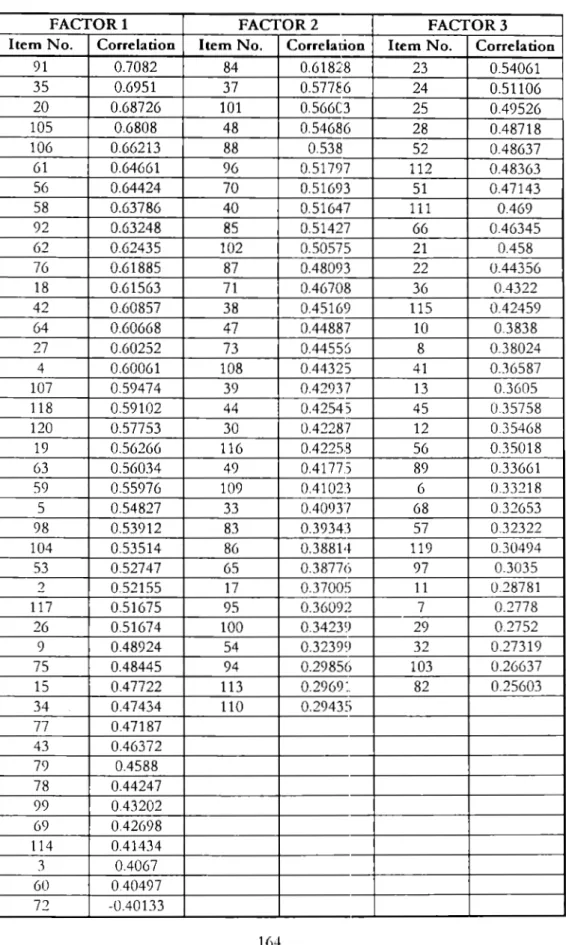
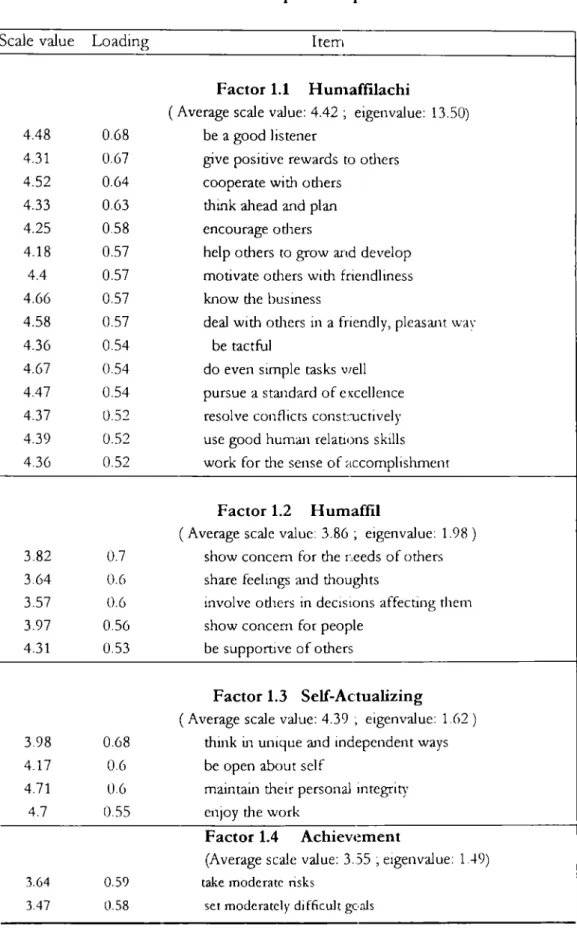
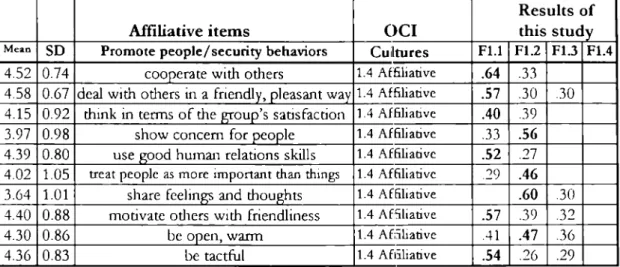
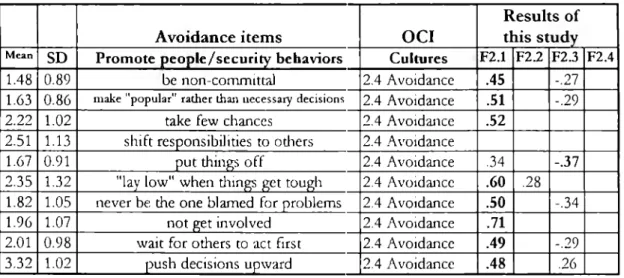
(9) ABSTRACT. TC)'L\L QUA.Ll1Y CULTURE MANAGEMENT IN THE .\1EXICAN SER.VICE SECTOR. by. Sergio Levín Kosberg. Supervisor: Professor Brian Grah,1m-.\Ioore. In this dissertation, I intend to improv,~, an cx1sting assessment instrumcnt for measuring organizational culture, ;md ,1dapt 1t for ns use m :'vicxicm serv1cc companies. Managing organizational culture 1s now more a possibility than an illusion, due to innovative ways of uncon-ring rhe h1dden dimens1u11s of culture. Besides, previous to any org~1111z:1tH111,tl change strategy or the nnplcmentatton of a Total Quality Management prognm, the relcvant litcrature suggests thc need for a culture compatible with the pnnciplcs and philosophy of total quality. If a company wants to numge ,md change 1ts culture,. It. must first learn about it, understand it, me;1sure 1t or dugnose 1t.. To ,1ssess an organization's current culture we can cho(>Se between severa! published mstruments. The use of org~mizati, mal culture measuremcnts could hclp managers cstablish a bascline, against which to compare the progrcss from the1r effons towards total quality. Knowlcdge uf thc k111d ut- culture availablc w1thin a company may show among other f1ctors, tlwse forces m.
(10) favor or against change, the managerial stylcs in use by the company's top management team, and the behavioral norms that guide cmployees behaviors. Because. interculturnl. research. has. suggested,. that. managemcnt. techniques developcd in one country may not he easily applied in another country, my purpose is to test an. l\.mcricm. instrument that asscsses. organizational culture with a sample of Mexican firms. In this way, we can tind out if the instrument is valid for the :\1exican context, and discover what charactenstics of the original instrumentare uscfu1 enough for the design of an adapted version in Mexico.. To pursue our objective for this research, we use a multiY,1riatc stansttcal technique called Factor .\11alys1s, wh1ch will al!,Jw the detect1on of sume characteristics of orgarnz:ttional cultures in ,t s,tmpk of Mexican organizations. The contrihutton from this study may tngger the interest of hoth academics and nun,tgement practittoncrs, as to the \·alue of thc culture construct in Mexican orgar11z,1tions. \"arious organi:1,ational modcls now display culture as an important component, sug_¡;csting that it must be takcn 1nto considcration for strateg1c and opcrational purposes. Thc culture of an organization should he part ot- ns des1gn, considered as a possible competence, attcnded to for stratcgic alib:rnrncnt purposcs, and understood as. ;1. moderator of. organizational, group, and individual outcomcs. Bccause culture permeates evcrywherc in an organization, acknowledging 1ts current status, can he of great hcnetit for r,lanrnng, decision making, progrcss mcasunng, and T(~.\1 implerncntation.. \'11.
(11) TABLE OF CONTENTS CHAPTER l. INTRODUCTION. 1.1 Motivation and contributions of this research. 2. 1.2 Overview of the study. :-,. CHAPTER I l. LITERATURE REVIEW. 10. 2.1 Total Quality Management. 12. 2.1.1 Definition. 13. 2.1.2 The dimensions of quality. 16. 2.1.3 Historical development. 16. 2. 1.4 TQ M toda y. 22. 2.1.5 TQM as organizational change. 23. 2.1.6 TQM nccds cultural changc. 25. 2.1.7 TQM in Mexico. 30. 2.2 Org.mizational Culture. 35. 2.2.1 O.C. as a research tapie in managemcnt. 3ú. 2.2.2 Definition. ~1. 2.2.3 Thc nature and propertics of organizational culture. ~~. 2.2.4 Dimcnsions of organizational culture. ~(¡. 2.2.5 The essencc of culture formatlon. SO. 2.2.6 Types of organizat10nal cultures. 52. 2.2.7 Operationalization of the conccpt. )). 2.2.8 The functions of organizational cul1..1rc. 58. 2.2.9 Implications for management. 59. 2.2.10 Examplcs of culture managemcnt. in. org,1.rnzations. ú1. 2.2.11 Ethics and organizational culture. 63. 2.2.12 Cultural changc. 70. 2.3 Cultural constraints to management tedmques. 73. 2.3.1 National, (soc1etal) and orgamzat1onal cultures. 75. 2.3.2 Mexico's societal culture. 78. \'111.
(12) 2.4 lmplementation: The link betwcen TQM and culture. 89. 2.4.1 The importance of a quality culture. 89. 2.4.2 Characteristics of a quality culture. 90. 2.4.3 Assessing organizational culture. 94. 2.5 The management of services. 98. 2.5.1 Nature and characteristics of services. 100. 2.5.2 Managing service organizations. 104. 2.5.3 Service quality. 108. CHAPTER 111. HYPOTHESIS. 112. 3.1 Problem. 112. 3.2 Hypothesis. 115. CHAPTER IV. RESEARCH METHODOLOGY. 116. 4.1 The necd for assessing organizational culture. 116. 4.2 lnstruments to measure organizatiom.l culture. 117. 4.3 Norms as an expression of culture. 122. 4.4 Method. 126. 4.5 Thc organizations. 127. 4.6 Rcspondents. 128. 4.7 Sample. 128. 4.8 lnstrument for this study. 129. 4.9 Statistical Analysis. 132. 4.9.1 Basic statistics. 132. 4.9.2 Factor Analysis. 133. CHAPTER V. RESULTS AND FINDINGS. 134. 5.1 Basic Statistics. 134. 5.2 Principal Components Factor Analysis. 135. 5.2.1 Comparison with original factorial strncture. 137. 5.2.2 Factor interpretation and naming. 139. 5.3 Discussion. 143 IX.
(13) 5.3.1 Hypothesis testing. 144. 5.3.2 Reliability and validity. 146. 5.4 Quality supportive cultural styles. 147. CHAPTER VI. CONCLUSIONS AND SUGGESTIONS. 149. VII. TABLES. 158. VIII. APPENDICES. 174. APPENDIX I The Organizational Culture Inventory. 175. APPENDIX II Authorization by Human Synergistics. 176. APPENDIX 111 Inventario de Cultura Organiza:::ional. 177. APPENDIX IV Mexicans' Distinctive Traits. 180. APPENDIX V Cultural Management Traits of Mexico. 182. IX. BIBLIOGRAPHY. 185. VITA. 230. X.
(14) LIST OF TABLES AND FIGURES. FIGURE 1.. 50. LAYERS OF CULTUIU~. FIGUIU,: 2. THEORETICAL FRt\MEWORK. 131. TABLE 1.. B!\SIC STATISTICS FOR ALL ITE.MS. 159. TABLE 2.. UN ROTA TED FACTOR MATRIX. 162. TABLE 2a. PROPORTION Or V ARIANCE ACCOUNTLD BY VARIABLES. 163. Ti\BU·: 3.. ROTATED FACTORS \X'ITI-1 THEIR LO:\Dl~(;S. 164. T:\BIJ-: -L. \·_\Rll'vlAX-ROTATED PRINCIP:\L CO\iIPO~l-:~TS. 1ú5. T:\BU·: Sa.. CONSTRUCTI\'E CULTUIU~S. 168. TABLE Sh.. P \SSIVE/DEFENSIVE CULTURl·:S. 170. TABLE Se.. .\GGRESSIVE/DEFENSIVE CULTL'Rl·:S. 172. XI.
(15) CHAPTER l. INTRODUCTION. Given the need for continuing its cevelopment, Mexico can take advantage of any efforts to raise the leve! of performance of its economy. One strategy could be to foster productivity in the service's sector. With a large young population, services offer interesting possibilities for investment and jobs, due to the malleability of its work force. At the same time, many Mexican companies and the service's industry in particular are aware of the existence of modem management techniques, like Total Quality Management, thanks to several situations like : the existence of the Pre11:io Nacional de Calidad sponsored by both govemment and prívate sector (awarded in 1994 to the Ritz-Carlton Hotel in Cancun among other service firms); the presence of renown and well managed international service companies like accounting firms, advertising agencies,. airlines,. hotels,. and. management. consultants. among others,. sometimes with man y years operating in Mexicc; and by articles in the popular and scien tific press, describing the experience o f service related business es and their efforts to raise their leve! of international competitiveness. The 1995 economic conditions in M,~xico, erodcd much of the development gains of previous years, causing most businesses to suffcr from lower demand, higher inflation, another peso devaluation, and highcr interest rates accompanied by political and social unrest. This negative situation calls for renewed efforts to build competitiveness into the service industries. Looking around for signals, either from countries or companies that have been able to tum around a malignant situation into an opportunity for recovery and success, we are sure to find examples. Sorne of these case~ attribute their success to total quality initiatives, making total quality managemert an option worth exploring.. 1.
(16) Mexico is now interested in promoting a quality culture ali through its industrial, commercial and service sectors, as expressed by top managers and govemment officials in a recent ceremony to convey the National Quality Award and the National Exporting Award. 1. 1.1 Motivation and contributions of this research. It seems that management theoreticians and practitioners everywhere are interested in the "successful organization". Models abound with descriptions of the components, whose interrelationships can cause successful outcomes from managers efforts and other variables. What we learn from this models, as they are supposed to help us by describing and clarifying reality, is that sorne of the factors or components may !uve enough power of explanation, as to be part of different functional arcas or perspectives in the :ield of management. This can be the case of organizational culture.. If the culture of an organization is already considered an important topic in the organizational behavior literature (Bowditch & Buono, 1994; Daft, 1995; Jones, 1995; Luthans, 1995; O'Reilly, 1989; Pascale, 1985; Schein, 1992; Trice & Beyer, 1993), and we also find it in the models of other fields such as organizational development (Hanna, 1988; Worley, Hitchin, & Ross, 1996) strategic management (Beach, 1993; Stonich, 1982;), service's management (Heskett, 1986; Schneider & Bowen, 1995), total quality service (Kessler, 1995), and total quality management (Atkinson, 1990; Sashkin & Kiser, 1993) then it becomes an interesting concept for research and a useful one for practitioners. Besides, there is also evidence of companies changing their culture to align it with strategic objectives, and having been able to achieve higher satisfaction from employees along with increases in sales and profits. 1. As commented by most Mexico City newspapers in December ii, 1996.. 2.
(17) What becomes apparent, is that a smarter management of organizational culture can be of great help particularly in service businesses, given their distinctive characteristics of a human interaction nature. The so called moments of truth, those times when both customers and employees are together during the exchange process, are a highly critica! part of this businesses. It has been said that employees that receive a quality treatrnent within their organizations, can more easily transfer that quality to externa! customers. If this affirmation is true, then managing the culture to achieve a climate of trust, ethical, cooperativc and productive attitudes, beliefs and values frori the organizations members is of utmost importance.. The principal motivation for this work has been the desire to expand our knowledge of those variables that conform Mexican organizations, in particular service companies, and looking to help modern Mexican managers. With this dual purpose in mind, we have searched for ani;wers to a more or less narrow question: what kind of an organizational culture is compatible with total quality? And we found interesting approaches, that will be explored in this work. To develop a coherent framework, we have delve through the fields of service management, total quality management (an area that seems to be always under construction) and organizational behavior. In analyzing severa! models that assist our understanding of what goes on within ,~ach field, we found a common thread among these disciplines and that was the concept of organizational culture.. Beginning with the perspective of organizations as open systems (Beer, 1980; von Bertalanffy, 1966; Harrison, 1994; Katz & Kahn, 1978; Nadler & Tushman, 1989) and following with the framew:::irks of other fields of inquiry, the concept of culture, sometimes perceived as a "soft" construct in 3.
(18) management, seems to have captured a relevant place, making it an attractive research tapie. Many descriptions of organizat,onal performance, change, and development now include culture as a theor,~tical and empirical dimension (Burke & Litwin, 1992; Denison, 1990; Porras & Robertson, 1995), which must be taken into consideration by those living and working in organizations.. One. important contribution. from. this. research,. is. the. set. of. characteristics that distinguish an organizational culture under a total quality environment. We gathered this information from various sources, and we think it can be useful to various publics. For researchers in the design of assessment instruments, for cultural audits by managers or practitioners, and as a diagnostic device by consultants.. Another contribution would be the type~; of cultures, or more precisely, the normative beliefs and behavioral expectations present in Mexican service firms. These cultural styles could contribute to a typology of organizational cultures, not currently available. Another contribution is the experience derived from measuring cultural norms with a quantit,:,tive instrument. Measurements likc these, may allow managers to have more awareness and clarity about the characteristics of their organizations.. The measurements of culture are a baseline that can be used for future assessments and control. What this research intends to signa!, is that culture is an important component of modern business administration, and that we have the techniques available to monitor it, adjust it, change it, or leave it like it is.. Still another contribution would be, the factor analysis application performed as empirical research. Results from this study can serve other researchers, interested in factorial solutions and structures, and organ1zational. 4.
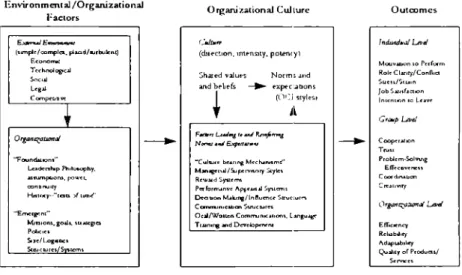
(19) culture assessments, with the typology generated by Cooke, Lafferty, Rousseau, and others. The cultural dimensions manifested by the Mexican organizations surveyed, may serve for further analysis, by supplying information on the predominant characteristics found, with the logical constraints of the present sample, and time framework.. We mention the time frame, because we recognize the importance of environmental influences on the cultures of organizations, helping to explain why under a macro-economic crisis, companie~i may develop certain behaviors that help them cope and adapt to the externa! turbulence. These behaviors could later be modified, to align them with new externa! developments.. 1.2 Overview of the study. The sequence followed in this disscrtation is first to explore the theoretical explanations of the fields of total qu,dity management, organizational culture, and service management. This will be dealt with in chapter two. We start with TQM, a more recent field of interest for both practitioners and academics, offering a historie summary, and continuing with its current tenets or principies, as espoused by the field's most representative authorities. In this field of activity we soon discover the exaltation to the need for paying attention to the cultural aspect in organizations.. To follow on this venue, we next explore the organizational culture literature. In it, we try to include a selection of what seems to be the more relevant dimensions, as discussed and researched by the field's specialists. We then review the issue of how culture at th,:! societal leve! may influence management techniques and methods, becoming an imperative to acknowledge it and be aware of its presence within every society. Nacional culture stands as. 5.
(20) an umbrella that covers the different business sectors within any country, an as such, it exercises a dominant influence on the ways of behaving of the members of those sectors.. From this notion, we then proceed to disrnss an interesting link between TQM and organizational culture. It seems that the road to achieve total quality in the experience of many firms, has suggested the need for a cultural adaptation by ali the people in the institution. Without alignment of individual and group behaviors with the values, beliefs, and norms necessary for the creation of a quality environment, no real imple:nentation seems possible. This notion then becomes the heart of this project. If we want companies to establish total quality behaviors among their members, first they must assess the day to day culture, and plan for its transformation into a quality promoting set of values, beliefs, norms and basic assumptions.. The chapter continues with a look at serYices as a modern management field. Here we try to uncover the reasons for the complexity of managing such a diverse set of business organizations, and establish the tenets of a quality service. Many companies in the service sector can greatly benefit from advances in management methods derived from the fields of service operations management and marketing, organizational behavior, and total quality. TQM has captured and maintains the notion of cw;tomer centerdness (Albretch,. 1992; Dean Jr., & Evans, 1994; Lawton, 1993; Semke, 1993). The customer becomes the center of attention from everybody in the organization, and the reason to pursue total quality. Most texts on quality management suggest first knowing their customer's needs and expectatiom, and from there proceed with the design of product and services.. 6.
(21) In chapter three, we propase sorne hypothesis in regards to the application of a quantitative instrument to a.:;sess organizational culture in a sample of Mexican service firms. Having as a background the importance of culture for adequately implementing TQM, anc after suggesting managers' need to fully grasp the culture in which they are immersed, we propase the use of measures to capture the essence of a company's culture. For that matter we have taken one instrument available in 1he United States, called the Organizational Culture lnventory (I-Iuman Synergistics, 1989) with a proven record of its effectiveness, as manifested in several empirical research studies, and back-translated it for local use in Mexico City. The hypothesis will try to uncover the validity of the instrument for a.ssessing normative beliefs and behavioral expectations, among the members of a group of Mexican firms. We believe the effort is worthwhile, due to a lack of such studies in the Mexican management literature.. Chapter four covers the research methodology. Although we are aware of a substantive body of literature describing the characteristics of both qualitative and. quantitative. methods. to. uncover organizational. culture. (Rousseau, 1990; Trice & Beyer, 1993), the constraints faced to elaborate this project did not allow us much room to elaborate on them. Its been suggested the use of both types of measures for a more complete description of a culture, but a qualitative study would have demanded more time than was available. Nevertheless, we acknowledge the benefits of combining the two approaches, as they are obviously complementary and promise to offer a richer description of any organization's culture.. We do discuss organizational norms, because they are the focus of the present research, after previously having commented the two models of cultural dimensions to which we subscribe. In Rousseau (1990) we leamed of a circular 7.
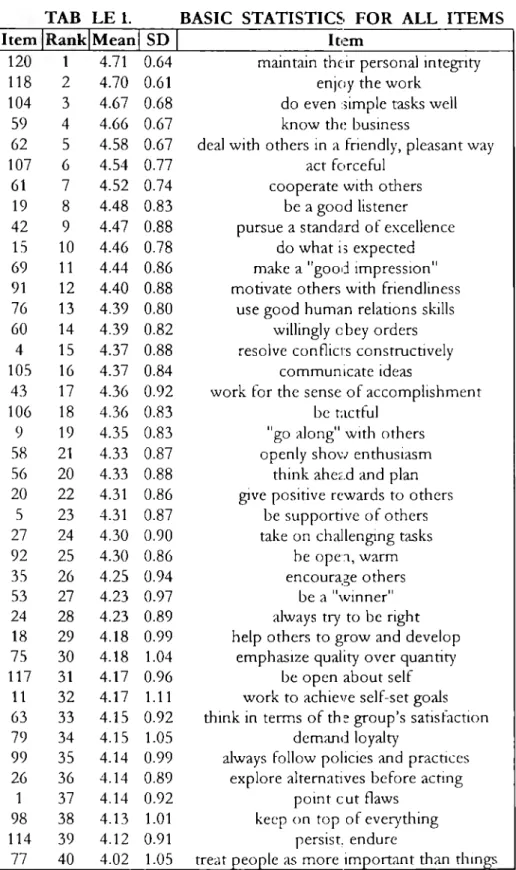
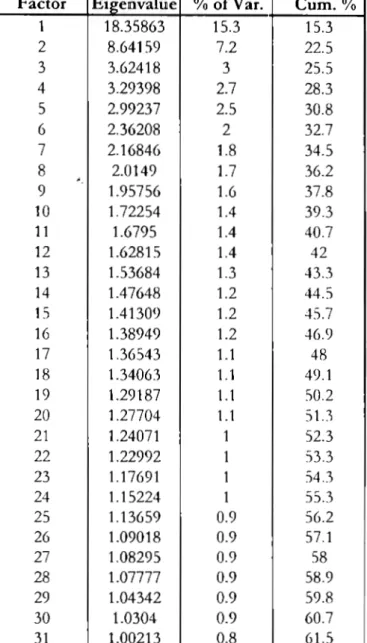
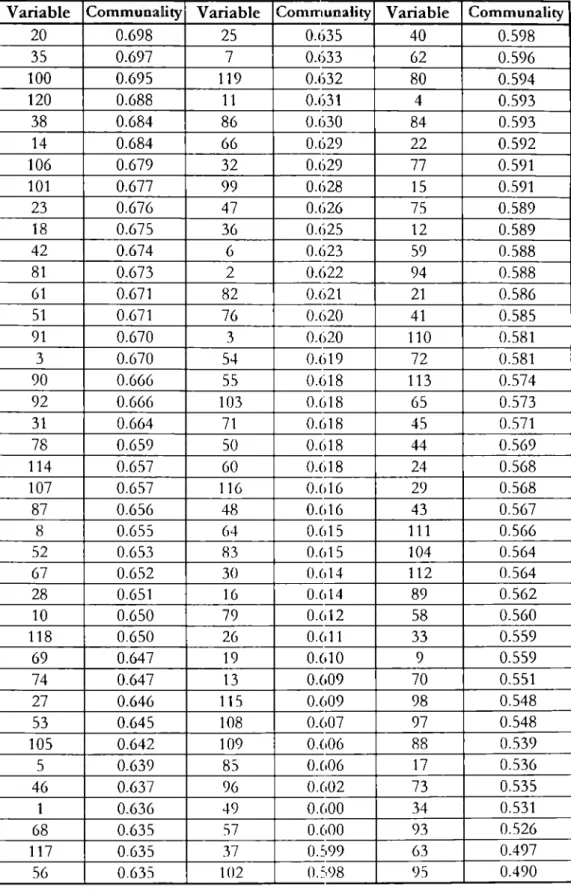
(22) diagram with five layers, included in this work as Figure 1., and in Schein (1985, 1992) we find three main dimensions (Artifacts, Values/Beliefs, and Basic Assumptions) that vary in degree of visibility. For both authors, norrns are an important component of culture, and one that is measurable.. The chapter contmues with the description of the method used, the .Mexican organizations who kindly answered the survey for this study, the respondents profile, the criteria for sample selection, and an explanation of the instrument employed. In the Appendices section I have included both the original instrument in English, and the translattd version in Spanish, as well as a copy of the owner's authorization to use it. The chapter ends with a commentary on the types of statistical analysis to be performed on the data.. Chapter five includes the results and findings from this research. We begin with basic statistics, both mean and standard deviation for the questionnaire's items, followed by the principal components factor analysis perforrned. Once we obtained the initial unrotated factor matrix, we list the factors eigenvalues, and proceed to the rotatic,n process. The rotated factors are then discussed, and a table built to compare the original structure with the resulting factors and subfactors, arrived at in this study. There are very interesting results, as showed in the tables. We then proceed to interpret the resulting factors and name them. The hypothesis are tested and the results are discussed. We end the chapter with an additional comparison of the results from this study, with those obtained by Cooke (l 993) in a later application of a new instrument for envisioning a quality culture.. In chapter six,. we convey a set of conclusions, comments on the. different implications for managers that can be d,~rived from this study, as well as suggestions for future research. Conclusions are divided into two main parts, 8.
(23) those dealing with the factorial structure of the translated and applied instrument, and those regarding the types of cultural styles found in the surveyed organizations.. As it will be clear from the study's results, the instrument demonstrated its validity as it measured what it was purported to measure, that is, normativc beliefs and behavioral expectations from the members of Mexican service organizations. These were manifested as the respondents perceptions of thc kind of behaviors, they as employees or executives, are expected to demonstrate in arder to fit in their specific organizations. The conclusions in this chapter, also complement the discussion of the previous chapter.. We have included as appcndices: the original organizational culture inventory, the authorization by Human Synergistics (Plymouth, MI.) to use it for research purposes, the Mexican translation of the instrument which we named ICO (Inventario de Cultura Organizacional), and two sets of managerial and social cultural traits of Mexico, by other authors.. 9.
(24) CHAPTER II. LITERATURE REVIEW. The approach proposed in this study provides theoretical and practica! links to several existing streams of organiz,:,tional research, therefore making this chapter, a combination of information and knowledge derived from the areas of TQM, organizational culture, and service management and quality. This research focuses on adapting an instrument that measures organizational culture of Mexican service companies in the Federal District (Mexico City) area with the future intention of applying it to service organizations and helping them assess their culture for better total quality implementation. In preliminary mterv1ews by the auth'.:lr, it became clear that severa! Mexican companies have already installed some kind of quality program, while sorne others are interested in pursuing the implementation of total quality programs. From the literature comes the notion that organizational culture is a fundamental factor in achieving a successful TQM implementation (Batten, 1992; Ciampa, 1992; Goetsch & Davis, 1995; Hradesky, 1995; Kessler, 1995; Lawton, 1993; Sashkin & Kiser, 1993; Williams, 1994). Implementation seems to be the link between what is known about service quality, TQM, and organizational culture. To raise the probabilities of success in adopting TQM, an organization must follow a process or road map as suggested by researchers, practitioners, and ::onsultants (Childress & Senn, 1995; Ciampa, 1992; Crouch, 1992). This process includes the change of the membership culture. Organizational culture has been related to serv1ce quality (Bank, 1992; Horovitz & Jurgens, 1993) as well as manv issues of human resource 10.
(25) management (Cowling & James, 1994). It is now generally accepted that an adequate culture is supportive of total quality and its guiding principies (Crosby, 1986; Deming, 1986 ; Juran, 1992; Juran & Gryna, 1995). But befare starting the cultural change needed for TQMf companies must understand their actual or current culture. For that purpose we reviewed contemporary instruments that assess organizational culture. One of these instruments, the Organizational Culture lnvent:::iry (Cooke & Lafferty, 1989) was selected for the present study. The structure of this chapter starts with the TQM literature, followed by that of organizational culture, and ending with service management and quality concepts and prescriptions. The TQM section includes enough background infonnation to understand this now "in vogue" managerial philosophy, and how through the conjugation of different statis1jcal techniques and behavioral theories, has come to offer modero management a new perspective to handle productivity and competitivity issues. We then look at the field of organizational culture, where we have tried to include thosc topics most relevant to the literature, from its diverse dcfinitions, to its properties, main dimensions or levels, functions, types, and managerial implications (citing sorne examples), as well as the ethical responsibilities for those who create them, manage them, and are interested in changing them. We cnd this section with the concept of culture change. Later on, we discuss the issue of how societal or national cultures impact on whole industries and organizations within a country, their management methods, and own cultures, offering the case of Mexico's societal culture as an example. The chapter ends with discussion about what seem to be the required characteristics of a TQM organizational culture for service companies.. 11.
(26) 2.1 Total Quality Management "Perhaps no greater challenge has grown out of the global economy than quality" -- Ivancevich, et al., (1994:122) Total Quality Management has generatecl a tremendous amount of interest in many sectors of the economy-manufacturing, services, health care, education, and government-and in many countries around the world (Dean & Bowen, 1994; Ernst & Young and American Qualtty Foundation, 1992; Lawler, Mohrman, & Ledford, 1992). In recent years, TQM has become something of a social movement in the United States (Hackman & Wageman, 1995:309). In several countries in Europe, in Japan, and in Mexico, companies and government institutions are dedicating time and efforts to promote quality m1t1at1ves as proven by the institutionalization of national quality awards like the Baldrige Award in the U.S., the Deming Prize in Japan, and the Premio Nacional de Calidad in Mexico. According to Hackman & Wageman, TQM has spread from its industrial origins to health care organizations, pu Jlic bureaucracies, nonprofit organizations, and. educational institutions.. It has. become increasingly. prominent in the popular press1, in the portfolioi; of trainers and consultants (e.g. the September 1996 issue of Quality Progrm lists 841 companies in its. 1. In December 2, 1991, Business Week published a long arride ''lbe Qualicy lmperative" (pp.1771)describing the efforts made towards quality in the main business and economic sectors; Fortune magazine publishes a yea.rly account of quality efforts in one of it's September issues, see: Bowles, Jerry "Qualicy 2000: Toe Next Decade of Progress", Fortune , Vol. 130, No.6, September 19, 1994, pp.87-126; Bowles,Jerry "Quality Happens Through People", Fortune, Vol.132, No.6, September 18, 1995, pp.Sl-S17; Bowles, Jerry and Josh Hammond "Competing On Knowledge: How Qualicy Companies Grow by Leveraging Tueir Intellectual Capital", Fortune , Vol.134, No.5, September 9, 1996, 24pp. There are severa! joumals being published both in the United States and Europe conceming total qualicy. 12.
(27) annual QA/QC Services Directory), and more recently, in the scholarly literature (Deal Jr., & Evans, 1994; Garvin, 1988; Jablonski, 1992; Krishnan et al., 1993; Sashkin & Kiser, 1993; the July 1994 special issue of the Academy of. Management Review, vol.19, no.3). After a public exhortation by managers for educational institutions 2 to foster and teach total quality principies, several schools and universities have established courses and programs 3 to diffuse the k.nowledge of TQM. Nowadays even through the Internet we find total quality discussion groups that cross the borders of societies and countries (QualiNet, the Quality Forum, Quality Resources OnLine, and others).. 2.1.1 Definition According. to. Mary. Walton. (1990). the. name. "Total. Quality. Management" was first suggested by Nancy Warren, a behavioral scientist in. ". the United States Navy (Bounds et al., 1994:2). Total Quality Management (TQM) refers to a philosophy that embraces the ::ompany-wide application of principies, practices, and systems designed to ensure complete customer satisfaction (Bowditch & Buono, 1994:413). An elaborate definition is offered by the U.S. Departrnent of Defense. "TQM consists of continuous improvement activities involving. 4 :. everyone m. 2. As it appeared in the Haroard Busineu Rmew as "An Open Lettei: TQM on the Campus", NovemberDecember, 1991, pp. 94-95.. 3. See: Leigh, David E. ,"Toe "Walk the Talk'' Model: A Classroo:n Model That Works in Education", Qualiry Progms, November 1995, pp. 67-70; Martha H. Peak, "TQM Transforms the Classroom", Management Review , September 1995, pp.13-18; Kimbedy Buch and J. William Shelnutt, "UNC Chadone Measures the Effects of lts Quality lnitiative", Qualiry Progress, July 1995, pp.73-77; William E. Kent, Kad Lian, Mahmood A. Khan, & John O. Anene Jr. "Colleges' Hospitality Progran1s: Perceived Quality'', The Come!/ H.RA. Quarterry, Vol34, No.6, December 1995, pp. 90-95; and Harry V. Roberts, editor (1995) Academic lniti.ativtS in Total Qualiry far H,¿:her EdufOtion , Milwaukec, WI: ASQC Quality Press.. 4. Air Force Development Test Center, 13.. 13.
(28) the organization-managers and workers-in a totally integrated effort toward improving performance at every leve!. This improved performance is directed toward satisfying such cross-functional goals as quality, cost, schedule, mission need, and suitability. TQM integrates fundamental management techniques, existing improvement efforts, and technical tools under a disciplined approach focused on continua! process improvement. The activities are ultimately focused on increased customer / user satisfaction." A more workable definition is the one suggested by Goetsch & Davis (1995:6) .... Total quality is an approach to doing business that attempts to. maximize the competitiveness of an organizalion through the continua! improvement of the quality of its products, services, people, processes, and env1ronments. The most conc1se and agreeable definition of Total Quality to both business and academic leaders (Bounds et al., 1994:4) is the one proposed by a study group of the 1992 Total Quality Forum 5 : "a people-focused management system that aims at continua! increase in customer satisfaction at continually lower real cost. TQ is a total system approach (not a separate area or program), and an integral part of high-level strategy. lt works horizontally across functions and departments, involving ali employees, top to bottom, and extends backwards and forwards to include the supply chain and the customer chain" (Rampey & Roberts, 1992). The definition supplied by Qualiry Progress one of the most recognized publications in the field6, describes TQM as : " a management approach to long-term success through customer satisfaction, based on the participation of. 5. 6. Toe Total Quality Forum is a consortium of business and academic leaders who come together annually to study TQM and clisseminate their leamings (Bounds et al., 1994:3). See "The Quality Glossary", Quality Progrw, (February 1992) , pp. 20-29.. 14.
(29) ali members of an organization in improving processes, products, services, and the culture in which they work." Far TQM to work, managers must believe in quality far customers as a primary organizational aim and they must act to achieve this aim (Sashkin & Kiser, 1991:26). Mamger's challenge is to create a pattern of shared values and beliefs throughout the organization so that ali members work toward quality. Sorne quality experts have described TQM as a dream or a pass1on; unless every member of the organization fully believes in quality far the customer, success through TQM is nearly impossible to achieve. The most important parts of this system of total quality are: l) people's skills and talents, and 2) how people are managed (Ivancevich, et al., 1994:123). According to U.S. management consultant J. Michael Crouch (1992) the two bodies of knowledge which comprise Total Quality Management are: 1.. The concepts of continuous process improvement (as described by Shewhart, Deming, Juran and to a lesser extent by Crosby), and. 2. The principies of organizational and individual behavior change (described by Burack, Moss Kanter, Tichy, Peters, and others). Quality is the totality of features and characteristics of a good or service that bears on its ability to satisfy stature or implied needs (Ivancevich, et al., 1994:122). TQM is management that ensures an organization and ali 1ts. members operate with commitment to continuous improvement and to meeting customer needs completely (Schermerhcrn, Hunt,. &. Osborn,. 1994:5). The need to center every organizational member's interest and passion. on the customer, is perhaps one of the most demrnding prerequisites of the total quality movement. Experts agree, that to be able to cal! it total quality is because everybody within the enterprise is committed to customer satisfaction. 15.
(30) 2.1.2 The dimensions of quality Far A. C. Rosander (1989) quality can be described in terms of eight vectors, dimensions, or aspects which may be characterized as follows:. 1) Management ... overa!! direction; 2) Supervision ... specific direction; 3) Statistics ... technique, data; 4) Psychology ... people;. 5) Economics ... cost;. 6)Time ... scheduling, sequencing; 7) Processes ... processes, system; 8) Subject matter ... corrective action, remedy. 7 Far Sitkin, Sutcliffe, & Schroeder (1994:541) the core philosophy of TQM is reflected in three basic precepts: 1.. focusing on customer satisfaction. 2.. stressing continuous improvement. 3.. treating. the. organization. as. a. total. system--an. integrated. system. perspectwe. Far Dean & Bowen (1994:394), total quality has been seen as a philosophy or an approach to management that can be characterized by its principies, practices, and techniques. I ts three. r rinciples. being : customer. focus, continuous improvement, and teamwork; and far them, most of what has been written about it is explicitly or implicitly based on these principies.. 2.1.3 Historical development As a concept, quality has been with us far millennia. Only recently has it emerged as a formal management function. The dis:ipline is still evolving. In its original form, it was reactive and inspection-oriented; today, quality-related 7. Rosander, 1989, pp. 179-180.. 16.
(31) activities have broadened and are seen as essential for strategic success (Garvin, 1988:3). Most modem approaches to quality have emerged gradually, arriving through steady evolution rather than dramatic breakthroughs. They are the product of a series of discoveries. Total quality evolved from inspection on the factory floor at the beginning of the century, to total quality management at the dawn of the twenty-first century. In the eighteenth and nineteenth centuries, quality control as we know it today did not yet exist. Most manufacturing was performed by artisans and skilled craftsmen or by joumeymen and apprentices who were supervised by masters at the trade (Chandler Jr., 1977:50-64). Artisans have traditionally always been responsible for the quality of work they produced. It was only, when workers found themselves grouped together in factories, that the responsibility for checking the quality of their work devolved to the line supervisor (Kelada, 1996:53). Statistical approaches to quality control had their ongms at Western Electric when the inspection departrnent was transferred to Bell Telephone Laboratories in the 1920s. The pioneers of quality control-Walter Shewhart, Harold Dodge, George Edwards, and others--devdoped new theories and methods of inspection to improve and maintain quality. Control charts, sampling techniques, and economic analysis tools laid the foundation for modem quality assurance activity and influenced the thinking of their colleagues W. Edwards Deming and Joseph M. Juran (Dean Jr. & Evans, 1994:5) Dobyns and Crawford-Mason (1991) attributed to U.S. General of the Army, Douglas MacArthur, Supreme Commander of the Allied Powers in Japan after World War 11, the initial efforts to supply .American experts to help in the development of Japanese industry. The first Am~ricans to attend his cal! 17.
(32) were Homer M. Sarasohn, Charles W. Protzman, and later on Deming.8 Deming and Juran introduced statistical quali~{ control to Japanese workers (Dean Jr., & Evans, 1994:5) This is how Dobyns & Crawford-Mason describe what happened: "within five years of the end of World War 11, Japanese managers were being taught management of quality, engineers were leaming statistical quality control, and the most senior industrialists were being irnpressed by the importance of quality" (pp.16-17). "The Japanese had leamed how to produce quality from 9. Sarasohn, Protzman, Polkinghom, Deming , Juran, Feigenbaum, and others. Ishikawa and Taguchi would add their own quality wrinkles in Japan over the years, justas Crosby would in the United States beginning in 1979" (p.21). In Kelada's view (1996:53) quality evolved from inspection to control, to statistical process control, to quality assurance, then quality management and finally to TQM. These are the same four distinct "quality eras" described in detail by Garvin (1988:3-19). 10 As the line supervisor's duties expanded into hiring workers, training them on the job, paying them at the end of the day or of the week, and sometimes even settling their personal conflicts, a new discipline was created: inspection. Goods were produced in small volumes; parts were matched to one another by hand, and after-the-fact inspection to ensure high quality was conducted informally, if at ali. Formal inspection became necessary only with. 8. Dobyns Uoyd and Ciare Crawford-Mason (1991) Quality or Eúe : The Revolution in World Businw , Boston, MA: Houghton Mifflin Company, pp.10-21.. 9. For a detailed account of Deming's work and teachings to Japanese workers and managers, see Mary Walton (1986) The Deming Managemmt Method , New York, NY: Perigee Books, Chapter 1, "W. Edwards Deming: A Biographical Note", pp. 3-21.. 10. Garvin, David A. (1988) Managing Quality: The Strategic and Competitive Edge, New York, NY: The Free Press. l11e first chapter gives a detailed accounr of the h.istory and evolution of total qual.ity centered around U.S. devdopments.. 18.
(33) the rise of mass production and the need for interchangeable parts. As volumes increased, the process required a large pool o f skilled labor which was both costly and cime-consuming. Subsequently, inspection was further extended to work-in-process. Then carne the American system of manufacturing: : the use of special-purpose machinery to produce interchangeable parts by following a preestablished sequence of operations (Abemathy & Corcora:1, 1983; Hounshell, 1984; M.R. Smith, 1977). Most initial efforts in the early 1800s, we::-e connected with the military's demand for armaments and were closely coordinated by The U.S. Ordnance Department, the nacional armory, and the Harpers Ferry Armory. In consumer products, the Singer Company, which manufactured sewing machines, and the McCormick Harvesting Company, which made farm equipment, later adopted the same techniques (Garvin, 1988:4). From a quality control standpoint, the key breakthrough was the development of a racional jig, fixture, and gauging system (Hounshell, 1984:6, 34-35). As this manufacturing system matured, gauging became more refined, and inspection became even more important. In the early 1900s, Frederick W. Taylor ge.ve the accivity added legitimacy by singling it out as an assigned task for one of the eight functional foremen required for effective shop management. 11 Taylor's concept of "scientific management" greatly influenced the nature of quality in manufacturing organizations. By focusing on production efficiency and decomposing jobs into small work tasks, the modem assembly line destroyed the holistic nature of manufacturing. To. ensure that products were manufactured correctly,. independent "quality control" departments assumed the tasks of inspection.. 11. Taylor, Frederick Winslow (1919) Shop Management, New York, NY: Harper & Brothers, p.101. 19.
(34) Thus, the separation of good from bad product became the chief means of ensuring quality (Dean Jr. & Evans, 1994:5). lnspection activities were linked more formally to quality control m 1922, with the publication of G.S. Radford's The Control. ef. Qualiry m. Manefacturing. 12 For the first time, quality was viewed as a distinct management responsibility and as an independent function (Garvin, 1988:5). Here matters stood for several years. Quality control was limited to inspection and to such narrow activities as counting, grading, and repair. Troubleshooting was considered beyond the reach of the average inspection departrnent (Bicking, 1958:7). In turn, inspection gave way to control. The stimulus for change was research conducted at Bel! Telephone Laboratories 13 as mentioned above. Tests were designed control systems established, laboratories built. Toward the end of the 1920s, statistical techniques were developed and applied to quality control (Statistical quality control, including acceptance sampling and statistical process control (SPC)). The year 1931 marked a watershed for t:1e quality movement with the publication of Shewhart's Economic Control efQuafiry. ef Manefactured Product (New. York: D. Van Nostrand Co.), giving the discipline a scientific footing for the first time. Much of modem-day quality control can be traced to that single volume. Shewhart was the first to recognize that variability was a fact of industrial life and that it could be understood using the principies of probability and statistics (Garvin, 1988:6).. 12. According to David A. Garvin this book "eveo touched on a oumber of principies regarded as ceotral to modem-day quality cootrol: the need to get designers iovolved eatly io quality activities, the need far clase coordination among the various departmeots affectiog quality, and the association of quality improvemeot with iocreased output and lower costs" (Ibid., p 5).. 13. Garvin, op cit., p. 6.. 20.
(35) Control is an activity whose objective is to detect errors and defects for their eventual correction. However, prevention being more efficient and economical than correction, quality assurance was introduced and encouraged. Suppliers were required to provide their customers with an assurance that the products ordered would be designed, manufactured, and delivered to the leve! of quality ordered. During the period of quality assurance, quality evolved from a narrow, manufacturing-based. discipline. to. one with. broader. implications. for. management. Problem prevention remained the primary goal, but the profession's tools expanded far beyond statistics. Four separate elements were involved: quantifying the costs of quality, total quality control, reliability engineering, and zero defects (Garvin, 1988:12). But to ensure quality, it was found that one had to plan it, back it up with adequate organization (structures and systems), and manage one's personnel with an eye to obtaining and controlling the required quality. In short, one had to manage quality. Therefore, from quality assurance, interest tumed to quality management (Kelada, 1996:54). With the appearance of the notion of total quality carne the realization that to achieve it one had to adopt a new :;tyle of management : TQM. Although concerns for quality surfaced early in the century (e.g., Shewhart, 1931) and began to diffuse following World War 11, it is only within the last. decade that corporations, consumers, and government agencies in the United States have become broadly aware of the TQM concept (Lawler, Mohrman, & Ledford, 1992; Port, Carey, Kelly, & Forest, 1992; Seymour & Collett, 1991). Another author suggests that TQM had its beginnings with a Japanese invention called quality circles (QCs), sometimes referred to as quality control. 21.
(36) circles. The idea behind QCs was to bring workers together in regular weekly meetings to discuss ways of improving the workplace and the quality of work. Workers were encouraged to identify potenti::J quality problems and then discuss and develop their own solutions (Williarns, 1994:6).. 2.1.4 TQM today fü for what TQM is today, Snell ancl Dean (1992:470) succinctly captured the core features of TQM as it has come to be practiced: "total quality is characterized by a few basic principles--doing things right the first time, striving for continuous improvement, and fulfilling customer needs-as well as a number of associated practices". For Kossoff (1994) the three objectives of total quality, each one definable and measurable are : 1) reduction of variation, in. all aspects. of the. operation, 2). building systems. for continuous. improvement, and 3) optimization of al) aspects of the organization-building over the best, reducing waste, cooperation and coordination between al) departmen ts, divisions and organizations. 14 Sorne of the latest developments we can cite, include Cohen & Brand's. (1993) book to promote TQM within govemment institutions, where they espouse as the essential core concepts of total quality management the following three: 1) Working with suppliers to ensure that the supplies utilized in the work processes are designed for your use; 2) Continuous employee analysis of work processes to improve their functioning and reduce process variation, and 3) Close communication with customers to identify and understand what they want and how they define quality. 15. 14. Kossoff, Leslie L. (1994) Closing the Gap: The Handhook far Tot.,I Quality Implementation, Knoxville, TN: SPC Press lnc., p.11.. 15. Coheu, Steven, and Roaald Brand (1993) Total Q11ality Managtment in Govmiment: A Practica/ G11ide Por The &al World, San Francisco, CA: Jossey-Bass Publishers.. 22.
(37) Also Hatala & Zuckerman's American Quality Archetype, 16 and one of the latest articles on the topic by Reed, Lemak, & Montgomery (1996) who consider TQM in relation to firm orientation and identify market advantage, product design efficiency, process efficiency, and product reliability as the key features of its content. 17. 2.1.5 Total Quality Management as organizational change Effectiveness of a particular managerial technique depends on its congrnence with the cultural values of the work context. --Erez & Earley, (1993:222). TQM is a prominent example of fundamental organizational change that many executives are attempting to inculcate in their firms (Reger, Gustafson, Demarie, & Mullane, 1994:565). Several experts have suggested that successful implementation of TQM requires "metamorphosis; total change" (Dobyns & Crawford-Mason, 1991:151), "radical change ... a :::hange in the basic philosophy of everyone in the company" (Munroe-Faure & Munroe-Faure, 1992:8-10) ora "paradigm shift" similar to the reframing ·:hat occurs during scientific revolutions (Blackbum & Rosen, 1993; Kuhn, 1970).. If change is necessary for adequate TQM implementation, what kind of change are we talking about?. What is the message being sent by both researchers and practitioners?. Is the theory behind organizational change efforts sufficient for this aim, or do we need te concentrate more on specific 16. Hatala, Lewis. J.,. and Macilyn R. Zuckeanan Oune 1994) "An Ali-American Approach to Quality",. ExecutiveExceílenu, Vol. 11, No. 6, pp. 17-18. 17. Reed, Richard, David J. Lemak, and Joseph C. Montgomery Oanuary 1996) "Beyond Process: TQM Content and Finn Performance", Academy oJ MPnagemenl Revie1,, Vol. 21 , No. 1 , pp. 173-202.. 23.
(38) venues for incrementally changing organizatiom (Ackerman, 1982; Beckhard, 1984; Buono, Bowditch, & Lewis 111, 1990; Fombrun, 1994; Kilmann, 1990; Kilmann & Covin, 1990; O'Toole, 1995). In any case, one issue stands clear from the literature and that is the concept of cultural change. No renovation can occur within an organization if its not compatible with the existing organizational culture, not even TQM. That means that to properly implement a philosophy like total quality, the culture must be adapted or changed to fit with the quality principies. Hradesky in his TQM Handbook establishes that "changing the culture within an organization is one of the tracks required to move an organization from. empowered, TQM. a hierarchical, tradicional organization to an. organization." To achieve thc goals of TQM a new culture must be establishcd in a company. This new culture will promote and support TQM, and it will allow a company to survive new challenges. 18 Hradesky makes it clear that success with TQM, will depend on: •. Achieving customer satisfaction, both interna! and externa!. •. Creating and sustaining cultural change. •. Achieving the goals of the Critica! Business Success Factors. •. Continuously improving performance measurements.. 19. These requirements once again, signa! to the need for cultural adaptation or change in the organization, if TQM is to be effective.. 18. New, York, NY: McGraw-Hill, 1995, p. 129.. 19. Op ciL, p. 130.. 24.
(39) 2.1.6 Total Quality needs cultural change Historically, Western organizations, whether in the pnvate or public sectors, have promoted interna! competition and, in turn, adversaria! relationships. Typically organizations have pro:noted, or at least condoned, competition-among. departments,. among. employees,. or. between. management and labor. In such organizations, a "me-against-you" attitude is part of the organizational culture (Goetsch & D.ivis, 1995:35). In many Western organizations this type of culture has led to an attitude among employees of "I can't win, so I'll just put in my time and collect my pay". In such organizations, employees and managers alike often complain that if only higher management would listen, work could be done more efficiently. At the same time, many upper-level managers in such organizations belicve that unless employees are taken by the hand and told what to do, when to do it, and how to do it, they won't work at ali. In these traditional organizations, few workers or mid-level managers have a firsthand knowledge of the organization's vision, goals, or objectives. Consequently they work in the dark, operating on the assumption that what they do every day is somehow the right thing to do. But this belief can be difficult to sustain when employees know from firsthand experience that there is a better way. Knowing this but not being able to do anything about it can't help but hurt morale. Total Quality offers a better approach (Goetsch & Davis, 1995:36). Quality improvement efforts like TQM, p~ocess improvement or the use of teams, are transforming organizations--changing their interna! design, structure, and culture, as well as changing how work is designed and conducted (Margan & Smith, 1996:39). The changes in strncture, culture, and jobs create. 25.
(40) needs for new knowledge, skills, aptitudes, temperament, and interests in the workforce of the organization .Most managers understand the importance of quality and most corporations stress to their customers that they are qualityoriented organizations, however, few companies incorporate quality as a strategic issue to the degree that it is an ingrained part of the company's culture (Handfield & Ghosh, 1994). 2º A fundamental change in the culture of most organizations is required to sustain Iong-term quality improvement (Fortuna, 1990:24). In the 1987 ASQC/Gallup Survey21, 43% of ali executives rated "changing corporate culture" as most importan! as opposed to only 15% in the previous year. Executives in larger organizations tend to agree even more strongly with this idea. It is possible to improve quality management and its implementation through the study of organizational culture (van Donk & Sanders, 1993). Many quality experts maintain that TQM must be a top-clown process, integrated into the corporate culture (Berry, 1991; Dubrin, 1995:309). Creating a corporate culture of quality is one of the leadership practices that foster TQM. A mission statement contributes substantially to creating a corporate culture of quality (Dubrin, 1995:310). This is important because significant quality improvement requires an upheaval of the corporate culture. If the corporate culture does not embody quality, any quality improvement efforts will probably be shallow and short li..-ed. World-class quality leaders such as Xerox, Satum, Motorola, and Waterman operate in a culture of quality (Bowen & Lawler 111, 1992).. 20. Handfield, Robert, and Soumen Ghosh (1994) "Creating a Total Quality Culture Through Orga.ni.zational Change", Joumal oJ lnltmalional Marketing , Vol. 2 , No. 3.. 21. Fortuna, Ronald M., "Toe Quality lmperative" in Emst & Young Quality lmprovement Consulting Group's Total Quality : An Exm,livu Guitk far the 1990J , HJmewood, IL: Business One lrwin, 1990, pp 23-24.. 26.
(41) Perhaps no other author has been more suggestive about the cultural change needed for quality to become everybody's business within a firm as British consultant Philip E. Atkinson, when he asserts that culture change, getting people to change the way they behave, is what separates TQM winners from the losers.. 22. "Quality is about attitude, says Atkinson, quality is something. which is engineered through effective human relations" (1990:7). "Quality is the responsibility of everybody (p.9) ... TQM is a behavioral intervention requiring attitude change, although it is founded upon measurement and control (p.16) ... we would strongly support a customer-driven rather than a product-led strategy for companies to pursue-but they must have the right culture to support this approach, ali the way through the cornpany.". 23. Continuous improvement as a way of life i:, one of the dominant values in a quality corporate culture. The quest for continuous improvement is closely associated with Kaizen, a philosophy of gradual improvement in personal and work life. Companies use Kaizen to program themselves with positive thinking so that small improvement takes place everyday (Dubrin, 1995:311). Kaizen is a long-term gradual improvement, involving a series of small, sometimes imperceptible changes. The spirit of Kaizen improves quality because it prompts employees to stay alert for possible small improvements (Lane & Green, 1994). Workers are also encouraged to look for things that are not quite right but are not yet full-blown problems. According to Masaaki Imai in total quality control, "the first and foremost concern is with the quality of. 22. Atkinson, Philip E. (1990) Cmiting Culturr Change : The Kry to Sucmsjul Total Qualiry Managemmt , Bedford, UK Pfeiffer & Company.. 23. Atkinson, op cit, p. 24.. 27.
(42) people ... a company able to build quality intc its people 1s already halfway toward producing quality products.". 24. Dubrin (1995) recommends an exerc1se for leaders to build up their skills in designing a quality culture, using an instrument that can also be used as a diagnostic tool. The instrument describes :,even characteristics of TQM companies as opposed to tradicional companies and asks respondents to mark which of the two lists better reflects their own organization. 25 From a published brochure for quality implementation we found a list of characteristics describing a TQM company, these are: •. Driven by customer needs. •. Prevention of problems befare they happen. •. Nothing less than 100 percent will do. •. Committed to quality at the source. •. Cooperative, interdepartmental teams. •. High employee participation-ernpowered work force, and. •. Long-term staying power a prirnary goal.. 26. Another perspective is offered by Ishikawa (1985) one of the Japanese experts in total quality, who says that organiz2.tions transform themselves by adopting six new ideas :. 24. lmai, Masaaki (1986) &iZ!f1 : The [0i to Japanm Competitive Success , New York, NY: Random House, p.43.. 25. 26. The source of tb.is i.nstrument is "Total Quality Management : A Step-lry-Step Cuide to Making TQM Work for Yotl', Nati.onal Semi.nars Brochure, 1992. Dubrin, Andrew. J.. (1995) úadership : Research Findings, P,-ctice & Skills , Boston, MA: Houghton. Mi.ffli.n Co., p. 312.. 28.
(43) 1. Quality, not short-term profit, first. 2.. Consumer, not producer orientation. Think from the standpoint of the customer.. 3.. Elimination of interna] barriers to quality (departamentalism).. 4.. Utilization of statistical methods.. 5.. Respect for people as a management philosophy; full participation.. 6.. Cross-functional management. 27 One of the greatest obstacles faced by organ1zations attemptmg to. implement total quality is the cultural barrier. For Goetsch & Davis (1994:122) a quality culture is "an organizational value system that results in an env1ronment. that. 1s. conducive. to. the. establishment. and. continual. 1mprovement of quality. It consists of value:,, traditions, procedures, and expectations that promote quality". As such a quality culture can be recognized by the presence of several specific characteristics. The descriptions of a quality culture can be used as guidelines by managers, to envision the kind of culture that would be supportive of a climate conductive to continuous improvement, of an atmosphere of cooperation among employees, and a never ending disposition towards pleasing customers both internal and externa!.. 27. Ishikawa, K.aoru, (1985) What iJ Total Qualiry Control ? Tbe Japanm W ,ry, Englewood Cliffs, NJ: Prentice-Hall, Inc. p.90. Another book by Ishikawa is Cuide to Qualiry Control, (1971, 1994), White Plains, NY: Asian Productivity Organization/Quality Resourc:es.. 29.
(44) 2.1.7 Total quality in Mexico "By using their unique skills and reforming their equally unique weaknesses, Mexican businesses have succeeded in creating a special brand of total quality.". 28. In 1987 the General Direction of Training and Productivity through the Promotion of Productivity Direction of Mexico's Ministry of Labor (Secretaria del Trabajo y Previsión Social) published an article entitled Total Control of 9. Quality (Control Total de Calidad)2 describing quality control circles, their antecedents, development, uses and benefits. When describing their viability for Mexico, they mention that the first experiences with their use began in Mexico in 1976.. Although they did not show exact figures of how many QCs were functioning, they did mention 80,000 people involved directly or indirectly. From that number they inferred that sorne 10,000 QCs were at work in the country. They referred to the fifth Quality Circles convention held in Puebla and that there were groups representing severa[ industries like textiles (e.g., Textiles San Marcos), manufacturing (e.g., Cafés de Veracruz), steel (HYLSA), electrical (e.g. Conductores Monterrey), and metal-mechanics (e.g., PRISMA), ali having had successful implementation of QCs. According to the study, QCs function under different names like: quality assurance teams, productivity groups, functional groups, corrective action groups, integrated nuclei for quality work, or simply quality circles (p.11). Expectations for their further development required, according to this. 28. Gutierrez, Julio (May 1994) "Mexico's Total Quality Effort",.Q11a/i~ Progrm, Vol. 27, No. 5 , p. 75.. 29. "Control total de calidad" , Managemenl Todtry en E.rpañol, México, D.F., México, Abril de 1987, pp. 7-15.. 30.
(45) govemment group, "adaptation to our culture (with its values and beliefs) and not trying to apply them orthodoxically with strictness to the Japanese model". Mexico is taking its first steps to incorporate into the total quality movement, but the efforts are isolated (De la Cerda Gastélum, 1990:10). Institutional effort to foster productivity and quality has been timid and inconsistent. Several government programs and organisms have had "a six year life". 30. (e.g., Centro Nacional de la Productividad, Instituto de Adiestramiento. Rápido de la Mano de Obra, and others). Lack ,)f consistency and sometimes lack of resources explain in large part their modest results. There have been sound successes but also failures and in any case the experiences are sparse. If anything characterizes the reported advancements of productivity and quality in Mexico would be in reference to a few organizations (De la Cerda Gastélum, 1990:11). The group Cambio Organizaciona! (Organizational Change) offered a brief but important history of the 1980s advancements. 31 The results from their annual surveys show sorne progress in mentality and knowledge about quality, but also notice great resistance in the practice, Mexican organizations don't decide to fully enter in the quality commitme·:1t. Even from their so called "optimistic" sample of Mexican companies the majority of respondents make very elementary participation or quality/produc:tivity efforts, or their reach is very superficial. 32 According to De la Cerda (1990:12) these results do not represent the nacional mean but only a small advanced and change oriented sector.. 30. De la Cerda Gastélum uses the Spanish term "sexenales" thai: implies the six years tbat every president stays in officc, with no possible reelection.. ll. Cambio Organiz.acional, Año VI , No. 11 , Junio 1986, showi; comparative results from quality surveys far the period 1983-1986.. 32. Cambio Organiz.acional, Aiio V , No. 10, Mayo 1985, p. 4.. 31.
(46) The surveys revealed that during the 1980~; sorne structural arrangements surged in organizations to improve quality, and new jobs were added for total quality management and assurance. Top management focused more on formulating an organizational vision, their consequent systems, and process improvements. There was a growth in the perception of the total system (from suppliers to distributors), and the setting of quality parameters for ali departments; there was also an increment in marketing research to determine customers' satisfaction. Another regional study (Alatorre & Mecrano, 1988) revealed that total quality management concepts and practices are mainly diffused in industrial large companies, while they notably lack in ~.maller enterprises, in primary fields, and services.. 33. This seems to be a trencl as reported by other sources. (Flores, 1989). Research is still small to ascertain the magnitude, diffusion, and reach of total quality in Mexico. In 1987 the t\ ational Council of Science and Technology (CONACYI) and the Center for Technological lnnovation at UNAM, developed a research project to analyze the impact of quality management on industry's problem solution and the possibilities that quality circles could be applied to Mexican enterprises. 34 The Mexican Foundation for Total Quality (MFTQ) was established in 1988 with "what seemed to be an esoteric goal: to promote a culture and consciousness of quality in Mexico" according to its former president Julio Gutiérrez.. 35. The foundation's guiding theory was that it was not enough to. introduce quality standards into the workplace; it believed that to sustain. 33. Alatorre, F. Hemandez y A. Medrano (1988) "Análisis de los sistemas de calidad-productividad en la gran industria local" , ITESO , Guadalajara, Jalisco, mi.meo.. 34. García Salord, Susana y María Josefa Santos (Octubre 19117) "Los Círculos de Calidad: solución al problema de productividad en México", Managemmt To~ er. español, Año XIV, No. 4, p. 37.. 35. Gutiérrez, Ibid.. 32.
(47) quality, adherence to the highest quality standard:; would have to permeate the nation's consciousness. To achieve this goal the MFTQ has brought together a mix of industrialists, academicians, researchers, and even philosophers. Gutiérrez sustains that Mexico is making substantial progress in this aim as proved by severa! companies, like the Mexican operations of American Express, General Motors, and Mexican companies like Aeroméxico, Hotel Camino Real, and wire manufacturer Hylsa. Mexico's National Quality Award was established in 1990 with the goal of fostering a Mexican quality and productivity culture, creating consciousness, facilitating information exchange between organizations and diffusing the award's modelas a diagnostic tool. 36 Every year the country's President holds a ceremony to deliver the awards. Applicants for the Award are judged on eight criteria, including client satisfaction, leadership, quality control systems, and, most important, results. In the judging process, firm size and resources are taken into account so that the award is given on the sheer merit of each company's total quality program. In addition, the domestic and internacional marketplace conditions for each applicant's industry, and the importance of suppliers and other outside influences, are considered. 37 The Award has been in existence for seven years, a total of 591 companies have participated, 104 have reached the finals, and 18 have won the award. 38 According to the Mexican Foundation for Total Quality and the Award's bureau, there is an increasing interest by nacional companies towards 36. "Premio Nacional de Calidad 1995", Management Tod,ry tn español, Diciembre 1995 , Año XXII, No.4, p. 3. Tus arride describes the winning companies : Vel-Con, Vitro Fibras, and Frisa.. 37. Gutiérrez, op cit., p.76.. 38. Castillo, Jesús (November 22, 1996) "Crece interés de firmas en incentivar la calidad", &forma , México, D.F., México, p. 27 A.. 33.
(48) continuous improvement criteria and total quality (Castillo, 1996). The years 1990 and 1991 were the ones with the most participation. In 1992 the Award wmners were the General Motors Toluca plant and Crysel, a textile fiber manufacturer. Attendance began to stabilize by 1993, when 86 companies showed interest in the tools for quality. By 1995 óere were 63 contestants for the Award, 57% belonging to the industrial sector, 38% to services, and 5% commercial companies. Fifty were prívate compar.ies and 13 were govemment owned. Even though in 1995 companies spoke litt.e about quality, without this meanmg that it was eliminated, in 1996 the two bureaus in charge, have received a larger demand for information on the topic. Little by little companies have begun to see that quality systems can become an important competitivity too!. Nowadays the FUNDAMECA is conducting a study to link quality consultants with the micro and small enterprises, as part of the National Quality Program.. 39. In the 1996 Award ceremony,. Fundameca's new president. José Giral, himself a quality consultant, mentioned that around a thousand Mexican companies have well developed and implemented quality processes that have allowed them to compete intemationally.. 40. In fact these companies. account for 80% of the country's total exports. Additional sources related to total quality in Mexico, or the techniques to achieve it are : Andrade (1996), De la Cerda Gastélum (1990), García Salord & Santos (1987), Management Todqy en español (Marzo 1991; Diciembre 1992; Diciembre 1993; Diciembre 1995), Rivero (1989, 1991), Serralde (1989, 1991), Suárez Nuñez (1993) , and publications by the Mexican Foundation for Total Quality (FUNDAMECA).. 39. Ibid.. 34.
(49) 2.2 Organizational Culture. "Y ou can live with your c_orporate culture, or you can change it. However, you can't ignore it." --Patrick Flanagan. 41. Every organization has an invisible quality-a certain style, a character, a way of doing things-that ultimately determines whether success will be achieved. Ironically, what cannot be seen or touched may be more powerful than the dictates of any one person or any formally documented system. Culture is the invisible force behind the tangibles and observables in an organization, a social energy that moves the people into action. Culture is to the organization what personality is to the individual-a hidden yet unifying theme that provides meaning, direction, and mobilization (Kilmann, 1990:50). The notion of culture in a company is complex and elusive. In general, culture refers to the everyday work experiences of the mass of employees (Scholtes, 1992). For Schein (1996:231) culture viewed as such taken-forgranted, shared, tacit ways of perceiving, thinking, and reacting, is one of the most powerful and stable forces operating in organizations. It seems that any organization can find itself with an outdated culture if its culture is not managed explicitly. If left alone, ali cultures eventually become dysfunctional (Kilmann, 1990:55). An Organizational culture can shape the beliefs and assumptions that focus people's attention and channel their efforts (Harrison, 1994:65). Chief. 40. Castillo, Jesús (5 de Diciembre 1996) "Premio Nacional de Calidad", &Jom,a, Suplemento Hecho en México: Exportación y Calidad, pag. 7.. 41. Aanagan, Patrick Quly 1995) "TI1e ABC's of Changing Corporate Culture" , Managemml Review, New York, NY: American Management Association, pp. 57-61.. 35.
(50) arnong these are beliefs about the way work gets done, how change occurs, who is powerful, what clients and customers expect, and how external trends and development affect the organization (Argyri~; & Schon, 1978; Davis, 1984; Kotter & Heskett, 1992; Schein, 1985; Starbuck, Greve, & Hedberg, 1978). An organization's culture provides the social context in and through. which the organization performs its work, and it is important for organizational productivity and adaptability (Ouchi, 1981; Peters & Waterman, 1982). Arnong the assumptions worth analyzing we find the following: one important assumption is how the organization relates to its environment (e.g., submitting, dominating, hannonizing, or finding a safe niche). Another assumption is how the organization handles facts and discovers truth: through revelation from the top of the hierarchy, through management consensus or through broad participation. Still another is how it views human nature, are humans seen as naturally good, bad or neutral ? How should they be treated ? What is the right way to treat people ? (Nolan, et al., 1993:34). 2.2.1 Organizational culture as a research topic in management Professors Trice and Beyer (1993) in 1hcir brief history of cultural research in organizations, suggest that the first textbook on cultural perspective on work organizations was published by Burley B. Gardner in 1945. Their historical overview includes comments on the work and contributions by Elton Mayo (1931, 1932), W. Lloyd Warner (1937, 1947), Fritz Roethlisberger & Williarn. J.. Dickson (1946), David G. Moore (his 1954 dissertation), James C.. Worthy. They also discuss William Foote Whyte's seminal work Street Corner. S ociery (1948) which described the informal social structure and symbols of the North Boston area he studied. In Frost, et al. (1991) there are sorne essays acclaiming this early work by Whyte.. 36.
Figure

+7

Documento similar
Management of concrete European police cooperation: 1.1 Models of operational police management, quality management and human resources management 1.2 Plan, organize, direct and
Differences in quality of life total scores and quality of life domains among children with celiac disease based on the percentage of total energy from ultra-processed foods
Impacts of soil management practices on crop productivity, on indicators for climate change mitigation, and on the chemical, physical and biological quality of
Japanese management tools and techniques, they have been popularised world-wide by North American writers such as Hauser and Clausing (1988). e) The grounds of the
The examination is made against a number of dimensions of TQM including customer and supplier relationships, workforce management, process flow management and quality data
Business Process Re-engineering, Total Quality Management, Continuous
To provide additional evidence of the importance of each variable and, since most of them can also be considered categorical, the means of supplier quality assurance implementation
Therefore, it could be concluded that the implementation of a quality management purchasing initiative (supplier quality management, personnel management,
