
How intercultural communicative competence is evidenced in the writing of texts
124
0
0
Texto completo
(2) ICC AND NARRATIVE STORIES. 1. How Intercultural Communicative Competence is Evidenced in the Writing of Texts. María E GUERRERO Liliana MUÑOZ Ana María NIÑO. Research Report submitted in partial fulfilment of the requirements for the degree of Master in English Language Teaching – Autonomous Learning Environments. Directed by Carl Edlund ANDERSON Department of Foreign Languages and Cultures Universidad de La Sabana Chía, Colombia November 2015.
(3) ICC AND NARRATIVE STORIES Declaration. We hereby declare that our research report entitled: How Intercultural Communicative Competence is Evidenced in the Writing of Texts. . is the result of our own work and includes nothing which is the outcome of work done in collaboration except as declared and specified in the text;. . is neither substantially the same as nor contains substantial portions of any similar work submitted or that is being concurrently submitted for any degree or diploma or other qualification at the Universidad de La Sabana or any other university or similar institution except as declared and specified in the text;. . complies with the word limits and other requirements stipulated by the Research Subcommittee of the Department of Foreign Languages and Cultures;. . has been submitted by or on the required submission date.. Date: November 3, 2015 Full Name:. María Eulalia Guerrero Moya Liliana Muñoz Ortiz Ana María Niño Díaz. Signature:.
(4) ICC AND NARRATIVE STORIES. i Acknowledgements. On one side, we would like to thank God for the wisdom, patience and support during all the process of this Master Program, being by far the toughest experience we have ever lived. Likewise, we would like to thank to our families whose support has contributed to finish this new path in our lives, which definitely has had a significant impact not only on our professional lives, but also on our personal growth. In addition, they gave us a hand to remain calm when we were going into panic. Furthermore, we want to remark our brothers’ and sisters’ help to give us advice and contribute to the material design for the pedagogical intervention. In the same sense, we appreciate our classmates’ motivation during all the process and our friends’ support when being patient with our tight schedule. On the other side, we would sincerely express gratefulness to the group of tutors who always motivated us with their comments, suggestions and advice to keep working hard. Particularly, to Professor Liliana Marcela Cuesta whose interest, engagement and dedication have encouraged us to give our best. Moreover, we thank to our director Carl Anderson whose suggestions and feedback were truly productive, taking us to a high level of commitment. Also, to Professor Luz Dary Arias who always believed in our research study from the beginning, showing interest and willingness to listen to us. Finally, we want to highlight our students’ willingness to participate in the current research study. They could recognise the importance of culture, tolerance and conflict resolution strategies and showed a great disposition to develop the activities proposed. Despite of all the difficulties, problems and tough situations the students had to deal with, they were able to overcome them, focusing more on their strengths rather than their weaknesses..
(5) ICC AND NARRATIVE STORIES. ii Abstract. In 2004, the Ministry of Education (Ministerio de Educación Nacional, MEN) published the basic standards for citizenship skills, depicting those as key to foci to work within schools to foster the emergence and development of citizens who can coexist with others and maintain proper communication. Thus, this research study inquired tenth graders about the opportunities derived from a possible intervention that linked both, culture and citizenship in the English class environment, in order to improve the existing English language curriculum. After getting the results of the preliminary needs analysis, researchers discovered that students were interested in exploring these fields, as well as knowing about other cultures. This action research study aimed at finding evidence of intercultural communicative competence (ICC) skills through writing narrative texts in English as a foreign language. Participants were 75 tenth-grade students, between the ages of 14 and 17 years old, who attended three different public schools in Bogotá, Colombia. Through literature circles (discussion groups) and storytelling tools, learners played a specific role, discovered similarities and differences among cultures, reflected upon their tolerance levels and explored ways to face problems. Findings suggested that students were able to identify differences in cultures and how those differences helped them to build identity. In addition, they analysed how they reacted in situations where their tolerance skills were challenged. This experience allowed them to have a deeper level of empathy with others. The study also revealed the learners ability to convey meaning, using effective communication despite the language problems that they had. Key words: Intercultural Communicative Competence; culture; citizenship; narrative texts; literature circles; storytelling, SOLO taxonomy, language acquisition..
(6) ICC AND NARRATIVE STORIES. iii Resumen. En 2004, el Ministerio de Educación Nacional (MEN) publicó los estándares básicos para desarrollar competencias en ciudadanía, sugiriendo éstas como ejes claves para el surgimiento y desarrollo de ciudadanos capaces de convivir con otros y mantener una comunicación apropiada. De allí surgió la idea de indagar en la población de décimo grado acerca de las oportunidades que se pudiesen gestar como fruto de una intervención pedagógica que combinara la cultura y ciudadanía en los ambientes de aprendizaje de la clase de inglés, con el ánimo de dinamizar el currículo existente. Luego de obtener los resultados del análisis preliminar, los investigadores descubrieron que los estudiantes estaban interesados en conocer un poco más sobre estos temas y sobre otras culturas. Este estudio de investigación acción, buscó encontrar evidencia de las habilidades en la competencia comunicativa intercultural (ICC) a través de la escritura de textos narrativos en inglés. Los participantes fueron 75 estudiantes de décimo grado, entre los 14 y 17 años, de tres colegios públicos de Bogotá, Colombia. Durante el proceso, se hizo uso de dos estrategias pedagógicas: los grupos de discusión, también conocidos como círculos literarios, y la narración de cuentos, a través de las cuales los estudiantes interpretaron diversos roles, descubrieron similitudes y diferencias entre culturas, reflexionaron sobre sus niveles de tolerancia y la forma de enfrentar diversos problemas. Los resultados sugirieron que los estudiantes pudieron identificar las diferencias entre culturas y cómo éstas los ayudaron a construir su propia identidad. Adicionalmente, los estudiantes analizaron cómo reaccionarían ante las situaciones en las que sus niveles de tolerancia eran desafiados. Esta experiencia les permitió tener un nivel más profundo de empatía con los otros. El estudio también reveló la habilidad de los participantes para transmitir mensajes con el fin de dar a conocer sus ideas de una manera efectiva, a pesar de los problemas de lenguaje que estos presentaban.
(7) ICC AND NARRATIVE STORIES Palabras claves: competencia comunicativa intercultural, cultura, ciudadanía, textos narrativos, círculos literarios, narración de historias (storytelling), taxonomía de SOLO, adquisición del lenguaje.. iv.
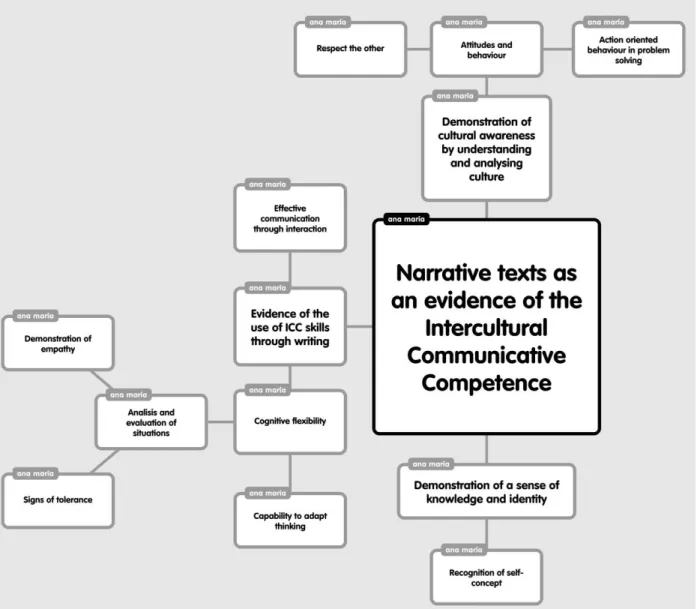
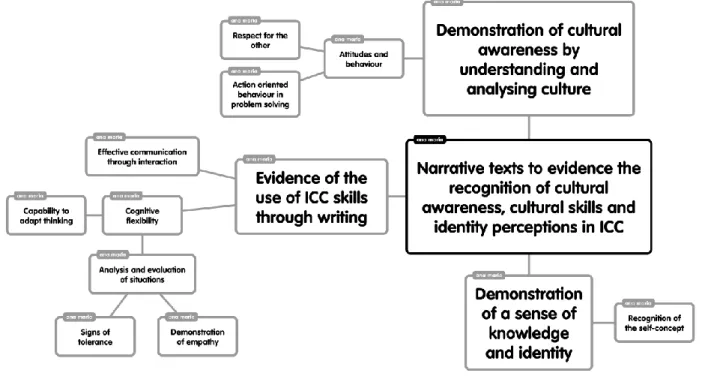
(8) ICC AND NARRATIVE STORIES. v Table of Contents. Acknowledgements .......................................................................................................................... i Abstract ........................................................................................................................................... ii Resumen......................................................................................................................................... iii Table of Figures ............................................................................................................................. ix Table of Tables .............................................................................................................................. ix Chapter 1: Introduction ................................................................................................................... 1 1.1. Introduction to the study ......................................................................................... 1. 1.2. Rationale of the study ............................................................................................. 2 1.2.1 Needs analysis and problem statement. ...................................................... 2 1.2.2 Justification of problem’s significance. ...................................................... 3 1.2.3 Strategy proposed to address problem. ....................................................... 5. 1.3. Research question(s) and objective(s) .................................................................... 5. 1.4. Conclusion .............................................................................................................. 6. Chapter 2: Theoretical Framework & State of the Art ................................................................... 7 2.1. Introduction ............................................................................................................. 7. 2.2. Theoretical framework ............................................................................................ 7 2.2.1 Intercultural communicative competence (ICC). ........................................ 7 2.2.1.1. Culture....................................................................................... 8. 2.2.1.2. Identity. ................................................................................... 10. 2.2.2 Citizenship skills. ...................................................................................... 10 2.2.2.1. Tolerance................................................................................. 11. 2.2.2.2. Conflict resolution. ................................................................. 11. 2.2.3 Narrative texts. .......................................................................................... 12.
(9) ICC AND NARRATIVE STORIES. vi. 2.2.3.1. Literature circles. .................................................................... 12. 2.2.3.1. Storytelling. ............................................................................. 14. 2.2.4 Structure of observed learning outcome (SOLO) taxonomy. ................... 15 2.3. State of the art ....................................................................................................... 17 2.3.1 Intercultural communicative competence (ICC). ...................................... 17 2.3.1 Narrative texts. .......................................................................................... 18 2.3.1.1. Storytelling. ............................................................................. 18. 2.3.1.1. Literature circles. .................................................................... 20. 2.3.2 Structure of observed learning outcome (SOLO) taxonomy. ................... 21 2.4. Conclusion ............................................................................................................ 22. Chapter 3: Research Design .......................................................................................................... 24 3.1. Introduction ........................................................................................................... 24. 3.2. Type of study ........................................................................................................ 24. 3.3. Context .................................................................................................................. 25 3.3.1 Participants. ............................................................................................... 26 3.3.2 Researchers’ role. ...................................................................................... 27 3.3.3 Ethical considerations. .............................................................................. 28. 3.4. Data collection instruments................................................................................... 29 3.4.1 Description. ............................................................................................... 29 3.4.1.1. Artifacts................................................................................... 29. 3.4.1.1. Learning logs. ......................................................................... 29. 3.4.1.1. Stories. .................................................................................... 30. 3.4.1.1. Questionnaires......................................................................... 30.
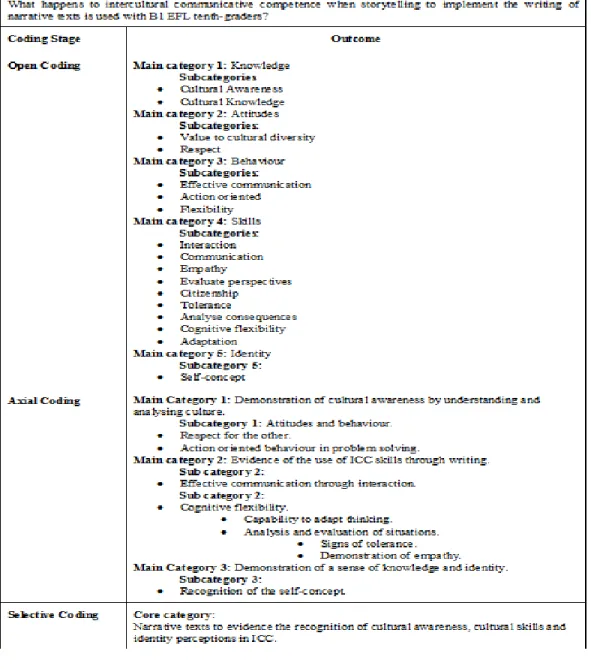
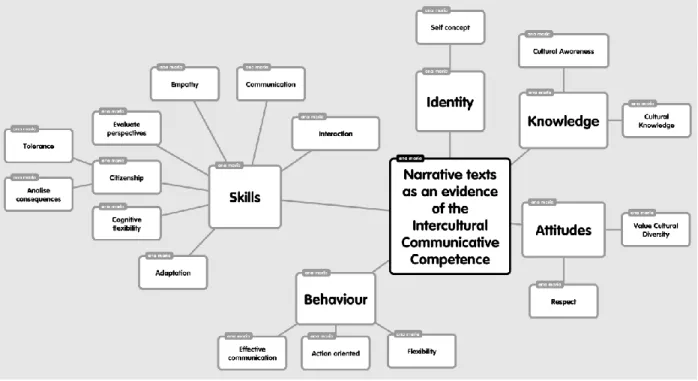
(10) ICC AND NARRATIVE STORIES. vii. 3.4.2 Validation and piloting. ............................................................................. 31 3.5. Conclusion ............................................................................................................ 32. Chapter 4: Chapter Four: Pedagogical Intervention and Implementation .................................... 33 4.1. Introduction ........................................................................................................... 33. 4.2. Visions of language, learning, and curriculum ..................................................... 33 4.2.1 Vision of language. ................................................................................... 33 4.2.2 Vision of learning. ..................................................................................... 34 4.2.3 Vision of curriculum. ................................................................................ 35 4.2.4 Vision of classroom................................................................................... 36. 4.3. Instructional design ............................................................................................... 37 4.3.1 Lesson planning. ....................................................................................... 37 4.3.2 Implementation. ........................................................................................ 37. 4.4. Conclusion ............................................................................................................ 42. Chapter 5: Results and Data Analysis ........................................................................................... 44 5.1. Introduction ........................................................................................................... 44. 5.2. Data management procedures ............................................................................... 44 5.2.1 Validation. ................................................................................................. 45 5.2.2 Data analysis methodology. ...................................................................... 45. 5.3. Categories ............................................................................................................. 48 5.3.1 Introduction. .............................................................................................. 48 5.3.1.1. Category mapping. .................................................................. 48. 5.3.1.2. Identification of core category. ............................................... 50. 5.3.2 Analysis of categories. .............................................................................. 51.
(11) ICC AND NARRATIVE STORIES 5.3.2.1 5.3.2.1.1 analysing culture.. Description of categories. ....................................................... 51 Demonstration of cultural awareness by understanding and 51. 5.3.2.1.2. Evidence of the use of ICC skills through writing. ................. 55. 5.3.2.1.3. Demonstration of a sense of knowledge and identity ............. 60. 5.3.2.2 5.4. viii. Core category. ......................................................................... 62. Conclusion ............................................................................................................ 63. Chapter 6: Conclusions and Pedagogical Implications ................................................................. 65 6.1. Introduction ........................................................................................................... 65. 6.2. Comparison of results with previous studies’ results ........................................... 65. 6.3. Significance of the results ..................................................................................... 67. 6.4. Limitations of the present study............................................................................ 68. 6.5. Further research .................................................................................................... 69. 6.6. Conclusion ............................................................................................................ 70. References ..................................................................................................................................... 71 Appendix A: Consent letter .......................................................................................................... 89 Appendix B: Artifacts ................................................................................................................... 90 B.1. Sample of workshop about Kakuma culture ......................................................... 90. B.2. Sample of workshop for literature circles demonstration ..................................... 91. B.3. Sample of workshop for assessing students on influences of cultural aspects in different situations ................................................................................................ 92. Appendix C: Sample of learning log ............................................................................................ 93 Appendix D: Sample of stories ..................................................................................................... 94.
(12) ICC AND NARRATIVE STORIES. ix. Appendix E: Questionnaire ........................................................................................................... 95 E.1. Sample of questionnaire questions 1 to 6. ............................................................ 95. E.2. Sample of questionnaire questions 7 to 14 ........................................................... 96. Appendix F: Open survey ............................................................................................................. 97 Appendix G: Cultural concepts ..................................................................................................... 99 G.1. Worksheet for matching concepts and definitions related to culture. ................... 99. G.2. Answer sheet for definitions and concepts matching worksheet ........................ 100. Appendix H: Lesson plan model for orientation sessions .......................................................... 101 Appendix I: Lesson plan model for literature circles.................................................................. 103 Appendix J: Lesson plan model for storytelling ......................................................................... 105 Appendix K: Conflict definitions................................................................................................ 107 Appendix L: Conflict resolution strategies ................................................................................. 108 Appendix M: Matrix ................................................................................................................... 109 Appendix N: Needs analysis findings ......................................................................................... 110. Table of Figures Figure 1 Open coding ........................................................................................................ 49 Figure 2 Axial coding........................................................................................................ 50 Figure 3 Selective coding .................................................................................................. 62. Table of Tables Table 1 Implementation Chart. ........................................Error! Bookmark not defined.9 Table 2 Categories and Subcategories in relation to Research Questions and Constructs ..................................................................................................................................................... 478.
(13) ICC AND NARRATIVE STORIES. x.
(14) ICC AND NARRATIVE STORIES. 1. Chapter 1: Introduction 1.1. Introduction to the study The policies of the current Colombian government regarding the Plan Sectorial de. Educación 2012-2016 (Secretaría de Educación, 2012) are aimed at educating people to be more competitive and with a variety of skills to face different challenges in a globalised world. Hence, appropriate tools for acting as individual and social members of a society are to be developed to comprehend and transform their perceptions of reality. According to this policy, teachers should promote strategies that help learners to recognize cultural diversity and identity. Similarly, Bogota Humana policy understands education of quality as an integral process that generates knowledge and allows learners to grow in values and have respect for cultural diversity and different lifestyles (Secretaría de Educación, 2012, p. 3). Likewise, according to this policy, one of the main functions of education is socializing, transmitting culture and developing the individual’s personality (p. 7). Therefore, this research study applied intercultural communicative competence (ICC) in the English classroom to help learners to raise awareness regarding cultural aspects, values and their role in building their own identity. The principles of ICC were considered since these deal with the recognition of individuals and how the differences and similarities that people find in a specific context help them to address others respectfully (Byram, 1997; Beacco, 2000). To assist tenth-graders from three public schools of Bogotá, Colombia, in the recognition of ICCs, researchers sought to help them to develop cultural skills such as tolerance, identity, and conflict resolution, enhancing their sense of worth in themselves and others as reflected in meaningful cultural contexts (real or fictional) by reading and writing stories in English through literature circles and storytelling..
(15) ICC AND NARRATIVE STORIES 1.2. 2. Rationale of the study It is important for teachers to support learners to understand cultural aspects when. learning a foreign language because cultural contact is inevitable in the current globalised world (Crystal, 2003; Graddol, 2006). Consequently, this study implemented the writing of narrative texts as a strategy to get evidence of intercultural awareness regarding customs, traditions, and social habits among others (Byram, 1997; Corbett, 2003; Moran, 2001; Richards & Schmidt, 2010). For such purposes, literature circles provided the comprehensible input and elements of analysis that were used in the creation of short stories for storytelling. Literature circles are a powerful tool to explore different cultures by giving opportunities to analyse different characters and settings (Garrison, Forest & Kimmel, 2014). On the other hand, storytelling allows students to share experiences, somehow as mirrors of their own reality (McDrury & Alteiro, 2004), which in turn makes learners recognise their own identity and raise their understanding and awareness in relation to ICC. In addition, it is important that teachers expose learners to decode cultural dimensions because they need to be communicatively competent, and comprehend relations with other cultures to hold assertive communication and to be more tolerant (Byram & Risager, 1999; Beacco, 2000; Byram, 2000; Fantini, 2008). Finally, tenth graders who were between the ages of 15 and 17 years old, were chosen as the ideal population because they had already reached the formal operational stage and had the capability of abstracting their formal thinking, and transcending concrete experiences and direct perceptions (Brown, 2007). 1.2.1. Needs analysis and problem statement.. Participants were three tenth grade groups from three state schools in Bogotá, Colombia called Institución Educativa Distrital José Joaquín Casas, Institución Educativa Distrital El.
(16) ICC AND NARRATIVE STORIES. 3. Porvenir and Centro Educativo Distrital Instituto Técnico (CEDIT) Jaime Pardo Leal, which corresponded to the zones Puente Aranda, Bosa and Antonio Nariño, respectively. According to the National Standards for English Teaching, the cultural component plays an important role in the social development of learners; however, this component is not explicit enough in the English curriculum and syllabi of the schools mentioned (Ministerio de Educación Nacional, 2006, p. 8). Having in mind this limitation, the researchers conducted a needs analysis based on an open survey (Appendix F). On the one hand, the results of this instrument (Appendix N) showed the aspects that students were most interested in (information of other countries, their culture and their relation with the Colombian one); and at the same time, what aspects they considered relevant to be studied when learning English. In addition, the questionnaire provided information regarding students’ lack of knowledge about what culture means and implies. Although they were able to recognise differences, they did not consider them important to enrich their knowledge about their own identity. On the other hand, most of the participants recognised the significance to implement different language methodologies as a way to increase their cultural awareness. They felt more attracted to listening and reading activities that involved the opportunity to listen to speakers around the world and be in contact with common expressions. 1.2.2. Justification of problem’s significance.. As stated by Byram (1997), when human beings are aware of cultural differences, the creation of “a sense of loyalty and group identity” can be possible (p. 2). This awareness cannot be developed if it is not taught. Foreign language teachers should foster environments in which.
(17) ICC AND NARRATIVE STORIES. 4. students have the possibility to experience diversity and recognize cultural differences, so that they can have more tools to interact with people from other cultures respectfully. For this reason, ICC must have an important place in an educational environment, taking advantage of all its usefulness when expanding the communicative competence significance (Byram, 1997; Kramsch, 2001, 1996). ICC permits to have a co-operation among different areas to develop a cross-curricular relation (Byram, 1997, p. 32) that enriches learners’ educational experiences. Students need to recognise individuals to understand their own identity and role into the society when using another language. Thus, the main aim of language learning is the integration of language and culture since learners can experience another language, and have a different perspective when facing reality (Alptekin, 2002). Consequently, this research study sought to approach students at developing ICC and to find evidence on their cultural awareness in regards to topics like cultural and identity differences, conflict resolution and tolerance aspects that can create misunderstandings when interacting with people from other cultures. Additionally, this research study aimed at promoting tolerance and helping participants to recognise themselves and others to build up their own identity. Skills such as cultural awareness, tolerance and conflict resolution are important for ICC and therefore, researchers took informed decisions based on the standards for citizenship skills of the Ministry of Education related to plurality, identity and value of the differences (2004). Standards for tenth graders propose a general competence that considers the respect for diversity; the recognition of dilemmas of the daily life in which values of different cultures get in conflict; and the exploration of different problem solving strategies, bearing in mind their positive and negative sides..
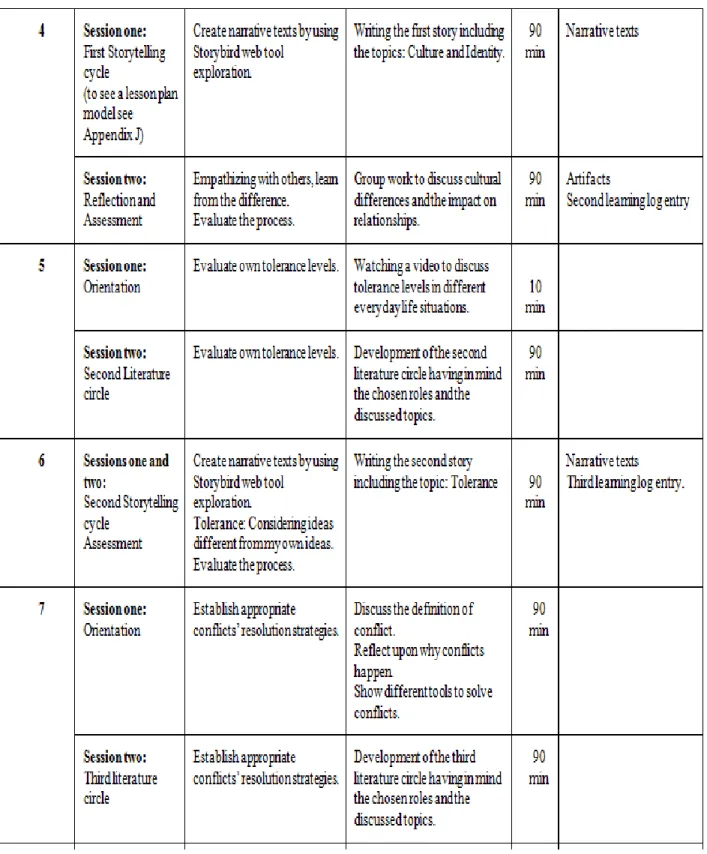
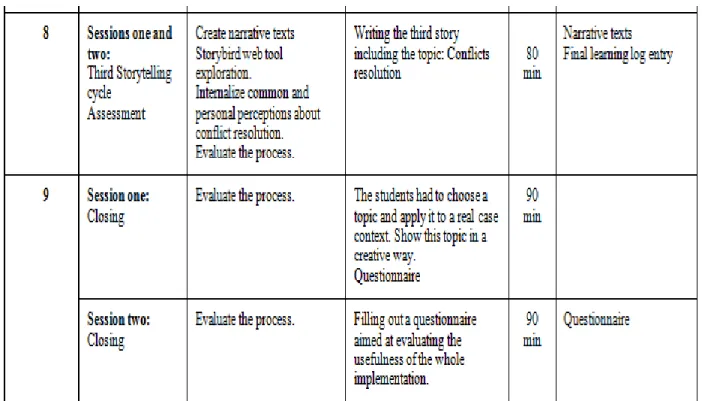
(18) ICC AND NARRATIVE STORIES 1.2.3. 5. Strategy proposed to address problem.. To analyse students’ awareness of ICC skills, researchers introduced the concepts related to culture, tolerance and conflict resolution in orientation sessions by utilising videos, readings, visual aids and workshops. Then, participants were asked to read selected stories from different countries that they had to discuss later, following the tool of literature circles. Reading helped learners to become familiar with culture and in that way students acquired knowledge, getting insights of cultural aspects (Goldblatt, 1999). Finally, students were prompted to write narrative texts that supported them in the process of meaning-making when understanding different cultural issues and being exposed to cultural differences (Kearney, 2010). In this regard, storytelling is a fundamental way of getting ideas across and it is part of the essence of human beings because it is a way of building a sense of identity (Wright, 2000). By doing this, students were able to obtain a point of reference for creating their own stories talking about their own experiences; they became aware of what to include in relation to cultural aspects; they managed to put into someone else's shoes, looking at them with new lenses, and they could reflect on others’ cultural perspectives to build up their own identity (Kearney, 2010). 1.3. Research question(s) and objective(s) Taking into account the above mentioned, the research question was what happens to. intercultural communicative competence when storytelling to implement the writing of narrative texts is used with B1 EFL tenth-graders?, and its corresponding objectives were to analyse the effects (if any) of literature circles and storytelling tools in ICC; and to identify ICC skills recognition (if any) when reflecting upon topics such as culture, tolerance and conflict resolution..
(19) ICC AND NARRATIVE STORIES 1.4. 6. Conclusion In this study, having the opportunity to reflect upon ICC topics challenged the learners’. critical thinking skills, allowing them to reinforce useful strategies for lifelong learning. In addition, ICC skills can also help learners to have a better performance to participate in different roles in a globalised society, when they show flexible skills, sharing their ideas with others and considering global and local issues (Graddol, 2006, p. 71). Additionally, research studies have shown that the use of literature circles and storytelling as tools to promote ICC skills in the classroom have had a positive impact on ICC awareness development, considering that these provide students with exploration and reflection opportunities regarding cultural aspects (Garrison et al., 2014; McDrury & Alteiro, 2004). Thus, it is fundamental to review what other researchers have done regarding the topic, particularly about the incorporation of storytelling, literature circles and the writing of narrative texts, to promote and evaluate ICC skills, which provided the background to this research study..
(20) ICC AND NARRATIVE STORIES. 7. Chapter 2: Theoretical Framework & State of the Art 2.1. Introduction Once having discussed the need to raise students’ awareness in relation to the. development of ICC using narrative texts as evidence of that process, it is important to review specific constructs such as ICC, narrative texts, literature circles, storytelling and SOLO taxonomy. Moreover, it is necessary to describe the research studies in English as a foreign language that have been done regarding those concepts, considering how the use of literature circles and storytelling tools affect the development of ICC. 2.2. Theoretical framework 2.2.1. Intercultural communicative competence (ICC).. In general terms, ICC deals with the recognition of other individuals. It refers to the person’s ability to interact among cultures respectfully with people who have different lifestyles, to accept them as they are, and to appreciate similarities and differences with the own culture (Byram, 1997; Kramsch, 2015). An intercultural competent speaker recognises those differences and accepts the others since ICC implies interaction, exchange, reciprocity and true support (Beacco, 2000). Likewise, an intercultural speaker is able to change attitudes, acquire new concepts, learn through the experience, express in a foreign language with minimal loss or distortion, establish and maintain relationships, communicate and collaborate to accomplish something of mutual interest or need (Byram, 2000; Fantini, 2008). To analyse the competence components, Spitzberg and Changnon (2009) suggested five models: compositional, co-orientational, developmental, adaptational and causal. For the current research study, the co-orientational model (Fantini, 1995) was selected, considering that it focuses on how communication takes place in intercultural interactions and how insights,.
(21) ICC AND NARRATIVE STORIES. 8. meanings and intercultural comprehension are built while interacting. Furthermore, this model takes into account different relevant concepts to comprehend the resulting outcomes from interactional processes such as understanding, overlapping perspectives, accuracy, directness and clarity. In this case, people from different cultures can have a common referential view of the world to avoid misunderstanding and communication problems. Since the co-orientational model focuses on interaction, researchers took into account the comprehension of basic concepts as the result of the discussions held upon the literature circles and the orientation stages of the pedagogical intervention, which will be explained further in this and in fourth chapters. Despite this fact, this approach aimed at triggering students’ cultural skills in order to reflect their understanding through the narrative texts. Communicative competence, in the terms of ICC, allows learners to establish and express relationships and a more accurate understanding of cultural issues that guide them to get to know both their own and other’s identity, solve problems, and reflect on the reasons for decisions or actions and their consequences in a more empathic way so that the school can be transformed into a more trustable environment; in which learners can listen carefully and express themselves. It also permits that individuals contribute actively to the pacific coexistence, responsible participation and understanding of the difference as an opportunity to enrich the community, country and world. Consequently, this equips students with tools for providing solutions, having in mind different perspectives. 2.2.1.1. Culture.. Culture refers to a discourse community that shares social space, history and common ways of thinking to understand other people’s behaviour. It has to do with symbols that make up.
(22) ICC AND NARRATIVE STORIES. 9. and maintain identity and cohesion within a specific group or society (Cortazzi & Jin, 1999; Kramsch, 2001). In general, culture can be defined as a set of values, shared meanings, shared knowledge, beliefs, attitudes, customs, behaviour, social habits, artifacts, and norms produced by members of a cultural group within a specific social context that define them and that are constantly changing and evolving as culture is a dynamic entity (Byram, 1997; Richards & Schmidt, 2010; Moran, 2001; Corbett, 2003). In this sense, decoding cultural dimension includes learning to be communicatively competent, reflecting, analysing one’s culture from an external perspective, and understanding relations with other cultures (Byram & Risager, 1999; Beacco, 2000). For this reason, teaching culture in the language classroom is a topic that has been into consideration for the last thirty years, and different types of models and re-definitions regarding the term have come to light. Participants in a classroom may create their own cultural context by shaping the conditions of enunciation/communication or reception/interpretation of the classroom discourse; therefore, culture is not necessarily related to nationalities (Kramsch, 2001; Corbett, 2003). When dealing with culture in the language classroom, teachers should incorporate ICC to allow students getting knowledge and understanding of own and others culture so that they can break down prejudices, be more tolerant, and develop abilities to see similarities and differences among cultures (Byram & Risager, 1999). Thus, the inclusion of cultural aspects into the language classroom can expand learners’ world vision and help them to solve different problems that globalisation brings in. In this sense, “teachers must lead students from the safety of stereotypes to the riskiness of diversity” (Kramsch, 2015, p. 414), so that learners can realise that culture is dynamic entity that constantly evolves due to the constant contact among people. This.
(23) ICC AND NARRATIVE STORIES. 10. contact makes possible to interact with others and to interpret their beliefs and values accordingly (Álvarez & Bonilla, 2009). 2.2.1.2. Identity.. For the purposes of this research study, identity (Holiday, Hyde & Kullman, 2004) was considered as the process of reflection and understanding of the self when making interpretations of different characteristics, attitudes and behaviours, in relation to the individual’s concept of the self and the others. Likewise, interpretations are influenced by the context in which an individual lives in. Learning another language involves the acquisition of a second identity which is mediated by cultural learning (Brown, 2007). Cultural identity is characterized by a series of units (beliefs, manners, proxemics, etc.) to be taken into account; especially, when being in a different society. These units are unique and variable to each cultural group and might constitute possible communication obstacles (Novinger, 2001). Therefore, being well informed about the country with which an exchange is going to be held should imply decoding its cultural identity to interact successfully and avoid stereotyping people’s behaviour or misunderstanding social protocols (Beacco, 2000). As a result of being aware of cultural differences, individuals can establish better relationships and use more communication strategies which help them to overcome cultural illiterate behaviours. 2.2.2. Citizenship skills.. The core of intercultural competence is comprised by components like attitudes, skills, knowledge and behaviours. In terms of attitudes, aspects such as respect, curiosity and willingness to learn about other cultures, openness to people, willingness to refuse judgment, willingness to tolerate ambiguity and valuing cultural diversity are included..
(24) ICC AND NARRATIVE STORIES. 11. Regarding skills, a competent person has skills of listening; interacting; adapting; managing failures of communication; mediating cultural exchanges; discovering information; interpreting and relating cultures; evaluating perspectives, practices and products. A competent person demonstrates empathy; cognitive flexibility; and linguistic, sociolinguistic and discourse skills. Concerning knowledge, a competent person shows cultural self-awareness, knowledge about a specific culture and individual interaction within a group. Finally, in relation to behaviours a competent person communicates effectively, has a flexible behaviour and is actionoriented, especially for the reduction of prejudice, discrimination and conflicts (Barrett, 2012). 2.2.2.1. Tolerance.. For the purpose of this study, the concept of tolerance was used as values, mutual understanding and respect for the cultural diversity; concepts that are at the core of the many educational systems (Pigozzi, 2006). Particularly, Colombian education (Ministerio de Educación, 2004) is making an effort to build more active and responsible citizens who learn to live together and are able to identify singularities, differences and similarities with other human beings so, they can value pluralism and can peacefully coexist. In this sense, students as individuals and groups need to recognise and accept that others can have different opinions and act differently. 2.2.2.2. Conflict resolution.. Finally, to test the role of a person in a society and his/her responsible attitude in different situations, being familiar with conflict resolution strategies is a must. In this sense, it is necessary to create spaces for students to face real or simulated situations that help students to train themselves in finding constructive, peaceful and creative ways to solve problems (MEN, 2004)..
(25) ICC AND NARRATIVE STORIES. 12. In this research study, participants had the opportunity to learn, practice and reflect upon different strategies to solve conflicts, demonstrating their ability to operate knowledge having in mind all the factors that affect interaction in relationships, as suggested by Byram (1997). 2.2.3. Narrative texts.. Considering that writing stories is an opportunity to interact and experience culture in a different way, participants may reflect upon different cultural aspects that somehow expand their world vision. Narratives are stories in which individuals very often tell about experiences that reflect the way they perceive the world (Linde, 1993). This kind of texts also may depict the individual’s capacity to communicate their feelings in relation to life issues and stand their viewpoints in a critical way (Webster & Mertova, 2007). Likewise, creation of narrative texts as extended writing projects (Kearney, 2010) requires students to take advantage of cultural aspects. This is a strategy to set a cultural immersed classroom where it is possible to promote understanding of different perspectives regarding culture. For this research study, the narrative texts used with the literature circles provided the cultural input since characters of stories could draw the social context that students needed. Narrative texts for storytelling gave account of the cultural context students were immersed in, which at the same time, helped teachers to get a better understanding of the learners’ background. 2.2.3.1. Literature circles.. Literature circles (Daniels, 2002; Furr, 2004) are mini-discussion groups, where participants choose a book, tale, poem, or article and read it within a period of time. In the context of literature circles, peer interaction and clear roles among learners are vital to develop the different cycles these can have. To carry out a literature circle in the classroom, students must.
(26) ICC AND NARRATIVE STORIES. 13. have specific roles, and all of its members must share their ideas and opinions regarding the text they read. For classrooms, it is also important to consider three aspects when developing a literature circle. First, discussions about the topic must be as free and natural as possible; second, the teacher acts as a guide during the process; and finally, evaluation is developed by the teacher’s observations and students’ self-assessment. For these reasons, literature circles have become a powerful tool that teachers have been implementing in the context of English teaching as a mother tongue to help students become more responsible towards reading and share ideas accordingly. Consequently, ESL and EFL teachers need to adopt this tool to promote learner-led interaction (Long, 1985), cooperative learning, problem solving strategies to improve reading comprehension skills (Spada & Lightbown, 2010) and to raise students’ motivation towards reading in a foreign language (Furr, 2004; Carrison & Ernst-Slavit, 2005; Chiang & Huang, 2005; Li, 2005; Lynch & Mendelsohn, 2010). In addition, this is a good tool to make students reflect on themselves and encourage them in the process of decision making. Literature circles allow students to evaluate their choices change as individuals in a collective way (Mills & Jennings, 2011). As learners reflect, they are also able to express themselves and share their opinions with their peers; in this sense, learners have more opportunities to improve their language and fluency (Richards, 2006; Yeh, 2007). Therefore, students’ learning process can be more significant when they are involved in stressfree environments where they express openly. Moreover, as they work collaboratively to achieve the literature circle goal, they can gain meaningful background from others’ viewpoints..
(27) ICC AND NARRATIVE STORIES 2.2.3.1. 14. Storytelling.. Implementing innovative strategies with the purpose of encouraging the students in their learning process is sometimes a difficult goal to attain. Being the lack of motivation one of the most common issues that may affect any learning process, storytelling can be a meaningful tool that not only encourages students to learn in their English classes, but also fosters spaces where the learners meet the opportunity to discover themselves into the classroom, and somehow, beyond it. Concerning this aspect, Pedersen (1995, p. 18) sets out that “a story session is a time to share feelings”. Additionally, Lipman (1999, p. 19) emphasizes that through stories students are able to “create their own mental images”, expanding their imagination ability step by step. McDrury and Alteiro (2004) pointed out that storytelling is a particular experience for people to convey meaning when using the language to express specific characteristics of their own personality and the others’ in a real or imagined world. In this regard, it is important to provide opportunities in which learners can have a real contact with authentic English language learning experiences that goes beyond the artificial language used in the classroom (Pedersen, 1995). When reading stories is introduced in the classroom, students select the stories, applying them one way or another to their own ethical concerns and lives (Eder & Holyan, 2010). Moreover, this tool triggers opportunities to work with peers, developing better relationships with classmates, learning to respect others’ viewpoints, attitudes and behaviours (McDrury & Alteiro, 2004). This strategy contributes somehow to conceive life from a different perspective since students are able to discover the importance of living and accepting the reality and different life.
(28) ICC AND NARRATIVE STORIES. 15. scenarios human beings live; thus, students embrace their context and value the culture they are immersed in and its diversity (Spaulding, 2011). This research study also prompted participants to use storytelling as a tool to write short narrative texts in which they could reflect upon cultural aspects, make comparisons between their own and foreign cultures, and at the same time, acquire cultural knowledge. Additionally, the use of stories is an appropriate tool that has a significant influence in the way students build their own identity and recognise others and self. Taking into account all the benefits, storytelling is a useful pedagogical tool to move learners towards English (Pedersen, 1995; Fitzgibbon & Wilhelm, 1998), providing an innovative and stress-free environment, that lower students’ affective filter to learn and experience the language in a more natural and autonomous way (Fitzgibbon & Wilhelm, 1998; McDrury & Alteiro 2004). Lastly, as learners are more motivated, they can be more independent (Murray, 2011) and consequently, take more control of their actions and behaviours when interacting with others (Littlewood, 1997). According to the vision of classroom presented in chapter four, this implementation aimed at developing a sense of autonomy related to the constant changes (Allright, 1990) that participants need to make in the way they interact with others, based on the cultural knowledge they may acquire. 2.2.4. Structure of observed learning outcome (SOLO) taxonomy.. SOLO taxonomy was originally invented by Biggs and Collis (1982). This is explained in terms of five levels of understanding that are useful to classify the quality of participants’ data regarding the assessed items. These levels go from the lowest to the highest considering students’ understanding of the topic..
(29) ICC AND NARRATIVE STORIES. 16. At the pre-structural level, grasping information is non-existent; for that reason, it is impossible to organise it or even give sense out of it. At the uni-structural level, superficial connections are made, but the significance of the information is not achieved. At the multistructural level, different meaningful connections are made and important understanding of the different topics is achieved. Then, at the relational level, integration and topics’ significance is found, allowing appreciating the role of the parts taking into account the whole. Finally, the extended abstract level gives evidence of a more complete understanding where it is possible to make connections, generalize and relate to other topics. It is important to have in the language classroom materials and approaches that allow teaching the culture through language to offer possibilities to enhance not only communicative competence, but to improve experiences and outcomes in relation to ICC (Spies, 2012; Mejía & Agray-Vargas, 2014). On the other hand, research studies have highlighted the importance of having a clear notion about what culture means before achieving intercultural competence to compare it to the own ways of life and in the light of the other language speaking community (Castañeda, 2012). Once students make connections between their culture and the foreign one, they are able to make critical analysis on cultural or social aspects or even to draw hypothesis of what they would do regarding a specific situation (Castañeda, 2012). For this reason, implementing SOLO taxonomy to evaluate learning outcomes regarding cultural competence can be an effective tool to measure and collect evidence about students’ perceptions, understanding and progress in a more objective and concise way..
(30) ICC AND NARRATIVE STORIES 2.3. 17. State of the art 2.3.1. Intercultural communicative competence (ICC).. Many research studies have used narrative texts or storytelling for giving evidence of cultural aspects in fields like psychology, clinical care, social studies, ethnology and /or science/social education (Taylor, 2013; Hung, Hwang & Huang, 2012; Prins, Stekelenburg, Polletta & Klandermans, 2013; Honeyford, 2013; Hunter & Eder, 2010; Nguyen, 2014; Sancho, 2014; Alsobrook, 2014; Thomas, 2014; Mejía and Agray-Vargas, 2014). However, relatively few studies have used reading and writing tools to do it especially for the development of ICC skills. For instance, the development of pragmatic competence and ICC were assessed using online exchanges when participants performed different discourses, evidencing their understanding of culture (Chun, 2011). An example of the use of ICC for educational purposes is the study conducted by Karnyshev, Karnysheva and Ivanova (2014) to get evidence of the learners understanding and respect behaviours by means of surveys, regarding the uniqueness of values, and how these may reduce conflicts in some particular situations. Another example is Gómez (2011) who used oral discussion of authentic literary texts in EFL classrooms to promote critical thinking, enhance communicative competence and also provide intercultural knowledge about beliefs, traditions and values. Research in this field demonstrated that learners improved their ability to reflect upon the importance of being tolerant, the need to become open minded and the respect for other people. In addition, learners developed intercultural empathy toward harsh situations of other cultural groups..
(31) ICC AND NARRATIVE STORIES. 18. However, ICC in these studies has not been proved to promote reflection on citizenship aspects like conflict resolution strategies and tolerance. Furthermore, learning and comprehension outcomes of ICC skills have not been measured by using SOLO taxonomy. 2.3.1. Narrative texts.. Narratives have been used in other fields such as psychology and linguistics to keep track of the identity construction (Thomas, 2014; Pavlenko, 2003; Pavlenko, 2008); in business to elucidate intercultural collaboration processes (Gertsen & Soderberg, 2011); and in health care to promote empathy and have better outcomes for understanding patients and health community in general (Moore & Hallenbeck, 2010). In the field of education, Ruano (2005) implemented narratives in combination with storytelling to analyse the development of cross-cultural competences, and the dynamics of power and culture in the context of a university level classroom. In the same sense, Yusun (2005) used narratives essay in English in a Korean university classroom to evidence the preference of these kind of text types when students were asked to demonstrate written discourse ability; the study proved that it was better for students to use their mother tongue when writing because learners were not trained enough to write in another language. On the contrary, for this research study, narrative texts were read and created by the participants taking advantage of literature circles and storytelling tools. 2.3.1.1. Storytelling.. Regarding the use of storytelling in the improvement of ICC in ESL contexts, research studies have proved the development of language skills, and also a raise of awareness on intercultural aspects such as behaviour to avoid possible cultural shocks. Similarly, this has aided at discovering differences in culture along the learning process to have a good command of cultural knowledge; and it has promoted students’ critical thinking skills, self-acceptance and.
(32) ICC AND NARRATIVE STORIES. 19. acceptance of diversity to understand different cultures and their own cultural context (Logioio, 2010; Porras, 2010; Doganay & Maksut, 2013). By the same token, storytelling has been studied in the field of narrative oral discourse to help learners gain deeper cultural views which allow students learning about social functions, being language the medium to share and build identity; to provide learners with input that scaffolds their learning process and facilitates stories’ comprehension (Coffey & Street, 2008; Porras, 2010). However, meanwhile storytelling has been mostly used in oral productions and studies described above were focused on the development of ICC in oral way, few studies have evidenced ICC skills in written way. For instance, Wu, Marek and Chen (2013) conducted a qualitative analysis study in a university English conversation course in Taiwan; researchers analysed students reflective essays after using video conferences with native speakers in USA and emphasized on critical thinking about cultural similarities and differences. Likewise, Hismanoglu (2011) carried out a study with 35 students ranged from 18 to 22 at the University of Lefke; some of them got formal education regarding ICC. Findings of this research evidenced that formal instruction on ICC grants better results in communicative and cultural skills. Having the opportunity to work with storytelling in a written form can provide more concrete evidence regarding the students’ understanding and apprehension of the studied topics than the one on oral discussions given the learners’ conditions and level. In the same line, training students to use and reflect upon cultural aspects by sharing their personal experiences can make the process of language learning more meaningful, long-lasting and appealing for them..
(33) ICC AND NARRATIVE STORIES. 20. On the other hand, in order to attain ICC awareness and knowledge, developing high order thinking skills is a must. The more cultural background an individual can have, the better he/she is capable of judging, comparing and/or contrasting. In this sense, Wu (2015) conducted a case study with four EFL college learners, who attended an intercultural communication course using reflective writing based on real cultural experiences as evidence of students’ critical thinking skills regarding ICC aspects such as knowledge, skills and attitudes. The results of this research study showed that some of the participants became critical thinkers meanwhile others did not. For this reason, it is important that students get familiar with their own culture so they can understand better how other cultures are constituted and take informed decisions when interacting with others. Taking into consideration studies developed, these have not evidenced ICC skills using written stories that involve fictional or real events as it is described in the current research study. In addition, they did not use the SOLO taxonomy to evaluate the participants’ understanding in regards to different cultural aspects. 2.3.1.1. Literature circles.. As literature circles is a tool that takes advantage of readings and discussions developed upon different topics, like culture, it can provide an appropriate environment to foster knowledge-based societies. By using this tool, students can demonstrate a higher level of respect for others’ thoughts, attitudes and behaviours. In this regard, there are few research studies conducted using literature circles for the ICC fosterage. One example is Medina (2013) who used literature circles for educational purposes in EFL classrooms. She carried out a research study with a group of fourteen third graders enrolled.
(34) ICC AND NARRATIVE STORIES. 21. in a bilingual programme. Her study proved that reading stimulated social interaction and the use of language for communication. Another example is the study developed by Thein, Guise and Sloan (2011) that used this tool to engage ESL students in discussions about political and multicultural aspects with tenth graders of a junior-senior high school in USA. They found that students were able to make real meaning of the situations presented in the story and listen to each other, being able to pose appropriate questions and develop their critical thinking. Finally, McCall (2010) used this tool at a university for pre-service teachers in a social studies class to help students to know similarities and differences among cultures, and current and historical events. She demonstrated that participants moved beyond the text to analyse characters behaviours and their social implications. 2.3.2. Structure of observed learning outcome (SOLO) taxonomy.. SOLO taxonomy has been used in different fields such as mental health, business and technology (Chan, Tsui, Chan & Hong, 2002; Shea, Gozza-Cohen, Uzuner, Mehta, Valtcheva, Hayes & Vickers, 2011). In the educational field, SOLO taxonomy has been used for different purposes, stances and subjects such as geography, maths, accounting or sciences (Jurdak & El Mouhayar, 2014; Braband & Dahl, 2009; Munowenyu, 2007; Hussain, Ajmal & Rahman, 2010; Smith & Colby, 2010; Lucas & Mladenovic, 2009). This taxonomy has been implemented to analyse the level of understanding of a topic in the students, measure the progression in a competence, set course objectives, analyse the quality of academic essays, grade and improve critical thinking skills. In regards to the use of this tool in the educational field, Hussain et al. (2010) showed in their research study the importance of using this taxonomy to increase reliability and validity for.
(35) ICC AND NARRATIVE STORIES. 22. grading among 360 teachers. Findings included teachers’ reflections regarding the importance of using appropriate outcome scales to facilitate the students’ learning processes and understanding. Similarly, another important contribution in this field was done by Smith and Colby (2010). They used the SOLO taxonomy to increase critical thinking, reading, writing and comprehension since it is helpful to communicate teachers’ expectations regarding students’ outcomes. Findings demonstrated that teachers were not prepared to use this taxonomy to foster deep learning and suggested the use of purposeful examination tools in order to improve students’ outcomes and performance. Although, many research studies have been done, there is no evidence of the use of SOLO taxonomy to measure learners’ outcomes in EFL classrooms and much less for measuring the students’ outcomes in regards to their ICC skills development. Hence, using SOLO taxonomy can help teachers to improve students’ performance and keep track of their progress. Furthermore, this taxonomy can help teachers to plan better their classes and evaluation criteria. 2.4. Conclusion The methodology for teaching English as a foreign language has radically changed over. the last years. Therefore, educational challenges for English teachers are evident, as they have to propose strategies that engage students and, at the same time, consider their active and relevant role in the process of language learning. EFL needs to include culture as an important and active part in language teaching that has to be taught in meaningful contexts for learners, where the main objective should be interacting and communicating with others (Kramsch, 2001). Research studies and literature review above mentioned regarding the use of narrative texts, storytelling and literature circles for the fosterage of intercultural competence have demonstrated that the inclusion of cultural topics in the EFL classroom help students to explore.
(36) ICC AND NARRATIVE STORIES. 23. other cultures and be aware of the importance of accepting diversity and getting to know the self and the others. For that reason, the current research study aimed at applying storytelling for expressing ideas in relation to cultural topics in written form using narrative texts, in contrast to the previous studies that focused on oral narrative. Thus, a pedagogical strategy needed to be designed to get evidence of ICC in terms of the recognition of cultural diversity, the self, tolerance and conflict resolution aspects; as well as, to demonstrate ICC through pieces of writing participants created on their own and that were assessed by teachers using SOLO taxonomy, as it is explained in the next chapters..
(37) ICC AND NARRATIVE STORIES. 24. Chapter 3: Research Design 3.1. Introduction Studies regarding ICC have shown the efficacy of using storytelling and literature circles. tools to teach and let students be more aware of different cultural aspects. This research study used narrative students’ creation as a way to evidence their understanding on these topics and the effectiveness of the implemented tools to provide input to the students so that learners could reflect on their cultural competence. Different instruments such as artifacts, logs, a final questionnaire and narrative stories were used to collect data in different stages of the implementation (before, during and at the end) and to analyse the implementation effectiveness. 3.2. Type of study This research study was conducted under the principles of collaborative action research,. as this is a helpful tool for teacher-researchers to get a deeper understanding of issues that are part of their daily concern. In this case, three teachers from different schools and contexts decided to use the same methodology to find out the best strategy to introduce ICC in the English classroom. Action research is a methodology that follows a systematic process, combining action to promote changes in a community to increase understanding on the part of the researcher by intervening in a deliberate way. One of the main aspects of this type of research is that it points out the necessary changes on social situations by implementing problem solving and collaboration (Burns, 1999). Thus, this research study was possible as the group of researchers cooperated to explore a question of mutual interest through cycles of action, experience, reflection and critical thinking to comprehend a particular phenomenon regarding cultural awareness and in general, the recognition of ICC skills (Burns, 2010; Wallace, 1998)..
(38) ICC AND NARRATIVE STORIES. 25. This process required from researchers an open-mind and flexibility towards the decisions taken to test ideas about education so that theory based on actual experience could be built following the cycle of planning, acting, observing, and reflecting as proposed by Burns (2010). 3.3. Context This research study was carried out in three public schools: José Joaquín Casas, Jaime. Pardo Leal and El Porvenir in Bogotá, Colombia. These have different levels such kindergarten, primary and high school. Their mission focus on educating competent citizens able to build their life projects who have an impact on their communities. Regarding their visions, these are interested in promoting students who participate actively in the social and cultural transformations of Colombian society. In terms of the English curriculum, although schools follow the Common European Framework of Reference for Languages (CEFR, 2011) and the standards adopted by Secretaría de Educación Distrital (SED), the English classes follow different approaches. José Joaquín Casas and Jaime Pardo Leal implement Content Language Integrated Learning (CLIL). For example, students study topics like, literature and environmental issues. In case of El Porvenir, students follow a communicative approach, thus they are guided to use the functions of the language to be competent in the different skills. Similarly, all schools aim at including meaningful communicative activities, cultural aspects and critical thinking in their curricula and syllabi that allow learners to comprehend local and global situations, and communicate effectively. Finally, English classes in Jaime Pardo Leal and Porvenir are three hours per week and in the case of José Joaquín Casas, students attend three additional hours as part of the classes in the immersion room in the opposite shift..
(39) ICC AND NARRATIVE STORIES 3.3.1. 26. Participants.. Participants for this research project were 75 tenth graders ranged from 15 to 17 years old. Selection of participants of the same grade was done to have homogeneity in terms of age, grade, interests, skills and cognitive development. Based on the CEFR (2011) standards, researchers classified students’ English level as B1 since they were able to understand familiar themes and produce simple connected texts to describe fictional or real experiences and events. Furthermore, these learners were characterized by an interest for getting closer with new knowledge, topics and experiences. However, bearing in mind the difficulties of public schools in terms of students’ attendance, teacher-researchers used the purposive sample method to choose the population to work with. In this case, the sample is chosen with specific purposes on the basis of the researchers´ judgement, as a response of their specific needs (Cohen, Manion & Morrison, 2007). The criteria to select the subset of participants were based on completeness of the process and activities to guarantee that information collected was not biased. As a result, 15 participants were chosen, 5 per school. Cognitive learners´ profile included constant inquiry about different topics; they were able to analyse, judge, organise information, and make abstractions. Learners were creative and curious. These characteristics are in accordance with the analysis performed for the development of the curricula of each school as established in the “Lineamientos Curriculares” document (MEN, 1999). Regarding their social needs, students liked to work in groups and have discussions about the topics they were interested in. These students were discovering their own identity, and the sense of self-awareness and self-management. They were increasing their potential to.
(40) ICC AND NARRATIVE STORIES. 27. comprehend different daily life situations which made them solve their problems in a practical way. In regards to their affective needs, these learners were sensitive and became more independent; they were able to take a clear stance in relation to different situations. As a result, they needed to be exposed to a suitable learning environment in which they could feel free to experience English language and develop each task effectively. Moreover, these students seemed to benefit from the teachers’ positive feedback when they developed willingness to communicate their ideas in the foreign language. This had a significant impact on their self-esteem, being an important aspect in any academic achievement (Brown, 2007). Regarding their abilities with the language, students were able to understand the complete class in English. They had the necessary vocabulary to understand topics related with culture and to understand short tales when reading them. Speaking was one of the skills that the students needed to work more on since they did not feel very comfortable when using the language, mainly, due to their pronunciation problems. Lastly, they were able to convey meaning although they had some problems to write in a coherent way; they felt confident expressing their ideas creatively through this skill. 3.3.2. Researchers’ role.. In this research study, teacher-researchers also played the role of participants observers. According to Cohen et al. (2007), observers are involved in all activities they plan to observe. Participants observers became part of the group, collected data and kept track of the process for research purposes. Furthermore, for this research study teacher-researchers acted as mediators between the knowledge and how it is put into practice (Kramsch, 2015)..
(41) ICC AND NARRATIVE STORIES. 28. In addition, teacher-researchers should think and value what is truly meaningful in the classroom, being more committed and seeing teaching practice in new ways to have somehow different results to improve teaching techniques. As a consequence, teacher-researchers should promote collaborative work with the purpose of advocating solutions to their contexts, increasing self-awareness and one of the most significant, transforming teaching practices (Freeman, 1998). 3.3.3. Ethical considerations.. Ethics is a key aspect that action research takes into account when carrying out an investigation. It is important to consider the influence teacher-researchers may have on students’ viewpoints (Banegas & Villacañas de Castro, 2015) in relation to critical topics that involves behaviours and attitudes when dealing with ICC matters and to the teaching practice itself. As stated by Burns (1999), collaborative researchers that are conducting action research must follow the principles of confidentiality, responsibility and negotiation. Regarding confidentiality, participants’ identity was protected by using numbers (for example, S1). In terms of responsibility, researchers used a consent letter (see Appendix A), asking for permission to the principal and parents to implement the research study and to collect specific data. On the other hand, in relation to negotiation, from the beginning of the process, the students were notified that their participation in the research study would not affect their grades in the English class. In the same sense, researchers from the three schools agreed to follow the same ethical considerations and procedures established for the current study. Finally, specific data analysis techniques and methods were used when developing and implementing data collection instruments to tackle the bias issue..
(42) ICC AND NARRATIVE STORIES 3.4. 29. Data collection instruments Data collection instruments were designed to gather qualitative information in regards to. students’ reflections upon different topics such culture, tolerance and conflict resolution through artifacts, logs, narrative stories and a questionnaire. These instruments allowed researchers to evaluate and analyse the impact of literature circles and storytelling in the participants’ ICC skills recognition. In addition, those instruments provided reliable information to be analysed afterwards, and that allowed researchers to triangulate data and avoid bias. 3.4.1 3.4.1.1. Description. Artifacts.. Artifacts are instructional materials employed by researchers to facilitate students’ learning (McGreal, Broderick & Jones, 1984). These instruments allowed students to give an account of perceptions regarding different cultural aspects. For this research study, artifacts were worksheets, study guides and problem sets that were used to keep track of the participants’ interpretations of different discussed topics. In this study, artifacts (see Appendix B) were applied during the orientation sessions and provided evidence of the participants’ critical thinking skills like comparing and contrasting information, evaluating and judging situations, and proposing strategies to solve a problem. 3.4.1.1. Learning logs.. Learning logs are sample evaluation activities where learners keep a record of their learning progress (Chamot, 1998). Logs are commonly used to evaluate strategies and talk about strengths and weaknesses. In this research study, learning logs (see Appendix C) were used to record the participants’ reflections about the content being studied and to express personal.
Figure
+3
Documento similar
The non-dependence on others and the differentiation from others have their symbolic counterpart in the attributes that are assigned to individuality. Individuation paves the
Based on the conception of such competence as the ability to understand the meanings connoted beneath the literal discourses of audiovisual texts, this study
A systematic review of the published literature was therefore conducted to review the quality and agreement of studies designed to determine the composition of bacteria in
Out of the 116 segments analysed, 45 were assigned to the category of defects at the syntactic level. As eleven of these solutions were used by more than translator, the
However, the pedagogical aspect covers the ability of teachers to explore the didactic capabilities of technologies, design activities adapted to the level of their
In the last decades, Intercultural Communicative Competence (ICC) have triggered a rapid shift in the educational paradigm. Added to the enormous complexity of
Hermans (1992) among others-, have done so by the detailed study of the prologues and the texts of English translations of classical works while translations of vernacular texts
It will be thus my objective in the following pages to analyze Mills’s and Rhodes’s texts, from my point of view the best representatives of the literature for children and
