
Creating connections: the impact of self assessment strategies and technology in speaking accuracy
105
0
0
Texto completo
(2) ALL CAPS SHORT TITLE 50 CHARACTERS OR LESS Declaration. I hereby declare that my research report entitled: Creating Connections: The Impact of Self-assessment Strategies and Technology in Spoken Accuracy •. is the result of my own work and includes nothing which is the outcome of work done in collaboration except as declared and specified in the text;. •. is neither substantially the same as nor contains substantial portions of any similar work submitted or that is being concurrently submitted for any degree or diploma or other qualification at the Universidad de La Sabana or any other university or similar institution except as declared and specified in the text;. •. complies with the word limits and other requirements stipulated by the Research Subcommittee of the Department of Foreign Languages and Cultures;. •. has been submitted by or on the required submission date.. Date: September 2018 Full Name: Fredy Guillermo Parra Suarez Signature:.
(3) ALL CAPS SHORT TITLE 50 CHARACTERS OR LESS Acknowledgements To all the people involved in this project.. i.
(4) ALL CAPS SHORT TITLE 50 CHARACTERS OR LESS. ii. Abstract Previous studies on technological devices in language improvement have indicated that audio and video features can be useful for oral production improvement. However, little attention has been paid to the self-assessment process that students can do through audio recording and its impact on spoken accuracy. The overall aim of this study was to identify the use of selfassessment strategies and two web 2.0 tools in language accuracy in a group of thirty-nine A2 level students at a public school in Bogota. The data collection process involved participant voice recordings, self-assessment checklists and logs and teacher field notes. After the data analysis and triangulation, there was evidence that students were able to self-monitor their language production, producing richer and more complex utterances. Additionally, computerbased tasks provided students with the opportunity to use and improve their speaking skills outside the classroom. The use of self-assessment strategies within the EFL classrooms represents a big chance to change the dynamics of language learning and teaching. Technology (web 2.0 tools) served as the vehicle for language learning. Consequently, this study evidenced a close relationship between self-assessment strategies and spoken accuracy. The pedagogical implication of this study offers teachers and researchers an opportunity to explore the use of technology and self-assessment as a trigger of language development in the EFL classrooms. Keywords: Self-assessment, Web (2.0 tools), speaking accuracy.
(5) ALL CAPS SHORT TITLE 50 CHARACTERS OR LESS. iii. Resumen Estudios previos sobre dispositivos tecnológicos para mejorar el lenguaje han indicado que los elementos de audio y video pueden ser útiles para mejorar la producción oral. Sin embargo, se ha prestado poca atención al proceso de autoevaluación que los estudiantes pueden hacer a través del uso de grabaciones y su impacto en producción oral. El objetivo general de este estudio fue identificar el uso de estrategias de auto-evaluación y herramientas web 2.0 para mejorar las habilidades comunicativas en un grupo de treinta y nueve estudiantes de nivel A2 en una escuela pública de Bogotá. El proceso de recolección de datos implicó: grabaciones de voz de los participantes, rúbricas de autoevaluación y diario de campo del profesor. El análisis y triangulación de datos reveló que los estudiantes fueron capaces de monitorear su producción comunicativa, evidenciando una mejora en el nivel de inglés de los estudiantes. Las tareas basadas en el uso de herramientas web 2.0 ofrecieron a los estudiantes la oportunidad de utilizar y mejorar sus habilidades de conversación fuera del aula. El uso de estrategias de autoevaluación dentro de las aulas de inglés como lengua extranjera representa una gran oportunidad para cambiar la dinámica de la enseñanza y aprendizaje de idiomas. Tecnología como las herramientas web 2.0 sirvieron como vehículo de aprendizaje de idiomas. En consecuencia, este estudio pone de manifiesto la estrecha relación entre las estrategias de autoevaluación y el desarrollo de la habilidad de hablar una segunda lengua. La implicación pedagógica de este estudio ofrece a los profesores e investigadores la oportunidad de explorar el uso de la tecnología y la autoevaluación como desencadenante del desarrollo del lenguaje en los salones de clase. Palabras claves: Autoevaluación, Technología (Web 2.0), habilidades comunicativas..
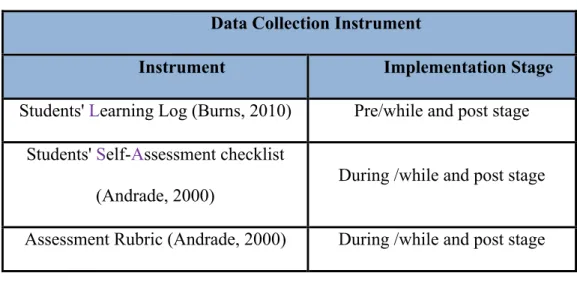
(6) ALL CAPS SHORT TITLE 50 CHARACTERS OR LESS. iv. Table of Contents Acknowledgements .......................................................................................................................... i Abstract ........................................................................................................................................... ii Resumen......................................................................................................................................... iii Table of Figures ............................................................................................................................ vii Table of Tables ............................................................................................................................ viii Chapter 1: Introduction ................................................................................................................... 1 1.1. Introduction to the study ......................................................................................... 1. 1.2. Rationale of the study ............................................................................................. 3 1.2.1 Needs analysis and problem statement ....................................................... 4 1.2.2 Justification of problem’s significance ....................................................... 5 1.2.3 Strategy selected to address the problem .................................................... 7. 1.3. Research question and objective ............................................................................. 8. 1.4. Conclusion .............................................................................................................. 8. Chapter 2: Theoretical framework & state of the art ...................................................................... 9 2.1. Introduction ............................................................................................................. 9. 2.2. Theoretical framework .......................................................................................... 10 2.2.1 Communicative competence and speaking ............................................... 10 2.2.2 Speaking accuracy ..................................................................................... 11 2.2.3 Speaking - knowledge and skill ................................................................ 13 2.2.4 Assessment and self-assessment ............................................................... 14 2.2.5 Self-assessment ......................................................................................... 17 2.2.6 Computer- assisted language learning ...................................................... 18.
(7) ALL CAPS SHORT TITLE 50 CHARACTERS OR LESS 2.3. v. State of the art ....................................................................................................... 21 2.3.1 Speaking skills development ..................................................................... 21 2.3.2 Self-assessment ......................................................................................... 23 2.3.3 Technology and language development .................................................... 25 2.3.4 Voice message boards in language learning ............................................. 27. 2.4. Conclusion ............................................................................................................ 28. Chapter 3: Research design ........................................................................................................... 30 3.1. Introduction ........................................................................................................... 30. 3.2. Type of study ........................................................................................................ 30. 3.3. Context .................................................................................................................. 31 3.3.1 Participants ................................................................................................ 32 3.3.2 Researcher’s role ....................................................................................... 32 3.3.3 Ethical considerations ............................................................................... 33. 3.4. Data collection instruments................................................................................... 34 3.4.1 Descriptions and justifications .................................................................. 34 3.4.1.1. Students´ learning log ............................................................. 34. 3.4.1.2. Self-assessment checklists ...................................................... 35. 3.4.1.3. Audio recordings..................................................................... 35. 3.4.1.4. Assessment rubrics.................................................................. 36. 3.4.2 Validation and piloting .............................................................................. 37 3.5. Conclusion ............................................................................................................ 37. Chapter 4: Pedagogical intervention and implementation ............................................................ 39 4.1. Introduction ........................................................................................................... 39.
(8) ALL CAPS SHORT TITLE 50 CHARACTERS OR LESS 4.2. vi. Visions of language, learning, and curriculum ..................................................... 39 4.2.1 Vision of language .................................................................................... 39 4.2.2 Vision of learning ...................................................................................... 40 4.2.3 Vision of curriculum ................................................................................. 41. 4.3. Instructional design ............................................................................................... 42 4.3.1 Lesson planning ........................................................................................ 42 4.3.2 Implementation ......................................................................................... 43 4.3.3 Pre-implementation ................................................................................... 43 4.3.4 During-implementation – use of Voxopop™ ........................................... 44 4.3.5 Post-implementation ................................................................................. 45. 4.4. Conclusion ............................................................................................................ 47. Chapter 5: Results and data analysis ............................................................................................. 48 5.1. Introduction ........................................................................................................... 48. 5.2. Data management procedures ............................................................................... 48 5.2.1 Validation 50 5.2.2 Data analysis methodology ....................................................................... 50. 5.3. Categories ............................................................................................................. 51 5.3.1 Overall category mapping ......................................................................... 51 5.3.2 Discussion of categories ............................................................................ 53 5.3.2.1. Improving speaking skills ....................................................... 54. 5.3.2.2. Grammar and discourse .......................................................... 56. 5.3.2.3. The importance of self-monitoring in language improvement 57.
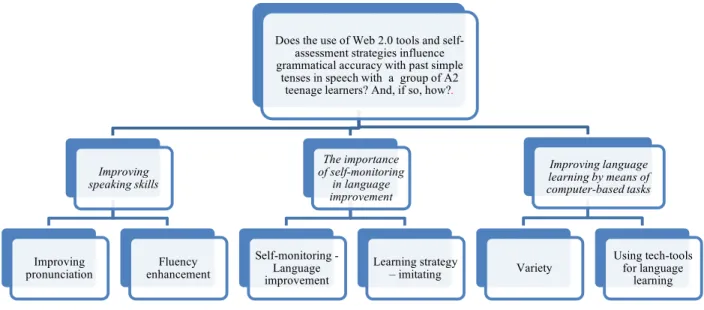
(9) ALL CAPS SHORT TITLE 50 CHARACTERS OR LESS 5.3.2.4. vii. Improving language learning by means of computer-based tasks......................................................................................... 61. 5.3.3 Core category ............................................................................................ 63 5.4. Conclusion ............................................................................................................ 63. Chapter 6: Conclusions and pedagogical implications ................................................................. 65 6.1. Introduction ........................................................................................................... 65. 6.2. Comparison of results with those previous studies’ results .................................. 66. 6.3. Significance of the results ..................................................................................... 68. 6.4. Limitations of the present study ............................................................................ 69. 6.5. Further research .................................................................................................... 70. 6.6. Conclusion ............................................................................................................ 71. References ..................................................................................................................................... 72 Appendix A: Students´initial samples. ......................................................................................... 85 Appendix B: Self-assessment checklist. ....................................................................................... 87 Appendix C: Students` Learning Log ........................................................................................... 88 Appendix D: Self-assessment checklist ........................................................................................ 89 Appendix E: Assessment Rubric .................................................................................................. 90 Appendix F: Lesson Plan Pre-implementation ............................................................................. 91 Appendix G: Lesson Plan During-implementation....................................................................... 92 Appendix H: Website Screenshot ................................................................................................. 94 Appendix I: Matrix Chart.............................................................................................................. 95. Table of Figures Figure 1. Category mapping.............................................................................................. 53.
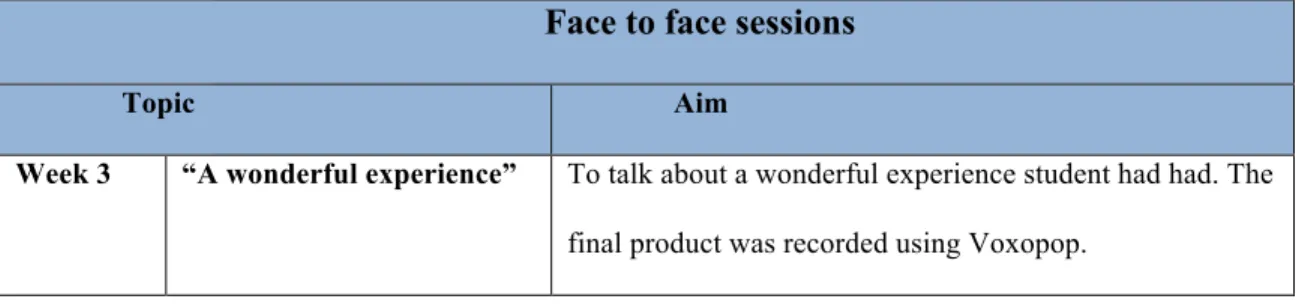
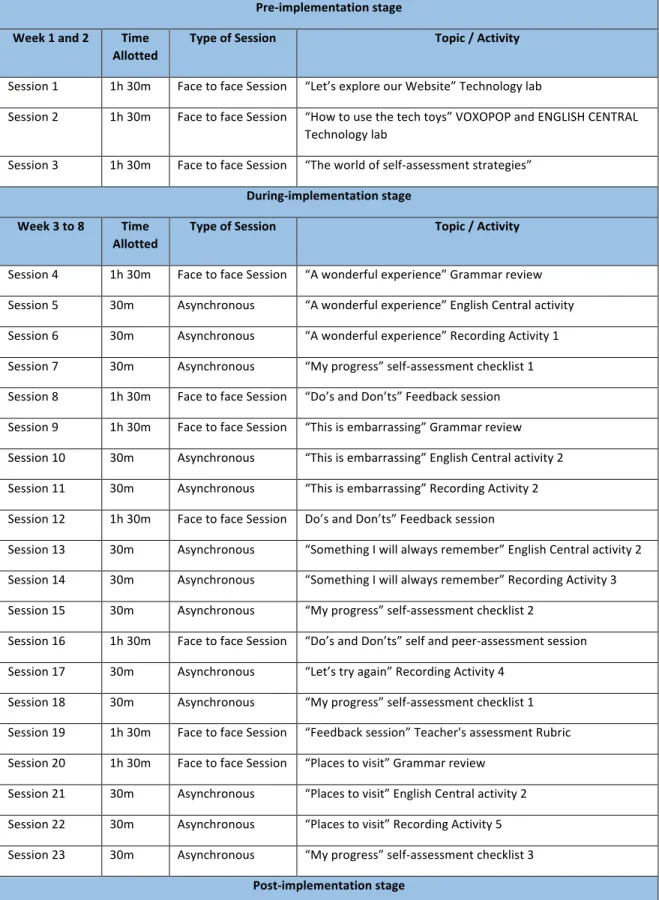
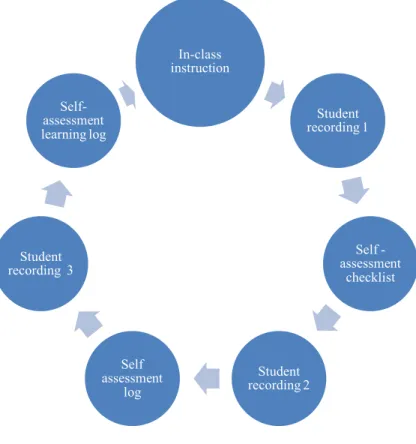
(10) ALL CAPS SHORT TITLE 50 CHARACTERS OR LESS. viii. Figure 2. Self-assessment process ..................................................................................... 59. Table of Tables Table 1. Data collection instruments ................................................................................ 34 Table 2. Face to face sessions topics. ............................................................................... 44 Table 3. Pedagogical Intervention .................................................................................... 46.
(11) Self-assessment and technology in spoken accuracy. 1. Chapter 1: Introduction 1.1. Introduction to the study The growth of technology during the recent decades have made foreign language learning. a priority. Social interaction around the world has increased. Johnson (2013) highlights that “the planet has become smaller, and the means for moving around easier, so it has become more multicultural and multilingual” (p.5). Hence, twenty-first-century societies require individuals able to communicate with people all around the world effectively. As a result, governments have created regulations and programs to enhance foreign language learning and teaching. In Colombia, the Ministry of Education (MEN) created the project “Colombia Very Well 20152025” that attempts to develop its citizen’s competences in English. At the school level, this program suggests that the methodology used in the classroom should emphasize the provision of real communicative experiences to learners. Despite the fact that new methodologies have been implemented in schools across the country, there is still a need to improve language teaching and the learning process inside the classroom. Although students finish high school having some abilities in reading and writing in a foreign language, in most cases, their speaking performance is low compared with the international standards set by the Common European Framework of Reference for Languages (CEFR, hereafter). Speaking in a second language involves the development of certain types of communication skills. Oral language tends to differ from written language due to its circumstances of production (Bygate, 1987). He implies that rather than an ability that is naturally acquired, learning to speak in an L2 is a skill that needs to be taught. Thornbury (2005) claims that the speaking process involves more than the ability to form grammatically correct.
(12) Self-assessment and technology in spoken accuracy. 2. sentences and then pronounce them. Hence, to have more qualified learners, appropriate strategies and practical learning tools are required. Self-assessment is then one of these strategies, as stated by Donato (2000) that allows bidirectional flow of information in which both teacher and student are involved in the progress of student’s learning. The present study attempts to provide learners with self-assessment opportunities to enhance their speaking accuracy by recognizing their strengths and weaknesses. Participants monitored and assessed their oral production by analyzing a set of recording activities. This project is beneficial not only for English classes but also for any academic challenge students might face. In recent decades, innovations in information and communication technologies (ICTs) have changed the way people interact and communicate. Furthermore, the development of multimedia technology and its application for teaching (featuring audio, visual, and animation effects) has offered a favorable platform to diversify and explore language teaching practices. Cutting edge technology creates new challenges and duties to teachers and administrators harnessing the advantages of ICTs for teaching/learning a second language is the aim of this research project. It attempts to help learners to foster their speaking skills by using an interactive platform (Englishcentral.com) and a voice message board (Voxopop™). It is expected that selfassessment strategies help engage students to monitor their own English learning progress, while the use of a voice message board (Voxopop™ ) gives learners the tools to monitor their communication progress as well as to correct minor errors..
(13) Self-assessment and technology in spoken accuracy 1.2. 3. Rationale of the study The participants of this project displayed a high level of interest in improving their verbal. ability concerning language accuracy. The needs analysis stage concluded that traditional English teaching practices had reduced students’ learning process to grammar-based classes, hampering the learner’s ability to communicate and interact spontaneously. This form-focused instruction (Ellis, 1997) seems to have a negative impact on student´s oral production. Additionally, a great deal of the teaching processes relies on books and pre-recorded material as sources of input. In this scenario, the teacher’s instruction seems to focus on vocabulary memorization, conjugation rules, grammar, and syntax. Indeed, learners seem to be able to manipulate relatively lengthy and complex constructions that are more likely to be used on written than on spoken language (Thornbury, 2005). Those results led the researcher to implement a strategy that helps students to improve their spoken accuracy. Self-assessment tasks and audio-recording activities arose as the strategies intended to foster participants’ spoken accuracy by engaging them to speak on a student-friendly environment, allowing them to reflect and become aware of their learning process. Several studies have demonstrated that when learners observe, monitor and assess their work, they improve their reading and writing performance over time (Wilches, 2014; Butler & Lee, 2010; Boisvert & Rao, 2014). With this in mind, this project analyzed the impact of self-assessment strategies on students’ spoken accuracy in simple past statements..
(14) Self-assessment and technology in spoken accuracy 1.2.1. 4. Needs analysis and problem statement. The target demographic for this research is a group of 39 ninth graders (A2 level according to the CEFR), (2001) whose ages vary between 14 and 15 years old. They study at a public school located in Bogota - Colombia. Even though IECS is not a public school, all the students come from the public sector due to an agreement between IECS and the Secretaria de Educacion Distrital de Bogota. The needs analysis process implemented with these students concluded that a majority of the students had speaking difficulties when talking about past events. The situation as mentioned above is evident in the population under investigation. When facing spontaneous oral production, the lack of accuracy on the use of past-inflected verb forms seems to be a constant for the students. This problem tends to be unnoticeable by students due to the lack of self-awareness of their language production. The English educational approach used in the school is the communicative approach. Likewise, the curriculum establishes that the English classes should promote student interaction with the target language. However, the teacher-researcher has observed that work in the English classroom remains traditional. Teachers tend to focus their classes on grammatical aspects of the English language. Most of the time students work using the textbook provided by the school, and the English classes are based on rote activities. As a result, learners have achieved average grammatical skills while their communicative abilities (oral language production) seem to be hampered. Two instruments were used to analyze student needs more precisely: interviews and a survey. An initial interview captured data on problems participants had been experiencing with grammatical accuracy when speaking, especially when talking about past experiences. It was found (see interview transcriptions in Appendix A) that students struggled to produce correct.
(15) Self-assessment and technology in spoken accuracy. 5. utterances when using past structures. One of the most common problems encountered was that participants tended to use present simple structures when talking about the past. Participants also overgeneralized irregular verbs by adding “ed” endings. They seemed to know only a limited number of irregular verbs together with their past forms. Auxiliary verb omission when asking questions or making negative statements also appeared to be a constant throughout participants´ interview transcripts. An online survey was used to collect participants’ perceptions about the English class and their performance. Most participants considered the lack of motivation as one of the main problems encountered in their learning The lack of technology as a learning tool in the English learning process was one of the results of the survey conducted (see Appendix B). Participants also seemed to be unfamiliar with the concepts of self-assessment and autonomy. Throughout their schooling, participants were assessed through traditional procedures in which the responsibility laid most of the time with the teacher. These findings suggested the teacherresearcher focus his attention on creating strategies that foster the student’s awareness of the importance of a self-assessment process to monitor their English language performance. 1.2.2. Justification of problem’s significance. The low level of communicative competence in English might represent an economic issue for the students as they tend to pay for English courses to achieve higher language profiency. But, most importantly, it forces them to delay their admission process at the university. Recent Colombian scholarship program “Ser Pilo Paga” benefits students from low socioeconomic background to pursue a degree program. This scholarship requires students to be able to cope with the university bilingualism standards as some of the core classes are taught only in English. School students with no scholarship benefit also struggle with the lack of.
(16) Self-assessment and technology in spoken accuracy. 6. language proficiency when pursuing a degree program. As universities in Colombia have been requiring students a minimum B1 level (independent users according to the Common European Framework Reference, 2001), students that fail to achieve the required level tend to take additional courses to acquire the competencies needed. Others tend to look for institutions where they can study without this requirement. With this in mind, achieving appropriate competences in English by the end of high school is a crucial goal for students. Both state and private schools in Colombia need to ensure students acquire the necessary level of English to continue with higher education. Having average grammatical skills in writing but being unable to interact accurately orally might not be enough to succeed at a professional level. Moreover, the lack of self-awareness regarding their academic progress might also have a negative impact on students’ professional life. Furthermore, during the last decade, many Latin-American countries, including Colombia, share the same idea: to become an active participant in a globalized world. This idea implies building a democratic, participatory and responsible society (Light, Manso, & Noguera, 2009). To make this possible, the educational system plays a crucial role. National educational policies must respond to the country´s social needs and interests. Therefore, state and private institutions need to meet the challenges that a globalized world demands, especially in language proficiency. Locating the source of the difficulty and creating strategies to tackle the communicative issues that the population of this project is experiencing could represent a small contribution to the broader goal of creating students able to interact beyond borders, using the English language as a vehicle of communication..
(17) Self-assessment and technology in spoken accuracy 1.2.3. 7. Strategy selected to address the problem. The growing demand for lifelong learners and reflective students suggested a change in the way the education process has been assessed. It is widely accepted that self-assessment is a key learning strategy for autonomous language learning that enables learners to monitor their progress (Harris, 1997). It encourages students to have a clear perception of their growth and it relates learning to individual needs. Thus, the strategy proposed to tackle the problem under investigation suggested the use of self-assessment strategies to foster speaking accuracy, since participants seemed to be unaware of the grammar mistakes they make when talking. As stated by Carter and Nunan (2001), a great deal of the students´ success lies in the assessment process: “Participating in self-assessment can assist learners to become skilled judges of their own strengths and weaknesses and to set realistic goals for themselves, thus developing their capacity to become self-directed” (p. 140). This strategy would encourage students to appraise their performance accurately enough to avoid relying on a teacher’s perception of their progress. However, taking into consideration the students’ age, context, and the methodology (grammar-based) to which they had been exposed, it is to select a tool that engages students in their learning progress and facilitates the process. The use of new technologies has served the current education system as the vehicle for cross-cultural interaction (Kozma, 2003). It represents a convenient tool for students´ engagement. Thus, for this study, the teacher-researcher created a website through which the students were to complete a set of activities that included voice recording and self-assessment activities. The use of Web 2.0 tools also helps the researcher address the problematic situation..
(18) Self-assessment and technology in spoken accuracy 1.3. 8. Research question and objective Based on the previous arguments, the objectives of this study were to determine the. influence that the use of self-assessment strategies has on enhancing grammatical accuracy with simple past tenses in speech as well as to determine the effectiveness of using ICT-based tools to improve participants´ accurate use of simple past structures. The corresponding research question was: Does the use of Web 2.0 tools and self-assessment strategies influence grammatical accuracy with simple past tenses in speech with a group of A2 teenage learners? And, if so, how? 1.4. Conclusion Speaking skills are crucial in the students’ learning process. They help them achieve. better educational outcomes and better positioning in their future careers. The use of selfassessment strategies provides students with lifelong learning skills that can be transferred to other fields or subjects. Additionally, technology use emerged as a significant tool for language teaching and learning. Its application provides an opportunity for learners to enhance their communicative skills by individualizing their practice and joining a global community of learners (Carter & Nunan, 2001). Thus, it is essential to review the literature related to self-assessment strategies and their use on speaking accuracy. The role of technology in students´ language enhancement needs to be also discussed. Those issues would help to set the basis for this action research project..
(19) Self-assessment and technology in spoken accuracy. 9. Chapter 2: Theoretical framework & state of the art 2.1. Introduction Several studies have shown how communicative activities inside the classroom facilitate. spontaneous interaction. Concerning spoken accuracy, Regan, Howard, and Lemee (2009) suggest that accuracy is not necessarily acquired inside the classroom only, but it is also fostered as the interaction between learners and teachers increases by employing online tools and asynchronous activities. With this in mind, the present study had as its primary objective to enhance the students’ spoken accuracy in past tense utterances using self-assessment in audiorecording activities. Since the deficiency detected in this context was the lack of oral communication accuracy, self-assessment arose as the strategy to address this situation because students had the opportunity to identify and reflect upon their language development. In Gardner’s (1999) words, it provided the student with the opportunity to self-reflect, self-monitor and self-evaluate their learning process. Equally important, technology (audio-recordings) served as a strategy to tackle the problem detected due to its positive impact on students' learning process, in Ojeda’s (2011) words, the intensity of student engagement occurs when technology is integrated into the classroom. This chapter presents an overview of constructs related to speaking and communicative competence, the role of self-assessment in one´s educational process and the use of CALL (Computer-Assisted Language Learning) in language learning and teaching. Finally, it will thoroughly review the primary studies conducted about the use of self-assessment strategies and technology in speaking enhancement..
(20) Self-assessment and technology in spoken accuracy 2.2. 10. Theoretical framework 2.2.1. Communicative competence and speaking. Communicative competence is a broad term that involves linguistic or grammatical competence. It refers to the ability to use prior knowledge to interpret and produce meaningful insights according to the specific situation (Chomsky,1965). Similarly, Hymes (1972) argues that communicative competence deals with the knowledge of a language that enables users to convey meaning and to understand others’ messages within concrete situations effectively. Hymes (1972) also highlights that grammatical knowledge is not sufficient for communicating, He suggests that successful communication involves the combination of different abilities such as socio-linguistic skills, lexical knowledge, and discourse (among others). Thus, a competent language user knows when and how to use language independent of actual knowledge of grammar structures (Hymes, 1972). In order words, users need to use the language not only correctly (linguistic competence) but also appropriately (communicative competence). These assumptions echo Canale and Swain’s (1980) ideas about communicative competence as the skill required in communication that synthesized knowledge of vocabulary and sociolinguistic conventions to succeed in communicative events. The perspective mentioned above becomes relevant for this study since it shows the pathway to improve participants’ oral production. This project is concerned with the development of discourse competence since it refers to “the selection, sequencing, and arrangement of words, structures, sentences, and utterances to achieve a unified spoken text” (Canale & Swain, 1980; p.14) specifically, as pertaining to seeking accuracy. With this being said, the analysis of speaking a skill plays a crucial role in this study due to the need that participants displayed to produce accurate utterances when describing past experiences orally..
(21) Self-assessment and technology in spoken accuracy 2.2.2. 11. Speaking accuracy. According to Hatch (1992), speaking is described as a highly contextualized, environment-dependent, interactive and unplanned performance based on speakers’ competences. Lantolf (1994) went further into the definition, and he describes speaking as “the developmental process that takes place through participation in cultural, linguistic and historically formed settings such as family life, peer group interaction and institutional contexts like schools (p.418). One of the key elements of speaking is grammar accuracy which Odlin (1994) refers to “an internalized system. That is, mental structures that guide everyday linguistic behavior” (p.5). Ommagio (1993) claims that grammar has a direct connection with accuracy which refers to “the acceptability, quality and precision of the message conveyed” (p.17). Similarly, according to Ebsworth (1998), a chunk or stream of speech should be accurate regarding pronunciation, vocabulary, and syntax to fulfill comprehension. The CEFR (2001) states that the balance between grammar accuracy and speaking skills determines the speaker’s proficiency level in terms of performance and competence. In Nunan’s (1999) words, the ability to function in another language is often measured by being able to speak that language. Therefore, it is essential to promote in students not only the skill of conveying meaning, but it is also relevant to help them build their ideas using correct grammatical structures. In this respect, the CERF (2001) states that speaking a foreign language requires non-native speakers to accomplish certain levels of speaking proficiency to be understood by others for various purposes in different context and domains. This assumption brings up the issue of language learning and teaching in educational settings. Krashen (1995) suggests that the language learning process occurs in two scenarios: acquisition and learning. The former is a subconscious process identical to learning a native.
(22) Self-assessment and technology in spoken accuracy. 12. language (L1). Second language (L2) internalization occurs when learners face meaningful interaction in the target language and when that interaction is reinforced by practicing. Krashen (1995) suggests that the learner’s brain does not focus on grammatical rules but instead on the communicative act. The latter requires learners to improve communication and acquisition by full immersion in a natural setting or context. The natural approach argues that when learners are exposed to a simple amount of comprehensible input (CI), they will be able to internalize the new language naturally rather than in a forced classroom environment. According to Scrivener (2005) in traditional schools and some university settings, students are expected to identify and understand decontextualized grammatical structures without using them in authentic conversations. The type of speaking interaction that participants from this project have been exposed to consists of short, often fragmented utterances. Language teaching is concerned with the development of skills in brief interactional exchanges in which learners only require to make one or two utterances at a time (Nunan, 1989). Moving from speaking production to accuracy, Ellis (2008) coincides with Bygate (1987) in the sense that accuracy will highly depend on what happens with the language in the classroom and how typically it is used outside in relation to the content, reason, participants, and means of communication. There seems to be a gap between what students learn in the classroom and their actual performance in terms of speaking production. In Colombian schooling system, there are barely any end-of-the-term tests that measure students’ speaking performance in the foreign language. Instead, students continuously face paper-and-pencil type of exams to assess the target structures/vocabulary taught during the term. In this regard, Brown (2007) states that EFL learners will most probably comprehend limited concepts but are also likely to produce them inaccurately in almost any tense and aspect..
(23) Self-assessment and technology in spoken accuracy. 13. According to Nunan (1989), the bottom-up approach to speaking suggests that learner’s speaking process moves from the smallest unit of language, mastery of words and sentences to discourse. However, to achieve speaking accuracy, teaching processes should follow a top-down process. Nunan (1989) suggests that rather than teaching learners to make well-structured sentences and putting these to use in discourse, the speaking process should encourage learners to take part in the discourse. With this in mind, the teacher´s understanding of speaking in terms of knowledge and skill is crucial to prepare students to be able to communicate effectively using the target language. 2.2.3. Speaking - knowledge and skill. The vision of speaking from knowledge and speaking as a skill represents a crucial aspect of this action research project. As claimed in chapter 1, students at IECS are continuously exposed to grammar-based classes while the communicative component of seems to be undervalued. Bygate (1987) claims that to speak a foreign language, it is necessary to know a certain amount of vocabulary and grammar. Indeed, knowledge of the language is vital to convey meaning. According to Richards (2006) language learners need to use what they know about the language to organize the topics, select the vocabulary to be used, work on the appropriate grammar elements, and be aware of intonation and pronunciation of words as well as the roles of the participants. However, this “over-use” of grammar instruction has a negative impact on students oral performance. Thornbury´s (2005) claims agree with students` perceptions about the use of grammar in the ELT classrooms: ¨It is this lack of genuine speaking opportunities which accounts for many students feeling that, however much grammar and vocabulary they know, they are insufficiently prepared for speaking in the real world beyond the classroom” (p.28)..
(24) Self-assessment and technology in spoken accuracy. 14. Indeed, there is a difference between knowledge about the language (grammatical rules, syntax, and vocabulary) and skill in using it. Speaking as a productive skill is related to the ability of language learners to efficiently process information during the conversation (Harmer, 1991). This assumption echoes Brown’s (1983) ideas which imply that speaking skills deal with the ability to process messages so that utterances produced are appropriate within the context of the conversation and the produced utterances meet the purpose of the conversation. In other words, ¨we do not merely know how to assemble sentences in the abstract: we have to produce them and adapt them to the circumstances and adjust our conversation as unexpected problems appear in our path¨ (Bygate, 1987 p.3). The purpose of the present study was to improve speaking accuracy by facilitating communicative events within the classroom. Brown (1994), Burns & Joyce (1997) claim that promoting interaction in controlled speaking activities enable students to negotiate meaning and to improve their speaking skills by developing aspects such as turn-taking, rephrasing, providing feedback or redirecting social skills to succeed in any communicative act. Like L1 speakers, L2 speakers produce speech through the process of conceptualizing, then formulating and finally articulating during which time they are also self-monitoring (Thornbury, 2005). This last assumption underlines the importance of the assessment process in language learning. 2.2.4. Assessment and self-assessment. The assessment process is one of the critical aspects of language learning. Assessment in English Language Teaching (ELT) focuses on gathering data and placing a value on something (Burhan, 2009). Through assessment, teachers expect to discover what students can do at a particular stage of their learning process. According to Boud (1995), all assessments comprise two main components: making decisions about the standards of performance expected and then.
(25) Self-assessment and technology in spoken accuracy. 15. making judgments about the quality of the performance in relation to these standards. Ideally, the assessment process should involve students in both of those aspects. Within this broad area, there are two types of assessment: summative and formative. Summative assessment refers to the feedback teachers give periodically. It aims to determine at a particular point in time what exactly students know and what they do not know. Summative assessment is generally used as part of the grading process (Garrison, 2007). Gipps (1994) agrees with Hillier (2002) in the sense that summative assessment aims to assess the learning at the end of a unit, term, year or course and it is used primarily to make decisions about grading but it does not necessarily provide feedback. Although the information gathered from this type of assessment is important, it might not encourage learners to develop other essential aspects of language learning such as critical thinking skills, lifelong learning, self-confidence and collaborative skills (Nilson, 2013). Traditionally, teachers have been responsible for student`s assessment process. The population under investigation seemed to have been assessed under the principles of summative assessment. Therefore, the students tended to associate their learning progress to the grades they receive from teachers. It seems that for both, teachers and students, the final goal in the educational process can be defined by a number. In this regard, Bailey (1998) states that traditional assessment is indirect and inauthentic since it is a one-shot, speedbased and norm-referenced type of assessment. Similarly, Law and Eckes (1995) underline that traditional assessment measures what learners know at a certain point of the learning process, but it cannot point out what particular difficulties students might experience during each learning stage. Simonson et al. (2000) argue that this type of assessment often focuses on learners’ lowerorder thinking skills such as repetition, memorization, and recall..
(26) Self-assessment and technology in spoken accuracy. 16. Despite the benefits that summative assessment might bring to the EFL classroom, a more student-centered type of assessment was implemented in this project. On this subject, Formative Assessment is a crucial part of the instructional process. It provides the information needed to adjust and modify the teaching and learning process according to the learner and teacher needs (Garrison 2007). Formative assessments informs the teacher about the students’ understanding and allow him/her to adjust the teaching strategy to help students achieve their learning goals. Sadler (1989) contrasts both types of assessment. Firstly, he suggests that formative assessment is concerned with judgments about the quality of the student’s responses (performances, pieces, or works) and how they can be used to improve student´s competence. Secondly, summative assessment is concerned with summarizing the achievement status of a student and it is geared toward reporting at the end of a course of study. Indeed, formative assessment represent a powerful tool for language enhancement as it allows learners to take charge of their learning and to adapt their habits and approaches. They also provide learners with the opportunity to practice skills individually and collectively as well as to discuss and reflect on qualitative judgments about the success of their practice (Hargreaves, 2005). Self-assessment corresponds to a formative type of assessment as its main goal is to “form” students’ competencies in order to improve their learning process (Brown, 2003). This suggests that students need to be exposed to different assessment strategies that allow them to play an active part of their learning process. Hence, self-assessment was selected as the strategy to help learners to improve their speaking accuracy. According to O’Malley and Chamot (1990) self-assessment contributes to the development of meta-cognitive skills that allow students to identify their strengths and weaknesses and to direct their study to the areas that require improvement..
(27) Self-assessment and technology in spoken accuracy 2.2.5. 17. Self-assessment. New trends in English language teaching and learning suggest that the teaching process has moved from teacher-centered classes to more student-centered ones. The latter implies the learners´ involvement in their learning process. Therefore, it is necessary to implement a different type of assessment that allows students to become reflective and aware of their learning process. Among the different types of assessment, peer- and self- assessment have attracted much attention in recent years due to the growing emphasis on learner independence and autonomy (Sambell, McDowell & Sambell, 2006). According to Boud (2000) self- assessment is a cognitive-reflective process in which learners develop their skills by evaluating their learning. Andrade and Du (2007) provide a helpful definition of self-assessment: “Self-assessment is a process in which students reflect on and evaluate the quality of their work and their learning process… they reflect explicitly upon stated goals or criteria, identify strengths and weaknesses in their work, and revise accordingly (p.160). Harris & McCann (1994) went further into the definition and they described self-assessment as “useful information about students’ expectations and needs, their worries and problems, how they feel about their own (learning) process, their reactions to the materials and methods being used, what they think about the course in general” (p.36). Indeed, the use of self-assessment in the ELT classroom increases achievement and motivation. According to Campillo, (2006) self-assessment practice has a reflective role in the learning process and can be used while dealing with a variety of language skills. When students self-assess, they develop an internal sense of control over their success and ownership of the responsibility for improving (Bandura, 1986). Self-assessment can also help students to value descriptive feedback more highly than grades (Chappuis, 2009) since learners become aware of.
(28) Self-assessment and technology in spoken accuracy. 18. their progress. According to Paris & Paris (2001) self-assessment involves all three areas of selfregulated learning: cognitive, affective and motivational; therefore, students not only evaluate their levels of understanding but also might gain intrinsic motivation. This last assumption aligns with Dodd’s (1995) ideas about the close relationship between self-assessment and engagement. He states that learners who feel ownership for a task become more engaged in their learning process and enhance self-efficacy, in Bandura’s (1997) words, students believe they can complete future learning tasks. Language learning requires students to be the central part of their progress. Regarding speaking skills, the use of self-assessment helps students understand their strengths and weaknesses, and it also provides the tools on how they might deal with them. (Harlen & James, 1997). Therefore, the use of self-assessment might prepare students with lifelong learning skills that will help them to solve difficulties in higher education and professional lives. In this regard, Gregory, Cameron, & Forewor (2000) claim that: “when students are involved in selfassessment, they provide themselves with regular and immediate descriptive feedback to guide their learning. They become more actively involved in a curriculum that otherwise can seem unrelated to their lives and personal experieces” (p.10). So far, the vision of speaking as a skill to be developed in EFL learners and the use of self-assessment to enhance spoken accuracy has been discussed in this chapter. It is now vital to discuss the role of technology to combine those concepts. 2.2.6. Computer- assisted language learning. Beatty (2010) defines Computer- Assisted Language Learning (CALL) as any process in which a learner uses a computer and, as a result, improves his or her language. This definition seems to be short if we take into account different aspects that influence the use of technology in.
(29) Self-assessment and technology in spoken accuracy. 19. the language learning process. It may also include issues of materials design, educational theories, and modes of instruction. Levy (1997) agrees with this belief. He also points out the importance of the invention and subsequent use of the computer in language learning. Because of the non-stop technological changes in computers, CALL is a discipline continually evolving in terms of didactic learning and technological advances in hardware and software. This constant change is influenced by the advances in computer literacy among both teachers and learners. Undoubtedly, in modern societies technology involves every aspect of human life. Technology has advanced so fast and so drastically that almost every aspect of students’ life and learning has been deeply affected (Samra, 2013). Indeed, today’s students want to learn differently than in the past. In Prensky’s (2010) words: “they want ways of learning that are meaningful to them, ways that make them see –immediately- that the time they are spending on their formal education is valuable” (p. 3). In Colombian educational settings, the use of technology in the classroom is required. According to MEN, the use of Information and Communication Technology (ICT) should be part of the student´s learning process. With the growth of technological devices and its implication on learning, it is necessary to include cutting-edge technology in the teaching practices. Beatty (2010) states that multimedia-enhanced CALL is capable of creating learning situations of great authenticity through the presentation of images of realia and through video and audio input that can represent real-world situations. Therefore, the use of technology in the classroom not only is capable of changing the whole dynamic within the classroom but it also might help to enhance student understanding and comprehension. Traditional- based instruction has several disadvantages that can be tackled by the use of technology for educational purposes. From the educational perspective, the use of technology.
(30) Self-assessment and technology in spoken accuracy. 20. allows students to interact meaningfully with the target language. This project suggests that the use of a web 2.0 tool (English Central) that features video classes might help the participants of this project with the lack of spoken accuracy. According to Pawar (2004), audio recordings “can capture the richness and subtleties of the speech and can provide means of self-monitoring and improvement” (p.37). Similarly, Bush and Crotty (1991) state that “the use of video-based exercises makes practice inherently more meaningful than traditional text-based exercises. Video/recording gives students an understandable context to work while providing many extra linguistic clues” (p.86). Likewise, Thornbury (2012) states that recorded monologs are more practical because learners can pause and record them whenever they want. Hence, it is believed that technology becomes an integral part of a student´s learning progress in language learning. Furthermore, technology provides opportunities for teachers to meet the needs of students with various learning styles through the use of multimedia (Bryant & Hunton, 2000). Today’s technology enables students to learn at their own pace because most of the online tools for language learning provide individualized instruction. According to Benson (2013) “these applications encouraged a degree of control by offering a choice of materials… they were also designed to give learners individual control over the pace of learning” (p. 146). CALL has an important role in language learning. Chapelle (2009) states that “technology dramatically extends and changes the breadth and depth of exposure that learners can have with the target language and interactive events in which they have the opportunity for language focus” (p.10). With this in mind, it is possible to change the dynamic within the classroom and to enhance the student`s ability to interact in the target language. In retrospect, using Colombia as an example, most of the schools in the public sector seem to be well-equipped with computers and internet connection. However, teachers might be unaware of the several uses that CALL could provide to.
(31) Self-assessment and technology in spoken accuracy. 21. the student`s oral performance. Additionally, Chapelle (2009) argues that the communicative competence is highly improved and tied to the technology use within and outside the classroom. Along the same line of thought, Garrett´s (1991) observation is relevant for this study as it exemplifies most teacher´s attitudes towards technology use in the Colombian public sector: “Technology that can be taken for granted is already light years ahead of the profession’s ability to integrate a principled use of it into the classroom and the curriculum” (p.74). 2.3. State of the art This action research project claims that through the use of self-assessment strategies and. technology (web 2.0 tools) the speaking accuracy in a group of students with1 level could be improved. To provide a better understanding of this project, it was necessary to review previous studies in the EFL field that involved the primary constructs worked in this action research project. Therefore, the next section presents relevant research that has been carried out locally and internationally in the areas of speaking accuracy, with technology and its influence on language development and self-assessment strategies. 2.3.1. Speaking skills development. Concerning language learning, speaking development has been explored from different angles. In this sense, the use of technology for teaching and learning purposes has become one of the essential tools for language development. James (1996) conducted a study that aimed at analyzing the contribution of CALL (computer-assisted language learning) to speaking pedagogy. The researcher used a set of computer-based activities which aim for the students to use the target language in real contexts that could rarely be part of the classroom interaction. In this research, the author claims that educational technology offers an invaluable opportunity to.
(32) Self-assessment and technology in spoken accuracy. 22. make the student’s learning experience more productive. Additionally, the author suggests that computer assistance cannot merely involve the use of hardware or software, but it should integrate different technologies to achieve the aims proposed. Similarly, the study conducted by Khan and Ali (2010) in a group of 40 Pakistani students shows that speaking skills seemed to be hampered by the lack of meaningful interaction amongst students. As part of the implementation stage, the researchers decided to include media technology to improve language accuracy and pronunciation. They concluded that speaking accuracy could be improved by giving students a model that comes from the media used. In this case, researchers decided to use BBC and CNN to provide language samples students could reproduce in their oral interaction. Along the same line of thought, Manurung (2015) contends that speaking improvement relies on the balance between instructional techniques and instructional materials. The former holds an important role to motivate and activate students. The latter provides the context needed to make language learning meaningful by contextualizing its use. In his analysis of speaking improvement, Manurung (2015) evidenced that the participant´s speaking skills improved through the use of contextual internet-based instructional materials. In this view, it can be concluded that the integration of in-class instruction and online work facilitated learners speaking improvement. Simillarly, Heng-Tsung, and Shao-Ting (2010) acknowledge the benefits of technology-enhanced learning in learners´ speaking improvement. It allows learners to draw attention to the weaker areas in their spoken production. As claimed in this action research project, the use of technology offers additional opportunities for oral practice outside the classroom. In the local Colombian context, Guevara and Ordoñes (2012) conducted a study in kinder garden level in a private institution to analyze the impact that authentic communicative.
(33) Self-assessment and technology in spoken accuracy. 23. interaction and curriculum design have on students´ attitude towards the English class and their learning process. One of the findings of this study concludes that the exposure to real communicative events outside the classroom allowed students to achieve ¨communicative authenticity¨ by combining in-class instruction and students´ ideas and interests. Another finding in this study indicated that the implementation of authentic performances led to considerable improvement of oral skills. Similarly, Orozco (2013) carried out a study with a group of 39 pupils studying at a basic level in a public school. The study aimed to analyze the impact of communicative activities in the spoken performance and confidence in this groups of participants. After a comparative analysis of students´ performance taken during the study, the findings demonstrated that the constant use of oral interaction in the activities proposed, learners, gain a great deal of confidence as they were able to use new vocabulary and expressions. Hence, the use of communicative activities become the starting point to activate students´ interest and motivation towards the English language. The last finding becomes relevant for this study as the population involved in the present project shares the same social and educational difficulties. The previous studies become relevant in this action research project based on the fact that technology is a crucial tool for improving speaking. 2.3.2. Self-assessment. In the language learning field, there is a growing interest in implementing self-assessment practices in the EFL classrooms. This tendency has a positive impact in the Colombian educational settings as the learners tend to rely on the assessment process by teachers. Peers and.
(34) Self-assessment and technology in spoken accuracy. 24. students themselves can give effective feedback. However, for that feedback to be effective, different strategies need to be used to get students involved in their language learning process. Different studies have attempted to analyze the role of self-assessment in oral production improvement. The studies conducted by Leander (2012), Sanchez (2012), Gomez (2014) have found similar results. The use of self-assessment strategies helped learners to monitor their performance, and they were able to assess their progress and accomplishments. There is evidence that the learners involved in self and peer assessment reached higher levels of autonomy because they were asked to evaluate each other’s performance. (Caicedo, 2016). Likewise, Butler and Lee (2010) conducted a study that aimed to examine the effectiveness of self-assessment among 254 young learners of English. The results suggested that students improved their ability to self-assess their performance over time. Furthermore, the results evidenced positive effects of self-assessment on the students´ oral production as well as on their confidence when using the target language. The dilemma of intermixing assessment and grading was also an interesting result in this study. Students tended to associate their performance with a grading scale putting aside self-awareness about their performance. Furthermore, Dann´s (2002) study evidenced that the population under investigation had a hard time connecting self-assessment criteria with grading. The students ¨often incorporated additional factors that were not part of the defined criteria for allocating grading¨ (p.99). These findings connect to the present study as the population under investigation tend to perceive grading as the final goal for their education process as they had little or no knowledge about selfassessment as a tool for language improvement..
(35) Self-assessment and technology in spoken accuracy. 25. The self-assessment processes proved to be helpful for the learners as they raised awareness of their performance instead of waiting for teacher’s comments and feedback. However, none of the previous studies have considered the impact of using technology to support students’ self-assessment process. Thus, the present study attempts to create a technology-enhanced learning environment that fosters self-assessment and spoken accuracy through learning activities that promote communication. Technology will serve as “language accuracy mirror,” and self-assessment will provide students with opportunities to raise awareness of their language progress and to increase their confidence when using the language orally. 2.3.3. Technology and language development. Hussain et al., (2010) conducted a study that aims to determine the effectiveness of a technology-based learning environment on student achievement in English as a foreign language. Their sample of the study was 90 tenth grade students from a public school. This project was conducted using two different groups: A control group and an experimental group. The former group was exposed to regular classes using textbooks. The latter was taught using technology (computer lab, internet, chat rooms, email, and online material). The results showed that learners from the experimental groups performed better when taught in a technology-based learning environment. These results agree with Graddol’s (2006) assumptions that technology has become an important aspect of the language learning process. Globalization has influenced English language and the way students learn. Therefore, technology plays a vital role in language learning. Worldwide, different studies have been conducted using technology as means of improving language. Cellphones (Gromik, 2010), Skype (Romaña, 2013), online radio shows.
(36) Self-assessment and technology in spoken accuracy. 26. (Lemos, 2013) video technology (Lee & Liang, 2012) are learning tools that researchers have used to deal with speaking issues among students. Gromik’s study (2010) concludes that the use of technology (cell phones) facilitates the student’s performance. He found that the target demographic had improved their word count and fluency. Since the project was conducted at home, Gromik concludes that collecting more audio-visual data could show evidence of individual patterns of the participant leaning process and connect those patterns with speech production. This last conclusion represents a relevant aspect of the present action research project as the data collected from the target population was similarly collected at home. Romaña’s study (2013) agrees with Gromik (2010) in stating that technology becomes a crucial tool to facilitate students’ interaction with the target language beyond the classroom. Skype conference calls (Romaña 2013) helped learners in the reinforcement of both their fluency in the target language and their language production out of the formal classroom settings. To continue with previous studies using technology to improve the student’s skills, the online radio shows project (Lemos, 2010) was conducted using a target demographic, student‘s needs and a context similar to the one used in the present research project. She found that the use of technology (radio shows) appears to be the element that triggers the student’s engagement in their learning process as it facilitated the student’s oral skills. She also found that the participants increased their pronunciation awareness as they were able to rehearse what they had to say. The previous studies support the importance of technology as a learning tool in the EFL classrooms. However, none of them have considered the role that self-assessment strategies play in student’s speaking improvement. With this in mind, a study conducted by Chen (2011) attempted to clarify the impact that the use of technology and social experiences have on the student’s motivation and attitudes toward English language learning. This study presents relevant.
(37) Self-assessment and technology in spoken accuracy. 27. information about the relationship between technology use and student’s engagement in language learning. Similarly, YanJun (2008) examined how Technology Enhanced Language Learning (TELL) enables students to work collaboratively. Likewise, Lopera (2013) conducted a study in a public school in Colombia using collaborative learning strategies to enhance speaking skills. The researcher found that factors such as anxiety, self-confidence, and motivation affected the student’s oral performance considerably. The previous studies become relevant as they open the door for studies that attempt to use technology not only as a learning tool but also as an element that triggers motivation, group work and self-assessment metacognitive process to improve speaking accuracy among students. 2.3.4. Voice message boards in language learning. The present action research project used Voxopop™ for different purposes. Initially, Voxopop™ was used as a learning tool for students to practice and interact using the target language. Secondly, it was the primary instrument for data collection. Additionally, it allowed the researcher and the participants to monitor their progress. Therefore, previous studies conducted using Voxopop™ became relevant for this project as there was evidence that voice message boards can be used for different purposes such as sharing experiences, communicating with others and language improvement. In the last decade, different researchers all around the globe have considered Voice message boards such as Voice Thread (Pop, Tomuletiu, & David, 2011) and Voxopop™ (Ojeda Merchán, 2012) to improve speaking skills. Both researchers agree that Web 2.0 tools allow students to enhance communication skills as students could have the opportunity to use the target language in and outside the classroom. Additionally, they state that the use of voice message.
(38) Self-assessment and technology in spoken accuracy. 28. boards might promote autonomy and self/peer assessment awareness. However, the studies were conducted differently. Pop et al., (2011) used Voxopop™ and Voice Thread with 62 adults at the university level. The researcher decided to use Voxopop™ asynchronously. They created groups with different topics so learners could freely join and talk (record) depending on their interests. On the other hand, Ojeda’s (2012) group was mainly teenagers. He used Voxopop™ during his classes. Students reviewed the language item in class, and as a final activity, they were asked to record on taking into account a given topic. Both researchers share similar findings: learners used the language item worked in class quite accurately, they also had followed and recycled the grammatical patterns reviewed. Ojeda’s study attempted to link the use of Voxopop™ and awareness-raising strategies taken from Krashen’s (1982) monitoring hypothesis. However, as stated by Ojeda (2012) “It was originally planned for students to adopt these strategies and adapt them to their learning styles. In some cases, this did not happen due to learners’ pedagogical beliefs and motivations to learn a foreign language” (p.107). The previous studies make a meaningful contribution to the teacher`s understanding of voice message boards in language learning and the possibilities to use those tools in and outside the classroom. However, the studies did not take full advantage of Voxopop™ as a selfassessment instrument. As can be seen, no previous studies have examined the use of Voxopop™ and English central combined with self-assessment strategies to improve speaking accuracy on EFL learners. 2.4. Conclusion The theories presented above and previous studies related to the constructs of this project. have shown that speaking involves more than knowledge about how particular language works..
(39) Self-assessment and technology in spoken accuracy. 29. Furthermore, previous studies have demonstrated that the use of self-assessment strategies increases student awareness and improvement of their learning process. It was also demonstrated that a different approach to assessment provides students with critical thinking skills that can be extrapolated to different areas such as education, or their daily and professional lives. Additionally, technology use in the EFL classroom appeared to be the trigger element for student engagement and motivation towards language learning. The effectiveness of the combination of web 2.0 tools and self-assessment strategies in spoken accuracy will be described in detail in the next chapter..
(40) Self-assessment and technology in spoken accuracy. 30. Chapter 3: Research design 3.1. Introduction This chapter describes the procedures followed throughout this research project to. observe the effectiveness of Web 2.0 tools and self-assessment in the enhancement of speaking accuracy in a group of A2 teenage learners. The existing research on this topic has demonstrated how the use of technology and self-assessment can help students to improve their performance in using the L2. To analyze the effect of the strategy implemented, this chapter describes the type of research design, the researcher’s role, its context and the participants, the ethical considerations while implementing the project, the data collection instruments as well as the methodology used to gather evidence of the participant’s progress throughout the implementation stage. 3.2. Type of study This qualitative research project has been conducted under the scope of Action Research. (AR, hereafter). According to Burns (2010) AR attempts to identify a “problematic situation or issue” worth studying and analyzing. This phenomenon may also involve participants, teachers, and parents. Furthermore, Cohen et al. (2007) state that AR is defined as a “small-scale intervention in the functioning of the real world and a close examination of the effects of such an intervention” (p.186). This assumption echoes the work of Kemmis et al. (1992) which states that: “to do action research is to plan, act, observe and reflect carefully, more systematically and more rigorously that one usually does in everyday life” (p.162). Action research empowered the researcher to reflect and evaluate upon teaching-learning issues with the aim of implementing changes in practice. Taking into consideration the principles stated above, throughout this study, AR oriented the researcher during observation of specific language learning issues, and it.
(41) Self-assessment and technology in spoken accuracy. 31. became a powerful tool for changing and improving problematic situations that the researcher has observed at IECS. This study had as its primary aim to focus on the use of WEB 2.0 tools and self-assessment to improve speaking accuracy. This action research procedure was chosen because it allows the teacher-researcher to analyze, reflect and solve the problem at hand within the specific context and its participants. 3.3. Context The research study took place at Institución Educativa Compartir Suba (IECS). The IECS. is part of Fundacion Compartir (FC, hereafter), a private non-profit organization that promotes and implements programs in different fields such as housing, public space, and education. FC is an organization very committed to Colombian education. For this reason, FC’s directors have established an agreement with the Secretaria de Educación de Bogota (Bogota´s Secretary of Education SED). As it is common in the public school system in Colombia, all the grade levels at IEDS have an average of 41 students per class. The school offers 4 hours of English language instruction per week. Even though the English syllabus at the institution was not created based on a textbook, the school library gives the students an English textbook that they have to return at the end of the school year. Teachers at the school tend to adapt the topics presented in the book to the syllabus they have to follow. At IECS the English syllabus has been modified according to the standards provided by Ministry of Education (Serie Guias No. 22, 2006). Thus, the syllabus follows the communicative approach principles. However, one of the issues found in the needs analysis stage was the fact that the classroom practice remains traditional with a great deal of L1 use in the teaching-.
Figure
+2
Documento similar
In addition to those studies the data used in this report has been used to obtain the monthly variability of clear and usable nights in a year, as well as relevant statistics for
The logic of the planning and design of expert tool allows the use of agent technology but the simulation of the processes of manufacturing and supply chain is
a) The Competence in linguistic communication, referred to the use of the language as a tool for the oral and written communication in Spanish language as well as in
We have named that LPM, de- fined as the articulation of activities, management processes, learning strategies, contents and the technology of an educational institution to
The application of technology to fields such as Education gives teachers and learners a wide set of possible tools to use, and also gathers information about how learning and
In this thesis, we aimed to study transcriptome-wide AS from different perspectives to explore, not only how specific AS events may impact the physiology of the heart, but also
In the preparation of this report, the Venice Commission has relied on the comments of its rapporteurs; its recently adopted Report on Respect for Democracy, Human Rights and the Rule
Our hypothesis is that in spite of the momentum of online strategies and the use of social networks as a tool of political communication after the triumph of
