Vatican Observatory, I-V00120 Vatican City State, Italy
Accepted 2016 July 1. Received 2016 July 1; in original form 2016 January 8
A B S T R A C T
The Quintuplet cluster is one of the most massive star clusters in the Milky Way, situated very close to the Galactic Centre. We present a new search for variable stars in the vicinity of the cluster, using the five-year data base of the Vista Variables in the Via Lactea (VVV) ESO Public Survey in the near-infrared. A total of 7586 objects were identified in the zone around 2 arcmin from the cluster centre, using 55KS-band epochs. 33 stars showKS-band variability, 24 of
them being previously undiscovered. Most of the variable stars found are slow/semiregular variables, long-period variables of the Mira type, and OH/IR stars. In addition, a good number of our candidates show variations in a rather short time-scale. We also propose four young stellar object candidates, which could be cluster members.
Key words: stars: pre-main-sequence – stars: variables: general – open clusters and associa-tions: individual: Quintuplet.
1 I N T R O D U C T I O N
The Galactic Centre (GC) is an exceptional laboratory to test the formation and evolution of stars under extreme conditions. Three massive and young star clusters have been found in this region: Arches, Quintuplet and the central cluster surrounding Sagittarius A*, a supermassive black hole. Each is supposed to contain about 104 stars. Among these, Quintuplet has been known to be rich
in massive stars, such as Wolf–Rayet and OB supergiants (Figer, McLean & Morris1999).
Even though this is a well-studied cluster, not many variability searches have been carried out, and the few available are mostly restricted to bright stars. This could be a consequence of the obser-vational challenges this field poses. The first known variable was the ‘Pistol star’ (Figer et al.1998), a luminous blue variable (LBV), and one of the brightest stars in the Milky Way; a second LBV was discovered by Geballe, Najarro & Figer (1999). Glass et al. (1999) found several variable candidates brighter thanKS =11, including some large-amplitude asymptotic giant branch variables. Later on, Matsunaga et al. (2009, hereafterMKN09) performed a
Based on observations taken within the ESO VISTA Public Survey VVV, Programme ID 179.B-2002.
†E-mail: [email protected] (CNM);[email protected] (JB);[email protected](MC)
near-infrared survey of Miras in the GC, which covered the Quin-tuplet area.
It is clear that a better understanding of the stellar population of this cluster can provide valuable information about the life cycle of stars in the central regions of our Galaxy. The irruption of near-infrared surveys, like the Vista Variables in the Via Lactea ESO Public Survey (VVV; Minniti et al.2010; Saito et al.2012), can help us to achieve that goal, due to its multi-epoch and multiband nature. For example, D´ek´any et al. (2015) recently discovered a young thin stellar disc population across the Galactic bulge, using data from this survey.
In this paper, we analyseKS-band data from the VVV survey around the Quintuplet star cluster, in order to find variable sources that allow us to get more insights about the evolution of stars in the cluster.
1.1 Quintuplet
The Quintuplet cluster (α: 17h46m15s, δ: −28◦4941; J2000),
−1.68 (Hußmann et al.2012), which may be caused by the fast dynamical evolution of the cluster within the strong Galactic tidal field. A similar result has been found for the inner region of Arches (Habibi et al.2013).
Given that massive clusters in the GC are supposed to dissolve within a few tens of Myr (Portegies Zwart et al.2002), we expect that these clusters significantly contribute to the isolated massive stars population (Habibi, Stolte & Harfst2014). Furthermore, Hußmann et al. (2012) determined cluster membership through proper motion analysis. And finally, Stolte et al. (2014) studied the orbital motion of the Quintuplet, and suggested that this cluster and Arches may have a common origin, a situation that we intend to address in a subsequent paper.
2 T H E DATA S E T
To investigate the cluster area, we used images from the VVV ESO Public Survey (Minniti et al.2010; Saito et al.2012). This survey has been carried out with the 4.1 m VISTA telescope at Cerro Paranal, Chile, equipped with the VIRCAM camera, an array of 16 chips, each with a resolution of 2048×2048 pixels. VVV covers a total area of 562 deg2, corresponding to the bulge of our Galaxy and a
section of the mid-plane. Every single exposure produced is called apawprint. In order to fill the gaps between the detectors, a pattern of six images with different offsets is required. The combination of all offsets is called atile. Each tile has a field of 1.6 deg2, meaning
that the VVV requires 348 tiles to cover the survey area.
Instead of using the full tile images, we opted to work with the individual stacked pawprints, in order to avoid photometry prob-lems due to a highly variable point spread function (PSF), and mosaicking issues (Alonso-Garc´ıa et al.2015). For this work we used tile b333, which corresponds to the GC; more specifically, chip 15, which contains the Quintuplet cluster, covering a region of 11.5 arcmin×11.5 arcmin. From the available epochs, we selected only those with obstatus=‘Completed’ and QC (quality control) grade=‘A’, meaning only the best quality images were used. Ad-ditionally, epochs with a seeing higher than 1 arcsec (∼3 pixels) were discarded. Since the offset pattern ensures that every region is observed at least twice, we decided to use both sets of images (which we call set A and set B) to compare their photometry (see Section 4.1 for further details). The already mentioned selection criteria reduced the number of epochs to 55 and 56 from sets A and B, respectively, which corresponds to a time interval between 2010 August and 2014 May. Data were reduced, astrometrized and calibrated using the Cambridge Astronomical Survey Unit (CASU) pipeline, version 1.3 (Irwin et al.2004).
3 P H OT O M E T RY
As a first approach, we directly analysed the photometric catalogues from CASU. However, we realized that for our purposes, aperture photometry was not reliable, due to the strong crowding, even in the external zones of the cluster. Thus, we usedDOPHOT(Schechter,
Mateo & Saha1993; Alonso-Garc´ıa et al.2012) to perform PSF photometry of theKSimages. Input parameters, like seeing, average sky level, gain and readout noise, were extracted directly from each image header. Details of the observational conditions can be found on the CASU website.1From the catalogues obtained, only objects
with achi value lower than 3, and aDOPHOTflag of 1 or 7 were
1http://casu.ast.ca.ac.uk/vistasp/
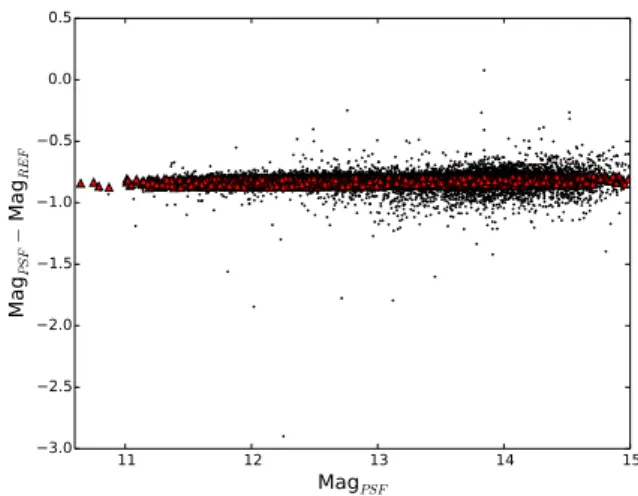
Figure 1. Linear fit performed to obtain the transformation equation for a single epoch. MagPSFare the instrumental magnitudes obtained directly fromDOPHOT, while MagREFare the magnitudes of these objects in the CASU catalogues. Small dots correspond to the full sample, while red triangles are the remaining objects after the 5σclipping.
kept.2This selection allows us to keep the best quality objects for
each epoch. AdditionalJandH-band single epochs were reduced in the same way as KS-band images, and allowed us to build a colour–magnitude diagram (CMD) for the cluster region.
3.1 Photometric calibration
DOPHOTcatalogues were calibrated by searching for a list of
non-variable, isolated stars within the chip field in the aperture photom-etry catalogues provided by CASU. Only stars with 11<KS<15 were selected. With a total of 1280 standard stars, we performed a linear fit and a 5σ clipping in order to get the transformation equations for each epoch. Fig.1shows the linear fit for a single epoch. A similar procedure was carried out to calibrate theJandH images. Further details such as the flux-to-magnitude conversion, calibration of zero-points and colour terms, can be found in the ESO website.3
3.2 Completeness test
In order to derive the photometric completeness, we added artificial stars using theIRAFtaskmkobjects. A total of 600 stars were added to
the first epoch image, withKSmagnitudes between 11.5 and 16.5, with a uniform luminosity function, meaning that we created 50 stars per each bin of 0.5 mag. Then we checked how many stars we recovered. In addition, we also computed the fraction of stars whose measured magnitude was similar, within a 3σlevel, to the original value. This is what we called theaccuracyfraction. This procedure was repeated five times with a different spatial distribution, and the same test was carried out for theJband. Results are shown in Fig.2. Here we can conclude that the photometry is complete and accurate, at the 80 per cent level, for magnitudes up toKs≈13 andJ≈16.5.
2A
DOPHOTflag of 1 corresponds to the stars with the best photometry; flag 7 means that stars are faint, but photometry is still reliable.
Figure 2. Recovery (full symbols) and accuracy (open symbols) fraction of artificial stars added to the cluster image (see text for details). Circles correspond to theKS-band, while triangles are the results for theJ-band.
Completeness falls much faster forJband due to the strong reddening. 3.3 DIA
Differential Image Analysis (DIA; Wozniak 2008and references therein) is a useful technique for variability detection in crowded fields. In this method, a reference image is selected whether as a single epoch from a data set, or as a combination of several images. All other images are transformed to the coordinate system of the also called ‘template’. Then the reference image is convolved by a kernel function, and finally every single epoch of the data set is subtracted from this convolved image (e.g. Alard & Lupton1998; Alard2000). Usually the template turns out to be the best seeing image available. However, Huckvale, Kerins & Sale (2014) found that for the particular case of the VVV survey, a better sampled image (i.e. with a poorer seeing) is more suitable as a reference.
DIA was applied to all the epochs available for the same region used withDOPHOT, this is, sets A and B of tile b333, chip 15. Light
curves obtained were then analysed using the methods that will be described in the next subsection.
4 R E S U LT S
4.1 Candidate selection
From the catalogue corresponding to chip 15, we selected stars in a radius of 2 arcmin around the cluster centre. This means a total of 7596 objects. We decided to go beyond the tidal radius to analyse the cluster surroundings and compare the stars found with the assumed cluster population. In order to search for variability, we implemented two selection criteria. The first one looked for strong variations in the light curves:
whereMi is the difference between the magnitude on a single epoch, and the expected value, calculated from a linear fit performed to the light curve.σ(Mi) is simply the photometric error, as returned byDOPHOT. This criterion was chosen, instead of the other common
variability indexes found in the literature, since we were originally searching for young stellar objects (YSOs) with mostly irregular light curves. Selecting objects with I > 5 allows us to remove variations that are within the photometric errors. This script was performed once for each set available. After keeping light curves
Figure 3. Amplitude versus mean magnitude for all the targets found with DOPHOT. The dashed line corresponds to 4σabove the mean amplitude (see text for details). Selected candidates are represented as open circles.
with more than 25 epochs, the list of candidates present in both image sets was reduced to 37.
For the second method (Contreras Pe˜na2015), we calculated the mean amplitude (defined as the difference between the minimum and maximum magnitude) per magnitude bin for our sample. Then we selected targets that were 4σabove the mean (Fig.3). With this method we found 33 candidates; however, only 15 were found in common between the sets A and B. Of these, 10 candidates were already found using the first criterion.
Since the time difference between two consecutive pawprint ob-servations is less than one minute, meaning a time-scale much shorter than the typical for brightness variations such as we are interested in, we could safely compare the two light curves avail-able per candidate, in order to account for spurious detections due to image artefacts, or problems with the photometry, under the as-sumption that both curves should be similar, within the photometric uncertainties. After a visual inspection of the light curves, 11 can-didates were discarded, mainly due to poor correlation between the pawprints or blending. With this last selection, our final list of candidates found withDOPHOTcontained 31 stars.
A similar procedure was carried out with the light curves obtained with DIA. We found five objects, however, three of them were already present in theDOPHOTcatalogue (VC07, VC17 and VC19).
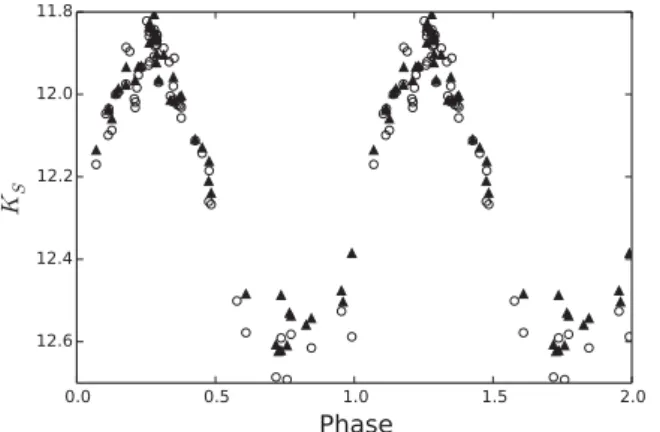
The smaller number of candidates obtained was due to the fact that this version of DIA did not perform optimally in fields with very high levels of crowding, as in the case here. Fig.4shows a comparison between the light curves obtained withDOPHOT(triangles) and DIA
(open circles) for VC19. Good agreement is generally observed between both techniques (see also Catelan et al.2013), although for simplicity, we decided to use theirDOPHOTlight curves for the
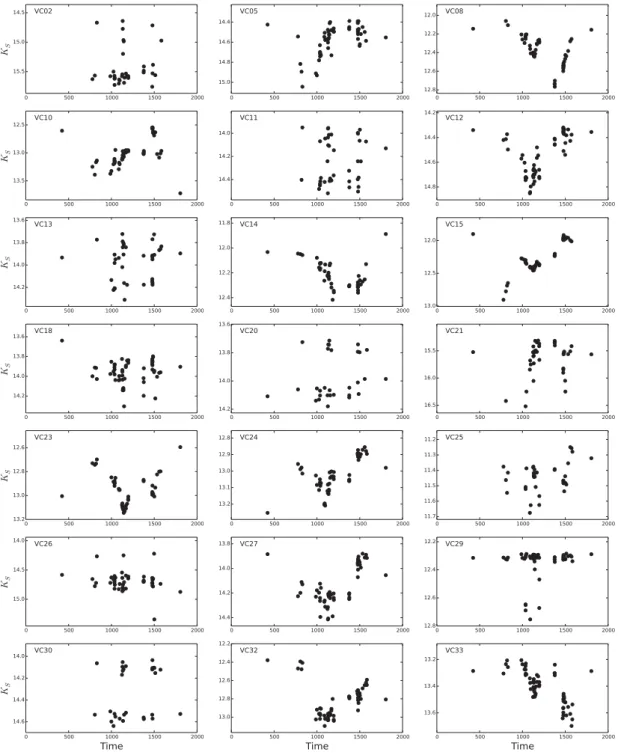
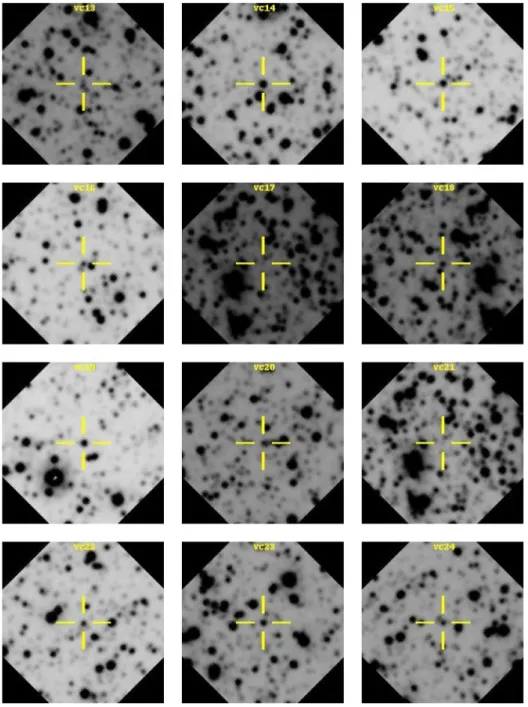
remaining analysis. With all these selection criteria applied, the final list of candidates was 33. Table1contains the main features of these candidates, including their name, coordinates, meanKSmagnitude, and KS, plus a single epochJ andH magnitude, and Galactic Legacy Infrared Midplane Survey Extraordinaire (GLIMPSE) [3.6] and [4.5]-band magnitudes, if applicable. Finding charts for all candidates can be found in Appendix. Variables 1 through 31 were found usingDOPHOT, while 32 and 33 were obtained with DIA. Fig.5 contains the light curves for non-periodic candidates.
Figure 4. Comparison of light curves obtained with the two techniques used in this paper, DIA (open circles) andDOPHOT(filled triangles), for the variable candidate VC19. A period of 110.9 d was used to construct the phased diagram. Both curves are nearly similar, within typical photometric uncertainties.
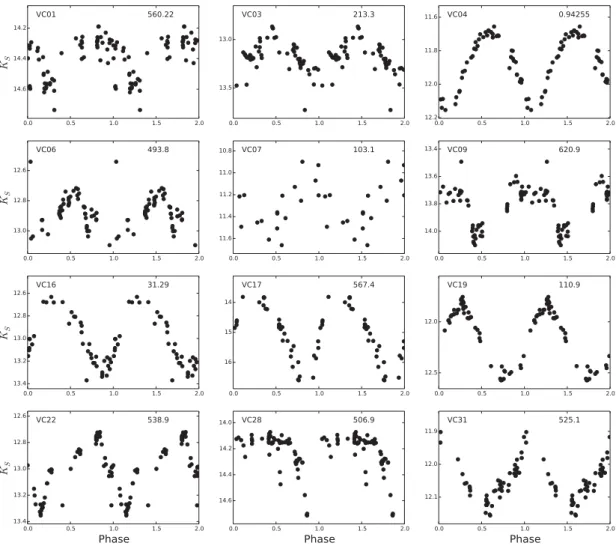
a false-alarm probability cutoff at 1 per cent to help ensure the reliability of the period found. In total, 12 variables had periodicity. Last column of Table1displays the periods found, while Fig.6 shows the corresponding phased light curves.
4.2 Colour–magnitude diagram
Objects found within 2 arcmin from the cluster centre were matched with the single epoch photometries inJandH. We noted that only
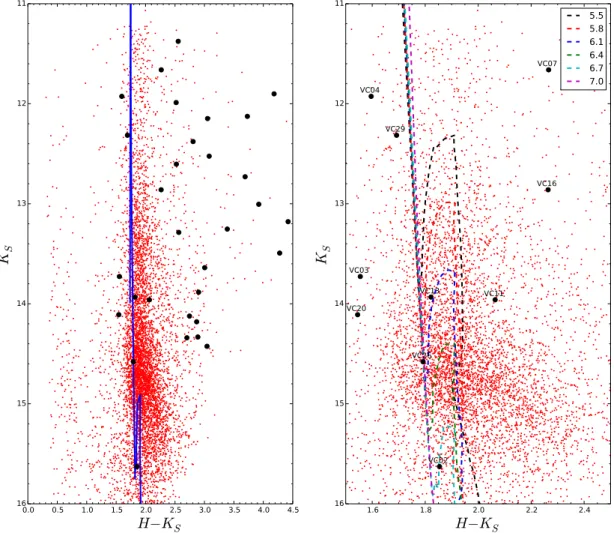
a small fraction of these objects had aJ-band measurement, due to the strong reddening present in this field. This was already predicted by the results found in Section 3.2. Hence we decided to utilize the Hband to build a reliable CMD. The resulting diagram is shown in Fig.7. In addition to the CMD, we included a 4 Myr isochrone, comprised by a PARSEC main sequence (MS) (Bressan et al.2012) and a PISA pre-main sequence (PMS) isochrone, based on the inte-rior model by Tognelli, Prada Moroni & Degl’Inoccenti (2011), for M<5 M, both transformed into the VISTA photometric system. The isochrones are shifted assuming a distance of 8 kpc (Ghez et al. 2008). A fit of the isochrones to the CMD gives us a reddening value ofE(H−KS)=1.85.
Since we are including a radius twice the size of the cluster, we expect the CMD to be strongly populated with field stars. Moreover, the central region of Quintuplet is heavily contaminated by bright stars, even in the KS band. If we add that stars with KS < 11 will probably be saturated in the VVV images, we can expect that the fraction of cluster stars that are present in our photometric catalogue should not be too large. To prove this, we cross-checked our catalogue with the one found in the proper-motion study by Stolte et al. (2015). Within 1.7 (5×0.34) arcsec, we found only 649 matches, of which 108 are likely members, 167 are likely non-members, while the rest remain uncertain. The small number of counterparts is a consequence of the cluster not being fully resolved in the VVV images, whileHubble Space Telescopeimages used by Stolte et al. (2015) allowed them to resolve the cluster down to its core. When we cross-check with our candidate list, we see that the four variables that are within their covered region, namely VC08,
Table 1. Variable candidates found withDOPHOTand DIA.
ID RAJ2000(deg) DECJ2000(deg) J H KS [3.6] [4.5] KS P(d)
VC01 266.566 5557 −28.851 3395 17.042 14.403 0.546 560.2
VC02 266.553 1019 −28.842 3316 17.382 15.413 1.116
VC03 266.554 7296 −28.836 5616 17.701 15.282 13.182 0.86 213.3
VC04 266.548 8075 −28.833 3713 15.994 13.522 11.861 11.127 10.361 0.498 0.942 55
VC05 266.538 5634 −28.822 4738 17.469 14.572 0.655
VC06 266.586 6369 −28.847 3154 17.600 12.872 10.816 9.636 0.553 493.8
VC07 266.539 1027 −28.821 6129 17.510 13.927 11.576 9.482 9.171 1.193 103.1
VC08 266.568 0057 −28.833 1950 15.855 12.385 0.705
VC09 266.584 2469 −28.840 1378 17.771 13.819 11.515 10.827 0.609
VC10 266.583 5128 −28.836 8835 15.127 12.980 11.095 10.542 1.176
VC11 266.546 8613 −28.816 6420 16.024 14.241 0.569
VC12 266.572 0312 −28.823 5543 17.220 14.548 0.532
VC13 266.539 2703 −28.844 3353 19.032 15.755 13.973 0.588
VC14 266.570 1077 −28.818 9804 19.244 14.507 12.218 0.529
VC15 266.544 4024 −28.803 8501 16.084 12.280 10.099 8.780 1.004
VC16 266.556 5088 −28.809 7095 19.262 15.124 13.050 10.078 9.943 0.738 31.29
VC17 266.563 9319 −28.813 3190 15.047 7.397 6.045 2.786 567.4
VC18 266.588 9574 −28.825 0212 16.643 13.955 12.137 11.657 0.665
VC19 266.576 5322 −28.815 6985 15.604 12.092 10.772 9.656 0.817 110.9
VC20 266.546 8932 −28.799 8864 18.497 15.654 13.973 12.030 11.600 0.466
VC21 266.588 3325 −28.821 2281 15.647 1.207
VC22 266.594 5312 −28.823 1272 16.421 13.011 11.275 10.512 0.633 538.9
VC23 266.561 7898 −28.804 9052 16.928 12.954 11.724 10.554 0.55
VC24 266.591 9313 −28.819 8884 16.641 13.02 11.594 11.021 0.398
VC25 266.589 5737 −28.811 4513 19.066 13.930 11.446 9.664 9.001 0.427
VC26 266.583 6597 −28.807 8707 19.313 16.372 14.693 1.123
VC27 266.573 4602 −28.801 6825 16.785 14.139 0.534
VC28 266.586 2002 −28.808 0830 16.869 14.226 0.642 506.9
VC29 266.576 8727 −28.8028663 16.743 14.007 12.351 11.435 11.098 0.468
VC30 266.549 8139 −28.845 7266 17.048 14.338 0.603
VC31 266.578 6450 −28.821 7240 15.201 12.057 10.749 10.261 0.254 525.1
VC32 266.571 9952 −28.827 6493 17.771 15.185 12.837 0.718
Figure 5. Light curves for non-periodic variable candidates. Time is MJD−55000 d.
VC12, VC14 and VC32, are present. However, VC32 is likely a non-member, while the other three have an uncertain membership. With this background we conclude that most of our variable candidates, represented as black circles in the CMD, are not cluster members. See Section 5.3 for a more in-depth discussion of the candidates found.
5 D I S C U S S I O N
5.1 Comparison with previous works
As mentioned in Section 1, only a few variability searches have been carried out in Quintuplet. From our sample, nine candidates
had been previously discovered. Hence, 24 new variable candidates have been found by this work. The results are summarized in Table2. The first column contains the name used in this paper. Column 2 includes the number used in the respective catalogue: [MKN09] stands for Matsunaga et al. (2009), and [MFK13] for Matsunaga et al. (2013). Columns 3 and 4 compare periods found by this work and previous papers, respectively, while column 5 delivers the variability type of the candidate.
Figure 6. Phased light curves for periodic variable candidates.
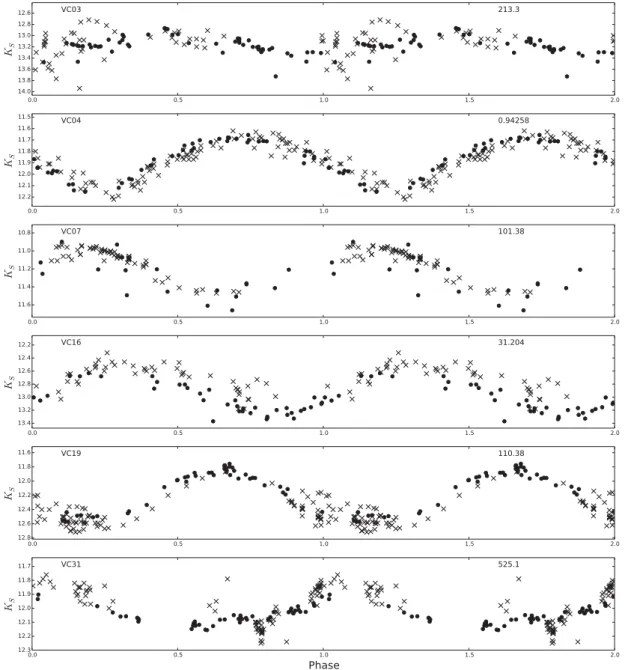
for VC03 and VC31, whileMKN09could not find any. VC03 is worth discussing, since this is the candidate with the most notorious discrepancy withMKN09. We cannot attribute these differences to photometric errors, thus a possible explanation is that the star has undergone changes in the nature of its variability during the past years. As a consequence, we tentatively classify this variable as a slow irregular or semiregular. The other three candidates (VC23, VC25 and VC32) do not show a clear periodicity, even with the com-bined data, so we also classify them as slow irregular or semiregular variables.
5.2 GLIMPSE data
Since one of our long-term goals is to detect YSOs, we cross-checked our sample with the magnitudes of GLIMPSE (Benjamin et al.2003; Churchwell, Babler & Meade2009), in order to search for infrared excess. The data were obtained from the GLIMPSE Source Catalog (I+II+3D), directly from the IRSA website.4
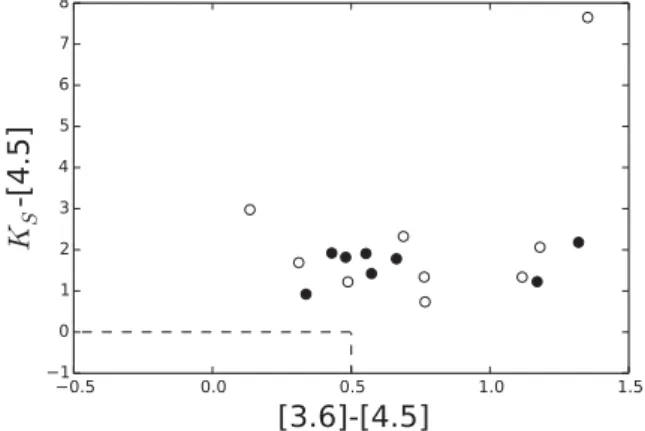
The cross-match found magnitudes for 17 of our objects, with a tol-erance of 1 arcsec. The resulting colour–colour diagram is shown in Fig.9. The point in the upper-right corner corresponds to VC17, an extremely red star. This is a peculiar object, with a very largeKS
4http://irsa.ipac.caltech.edu/data/SPITZER/GLIMPSE
amplitude. Unfortunately, it does not appear in ourHorJ photome-try, since at the epoch of these measurements the star was in a faint phase, hence no additional information could be obtained from the CMD. All candidates with a matched GLIMPSE photometry show some degree of infrared excess. Five of these objects have [3.6]− [4.5]>1, these are VC06, VC15, VC19 and VC23, besides the already mentioned VC17.
5.3 Analysis of individual candidates
As mentioned in Section 4.2, our variable candidates do not seem to belong to the cluster population. In addition, an analysis of the CMD position and shape of their light curves led us to conclude that the majority of these candidates correspond to long-period variables (LPVs), including Miras and semiregular variables, which are typically oscillating red giants (see e.g. Catelan & Smith2015). If we take into account the young age of the Quintuplet cluster, we do not expect to find a significant number of red giant members. In addition to the Miras already discovered by MKN09, VC06 and VC17 can be classified as Miras too. For VC01 and VC07, periodicity is not well defined, thus they are classified as semiregular variables.
Figure 7. Left-hand panel: CMD for targets within 2 arcmin from Quintuplet centre. The positions of our variable candidates are marked as black circles. A 4 Myr MS isochrone combined with a PMS isochrone is shown as a blue line. Isochrones were shifted assuming a reddening value ofE(H−KS)=1.85. It is
important to note that theKSmagnitude used for the CMD corresponds to the first epoch, which is where all other single band measurements were carried out.
Right-hand panel: PMS tracks overplotted for five different ages, from log (t/yr)=5.5 to 7.0. labels have been added to the variable candidates in the region to help with their identification. Four candidates lie close to the PMS region, VC02, VC11, VC13 and VC26. All of these might be YSOs, though further research must be carried out to confirm this possibility.
Table 2. Previously discovered variables.
ID Prev. ID P Prev. P Type
VC03 [MKN09] 1172 213.3 Mira VC04 [MFK13] 37 0.942 55 0.942 55 Ecl VC07 [MKN09] 1112 103.1 102 Mira VC16 [MFK13] 39 31.29 31.279 Ceph(II) VC19 [MKN09] 1250 110.9 108 Mira
VC23 [MKN09] 1194 Mira
VC25 [MKN09] 1286 Mira
VC31 [MKN09] 1260 525.1 Mira
VC32 [MKN09] 1236 Mira
answer this question. In any case, since these are evolved stars, they are most likely not related to the cluster population.
Given its position on the CMD, VC02 seems a very strong YSO candidate. Located in the PMS branch of the 4 Myr isochrone, its light curve shows some sudden brightness increases, the most im-portant being around∼1000 d. These episodes are consistent with the bursts in the accretion rate found in PMS stars. If we assume it is a cluster member, the position in the CMD suggests a mass
of∼2 M. Since we lackJband and GLIMPSE photometry for this object, no colour-cut could be performed to classify it. VC13 and VC26 also qualify as YSO candidates, given their positions in the CMD and the shape of the light curves. A similar situa-tion occurs with VC21. Its light curve show strong, irregular bursts that resemble a YSO, and itsKS magnitude and position in the field makes us think it is a young Quintuplet member. However, no HorJ information is available for that candidate. For all of these objects, spectroscopic follow-up is required to confirm them as YSOs. The case of VC11 is not as clear as for the other candi-dates discussed. As observed in the right-hand panel of Fig.7, the object lies too far from the PMS tracks, even from the youngest one. The light curve is classified as that of an irregular variable star.
Figure 8. Combination of epochs from VVV (circles) andMKN09, MKF13 (crosses) for six variable candidates. Except by VC03 and VC31, periods were fitted to the combined data, and they are similar to those found individually in Table2. For those two particular cases, we kept the original period found by this work, since there is no agreement between both data sets.
6 S U M M A RY
In this paper, we performed an extensive variability study of the Quintuplet cluster using the five year data base of the VVV ESO Public Survey in the near-infrared.
(i) PSF photometry with DOPHOT has been performed forK
S-band images obtained from the VVV survey in the region of the Quintuplet cluster. A total of 7586 objects were identified in the zone around 2 arcmin from the cluster centre. In addition, light curves obtained with DIA were added to our sample.
(ii) Two different selection criteria were used to find photometric variation in these objects. After rejecting false positives through visual inspection, and cross-matching objects obtained through
DOPHOTand DIA, the final sample was reduced to 31 candidates
fromDOPHOTand two candidates from DIA.
(iii) A single epochH-band image was used to construct a CMD. An isochrone fitting allowed us to identify three probable PMS cluster members.
(iv) A comparison with previous studies shows that nine of our candidates were already found in the literature. Hence, in this re-search we present 24 new variable stars.
(v) Through analysing the light curve shape, and the period ob-tained in some cases, we conclude that most of our periodic vari-able stars are LPVs of the Mira type, and some others OH/IR stars with very long period or slow/semiregular variables. Additional epochs from the final VVV Data Release should help to solve this ambiguity.
Figure 9. Colour–colour diagram for the variable candidates found within the GLIMPSE data base. Periodic variables are plotted as open circles, while black circles correspond to non-periodic stars. The dashed lines enclose the region of MS stars.
objects prevents a further analysis without an additional spectro-scopic follow-up.
AC K N OW L E D G E M E N T S
The authors would like to thank the anonymous referee for the help-ful comments and suggestions. Support for CNM, JB, JA-G, RK, MC, NM and ID is provided by the Ministry of Economy, Devel-opment and Tourism’s Millennium Science Initiative, through grant IC120009, awarded to the Millennium Institute of Astrophysics (MAS). CNM is supported by proyecto GEMINI-CONICYT No. 32110004 and ALMA-CONICYT No. 31120015. We gratefully ac-knowledge additional support by Proyecto Basal PFB-06/2007 and by proyecto FONDECYT Regular #1141141 (MC), and FONDE-CYT Regular #1130196 (DM). JA-G also acknowledges support from FONDECYT Iniciaci´on 11150916. We finally acknowledge support by CONICYT REDES Project #140042.
R E F E R E N C E S
Alard C., 2000, A&AS, 144, 363
Alard C., Lupton R. H., 1998, ApJ, 503, 325
Alonso-Garc´ıa J., Mateo M., Sen B., Banerjee M., Catelan M., Minniti D., von Braun K., 2012, AJ, 143, 70
Alonso-Garc´ıa J., D´ek´any I., Catelan M., Contreras R. R., Gran F., Amigo P., Leyton P., Minniti D., 2015, AJ, 149, 99
Benjamin R. A. et al., 2003, PASP, 115, 953
Bressan A., Marigo P., Girardi L., Salasnich B., Dal Cero C., Rubele S., Nanni A., 2012, MNRAS, 427, 127
Catelan M., Smith H. A., 2015, Pulsating Stars. Wiley, New York Catelan M. et al., 2013, preprint (arXiv:1310.1996)
Churchwell E., Babler B. L., Meade M. R., 2009, PASP, 121, 213
Irwin M. J. et al., 2004, in Quinn P. J., Bridger A., eds, Proc. SPIE Conf. Ser. Vol. 5493, Optimizing Scientific Return for Astronomy through Information Technologies. SPIE, Bellingham, p. 411
Liermann A., Hamann W.-R., Oskinova L. M., 2012, A&A, 540, A14 Liermann A., Hamann W.-R., Oskinova L. M., 2014, A&A, 563, C2 McGinnis P. T. et al., 2015, A&A, 577, A11
Matsunaga N., Kawadu T., Nishiyama S., Nagayama T., Hatano H., Tamura M., Glass I. S., Nagata T., 2009, MNRAS, 399, 1709 (MKN09)
Matsunaga N. et al., 2013, MNRAS, 429, 385 (MFK13) Minniti D. et al., 2010, New Astron., 15, 433
Nagata T., Woodward C. E., Shure M., Pipher J. L., Okuda H., 1990, ApJ, 351, 83
Okuda H. et al., 1990, ApJ, 351, 89
Portegies Zwart S., Makino J., McMillan S. L. W., Hut P., 2002, ApJ, 565, 265
Saito R. K. et al., 2012, A&A, 537A, 107 Scargle J. D., 1982, ApJ, 263, 835
Schechter P. L., Mateo M., Saha A., 1993, PASP, 105, 1342 Stolte A. et al., 2014, ApJ, 789, 115
Stolte A. et al., 2015, A&A, 578, A4
Tognelli E., Prada Moroni P. G., Degl’Inoccenti S., 2011, A&A, 533A, 109 Wozniak P., 2008, in Kerins E., Mao S., Rattenbury N., Wyrzykowski L., eds, Proc. Sci., Manchester Microlensing 12th Int. Conf and ANGLES Microlensing Workshop. SISSA, Trieste, PoS#003
S U P P O RT I N G I N F O R M AT I O N
Additional Supporting Information may be found in the online ver-sion of this article:
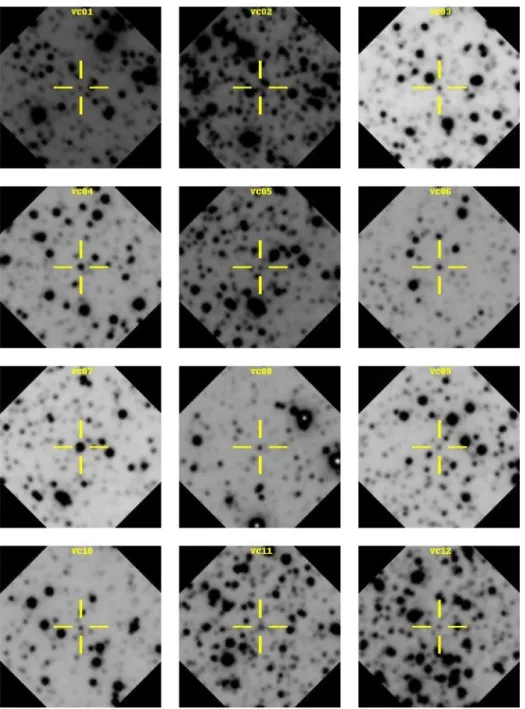
Figure A1.KS-band finding charts for all variable candidates. (http://www.mnras.oxfordjournals.org/lookup/suppl/doi:10.1093/ mnras/stw1613/-/DC1).
A P P E N D I X : F I N D I N G C H A RT S
KS-band finding charts for all candidates were obtained from the VSA. VISTA Science Archive,http://horus.roe.ac.uk/vsa/
Figure A1 – continued