Security and privacy issues in implantable medical devices: A
comprehensive survey
Carmen Cámara , Pedro Peris-Lopez , Juan E. Tapiador
A B S T R A C T
Bioengineering is a field in expansion. New technologies are appearing to provide a more efficient treat-ment of diseases or human deficiencies. Implantable Medical Devices (IMDs) constitute one example, these being devices with more computing, decision making and communication capabilities. Several research works in the computer security field have identified serious security and privacy risks in IMDs that could compromise the implant and even the health of the patient who carries it. This article surveys the main security goals for the next generation of IMDs and analyzes the most relevant protection mech-anisms proposed so far. On the one hand, the security proposals must have into consideration the inherent constraints of these small and implanted devices: energy, storage and computing power. On the other hand, proposed solutions must achieve an adequate balance between the safety of the patient and the security level offered, with the battery lifetime being another critical parameter in the design phase.
1. Introduction
Implantable Medical Devices (IMDs) are electronic devices implanted within the body to treat a medical condition, monitor the state or improve the functioning of some body part, or just to provide the patient with a capability that he did not possess before
[47]. Current examples of IMDs include pacemakers and defibrilla-tors to monitor and treat cardiac conditions; neurostimuladefibrilla-tors for deep brain stimulation in cases such as epilepsy or Parkinson; drug delivery systems in the form of infusion pumps; and a variety of biosensors to acquire and process different biosignals.
Some of the newest IMDs have started to incorporate numerous communication and networking functions—usually known as "telemetry", as well as increasingly more sophisticated computing capabilities. This has provided implants with more intelligence and patients with more autonomy, as medical personnel can access data and reconfigure the implant remotely (i.e., without the patient being physically present in medical facilities). Apart from a signif-icant cost reduction, telemetry and computing capabilities also allow healthcare providers to constantly monitor the patient's con-dition and to develop new diagnostic techniques based on an Intra Body Network (IBN) of medical devices [9,10,107].
Evolving from a mere electromechanical IMD to one with more advanced computing and communication capabilities has many benefits but also entails numerous security and privacy risks for the patient. The majority of such risks are relatively well known in classical computing scenarios, though in many respects their repercussions are far more critical in the case of implants. Attacks against an IMD can put at risk the safety of the patient who carries it, with fatal consequences in certain cases. Causing an intentional malfunction of an implant can lead to death and, as recognized by the U.S. Food and Drug Administration (FDA), such deliberate attacks could be far more difficult to detect than accidental ones [30]. Furthermore, these devices store and transmit very sensitive medical information that requires protection, as dic-tated by European (e.g., Directive 95/46/ECC) and U.S. (e.g., CFR 164.312) Directives [54,108].
in ways similar to those used against more common computing devices [65,69,83], i.e., by forging, altering, or replying previously captured messages [43]. This could potentially allow an adversary to monitor and modify the implant without necessarily being close to the victim [85]. In this regard, the concerns of former U.S. vice-president Dick Cheney constitute an excellent example: he had his Implantable Cardioverter Defibrillator (ICD) replaced by another without WiFi capability [116].
While there are still no known real-world incidents, several attacks on IMDs have been successfully demonstrated in the lab
[44,73]. These attacks have shown how an adversary can disable or reprogram therapies on an ICD with wireless connectivity, and even inducing a shock state to the patient [33]. Other attacks deplete the battery and render the device inoperative [52], which often implies that the patient must undergo a surgical procedure to have the IMD replaced. Moreover, in the case of cardiac implants, they have a switch that can be turned off merely by applying a magnetic field [79]. The existence of this mechanism is motivated by the need to shield ICDs to electromagnetic fields, for instance when the patient undergoes cardiac surgery using electrocautery devices [19]. However, this could be easily exploited by an attacker, since activating such a primitive mechanism does not require any kind of authentication.
The exploitation of a vulnerability in the IMD by an attacker can cause negative medical effects to the patient. Such effects are com-monly known as "adverse events". Since each type of implant is devoted to treat a particular medical condition, the adverse effects that can be originated if the attacker succeeds are very varied [47].
In Fig. 1 we enumerate some of the damages an adversary could cause on a patient for the most commonly used IMDs. Attacks and their associated adverse events can be studied from both their extent and persistence point of view. The former measures the number of affected entities in the overall system, such as the IMD, the patient, other implants within the patient's IBN, and other devices outside it. The latter distinguishes whether the effects of the attack are temporary or permanent.
In order to prevent attacks, it is imperative that the new gener-ation of IMDs will be equipped with strong mechanisms guaran-teeing basic security properties such as confidentiality, integrity, and availability. For example, mutual authentication between the IMD and medical personnel is essential, as both parties must be confident that the other end is who claims to be. In the case of the IMD, only commands coming from authenticated parties should be considered, while medical personnel should not trust
any message claiming to come from the IMD unless sufficient guar-antees are given.
Preserving the confidentiality of the information stored in and transmitted by the IMD is another mandatory aspect. The device must implement appropriate security policies that restrict what entities can reconfigure the IMD or get access to the information stored in it, ensuring that only authorized operations are executed. Similarly, security mechanisms have to be implemented to protect the content of messages exchanged through an insecure wireless channel.
Integrity protection is equally important to ensure that mation has not been modified in transit. For example, if the infor-mation sent by the implant to the Programmer is altered, the doctor might make a wrong decision. Conversely, if a command sent to the implant is forged, modified, or simply contains errors, its execution could result in a compromise of the patient's physical integrity.
Technical security mechanisms should be incorporated in the design phase and complemented with appropriate legal and administrative measures. Current legislation is rather permissive in this regard, allowing the use of implants like ICDs that do not incorporate any security mechanisms. Regulatory authorities like the FDA in the U.S or the EMA (European Medicines Agency) in Europe should promote metrics and frameworks for assessing the security of IMDs. These assessments should be mandatory by law, requiring an adequate security level for an implant before approving its use. Moreover, both the security measures supported on each IMD and the security assessment results should be made public.
Prudent engineering practices well known in the safety and security domains should be followed in the design of IMDs. If hard-ware errors are detected, it often entails a replacement of the implant, with the associated risks linked to a surgery. One of the main sources of failure when treating or monitoring a patient is precisely malfunctions of the device itself. These failures are known as "recalls" or "advisories", and it is estimated that they affect around 2.6% of patients carrying an implant. Furthermore, the software running on the device should strictly support the functionalities required to perform the medical and operational tasks for what it was designed, and no more [34,72,114].
Overview and organization: In this paper, we present a survey
of security and privacy issues in IMDs, discuss the most relevant mechanisms proposed to address these challenges, and analyze their suitability, advantages, and main drawbacks. Throughout this
Cardiac Implanted Device
Heart failure
Bradycardia
Arrhythmia
f Neurostimulator J
Tachycardia
Inappropriate stimulation
Failure to stimulate
Tremors and spasms
Neuronal effects
m
<—
—
— K
—•
Drug Delivery System
Loss of pain relief
Injury
Inappropriate dosage
Inappropiate timing
Cochlear Implant
Deafness
Background noise
Ringing
Distraction or confusion
work, we will find typical security issues such as eavesdropping, spoofing, or man-in-the-middle attacks, as well as classical prob-lems like how to appropriately distribute cryptographic keys or how to control accesses in a secure but flexible manner.
We start by providing an overview of current IMD technology in Section 2, including current standards for telemetry. Then, in Section 3 we discuss typical usage scenarios for patients carrying IMDs and the associated threat model, paying special attention to the various adverse events that could arise as a consequence of attacks against the implant. Subsequently in Section 4 we describe various trade-offs that should be taken into account when design-ing mechanisms to preserve security and privacy in IMDs. Such trade-offs are intimately related to the scarcity of resources in the implant and to the need to guarantee the patient's safety even if this means that security mechanisms should be bypassed in some circumstances. Section 5 describes and analyzes a variety of security and privacy solutions specifically proposed for IMDs, ranging from mechanisms to protect the communication channel to access control models tailored for this domain. Finally, Section 6 summarizes the main issues introduced in this paper and discusses open problems and avenues for future research.
2. Implantable medical devices
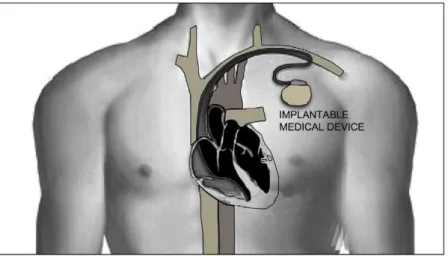
An IMD is often defined as an electronic device that is perma-nently or semi-permaperma-nently implanted on a patient with the pur-pose of treating a medical condition, improving the functioning of some body part, or providing the user with a capability that he did not possess before [47]. These devices are often implanted around 2-3 cm under the patient's skin and connected to the organ that needs treatment or monitoring. Cardiac implants (see Fig. 2) are possibly the most widely known example of IMDs, but many others are increasingly being used to deal with different medical conditions more efficiently than by traditional methods. The most common types include:
Cardiac implanted devices. These include devices such as
Implantable Cardioverter Defibrillators (ICD) and Pacemakers. They are designed to treat cardiac conditions by monitoring the heart's electrical activity and applying electrical impulses of suitable intensity and location in order to make the heart pump at the desired speed [124]. New models are equipped with pressure sensors capable of actively monitoring changes that could lead to a heart failure. This allows to alert the patient or the medical personnel if a pressure increment in the ventricle is detected, as this represents a hazard condition for the patient.
Cardiac implants may also be equipped with accelerometers to measure the patient's physical activity level. This can be set as an input parameter to the IMD controller, allowing to adjust the cardiac stimulation frequency to the one that best suits each moment [111].
Neurostimulators. These devices transmit low-amplitude
elec-trical signals through one or more electrodes placed in different locations of the brain. These electrodes are implanted in very specific areas depending on the patient's condition. The process is known as Deep Brain Stimulation (DBS) and allows to treat a variety of pathologies such as Parkinson, dystonia, epilepsy, or even depression that, in some cases, are resistant to medication after several years of treatment [75].
Drug Delivery Systems (DDS). A DDS consists of a pump and a
catheter that are surgically implanted under the skin. Their function is to supply medication in a controlled, localized, and prolonged way. Since the medication goes directly to the target area, an infusion pump provides a considerable degree of con-trol, which allows to use a lower dose than that required with oral medication. For instance, this type of implants have been successfully used to mitigate pain in cases of cancer where tra-ditional medication does not have good results [68].
Biosensors. The implant consists of a sensor or a set of sensors
placed inside the human body to monitor any part of it. They are capable of measuring certain physiological parameters and use such measures to make decisions. In this sort of implants there exists a special device that acts as a control node, commu-nicating with the sensors and with other external entities (e.g., a programmer). The set of sensors and the control node are often regarded as a wireless biosensor network [13,24,118].
2.1. The new generation of IMDs with telemetry
Healthcare systems incorporating numerous communication and networking functions have proliferated over the last years. This has made possible to develop medical sensor networks that, for instance, can monitor patients in their own homes
[100,88,126,109]. Doctors, caregivers, or even the patient himself can thus conduct a continuous and more flexible control of his state, as well as access medical data remotely, communicate during an emergency, and even command various household appliances. This also promotes the autonomy of patients who, in many situa-tions, are elderly people or individuals with reduced mobility.
Similar communication and networking capabilities are increasingly being embedded into IMDs. Equipped with a radio transmitter, the IMD can communicate with an external
generally known as "Programmer" or "Reader"—and send it phys-iological data such as electrocardiogram (ECG) signals in the case of pacemakers and ICDs, that the doctor can use to track the patient's pathology. Apart from querying sensed data, the Programmer can also command the IMD to adjust or disable ther-apies, perform software updates, etc.
Augmenting IMDs with wireless communication and network-ing capabilities has significant advantages, includnetwork-ing:
• It allows to constantly monitor the patient's physiological parameters and other symptomatology captured by the device, which reduces the time needed to regularly tracking medical conditions and, furthermore, causes less disruptions in the patient's daily activities.
• Enhanced supervision and management of the IMD operation, which allows to address any problem that might arise and apply adequate correction measures in a shorter time.
• The two previous items also imply a reduction in the overall costs involved in tracking the patient's condition and managing the operation of the IMD.
• In the case of future IntraBody Networks (IBN) [9,10,107], com-putation and analysis tasks could be shared among different networked devices, which will contribute to the development of new diagnostic techniques.
In their current generation, not all types of IMDs support access to all their available functions through the wireless communica-tion channel. The vast majority of IMDs can be reprogrammed remotely, which allows the doctor to modify therapies as required. The reverse link (i.e., from the IMD to the Programmer) is not pre-sent in all of them. For instance, while pacemakers and ICDs can communicate in both directions, current neurostimulators can only receive reprogramming commands but they do not provide any information (e.g., sensed data) back to the Programmer. This fact has caused that most research works on advanced computa-tional and networking issues related to IMDs, including the secu-rity and privacy problems addressed in this paper, are commonly focused on cardiac implants. Nevertheless, new IMD designs are computationally more complex and are increasingly basing part of their functionality in the ability to communicate externally to perform diagnostic and therapy tasks.
The main standards regulating telemetry for medical devices are:
• Many non-implantable medical devices are compliant with the Wireless Medical Telemetry Services (WMTS) specification, which sets three operating frequency bands: 608-614 MHz, 1395-1400 MHz, and 1427-1432 MHz [12,46]. This is a U.S. standard defined by the Federal Communications Commission (FCC) in 2000 that is not internationally agreed, hence that its use is often restricted to the U.S. only.
• IMDs operate under the Medical Implant Communication System (MICS) specification, which operates in the 402-405 MHz band. MICS is a low-power (25 mW), unlicensed mobile radio service that facilitates data communications between the IMD and an external programmer. The communi-cation range is about 2 m and the bandwidth is very low when compared with wireless communication technologies such as bluetooth or WiFi. The radio signals can go through and be transmitted within the human body due to its conductive char-acteristics. The purpose of these communications can be access-ing the measures taken by the implant or reconfiguraccess-ing it to, for example, adjust the treatment. MICS compliant IMDs have proliferated in the last years, including pacemakers, ICDs, neurostimulators, hearing aids, and DDSs [11,26,102].
• Similarly to the WMTS specification, the Medical Device Radiocommunications Service (MedRadio) defines communica-tion services for both implanted and wearable medical devices. The specification, which was approved by the FCC in 2009 [85],
extends the MICS spectrum 1 MHz in both sides, covering a fre-quency band from 401 to 406 MHz. The use of these frequencies in IMDs is well justified [16]: (1) At those frequencies, radio signals can easily propagate within the human body. (2) The 4 0 1 -406 MHz band is compatible with international regulations and does not interfere with other radio operations in the same band.
Incorporating a wireless communication capability into an implant involves some special requirements that affect their design. One of the most important is that the radio frequency mod-ule must consume very little power (e.g., 10 mW and up to 100 mW for a glucose and ECG monitor, respectively [48]) in order to save the implant battery life. Additional design factors include the required communication range (typically from 1 up to 5 m
[120]), the data transfer rate (e.g. 0.1 bps and up to 10 Kbps for a glucose and ECG monitor, respectively [48]), the environmental conditions in which the IMD will operate, and its size and cost
[55,56,129].
Recently, the FDA has published guidelines for the industry on the design, testing, and use of wireless medical devices [27]. As sta-ted, the security of wireless signals and data is an important issue in order to protect access to patient's data and hospital networks, and to prevent unauthorized communications with medical devices like IMDs or Programmers. Wireless medical devices must use crypto-graphic techniques (i.e., encryption, authentication, secure key storage) to protect communications and accesses. The necessary security level is determined by the sort of threats, and their proba-bility, to which the device is exposed, as well as the operating envi-ronment and the consequences/damages on the patient in case of a security incident. For the design of secure solutions, the FDA sug-gests that wireless medical devices include security measures to protect communications and accesses but also include software protections. Nowadays, the FDA is currently working on the design of recommendations for the management of cybersecurity in med-ical devices [28]. Apart from the FDA, other organizations are con-tributing to the elaboration of standards (e.g., X.1120 and X.1139), including tele-biometrics, mobile secure transmissions, secure transmission of personal health information, etc. [62].
3. Security assumptions
In this section we first present the system model and then describe the usage scenarios. After that, the threat model is explained and finally the different types of adversaries are introduced.
3.1. System model and usage scenarios
PASSIVE ADVERSARY
Authenticated / encrypted channel
*
Secure
pairing
V
Authenticated /
encrypted channel
EXTERNAL DEVICE
PATIENT WITH IMD
PROGRAMMER
ACTIVE ADVERSARY
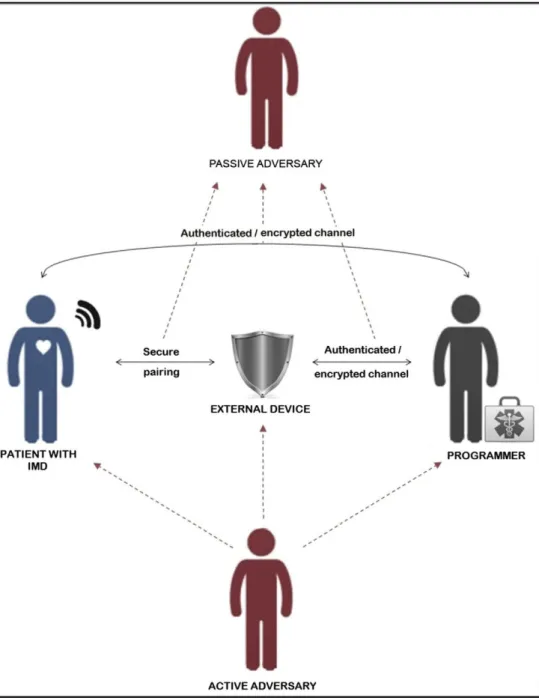
Fig. 3. Typical usage scenario for IMDs.
sending commands (e.g., treatment modifications). In the case of secure solutions, the IMD and the Programmer are authenticated and sensitive data is passed encrypted on the channel.
Apart from the direct communication between the IMD and the Programmer, some authors have introduced the idea of using an external device (e.g, cloaker [22], shield [37], IMDGuard [127],
etc.), which acts as a proxy. In this case, rather than establishing a direct connection with the Programmer, the IMD can delegate this task to an external device that authenticates the Programmer—initially there is a secure pairing between the IMD and the external device. Once the Programmer is authenticated (normal mode operation), this can communicate with the IMD using an encrypted channel via the external device. In emergency mode, the IMD has to answer even if the authentication fails— and, in some cases, the medical personnel must be able to disable the device easily.
As the patient will generally move about different locations and may visit several doctors and hospitals, IMDs will not always
communicate with the same, previously known device. Furthermore, the entities authorized to communicate with the implant can vary [43]. Potential attackers must be also considered, as not all signals received by the IMD will actually come from an authorized Programmer and, in many cases, their purpose could be malicious. Under these conditions, guaranteeing the security and privacy of the IMD and its data is essential to protect the safety of the patient.
As described above, an IMD must operate under two different modes: normal and emergency. One major objective is to find a sensible trade-off between these two possible situations:
reprogramming commands. Ideally, the implant should be undetectable to unauthorized parties. Security mechanisms might be similar to those used in constrained devices like RFID tags or smart sensors (e.g., lightweight hash functions
[4,5,41] or tiny block ciphers [60,66,67]).
B. Security in emergency mode. As important as offering strong access control, secure communications, and even undetectability, is the ability of being accessible under an emergency condition. Consider a patient who enters an emergency room in a hospital different to the one he often visits. To further complicate matters, assume that the patient is visiting a foreign county. Even under these circum-stances, the healthcare staff must be able to communicate with the implant, determine its type (e.g., model and brand), extract physiological data or information about the treat-ment, and even update its configuration if required. Even in a secure scheme, under an emergency situation such as an urgent surgery of a patient who holds an ICD, in which it is mandatory to deactivate the implant, the IMD should always respond before deactivation.
To understand the importance of emergency conditions, it would be useful to know the frequency of occurrence of these events. Unfortunately, to the best of our knowledge there are no public reports about emergencies involving patients that hold an IMD. Nevertheless, some statistics about pacemakers, which are one the most popular IMDs, may help to shed some light on this matter. For instance, lead complications are one of the principal causes of re-intervention in patients with heart diseases. In a recent retrospective study, Walker et al. [121] reported 1.4 events per 100 patient-years of follow-up for lead-related complications, including vein thrombosis, acute perforation, and dislodgement. This figure doubles if the population under study are children
[84]. As for the pocket-related complications (e.g., infection, ero-sion, or migration of the pacemaker), which is the other main cause of complications for pacemakers [40], the values are slightly higher: 1.9 events per 100 patient-years. Furthermore, the proba-bility of re-intervention increases with every consecutive replace-ment [6]. We acknowledge that re-intervention due to lead or pocket complications is, strictly speaking, not an emergency condi-tion, since in most cases the surgery is planned. Nevertheless, both situations have in common the need to properly address any secu-rity measures deployed in the IMD. It is the job of manufacturers, engineers, and physicians to evaluate the frequency and impact of those events in order to develop a rigorous risk model.
A straightforward solution for emergency conditions that pro-vides the necessary safety to the patient is to force the IMD to dis-regard authentication and authorization mechanisms and process all incoming commands. Any requester thus becomes an autho-rized user, possibly with full privileges. This would not be possible if security protocols and strong access control mechanisms are not deactivated, which in turn leaves the implant fully exposed to attackers. Unfortunately, telling apart normal from emergency sce-narios is far from trivial for the IMD, and nowadays the best way to provide an adequate security for IMDs is still an open problem. Security tensions between these two conflicting goals are thus cre-ated, hence the importance of finding solutions that balance the security requirements to provide security in normal mode while guaranteeing safety during emergencies [98]. Several works (see, e.g., [17,10,55]) have proposed schemes in which the IMD can only be accessed by authorized entities and remain invisible for the remaining ones. The prevailing philosophy in most works is that in case of doubt about the patient's safety, security mechanisms should be relaxed and access must be granted. We will discuss in detail the most relevant proposals in this field later in Section 5.
3.2. Threat modeling
Security threats against the IMD can be categorized using the STRIDE methodology. The acronym stands for six general cate-gories of attacks: Spoofing, Tampering, Repudiation, Information disclosure, Denial of service, and Elevation of privilege. Table 1
relates each category with the security property attacked in each case and provides some examples. Generally it is assumed the fol-lowing set of relations (listing the "security property" versus the linked threat): authentication - spoofing, integrity - tampering, non-repudiation - repudiation, confidentiality - information dis-closure, availability - denial of service, authorization - elevation of privileges. Apart from these one-to-one connections, it should be noted that some threats may address various properties simul-taneously, or that a single attack can be decomposed into individ-ual threats.
The six security properties addressed above have their usual meanings, although focused on the IMD domain:
Authentication. The identity of parties must be correctly
estab-lished before performing any other operation. Within the domain of implantable medical devices, any device in the sys-tem (IMDs, Programmer or External device) can be imperson-ated. For instance, if the identity of the Programmer is supplanted it might be the starting point for an elevation of privileges attack.
Integrity. Data, either stored in the device or being
communi-cated through the wireless link, can only be modified by autho-rized parties. If there is not integrity checking mechanism on the IMD, data could be altered during the transmission over the insecure radio channel. Furthermore the IMD could accept malicious inputs, which could be employed to run a code injec-tion attack [96]. On the other hand the lack of integrity checking would facilitate that the manipulation of the data stored on the IMD memory might be not detected - or be detected in a distant future.
Non-repudiation. Operations performed by/on the IMD are
kept securely in an access log. The attacker could focus on delete these inputs in order to cover her traces. On the other
Table 1
STRIDE categories and examples in the IMD domain.
Security property Threats
Authentication
Integrity
Impersonate the Programmer Impersonate the IMD Impersonate the external device
Patient data tampering Malicious inputs Modify communications
Non-repudiation Delete access logs
Confidentiality
Availability
Authorization
Repeated access attempts
Disclose medical information Determine the type of IMD Disclose the existence of the IMD
Track the IMD
Drain the battery of the IMD Interfere with the IMD communication capabilities Flood the IMD with data
Reprogram the IMD Update the therapy of the patient
Switch-off the IMD
Spoofing
Tampering
Repudiation
Information disclosure
Denial of service
hand no all IMDs are equipped with a log system. If this were the case the adversary could repeatability try to gain access to the IMD without leaving any trail. Even if a log system is pre-sent the events would be logged but no alarm would be trig-gered to alert the IMD holder in case of a malicious event.
Confidentiality. Data, either stored in the device or being
com-municated through the wireless link, can only be read by autho-rized parties. In particular, IMDs and the Programmer communicate through the radio channel (401-406 MHz) and these communications are exposed to eavesdroppers. If com-munications are not encrypted, an adversary could disclose pri-vate information such as the IMD model or even medical information of the patient. This would compromise the privacy (data) of the implant holder. Even if communications are encrypted, an attacker could detect the presence of the implant or, even worse, track the movements of its holder. In this case the privacy location would be put at risk.
Availability. The services offered by the IMD should be
avail-able to authorized parties at all times. Availability is crucial for IMDs since these devices are devoted to treat medical con-ditions of their holders. Unfortunately, an IMD could be ren-dered inaccessible through the blockage of the radio channel (active jamming). Alternatively the device might be overloaded by flooding the IMD with network traffic over the radio channel. This could be used to block the access to the device or to drain its battery. If the battery runs out of power, the device would become permanently inaccessible and the patient's health could be at risk.
Authorization. An operation must be executed only if the
requester has sufficient privileges to order it. For instance, ther-apy parameters (e.g., voltage, current, thresholds, operation mode, etc.), cannot be updated by the patient and only doctors should be able to modify these. In this regard, re-programming the IMD must be done under the joint supervision of the doctor and a technician (typically from the manufacturing company of the IMD). On the other hand, the IMD must be kept running at all times and only be switched off under special circumstances that may threat the patient's life (e.g., cardiac surgery with elec-trocautery devices). In the case of pacemakers, a magnetic field has to be applied near the device (over the patient chest) and this procedure must be authorized by the cardiologist.
3.2A. Types of attackers
At high level, attackers can be grouped into two main cate-gories: active and passive (see Fig. 4):
Passive eavesdropper. A passive attack can only listen to the
channel and, therefore, getting access to the messages exchanged between the IMD and the Programmer. Assuming an insecure radio channel, a passive attacker is a direct threat to confidentiality and may threaten authentication. By just reading messages a passive attacker may determine whether a person carries an implant or not; find out what type of implant and other data such as its model and serial number; capture telemetry data and disclose private information about the patient, such as the ID of his health records, name, age, and conditions. In all cases, the overall result is a serious com-promise of the patient's privacy.
Active adversary. In this case, the adversary is not only capable
of capturing messages exchanged over the radio channel, but also to send commands to the IMD, modify messages in transit before they reach the IMD or the Programmer, or just block them so that they never arrive. Attacks may involve a sequence of interceptions, interruptions, modifications, and generation of messages. The goals pursued by an active attacker are diverse. For example, he could indiscriminately request information from the IMD with the purpose of draining its battery. He could also attempt to modify the configuration of the device, disable therapies, or even induce a shock state to the patient [44].
It must be noted that it is not essential for the attacker (active or passive) to be physically close to the patient to conduct the attack
[31]. Depending on the specific communication technology used for the radio link, the IMD could be reachable from a few meters (typically 1-2 m for MICS and WMTS [86,120] or even up to 10 m in case of using advanced communication techniques [49]).
Furthermore, communication devices can be acquired very easily nowadays; e.g., certain smartphones can perform this task.
In summary, the technical means needed to carry out most attacks against IMDs are cheap and easy to acquire and use. As a consequence, passive attackers can easily eavesdrop sensitive information about an implant holder without much difficulty. Even if the attacker is not someone who attempts to threaten the
Adversary
Passive attacker ) { Active attacker J
— • >
—
—*•
1— •
Determine the presence of the IMD
Determine the type of IMD
Discover physiological information
Disclose private infor-mation
M
M
L
•"
•
Impersonate the programmer
Request confidential information
Reprogram the device
,
Cause a shock to the patient
Drain the battery
patient's safety, the data stored on it might be very valuable for many individuals and organizations.
It is worth mentioning that the attacker could be the patient himself in a deliberate or involuntary attempt to sabotage his own implant. An example of this was reported in [90], where it is described how a patient who sent unauthorized commands to his insulin pump in order to gain unsupervised use of it ended up with a medical condition as his manipulation resulted in the ingestion of a very high dose of medication.
Finally, apart from general system and channel vulnerabilities, attackers can manipulate a number of IMD-specific features to achieve their goals [1,47]:
• Manipulation of the distance. Proximity refers to the distance between the attacker and the IMD. Many current proposals have some form of distance-based access control, allowing access to the IMD only if the Programmer is in short range. The rationale here is to force the attacker to be physically very close to the patient to conduct the attack. In practice, however, the attacker may use a compromised device in the proximity of the patient to launch the attack, including those used in medical facilities.
• Manipulation of the IMD functions. IMDs are programmed to per-form various activities such as sensing biomedical parameters in the body area where they are implanted, treat a medical con-dition (actuating), processing gathered data, and communicate with other devices, either external or those in the IBN [131].
These functions can be misused by an attacker, for example by inducing an incorrect sensing to trigger a particular response in the implant.
• Manipulation of the patient's status. As we will discuss later, the patient's status plays a key role in the design of many counter-measures. For instance, an implanted biosensor can trigger an alarm if certain parameters fall out of the safety range. In some cases, such an alarm puts the IMD in emergency mode and automatically disables access control mechanisms.
4. Limitations and trade-offs
In this section, we first introduce a number of technological lim-itations of current IMDs that restrict the sort of security mecha-nisms that can be implemented on them. We next describe various trade-offs that arise when designing security measures for IMDs and that originate as a consequence of the IMD's compu-tational limitations, the criticality of some of its functions, and the need to support an emergency mode of operation.
4.1. Limitations
IMDs have restricted capabilities in three separate dimensions: energy, storage, and computing power. All three of them have security implications, either because they can be misused or because they limit the security mechanisms that can be afforded. We next discuss them in more detail.
Energy. IMDs are powered by an integrated battery that
sup-plies energy to all functions incorporated in the device (i.e., monitoring, treatment, communication, etc.). Once the IMD is implanted, the battery can last from 8 years in the case of neu-rostimulators [81] up to 10 years in the case of pacemakers
[76]. Battery usage has a direct impact over the implant life-time. Once exhausted, it has to be replaced, which requires a surgical procedure with its associated risks. Some designs sup-port batteries that can be charged wirelessly using magnetic fields, but organs close to the implant could be damaged. Some recent advances in this area can be found in [63,110,128].
Storage. Storage is quite limited in current IMDs. The memory
available in the device is used to store historical data from dif-ferent events and episodes that arise related with the patient's pathology. For instance, pacemakers and ICDs store ECG signals that occurred when the device decided to apply stimulation. The RAM memory of these device varies from 2 KB to 36 KB for the former, and from 128 KB to 1024 KB for the latter. In the case of ICDs, around 75% of this memory is devoted to store ECG signals [61]. Devices with low sensing rate like a Biostator Glucose Controller demand 8KB for data storage [113]. One consequence of incorporating a reduced memory on-chip is that security mechanisms have to consume as little memory as pos-sible in order to save it for the potential storage requirements required by the medical functions of the device. One may won-der about the possibility of increasing the amount of RAM memory in IMDs, since this sort of memory is not expensive nowadays. There seem to be two main reasons for keeping lim-itations on the memory size. On the one hand, an increment on the amount of memory constitutes an increase in the size of the implant. This is a critical feature since IMDs are often located in or over the body of the patient and this parameter (device area) should be kept at a minimum. On the other hand, even if the device size is not an issue, increasing the amount of memory could impact the battery lifetime. Access operations (i.e., read-ing, writing and erasing) are considered demanding in terms of power consumption [87], so performing them over a large amount of data would decrease the battery life and even exhaust it in a short time.
Computing and communication. Both computing and
com-munication capabilities are extremely limited in IMDs due to power restrictions. Communication is the most energetically expensive task for the IMD. Hence, if communications are min-imized, the battery life can be extended [101,104]. As for com-putation, these are generally supported by a tiny microcontroller. For instance, the micro of a neurostimulator consumes an area of around 5 mm2, which is around forty times smaller than the area used for a general purpose microcon-troller [58]. In general, the whole chip of the implant occupies an area of around several hundreds squared millimetres.
4.2. Tensions and trade-offs
As described in Section 3, and IMD can work in two operation modes: normal and emergency. Mechanisms designed to preserve security and privacy properties in both modes must consider vari-ous tensions:
Security vs safety. Nowadays in a real scenario it is common to
Battery lifetime vs IMD capabilities. As discussed above, IMDs
have severe restrictions in terms of energy consumption since extending the battery lifetime is an essential requirement. In turn, this also restricts the amount of computations and com-munications involved in security functions. This motivates the design of new security and privacy mechanisms that are not very demanding in terms of computation, communications, and storage. An interesting fact in this regard was pointed out in [85]: power consumption increases drastically if the data transfer rate increases. Thus, although it may seem counterintu-itive, it is preferable to rely on long transmissions at very low bit rate than on short data exchanges at high speed.
Several solutions have addressed the problem of saving or recharging the battery of IMDs to postpone as much as possible its replacement. For example, in [125] Warwick et al. present an innovative solution to provide higher intelligence to neurostim-ulators. The idea is to provide the implant with the capability to predict tremor conditions in Parkinsons' activity, so that only in that precise moment an stimulation on the sub-thalamus is triggered. Once the tremor has diminished, the implant stops the stimulation. Intelligent solutions like these could prolong the lifetime of the battery.
Other approaches have suggested techniques to recharge the battery wirelessly. In [119], Arx and Najan propose to provide the implant with receiver (planar spiral) coils and accompany-ing circuitry that are capable of receivaccompany-ing transmitted power from a few centimetres away. Another example can be found in [ 111 ], where an inductor with a parallel chip capacitor is pro-posed. In this system, the inductor radiates energy by coupling a signal at the resonant frequency (300 MHz in this proposal). These systems would allow the IMDs to work without any bat-tery, which would be highly desirable since the battery replace-ment procedure would be avoided [132].
Using a different approach, Wang and Song proposed to trans-form mechanical energy obtained from the movement of the patient's muscles into electrical energy [122]. Using this tech-nology, the IMD could be automatically and continuously recharged by the patient's physical activity.
Unfortunately, neither these solutions nor others recently pro-posed (e.g., [63,110,128]) can be nowadays found implemented in commercial IMDs. Therefore, any security measure for implants must take into account existing energy restrictions and potential impacts on the battery life. Furthermore, as there
are attacks that pursue to waste the battery of the IMD, security functions should not make this easier (e.g., by allowing the attacker to drain the battery by misusing security mechanisms).
Answering time. If the interaction with the implant takes too
much time because of the overhead imposed by security con-trols, the patient's safety could be put at risk. Such controls should be analyzed to guarantee that their worst-case latency is within a reasonable range.
In summary, tensions between safety (i.e., guaranteeing access in critical conditions) and security (allowing access only to autho-rized entities), coupled with the restrictions present in current IMD platforms, introduce unique challenges in the development of ade-quate security mechanisms for IMDs. Adapting solutions proposed for other similar environments (e.g., wireless sensor networks) is not straightforward, since questions such as how security mecha-nisms should behave in emergency mode—and, most importantly, guaranteeing that the existence of this mode is not abused by an attacker—are still open problems.
5. Protection measures
In this section, we discuss different security mechanisms that have been proposed to thwart security threats in IMDs. Many of these proposals explicitly address the trade-offs and tensions pre-viously discussed, while others simply focus on counteracting specific attacks. The majority are preventive and attempt to stop attacks from happening in the first place, although detection and correction mechanisms have been also suggested.
Ideally, the inclusion of security measures should not require any modification of the IMD, as this would imply its replacement and, therefore, a surgical procedure. The alternative would be implementing security functions in external devices or indepen-dent modules of the IMD chip. Under this approach, the software running on the implant would be exclusively used to treat the patient's medical condition.
As discussed above, a major problem with most security mea-sures is that they could put at risk the patient's safety in emer-gency situations if they cannot be easily disabled. The use of some form of "backdoor" to bypass security could be a straightfor-ward solution, though it is too easily manipulable by an attacker.
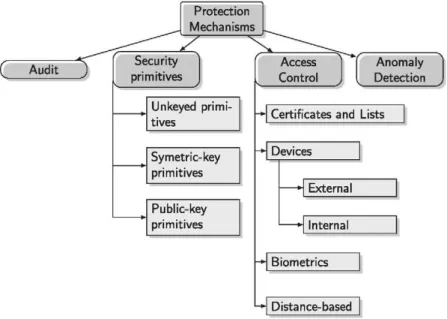
Fig. 5 provides a classification of the security mechanisms that will be discussed throughout this section.
5.1. No security
Many IMDs, particularly the older generations without wireless communication capabilities, have no security mechanisms at all
[78,80]. This is unacceptable for the newest generations of IMDs in which the presence of communication capabilities may jeopar-dize the patient's safety.
5.2. Auditing
One of the simplest security mechanisms consists of constantly registering all accesses—authorized or not—together with the patient's status. This is a measure aimed at facilitating the detec-tion of non-permitted acdetec-tions and constitutes a valuable source of evidences to take subsequent actions. Therefore, auditing helps to combat threats against non-repudiation. Unlikely, it does not prevent the occurrence of attacks, but may act as a deterrent ele-ment if appropriately impleele-mented, i.e., if it is not possible for an attacker to compromise the audit log and if it facilitates attribution of the attack. As a consequence of this, this sort of solutions should be complemented with appropriate mechanisms to detect and block such attacks, as well as measures to prevent them from hap-pening in the first place (e.g., cryptographic or access control solutions).
The main problem that auditing proposals face is the limited amount of memory available in IMDs. For instance, the whole memory of an ICD is less than 1 MB and around 75% of this mem-ory is used for medical functions. In that a case, only a few hun-dreds kilobytes could be used for logging events, which is extremely restricted. An additional memory could be added to the chip, but this would increase the size of the IMD, which is not recommendable.
To avoid increasing the memory of IMDs, the logging task can rely on an external device without memory and computation lim-itations. One example in the context of RFID systems is "RFID Guardian" [95], which collects and analyzes evidences of all events that occur in a predetermined range. A similar approach, called MedMon, has been recently proposed for IMDs and e-Health appli-cations [130]. The authors propose the use of an external device that works as a security monitor snooping and analyzing all com-munications to and from the IMD. The events are locally stored in the external device and an alarm could be raised to alert the patient. A more drastic solution can include blocking the commu-nication channel if a dangerous commucommu-nication is detected.
5.3. Cryptographic measures
Cryptography-based security solutions strongly depend on cryptographic primitives, which can be categorized in three main groups [82], as shown in Fig. 5. Unkeyed primitives, such as hash functions or one-way permutations, are cryptographic tools that do not use any key. Within the keyed cryptographic tools we can distinguish between symmetric-key and public-key primitives. In symmetric-key primitives a secret key is shared between the trusted entities. The type of primitives in this category is varied including symmetric key ciphers (block and stream ciphers), mes-sage authentication codes (MACs), pseudorandom sequences and identification primitives. On the other hand, public-key ciphers and signatures are two examples of asymmetric-key primitives. In this type of algorithms two keys are used, one of them is public and the other one must be kept secret.
In the context of IMDs, cryptographic measures are effective mechanisms to protect the wireless communication channel and the records stored in the device against tampering and information disclosure. Additionally, cryptographic protocols also provide a means to control and manage accesses to the IMD, thus providing
protection against spoofing and, in some cases, elevation of privi-lege attacks. Both symmetric [44,55] and public-key [25,112]
schemes have been proposed for these applications, although the latter are considerably more expensive in terms of communication, computation, and power consumption. Protocols based on public-key cryptographic schemes often exchange a high number of messages, which makes them quite energy demanding since sending and receiving messages consume power. Furthermore, public-key ciphers result in complex circuits that consume exces-sive resources (hardware and memory) and are inefficient in terms of power consumption [35,71]. Due to the resource limitations dis-cussed above for the current generation of implants, solutions based on symmetric-key approaches are the preferred option. Standardized protocols like the one proposed in ISO/IEC 9798 rely on the use of symmetric primitives (i.e., symmetric encryption or keyed hash function) and the encrypted tokens include random numbers (a PRNG is often used for its generation) to guarantee freshness between sessions [59].
Symmetric cryptographic schemes suffer from the key distribu-tion problem. In general, the IMD and other authorized devices such as the programmer need to share a key (or a set of keys) that is used to generate authentication tokens for gaining access to the IMD, and to encrypt communications. The suitability of a particular key distribution scheme depends on the type of IMD, the expected interactions with other parties, and other assumptions about the operational environment. For example, if the programmer and the IMD will have a lasting relationship, a pre-set key can be used. This solution could be valid when the programmer is always a device belonging to the patient or the physician. In these cases, a first approach consists of pre-loading a factor key on the autho-rized devices. This factor might be renegotiated between the legit-imate parties during the first communication session to update the key. We emphasize here that is crucial to protect these keys and guarantee that only authorized entities (i.e., the patient and healthcare staff) have access to the them [106]. Such keys will be used to build various cryptographic tokens (e.g., an authenticated token or an encrypted message) used in the transactions between legitimate entities in the system.
Other solutions suggest that the cryptographic keys used by the IMD can be stored in an external wearable device such as a smart bracelet. Externalizing the key storage incurs a significant risk, as the loss of such a device (e.g., if the patient losses the bracelet or it gets damaged) would render the IMD inaccessible and/or will facilitate access to unauthorized users [32]. Some authors propose to print the key into the patient's skin using ultraviolet pigmenta-tion (i.e., invisible tattoos) that can be read by medical personnel in case of emergency [103]. Note, however, that the keys might be read by an attacker who has physical access to the patient—its presence may be detected due to its proximity.
In the case of sporadic communications with authorized devices that nonetheless do not know the access key, a key agreement pro-tocol must be supported (e.g., RSA-based [112] or using physiolog-ical signals [117]).
evaluated on an artificial pancreas implant, has been proposed. In this case, the implant includes two separates cores (illness treat-ment and security tasks), and the overhead for the security module in terms of hardware and energy consumption is minimal [113].
The use of standard cryptographic solutions to provide security services in IMDs has been criticized, both for usability reasons and for the lack of rigor in the analysis of many proposals [98]. The main drawbacks that would entail the exclusive use of these solu-tions are [36]:
Inalterability. Incorporating cryptographic mechanisms in the
device implies that current implants must be re-designed and replaced. This will force patients to undergo a surgery proce-dure only to get a more secure device, as the treatment func-tions do not present any problem.
Patient's safety. The use of cryptographic measures embedded
in the device introduces some challenges for emergency situa-tions in which the communication with the IMD is necessary even for unauthorized parties (i.e., programmers who does not know the access key). This problem is not present in solu-tions based on external devices such as those discussed later in Section 5.4.2.
Maintenance. As security measures are implemented in the
device, there is an increment in the amount of software embed-ded in the implant, which also implies a higher likelihood of errors. Many authors support the idea of restricting as much as possible the software running on the device, keeping just those functionalities needed to treat the medical condition for what it was designed.
5.4. Access control
Access control mechanisms prevent unauthorized and inappro-priate uses of the IMD functions. Prior to proceed with a particular action (e.g., access, reading, reprogramming, etc.), the privileges of the requester are evaluated with the aim of assessing whether it is authorized to execute that particular action or not. In particular, permitted and forbidden operations are governed through access control policies that establish who can do what, possibly depend-ing on the context in which the access request takes place. Note that access control is fully compatible with other security mea-sures such as cryptographic protocols to protect the communica-tion channel. Furthermore, access control generally requires previous authentication, as decisions on whether an operation is permitted or not are made on the basis on the identity of the requester, who must be previously established.
We next describe a number of access control models suggested for IMDs and discuss their main advantages and limitations.
5.4.3. Certificates and lists based solutions
In [32], the authors present two classical authentication mech-anisms adapted for IMDs. One is based on Access Control Lists (ACLs)—an implementation of discretionary access control models based on the access matrix, while the second relies on a Public Key Infrastructure (PKI). The ACL defines which operations an authen-ticated reader is authorized to execute. Such permissions are per-manent once the ACL is programmed. Thus, although it can be reprogrammed in the future, it is intended for providing perma-nent access to certain readers. Contrarily, in PKI-based solutions the relationship between the IMD and the reader is transitory. In particular, the reader will have to repeat the procedure for obtain-ing its certificate to authenticate with the IMD in each new session.
In order to optimize the energy consumption in those cases where the reader communicates frequently with the IMD, the PKI and ACL approaches can be combined. For instance, the first time the reader is authenticated with the IMD, it will use its certificate.
After that, this particular reader is registered in the ACL, since using this approach is more efficient in terms of energy consump-tion than PKI-based soluconsump-tions.
One critical point is that the PKI and the certificate directories should be publicly—and permanently—accessible through the Internet. Consider, for example, a patient suffering an emergency condition while visiting a foreign country or just a different hospi-tal. The medical personnel should be able to obtain the required credentials. Connectivity or authentication problems with the PKI may prevent them from gaining the required credentials to modify or disable the IMD, which in some cases may threaten the patient's safety. Therefore, the needed PKI is very demanding in the sense that is global, a large number of participants are involved, and a huge set of iterations are possible - similar requirements are demanded to the PKI that is used in the borders with the new e-passports [91].
5.4.2. Delegation in external devices
Some authors have suggested to make use of an external device to control accesses to the IMD. Such devices would not be implanted in the patient's body, and part or all of the security func-tions would be delegated to them. This presents several benefits. On the one hand, the IMD would save battery life since security-related computations are performed externally. On the other hand, a single device can integrate a number of security capabilities, such as auditing, key management, authentication, and access control. Furthermore, as most of these capabilities operate at the physical layer, other sort of solutions can be used at higher layers.
Generally, the role of the external device is to act as a mediator between the programmer and the IMD. When the programmer needs to access the IMD, it first gains access to the external device and then communicates with the IMD. In [22], the authors present a solution based on external devices named "Cloaker". The IMD periodically checks the presence of the Cloaker. While it is detected, the IMD remains silent. Therefore, the Cloaker will pro-vide security to the patient while he holds it. Otherwise, the com-munications with the IMD are fully open to all readers. Using this approach, in an emergency condition it would suffice to remove the Cloaker from the patient to get full access to the device.
The authors of [22] provide a number of ideas about the role that such an external device could play. Two different possibilities are identified:
• The Cloaker would mediate in all exchanges until the IMD and the programmer successfully finish a key exchange. After that, both parties directly communicate with each other over a secure channel built using the shared key. The external device does not participate in such communications.
• A different possibility is having the Cloaker involved in all com-munications between the IMD and the programmer. In this case, all packets pass through it, which would allow to record them (for example, for a subsequent forensic analysis) and even implement filtering and attack detection functions. Note, how-ever, that in this setting the Cloaker becomes a single point of failure, so any malfunction or degradation in performance will affect the availability of the IMD.
Solutions based on external devices such as the one presented in [22] attempt to balance the security tensions described in Section 4. Security mechanisms are offered only in normal opera-tion and the safety of the patient is guaranteed in emergency con-ditions. Nevertheless, there are still some open questions that have not been definitely addressed, including:
the IMD sends a "hello" message to the Cloaker whenever an incoming message is detected. Another, more restrictive way consists of the IMD periodically sending "hello" messages to the Cloaker to check its presence. The result is stored in just one bit that indicates whether the Cloaker is present or not. • Both schemes discussed above are inefficient in terms of energy
consumption as a consequence of the messages exchanged to check the presence of the external device. The first solution avoids a continuous flow of requests to the Cloaker, but renders the system more vulnerable since the adversary knows the exact time when the Cloaker would be interrogated. Thus, the attacker could send a fake request to the Cloaker and then impersonate it. Contrarily, the second approach is much more secure but requires the IMD to continuously check the presence of the Cloaker.
• The authors do not address the problem of how deal with an attack that causes interferences in the communication channel between the IMD and the Cloaker.
• Finally, it is worth mentioning that [22] is not a definite solu-tions and the authors do not recommend its immediate adoption.
Another solution based on external devices is "RFID Guardian", proposed in [95]. RFID Guardian registers all devices in its range, manages keys, authenticates programmers that request access to the IMD, and blocks all unauthorized entities. Using this approach, all the devices in the neighborhood of the Guardian (i.e., about 1 or 2 m according to [95]) are detected and corrective measures could be enforced if needed. Although the solution was originally pro-posed in the context of RFID systems, the approach can be easily adapted to IMDs. The authors propose to integrate the Guardian into a device that the user (patient) always holds, such as a smart-phone or a smart wearable device (e.g., a watch, a bracelet, etc.). Other approaches are based on the use of hardware tokens. There is a wide variety of these devices, including disconnected and connected tokens, smart cards, bluetooth tokens, etc. In this case, the device stores a password shared with the IMD. The med-ical personnel would use this key to access the implant. The main drawback is the same as in other solutions based on external devices: if the token is lost or the patient forgets to carry it under an emergency condition, the IMD would be inaccessible [3].
Gollakota et al. proposed the use of an external device, named "shield" [39,38], that acts as an intermediary so that all communi-cations between the IMD and the programmer pass through it. The shield protects the communication channel by jamming messages sent to and from the IMD in such a way that no other entity can decode them. Similarly, it protects the IMD from unauthorized devices by jamming all messages coming from them. Fraudulent messages are rendered unusable after the jamming and the IMD would discard them simply by its inability to interpret them, thus preventing the execution of malicious actions.
In summary, the main advantage of solutions based on external devices is that they offer a high protection level against unautho-rized commands. The IMD will not respond to malicious re-programming commands or attacks to drain the battery. Their main drawbacks include:
• If the patient forgets the external device, the IMD would respond to all incoming (authorized or not) requests, which is only necessary in emergency mode.
• These solutions do not generally consider scenarios in which the external device is replaced by a malicious one. In this case, the security and privacy of the IMD would be highly compromised.
• The external device is fully visible to external entities, which can reveal sensitive information about the patient's medical
condition. Moreover, some authors have pointed out that it is a constant reminder to the patient about his medical condition. • These proposals often assume that the external device is a trusted entity. Nevertheless, this entity can be compromised or act maliciously. For instance, packets can be altered (e.g., flip-ping certain bits), dropped out, or blocked, which would render inoperative the communication with the IMD.
5.4.3. Trusting other implantable devices
In [47] it is proposed the idea of using a subcutaneous button that opens access to the IMD only after being pressed. This approach would protect the implant from all incoming communi-cations until the patient deliberately presses the button, which can be done only in controlled environments. Note, however, that this would fail to protect the IMD if the adversary has physical con-tact with the victim and can press the button, or leave an attacking device in the proximity of the patient waiting for the IMD to be accessible.
The same authors also present the notion of an "IMD Hub", this being an implantable device that works as a network switch for all the devices in the IBN and also plays the role of and authentication center. This approach suffers from an excessive trust on a unique central device, so the use of more connected hubs could be a more interesting approach both for security and performance reasons.
5.4.4. Proximity-based access control
These solutions base the access decisions on the distance between the programmer and the IMD, allowing only communica-tions with devices located at a short distance from the IMD [95]. In certain applications, it has been suggested that this can be achieved by having the IMD equipped with a magnetic switch. This is just a magnetic sensor that detects the magnetic field gen-erated by programmers in its proximity. Only after this switch has been activated the IMD will become available. After this, the IMD would send to the programmer the key to be used for subsequent communications during this session. Unfortunately, apart from security issues, it is unclear whether these solutions are safe enough, since having a magnetic field close to the implant might alter its functioning [70].
Other solutions are based on classical distance bounding proto-cols, these being schemes that compute an upper bound for the distance between two devices. In [93], Rasmussen et al. propose a device paring protocol in which the IMD and the programmer obtain a shared key. Messages are sent through an ultrasonic chan-nel and the response times—i.e., the time between sending a request and receiving an answer—are used to estimate the distance between the devices. This process can be repeated several times to upper bound the estimation. If the computed distance is less than a fixed threshold, the communication with the IMD continues; otherwise, it is interrupted. It is also worth mentioning that some authors consider that response times in the protocol could serve as a deterrent against replay attacks [32], as the device could detect old request being replayed and reject them.
Normal and emergency operation modes are considered in [93].
Distance-based solutions assume that a reader that is close to the IMD is not an adversary. It can be a legitimate programmer with the required credentials and within permitted range for nor-mal mode. Alternatively, it could be a legitimate reader but with-out the authorization tokens in an emergency condition and located very close (i.e., in emergency range) to the IMD. This leads to two major disadvantages that have not being considered by this sort of protocols:
• The IMD can be compromised if the adversary is within the defined range. It would be desirable to guarantee the security of the patient independently of the distance an attacker can be. There are many daily situations in which the attacker can get very close to the IMD, such as in a public transport vehicle and at the office. In other cases, the attacker can plant a pro-grammer device close enough to the patient's body and use it as a proxy for conducting his activities. Moreover, the attacker can be the patient himself trying to deliberately manipulate the IMD.
• There are techniques that allow an adversary to simulate being within the permitted range when in reality he is at a longer dis-tance. This is a key limitation for any protocol based exclusively on the computed distance.
5.4.5. Biometric measures
Biometrics refers to a number of identification techniques based on the patient's physical characteristics, such as his fingerprint, iris pattern, voice, and hand [8,92]. Interested readers can find in [77]
more details about the use of biometrics in the healthcare context. In [51], Hei and Du propose a solution that restricts access to authorized entities and deals with emergency situations where the patient can be unconscious or not holding his credentials (e.g., an external authorization token). The scheme uses biometric features from the patient in two separate steps or levels. Level 1 employs basic biometric information, such as fingerprints, iris color, and the patient's weight. Once level 1 is passed, level-2 authentication must be passed too in order to finally get access to the device. For that, biometric information extracted from the patient's iris must be provided. That information is pre-stored as a key in the memory of the IMD. Iris-based authentication has a high accuracy and is very efficient. Furthermore, to obtain a good snapshot of the iris a near infrared camera is needed, and the user has to be at a distance of between fifty and seventy centimetres, which is a very short range. As consequence of this, the patient would easily detect an attacker due to his proximity in many situations.
Similarly, in [127] Xu et al. propose the use of ECG (electrocar-diograms) signals to generate the patient's secret key. By using this the scheme avoids the need for pre-stored keys and the associated key distribution problem. Access control is guaranteed by a crypto-graphic protocol that employs this ECG-based key. On the other hand, communications between the IMD and the reader are coor-dinated by an external device named IMDGuard that is very similar to the RFID Guardian proposed in [95]. The presence of the IMDGuard means that the IMD works under normal mode and ECG-based access control is used. When the IMDGuard is absent, communications are not protected and access control is not enforced, which would allow anyone (e.g., medical personnel in an emergency situation, but also an adversary) to interact with the implant. A recent and detailed study about the use of ECG sig-nals for key generation can be found in [99].
In certain cases, biometric techniques can be easier to apply than solutions based on shared keys, since the key distribution problem is avoided and it is harder for the attacker to disclose the keys. In principle, the adversary could not impersonate the pro-grammer or the IMDGuard unless he has physical contact with the
patient. Despite this, biometric-based approaches have two main drawbacks:
• Firstly, the physical presence of the patient is needed. This is certainly not a disadvantage in an emergency situation, where the patient is physically located in the emergency room or equivalent. Unfortunately, this is not the case when medical personnel will attempt to access the IMD remotely.
• Secondly, biometric features are never perfect. Two measures taken at different times, or even acquired simultaneously but using two reading devices, could generate different results. A straightforward use of such measures might generate wrong keys, when in reality the user is authorized. Error correction techniques are used to avoid this [2,14]. This problem is known as truth rejection rate and implies that not all biometric data can be used for key generation (or authentication). Thus, the measure has to be gathered from body parts so that the differ-ences between measures are within a acceptable range and can be corrected [13].
5.5. Anomaly detection
The availability of the IMD functions is crucial since the treat-ment—and even the patient's life—can be compromised otherwise. If an attack is detected, the patient can be informed (e.g., by a noti-fication mechanism) or the device can be rendered inaccessible via switching off the communications (or jamming the channel) while the medical functions are kept running. The difficulty to prevent this sort of attacks mainly arises from the use of the wireless com-munication channel. Comcom-munication between the IMD and the reader starts with the IMD authenticating the reader. If the reader does not pass the authentication step, the communication is inter-rupted. This consumes resources in the IMD and, therefore, can be exploited by an adversary who, for example, repeatedly attempts to communicate with the IMD. The result would be a classical Denial-of-Service (DoS) attack in which the battery level could be drastically reduced and memory/storage could be also affected— in each authentication, some registers are used to store security values such as session tokens and logs. In general, this sort of attacks are known as Resource Depletion (RD) attacks and focus on wasting the resources of the IMD [57]. They are very easy to implement and their consequences can be very harmful as the bat-tery life of the IMD could be shortened from several yeas to a few weeks just by sending dummy requests.
Standard cryptographic solutions do not prevent these attacks, and existing studies about RD attacks in sensors networks [94]
are not directly applicable to IMDs since implants have more sev-ere resource restrictions. Moreover, thsev-ere is an extra difficultly for adding new resources—the implant is within the body, which is not the case of sensor networks. This motivates the need for designing solutions that take into account the fact that these devices will be used within a human body.