Neighbourhood disorder has been shown in literature as one of the most relevant contextual variables for antisocial behaviour development. Nevertheless, the study of this variable has not always been clear, and terms such as marginality, poverty, and socioeconomic status (SES) have overlapped many times, resulting in an accumulation of research inconsistencies (Fabio, Chen, & Bazaco, 2013; Jennings & Fox, 2016). Many studies have found a signifi cant direct effect of SES on a vast range of antisocial behaviours in adolescence, both violent and nonviolent (Farrington, Loeber, & Berg, 2012; Murry, Berkel, Gaylord-Harden, Copeland-Linder, & Nation, 2011), as well as persistence of this type of behaviours in adulthood (Fabio, Tu, Loeber, & Cohen, 2011; Mason et al., 2010).
However, it has been proposed that the main contextual infl uence lies not in social class or family income per se but in other marginality variables present in the neighbourhood, which
refl ect the social collective effi cacy (Freedman & Woods, 2013; Ingoldsby, Shelleby, Lane, & Shaw, 2012). Thus, other risk factors in the neighbourhood, such as violence, delinquency or a lack of resources, have shown signifi cant direct relations with adolescent antisocial and criminal behaviour (Patchin, Huebner, McCluskey, Varano, & Bynum, 2006; Vanfossen, Brown, Kellam, Sokoloff, & Doering, 2010).
On another hand, empirical evidence has established direct effects of personality on violent and antisocial behaviour (Jolliffe, 2013; Jones, Miller, & Lynam, 2011). In particular, impulsiveness, narcissism, and callous-unemotional (CU) traits are especially important in the prediction of antisocial behaviour and criminal recidivism. Several researches found empirical support for the 3-factor model of adolescent psychopathic personality consisting of Impulsiveness, Narcissism, and CU traits (e.g., Frick, Kimonis, Dandreaux, & Farell, 2003; Vitacco, Rogers, & Neumann, 2003). And, certainly, the psychopathic personality traits are one of the most robust predictors of aggressive and delinquent behaviours over life course (Asscher et al., 2011; Frick & White, 2008; Vaughn, Howard, & DeLisi, 2008).
In recent years, interest in the study of indirect effects between personality traits and the neighbourhood context on antisocial behaviour has increased substantially. Thus, currently the
ISSN 0214 - 9915 CODEN PSOTEG Copyright © 2016 Psicothema www.psicothema.com
Psychopathic traits mediate the effects of neighbourhood risk
on juvenile antisocial behaviour
Olalla Cutrín Mosteiro, José Antonio Gómez-Fraguela, Lorena Maneiro Boo, Jorge Sobral Fernández
and María Ángeles Luengo Martín
Universidade de Santiago de Compostela
Abstract
Resumen
Background: Research of the indirect effects of neighbourhood risk through psychopathic personality traits (i.e., impulsiveness, narcissism and callous-unemotional traits) on juvenile antisocial behaviour has become relevant. Methods: In the current study, mediation effects were assessed using a sample composed of 406 young people between 14 and 21 years old, 82.7% males, from juvenile centres in Galicia and Andalucía (Spain). Results: The results showed signifi cant mediation effects of neighbourhood risk on antisocial behaviour through impulsiveness and callous-unemotional traits. Conclusions: The implications of the mediation effects for prevention, risk assessment, and risk management in juvenile offenders are discussed.
Keywords: Juvenile, antisocial behaviour, psychopathic traits, neighbourhood risk, mediation effects.
Los rasgos psicopáticos median el efecto de la marginalidad social en la conducta antisocial juvenil.Antecedentes: el estudio de los efectos indirectos de la marginalidad social a través de los rasgos de personalidad psicopática (i.e., impulsividad, narcisismo y dureza-insensibilidad emocional) sobre el comportamiento antisocial juvenil ha cobrado gran relevancia. Método: en este estudio se analizan los efectos de mediación utilizando una muestra compuesta por 406 jóvenes de entre 14 y 21 años, el 82,7% hombres, de centros de menores en Galicia y Andalucía (España).
Resultados: los resultados mostraron efectos de mediación signifi cativos de la marginalidad sobre el comportamiento antisocial a través de la impulsividad y la dureza-insensibilidad emocional. Conclusiones: se discuten las implicaciones de los efectos de mediación para la prevención, evaluación y gestión del riesgo en jóvenes infractores.
Palabras clave: jóvenes, conducta antisocial, rasgos psicopáticos, marginalidad social, efectos de mediación.
Psicothema 2016, Vol. 28, No. 4, 428-434
doi: 10.7334/psicothema2016.55
Received: February 12, 2016 • Accepted: July 28, 2016 Corresponding author: José Antonio Gómez-Fraguela Facultad de Psicología
environment classical duality has been overcome and a holistic and bioecological perspective has been established, taking into account the interactional effects of both variables (Bronferbrenner & Morris, 2006; Magnusson & Stattin, 2006). It has been proven repeatedly that the environment has an undeniable effect on psychosocial adaptation or maladjustment (Eccles & Roeser, 2011; Foster & Brooks-Gunn, 2013), as well as on emotional and personality development (DeWall, Deckman, Pond, & Bonser, 2011; Leventhal, Dupéré, & Brooks-Gunn, 2009). Specifi cally, it has been proposed that residing in a high-crime neighbourhood, amongst other environmental factors, might infl uence the development of psychopathic personality traits (Farrington, Ullrich, & Salekin, 2010).
In that regard, some studies have analysed the existence of indirect effects between personality traits and neighbourhood context, showing contradictory results. In some cases, adolescents with greater impulsiveness and CU traits who reside in disadvantaged neighbourhoods show signifi cantly higher levels of aggressive and violent criminal behaviours (e.g., Lynam et al., 2000; Markowitz, Ryan, & Marsh, 2014; Meier, Slutske, Arndt, & Cadoret, 2008). In other studies, these amplifi ed effects of such personality traits on antisocial behaviour are observed in neighbourhoods with greater SES and more social cohesion (e.g., Vazsonyi, Cleveland, & Wiebe, 2006; Zimmerman, 2010). In others, however, no moderation effect was found between impulsiveness or CU traits and the neighbourhood (Chen & Jacobson, 2013; Kroneman, Hipwell, Loeber, Koot, & Pardini, 2011; Ray, Thornton, Frick, Steinberg, & Cauffman, 2015).
In view of the inconsistency present in the empirical evidence and the lack of indirect effects research of impulsiveness, narcissism and CU traits simultaneously, the aim of this study was to analyse the joint infl uences of these psychopathic personality traits and neighbourhood risk on adolescent antisocial behaviour in a Spanish sample. Despite that most research analyses indirect moderation effects, the current study was focused on the analysis of mediation effects. This decision was based on meeting the methodological criterion proposed by the MacArthur approach (Kraemer, Kiernan, Essex, & Kupfer, 2008; Kraemer, Stice, Kazdin, Offord, & Kupfer, 2001). These guidelines recommend mediation in the case of associated or correlated variables. Therefore, mediation has been considered more adequate based on the assumption that neighbourhood context and personality do not independently infl uence behaviour, but rather act jointly and interrelatedly (e.g., Eccles & Roeser, 2011; Farrington et al., 2010; Leventhal et al., 2009).
Thus, the fi rst objective of this study was to analyse the existence of mediation effects of neighbourhood risk on adolescent antisocial behaviour through the psychopathic personality traits (i.e., impulsiveness, narcissism, and CU traits; see Figure 1). The second objective was to verify whether these mediated effects of neighbourhood risk are stronger than its direct effects on antisocial behaviour. The fi ndings of the current study would have important implications within the fi eld of prevention and risk management with juvenile offenders.
Method
Participants
The sample is composed of 406 young people aged 14 to 21 (M = 16.89; SD = 1.62), 82.7 % males, from 29 juvenile centres from
two regions of Spain: Galicia (NW) and Andalucía (S); 41.70% had committed property offenses and 32.43% had committed violent offenses; the rest were not specifi ed. Most of the sample was serving some type of institutionalization measure (n = 290; 71.43%). Regarding substance misuse (i.e., weekly or daily frequency of consumption), 39.11% presented alcohol misuse, 39.73% showed cannabis misuse, and 8.92% showed cocaine misuse. Finally, 46.31% of the sample displayed previous violent conducts and 24.10% presented family criminality.
Instruments
This study is focused on the assessment of the following variables: neighbourhood risk, impulsiveness, narcissism, CU traits, and antisocial behaviour. Different scales from the protocol of Valoración del Riesgo en Adolescentes Infractores [Juvenile Offender’s Risk Assessment] (VRAI; Luengo, Cutrín, & Maneiro, 2015) were used, which have previously been validated.
Neighbourhood risk.Technicians of juvenile centres respond
to a 4-item scale (Gómez-Fraguela, Villar, & Luengo, 2011) to evaluate the presence of delinquency, drug access, violence, and poverty within the youth’s neighbourhood, using a 3-point scale ranging from 1 (Little) to 3 (Much).
Impulsiveness.This personality trait was measured by a 10-item self-reported scale, based on a short version of the Impulsiveness and Venturesomeness subscales from the I7 (Aluja & Blanch, 2007). This version is composed of fi ve items about impulsive behaviours (e.g., “I do things without thinking twice”), and fi ve items focused on sensation-seeking behaviours, and risk taking (e.g., “I like living exciting new experiences”), using a 4-point Likert scale ranging from 0 (Not true) to 3 (Very true).
Narcissism. This variable was assessed with a short
self-reported version of the Antisocial Process Screening Device (APSD; Frick, & Hare, 2001) validated for an adolescent Spanish population (Romero, Luengo, Gómez-Fraguela, Sobral, & Villar, 2005). This version is composed of seven items (e.g., “I considered myself better or more important than others”), and is scored on a 4-point scale ranging from 0 (Not true) to 3 (Very true).
Callous-Unemotional. These traits were assessed by an adapted version of the Inventory of Callous-Unemotional traits (ICU; Essau, Sasagawa, & Frick, 2006) validated for adolescent Spanish populations (López-Romero, Gómez-Fraguela, & Romero, 2015). This version is a 24-item self-report scale rated on a 4-point scale ranging from 0 (Not at all true) to 4 (Defi nitely true). This scale presents 11 statements focused on assessing the level of callousness in adolescents (e.g., “The feelings of others are important to me”), fi ve referring to unemotional traits (e.g., “I do not show my emotions to others”), and eight focusing on the assessment of uncaring feelings (e.g., “I feel bad or guilty when I do something wrong”).
Procedure
The compliance of the ethical standards was taking into account throughout the investigation. The study was presented to the heads of the juvenile centres, and qualifi ed psychologists explained the objectives and provided the proper instructions to the participants. Additionally, consent of the youths’ parents or legal caregivers was requested in those centres. Participation was voluntary, and anonymity and confi dentiality of information were totally guaranteed.
Data analysis
Statistical analyses were conducted on IBM SPSS Statistics 20, and SPSS Amos 19 was used to analyse the structural equation modelling. Correlations were analysed to determine whether variables could be included in the mediation analysis. Under the guidelines proposed in the MacArthur approach (Kraemer et al., 2008; Kraemer et al., 2001), in order to consider a variable as a mediator, it must be correlated with the independent variable and it must occur after the independent variable. Therefore, personality traits were considered as mediator variables because these traits are gradually developed throughout childhood within the environment. For the estimation of this structural equation model (see Figure 1), the Maximum Likelihood (ML) method was used as well as the following goodness-of-fi t indexes: The traditional
χ2/DF, the CFI, the RMSEA, and the SRMR.
Results
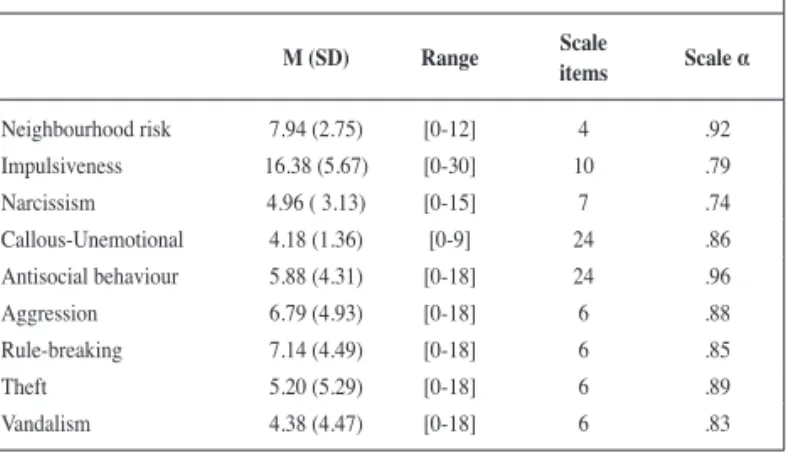
Table 1 shows descriptive statistics, including means, standard deviations, and scale ranges of the main study variables, as well as the number of items of each scale, and their internal consistency (Cronbach’s α). As regards antisocial behaviour, rule-breaking followed by aggression were the most frequent behaviours amongst the young people.
As shown in Table 2, all correlation coeffi cients were signifi cant and positive. Personality traits were more strongly correlated with antisocial behaviour than neighbourhood risk, primarily impulsiveness. Analysing the types of antisocial behaviour, it was found that impulsiveness and CU traits were more strongly correlated with aggressive behaviour, whereas narcissism was more strongly correlated with rule-breaking. On another hand, neighbourhood risk was more strongly correlated with rule-breaking and showed the lowest correlations with aggressive behaviour and vandalism. Likewise, neighbourhood risk and personality traits were also correlated signifi cantly and positively. However, these correlations were very low, especially in the case of CU traits.
After preliminary analyses, the structural equation model was tested in order to check the hypotheses presented in this study. This mediated model obtained acceptable fi t indexes, χ2 (283) = 2.19, p = .000, CFI = .925, RMSEA = .058, CI [.052, .064], SRMR = .060. The results indicate that neighbourhood risk explains between 4 and 5% of variance of each personality trait (impulsiveness, narcissism, and CU traits), and that relationships between neighbourhood risk and such personality traits explain 66% of the variance of juvenile antisocial behaviour. As shown in Figure 1, neighbourhood risk exerts signifi cant direct effects on the three personality traits. However, only the impulsiveness and CU traits present signifi cant direct relationships with antisocial behaviour, with impulsiveness exerting the greatest infl uence.
Regarding indirect effects, results indicate that the mediated effect of neighbourhood risk through psychopathic traits was signifi cant, β = .20, p = .011, 95% CI [.10, .29]. Therefore, neighbourhood risk only exerts signifi cant effects on the antisocial behaviour of Spanish adolescents indirectly. Considering the total effects that neighbourhood risk exerts on antisocial behaviour, β = .31, p = .007, 95 % CI [.20, .41], the mediated effects through the presence of these personality traits would reach approximately two thirds of its infl uence. In other words, of the total effects that neighbourhood risk exerts on antisocial behaviour, 65% would correspond to mediated indirect effects.
Discussion
The fi ndings of this study showed, as expected, that the presence of impulsiveness and CU traits directly favours the development of antisocial behaviour throughout adolescence, primarily
Table 1
Descriptive results of neighbourhood risk, personality traits, and the antisocial behaviours
M (SD) Range Scale
items Scale α
Neighbourhood risk 7.94 (2.75) [0-12] 4 .92
Impulsiveness 16.38 (5.67) [0-30] 10 .79
Narcissism 4.96 ( 3.13) [0-15] 7 .74
Callous-Unemotional 4.18 (1.36) [0-9] 24 .86 Antisocial behaviour 5.88 (4.31) [0-18] 24 .96
Aggression 6.79 (4.93) [0-18] 6 .88
Rule-breaking 7.14 (4.49) [0-18] 6 .85
Theft 5.20 (5.29) [0-18] 6 .89
Vandalism 4.38 (4.47) [0-18] 6 .83
Table 2
Results of the correlation analysis between the antisocial behaviours, neighbourhood risk, and personality traits
Neighbour. risk Global Antisocial
Behaviour Aggression Rule-breaking Theft Vandalism
Neighbour. risk .222*** .188** .254*** .200*** .156**
Impulsiveness .167** .623*** .592*** .585*** .544*** .513***
Narcissism .156** .555*** .480*** .511*** .509*** .488***
CU traits .118* .359*** .360*** .320*** .303*** .305***
impulsiveness (Asscher et al., 2011; Jolliffe & Farrington, 2009; Vaughn et al., 2008). However, narcissism was not related to antisocial behaviour, perhaps because it is specifi cally related to some type of antisocial or behavioural problem not measured in this study, such as relational aggression (e.g., Kerig & Stellwagen, 2010; Lau & Marsee, 2013). On another hand, the direct relations between neighbourhood risk and the psychopathic traits were signifi cant and positive. This fi nding supports the proposal that environment might infl uence personality expression and adolescent emotional development (DeWall et al., 2011; Leventhal et al., 2009) and, more specifi cally, that residing in a high-crime neighbourhood might infl uence the development of psychopathic personality traits (Farrington et al., 2010).
Therefore, because neighbourhood risk was signifi cantly related to the psychopathic traits, and in turn, impulsiveness and CU traits were signifi cantly related to antisocial behaviour, the fi rst hypothesis of this study was partially supported: Neighbourhood risk exerts its infl uence on antisocial behaviour through the mediation of impulsiveness and CU traits in Spanish youth. In fact, the results found that neighbourhood risk does not present a signifi cant direct relationship with antisocial behaviour, so its infl uence is totally mediated by such personality traits. Despite the absence of ample evidence analysing these mediation effects, other studies also found that the neighbourhood context infl uences antisocial behaviour through its relation with other variables, such as academic achievement, peer group or parenting (Defoe, Impulsiveness
Narcissism
Callous-unemotional
Neighbourh
risk Antisocialbehaviour
APSD1
APSD6
APSD8
APSD10
APSD11
APSD15
APSD16 .13
.23
.27
.45
.49
.29
.10
.36***
.48***
.52***
.67***
.70***
.54***
.31***
.11
.66
Uncaring
Unemot
Callous .62
.11
.90 .79***
.34***
95*** .23**
.21**
.21** .04 .21*
.07 .04
.61* .05
.73
.84
.72
.58 Agress
Rules
Theft
Vandal .85***
.92***
.85***
.76*** .48
.69
.79
.94
.69***
.83***
.89***
.97*** Poverty
Violenc
Drugs
Delinq
Impul6 Impul7 Impul9 Impul10 Impul11
.41 .19 .43 .23 .06
.64*** .43*** .65*** .48*** .25***
Seek2 Seek12 Seek15 Seek17 Seek18
.62*** .72*** .38*** .37*** .52***
.39 .52 .14 .13 .27
Figure 1. Mediation model of neighbourhood risk on antisocial behaviour through impulsiveness, narcissism, and CU traits. The model shows the determination coeffi cients, the structural coeffi cients, and the standardized regression coeffi cients for each variable. The coeffi cients below the latent variables correspond to their explained variance.
Farrington, & Loeber, 2013; Mrug & Windle, 2009; Wright, Kim, Chassin, Losoya, & Piquero, 2014).
As regards the magnitude of the effects, the fi ndings support the second hypothesis considered in this study, showing that mediated effects are stronger than direct effects. Thus, the mediation effects through impulsiveness and CU traits, besides being the only signifi cant ones, accounted for approximately two thirds of the total effects that neighbourhood risk exerted on juvenile antisocial behaviour. These results suggest, in line with previous evidence, that personality is a more proximal risk factor for the development of antisocial and criminal behaviour than neighbourhood context, as well as that psychopathic traits are a robust predictor of these behaviours (Andrews & Bonta, 2010; Asscher et al., 2011; Vaughn et al., 2008). The results also suggest that neighbourhood risk does not constitute a signifi cant independent risk factor for antisocial behaviour in Spanish youth, but it must be taken into account through the presence of other variables (Eccles & Roeser, 2011; Jennings & Fox, 2016).
Specifically, the obtained results allow drawing some conclusions and practical implications relevant to the fi eld of prevention and risk management with juvenile offenders. Firstly, given that the effect of neighbourhood risk is fully mediated by impulsiveness and CU traits, prevention efforts should be based on the strengthening of resilience in youngsters, as it buffers the effect of these personality traits on antisocial behaviour (Bartol, 2006; Fergus & Zimmerman, 2005). Secondly, due to the signifi cant relationship between neighbourhood and psychopathic traits, prevention should encourage characteristics of social resilience (e.g., social cohesion, school involvement) to buffer the effect of these and other risk factors related to antisocial behaviour (Fagan, Wright, & Pinchevsky, 2014; Wickes, Hipp, Sargeant, & Homel, 2013). Taking into account these considerations, these results may
indicate that socio-educational measures in an open system might be adequate regardless of neighbourhood risk, and more intensive interventions should be applied concurrently for those adolescents who present psychopathic traits. Moreover, intervention programs applied in institutional contexts should be especially focused on managing impulsiveness and CU traits. Therefore, personality trait assessment is essential in the legal context.
Nevertheless, this study shows some limitations that should be taken into account for the adequate interpretation of the results. Firstly, the limited number of females made it impossible to analyse gender moderation effects, as the results could be biased by the considerable difference in gender composition of the sample. Secondly, future works should examine the infl uence of mediation effects on different types of antisocial behaviour (i.e., violent and nonviolent behaviours). Thirdly, the neighbourhood risk variable was informed by technicians; therefore, future studies should include objective measures of neighbourhood disorder. To sum up, future studies using longitudinal designs should solve these limitations to clarify the mediation effects of neighbourhood risk and psychopathic personality traits on juvenile antisocial behaviour, as well as to analyse more deeply the different risk profi les associated with these variables.
Acknowledgements
This study was supported by the Subdirección General de Proyectos de Investigación (Ministerio de Economía y Competitividad, Gobierno de España) under Grants PSI2011-29704-C03-01 and PSI2015-65766-R. This study was also supported by the Programa de Axudas á etapa predoutoral da Xunta de Galicia (Consellería de Cultura, Educación e Ordenación Universitaria).
References
Aluja, A., & Blanch, A. (2007). Comparison of impulsiveness, venturesomeness and empathy (I7) structure in English and Spanish samples: Analysis of different structural equation models. Personality
and Individual Differences, 43, 2294-2305.
Andrews, D. A., & Bonta, J. (2010). The psychology of criminal conduct
(5th ed.). Cincinnati, OH, US: Anderson Publishing Co.
Asscher, J. J., van Vugt, E. S., Stams, G. J. J., Deković, M., Eichelsheim, V. I., & Yousfi , S. (2011). The relationship between juvenile psychopathic traits, delinquency and (violent) recidivism: A meta-analysis. Journal
of Child Psychology and Psychiatry, 52, 1134-1143.
Bartol, C. R. (2006). Resilience and antisocial behavior. In C. R. Bartol, & A. M. Bartol (Eds.), Current perspectives in forensic psychology
and criminal justice (pp. 79-92). Thousand Oaks, CA, US: Sage
Publications.
Bronferbrenner, U., & Morris, P. A. (2006). The bioecological model of human development. In R. M. Lerner, & W. Damon (Eds.), Handbook of child psychology: Vol. 1. Theoretical models of human development
(6th ed., pp. 793-828). Hoboken, NJ, US: John Wiley & Sons Inc. Chen, P., & Jacobson, K. C. (2013). Impulsivity moderates promotive
environmental infl uences on adolescent delinquency: A comparison across family, school, and neighborhood contexts. Journal of Abnormal
ChildPsychology, 41, 1133-1143.
Defoe, I. N., Farrington, D. P., & Loeber, R. (2013). Disentangling the relationship between delinquency and hyperactivity, low achievement, depression, and low socioeconomic status: Analysis of repeated longitudinal data. Journal of Criminal Justice, 41, 100-107.
DeWall, C. N., Deckman, T., Pond, R. S., Jr., & Bonser, I. (2011). Belongingness as a core personality trait: How social exclusion infl uences social functioning and personality expression. Journal of Personality, 79, 979-1012.
Eccles, J. S., & Roeser, R. W. (2011). School and community infl uences on human development. In M. H. Bornstein & M. E. Lamb (Eds.),
Developmental science: An advanced textbook (6th ed., pp. 571-643).
New York, NY, US: Psychology Press.
Essau, C. A., Sasagawa, S., & Frick, P. J. (2006). Callous-unemotional traits in a community sample of adolescents. Assessment, 13, 454-469.
Fabio, A., Chen, C., & Bazaco, M. C. (2013). Neighborhood infl uences on the development of aggression and youth violence. In C. R. Thomas & K. Pope (Eds.), The origins of antisocial behavior: A developmental
perspective (pp. 181-196). New York, NY, US: Oxford University
Press.
Fabio, A., Tu, L., Loeber, R., & Cohen, J. (2011). Neighborhood socioeconomic disadvantage and the shape of the age-crime curve.
American Journal of Public Health, 101, S325-S332.
Fagan, A. A., Wright, E. M., & Pinchevsky, G. M. (2014). The protective effects of neighborhood collective effi cacy on adolescent substance use and violence following exposure to violence. Journal of Youth and
Adolescence, 43, 1498-1512.
Farrington, D. P., Ullrich, S., & Salekin, R. T. (2010). Environmental infl uences on child and adolescent psychopathy. In R. T. Salekin & D. R. Lynam (Eds.), Handbook of Child and Adolescent Psychopathy
(pp. 202-230). New York, NY, US: Guilford Press.
Fergus, S., & Zimmerman, M. A. (2005). Adolescent resilience: A framework for understanding healthy development in the face of risk.
Annual Review of Public Health, 26, 399-419.
Foster, H., & Brooks-Gunn, J. (2013). Neighborhood infl uences on antisocial behavior during childhood and adolescence. In C. L. Gibson & M. D. Krohn (Eds.), Handbook of life-course criminology:
Emerging trends and directions for future research (pp. 69-90). New
York, NY, US: Springer.
Freedman, D., & Woods, G. W. (2013). Neighborhood effects, mental illness and criminal behavior: A review. Journal of Politics and Law, 6, 1-16.
Frick, P. J., & Hare, R. D. (2001). Antisocial process screening device. Toronto, Canada: Multi-Health System.
Frick, P. J., Kimonis, E. R., Dandreaux, D. M., & Farell, J. M. (2003). The 4-year stability of psychopathic traits in non-referred youth.
Behavioral Sciences and the Law, 21, 713-736.
Frick, P. J., & White, S. F. (2008). Research review: The importance of callous-unemotional traits for developmental models of aggressive and antisocial behavior. Journal of Child Psychology and Psychiatry,49, 359-375.
Gómez-Fraguela, J. A., Villar, P., & Luengo, M. A. (2011, June). Variables de personalidad y psicosociales para la valoración del riesgo en
menores infractores [Personality and psychosocial variables for risk
assessment in young offenders]. Paper presented at the Eighth Spanish Congress of Criminology, San Sebastián, Spain.
Ingoldsby, E. M., Shelleby, E., Lane, T., & Shaw, D. S. (2012). Extrafamilial contexts and children’s conduct problems. In V. Maholmes & R. B. King (Eds.), The Oxford handbook of poverty and child development
(pp. 404-422). New York, NY, US: Oxford University Press. Jennings, W. G., & Fox, B. H. (2016). Neighborhood risk and development
of antisocial behavior. In T. P. Beauchaine & S. P. Hinshaw (Eds.), The
Oxford handbook of externalizing spectrum disorders (pp. 313-322).
New York, NY, US: Oxford University Press.
Jolliffe, D. (2013). Exploring the relationship between the Five-Factor Model of personality, social factors and self-reported delinquency.
Personality and Individual Differences, 55, 47-52.
Jolliffe, D., & Farrington, D. P. (2009). A systematic review of the relationship between childhood impulsiveness and later violence. In M. McMurran & R. Howard (Eds.), Personality, personality disorder
and violence: An evidence based approach (pp. 41-61). Chichester,
UK: Wiley-Blackwell.
Jones, S. E., Miller, J. D., & Lynam, D. R. (2011). Personality, antisocial behavior, and aggression: A meta-analytic review. Journal of Criminal Justice, 39, 329-337.
Kerig, P. K., & Stellwagen, K. K. (2010). Roles of callous-unemotional traits, narcissism, and machiavellianism in childhood aggression.
Journal of Psychopathology and Behavioral Assessment, 32,
343-352.
Kraemer, H. C., Kiernan, M., Essex, M., & Kupfer, D. J. (2008). How and why criteria defi ning moderators and mediators differ between the Baron & Kenny and MacArthur approaches. Health Psychology, 27, S101-S108.
Kraemer, H. C., Stice, E., Kazdin, A., Offord, D., & Kupfer, D. J. (2001). How do risk factors work together? Mediators, moderators and independent, overlapping and proxy risk factors. American Journal of
Psychiatry, 158, 848-856.
Kroneman, L. M., Hipwell, A. E., Loeber, R., Koot, H. M., & Pardini, D. A. (2011). Contextual risk factors as predictors of disruptive behavior disorder trajectories in girls: The moderating effect of callous-unemotional features. Journal of Child Psychology and Psychiatry, 52, 167-175.
Lau, K. S. L., & Marsee, M. A. (2013). Exploring narcissism, psychopathy, and machiavellianism in youth: Examination of associations with antisocial behavior and aggression. Journal of Child and Family Studies, 22, 355-367.
Leventhal, T., Dupéré, V., & Brooks-Gunn, J. (2009). Neighborhood infl uences on adolescent development. In R. M. Lerner & L. Steinberg (Eds.), Handbook of adolescent psychology: Vol. 2. Contextual
infl uences on adolescent development (3rd ed., pp. 411-443). Hoboken,
NJ, US: John Wiley & Sons Inc.
López-Romero, L., Gómez- Fraguela, J. A., & Romero, E. (2015). Assessing Callous-Unemotional Traits in a Spanish Sample of Institutionalized Youths: The Inventory of Callous-Unemotional Traits. Journal of
Psychopathology and Behavioral Assessment, 37, 392-406.
Luengo, M. A., Cutrín, O., & Maneiro, L. (2015). Protocolo de Valoración del Riesgo en Adolescentes Infractores: una herramienta informatizada para la gestión del riesgo [Juvenile Offenders Risk Assessment Protocol: A computerized tool for managing risk]. Infancia, Juventud y Ley, 6, 51-58.
Luengo, M. A., Otero-López, J. M., Romero, E., Gómez-Fraguela, J. A., & Tavares-Filho, E. T. (1999). Análisis de ítems para la evaluación de la conducta antisocial: un estudio transcultural [Item analysis in the assessment of antisocial behavior: a cross-cultural study].
Revista Iberoamericana de Diagnóstico y Evaluación Psicológica, 1, 21-36.
Lynam, D. R., Caspi, A., Moffi t, T. E., Wikström, P., Loeber, R., & Novak, S. (2000). The interaction between impulsivity and neighborhood context on offending: The effects of impulsivity are stronger in poorer neighborhoods. Journal of Abnormal Psychology, 109, 563-574. Magnusson, D., & Stattin, H. (2006). The person in context: A
holistic-interactionistic approach. In R. M. Lerner & W. Damon (Eds.),
Handbook of child psychology: Vol. 1. Theoretical models of human
development (6th ed., pp. 400-464). Hoboken, NJ, US: John Wiley &
Sons Inc.
Markowitz, A. J., Ryan, R. M., & Marsh, A. A. (2014). Neighborhood income and the expression of callous-unemotional traits. European Child & Adolescent Psychiatry, 24, 1103-1118.
Mason, A. W., Hitch, J. E., Kosterman, R., McCarty, C. A., Herrenkohl, T., & Hawkins, D. J. (2010). Growth in adolescent delinquency and alcohol use in relation to young adult crime, alcohol use disorders, and risky sex: A comparison of youth from low-versus middle-income backgrounds. Journal of Child Psychology andPsychiatry, 51, 1377-1385.
Meier, M. H., Slutske, W. S., Arndt, S., & Cadoret, R. J. (2008). Impulsive and callous traits are more strongly associated with delinquent behavior in higher risk neighborhoods among boys and girls. Journal
ofAbnormal Psychology, 117, 377-385.
Mrug, S., & Windle, M. (2009). Mediators of neighborhood infl uences on externalizing behavior in preadolescent children. Journal of Abnormal
Child Psychology, 37, 265-280.
Murry, V. M., Berkel, C., Gaylord-Harden, N. K., Copeland-Linder, N., & Nation, M. (2011). Neighborhood poverty and adolescent development.
Journal of Research on Adolescence, 21, 114-128.
Patchin, J. W., Huebner, B. M., McCluskey, J. D., Varano, S. P., & Bynum, T. S. (2006). Exposure to community violence and childhood delinquency. Crime & Delinquency, 52, 307-332.
Ray, J. V., Thornton, L. C., Frick, P. J., Steinberg, L., & Cauffman, E. (2015). Impulse control and callous-unemotional traits distinguish patterns of delinquency and substance use in justice involved adolescents: Examining the moderating role of neighborhood context.
Journal of Abnormal Child Psychology, 44, 599-611.
Romero, E., Luengo, M. A., Gómez-Fraguela, J. A., Sobral, J., & Villar, P. (2005). Evaluación de la psicopatía infanto-juvenil: estudio en una muestra de niños institucionalizados [Assessment of childhood psychopathy: Study in a sample of institutionalized children]. Anuario
de Psicología Jurídica, 15, 23-40.
Vanfossen, B., Brown, C. H., Kellam, S., Sokoloff, N., & Doering, S. (2010). Neighborhood context and the development of aggression in boys and girls. Journal of Community Psychology, 38, 329-349. Vaughn, M. G., Howard, M. O., & DeLisi, M. (2008). Psychopathic
personality traits and delinquent careers: An empirical examination.
International Journal of Law and Psychiatry, 31, 407-416.
Vazsonyi, A. T., Cleveland, H. H., & Wiebe, R. P. (2006). Does the effect of impulsivity on delinquency vary by level of neighborhood disadvantage? Criminal Justice and Behavior, 33, 511-541.
Vitacco, M. J., Rogers, R., & Neumann, C. S. (2003). The Antisocial Process Screening Device: An examination of its construct and criterion validity. Assessment, 10, 143-150.
ties, neighborhood cohesion and the capacity to respond to violence, delinquency and civic problems. American Journal of Community
Psychology, 52, 115-127.
Wright, K. A., Kim, B., Chassin, L., Losoya, S. H., & Piquero, A. R. (2014). Ecological context, concentrated disadvantage, and youth reoffending:
Identifying the social mechanisms in a sample of serious adolescent offenders. Journal of Youth and Adolescence, 43, 1781-1799. Zimmerman, G. M. (2010). Impulsivity, offending, and the neighborhood:
Investigating the person-context nexus. Journal of Quantitative