Pituitary. 2019; 22(2): 137-145
Treatment adherence to pegvisomant in patients with
acromegaly in Spain: PEGASO study
Rosa Cámara
1Eva Venegas
2Juan Antonio García
‑
Arnés
3Fernando Cordido
4Javier Aller
5M. Luz Samaniego
6Nuria Mir
7Laura Sánchez
‑
Cenizo
71. Hospital Universitario y Politécnico La Fe, Valencia, Spain 2. Hospital Universitario Virgen del Rocío, Sevilla, Spain 3. Hospital Regional Universitario Carlos Haya, Málaga, Spain 4. Complejo Hospitalario Universitario A Coruña, La Coruña, Spain
5. Hospital Universitario Puerta de Hierro-Majadahonda, Majadahonda, Madrid, Spain 6. TFS Statistical Services, Alcobendas, Madrid, Spain
7. Pfizer S.L.U, Alcobendas, Madrid, Spain
Abstract
Purpose. The burden of chronic daily subcutaneous administration of pegvisomant on adherence has not been previously studied. This study was aimed to determine the adherence to pegvisomant treatment in acromegaly patients in the real-world clinical practice setting in Spain.
Methods. Multicenter, observational, descriptive, cross-sectional study in patients with acromegaly treated with pegvisomant for at least 12 months. Patient adherence was indirectly determined by Batalla and Haynes-Sackett questionnaires and directly by prescription record review. Additionally, treatment satisfaction was assessed by the Treatment Satisfaction with Medicines Questionnaire (SATMED-Q) and treatment convenience by an ad-hoc Pegvisomant questionnaire. Errors in reconstitution and administration process were determined by direct observation.
Results. 108 patients were included in the analysis. Rates of adherence varied from 60.7 to 92.1% and did not correlate with disease control. Older patient age and alternative schedules other than daily pegvisomant dosing were associated with lower adherence. Treatment satisfaction and convenience was high, with a mean (SD) total SATMED-Q score of 74.6 ± 15.4 over 100 and a total ad-hoc Pegvisomant questionnaire score of 71.2 ± 15.2 over 100. 34.3% of patients made mistakes during the reconstitution /administration process.
Conclusions. Patient adherence to pegvisomant was high (60.7–92.1%), but more than a third of the patients in the study made mistakes during the administration process, with a potential impact on disease control. Besides dosing compliance, correct administration of medication should be carefully assessed in these patients.
Keywords
Introduction
Acromegaly, a rare and chronic disease usually caused by a pituitary adenoma, is characterized by hyper-secretion of growth hormone (GH) with a consequent increase in insulin-like growth factor I (IGF-1). It leads to a multisystem disease associated with multiple comorbidities, premature mortality, and physical disfigurement [1]. Acromegaly is equally distributed between sexes [2], with an annual incidence rate of 0.2–1.1 cases/100,000 people [3]. Median age at diagnosis is 40.5–47 years and it is frequently diagnosed 4.5–5 years after the onset of symptoms [2, 3, 4]. Untreated or undertreated acromegaly is associated with a 2–3-fold increased mortality and higher risk of suffering from metabolic malfunction and cardiovascular diseases [5].
Surgery, radiotherapy and pharmacotherapy [6] are the treatment options currently available. Pharmacotherapy includes somatostatin analogs (SSA) and pegvisomant (Somavert®), a GH receptor antagonist approved in Europe for patients whose disease has not been controlled by surgery and/or irradiation and have intolerance or lack of efficacy to SSA [6, 7].
Pegvisomant improves symptoms and normalizes IGF-1 levels [7, 8]. Pivotal studies in patients with acromegaly treated with pegvisomant showed efficacy rates of 90% [8, 9]. However, data from observational studies showed that long-term effectiveness in a normal clinical setting could be lower (67%) [10, 11], which may be related to an insufficient dose titration, poor patient compliance or to inadequate reconstitution and/or administration of treatment [10, 12].
Treatment adherence decreases in chronic diseases and it is associated with increased morbidity and mortality [13, 14] and increased healthcare costs [13, 14, 15]. Patient treatment perception is critical for adherence to treatment and thus for achieving optimal treatment effects [16, 17, 18]. Adherence seems also to be influenced by patients’ knowledge of the disease and its course [12]. Moreover, treatment satisfaction is related to patients’ health-related decisions and treatment-related behaviors [19, 20]. Since medical treatment of acromegaly is usually long-term, how patients perceive their disease and medical treatment will also affect their compliance. Currently, published data regarding treatment patient adherence to or satisfaction with treatment in acromegaly are scarce [12, 20].
Considering the potential patient burden of chronic daily subcutaneous administration of pegvisomant, patient adherence may have an impact on effectiveness not previously studied. This study was aimed to assess the adherence to pegvisomant in acromegaly patients in a real-world clinical practice setting in Spain. Other secondary objectives were to identify potential administration errors, describe patient satisfaction with medication, assess the relationship between lack of adherence and disease control and identify potential risk factors that predict poor patient adherence.
Materials and methods
PEGASO study (PEGvisomant Adherence Study—Observational) was an observational, cross-sectional, multicenter study carried out during endocrinology consultations in acromegaly referral hospitals in Spain. The study included adult patients, diagnosed with acromegaly, on pegvisomant treatment for at least 12 months, and with complete clinical reports available for this period.
satisfaction and self-perception of pegvisomant therapy were assessed with the Treatment Satisfaction with Medicines Questionnaire (SATMED-Q) [24] and an ad-hoc Pegvisomant questionnaire, respectively. Patients were asked during the study interview to simulate the preparation and administration of pegvisomant in the same way as they normally did. Potential errors in the process (compared to patient leaflet instructions) were collected by trained healthcare staff (Online resource 1).
Batalla questionnaire [21] provides information about the patients’ knowledge of their illness, and has been related to patient compliance in many chronic diseases [21, 22]. Patients were considered non-compliant when they answered incorrectly one of the three following questions: “Is acromegaly a lifelong disease?; Is it possible to control this disease with medication?; Can you mention two or more organs that may become damaged by non-controlled acromegaly?”
In the Haynes-Sackett questionnaire the patient states his/her adherence to treatment [23]. The assessment of adherence was introduced by the following sentence: “Most of the patients have difficulties in administering all their prescribed doses”, then the patient was asked “do you have any difficulty in administering the medication?”. Afterwards, the patient was asked about the
number of injections administered in the past month with the following question: “in the last 28 days, how many injections of pegvisomant have you failed to inject?”. A modified version of the Haynes-Sackett test that takes into account biochemical control of the disease (IGF-1 level) was used to better discriminate non-compliant patients (Online resource 2), as was described before [23, 25]. A patient was considered non-adherent to treatment if he/she reported having difficulties in administering the medication or if he/she did not report having any difficulty in administering the medication, but his/her acromegaly was not controlled (IGF-1 > ULN) and he/she reported administering less than 80% of pegvisomant injections during the last 4 weeks (Online resource 2).
SATMED-Q questionnaire [24] assesses medical treatment satisfaction in 6 dimensions:
undesirable side effects (items 1,2,3); treatment effectiveness (items 4,5,6); convenience of use
(items 7,8,9); impact on daily living/activities (items 10,11,12); medical care (items 13,14) and
global satisfaction (items 15,16,17). Total score was standardized to range from 0 (not satisfied) to 100 (completely satisfied).
The ad-hoc Pegvisomant questionnaire is composed of 9 items that address different aspects regarding the perceived convenience of pegvisomant treatment: I have a clear understanding on how to prepare and administer Somavert; I consider the preparation of treatment an easy procedure; I consider the administration of Somavert a simple procedure; I consider the administration of Somavert a rapid procedure; I used to rotate the injection site daily; Travelling with my medication is easy; I do not feel anxious about injections; Getting needles is easy; I find it easy to dispose of syringes and needles after their use. Items are scored on a 5-point Likert scale (no = 0, little = 1, somewhat = 2, quite = 3, yes, very = 4). Total score was standardized to range from 0 (not satisfied) to 100 (completely satisfied).
Statistical methodology
A descriptive statistical analysis of all the variables was performed, including central tendency and dispersion measures for continuous variables, and absolute and relative frequencies for categorical variables. Student’s t-test was used to compare quantitative variables and Pearson’s
Chi square or Fisher’s exact tests for qualitative variables. Tests were two-tailed with a significance level of 5%. Data were analyzed using SPSS V19.0 statistical software. Univariate and multivariate logistic regression analysis were performed between adherence (according to Batalla or Haynes-Sackett questionnaire) and baseline variables (age, time since diagnosis, time with symptoms before diagnosis, concomitant treatments, sex, previous treatments, disease control by IGF-1 levels, daily administration). For the multivariate analysis, variables entering in the model were selected by backward stepwise elimination.
The inter-rater agreement between adherence measured by medication count and by the questionnaires used in the study (Batalla’s and Hynes Sacket’s) was analyzed using Kappa concordance index.
Results
Table 1 Demographic and clinical characteristics of the study population
Total N (108)
Women, n (%) 65 (60.2)
Age, mean (SD), yr 55.1 (14.5)
Time since diagnosis, mean (SD), yr 11.3 (6.9)
Time with symptoms before diagnosis, mean (SD), yr 4.4 (3.8)
Co-morbidities, n (%) 100 (92.6)
Endocrine/metabolic disease 82 (82.0)
Musculoskeletal disease 65 (65.0)
Cardiovascular disease 58 (58.0)
Visual field defects 26 (26.0)
Respiratory disease 22 (22.0)
Digestive and liver disease 20 (20.0) Prior therapies, n (%)
Surgery 91 (85.0)
Radiotherapy 47 (43.9)
Somatostatin analogs 101 (94.4)
Cabergoline 44 (41.1)
Controlled acromegaly (IGF-1 < ULN), n (%) 78 (72.2) PASQ, mean (SD)
Total score (0–48) 17.8 (12.1)
Overall health status score (0–10) 4.4 (2.6)
IGF-1 insulin-like growth factor I, ULN Upper limit normal, PASQ Patient-Assessed Acromegaly Symptom Questionnaire
Overall, 72.2% of patients presented controlled acromegaly (IGF-1 < ULN) with a moderately good control of symptoms according to PASQ values (Table 1).
Fig. 1 Rate of patient adherence to pegvisomant treatment assessed by different measuring tools; Proportion and number of adherent (dark grey) and non-adherent (light grey) patients according to Prescription Record Review, Haynes-Sackett questionnaire and Batalla questionnaire
Fig. 2 Reasons of poor adherence to pegvisomant; Proportion of patients that reported the following statements as reasons for poor adherence. “Other” reasons included forgetfulness (n = 4), patient decision (n = 1), forgetfulness due to non-daily administration (n = 1), and none of the above (n = 4). In all, 9 (8.3%) patients were poorly adherent to treatment due to memory-related reasons
Fig. 3 Patients’ satisfaction with pegvisomant treatment assessed by SATMED-Q; Mean (SD) Total SATMED-Q score and 6 dimension sub-scores relative to the maximal score (100)
Overall, perceived convenience of pegvisomant therapy measured by the ad-hoc Pegvisomant questionnaire was high [mean (SD) total score 71.2 (15.2)]. Nearly all patients (98.0%) had a clear or very clear understanding of how to prepare and administer pegvisomant and main concerns were travelling with medication and anxiety due to injections (Fig. 4).
According to the Haynes-Sackett’s questionnaire the proportion of adherent patients was higher when daily dosing schedules were used [61 (95.3%) vs. 35 (83.3%) p = 0.048]. Univariate logistic regression analysis also showed this correlation [OR (95% CI)= 4.067 (0.988–6.739)], although not significantly (p = 0.052). Non-adherent patients expressed significantly lower satisfaction regarding convenience of use dimension of SATMED-Q compared to adherent patients (42.5 ± 30.3 vs. 64.9 ± 26.3; p = 0.013). Non-adherent patients showed a significantly lower total score on the ad-hoc Pegvisomant questionnaire (72.3 ± 15.3 vs. 60.2 ± 10.9; p = 0.023), particularly in the dimensions I consider the preparation of treatment an easy procedure (p = 0.003) and I consider the administration of pegvisomant a rapid procedure (p = 0.007).
According to Batalla questionnaire, the only factor associated with low adherence was patient age. Non-adherent patients were older than adherent patients (59.0 ± 13.2 vs. 52.8 ± 15.0; p = 0.032). Univariate logistic regression analysis confirmed this correlation [OR (95% CI)= 0.970 (0.943–0.998), p < 0.05]. Multivariate logistic regression analysis did not provide any valid models between adherence (with either method) and baseline variables.
Adherence rate measured by Haynes-Sackett test showed a significant correlation with adherence rate measured by medication count (p < 0.001). Inter-rater agreement between both methods was moderate (κ value = 0.55). 100% of non-adherent patients by medication count were also non-adherent patients by Haynes-Sackett test and 87.9% of adherent patients by medication count were also adherent patients by Haynes-Sackett test. No correlation or concordance was observed between Batalla test and medication count.
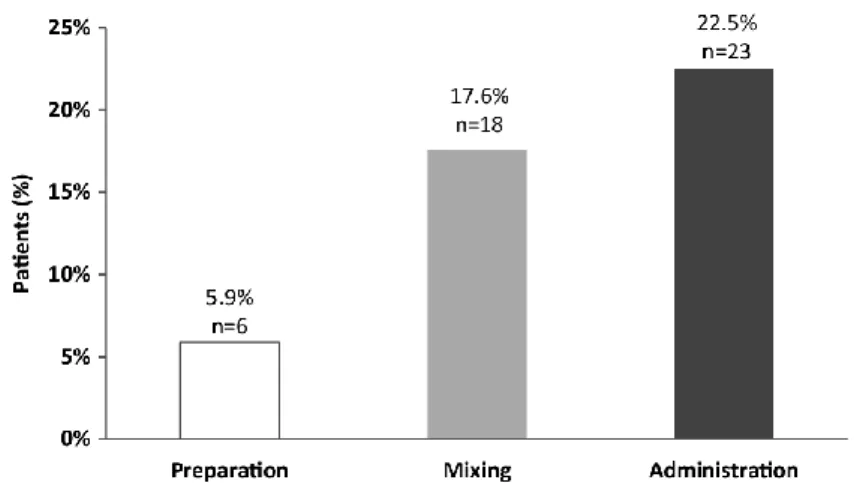
Thirty-five (34.3%) patients made at least one mistake at some phase of the reconstitution/administration procedure (Fig. 5). Among mixing mistakes, 11 (10.8%) patients made a mistake in steps 4–6, (diluent collection, injection of diluent into pegvisomant vial, mixing, see Online Resource 1) defined as “critical steps”. Among administration errors, 5 (4.9%) patients made mistakes in step 1 (choice of injection site) and 8 (7.8%) in steps 3–4 (needle introduction and injection), defined as “critical steps”. The proportion of patients with controlled acromegaly (IGF-1 < ULN) was numerically lower but not significantly in the group of patients who made mistakes (62.9% vs. 74.6%; p = 0.216). Patients who did not mix the treatment correctly presented a significantly poorer control of symptoms as measured by PASQ score (23.0 ± 11.8 vs. 16.7 ± 11.4; p = 0.037).
Discussion
This study is the first to measure pegvisomant adherence in acromegaly patients in real-world clinical practice.
Currently, there is not a single gold-standard method to measure adherence, so a multi-method approach is recommended to study adherence behavior. Patient-reported questionnaires are widely used and there is a variety available, but none has been validated to measure adherence in patients with acromegaly. Here, we used two patient questionnaires, Haynes-Sackett’s [25] and Batalla’s [21], both validated in Spanish patients. Pegvisomant adherence rates varied from 90.6% by Haynes-Sackett modified test to 60.7% by Batalla test. While, healthcare providers rated adherence higher (94.4%) than any of the measurement tools used [26]. Batalla questionnaire has an adequate sensitivity but tends to underestimate adherence, whereas Haynes-Sackett questionnaire has a good specificity and tends to overestimate adherence. The combined use of both questionnaires may complement each other and give an adequate range of patient adherence rate to pegvisomant treatment. Prescription record review or medication count is an easy, rapid and quantitative tool to measure adherence. In this study, it was intended to be compared as a gold-standard to patients’ questionnaires. This method showed an adherence rate similar to Haynes-Sackett test (92.1%). Moreover, there was a statistically significant correlation between adherence rate measured by medication count and Haynes-Sackett test and a moderate concordance between both methods. This correlation and concordance was not observed with Batalla test. Therefore, Haynes-Sackett test may be a more appropriate patient survey to assess adherence in this study. However, this results should be interpreted with caution, given the low number of patients with medication count data available (n = 38). Similarly to our results, adherence to medications among other chronic diseases also varies widely, with estimates ranging from 36%-94% [27, 28].
In acromegaly, drug adherence is essential to maintain normalized IGF-1 levels and to reduce morbidity and mortality. In a recent study on 120 long-standing acromegaly patients, non-compliance was the reason for failure to achieve disease control in 20.6% of patients [12]. In the present study, however, adherence did not correlate with disease control, which may be due to the higher rate of adherence assessed by patients’ questionnaires. The present study showed that after a mean of 5.9 years on pegvisomant treatment, 72.2% of patients had normal IGF-1 levels using a mean dose of 15.2 mg/day. This results are comparable to those reported in the global ACROSTUDY [29] (63.2% IGF-1 normalized patients, 3.7 years of follow-up, mean daily dose of 18.0 mg) and in the Spanish ACROSTUDY subpopulation [11] (67.9% IGF-1 normalized patients, 6.7 years of follow-up, mean daily dose of 15.5 mg).
Correct reconstitution/administration of treatment is part of treatment adherence and may have an impact on effectiveness [30]. In this study nearly all patients (98%) stated understanding how to prepare and administer the injections according to the ad-hoc Pegvisomant questionnaire. However, more than a third of patients (34.3%) made mistakes during the reconstitution/administration procedure. These mistakes may have an impact on disease control, and, indeed, patients who mixed the treatment correctly presented a significantly better control of symptoms as measured by PASQ than those that did not. Moreover, the proportion of patients that did not make any mistakes during the procedure was notably higher in those with IGF-1 controlled levels (non-significant difference). This analysis did not take into account differences between critical (i.e. vial mixing, injection) and non-critical (i.e. hand-washing, needle disposal) steps in the process in terms of effectiveness impact. Mistakes during those critical steps may have a higher potential influence on disease control.
was the patient’s refusal to intensify or escalate [12] the treatment. Moreover, Ramos-Levi et al. [31] recently published a rate of 89.5% of patients with normal IGF-1 levels after 6.8 years receiving a mean dose of pegvisomant higher than the observed in our study (19 ± 8 mg/day during the first 5 years of follow up and 20 ± 9 mg/day thereafter).
Treatment satisfaction is associated with treatment-related behaviors such as adherence [17, 20] but data in acromegaly are scarce. A recent survey conducted in 195 patients to assess the burden of lifelong injections of somatostatin analogs showed that, despite the daily life impact of injections, patients were satisfied with the treatment [32]. Here, patients stated a high global satisfaction with pegvisomant treatment according to the SATMED-Q questionnaire (score 74.6/100). Perceived convenience of pegvisomant as measured by the ad-hoc Pegvisomant questionnaire was also high (score 71.2/100) although there is room for improvement. Travelling with medication, however, seems to be a main concern for patients since it was one of the statements worst rated by the Pegvisomant ad-hoc questionnaire and it was also one of the main reasons for non-adherence. Traveling with pegvisomant requires maintaining the cold chain during the trip and this may be one of the reasons for skipping injections.
Identifying factors associated with poor compliance is useful for implementing strategies targeted to increase adherence. However, there are no consistent characteristics that can reliably predict adherence [15]. In this study, older patient age is associated with low adherence according to Batalla test. Patients’ perception of their medical treatment also affects their adherence since, non-adherent patients according to the Haynes-Sackett test, expressed significantly lower satisfaction regarding convenience of medication by SATMED-Q and worse self-perception of pegvisomant therapy by the ad-hoc Pegvisomant questionnaire. Daily administration of pegvisomant was also associated with higher adherence according to the Haynes-Sackett test. Alternative dosing schedules other than daily dosing, i.e. several administrations per week, add complexity to the treatment regimen and doses may be more easily forgotten than routinely daily dose administration. In fact, complexity of the treatment is recognized as a predictor of adherence [15]. Other causes may underlie, and we cannot rule out that non-daily regimens were prescribed more frequently to non-adherent perceived patients, although this possibility seems unlikely given the high rate of adherence perceived by researchers (94.4%).
Taken together, there may be some modifiable factors that influence pegvisomant adherence, such as ease of treatment administration and travelling, dosing schedule, dosing recall, and patient training on pegvisomant reconstitution/administration. The new pegvisomant water-filled injection device may help to overcome convenience and ease of administration problems. Working on training the patients in reconstruction and administration can lead to a better adherence and to an enhancement of the effectiveness of pegvisomant.
In conclusion, patient adherence to pegvisomant seems to be high (60.7–92.1%) in this real-world clinical setting, and is consistent with the high treatment satisfaction reported. More than a third of patients, however, made mistakes during the administration procedure, with a potential impact on disease control. Correct administration of medication is part of patient adherence to treatment and, therefore, effective training by the clinician is essential. Adherence should be monitored as well as dosing compliance in order to improve the effectiveness of pegvisomant in real-world clinical practice.
Acknowledgements
The authors thank all the investigators of PEGASO study and participant patients at Hospital Universitario La Paz (Dr. Cristina Álvarez), Hospital Universitario La Princesa (Dr. Ana Mª Ramos), Hospital Regional Universitario Carlos Haya (Dr. Juan Antonio García-Arnés), Hospital Universitario Virgen del Rocío (Dr. Eva Venegas), Hospital Universitario y Politécnico La Fe (Dr. Rosa Cámara), Hospital Universitario La Ribera (Dr. Carmen Fajardo), Hospital General Universitario de Valencia (Dr. Juan Carlos Ferrer), Hospital General Universitario de Alicante (Dr. Antonio Picó), Hospital Universitario Vall d’Hebrón (Dr. Jordi Mesa), Hospital Universitario de Bellvitge (Dr. Carles Villabona), Hospital Universitario Puerta de Hierro (Dr. Javier Aller), Hospital Universitario de Getafe (Dr. Isabel Pavón), Hospital General Universitario Gregorio Marañón (Dr. Rogelio García), Hospital Universitario Marqués de Valdecilla (Dr. Fernando Pazos), Hospital Universitario de Cruces (Dra. Sonia Gaztambide), Hospital Universitario Basurto (Dr. Miguel Paja), Hospital Universitario Miguel Servet (Dr. Javier Acha), Complejo Hospitalario Universitario Santiago (Dr. Ignacio Bernabéu), Complejo Hospitalario Universitario A Coruña (Dr. Fernando Cordido).
Funding
This study was funded by Pfizer (Spain). Medical writing support was provided by Esther Tapia PhD as a freelance medical writer and was funded by Pfizer (Spain).
Compliance with ethical standards
Conflict of interest
NM and LS-C are employees of Pfizer (Spain). MLS works for Pfizer (Spain). RC, EV, JAG-A, FC and JA have received compensation from Pfizer (Spain) for their participation as investigators of PEGASO study. RC has received compensation from Pfizer (Spain) for their participation as research coordinator of PEGASO study. RC, EV, FC and JA have received speaker honoraria from Pfizer (Spain).
Ethical approval
The study was approved by the Clinical Research Ethics Committee of every participant site. All procedures performed in studies involving human participants were in accordance with the ethical standards of the institutional research committees and with the 1964 Helsinki declaration and its later amendments.
Informed consent
Informed consent was obtained from all individual participants included in the study.
Electronic supplementary material
References
1. Melmed S, Colao A, Barkan A, Molitch M, Grossman AB, Kleinberg D et al (2009) Guidelines for acromegaly management: an update. J Clin Endocrinol Metab 94:1509–1517
2. Holdaway IM, Rajasoorya C (1999) Epidemiology of acromegaly. Pituitary 2:29–41 3. Lavrentaki A, Paluzzi A, Wass JA, Karavitaki N (2017) Epidemiology of acromegaly: review
of population studies. Pituitary 20:4–9
4. Sesmilo G (2013) Epidemiology of acromegaly in Spain. Endocrinol Nutr 60:470–474 5. Lugo G, Pena L, Cordido F. Clinical manifestations and diagnosis of acromegaly. Int J
Endocrinol. 2012,540398 (2012)
6. Katznelson L, Laws ER Jr, Melmed S, Molitch ME, Murad MH, Utz A et al (2014) Acromegaly: an endocrine society clinical practice guideline. J Clin Endocrinol Metab 99:3933–3951
7. Giustina A, Arnaldi G, Bogazzi F, Cannavo S, Colao A, De ML et al (2017) Pegvisomant in acromegaly: an update. J Endocrinol Invest 40:577–589
8. van der Lely AJ, Hutson RK, Trainer PJ, Besser GM, Barkan AL, Katznelson L et al (2001) Long-term treatment of acromegaly with pegvisomant, a growth hormone receptor antagonist. Lancet 358:1754–1759
9. Trainer PJ, Drake WM, Katznelson L, Freda PU, Herman-Bonert V, van der Lely AJ et al (2000) Treatment of acromegaly with the growth hormone-receptor antagonist pegvisomant. N Engl J Med 342:1171–1177
10. van der Lely AJ, Biller BM, Brue T, Buchfelder M, Ghigo E, Gomez R et al (2012) Long-term safety of pegvisomant in patients with acromegaly: comprehensive review of 1288 subjects in ACROSTUDY. J Clin Endocrinol Metab 97:1589–1597
11. Bernabeu I, Pico A, Venegas E, Aller J, Alvarez-Escola C, Garcia-Arnes JA et al (2016) Safety of long-term treatment with Pegvisomant: analysis of Spanish patients included in global ACROSTUDY. Pituitary 19:127–137
12. Schofl C, Grussendorf M, Honegger J, Tonjes A, Thyroke-Gronostay D, Mayr B et al (2015) Failure to achieve disease control in acromegaly: cause analysis by a registry-based survey. Eur J Endocrinol 172:351–356
13. Dunbar-Jacob J, Mortimer-Stephens MK (2001) Treatment adherence in chronic disease. J Clin Epidemiol 54(Suppl 1,S):57–60
14. Simpson SH, Eurich DT, Majumdar SR, Padwal RS, Tsuyuki RT, Varney J et al (2006) A meta-analysis of the association between adherence to drug therapy and mortality. BMJ 333:15 15. WHO (2003) Adherence to long-term therapies: evidence for action. World Health
Organization, Geneva.
http://www.who.int/chp/knowledge/publications/adherence_report_fin.pdf?ua=1
16. Joosten EA, DeFuentes-Merillas L, de Weert GH, Sensky T, van der Staak CP, de Jong CA (2008) Systematic review of the effects of shared decision-making on patient satisfaction, treatment adherence and health status. Psychother Psychosom 77:219–226
17. Saarti S, Hajj A, Karam L, Jabbour H, Sarkis A, El ON et al (2016) Association between adherence, treatment satisfaction and illness perception in hypertensive patients. J Hum Hypertens 30:341–345
18. Witek P, Mucha S, Ruchala M (2016) Patient satisfaction and preferences of lanreotide Autogel treatment in acromegaly. Endokrynol Pol 67:572–579
19. Brody DS, Miller SM, Lerman CE, Smith DG, Caputo GC (1989) Patient perception of involvement in medical care: relationship to illness attitudes and outcomes. J Gen Intern Med 4:506–511
20. Kepicoglu H, Hatipoglu E, Bulut I, Darici E, Hizli N, Kadioglu P (2014) Impact of treatment satisfaction on quality of life of patients with acromegaly. Pituitary 17:557–563
21. Batalla A, Blanquer R, Ciurana M, García M, Jordi E, Pérez A (1984) Cumplimiento de la prescripción farmacológica en pacientes hipertensos. Aten Primaria 1:185–191
22. Barnestein-Fonseca P, Leiva-Fernandez J, Vidal-Espana F, Garcia-Ruiz A, Prados-Torres D, Leiva-Fernandez F (2011) Is it possible to diagnose the therapeutic adherence of patients with COPD in clinical practice? A cohort study. BMC Pulm Med 11:6
23. Haynes RB, Taylor DW, Sackett DL, Gibson ES, Bernholz CD, Mukherjee J. Can simple clinical measurements detect patient noncompliance? Hypertension. 2,757–764 (1980) 24. Ruiz MA, Pardo A, Rejas J, Soto J, Villasante F, Aranguren JL (2008) Development and
25. Haynes RB, Taylor DL, Sackett D (1979) Compliance in Health Care. John Hopkins University Press, Baltimore
26. Pineiro F, Gil V, Donis M, Orozco D, Pastor R, Merino J (1997) The validity of 6 indirect methods for assessing drug treatment compliance in arterial hypertension. Aten Primaria 19(372-4):376
27. Nazir SU, Hassali MA, Saleem F, Bashir S, Aljadhey H (2016) Association between diabetes-related knowledge and medication adherence: results from cross-sectional analysis. Altern Ther Health Med 22:8–13
28. Slabaugh SL, Bouchard JR, Li Y, Baltz JC, Meah YA, Moretz DC (2015) Characteristics relating to adherence and persistence to basal insulin regimens among elderly insulin-naive patients with type 2 diabetes: pre-filled pens versus vials/syringes. Adv Ther 32:1206–1221 29. Freda PU, Gordon MB, Kelepouris N, Jonsson P, Koltowska-Haggstrom M, van der Lely AJ
(2015) Long-term treatment with pegvisomant as monotherapy in patients with acromegaly: experience from ACROSTUDY. Endocr Pract 21:264–274
30. McDowell SE, Mt-Isa S, Ashby D, Ferner RE (2010) Where errors occur in the preparation and administration of intravenous medicines: a systematic review and Bayesian analysis. Qual Saf Health Care 19:341–345
31. Ramos-Levi AM, Bernabeu I, Alvarez-Escola C, Aller J, Lucas T de (2016) MP et al. Long-term treatment with pegvisomant for acromegaly: a 10-year experience. Clin Endocrinol (Oxf) 84:540–550