
Generation of citrus plants with higher tolerance to water and saline stress
119
0
0
Texto completo
(2) Pontificia Universidad Católica de Chile Facultad de Agronomía e Ingeniería Forestal. Generation of Citrus Plants with Higher Tolerance to Water and Saline Stress. Jesús Lucina Romero Romero. Thesis Para optar al grado de. Doctor Ciencias de la Agricultura. Santiago, Chile, June 2018.
(3) Thesis presented as part of the requirements for the degree of Doctor in Ciencias de la Agricultura, approved by the. Thesis Committee. __________________ Dr. Patricio Arce Johnson, Advisor. __________________ Dr. Pilar Gil. ___________________ Dr. Michael Geoffrey Handford. ________________________ Dr. Basilio Alejandro Carrasco Gálvez. Santiago, June 2018.
(4) I dedicate this thesis to ... My Heavenly Father, who is always my hope and my strength, my God in whom I trust; To my children, who will always be the engine of my life. To my parents, for all the love and unconditional support. To my brothers for encouraging me during all these years and to my heart, for keeping me in difficult times and sharing this life with me..
(5) This work was supported by the doctoral grant CONICYT (63130094), and the COTEBAL (1865) of the CIIDIR-IPN Unidad Sinaloa.
(6) Acknowledgements I would like to thank in the first place Dr. Patricio Arce Johnson, my teacher guide and thesis tutor, who during all these years has always given me his trust, friendship, support and encouraged to take new professional and academic challenges. I thank the members of my committee, Professors Pilar Hil, Michael Geoffrey Handford, Basilio Alejandro Carrasco Gálvez and especially my advisor Patricio Arce for receiving me in his laboratory. We would also like to thank Dr. Claudio Inostroza-Blancheteau of the Universidad Católica de Temuco and Dr. Marjorie Reyes-Díaz, of the Universidad de la Frontera, for their excellent disposition and collaboration in this work. I also thank all members of the "Laboratory of Molecular Biology and Plant Biotechnology", especially A Valeria Borjas and Sandy Rojas, for their work on in vitro cultivation activities, greenhouse plant management and friendship. To Consuelo Medina, for her willingness to answer questions in the laboratory and finally to Maria Elena Santos Cervantes, Erika Camacho Beltrán, Francisca Parada and Denisse Laborie for their friendship and support in the happy and difficult moments of these years..
(7) CONTENTS. CHAPTER 1. General Introduction……………………………………………………………….8. CHAPTER 2. Increased drought and salinity tolerance in Citrus aurantifolia (Mexican lemon) plants overexpressing Arabidopsis CBF3 gene…….........................46. CHAPTER 3. Stomata regulation by tissue-specific expression of the Citrus sinensis MYB61. transcription. factor. improves. water-use. efficiency. in. Arabidopsis……………………………………………………………………….81. CHAPTER 4. Model and Conclusions….……..………………………...…………………….117.
(8) CHAPTER 1. GENERAL INTRODUCTION. 8.
(9) Citrus genus: Taxonomy and current state. Citrus trees are one of the most important persistent leaf fruit crops in tropical, subtropical, and select temperate regions (Kahn et al., 2001; Zhang, 2014) and are cultivated in more than one hundred countries. In regards to taxonomy, the Citrus genus belongs to the Rutaceas family, which includes 162 species (Tanaka, 1977). While there are various taxonomic descriptions of the genus, the taxonomy described by Swingle and Reece (1967) is most accepted: Family: Rutaceae Subfamily: Aurantoideae Division: Embriophyta Siphonogama Subdivision: Angiospermae Class: Dicotyledonea Subclass: Rosidae Superorder: Rutanae Order: Rutales. The true citrus trees are comprised of six genera belonging to the subtribe Citrinae (Clymenia, Eremocitrus, Microcitrus, Poncirus, Fortunella and Citrus (Swingle and Reece, 1967). In 1976, Barrett and Rodas suggested that within the subgenus Citrus there were only three true "basic" species: lemon (C. medica L.), mandarins (C. reticulata Blanco), and grapefruit (C. maxima L. Osbeck). Subsequently, Scora (1988) pointed to C. halimi as another true species within Citrus subgenus. Currently the subgenus Eucitrus is the most widely cultivated Citrus. 9.
(10) Citrus plants are usually medium-sized trees with a height of about 6 meters, although some species can reach 15 meters. Most species have a single trunk comprised of very hard wood. Depending on the species, the treetop can be slender or very wide. Flowers range from 2-4 cm in diameter and are aromatic, individual, and often perfect including both pistil and functional stamen. The fruit is a fleshy, hesperidium, indehiscent berry that varies in size, color, shape and juice; the diameter of the fruits can vary from 4 cm (lemon) to more than 25 cm (grapefruit) (Figure 1). Seeds are whitish to greenish, flattened and angular, and usually polyembryonic, meaning they have multiple embryos that can germinate. Most of the species are diploid (2n = 8 chromosomes) and have a relatively small genome (382 Mpb).. Figure 1. Citrus. a) Seeds, b) Flower, c) Lemon fruit Eureka, d) Mandarins fruit, e) Orange fruit. The Citrus genus is native to the tropical and subtropical regions of India and southern China, reaching northern Australia and New Caledonia. In China, the cultivation of oranges and grapefruit goes back to 2400 years B.C. (Manner et al., 2006). Currently, the cultivation of these trees is widely distributed in the tropical and. 10.
(11) subtropical regions between the parallels 44º N and 41º S (Agustí, 2000). This genus has more than 145 species and is the most important genus in this family. The seven most important species within the citrus include C. sinensis (sweet oranges), C. reticulata (mandarin), C. clementina (clementines), C. lemon (lemons), C. paradisi (grapefruit), C. grandis (grapefruit), C. medica (citrons) and C. aurantium (bitter orange). Recent studies using genomic, phylogenetic, and biogeographical strategies indicate that citrus plants originated in the southeast Himalayas in a region that includes eastern Assam, northern Myanmar, and western Yunnan (Wu et al., 2018). The ancestry of 46 citrus accessions was recently determined using 588,583 single nucleotide polymorphisms (SNPs) of an ancestral origin derived from three species, C. medica, C. maxima and C. reticulate (Wu et al., 2018). This analysis revealed that grapefruit was present in 24 of the 28 mandarins evaluated and suggested classification of three mandarin types: Mandarins as a pure species (type 1), mandarins mixed with the grapefruit haplotypes P1 or P2 (type 2), and mandarins and sweet oranges generated due to additional introgressions of grapefruit with mandarins of type 2 (type 3). Subsequent crossings between sweet oranges and mandarins or type 3 mandarins generated the mandarins marketed today (Figure 2).. 11.
(12) Figure 2. Genealogy of the main citrus species.. The fruits of these trees provide numerous nutrients such as vitamins, fiber, calcium, potassium, and folic acid, which yield beneficial health outcomes and reduce health risks (Jia et al., 2017). Globally, citrus production totals 130 million tons and has grown 16% over the last five years (FAO, 2016). World citrus production is distributed primarily in five countries: China, Brazil, India, United States, and Mexico, which alone produces two thirds of the global supply (Liu et al., 2012; FAO, 2016). Currently, Chile ranks 36th in world citrus production and 11th in. 12.
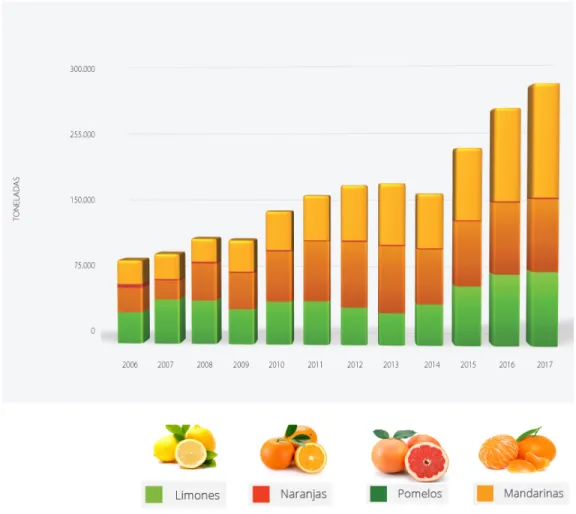
(13) the export of this fruit (FAO, 2016). The main citrus fruits grown in Chile are sweet orange (Citrus sinensis (L.) Osbeck), clementines and tangerines (Citrus clementina L. and Citrus reticulata Blanco), and lemons (Citrus lemon (L.) Burm.) (ASOEX, 2011). This sector has experienced greater than 300% the last 10 years (Figure 3), with production increasing from 75,000 tons in 2005 to 250,000 tons in 2017 (ODEPA-CIREN 2015) (Figure 3).. Figure 3. Evolution of Chilean citrus exportation between 2005 and 2017. The main citrus producing regions in Chile are located in the central northern zone of the country, including region III (Atacama, 23.1%), region V (Valparaíso,. 13.
(14) 27.6%), region XIII (Metropolitan, 28.9%), and region VI (Libertador Bernardo O'Higgins, 19,4%) (ODEPA, 2012). The Atacama region is the earliest citrus ripening zone in the country, where the color and aroma (flavor) of orange, lemon, and tangerine fruits are most intense (Gompertz, 1999; Arentsen 2002). However, due to limited water availability in this valley, the area of citrus cultivation is very small (162 hectares), equivalent to 0.9% of the national area (Gompertz, 1999).. Effect of water deficiency on plants The earth’s volume of water, an essential resource for all living things, reaches 1,400 million km3. However, 97.5% of water is held by oceans and seas and salt water, while only 2.5% corresponds to fresh water. Further, only 0.003% of water is potentially available to humans (45,000 km3) and only 9,000 to 14,000 km3 are available for capture and use to support of economic activities. Of the total freshwater withdrawals (3,830 km3/year), the highest proportion (70%) is allocated for agricultural applications, 30% is destined for industrial purposes, and 10% is used domestically (FAO, 2007; Molden et al., 2007; Ruane et al., 2008; Faures, 2012). Drought is one of the most important meteorological phenomena facing the world today due to its long-term impact on water resources, agricultural production, and economic activity (Wang et al., 2014). The percentage of the planet affected by drought has more than doubled in the last 40 years, especially in arid and semi-arid regions, affecting more people in the world than any other natural phenomenon (Cook et al., 2018). Climatic projections made by Wallace (2000) indicate that the. 14.
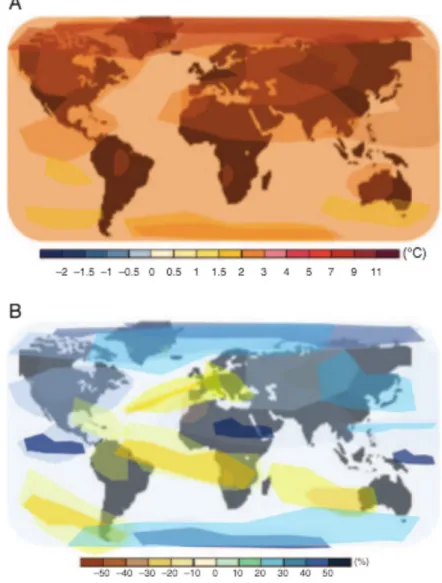
(15) number of people living in water scarce areas could reach 67% by the year 2050. Work by Schewe et al. (2014) indicates that a 2°C increase in the current global temperature could translate to more than 20% of the world’s population living in conditions of absolute water scarcity (Figure 4A). This scenario seems inevitable at the end of the 21st century (Schiermeier, 2014; Zandalinas et al., 2018). Likewise, precipitation is expected to be increasingly erratic in the coming years, generating higher average annual rainfall in higher latitudes and the equatorial Pacific, while precipitation in many regions of medium latitude and dry subtropical regions will decrease (Figure 4B).. 15.
(16) Figure 4. Prediction of changes in average surface temperature (A) and rainfall (B) by the year 2100. The color scale indicates the decrease or increase in Celsius degrees (A) and the percent change in precipitation (Zandalinas et al., 2018).. Considering the projections described above, a water crisis is expected in the future, not only due to the lack of water but also due to the misuse of available water resources (Molden, 2007). Today, climate change is exacerbating drought events in various parts of the world, including the United States, East Africa, Australia, Brazil,. 16.
(17) China and Spain. In these countries, drought periods have increased in frequency, intensity, and duration (Van Loon et al., 2016). Chile is no exception: since 2010 the region between Coquimbo and Araucanía has experienced a water deficit of 30%. Due to its territorial extension and persistence, this event has been named megasequía. Consequently, aridification is expected in the central and southern zone of Chile during the present century, increasing the occurrence and intensity of droughts similar to the megasequía (CR2, 2015). In addition, agricultural areas requiring irrigation have grown worldwide, with a 100% increase between the year 1960 (140 million hectares) and 2000 (280 million hectares) (Tilman et al., 2002; Pretty, 2008). The considerable growth in agricultural production is associated with increased yields due to higher pesticide and fertilizer use (mostly nitrogen and phosphorus) as well as improved access to water for irrigation. Between 1965 and 1985 average yields increased by 56% worldwide but slowed to 20% growth by 2005 (Foley et al., 2011), indicating that technological advances have not been sufficient to ensure constant growth over time. At the same time, agricultural expansion has irreversibly damaged the environment through intense water use, conversion of natural lands to agricultural ecosystems, and contamination of various terrestrial, aquatic, and subterranean aquatic habitats with excessive nutrients (phosphorus and nitrogen) and pesticides. Plants require large quantities of water for proper development.. Water. accounts for 80-95% of the fresh weight of plants Taiz and Zeiger, 2010). However, plants only conserve 3% of the total volume of water absorbed, which is used for photosynthesis or other metabolic processes (Taiz and Zeiger, 2010). As example, 17.
(18) citrus plants have a particularly high water demand, requiring 100 liters of water/tree/day during the sixth year of growth (Shalhevet and Levy, 1990). Given the importance of water in the development of plants, water deficiency significantly affects cellular functions, generating severe negative impacts on development and reproduction. Fundamental processes such as photosynthesis are affected by water shortage events. Direct effects of water deficiency relate to decreased diffusion of CO2 through stomata and mesophyll and alterations in photosynthetic metabolism (reducing the content, activity, and regeneration of enzymes involved in the Calvin cycle). Indirect effects include secondary oxidative stress, which can damage the photosynthetic apparatus (Munns, 2011; Dodd and Ryan, 2016). The ability of certain plants to tolerate or overcome water stress is granted by particular physiological and cellular mechanisms, some of which are related to completing their life cycle during the wet season when water is readily available or maximizing water acquisition by generating a large root system to extract water at greater depths and storing water inside the cell as it happens in the plants of CAM metabolism (Dodd and Ryan, 2016) or to induce the abscission of the foliar area. Decreased leaf area is associated with decreased water loss through transpiration, the process by which plants lose about 95% of water during the day (Taiz and Zeiger, 2010). Osmotic adjustment is another response generated in plant tissue during a water stress event. This response involves increasing the concentration of solutes (osmolytes) such as sugars (mannitol, sorbitol and trehalose), proline, and glycine betaine in the interior of the cell in order to reduce. 18.
(19) water potential, allow the influx of water into the cells, and maintain turgor (Taiz and Zeiger, 2010; Dodd and Ryan, 2016). In the same way, water stress induces increased disposition of waxes on the leaf surface with the aim of reducing water loss from the epidermis. In addition, water stress induces changes in the expression of genes related to the biosynthesis of osmolytes, proteases, LEA proteins (Late embryogenesis abundant), aquaporins (transmembrane proteins that form channels to facilitate transport of water), and the abscisic acid (ABA) response, a phytohormone broadly related to stomatal closure in plants (Taiz and Zeiger, 2010; Dodd and Ryan, 2016). ABA is perceived by the PYR/PYL/RCAR receptors (Pyrabactin resistance/pyr1-like/regulatory component of aba receptor) in the guard cells, activating a signaling cascade that culminates in stomatal closure. In the absence of ABA, Protein phosphatase 2C (PP2Cs) inhibits protein kinases that act as positive regulators of stomatal closure by dephosphorylation. ABA receptors interact with PP2Cs, but their affinity is low in the absence of ABA. In contrast, when ABA binds to its receptors, the interaction with PP2Cs strengthens, inhibiting phosphatase activity and allowing the activation of protein kinases such as OST1 (Open stomata 1) and CPKs (calcium-dependent protein kinases), which activate anionic channels by phosphorylation. This mechanism generates anion efflux, depolarization of the plasma membrane, and consequent activation of K+ efflux channels. The efflux of anions, K+, and water decreases the turgor of the guard cells and prompts stomatal closure (Figure 4) (Kollist et al., 2014). Located in the leaf epidermis, stomata are comprised of a pair of specialized cells named guard cells and allow gaseous exchange between the plant and the atmosphere. Plants open stomata to assimilate CO2 through photosynthesis, but doing so renders the plant 19.
(20) susceptible to water loss through transpiration. Accordingly, appropriate regulation of stomatal opening and closing is vital for proper plant growth (Schroeder et al., 2001a; Taiz and Zeiger, 2010). Rerspiration is a physical process that depends on both the difference in concentration of water vapor between the spaces of the leaf and the outside as well as the resistance to diffusion (r). Resistance may be classified into two types: stomatal resistance of the leaf (rs), associated with diffusion through the stomata; and resistance of the stationary layer of the leaf (rb), related to the stationary layer of air near the surface of the leaf through which water vapor must diffuse in order to reach the turbulent air of the atmosphere (Taiz and Zeiger, 2010). Several environmental factors such as light, high humidity, and low CO2 concentration induce stomatal opening by generating hyperpolarization of the plasma membrane by an influx of ions (K+, Cl-, NO3-) and through production of malate (Schroeder et al., 2001a; Kim et al., 2010; Araujo et al., 2011) In contrast, darkness (in C3 and C4 plants), high internal CO2 concentration, drought, and high ozone concentration induce stomatal closure through depolarization of the plasma membrane, which induces efflux of the same ions and conversion of malate to starch, resulting in decreased turgor of the guard cells and stomatal closing (Schroeder et al., 2001a; Schroeder et al., 2001b; Kim et al., 2010; Kollist et al., 2014). Stomatal opening is mainly induced by blue light, which is perceived by photoreceptors associated with the plasma membrane called phototropins (PHOT1 and PHOT2). These photoreceptors have a serine/threonine (Ser/Thr) kinase 20.
(21) domain and are autophosphorylated and activated upon stimulation by blue light. PHOTs are thought to be inactivated by dephosphorylation by type 2A phosphatase proteins (PP2As). Upon activation, PHOTs interact with 14-3-3 regulatory proteins and phosphorylate a protein kinase called BLUS1 (blue light signaling 1). The signaling cascade downstream of BLUS1 is unknown. However, it is known that blue light signaling culminates in activation of the H+-ATPase pump of the plasma membrane by phosphorylation, which pumps protons (H+) out of the cell, resulting in hyperpolarization of the plasma membrane and activation of K+ influx rectifier channels. This produces an influx of K+ and water, which increases the turgor of the cells, opening the pore of the stoma and activating H+-ATPases. Blue light inhibits anionic channels of the plasma membrane which contributes to hyperpolarization (Chen et al., 2012; Kollist et al., 2014) (Figure 5). Other photoreceptors such as cryptochromes (CRYs) and phytochromes (phys) also participate in the regulation of the stomatal opening, but the signaling pathways mediated by these photoreceptors have not been characterized in detail.. 21.
(22) Figure 5: Diagram of the movement of ions in the opening or closing of stomata. The transporters located in the plasma membrane of the guard cells and those located in the tonoplast or vacuolar membrane are represented. The arrows indicate the direction of movement of the ions for both the opening (left) and the closing (right). The change in the potential of the membranes for each event is also represented in the lower part of the figure (Adapted to Kollist et al., 2014).. Effect of salinity on plants Saline stress is another important condition that affects normal plant development due to the reduction of soil water potential. Approximately, 830 million hectares are affected by salinity (> 6% of the total surface of the planet). According to FAO (2008) for the year 2050 is projected 50% of agricultural land salt. Salinity is a soil condition, defined by a high concentration of soluble salts. Soils with electrical conductivity (CE)> 4 dSm-1 are considered saline (40 mM NaCl) (Qadir et al., 2014). Most fruit trees and agricultural crops are sensitive to salinity, which is reflected in a decrease in their productivity. The accumulation of salt in the soil not 22.
(23) only affects normal plant functions, but also degrades the structure of the soil, resulting in decreased porosity and permeability. The salts that contribute most to salinity are Na+, Ca+2, Mg+2, Cl- and SO4-2. Salinity can be measured based on electrical conductivity or osmotic potential (Negrão et al., 2017). Plants can be classified according to their salinity resistance. Very tolerant plants, such as halophytes, have managed to adapt naturally to saline conditions. Examples are the species belonging to the Chenopodiaceae family and the Prosopis genus. However, the plants most sensitive to salinity belong to the group of glycophytes such as onions, corn, lettuce and citrus. In the particular case of citrus, it has been established that the yield remains unchanged until the electrical conductivity of the soil saturation extract (CEe) reaches 1.4-1.5 dS m-1. From this threshold, for each increment of 1 dS m-1 of CEe the yield is reduced between 13 and 13.5% (Maas and Grattan, 1999). Saline and water stress are directly related because higher concentrations of soluble salts decrease water potential. Therefore, most plants respond to stress (water and salt) with the same physiological and molecular mechanisms because both cases share the same limiting factor, water. However, plants that face saline stress must additionally withstand high concentrations of ions such as Na+, Cl-, and CO3-2. The main effects caused by saline stress inside the cell include ionic imbalance and osmotic stress (Bartels and Sunkar, 2005), which result in oxidative damage. Drastic changes in ion concentration and homeostasis lead to molecular. 23.
(24) damage that decrease growth rats or even death of the plant. Normally, cells respond to decreased water content by shrinking and relaxing their cells walls, which decreases turgor while increasing the concentration of solutes. This is the first biophysical effect of water stress; therefore, activities that depend on turgor, such as leaf expansion and root elongation, are inevitably affected (Figure 6). Salts dissolved in water generate lower osmotic potential, which translates into lower water potential. The solutes in a higher concentration in a solution produce an effect similar to that of water deficit because absorption of water is limited. Saline stress also has a specific effect related to the ions themselves.. Figure 6. Water potential changes in the cell by water deficit. (Taiz and Zeiger, 2010). Salinity also produces oxidative damage, generated by the accumulation of reactive oxygen species (ROS). ROS are partially reduced forms of atmospheric oxygen (O2) that result from the excitation of O2 to form singlet oxygen (1O2) or the 24.
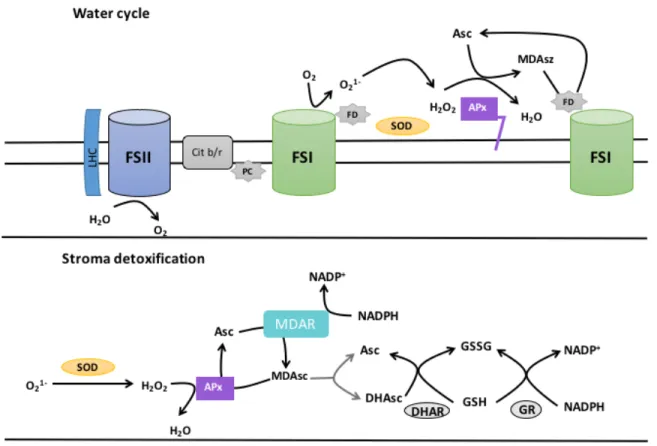
(25) transfer of one, two, or three electrons to O2 to form superoxide radical (O2-), hydrogen peroxide (H2O2), or the hydroxyl radical (OH-), respectively. While many sources of ROS are present in plant cells, chloroplasts and mitochondria represent the most significant sources of ROS as a product of photosynthesis and respiration. The negative effect caused by excess ROS is known as oxidative stress. The main effects of oxidative stress are alterations at the level of the plasma membrane, interruption of enzymatic activity, changes in the availability of nutrients, and damage in the photosynthetic apparatus. Plants have developed various mechanisms of detoxification and protection to repair the damage caused by ROS, such as the production of enzymes and "antioxidant" metabolites, which allow them to survive in oxidizing conditions. The antioxidant system is responsible for reacting with these agents to achieve detoxification. The ROS detoxifying systems works through two mechanisms, enzymatic and non-enzymatic. The enzymatic systems that inactivate ROS are SOD (superoxide dismutase), APX (ascorbate peroxidase), GPX (glutathione peroxidase), and CAT (catalase) (Wang et al., 2003). SOD is the first enzyme that acts to eliminate ROS, catalyzing dismutation of the superoxide ion (O2-) to H2O2. This ROS is then reduced to water by the peroxidases APX, GPX, or CAT. The peroxidases APX and GPX require regeneration of their reducing agents, Asc (ascorbate) and GSH (reduced glutathione), respectively, which are mediated by NAD(P)H+.. Non-enzymatic detoxification systems are composed of cellular redox buffers such as ascorbate and glutathione. GSH is oxidized by ROS to GSSG, while Asc is oxidized to MDAsc (monodehydroascorbate) and to DHAsc (dehydroascorbate). 25.
(26) The oxidized products GSSG and MDA-DHA must be reduced by enzymes to GSH and ASA. A high ratio of Asc/MDAsc + DHAsc and GSH/GSSG is essential for the inactivation of ROS (Figure 7).. Figure 7. Above: The superoxide generated at the level of Photosystem I (FSI) is eliminated in the water cycle by the concerted activity of SOD and APx. Below: the peroxide and superoxide that escape detoxification are reduced in the stroma by a pathway involving SOD, APx, monodehydroascorbate reductase (MDAR), dehydroascorbate reductase (DHAR), and glutathione reductase (GR). Asc, ascorbate; MDAsc, monodehydroascorbate; GSSG, oxidized glutathione; GSH, reduced glutathione. Adapted from Taiz and Zeiger, 2010.. 26.
(27) Physiological and molecular response of citrus to abiotic stress: Room for genetic improvement. Biotechnological strategies have been proposed to increase water-use efficiency (WUE), which describes the accumulation of biomass (A) and water consumed (E) (Lambers et al., 2008). The overall aim of these strategies is to reduce the rate of transpiration of the plant without significantly reducing the assimilation of CO2, ultimately generating highly productive plants with lower water requirements (Cominelli et al., 2010; Cominelli and Tonelli, 2010). Another strategy to increase WUE is to decrease the number of stomata on the leaf surface of plants (Hughes et al., 2017). Laporte et al. (2002) showed that expression of the NADP-dependent malic enzyme (ME, which converts malate and NADP+ to pyruvate, CO2 and NADPH) in tobacco decreased stomatal conductance (gs) and increased the mass of fresh tissue per unit of water consumed without affecting growth. Similarly, overexpression of the HvEPF1 gene in barley generated transgenic lines with stomatal density and significantly lower gs, without decreasing grain yield. These lines showed improved WUE and greater tolerance to drought (Hughes et al., 2017). Considering food demand projections, more sustainable agricultural practices will be necessary in order to maintain high crop yield while simultaneously minimizing environmental impacts. Implementing sustainable agricultural practices will require biotechnological tools for the generation of monocultures with greater WUE, innovative methods to supply nitrogen and phosphorus, and the integral management of pests to reduce dependence on pesticides (Tilman, 2002; Pretty, 2008). Plants grown under natural conditions are regularly subjected to different. 27.
(28) combinations of abiotic stress. Citrus trees are among the most water demanding woody fruit species with water accounting for 85% of their fresh weight versus 50% for other plants. Decreased productivity due to water and/or salinity stress are common in locations where citrus are cultivated (Pérez-Pérez et al., 2009; Álvarez et al., 2015a).. Under current citriculture practices, all commercial varieties are grafted onto rootstock, which provides distinct advantages for the growth and fruit production of the plant (Agustí, 2003). The use of rootstocks allows for control of the vigor, productivity, and quality of the fruit in a given environment and confers greater resistance to various abiotic stressors such as low or high temperatures, salinity, and water stress (Pinochet, 1990; Khan and Khender, 2007; Vélez et al., 2012), though differences arise between different rootstocks. For example, the orange cultivar 'Lane late' exhibits a more efficient biomass/water production ratio when grafted onto the "Carrizo" rootstock than the "Cleopatra" rootstock. Controlled deficit irrigation (CDR) techniques represent another development in the citrus varieties marketed today. This technique provides water savings, lower energy consumption, lower production costs, greater efficiency in the use of water resources, and reduction of pollution risks due to deep percolation (Vélez et al., 2012). Implementation of this technique during filling and ripening of the fruit improves quality by generating a higher content of soluble solids and acidic compounds (Peng and Rave 1998). In the case of lemon and limes, CDR is used in summer to induce flowering out of season. In the orange ''Lane beats'' reduction of the water supply 28.
(29) generates a delay in the harvest without diminishing production (Pérez-Pérez et al., 2009). Several authors have demonstrated that the response of citrus plants faced with water deficit events or a combination of abiotic stressors (i.e. severe drought and high temperatures) depends on several factors such as phenology, physiological status, irrigation water quality, genotype, and degree and intensity of stress (Núñez-Vázquez et al., 2017). Citrus plant adaptations to abiotic stressors are varied, but the most relevant are restriction of vegetative growth, reduction of stomatal conductance (gs) to avoid water loss by transpiration, decrease in the assimilation of CO2 and yield, and abscission of leaves and fruit (Pérez-Pérez et al., 2009; Álvarez et al., 2015a). Other cases have reported decreased hydraulic conductivity of the root, generation of waxy layers that occlude the stomata and decrease the water loss, and changes in the angle of inclination and curl of leaves to reduce the intercepted surface and radiation to reduce transpiration (NúñezVázquez et al., 2017; Agustí, 2003; Vélez et al., 2012). Consequently, photosynthesis can be directly affected by limitation in CO2 diffusion though the mesophyll and the stomata, alterations in the photosynthetic metabolism, and modifications in the activity and regeneration of enzymes involved in the Calvin cycle. Moreover, these abiotic stress defense mechanisms may indirectly affect photosynthesis through oxidative stress, which can damage the photosynthetic apparatus (Dodd and Ryan, 2016). Metabolic and osmoregulation adaptations that involve the accumulation of solutes compatible with normal cellular function have also been reported in response 29.
(30) to water deficiency (Barry et al., 2004; Navarro et al., 2010; Zandalinas et al., 2018). Previous studies have reported an increase in the content of phytohormones such as ABA, jasmonic acid (JA), salicylic acid (SA) (Wang et al., 2012; Wang et al., 2015), and ethylene (Vélez et al., 2012; Zandalinas et al., 2018) or a rapid decrease in gibberellin content (Mahouachi et al., 2005) in response to this abiotic stress. It is known that SA induces the genes ICS and PR1 among others and maintains the integrity of the cell membrane in plants in addition to protecting Photosystem II (PSII) (Clarke et al., 2009; Coqueiro et al., 2015). The hormone ABA triggers stomatal closure by inducing genes that code for transcription factors (TFs) such as MYB44 and MYB15 (Jung et al., 2008; Cominelli et al., 2010). The induction of numerous genes which may be involved in signaling and transcriptional control has been reported in response to various types of abiotic stress. Examples include MyC, Map kinases and SOS kinases (Shinozaki and Yamaguchi-Shinozaki, 1997), phospholipases (Zhai et al., 2012), and transcription factors including HSF, CBF/DREB, and ABF/ABRE (Zhu, 2002; Von Koskull-Döring et al., 2007; Kang et al., 2002; Álvarez et al., 2015b). Moreover, genes related to membrane stability or protein protection (i.e. heat-shock proteins), chaperones, LEA proteins (Thomashow, 1999; Bray, 1997; Bohnert and Sheveleva, 1998; Ingram and Bartels, 1996; Vierling, 1991), osmoprotectors and free radical scavengers (Bohnert and Sheveleva, 1998), and genes linked to ion transporters and aquaporins (Serrano et al., 1999; Tyerman et al., 1999; Blumwald et al., 2000) have also been implicated in response to abiotic stress.. 30.
(31) In Carrizo citrange, mutation of the gene P5CS (Δ1-pyrroline-5-carboxylate synthetase) has been shown to affect proline synthesis, generating plants tolerant to water deficiency (Molinari et al., 2004). In other citrus species, overexpression of the yeast gene HAL2 in Carrizo citrange and the rough lemon (Citrus jambhiri Lush) was shown to confer higher tolerance to saline stress (Cervera et al., 2000; Ali et al., 2012), while similar findings were observed for overexpression of betaine aldehyde dehydrogenase from Atriplex hortensis (AhBADH) in trifoliate orange (Fu et al., 2011); for the BjGlyI and PgGlyII genes that code for glyoxylases in Carrizo citrange (Álvarez et al., 2015a); and for arabidopsis CBF3 in Citrus macrophylla (Álvarez et al., 2015b) in regards to saline stress tolerance. Genetic improvement in Citrus New varieties of citrus have been developed through conventional improvement over the last several centuries. However, there are only few examples of successful varieties and rootstocks (Khan and Khender, 2007). Characteristics such as sterility of the ovule and pollen, mechanisms of self-incompatibility, polyembryony, high heterozygosity, and long periods of juvenility have complicated genetic improvement of this species through conventional crosses (Gmitter et al., 1992). Therefore, biotechnological tools have emerged as a promising complement to genetic improvement in citrus. One such biotechnological tool is in vitro culture. Several regeneration methods have been developed based on the culture of apical buds, nodal sections, epicotyls, and freshly germinated seeds (Bordón et al., 2000). The development of transgenic, intragenic, or cisgenic citrus plants is currently an interesting option, because these technologies offer several distinct advantages 31.
(32) such as increasing the agronomic value of cultivated plants, allowing use of tissues and plant cells in bioreactors for the production of proteins and metabolites of economic importance, and generating basic knowledge related to the action of genes during development or other biological processes in plants (Dale, 1995). The success of biotechnological tools in agriculture is reflected by the significant increase in cultivation of transgenic crop plants of great agroeconomic importance such as soybean, cotton, rice, corn, and canola (Birch, 1997; Mohammad et al., 2017) across the world. The genetic transformation of citrus plants began more than two decades ago. In 1992, Moore reported for the first time the integration of transgenes in Carrizo citrange with Agrobacterium, using segments of hypocotyls as explants. Most recent protocols for the transformation of various citrus species such as Carrizo citrange (Cervera et al., 1998), sour orange (Ghorbel et al., 2000), Carrizo macrophylla, Citrus lemon (lemon) and Cleopatra mandarin (Ghorbel et al., 2001), have been generated using internodal segments of juvenile greenhouse plants as explants. To date, various citrus rootstocks have been transformed with the aim of shortening juvenility by expressing floral induction genes such as Leafy and Apetala1 (Peña et al., 2001), gene stacking analysis, or gene pyramiding (Cervera et al., 2009). Strategies employed to increase abiotic stress tolerance in citrus plants include mutation of the P5CS gene in Carrizo citrange (Molinari, 2004); transformation of trifoliate orange with the gene coding for betaine aldehyde dehydrogenase from Atriplex hortensis (AhBADH) (Fu, 2011); expression of the. 32.
(33) yeast HAL2 gene in Carrizo citrange (Cervera et al., 2000) and rough lemon (Citrus jambhiri Lush) (Cervera et al., 2000; Ali, 2012); expression of AtHXK (gene that encodes the enzyme hexokinase which phosphorylates glucose and fructose) in cell stores, which decreased stomatal conductance and transpiration without negatively effecting photosynthesis rate while increasing the WUE (Lugassi et al., 2015); expression of arabidopsis glyoxylases in roots of Carrizo citrange for salt stress tolerance (Álvarez et al., 2015a); and expression of Arabidopsis CBF3/DREB1A in Citrus macrophylla in response to salt stress (Álvarez et al., 2015b). All the reports mentioned above focused on rootstocks, which are naturally more robust and stress tolerant than citrus varieties. In field conditions, the grafted aerial portion provides the leaves and conductive tissue, the main organ of the plant responsible water loss. Expanding the characterization of citrus varieties in response to hydric and saline stress is particularly timely when considering the 2ºC increase in average soil temperature that is expected in the next 50 years (Schewe et al., 2014). Optimizing the use and availability of water in water intensive plants such of citrus is of utmost importance. The goal of this thesis was to generate transgenic or intragenic varieties of Citrus aurantifolia (lemon) and Citrus sinensis (orange valence) expressing the transcription factors CBF3 of A. thaliana and MYB61 of C. sinensis, respectively, and to evaluate at the physiological and molecular level the response of these lines to water deficit and saline stress. This thesis was implemented in consideration of the following context: - Water deficit and saline stress are growing problems in Chile and globally. - Citrus trees are highly sensitive to stress 33.
(34) - Citriculture is projected to have great economic potential for the country. - Methodologies for the genetic transformation of citrus have been developed and could be applied to increase water deficit and saline stress tolerance in this species.. This background allowed us to propose the following hypothesis: Constitutive or temporal expression of the transcription factors CBF3 or MYB61 in commercial varieties of citrus confers greater tolerance to water deficit and saline stress. To answer this hypothesis, the following general and specific goals were proposed:. Main Goal To generate citrus and arabidopsis plants that overexpress the transcription factors AtCBF3 and CsMYB61 with the aim of conferring improved tolerance to water and saline stress Specifics goals: 1. Identify, clone, and sequence the Citrus sinensis MYB61 homologous gene and the promoter of the Citrus sinensis MYB15 gene. 2. Analyze at the molecular level the integration and expression of the AtCBF3 and CsMYB61 genes in A. thaliana and Citrus varieties. 3. Phenotypically characterize transgenic lines of Citrus and Arabidopsis plants expressing AtCBF3 and CsMYB61 and evaluate their tolerance to water and saline stress under controlled conditions.. 34.
(35) The results of these goals are presented in the form of scientific manuscripts submitted or accepted for publication. Specific goal 1 is presented in chapter 3 with the article "Stomata regulation by tissue-specific expression of the Citrus sinensis MYB61 transcription factor improves water-use efficiency in Arabidopsis". This article was accepted to the Journal Plant Physiology and Biochemistry. Specific goals 2 and 3 are presented in chapters 2 and 3, respectively, with the publication “Increased drought and salinity tolerance in Citrus aurantifolia (Mexican lemon) plants overexpressing Arabidopsis CBF3 gene”submitted to the Journal Molecular Breeding.. 35.
(36) References. Agustí M. (2003). Citricultura. Segunda edición. Ed. Mundiprensa (España). 423p. Agustí, M. (2000). Citricultura. Ediciones Mundi Prensa, pp. 416. Ali S, Mannan A, El Oirdi M, Waheed A, Mirza B. (2012). Agrobacterium-mediated transformation of rough lemon (Citrus jambhiri Lush) with yeast HAL2 gene. BMC Research Notes 5: 285-292. Álvarez-Gerding Ximena, Cortés-Bullemore Rowena, Medina Consuelo, RomeroRomero Jesus L., Inostroza-Bacheteau Claudio, Aque Felipe and ArceJohnson Patricio (2015a). Improved Salinity Tolerance in Carrizo Citrange Rootstock through Overexpression of Glyoxalase System Genes. BioMed Research International. Álvarez-Gerding Ximena, Espinoza Carmen, Inostroza-Bacheteau Claudio and Arce-Johnson Patricio. (2015b). Molecular and physiological changes in response to salt stress in Citrus macrophylla W plants overexpressing Arabidopsis CBF3/DREB1A. Plant Physiology and Biochemistry 92 (2015) 7180. Araujo W., Fernie A. and Nunes-Nesi A. (2011). Control of stomatal aperture: a renaissance of the old guard. Plant Signal Behav 6(9): 1305-1311. Arentsen, JI. Caracterización climática y de calidad de fruta en naranjas Navel (Citrus sinensis L. (Osbeck)) cv. Newhall en nueve zonas citrícolas de Chile. (2002). Proyecto de Título. Facultad de Agronomía e Ingeniería Forestal. Pontificia Universidad Católica de Chile, Santiago, 31 pp. ASOEX (2011). Estadísticas, Comité de Cítricos de Chile, http://www.comitedecitricos.cl/es/estadisticas/exportaciones/evolucion. Barrett H. and Rhodes A., (1976). A numerical taxonomic study of affinity relationships in cultivated Citrus and its close relatives. Syst. Bot. 1: 105-136. Barry G., Castle W., Davies F. (2004). Rootstocks and plant water relations affect sugar accumulation of citrus fruit via osmotic adjustment. Journal of the American Society for Horticultural Science; 129: 881-889.. 36.
(37) Bartels D. & Sunkar, R. (2005). Drought ans salt tolerance in plants. Critical Reviews in Plant Sciences, 24: 23-58. Birch R. (1997). Plant transformation: problems and strategies for practical application. Annu Rev Plant Physiol Plant Mol Biol. 48, 297-326. Blumwald E., Aharon G., Apse M. (2000). Sodium transport in plant cells. Biochimica et Biophysica Acta 1465: 140-151. Bohnert H., Sheveleva E. (1998). Plant stress adaptations-making metabolism move. Curr Opin Plant Biol 1: 267-274. Bordón Y., Guardiola J. L., García-Luis A. (2000). Genotype affects the morphogenic responsein vitro of epicotyl segments of Citrus rootstocks. Annals of Botany 86: 159-166. Bray E. (1997). Plant responses to water deficit. Trends Plant Sci 2: 48-54. Cervera M., Navarro L., Peña. (2009). Gene stacking in 1-year-cycling APETALA1 citrus plants for a rapid evaluation of transgenic traits in reproductive tissues. Journal of Biotechnology 140: 278-282. Cervera M., Ortega C., Navarro A., Navarro L., Peña L. (2000). Generation of transgenic citrus plants with the tolerance-to-salinity gene HAL2 from yeast. Journal of Horticultural Science and Biotechnology 75: 26-30. Cervera M., Pina J., Juarez J., Navarro L., Pena L. (1998). Agrobacterium-mediated transformation of citrange: factors affecting transformation and regeneration. Plant Cell Rep 18: 271-278. Clarke S., Cristescu S., Miersch O., Harren F., Wasternack C., Mur L. (2009) Jasmonates act with salicylic acid to confer basal thermotolerance in Arabidopsis thaliana. New Phytol 182:175– 187. Cominelli E. and Tonelli C. (2010). Transgenic crops coping with water scarcity. N Biotechnol 27(5): 473-477. Cominelli E., Galbiati M. and Tonelli C. (2010). Transcription factors controlling stomatal movements and drought tolerance. Transcription 1(1): 41-45. Cook Benjamin I., Smerdon Jason E., Seager Richard, Coats Sloan. (2018). Global Warming and Drought in the 21st Century. 37.
(38) Coqueiro D., de Souza A., Takita M., Rodrigues C., Kishi L., Machado M. (2015). Transcriptional profile of sweet orange in response to chitosan and salicylic acid. BMC Genomics 16:1-14. CR2 (2015). La megasequía 2010-2015: Una lección para el futuro, Centro de Investigación del Clima y la Resiliencia (CR2): 1-27. Chen C., Xiao Y., Li X. y Ni M. (2012). Light-regulated stomatal aperture in Arabidopsis. Molecular Plant 5(3): 566-572. Dale P. (1995). Regulation and field trialling of transgenic crops. Trends in Biotechnology. 13, 398-403. Dodd I.C. and Ryan A. (2016). Whole-plant physiological responses to water-deficit stress. eLS. John Wiley & Sons. FAO.. (2008). FAO Land and Plant http://www.fao.org/ ag/agl/agll/spush.. Nutrition. Management. Service.. FAO (2016). Citrus fruit fresh and processed statistical. FAO (2007) "Water at a Glance." Faures J. (2012). Coping With Water Scarcity: An Action Framework For Agriculture And Food Security. Foley J., Ramankutty N., Brauman K., Cassidy E., Gerber J., Johnston M., Mueller N., O'Connell C., Ray D., West P., Balzer C., Bennett E., Carpenter S., Hill J., Monfreda C., Polasky S., Rockstrom J., Sheehan J., Siebert S., Tilman D. and Zaks D. P. (2011). Solutions for a cultivated planet. Nature 478 (7369): 337342. Fu X., Khan E., Hu S., Fan Q., Liu J. (2011). Overexpression of the betaine aldehyde dehydrogenase gene from Atriplex hortensis enhances salt tolerance in the transgenic trifoliate orange (Poncirus trifoliata L. Raf.). Environ Exp Bot 74: 106-113. Ghorbel R., Dominguez A., Navarro L., Pena L. (2000). High efficiency genetic transformation of sour orange (Citrus aurantium) and production of transgenic trees containing the coat protein gene of citrus tristeza virus. Tree Physiol 20: 1183-1189.. 38.
(39) Ghorbel R., La-Malfa S., López M., Petit A., Navarro L., Peña L. (2001). Additional copies of virG from pTiBo542 provide a super-transformation ability to Agrobacterium tumefaciens in citrus. Physiol Mol Plant Pathol 58: 103-11. Gmitter F., Grosser J., Moore G. (1992). Citrus. In Biotechnology of perennial crops (ed. F. Hammerschlag and R. L. Litz), pp. 335-369. Wallingford, Oxon, U.K: CAB Intl. Gompertz, M. (1999). Caracterización climática de nueve zonas citrícolas de Chile. Tesis, Facultad de Agronomía e Ingeniería Forestal, Pontificia Universidad Católica de Chile, Santiago.48 pp. Hughes J., Hepworth C., Dutton C., Dunn J., Hunt L., Stephens J., Waugh R., Cameron D., Gray J. (2017). Reducing stomatal density in barley improves drought tolerance without impacting on yield. Plant Physiol 174: 776–787. Ingram J., Bartels D. (1996). The molecular basis of dehydration tolerance in plants. Annu Rev Plant Physiol Plant Mol Biol 47: 377-403. Jia Hongge, Zhang Yunzeng, Orbovi’c Vladimir, Xu Jin, White Frank F., Jones Jeffrey B. and Wang Nian. (2017). Genome editing of the disease susceptibility gene CsLOB1 in citrus confers resistance to citrus canker.. Plant Biotechnology Journal, pp. 817–823. Jung C, Seo J, Han S, Koo Y, Kim C, Song S, Nahm B, Choi Y, Cheong J. (2008). Overexpression of AtMYB44 enhances stomatal closure to confer abiotic stress tolerance in transgenic Arabidopsis. Plant Physiol 146: 623-635 Kahn, T., Krueger R., Gumpf D., Roose M., Arpaia M., Batkin T., Bash J., Bier O., Clegg M., Cockerham S., Coggins Jr C., Durling D., Elliott G., Mauk P., McGuire P., Orman C., Qualset C., Roberts P., Soost R., Turco J., Van S., Zucker B. (2001). Citrus genetic resources in California: Analysis and recommendations for long-term conservation. Report No. 22. University of California Division of Agriculture and Natural Resources, Genetic Resources Conservation Program, Davis, CA, USA.. Kang J., Choi H., Im M., Soo Y. (2002). Arabidopsis basic leucine zipper proteins that mediate stress-responsive abscisic acid signaling. The Plant Cell 14: 343357.. 39.
(40) Khan IA, Khender WJ. (2007). Citrus Breeding. In IA Khan, ed, Citrus Genetics, Breeding and Biotechnology. CAB International, UK, pp 1-8. Kim T., Bohmer M., Hu H., Nishimura N. and Schroeder J. (2010). Guard cell signal transduction network: advances in understanding abscisic acid, CO2, and Ca2+ signaling. Annu Rev Plant Biol 61: 561-591. Kollist H., Nuhkat M. and Roelfsema M. (2014). Closing gaps: linking elements that control stomatal movement. The New phytologist 203(1): 44-62. Lambers, H., Chapin F. and Pons T. (2008). Plant physiological ecology. New York, Springer. Laporte, M., B. Shen and Tarczynski M. (2002). Engineering for drought avoidance: expression of maize NADP-malic enzyme in tobacco results in altered stomatal function. Journal of experimental botany 53(369): 699-705. Liu Y., Heying E., Tanumihardjo S. (2012). History, global distribution, and nutritional importance of citrus fruits. Comprehensive Reviews in Food Science and Food Safety 11: 530-545. Lugassi N., Kelly G., . Fidel L, Yaniv Y., Attia Z., Levi A., Alchanatis, Moshelion V., Raveh E., Carmi N. and Granot D. (2015). Expression of Arabidopsis Hexokinase in Citrus Guard Cells Controls Stomatal Aperture and Reduces Transpiration. Frontiers in plant science 6: 1114. Mahouachi J., Gómez-Cadenas, Primo-Millo E., Talon M., (2005). Antagonistic Changes between Abscisic Acid and Gibberellins in Citrus Fruits Subjected to a Series of Different Water Conditions Jour- nal of Plant Growth Regulation,; 24:179-187. Manner Harley I., Buker Richard S., Easton Smith V., Ward D. and Elevitch Craig R. (2006). Citrus (citrus) and Fortunella (kumquat). Species Profiles for Pacific Island Agroforestry. www.traditionaltree.org. Maas EV, Grattan SR. (1999). Crops yields as affected by salinity. Agricultural drainage. Agron. Monog. 38, Ed Skaggs, R.W.; van Schilfgaarde, J. ASACSSA-SSSA, Madison, Wis., pp 55-109. Mohammad Abass Ahanger, Nudrat Aisha Akram, Muhammad Ashraf, Mohammed Nasser Alyemeni, Leonard Wijayaand Parvaiz Ahmad. (2017). Plant responses to environmental stresses-from gene to biotechnology. AoB PLANTS 9: plx025; doi:10.1093/aobpla/plx025.. 40.
(41) Molden D. (2007). International Water Management Institute. Comprehensive Assessment of Water Management in Agriculture (Program) Water for food, water for life: a comprehensive assessment of water management in agriculture. London; Sterling, VA, Earthscan. Molinari H., Marur C., Bespalhok Filho J., Kobayashi A., Pileggi M., Leite Junior R., Pereira L., Vieira L. (2004). Osmotic adjustment in transgenic citrus rootstock Carrizo citrange (Citrus sinensis Osb. x Poncirus trifoliate L. Raf.) overproducing proline. Plant Science 167: 1375-1381. Moore G., Jacono C., Neidigh J., Lawrence S., Cline K. (1992). Agrobacteriummediated transformation of Citrus stem segments and regeneration of transgenic plants. Plant Cell Rep 11: 238-242. Munns, R. (2011). Plant adaptations to salt and water stress: differences and commonalities. Advances in Botanical Research 57: 1-32. Navarro J., Pérez-Pérez Romero J., Botía P. (2010). Analysis of the changes in quality in mandarin fruit, produced by deficit irrigation treatments. Food Chemistry; 119:1591-159. Negrão S., Schmöckel S. and Tester M. (2017). Evaluating physiological responses of plants to salinity stress. Annals of Botany 119: 1–11. ODEPA (2012) Estadísticas de frutales. ODEPA-CIREN (2015) Catastro frutícola, Principales resultados, Región de Coquimbo. Peng YH, Rave E. (1998). Effect of differing irrigation regimes on fruit quality, yield, fruit size and net CO2 assimilation of Mihowase Satsuma The Journal of Horticultural Science Biotech; 73: 229- 234. Peña L, Martín-Trillo M, Juárez J, Pina JA, Navarro L, Martínez-Zapater JM. (2001). Constitutive expression of Arabidopsis LEAFY or APETALA1 genes in citrus reduces their generation time. Nat Biotechnol 19: 263-267. Pérez-Pérez J., Robles J., Botía P. (2009). Influence of deficit irrigation in phase III of fruit growth on fruit quality in ‘lane late’ sweet orange. Agricultural Water Management, 96: 969-974.. 41.
(42) Pinochet H. (1990). Antecedentes para la elección de portainjertos en cítricos. Aconex 27: 9-16. Pretty J. (2008). Agricultural sustainability: concepts, principles and evidence. Philosophical transactions of the Royal Society of London. Series B, Biological sciences 363(1491): 447-465. Qadir M., Quillerou E., Nangia V. Murtaza G., Singh M., Thomas R., Drechsel P., Noble A. (2014). Economics of salt-induced land degradation and restoration. Natural Resources Forum 38: 282–295. Ruane J., Sonnino A., Steduto P. and Deane C. (2008). Coping with Water Scarcity: What Role for Biotechnologies?. Scora R., (1988). Biochemistry, taxonomy and evolution of modern cultivated Citrus. Proc. Int. Soc. Citricult. VI. Congr. vol. 1. Margraf Publishers, Weikersheim, Germany, pp.277-289. Schewe J., Heinke J., Gerten D., Haddeland I., Arnell N., Clark D., Dankers R., Eisner S., Fekete B., Colon-Gonzalez F., Gosling S., Kim H., Liu X., Masaki Y., Portmann F., Satoh Y., Stacke T., Tang Q., Wada Y., Wisser D., Albrecht T., Frieler K., Piontek F., Warszawski L. and Kabat P. (2014). Multimodel assessment of water scarcity under climate change. Proceedings of the National Academy of Sciences of the United States of America 111(9): 32453250. Schiermeier Q. (2014). Water risk as world warms. Nature 505(7481): 10-11. Schroeder J., Allen G., Hugouvieux V., Kwak J. and Waner D. (2001a). Guard Cell Signal Transduction. Annu Rev Plant Physiol Plant Mol Biol 52: 627-658. Schroeder J., Kwak J. and Allen G. (2001b). Guard cell abscisic acid signalling and engineering drought hardiness in plants. Nature 410(6826): 327-330. Serrano R., Mulet J., Rios G., Marquez J., Larrinoa I., Leube M., Mendizabal I., Pascual-Ahuir A., Proft M., Ros R., Montesinos C. (1999). A glimpse of the mechanisms of ion homeostasis during salt stress. Journal of Experimental Botany 50: 1023. Shalhevet J., Levy Y. (1990). Citrus trees In: Stewart BA, Nielsen, DR (eds ) Irrigation of Agricultural Crops A S A Madison, Wis Mon no 30 p 951-986.. 42.
(43) Shinozaki Kazuo and Yamaguchi-Shinozaki Kazuko. (1997). Gene Expression and Signal Transduction in Water-Stress Response. Plant Physiol. (1997) 115: 327334. Swingle W. And Recee. (1967). The botany of citrus and its wild relatives. In: The Citrus Industry, vol. 1. University of California Press, Berkeley, CA, USA, pp. 389-390. Taiz L. and Zeiger E. (2010). Plant Physiology. Sinauer Associates, Inc., Publishers Sunderland, Massachusetts 792 p. Tanaka T., (1977). Fundamental discussion of Citrus classification. Stud. Citrol. 14: 1-6. Tilman D., Cassman K., Matson P., Naylor R. and Polasky S. (2002). Agricultural sustainability and intensive production practices. Nature 418(6898): 671-677. Thomashow M. (1999). Plant cold acclimation: Freezing tolerance genes and regulatory mechanisms. Annu Rev Plant Physiol Plant Mol Biol 50: 571-599. Thomashow M., Gilmour S., Stockinger E., Jaglo-Ottosen K., Zarka D. (2001). Role of the Arabidopsis CBF transcriptional activators in cold acclimation. Physiol Plant 112:171–175 . Tyerman S., Bohnert H., Maurel C., Steudle E., Smith J. (1999). Plant aquaporins: their molecular biology, biophysics and significance for plant water relations. Journal of Experimental Botany 50: 1055-1071. Van Loon A., Gleeson T., Clark J., Van Dijk A., Stahl K., Hannaford J., Di Baldassarre G., Teuling A., Tallaksen L., Uijlenhoet R., Hannah D., Sheffield J., Svoboda M., Verbeiren B., Wagener T., Rangecroft S., Wanders N. and Van Lanen H. (2016). Drought in the Anthropocene. Nature Geosci 9(2): 89-91. Vélez Javier E., Álvarez-Herrera Javier G., Alvarado-Sanabria Oscar H. (2012). El Estrés Hídrico en Cítricos (Citrus spp.): Una revisión Water stress on citric fruit (Citrus spp.): a review. ORINOQUIA - Universidad de los Llanos - Villavicencio, Meta. Colombia Vol. 16 - No 2. Vierling E. (1991). The roles of heat-shock proteins in plants. Annu Rev Plant Physiol Plant Mol Biol 42: 579-620.. 43.
(44) Von Koskull-Döring P., Scharf K., Nover L. (2007). The diversity of plant heat stress transcription factors. Trends Plant Sci 12: 452-45. Wallace J. (2000). Increasing agricultural water use efficiency to meet future food production. Agriculture, Ecosystems and Environment 82:105–119. Wang C., Liu Yang, Li Si-Shen, Han Guan-Zhu. (2015). Insights in to the Origin and Evolution of the Plant Hormone Signaling Machinery. DOI: https://doi.org/10.1104/pp.114.247403. Wang L., Zhao Y., Reiter R., He C., Liu G., Lei Q., Zuo B., Zheng X., Li Q., Kong J. (2014). Changes in melatonin levels in transgenic Micro-Tom tomato overexpressing ovine AANAT and ovine HIOMT genes. J Pineal Res. 56:13442. Wang Z., Bai M., Oh E., Zhu J. (2012). Brassinosteroid signaling network and regulation of photomorphogenesis. Annu Rev Genet 46: 701–724. Wang W., Vinocur B. and Altman, A. (2003). Plant responde to drought, salinity and extreme temperatures: towards genetics engineering for stress tolerance. Planta, 218: 1 - 14. Wu Guohong A., Terol J., Ibañez V., López-García A., Pérez-Román E., Borredá C., Domingo C., Tadeo Francisco R., Carbonell-Caballero J., Roberto A., Curk F., Du D., Ollitrault P., Roose Mikeal L., Dopazo J., Gmitter Frederick G. Jr, Rokhsar Daniel S. and Talon M. (2018). Genomics of the origin and evolution of Citrus. Nature doi:10.1038/nature25447. Zandalinas S., Balfagón D., Arbona V., Gómez-Cadenas A. (2018). Regulation of citrus responses to the combined action of drought and high temperatures depends on the severity of water deprivation. Physiol Plant. 2018 Apr. 162(4):427-438. doi: 10.1111/ppl.12643. Epub 2017 Nov 9. Zhai S., Gao Q., Xue H., Sui Z., Yue G., Yang A., Zhang J. (2012). Overexpression of the phosphatidylinositol synthase gene from Zea mays in tobacco plants alters the membrane lipids composition and improves drought stress tolerance. Planta 235: 69-84. Zhang J. (2014). Lasiodiploidia theobromae in Citrus Fruit (Diploidia Stem-End Rot). Postharvest Decay. Pag. 309-335. doi.org/10.1016/B978-0-12-4115521.00010-7. pp. 361-396.. 44.
(45) Zhu J. (2002). Salt and drought stress signal transduction in plants. Ann Rev Plant Biol 53: 247-273.. 45.
(46) CHAPTER 2. INCREASED DROUGHT AND SALINITY TOLERANCE IN CITRUS AURANTIFOLIA (MEXICAN LEMON) PLANTS OVEREXPRESSING ARABIDOPSIS CBF3 GENE. Jesús L. Romero-Romero, Claudio Inostroza-Blancheteau, Marjorie Reyes-Díaz, Juan Pablo Matte, Felipe Aquea, Pilar M. Gil, Carmen Espinoza and Patricio ArceJohnson. Laboratorio de Biología Molecular y Biotecnología Vegetal, Departamento de Genética Molecular y Microbiología, Facultad de Ciencias Biológicas, Pontificia Universidad Católica de Chile, Santiago, Chile. 46.
(47) Increased drought and salinity tolerance in Citrus aurantifolia (Mexican lemon) plants overexpressing Arabidopsis CBF3 gene Jesús L. Romero-Romero1,2,3, Claudio Inostroza-Blancheteau4, Marjorie ReyesDíaz5,6, Juan Pablo Matte1, Felipe Aquea7,8, Pilar M. Gil2, Carmen Espinoza1 and Patricio Arce-Johnson1* 1. Facultad de Ciencias Biológicas, Departamento de Genética Molecular y. Microbiología, Pontificia Universidad Católica de Chile, Santiago, Chile. 2. Facultad de Agronomía e Ingeniería Forestal, Pontifica Universidad Católica de. Chile, Santiago, Chile. 3. Instituto Politécnico Nacional, CIIDIR, Unidad Sinaloa, Departamento de. Biotecnología Agrícola, San Joachín, Guasave, Sinaloa, México 4. Núcleo de Investigación en Producción Alimentaria, Facultad de Recursos. Naturales, Departamento de Ciencias Agropecuarias y Acuícolas, Universidad Católica de Temuco, Temuco, Chile. 5. Departamento de Ciencias Químicas y Recursos Naturales, Facultad de Ingeniería. y Ciencias, Universidad de La Frontera, Temuco, Chile. 6. Center of Plant, Soil Interaction and Natural Resources Biotechnology, Scientific. and Technological Bioresource Nucleus (BIOREN-UFRO), Universidad de La Frontera, Temuco, Chile. 7. Laboratorio de Bioingeniería, Facultad de Ingeniería y Ciencias, Universidad Adolfo. Ibáñez, Santiago, Chile 8 *. Center for Applied Ecology and Sustainability (CAPES), Santiago, Chile.. Corresponding author:. Patricio Arce-Johnson. E-mail: [email protected]. 47.
(48) Abstract Citrus are a globally important fruit crop. Abiotic stressors such as drought and salinity adversely affect citrus plant growth, production, and survival. With the aim of improving drought tolerance in citrus plants, we constructed transgenic lines of Citrus aurantifolia overexpressing the Arabidopsis transcription factor CBF3. All transgenic lines grew comparably to wild type plants. Molecular and quantitative real-time analyses showed high expression of CBF3 in three selected transgenic lines. During a 15 days treatment of water deficit by cessation of irrigation, the transgenic lines showed lower stomatal conductance and transpiration paired with photosynthesis greater than or equal to WT plants, which translated into more efficient water use. The genes SIP1 and GOLS showed similar or greater expression in one of the transgenic lines with respect to control plants. Moreover, transgenic lines were more tolerant to saline stress and presented a greener phenotype with increased chlorophyll content in leaf discs compared to WT plants, indicating lower electrical conductivity in solution. Additionally, all transgenic lines exhibited significantly less accumulation of reactive oxygen species than WT plants. Together, these results demonstrate the potential for heterologous expression of the CBF3 gene to mediate tolerance to hydric and saline stress in citrus plants.. Keywords: Drought tolerance; Abiotic stress; Transgenics Citrus; CBF3 transcription factor. 48.
(49) 1. Introduction Citrus fruits are the most important persistent leaf fruit in tropical and subtropical regions of the world and are cultivated in more than one hundred countries (Zhang et al. 2014). These fruits provide various nutrients such as vitamins, fiber, calcium, potassium, and folic acid which yield important health benefits (Jia et al. 2017). Citrus face biotic and abiotic challenges including water deficiency and high salinity, which affect development and production and limit the distribution of this species. The physiological response of citrus to drought events includes decreased leaf area, increased root length, and limited photosynthetic rate (Amin et al. 2016). Effects on photosynthesis may be direct: reduced CO2 diffusion through the stomata and mesophyll paired with alterations in photosynthetic metabolism and activity of enzymes involved in the Calvin cycle; or indirect: damage to the photosynthetic apparatus caused by oxidative stress (Dodd and Ryan 2016). Biochemical and morphological strategies that protect cells from damage and dehydration have also been described (Dodd and Ryan 2016). One of these mechanisms is osmotic adjustment, the process by which the concentration of solutes increases in the cell in order to decrease the water potential and maintain the turgor of the cell (Taiz and Zeiger 2010; Dodd and Ryan 2016). Several studies have shown that drought tolerance is related to regulation of gene expression, accumulation of metabolites, or modification of key proteins under a reduced water potential (Amin et al. 2016). Moreover, water stress induces the synthesis of abscisic acid (ABA), which triggers stomatal closure by inducing the expression of transcription factors such as MYB44 and MYB15 (Jung et al. 2008;. 49.
(50) Cominelli et al. 2010). In several plants, overexpression of CBF3 regulates the expression of genes sensitive to stress from drought, cold, and salinity (YamaguchiShinozaki and Shinozaki 1994). Citrus trees are characterized by high water demand and acute sensitivity to salinity. Several studies have reported increased stress tolerance in transgenic lines of citrus species, including the expression of betaine aldehyde dehydrogenase from Atriplex hortensis in trifoliate orange (Fu et al. 2011), the expression of yeast HAL2 in Carrizo citrange (Cervera et al. 2000; Ali et al. 2012), the expression of the glyoxylases genes BjGlyI and PgGlyII in Carrizo citrange (Álvarez-Gerding et al. 2015a), and the expression of CBF3 from Arabidopsis in Citrus macrophylla (Álvarez-Gerding et al. 2015b). These studies, however, focused on rootstocks and not on commercial varieties. In the field, commercial varieties are grafted onto rootstock, with the commercial varieties providing the conductive tissue in the leaves. Importantly, this tissue is the main organ of the plant responsible for water loss through the stomata. Expanding the characterization of citrus varieties in response to hydric and saline stress is particularly timely when considering the 2ºC increase in average soil temperature that is expected in the next 50 years (Schewe et al. 2014). In this work, we report the physiological and molecular response of Citrus aurantifolia (mexican lemon) overexpressing the Arabidopsis thaliana transcription factor CBF3, resulting in transgenic lines with increased drought and salinity tolerance in greenhouse conditions. This work demonstrates the potential for. 50.
(51) heterologous expression of CBF3 to mediate tolerance to hydric and saline stress in a commercial variety of citrus.. 51.
(52) 2. Materials and methods 2.1 Plant material. Citrus aurantifolia seeds were soaked in a fungicide solution of 1% Captan (1 g/L) in a shaker at 30ºC for 12h. Seeds were then surface sterilized with a solution of 1% NaClO for 10 min and rinsed four times with sterile distilled water to remove the seed coat. Seeds were germinated in MT medium with 0.7% agar (w/v). To prevent contamination, 2 ml/L Plant Preservative Mixture (PPM, Plant Cell Technology, Washington, USA) was added without sucrose. Groups of fifteen seeds were then sown and placed in a dark germination chamber at 29ºC ± 2ºC for 3-4 weeks to promote the formation of etiolated epicotyls. 2.2 Citrus aurantifolia transformation and plant regeneration. The previously described pMDC84-CBF3 constructs (Alvarez-Gerding et al. 2015a) were used to generate stable transgenic C. aurantifolia lines. The strain EHA105 of A. tumefaciens carrying pMDC84-CBF3 was used to perform genetic transformation. Epicotyl segments were transformed as previously described by Cervera et al. (1998). Subsequently, epicotyls were placed in selection medium with hygromycin at a concentration of 4 mg/L. After three weeks in darkness, explants were transferred to a growth chamber at 23ºC± 2ºC with a 16 h light photoperiod and subcultured every two weeks in medium supplemented with hygromycin for selection of transgenic shoots. After three weeks of subculture, shoots were observed at the ends of the explants and individualized in root induction medium (MT medium -1. supplemented with naphthalene acetic acid (NAA) 1 mgL ) when they reached 2-3 52.
(53) cm. Finally, the rooted shoots were acclimatized in hermetic transparent pots containing 50% perlite and 50% peat moss in a greenhouse and individualized when they reached an approximate size of 15 cm. The clonal propagation of the lines was performed after 20 weeks of growth by selecting axillary buds and submerging them -1. in NAA 25 mg L followed by placement in pots with substrates for the drought experiments. 2.3. Molecular characterization of transformed plants The lines rooted in hermetic transparent pots with resistance to hygromycin were screened. by. PCR. analysis. with. GACGTAAGGGATGACGCACAAT-3ʹ. the and. primers. 35SPROM. CBF300-Rev. 5ʹ5ʹ-. ATAACTCCATAACGATACGTC- 3ʹ to yield an expected amplification product of 675 bp using genomic DNA isolated from citrus leaves from WT and transgenic lines as template (Alvarez-Gerding et al. 2015a). 2.4. Quantitative Gene Expression The quantification of CBF3 expression in transgenic lines was evaluated by qRTPCR. RNA extraction and cDNA synthesis were performed as described previously (Cañon et al. 2013). Primers qCBF3-Fwd 5ʹ-CTAATATGGCAGAAGGGATGC-3ʹ and qCBF3-Rev 5ʹ- AACTCCATAACGATACGTCGTC-3ʹ were used to analyze the expression of CBF3 with an expected amplification product of 99 bp. In the same way, the expression of the following four genes related to the abiotic stress response in citrus were evaluated by qRT-PCR. These genes are Cold-Response (COR15-. 53.
(54) Fwd:. 5ʹ–TTGGGGTGTCTACTCAAGGTG-3ʹ. TTCACATTGACAAAAGGCAAA-3ʹ),. and. P5CS1. COR15-Rev: (P5CS1-Fwd:. 5ʹ– 5ʹ–. ACGATGTGCGTGCTGCTA-3ʹ and P5CS1-Rev: 5ʹ–GCACCAAGTCCAAATCGTG3ʹ), raffinose synthase (SIP1-Fwd: 5ʹ–GGAGTGAAGGGAAGTGGTGA-3ʹ and SIP1Rev: 5ʹ ATAGCAACCATGTGGCCTTC -3ʹ), and galactinol synthase (GOLS-Fwd: GCGAGAAAACATGGAGCAA and GOLS-Rev: GAGATGCTGGGCTCAAACA; the expected amplification products for these genes were 118, 176, 110 and 145pb respectively. Tubuline was used as a housekeeping gene to normalize gene expression. Stratagene model Mx3000P and the SensimixTM SYBR®-Green kit were used for all qRT-PCR analysis. Relative transcript abundance was calculated considering the efficiency of the PCR reaction measuring the fluorescence of SYBR Green Master Reagent Kit (Agilent Technologies, Santa Clara, USA) for less than 40 cycles with three independent biological replicates and two technical replicates.. ∆𝐶𝑡$%% =. 𝐸𝑓𝑓)*%*+*,-* ./012131451 𝐸𝑓𝑓67+8*/ ./9:3;1<. 𝐸𝑓𝑓𝑅𝑒𝑓𝑒𝑟𝑒𝑛𝑐𝑒 𝐶𝑡𝑅𝑒𝑓𝑒𝑟𝑒𝑛𝑐𝑒. ∆∆𝐶𝑡$%% =. 𝐸𝑓𝑓𝑇𝑎𝑟𝑔𝑒𝑡 𝐶𝑡𝑇𝑎𝑟𝑔𝑒𝑡 𝐸𝑓𝑓𝑅𝑒𝑓𝑒𝑟𝑒𝑛𝑐𝑒. 6+7,E8*,F-. 𝐶𝑡𝑅𝑒𝑓𝑒𝑟𝑒𝑛𝑐𝑒. 𝐸𝑓𝑓𝑇𝑎𝑟𝑔𝑒𝑡 𝐶𝑡𝑇𝑎𝑟𝑔𝑒𝑡. G/. Relative transcript abundance was calculated using the GED method (Gene Expression’s Ct Difference, ∆Ct and ∆∆Ct methods). Negative controls (RT- and no54.
(55) template) were incorporated in all qPCR assays. Melting curves were analyzed on each real time RT-PCR reaction to corroborate single PCR product.. 2.5. Stomatal density Stomatal density was measured using the abaxial side of mature leaves from 3-4 months olds plants. Briefly, impressions were prepared from both sides of the central vein by the application of a dental silicon layer. Once the silicon had dried, impressions were covered with transparent nail polish. This film was then carefully placed on microscope slides and covered with coverslips. Stomata number per 0.25 mm. 2. surface was recorded using a digital camera attached to a binocular. microscope (SMZ800, Nikon Corp., Tokyo, Japan). 2.6 Stomatal conductance Stomatal conductance (gs) was determined in fully expanded leaves using a steady state porometer (Leaf Porometer, Decagon Divices, Pullman, WA, USA) by measuring vapor concentration at two different points in the diffusion path. Four leaves per plant and per treatment were analyzed. Measurements were taken over -2 -1. a 30s period and reported in mmol m s. according to the manufacturer. All. physiological parameters were recorded between 09:00 and 11:00 a.m. with a temperature of 20°C and approximately 80% relative humidity in greenhouse. 2.7. Analysis of transgenic plants in drought conditions To evaluate the drought tolerance, five-month-old transgenic lines of mexican lemon. 55.
(56) and untransformed wildtype (WT) plants were transferred to 2L pots containing substrate mix of peat and perlite (1:1). Drought conditions were simulated in sixmonth-old plants by withholding irrigation for 5, 10, or 15 days. The control treatment (0 d) included well-watered plants, which received 80% field capacity irrigation. Plant survival rates were recorded one week after rewatering. To compare the water loss rates of WT and CBF3 transgenic lines, the relative water content was determined at 0, 10, and 15 days of treatment by genotype. A foliole was taken from each plant and its fresh weight (FP) was recorded using an analytical balance. The leaves were then left floating in a petri dish with distilled water for 4 hours at 22°C in a growth chamber and subsequently re-weighed on the analytical balance to obtain their weight in turgor (PT). Finally, the leaves were completely dehydrated in an oven at 80 °C for 48 hours, after which their dry weight (PS) was obtained. The RWC was calculated according to the following equation:. 𝑅𝑊𝐶 % =. 𝑃𝐹 − 𝑃𝑆 ∙ 100 𝑃𝑇 − 𝑃𝑆. Gas exchange was also evaluated at the beginning and at the end of the water stress treatment (days 0, 10, or 15) through the use of the photosynthesis system (IRGA LI-6400XT of LI-COR, Lincoln, Nebraska, United States). Gas exchange parameters were determined in vivo in fully expanded leaves. Five measurements were made per plant with 5 plants per genotype. A PAR light source of 100 μmol m-2s-1 was used. Temperature (20ºC±2ºC), relative humidity (70-80%), and CO2 concentration were controlled in the growth chamber. External CO2 was applied to obtain a concentration of 400 μmol mol-1 (ppm), with a flow of 300 ml min-1. Net assimilation. 56.
(57) rate of carbon (A, μmol CO2 m-2s-1), stomatal conductance to water vapor (stomatic conductance, mol H2O m-2s-1), transpiration rate (E, mmol H2O m-2s-1), and instantaneous water use efficiency (WUE, calculated as A/E, mmol CO2 / mol H2O) were measured. Additionally, a fully-expanded fourth leaf was harvested following 0, 10, or 15 days of drought exposure, frozen immediately in liquid N2, and stored at 80°C. At each harvest, three replicates of each mexican lemon line were taken with five plants in each experimental group. The expression of different genes was evalulated using qRT-PCR. 2.8 Leaf senescence and chlorophyll content Fully expanded leaves were extracted from transgenic lines and WT plants of the same age three months after the transfer to substrate and washed briefly with deionized water. Three 1 cm diameter leaf discs obtained from three different plants of each line were suspended in 3 ml of sodium chloride (NaCl) in a concentration of 100 mM (> 30 mScm-1) or in sterile deionized water as the control treatment for 24 hours (Singla-Pareek et al. 2008). Chlorophyll content was determined with dimethyl sulfoxide (DMSO) following the technique described by Hiscox and Israelstam (1979). This analysis was performed with the three leaf discs used in the foliar senescence analysis described above. Following placement in 100 mM NaCl (area each 1 cm2 disc, 25 mg of total fresh weight) for 24 hours, leaf discs were incubated in 7 ml of DMSO for 30 min at 65oC in a water bath. Subsequently, 1 ml of extract was transferred to a disposable polyethylene cuvette and absorbance was measured at 645 and 663 nm in a spectrophotometer previously calibrated with pure DMSO. Total chlorophyll content was calculated and the result was expressed as 57.
Figure


+7


Documento similar