
Entrepreneurship education in Andalusia An embedded approach
20
0
0
Texto completo
(2) Journal for Educators, Teachers and Trainers, Vol. 6 (2) ISSN 1989 – 9572 http://www.ugr.es/~jett/index.php. Entrepreneurship education in Andalusia. An embedded approach La educación emprendedora en Andalucía. Un enfoque integrado Francisco Liñán, [email protected] José Fernández, [email protected] Juan A. Martínez -Román, [email protected] University of Seville, Spain Abstract When evaluating the relevance of actions within the area of entrepreneurship education, the quite remarkable national and regional differences regarding entrepreneurial culture, entrepreneurial potential and, of course, the business structure, have to be taken into account. Based on these differences, there is a need to specifically design entrepreneurial education policies which take into account the strengths and weaknesses of the business structure of each region. This paper aims to identify the structural characteristics of the Andalusian entrepreneurial model in comparison with that of other Spanish regions. To do this, a database of over 1000 companies have been used coming from the Research Project (Ref. P09- SEJ -4857) carried out by the "SMEs and economic development" research group (SEJ -128) of the University of Seville. This information will also be complemented with regional reports from the GEM project. From these two data sources, an eminently qualitative profile of the structural weaknesses of existing businesses and their entrepreneurs in Andalusia will be established. From this analysis of regional needs, we will raise our differential proposition for an embedded education towards entrepreneurship. It will identify and include the content and pedagogical techniques necessary to overcome these weaknesses of the regional business community. Resumen Al evaluar la pertinencia de las acciones en el ámbito de la educación empresarial, las notables diferencias nacionales y regionales con respecto a la cultura emprendedora, el potencial empresarial y, por supuesto, la estructura empresarial, han de ser tenidos en cuenta. Sobre la base de estas diferencias, hay una necesidad de diseñar políticas específicas de educación emprendedora que tengan en cuenta las fortalezas y debilidades de la estructura empresarial de cada región. Este trabajo tiene como objetivo identificar las características estructurales del modelo empresarial andaluz en comparación con el de otras regiones españolas. Para ello, se ha usado una base de datos de más de 1.000 empresas procedente del Proyecto de Investigación (Ref. P09- SEJ -4857) llevado a cabo por el grupo de investigación "PYME y desarrollo económico” (SEJ -128) de la Universidad de Sevilla. Esta información también se complementará con los informes regionales del proyecto GEM. A partir de estas dos fuentes de datos, se establecerá un perfil eminentemente cualitativo de las debilidades estructurales de las empresas existentes en Andalucía y de sus empresarios. A partir de este análisis de las necesidades regionales, vamos a plantear nuestra propuesta diferencial para una educación emprendedora integrada. Se identificará e incluirá el contenido y las técnicas pedagógicas necesarias para superar estas debilidades de la comunidad empresarial regional. Keywords Entrepreneurship education; Business structure; Programme development; Andalusia Palabras clave Educación emprendedora; Estructura empresarial; Desarrollo de programa; Andalucía. Journal for Educators, Teachers and Trainers JETT, Vol. 6 (2); ISSN: 1989-9572. 114.
(3) 1. Introduction Since the economic crisis of the seventies, entrepreneurs have received more and more attention as job creators, innovators, as promoting flexibility, productivity and economic growth (Acs & Audretsch, 1990; Spencer, Kirchhoff, & White, 2008; Wennekers & Thurik, 1999). They are increasingly being seen as ―heroes‖ (Allen & Lee, 1996), at least within the academic and policy-making communities. It is not strange, then, that so many attempts have been made to identify what makes entrepreneur. It is hoped that effective education initiatives may be implemented to develop these characteristics in the participants and thus help them become actual entrepreneurs (Liñán, Rodríguez-Cohard, & Rueda-Cantuche, 2011; Pittaway & Cope, 2007). Starting in the USA and expanding throughout the world, there has been unprecedented growth in entrepreneurship education (EE) programmes in higher education in the last decades (Fayolle, Gailly, & Lassas-Clerc, 2006; Katz, 2003). This growth is due to an increasing recognition that university-based EE programmes provide a promising vehicle to support a range of potential entrepreneurial outcomes (Nabi & Liñán, 2011). These, for example, include enhanced student venture creation skills, knowledge and attitudes (Greene & Saridakis, 2008) and more substantively, graduate business start-ups, which contribute to economic growth and development (Bosma, Acs, Autio, Coduras, & Levie, 2008). Most programmes, however, tend to replicate what has already been done and has been successful in a different setting (notably the USA), without sufficient attention paid to the specific characteristics of the participants and the social setting (Wilson, Kickul, & Marlino, 2007; Zhao, Siebert, & Hills, 2005). The present study tries to contribute to overcoming this problem by describing the development process of an ―embedded entrepreneurship education programme‖. To do so, it has specifically adopted a process-view of entrepreneurship (Moroz & Hindle, 2012) stressing person-environment interaction in the development and implementation of entrepreneurial opportunities (Liñán, 2007). The region of Andalusia, in southern Spain, is characterized by lower per capita income, higher unemployment, and a weaker entrepreneurial structure, when compared with the rest of the country (Fernández-Serrano & Romero, 2013). Entrepreneurship has been called for to help overcome these deficiencies (Marchese & Potter, 2011). However, so far, measures adopted have not yielded the expected results, and the region still is seen as lacking a supportive entrepreneurial culture (Liñán, Urbano, & Guerrero, 2011). In this regard, entrepreneurship education has the potential to significantly alter the situation since its reach may be very wide, especially if implemented throughout the educational system (Kyrö, 2006). The great majority of entrepreneurship education initiatives in Andalusia, though, have been concentrated at the university level, and offered as electives (Marchese & Potter, 2011). In our experience, they tend to replicate standard business-plan courses as developed elsewhere and, therefore, lack adaptation and integration into the specific Andalusian environment (Liñán, Rodríguez-Cohard, et al., 2011). Therefore, in this paper, we seek to describe the origins, development, and results of an entrepreneurship education course that is firmly embedded in its environment; i.e., the region of Andalusia. After this introduction, some contributions about the entrepreneurial process and the role of EE are considered. Then, in section three, the characteristics of the entrepreneurial structure in Andalusia are analysed. Next, the development of an entrepreneurship education programme specifically adapted to address these needs is presented. The paper ends with a brief conclusion.. 2. The role of education in the entrepreneurial process The literature has stressed different elements in their analysis of the entrepreneurial process. When this entrepreneurial process is carefully analysed (Moroz & Hindle, 2012; Shane, 2003), it. Journal for Educators, Teachers and Trainers JETT, Vol. 6 (2); ISSN: 1989-9572. 115.
(4) comes out that there are at least three kind of variables involved in any start-up: (a) the persons leading the project; (b) the environment in which it is embedded; and (c) the characteristics of the opportunity to be exploited. In the first place, Gartner’s (1985) individual and, to some extent, process dimensions concentrate on people and their actions. Bygrave (2003) considers the personal factor as one key element, as Timmons (1999) does. Finally, Katz and Gartner (1988) also highlight the relevance of the individual’s intention. Therefore, we think the individual’s mental decision to create the firm should be considered as a first element to be analysed. In our opinion, this personal intention is a previous element in the entrepreneurial process. Intention is a cognitive construct which captures the motivational factors influencing behaviours, and is described as the single best predictor of actual behaviour (Ajzen, 1991). However, intentions are difficult to analyse, and their link to actual performance also deserves close attention. As Shaver & Scott (1991: 28) point out, «most modern psychology subscribes to some version of the S-O-R [stimulus-organism-response] model, but all recognize that only the stimulus and the response can be observed directly. Any and all of the organismic variables (the various O states) must be inferred from the relationships observed between classes of stimuli and classes of responses». In its original formulation by Ajzen (1991), intention depends on the individual’s perceptions of three motivational elements: attraction towards the behaviour, social norms, and behavioural control. This model has been applied to firm creation with good results, becoming one of those ―organismic‖ variables that mediate between stimulus and response. In this paper, we will be considering the entrepreneurial intention model as a basic element in the entrepreneurial process. The environment in which the firm would be created may be considered as the second key element in the entrepreneurial process (Bygrave, 2003; W. B. Gartner, 1985). It is evident that potential entrepreneurs act within a specific milieu that influences their decisions and actions (Bird, 1989). The opportunities to be pursued will depend, at least partially, on the environmental characteristics. In this sense, ecological approaches have made extensive use of two concepts: munificence and carrying capacity (Specht, 1993). The first of these concepts is defined as the degree of resource abundance in that environment. This would be particularly relevant for more specific assets, such as highly-skilled labour force or advanced business services. In its broadest sense, therefore, munificence could be somewhat similar to Timmons’ (1999) ―resource‖ factor. Carrying capacity, in turn, refers to the number of organizations competing for the same resources or markets. There is some empirical evidence that these two factors do have an effect on start-up rates (Begley, Tan, & Schoch, 2005). The presence of entrepreneurial role models in that society is another environmental element that has been extensively highlighted in the literature. Role-models have been recognized in general as an important source of ―vicarious learning‖ (Bandura, 1986). In particular, with respect to entrepreneurship, there is strong empirical evidence relating entrepreneurial rolemodels to preference towards self-employment (Carsrud, Olm, & Eddy, 1987; Matthews & Moser, 1995; Scott & Twomey, 1988). A close personal contact with one or more of these rolemodels, if they are seen as successful entrepreneurs, would help potential founders to consider firm-creation as a visible, viable and respected career option for them (Davidsson, 1995; Kirby, 2003; Scherer, Brodzinsky, & Wiebe, 1991). Finally, we will consider the business opportunity as the third variable in the entrepreneurial process. In the literature, there is a considerable debate about whether opportunities are discovered or enacted (Alsos & Kaikkonen, 2004; DeTienne & Chandler, 2004). The former would imply they are objective potential businesses that are there waiting for someone to exploit them (Shane & Venkataraman, 2000). The latter, on the other hand, would mean opportunities have to be built by combining personal knowledge, skills, experience, and so on (W.B. Gartner, Carter, & Hills, 2003).. Journal for Educators, Teachers and Trainers JETT, Vol. 6 (2); ISSN: 1989-9572. 116.
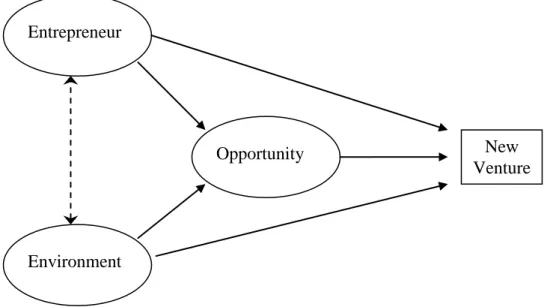
(5) As Alsos & Kaikkonen (2004) point out, these two contrasting views would be based on different ontological perspectives about the world. One of them sees it as consisting of objective facts, while the other considers it as made up of subjective perceptions and constructions. In this sense, opportunity recognition could be understood as the combination of both elements: firstly, objective resources, market needs and information; and secondly, the potential entrepreneur’s subjective abilities, skills and perceptions. This idea is presented in Figure 1. A balance between both extreme views is proposed by Shaver and Scott (1991). In this sense, Alsos & Kaikkonen (2004) consider that the opportunity-generation process may include both discovering and creating elements. From a similar point of view, Hills, Shrader, and Lumpkin (1999) see opportunity recognition as a creative process. Opportunities may be seen as varying along an axis where pure objective discovery and subjective creation represent the two opposite extremes. Thus, DeTienne & Chandler (2004), even though they consider that opportunities are discovered, see creativity as an essential element in opportunity identification. Likewise, Krueger (2000) understands the pursuing of opportunities as an intentional behaviour and, therefore, suggests that intention models be used to study the opportunity identification process. Finally, once the idea has been accepted and becomes an opportunity, it may be the basis for a new venture. This final stage could be the elaboration of the business plan. This elaboration stage would be a different element separated from the opportunity recognition, but as problems and impediments arise, it may be necessary to go back to earlier stages of the creative process and (partially) re-elaborate the opportunity (DeTienne & Chandler, 2004; Sarason, Dean, & Dillard, 2006).. Entrepreneur. Opportunity. New Venture. Environment. Figure 1. The entrepreneurial process Source: Elaborated from Singh, Hills, and Lumpkin (1999), Figure 1. Entrepreneurship education may act on the three basic elements of the entrepreneurial process, but to a different extent and with distinct instruments. Its major role will surely be played preparing the person for successfully attempting the start-up. In this sense, there have been numerous attempts to conceptualize entrepreneurship education. The simplest one identifies it with training for firm creation (McIntyre & Roche, 1999). On the other hand, wider conceptions are comprised of a number of objectives and of different stages that usually include action during the whole educational system (Ashmore, 1990). A similar approach, although not so wide, is supported by the European Commission (2003a).. Journal for Educators, Teachers and Trainers JETT, Vol. 6 (2); ISSN: 1989-9572. 117.
(6) In our opinion, therefore, entrepreneurial intention models could serve as the basis for an operative definition of entrepreneurship education (Fayolle, Gailly, & Lassas-Clerc, 2007), since intention models seem to provide a very useful framework for analysis of the entrepreneurial process (Fayolle & Gailly, 2005; Kolvereid, 1996; Krueger, 2000). Besides, the following conception would be wide enough to embrace those mentioned above: «the whole set of education and training activities -within the educational system or notthat try to develop in the participants the intention to perform entrepreneurial behaviours, or some of the elements that affect that intention, such as entrepreneurial knowledge, desirability of the entrepreneurial activity, or its feasibility» (Liñán, 2007: 236). This includes the development of knowledge, capacities, attitudes and personal qualities identified with entrepreneurship. Specifically for those of working age, entrepreneurship education would seek the effective creation of enterprises and their subsequent dynamism. According to this view, it may be argued that stimulating entrepreneurship through education should consider the three elements of the process (Figure 1). In practice, however, it is very common for entrepreneurship education initiatives to concentrate on those participants that already have an entrepreneurial intention and have identified an opportunity (Liñán, 2007). Many of these people may attempt firm creation even if they do not take any course. Yet, they may be lacking detailed knowledge about their closer environment (where the firm would operate) and, most commonly, not know what specific steps should be taken to start a firm. In this situation, the training could be very useful and significantly increase the number of start-ups effectively attempted. This could be identified as ―start-up education‖, and it usually concentrates on the business-plan elaboration, carrying out visits to entrepreneurs and support bodies, or taking in local relevant guest speakers (Honig, 2004). The electives available at the University of Seville are of this kind. However, when substantially increasing the levels of entrepreneurial activity is a major concern, as it is the case in Spain or, more generally, in the European Union (European Commission, 2003b), a wider approach to entrepreneurship education should be used. The inclusion of some awareness contents within the training would be very important. It might be integrated within the same course, or as a separate one. This latter option has been adopted by some relevant initiatives outside the university, such as the Graduate Enterprise Programme in the United Kingdom (Brown, 1990) or the Entrepreneur-Service in Norway (Kalternborn, 1998). On the other hand, there is no need to limit the education programme to the start-up phase. It might be possible to implement initiatives to develop dynamic behaviours in the participants (Foley & Griffith, 1998). In this sense, Gibb (1987) pointed out the importance of training contents relating not only to the pre-start-up phase, but also to the post-creation stages. With respect to this, Garavan and O’Cinneide (1994b) highlight aspects such as ―managing growth‖ or ―continuous team building‖. Entrepreneurship is considered as a process where the entrepreneur interacts with his/her environment to identify an opportunity and, eventually, start a new venture. Educational interventions may act upon different elements of that process. Therefore, in Figure 2 we try to summarise the different kinds of training activities identified so far, and where they would exert their main effect.. Journal for Educators, Teachers and Trainers JETT, Vol. 6 (2); ISSN: 1989-9572. 118.
(7) Entrepreneur. Developing intention & its antecedents. Developing creativity & opportunity recognition skills. Opportunity. Business Planning. New Venture. Dev. Dynamic Behaviours. Dynamic Firm. Dev. specific local knowledge, network contacts, local role models, etc. Environment. Figure 2. Role of entrepreneurship education in the entrepreneurial process Source: Liñán (2007, p. 241, Figure 13.4) According to Figure 2, development of the entrepreneurial intention could allegedly be considered as the first element to be addressed. In this sense, Kent (1990) indicated that the general opinion towards entrepreneurs is not very favourable. He was referring to the United States, but this is probably even truer in Europe (European Commission, 2003b). Transmitting the important role entrepreneurs play in economic growth and development would help improve participants’ valuation of entrepreneurship. Similarly, Fillion (1995) includes in the category of ―foundations of entrepreneurship‖ a series of courses that could be clearly considered as entrepreneurial awareness education. In particular, besides insisting on the importance of the entrepreneur in the economy, the following contents may be highlighted: transmitting the roles and aspects of entrepreneurship, together with the problems usually faced; identifying the abilities used by entrepreneurs, making clear that they may be developed and showing some techniques to do so; and making explicit the successive steps involved in both the start-up and the firm-development processes. Peterman and Kennedy (2003) found that participants not having much previous experience regarding entrepreneurship -and not specially positive- increased their perceived feasibility and desirability more. Fayolle, Gailly and Lassas-Clerc (2007) and Cooper and Lucas (2007), also found a similar result: those with lower initial levels of intention increased them more than the rest. There would be a rationale, then, to try to reach all those that do not even consider this option. It may very well be the case that after participating in the programme they change their minds. In this sense, helping participants make their personal objectives explicit in the short and in the long run (their ―mission‖) and see how it may be compatible with entrepreneurship could be another very interesting exercise, which has already been tried out with good results (Brown, 1990; Fillion, 1995; Foley & Griffith, 1998; Garavan & O'Cinneide, 1994a). Contents described so far would have their main effect in affecting perceived desirability and, to a lesser extent, feasibility. However, it should be noted that all other possible contents depicted in Figure 2 would also affect intentions and their antecedents (Liñán, 2007). The difference, therefore, lies in their main purpose. For that reason, these contents described below should be considered as primarily pursuing the stated objective, but indirectly affecting the entrepreneurial intention of participants (Liñán, Rodríguez-Cohard, et al., 2011).. Journal for Educators, Teachers and Trainers JETT, Vol. 6 (2); ISSN: 1989-9572. 119.
(8) To develop opportunity recognition abilities, Epstein (1996) identified four skills to enhance creativity. DeTienne and Chandler (2004) have adapted those skills into a training model named as SEEC (securing, expanding, exposing and challenging). They offer a detailed list of activities that could be used in an opportunity-recognition course. When they tested this model, results indicated that this training model led to the identification of more opportunities and more innovative opportunities. On the lower part of Figure 2, over the Environment/Opportunity/New Venture area, a set of measures has been included which are specifically addressed to increase the knowledge of the local business environment, developing network contacts and having the possibility to interact with local successful role models. The importance of developing local network contacts has been highlighted by a number of authors (Johannisson, 1991). However, it is possible to go further. Hartshorn and Parvin (1999) describe a training programme which includes mentoring of participants by local entrepreneurs. Each student is placed with an entrepreneur/mentor who considers the student as a kind of advisor, letting him/her take part in all business decisions made by the entrepreneur. This would be very important not only to get a closer and more accurate knowledge of what being an entrepreneur is, but also to introduce the prospective entrepreneur in the local business circles (Gibb, 1998). Similarly, Kent (1990) suggests the utility of using ―socialization‖ seminars for participants. Local entrepreneurs and relevant business community stakeholders are invited to participate as well. This gives participants the opportunity to know ―who is who‖ in the local business world, to establish important contacts, to solve specific doubts that they may have, and also to reinforcetheir motivation. At the Opportunity/New Venture link, business plans are a very well-known and widely used pedagogical methodology (Gorman, Hanlon, & King, 1997). They would not only provide an operationalization of the business opportunity (Lechner & Dowling, 1998), but also serve as a legitimization of the entrepreneur. They would produce «an aura of formality and conviction often required before an individual’s creation of a new organization will be taken seriously» (Honig, 2004: 260). Besides, it may reasonably be argued that increased specific knowledge and formalization of the business idea would also help increase perceived self-efficacy of the potential entrepreneur. However, some recent studies (Carrier, 2005) indicate that a course consisting only of the production of a business plan may have a negative effect on desirability. This result, if confirmed, would be strengthening the case for a wider entrepreneurship education programme, including some or all of the contents described in this section as a complement to the business planning. Finally, an additional element that could be also included in entrepreneurship education would refer to the development of dynamic behaviours once the firm is in operation. If these contents are integrated, we would be talking of ―education for entrepreneurial dynamism‖ or entrepreneurial quality (Santos & Liñán, 2007). Some examples that could be considered here have been described by Garavan and O’Cinneide (1994b), and they include teaching on how to manage growth and its implications for the entrepreneur’s time, the firm’s structure and functioning, financing requirements, and so on. Similarly, the need for the entrepreneurial team to be continuously re-built to adapt to new situations would also be included, together with motivation of human resources and leadership.. 3. A revision of entrepreneurship in Andalusia The concept of ―entrepreneurship‖ may be applied broadly or in a narrow and focused way, depending on the context. Despite the definitional differences, it is commonly agreed that entrepreneurship is a driving force behind SMEs. Substantial entrepreneurial behaviour can. Journal for Educators, Teachers and Trainers JETT, Vol. 6 (2); ISSN: 1989-9572. 120.
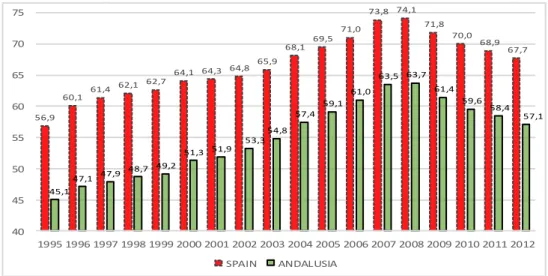
(9) occur among existing entrepreneurs and existing firms, including longer established firms, and the systematisation of innovation and commercialisation within existing firms. Generally, entrepreneurship comprises two viewpoints (OECD, 1998): a) First, entrepreneurship may be defined as the capacity to create and develop new business ventures, with studies focusing on the process of creation of new firms. b) Second, entrepreneurship may refer to the process to develop economic activity by building risk-taking, creativity and/or innovation capabilities, within a new or an existing organization. Therefore, we can analyse these two dimensions of entrepreneurship: a quantitative dimension in reference to the number of firms and a qualitative dimension in reference to some entrepreneurial characteristics and behaviours. Entrepreneurship has been historically poor in Andalucía: deficiencies in entrepreneurial culture and entrepreneurial dynamism (birth, survival and expansion) are some major structural drawback in Andalucía (Faiña, Lopez-Rodriguez, Romero, Fernández-Serrano, & Montes-Solla, 2014). So, quantitative and qualitative entrepreneurship deficiencies can be observed in Andalusia. 3.1. Quantitative dimension of entrepreneurship This section will try to approach this dimension by observing two indicators on entrepreneurship: Business Density and Total Entrepreneurial Activity (TEA). As may be seen in Figure 3, the level of business density - measured as the number of businesses per 1,000 inhabitants - has increased both in Andalusia and the whole of Spain in the last two decades. Nevertheless, this density in Andalusia has been traditionally among the lowest within the Spanish regions.. 73,8 74,1. 75. 71,8. 71,0. 70. 68,1. 64,8 64,1 64,3. 65 60,1. 61,4. 70,0. 69,5. 68,9. 67,7. 65,9 63,5 63,7. 62,1 62,7. 61,0. 61,4. 59,1. 60. 57,4. 56,9. 59,6. 58,4. 57,1. 54,8. 55. 53,3 51,3 51,9. 50 47,1. 45. 47,9. 48,7 49,2. 45,1. 40 1995 1996 1997 1998 1999 2000 2001 2002 2003 2004 2005 2006 2007 2008 2009 2010 2011 2012 SPAIN. ANDALUSIA. Figure 3. Business density (number of business per 1,000 inhabitants) Source: Elaborated from DIRCE, INE. Two clearly differentiated processes clearly emerge from Figure 3 (Romero & FernándezSerrano, 2013): •. First, an incomplete process of caching-up: the gap between the Andalusian and national averages decreased by more than five percentage points over the whole period 1995-2012: from 79.3 percent to 84.3 percent of the national average.. Journal for Educators, Teachers and Trainers JETT, Vol. 6 (2); ISSN: 1989-9572. 121.
(10) •. Second, the evolution of this indicator has followed the business cycle: a steady increase throughout the expansion period 1995-2008 (in which Andalusia reduced by almost seven percentage points its gap with the national average) followed by a fall in the current crisis 2009-2012 (in which the Andalusian catching-up process has been partially reversed).. Regarding TEA rates (defined as the percentage of the 18-64 years-old population who are either a nascent entrepreneur or owner-manager of a new business) Andalusia has presented levels of entrepreneurial activity comparable to the national average (see Table 1). The average rate of Total Entrepreneurial Activity (TEA) in the period 2003-12 has been 6.0 in Andalusia and 6.1 in the whole Spain. Andalusia shows lower rates than Cataluña (6.9) or Extremadura (6.2) for the period, but higher than the Basque Country (4.8) or Navarra (5.4) regions which have traditionally been associated with a sound entrepreneurial culture. Nevertheless, the qualitative characteristics of entrepreneurs will help explain this apparent contradiction. Table 1. TEA in the Spanish regions. Andalusia Catalonia Madrid The Basque country Extremadura Navarra Spain. 2003. 2004. 2005. 2006. 2007. 2008. 2009. 2010. 2011. 6.2 7.7 ---. 6.0 5.6 4.4. 5.7 6.8 6.9. 6.1 8.6 9.3. 7.2 8.4 7.9. 6.7 7.3 8.5. 6.3 6.4 5.1. 4.0 4.0 4.5. 5.8 6.8 5.6. 201 2 6.1 7.5 4.4. ---. 5.3. 5.4. 5.4. 6.4. 7.0. 3.0. 2.5. 3.9. 4.4. 7.7 7.0 7.0 8.3 8.1 7.1 3.3 2.6 ----5.5 6.3 8.1 6.5 3.9 3.6 6.8 5.2 5.7 7.3 7.6 7.0 5.1 4.3 Source: Ruiz, Martínez, Medina, and Ramos (2013). 6.0 5.5 5.8. 5.1 4.4 5.7. 3.2. Qualitative dimension of the entrepreneurship In the long run, the improvements in business demography and entrepreneurial activity require a detailed analysis about the quality of the firms created. In this way, we anticipate two problems. First, the Andalusian productive system is characterised by a marked predominance of self-employed workers and microenterprises; and a comparatively low participation of SMEs and large enterprises. Secondly, the high level of TEA could be partially explained by high Andalusian unemployment rates (36.3% versus 26.4% in Spain in 2013) as factors causing an 1 increase in the number of new entrepreneurs driven by necessity motives (Romero & Fernández-Serrano, 2013). In the present study, we analyse this qualitative dimension in detail by comparing Andalusia with three high-income Spanish regions: Navarra, Basque Country and Madrid. The methodology used in this analysis follows Fernández‐Serrano and Romero (2013). A survey on Spanish entrepreneurs carried out in 2011 was designed to gather data to measure the qualitative entrepreneurship dimension. The interviewee is the entrepreneur, defined as a business owner who also assumes managerial functions within the firm. A response rate of 20.8 percent was obtained in fieldwork. The enterprises participating in the survey were randomly selected using public information from DIRCE (Official Spanish Company Register) from the National Statistics Institute (INE). The stratified sample, with quotas for sectors and firm size, was representative of the business population of every region included in the study. The final sample had 260 observations in each region, corresponding to a ±6.5% error margin, and a confidence level of 95% percent. Most of the firms (87.6%) were long-established companies (over 5 years old) and employed less than 10 workers (87.9%). 1. Necessity entrepreneurs represent 21.5% of the total number of entrepreneurs in Spain and 25.9% in Andalusia as an average in the period 2008-12.. Journal for Educators, Teachers and Trainers JETT, Vol. 6 (2); ISSN: 1989-9572. 122.
(11) The statistical method used is comprised of a series of logistic regressions, therefore, the following dependent variable was included to carry out the regression: •. Dependent variable (Andalusia). This variable takes the value ―1‖ if the firm is from Andalusia (260 observations), and ―0‖ if the firm is from Madrid, Navarra or Basque Country.. Three groups of variables were used to measure the qualitative aspects of the entrepreneur: cognitive variables, human capital and entrepreneurial capabilities. 3.2.1 Cognitive variables: motivations and self-efficacy Two personal features of the entrepreneurs are considered: the nature and strength of their motivations and their self-efficacy. Regarding the first of them, the entrepreneurs interviewed were asked about their level of agreement with the six statements related to their motivations for start-up. The answers were coded using a Likert scale with 7 items (from ―1‖ meaning absolute disagreement to ―7‖ meaning full agreement). Since there are certain correlations between the different items from the questionnaire which measure these variables, a factorial analysis was carried out in order to include a lower number of uncorrelated variables in the regression model. As a result of this, the following two vectors with eigenvalues greater than one were obtained (60.35% variance explained; Kaiser-Meyer-Olkin = 0.687): •. Pull Motivation. This factor draws individual motivation towards an entrepreneurial career. It explains 38.06% of the total variance. This motivation implies that entrepreneurs start-up their firm because this was the best option for his/her personal and professional development, they want to be his/her own boss; they wanted to take advantage of a good economic opportunity and they believed they would earn a higher income than working as an employee.. •. Push Motivation. This vector includes motivations that may have forced the individual going into self-employment. Thus, they would correspond more closely to a necessity motivation. It explains 22.29% of total variance. ―Push entrepreneurs‖ started a new firm up because they did not have another option (they were unemployed) or they had to add to the family income.. Entrepreneurs were also asked about their level of agreement with four questions related to their self-efficacy. The questions were: ―I am capable of have a viable business‖; “I can control the process of boosting of the business”; “I know the practical details to continue expanding the activity”; and “If trying to expand the business, have a high probability of successfully”. The answers were coded using a Likert scale with 7 items (from 1 meaning absolute disagreement to 7 meaning full agreement). A factorial analysis was carried out and only one vector was obtained: •. Self-efficacy. This vector draws individual self-efficacy towards an entrepreneurial activity. The vector explains 55.47% of the variance in the original scale items (KaiserMeyer-Olkin = 0.681).. 3.2.2 Human capital This group of variables aims to analyse the main characteristics of human capital of entrepreneurs. The variables are: •. Descendant of an entrepreneur. Dummy variable, it takes value ―1‖ if the interviewee has mother or father entrepreneur and ―0‖ in the negative case.. Journal for Educators, Teachers and Trainers JETT, Vol. 6 (2); ISSN: 1989-9572. 123.
(12) •. Study level. This continuous variable reflecting the level of education of entrepreneurs. Takes the following values: "1" not studies, "2" primary education; "3" secondary education; "4" Vocational Training and "5" university degree.. •. Specialised Business Training. Entrepreneurs were asked whether they had attended specialised courses related to their economic activity. This dummy variable takes the value "0" for "No" and "1" for "Yes".. •. Work experience. This dummy variable takes value ―1‖ if the interviewee had previously worked as employee before running your current business and value ―0‖ in the negative case.. •. Entrepreneurship experience. This variable takes value ―1‖ if the interviewee had previously worked as an entrepreneur before running their current business and value ―0‖ in the negative case.. 3.2.3 Capabilities As indicators of managerial, energizer and social capabilities, we use the following variables, identified in the literature as relevant for entrepreneurship (Jiao & Cui, 2010; Woldesenbet, Ram, & Jones, 2012): . Innovation. The entrepreneurs interviewed were asked: Are you taking actions to introduce innovations (in its broadest sense, not just R & D), variable dummy, takes the value “1‖ for yes and ―0‖ for not.. . Proactivity. This variable takes value ―1‖ if the firm habitually carries out activities for the monitoring and forecasting of the firm's performance, as well as for and the search and identification of new markets and business opportunities.. . Risk-taking. The entrepreneurs interviewed are asked about their tendency to undertake high-risk projects. The answers are coded according to a seven-item Likert-type scale.. . Ambition. This variable is result of a factorial analysis. Four questions (Likert-type scale) were included: ―The idea that my business grow is attractive”, “Managing a larger company would be an exciting challenge”, “Having a large company would be gratifying”, “I wish my company was a large company”. One vector was obtained. It explains 80.10 % of the variance (Kaiser-Meyer-Olkin = 0.730).. . Cooperation. This variable reflects the existence of collaboration agreements between firms. It takes value ―0‖ in the case of absence of any type of cooperation with other firms, ―1‖ if informal cooperation existed, and ―2‖ in the case of the existence of formal cooperation agreements.. Additionally, we also included three variables to analyse the specific kind of this cooperation. Research and Development cooperation. This dummy variable takes value “1” if the firm carried out any cooperation activity with other firms in the field of research and development and ―0‖ in the negative case. Production cooperation. It takes value ―1‖ if the firm carried out any cooperation activity with other firms regarding the organization of production and ―0‖ in the negative case. Distribution and Sales cooperation. This variable takes value ―1‖ if the firm carried out any cooperation activity with other firms regarding the distribution and sales of its products and 0 in the negative case.. Journal for Educators, Teachers and Trainers JETT, Vol. 6 (2); ISSN: 1989-9572. 124.
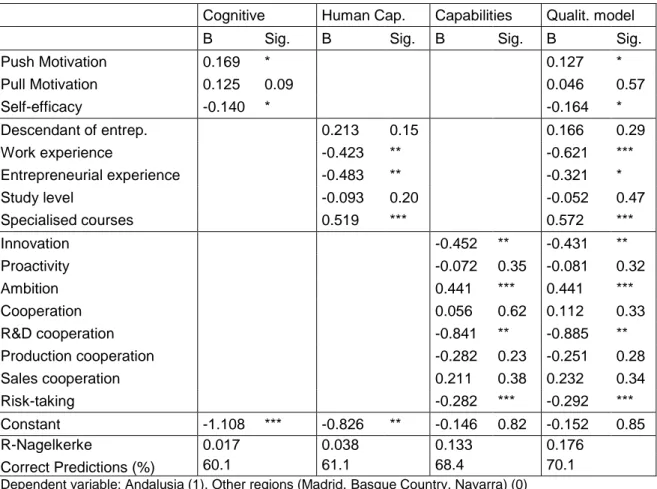
(13) Table 2. Logistic regression: qualitative entrepreneurship model Cognitive. Human Cap.. Capabilities. Qualit. model. B. Sig.. B. B. B. Sig.. Push Motivation. 0.169. *. 0.127. *. Pull Motivation. 0.125. 0.09. 0.046. 0.57. Self-efficacy. -0.140. *. -0.164. *. Sig.. Sig.. Descendant of entrep.. 0.213. 0.15. 0.166. 0.29. Work experience. -0.423. **. -0.621. ***. Entrepreneurial experience. -0.483. **. -0.321. *. Study level. -0.093. 0.20. -0.052. 0.47. Specialised courses. 0.519. ***. 0.572. ***. Innovation. -0.452. **. -0.431. **. Proactivity. -0.072. 0.35. -0.081. 0.32. Ambition. 0.441. ***. 0.441. ***. Cooperation. 0.056. 0.62. 0.112. 0.33. R&D cooperation. -0.841. **. -0.885. **. Production cooperation. -0.282. 0.23. -0.251. 0.28. Sales cooperation. 0.211. 0.38. 0.232. 0.34. Risk-taking. -0.282. ***. -0.292. ***. -0.146 0.133 68.4. 0.82. -0.152 0.176 70.1. 0.85. Constant R-Nagelkerke Correct Predictions (%). -1.108 0.017 60.1. ***. -0.826 0.038 61.1. **. Dependent variable: Andalusia (1), Other regions (Madrid, Basque Country, Navarra) (0) Differences statistically significant: at the 0.001 level (***); 0.01 level (**); 0.05 level (*). Table 2 presents the results of a logistic regression analysis for each block of variables and also for the whole qualitative model with all the variables jointly included. The variance inflation factors (VIF) and the condition indexes (CI) indicate that multicollinearity is not a problem in these models. The highest condition index is 9.16 and the highest FIV is 2.29, this being observed for the variable cooperation. Entrepreneurs with a high self-efficacy have a lower probability of being found in Andalusia, whereas this probability increases for those entrepreneurs with a push (necessity) motivation. Our results in this respect are in line with previous research from an international perspective within the GEM project, as seen above. The variable work experience and entrepreneurship experience have a negative and significant coefficient, showing that the inexperienced business owners are more probably located in Andalusia and they try to compensate for these deficiencies with specific courses. Andalusian entrepreneur have a higher level of ambition. Nevertheless, we take this result as the recognition that their firms are smaller and they are aware of the disadvantage they suffer when compared to larger firms. However, at the same time, these entrepreneurs are more likely to be characterized by lower levels of risk-taking and innovation capabilities in comparison with. Journal for Educators, Teachers and Trainers JETT, Vol. 6 (2); ISSN: 1989-9572. 125.
(14) those in the others regions, as the negative coefficient of the corresponding β coefficients in the logit regressions indicate. Likewise, no difference is detected regarding proactivity and cooperation, but the Research and Development cooperation is less likely in Andalusia. Again, this represent an important weakness of the Andalusian enterprises and may be a reflection of their smaller size and higher orientation towards local (less sophisticated) markets.. 4. Entrepreneurial teaching in Andalusia: the case of secondary school teachers at the university of Seville Based on the diagnosis just carried out, we find that Andalusian entrepreneurs are relatively scarce, so there is a solid justification to promote entrepreneurship and new venture creation. At the same time, they are motivated by a push factor and lack sufficient self-efficacy perceptions. In this sense, training should include a substantial component related to the values and motivations associated to the entrepreneurial activity. A Business Model generation exercise should also be useful to increase their self-efficacy perceptions. Regarding human capital variables, the difficult economic situation is reflected by the lower experience and a higher interest and participation in specialised business training. Therefore, experiential and active learning methodologies should be used to compensate this lack of experience. This will also help in the development of a higher self-efficacy. Andalusian entrepreneurs (when compared to those in more developed regions) lack innovation and risk-taking capabilities. To help compensate these deficiencies, specific creativity and innovation training should be included in the programme. We have also found that these entrepreneurs are conscious of their weaknesses in terms of size. For this reason, emphasis is placed in the need to seek expansion of the business by escalation of the activities, and by implementing opportunities that are not oriented only to the local market. This stress in business growth is highlighted both in the idea generation and in the Business Model generation exercise. The specific case study in this section refers to the University Master in Secondary School Studies, A-Level studies, Vocational Training and Languages (MAES) that this university has offered since 2010. Our choice is based on three reasons: the potential effects, the profile of the students and the teaching experience accumulated. Firstly, the Master influences the educational system and, at the same time, the region’s labour market. This official course targets the entrepreneurial training that the future secondary school teachers will need to stimulate innovative behaviour among their students. However, more than half of the participants of the Master do not have a clear idea about their work future and are considering the alternative of setting up their own company as a professional option. Secondly, the participants’ university background is varied and they tend to have experience as employees, at times in more than one sector. The multidisciplinary profile of students who have professional experience in different fields creates an enriching and uncommon framework in the area of Andalusian public universities. This certainly warrants research. Thirdly, the authors belong to the teaching team of the module dedicated to entrepreneurship education in this Master. They have been teaching this subject since it began in 2010, accumulating a substantial experience and information. The MAES include several possible minors. In particular, we focus on the Labour Training and Orientation (career counselling) minor. Within it, a Module on “Complimentary Disciplinary Training” intends to make the students aware of the existence and viability of entrepreneurial activity as a professional option. This will allow them to disseminate entrepreneurial activity among their students in the different levels of secondary school. To do so, our involvement with the future teachers aims to improve their training in aspects which are directly related to the promoting of entrepreneurial competencies. This is because they are the ones who will be in direct contact with these young people and in charge of stimulating them, motivating them and. Journal for Educators, Teachers and Trainers JETT, Vol. 6 (2); ISSN: 1989-9572. 126.
(15) training them in these competencies so that they can generate business ideas and acquire the knowledge necessary to set up an entrepreneurial project. To this end, Complimentary Disciplinary Training develops the following transversal/ generic skills in the students: teamwork, entrepreneurial initiative and spirit, the capacity to organise and plan, and skills in interpersonal relationships and in retrieving and analysing information from different sources. The subject also help develop the following specific competencies: understanding the venture creation processes, innovation skills, promotion of the entrepreneurial spirit and business ethics, to manage the firm-creation process –considering the joint influence of the person, the opportunity and the environment– and, finally, to work out and evaluate the viability plans of new business initiatives. This module’s contents are structured into two areas. Firstly, a view of entrepreneurial activity in general is offered. This includes aspects such as the concept of entrepreneurship and that of the entrepreneur, the role of entrepreneurs in the modern economy, the process view of entrepreneurial activities and the stages of this entrepreneurial process. Secondly, the module aims at providing the participants – future teachers – with a series of tools which they can use in their labour orientation work with their students in the different levels of secondary school. This subject aims to be an active learning experience. For this to be so, the students will be entrusted with a series of activities (tasks and projects) at both the individual and group level. The effective carrying out of these activities is always related to the subject’s aims and allows the students to develop the necessary skills and competencies. The subject therefore has the following structure: First part: Business activities 1. 2. 3. 4.. The concept of entrepreneur The business person and economic development The business process The stages of the business process. Second part: Tools for promoting the entrepreneurial spirit 1. 2. 3. 4. 5.. Entrepreneurial values and attitudes The entrepreneur’s interpersonal skills (negotiation, leadership, social skills, etc.) Creativity and innovation Recognising and evaluating opportunities Introduction to the business model. The Master has a clearly practical orientation. This is why the evaluation of the activities – both on campus and off campus - is essential for assessing the student’s learning. The course’s virtual platform is a fundamental support for this. The following activities are carried out during the course. The temporal organization is described in Table 3. •. Activity 1: A record of business ideas. The student will have to work out a list of possible business ideas from the first day of class to the date of handing in the activity. This activity will be handed in via the platform.. •. Activity 2: A questionnaire of values and attitudes. The student will fill it out to identify their own value priorities and motivations. It will be handed in via the platform. Activity 3: Group work about negotiation and human resources. The students will have to solve the activity in class and present the results to their classmates. The groups will be made up of 3-4 people.. •. •. Activity 4: Group selection and evaluation of business ideas. The students will present in class their “best” individual idea from the list of Activity 1. Groups (3-4 people) will be made up by gathering the ideas together according to their affinity. Each group will strictly evaluate the individual ideas proposed by its members and will select one.. Journal for Educators, Teachers and Trainers JETT, Vol. 6 (2); ISSN: 1989-9572. 127.
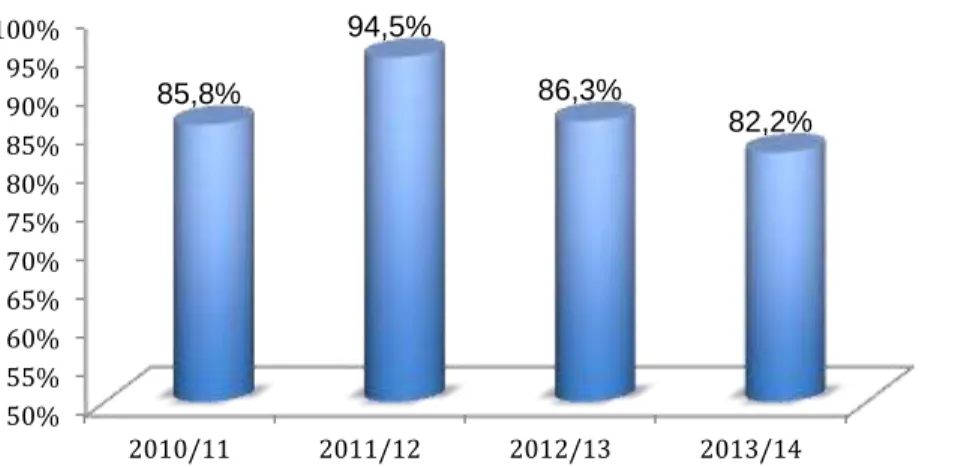
(16) •. Activity 5: The profile of an entrepreneur. The students will individually interview an entrepreneur - following the script set out - and will write up a detailed report about the entrepreneur’s experience. This report will be handed in via the platform one week before being discussed in class.. •. Activity 6: Business model. Each group will develop a business model from the idea selected in Activity 4. The business models will be handed in via the platform before being presented in class. In this way the teacher can study it first.. Table 3. Didactic plan Session. Lecturer. Subject. Activities. 1 2 3 4. Professor 1 Professor 1 Professor 1 Professor 1. 5. Professor 1. 6. Professor 1. Presentation Concept of entrepreneur Entrepreneurship and economic development Entrepreneurial process and stages Values and attitudes. 7. Professor 2. Interpersonal skills. 8. Professor 2. 9 10 11 12 13 14. Professor 1 Professor 3 Professor 3 Professor 3 Professor 3 Professor 3. Opportunity Recognition evaluation Profile of the entrepreneur. and. Activities 1, 2 & 5 start. Activs. 1 & 2 handed in Activ. 2 class discussion Activ. 4 starts Activ. 3 done in class Activ. 4 class discussion Activ. 5 handed in Activ. 5 class discussion. Creativity and innovation Activ. 6 starts Business model Activ. 6 presented in class. This methodology has offered very satisfactory results along the different years, as shown in Figure 4. As may be seen, students’ evaluations have always been highly positive, with the average over 80% every year. This compares substantially better to most other module in the Master and is a reflection, we think, of the interest and didactic approached followed in this subject.. 100% 95% 90% 85% 80% 75% 70% 65% 60% 55% 50%. 94,5% 86,3%. 85,8%. 82,2%. 2010/11. 2011/12. 2012/13. 2013/14. Figure 4. Global acquisition of competencies. Journal for Educators, Teachers and Trainers JETT, Vol. 6 (2); ISSN: 1989-9572. 128.
(17) As can be seen in the figure, the global progress has been considerable, surpassing 80% in all the examinations. With respect to the decrease in the last year, there was a change of programming in the Master which meant that the students’ work placements in schools coincided with the teaching of this subject during part of the course. This was detrimental to the teaching of this and other subjects and to off-campus activities and caused the readjustment of the changes for the following academic year.. 5. Conclusions In this paper, an entrepreneurship education course has been presented. The course structure and contents are based on the identification of the specific needs and deficiencies of the local entrepreneurs in Andalusia, and it thus clearly attempts to be embedded in the local context. The master includes a number of instruments contributing to the increase of student’s selfefficacy and promoting cooperation. In this way, it favours that students with different psychological profiles and diverging professional capacities work together around a common project. In order to compensate the relative weaknesses in professional and entrepreneurial experience in Andalusia, the master provides students with a selection of case studies and local guest entrepreneurs. Finally, the low risk and innovation propensities found in the regional environment are tackled through a methodology aimed at promoting creativity and innovation among the future entrepreneurs. The course is offered to students in the Master in Secondary School Teaching (MAES) at the University of Seville. In this sense, besides the direct effect on the participants, an additional indirect effect is sought through their implementation of entrepreneurial education initiatives in the secondary schools where they may end up teaching. In particular, since the participants are minoring on career counselling, they may be in a very influential position to open the minds of their pupils to the entrepreneurial career path.. 6. References Acs, Z. J., & Audretsch, D. B. (1990). Small firms in the 1990s. In Z. J. Acs & D. B. Audretsch (Eds.), The economics of small firms: a European challenge. Dordrecht: Kluwer Academic Publishers. Ajzen, I. (1991). The Theory of Planned Behavior. Organizational Behavior and Human Decision Processes, 50(2), 179-211. Alsos, G. A., & Kaikkonen, V. (2004, May). Opportunity recognition and prior knowledge: a study of experienced entrepreneurs. Paper presented at the 13th Nordic Conference on Small Business Research. Allen, C., & Lee, D. R. (1996). The Entrepreneur as Hero. Journal of Private Enterprise, 12(Fall), 1-15. Ashmore, C. M. (1990). Entrepreneurship in vocational education. In C. A. Kent (Ed.), Entrepreneurship education: current developments, future directions. Westport: Quorum Books. Bandura, A. (1986). Social foundations of thought and action: Englewood Cliffs, NJ Prentice Hall. Begley, T. M., Tan, W. L., & Schoch, H. (2005). Politico-economic factors associated with interest in starting a business: A multi-country study. Entrepreneurship Theory and Practice, 29(1), 35-55. Bird, Barbara J. (1989). Entrepreneurial behavior. Glenview, Ill. ; London: Scott, Foresman. Bosma, N., Acs, Z. J., Autio, E., Coduras, A., & Levie, J. (2008). Global Entrepreneurship Monitor. 2008 executive report. Wellesley, Massachusetts and London: Global Entrepreneurship Research Consortium (GERA). Brown, R. (1990). Encouraging enterprise: Britain's Graduate Enterprise Program. Journal of Small Business Management, 28(4), 71-77. Bygrave, W. D. (2003). The entrepreneurial process. In W. D. Bygrave & A. Zacharakis (Eds.), The portable MBA in Entrepreneurship (3ª edición ed.). Nueva York: John Wiley & Sons.. Journal for Educators, Teachers and Trainers JETT, Vol. 6 (2); ISSN: 1989-9572. 129.
(18) Carrier, C. (2005). Pedagogical challenges in entrepreneurship education. In P. Kyrö & C. carrier (Eds.), The dynamics of learning entrepreneurship in a cross-cultural univeristy context (pp. 136-158). Hämmeenlinna: University of Tampere. Carsrud, A.L., Olm, K., & Eddy, G. (1987). Entrepreneurs—mentors, networks, and successful new venture development: an exploratory study. American Journal of Small Business, 12, 13-18. Cooper, S. Y., & Lucas, W. A. (2007). Developing entrepreneurial self-efficacy and intentions: lessons from two programmes. Paper presented at the Proceedings of the 52nd ICSB World Conference, Turku. Davidsson, P. (1995). Culture, structure and regional levels of entrepreneurship. Entrepreneurship and Regional Development, 7(1), 41-62. DeTienne, D. R., & Chandler, G. N. (2004). Opportunity identification and its role in the entrepreneurial classroom: A pedagogical approach and empirical test. Academy of Management Learning and Education, 3(3), 242-257. Epstein, R. (1996). Cognition, creativity and behaviour. Wetport (CT): Praeger. European Commission. (2003a). Final report of the expert group „BEST Procedure‟ project on education and training for entrepreneurship. Brussels: Enterprise Directorate-General. European Commission. (2003b). Green Paper - Entrepreneurship in EuropeEuropean Commission. Brussels: DG Enterprise. European Commission. Faiña, A., Lopez-Rodriguez, J., Romero, I., Fernández-Serrano, J., & Montes-Solla, P. (2014). Evaluation of the main achievements of Cohesion Policy Programmes and Projects over the longer term in 15 selected regions (from 1989-1993 programming period to the present) Andalusia Case Study. Brussels: DG REGIO, European Commission. Fayolle, A., & Gailly, B. (2005). Using the Theory of Planned Behaviour to Assess Entrepreneurship Teaching Programmes. Center for Research in Change, Innovation and Strategy of Louvain School of Management, Working Paper 05/2005. Fayolle, A., Gailly, B., & Lassas-Clerc, N. (2006). Assessing the impact of entrepreneurship education programmes: a new methodology. Journal of European Industrial Training, 30(9), 701-720. Fayolle, A., Gailly, B., & Lassas-Clerc, N. (2007). Towards a new methodology to assess the entrepreneurship teaching programmes. In A. Fayolle (Ed.), Handbook of research in entrepreneurship education (Vol. 1, pp. 187-197). Cheltenham: Edward Elgar. Fernández-Serrano, José, & Romero, Isidoro. (2013). Entrepreneurial quality and regional development: Characterizing SME sectors in low income areas*. Papers in Regional Science, 92(3), 495-513. doi: 10.1111/j.1435-5957.2012.00421.x Fernández‐Serrano, J., & Romero, I. (2013). Entrepreneurial quality and regional development: Characterizing SME sectors in low income areas*. Papers in Regional Science, 92(3), 495-513. doi: 10.1111/j.1435-5957.2012.00421.x Fillion, L. J. (1995). Entrepreneurship and management: Differing but complementary Processes. Cahier de Recherche, CETAI, HEC Montreal., 95-01. Foley, A., & Griffith, B. (1998). Education, training and the promotion of high quality entrepreneurs in the Republic of Ireland. In M. G. Scott, P. Rosa & H. Klandt (Eds.), Educating entrepreneurs for wealth creation. Aldershot: Ashgate. Garavan, T. N., & O'Cinneide, B. (1994a). Entrepreneurship education and training programmes: a review and evaluation. Journal of European Industrial Training, 18(8), 312. Garavan, T. N., & O'Cinneide, B. (1994b). Entrepreneurship education and training programmes: a review and evaluation - Part II. Journal of European Industrial Training, 18(11), 13-21. Gartner, W. B. (1985). A conceptual framework for describing the phenomenon of new venture creation. Academy of Management Review, 10(4), 494-706. Gartner, W.B., Carter, N.M., & Hills, G.E. (2003). The language of opportunity. In C. Steyaert & D. Hjorth (Eds.), New movements in entrepreneurship (pp. 103-124). London: Edward Elgar. Gibb, A. A. (1987). Designing effective programmes for encouraging the business start-up process: lessons from UK experience. Journal of European Industrial Training, 11(4), 2432.. Journal for Educators, Teachers and Trainers JETT, Vol. 6 (2); ISSN: 1989-9572. 130.
(19) Gibb, A. A. (1998). Entrepreneurial core capacities, competitiveness and management development in the 21st century. Paper presented at the IntEnt Conference, OestrichWinkel. Gorman, G. G., Hanlon, D., & King, W. (1997). Some research perspectives on entrepreneurship education, enterprise education and education for small business management. International Small Business Journal, 15, 56-77. Greene, Francis J, & Saridakis, George. (2008). The role of higher education skills and support in graduate self‐employment. Studies in Higher Education, 33(6), 653-672. Hartshorn, C., & Parvin, W. (1999). Teaching entrepreneurship: creating and implementing a naturalistic model. Paper presented at the International Conference EuroPME, Rennes. Hills, Gerald E, Shrader, Rodney C, & Lumpkin, GT. (1999). Opportunity recognition as a creative process. Frontiers of entrepreneurship research, 19(19), 216-227. Honig, B. (2004). Entrepreneurship education: Toward a model of contingency-based business planning. Academy of Management Learning and Education, 3(3), 258-273. Jiao, Hao, & Cui, Yu. (2010). An empirical study of mechanisms to enhance entrepreneurs' capabilities through entrepreneurial learning in an emerging market. Journal of Chinese Entrepreneurship, 2(2), 196-217. Johannisson, B. (1991). University training for entrepreneurship: Swedish approaches. Entrepreneurship and Regional Development, 3(1), 67-82. Kalternborn, O. (1998). Entrepreneur-Service (ES) - a national project for improved local service to entrepreneurs. In M. G. Scott, P. Rosa & H. Klandt (Eds.), Educating Entrepreneurs for Wealth Creation. Aldershot: Ashgate. Katz, J. A. (2003). The chronology and intellectual trajectory of American entrepreneurship education 1876-1999. Journal of Business Venturing, 18(2), 283-300. Katz, J. A., & Gartner, W. (1988). Properties of emerging organizations. Academy of Management Review, 13, 429-441. Kent, Calvin A. (1990). Entrepreneurship education : current developments, future directions. New York: Quorum Books. Kirby, David A. (2003). Entrepreneurship. London: McGraw-Hill Education. Kolvereid, L. (1996). Prediction of employment status choice intentions. Entrepreneurship Theory and Practice, 21(1), 47-57. Krueger, N. F. (2000). The cognitive infrastructure of opportunity emergence. Entrepreneurship Theory and Practice, 24(3), 5-23. Kyrö, Paula. (2006). Entrepreneurship Education and Finnish Society: Tallinn School of Economics and Business Administration, Tallinn University of Technology. Lechner, C., & Dowling, M. (1998). How to design business plan seminars? Single topic business plan courses as a focused approach. Paper presented at the IntEnt Conference, Oestrich-Winkel. Liñán, F. (2007). The Role of Entrepreneurship Education in the Entrepreneurial Process. In A. Fayolle (Ed.), Handbook of Research in Entrepreneurship Education (Vol. 1, pp. 230247). Cheltenham, UK: Edward Elgar Publishing. Liñán, F., Rodríguez-Cohard, J. C., & Rueda-Cantuche, J. M. (2011). Factors affecting entrepreneurial intention levels: a role for education. International Entrepreneurship and Management Journal, 7(2), 195-218. Liñán, F., Urbano, D., & Guerrero, M. (2011). Regional variations in entrepreneurial cognitions: Start-up intentions of university students in Spain. Entrepreneurship and Regional Development, 23(3&4), 187-215. doi: 10.1080/0898562090323392 Marchese, M., & Potter, J. (2011). Entrepreneurship, SMEs and Local Development in Andalusia, Spain LEED Working Paper Series (Vol. No. 2011/3). Paris: LEED Programme, OECD. Matthews, C. H., & Moser, S. B. (1995). Family background and gender: implications for interest in small firm ownership. Entrepreneurship and Regional Development, 7(4), 365-377. McIntyre, John R., & Roche, M. (1999). University education for entrepreneurs in the United States: a critical and retrospective analysis of trends in the 1990s. Center for International Business Education and Research, Georgia Institute of Technology, Working Paper Series, 99/00-021.. Journal for Educators, Teachers and Trainers JETT, Vol. 6 (2); ISSN: 1989-9572. 131.
(20) Moroz, Peter W., & Hindle, Kevin. (2012). Entrepreneurship as a Process: Toward Harmonizing Multiple Perspectives. Entrepreneurship Theory and Practice, 36(4), 781-818. doi: 10.1111/j.1540-6520.2011.00452.x Nabi, G., & Liñán, F. (2011). Graduate entrepreneurship in the developing world: intentions, education and development. Education+ Training, 53(5), 325-334. OECD. (1998). Fostering entrepreneurship. Paris: Organisation for Economic Co-operation and Development. Peterman, N. E., & Kennedy, J. (2003). Enterprise education: Influencing students' perceptions of entrepreneurship. Entrepreneurship Theory and Practice, 28(2), 129-144. Pittaway, L., & Cope, J. (2007). Entrepreneurship education - A systematic review of the evidence. International Small Business Journal, 25(5), 479-510. Romero, I., & Fernández-Serrano, J. (2013). Cohesion policy, entrepreneurship and regional development. The case of Andalusia. Paper presented at the XXXIX Congress of the Spanish Association of Regional Science, Oviedo. Ruiz, J. L., Martínez, S., Medina, J. A., & Ramos, A. R. (2013). Global Entrepreneurship Monitor. Andalucía. Informe Ejecutivo 2012. Cadiz: Cátedra de Emprendedores de la Universidad de Cádiz. Santos, F. J., & Liñán, F. (2007). Measuring entrepreneurial quality in southern Europe. International Entrepreneurship and Management Journal, 3(1), 87-107. Sarason, Y., Dean, T., & Dillard, J. F. (2006). Entrepreneurship as the nexus of individual and opportunity: A structuration view. Journal of Business Venturing, 21(3), 286-305. Scott, Michael G, & Twomey, Daniel F. (1988). The long-term supply of entrepreneurs: students' career aspirations in relation to entrepreneurship. Journal of Small Business Management, 26(4), 5-13. Scherer, R. F., Brodzinsky, J. D., & Wiebe, F. A. (1991). Examining the relationship between personality and entrepreneurial career preference. Entrepreneurship and Regional Development, 3, 195-206. Shane, S. (2003). A general theory of entrepreneurship : the individual-opportunity nexus. Cheltenham: E. Elgar. Shane, S., & Venkataraman, S. (2000). The promise of entrepreneurship as a field of research. Academy of Management Review, 25(1), 217-226. Shaver, K. G., & Scott, L. R. (1991). Person, process, choice: the psychology of new venture creation. Entrepreneurship Theory and Practice, 16(2), 23-45. Singh, Robert P, Hills, Gerald E, & Lumpkin, GT. (1999). New venture ideas and entrepreneurial opportunities: Understanding the process of opportunity recognition. Paper presented at the 13th Annual Conference of the United States Association for Small Business and Entrepreneurship. Specht, P. H. (1993). Munificence and carrying capacity of the environment and organization formation. Entrepreneurship Theory and Practice, 17, 77-77. Spencer, A. S., Kirchhoff, B. A., & White, C. (2008). Entrepreneurship, innovation, and wealth distribution - The essence of creative destruction. International Small Business Journal, 26(1), 9-26. Timmons, Jeffry A. (1999). New venture creation : entrepreneurship for the 21st century (5th ed.). Boston ; London: Irwin/McGraw-Hill. Wennekers, A.R.M., & Thurik, A. R. (1999). Linking Entrepreneurship and Economic Growth. Small Business Economics, 13(1), 27-55. Wilson, F., Kickul, J., & Marlino, D. (2007). Gender, entrepreneurial self-efficacy, and entrepreneurial career intentions: Implications for entrepreneurship education. Entrepreneurship Theory and Practice, 31(3), 387-406. Woldesenbet, Kassa, Ram, Monder, & Jones, Trevor. (2012). Supplying large firms: The role of entrepreneurial and dynamic capabilities in small businesses. International Small Business Journal, 30(5), 493-512. doi: 10.1177/0266242611396390 Zhao, H., Siebert, S.E., & Hills, G. E. (2005). The mediating role of self-efficacy in the development of entrepreneurial intentions. Journal of Applied Psychology, 90(6), 12651272.. Journal for Educators, Teachers and Trainers JETT, Vol. 6 (2); ISSN: 1989-9572. 132.
(21)
Figure
Documento similar