
Influencing EFL learners’ reading comprehension and self efficacy beliefs: the effect of concept mapping strategy
19
0
0
Texto completo
(2) PORTA LINGUARUM. Nº 17, enero 2012. Después de controlar los efectos de los resultados de los pretests, los resultados del ANCOVA revelaron que los estudiantes en el grupo de mapas conceptuales mostró mayor logro en comprensión lectora y en autoeficacia que los alumnos en el grupo en el que se aplicó un método tradicional. Los resultados de este estudio podrían tener algunas implicaciones para la enseñanza de la comprensión lectora de estudiantes de inglés. Palabras clave: Mapas conceptuales, creencias de autoeficacia, comprensión lectora, estudiantes iraníes de inglés como lengua extranjera.. 1. INTRODUCTION As Swalander and Taube (2007) maintain "good reading ability is the key to success in educational settings and this is why researchers try to find effective educational and psychological variables that can explain variations in reading ability and academic achievement" (p. 207). In addition, researchers and scholars interested in student motivation and learning in academic settings put much emphasis on the position of students' thoughts and beliefs in learning (Schunk, 2003). College students have to learn a large amount of information from English texts. Reading and comprehending this amount of information could be very demanding. In most cases, the burden of reading information leads to rote memorization and retention of materials rather than meaningful and deep learning (Lambiotte & Dansereau, 1992). Recently, there have been many attempts and researches for improving the situation of learning/teaching English in Iran. However, as Jalilifar (2010) points out, "despite the growing interest in learning English as a foreign language in Iran, students at the college level seem rarely proficient enough to read and comprehend English language texts" (p. 98). Due to Iranian learners' problems in comprehending texts, many of them loose their interest in reading English texts and this could lead to their failure in academic English courses. As such, "finding an efficient approach which facilitates learners' learning and helps them comprehend better seems to be quite necessary" (ibid: 98). Antoniou and Souvignier (2007: 43) maintain that "effective reading requires the use of strategies that are explicitly taught". It could be argued that learners are most successful when their instructors employ different strategies to help them read and write challenging texts. Faced with reading challenges among Iranian EFL learners, this study investigated whether concept mapping strategy as a cognitive tool could improve students' reading comprehension and specifically their self-efficacy beliefs in reading comprehension. The positive effect of concept mapping on different educational outcomes has been shown by many studies (Ojima, 2006; Snead & Wanda, 2004; Chularut & DeBacker, 2004). There are, however, few studies investigating the effect of concept mapping on reading comprehension of EFL learners. As Talebinejad and Mousapour (2007) point out, investigating the effect of concept mapping strategy on skills such as reading will be useful. In addition, to the best knowledge of the authors, there is no published research examining the effect of concept mapping on self- efficacy of EFL learners. The reason for including self-efficacy as a variable in this research is that self-efficacy beliefs seem to be closely related to achievement of students (Pajares & Valiante, 2001; Chapman & Tunmer, 2003). As such, finding strategies which could help students increase their selfefficacy beliefs would be very helpful.. 10.
(3) YASER KHAJAVI AND SAEED KETABI. Influencing EFL Learners’ Reading Comprehension.... 2. REVIEW OF RELATED LITERATURE 2.1. Concept mapping Novak and Gowin (1984) introduced concept mapping to "facilitate the process of meaningful learning" (Clayton, 2006: 197). "Concept mapping is a graphic organizational technique designed to help individuals and groups, explain and explore their knowledge and understanding of a topic" (Hay & Kinchin, 2006: 130). Concept maps consist of concepts, usually enclosed in circles or boxes, and relationships between concepts are indicated by a connecting line which links two concepts. Words which are written on linking lines show the relationship between two concepts. Concept is defined as "a perceived regularity in events or objects, or records of events or objects, designated by a label" (Novak & Cañas, 2006: 177). Concept maps are visual manifestations of students' interpretation of an idea. Students connect their previous knowledge to new information and create maps which show interrelated ideas. Drawing a concept map needs students' active engagement in "organizing and analyzing data, correlating appropriate information, and synthesizing ideas. This active involvement facilitates meaningful learning" (Kostovich, Poradzisz, Wood & O'Brien, 2007: 226). Concept mapping helps students find relationships among different pieces of information and build on their previous knowledge and experiences. Clayton (2006) maintains that concept mapping contributes to academic achievement of students by motivating them to learn. Concept maps illustrate in what manner individuals "remember, organize, interpret, and understand information in a particular subject area" (Derbentseva, Safayeni & Cañas, 2004: 3). Two main theories support the use of concept mapping in education. One is Constructivist theory which implies that learners take with them their previous knowledge to class which is influenced by cultural and ethnic factors (Colburn, 2000). Constructivists believe that the way individuals understand their experiences forms meaning. In other words what we know is constructed by our personal experience. When we want learners to learn meaningfully, connections between novel and previous information should be made (Lambert et al., 2002). Another theory which supports concept mapping is Ausubel's assimilation theory. Ausubel (1968) classifies learning into two categories: a) meaningful and b) rote learning; "meaningful learning happens when the learner consciously and deliberately chooses to relate new knowledge to knowledge the learner already knows" (Novak, 1998: 19, cited in Shimerda, 2007: 120). It is believed that concept mapping can contribute to students' learning based on mentioned theories. 2.1.1. Concept mapping and reading comprehension One way for enhancing reading comprehension of learners is through teaching learning strategies. Oxford (1990) states that learning strategies are "specific actions taken by the learner to make learning easier, faster, more enjoyable and more effective" (p. 8). Furthermore, Baker and Boonkit (2004) consider reading strategies as an essential facet of teaching English as a foreign or second language. Different strategies are used for enhancing reading comprehension of students; one of the strategies which seem to be effective in reading comprehension of learners is concept mapping.. 11.
(4) PORTA LINGUARUM. Nº 17, enero 2012. Many studies have been conducted to determine the role of concept mapping in different language skills. Some of these studies support the effectiveness of concept mapping in language learning. Gobert and Clement (1999) report that creating maps is more useful to students compared with writing summaries or simple reading. They interpret these findings maintaining that through concept mapping students are able to represent their knowledge in a visual form but in other methods like traditional methods, knowledge is represented in textual form which is not completely meaningful to students. It must be noted that research findings on the effects of concept mapping on reading ability in general and for learners of different proficiency levels still are not consistent. According to Chen (1998), concept mapping does not have a positive effect on learners' reading comprehension and summarization. Similarly, in a recent study, Han (2006) compared effectiveness of traditional reading instruction and concept mapping reading instruction for Chinese EFL students. Three reading areas of main idea reading, subordinate idea reading and reading between the lines were investigated. Findings showed no significant difference in the three reading areas between two types of instruction. Unlike these findings, Hibbing and Rankin-Erickson (2003) maintain that teachers can use mapping strategies for testing the students' vocabulary instead of testing them on word definitions. They suggest that mapping strategies can activate students' prior knowledge. As a result, they can relate new knowledge to previous knowledge and develop related rather than isolated word knowledge. In another study, Snead and Wanda (2004) examined the effects of concept mapping on the science achievement of middle grade science students in eight intact classes. Results revealed that low ability students had better achievement with concept mapping than high ability ones. In line with previous studies on concept mapping, Oliver (2007) examined science students' representation of text structures from a soil conservation textbook section on a given concept map template. The results indicated that students were more successful at classifying terms under given superordinate categories. No significant differences were found in the mapping presentation of students at different reading levels. About 75% of students maintained that they preferred concept mapping and would favor to read and map rather than only read without mapping. 2.2. Self-efficacy beliefs Self-efficacy refers to the belief that one can successfully execute a task (Bandura, 1977). Schunk (2001) defines it as "beliefs about one's capabilities to learn or perform behaviors at designated levels" (p. 126). According to social learning theory, human action or behavior is determined by interaction of his behavior, cognitions and emotions. Self-efficacy theory states that an individual's perceived efficacy in a particular area will determine the amount of effort that will be put forth, and the degree individual will continue in the incidence of obstacles (Bandura, 1977). Bandura (1986) states that learners only continue the tasks that they think are able to do well and keep away from those they believe they do not have the ability to execute effectively. The process of creating and. 12.
(5) YASER KHAJAVI AND SAEED KETABI. Influencing EFL Learners’ Reading Comprehension.... using self-efficacy beliefs is intuitive. In other words, Individuals "engage in a behavior, interpret the results of their actions, use these interpretations to create and develop beliefs about their capability to engage in subsequent behaviors in similar tasks and activities, and behave in concert with the beliefs created" (Pajares, 2002: 3). Bandura (1996) maintains that if individuals have a high degree of self-efficacy, they will set challenging goals and persist in achieving them. Self-efficacy leads to academic achievement in various academic subjects. 2.2.1. Self -efficacy beliefs and ESL/EFL language learning Although self-efficacy studies on language learning are limited, existing studies have indicated a positive relationship between key motivational variables like self-efficacy and L2 achievement. Wu (2006) asserts that students' self-beliefs of their capability to learn a second language are significant determinants of their learning behaviors, endeavor, and persistence. As a result, these efficacy beliefs affect language achievement and course success. Language learners are believed to have different competence-related judgments based on their prior learning experiences, and these judgments influence how they utilize a range of learning strategies during the learning process (Oxford, 1990). One of the most thorough studies is Chapman and Tunmer (2003) who elaborate on studies regarding the development of achievement-related self-system factors in relation to children's reading achievement. They assert that reading self-concept and reading selfefficacy seem to develop with regard to preliminary experiences in learning to read. They go on to maintain that to overcome both skill deficiencies in reading and the negative reading and achievement-related self-beliefs that develop in response to reading difficulties, attention to the improvement of strategies is crucial. Furthermore, use of attribution retraining methods in line with appropriate skills training, for overcoming children's negative self-beliefs is beneficial. Another study regarding self-efficacy and L2 achievement is Barkley (2006) who investigated whether student perceived self-efficacy beliefs were predictors of their reading comprehension achievement. A reading comprehension subtest of a state standardized test was used for measuring reading comprehension of 400 students enrolled in a middle school. Results indicated that students' efficacy beliefs about prior knowledge and graphic organizers were positively related with their reading comprehension achievement. In his PhD study, Gahungu (2007) studied the relationship between self-efficacy and language ability. The study participants were thirty-seven college students studying French at a Midwestern University. The self-efficacy of participants was measured using a forty-item questionnaire in which they rated the levels of confidence that they could execute learning tasks at designated levels of proficiency. Their language proficiency in French was measured through a cloze test. Qualitative data were also obtained from interviews with the participants and their instructor as well as class observations. The findings of the study revealed positive and significant relationship between self-efficacy and language ability.. 13.
(6) PORTA LINGUARUM. Nº 17, enero 2012. In a recent quasi-experimental study, Nevil (2008) investigated the relationship between reading self-efficacy and regulation of cognition and reading achievement among eighty students from a rural school district in North Central Pennsylvania. The results of this study revealed that reading self-efficacy is a predictor of students' achievement. The findings also supported the hypothesis that students more efficacious about their ability to read tend to regulate their cognition at a level significantly different from those lower in reading self-efficacy. Moreover, reading self-efficacy was positively related to reading achievement. To sum up, the self-efficacy studies shed light on L2 motivation research by connecting students' learning behaviors, endeavor, and persistence with their insights of personal ability to accomplish language tasks. The number of L2 studies who have adopted this variable is growing with the belief that experimental evidence will aid in clarifying the effects of self-efficacy on L2 learners' thoughts, affects, behaviors, and achievement. 2.2.2. Concept mapping and self-efficacy Studies on the influence of concept mapping on motivational variables like selfefficacy are too rare. The only published study which investigates the role of concept mapping on self-efficacy of learners is that of Chularut and DeBacker (2004) who examined the effectiveness of concept mapping used as a learning strategy with ESL students. The participants were seventy-nine ESL students. The results showed a significant effect of concept mapping on self-efficacy and achievement of students. For all variables, the concept mapping group showed significantly greater performance from pre-test to posttest than the traditional method group. A point that comes to one's mind studying the literature is that psychological and motivational effects of concept mapping seem not to have been studied in most of the studies in both EFL and ESL context. Similarly, due to dearth of consistent empirical evidence, the effect of concept mapping on reading comprehension and self-efficacy of Iranian EFL Learners remain unclear. More studies are, thus, needed to examine the effects of concept mapping on reading comprehension and motivational variables like selfefficacy. Based on review of literature, as there is empirical evidence for the benefits of concept mapping in a second language context, we hypothesize that it might also be a beneficial strategy for Iranian EFL college students. As it was mentioned before, this study, to the best of our knowledge, is the first attempt to explore the effect of concept mapping on self-efficacy of EFL learners. 2.2.3. Research Questions The present study strives to answer the following questions: 1. Do Iranian EFL learners in the concept mapping group show better reading achievement than students in the control group in a reading comprehension course? 2. Do Iranian EFL learners in the concept mapping group show better self-efficacy in EFL reading comprehension than students in the control group?. 14.
(7) YASER KHAJAVI AND SAEED KETABI. Influencing EFL Learners’ Reading Comprehension.... 3. METHODOLOGY 3.1. Participants Participants were 60 (21 males and 39 females) sophomores who had registered for the English reading comprehension course ? at Islamic Azad university, Izeh branch. The age of the participants ranged from 19 to 23 years. Sixty intermediate students were randomly assigned to either experimental (concept mapping, N=30) or control (traditional method, N=30) group. The participants were mostly from Izeh, a city in southwest of Iran. Thus, they had much in common in terms of sociolinguistic and geographical factors. 3.2. Instruments Three instruments were used in this study. The first instrument was a reading comprehension test which was used as pretest and posttest in the study. It included 6 passages selected from TOEFL practice tests (Pyle, 2001) and 2 passages from Readers Digest magazine (see appendix A). Both easy and difficult items were included in the test. The test was piloted by a group of 12 students who had registered for reading comprehension course ? and had almost the same level of proficiency and demographical characteristics but did not participate in the main study. Based on the results of pilot study, three difficult items were excluded and some items were modified. The final version of the test which was used for the main study had 44 multiple choice items. The calculated reliability index of the revised form was (r = 0.76). The second instrument was the Motivated Strategies for Learning Questionnaire (MSLQ) (Pintrich & De Groot, 1990) which is a self report instrument designed to assess college students' motivational orientations and their use of different learning strategies for a college course (see appendix B). The MSLQ is based on a general cognitive view of motivation and leaning strategies (Printrich, Smith, Garcia & McKeachie, 1991). Eight items in this scale measure students' self-efficacy. The Cronbach coefficient reported for this questionnaire in the Iranian context is 0.76 (Alborzi & Samani, 1999). The reason for selection of this instrument was its high index of reliability r=0.93 (Printrich et al., 1991). Besides, it was piloted by Iranian learners. MLSQ has statements in the likert- type format ranging from "completely true of me" to "not at all true of me". The last instrument was a researcher-made booklet which was used for familiarizing students with the concept mapping strategy. It was compiled based on some sources (such as Llewellyn (2007) and Novak & Cañas (2006)) about concept mapping. The booklet had different sections such as what is a concept map? How to draw concept maps? as well as some examples of concept maps. 3.2.1. Scoring of the Data Eight items in the Motivated Strategies for Learning Questionnaire MSLQ which measure self-efficacy were applied. Responses which participants provided to items were scored via a 5 point Likert scale ranging from 1) not at all true of me to 5) completely. 15.
(8) PORTA LINGUARUM. Nº 17, enero 2012. true of me. Scale scores were calculated by summing the items and taking an average for each student. In MLSQ, there are some items that should be reverse-scaled. For reversescaled items, 1 = 5, 2 = 4, 3 = 3, 4 = 2, and 5 = 1. However, there were no reversed items in self-efficacy items. To measure the students' reading ability, a reading test was used. There were 44 items in the test. Each item received 2 scores which made 88 scores for the whole test. 3.3. Procedure The study consisted of three phases: (1) Pre-testing (2) Strategy instruction and (3) Post-testing. Prior to conducting the research, consent from administrators and officials of university was obtained and all students were informed that participation in the study was not obligatory. Before starting the instruction in concept mapping, both groups of the students were given a test of reading in order to assess their reading comprehension ability. After administering the test of reading, the participants had a break for 30 minutes. In the next part, the MSLQ was given to students in order to assess their self-efficacy beliefs in reading comprehension. After pre-testing, all students participated in ten 60-minute study sessions (one session per week). Both groups were taught by the same instructor (one of the researchers). He was completely familiar with concept mapping strategy. The teaching sessions took place in fall semester in 2007 (the longest semester of universities in Iran). The reading passages for both groups were the same but they were taught by different methods i.e. traditional and concept mapping method. The strategy instruction phase followed the following steps adopted from Harris and Graham (1996): "(1) Strategy description, (2) Discussion of goals and purposes, (3) Modeling of the strategy, (4) Student mastery of strategy steps, and (5) Guided practice and feedback" (cited in Talebinezhad & Mousapour, 2007: 76). a) Strategy description. At the outset of the first session, the students were introduced to the concept mapping strategy as a cognitive tool. The teacher explained what concept mapping was. Also he told them about the benefits of concept mapping and its effects on improving the comprehension of students and learning vocabulary. Then, a teachermade booklet was given to the students and they were required to study it carefully for the next session. It covered different sections about concept mapping technique. b) Discussion of goals and purposes. In this part, the instructor explained to the participants the goals and benefits of concept mapping and the ways it could help them read. An example would follow. The teacher told them: Suppose you are going to build a house and you do not have a plan, what will happen then? So for reading or writing it's very useful to have a map. c) Modeling the strategy In this part, drawing concept maps was taught to students. The following guidelines by Llewellyn (2007) were used for creating concept maps: 1) Place the main idea or topic at the top or center of the page; 2) Organize the subtopics from the general to the most specific; 3) Use a linking word in the form of a preposition, verb or short statement to connect the relationship of one concept or term to another; 4) If applicable, add crossing links to show connections and relationships between different words on the map (p. 74).. 16.
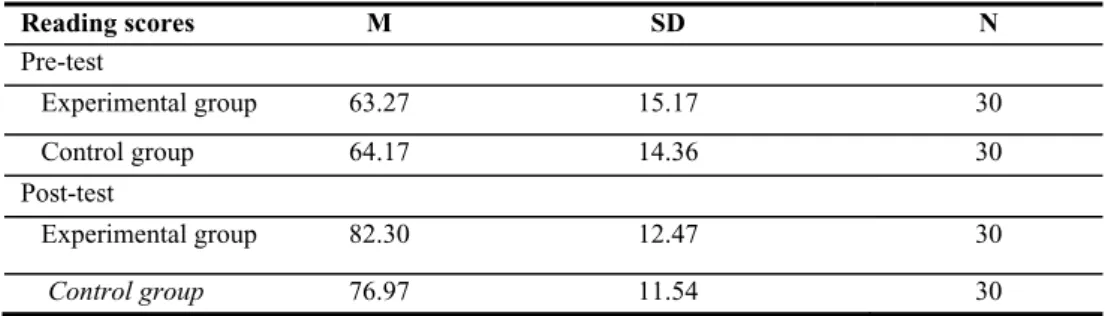
(9) YASER KHAJAVI AND SAEED KETABI. Influencing EFL Learners’ Reading Comprehension.... d) Student mastery of strategy steps: In this stage, students practiced the sequence of activities for concept map drawing. e) Guided practice and Feedback; In this phase, the instructor gave feedback to students for their concept maps. Some texts were given to students. They composed concept maps of the texts, gave them to the instructor and the instructor provided them with suitable feedback. In the traditional method group, students received the type of instruction which is prevalent in Iran. It is characterized by asking the students to study the passages individually. Then students are required to look up unknown vocabulary in their dictionaries. At last, teacher and students talk about the passage, give synonyms for unknown words and present summaries. After concept mapping instruction, students participated in post-test session and completed the post-reading comprehension test and the self-efficacy scale.. 4. RESULTS In order to investigate the research questions, a number of descriptive and inferential statistics were run. The results are presented in this section. Research question one: Do Iranian EFL learners in the concept mapping group show better reading achievement than students in the control group in a reading comprehension course? Table 1. Means and standard deviations for pre-test and post-test scores on the reading test. Reading scores Pre-test. M. SD. N. Experimental group. 63.27. 15.17. 30. Control group. 64.17. 14.36. 30. Experimental group. 82.30. 12.47. 30. Control group. 76.97. 11.54. 30. Post-test. As Table 1 shows students in the concept mapping group obtained higher mean post-test scores on reading comprehension (M=82.30, SD=12.47) than the control group (M=76.97, SD=11.54). There were higher post-test scores on reading comprehension than pre-tests in both groups. A univariate analysis of covariance (ANCOVA) was conducted to investigate the main effect of the independent variable i.e. the instruction of concept mapping strategy on the dependent variable (the students' scores on reading comprehension), controlling for the effect of pre-tests as covariates. Preliminary checks were conducted to ensure that there were no violations of assumptions of ANCOVA like normality,. 17.
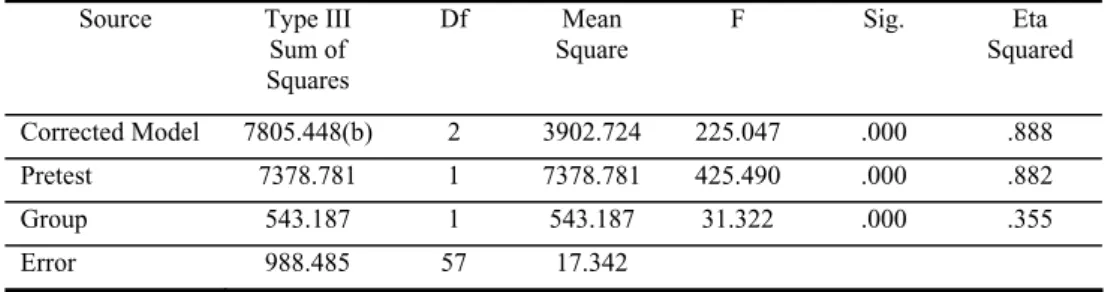
(10) PORTA LINGUARUM. Nº 17, enero 2012. homogeneity of variance, and reliable measurement of covariance. Table 2 shows the result of ANCOVA on post reading scores. Table 2. Results of ANCOVA on post reading scores using pre-test as a covariate. Source. Type III Sum of Squares. Df. Mean Square. F. Sig.. Eta Squared. Corrected Model. 7805.448(b). 2. 3902.724. 225.047. .000. .888. 7378.781. 1. 7378.781. 425.490. .000. .882. 31.322. .000. .355. Pretest Group. 543.187. 1. 543.187. Error. 988.485. 57. 17.342. As displayed, the F value for the group is F = 31.322 which is significant at p = .000, eta squared=.355. It suggests that the instruction of the concept mapping strategy had a positive effect on the students' reading achievement. The data confirmed that the students in the experimental group gained higher reading scores in contrast to the students in the control group. Research question two: Do Iranian EFL learners in the concept mapping group show better self-efficacy in EFL reading comprehension than students in the control group? The analysis of students' post-test scores of self-efficacy revealed that students in the concept mapping group obtained higher mean post-test scores on self-efficacy (M=4.63, SD=0.61) than the control group (M=4.20, SD=0.93). There were higher post-test scores on self-efficacy than on the pre-tests in both groups. Means and standard deviations for pre-test and post-test scores of the two groups are represented in table 3. Table 3. Means and standard deviations for pre-test and post-test scores on the self-efficacy. Self-efficacy scores Pre-test. M. SD. N. Experimental group. 3.82. 0.7175. 30. Control group. 4.06. 0.8996. 30. Experimental group. 4.6370. 0.6147. 30. Control group. 4.2074. 0.9354. 30. To investigate the effect of the instruction of concept mapping strategy on the students' self-efficacy while controlling the effect of pre-tests, again ANCOVA was applied. The results are displayed in Table 4.. 18.
(11) YASER KHAJAVI AND SAEED KETABI. Influencing EFL Learners’ Reading Comprehension.... Table 4. Results of ANCOVA on post self-efficacy scores pre-test as a covariate. Source. Type III Sum of Squares. df. Mean Square. F. Sig.. Eta Squ ared. Corrected Model. 1788.563(b). 2. 894.281. 36.964. .000. .565. Pretest. 1564.296. 1. 1564.296. 64.657. .000. .531. Group. 428.219. 1. 428.219. 17.700. .000. .237. Error. 1379.037. 57. 24.194. As table 4 shows, significant effect was found for self-efficacy strategy (F =17, 700 p= 000, eta squared: .531). The data revealed that students' self-efficacy was higher after the instruction of concept mapping. This suggests that the student's self-efficacy improved significantly as a consequence of the concept mapping strategy instruction.. 5. DISCUSSION The first research question in the present study addressed the effect of concept mapping strategy on reading comprehension of the students. The results suggest that the explicit instruction of the concept mapping strategy had a positive effect on the students' reading achievement. This confirms the findings by Chang, Chen and Sung, (2002) who stated that concept mapping is effective in encouraging students' reading comprehension in writing summaries, developing vocabulary, increasing self-awareness in learning, reviewing the material, and in reading as a whole. However, the findings of the present study seem to be in contrast with Han (2006) and Chan (1998) who maintained that there is no significant difference between concept mapping and traditional method in reading comprehension. There could be some possible explanations for the positive effects of the concept mapping in this study. As Ozek and Civelek (2006) put it, proficient readers could make predictions and hypotheses about the text content by linking the new information to their prior information. It is likely that during concept mapping instruction, students learnt about the relationships between different ideas in the text. When understanding the relationship, students gained deep understanding about the text and this led to their achievement in reading comprehension in post-test administrations. But students in the control group did not understand the material deeply perhaps because they studied them in the traditional way. As a cognitive tool, the concept maps seem to help students process the passages. Developing concept maps possibly required using prior knowledge regarding the text and activating schemata and background knowledge which learners had regarding the material. The concept map as a cognitive tool had the students involved in different skills and thinking process and activated their background knowledge while reading and constructing. 19.
(12) PORTA LINGUARUM. Nº 17, enero 2012. their own maps. These may account for higher scores in measures of the present study because previous knowledge has a significant role in facilitating reading comprehension of learners (Lipson, 1995). Additionally, drawing a concept map needs students' active engagement in learning. This active involvement could facilitate meaningful learning. Also concept mapping requires the learners to assume an active role in learning by "extracting important ideas, finding their relationships, and organizing them into hierarchies" (De Simone, 2007: 34). Concept mapping group were engaged in the process of making concept maps actively i.e. when the students read the texts and then draw concept maps, important and main information were highlighted in their minds. Details, then, could be remembered easily. Concept mapping has contributed to students' performance possibly due to the improvement in the better retrieval of the testing material. This active engagement may lead to meaningful learning and consequently be the cause of out-performance of concept mapping group compared with traditional group. As Gobert and Clement (1999) maintain, drawing maps while reading of the text could lead to development of rich mental images from which greater inference about the text could be done. In items included in the questions measuring students' comprehension, some of them needed inference on the part of the reader e.g. some questions like what is the best title for this passage? are related to inference ability of the students. Concept mapping could help students improve their inference ability and consequently their reading comprehension. Regarding second question investigating the effect of concept mapping on selfefficacy beliefs of the learners, the results showed that the students' self-efficacy in reading comprehension improved significantly as the consequence of the concept mapping strategy instruction. These results are in line with findings of Chularut and DeBacker (2004) who found that concept mapping has positive effects on self-efficacy of ESL students. The findings suggested that concept mapping can improve self-efficacy of learners in a reading comprehension course in EFL context too. Pajares (2002) asserts that individuals create and develop beliefs about their abilities and behave in concert with the beliefs created. As Pajares puts it, students behave in concert with their beliefs. Concept mapping might lead to improvement of students' attitude toward reading comprehension (Han, 2006). This change in attitude may be partly due to their involvement in the process of drawing maps which leads to their positive attitude toward reading and this probably made them more persistent in reading perhaps because they felt that they were doing an efficient task which helped them comprehend the texts better. Studies on reading motivation indicate that children who feel competent and efficacious about reading are more likely to engage in reading and also their motivation is associated with reading comprehension (Wigfield & Guthrie, 1997; Wang & Guthrie, 2004). Perceptions of self-efficacy influence motivation; they determine the goals individuals set, the effort they expend to achieve these goals and their willingness to persist in the face of failure (Bandura, 1986). Emotions and feelings have a natural place in concept mapping as affect is an integral part of thinking and acting (Freeman, 2004). In the study, the instruction of concept mapping lead to students' improvement in their cognitive strategy use and consequently their motivation. Motivation to learn is of. 20.
(13) YASER KHAJAVI AND SAEED KETABI. Influencing EFL Learners’ Reading Comprehension.... a great importance for students to feel efficacious. In the study, due to students' perception of learning, they were very effortful in gaining their goals which was reading comprehension. Learning is a process of failure and success and those who are tolerant of failures are more successful. Students' effective learning is positively related to their motivational beliefs, such as higher levels of self-efficacy and perceived competence (Kesici & Erdogan, 2007). Schunk and Pajares (2002) point out that "compared with students that doubt their learning capabilities, those who feel efficacious for learning participate more readily, work harder, persist longer when they encounter difficulties and achieve at a higher level" (cited in Yuen, Westwood & Wong, 2008: 111).. 6. CONCLUSIONS The results of the study clearly showed positive effects of concept mapping strategy instruction on Iranian EFL students' reading comprehension and self-efficacy at the intermediate level of language proficiency. The findings have some pedagogical implications for students and educators. Teachers can familiarize students with this technique with the aim of motivating them to learn. Also, they can improve the reading achievement of students utilizing this technique. As this technique has much variety compared with traditional method of reading, it can be a good tool for improving students' attitude toward English. Concept mapping appears to promote the sense of self-efficacy for reading English texts. Teachers can improve students' motivational factors such as self-efficacy as the results of the study show. Students can use this strategy for learning new vocabulary, summarizing the texts and understanding main ideas and central information in the texts. Concept mapping makes reading meaningful to them by highlighting the relationships between ideas in the text. Students mostly find traditional method of reading boring and they do not show much effort in reading. This technique could reinforce students' attention and effort in reading the texts. Students may facilitate their learning by utilizing concept mapping as a learning strategy. Since concept mapping is a student-centered strategy which is easily applicable by students, it can be a good tool for improving students' comprehension of texts. It appears that the act of concept mapping helps EFL students to organize and summarize their thoughts during reading, and to help them retrieve specific text details and difficult vocabulary. Additional research is needed to investigate the effect of concept mapping in other levels e.g. elementary or high school levels. Also, introspective and think aloud studies investigating concept mapping strategy can help researchers find what happens in students' cognition and meta-cognition when drawing maps.. ACKNOWLEDGMENT The authors are grateful to Professor Daniel Madrid and anonymous referee(s) for their constructive comments on an earlier version of this paper.. 21.
(14) PORTA LINGUARUM. Nº 17, enero 2012. 7. REFERENCES Alborzi, S. and Samani, S. (1999). "A comparative study of motivational attitudes and selfregulatory strategies for learning among junior high school students: the case of gifted students of Shiraz schools", in Journal of Social Sciences and Humanities of Shiraz University, 29: 1-18. Antoniou, F. and Souvignier, E. (2007). "Strategy instruction in reading comprehension An intervention study for students with learning disabilities", in Learning Disabilities: A Contemporary Journal, 5: 41-57. Ausubel, D. P. (1968). Educational psychology: A cognitive view. New York: Holt, Rinehart and Winston. Baker, W. and Boonkit, K. (2004). "Learning Strategies in Reading and Writing: EAP Contexts", in Regional Language Centre Journal, 35: 299-328. Bandura, A. (1977). "Self-efficacy: Toward a unifying theory of behavioral change", in Psychological Review, 84: 191-215. Bandura, A. (1986). Social Foundations of Thought and Action: A Social Cognitive theory. Englewood Cliffs, NJ: Prentice Hall. Bandura, A. (1997). Self-Efficacy: The Exercise of Control. New York: Freeman. Barkley, J. (2006). "Reading education: is self-efficacy important?", in Reading Improvement: 194210. Chang, K., Chen, I. and Sung, Y. (2002). "The effect of concept mapping to enhance text comprehension and summarization", in The Journal of Experimental Education, 71: 5-23. Chapman, J.W. and Tunmer, W.E. (2003). "Reading difficulties, reading-related self-perceptions, and strategies for overcoming negative self-beliefs", in Reading & Writing Quarterly, 19: 5-24. Chen, Z.C. (1998). "Teaching by using the strategy of concept mapping on the effect of elementary school students' learning scientific subjects", in Journal of Education & Psychology, 21: 107-128. Chularut, P. and DeBacker, T. (2004). "The influence of concept mapping on achievement, selfregulation, and self-efficacy in students of English as a second language", in Contemporary Educational Psychology, 29: 248-263. Clayton, H.L. (2006). "Concept mapping: An effective, active teaching-learning method", in Nursing Education Perspective, 27: 197-203. Colburn, A. (2000). Constructivism: Science education's grand unifying theory. Clearing House, 912. Derbentseva, N. and Safayeni, F. and Cañas, A.J. (2004). "Experiments on the effect of map structure and concept quantification during concept map construction", in A.J. Cañas, J.D. Novak, and F.M. González (eds.), Proceedings of the First International Conference on Concept Mapping: Vol. 1. Concept Maps: Theory, methodology, technology. Pamplona, Spain: Universidad Pública de Navarra, 125-134. De Simone, C. (2007). "Applications of concept mapping", in College Teaching, 55: 33-36. Freeman, L.A. (2004). "The power and benefits of concept mapping: measuring use, usefulness, ease of use, and satisfaction", International Journal of Science Education, 26: 151-169. Gahungu, N.O. (2007). The relationships among strategy use, self-efficacy, and language ability in foreign language learners. Unpublished PhD dissertation Northern Arizona University. Gobert, J.D. and Clement, J.J. (1999). "Effects of student-generated diagrams versus studentgenerated summaries on conceptual understanding of causal and dynamic knowledge in plate tectonics", in Journal of Research in Science Teaching, 36: 39-53.. 22.
(15) YASER KHAJAVI AND SAEED KETABI. Influencing EFL Learners’ Reading Comprehension.... Guvenc, H. and Acikgoz, K. (2007). "The effects of cooperative learning and concept mapping on learning strategy use", in Educational Sciences: Theory & Practice, 7: 117-127. Hay, B.D. and Kinchin, M.L. (2006). "Using concept maps to reveal conceptual typologies", in Education & Training, 48: 127-142. Harris, K. R. and Graham, S. (1996). Making the writing process work: Strategies for composition and self-regulation. Cambridge. MA: Brookline Books. Hibbing, A.N. and Rankin-Erickson, J.L. (2003). "A picture is worth a thousand words: Using visual images to improve comprehension for middle school struggling readers", in The Reading Teacher, 56: 758. Jalilifar, A. (2010). "The effect of cooperative learning techniques on college students' reading comprehension", in System, 38: 96-108. Kesici, S. and Erdogan, A. (2007). "Predicting college students' mathematics anxiety by motivational beliefs and self-regulated learning strategies", in College Student Journal, 27: 493-504. Kinchin, I.M. and Hay, D.B. (2005). "Using concept maps to optimize the composition of collaborative student groups: A pilot study", in Journal of Advanced Nursing, 51: 182-7. Kostovich C.T., Poradzisz, M., Wood, K. and O'Brien K, L. (2007). "Learning Style Preference and Student Aptitude for Concept Maps", in Journal of Nursing Education, 46, 5: 225231. Lambert, L., Walker, D., Zimmerman, D., Cooper, J., Lambert, M., Gardner, M. and Szabo, M. (2002). The constructivist leader. New York: Teachers College Columbia University. Lambiotte, J.G. and Dansereau, D.F. (1992). "Effects of knowledge maps and prior knowledge on recall of science lecture content", in Journal of Experimental Education, 60: 189 - 201. Lipson, M. (1995). "The effect of semantic mapping instruction on prose comprehension of below-level college readers", in Reading Research and Instruction, 34: 367-378. Llewellyn, D. (2007). "Making the most of concept maps", in Science Scope, 30: 74-77. Nevil, A.M. (2008). The Impact of Reading Self-efficacy and the Regulation of Cognition on the Reading Achievement of an Intermediate Elementary Sample. Unpublished PhD dissertation. Indiana University of Pennsylvania. Novak, J.D. and Cañas, A. (2006). "The origins of the concept mapping tool and the continuing evolution of the tool", in Information Visualization, 5: 175-184. Novak, J.D., Gowin, B. and Johansen, G. T. (1983). "The use of concept mapping and knowledge Vee mapping with junior high school science students", in Science Education, 67, 5: 625645. Novak, J.D. and Gowin, D.B. (1984). Learning how to learn. New York and Cambridge, UK: Cambridge University Press. Ojima, M. (2006). "Concept mapping as pre-task planning: A case study of three Japanese ESL writers", in System, 34: 566-585. Oliver, K. (2007). "An Investigation of Concept Mapping to Improve the Reading Comprehension of Science Texts", in Journal of Science Education and Technology, 18, 5: 402-414. Oxford, R. L. (1990). Language learning strategies: What every teacher should know. New York: Newbury House Publishers. Ozek, Y. and Civelek, M. (2006). "A Study on the Use of Cognitive Reading Strategies by ELT Students", in The Asian EFL Journal, 14: 1-26. Pajares, F. (2002). "Overview of social cognitive theory and of self-efficacy", accessed 15 June 2008, from http://www.emory.edu/EDUCATION/mfp/eff.html. Pajares, F. and Valiante, G. (2001). "Gender differences in writing motivation and achievement of middle school students: A function of gender orientation?", in Contemporary Educational Psychology, 26, 3: 366-381.. 23.
(16) PORTA LINGUARUM. Nº 17, enero 2012. Pintrich, P. and De Groot, E. (1990). "Motivational and self-regulated learning components of classroom academic performance", in Journal of Educational Psychology, 82, 1: 33-40. Pintrich, R. P., Smith, A.F.D., Garcia, T. and McKeachie, W. (1991). A Manual for the Use of the Motivated Strategies for Learning Questionnaire (MSLQ). National Center for Research to Improve Post secondary Teaching and Learning, Ann Arbor, HI. Pyle, L.M. ( 2001). TOEFL CBT. IDG Books Worldwide, Inc. USA. Schunk, D.H. (2003). "Self-efficacy for reading and writing: influence of modeling, goal setting and self-evaluation", in Reading & Writing Quarterly, 19: 159-172. Shimerda, T.A. (2007). "Concept Mapping: A Technique to Aid Meaningful Learning in Business and Accounting Education", in Indian Journal of Economics and Business, 6: 117-124. Snead, D. and Wanda, S. (2004). "Concept Mapping and Science Achievement of Middle Grade Student", in Journal of Research in Childhood Education, 18, 4: 306. Sung, T. Y. and Chang, E. K. and Huang, S. J. (2008). "Improving children's reading comprehension and use of strategies through computer-based strategy training", in Computers in Human Behavior, 24: 1552-1571. Swalander, L. and Taube, K. (2007). "Influences of family based prerequisites, reading attitude, and self-regulation on reading ability", in Contemporary Educational psychology, 32: 206230. Talebinejad, M. and Mousapour, G. (2007). "The Effect of Explicit Teaching of Concept Mapping in Expository Writing on EFL Students' Self-regulation", in Linguistics Journal, 2: 69 -90. Wang, J.H.Y. and Guthrie, J.T. (2004). "Modeling the effects of intrinsic motivation, extrinsic motivation, amount of reading, and past reading achievement on text comprehension between U.S and Chinese students", in Reading Research Quarterly, 39: 162-186. Wigfield, A. and Guthrie, J. T. (1997). "Relations of children's motivation for reading to the amount and breadth of their reading", in Journal of Educational Psychology, 89, 3: 420-432. Wu, C.P. (2006). The Effects of goal Orientation, Self-efficacy, and Cognitive /Metacognitive Self regulatory Strategy Use on EFL College Students' Course Achievement. Unpublished Ph D dissertation. University of Southern California. Yuen, M., Westwood, P. and Wong, G. (2008). "Self-efficacy perceptions of Chinese primary aged students with specific learning difficulties: A perspective from Hong Kong", in International Journal of Special Education, 23, 2: 110-119.. 24.
(17) YASER KHAJAVI AND SAEED KETABI. Influencing EFL Learners’ Reading Comprehension.... Appendix A Example of Reading Passages Even before the turn of the century, movies began to develop in two major directions: the realistic and the formalistic. Realism and formalism are merely general, rather than absolute, terms. When used to suggest a tendency toward either polarity, such labels can be helpful, but in the end they are still just labels. Few films are exclusively formalist in style, and fewer yet are completely realist. There is also an important difference between realism and reality, although this distinction is often forgotten. Realism is a particular style, whereas physical reality is the source of all the raw materials of film, both realistic and formalistic. Virtually all movie directors go to the photographable world for their subject matter, but what they do with this material - how they shape and manipulate it determines their stylistic emphasis Generally speaking, realistic films attempt to reproduce the surface of concrete reality with a minimum of distortion. In photographing objects and events, the filmmaker tries to suggest the copiousness of life itself. Both realist and formalist film directors must select (and hence emphasize) certain details from the chaotic sprawl of reality. But the element of selectivity in realistic films is less obvious. Realists, in short, try to preserve the illusion that their film world is unmanipulated, an objective mirror of the actual world. Formalists, on the other hand, make no such pretense. They deliberately stylize and distort their raw materials so that only the very naive would mistake a manipulated image of an object or event for the real thing. We rarely notice the style in a realistic movie; the artist tends to be self-effacing. Some filmmakers are more concerned with what is being shown than how it is manipulated. The camera is used conservatively. It is essentially a recording mechanism that reproduces the surface of tangible objects with as little commentary as possible. A high premium is placed on simplicity, spontaneity, and directness. This is not to suggest that these movies lack artistry, however, for at its best the realistic cinema specializes in art that conceals art.. 28. What does the passage mainly discuss? (A) Acting styles (B) Film plots (C) Styles of filmmaking (D) Filmmaking 100 years ago 29. With which of the following statements would the author be most likely to agree? (A) Realism and formalism are outdated (B) Most films are neither exclusively realistic nor formalistic terms. (C) Realistic films are more popular than formalistic ones (D) Formalistic films are less artistic than realistic ones. 30. The phrase "this distinction" in line 6 refers to the difference between (A) Formalists and realists (B) realism and reality (C) General and absolute (D) physical reality and raw materials. 25.
(18) PORTA LINGUARUM. Nº 17, enero 2012. 31. Whom does the author say is primarily responsible for the style of a film? (A) The director (B) The actors (C) The producer (D) The camera operator 32. The word "shape" in line 9 is closest in meaning to (A) specify (B) form (C) understand (D) achieve 33. The word "preserve" in line 15 is closest in meaning to (A) encourage (B) maintain (C) reflect (D) attain 34. The word 'They" in line 17 refers to (A) films (C) formalists. (B) realists (D) raw materials. 35. How can one recognize the formalist style? (A) It uses familiar images. (B) It is very impersonal. (C) It obviously manipulates images. (D) It mirrors the actual world. 36. The word "tangible" in line 23 is closest in meaning to (A) concrete (B) complex (C) various (D) comprehensible 37. Which of the following terms is NOT used to describe realism in filmmaking? (A) Simple (B) Spontaneous (C) Self-effacing (D) Exaggerated. 26.
(19) YASER KHAJAVI AND SAEED KETABI. Influencing EFL Learners’ Reading Comprehension.... APPENDIX B MSLQ items measuring Self-efficacy beliefs 1 believe I will receive an excellent grade in this class. 2. I'm certain I can understand the most difficult material presented in the readings for this course. 3. I'm confident I can understand the basic concepts taught in this course. 4. I'm confident I can understand the most complex material presented by the instructor in this course. 5. I'm confident I can do an excellent job on the assignments and tests in this course. 6. I expect to do well in this class. 7. I'm certain I can master the skills being taught in this class. 8. Considering the difficulty of this course, the teacher, and my skills, I think I will do well in this class.. 27.
(20)
Figure

Documento similar
In addition, as some authors point out, we can assume that the comprehension ability in itself is developed at an early age (Kendeou, van den Broek, White, & Lynch, 2007). That
In this paper, the autonomous navigation system of the underwater vehicle consisting of a Self‐Organization Direction Mapping Network (SODMN) and
Along the lines of the study of Santos Díaz and Juárez Calvillo (2022) carried out at the University of Cádiz, this research explores the lexicon available to future teachers in
The development of the Programme based on the Intercultural Approach to improve reading comprehension in 3rd grade students of Simón Bolívar High school from
Incidence of dementia and probable Alzheimer´s disease in a general population: The Framingham study.. Hendiré H., Ogunniyi A.,
Furthermore, the concept maps of the students have shown a greater use of tools of relationship, when they develop group tasks, a fact that involves the use of a greater number
In the “big picture” perspective of the recent years that we have described in Brazil, Spain, Portugal and Puerto Rico there are some similarities and important differences,
Analysis of the relationship between alcohol consumption and self-concept identified positive associations with the physical and social dimensions of self- concept, while
