
Characterization of viral agents present in tomato crops in Arica and Parinacota Region of Northern Chile
82
0
0
Texto completo
(2) Pontificia Universidad Católica de Chile Facultad de Agronomía e Ingeniería Forestal. Characterization of viral agents present in tomato crops in the Region of Arica and Parinacota. Claudia Andrea Rojas Bertini. Thesis to obtain the degree of. Doctor en Ciencias de la Agricultura. Santiago, Chile, March 2019. 2.
(3) Thesis presented as part of the requirements for the degree of Doctor in Ciencias de la Agricultura, approved by the. Thesis Committee. Dr. Inés Marlene Rosales Villavicencio, Advisor. Dr. Bernardo Latorre Guzmán. Dr. Nicola Fiore. Santiago, March 2019 3.
(4) Dedication. To my parents Patricia y Mario and my siblings for their unconditional support. To Paulina Sepúlveda Ramírez for being an essential part of my professional training.. 4.
(5) The author thanks Comisión Nacional de Investigación Científica y Tecnológica, CONICYT, Chile, for the scholarship to pursue her PhD studies, 2012-2016 Folio Nº 21120519/2012.. This study was financed by CONICYT through the two scholarships: Tesis en la Industria with Alliance Semillas Company, 2013-2015, Folio Nº 7813110003 S.A. and the scholarship Gastos Operacionales 2015-2016, Folio Nº 21100355.. 5.
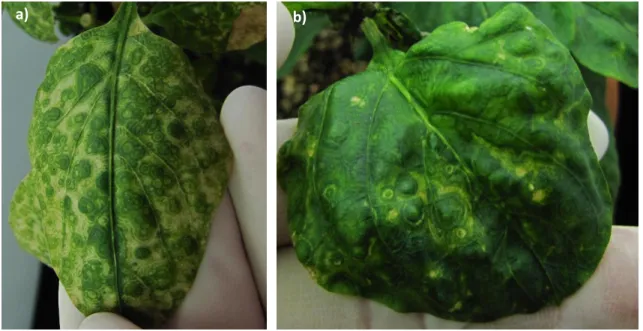
(6) Acknowledgements To Marlene Rosales for his permanent support in my academic and professional training through the continuation of my postgraduate studies, for his advice and teachings. To Marcelo Carrasco for support the development my research. To farmers of the valleys of the Arica and Parinacota region for their interest and collaboration in this research. To Elizabeth, Marcela and Isabel for their support, advices, company and friendship during my period of studies.. 6.
(7) CONTENTS CHAPTER 1. GENERAL INTRODUCTION .........................................................................10 HYPOTHESIS .......................................................................................................................15 OBJECTIVES General objective ........................................................................................................................ 15 Specific objectives ...................................................................................................................... 15 LITERATURED CITED .................................................................................................................. 16. CHAPTER 2. PREVALENCE OF THREE EMERGING VIRUS AFFECTING TOMATO CROPS IN THE NORTH OF CHILE ................................................................................. 17. CHAPTER 3. COMPLETE NUCLEOTIDE SEQUENCE OF TWO NEW BEGOMOVIRUSES INFECTING TOMATO CROPS IN THE NORTH OF CHILE. ........................ 38. CHAPTER 4. PARTIAL NUCLEOTIDE SEQUENCE AND SYMPTOMATIC CHARACTERIZATION OF Peru tomato virus PTV AFFECTING TOMATO AND PEPPER CROPS IN THE NORTH OF CHILE................................................. 50. CHAPTER 5. FIRST REPORT OF Southern tomato virus STV AFFECTING TOMATOES IN SOUTH AMERICA ............................................................................................... 61. CHAPTER 6. FIRST REPORT OF A RESISTANCE-BREAKING ISOLATE OF Tomato spotted wilt virus TSWV INFECTING RESISTANT PEPPER CULTIVARS IN THE NORTH OF CHILE ............................................................................................... 67. FINAL CONCLUSIONS................................................................................................................. 73. APPENDIX APPENDIX 1. Publications submitted in Disease Notes. American Phytopathologycal Society Journal. .................................................................................................. 76 APPENDIX 2. Presentation in Congress................................................................................. 78. 7.
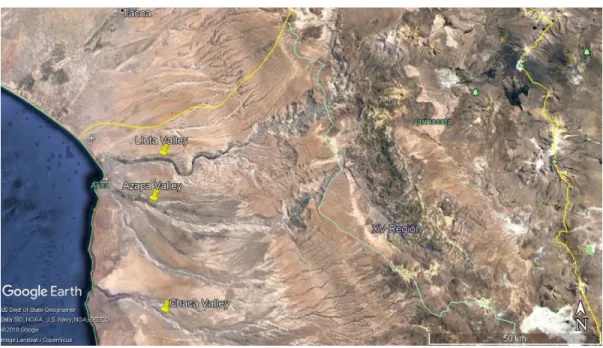
(8) LIST OF FIGURE Figure 1. Map of sample collection sites. samples were collected in Azapa, Lluta and Chaca valleys, indicated by yellow points on the map.................................................. 23. Figure 2. Naturally infected Solanum lycopersicum (tomato) and weeds plants showing symptoms associated to begomovirus observed in the north of Chile.. a) leaf chlorosis and leaf crinkling; b) interveinal yellowing; c) upward curling leaves; d) interveinal yellowing in Malva sp. and e) severe population of whiteflies in Sonchus sp. plant .............. 23. Figure 3. Different symptoms of viruses observed in tomatoes crops in the north of Chile. a) Foliar mosaic; b) chlorosis and leaf deformation ; c) dwarfism and precocity; d) and e) fruit deformation. ..................................................................................................... 42. Figure 4. Phylogenetic tree showing the genetic relationship of TYVSV-A with others begomovirus isolates obtained from GenBank. ...................................................................... 44 Figure 5. Phylogenetic tree showing the genetic relationship of TYVSV-B with others begomovirus isolates obtained from GenBank. ...................................................................... 45. Figure 6. Phylogenetic tree showing the genetic relationship of ToLDeV with others begomovirus isolates obtained from GenBank. ...................................................................... 46. Figure 7. Symptoms caused by isolates of Peru tomato mosaic virus (PTV) obtained by mechanical inoculation in tomato crops.. a) and b) mosaic, crinkling, blistering; c) chlorosis; d) leaf deformation; e) health plant. .................................................. 55. Figure 8.. Phylogenetic tree showing the genetic relationship of coat protein viral sequences of Chilean isolate PTV with other isolates obtained from GenBank. ..................... 57 Figure 9. Phylogenetic tree showing the genetic relationship of complete sequences of Chilean isolate STV with others isolates obtained from GenBank. ................................. 64. 8.
(9) Figure 10. TSWV-like symptoms observed in pepper crops in Azapa valley, in the north of Chile. Chlorotic rings from leaves (a and b) and fruit (c and d). .................................. 69 Figure 11. Symptoms caused by isolates of Tomato spotted wilt virus TSWV in peppers cultivars two week post-inoculation. a) Severe chlorotic rings in cultivar without resistance to TSWV; b) Chlorotic rings in cultivar with resistance to TSWV. .......................... 70. LIST OF TABLE Table 1. Number and detail of samples collected by year, valley and host during 2013 to 2015 in Arica and Parinacota Region. ....................................................................................................... 27. Table 2. Prevalence and distribution of three emerging viruses Tomato yellow vein streak virus (TYVSV), Tomato leaf deformation virus (ToLDeV) and Peru tomato mosaic virus (PTV) affecting tomato crops and others associated species in Chile............................................................... 30. 9.
(10) CHAPTER 1. GENERAL INTRODUCTION. 10.
(11) CHAPTER 1. GENERAL INTRODUCTION. In Chile, tomato for fresh consumption is the third horticultural crop with the largest cultivated area, after corn and lettuce, with 6,364.40 ha (INE, 2007). A 67% of its production is concentrated in the central zone of country, while Arica and Parinacota Region, in the north of Chile, represents a 13% of the national area with 843 cultivated ha (ODEPA, 2013). This region plays an important role in supplying the availability of fresh tomatoes in winter months (June to September) given the all the tomato consumed in that period comes almost exclusively from this area.. In Arica and Parinacota Region, the Azapa valley is the main tomato producer for fresh consumption. The valleys from this region are characterize by climatic and soil conditions that make them suitable for the cultivation of this and other vegetables throughout the year. These excellent climatic and soil conditions of the valleys also favors the development of innumerable pests and diseases.. Tomato crop (Solanum lycopersicum) is affect by a considerable number of pathogens, such as fungi, bacteria and viruses that cause diseases in different stages of development of the crop (Jones et al., 2016; Adhikari et al., 2017). In the case of viruses, these are considered the second most important group of pathogens with regard to the number of diseases that trigger (about 30%) and the economic damage they originate.. 11.
(12) On the other hand, the rapid expansion of the human activity has involved the adoption of agronomic practices more and more sophisticated along with the intensification of the agriculture through monocrop, generating a greater competition by the natural resources. In addition, the continued expansion of the volume and rapidity of trade in plants and plant products, as well as the movement of plants away from their domestication centers, are a growing threat to food production, favoring ever greater frequency of epidemics caused by emergent viruses in plants (Jones, 2009).. Globally there are 136 species of virus described affecting tomato crop, a very high number compared to other vegetables such as pepper, where there are only 62 species described, lettuce 53, melon 46, potato 57, eggplant 44 and spinach 109 (Brunt et al., 1997). The 136 species are grouped in 33 genera, but only 15 of them are economically important, those belonging to the families Bromoviridae, Bunyaviridae, Closteroviridae, Flexiviridae, Geminiviridae, Luteoviridae and Potyviridae (Pringle, 1999).. In Chile, viral diseases research in tomato crop, have reported the presence of: Alfalfa mosaic virus (AMV), Arabis mosaic virus (ArMV), Cucumber mosaic virus (CMV), Potato virus Y (PVY), Tomato mosaic virus (TMV), Tomato spotted wilt virus (TSWV), Potato virus X (PVX), Tomato ringspot virus (ToRSV) and Tomato yellow vein streak virus (TYVSV) (Acuña, 2008). Most of these viruses are distribute in all production areas in the country, except TYVSV. This virus is only present in Arica and Parinacota region.. 12.
(13) In Arica and Parinacota region, Azapa valley´s historical records indicate that diseases caused by viruses constitute a limiting factor for tomato production, reaching in some cases 90% of plants with symptoms, with a marked decrease in yields (Acuña, 1970).. In 2006, due to the fluctuating climatic conditions presented in the valleys of the Arica and Parinacota region, a series of systemic diseases were detected which, according to estimates in the field, have a high impact on production. Likewise, the proliferation of various biological and environmental factors that transmitted viral diseases resulted in considerable losses in yield of tomato production as effect of viral infections (Sepúlveda et al., 2011).. Recent studies have made possible to determine the presence of three viral agents causing tomato infections, which correspond to Potexvirus Pepino Mosaic Virus (PepMV), Begomovirus Tomato yellow vein streak virus (TYVSV) and Potyvirus Peru tomato virus (PTV). The last two were report for the first time in the country (Sepúlveda et al., 2011).. The reasons explained above indicate the importance of identifying the viral agents that affect tomato crop, as well as the knowledge of their geographical distribution, genetic variability and symptom characterization, which contributes to generate relevant information to be use in crops management programs and plant breeding.. The objective of this research was to determine the prevalence and geographical distribution of virus diseases in tomato, weed and wild relative plants in the valleys of the 13.
(14) Arica and Parinacota region, located at latitude -18.4745998 and longitude -70.2979202, in the southern hemisphere, and to characterize the symptomatology and genome of the emerging viruses detected in this region.. 14.
(15) HYPOTHESIS Begomoviruses are widely distributed in the valleys of the region of Arica and Parinacota and are the main responsible for the symptoms associated with virus observed in the tomato crops of this region.. OBJECTIVES. General objective To know the prevalence and geographical distribution of virus affecting tomato, weed and wild relative plants in the producing valleys of the Arica and Parinacota region.. Specific objectives -. Identify the viruses present in tomato crops, weeds and wild relative plants associated with crops in the producing valleys of the Arica and Parinacota region, to establish their prevalence and geographical distribution.. -. To determine symptoms associated with infections caused by emerging viruses affecting tomato crops in Arica and Parinacota region.. -. To characterize genetically the emerging viruses Tomato yellow vein streak virus TYVSV (Begomovirus), Tomato leaf deformation virus - ToLDeV (Begomovirus) and Peru tomato virus - PTV (Potyvirus) detected in the region of Arica and Parinacota.. 15.
(16) LITERATURED CITED Acuña, J. 1970. Factores limitantes del cultivo del tomate en el valle de Azapa. Centro de Investigación y Capacitación Agrícola C.I.C.A., Universidad del Norte. Revista Idesia N° 1. Arica, Chile. Acuña, R. 2008. Compendio fitopatógenos de cultivos agrícolas. Servicio Agrícola y Ganadero. Santiago, Chile. 122 pp. Adhikari, P., Oh, Y and Panthee, D. 2017. Current Status of Early Blight Resistance in Tomato: An Update. International Journal of Molecular Sciences. Vol 18 (10) 1:22 Brunt, A., Crabtree, K., Dallwitz, M., Gibbs, A., Watson, L. and Zurcher, E. 1997. Plant viruses online: descriptions and lists from the VIDE database.Version 16 January 1997. Australian National University, Canberra, Australia. INE, 2007. Instituto Nacional de Estadística. VII Censo Nacional Agropecuario y Forestal, Chile. Disponible en http://www.censoagropecuario.cl Jones, R. 2009. Plant virus emergence and evolution: origins, new encounter scenarios, factors driving emergence, effects of changing world conditions, and prospects for control. Virus Res. 141:113-130. Jones, J. Zitter, T; Momol, T. and Miller, S. 2016. Compendium of Tomato Diseases and Pests. St. Paul, Minnesota. Second Edition. The American Pathological Society Press. 168 p. ODEPA. Oficina de estudios y políticas agrarias. 2013. Estadísticas. Available on-line: http://www.odepa.cl Pringle, C.R. 1999. Virus Taxonomy. The Universal system of virus taxonomy updated to include the new proposals ratified by the International Committee on Taxonomy of Viruses during 1998. Arch. Virol. 144: 2. Sepúlveda P., Rosales I, Rojas C., Mora R., Sepúlveda G. and Brown J. 2011. Virus trasmitidos por insectos vectores en tomate en la Región de Arica y Parinacota: situación actual y manejo. 64 p. Boletín INIA Nº 224. Instituto de Investigaciones Agropecuarias. Centro de Investigación Agropecuaria del Desierto y Altiplano, Ururi. Arica, Chile.. 16.
(17) CHAPTER 2. PREVALENCE OF THREE EMERGING VIRUS AFFECTING TOMATO CROPS IN THE NORTH OF CHILE. Claudia Rojas-Bertini 1, Katherine Plaza Gómez1, Inés-Marlene Rosales1. 1Departamento. de Ciencias Vegetales, Facultad de Agronomía e Ingeniería Forestal, Casilla, Santiago Chile. This chapter will be submitted for publication in Phytopathologia Mediterranea Journal. 17.
(18) CHAPTER 2. PREVALENCE OF THREE EMERGING VIRUS AFFECTING TOMATO CROPS IN THE NORTH OF CHILE. 1. ABSTRACT Arica and Parinacota region in the north of Chile is characterize by favorable soil and climate conditions to grow vegetables throughout the year, being the Azapa Valley the main provider of tomato for fresh consumption for central Chile during winter season. In 2007, viral diseases causing yield losses between 30-70% affected tomato crops from this area. Surveys conducted in years 2009-2011 indicated the presence of new emerging viruses in the area: Tomato yellow vein streak virus (TYVSV) and Peru tomato mosaic virus (PTV). Later on, a second begomovirus was identified in this region, Tomato leaf deformation virus (ToLDeV). The purpose of this work was to assess the prevalence of these three viruses in three productive valleys of Arica and Parinacota region (Azapa, Lluta and Chaca). During the period 2012-2015 a 695 samples from tomato crops, weeds and wild relative plants, were collect in these area. Each sample was analyze by molecular hybridization of total DNA and RNA using specific Digoxigenin (DIG)-labelled probe for TYVSV, ToLDeV and PTV. From the total of total samples analyzed, 44.2% were positive for TYVSV, while 30.36% were positive for ToLDeV and a 28.1% positive for PTV.. Furthermore, the results indicated a high number of double and triple infection between them: 12.2% of the samples showed double infection of TYVSV and ToLDeV, 10.7% were positive to TYVSV and PTV and, 5.5% resulted positive to ToLDeV and PTV. Furthermore,. 18.
(19) triple infections of TYVSV, ToLDeV and PTV were detect in 1.7% of total samples analyzed.. Thus, three emerging virus (TYVSV, ToLDeV and PTV) were widespread distributed in the three productive valleys of Arica and Parinacota region, in the north of Chile. So far, there is no report of the presence of these viruses in other tomato growing areas the country. Therefore, should be incorporated effective management practices to prevent their spread into virus free locations in the country.. Keywords: Emerging virus, tomato crop, prevalence. 19.
(20) 2. Introduction. In the last two decades evidence has been growing on the increasing incidence of infectious diseases of plants, due to the appearance of new pathogens or to the resurgence of previously described ones (Anderson et al., 2004). Tomato (Solanum lycopersicum) is economically the most important vegetable crop with a worldwide production of 161 million metric tons (FAO, 2012). Tomato crops are susceptible to a wide range of diseases, from which virus diseases are difficult to control and can result in substantial crop losses, being one of main limiting factors in intensive tomato production (Jones et al., 1991). At the same time, many viruses infecting tomato have been described, while new viral diseases keep emerging (Hanssen et. al., 2010). Emerging virus can be defined as a previously unknown virus or a known virus that has expanded its geographical range, prevalence and importance because of a vector (Gilbertson et al., 2015). The high number of viral pathogens affecting tomato crops can be explaining by the tomato susceptibility to members of the genus begomovirus, one of the most important groups of plant viruses affecting production of a variety of vegetable crops, particularly in the tropics and subtropics, and the increases of population of the whitefly vectors Bemisia tabaci (Hanssen et al., 2010).. In the north of Chile, Arica and Parinacota region is the main producer area of tomato for fresh consumption for central Chile during winter season. The valleys this region are characterize by favorable soil and climate conditions to grow vegetables throughout the all year. However, in the recent years, viral diseases have been an important limiting factor 20.
(21) in tomato crop production given for the presence of emerging virus causing considerable yield losses (Sepulveda et al., 2011). Surveys conducted in years 2009 - 2011 indicated the presence of new emerging viruses in the area: Tomato yellow vein streak virus (TYVSV) and Peru tomato mosaic virus (PTV) (Rosales et al., 2010). Later on, a second begomovirus was identified in this region, Tomato leaf deformation virus (ToLDeV) (data no published).. Nowadays, these three viruses are present only in South America. TYVSV is present in Brazil affecting potato and tomato (Alburquenque et al., 2010), and Argentina (Vaghi et al., 2014; Ventura et al., 2009), Uruguay (Arruabarrena et al., 2016)) and Bolivia (Adams et al., 2012) affecting tomato crops. ToLDeV and PTV are only reported in Peru (MarquezMartín et al,. 2011; Melgarejo et al., 2013) and Ecuador (Melgarejo et al., 2004; Insuasti et al., 2016). The present study reports the prevalence and geographical distribution of three emerging virus affecting tomato crops, TYVSV, ToLDeV and PTV, in three main producer valleys of fresh tomato (Azapa, Lluta and Chaca) in the north of Chile.. 21.
(22) 3. Material and Methods 3.1 Virus source and plant material During different cropping season between 2013 - 2015 years a total of 695 leaf samples from tomato crops, weeds and wild relative plants were collected in three vegetable producing valleys of Arica and Parinacota region (Azapa, Lluta and Chaca) in the north of Chile (Table 1) (Figure 1). Tomato leaf samples were obtain from symptomatic plants showing mosaic, mottling, leaf necrosis, chlorosis or other symptoms generally attributed to virus infection (Figure 2). No symptoms of virus infection were generally observed in wild relative plants like tomatillo (Solanum chilensis, S. peruvian) and a few samples were collected at random across or on the margins of the select field. The collected samples were maintaining in -80ºC for posterior molecular hybridization analysis in Laboratory of Molecular Plant Pathology of Universidad Católica de Chile.. Figure 1. Map of sample collection sites. Samples were collected in Azapa, Lluta and Chaca valleys, indicated by yellow points on the map. 22.
(23) a ). b ). c). d ). e ). Figure 2. Naturally infected Solanum lycopersicum (tomato) and weeds plants showing symptoms associated to begomovirus observed in the north of Chile. a) Leaf chlorosis and leaf crinkling; b) interveinal yellowing; c) upward curling leaves; d) interveinal yellowing in Malva sp. and e) severe population of whiteflies in Sonchus sp. Plant 23.
(24) 3.2 Nucleic acid extractions Total DNA were extracted from 0.4 g of lyophilized leaf tissue by protocol of Dellaporta et al. (1983) modified, while total RNA were extracted from 0.5 g of lyophilized leaf tissue using the silica capture protocol of Bertheau et al. (1998). The extracted nucleic acids were stored to -80ºC until used.. 3.3 Digoxigenin labeling and probe preparation Non-isotopic dot-blot hybridization to detect Tomato yellow vein streak virus (TYVSV), Tomato leaf deformation virus (ToLDeV) and Peru tomato mosaic virus (PTV) was used.. For begomovirus TYVSV and ToLDeV, digoxigenin-11-dUTP (DIG-11-UTP) probes were synthetized by PCR amplification of the purified DNA in 50µl reaction volume using the PCR Dig-Probe Synthesis Kit (Roche, USA) following the manufacturer’s instructions. Reactions consisted of a denaturation step of 2 min at 94 ºC, 35 cycles of 10s at 94 ºC, 10s at 58 ºC and 90s at 72 ºC and a final extension of 3min at 72ºC. PCR products were analyzed in 1.5% of agarose gels. The probes were denatured at 68 ºC for 10min, centrifuged at 10.000 rpm for 5 min, then dissolved in 25ml of pre-hybridization buffer and used for detection.. For potyvirus PTV 1µg of plasmid was linearized with SacI restriction enzyme, purified by phenol-chloroform extraction (Sambrook et al. 1989) and precipitated with ethanol. A RNA probe was generated according manufacturer’s instructions of RNA Dig-Labeling kit. 24.
(25) (Roche, USA). The standard RNA labelling reaction was incubated for 2 h at 37 ºC. The reaction was stop by adding of 2µl of 0.2M EDTA (pH 8.0).. 3.4 Membrane preparation, hybridization and detection Forty microliters of nucleic acid extract were spotted onto a positively charged nylon membranes and the nucleic acid were bound by UV irradiation with a transilluminator using a wavelength of 302 nm.. For DNA viruses, membranes were pre-hybridized for 2 h at 55ºC in a hybridization buffer containing, 5X Saline Sodium Citrate (SSC) 0.1% (w/v) N-lauroylsarcosine, 0.02%(w/v) Sodium Dodecyl Sulfate (SDS) and 1% (w/v) blocking reagent for nucleic acid hybridization and detection (Roche). Then the membrane were incubated at 55◦C overnight with the probe previously denatured for 10 min at 68ºC. After overnight hybridization, the membrane was washed twice in 2× SSC containing 0.1% SDS at room temperature for 5 min each, and twice in 0.2× SSC containing 0.1%SDS at 55◦C for 15 min each.. For RNA viruses, membranes were pre-hybridized for 2 h at 68ºC in a hybridization buffer containing 50% formamide, 5X SSC, 0.1%(w/v) N-lauroylsarcosine, 0.02%(w/v) SDS and 1% (w/v) blocking reagent (Roche, USA). Then the membrane were incubated at 68 ºC overnight with the probe previously denatured for 10 min at 68ºC. After overnight hybridization, the membrane was washed twice in 2X SSC containing 0.1% SDS at room. 25.
(26) temperature for 5 min each, and twice in 0.2X SSC containing 0.1%SDS at 68◦C for 15 min each.. After washes, membranes (DNA and RNA) were further washed once for 3 min in washing buffer, blocked for 60 min in 1% blocking reagent (Roche, USA) and incubated with AntiDigoxigenin alkaline phosphatase enzyme conjugate solution (Anti-Digoxigenin AP Anti Fab fragment Dig Antibody, Roche, USA) in blocking solution for 30 min at RT. The membranes then were washed twice for 15 min each in washing buffer and followed by incubation in detection buffer for 5 min. The membrane was placed between clean plastic sheet and 1 ml for every 100cm2 of CDP-Star reagent (Roche, USA) was added. The membrane was sealed and incubated in dark at RT. After 5 min the excess liquid was squeezed out of the membrane bag and was exposed to the X-ray film (Kodak film, Carestream Health Inc., USA). 4. Results A total of 695 samples of tomato leaf, weeds and wild relative plants were collected between 2013 to 2015, from which 454 were collected in Azapa valley, 171 corresponded to Lluta valley and 70 were of Chaca valley (Table 1 ). From the total samples collected a 70.8% (492) of the samples were positive to at least one virus analyzed in this study, while 29.2% results gave negative to all of them (Table 2).. 26.
(27) Table 1. Number and detail of samples collected by year, valley and host during 2013 to 2015 in Arica and Parinacota Region. Year. 2013. Valley. Host. Specie. Nº samples collected. Azapa. Tomato Wild specie Weed Weed. Solanum lycopersicum Solanum chilensis Sonchus sp. Malva sp.. 65 0 0 0. Lluta. Tomato Weed. Solanum lycopersicum Solanum chilensis. 6 1. Chaca. Tomato. Solanum lycopersicum. 31. Total. 103. Azapa. Tomato Locoto Wild specie Weed Weed. Solanum lycopersicum Solanum pubescens Solanum chilensis Sonchus sp. Malva sp.. 222 1 1 1 1. Lluta. Tomato Solanum lycopersicum Wild specie Solanum chilensis Weed Malva sp.. 142 5 1. Chaca. Tomato. Solanum lycopersicum. 31. Total. 405. Azapa. Tomato Solanum lycopersicum Wild specie Solanum chilensis. 162 1. Lluta. Tomato. Solanum lycopersicum. 16. Chaca. Tomato. Solanum lycopersicum. 8. 2014. 2015. Total. 187. Total samples collected. 695. 27.
(28) The results showed that the three emerging viruses TYVSV, ToLDeV and PTV were found during all sampling season in the three valleys of north of Chile, Azapa, Lluta and Chaca (Table 2). The prevalence of viruses detected in this study showed single, double and triple infection. The most frequent virus affecting tomato crops in the north of Chile was the bipartite begomovirus TYVSV found in single, double and triple infection with a prevalence of 44.2% of total samples analyzed. From these, 19.6% corresponded to TYVSV single infection, 12.2% to double infection with ToLDeV, and 10.7% with PTV.. ToLDeV was present in 30.4% of samples analyzed. A 10.9% of the samples corresponded to single infection and a 5.5% in mixed infection with PTV. PTV presented a prevalence of 28.1% of which 10.2% corresponded to single infection and 17.8% was positive for mixed infection with either ToLDeV or TYVSV. Furthermore, triple infections of TYVSV, ToLDeV and PTV were detect in 1.7% of total samples analysed.. Respect to weeds and other crops associated to tomato crops, only one locoto (Solanum pubescens) sample resulted positive for TYVSV, two samples of Malva sp. and one wild relative plants, tomatillo (Solanum chilensis), resulted positive for double infection with the begomoviruses ToLDeV and potyvirus PTV. The Sonchus sp. sample was negative for all the viruses analyzed in this study.. The analysis of virus prevalence by year showed that single infection of the viruses has increased in the time, since of 39.1% in 2013 to 48.7% in 2015. Similarly, TYVSV single infection prevalence show a tendency to increase with the years, from 4.8% in 2013 to 28.
(29) 25.9% in 2015. The same tendency occurs with PTV in single infection, where in 2013 reached 11.7% and 20.3% in 2015. A different case occurs with ToLDeV where the prevalence in single infection had been decrease from 23.3% in 2013 to 2.1% in 2015. However, in mix infection of ToLDeV together PTV has increased considerably since 2013 to 2015 from 2.9% to 9.1%.. The geographical distribution of virus infecting tomato crops in Arica and Parinacota region indicated that the three virus analyzed, TYVSV, ToLDeV and PTV, were detect in the three valleys of this region during all years of sampling.. In Table 2 showed the distribution of prevalence of the three emerging virus for valley in Arica and Parinacota region. Azapa valley presented the major prevalence of virus disease, in single infection and mixed infection, where out of the 454 samples collected a 76.87% resulted positive for one or more of the viruses analyzed. Then follows Chaca valley with 70 samples analyzed and 68.58% of prevalence and finally Lluta valley with 171 analyzed samples with a prevalence of 55.55%.. 29.
(30) Table 2. Prevalence and distribution of three emerging viruses Tomato yellow vein streak virus (TYVSV), Tomato leaf deformation virus (ToLDeV) and Peru tomato mosaic virus (PTV) affecting tomato crops and others associated species in Chile. Valley. Azapa Lluta Chaca Total. Single infection. Mixed infection. Total samples collected. TYVSV. ToLDeV. PTV. TYVSV + ToLDeV. TYVSV + PTV. ToLDeV + PTV. TYVSV + ToLDeV + PTV. Negative samples. nº (%) 454 (65,3) 171 (24,6) 70 (10,1) 695 (100). nº (%) 97 (21,4) 31 (18,1) 8 (11,4) 139 (19,6). nº (%) 41 (9,0) 26 (15,2) 9 (12,9) 76 (10,9). nº (%) 56 (12,3) 8 (4,7) 7 (10) 71 (10,2). nº (%) 63 (13,9) 13 (7,6) 9 (12,9) 85 (12,2). nº (%) 55 (12,1) 9 (5,3) 10 (14,3) 74 (10,7). nº (%) 29 (6,4) 6 (3,5) 3 (4,3) 38 (5,5). nº (%) 8 (1,8) 2 (1,2) 2 (2,9) 12 (1,7). nº (%) 105 (23,1) 76 (44,4) 22 (31,4) 203 (29,2). 30.
(31) 5. Discussion. Since 2007 emerging virus diseases has been reported affecting tomato crops in important tomato production area in the north of Chile. This has been cause by proliferation of insect vectors of virus like whiteflies (B. tabaci) and aphids (Myzus persicae).. In the present study, we determined the prevalence and geographical distribution of three emerging viruses, the begomoviruses TYVSV and ToLDeV and the potyvirus PTV, that affect tomato crops in three producer valleys of the north of Chile, Azapa, Lluta and Chaca.. Results from this study showed that TYVSV was the most prevalent virus affecting tomato crops in the three valleys of Arica and Parinacota region. This virus was found both in simple and mixed infection during this 3-year of study. Furthermore, it was possible to observe an increase of prevalence of TYVSV during 2015.. Previous prospections of virus diseases in tomato in this area, indicated that 57.1% of samples analyzed were positive to begomovirus (Sepulveda et al., 2011). These results are very similar to the ones showed in this work where the two begomovirus, TYVSV and ToLDeV were found with 59.6% of prevalence.. Begomoviruses are transmitted by Bemisia tabaci biotype B (Brown, 1994) and due to high prevalence and the severity of diseases caused these viruses, they are 31.
(32) considered the most important viral pathogens of food crops in the tropical and subtropical regions of the world (Briddon et al. 2010). In Chile B. tabaci was reported for first time in 1999 in ornamental plants Hibiscus and Euphorbia pulcherrima in Arica and Parinacota Region, but only in 2007 was detected causing viral disease in crops production (Sepúlveda et al., 2011). During 2009 and 2010 analysis of whiteflies populations using molecular markers allowed to determine its biotype, which corresponded to Biotype B (Rosales et al., 2010). Currently, this whitefly is only present in Arica and Parinacota region, in the north area of Chile.. The prevalence of the potyvirus PTV was minor that for the other begomoviruses. However, the testing of tomato samples revealed that a high number of samples were co-infect with PTV and begomovirus. Sepúlveda and collaborators (2011) also found that multiple virus infection were more common as well as the single infection. Interestingly, mixed viral infection may result in synergism and more severe symptoms (García-Cano et al., 2006).. On the other hand, a 29.21% of total sample resulted negative to viruses analyzed in this study. However, currently, more than 60 species of tomato-infecting begomovirus have been described worldwide (Inoue-Nagata et al., 2016). The worldwide spread of B. tabaci biotype B and plant material has allowed for the long distance spread of begomovirus to new areas (Gilbertson et al., 2015) and in the valleys of Arica and Parinacota region there are high pressure of B. tabaci. In this survey, samples of infected plants were obtained from farms selected with previously experienced virus problems in their crops and most of the samples collected from 32.
(33) plants showed virus symptoms, for this reason is probably that the negative samples could be infected with other viruses no analyzed in this study.. The geographical distribution of TYVSV, ToLDeV and PTV indicated that these viruses are well establish throughout the tomato production area in Arica and Parinacota region, possibly due to substantial vector transmission by insect vector.. Tomato production in Arica and Parinacota region is almost continuous over the year, with generally no break in production. In this situation, viruses allowed persist in the environment and they can be consistently transmitted from infected to healthy tomato plants without the strong need for alternative host that would act as reservoirs, so management strategy for these pathogens has focused on developing greenhouse production to avoid the dissemination of viruses by its insect’s vectors.. The geographical distribution TYVSV, ToLDeV and PTV are limited to South America, being TYVSV the virus more widespread. It is present in Brazil, Bolivia, Argentina and Uruguay, while ToLDeV and PTV is only present in Peru and Ecuador furthermore Arica y Parinacota region.. Viral diseases are an important limiting factor in many crops production system. Consequently, information on the distribution and prevalence of the economic destructive emerging virus infecting tomato crops in Arica and Parinacota region is crucial in guiding tomato breeding programs in the search for stable and durable sources of resistance. 33.
(34) A factor common to Arica and Parinacota region and other regions of the world has been the introduction and establishment of the B. tabaci biotype B, caused by many factors, among them, the agricultural intensification with monocultures which has contributed to the high prevalence of begomoviruses.. Finally, the impact on crop productivity and the potential spread of this virus to other growing regions emphasizes the need for further research to develop and implement effective control strategies.. 34.
(35) 6. LITERATURE CITED Adams,I., Plata,G., Crespo,M., Skelton,A., Nixon,T., Kelly,P. & Arocha,Y. 2012. First report on detection of Tomato yellow vein streak virus affecting tomato in greenhouse in Bolivia. Available at (consulted on June 24, 2017): https://www.ncbi.nlm.nih.gov/nuccore/jq413300. Alburquerque L., Martìn D., Ávila A. and Inoue-Nagata A. 2010. Characterization of Tomato yellow vein streak virus, a begomovirus from Brazil. Virus Genes Vol: 40: 140-147. Anderson P., Cunningham A., Patel N., Morales F. and Daszak P. 2004. Emerging infectious diseases of plants: pathogens pollution, climate change and agrotechnology drivers. Trends Ecol. Evol. 19: 535-544. Arruabarrena,A., Rubio,L., Gonzalez-Arcos,M., Maeso,D.,Fiallo-Olive,E. and Moriones,E. 2016. First Report of Tomato Yellow Vein Streak Virus infecting tomato in Uruguay, Plant Pathology. Vol 100, Number 1. Page 231. Bertheau P, Cazals-Hatem D, Meignin V, de Roquancourt A, Verola O, Lesourd A, Sene C, Brocheiou C and Janin A. 1998. Variability of immunohistochemical reactivity on stored paraffin slides. J Clin Pathol. 51:370–374. Briddon RW, Patil BL, Nawaz-ul-Rehman MS, Fauquet CM. 2010. Distinct evolutionary histories of the DNA-A and DNA-B components of bipartite begomoviruses. BMC Evol. Biol. 10:97. Brown JK. 1994. Current status of Bemisia tabaci as a plant pest and virus vector in agroecosystem worldwide. FAO Plant Prot. Bull. 42, 3-32. Dellaporta S. Wood J. and Hicks J. 1983. A plant DNA minipreparation: Version II. Plant Molecular Biology Reporter. 1:19-21. FAO. 2012. FAOSTAT Database. Food and Agriculture Organization of the United Nations. Rome. Internet Resource: http://faostat.fao.org (accessed on 20 October 2016). Fribourg C. 1979. Host Plant Reactions, Some Properties and Serology of Perú tomato virus. Phytopathology 69: 441-445. García-Cano E., Rosende R., Fernandez-Muñoz R. and Moriones E. 2006. Synergistic interaction between Tomato chlorosis virus and Tomato spotted wilt virus results breakdown of resistance in tomato. Phytopathology 96: 1263-1269.. 35.
(36) Gilbertson R., Batuman O., Webster C. and Adkins S. 2015. Role of the insect supervectors Bemisia tabaci and Frankliniella occidentalis in the emergency and global spread of plant viruses. Annual Rewiev of Virology 2: 67-93. Hanssen I., Lapidot M. y Thomma B. 2010. Emerging viral diseases of tomato crops. Current Review. MPMI. The American Phytopathological Society 23: 539–548. Inoue-Nagata A., Lima M. and Gilbertson R. 2016. A review of geminivirus (begomovirus) diseases in vegetables and other crops in Brazil: current status and approaches for managment. Horticultura Brasileira 34: 008-018. Insausti ML. and Ochoa JB. 2016. First report of Potato virus V and Perú tomato mosaic virus on Tamarillo (Solanum betaceum) Orchards of Ecuador. APS Journal Vol. 100: 868. Jones JB., Jones JP, Stall RE and Zitter TA. 1991. Diseases caused by viruses. Compendium of tomato diseases. APS Press. St. Paul. MN, USA., pp 100. Márquez-Martín B, Aragón-Caballero L, Fiallo-Olivé E, Navas-Castillo J, Moriones E. 2011. Tomato leaf deformation virus, a novel begomovirus associated with a severe disease of tomato in Peru. Eur. J. Plant Pathol. 129:1–7. Melgarejo TA, Alminaite A., Fribourg C., Spetz C. and Valkonen J. 2004. Strains of Peru tomato virus infecting cocona (Solanum sessiliflorum), tomato and pepper in Peru with reference to genome evolution in genus potyvirus. Arch. Virol 149: 20252034. Melgarejo T., Kon T., Rojas M., Paz-Carrasco L., Zerbini F. and Gilbertson R. 2013. Characterization of a new world monopartite begomovirus causing leaf curl disease of tomato in Ecuador and Peru reveals a new direction in geminivirus evolution. Journal of Virology: 87: 5397-5413. NCBI. 2016. Nucleotide database. National Center for Biotechnology Information. USA. Internet Resource: http:// https://www.ncbi.nlm.nih.gov/ (accessed on 20 October 2016). Ribeiro SG, Ambrozevicius LP, Avila AC, Bezerra IC, Calagario RF, Fernandes JJ, Lima MF, Mello RN, Rocha H and Zerbini FM. 2007. Arch. Virol. 148: 281–295. Rosales I., Sepúlveda, P., Medina, C., Muñoz M., Rojas, C., Mora R., Madariaga M. & Brown J. 2010. Survey and characterization of viral diseases affecting tomato crops in the north of Chile. Phytopathology. APS Annual meeting: http://apsjournals.apsnet.org/toc/phyto/100/6S Sambrook J, Fritschi EF and Maniatis T. 1989. Molecular cloning: a laboratory manual, Cold Spring Harbor Laboratory Press, New York. Sepúlveda P., Rosales I., Rojas C., Medina., Sepúlveda G., Mora R. and Brown J. 2011. Virus trasmitidos por insectos vectores en tomate en la Región de Arica y 36.
(37) Parinacota: situación actual y manejo. 64 p. Boletín INIA Nº 224. Instituto de Investigaciones Agropecuarias. Centro de Investigación Agropecuaria del Desierto y Altiplano, Ururi. Arica, Chile. Vaghi Medina,C.G., Martin D.P & Lopez Lambertini,P.M. 2014. Tomato mild wrinkling virus: a natural recombinant begomovirus infecting tomato in Argentina. Arch. Virol. 160(2):581-585. Ventura,C., Ben Guerrero,E., Dal Bo,E. & Balatti,P.A. 2009. The genome of Begomovirus T06 isolated from diseased tomato plants. Available at (consulted on June 24, 2017): https://www.ncbi.nlm.nih.gov/nuccore/gq387369.. 37.
(38) CHAPTER 3. COMPLETE NUCLEOTIDE SEQUENCE OF TWO NEW BEGOMOVIRUSES INFECTING TOMATO CROPS IN THE NORTH OF CHILE.. Claudia Rojas-Bertini 1, Inés-Marlene Rosales1, Jesús Navas-Castillo2. 1Departamento. de Ciencias Vegetales, Facultad de Agronomía e Ingeniería Forestal, Casilla, Santiago Chile. 2Institute. of Horticulture Subtropical and Mediterranean "La Mayora" (IHSM-UMACSIC), Algarrobo-Costa, Málaga - Spain. This chapter will be submitted for publication in Annotated sequence record of Journal Archives of Virology. 38.
(39) CHAPTER. 3.. COMPLETE. NUCLEOTIDE. SEQUENCE. OF. TWO. NEW. BEGOMOVIRUSES INFECTING TOMATO CROPS IN THE NORTH OF CHILE.. ABSTRACT Begomovirus is the largest genus of the family Geminiviridae. They are single stranded DNA plant viruses, which are transmitted by the whitefly vector Bemisia tabaci and have been known to cause extreme yield reduction in a number of economically important vegetables around the world. Here we report the complete genome sequence of two new begomovirus infecting tomato crops from Chile, the bipartite begomovirus Tomato yellow vein streak virus (TYVSV) and the monopartite begomovirus Tomato leaf deformation virus (ToLDeV). Nucleotide sequence comparisons of DNA-A and DNA-B segments of TYVSV showed closest identity with TYVSV from isolates infecting potato in Brazil, while ToLDeV showed closest identity with ToLDeV isolates infecting tomato, from Ica - Peru.. The family Geminiviridae are a large and diverse group of plant viruses that infect a broad variety of plants and cause significant crop losses worldwide (Inoue-Nagata et al., 2016). They are single stranded DNA viruses with either monopartite or bipartite genomes that are encapsidated within virions that have a geminate morphology (Brown et al., 2012). These viruses are divide into nine genera based on phylogeny, genome organization, insect vector and host range: Becurtovirus, Begomovirus, Capulavirus, Curtovirus, Eragrovirus, Grablovirus, Mastrevirus, Topocuvirus and Turncurtovirus (Zerbini et al., 2017). The genus Begomovirus is the largest genus of plant viruses with respect to the number of species that it includes, 39.
(40) with 388 accepted species currently recognized by the International Committee on Taxonomy of Viruses (ICTV) (Zerbini et al., 2017). Begomoviruses are transmitted by the whitefly vector Bemisia tabaci and are serious constraints to economically important crops worldwide (Morales, 2010). Begomovirus has been considered as emerging virus pathogens because in the last three decades have occurred a high incidence of these viruses in tropical and subtropical regions, causing devastating losses in production in beans, cassava, cotton, cucurbits and tomato crops (Morales and Anderson, 2001; Polston and Anderson, 1997). One of the main factors contributing to the emergence of new diseases caused by this group of pathogens are the evolution of virus variants, the appearance of the B biotype of the whitefly, and the increase in the vector population (Varma and Malathi, 2003). In America, diseases causes by begomovirus have significantly affected tomato production since the 80's (Morales et al., 2004; Ribeiro et al., 2003). In South America, in the last years the number of begomovirus species infecting tomato grow up considerably (Vaghy and Martin, 2015). In 2007, in the north of Chile, tomato crops were affected by viral diseases causing considerable yield losses (Sepúlveda et al., 2011). Surveys conducted in years 2009-2011 indicated the presence of new emerging begomovirus in the area: Tomato yellow vein streak virus TYVSV (Sepúlveda et al., 2011). Later on, a second begomovirus, Tomato leaf deformation virus, ToLDeV, was identified in this region. Here we report the complete genome sequence of two new begomovirus infecting tomato crops in Chile, the bipartite begomovirus Tomato yellow vein streak virus TYVSV and the monopartite begomovirus Tomato leaf deformation virus ToLDeV.. 40.
(41) Samples of tomato crops showing curling, mosaic, mottle and foliar deformations were collected in the north of Chile (Azapa, Lluta and Chaca valley’s, in Arica and Parinacota Region) during 2012 (Figure 3). Total DNA was extracted and viral genome was amplified by the rolling circle amplification (RCA) method using φ 29 DNA polymerase as described by Inoue-Nagata et al. (2004) using a TempliPhi DNA Amplification Kit (GE Healthcare, Little Chalfont, UK). Rolling-circle amplification products were digested using the restriction enzyme HpaII and separated by electrophoresis on a 1.0% agarose gel. DNA fragments of the expected size were purified and ligated into pGem-T essay vector (Promega). Selected clones with inserts were sequenced at Macrogen Inc. (Seoul, South Korea). Nucleotide similarity searches. were. initially. performed. by. the. BLAST. program. (http://www.ncbi.nlm.nih.gov/). Sequences were aligned with Geneious V 8.1.7 and nucleotide identity percentages of the complete genome were compared with those of the most closely related begomovirus using the Clustal W (Genious V 8.1.7). A neighbor-joining phylogenetic tree was reconstructed using of complete genome sequences from Chilean isolates with sequences from others isolates available at GenBank.. 41.
(42) a). b). c). d). e ). Figure 3. Different symptoms of viruses observed in tomatoes crops in the north of Chile. a) Foliar mosaic; b) chlorosis and leaf deformation; c) dwarfism and precocity; d) and e) fruit deformation. 42.
(43) The genome of TYVSV exhibited a genetic organization typical of new world bipartite begomovirus consisted of both DNA-A and DNA-B components (Stanley et al., 2005). DNA-A component of three samples were deposited in GenBank under the number accession KC136336, KC136337, KC136339 and two samples from DNAB component (accession numbers KC136338, KC136340). Five ORFs were identified within DNA-A (2561 and 2560 nt) and two ORFs in DNA-B (2562 and 2558nt). The virion sense strand of DNA-A encoded one ORF (AV1 or CP= 744nt), and the complementary sense strand four ORF (AC1 or Rep= 1086nt; AC2 or TrAp= 390nt; AC3 or REn = 399nt; and AC4= 294nt). The virion and complementary sense strands of the DNA-B component encoded one ORF (BV1 or NSP= 771nt and BC1 or MP= 882nt, respectively).. Phylogenetic analyses based on the complete nucleotide sequence of both components of TYVSV, DNA-A and DNA-B, were constructed using the neighbor joining method with 1,000 boostrap replication using Geneious V 8.1.7 (Biomatters Ltd.). The DNA-A and DNA-B sequences of Tomato rugose yellow lef curl virus (ToRYLCV) and a divergent begomovirus from Uruguay, was used as outgroup. The results of the phylogenetic tree showed that both components of Chilean isolates of TYVSV formed a new strongly supported clade. DNA-A and DNA-B components showed the highest nucleotide sequence identity to an isolate of TYVSV from Brazil infecting Solanum tuberosum (accession number EF417915 for DNA-A and NC_010950 for DNA-B) with 98.07% and 92.68% of identity respectively (Figure 4 and Figure 5).. 43.
(44) Figure 4. Phylogenetic tree showing the genetic relationship of Tomato yellow vein streak virus component A (TYVSV-A) with others begomovirus isolates obtained from GenBank.. 44.
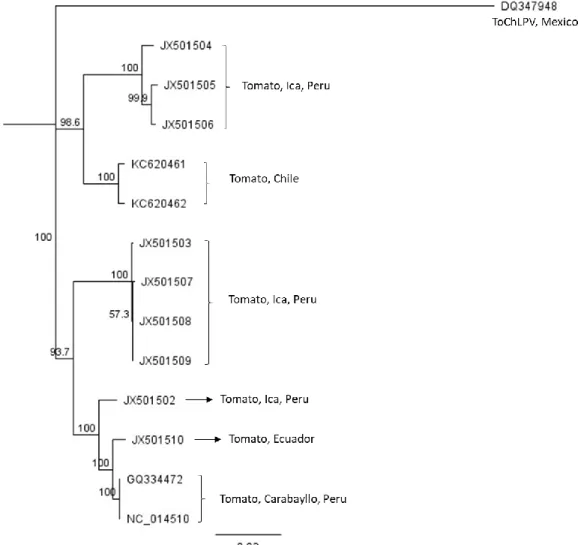
(45) Figure 5. Phylogenetic tree showing the genetic relationship of Tomato yellow vein streak virus (TYVSV-B) with others begomovirus isolates obtained from GenBank.. The genome sequences of ToLDeV from two samples consisted of 2591 nucleotides were deposited in GenBank (Accession number KC620461 and KC620462). ToLDeV present a genome organization with only DNA-A component with five genes, one on the viral strand corresponding to AV1 (756 nt) and four on the complementary sense strand corresponding to AC1 (1047 nt), AC2 (390 nt), AC3 45.
(46) (399 nt), and AC4 (259 nt). Tomato chino La Paz virus, ToChLPV, from México was used as an outgroup for phylogenetic analysis. The phylogenetic tree obtained with the complete viral genome sequences of ToLDeV showed that isolates Chilean formed a new cluster group with a 100% bootstrap support. The complete genome from ToLDeV isolates Chilean showed the highest nucleotide sequence identity with ToLDeV isolates Ica Peru infecting Solanum lycopersicum with 94.5% (Figure 6).. Figure 6. Phylogenetic tree showing the genetic relationship of Tomato leaf deformation virus (ToLDeV) with others begomovirus isolates obtained from GenBank.. 46.
(47) The complete DNA-A component of ToLDeV represent a genome organization typical of the DNA-A of a New World bipartite begomovirus (Melgarejo et al., 2013), where DNA-A component has five or six genes. In our case, five genes with absence of AV2 (precoat protein) were founded. Identical results were obtained for MarquezMartín et al. (2011) and Sanchéz-Campos et al. (2013) where they confirmed the nature of ToLDeV as a monopartite begomovirus native to the New World (SanchezCampos et al., 2013; Márquez-Martín et al., 2011).. Tomato begomovirus represent one the major constraints on tomato production on tropical and subtropical regions of the world. More than 60 species of tomatoinfecting begomovirus have been described worldwide (Inoue-Nagata et al., 2016). Latin America is one of the major centres of begomoviruses diversity, where weeds act as important source of novel begomovirus (Barreto et al., 2013). In Latin America, during the last years, an increasing number of reports of novel begomovirus species, new host and geographical distribution of begomovirus have occurred (NavasCastillo, 2011). In Chile, the presence of begomovirus reported in this work, are limited only to one region in the north of the country (Arica and Parinacota Region) as well as their vector Bemisia tabaci. However, the worldwide spread of the B. tabaci biotype B and plant materials has allowed for the long-distance spread of begomovirus to new areas (Gilbertson et al., 2015). Therefore successful IPM strategies utilizing resistant cultivars, implementing effective whitefly management, removing infected plants early in the season, effective sanitation following harvest, management of weeds and volunteers it is necessary to prevent their spread into virus free locations of the country. 47.
(48) LITERAURE CITED. Barreto SS, Hallwass M, Aquino OM, Inoue-Nagata AK. 2013. A study of weeds as potential inoculum sources for a tomato-infecting begomovirus in central Brazil. Phytopathology 103: 436-444. Brown JK, Fauquet CM, Briddon RW, Zerbini FM, Moriones E, Navas-Castillo J. 2012. Family Geminiviridae. In: King AMQ, Adams MJ, Carstens EB, Lefkowitz EJ (eds) Virus taxonomy 9th report of the International Committee on Taxonomy of Viruses. Elsevier Academic Press, London, pp 351-373. Gilbertson RL, Batuman O, Webster CG, Adkins S. 2015. Role of the insect supervector Bemisia tabaci and Frankliniella occidentalis in the emergence and global spread of plant viruses. Annual Review of Virology 2: 67-93. Inoue-Nagata AK, Alburqueque LC, Rocha WB, Nagata T. 2004. A simple method for cloning the complete begomovirus genome using the bacteriophage phi 29 DNA polymerase. J Virol Methods 16: 209-211. Inoue-Nagata AK, Lima MF, Gilbertson RL. 2016. A review of geminivirus (begomovirus) diseases in vegetables and other crops in Brazil: current status and approaches for management. Horticultura Brasileira 34: 008-018. Márquez-Martín B, Aragón-Caballero L, Fiallo-Olivé E, Navas-Castillo J, Moriones E. 2011. Tomato leaf deformation virus: a novel begomovirus associated with a severe disease of tomato in Peru. European Journal of Plant Pathology 129: 1-7. Melgarejo TA, Kon T, Rojas MR, Paz-Carrasco L, Zerbini FM, Gilbertson RL. 2013. Characterization of a New World monopartite begomovirus causing leaf curl disease of tomato in Ecuador and Peru reveals a new direction in geminivirus evolution. Journal of Virology 10: 5397-5413. Morales FJ, Anderson PK. 2001. The emergency and dissemination of whiteflytransmitted geminiviruses in Latin America. Arch Virol 146: 415-441. Morales, F.J. and P.G. Jones, 2004. The ecology and epidemiology of whiteflytransmitted viruses in Latin America. Virus Res. 100: 57-65. Morales FJ. 2010. Distribution and dissemination of begomoviruses in Latin American and Caribbean. In: Stansly PA Naranjo SE (eds) Bemisia bionomics and management of global pest. Springer, Berlín, pp 283-318. Navas-Castillo J, Fiallo-Olivé E, Sanchez-campos S. 2011. Emerging virus diseases transmitted by whiteflies. Ann Rev Phytopatol 49: 219-248. Polston JE, Anderson PK. 1997. The emergence of whitefly-transmitted geminiviruses in tomato in the Western hemisphere. Plant Disease 81: 1358-1369. 48.
(49) Ribeiro SG, Ambrozevicius LP, Avila AC, Bezerra IC, Calegario RF, Fernandes JJ, Lima MF, Mello RN, Richa H, Zerbini FM. 2003. Distribution and genetic diversity of tomato –infecting begomovirus in Brazil. Arch Virol 148:281-295 Sánchez-Campos S, Martínez-Ayala A, Marquéz-Martín B, Aragón-Caballero L, Navas-Castillo J, Moriones E. 2013. Fulfilling Koch’s postulates confirms the monopartite nature of Tomato leaf deformation virus: A begomovirus native to the New World. Virus Research 173: 286-293. Sepúlveda P., Rosales I., Rojas C., Medina, C., Sepúlveda G., Mora R. and Brown J. 2011. Virus trasmitidos por insectos vectores en tomate en la Región de Arica y Parinacota: situación actual y manejo. Instituto de Investigaciones Agropecuarias. Centro de Investigación Agropecuaria del Desierto y Altiplano, Ururi. Arica, Chile. Boletín INIA Nº 224. 64 p. Stanley J, Bisaro DM, Briddon RW, Brown JK, Fauquet CM, Harrison BD. 2005. Geminiviridae in Fauquet CM, Mayo MA, Maniloff J, Desselberger U, Ball LA (eds) Virus taxonomy, VIIIth Report of the International Committee on Taxonomy of Viruses. Elsevier Academic Press, London, pp 301-326. Vaghy, G. & Martin, D. 2015. Tomato mottle wrinkle virus, a recombinant begomovirus infecting tomato in Argentina. Arch Virol 160:581–585. Varma A. and Malathi VG .2003. Emerging geminivirus problems: A serious threat to crop production. Ann. appl. Biol 142: 145-164. Zerbini, F.M., Briddon, R.W., Idris, A., Martin, D.P., Moriones, E., Navas-Castillo, J., Rivera-Bustamante, R., Roumagnac, P., Varsani, A., and ICTV Report Consortium. 2017. ICTV Virus Taxonomy Profile: Geminiviridae, Journal of General Virology, 98: 131–133.. .. 49.
(50) CHAPTER 4. PARTIAL NUCLEOTIDE SEQUENCE AND SYMPTOMATIC CHARACTERIZATION OF Peru tomato virus PTV AFFECTING TOMATO AND PEPPER CROPS IN THE NORTH OF CHILE. Claudia Rojas-Bertini 1, Inés-Marlene Rosales 1. 1Departamento. de Ciencias Vegetales, Facultad de Agronomía e Ingeniería Forestal, Casilla, Santiago Chile. This chapter will be submitted to Brief report of Journal Archives of Virology. 50.
(51) CHAPTER 4. PARTIAL NUCLEOTIDE SEQUENCE AND SYMPTOMATIC CHARACTERIZATION OF Peru tomato virus PTV AFFECTING TOMATO AND PEPPER CROPS IN THE NORTH OF CHILE. Abstract The Potyvirus Peru Tomato Virus (PTV) is an emerging virus affecting solanaceous crops reported only in South America and recently discovered in Chile. In the present work, we described the molecular characterization of PTV infecting pepper and tomato plants in the north of Chile. Furthermore, one PTV isolate was mechanically to tomato plants transmitted, and observed for development of symptoms. Tomato leaves exhibited chlorosis, mosaic, deformation, rugosity, crinkling and some blistering. The results of phylogenetic analysis showed that the Chilean isolates of PTV shares the same gene pool with other PTV (accession Nº EU495235) isolate described in Chile infecting Capsicum annuum.. Potyviruses and Begomoviruses are one of the two largest genera of plant viruses (Gibbs and Oshima, 2010). Many of them cause economically significant yield losses in potato (Solanum tuberosum L.), pepper (Capsicum spp.) and tomato (Solanum lycopersicum Mill.) (Stevenson et al., 2001). They have been reported to infect over 500 plants species in more than 60 families of mono and dicotyledonous species found distributed in worldwide. Potyviruses are aphids transmitted in the nonpersistent manner, also in seed and infected living plant material (Gibbs and Oshima, 2010).. 51.
(52) The coastal regions of Peru and the Andean regions of Peru and Bolivia constitute the centre of origin or the site of domestication for many cultivated potato, tomato and pepper species (Smartt and Simmonds, 1995; Ochoa, 1999; Spetz et al. 2003). Many, if not most, of the potyviruses that currently infect these crops elsewhere in the world may have originated in Peru, having spread via contaminated germplasm (Fribourg and Nakashima, 1984; Stevenson et al., 2001; Spetz et al., 2003). In 1972, Raymer et al., reported for first time the presence of potyvirus Peru tomato virus (PTV) causing leaf distortion, stunting and severe yield reduction in tomato plants near Trujillo in Peru. PTV is readily transmitted by Myzus persicae, (Fribourg, 1979), the most important potato aphid worldwide (Saguez et al., 2013). PTV has been described only in Peru, Ecuador and Chile, in South America (Janzac et al., 2008, Spetz et al., 2003) affecting tomato (Solanum lycopersicum Mill.), pepper (Capsicum spp.), cocona (Solanum sessiliflorum) and tamarillo (Solanum betaceum) (Raymer et al., 1972; Fribourg, 1979; Spetz et al., 2003; Melgarejo et al., 2004; Janzac et al., 2008; Insuasti and Ochoa, 2016). PTV can be considering an emerging virus because is spreading to new geographical areas (Anderson et al., 2004). In 2009, Sepúlveda and collaborators (Sepúlveda et al., 2011) founded for first time the presence of PTV in tomato and pepper in the valleys of the north of Chile, affecting the 15.2% of samples analyzed for these studies. Nowadays, the prevalence of this potyvirus reach up to 28.1% showing and increase of prevalence of PTV in the north of Chile.. 52.
(53) In this work, an original PTV isolate collected in 2015 in Azapa Valley (Chile) from leaves of S. lycopersicum was genomic composition and symptomathology characterized.. During 2015 virus-like symptoms consisting in chlorotic and mosaic were observed on commercial tomato crops grown in greenhouse and outside in Azapa valley in the north of Chile. The samples were collected and total RNA extract was obtained using a RNA total protocol (Bertheau et al., 1998). Reverse transcription and PCR analysis were made for detection of PTV using specific primer previously developed by Rosales (Rosales et al., 2011) (Forward CGG CAA CCA AAA GTG AAT G and Reverse CTC TTG CTC GGA CGG ATG T). Furthermore, RT-PCR analysis for Potato virus Y (PVY), Pepino mosaic virus (PepMV) and Tomato spotted wilt virus (TSWV) were make for to discard the presence of other viruses. DNA band of 481 pb was obtained and visualized by electrophoresis in agarose gel. Subsequently, biological assay were conducted with two cultivars of tomatoes plants Pietro and Tymex, both from HMClause Company. PTV was transmitted by mechanical inoculation of infective sap from symptomatic leaves to three leaves of healthy plants, which were triturated previously and prepared in a mortar containing 0.05 M phosphate buffer, pH 7.2, mixed with 0.2% 2-mercaptoethanol, 1% polyvinyl pyrrolidone. These plants were kept for at least 60 days under controlled conditions in a cage protected of insect at 20º–27º C (night–day) temperature in greenhouse. Plants inoculated with water were used as control. Presence of the virus was test by RT-PCR analysis two weeks after inoculation in the inoculated leaves and 10 days. 53.
(54) later in the plant apex. Symptoms were recorded two weeks after inoculation and then, during nine weeks. The test was repeated two times.. The results of biological assays showed that both tomato cultivars (Pietro and Tymex) exhibited symptoms consisting in chlorosis, mosaic, leaf deformation, rugosity, crinkling and some blistering (Figure 7). This symptoms are coincident with obtained by Fribourg (1979) and Fernandez and Fulton (1980), Spetz et al. (2003) and Janzac et al. (2008) who obtained the identical symptomatology of PTV in different host range, being solanaceous species the most useful indicator for PTV, according previous observations.. From the PTV inoculated plant, double-stranded (ds) RNAs were obtained using a RNA protocol followed by a CF11 cellulose batch chromatography following the method of Valverde et al. (30) modified by Gentit et al. (9). The purified dsRNAs were then submitted to a second round of CF11 purification and 3 µl of purified dsRNA was denaturated during 5 min at 99°C and submitted to an RT initiated by a mixture of primers consisting of 1 mM dT18 and 2 mM PcDNA12. A small RNA library was prepared suitably and sequencing using IonTorrent 400pb Hi-Q paired end sequencing and analysed by BLAST to identify homology of viral sequences. To identify possible viruses, sRNA was de novo assembly and analyzed using Genious 11.0.5 Neighborn-joining phylogenetic trees were inferred from the sequence alignments.. 54.
(55) Figure 7. Symptoms caused by isolates of Peru tomato virus (PTV) obtained by mechanical inoculation in tomato crops. a, b) mosaic, crinkling, blistering; c) chlorosis; d) leaf deformation; e) health plant.. The sequence assemblies and analysis allowed obtain the partial genome of PTV with 1.671 reads and 162 contig. The partial genome for the Chilean isolate comprised 9.712 nucleotides obtaining a 98.1% of coverage with reference sequence (accession NC_004573). A BLASTn search against the NCBI databases revealed that Chilean isolates of PTV shares 99% sequence identity with other Chilean isolate PTV affecting pepper (accession number EU495235) and 99 to 98% 55.
(56) with other isolates in Peru affecting peppers (accessions numbers AJ437280 and AJ516014).. The coat protein sequences localized between 8.593 to 9.408 nt were used by alignments using Geneious 11.0.5 within Clustal W. This alignment included strains that are genetically close to Chilean isolates coat protein sequences PTV available in GenBank. Phylogenetic tree was development used distance genetic models Tamura-Nei and construction tree models with neighborn-joining. The robustness of the tree topology was assessed by bootstrap analysis of 1,000 pseudo-replicates of the sequences. The coat protein sequence of Potato virus Y PVY, a divergent potyvirus, was used as outgroup.. The phylogenetic analysis of coat protein viral sequences of Chilean isolate PTV revealed that PTV isolate Chile infecting pepper previously reported (Janzac et. al., 2008) was the most closely related with 100% (accession EU495235) and followed by PTV isolated infecting pepper from coastal of Peru (accession AJ437280) (Figure 8).. 56.
(57) Figure 8. Phylogenetic tree showing the genetic relationship of coat protein viral sequences of Chilean isolate Peru tomato virus (PTV) with other isolates obtained from GenBank.. Currently, PTV has been describe only in South America (Peru, Ecuador and Chile) infecting solanaceous crops: Solanum sessiflorum, S. betaceum, S. lycopersicum and Capsicum annuum. Likewise, molecular data of PTV are scarce, existing 18 sequences available in GenBank and six of them correspond to the coat protein 57.
(58) sequence, mostly from Peru. In Chile PTV is restricted to the northern zone, one of the most important centre of tomato production and main supplier during winter months toward central and south areas of Chile.. PTV is transmitted by aphids Myzus persicae in non-persistent manner and this insect vector is present in all areas of tomatoes production of Chile (Larraín, 2003). The frequent movement of plant material and fruits by commercialization from northern zone to rest of the country could be made that the PTV increases its importance causing infection to new areas of tomato production in Chile, constituting an emerging viral diseases. The management strategy should be consider the control of insect vector and alternate host (N. physaloides, P. peruviana, S. nigrum) and weed host (L. pimpinellifolium, L. peruvianum, nicotiana species and wild potato species) which can be act like reservoirs of PTV, persisting in the fields in absence of tomatoes and peppers crops. Furthermore, it is necessary to study the infection in potato crops and corroborate the suggested hypothesis by others authors that indicate that potato is not a host for PTV (Spetz et al., 2003; Melgarejo et al., 2004).. Even if PTV was described previously in Chile affecting pepper crops, in this work, we obtained the molecular and biological characterization of one new isolates of PTV collected in tomato crop in Azapa valley, in the north of Chile.. 58.
(59) LITERATURE CITED. Anderson P., Cunningham A., Patel N., Morales F. and Daszak P. 2004. Emerging infectious diseases of plants: pathogens pollution, climate change and agrotechnology drivers. Trends Ecol. Evol. 19: 535-544. Bertheau P, Cazals-Hatem D, Meignin V, de Roquancourt A, Verola O, Lesourd A, Sene C, Brocheiou C and Janin A. 1998. Variability of immunohistochemical reactivity on stored paraffin slides. Journal of Clinical Pathology. 51: 370–374 Fernandez E. and Fulton R. 1980. Detection and characterization of Peru tomato strains infecting pepper and tomato in Peru. Phytopathology 70: 315-320. Fribourg C. 1979. Host Plant Reactions, Some Properties and Serology of Peru tomato virus. Phytopathology 69: 441-445. Fribourg C. and Nakashima J. 1984. Characterization of a new potyvirus from potato. Phytopathology 74: 1363-1369. Gibbs A. and Ohshima K. 2010. Potyviruses and the Digital Revolution. Annual Review Phytopathology. 48: 205–23. Hancock J. 2004. Plant evolution and the origin of crop species. 2 nd edn. CAB International, Wallingford UK. Janzac B., Fabre M-F, Palloix A. and Moury B.2008. Characterization of a new potyvirus infecting pepper crops in Ecuador. Brief report. Archives of virology153: 1543-1548. Larraín, P. 2003. Plagas de la Papa y su manejo. Instituto de Investigaciones Agropecuarias, INIA Intihuasi. La Serena, Chile. 116 p. Melgarejo TA, Alminaite A., Fribourg C., Spetz C. and Valkonen J. 2004. Strains of Peru tomato virus infecting cocona (Solanum sessiliflorum), tomato and pepper in Peru with reference to genome evolution in genus potyvirus. Arch. Virol. 149: 20252034. NCBI. 2016. Nucleotide database. National Center for Biotechnology Information. USA. Internet Resource: http:// https://www.ncbi.nlm.nih.gov/ (accessed on 20 October 2016). Ochoa C. 1999. Las papas de Sudamérica: Perú-Lima, Perú: Centro Internacional de La Papa CIP. Raymer W. Kahn R., Hikida H. and Waterworth H. 1972. A new tomato virus from Peru. Phytopathology 62: 784. 59.
(60) Rosales I., Sepúlveda, P., Medina, C., Muñoz M., Rojas, C., Mora R., Madariaga M. & Brown J. 2010. Survey and characterization of viral diseases affecting tomato crops in the north of Chile. Phytopathology. APS Annual meeting: http://apsjournals.apsnet.org/toc/phyto/100/6S. Rosales I., Medina C., Mora. & Rojas C. 2011. Capítulo 2. Prospección y diagnóstico de virus en tomate in: Sepúlveda P., Rosales I., Rojas C., Medina, C., Sepúlveda G., Mora R. and Brown J. 2011. Virus trasmitidos por insectos vectores en tomate en la Región de Arica y Parinacota: situación actual y manejo. 64 p. Boletín INIA Nº 224. Instituto de Investigaciones Agropecuarias. Centro de Investigación Agropecuaria del Desierto y Altiplano, Ururi. Arica, Chile. Saguez, J., Giordanengo, P. and Vincent, Ch. 2013. Insect Pests of Potato. Chapter 3. Aphids as Major Potato Pests. Pag 31-63. Sepúlveda P., Rosales I., Rojas C., Medina, C., Sepúlveda G., Mora R. and Brown J. 2011. Virus trasmitidos por insectos vectores en tomate en la Región de Arica y Parinacota: situación actual y manejo. 64 p. Boletín INIA Nº 224. Instituto de Investigaciones Agropecuarias. Centro de Investigación Agropecuaria del Desierto y Altiplano, Ururi. Arica, Chile. Smartt, J. and Simmonds, N. W. 1995. Evolution of Crop Plants, 2 edn. New York: Longman. Spetz C., Taboada A., Darwich S., Ramsell J. Salazar L. and Valkonen J. 2003. Molecular resolution of a complex of potyviruses infecting solanaceous crops at the centre of origin in Peru. J Gen Virology 84: 2565-2578. Stevenson, R.; Loria, R., Franc, Gd., and Weingartner D. 2001. Diseases caused by viruses. Compendium of Potato Diseases. Second edition. St. Paul, Minnesota. USA. 144 pp.. 60.
(61) CHAPTER 5. FIRST REPORT OF Southern tomato virus STV AFFECTING TOMATOES IN SOUTH AMERICA. Claudia Rojas-Bertini 1, Inés-Marlene Rosales1. 1Departamento. de Ciencias Vegetales, Facultad de Agronomía e Ingeniería Forestal, Casilla, Santiago Chile. This chapter will be submitted for publication in Plant Disease as a Disease Note. American Phytopathologycal Society Journal. 61.
(62) CHAPTER 5. FIRST REPORT OF Southern tomato virus STV AFFECTING TOMATOES IN SOUTH AMERICA Southern tomato virus (STV) is a recently identified virus that infects tomato cultivars worldwide. STV belong to genus Amalgavirus, family Almagaviridae that has a double-stranded RNA (dsRNA) genome with 3.437pb (Alcalá-Briseño et al., 2017). It was discovered for first time affecting tomato plants in Mexico and the United States (Sabanadzovic et al., 2009) and currently STV is present in France (Candresse et al. 2013), Italy (Iacono et al., 2015) Spain (Verbeek et al., 2015), China (Padmanabham et al. 2015) and Korea (Oh et al., 2018). STV is the only known to be transmitted vertically with rates of transmission through seed reported as high a 90% (Sabanadzovic et al., 2009). The north of Chile is an important center of tomato production, founding this crop during all year. However, in recent years a series of systemic viral diseases affecting tomato crops were observed, causing a high impact on production with considerable losses in yield of tomato. In September of 2015, a tomato leaf sample showing symptoms of viral disease was collected in Azapa valley in the north of Chile. This sample was analysed using next generation sequencing (NGS) from dsRNA. A small RNA library was prepared suitably and sequencing using IonTorrent 400pb Hi-Q paired end sequencing and analysed by BLAST to identify homology of viral sequences. To identify possible viruses, sRNA were de novo assembly and analyzed using Genious 8.1.8.. The sequence assemblies and analysis resulted allowed to obtain the genome of STV with 1.371 reads. The genome for STV Chilean isolate comprised 3.410 nucleotides from 3.438, obtained a 99.2% of coverage with reference sequence 62.
(63) (accession NC_011591). A BLASTn search against the NCBI databases revealed that Chilean isolate of PTV share a 100% sequence identity with STV isolate from Mexico. Phylogenetic tree was development used genetic distance model TamuraNei and construction tree model with UPGMA. The robustness of the tree topology was assessed by bootstrap analysis of 1.000 pseudo replicates of the sequence. The phylogenetic analysis of complete genome of Chilean isolate STV revealed that STV isolate Mexico was the most closely related (accession EF 442780) (Figure 9).. 63.
(64) Figure 9. Phylogenetic tree showing the genetic relationship of complete sequences of Chilean isolate Southern tomato virus (STV) with others isolates obtained from GenBank.. To verify the presence of STV in tomato samples from Arica and Parinacota valleys, 95 random samples were analysed by reverse-transcription polymerase chain reaction (RT-PCR) using the specific primers STV-fw and STV-rev elaborated by Candresse et al. 2013 (STV-fw 5′ CTGGAGATGAAGTGCTCGAAGA 3′ and STV-rev 5′ TGGCTCGTCTCGCATCCTTCG 3′). The results showed a 27.37% of prevalence of. STV from total samples analysed. This include Azapa, Lluta and Chaca valleys samples. Furthermore, STV seed-transmitted were evaluated. Three week-old germinated seedling of tomato cultivars from two different companies (Tymex and Pietro from HMClause and Cal ace from Anasac) were analysed by RT-PCR to detected the presence of STV. The results showed that cultivars analysed were positive for STV. Based on the results of a deep sequencing and RT-PCR we report for first time the presence of Southern tomato virus affecting tomato crops in the north of Chile. However, the tomato isolate from Azapa valley analysed in this study was also infected with Peru tomato virus (PTV). As has occurred in other countries, the STV detection has been associated with double or mixed infections (Martínez et al., 2018; Padmanabhan et al., 2015; Verbeek, et. al., 2015; Candresse et al., 2013, Sabanadzovic et al., 2009), so it is still unclear the symptoms that cause STV in 64.
(65) tomato and whether STV is capable of infecting other hosts. Moreover, considering that STV is recent virus detected in different areas of the world, is probable that STV can be spread worldwide quickly, representing a serious threat for a high number of seeds companies. Finally, to our knowledge, this is the first report of STV in South America.. 65.
Figure

Documento similar