REVISTA SIGNOS.ESTUDIOS DE LINGÜÍSTICA ISSN0718-0934 © 2018 PUCV, Chile DOI: 10.4067/S0718-09342018000100107 51(96) 107-131
L2 learners’ use of communication strategies as
affected by the task type
Estrategias de comunicación utilizadas por aprendices de español
como L2 y los efectos del tipo de tarea
Maritza Rosas
UNIVERSIDAD ANDRES BELLO
CHILE
Recibido:15-III-2016 / Aceptado: 03-V-2017
Abstract
This study examines the possible effects of the task type on Spanish L2 learners’ strategic communication in face-to-face interactions with other learners and native speakers (NSs) of Spanish. Data was elicited from 36 interactions between Spanish L2 learners and native speakers of Spanish when carrying out two tasks, a jigsaw and a free-conversation activity. The data collection involved video and audio recording, observation of participants’ interactions and stimulated recall methodology. The spoken
data was analysed based on Dӧrnyei and Kӧrmos’ taxonomy (1998) and the
interactional CSs from Dӧrnyei and Scott's (1997). Quantitative and qualitative analyses were conducted to determine a possible association between CS use and the task factor as well as to identify the task effects. Findings show that there is an association between the task type and the learners’ use of CSs particularly influenced by the jigsaw. It seems that the task focus influences the use of certain CSs in order to fulfil the demands of each task. It was observed that the linguistic demands of the jigsaw and the cognitive demands of the free-conversation affected more the learners’ use of specific CSs.
Resumen
El objetivo de este estudiofue analizar los efectos del tipo de tarea en las estrategias de comunicación (EsC) que utilizan aprendices de español como L2 al interactuar cara a cara con otros aprendices y hablantes nativos del español. Se recolectó un corpus oral de 36 interacciones entre estos participantes al llevar a cabo dos tareas, una actividad jigsaw y una conversación. La recogida de datos se realizó mediante grabación de video y audio, observación y entrevistas retrospectivas. El análisis de la información se realizó en base a las taxonomías de Dӧrnyei y Kӧrmos (1998) y Dӧrnyei y Scott (1997). Los datos fueron analizados cuantitativa y cualitativamente para determinar una posible asociación entre el uso de EsC y la tarea realizada e identificar los efectos de la tarea. Los resultados indican una asociación entre el tipo de tarea y el uso de EsC, asociación que está particularmente influenciada por la actividad jigsaw. Se observó que el foco de las tareas afecta el uso de ciertas EsC utilizadas para cumplir con las demandas de cada actividad. Las demandas lingüísticas del jigsaw y las cognitivas de la conversación parecen afectar más el uso de ciertas EsC.
Palabras Clave: Estrategias de comunicación, tipo de tarea, aprendices de español como L2, demandas lingüísticas, demandas cognitivas.
INTRODUCTION
Communicating in a L2 is a difficult task particularly for L2 learners who need more time than native speakers (NSs) to process and express information. These difficulties are intensified by the learners’ lack of linguistic resources, the type of meaning to be conveyed, and the situational or learning context, amongst other factors. L2 oral production involves a complex process which requires the mastery of different competencies to deal with the various types of problematic situations encountered. In this respect strategic competence has been found necessary and effective in order to tackle the grammatical and sociolinguistic problems which arise in communication (Yule & Tarone, 1990). This competence was firstly proposed by Canale and Swain (1980) as part of ‘communicative competence’ and defined as:
“verbal and non verbal communication that may be called into action to compensate for breakdowns in communication due to performance variables or to insufficient competence” (Canale & Swain, 1980: 30).
effects and how two tasks may influence Spanish L2 learners’ strategic communication when interacting face-to-face with other learners and NSs of Spanish. It is expected that the evidence gathered may aid FL instructors to better determine aspects of L2 communication which may be further developed through specific task types.
1. Communication strategies
Communication strategies are devices used by L2 learners and users to compensate for the problems arising when trying to communicate their message by resorting to the linguistic resources available. In order to tackle these problems and attempt communication, learners may stretch their L2 resources via ‘achievement’ CSs (e.g. circumlocution, restructure) and/or reduce or abandon their message by means of ‘reduction’ strategies (e.g. message abandonment/reduction, omission) (Færch & Kasper, 1983). Time-gaining mechanisms (sound lengthening, repetition) and paralinguistic devices (mime) are also used as a way of aiding or complementing learners’ messages. Several have been the definitions provided for these mechanisms but their main underlying elements have been related to the aspects of problematicity and consciousness in the use of the language (Tarone, 1977; Váradi, 1980; Færch & Kasper, 1983). Thus, learners’ strategic communication has been characterised by means of their awareness of a problematic situation in the L2 which they attempt to overcome by means of CSs. These defining criteria have followed two main theoretical perspectives, the Psycholinguistic and the Interactionist, which have guided the identification and analysis of these phenomena. For the former, the mental processes which seem to govern learners’ strategic communication are considered primary for their identification (Færch & Kasper, 1983; Bialystok, 1990; Dörnyei & Kormos; 1998). The Interactionists, on the other hand, are concerned with the way communication problems are solved by the speakers in interaction (Tarone, 1981; Yule & Tarone, 1997; Wagner & Firth, 1997). Both perspectives; however, have been found necessary for a thorough identification of these mechanisms (Dörnyei & Scott, 1995; Lafford, 2004). In so doing, stimulated recall methodology has been incorporated in various studies in an attempt to confirm the CSs used thus the mental processes employed by learners to solve their communication problems (Dörnyei & Kormos, 1998; Fernández Dobao, 2004; Khan, 2010; Uztosun & Erten, 2014). The present study includes both perspectives for the elicitation and identification of the CSs. In this line, these devices will be understood as,
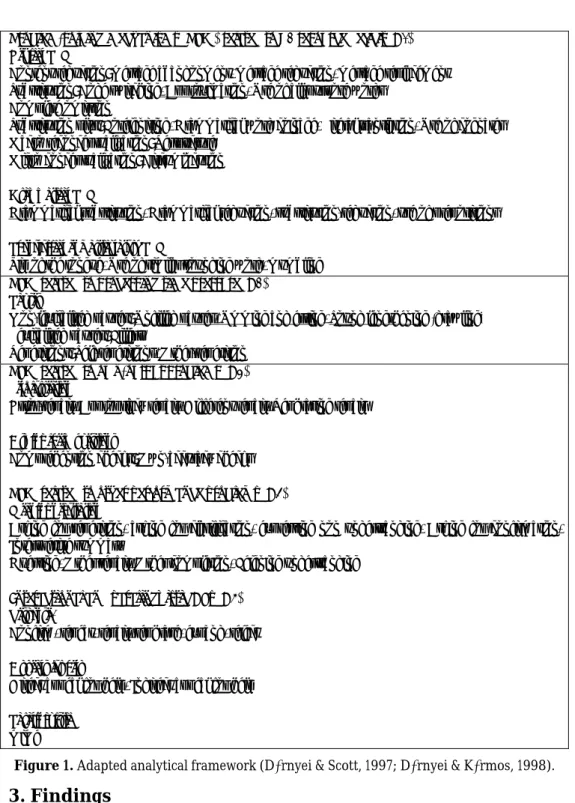
For the identification of the CSs, Dörnyei and Kormos’ classification (1998) was used since it also considers both perspectives and a more comprehensive account of these devices. In addition, the interactional CSs presented in a previous review of CSs were added to cover a wider analytical spectrum (Dörnyei & Scott, 1997).
1.1. Empirical considerations
One of the most researched factors which has been found as affecting the use of CSs is learners’ proficiency level. Depending on their level; L2 learners tend to make more use of CSs and to favour certain mechanisms over others (Paribakht, 1984; Safont Jordá, 2001; Rabab’ah & Seedhouse, 2004; Uztosun & Erten, 2014). Other studies have attempted to confirm the association with factors such as, the type of task used in communication (Bialystok & Fröhlich, 1980; Poulisse & Schils, 1989; Fernández Dobao, 2001; Rabab’ah & Bulut, 2007) and the situational context (Williams, Inscoe & Tasker, 1997). Most of these studies, however, have focused on only lexical problems.
In addition, little concern has been given to analysing these mechanisms in interactional contexts (Paribakht, 1984; Labarca & Khanji, 1986, Fernández Dobao & Palacios Martínez, 2007) and in relation to Spanish as L2. The few studies which have focused on this target language have been interested in the effects of the learning context (DeKeyser, 1990; Lafford, 2004; Segalowits & Freed, 2004; Rubio, 2007).
restructuring. This result was also interpreted as due to the task requirements which seemed to have demanded a wider range and more complex vocabulary use. The role-play, on the other hand, seemed to be less demanding because the learners restricted their communication turns to what was required by such a closed-ended task. In a more recent study, Ghout-Khenoune (2012) analysed the CSs used by Algerian University EFL students when performing a picture-description and a free-discussion activity in English as L2. Findings indicated that the task mainly affected the learners’ quantity of CSs but not the type of mechanism, as they used similar CSs to tackle the problems arising in each task. However, even though there was not a clear pattern of CS selection, Ghout-Khenoune observed similar results to the studies above mentioned in that task demands, in addition to context and time constraints, were found to affect the learners’ strategic behaviour. It was observed that the free-discussion demanded a higher number of CSs, mostly attributed to the task requirements, as this activity encouraged the learners to use more language, hence more strategies, to be able to discuss the topic provided.
From the scarce existing empirical evidence, it seems that various can be the factors influencing both CS frequency and choice. The task requirements, which may depend on the nature of the task (closed/open-ended), the context provided, the time given and the presence of an interlocutor, are all aspects which may affect learners’ CS use. Considering this limited and varied evidence plus the lack of studies related to Spanish as L2 in an interactional setting, this study aims to expand knowledge of CSs by using two tasks performed by Spanish L2 learners in an interactive context. In addition, a wider analytical framework has been used to have a broader view of CS usage.
2. The study
2.1. Study setting and research question
This study was conducted as part of a larger project which involved the analysis of two other factors. It was a task-based project with a descriptive and cross-sectional design and quantitative and qualitative methods of enquiry. Following the focus of this paper the research question to be addressed is: What are the possible task effects on the learners’ strategic communication?
2.2. Participants
modules they were attending at the moment, so depending on their distribution in these modules – and for the requirements of the main project – they were preliminary classified according to a fairly similar proficiency level.
2.3. Data elicitation tasks
The main requirements for the tasks selected were that they had to demand the use of CSs to cope with the communication problems arising in interaction. In addition, they had to be communicative, thus interactional –in view of the type of interactions set for the main project –for which Pica’s typology of communicative tasks was used (Pica, Kanagy & Falodun, 2009). This latter aspect was relevant since it was expected that the requirements would make both interlocutors communicate as equally as possible, avoiding the leading of the conversation, and thus demanding a fairly equal strategic use of the language. In this respect, these tasks “ensure students opportunities to be both L2 receivers and producers” (Pica et al., 2009: 181). The following tasks were selected.
2.3.1. Jigsaw task
Two jigsaw activities were used (Klippel, 1984; Anonymous, 2010, see Appendix 3) in order for the NS –who would interact in two sessions with different learners– not to do the same activity twice. This activity is considered a closed task since its realisation is restricted to the final outcome required (Ellis, 2003). It consisted of one story divided in two parts; each half of the story was given to each participant and together they had to find out the real story sequence, so they had to describe their pictures to each other and interpret the actions of the main character. They also had to ask questions to each other to confirm their guesses or find out more information. This task was selected considering its communicative, thus interactional nature (Pica et al., 2009) and also because as it is closed-oriented provides control of the content through the context (pictures). This means that what speakers might utter can be controlled to some extent, and problems arising in the conversation might be anticipated, making it advantageous for the identification of CSs (Kasper & Kellerman, 1997; Fernández Dobao, 2004).
2.3.2. Free-conversation task
more language (Duff, 1986) and more complex structures, and thus develop other communication skills (Skehan, 1998). It was expected that this type of task would give learners the chance to perform a different and more natural activity and thus be faced with different types of communication problems – more similar to the ones found in a real life situation. In addition, it would provide the researcher with a less controlled task, thus different type of spoken data which was expected would enrich the analysis.
2.4. Procedures
Some linguistic and background information was first enquired from the participants and used for the subsequent pairings of dyads, thus there was no explicit method to determine their proficiency level, but their attendance to a specific language module. Prior to the data collection sessions, ethical-related issues were dealt with and the participants’ consent was obtained. The data collection sessions were organised to test the factors set for the larger study. In these sessions the participants sat facing each other to carry out the tasks –and a practise task when needed. Each learner interacted first with the NS performing one type of task and then with the other learner doing the other task. This made it possible to balance the data collected and gather information from all the participants when carrying out each task. These interactions were video and audio recorded and lasted 10 minutes. During the interactions the researcher took notes on the possible problems indicators or signals (hesitation, drawls, repetitions) the learners might have been experiencing to use them later for the post interview. Immediately after, the NNSs were interviewed in their L1 following stimulated recall methodology to elicit the problems they thought they had had when trying to communicate (Gass & Mackey, 2000). The learners were asked to identify each time they felt they had a communication problem and to ask me to pause the video, comment on the type of problem and to try to explain what they did to solve it. The previous notes taken were also used to ask about more specific problematic situations. This data obtained allowed the subsequent identification and confirmation of CS usage. Finally, as a requirement for the larger study, the learners’ initial levels of proficiency were corroborated by evaluating their oral recorded performance through the criteria proposed in the Common European Framework of Reference.
2.5. Data analysis
Problem-solving mechanisms (PSM) related to L2 resource deficit (C1)
Lexical PSM
Content reduction: message abandonment, message reduction, message replacement Substitution: Code switching, Approximation, Use of all-purpose words
Complete omission
Substitution plus: Foreignising, Grammatical word coinage, Literal translation, Use of cognates Macro reconceptualization: Restructure
Micro conceptualization: Circumlocution Grammatical PSM
Grammatical substitution, Grammatical reduction, substitution-reduction, use of prepositions Phonological and articulatory PSM
Tip of the tongue, Use of similar sounding word, mumbling
PSM related to processing time pressure (C2)
Pauses
Non-lexicalised pauses: Unfilled pauses, Umming and erring, Sound lengthening (drawling) Lexicalised pauses: Fillers
Repetitions: Self-repetitions, Other-repetition
PSM related to own-output problems (C3)
Self-correction
Error-repair, Appropriacy repair, Different repair, Rephrasing repair
Asking check questions
Comprehension checks: Own-accuracy checks
PSM related to other performance problems (C4)
Meaning negotiation
Asking for repetition, asking for clarification, expressing non understanding, Asking for confirmation, Interpretive summary
Guessing, Other repair, Other completion, Feigning understanding
Interactional and paralinguistic CSs (C5)
Response-
Confirm, repeat, repair, rephrase, expand, reject
Appeals for help
Direct appeal for help, Indirect appeal for help Paralinguistic
mime
Figure 1. Adapted analytical framework (Dӧrnyei & Scott, 1997; Dӧrnyei & Kӧrmos, 1998).
3. Findings
3.1. Learners’ overall use of CSs
In order to start answering the main research question Table 1 provides the total number of CSs produced by the learners in each task, the total amount of language generated in each task, and the normalised frequency of strategies per 1000 words.
Table 1. Results for the type of task according to CS frequency.
Type of task Language Production CSs CSs/1000 words
Open 8602 1628 189.3
Closed 8092 1974 244
As can be seen, the open task generated slightly more language than the closed task but a lower normalised frequency of CSs. In terms of CS use no marked differences between tasks can be observed at this general level of analysis. As for the relatively higher language production observed for the open task, a possible rationale may be found in studies in the area of second language learning. This task has been observed as usually generating more and more elaborated language (Duff, 1986) and providing more opportunities to produce more complex structures (Skehan, 1998). In an attempt to elucidate a possible association between the task and the learners’ CS use, Table 1 presents the distribution of the CS categories.
Table 2. Main CS categories by type of task (frequency per 1000 words).
Task C1 C2 C3 C4 C5 Totals
Open 780 (91) (56) 481 (23.1) 199 (5.5) 47 (14.1) 121 (189.3) 1628 Closed 742 (92) (79.1) 640 (30.4) 246 (8.4) 68 (34.35) 278 1974 (244)
From the overall results it can be seen that the differences in the patterns of
distribution are statistically significant (df = 4, χ2 = 61.407, p = .000) indicating
differential use of the CS categories in the two tasks. There is a higher frequency of all the categories in the closed task, with the exception of ‘L2 resource deficit’ (C1) and ‘other performance’ CSs (C4), where the differences are quite small. These results partly answer the research question by indicating an association between the learners’ CS use and the tasks performed; association which is particularly influenced by the results obtained for the closed task. Thus, to determine any possible effects of the task type on the learners’ CS use, their performance of each activity will be now analysed.
3.2. Learners’ strategic communication as influenced by task type
included to allow for comparisons of the learners’ CS usage in both tasks. However, before turning to this qualitative analysis the demands posed by each activity will be briefly presented, information which served as a baseline for the subsequent data examination.
3.2.1. Task demands
Linguistic demands
For the jigsaw task these demands were imposed through the visual support. This meant that each subject was restricted to use the language for the entities and events depicted to narrate their own part of the story and be able to carry out the task. In the free-conversation these demands were reduced through topic familiarity.
Cognitive demands
In the closed task these were reduced by the context given which guided the learners in the kind of information they needed to convey. In the open task, these demands were posed by the absence of a context, which increased the ‘cognitive complexity’1 of the task by means of the ‘cognitive processing’2 involved (Skehan,
1998). This meant that the learners were obliged to process, activate and produce information related to a given topic, all at the same time and without previous preparation.
Demands of the situational context (Poulisse & Schils, 1989; Lujan-Ortega, 1997)
These were imposed in both tasks by the time allotted to carry them out; however, the learners were not obliged to complete the task during the time provided. In the open task these demands were reduced since the learners might have felt less pressured without having a final aim to accomplish.
Communicative demands
In the closed task these were reduced by the pictures provided, since the visuals shared by the participants may have aided comprehension between the speakers. This was less likely to happen in the open task due to the lack of visuals, which might have increased comprehension problems, and thus more communication difficulties.
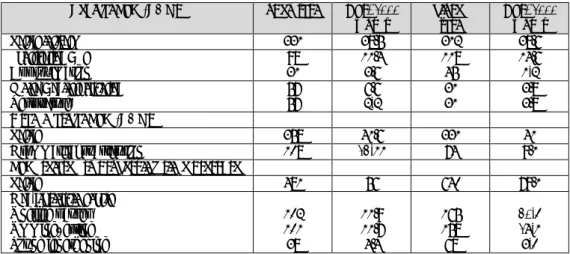
Table 3. Distribution of the CSs most frequently used.
Lexical PSM-L2 RD open task CSs/1000
words closed task CSs/1000 words
Grammatical substitution 108 12.55 74 9.1
PSM related to processing time pressure
Totals 481 56 640 79.1
3.2.2. Analysis of learners’ interactions
From the results presented in Table 3, approximation within C1 and some stalling mechanisms within C2 showed more marked differences between tasks as particularly affected by the closed task. These mechanisms will be first analysed below.
3.2.2.1. Closed task
Approximation
Through this ‘achievement’ CS the learner substitutes a lexical item for a related one that shares semantic features with the target word. The analysis revealed that this L2-based CS was more often employed by the learners when performing the jigsaw to compensate for specific lexical items. These items – which were recurrent problems – in most cases, referred to certain actions, such as: subir/bajar las escaleras (‘go up/down the stairs’), servir vino (‘pour the champagne’), vestir/llevar (‘s/he is wearing...’), or to specific words: traje (‘suit’), techo (‘ceiling’), corcho (‘cork’) amongst others. The following example illustrates the use of this CS (as underlined).
example 1
NS: ¿Cómo va vestido? ¿Cómo viste el hombre?
What is the man wearing?
NNS17: en un eh chaqueta y pantalones ne negros
in a eh jacket and bla black trousers/pants
It can be observed and confirmed through the learner’s comments that the problem he found had to do with the lexical item ‘suit’ (traje). He signals this by hesitating before uttering the approximated term, thus compensating for a specific lexical referent that he needed to continue communicating his message. It seems that this CS was particularly useful for this activity in view of its specific context, as it is considered informative enough to allow for reference to various properties of the target item (Ghout-Khenoune, 2012). In addition, it is also a quick and efficient way of tackling a specific lexical problem since it requires “less processing effort and less time to be uttered” (Lujan-Ortega, 1997:45). This mechanism is also seen as most effective since it reduces the probability of miscommunication (Rossiter, 2005), an important aspect to consider in view of such outcome-oriented type of task.
Pauses & umming-erring
These stalling mechanisms are used in order to gain time to think of the words necessary to convey a message as illustrated in the excerpt below.
example 2
NNS1: eh mi primera (0.3) pienso que es en una comisaría eh (0.3) y hay un hombre que que está eh como se llama eh (0.4) eh (0.2) -risa-ah
eh my first (0.3) I think that is in a police station eh (0.3) and there is a man that that is eh what’s the word eh (0.4) eh (0.2)-laugh-ah
Retrospective comments NNS1: I was trying to work out how to say what was happening in the picture, trying to explain that ‘he was walking up to talk to the policeman’.
Sound lengthening
This CS was also employed to gain time to think of the words needed in the closed task. In the excerpt below the learner resorted to this CS when attempting to utter the word dibujo (‘picture/drawing’), which is finally provided by the NS.
example 3
NNS18: y ah uno unnn un otro ah es ah el mismo ah homm hombre un otro otro
And ah a annn an other ah is ah the same ah ma man an other other NS: otro dibujo?
Another picture? NNS18: sí sí…
Yes yes…
The learners’ retrospective comments were useful to demonstrate their need for this type of CS since most expressed that when using them they were trying to think of what or how to say something as required by the visuals. They also mentioned that they did not know or were not sure of how to explain what they wanted to say in addition to expressing their concern for not being silent. A possible rationale for this behaviour may be related to the task demands which not only imposed the use of specific lexical items, but also required both speakers to describe each one’s pictures to be able to complete the task. This latter requisite could have made the learners feel pressured to communicate meaning and avoid a communication breakdown by means of this type of ‘communication maintenance strategy’ (Dӧrnyei & Scott, 1995). Similar results were observed by Uztoson and Erten (2014) in that the development of fluency was one of the main communication needs of Turkish EFL learners as they were highly dependent on time-gaining CSs. Hence, it seems that the learners in the study resorted to CSs which were considered more useful or efficient for dealing with the linguistic specificity required by the closed task, but also to maintain the conversation going (Canale & Swain, 1980).
All in all, both CSs were useful for the learners to compensate for the specific lexical items needed (nouns and verbs), as was observed in the data examined as well as in the excerpts above, a type of difficulty which corresponds with the nature of this task in that it demanded the use of specific target referents controlled by the pictures provided. Thus, the linguistic specificity and the situational context of this task seem to constitute the main effects on these learners’ strategic use of the language.
3.2.2.2. Open task
Restructure
This CS within C1 has been classified as ‘achievement’ since, as in the use of approximation, the solution of communication problems requires expanding the L2 resources. It has also been sub-classified as an interlanguage CS (Færch & Kasper, 1983) due to the higher cognitive processing required. It is used as a way of compensating for a lack of resources by means of an alternative message. In the study, in most cases, once the learners had already started their message, they suddenly realised that they could not continue communicating the original meaning which forced them to change their message as shown in the excerpt below.
example 4
NNS13: pero pero a veces mm se necesita al al mm una persona para mm estar muy eh sin (0.2) sin eh emociones sobre su
but but sometimes mm you need to to mm a person to mm be very eh without (02.) without emotions about your
NNS14: [sí
NNS13: [si-tua-ción↑ Como… [si-tua-tion↑ like...
Retrospective comments NNS13: I was trying to say like ‘sometimes you need someone to not be so understanding, be so eh on your side all the time, you need someone to get yourself in action’, not like encourage your emotions. (Why did you say first estar muy and then sin) I couldn’t finish that idea so I had to change it.
to restructure meaning. Hence, the lack of visuals plus the unexpected information required may have increased the cognitive demands of this task. Rabab’ah and Bulut (2007) also found that another type of open task, the interview, produced more use of restructure than the closed task they used in their study. They concluded that as the questions in the interview were unexpected, it made this activity more demanding prompting a higher use of this equally more cognitively demanding strategy. Thus, it seems that for a task like this, which is not linguistically restricted but which demands more cognitive processing, restructure may be seen as more efficient.
Grammatical substitution
Grammatical PSM have not been as thoroughly examined as the lexical CSs. In fact, devices such as grammatical substitution have not been included in most of the taxonomies proposed so far with the exception of Dӧrnyei and Kormos’ (1998). This subcategory is related to “the insufficient knowledge of the grammatical form and the argument structure of the lemma, as well as the word-ordering rules of the L2” and thus entails “changing certain grammatical specifications of the lemma through transfer or overgeneralisation” (Dӧrnyei & Kormos’, 1998: 357-361). This CS, within C1, was more often employed by the learners in the open task where they tended to transfer some structures from their L1 or overgeneralise an L2 grammatical construction.
example 5
NNS4: entonces, sí ee he (0.3) tenido el *accento de Andalucía risa pero no no ahora es es gone
risa
so, yes eh I have (0.3) had the Andalucía accent-laugh-but not not now it is is gone-laugh
*‘accento’, target word: acento, ‘accent’
Retrospective comments NNS4: That’s the wrong tense; I was trying to say ‘I had the Andalucía accent after being there but not anymore’. I was not sure of the verb form and I knew I was wrong.
have influenced the learners’ CS use. It was observed that the learners’ communicative desire to speak about themselves –as they were more familiar with the topics provided– seem to have prompted more L2 language production, leading them to try to convey meaning through more complex structures, thus triggering this kind of strategy. Similar results were observed in Nakahama, Tyler and Van Lier (2001) who found that, as opposed to the more controlled information gap activities they used, the open-ended tasks pushed the NNSs to try to produce more elaborated and more grammar-oriented output. Hence, it seems that the free-conversation for its less restricted nature (less linguistically demanding) but higher improvisation (more cognitively complex) triggered CSs which may be seen as more cognitively demanding in that not only require more L2 resources but more processing time to cope with these task demands.
CONCLUSION
this study. A comparison with other target languages might also provide further evidence on the linguistic problems that Spanish presents to L2 speakers. Finally, it would be advisable to delimit future research to the task factor only in order to avoid other variables, which as in the case of the current study may have affected the data analysed.
REFERENCES
Bialystok, E. (1990). Communication strategies. A psychological analysis of second-language use.
Oxford & Cambridge: Basil Blackwell.
Bialystok, E. & Frohlich, M. (1980). Oral communication strategies for lexical difficulties. Interlanguage Studies Bulletin, 5, 3-30.
Canale, M. & Swain, M. (1980). Theoretical bases of communicative approaches to second language teaching and testing. Applied Linguistics, I(1), 1-47.
Dekeyser, R. M. (1990). From learning to acquisition? Monitoring in the classroom and abroad. Hispania, 73(1), 238-247.
Deveau, T. (1998). Error analysis in the interlanguage of beginning Spanish students. Unpublished master’s thesis. Houston, Texas: Rice University [on line]. Retrieved from: http://scholarship.rice.edu/handle/1911/17165
Domínguez, L. & Arche. M. (2008). Optionality in L2 grammars: The acquisition of SV/VS contrast in Spanish [on line]. Retrieved from: http://www.southampton.ac.uk/~ldo/dominguez_arche_BUCLD%2032.pdf Dörnyei, Z. & Körmos, J. (1998). Problem-solving mechanisms in L2 communication.
Studies in Second Language Acquisition, 20(3), 349-385.
Dörnyei, Z. & Scott, M. L. (1995). Communication strategies: An empirical analysis with retrospection. Tesol Quarterly, 29(1), 55-85.
Dörnyei, Z. & Scott, M. L. (1997). Review article communication strategies in a second language: Definitions and taxonomies. Language Learning, 47(1), 173-210.
Dörnyei, Z. & Thurrell, S. (1991). Strategic competence and how to teach it. ELT Journal, 45(1), 16-23.
Duff, P. (1986). Another look at interlanguage talk: Taking task to task. In R. R. Day (Ed.), Talking to Learn: Conversation in Second Language Acquisition (pp. 147-181). Rowley MA: Newbury House.
Færch, C. & Kasper, G. (1983). Plans and strategies in foreign language communication. In C. Færch & G. Kasper (Eds.), Strategies in Interlanguage Communication (pp. 20-60). London & New York: Longman.
Fernández Dobao, A. M. (2001). Communication strategies in the interlanguage of Galician students of English: The influence of learner-and task-related factors.
Atlantis, 23(1), 41-62.
Fernández Dobao, A. M. (2004). The use of communication strategies by Spanish learners of English. A study of the collaborative creation of meaning, language, and linguistic knowledge. Unplished master’s thesis, Universidad de Santiago de Compostela, Spain.
Fernández Dobao, A. M. & Palacios Martínez, I. M. (2007). Negotiating meaning in interaction between English and Spanish speakers via communication strategies. Atlantis, 29(1), 87-105.
Gass, S. & Mackey, A. (2000). Stimulated recall methodology in second language research. New York & London: Routledge.
Ghout-Khenoune, L. (2012). The effects of task type on learners’ use of communication strategies. Procedia - Social and Behavioral Sciences, 69, 770-779 [on line]. Retrieved from: http://doi.org/10.1016/j.sbspro.2012.11.472 Johnston, M. (1995). Stages of the acquisition of Spanish as a second language.
Australian Studies in Language Acquisition 4, 2-35 [on line]. Retrieved from: http://www.eric.ed.gov
Kasper, G. & Kellerman, E. (1997). Communication strategies, Psycholinguistic and Sociolinguistic perspectives. United States: Pearson Education Limited.
Khan, S. (2010). Strategies and spoken production on three oral communication tasks: A study of high and low proficiency EFL learners. Unpublished master’s thesis, Universitat Autónoma de Barcelona, Spain.
Khan, S. & Victori, M. (2011). Improving method-in-use through classroom observation. IRAL - International Review of Applied Linguistics in Language Teaching, 49, 27-53 [on line]. Retrieved from: http://doi.org/10.1515/iral.2011.003
Klippel, F. (1984). Keep talking. Cambridge: Cambridge University Press.
Labarca, A. & Khanji, R. (1986). On communication strategies: Focus on interaction.
Lafford, B. A. (2004). The effect of the context of learning on the use of communication strategies by learners of Spanish as a second language. Studies in Second Language Acquisition, 26, 201-225.
Lujan-Ortega, V. (1997). The influence of situational factors on the use of compensatory strategies. ESRI Working Papers in Language and Linguistics, 13, 5-49.
Nakahama, Y., Tyler, A. & Van Lier, L. (2001). Negotiation of meaning in conversational and information gap activities: A comparative discourse analysis. Tesol Quarterly, 35(3), 377-405.
Nakatani, Y. (2010). Identifying strategies that facilitate EFL learners’ oral communication: A classroom study using multiple collection procedures. The Modern Language Journal, 94(1), 116-136.
Numata, M. (2009). The effects of the use of communication and negotiation strategies on L2 acquisition. Unpublished master’s thesis, University of Iowa, United States.
O’Donnell, M. (2008). UAM Corpus Tool [on line]. Retrieved from:
http://www.wagsoft.com/CorpusTool
Paribakht, T. (1984). The relationship between the use of communication strategies and aspects of target language proficiencies - a study of ESL students. Québec: Laval University. Pica, T., Kanagy, R. & Falodun, J. (2009). Choosing and using communication tasks
for second language instruction. In K. Van Den Branden, M. Bygate & J. M. Morris (Eds.), Task-based Language Teaching (pp. 171-192). Amsterdam: John Benjamins.
Poulisse, N. & Schils, E. (1989). The influence of task- and proficiency-related factors on the use of compensatory strategies: A quantitative analysis. Language Learning, 39, 15-47.
Rabab’ah, G. & Bulut, D. (2007). Compensatory strategies in Arabic as a second language. Poznań Studies in Contemporary Linguistics, 43(2), 83-106.
Rabab’ah, G. & Seedhouse, P. (2004). Communication strategies and message transmission with Arab learners of English in Jordan. Annual Review of Education, Communication and Language Sciences, 1 [on line]. Retrieved from: http://research.ncl.ac.uk/ARECLS/vol1_documents/Ghaleb&Seedhouse/G haleb&Seedhouse.htm
Rossiter, M. (2005). Developmental sequences of L2 communication strategies.
Rubio, F. (2007). El uso de estrategias comunicativas entre hablantes avanzados de español. Círculo de Lingüística Aplicada a La Comunicación, 29, 44-62.
Safont Jordá, M. P. (2001). An analysis on the use and selection of communication strategies by Catalan/Castilian learners of English. Rassegna Italiana Di Linguistica Applicata, 1(1), 57-72.
Segalowitz, N. & Freed, B. F. (2004). Context, contact, and cognition in oral fluency acquisition: Learning Spanish in at home and study abroad contexts. Studies in Second Language Acquisition, 26, 173-199.
Selinker, L. (1972). Interlanguage. IRAL, 10(3), 209-231.
Skehan, P. (1998). A cognitive approach to language learning. Oxford: Oxford University Press.
Tarone, E. (1977). Conscious communication strategies in interlanguage: A progress report. In D. H. Brown (Ed.), 11th Annual Convention of Teachers of English to Speakers of Other Languages (pp. 194-203). Washington, D.C.: TESOL.
Tarone, E. (1981). Some thoughts on the notion of Communication Strategy. Tesol,
15(3), 285-295.
Uztosun, M. & Erten, I. (2014). The impact of English proficiency on the use of communication strategies: An interaction-based study in Turkish EFL context. Journal of Language and Linguistic Studies, 10(2), 169-182.
Váradi, T. (1980). Strategies of target language communication: Message adjustment.
IRAL, 18, 59-72.
Wagner, J. & Firth, A. (1997). Communication strategies at work. In G. Kasper & E. Kellerman (Eds.), Communication Strategies: Psycholinguistic and Sociolinguistic Perspectives (pp. 323-344). London & New York: Longman.
Williams, J., Inscoe, R. & Tasker, T. (1997). Communication strategies in an interactional context: The mutual achievement of comprehension. In G. Kasper & E. Kellerman (Eds.), Communication Strategies, Psycholinguistic and Sociolinguistic Perspectives (pp. 304-322). London & New York: Longman.
Woods, D. & Fassnacht, C. (2005). Transana [on line]. Retrieved from: www.transana.org
Yule, G. & Tarone, E. (1997). Investigating communication strategies in L2 reference: Pros and cons. In G. Kasper & E. Kellerman (Eds.), Communication Strategies: Psycholinguistic and Sociolinguistic Perspectives (pp. 17-30). London & New York: Longman.
APPENDIX
Appendix 1
Transcription key
[ ] square brackets indicate overlapping speech
(word) word in parenthesis indicates that the word was not clearly heard { } curly brackets show the researcher’s comments based on the videos (( )) double parentheses indicate inaudible speech
↑ upwards arrow indicates rising intonation
Wa-ter hyphens in between syllables mean that the word was slowly uttered (0.2) pauses are shown in seconds and placed in between parentheses
Italics show the English translation of each utterance
bold represent my notation of relevant non-linguistic features, such as ‘laugh’, and gestures
* indicates incorrect sentence
Appendix 2
Jigsaw task Nº1:
Picture set A
Appendix 3
Jigsaw task N°2:
Work with your partner: the pictures are in jumbled order. Describe to your partner what is happening and together try to work out the complete story in the correct order (Anonymous, 2010)3.
Picture set A
NOTES
1 This construct is subdivided into ‘cognitive familiarity’ (background knowledge) and
‘cognitive processing’ (processing of the information).
2 Cognitive processing: information organisation, amount of computation, clarity and
sufficiency of information given, and information type (Skehan, 1998: 99).
3 This task was supplied by a teacher who had used it in class and recommended it; however, the original source is unknown.