Local policies for cultural diversity
“Local policies for cultural diversity”
Study commissioned by the Division of Cultural Policies and Intercultural Dialogue of
UNESCO to the Institute for Culture, Barcelona City Council, as Chair of United Cities and Local Governments’ Committee on culture
20 September 2006
·The copyright of this report belongs to UNESCO.
·UNESCO gives permission to publish this report in the websites http://www.cities-localgovernments.org and http://www.agenda21culture.net
·The report can be reproduced for free as long as UNESCO, UCLG and Barcelona City Council are cited as sources.
·The authors are responsible for the choice and the presentation of the facts contained in this text and for the opinions expressed therein, which are not necessarily those of UNESCO and do not commit the Organization.
Index
Presentation by Carles Martí, Councillor for
Culture - Barcelona City Council and President of United Cities and Local Governments’
Committee on culture
Reports
• Exploring local policies for cultural diversity, synthesis report by Jordi Pascual
• Local policies and expressions of cultural diversity: Canada and the United States, by Nancy Duxbury, Derek Simons and Katie Warfield
• Local Policies for Cultural Diversity. With emphasis on Latin America and Europe, by Annamari Laaksonen
• Local policies for cultural diversity: systems, citizenship, and governance. With an empha-sis on the UK and Australia, by Colin Mercer
Annexes
• Annex 1 – Case studies
Presentation
As Councillor for Culture of Barcelona City Council, and Chair of the Committee on culture of the worldwide organization, United Cities and Local Governments, it gives me great pleasure to present this study, “Local Policies for Cultural Diversity”, which was commissioned to the Barcelona City Council’s Institute for Culture, by the Division of Cultural Policies and Intercultural Dialogue of UNESCO at the beginning of this year 2006.
Cultural diversity is one of the main characteristics of cities throughout the world. Today’s globalization process enables the cultural production of all cities to be circulated with greater facility around the planet. At the same time, the desire for better urban governance leads every city to promote proximity with the inhabitants, and the participation of a broader spectrum of agents (public, private and associative) in local cultural policies. Finally, migration and technologies transform cities into spaces where people of different origins have the challenge of living together in creative conviviality. Cultural diversity is a reality. As urban history demonstrates, and the study shows, diversity is an essential constituent of both cities and culture.
Some two years ago, cities all over the world began promoting the Agenda 21 for culture as a reference for their local cultural policies. This document was approved in May 2004 and has been adopted by United Cities and Local Governments as a guideline for its programmes on culture. The Agenda 21 for culture includes cultural diversity as one of its guiding principles alongside human rights, participative democracy, sustainability and peace. We believe it is more necessary than ever today to reaffirm the relationship between these concepts.
We hope that this study will prove useful for cities all over the world in their considerations regarding cultural diversity at the local level, and in the role of culture in the development of the city and each of its inhabitants. We further hope to be able to renew the relationship established with UNESCO and to work together again on new projects. I wish you a fruitful read.
Carles Martí
Councillor for Culture of Barcelona City Council
Exploring local policies for cultural diversity
Paper prepared by Jordi Pascual in the framework of the study “Local policies for cultural diversity” commissioned by the Division of Cultural Policies and Intercultural Dialogue of UNESCO to the Institute for Culture, Barcelona City Council, as Chair of United Cities and Local Governments’ Committee on culture.
0. Executive summary
0.1. INTRODUCTION
The Division of Cultural Policies and Intercultural Dialogue of UNESCO commissioned a study on local policies for cultural diversity to the Institute for Culture – Barcelona City Council, as Chair of the Committee on culture (CC) of United Cities and Local Governments (UCLG). UCLG forms the largest association of local governments in the world and has a decentralised structure with regional sections in Africa, Asia-Pacific, Europe, Euro-Asia, Middle East – West Asia, Latin America and North America. UCLG has a Committee on culture, which was constituted in Beijing on 9 June 2005, as the meeting point for cities and local governments that place culture at the heart of their development processes. UCLG’s Committee on culture is chaired by Barcelona City Council and vice-chaired by the city councils of Stockholm and Buenos Aires. The Committee on culture is made up of cities such as Amman, Brazzaville, Córdoba, Diyarbakir, Essaouira, Kazan, London, Porto Alegre, Quito, Rio de Janeiro, Rome, Toronto, Turin and Venice, as well as several associations of municipalities.
0.2. OBJECT OF THE STUDY AND METHODOLOGY
The main aim of the study was to investigate what types of public policies at a local level support the diversity of forms of cultural expressions. The study mainly analysed the policies and programmes developed by departments for culture, although the enhanced role culture plays in local policies also allowed the inclusion of policies and programmes developed by other municipal departments.
The study was developed following to three strands: the writing of several reports, the desk-analysis of case studies, and the desk-analysis of websites/portals. The World Secretariat of UCLG sent a Circular whose aim was to involve as many member cities of the Committee on culture in the study as possible, offering the cities an opportunity to provide case studies dealing with “local policies for cultural diversity”. The Circular included a brief template to be used by cities to elaborate a case study. In parallel, three reports were commissioned and written by three well-known researchers on cultural policies and governance, in alphabetical order, Nancy Duxbury (with Derek Simons and Katie Warfield, Creative City Network of Canada), Annamari Laaksonen (Interarts Foundation), and Colin Mercer (Cultural Capital Ltd); each researcher covered a number of thematic and geographical areas. A synthesis report was written by Jordi Pascual. The full study can be downloaded from several websites.1We strongly recommend reading the
four papers that compose the study.
1The full study is downloadable from:
- http://www.cities-localgovernments.org
0.3. NOVELTY AND DIFFICULTIES
“Cultural diversity” appeared as a keyword in the international debates on culture at the end of the 1990s. The concept is not yet adopted by a vast majority of cities, but today cities and local governments use concepts such as “cultural development”, “cultural participation” or “cultural vitality” (popular during the 1980s), or “democratisation of culture” or “cultural democracy” (appeared during the 1960s or 1970s). The approval of UNESCO’s Declaration (2001) and Convention (2005) on Cultural Diversity, and the approval of the Agenda 21 for culture (2004) have created a diversity momentum. A growing number of citgies express a concern for cultural diversity, especially those which have undergone a cultural planning process during the last months.
The reaction to the appearance of cultural diversity in the urban policy debate is generally positive but the difficulties it entails are not neglected. Dorothea Kolland states that “we are asked to celebrate diversity, difference and richness of difference while growing urban centres struggle with problems of discrimination, segregation and cultural conflicts. Although many of these problems are many times more social in nature than cultural, the cultural and religious tensions are part of our daily life. (...) The metropolis of the world gather together people guided by widely differing ethnical notions and fundamental values, ideas and values with deep societal and often religious roots, instilled as self-evident cultural traditions” (quoted from the paper written by Annamari Laaksonen, 2006, 7). Cultural diversity is still a very difficult concept that can lead to many misunderstandings.
Conditions to understand cultural diversity are not equal. The “local basis” to undertake actions to support cultural diversity varies: history, geography, characteristics of the population and vitality of the civil society, among other factors, differ from one city to another. Furthermore, cities have different levels of legal competencies, that is, national and/or regional juridical frameworks; the founding conception of the nation-state (unitary state, decentralised state, federal state) as well as the definition of national policies (laws and regulations that recognise, protect or promote the cultural diversity) are of paramount importance for local cultural policies, as these create the conditions and legitimise local governments to implement policies for cultural diversity. Some nation-states restrict or prevent the possibilities of local governments in the deployment of policies for cultural diversity. UNDP’s Human Development Report 2004 Cultural Liberty
in Today's Diverse World has recently made a strong call to “recognize differences, champion diversity and
promote cultural freedoms, so that all people can choose to speak their language, practice their religion, and participate in shaping their culture so that all people can choose to be who they are”.
Cultural diversity is a new and difficult concept but many cities and local governments have already taken it into account, with diverse meanings.
0.4. MANIFOLD MEANINGS
An attempt can be made to classify the manifold meanings cultural diversity can have at a local level.
2 Another way to understand “cultural diversity”, more recently included in local cultural policy-making, is the involvement of a diversity of actors (public, NGO, private) in the local cultural system. Many cities have evolved from the direct provision of cultural services to an enabling / relational stance, keeping a core number of cultural services in the public administration and fostering a range of partnerships with private and social agents, sometimes leading to the creation of new bodies / instances to allow for a more efficient management of cultural policies. The participation of non-public agents reaches the elaboration and sometimes the monitoring and evaluation of cultural policies through, for example, local councils for culture. It seems that gender does not (yet?) appear as a crucial dimension it achieves in many other public policies.
3. Finally, the appearance of the “cultural diversity” framework, understood in anthropological / ethnic terms, is changing the ways cities support local culture, with more attention paid to the presence of “minorities” in the cultural ecosystem of the city. A balance is sought between “native” cultural agents (if they still exist / recognised as such in the city), the “national culture” agents, and those agents that are the direct or indirect result of immigration. This consideration of cultural diversity is extremely difficult because the terms used are not satisfactory to all agents concerned, and because terms “freeze” a dynamic reality: urban culture. Sometimes, due to repression of freedom of speech or, more generally, lack of democracy, the cultural production of the city does not allow the continuity (preservation and promotion) of original / native / first cultures that were born in that territory, and prevent the development of (as the Agenda 21 for culture states), “indigenous local cultures, which are bearers of a historic and interactive relation with the territory”. In other cities, it might happen that new inhabitants, direct or indirect result of immigration processes, and that have some of their cultural roots in other territories, are not yet recognised as “cultural citizens”, and that the cultural diversity they bring is either not legitimised by official discourses and/or marginalised from democratic governance and funding mechanisms.
Many cities are undertaking “mapping” and “diagnosis” exercises to know more about their cultural diversity. Cities can more easily than nation-states adapt the cultural diversity concern to their policies. There are many examples of cities that think and re-think their “official” histories, in exhibition or multimedia projects, such as the MIME (Malmoe, Tampere and Nottingham in 2001), or in large urban events, such as “Rotterdam 2001 European Capital of Culture”.
Analysing diversity in a historical perspective, all cities have undergone (and are undergoing) intercultural / hybridisation processes. Cities are the places where persons from different origins meet, interact and create new cultural expressions. It seems that interculturality (see the recent book of Jude Bloomfield and Franco Bianchini) and hybridisation (see the paper written by Nancy Duxbury) are today the answers of many cities to the (local) challenges of cultural diversity (mainly posed as “ethnic” in those cities); this is specially happening in those cities in industrial and post-industrial countries whose population is growing in ethnic diversity as a result of recent immigration. Other cities, however, respond to their (local) cultural diversity challenges with policies to create the basis to produce and distribute their cultural content, and foster the development of local cultural industries that can ensure the presence of these cities / cultures in the world; the focus of cultural diversity in these emerging cities (from Asia to Latin America) is rather “content diversity in the global market”. Further research is needed to identify, understand and disseminate the cultural policies of these cities and local governments, which are under-represented in this study.
It is crucial to state, as Colin Mercer writes in his paper, that “diversity is actively constitutive of culture, not an element of ‘additionality’ to it. In spite of the homogenising tendencies of national cultures in the modern period, especially since the late eighteenth and early nineteenth centuries in Europe and elsewhere, it is clear from the historical evidence and reality, that all cultures are diverse and hybrid in their formation – if not in the ways in which they are retrospectively constructed and imagined by nation states and their citizens” (Mercer, 2006, 1).
These considerations just illustrate that, also at a local level, cultural diversity is a concept to be handled with care. And point to the democratic governance of cultural policies as a crucial point.
0.5. SQUARING THE SUSTAINABILITY TRIANGLE
Culture is becoming, more than ever, at the centre of urban policies, partly thanks to the cultural diversity
momentum, but also due to other factors: expectations on exporting capacities of creative industries, the
debate on intellectual rights, the society du spectacle, the concern for human rights...
A “triangle” of sustainable development (economic concern + social inclusion + environment) was developed in the second half of the 1980s (Brundtland’s report as the most well-known document) and was successfully consolidated in the 1990s. This triangle is used today in local / national / global strategies as a pattern for analysis and public action for (sustainable) development.
Many people have advocated for culture to “square” this triangle. The intrinsic values of culture, as memories, creativity, excellence, critical knowledge, rituality (and maybe others), are becoming more important for human development, democratic governance and global understanding. There is a strong basis to make such a claim, and many come from non-cultural sectors.
The cultural sectors need strong images to raise awareness on the cultural dimension of human development, and to secure a role for culture in public action. Today, it is difficult to advocate for culture without creating solid bridges with the other spheres of governance. The “fourth pillar” offers such a strong image and creates those solid bridges. The fourth pillar argument has its origins in the work of Jon Hawkes The fourth pillar
of sustainability. Culture’s essential role in public planning.
The diversity of uses, meanings and understandings of cultural diversity need a unifying force, and the local departments for culture have a crucial role to play, in order to make the case for the intrinsic values of culture, and to create bridges with other spheres of governance.
0.6. LOCAL POLICIES
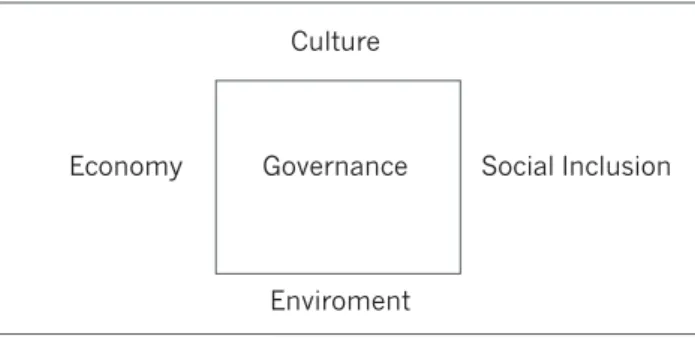
The aforementioned papers that compose this study account for several policies and programmes that support cultural diversity at a local level. It has been found interesting to classify these policies and programmes as follows, in five sub-chapters. This scheme squares the sustainability triangle and adds governance as a connecting concept.
local level; in fact, a municipal council that adheres to the Agenda 21 for culture makes a commitment with the citizenry to promote cultural rights and its local implementation through policies and programmes. A local cultural strategy could also be based on cultural rights. Departments for culture have a crucial role to play in order to promote cultural rights and to relate these concepts into specific policies and programmes; the intrinsic values of culture, as memories, creativity, excellence, critical knowledge, rituality (and maybe others) can be interesting ways.
2. Cultural diversity and social inclusion. Urban policies understand cultural participation in several ways; while some cities understand it as an increase in the number of visitors to cultural institutions and events, some cities widen these concepts to promote the involvement of citizens in cultural production and/or cultural mediation processes. In an increasingly diverse society, education in cultural diversity and fostering intercultural competencies become priorities, not only for the department for culture, but also for the educational authorities. Furthermore, the growing importance of cultural diversity has increased the need to link cultural policies to social policies: departments for social inclusion are including culture as a dimension in their programmes, and do not take for granted existing differences in knowledge, language and values of the population. The role of grass roots civil society initiatives is crucial; very often policies have a stronger impact when there is a sincere co-operation between the administration and leading grass roots agents. There is a wide range of activities that contribute to “greater public awareness and knowledge of cultural diversity and culturally diverse arts initiatives”, as Nancy Duxbury, Derek Simons and Katie Warfield (2006, 11) describe in their paper.
3. Public spaces as areas of conviviality and interaction. Diversity has reinforced the use of public spaces for cultural activities. The concept of “public space”, somehow neglected in the late XXth century, is again important, although its “cultural” management is more difficult than ever. Societies have created all kind of ritual “events”, traditionally linked to seasonalness and the religious calendar but today, globalisation is producing new “events” with a strong physical presence in public spaces (like urban parades / carnivals). Moreover, during the last two decades, a new generation of cultural spaces have appeared in brownfield areas, with seeds in grass roots social and cultural associations very highly committed to the diversity of cultural expressions. The definition / discussion of the brief of any new cultural facility / event with a broad range of (diverse) stakeholders, and the co-operation between, at least, the Department for Culture, the Department for Urban Planning and the neighbourhood, in a deliberative approach, becomes crucial to provide responses to the challenges of public space, cultural practices and conviviality.
5. Governance of culture at a local level. As the study illustrates, cultural considerations are growing in several departments in a City Council (education, social inclusion, economic development...). Co-ordination is of paramount importance, and this is compatible with a leading municipal Department for Culture, the explicit formulation of the municipal cultural policies, the support for culture from the higher levels of the municipal government (Mayor, Plenary Council) and the partnerships with a civil society committed to and active in cultural projects. Cultural diversity deserves a strong policy architecture, in which all citizens can participate in the elaboration of deliberative cultural policies (Bogota, Genoa, Montreal), and a co-ordination between agencies and spheres of government (as the Australian ILAP) is ensured. Cultural planning and a local cultural strategy have proved to be suitable to: (a) create a picture / map of all cultural resources of the city, and ideas to enhance their role in urban vitality, (b) foster cohesiveness in the cultural sector, (c) generate new partnerships and shared responsibility between the cultural sector and other urban agents. The Agenda 21 for culture could be the starting point of a local cultural strategy, a local council on culture or other instruments. The governance of culture at a local level is also related to a “relational” approach chosen by many public authorities, in which involving all stakeholders and inhabitants is a priority.
0.7. INDICATORS
The interest in cultural indicators has grown in recent years. A vast number of reports have been written, at local, national and international levels. At local level, the research in cultural indicators is especially active in the Anglo-Saxon areas: the United Kingdom, Australia and Canada. At national and international level, IFACCA, the International Federation of Arts Councils and Culture Agencies, published the report “Statistical Indicators for Arts Policy” which provides a very good conceptual basis for further research. The research for local cultural indicators is an urgent task that needs to find space in the agenda of international networks of cities in order to, at least, connect existing initiatives, avoid duplication of work, understand foreign frameworks and contribute to refining policy objectives.
This study could not analyse in detail the cultural indicators already implemented by cities, as this aim clearly surpasses the existing possibilities. Limitations of time and resources are directly correlated to the weakness of structures dealing with cultural indicators, and inversely correlated to the pressure from a growing number of agents to “find the good” cultural indicators as soon as possible. The current situation prevents this study from suggesting a set of indicators of local cultural development, and to select, among these indicators, which could be used to evaluate the support to the diversity of forms of cultural expressions
This study, though, suggests a framework to describe local cultural policies. This framework will be presented to the UCLG’s Committee on culture in October 2006. The framework is conceived to emphasise the importance of qualitative information on cultural policies. This framework aims to be a step in the search for suitable indicators of local cultural development that includes cultural diversity as a constitutive element. This will necessarily be a long-term process.
0.8. CONCLUSIONS
Diversity is constitutive of culture. It challenges many of the official discourses on culture and cultural policies, especially those that were based on homogeneity and/or have democratic deficits. Diversity provides a new set of conceptual lenses to describe current local policies; and it will probably articulate new cultural policies. We are probably living a situation in which the paradigm that articulates cultural policies is changing.
Governance becomes a crucial priority; between the local government and the citizens, with a “relational” approach that allows citizens to participate in cultural life, and in deliberative cultural policies; between a leading municipal department for culture that bases its work on the intrinsic values of culture and co-operates with those departments/agencies (education, social inclusion, economic development...) that include cultural considerations in their work; between the several tiers of government (international organisations, national governments, local authorities) in long-term accountable programmes.
1. Introduction
The Division of Cultural Policies and Intercultural Dialogue of UNESCO commissioned a study on “local policies for cultural diversity” to the Institute for Culture –Barcelona City Council, as Chair of the Committee on culture (WGC) of United Cities and Local Governments (UCLG).
UCLG was founded in May 2004, and acts as the united voice and world advocate of democratic local self-government. UCLG forms the largest association of local governments in the world and has a decentralised structure with regional sections in Africa, Asia-Pacific, Europe, Euro-Asia, Middle East – West Asia, Latin America and North America. The cities and its associated members are located in more than 120 UN Member States. Among the direct members of United Cities and Local Governments we find over a thousand municipalities and 112 national associations2.
United Cities and Local Governments adopted the Agenda 21 for culture as a reference document for its cultural programmes and assumed the role of co-ordinator of the process subsequent to its approval. UCLG’s Committee on culture was constituted in Beijing on 9 June 2005 and is the meeting point for cities and local governments that place culture at the heart of their development processes.
The programme 2005-2007 of the Committee on culture aims “to promote the role of culture as a central dimension of local policies through the dissemination and implementation of the Agenda 21 for culture”3
and unfolds as four sub-aims: (1) to develop the political framework of cities and local governments, (2) to guide the development and implementation of services to cities, (3) to develop institutional partnerships in culture, and (4) to promote research and development in culture. UCLG’s Committee on culture is chaired by Barcelona City Council and vice-chaired by the city councils of Stockholm and Buenos Aires. The Committee on culture is made up of cities such as Amman, Brazzaville, Córdoba, Diyarbakir, Essaouira, Kazan, London, Porto Alegre, Quito, Rio de Janeiro, Rome, Toronto, Turin and Venice, as well as several associations of municipalities.
2. Methodology
The study has been developed following to three strands, as agreed in the terms of reference: (1) commission of reports, (2) case studies, and (3) analysis of websites/portals.
2.1. REPORTS
Three reports were written by three researchers on cultural policies and governance, in alphabetical order: Nancy Duxbury (with Derek Simons and Katie Warfield, Creative City Network of Canada)4, Annamari
Laaksonen (Interarts Foundation)5and Colin Mercer6. Each researcher covered a number of thematic and
2 See http://www.cities-localgovernments.org for more information. 3 See http://www.agenda21culture.net.
4 Duxbury, Nancy; Derek Simons, and Katie Warfield; 2006; “Local policies and expressions of cultural diversity: Canada and the United States”. 5 Laaksonen, Annamari; 2006; “Local Policies for Cultural Diversity. With emphasis on Latin America and Europe”.
geographical areas7. We strongly recommend reading the excellent papers written by Nancy Duxbury –
Derek Simons – Katie Warfield, Annamari Laaksonen and Colin Mercer.
2.2. CASE – STUDIES
The World Secretariat of United Cities and Local Governments sent a Circular8whose aim was to involve
as many member cities in the study as possible, and to offer the cities an opportunity to provide case-studies dealing with “local policies for cultural diversity”. The Circular included a brief template to be used by cities to elaborate a case study. Cities were asked to deliver case studies by 25thMarch 2006. The city
of Buenos Aires provided three case studies. The tight deadlines prevented more cities from UCLG’s Committee on culture from providing further case studies. Other case studies were located in databases and websites, such as Eurocult21 and Dubai-Best practices. 21 case studies are reproduced in annex 1.
The papers written by Nancy Duxbury, Derek Simons and Katie Warfield; Annamari Laaksonen, and Colin Mercer provide more than 50 examples of programmes and projects related to “local policies for cultural diversity”. These examples of programmes and projects could also be considered as case studies and experiences.
2.3. WEBSITES AND PORTALS
The terms of reference listed a number of websites and portals, where previous research could be consulted. This strand was enlarged with visits to other websites and portals not originally included in the list. After the consultation of the information contained in these websites and portals, the information is presented in annex 2, in two chapters: (a) websites and portals on urban indicators; (b) websites and portals with case-studies related to local policies for cultural diversity.
3. Definition
The following paragraphs describe the main results of the study in the local policies for cultural diversity with regards to its definition.
3.1. NOVELTY OF THE CONCEPT
(a) “Cultural diversity” appeared as a keyword in the international debates on culture at the end of the 1990s. The concept is not yet adopted by a vast majority of cities. Although “cultural diversity” is a new concept for cities and local governments, its contents could have already been taken into account in urban cultural policies.
(b) Today, cities and local governments still use, as a priority, the concepts that appeared during the 1980s, such as “cultural development”, “cultural participation” or “cultural vitality”, or even concepts that appeared during the 1960s or 1970s, such as “democratisation of culture” or “cultural democracy”.
(c) The documents UNESCO has approved in 2001 and 2005 on cultural diversity will have to be developed by national and local policy-making during the next years. These documents are the seeds of a new “framework” to analyse the reality, as a new set of conceptual “lenses” to describe current local policies; and it will probably articulate new cultural policies.
(d) Research circles have already started analysing local cultural diversity and how urban cultural policies are adapting to the new concept. The European network of researchers in cultural policies Circle has just published the book Metropolises of Europe: Diversity in Urban Cultural Life, edited by Dorota Ilczuk
7 A study covering Africa was not possible to be commissioned to a qualified researcher able to meet the extremely tight deadlines. 8 See the Circular sent in the three official languages of UCLG, English, French and Spanish, respectively:
and Yudhishthir Raj Isar9. Jude Bloomfield and Franco Bianchini wrote the book Planning for the
Intercultural City in 200410. At a national / continental scale, the Council of Europe has undertaken research
with the “Cultural Policy and Cultural Diversity” project summarised recently by Kevin Robbins (2006)11
and ERICarts, in preparation for the 2007 UNESCO World Report on Cultural Diversity is “assembling information and data on how cultural diversity is interpreted in national cultural policy frameworks and structures in Europe”12.
(e) Some organisations are analysing how the new concept of “cultural diversity” could have an impact on the cultural policies of cities; an example is the German Association of Municipalities; see case study 1.19.
(f) Maybe the subjacent question is whether the new “concept” will become a new “paradigm” or not. The lever is in building two bridges: between research and policy action, and between the different tiers of policy action (from international organisations to the local level, with the nation-state in a crucial role). The relation between the research/academic circles and the local cultural policy circles is not strong. In the last decade, initiatives of national scope and international recognition have emerged to fill this gap; excellent examples are the Creative City Network (Canada) or the Cultural Development Network (Victoria, Australia). The programme 2005-2007 of UCLG’s Committee on culture has also identified the gap between research and policy-making as one of its main priorities.
3.2. PRE-CONDITIONS OF THE ANALYSIS
(a) Cities and local governments do not understand cultural diversity in the same way; this statement is induced from the papers written by Nancy Duxbury, Derek Simons and Katie Warfield; Annamari Laaksonen, and Colin Mercer, as well as the case-studies, and the consultation to websites and portals.
(b) The “local basis” to undertake actions to support cultural diversity is not equal. History, geography, characteristics of the population and vitality of the civil society, among other factors, differ from one city to another; the “conditions” to understand cultural diversity are not equal. Furthermore, cities have different levels of legal competencies, that is, national and/or regional juridical frameworks.
·
As Nancy Duxbury, Derek Simons and Katie Warfield state, “[p]olicy and practice is deeply embedded in a locale’s socio-demographic history and contemporary context as well as general policy orientations from regional/national authorities within which the local policy and actions are situated” (2006, 2-3)13.(c) The founding conception of the nation-state (unitary state, decentralised state, federal state) as well as the definition of national policies (laws and regulations that recognise, protect or promote the cultural diversity) are of paramount importance for local cultural policies. These create the conditions for local governments to design policies for cultural diversity. Some nation-states restrict or prevent the possibilities of local governments to deploy policies for cultural diversity.
9 Ilczuk, Dorota, and Isar, Yudhishthir Raj; 2006; Metropolises of Europe: Diversity in Urban Cultural Life, Circle and Pro-Cultura, Circle Publication n. 14. “This book contains detailed and comprehensive case studies of policies for cultural diversity in Barcelona, Budapest, Rome, Tallinn, Warsaw, Berlin, Helsinki, Moscow and Zagreb and also deserves wide circulation” (Mercer, 2006, 3).
10 Bloomfield, Jude, and Bianchini, Franco; 2004; Planning for the Intercultural City; Comedia, Stroud. “The book is, in turn, part of a larger research project – The Intercultural City: Making the Most of Diversity - led by Comedia and funded by the Joseph Rowntree Foundation” (Mercer, 2006, 3).
11 Robbins, Kevin; 2006; The challenge of transcultural diversities. Cultural policy and cultural diversity, Strasbourg, Council of Europe Publishing..
12 See http://www.ericarts.org.
·
UNDP’s Human Development Report 2004 Cultural Liberty in Today's Diverse World states: “Accommodating people's growing demands for their inclusion in society, for respect of their ethnicity, religion, and language, takes more than democracy and equitable growth. Also needed are multicultural policies that recognize differences, champion diversity and promote cultural freedoms, so that all people can choose to speak their language, practice their religion, and participate in shaping their culture so that all people can choose to be who they are”.14(d) Spontaneously, in official speeches and documents, the reaction to the “celebration” of cultural diversity is positive, but the difficulties it entails cannot be neglected. “We are asked to celebrate diversity, difference and richness of difference while growing urban centres struggle with problems of discrimination, segregation and cultural conflicts. Although many of these problems are many times more social in nature than cultural, the cultural and religious tensions are part of our daily life. Dorothea Kolland indicates that the metropolis of the world gather together people guided by widely differing ethnical notions and fundamental values, ideas and values with deep societal and often religious roots, instilled as self-evident cultural traditions” (Laaksonen, 2006, 7). Cultural diversity is still a very difficult concept, not always welcome, that raises many misunderstandings.
(e) As Colin Mercer writes in his paper: “diversity is actively constitutive of culture, not an element of ‘additionality’ to it. In spite of the homogenising tendencies of national cultures in the modern period, especially since the late eighteenth and early nineteenth centuries in Europe and elsewhere, it is clear from the historical evidence and reality, that all cultures are diverse and hybrid in their formation – if not in the ways in which they are retrospectively constructed and imagined by nation states and their citizens” (Mercer, 2006, 1).
(f) Maybe one of the main challenges for the concept of “cultural diversity” to become a new paradigm will be how diversity is recognised and legitimised by governments as the constitutive basis of “cultures”. The task of deconstructing / reconstructing collective identities is easier for local governments (and difficult for some nation states), as cities cannot defend teleological discourses on the “cultural identity” of their citizens: cities have been always been the point of destination of immigrants, the identity of cities is obviously dynamic, and official discourses recognise this fact.
3.3.DEFINING THE CONCEPT
(a) The definitions of “cultural diversity” in the “Universal Declaration on Cultural Diversity” and the “Convention on the Protection and Promotion of the Diversity of Cultural Expressions” (2001 and 2005, UNESCO) are broad, and they do not help in focusing its meaning. “Cultural diversity refers to the manifold ways in which the cultures of groups and societies find expression. These expressions are passed on within and among groups and societies. Cultural diversity is made manifest not only through the varied ways in which the cultural heritage of humanity is expressed, augmented and transmitted through the variety of cultural expressions, but also through diverse modes of artistic creation, production, dissemination, distribution and enjoyment, whatever the means and technologies used” (Article 4.1, “Convention”).
(b) The ERICarts Institute15is “assembling information and data on how cultural diversity is interpreted
in national cultural policy frameworks and structures in Europe” and states that “cultural diversity is being defined as:
·
the pluralistic ethno-cultural identity and origin of cultural creators, producers, distributors and audiences;14 UNDP – United National Development Programme; 2004; Cultural Liberty in Today's Diverse World - Human Development Report 2004; New York, United Nations.
·
a diversity of artistic and other cultural content which diverse audiences can have access to throughthe media or other distribution channels;
·
the diversity of actors which are involved in decision-making, regulating and/or funding creators andtheir works.”
(c) Municipal departments for culture have normally been aware of local “cultural diversity”, although they have not always been expressed with these terms. Cities have searched, at least since the 1970s, for a balance in the sizes of cultural agents (small and large) and a balance in the diversity of cultural sub-sectors (from heritage to contemporary creation). These considerations are always found in municipal departments for culture. Another way to understand “cultural diversity” have more recently been included in local cultural policy-making, such as the involvement of a diversity of actors (public, NGO, private) in the local cultural system; this consideration has led to the creation of new bodies / instances for a democratic management of diversity (local councils for culture), and sometimes to the appearance of new funding instruments. Finally, a balance of the origins, affiliation or allegiance is appearing as a central consideration of local cultural policies; although this is probably the most difficult case.
(d) The concepts of “local cultural ecosystem” or “cultural ecology” (although not yet widely used) are growing
as keywords (Nancy Duxbury, Derek Simons and Katie Warfield, 2006; Jordi Martí, 200616; Colin
Mercer, 200617). These concepts facilitate the understanding of cultural diversity, allow the implementation
of cultural diversity considerations into policies, and place the ethnic understanding of cultural diversity in a broader context.
3.4. MAPPING
The following paragraphs describe the ways cultural diversity can be understood at a local level.
(a) Sizes. Cities recognise their cultural ecology is based on a dynamic system in which small-scale neighbourhood-based or experimental initiatives, often non-institutional, live together with large projects conceived for international projection or purely consumption purposes. Local cultural policies promote new operators to appear through subsidies and grants.
·
The case study of Buenos Aires “Opción Libros. Programa de Fomento de la Diversidad Bibliográfica” aims to create the conditions for small publishing houses to be presented in bookshops (see case study 1.3).(b) Sub-sectors. Although the cultural resources of the cities differ, at least three main cultural sub-sectors have been present in local cultural policies: heritage, libraries and the arts. Each city finds its own balance in weighting these cultural sub-sectors. Libraries are probably the most widely known sector, as international organisations such as IFLA have provided guidance in establishing standards, which have been nationally detailed in legislations, and monitored with ad-hoc instruments. Recent concern for local identity and cultural diversity has led cities to paying attention to the “traditional culture”, often referred as folklore of the city, the region or the nation. Furthermore, new media and Information and Communication Technologies (ICT), as they attract the genuine interest of young people, have also become new sub-sectors, or a transversal dimension, of local cultural policies.
16 Martí, Jordi; 2006; Interacció 2004, una edició entre fórums; Interacció 2004, Barcelona, Diputació de Barcelona. Diputació de Barcelona.
(c) Actors. During the last two decades, cities have evolved from the direct provision of cultural services to an enabling / relational stance, keeping a core number of cultural services in the public administration and fostering a range of partnerships with private and social agents. The participation of non-public agents reaches sometimes the elaboration and the monitoring of cultural policies.
·
The concept of “cultural agency” is used by Nancy Duxbury, Derek Simons and Katie Warfield(2006, 7) to describe “the illustrated expression of citizen-driven change that directly affects policy directions”. This concept has similarities to article 11 of Agenda 21 for culture, when it mentions that “[t]he autonomous initiative of the citizens, individually or in social entities and movements, is the basis of cultural freedom”.
·
The field of creative industries is probably the one which has experimented the appearance of new public-private partnerships, for example, in Manchester, the Creative Industries Development Service – CIDS has implemented a range of programmes to support the creative industries18.·
In more general terms, the new “diversity” of instruments that are used to promote local culturalproduction goes from subsidies and grants to support not-for-profit initiatives to market-oriented mechanisms such as micro-loans or venture-capital funds.
(d) Origin / affiliation / allegiance. The appearance of the “cultural diversity” framework, understood in anthropological / ethnic terms, is changing the ways cities support the local cultural ecosystem. More attention is paid to the presence of “minorities” in the cultural ecosystem of the city. A balance is sought between so-called “native” cultural agents (if they still exist / recognised as such in the city), the “national culture”,19 and those agents that are the direct or indirect result of immigration. It results extremely
difficult to use concepts such as “origin”, “affiliation”, “allegiance” or “ethnic”, because they tend to freeze realities and identities, and can be easily instrumentalised for different purposes.
·
Local governments and cities might support cultural diversity by guaranteeing the continuity of original / native / first cultures that were born in that territory. This concept is similar to article 23 of Agenda 21 for culture, which suggests the undertaking of cities “[t]o promote the continuity and the development of indigenous local cultures, which are bearers of a historic and interactive relation with the territory”.·
Local governments and cities might also support cultural diversity to guarantee new inhabitants (that have their cultural roots in other territories) are recognised and become “cultural citizens”. Article 24 of Agenda 21 for culture suggests the aim is “[t]o guarantee the cultural expression and participation of people with cultures from immigration or originally rooted in other areas. At the same time, local governments undertake to provide the means for immigrants to have access to and participate in the culture of the host community. That reciprocal commitment is the foundation of coexistence and intercultural processes, which in fact, without that name, have contributed to creating the identity of each city”.(e) Gender. Women are still under-represented as cultural actors. Some cities have launched projects to combat any discrimination based on gender, but there are very few examples of cultural policies that are attentive to gender issues.
·
The South Westphalia Women’s Art Forum (see case study 1.9) “was established in 1997 with the object of less-ening or eliminating discrimination against women artists engaged in art as a business” in Hagen (Germany).18 See www.cids.co.uk: “The Creative Industries Development Service (CIDS) works to help new and established creative businesses in and around Manchester, whilst also taking a strategic overview of the sector – developing new projects in response to industry needs.”
(f) Although cultural diversity needs to be analysed as a wide concept, with its manifold meanings, it seems there are three main articulative poles (we follow the scheme suggested by ERICarts): an understanding based in the production of diverse products or the attention to diverse cultural sub-sectors, an understanding based on the actors that are involved in local culture, and an understanding based on ethnic terms; in fact, the latter has areas of overlapping with the former two, but it seems the momentum forces to identify separately the ethnic diversity. The three of them are found in a vast majority of cities, with different degrees.
3.5. RECOGNISING DIFFERENCE AND DIVERSITY
(a) Cities are the places where persons from different origins meet, interact and create new cultural expressions. The dynamism of cultures, though, is not always recognised by national discourses and official national histories. The cultural diversity concern often invites cities to think and re-think their “official” histories.
·
The case study 1.15 “Rotterdam 2001 European Capital of Culture” illustrates how a prestigious event can be used by a city to make visible the diversity of (sometimes hidden) cultural expressions.·
The programme of urban cultural imaginaries, promoted by the Convenio Andrés Bello, has providedan original methodology for citizens to express their imaginaries and images of their city20.
·
The Migrating Memories – MIME project took place in Malmoe, Tampere and Nottingham in 2001.“Migration and immigration are nothing new to our three cities, but although the new citizens make up part of our society, their stories are rare-ly to be found in our museums. The MIME project aimed to change that. Now the project’s documentation has become a museum exhibit”. See case study 1.13.
·
The Wordz Out project was developed in Nottingham in 2004. Young African-Caribbean worked with performance poets, rappers, MV’s, DJ’s... and made seven short films that illustrate “the black community is not one homogenous group but an eclectic mix of Bajans, Jamaicans, Black British and mixed race”. See case study 1.21.(b) Today, in many cities there is a shift from the extremes of “multiculturalism” and “assimilationist” policies to interculturality.21 Colin Mercer states that “[a]s Jude Bloomfield and Franco Bianchini have cogently
argued, there has been a perceptible shift, especially at the local/urban level, from generic and often limited strategies of ‘corporate multiculturalism’ and purely integrationist strategies to an ‘intercultural practice’ which <<does not seek to integrate ‘others’ into a given order but to remake the civic culture and public sphere so they reflect the diversity of the city and its citizens>>” (Mercer, 2006, 3-4).
(c) Similarly, Nancy Duxbury, Derek Simons and Katie Warfield (2006, 4) state “[h]ybridization is a dominant pattern that characterizes diverse arts and cultural initiates in Canadian and U.S. cities. What is meant by hybridization is a quality that moves far beyond the equal-but-distinct policies of Canadian multiculturalism and far beyond, as well, the principles of racial and ethnic tolerance in the U.S. While multiculturalism creates a space for communal but separate access of resources, and tolerance creates a space for communal but apathetic affections towards each other’s existence, hybridization connotes some measure of cross-cultural negotiation, relation, and accord—a sort of ‘third culture building process‘ ”.
(d) Understanding cultural diversity in ethnic terms is often adopted by those cities in industrial and post-industrial countries whose population is growing in diversity as a result of recent immigration (or not so recent, but not yet recognised or legitimised); these cities have a proven capacity to produce
20 Five books of the collection have been already published: Bogota, Quito, Barcelona, Montevideo and Santiago de Chile. More information on the programme can be consulted in http://www.cab.int.co/cab42/index.php?option=content&task=view&id=215&Itemid=0.
and distribute cultural content, nationally or globally. The tendencies towards the predominance of interculturality and the legitimisation of hybridisation does not mean all cities and local governments all over the world are explaining their cultural policy with these terms.
(e) The world hosts many other realities, and local governments in post-colonial contexts search the roots of their original contribution to global cultural diversity, focus their cultural policies towards original / native / first cultures and often use the concept of identity as keyword. These local governments normally need to create the basis to produce and distribute their cultural content,22 and foster the development
of local cultural industries that can ensure the presence of these cities / cultures in the world. Further research is needed to identify, understand and disseminate the cultural policies of these cities and local governments, which are under-represented in this study.
4. Policies
The following paragraphs are based on the terms of reference, and develop a framework to analyse local policies for cultural diversity. This framework is as follows:
1. Cultural rights at a local level, and policies based on the intrinsic values of culture. Policies to guarantee, protect or promote the cultural rights.
2. Policies that relate cultural diversity with social inclusion.
3. Policies that foster the use of public spaces as areas of conviviality and interaction. 4. Policies that relate the cultural sectors, the creative industries and the economy.
5. Strategies to ensure culture finds a central place in the urban policies: governance of culture at a local level.
A cultural pillar, or squaring the sustainability triangle
This framework is based on the “triangle” of sustainable development (economic concern + social inclusion + environment) that was developed in the second half of the 1980s (Brundtland’s report as the most well-known document), was successfully consolidated in the 1990s and is used today in local/ national / global strategies as a pattern for analysis and public action.
The intrinsic values of culture, as memories, creativity, excellence, critical knowledge, rituality (and maybe others), are becoming more important for human development, democratic governance and global understanding. The knowledge society has its basis in the intrinsic values of culture (otherwise it is just a brand). Public policies are increasingly recognising this fact in the agendas, although adequate structures and resources do not always follow.
There is a strong basis for claiming for culture to become the fourth pillar of development. The cultural agents still need strong metaphors and images to raise awareness on the cultural dimension of human development, and to secure a solid role for culture in public action. Today, it is difficult to advocate for culture without creating bridges with the other spheres of governance. The “fourth pillar” offers such a
22 There are several sources that could to be explored in further detail in order to obtain information on the relation between indigenous issues, local identity and local cultural policies; for example, the Development Gateway section dedicated to indigenous issues http://topics.developmentgateway.org/indigenous.
Economy Social Inclusion
strong image and creates solid bridges. The fourth pillar argument has its origins in the work of Jon Hawkes The fourth pillar of sustainability. Culture’s essential role in public planning.23
Economy
Culture
Governance Social Inclusion
Enviroment
Figure 2. The square of development
Local governments have an essential role to play in the cultural diversity debate. Colin Mercer has expressed this assumption in these terms: “[A]ny response both to the potential and the threat of the reality of globalisation (in economic, social and ethical terms) has to be firmly grounded not in negative gestures of dismay but in the development of indigenous and endogenous capacity to make places, to make products, to make experiences, memories, narratives, stories and images which assert this is where, who and what we are and how we distinguish and know ourselves (...). Local Government and local policies are both the ‘engines’ and the drivers for effective participation in this field. This may not conform simply to the logic of ‘service provision’ or ‘subsidisation’: it may be another role of facilitation, intermediation or brokerage” (Mercer, 2006, 2).
The following chapters are also based on this assumption: if culture, and cultural diversity, are to play a role in the sustainability debate, a solid fourth pillar needs to be built: cultural policies and governance of culture need to become a priority of local government.
4.1. CULTURAL RIGHTS AND POLICIES BASED ON THE INTRINSIC VALUES OF CULTURE
(a) “[T]he rights-based approach to policy planning is essential since it provides the normative framework for parameters in which any activity by public administration should be conducted to the policy-making (...). [C]ultural rights refer to human rights related to cultural aspects. The ambit of cultural rights is “larger than themes related to artistic expression and creativity, and therefore illustrates the necessity of finding defining mechanisms to uphold and promote social responsibility, and ways of assuring participation, access to culture, the right to express and interpret culture, and preservation and education as principles in policy-making. (...) Cultural rights have traditionally received less attention than other human rights. Reasons for this can be found for example in the difficulty of defining culture but also in the supposed distance between culture and legislation. Cultural rights have been considered dangerous for social cohesion because they foster the role of minorities and highlight the difference and richness of different cultures. When other human rights aim at constructing conditions of equality and universal values that apply to everyone, cultural rights tend to recognize difference and needs for specialized protection” (Laaksonen, 2006, 2-3).
(b) From the late 1990s, a growing number of cities have fostered the development of “human rights in the city”.
·
A European Charter of Human Rights in the city and a series of conferences have been organised (Barcelona 1998, Saint-Denis 2000, Venice 2002 and Nuremberg 2004, with Lyon as host of the conference in 2006). Several cities have approved local charters to guarantee human rights at alocal level. Specific monitoring instances have been created, or the local ombudsman has been given the attributions to monitor its implementation. Under the auspices of UNESCO, an International Coalition of Cities against Racism has been created. There is a growing interest in cultural rights, and cultural practices of inhabitants in these processes.24
·
In Latin America, and especially in Brazil, some cities have also developed local charters of human rights in the city; the concern for “cultural rights” of these charters is wider and deeper than in the European ones.·
In Canada and the US, the concept of “cultural democracy links cultural diversity and the arts with notions of citizenship, opportunity, and rights” (Nancy Duxbury, Derek Simons and Katie Warfield, 2006, 6).(c) The Agenda 21 for culture (see annex 3) can be considered as a Declaration of cultural rights at a local level. The Agenda 21 for culture was agreed by cities and local governments from all over the world to embody their “commitment to human rights, cultural diversity, sustainability, participatory democracy and creating conditions for peace”; cultural rights are mentioned in several of the articles. The document was approved by the 4th Forum of Local Authorities for Social Inclusion of Porto Alegre, held in Barcelona on 8 May 2004 as part of the first Universal Forum of Cultures. United Cities and Local Governments (UCLG) adopted the Agenda 21 for culture as a reference document for its programmes on culture and assumed the role of co-ordinator of the process subsequent to its approval.25
(d) A municipal council that adheres to the Agenda 21 for culture signs a commitment to the citizenry which implicitly promotes cultural rights at a local level. This document mentions “cultural rights are an integral part of human rights” and that “no one may invoke cultural diversity to infringe upon the human rights guaranteed by international law, nor to limit their scope”. UCLG’s Committee on culture recommends the Agenda 21 for culture to be considered as a reference by cities wishing to elaborate a “Local Cultural Strategy”, and will present a more specific document in October 2006.
(e) The Agenda 21 for culture could also be used by cities and local governments to elaborate a “Local Charter of Cultural Rights”. The preparatory work undertaken for the project of Charter of Cultural Rights and Commitments of Barcelona is explained in the paper of Annamari Laaksonen (2006, 20-22).
(f) Departments for culture have a crucial role to play in order to promote cultural rights and to relate these concepts (very often too abstract) into specific policies and programmes. The intrinsic values of culture, such as memories, creativity, excellence, critical knowledge and rituality, and other might be an interesting way to make cultural rights operational.
(g) The Agenda 21 for culture (article 5) suggests a “deliberative” approach for cultural policies: “The main principles of good governance include transparency of information and public participation in the conception of cultural policies, decision-making processes and the assessment of programmes and projects”. Any deliberative approach for the elaboration, implementation and evaluation of cultural policies needs to consider the composition of the representation and decision making bodies. “Do these bodies reflect the human / ethnic diversity of the inhabitants of the city?” is often asked. It is reasonable to think that those cities that develop policies for cultural diversity have decision-making bodies that reflect the human diversity, although it has been impossible to find specific information on these issues.
(h) A co-operation between the municipal Department for Culture and the Department for Civil Rights could become the lever for the processes of recognition and promotion of cultural rights at a local level; this interdepartmental co-operation is still rarely found.
4.2. POLICIES THAT RELATE CULTURAL DIVERSITY WITH SOCIAL INCLUSION
(a) Urban policies understand cultural participation in several ways; while some cities understand it as an increase in the number of visitors to cultural institutions and events, some cities widen these concepts to promote the involvement of citizens in cultural production and/or cultural mediation processes.
·
These different orientations establish the conditions for cultural indicators to become strictly based on measuring cultural consumption (in the best cases, still rare, cultural consumption is detailed by age, gender, socio-professional condition, etc.) or to include more sophisticated measurements (involvement of citizens in amateur cultural practices, existence of outreach/educational/mediation cultural practices, use of public spaces for cultural activities...), that normally assume more complex instances local observatories; see the Observatories of Piedmont or Montevideo as references).26(b) “When people are excluded from the possibility of participating in cultural life, this can have profound consequences on the well-being and sustainability of social order. “How much damage can be done to people’s
self-confidence, to their self-assurance when they experience at an early age that they’re not really welcome in society, that equality of development opportunity is not for them, that they have to come to terms with living in their own community in poor neighbourhoods from which there is no escape, they are condemned to hanging around uselessly without work, perhaps trying some little deal. They react by developing an exaggerated tribal pride” [quote from Dorothea Kolland, 2005]. (...) Participation is based on respect and as a good
part of public policies, offers a universe of possibilities for people to operate simultaneously in different cultural realities. (...) It’s important to highlight other values such as creativity and diversity, sustainability and solidarity that form part of the group of conceptual elements that condition the practice and formulation of cultural rights at the local level (Laaksonen, 2006, 7).
·
“The ring of sound. Intergenerational Choir Project” (Birmingham) took place in a “local community [that] was fractured with particu-lar distrust between older and younger residents. (...) Lisa Richards, the Regeneration Officer for Perry Common, under-took a large-scale consultation exercise to ask local residents about ways to take steps to combat the fractured sense of community. Her research highlighted the need for more community activity, as well as the need to make links between older and younger residents, and lead to a small singing project in the school holidays, Kingstanding Sings.” See case study 1.6.(c) Education in cultural diversity, fostering intercultural competencies, and “conduits for cultural knowledge” are closely related concepts. As Nancy Duxbury, Derek Simons and Katie Warfield (2006, 11) describe, the “conduits for cultural knowledge” refer to the infrastructure to transmit cultural knowledge, and include universities, research institutes and networks to public schools and kindergarten curricula. There is a wide range of activities that contribute to “greater public awareness and knowledge of cultural diversity and culturally diverse arts initiatives”.
·
The World Music Centre in Aarhus (Denmark), a programme under Aarhus Music School, “givesroom for experimentation in relation to creating positive cultural interactions, using music and dance as cultural icebreakers”. See case study 1.5.
·
The European Network of Cultural Administration Training Centres is granting a high priority to cultural diversity in 2006. The Annual Conference (Bratislava, 18-21 May 2006) discussed “the practical consequences of the cultural diversity in our teaching programmes”.2726 See http://www.ocp.piemonte.it. See also the description of the Montevideo Urban Observatory, in annex 2.
(d) Social inequality is growing and precariousness becomes more and more prevalent in many cities around the world. “At Banlieues d’Europe we have been insisting for the last sixteen years that social and cultural problems are closely linked. That the fight against exclusion always needs a cultural dimension, that in these times of rapid changes in our values and representations, culture, or rather the highlighting of diverse cultural expressions, is an essential factor of meaning, of the search of landmarks, of creativity, of innovation”.28
(e) Poverty and inequality of access to public services might have a dimension related to culture. Combating poverty has often become a priority objective of urban policies. The growing importance of cultural diversity has increased the need to liase cultural policies to social policies. Departments for social inclusion are including culture as a dimension in their programmes, not taking for granted existing differences in knowledge, language and values of the population.
·
The “SAMPAD’s ante-natal music and movement project” (case study 1.7) illustrate how thechallenges of intercultural communication in healthcare can overcome scepticism with proper mediation and creative content.
(f) Although it is not yet mainstream, the co-operation between the Department for Culture and the Department for Social Affairs in the City Council becomes an important step.
·
The neighbourhood of Neukölln “has been described as the ‘Bronx’ of Berlin since it is one of the most conflicted areas of the city. The area has a significant foreign population (78% of the total population from 130 different countries), which represents a great challenge for the social and cultural cohesion of the area. (...) “[T]he Department of Culture of the district has a vital and complex role. The department is considered to function as “a communicator and a mediator that aims at creatingan area of transcultural contact (...). [A]rt is used not only in sociocultural activities but also as a vehicle and place of future development and innovative conceptualisation. In other words, as an experimental laboratory that tries different models and possibilities to influence the form people perceive and interact with their urban environment. We understand the cultural work as an activity of interconnection, as a system of cooperation between all the parties of the community. We understand the sociocultural work as a motor for the urban renovation. We insist that the innovative power of art have to be the essence of our work in order to differentiate it from traditional social work of our community” (Laaksonen,
2006, 12).
(g) “Commitment to service” (leadership and volunteerism) is characteristic of those organisations that work at the crossroads of cultural and social development. “Willingness to serve is characteristic of volunteers in arts organizations in general but is especially characteristic of smaller arts organizations. This willingness becomes even more central to organizations which deal with cultural diversity, since they tend to be funded at levels lower than [those] provided to the arts and cultural sector as a whole (...). Concrete steps can be taken to encourage service. These include providing awards and other forms of recognition, which are quite common at the local level” (Nancy Duxbury, Derek Simons and Katie Warfield, 2006, 8-9).
(h) Cultural agents claim culture should never be instrumentalised and defend the autonomy of culture and, specially, the arts, from its political instrumentalisation for any purpose (including “social”). Cultural agents cannot be seen as instruments, but as urban agents that provide an original contribution to the city and the society that nobody else provides, as urban agents that need to be respected in their autonomy, values, methodologies and timing.
(i) During recent years, the arts, specially an important number of visual arts agents (curators, artists...) have expressed a special concern for “public spheres” through the concept of “relationality”. This concept could be defined as those practices that have made it necessary to critically re-think and re-invent the
social functions of art and its institutions. The growing cultural diversity in urban landscapes is often the take-off for these visual arts projects. The world of contemporary art is very actively engaged in debating issues related to cultural diversity and urban governance. Although these agents and processes rarely meet the policy-making debates at short-term, they are crucial in order to promote the critical content that is intrinsical to cultural processes.
4.3. POLICIES THAT FOSTER THE USE OF PUBLIC SPACES AS AREAS OF CONVIVIALITY AND INTERACTION.
(a) Nearly all cities use the public spaces for cultural activities. These activities might be organised by the City Council, or by not-for-profit or private initiatives (in these cases the City Council facilitates the conditions). Societies have created all kind of ritual “events”; traditionally linked to seasonalness and the religious calendar; today, globalisation produces new “events” (a few might acquire the status of “traditions” in the future) that search their legitimisation from the citizenry with a strong physical presence in public spaces.
·
The case study 1.1 of Buenos Aires, on “Atlas de fiestas, celebraciones, conmemoraciones y ritualesde la ciudad de Buenos Aires”, a project aiming to collect information on the traditional festivities
and events in that city.
(b) Not-for-profit activities have always taken place in public spaces the world over. In the last decade, these activities have been recognised as genuine cultural activities, although during the period 1960s – 1980s these activities were ignored if not scorned. The growing concern for “cultural diversity” has been of paramount importance to upgrade the consideration of these activities in cultural policy making. Carnivals are probably the most frequently used concept, although they are not necessarily promoted with this name; these activities are potential events in which heritage and contemporary creation can meet and evolve.
·
The cities of Lyon (le Défilé), Brussels (Zinneke Parade) and other have promoted urban parades, as events that re-invent the rituals in a way that fits to the characteristics of contemporary and metropolitan societies.29·
“A common pattern among long-running ethnic or cultural festivals, such as Chinese New Years festivals, is their gradual metamorphosis from a mono-ethnic festival into a pluralistic celebration, through the establishment and fostering of intercultural relationships. The Vancouver Chinese New Years Festival is a good example of this pattern, which initially celebrated specifically Chinese culture and now also showcases Brazilian, Afro-Canadian, Japanese, and Aboriginal cultures.” (Nancy Duxbury, Derek Simons and Katie Warfield, 2006, 4).(c) The planning of new cultural facilities or new public spaces is very often connected to urban regeneration processes: nearly all cities with an urban regeneration strategy have inaugurated new cultural facilities aiming to provide new services for the population, as well as to change the image of the neighbourhood or the entire city. The key planning instrument for a successful new cultural place (facility or space) is the brief, that is, the document that specifies the mission, the objectives and the actions of the new place, as well as the steps required to be followed to transform the plans into tangible reality. How to relate the brief with cultural diversity? Bloomfield and Bianchini state that “the cosmopolitan re-imagining of the city is more likely to succeed through diversifying the cultural range of planners, architects, designers, and artists commissioned, fostering intercultural collaboration between them and including diverse cultural traditions within the brief” (quoted by Colin Mercer, 2006, 6).