
Assessment for Learning: How Plagiarism could be used as an Efficient Learning Tool
18
0
0
Texto completo
(2) 18. 1. Introduction Instructors should consider the role of responsible feedback as one of the main priorities of their teaching and learning strategies. It is well known that feedback is the bridge between students and instructors, as students’ work is reviewed and put into an appropriate learning context. In this context, we argue that detecting and dealing with cases of plagiarism in students’ work should be regarded as an additional vehicle to allow students to meet established academic standards and to ensure their work complies with their academic institution’s guidelines and regulations. Educators should use plagiarism detection tools constructively to encourage students to follow best practices. They should help, inspire and guide their students as well as motivating them to work harder and reflect on the quality of their work. As part of this process, quality feedback plays a crucial role in identifying areas of weaknesses in writing standards, which educators should consider carefully when guiding their students to comply with academic rules and principles. We must not forget that students are learners who need tutoring and mentoring, along with objective and clear guidelines that keep them focussed and motivated. In this regard, formative feedback and assessment for learning practices should be considered to help students understand the importance of ensuring that the standard of their work meets their institution’s guidelines on academic integrity and honesty. Accordingly, we argue that feedback should address academic integrity practices efficiently and constructively, and educators should avoid demotivating and discouraging their students when bad practices are identified. In this regard, students need to be aware that plagiarism has very negative connotations in academia and it must be monitored, but they also need to be able to learn from their mistakes and their educator should be able to coach and support them in a constructive manner. This context of ethical standards leads us to consider some initial issues. The first point relates to educators, who should be capable of developing quality feedback that motivates their students while at the same time offering objective views on the seriousness of plagiarism and the need to ensure that students properly acknowledge the research sources they use to support their work. The second issue to bear in mind is the value that quality feedback creates if educators are able to consider plagiarism as just another learning tool, and they transmit to their students - in constructive sessions designed to inform them about academic integrity and honesty practices – the importance of referencing and acknowledging others’ work when used to support their own. The third issue that needs to be considered is the kind of assessment that educators should use and how they should grade and evaluate their students’ work while ensuring that they understand the implications of plagiarising others’ work without demotivating and punishing their students. We believe that the answers to the issues raised lie in educators’ ability to develop quality and responsible feedback that is personalised and that seeks to address their students’ individual needs. Therefore, throughout this study, we explore the use of plagiarism as a constructive tool that can make a positive difference to the students’ learning experience. Our main objective is to offer an initial view of practices and recommendations that could be followed by educators who want to change the way they deal with cases of plagiarism from a © 2015 The authors and IJLTER.ORG. All rights reserved..
(3) 19. punitive approach to one with a more constructive and positive outcome. The goal is that educators will learn to support their students and encourage them to reflect on their work. Reflecting on their own ways of doing things will raise students’ awareness of the academic practices that will help them produce quality work in line with their institution’s basic guidelines and requirements.. 2. Literature Review Plagiarism is a growing area of concern in third level education (education at college or university level) due to its strong negative connotations and serious implications for students’ academic progress and achievements. According to the Oxford online dictionary, plagiarism is defined as, “The practice of taking someone else’s work or ideas and passing them off as one’s own”. Presenting the work of another author as one’s own is seen as a form of cheating or fraud at an academic level. However, students do not seem to recognise the seriousness of plagiarism, nor do they appear to understand the implications of such practices for their academic careers. In this regard, students’ understanding of what plagiarism is and its potential implications for their learning process appears to be quite distorted. The use of general ideas, complete sentences or paragraphs from diverse and multiple research sources that are not properly referenced is considered a dishonest practice at an academic level, and appropriate mechanisms are required to minimise this kind of behaviour among students. Moreover, there is also a need to make students aware of the consequences of plagiarism, the ramifications that this type of practice might have during their academic career, and how it might return to haunt them at some stage later in their professional careers. Some researchers in this field study argue that the increase in information availability due to the rapid development of new technologies has contributed to a substantial proliferation of plagiarism among higher education students (Childs, 2001; McCabe, 2001; Marsden, Carroll and Neill, 2005; Furedi, 2003). More worryingly, some authors are also pointing to the existence of strong correlations between the level of academic dishonesty among some students and the level of unethical behaviour they exhibit later on when they join the workforce (Nonis and Swift, 2001). Staggering evidence on this issue has shaken European universities in recent years. Unethical behaviour among individuals in leadership positions has been picked up by the media and the cases highlighted have dearly affected the political class in major countries, and as a direct consequence these malpractices have also impacted on the universities where these individuals completed their education (BBC News, 2012; The Guardian, 2013; International Business Times, 2012). One public example concerns cases affecting the German government, which began with their defence minister’s resignation following accusations of plagiarism in his doctoral thesis, a condemnation that seems to be spreading among other members of the German government. Other cases that have been identified and made public in the media include high profile politicians in Romania, Hungary and other European countries. The BBC made the following comment on improper practices in respected European universities: “A spectre is haunting Europe, and this time it is the spectre of plagiarism and scientific misconduct. Some high-profile politicians have had to resign © 2015 The authors and IJLTER.ORG. All rights reserved..
(4) 20. but the revelations are also shaking respected European universities” (BBC News, 2012). This finding raises important concerns about the quality of education offered at European universities and the procedures followed to support students and ensure they understand the importance of their work complying with the standards of academic integrity. If students cannot abide by the basic guidelines, regulations and ethical criteria in their written work, serious concerns will be raised about their ability in the future to perform properly in leading positions that are closely associated with higher levels of responsibility and ethical behaviour. Some cases that raise the alarm are given below as they were reported in the media, and offer a clear picture of the seriousness of the matter and the need to start taking appropriate action to deal with it. Example 1: “Hungary's President Pal Schmitt says he is resigning, after being stripped of his doctorate over plagiarism” (BBC News, 2012) Example 2: “German Defence Minister Karl-Theodor zu Guttenberg resigned from Chancellor Angela Merkel's cabinet on Tuesday. The move comes after weeks of mounting pressure surrounding accusations that he plagiarized significant portions of his doctoral dissertation” (Spiegel, 2011) Example 3: “The prime minister of Romania has denied claims by a British science magazine that he plagiarized large parts of his doctoral thesis, which was published in 2003” (International Business Time, 2012) Example 4: “Annette Schavan's resignation over plagiarism ahead of election is second case to hit Merkel's government in two years” (The Guardian, 2013) Example 5: “Since Mr. Guttenberg resigned from all of his offices in March 2011, dozens of German politicians have had to give up the right to call themselves doctor. The spate of similar cases has prompted a re-examination of academia, as well as the weight a doctorate pulls in the German job market and society” (The New York Times, 2013) Example 6: “German universities are scared; they know they should be doing something, but they don’t know what” (The New York Times, 2013) The cases presented above are a small sample of situations where plagiarism practices among high profile individuals have been identified. Without doubt, this is a very serious issue that raises many questions and concerns about the standards and academic integrity assurance procedures in European universities. Furthermore, concerns have been sparked about educators’ ability to connect with their students and help them align their work practices with basic academic requirements, which are also on the table and need to be addressed.. 2.1 Plagiarism: a Real Source of Concern Academic integrity compliance is a major source of concern for Higher Education Institutions (HEIs), as highlighted in the examples provided above. Appropriate mechanisms to prevent, minimise and correct this kind of practice therefore need to be put in place to ensure that educators and students are aware © 2015 The authors and IJLTER.ORG. All rights reserved..
(5) 21. of the implications that such unethical practices can have for their academic and professional careers. As HEIs are responsible for producing future leaders and individuals to fill prominent roles in society, issues related to academic integrity, ethical behaviour and best practices should be nurtured, monitored and integrated as central aspects of the educational process. Students should be able to produce scholarly work while using a broad range of information sources. But they must also comply with quality standards and avoid using other people’s research and identified information sources in a deceitful way, whether or not this deceit is intentional. Existing research on this question suggests that careless source referencing and acknowledgement is a common problem among undergraduate students and it also highlights the lack of understanding about how to reference properly (Stappenbelt and Rowles, 2009). Moreover, students do not appear to understand the implications of incorrect referencing and the seriousness of failing to acknowledge the sources used to support their work. Specialised software (text-matching software) can help educators to identify potential cases of plagiarism in course work and is commonly used to detect omissions of citations and/or acknowledgement of information sources. However, the design of the available software seems limited in that it only identifies matching words, phrases and sentences, which does not necessarily constitute plagiarism, as such. Furthermore, the identification of high matching scores traditionally results in penalisations imposed on students’ performances and encourages negative assessments of their work. We consider that this is an unconstructive approach, as it does not help the student to move forward and address his or her understanding of academic integrity and required written standards. Within this context, we argue that plagiarism should be used as just another learning tool that helps educators to support their students when explaining the importance of the referencing process and the need to properly acknowledge sources of information used in their assignments, thus enabling them to comply with ethical procedures and guidelines. Delvin and Gray (2007) argue that some of the key reasons for why plagiarism occurs are related to inadequate admission criteria, an uninformed understanding of plagiarism, and poor academic skills stemming from teaching and learning issues. These findings are significant to our study, as they indicate that educators at third level education institutions should be aware of the need to introduce clear guidelines dealing with plagiarism. Educators should therefore introduce appropriate activities in the early stages of their courses, covering issues such as writing standards and proper referencing skills, and students should be made fully aware of the importance of complying with ethical standards in their work, in an attempt to avoid cases of plagiarism from arising in the first place. Plagiarism detection is commonly linked to disciplinary actions against students who might not be fully aware of their responsibility to follow certain academic rules. In this regard, we argue that students should be given appropriate training on what plagiarism is and the implications of such practices in the early stages of the learning process. This training could be a complementary tool that would help educators to support their students when the incorrect use of © 2015 The authors and IJLTER.ORG. All rights reserved..
(6) 22. research material is identified, and thus keep punitive measures to a minimum. Formative feedback should be at the centre of educators’ practices, and they should be able to explain and clarify the concept of plagiarism to their students. Furthermore, educators should be able to explain to their students how to ensure that their work is presented as required and abides by the basic academic standards. In this regard, formative feedback plays a crucial role in helping educators to offer appropriate support and coaching to their students. Through the feedback process students should come to understand why they must avoid plagiarism in their work and how they can comply with basic referencing requirements when they use existing research and information to support and enhance their own assignments and course work.. 2.2 Research Motivations and Questions The increase in dishonest practices and inappropriate teaching and feedback practices at third level institutions coincides with the dramatic increase of information available to students, who nevertheless do not seem to make full use of existing knowledge that could support their learning (White, Owens and Nguyen, 2008). Research examining the main causes for and extent of academic dishonesty suggests that the quality of the institution and the type of student play a significant role in this phenomenon, rather than the society within which they live (Delvin and Gray, 2007). In this study, we reflect upon and review the way we teach and explore how plagiarism can be used to correct dishonest practices in our classrooms (Badge, Cann and Scott, 2007). We agree with White, Owens and Nguyen (2008) that plagiarism should be tackled in the first year of academic courses in order to reduce this problem, although we would go a step further to argue that this issue should be addressed at even earlier stages of the learning process. The integration of good practices should be considered from the moment that students become part of the educational system, and primary and secondary institutions should make appropriate efforts to start training their students on how to credit the sources of information they use in their homework. At the heart of the issue, we find that there is a lack of proper education and coaching that can help students understand what plagiarism is and why it is regarded as a serious matter. We therefore posed three main questions to lead this study and that aim to clarify how plagiarism can be used as an additional learning tool. The first question looks at the use of plagiarism to motivate students to comply with their institution’s guidelines on academic standards: How can educators use plagiarism as a tool to motivate and guide their students? The second question explores the use of plagiarism in a constructive way: In what way can plagiarism be used for constructive learning rather than a source of punishment? The third question reflects on the kind of actions educators can consider when looking at ethical behaviours and how to develop them among their students: What kind of actions should educators take to encourage ethical academic conduct? To develop our research context and offer a comprehensive response to the questions outlined above, our analysis proceeds with some general reflections © 2015 The authors and IJLTER.ORG. All rights reserved..
(7) 23. and critical insights on selected research studies that have addressed the issue of plagiarism and that helped us to highlight the importance of this matter and the need to identify specific actions that deter students from plagiarising others’ work.. 2.3 Reflections on Initial Research Findings The key issue to emerge from our initial discussion and review of the literature on plagiarism and its implications is that the detection of plagiarism is essential to ensure that HEIs are able to instil and reinforce sound academic practices, work ethics and quality standards among their students. Nevertheless, the main problem to be addressed relates to the abilities and capacity of educators to detect and deal with plagiarism cases in an efficient and constructive manner. Vinod et al., (2011) offer a number of recommendations to aid instructors in dealing precisely with this task. These authors outline some basic points to be taken into account by educators who want to start recognising and detecting plagiarism practices that they can use to foster and encourage proper academic practices among their students. 1. While search engines are helpful, they are unfortunately not foolproof methods for detecting plagiarism. Nevertheless, a significant amount of time is spent attempting to identify cases where students have copied material from online sources. This firstly exposes the question of material that has not yet been digitised. Search engines are therefore fairly limited, as not all sources of information are available online. 2. Another problem concerns the sudden change in grammar and spelling rules from British to American English or vice versa, especially when shifts in style take place between paragraphs. The inability to maintain a consistent writing style might raise questions about material that could have been copied from other original sources. A careful approach must be taken here, especially when correcting work from students whose first language is not English. 3. A change in font style/size etc. may be due to a ‘ghost writer’ and might provide evidence of copy and pasting practices indicating the potential existence of plagiarised work. 4. Educators could also randomly check references and page numbering to verify the accuracy of the reference and determine whether it does indeed come from existing research. 5. Electronic detection tools can be used to help identify the percentage of material that matches available information, with the aim of verifying the originality of the work. There are different strategies HEI educators can follow to detect plagiarism. However, we believe it is better to develop methods of preventing this activity at undergraduate level and earlier stages of the formative process in a way that also teaches students good practices. Students should understand that identifying plagiarism is not only about the educator assessing the originality of their work; they should also be made fully aware of what plagiarism is and its implications, so they understand the importance of adhering to their university’s guidelines and standards. Thus, there is a need to give students a clear definition of plagiarism, discuss the concept with them and offer them the opportunity to © 2015 The authors and IJLTER.ORG. All rights reserved..
(8) 24. clarify any doubts or initial confusions that they might have. Educators should be able to explore ways in which this activity can be integrated into the classroom to help prevent plagiarism from occurring. We argue that the role of third level institutions should be to educate their students about the difference between good and unethical practices. Being able to simply identify plagiarism is not enough; educators should be able to help their students to avoid unethical behaviour and tendencies by making them understand how they actually breached the guidelines and what they need to do to correct their behaviour.. 3. Why Higher Education Institutions Should Be Concerned About Plagiarism Plagiarism research indicates that at least 90 percent of students have plagiarised at least once in their academic career, while a significant number of students have done so on multiple occasions (Vinod et al., 2011). It is argued that while students are aware that plagiarism is wrong, they continue to do it because they either do not believe that they will be caught or because in our current ethical climate, plagiarism seems trivial when compared to well-publicised instances of political and corporate scandals and dishonest practices (Vinod et al., 2011). If students consider plagiarism to be a minor issue with only trivial consequences, HEIs are failing to inform them about the importance of academic integrity. Royce (2003) claims that plagiarism practices have little significance at the institutional level and, thus, students and staff sometimes overlook this practice. These findings suggest that plagiarism practices are not considered to be serious either by students or HEIs themselves, and as a result the appropriate information is not being integrated into course syllabuses and it is not properly transmitted to students in the classroom. Plagiarism is a dishonest practice that can lead to more serious unethical behaviours among those who are not made aware of the importance of properly acknowledging the work of other authors. This could set the foundations for other kinds of fraudulent behaviour at later stages in their lives. Plagiarism means that the individual is not producing original work and that s/he takes the views, opinions and work developed by others as his or her own. The practice of copying and/or stealing the ideas and work of others and presenting it as one’s own is regarded as a serious academic offence and educators should be able to make these points very clear to their students. The issue of plagiarism should therefore be a major source of concern for the education system as a whole. Although advances in technology have facilitated methods of detecting plagiarism, the available software can only match text and identify text similarities. Thus, qualified educators who can interpret the reports the software generates play a fundamental role in the entire process. The role of the educator is therefore crucial, as they should be able to prepare learning assessments that offer proper guidance and help students understand the importance of complying with ethical standards in their work.. 3.1 Main limitations of text-matching software The use of text-matching software to detect plagiarism is subject to major limitations and diligence is required when interpreting the report output. So© 2015 The authors and IJLTER.ORG. All rights reserved..
(9) 25. called plagiarism detection systems cannot identify specific cases of plagiarism. Rather, the software has been designed to detect matching words, numbers and phrases, but by itself it cannot identify when plagiarism has taken place (Royce, 2003). Another important limitation of the software concerns its inability to review or check all of the available material. For example, material that is not digitised and available online cannot be crosschecked. Some other limitations are listed below: 1. It cannot access all of the resources available on the Internet and their sources. 2. Information that is available in different languages might not be detected. 3. Minor alterations made to written documents, such as simple changes in wording or basic rephrasing practices enable students to beat the system. 4. High matching percentages might be reported as plagiarism in documents even though they are properly referenced. 5. The software cannot check the scholarship of the work, such as the appropriate use of references, because it is mainly designed to perform comparisons between similar phrases. 6. Matching information could be linked to incorrect sources. 7. It is not a replacement for other tools that have been traditionally used to identify plagiarism. Without appropriate support from qualified educators, text-matching software tools are of little help to students. Therefore, the use of software to detect plagiarism should be considered carefully, as it is just another tool educators can use to complement and support their assessments and to develop formative feedback to help their students. Educators must therefore be aware that the tool by itself does not identify cases of plagiarism, and it does not in any way eliminate dishonest academic practices. Furthermore, if educators cannot properly interpret the report and offer specific quality feedback to their students, there is no value added to the learning process and the problem among students might worsen.. 4. Research Framework The study was conducted in the College of Business at Dublin Institute of Technology in Ireland. Our main objective was to gain a better understanding of student practices at undergraduate level and to be able to develop and introduce appropriate coaching, tutoring and assignments that help minimise practices that do not comply with the institution’s academic integrity guidelines and that lead to dishonest behaviour when students are completing their course assignments. It was considered appropriate to select a sample of final-year students, as they had attended sessions on the importance of proper referencing, quoting and paraphrasing, as well as plagiarism and its implications. To help students prepare quality assignments, explanations based on reports generated by specialised text-matching software were used. These reports presented appropriate examples of incorrect practices to discuss with students, with the aim of preventing them from plagiarising work from reviewed research sources and ensuring that their work complied with their course requirements. The main © 2015 The authors and IJLTER.ORG. All rights reserved..
(10) 26. research method used to support the analysis was observation of student compliance with the institution’s academic integrity guidelines. In order to gather the data to support our research, students’ assignments were closely monitored and instances where evidence of plagiarism had been identified were recorded on a spreadsheet. After the students completed the allocated assignments, face–to-face interviews took place with their educator to ensure they were able to clarify any questions they may have had. The sessions were based on a careful review of the students’ work and they were encouraged to voice their thoughts and concerns. Students’ identities were not recorded in the spreadsheet and their comments and views were anonymised to protect their identities and personal data. Students’ written consent to participate in the study was obtained and time was allocated to explain and clarify the nature of the study.. 4.1 Sample Seventy final-year students were selected to participate in this study. At the beginning of the first semester, they were reminded of the institution’s policies and guidelines on plagiarism. The institution’s definition of plagiarism was used as the starting point to explain to students what plagiarism is: “Plagiarism occurs when a researcher or scholar claims or implies original authorship of material which s/he has not actually created, such as when a person incorporates material from someone else's work into his/her own work without attributing it. Plagiarism is a breach of academic values, academic conventions and codes of practice”. The students were given explanations of the concept of academic integrity and the importance of proper referencing and acknowledgement of research sources, together with specific examples and guidelines on how to write and present their assignments, which were followed up by appropriate tutorials. The case study spanned a whole academic year (2012/13) and was divided into two main phases. During the first semester (winter term), the students were reminded of the importance of proper referencing and instructed in all the basic details of the APA style (the referencing style followed by the College of Business). All resources were made available to the students through the Blackboard interface, and specific sessions were scheduled to show them examples of good academic writing practices. Sessions focusing on how to write assignments and how to follow proper referencing guidelines were also scheduled to clarify and address students’ concerns. Students were also introduced to the text-matching software selected to support their work and were given full explanations on how the educators would use the reports it generated to assess their work. They were instructed to submit their completed assignments to the text-matching tool, and were made aware that they had access to the report it generated. Finally, students were given information about the implications of plagiarism and time was allocated to deal with their specific questions and concerns. The study continued with the analysis of students’ behaviour and practices when completing assigned course work during their second semester. The © 2015 The authors and IJLTER.ORG. All rights reserved..
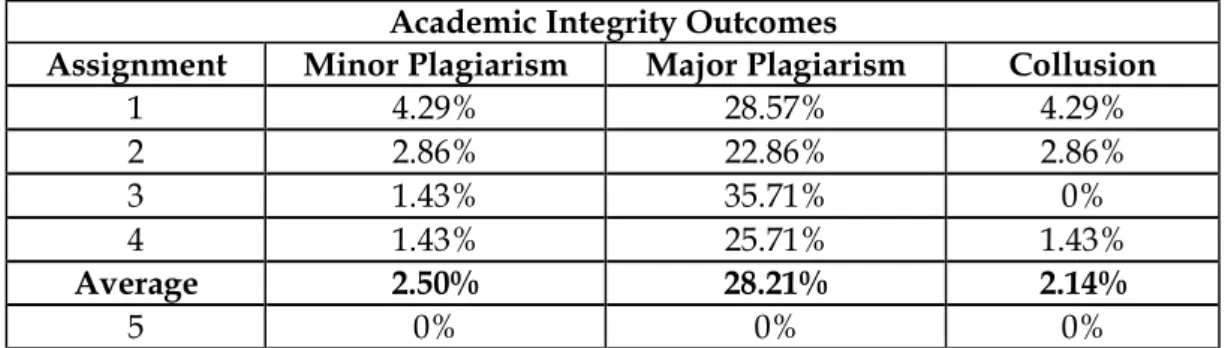
(11) 27. students were then given five assignments specific to their area of study (i.e., after they had received all the appropriate resources and support on academic integrity compliance). The assignments were uploaded on the Blackboard interface together with detailed instructions on their completion and the assessment process clarifying the ‘zero tolerance’ of plagiarised work, and implications in terms of marking. Taking into account the comment in the New York Times that European universities are facing major challenges in identifying ways of dealing with students’ unethical behaviour, we considered the need to reassess our own practices and start taking the first steps to prevent such behaviour and to create awareness among the student population of the importance of aligning their work with the requirements of academic integrity and honesty. Therefore, through our study we were able to gather initial data on student practices to help us take appropriate measures to minimise the potential for unethical behaviour among students. To support our study we proceeded to review each student’s work and the text-matching report generated helped us identify cases where students did not reference or acknowledge the research sources used in their assignments. We focussed our attention on analysing the assignments and the implications regarding plagiarism and we did not attempt to draw correlations and connections with students’ final scores in the module. The final written exam represented sixty percent of their assessment, and as it was mainly based on numerical questions there was little potential for plagiarism due to the close monitoring process during the exam and the fact that students could not conduct any research to support their work. The study therefore focussed on work that the students completed in their continuous assessment.. 4.2 Case Study Results The results of our study highlighted that most of our students did not understand what plagiarism means and that the faculty’s previous efforts to instruct and guide them had been unsuccessful. We base our findings on five assignments that were put through text-matching software to check students referencing, acknowledgement of sources used to support their work and compliance with academic guidelines. Before the assignments were given to the students in the second semester, sessions were scheduled to remind them of the importance of following the guidelines that had been outlined during the first semester. Students were re-directed to relevant material and examples of plagiarism and they were reminded of the implications of submitting work that did not meet the institution’s guidelines on academic integrity. Table 1 below presents the major outcomes of the study. The research approach consisted of the electronic collection of the students’ assignment and the analysis of the textmatching report generated to support their submission. Students were required to upload their assignment to the text-matching tool and they were made aware of the availability of their submission and the generated report in the Blackboard interface. We then gathered all the completed assignments and reviewed all the reports to identify instances of minor plagiarism, major plagiarism and collusive practices. Attendance had previously been taken during sessions addressing. © 2015 The authors and IJLTER.ORG. All rights reserved..
(12) 28. plagiarism issues to monitor the potential implications for students who had not attended the information sessions. Table 1: Academic Integrity Cases. Minor plagiarism <30% of material copied, major plagiarism >50% material copied from research sources, collusion >50% copied from peers (research sample size =70 students). Results based on averages of data collected from the research sample.. Assignment 1 2 3 4 Average 5. Academic Integrity Outcomes Minor Plagiarism Major Plagiarism 4.29% 28.57% 2.86% 22.86% 1.43% 35.71% 1.43% 25.71% 2.50% 28.21% 0% 0%. Collusion 4.29% 2.86% 0% 1.43% 2.14% 0%. The results show very high rates of bad practices among our students. For the first four assignments an average of 28.21 percent of submissions were affected by major plagiarism. The text-matching scores were above 50 percent for the recorded cases. Minor plagiarism and collusion was found in approximately 2 percent of the submissions. The fifth assignment was given as an extra exercise after detailed feedback and comments on students’ overall performance had been discussed in class. Despite all the efforts made during the first semester to inform and guide students on the type of work that they were required to produce, our study shows a high level of failure to comply with basic plagiarism guidelines. However, the results for the fifth assignment were very encouraging, as no breaches of academic integrity guidelines were detected. Nevertheless, due to the findings in the first four assignments, we decided to support our study with one-to-one interviews to discuss the outcomes of the assessments and to allow students to voice their own views and put forward their areas of concern. The interviews aimed to discuss students’ work and to explain the main areas of concern about their practices. Students were not asked structured questions; they were simply encouraged to voice their thoughts and concerns after the feedback process on their work and having received their grades. Students’ responses during the one-to-one interviews were quite surprising and enlightening. A sample of their comments is offered below: Student 1: “The guidelines on what plagiarism was about were not clear”. This was a surprising answer, as specific sessions focusing on plagiarism had been arranged and students had had the opportunity to ask questions and to clarify doubts. Further research revealed that students who had failed to attend these classes had submitted assignments affected by major plagiarism. Student 2: “We worked together; we did not know that sharing our work was not allowed”. Students were encouraged to work together, but the difference between collaboration and collusion had been clearly explained to them. This was another surprising outcome, as students had been given clear guidelines to prevent this practice. © 2015 The authors and IJLTER.ORG. All rights reserved..
(13) 29. Student 3: “The guidelines the instructor provided were misleading”. In this case students did not acknowledge that there was a problem with the work submitted and attempted to transfer the blame on to the educator. This was an interesting outcome, as it allowed us to reconsider our teaching approach during the first semester and the need to rethink the kind of resources and support provided to students. Student 4: “Referencing is not relevant, what is important is the content”. This response reflects students’ lack of understanding of the connection between acknowledging the sources used and the quality of their work. This was another interesting response that helped us to reconsider the explanations and support offered to students, and to ensure that future sessions would include clarifications on the importance of proper referencing. Student 5: “I don’t agree with your assessment; I did not plagiarise; I will appeal against your assessment”. On a number of occasions we came across students who refused to acknowledge the problem and did not accept the explanations or feedback given to them. This was another interesting learning outcome that led us to reflect carefully on our learning and teaching approach and the need to reconsider how plagiarism explanations and examples can be integrated into the teaching programmes. As noted above, in cases where major plagiarism was identified, we found that students’ class attendance rates were poor. These students had therefore missed all the information sessions and showed a clear lack of understanding of the institution’s guidelines on academic integrity practices. The same students were identified as those who would not accept any suggestion of wrong-doing (i.e., they argued that they were not aware that they were required to support their work with references to the sources of information used). These students also attempted to find excuses for their unethical behaviour and wanted to appeal against their assessments. When all the feedback sessions were completed, the official results of the students’ work were released through the Blackboard platform. There was no record of students appealing their final results. These results provide some evidence supporting Landau, Druen and Arcuri (2002) and Vinod et al.’s (2011) findings that students are aware of wrong practices but they do not expect to be caught. Our results also support the findings of studies that show that teaching students about referencing and what constitutes plagiarism (through examples), paraphrasing exercises and formative feedback are effective practices in reducing student plagiarism practices (Delvin and Gray, 2007; Yeo, 2007; Underwood and Szabo, 2003 and White, Owens and Nguyen, 2008). We found that students with higher attendance rates during the academic year had not breached the guidelines on collusion or plagiarism. In addition, students whose work evidenced minor plagiarism sought further support and clarification to help them align their work with the institution’s basic academic standards.. 5. Discussions and Critical Reflections. © 2015 The authors and IJLTER.ORG. All rights reserved..
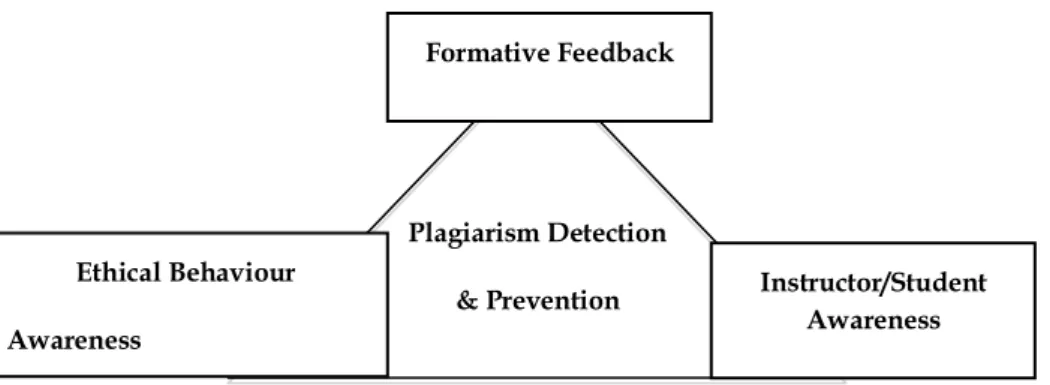
(14) 30. Class absenteeism, lack of knowledge or understanding of what plagiarism is and its implications for academic work were found to be the main problems affecting our students’ work. In this study we concluded that preventative practices need to be integrated as part of routine teaching practices. Students at HEIs should be informed of ethical behaviour early on in their degree. We believe that in order to prevent plagiarism, instructors should be fully aware of the kind of problems that students are facing, and whether they are struggling to understand what plagiarism is and its connotations and implications for their academic career and learning development. This will enable them to offer appropriate support to their students through the formative feedback. Students should be given formative feedback with the aim of offering them a clear view on the issues that require attention. Information should be communicated in an unambiguous and transparent manner to allow for a change of behaviour and reduce unethical practices. In figure 1 below we illustrate how plagiarism detection and prevention is impacted by three main pillars: 1. Formative feedback needs to be made available to students to ensure that they have a clear understanding of what plagiarism is and its implications. 2. Instructors and students should be fully aware of their institution’s guidelines on academic standards and good practices. 3. Awareness of ethical behaviour should be developed in the early stages of students’ academic lives to ensure that they can comply with guidelines, be aware of their importance and know how to integrate them in their practice.. Formative Feedback. Plagiarism Detection Ethical Behaviour. & Prevention. Awareness. Instructor/Student Awareness. Figure 1: Preventing Plagiarism (Source: the authors). In line with Underwood and Szabo (2003) we consider it relevant to offer some recommendations that might help educate students about plagiarism: 1. Plagiarism and its implications should be clearly explained to students in the early stages of their learning experience to ensure that they develop awareness of ethical behaviour. This should not only be a concern at third level education; academic integrity should be explained to students in previous educational stages so that they are able to develop ethical behaviours as they progress through their studies. 2. Students should be reminded of the importance of plagiarism and compliance with academic integrity and ethical behaviour. Guidelines should be integrated into their learning curriculum.. © 2015 The authors and IJLTER.ORG. All rights reserved..
(15) 31. 3. Students should be given examples and scenarios that are related to their area of study to help them understand plagiarism and its implications for their future career. 4. Students should be fully informed of the institution’s formal ways of dealing with plagiarism. Educators should align their practices with those procedures. 5. Students’ work should be supported by formative feedback that helps them to differentiate between acceptable and unacceptable forms of collaboration in the context of their work. 6. Students should be given opportunities that help them practice and repeat activities designed to improve their writing and referencing skills. Online resources and specific tutoring sessions could be provided as part of the learning experience. 7. The negative connotations of failing to comply with academic integrity guidelines should be made clear to students in the early stages through formative feedback and assessment. 8. Penalties should be clearly introduced as part of the assessment method, but should be avoided in the early stages of the learning process to ensure that students remain motivated and engaged in their course work. 9. Students should engage in small group activities where they are required to deal with a range of specific scenarios that oblige them to test their understanding of plagiarism and benefit from peer interaction. Our study offers some evidence to suggest that students who attend classes and receive constructive feedback and guidance on plagiarism have a better understanding of the importance of following correct academic practices. Students need to have a clear understanding of why they must pay attention to their writing skills, and should be more conscientious about complying with guidelines. We believe that the prevention of plagiarism in the early stages of the learning process would help HEIs to minimise the potential for dishonest academic behaviour (Hansen, 2003).. 5.1 Study Limitations This study did not aim to provide results that are generalisable to the student population, and its main limitations should therefore be kept in mind. Firstly, our research sample was quite small and a larger sample would help us gain a better insight into plagiarism and students’ views and concerns about it. Furthermore, high levels of absenteeism affected our sample during the academic year and this issue clearly had an impact on the research outcomes. However, our analysis manages to offer some information on the main issues that are affecting students’ work and it helped us to identify common trends in students’ behaviour with regard to academic integrity practices. Finally, correlations between cases of plagiarism and final scores for the module were not presented due to the lack of any similarities between the type of skills that were tested in their continuous assessment and in their final exam.. 6. Conclusion. © 2015 The authors and IJLTER.ORG. All rights reserved..
(16) 32. This study provides evidence on the use of text-matching detection software to identify improper writing practices and unethical behaviour among students (Yeo, 2007). Our findings suggest that educators could help their students to understand the value of aligning their practices with academic writing standards through the use of specialised text-matching software and with the support of formative feedback. We believe that the use of more stringent preventative measures would act as an efficient deterrent to dishonest practices among students at HEIs (White, Owens and Nguyen, 2008). Educators should follow some basic steps to help their students understand what plagiarism is and its implications. 1. Plagiarism should be clearly explained to students and they should be reminded of its importance and implications. 2. Specific examples offering evidence of cases where plagiarism practices have been identified should be properly presented and explained to students. 3. The institution’s policy and guidelines on academic honesty and integrity procedures need to be discussed and explained to students. 4. Students should be supported by formative feedback that identifies instances where the institution’s policies have been breached and where constructive comments are offered to help the student correct his/her practice. 5. Students should be given the chance to learn from their mistakes and to ask questions that aim to improve their performance. 6. The negative connotations of plagiarism should be made very clear and the assessment procedures and implications in terms of marking course work should be clearly presented to students. 7. Group work should be integrated into the learning process to help students deal with cases of plagiarism and to look to the educator for support and explanations to clarify areas of concern. Plagiarism has been found to be a critical matter that needs to be considered in the early stages of the learning process, if institutions are serious about addressing the problem and helping their students to comply with academic integrity and honesty practices. The role of educators was found to be crucial in this process, as they are the ones who can take a more constructive approach when plagiarism is discovered and they need to be able to offer effective feedback and support to their students. Educators should be able to use plagiarism as an additional tool to support their students’ learning and they should eliminate the punitive aspect during the early stages of the learning process but without dismissing the value of offering objective assessment and grading their students’ work fairly. Our study shows that plagiarism can be integrated into the learning experience when combined with formative feedback, as in this way students will get a better understanding of the issues that they need to address. Face-to-face sessions were found to be particularly helpful in the process, as they gave students the chance to clarify their concerns and review their work with the help of their educator. Students’ lack of awareness of the implications of plagiarising work, and their belief that copying from research sources and peers without proper acknowledgement will not impact their course results is an issue that needs to be addressed. Further research is required to help develop efficient practices designed to give students a better understanding of the importance of ethical behaviour at an academic level and the © 2015 The authors and IJLTER.ORG. All rights reserved..
(17) 33. repercussions that malpractice can have at later stages of their academic and professional careers.. Acknowledgement We are grateful to the students for their cooperation in completing the questionnaires. We would also like to thank Dublin Institute of Technology (Ireland) and Universitat Jaume I (Spain) for providing the facilities and resources to develop this project. Finally we gratefully acknowledge editorial assistance from M. Savage who has notably contributed to the quality and accuracy of this paper.. References Badge, J.J., Cann, A.J.,&Scott, J. (2007).To cheat or not to cheat? A trial of the JISC plagiarism detection software service with biological sciences students. Assessment and Education in Higher Education, 32, 433–439.doi: 10.1080/02602930600898569 BBC News (2012). [ONLINE] Available at: http://www.bbc.co.uk/news/18962349 BBC News (2012). [ONLINE] Available at: http://www.bbc.co.uk/news/world-europe17586128 Childs, S. (2001). Editorial: Web dependency plagiarism. Health Information on the Internet.The Royal Society of Medicine Press Ltd. No 21, 1-2. Retrieved from http://triggered.clockss.org/ServeContent?url=http://hii.rsmjournals.com%2F content%2F21%2F1%2F1.full.pdf%2Bhtml Delvin, M., &Gray, K. (2007). In their own words: A qualitative study of the reasons Australian university students plagiarize. Higher Education Research & Development, 26, 181–198.doi: 10.1080/07294360701310805 Furedi, F. (2003).Shortcut to success.Times Higher Education Supplement, July 25, 16.Retrieved from https://www.timeshighereducation.co.uk/news/shortcut-tosuccess/178278.article Hansen, B. (2003). Combating Plagiarism. CQ Researcher, 13(32), 773-796.Retrieved from http://photo.pds.org:5012/cqresearcher/getpdf.php?id=cqresrre2003091900 International Business Times (2012). Available at: http://www.ibtimes.com/anotherprominent-european-politician-accused-plagiarism-romanian-pm-deniescharges-703412 Landau, J.D., Druen, P.B., &Arcuri, J.A. (2002). Methods for helping students avoid plagiarism. Teaching of Methods for helping students avoid plagiarism.Teaching of Psychology, 29, 112–115.doi: 10.1207/S15328023TOP2902_06 Marsden, H., Carroll, M., &Neill, J. (2005). Who cheats at University? A self-report study of dishonest academic behaviours in a sample of Australian University students.Australian Journal of Psychology, 57, 1-10.doi: 10.1080/00049530412331283426 McCabe, D. (2001). Student cheating in American high schools. Available from: http://www.academicintegrity.org Nonis, S., & Swift, C. O. (2001). An examination of the relationship between academic dishonesty and workplace dishonesty: A multicampus investigation. Journal of Education for business, 77(2), 69-77.doi: 10.1080/08832320109599052. Royce, J. (2003). Has Turnitin.com Got It All Wrapped Up? Teacher Librarian, 30(4), 2630. Available from: http://search.proquest.com/docview/224880701?accountid=15299 Stappenbelt, B. ,&Rowles, C. (2009). The effectiveness of plagiarism detection software as a learning tool in academic writing education.4th Asia Pacific Conference on Educational Integrity (4APCEI).28–30 September 2009 University of Wollongong © 2015 The authors and IJLTER.ORG. All rights reserved..
(18) 34. NSW Australia. Available at http://ro.uow.edu.au/cgi/viewcontent.cgi?article=1029&context=apcei&seiredir=1&referer=http%3A%2F%2Fscholar.google.es%2Fscholar%3Fhl%3Des%26 q%3DThe%2Beffectiveness%2Bof%2Bplagiarism%2Bdetection%2Bsoftware%2Ba s%2Ba%2Blearning%2Btool%2Bin%2Bacademic%2Bwriting%2Beducation.%2B% 2B%26btnG%3D%26lr%3D#search=%22effectiveness%20plagiarism%20detectio n%20software%20as%20learning%20tool%20academic%20writing%20education. %22. Spiegel Online International (2011). [ONLINE] Available at: http://www.spiegel.de/international/germany/plagiarism-affair-defenseminister-guttenberg-resigns-a-748330.html The Guardian (2013). [ONLINE] Available at: http://www.theguardian.com/world/2013/feb/09/german-educationminister-quits-phd-plagiarism The New York Times (2013). [ONLINE] Available at: http://www.nytimes.com/2013/03/11/world/europe/11ihteducside11.html?pagewanted=all&_r=0 Underwood, J., &Szabo, A. (2003) Academic offences and e-learning: Individual propensities in cheating. British Journal of Educational Technology, 34, 467–77.doi: 10.1111/1467-8535.00343 Vinod, K. R., Sandhya, S., Kumar, S. D., Harani, A., Banji, D., &Banji, O. J. F. (2011). Plagiarism-history, detection and prevention.Hygeia. JD Med, 3(1), 1-4.Available at: http://www.hygeiajournal.com/downloads/Editorial/1597787464plagiarism.p df White, F., Owens, C., &Nguyen, M. (2008).Using a constructive feedback approach to effectively reduce student plagiarism among first-year psychology students.UniServe Science Symposium 2008, Sydney, NSW, Australia: Uniserve Science. Available at: http://openjournals.library.usyd.edu.au/index.php/IISME/article/view/6254 Yeo, S. (2007) First-year university science and engineering students’ understanding of plagiarism. Higher Education Research & Development, 26, 199–216.Doi: 10.1080/07294360701310813. © 2015 The authors and IJLTER.ORG. All rights reserved..
(19)
Figure
Documento similar
“ CLIL describes a pedagogic approach in which language and subject area content are learnt in combination, where the language is used as a tool to develop new learning from a
We hypothesize that the perception of a learning-oriented climate will be able to predict positively the students’ behavior in the classroom mediated by their reasons for
work, they developed a social network to improve collaborative learning and social interaction. His research revealed that the use of this tool motivated the
These tasks and rules are used at execution time to guide the students during their learning process, so that they will be presented with different HTML pages depending on
Besides ensemble methods, another paradigm that can be used to consider differ- ent models or different values for the model parameters is Bayesian machine learning. Therefore, it
As it has been done for the speeders, the five elements of a reinforcement learning system have to be designed for this second agent: a policy, a reward function, a value
The data for learning self-regulation (higher values in this variable mean that the students used more strategies oriented to learning goals) is coming from the
The main objective of the conference, which took place in Madrid in September 2018, was to promote service-learning as a tool of high pedagogical and social value that not only
