
Contextualized workshops to foster oral communication and cultural awareness
125
0
0
Texto completo
(2) ii WORKSHOPS, ORAL COMMUNICATION, AND CULTURAL AWARENESS. __________________ Note of acceptance. ________________________________ María Fernanda Téllez Téllez M.A. Thesis director. ________________________________ Astrid Núñez Pardo M.A. Juror.
(3) iii WORKSHOPS, ORAL COMMUNICATION, AND CULTURAL AWARENESS. Table of contents Acknowledgments ............................................................................................................................ 1 Abstract ............................................................................................................................................ 2 Resumen ........................................................................................................................................... 3 Resumen Analítico en Educación (RAE) ......................................................................................... 4 Introduction..………………………………………………...……………………………………..25 Chapter I……..…..………………………………………………………………………..…..… 27 Research Problem ………..…………………………………………………………………… 27 Statement of the Problem…………………………………………………………………….27 Research Question……...………………………………………………………….……….28 General Objective……………………………………………………………….….…...28 Specific Objectives………………..………………………………………………….....28 Related Studies……………………………………………………………………………..28 Setting and Rational…………………………………………………………………….…....31 Chapter II..…………………………………………………………………………………..……34 Literature Review.……………….………………………………………...……………………..34 Materials………………………………………………………………………………...…..34 Materials development…………………………………………………………….……..34 Authentic vs unauthentic material……………...…………………………………...……35 Types of materials…………………………………………………………………..……36 Contextualized workshops………………………………………………….……………36 Materials development principles………………………………………………………...37 Speaking Skill…………………………………………………………………………..…...38 Oral communication………………………………………………………………...……38 Oral communication micro-skills ...……...……….…….……………………...…..….....39 Culture.…………………………………………………………………………………...….40 Cultural Awareness …….………………………………………………………….........40 Chapter III ...................................................................................................................................... 44 Methodological Design .................................................................................................................. 44 Research Design ......................................................................................................................... 44 Approach and type of study .................................................................................................... 44 Participants.............................................................................................................................. 45 Data gathering instruments ..................................................................................................... 46 Instructional Design.................................................................................................................... 48 Pedagogical intervention......................................................................................................... 48 Instructional objectives ........................................................................................................... 50 Intervention as innovation ...................................................................................................... 50 Theory of the nature of language and language learning........................................................ 52 Methodological approach underlying the pedagogical intervention....................................... 53 Connection of the pedagogical intervention with the research question ................................ 55 Suggested phases .................................................................................................................... 55 Proposed materials developmen framework ....................................................................... 56 Informed consent................................................................................................................. 58 Sensitization ........................................................................................................................ 58 Implementation of the material..………………………………...…………………………59.
(4) iv WORKSHOPS, ORAL COMMUNICATION, AND CULTURAL AWARENESS. Sample of workshop. .............................................................................................................. 59 Chapter IV ...................................................................................................................................... 75 Data Analysis ................................................................................................................................. 75 Data Analysis Procedure............................................................................................................. 75 Research Categories.................................................................................................................... 78 Contextualized appealing materials to enhance students’ meaningful learning ................... 78 The relevance of localized colorful pictures to motivate students to learn in a meaningful way……………………………………………………………….……………………..….79 Using examples to understand the activities and to construct successful communication...81 The sequenced activities or lessons enhance students’ learning development….…………83 Oral communication as a vehicle to express ideas or feelings…..………………………......86 Fostering the communication with body movements. ........................................................ 87 Strengthening the communication by the acquisition of vocabulary. ................................. 90 Building new ideas or concepts by sharing points of view and feelings……………….....93 Developing students’ cultural awareness by means of knowing their own culture. ............... 95 Cultural growth through cultural knowledge. ..................................................................... 96 Thinking over the actions to protect the culture. ................................................................. 98 Chapter V ..................................................................................................................................... 102 Conclusions and Pedagogical Implications .................................................................................. 102 References .................................................................................................................................... 106 Appendices…………...………………………………………………………………………..117 Appendix A: Consent Form……………………………………….………………………117 Appendix B: Field Notes Form……………………………………………………………118 Appendix C: Survey……….………………………………………………………………119.
(5) 1 WORKSHOPS, ORAL COMMUNICATION, AND CULTURAL AWARENESS. Acknowledgements This Research Paper is especially dedicated to God Almighty who gives me health and spiritual strength to be successful during the whole process to become a professional materials developer. Likewise, I would to express my sincere gratitude to my advisor professor María Fernanda Téllez Téllez nor only for her patience, motivation and knowledge but for her continuous support and guidance during my research process and the writing of this thesis document. Moreover, I would like to thank my juror professor Astrid Núñez Pardo, who shared with me her knowledge about materials development and research, and helped me to enrich my study and the process of writing my thesis document as well. Besides, I express my sincere gratitude to Luis Carlos Galán Sarmiento School, the principal Fernando Nieto, and my students, who provided me with an opportunity to conduct my research. Without their collaboration, it would not have been possible to achieve this personal goal. Finally, I would like to thank to my son Mathew Leandro who has been my main motivation to continue growing as an integral person. To my mother Nidia who has been my support during all my life. To my life partner Danilo who has been patient and lovely. To my brothers and friends who have made me feel happy in some difficult moments..
(6) 2 WORKSHOPS, ORAL COMMUNICATION, AND CULTURAL AWARENESS. Abstract This action research focuses on exploring the contribution of the development and implementation of contextualized workshops to foster oral communication and cultural awareness. This study took place at Luis Carlos Galán Sarmiento public school in Puerto Gaitán, Meta (Colombia) with 36 students of sixth grade aged 12- 14 years old in average. This research study followed the action research approach and the grounded theory approach to analyze the data collected by the application of three instruments: students’ artifacts, teacher’s field notes, and video/audio-recordings. The findings informed that using contextualized appealing material workshops, students enhanced their meaningful learning since the localized colorful pictures, the examples, and the sequenced activities or lessons, motivated them to learn and construct a successful communication. Likewise, the oral communication was a vehicle to express ideas and feelings as students used body movements, acquired vocabulary, and built new concepts when they shared points of view. Finally, workshops helped students to increase their cultural awareness by means of knowing their own culture that allowed them to think over the actions to protect it.. Keywords: materials development, oral communication, culture, cultural awareness.
(7) 3 WORKSHOPS, ORAL COMMUNICATION, AND CULTURAL AWARENESS. Resumen Esta investigación acción se enfoca en explorar la contribución del desarrollo e implementación de talleres contextualizados para promover la comunicación oral y la conciencia cultural. Este estudio se llevó a cabo en el colegio público, Luis Carlos Galán Sarmiento en Puerto Gaitán, Meta (Colombia) con 36 estudiantes de sexto grado, con edades entre los 12 y los 14 años en promedio. Este estudio sigue el enfoque de investigación-acción y el enfoque de teoría fundamentada para analizar los datos recolectados a través de la implementación de tres instrumentos: artefactos de los estudiantes, notas de campo y grabaciones de audio y video. Los hallazgos informaron que, a través del uso de talleres contextualizados con material atractivo, los estudiantes mejoraron su aprendizaje significativo puesto que las imágenes coloridas y locales, los ejemplos y las actividades o lecciones secuenciadas los motivaron a aprender y construir una comunicación exitosa. Del mismo modo, la comunicación oral fue un vehículo para expresar sentimientos e ideas, ya que los estudiantes usaron movimientos corporales, adquirieron vocabulario y construyeron nuevos conceptos cuando compartían puntos de vista. Finalmente, los talleres ayudaron a los estudiantes a aumentar su conciencia cultural mediante el conocimiento de su propia cultura permitiéndoles pensar en acciones para protegerla.. Palabras Clave: desarrollo de materiales, comunicación oral, cultura, conciencia cultural.
(8) 4 WORKSHOPS, ORAL COMMUNICATION, AND CULTURAL AWARENESS. Resumen Analítico en Educación – RAE. Página 1 de 19. Tipo de documento. 1. Información General Tesis de grado. Acceso al documento. Universidad Externado de Colombia. Biblioteca Central. Título del documento. Contextualized Workshops to Foster Oral Communication and Cultural Awareness. Autor(es). Clemencia Caterine Ciprian Castillo. Director. María Fernanda Téllez Téllez M.A.. Publicación. Universidad Externado de Colombia, 2018. Unidad Patrocinante Materials development, oral communication, culture and Palabras Claves cultural awareness.. 2. Descripción This action research was based on exploring the contribution of the development and implementation of contextualized workshops to foster oral communication and cultural awareness. This study was carried out at Luis Carlos Galán Sarmiento School in Puerto Gaitán, Meta (Colombia) with 36 students of sixth grade between 12 and 14 years old. Moreover, It used the action research approach and the grounded theory approach to analyze the data gathered by the used of three instruments: students’ artifacts, field notes, and video/audio-recordings. The outcomes showed that using contextualized appealing material workshops, students enhanced their meaningful learning due to localized colorful pictures, the examples, and the.
(9) 5 WORKSHOPS, ORAL COMMUNICATION, AND CULTURAL AWARENESS sequenced activities or lessons motivated them to learn and construct a successful communication. Similarly, the oral communication was a vehicle to express ideas and feelings since students used body movements, acquired vocabulary, and built new concepts when they shared points of view. Finally, workshops allowed students to increase their cultural awareness through knowing their own culture since they think over the actions to protect culture.. 3. Fuentes Alijani, S. (2014). The effect of authentic vs. non-authentic materials on Iranian EFL learners’listening comprehension ability. IJALEL International Journal of Applied Linguistics & English Literature, 3(3), 151-156. doi:10.7575/aiac.ijalel.v.3n.3p.151 Babbie, E. (2008). The basics of social research. Belmont, CA: Wadsworth Pub. Barrera, M. (2011). Enhancing cultural awareness in students at first level at the UPTC in Sogamoso. Enletawa Journal, 4, 37-50. Barnard, R., & Zemach, D. (2003). Materials for specific Purposes. In C. Tomlinson (Ed.), Materials Development in Language Teaching (pp. 306-323). Great Britain: Cromwell Press. Bigate, M. (1987). Speaking. England: Oxford University Press. Bolitho, R (2003). Materials for language awareness. In B. Tomlinson, Language acquisition and development: Studies for first and other language learners (pp. 187-204). London: Continuum. Brooks, J., & Stock, S. (1999). Workshops: Designing and facilitating experiential learning. Thousand Oaks, CA: SAGE publications. Brown, H. D. (2007). Principles of language learning and teaching. White Plains, NY: Pearson Longman. Brown, H. D. (1994). Teaching by principles: An interactive approach to language pedagogy. Englewood Cliffs, NJ: Prentice Hall Regents. Byram, M. (1997). Teaching and assessing intercurltural communicative competence. Ontario: MULTILINGUAL MATTERS..
(10) 6 WORKSHOPS, ORAL COMMUNICATION, AND CULTURAL AWARENESS Canagarajah, S. (2005). Decolonisation, globalisation: Language-in-education policy and practice. Clevedon, U.K.: Multilingual Matters Ltd. Castañeda, M. (2012). Adolescent students’ intercultural awareness when using culture-based materials in the English class. PROFILE Issues in Teachers' Professional Development, 14(1), 29-48. Chamot, A.U. (1999). The learning strategies handbook. New York, NY: Longman. Charmaz, K. (2006). Constructing grounded theory: a practical guide through qualitative analysis. London: SAGE publications Ltd. Clavijo, A. (2014). Community Based Pedagogies to Enhance the EFL Curriculum. Retrieved October 20, 2016, from http://leslla2014.org/wp-content/uploads/2014/09/Amparo-Clavijo-Community-basedpedagogies.pdf Coady, J., & Huckin, T. (2003). Second language vocabulary acquisition: a rationale for pedagogy. Cambridge: Cambridge University Press. Constitución política de Colombia [Const.] (1991) Artículo 70 [Titulo II]. 2da Ed. Legis. Costello, P. (2011). Effective action research: Developing reflective thinking and practice (2nd ed.). London: Continuum. Creswell, J. W. (1998). Qualitative inquiry and research design: Choosing among five designs. Thousand Oaks, CA: SAGE publications. Creswell, J. (2007). Qualitative inquiry & research design: Choosing among five approaches. Thousand Oaks, CA: SAGE Publications. Crouch, C., & Pearce, J. (2012). Doing research in design. Oxford: Berg. Denzin, N., & Lincoln, Y. (2005). The SAGE handbook of qualitative research. Thousand Oaks, CA: SAGE Publications. Donovan, P. (1998). Piloting – a publisher’s view. In B. Tomlinson, Materials development in language teaching (pp. 149-189). Cambridge: Cambridge University Press. Erneling, C. E. (1993). Understanding language acquisition: the framework of learning. Albany: State.
(11) 7 WORKSHOPS, ORAL COMMUNICATION, AND CULTURAL AWARENESS University of New York Press Flick, U. (2009). An introduction to qualitative research fourth edition. London: SAGE publications. Flohr, S. (2007). Teaching Literature: Language and Cultural Awareness Using the Example of "Hills like white elephants". Germany: GRING verlag. Flormata, T. (2003). Speech and oral communication. Quezon: KATHA PUBLISHING. Frank, J. (2013). Raising cultural awareness in the English language classroom. ENGLISH TEACHING FORUM, 4, 2-11. Retrieved January 28, 2017, from https://americanenglish.state.gov/files/ae/resource_files/51_4_2_frank.pdf. German, K. (2017). Principles of public speaking. New York, NY: Routledge. Gilmore, A. (2007). Authentic materials and authenticity in foreign language learning. Language Teaching LTA, 40(02), 97-118.doi:10.1017/s0261444807004144 Given, L. (2008). The Sage encyclopedia of qualitative research methods. Los Angeles, CA: SAGE Publications. Gomez, L. (2015). The cultural content in EFL textbooks and what teachers need to do about it. PROFILE Issues in Teachers’ Professional Development, 17(2), 167-187. Retrieved from: http://dx.doi.org/10.15446/profile.v17n2.44272. Graves, K (1997). Teachers as course developers. New York, NY: Cambridge University Press. Gulikers, J., Bastiaens, T., & Kirschner, P. (2006). Authentic assessment, student teacher perceptions: The practical value of the five-dimensional framework. Journal of Vocational Education and Training, 58(3), 337-357. Gusdorf, G. (1965). Speaking. Evanston, IL: Northwestern University Press. Hammersley, M., & Atkinson, P. (1983) Ethnography: Principles in practice. London: Routledge. Hannan, A., & Silver, H. (2001). Innovation in higher education: Teaching learning and institutional cultures. Philadelphia, PA: The society for Research into Higher Education and Open University Press..
(12) 8 WORKSHOPS, ORAL COMMUNICATION, AND CULTURAL AWARENESS Hanemann, U. (2015). Evolution and impact of literacy campaigns and programmes 2000–2014.UNESCO Institute for Lifelong Learning Feldbrunnenstr. 5820148, Hamburg, Germany. Harmer, J. (2003). The practice of English language teaching. London, UK: Retrieved from http://203.72.145.166/ELT/files/57-4-12.pdf Hennink, M. (2007). International focus group research: A handbook for the health and social sciences. New York, NY: Cambridge University Press. Hidalgo, N. (1993). Multicultural teacher introspection. In Perry, T. and Fraser, J. (Eds.) Freedom's Plow: Teaching in the Multicultural Classroom, (pp. 99-106). New York, NY: Routledge. Hopkins, D. (1993). A teacher's guide to classroom research. Buckingham: Open University Press. Jackson, A. (2011). The cultural awareness journal: For those new to cultural awareness and those already on the journey. Bloomington: Author House. Jasper, M. (2006). Professional development, reflection and decision-making. Oxford: Blackwell Julio, R (2015). Developing the micro skill of oral communication through project work and Cooperative Learning. (unpublished manuscript), School of Education, Universidad Externado de Colombia, Bogotá, Colombia. Karavas, K. (1998). Evaluating the implementation of educational innovations: lessons from the past. In P. Rae-Dickins & K.P. Germaine (Eds.) Managing evaluation and innovation in language teaching: Building bridges, (pp. 25-50) London: Longman. Kuhnke, E. (2007). Body language for dummies: A fascinating guide to communicating without words. Chichester: John Wiley & Sons. Kumaradivelu, B. (2001). Toward a post method pedagogy. TESOL QUARTERLY, 35(4), 537- 560. Kumaravadivelu, B. (2014). The decolonial option in English teaching: Can the subaltern act? TESOL QUARTERLY, 50(1), 66-85. Lengel, T., & Kuczala, M. (2010). The kinesthetic classroom: teaching and learning through movement. Thousand Oaks, CA: Corwin..
(13) 9 WORKSHOPS, ORAL COMMUNICATION, AND CULTURAL AWARENESS Levin, M. (2014). Designing multi-device experiences: an ecosystem approach to creating user experiences across devices. Sebastopol, CA: O'REILLY. Maley, A. (1995). Materials writing and tacit knowledge. In A.C. Hidalgo, D Hall & G.M. Jacobs, Getting Started: Materials Writing (pp. 220- 239). Singapore: SEAMEO Regional Language Centre. Marshall, C., & Rossman, G. (1999). Designing qualitative research. Newbury Park, CA: SAGE Publications. Masuhara, H. (2006). Materials as a teacher development tool. In J Mukundan (ed.). Readings on ELT Materials II (pp. 34-46). Petaling Jaya: Pearson Malaysia. Maxwell, J. (2013). Qualitative research design: An interactive approach.Thousand Oaks, CA: SAGE Publications. Mertler, C. A. (2009). Action research: Teachers as researchers in the classroom. Thousand Oaks, CA: SAGE Publications. Mertz, A. (2002). The body can speak: essays on creative movement education with emphasis on dance and drama. Carbondale, IL: Southern Illinois University Press Ministerio de Educación Nacional [MEN] (2014). Programa Nacional de Bilingüismo: Colombia very well. Retrieved March 5, 2016 from http://www.colombiaaprende.edu.co/html/micrositios/1752/articles-343287_recurso_1.pdf Ministerio de Educación Nacional [MEN] (1994). Ley General de Educación (Ley 115 del 8 de febrero, de 1994).. Retrieved. August. 10,. 2016. from. http://virtual.uptc.edu.co/acreditacion. /MODELO/ANEXOS/NORMATIVIDAD/leyes/L0115_94.htm Ministerio de Educación Nacional [MEN] (2013). Ley de Bilingüismo (Ley 1651 del 12 de julio, de 2013). Retrieved June 5, 2016 from http://wsp.presidencia.gov.co/Normativa/Leyes/Documents/2013/LEY %201651%20DEL%2012%20DE%20JULIO%20DE%202013.pdf.
(14) 10 WORKSHOPS, ORAL COMMUNICATION, AND CULTURAL AWARENESS Mojibur, R. (2010). Teaching oral communication skills: A task-based approach. ESP World, 27(1), 1-11. Retrieved from http://www.esp-world.info/Articles_27/Paper.pdf Monsalve, S., & Correal, A. (2006). Children's oral communication in English class activities: an exploratory study. PROFILE Issues in Teachers' Professional Development, 7, 131-146. Muller, A. (2005). Concepts of Culture: Art, Politics, and Society. Calgary, Alberta: University of Calgary Press. Munévar, M.I. (2017). Contextualized worksheets focused on tasks for two oral communication microskills. (Unpublished doctoral dissertation). Universidad Externado de Colombia, Bogotá. Northcutt, N., & McCoy, D. (2004). Interactive qualitative analysis: a systems method for qualitative research. Thousand Oaks, CA: Sage. Núñez, A., (2010). The teaching of English within the theory-practice alternance model. In: Innovación y Competitividad. Memorias de la Jornada de Investigación. (pp. 32-54), Bogotá: Fundación Universitaria Empresarial de la Cámara de Comercio de Bogotá Uniempresarial. Núñez, A. (2017). PowerPoint Slides on Materials Development: Theoretical Foundations and Practical Insights. Núñez, A., Pineda, C., & Téllez, M. (2004). Key aspects for developing your instructional materials. PROFILE: Issues in Teachers’ professional Development, 11(2), 128-139. Núñez, A. & Téllez, M. (2008) Meeting students’ needs. Enletawa Journal, 1, 65-68. Núñez, A., & Téllez, M. (2009). ELT Materials: the key to fostering effective teaching and learning settings. PROFILE, 11(2), 171-186. Núñez, A. & Téllez, M. (2015). Reflections on teachers’ personal and professional growth through a materials development seminar. HOW, A Colombian Journal for Teachers of English, 22(2), 57-74. Núñez, A., Téllez, M., Castellanos, J., & Ramos, B. (2009). A practical materials development guide for EFL pre-service, novice, and in-service teachers. Bogotá: Departamento de Publicaciones Universidad Externado de Colombia..
(15) 11 WORKSHOPS, ORAL COMMUNICATION, AND CULTURAL AWARENESS Núñez, A., Téllez, M., & Castellanos, J. (2012). A framework for materials development: A path for inservice teachers to build up the instructional design of their research projects. In A. Núñez, M. Téllez & J. Castellanos (Eds.), Teacher research on English didactics issues (pp. 17-37). Bogotá: Departamento de Publicaciones Universidad Externado de Colombia. Núñez, A., Téllez, M., & Castellanos, J. (2013). Proposal for the Research Line Materials Development and Didactics Ascribed to the Research Group: Critical Pedagogy and Didactics for Social Transformation. (unpublished manuscript), School of Education, Universidad Externado de Colombia, Bogotá, Colombia. Núñez, A., Téllez, M., & Castellanos, J. (2017). Materials development for teachers’. professional. growth. In A. Núñez, M., Téllez, & J. Castellanos (Eds.), Materials for the learning of English and teachers’ professional growth (pp. 19-68). Bogotá: Departamento de Publicaciones Universidad Externado de Colombia. Núñez, A., Téllez, M., & Castellanos, J. (2017). Teacher–Developed Materials in a Master’s Programme in Education with Emphasis on English Didactics. In A. Núñez, M. Téllez & Castellanos, J. (Eds.), The role of teacher- developed materials in fostering English Language Skills. (pp. 13-56). Bogotá: Departamento de Publicaciones Universidad Externado de Colombia. Oxford, R. (1997). Language learning-strategies: What every teacher should know. Boston, MA: Heinle Publishers. Pinsonneault, A., & Kraemer, K. (1993). Research Methodology in Management Information Systems. Journal of Management Information Systems - Special Section: Strategic and Competitive Information Systems Archive, 10, 75-105. Parga, F. (2009). Cooperative learning structures of interaction and the development ofEFL students’ oral communication skills (master's thesis). Universidad Distrital Francisco José de Caldas, Bogotá. Rahman, M. (2010). Teaching Oral Communication Skills: A Task-based Approach. ESP World, 9(1), 111. Retrieved January 22, 2017, from http://www.espworld.info/Articles-_27/Paper.pdf.
(16) 12 WORKSHOPS, ORAL COMMUNICATION, AND CULTURAL AWARENESS Ramírez, M. (2004). English teachers as materials developers. Revista Electrónica Actualidades Investigativas en Educación, 4(2), 1-17. Ramos, B., Aguirre, J., & Hernández, C. (2012). A pedagogical experience to delve into students’ sense of cultural belonging and intercultural understanding in a rural school. HOW, 9, 123-145. Rico, C. (2012) Language teaching materials as mediators for ICC development: A challenge for materials developers. Signo y Pensamiento 60 Documentos de Investigación. 30 (1), 130- 154. Richards, J.C., & Renandya, W.A. (2002). Methodology in language teaching: an anthology of current practice. Available from: https://books.google.com.co/books?id=VxnGXusQlI8C&pg=PA303&lpg=PA303&dq=the+skills+involved+in+writing+are+highly+complex.+ L2+writers+have+to+pay+attention+to+higher+level+skills+of+planning+and+organizing+as+well +as+lower+level+skills+of+spelling,+punctuation,+word+choice,+and+so+on&source=bl&ots=qho nmdevgH&sig=dnLFIhR8asUjIcZSdrZTOWLjLg&hl=es419&sa=X&ved=0ahUKEwjo05vHcXVAhVQySYKHT9YCpkQ6AEIJTAA#v=onepage &q=the%20skills%20involved%20in%20writing%20are%20highly%20complex.%20L2%20writers %20have%20to%20pay%20attention%20to%20higher%20level%20skills%20of%20planning%20a nd%20organizing%20as%20well%20as%20lower%20level%20skills%20of%20spelling%2C%20p unctuation%2C%20word%20choice%2C%20and%20so%20on&f=false Richards, J. C., & Rodgers, T. S. (2001). Approaches and methods in language teaching. Cambridge: Cambrige University Press. Rivers, W. (1987). Interactive language teaching. Retrieved from: https://books.google.com.co/books?hl=es&lr=&id=OOjE2bquL4C&oi=fnd&pg=PR7&dq=Interacti ve+languaage+teaching&ots=RX41368VYc&sig=yj2NfcbRrb7zLkgneLYPMG2BtQw#v=onepage &q=Interactive%20languaage%20teachin g&f=false Savedra, G., & Arias, D. (2012). Cultural awareness: providing conditions to reflect upon the EFL Students’ own culture. Enletawa Journal, 5, 35-50..
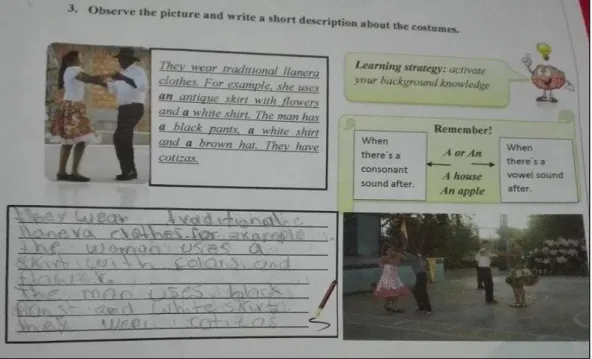
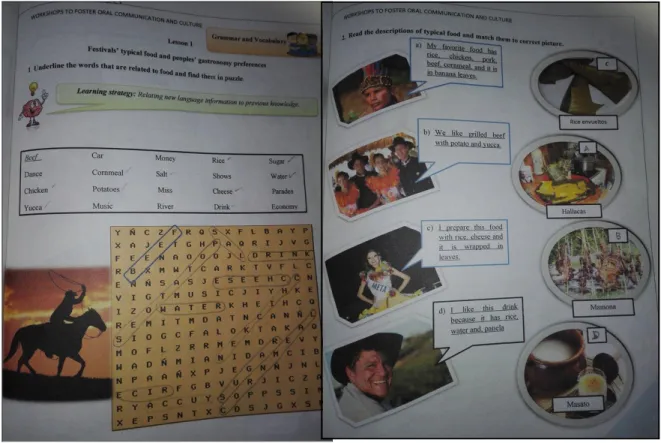
(17) 13 WORKSHOPS, ORAL COMMUNICATION, AND CULTURAL AWARENESS Sharkey, J. (2012). Community-based pedagogies and literacies in language teacher education: promising beginnings, intriguing challenges. Íkala, Revista de Lenguaje y Cultura, 17(1), 9-13. Retrieved October 19, 2016, from http://www.scielo.org.co/scielo.php?script=sci_arttext&pid=S012334322012000100001&lng=en&tl ng=en. Sharkey, J., & Clavijo, A. (2012). Promoting the value of local knowledge in ESL EFL teacher education through community-based field assignments. In Medrado, B. & Carla Reichmann (Eds.). Projetos e praticas na formacao de professors de lingua inglesa (39-58). Paraiba: Brasil. Editora Universitaria UFPB. Spencer, H. (2012) What is culture?A compilation of quotations. Coventry, UK: GlobalPAD Core Concepts. Stern, T., Townsend, A., Rauch, F., & Schuster, A. (2014). Action research, innovation and change international perspectives across disciplines. London: Routledge. Strauss, A., & Corbin, J. M. (1997). Grounded theory in practice. Thousand Oaks, CA:. Sage.. Tatum, A. W. (2005). Teaching reading to black adolescent males: closing the achievement gap. Portland, Me.: Stenhouse. Thomas, C. (2014). Meeting EFL learners halfway by using locally relevant materials. ENGLISH TEACHING FORUM, 3, 14-23. Tomlinson, B. (1998). Materials development in language teaching. Cambridge: Cambridge University Press. Tomlinson, B. (2001). Seeing more between the lines. The Guardian Weekly, 5(2), 21-27. Tomlinson, B. (2008). English language learning materials: A critical review. London: Continuum. Tomlinson, B. (2011). Materials development in language teaching (2nd ed.). Cambridge: Cambridge University Press. Tomlinson, B. (2012). Materials development for language learning and teaching. CAMBRIDGE.
(18) 14 WORKSHOPS, ORAL COMMUNICATION, AND CULTURAL AWARENESS JOURNALS, 45(2), 143–179. Tomlinson, B., & Musuhara, H. (2004). Developing cultural awareness. MET, 13(1), 1–7 Top 10 Most Spoken and Most Popular Languages In The World. (2015). Retrieved from http://www.abcnewspoint.com/top-10-most-spoken-and-most-popular-languages-in-the-world/ Tudor, I. (2001). The dynamics of the language classroom. Cambridge: Cambridge University Press. Ur, P. (1996). A Course in Language Teaching. Practice and Theory. Great Britain: Cambridge University Press. Valentine, J., DuBois, D., & Cooper, H (2004). "The relation between self-beliefs and academic achievement: a meta-analytic review". Educational Psychologist, 39 (2):111-133. Warburton, H., & Martin, A. (1999). Local people's knowledge in natural resources research. UK: Natural Resources Institute. 4. Contenidos Chapter I Research Problem Research Problem This research study arose from the observation of sixth graders at Luis Carlos Sarmiento School. I used field notes, a diagnosis survey and audio/video recordings as instruments for data collection. I identified that sixth graders had limitations in terms of speaking because they felt afraid of expressing their ideas. They spoke quietly and preferred speaking in Spanish. Furthermore, students were used to working on writing activities and developing mechanical exercises. Therefore, I conducted a research study that aimed at designing and implementing workshops to improve the students’ oral communication and cultural awareness. Research Question What do the development and implementation of contextualized workshops reveal about sixth graders’ oral communication and cultural awareness in a public school?.
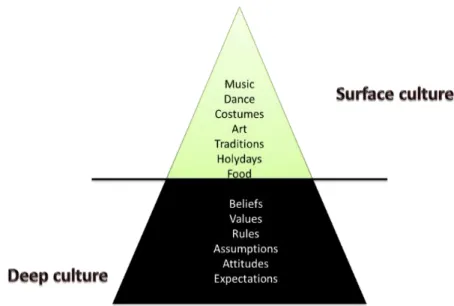
(19) 15 WORKSHOPS, ORAL COMMUNICATION, AND CULTURAL AWARENESS Research Objectives General objective. To explore the contribution of the development and implementation of contextualized workshops to the sixth graders’ oral communication and cultural awareness in a public school. Specific objectives. (a) To analyze the appropriateness and usefulness of contextualized materials in the development of students’ oral communication; (b) to identify the characteristics of the students’ oral communication; and (c) to describe how the contextualized workshops increase students’ cultural awareness. Chapter II Literature Review This chapter presents the theoretical constructs that supported this research study: materials development, oral communication, and cultural awareness. Materials Development (MD) This construct was defined by Tomlinson (2001) as a field of study and a practical engagement. It involves the principles and procedures to design, implement, and evaluate the materials elaborated by teachers to contribute to the students’ language learning. In the same line of thought, Masuhara (2006) stated that MD is an approach that permits teachers to innovate in their classes and create different kinds of resources to generate effective teaching. Finally, Núñez and Téllez (2009) argued that “MD entails a rational process and artistic inspiration that together perform a central role in attaining appealing teachinglearning resources” (p. 175). Oral communication This construct was defined by Mojibur (2010) as a “rhetorical skill" (p. 3). According to Brown (1994), there are five practical considerations that should be taken into account when conducting pedagogical research on oral communication: conversational discourse, pronunciation, accuracy and fluency, affective factors; and the interaction effect. Likewise, I kept in mind three micro-skills suggested by Brown (1994): body language, communicative functions, and lexical units..
(20) 16 WORKSHOPS, ORAL COMMUNICATION, AND CULTURAL AWARENESS Cultural awareness Tomlinson (2001) stated that cultural awareness consists in “developing inner sense of the equality of cultures, an increased understanding of your own and other people’s cultures” (p. 5). Similarly, Jackson. (2011) mentioned that cultural awareness is a mental process in which everybody reflects upon their cultural experiences in relation to “gender, religion, age, socio-economic status, geographic localization, educational level, among others” (p. 3). Chapter III Methodological Design This chapter covers the research and instructional designs. The first one deals with the approach, type of study, and instruments. The second one embraces the pedagogical intervention of this action research study. Instructional Design This section presents the pedagogical intervention in light of the Theory of Language and Language Learning, the main and specific instructional objectives, and the intervention as innovation. It also explores the characteristics of the methodological approach, the connection between the research inquiry and the pedagogical intervention, and the instructional phases. Chapter IV Data Analysis This chapter explains the data analysis procedure used to interpret the information gathered by means of the contextualized lessons, the teacher’s field notes, and the video/audio recordings. Besides, it presents the research categories and subcategories that I established to answer the research question. Category 1: Contextualized appealing materials to enhance students’ meaningful learning Relevance of localized colorful pictures to motivate students to learn in a meaningful way. (1) The contextualized colorful pictures encouraged students to learn and increased their enthusiasm towards the class (Núñez et al., 2004). (2) The colorful pictures played an essential role in the implementation of the.
(21) 17 WORKSHOPS, ORAL COMMUNICATION, AND CULTURAL AWARENESS materials since they caught the students’ attention and motivated them to learn new vocabulary or topics (Tomlinson, 1998). Using examples to understand the activities and to construct successful communication. (1) Students followed some of the examples presented in the workshops to improve their oral communication. (2) Students took advantage of the samples of the workshops to build sentences following the grammar structures and the vocabulary provided in the lesson (Erneling, 1993). The sequenced activities or lessons enhance the student´s learning development. (1) The sequenced activities or lessons helped students to understand the workshops and improve their oral communication skill (Brooks and Stock, 1999). (2) Following a sequence contributed to develop an organized learning process given that learners first started to acquire some vocabulary and then, at the end of each lesson, they showed a final product. Category 2: Oral communication as a vehicle to express ideas or feelings Fostering the communication with body movements. (1) Students used their body to communicate their feelings or points of view in the English classes (Kuhnke, 2007). (2) When students used their hands, they were able to call their classmates’ attention (Legel and Kuczala, 2010). Strengthening the communication through the acquisition of vocabulary. (1) Students became aware of the importance of vocabulary to express their opinions in oral conversations (Giambo and McKinney, 2004). (2) Vocabulary was fostered through constant exposure to culture-related activities (Coady & Huckin, 2003). Building new ideas or concepts by sharing points of view and feelings. (1) The workshops about cultural context allowed students to communicate their ideas and express their feelings. (2) Students were able to create meaning and conceptualize what they perceive from their reality (Northcutt & McCoy, 2004). Category 3: Developing students’ cultural awareness by means of knowing their own culture Cultural growth through cultural knowledge. (1) Sixth graders had the opportunity to identify some cultural activities. (2) The students started to develop their superficial culture since they recognized some.
(22) 18 WORKSHOPS, ORAL COMMUNICATION, AND CULTURAL AWARENESS typical aspects of their community (Hidalgo, 1993). Thinking over the actions to protect culture. (1) Students worked on activities that allowed them to reflect upon their environment and culture (Boyd & Fales, 1983). (2) The learners thought about the importance of the festivals that belong to their context. Chapter V Conclusions and Pedagogical Implications This chapter explores the conclusions of the research study, the pedagogical implications, the. limitations, and the further research questions.. 5. Metodología Research design Research approach This study was framed by the qualitative research which, according to Marshall and Rossman (1999), might be considered as “a broad approach study of social phenomena, its various genres are naturalistic and interpretive and they draw of multiple methods of inquiry” (p. 2). In this regard, the qualitative research permitted me to study an issue from a specific social context. Type of Study The type of study that I selected was action research because it allowed me not only to identify the learners’ difficulties, but also to carry out a plan to solve that problematic situation (Costello, 2011). Participants Students. I used the convenience sampling technique to select 10 sixth graders aged between 12 and 14. This technique allowed me to choose the participants in accordance with their availability and willingness to take part of this research study (Stevens, 1996). Teacher as researcher and materials developer. I performed three different roles along the implementation of this study. As a teacher, I guided my students in their learning process. As a researcher, I.
(23) 19 WORKSHOPS, ORAL COMMUNICATION, AND CULTURAL AWARENESS collected and analyzed the information obtained with the data gathering instruments (Hammersley & Atkinson, 1983). As a materials developer, I designed the contextualized workshops to improve the students’ difficulties in their language learning (Graves, 1997; Núñez, 2010; Núñez & Téllez, 2009; Núñez et al. (2009), Tomlinson, 1988). Data Gathering Instruments: Students’ artifacts. This instrument allows the researcher to gather personal information of the society, the people or a culture (Given, 2008). The workshops that I designed contained self-assessment. formats, which provided me with data about the participants’ opinions regarding this pedagogical intervention. Field notes. This instrument “is a way of reporting observations, reflections, and reactions to classroom problems” (Hopkins, 1993, p.116). Hence, I used field to register the students’ interventions when they participated in the different oral communication activities. Video-recordings. During the implementation of this study, this instrument helped me to obtain detailed information concerning the participants’ oral communication and the development of the three micro-skills: body movement, communicative functions, and lexical units (Hennink, 2007). Surveys. I administered this instrument to identify the students’ needs and interests regarding the three theoretical constructs that supported this research study ( Pinsonneault & Kramer, 1993). Analysis Process I used the grounded approach to establish my own theory based on the data collected (Strauss and Corbin, 1997). Besides, this approach permitted me to find commonalities among the three instruments to answer the research question that led this study. Triangulation I also used triangulation, which might me conceived as “the combination of different methods, study groups, local and temporal settings, and different theoretical perspectives in dealing with a phenomenon.
(24) 20 WORKSHOPS, ORAL COMMUNICATION, AND CULTURAL AWARENESS […] it can also be an approach to do qualitative research in an appropriate way” (p. 444). Likewise, the color-coding technique was a useful tool to organize the information visually and define the categories and subcategories (Klein, 2012). Instructional design Pedagogical intervention The pedagogical intervention was focused on developing and implementing two contextualized workshops to foster sixth graders’ oral communication and cultural awareness in a public school (Bolitho, 2003; Graves, 1997; Harmer, 2007; Maley, 1998; Núñez & Téllez, 2009; Small, 1997; Tomlinson, 1998). Instructional objectives Main Objective: To develop and implement contextualized workshops to improve the students’ oral communication micro-skills (lexical, body language, communicative functions) and cultural awareness. Specific Objectives: (a) to assess the suitability and effectiveness of the contextualized. workshops; (b) to promote students’ participation by using contextualized workshops; (c) to create a comfortable learning environment that allows students to develop three oral communication micro-skills; (d) To make students aware of the importance of developing three oral communication micro-skills (lexical, communicative functions, body language) and cultural awareness; and (e) to provide students with vocabulary that allows them to communicate their opinions about cultural awareness. Second Language Acquisition Principles The contextualized workshops were supported by six SLA principles established by Tomlinson (as cited in Núñez et al., 2009). These principles were focused on: (1) striking content, (2) self-confidence, (3) usefulness, (4) self-investment, (5) use of language, and (6) material assessment. Methodological Approach Underlying Pedagogical Intervention The methodological approach involved community-based pedagogies because they connect the.
(25) 21 WORKSHOPS, ORAL COMMUNICATION, AND CULTURAL AWARENESS students’ context or community to the standards to improve the educational context ( Sharkey & Clavijo,. 2012). Intervention as innovation The development and implementation of contextualized workshops was innovative in the school where I implemented this intervention because they aided the sixth graders to improve their oral communication and cultural awareness. In this sense, Núñez et al. (2004), pointed out that “teachers as innovative professionals, have the potential to explore their creativity by designing materials for their classes” (p.130). Theory of language and language learning. The vision of language underlying this pedagogical intervention was the culture and ideology perspective since it conceives the language as the “ability to interact with the culture and world view” (Tudor, 2001, p. 70). Besides, I took into account other three visions: a) the linguistic perspective, b) the functional perspective, and c) the self-expression perspective. In regards to the main vision of language learning, I kept in mind two aspects: (a) habit formation in terms of developing communication with confidence and fluency (Tudor, 2001); and (b) experiential learning because it contributed to the development of the oral communication micro-skills (lexical, communicative function, body language). Connection of the pedagogical intervention with the research question. This research study was based on developing and implementing contextualized workshops to enhance oral communication microskills (lexical, body language, communicative functions) and cultural awareness. Richards (2005) stated that “the primary relevance of language and language learning research to materials development is through its application to syllabus design issues as a source for instructional principles that can inform the design of instructional materials” (p. 18). In this sense, the students worked on two workshops with cultural topics related to the school curriculum. It is worth mentioning that the purpose of these materials was to encourage the students to communicate their ideas orally and to increase their cultural awareness . Instructional phases. I followed four main phases: (1) I documented myself about the different MD.
(26) 22 WORKSHOPS, ORAL COMMUNICATION, AND CULTURAL AWARENESS frameworks to propose my own; (2) I wrote a consent form to ask permission to the school’s Principal and the students’ parents for carrying out this study with the sixth graders; (3) I sensitized my students about my research study; and (4) I implemented the contextualized workshops with the students. Proposed materials development framework. Some scholars (Graves, 1996; Jolly and Bolitho, 1998; Masuhara, 1998; Núñez et al., 2004; Núñez and Téllez, 2009; Núñez et al., 2009; and Núñez et al., 2012) agreed on the fact that it is necessary to follow steps such as administering a needs assessment, establishing the objectives, the methodological approach and the content; and finally, revising and evaluating the material. However, Graves (1996) incorporated the resources and constrains; Masuhara (1998) added the design of a syllabus; Jolly and Bolitho (1998) suggested the identification of a problem and the contextual realization of the proposed new materials; Núñez and Téllez (2009) considered the resources and constraints; and Núñez et al. (2009) and Núñez et al. (2012) included the adjustments. Bering in mind the previous authors, I proposed my MD framework: Student’s community, relating local culture to the syllabus, analyzing the effectiveness of cultural materials, and cultural awareness understanding. Informed consent. I wrote a letter for asking permission to the school’s principal and the students’ parents to conduct this research study. Sensitization. I explained my students the importance of using the English language to communicate their ideas orally. Besides, I asked the participants to reflect upon the relevance of culture. Implementation of the materials. In this phase I took into account the needs analysis survey and the school’s curriculum to design and implement the contextualized workshops.. 6. Conclusiones Conclusions The development and implementation of contextualized workshops revealed the following: . The appealing material improved the students’ learning process (Núñez & Téllez, 2009; Tomlinson, 1998)..
(27) 23 WORKSHOPS, ORAL COMMUNICATION, AND CULTURAL AWARENESS . Examples were the basis to understand the activities and construct a successful oral communication (Erneling, 1993).. . Students fostered their oral communication micro-skills (body movements, lexical, communicative functions) thanks to the oral communication activities implemented in the EFL classroom (Gulikers, Bastiaens, & Kirschner, 2006).. . Students strengthened their perception of culture because they had the opportunity to recognize some cultural aspects of people from the west region of Colombia (Tomlinson, 2013).. Pedagogical Implications •. This research study improved my performance in the classroom as I became aware of the importance of bearing in mind the students’ needs and interests when designing contextualized materials.. •. This intervention was an innovative way to teach and learn English in the school where this study took place because it considered both the curriculum and the students’ context. Likewise, this research study might be a useful resource for the ELT community as it provides suggestions to develop the students’ oral communication micro-skills.. •. Contextualized workshops are excellent resources to motivate students to reflect upon their reality and the role they have in their communities.. Limitations of the study . Students’ English level and their academic duties.. . Teachers’ strike.. Further research . How does materials development contribute to explore the students’ cultural identity in their speaking performances?. . What is the impact of cultural materials integrated to institutional projects on the development of.
(28) 24 WORKSHOPS, ORAL COMMUNICATION, AND CULTURAL AWARENESS students’ meaningful learning?. Elaborado por:. Clemencia Caterine Ciprian Castillo. Revisado por:. María Fernanda Téllez Téllez. Fecha de elaboración del Resumen:. 29. 03. 2018.
(29) 25 WORKSHOPS, ORAL COMMUNICATION, AND CULTURAL AWARENESS. Introduction English language learning has turned to be part of personal, academic and professional growth at the international and local level since it is a universal language allowing us to communicate with people from different cultures. In this regard, speaking is a significant skill for people to share their views, create good relationships in different contexts such as education, family, and business, among others, and manage real situations related to different fields. Therefore, people become competitive communicators and have more opportunities to attain individual, academic and professional achievements. In this sense, this research study focuses on exploring the contribution of contextualized workshops, as didactic materials, to foster sixth graders’ oral communication and cultural awareness. Moreover, the Ministry of Education (MEN, acronym in Spanish) and Mckinsey Company (2014) established the national program of bilingualism “Colombia very well” which pursues that Colombian people will be the highest English level in South America by 2025. Considering this fact, teachers need to help students in developing speaking, writing, listening, and reading skills to build the communicative competence (Bilingualism law, law 1651, 2013). Hence, it is important to inquiry about how teaching materials can contribute to students’ language development and to their cultural awareness enhancement when they express their ideas and participate in oral academic activities. Therefore, this research study intended to develop and implement contextualized materials as the way to foster both the students’ oral communication micro skills such as the accomplishment of communicative functions, use of lexical units and body language, as well as sensitivity towards their own cultural background. The aim of the current study was to encourage students to use words or phrases gradually, and feel comfortable to communicate their views and.
(30) 26 WORKSHOPS, ORAL COMMUNICATION, AND CULTURAL AWARENESS. feelings in the foreign language. For this reason, this proposal centered on qualitative research as its purpose was to understand a social issue to find a possible solution (Creswell, 1998). This research study consists of five essential chapters. The first chapter presents the statement of the problem, the research question and objectives, some related studies, the setting and rationale. The second chapter portrays the literature review. The third chapter describes the research and instructional designs. The fourth chapter refers to data analysis and findings. Finally, the fifth chapter encompasses conclusions, pedagogical implications, limitations and questions for further research..
(31) 27 WORKSHOPS, ORAL COMMUNICATION, AND CULTURAL AWARENESS. Chapter I Research Problem Statement of the Problem This research study emerged as the result of a systematic observation of sixth grade students at Luis Carlos Sarmiento School. During my observations, I used field notes and a diagnosis survey as instruments for data collection (See Appendix A). Thus, I noticed that sixth grade students faced problems in terms of speaking as they felt fear to express themselves, since they spoke quietly and preferred speaking in Spanish. Besides, they focused their attention on developing the writing skill in previous years, and they used textbooks to develop mechanical activities they did not feel identified with or understand. In addition to the aforementioned observations, those commercial textbooks did not meet the sociocultural, academic, historic, economic background of students neither of teachers (Canagarajah, 2005; Howard & Major, 2005; Kumaravadivelu, 2001; Rico, 2012) and mainly portray surface culture (Gómez, 2015; Hidalgo, 1993). Hence, acknowledging that teaching materials should be created “by each community in relation to its history, needs, and aspirations” (Canagarajah, 2005, p. 199), and include “a variety of adds-on to meet the demand for a local fit” (Kumaravadivelu, 2014, p. 75), I decided to develop and implement contextualized workshops where cultural awareness could be fostered towards the protection of the environment and the importance of participating in cultural activities as local and regional festivals enrooted in longstanding/ancient traditions and beliefs. It was necessary to generate opportunities for students to become more participative in their classes, improve their speaking skill, and become confident when talking in front of an audience or expressing themselves in English, since this was the first time they worked with an English teacher..
(32) 28 WORKSHOPS, ORAL COMMUNICATION, AND CULTURAL AWARENESS. Finally, the world cultural interconnection requires that students speak at least one foreign language to understand that there are different cultures that offer several views about a wide range of issues related to race, gender, religion, politics, and science, among others. Consequently, I formulated the next question: Research Question What do the development and implementation of contextualized workshops reveal about sixth graders’ oral communication and their cultural awareness in a public school? Research Objectives General objective: to explore the contribution of the development and implementation of contextualized workshops to the sixth graders’ oral communication and their cultural awareness in a public school. Specific objectives: (a) to analyze the appropriateness and usefulness of contextualized materials in developing students’ oral communication, (b) to identify the characteristics of the students’ oral communication, and (c) to describe how the contextualized workshops increase students’ cultural awareness. Related Studies On the basis of the previous inquiry and objectives, I deemed pertinent mentioning the studies below, as they included at least two of the constructs underlying the current research study. On the other hand, these studies enriched my role as a teacher-researcher since they referred to materials development, oral communication, and cultural awareness. In relation to materials development and cultural awareness, Ramos, Aguirre and Hernández (2012) conducted an action research study, integrating eleventh graders’ rural context by means of the design and implementation of a curricular unit in a public school in Colombia. They gathered information through a journal, a semi-structured interview, and students’ surveys..
(33) 29 WORKSHOPS, ORAL COMMUNICATION, AND CULTURAL AWARENESS. The results of the research showed that the students’ cultural belonging and their intercultural understanding increased. This study is important to my research as it focuses on contextualized materials helping students increase their cultural angle. In this sense, the contextualized workshops could contribute to foster the learners’ cultural awareness since the concepts of Ramos et al., (2012) revealed cultural awareness and materials development. In the same way, the qualitative action research study developed by Castañeda (2012) explored how adolescents made sense of the culture-based materials implemented in the English lessons. The population of the study was 51 eighth grade students in a public school, located in Bogotá. The researcher designed lessons with contextualized cultural content where learners compared their culture with the foreign one. She collected data through surveys, field notes, audio recordings, video-recordings and students’ artifacts. The outcomes revealed that students could understand the differences and similarities of both cultures to enrich their own. Likewise, the teacher-researcher fostered students’ engagement in foreign language classes. In this regard, it is connected to my research since it demonstrated that the cultural materials motivate learners to use the foreign language. Besides, working with contextualized workshops enables students to learn and respect their own culture and others’. Likewise, Savedra and Arias (2012) implemented workshops with Colombian cultural content to explore the impact of the pedagogical intervention in English basic level students’ language learning and awareness of their own culture. The researchers gathered data through observations, questionnaires, and video recordings to analyze the information. The results of this action research study revealed that besides of identity and communication, cultural awareness affects students’ attitudes when learning a language with topics of their culture. Thus, this project contributed to the current study since the purpose of this qualitative-action research was to.
(34) 30 WORKSHOPS, ORAL COMMUNICATION, AND CULTURAL AWARENESS. promote the students’ cultural awareness through the implementation of workshops built on topics connected to their cultural context. Regarding oral communication and materials development, Julio (2015) analyzed and described how interactive activities based on cooperative learning develop micro-skills of oral communication in terms of using the language for pragmatic purposes. This study was a qualitative action research where the researcher designed and implemented six workshops to develop the micro skills of oral communication in tenth graders in a public school in Bogotá, Colombia. The researcher obtained data using instruments such as video recordings, field notes, and interviews. The outcome was the learners’ enhancement in their oral communication as they participated in the interactive activities actively. This research study is relevant as it fostered the children’s oral communication through workshops and used the same instruments I selected to gather data. Moreover, students worked in groups to feel confident to start speaking of their own culture to become sensitive people towards culture. Similarly, the action research study carried by Parga (2009) concerned about the students’ weaknesses in terms of their oral skills development since learners, who were in eighth grade, could not advance in their oral communication ability. For that reason, he used different contextualized materials that aimed at improving the learners’ oral communication. The researcher applied audio-recordings, video-recordings, and field notes to gather information. The outcomes revealed that students felt comfortable in the oral communication activities, improved their pronunciation, stress, rhythm and intonation. This study nurtured my research with the use of oral communication and materials development as main constructs to create the appropriated lessons to foster the oral skills in a public school in Colombia. In relation to cultural awareness and oral communication, Barrera (2012) aimed at examining teaching cultural awareness in students of Basic English level. Thus, as a pedagogical.
(35) 31 WORKSHOPS, ORAL COMMUNICATION, AND CULTURAL AWARENESS. intervention 16 KWL (to know, to want, and to learn) charts were used to collect information concerning what students knew, what they wanted to know, and what they had learned in terms of culture and cultural awareness to speak of their cultural background. For this action research study, the participants were students of first semester at UPTC in Sogamoso, who had Basic English level. The researcher gathered data by means of observations, field notes and students’ KWL charts. The results showed that culture was important to develop materials and that it should be included in the curriculum as it becomes a way for students to communicate their own cultural understanding and to promote their cultural awareness. It is important to mention that, although the participants belonged to a public university, both studies agreed in the students’ English level. Setting and Rationale I developed this research study at Luis Carlos Galán Sarmiento School, a public educational institution located in Puerto Gaitan, Meta in Colombia. This institution is new in the teaching of high school students, and its mission focuses on a humanistic approach that seeks to educate students with values and principles that contribute to create a better society with respect and tolerance among people. In other words, the “galanista” student should be an integral person who collaborates to the country development (Horizonte institucional, 2016). This institution has two shifts: morning and afternoon, and their students belong to middle-low socio-economic level what makes difficult for them to have technological devices at home. Speaking is a relevant skill of the language because it plays an essential role in the process of communication. In this case, English is a universal language; most population uses it to connect with the rest of the world. According to one article published on ABC news, over 850 million of people use English language to interact with people or gadgets (Top 10 most spoken and most popular languages in the world, 2015). Therefore, language teachers are committed to.
(36) 32 WORKSHOPS, ORAL COMMUNICATION, AND CULTURAL AWARENESS. create comfortable spaces and appropriate resources to improve their proficiency in teaching and learning processes to enhance students’ meaningful learning. The Colombian government has a great expectation about having most people using the English language proficiently in a near future. Considering this fact, the Ministry of Education (MEN, acronym in Spanish) established, article 23 of the General Education Law (1994), the teaching of foreign languages as an essential part of educational curricula. Additionally, this study contributed to my teaching context since some teachers can take advantage of this kind of materials to implement in their English classes to improve the students’ learning process. Likewise, this research contributed to the EFL community of teachers because it is an innovative tool regarding the development and implementation of contextualized workshops to foster oral communication and cultural awareness. As the purpose of this research study was fostering the students’ oral communication and cultural awareness; participants in general could develop a sense of belonging to the school community and awoke their sensitivity towards cultural situations that occurred in their own local context and other peoples’ settings. Finally, this research study contributes both theoretically and methodologically to the research line on Materials Development, ascribed to the research group Critical Pedagogy and Didactics for Social Transformation (Núñez, Téllez & Castellanos, 2013). In terms of the theoretical contribution, I developed materials that satisfy the guiding principles of “equity and inclusion” (p. 6) and “quality assurance and professional development” (p. 8). The former is achieved as the materials I proposed to consider the local context as central in language teaching and learning, and the latter is attained as I gained expertise, knowledge of the materials development field, which has helped me to grow as a professional. Likewise, this research study contributes to the research line in methodological terms since its pedagogical intervention contemplates the proposal of a contextualized framework to develop materials under the community-based pedagogies that privilege students’ socio-cultural universe. This way we.
(37) 33 WORKSHOPS, ORAL COMMUNICATION, AND CULTURAL AWARENESS. educate respectful students who understand their cultural background and differences, which help them value and respect others’ culture (Flohr, 2007). In this regard, this research study foments the education of more sensitive and responsible individuals to construct a more inclusive society. Besides that, the materials I developed are informed with a selection of Second Language Acquisition (SLA) principles and focus on cultural content. Furthermore, this research study followed the theoretical frameworks proposed by Núñez, Téllez, Castellanos and Ramos (2009), Núñez et al. (2013), and Tomlinson (2011), among others, to design contextualized materials in my pedagogical intervention. To continue with, I present a detailed description of the theoretical constructs underpinning the current study..
(38) 34 WORKSHOPS, ORAL COMMUNICATION, AND CULTURAL AWARENESS. Chapter II Literature Review Considering that the aim of this research study was to explore the contribution of contextualized workshops in developing oral communication and cultural awareness, materials development, speaking skill and oral communication and cultural awareness, constitute the main theoretical issues to focus on. Accordingly, it is worth mentioning that, materials development is the path through which I designed my contextualized workshops as a way to explore students’ oral communication and cultural enhancement. Materials Materials are the pedagogical resources or instruments that teachers use in the classroom to improve the learning and teaching processes. According to Tomlinson (2011), “Materials could obviously be videos, DVDs, emails, dictionaries, you tube, grammar books, readers, workbooks … to increase the learners’ knowledge and/or experience of the language” (p. 2). This means that, materials expand to all the resources teachers can use with the purpose of promoting language learning. In the same line of thought, Núñez and Téllez (2009) stated that the creation of materials helps teachers to improve their pedagogical practices since they can reflect on their students’ learning process to find the best instrument to motivate them. Consequently, I considered pertinent to include my students’ interests and needs into my culture-based workshops to keep them motivate and catch their attention. Materials development. To begin with, materials development (MD henceforth) is a relevant aspect for language learning. Thus, it is understood as a field of study and a practical engagement regarding the principles and procedures to design, implement, and evaluate the materials elaborated by teachers to contribute to the students’ language learning (Tomlinson, 2001). Similarly, Masuhara (2006) stated that MD is an approach that permits teachers, by.
Figure
+5


Documento similar