
Children picture books to implement a first approach to writing
101
0
0
Texto completo
(2) Children Picture Books to implement a first approach to writing.. ANDREA PILAR TRIANA ROMERO. Monografía para optar al título profesional de Licenciado en Español e Inglés Asesor: FRANCISCO PÉREZ. Universidad Pedagógica Nacional Facultad de Humanidades Departamento de Lenguas Licenciatura en Español e Inglés Bogotá, 2017.
(3) CHILDREN PICTURE BOOKS TO IMPLEMENT A FIRST APPROACH TO WRITING. PÁGINA DE ACEPTACIÓN. Nota de aceptación ____________________________________________ ____________________________________________ ____________________________________________ ____________________________________________ ____________________________________________ ____________________________________________. ____________________________________________ Presidente del Jurado ____________________________________________ Jurado ____________________________________________ Jurado.
(4) CHILDREN PICTURE BOOKS TO IMPLEMENT A FIRST APPROACH TO WRITING. RESUMEN ANALÍTICO EN EDUCACIÓN-RAE 1. Información General. Tipo de documento. Trabajo de Grado. Acceso al documento. Autor(es). Universidad Pedagógica Nacional. Biblioteca Central Children Picture Books to implement a first approach to writing (Libros Ilustrados para Niños para implementar un primer acercamiento a la escritura) Triana Romero, Andrea Pilar. Director. Pérez, Francisco. Publicación. Bogotá. Universidad Pedagógica Nacional, 2017.101P. Unidad Patrocinante. Universidad Pedagógica ESCRITURA GUIADA; LIBROS ILUSTRADOS PARA NIÑOS; EDUCACIÓN EFL; HABILIDADES DE ESCRITURA; ESCRITORES PRINCIPIANTES.. Titulo del documento. Palabras Claves. 2. Descripción. Esta es una investigación acción que se llevó a cabo en el colegio Domingo Faustino Sarmiento Sede D, ubicado en la localidad de Suba en la ciudad de Bogotá, en donde se trabajó con un grupo de tercer grado. Esta investigación tuvo como objetivo desarrollar la escritura guiada de la población en mención, cuando eran usados los libros ilustrados para niños en inglés como forma de input y más específicamente utilizados como modelos para implementar un primer acercamiento a ejercicios de escritura. Para llevar a cabo esta tarea, los libros ilustrados para niños se implementaron como modelos para crear sus propios textos cortos, acompañados de un conjunto de actividades de Escritura Guiada que a su vez funcionaron como una estrategia para seguir los procesos de escritura de los niños.. 3. Fuentes Algozzine B., Douville P. (2004). Use mental imagery across the curriculum. Prev. Sch. Fail. 49 36–39. 10.3200/PSFL.49.1.36 Arnold, J (1999). Visualization. Language learning with the mind’s eye. In J. Arnold (Ed). Affect in language learning (pp. 260-278). Cambridge University Press. Arnold, J., & Fonseca M.C. (2004). Multiple Intelligence Theory and Foreign Language Learning: A Brain -Based Perspective. (pp.119-136). IJES.Vol 4. Bandura, A. (1986). Social Foundations of Thought and Action: A Social Cognitive. Englewood Cliffs, NJ: Prentice Hall. Bransford, J. D., & Johnson, M. K. (1972). Contextual prerequisities for understanding: Some investigations of comprehension and recall. E-Journal of Verbal Learning and Verbal Behavior, 11, 717-726. Retrieved from https://msu.edu/~ema/802/Ch6-Memory/2/BransfordJohnson72.pdf Arnold, J (1999). Visualization. Language learning with the mind’s eye. In J. Arnold (Ed). Affect in language learning (pp. 260-278). Cambridge University Press. Ausubel, D. P. (2000). The Acquisition and Retention of Knowledge. Dortrecht, Netherlands: Kluwer. Bell N. (1991). Gestalt imagery: a critical factor in language comprehension. Ann. Dyslexia 41 246–260. 10.1007/BF02648089 [PubMed] Bransford, J. D., Brown, A. L., & Cocking, R. R. (Eds.). (2000). How people learn: Brain, mind, experience, and.
(5) CHILDREN PICTURE BOOKS TO IMPLEMENT A FIRST APPROACH TO WRITING. school. Washington, DC: National Academy Press Brown, J. S., Collins, A., & Duguid, P. (1989). Situated cognition and the culture of learning. Educational Researcher, 18(1), 32-42. Cohen, Manion, and Morrison. (2011). Research Methods in Education. New York: Taylor & Francis Group. Cresswell, J. W. (1998) Qualitative Inquiry and Research Design: Choosing among the Five Traditions. Thousand Oaks, CA: Sage. Colegio Tecnico Domingo Faustino Sarmiento I.E.D, (2016). Manual de Convivencia. Bogotá: Subdirección Imprenta Distrital (D.D.D.I), pp.1-48. Colombia. Ministerio de Educación (2006). Estándares Básicos de Competencias en Lenguas Extranjeras: Inglés. Imprenta Nacional. De Koning B. B., Van der Schoot M. (2013). Becoming part of the story! Refueling the interest in visualization strategies for reading comprehension. Educ. Psychol. Rev. 25 261–287. 10.1007/s10648-013-9222-6 Department for Children, Schools and Families (2007). Improving writing with a focus on guided writing: leading improvement using the Primary Framework. Guidance. Curriculum and standards. Primary National Strategy. Document from Web. Retrieved from http://dera.ioe.ac.uk/6649/ Departament of Education (2009). Using Children’s Literature with ESL students. Newfoundland Labrador Education. Document from Web. Retrieved from http://www.ed.gov.nl.ca/edu/k12/curriculum/guides/esl/literature_esl.pdf Douglas, H. (2000) Teaching by principles. An Interactive Approach to Language Pedagogy. Second Edition. Longman. Pearson ESL. Elliott, J. (1991) Action Research for Educational Change. Open University Press. Buckingham. Ezzy, D. (2002) Qualitative Analysis: Practice and Innovation. London: Routledge. Faiola T, & DeBloois, M. L. (1988). Designing a visual factors-based screen display interface: The new role of the gray hic technologist. Educational Technology, 28(8), 12-21. Felstead, A., Fuller, A., Unwin, L., Ashton, D., Butler, P., & Lee, T. (2005). Surveying the scene: learning metaphors, survey design and the workplace context. Journal of Education and Work, 18(4), 359-383. http://dx.doi.org/10.1080/13639080500327857 Frazer, K. (2013). Teaching Writing to Young ELT Learners. Oxford University Press English Language Teaching. Retrieved on 19th September 2017 from https://oupeltglobalblog.com/2013/04/16/teaching-writing-toyoung-elt-learners/ Freeman, D. (1998) Doing Teacher- Research: From Inquiry to Understanding. Heinle Cengage Learning. USA: Boston, MA. Gambrell L. B., Jawitz P. B. (1993). Mental-imagery, text illustrations, and children’s story comprehension and recall. JSTOR. Read. Res. Q. 28 264–276. 10.2307/747998. Gardner, H. (1993). Frames of mind: a theory of multiple intelligences. New York: Basic Books. Glaser, B.G. & Strauss, A.L. (1967). The Discovery of Grounded Theory: Strategies for Qualitative Research. Chicago: Aldine. González, Y.Y L. F. (2013). The Role of Collaborative Work in the Development of Elementary Students’ Writing Skills. Profile, 11-25. Hattie, J. (2008). Visible learning: A synthesis of over 800 meta-analyses relating to achievement. New York: Routledge. Holdich, C. E., & Chung, P. W. H. (2003). A ‘computer tutor’ to assist children develop their narrative writing skills: conferencing with HARRY. International Journal of Human-Computer Studies, 59(5), 631–669. Hudson, P (2013). Learning to teach in the Primary School. Cambridge University Press. New York. Retrieved from http://assets.cambridge.org/97811076/72826/excerpt/9781107672826_excerpt.pdf Hyland, K. (2002). Teaching Writing and Researching Writing. Pearson Education: London. Jager, M. (1994). Beginning to Read. Thinking and Learning about Print. Bradford: Cambridge, Massachusetts. London: England. Johnson, Andrew P. (2012). A short Guide to Action Research. (4th edition) Pearson Education. Minnesota State University, Mankato. Kiefer, B. (2008). What is a picture book, anyway? The evolution of form and substance through the postmodern era and beyond. In L. R. Sipe & S. Panteleo (Eds.), Postmodern picture books: Play, parody and self-referentiality (pp. 921). New York, NY: Routledge. Krashen, S.D (1985). The Input Hypothesis. Issues and Implications. Longman Group UK Ltd. London & New York:.
(6) CHILDREN PICTURE BOOKS TO IMPLEMENT A FIRST APPROACH TO WRITING. Longman. Krashen, S.D (1987). Principles and Practice in Second Language Acquisition. Prentice-Hall International. Kulhavy, R. W. (1977). Feedback in written instruction. Review of Educational Research, 47(1), 211–232. Marzano, R., Pickering, D., & Pollock, J. (2001). Classroom instruction that works: Research-based strategies for increasing student achievement. Alexandria, VA: ASCD. McGreal (1984). Artifact Collection. Educational Leadership. 20-21. Retrieved from http://www.ascd.com/ASCD/pdf/journals/ed_lead/el_198404_mcgreal.pdf McLeod, S. A. (2015). Jean Piaget. Retrieved from www.simplypsychology.org/piaget.html Oczkus, L. D (2007). Guided writing: practical lessons, powerful results. Heinemann: Portsmouth, NH. ISBN-10:0325-01071-4. Patton, M. Q. (2002). Qualitative research and case study applications in education. San Francisco: Jossey-Bass. Piaget, J., & Cook, M. T. (1952). The origins of intelligence in children. New York, NY: International University Press. Piaget, J. (1954a). The construction of reality in the child. (M. Cook, Trans.). Rivers, W. (1989). A Practical Guide to the Teaching of English as a Second or Foreign Language. Oxford University Press. Rosenshine, B. (2012). Principles of Instruction. Research - Based Strategies that all teachers should know. American Educator. Spring 2012. Illustrations by James Yang Ruiz, A. M. P. (2014). The Child as a Subject of Rights and Children's Literary Writing. Folios, 41(1), 23-35. Sadler, R. (1989). Formative assessment and the design of instructional systems. Instructional Science, 18, 119–144. Selinker L (1992). Rediscovering interlanguage. London:Longman Scott, W.A. & Ytreberg, L.H. (1995). Teaching English to Children: Longman Keys to Language Teaching. London, NY. Series Editor: Neville Grant. Stotsky, S. (1983). Research on reading /writing relationships: A synthesis and suggested directions. Language Arts, 627-642. Strauss, A. & Corbin, J. (1990). Basics of Qualitative Research: Grounded Theory Procedures and Techniques. Newbury Park, CA: Sage Publications. Sutherland, Z. & Arbuthnot. (1977). Children and books. Dallas: Scott, Foresman. Tarone, E (2006). Interlanguage. Elsevier Ltd. This article is reproduced from the previous edition, volume 4,pp. 1715–1719, 1994, Elsevier Ltd. Tudor. I (2001). The Dynamics of the Language Classroom. Cambridge University Press.UK VanPatten, B.(2003). From input to output. A Teacher’s Guide to Second Language Acquisition. United States of America: The McGraw-Hill Companies Inc. Vygotsky LS (1986). Thought and language. The MIT Press, Cambridge. Waterman.H. (2001). Action research: a systematic review and guidance for assessment. Manchester, UK: Health Technol Assess, Vol 5 (No.23). 1-174ISBN-10:0- 325-01071-4.. 4. Contenidos. Este documento está dividido en 6 capítulos. El primer capítulo contiene la contextualización, la delimitación del problema, los objetivos y la pregunta problema planteada para el incio de la investigación. Por otro lado, el segundo capítulo contiene el márco teórico, estado del arte y constructos teóricos que sustentan todo el documento y la investigación. En cuanto al tercer capítulo este presenta el diseño de la investigación, el tipo de estudio, los instrumentos utilizados para recolectar la información, la metodología empleada y algunas consideraciones éticas. Respecto al capítulo cuatro, este contiene la intervención pedagógica que se llevó a cabo. Igualmente, el quinto capítulo presenta los resultados encontrados asi como el análisis de los datos recogidos. Finalmente, el sexto capítulo expone las conclusiones a las que se llegaron, la pertinencia del proyecto, las recomendaciones para futuras investigaciones, y las limitaciones que se encontraron durante la intervención pedagógica. 5. Metodología.
(7) CHILDREN PICTURE BOOKS TO IMPLEMENT A FIRST APPROACH TO WRITING. La investigación se llevó a cabo siguiendo los preceptos de la investigación acción por lo cual se siguieron cuatro fases. En la primera fase (planning) se realizaron diversas observaciones, y se recolectaron algunos datos a través de una encuesta, una prueba diagnóstica, diarios de campo y algunas conversaciones informarles con la profesora a cargo con el fin de delimitar el problema y formular la pregunta de investigación. En la segunda fase (Action) se diseño y aplicó la propuesta pedagógica siguiendo los objetivos planteados los cuales darían respuesta a la problemática planteada. En la tercera fase (Observation) se recogieron los datos suficientes para compararlos y contrastarlos en busca de hipótesis que dieran respuesta la pregunta problema. Finalmente, en la última fase (Reflection) el investigador reflexionó entorno a los resultados encontrados y se dio paso a presentar las correspondientes conclusiones de la investigación. Los instrumentos utilizados durante la intervención pedagógica fueron: Artefactos de los estudiantes (textos escritos), encuestas y diarios de campo. 6. Conclusiones. En cuanto a las conclusiones se encontró que el uso de CBPs ayudó a los estudiantes a desarrollar y mejorar sus habilidades de escritura y a su vez de lectura. Aun cuando los estudiantes no escribian textos largos e incluso presentaban problemas con la escritura de textos cortos, se evidenciaron efectos positivos en los procesos de escritura cuando se apoyaban de libros acompañados de imágenes que además hacían comprensible el contenido del mismo. En este sentido, los CPBs no sólo se convirtieron en formas de input comprensible sino además en libros atractivos para los estudiantes, facilitadores de procesos de escritura y lectura y generadores de ambientes menos estresantes al momento de escribir inglés. De igual manera, se encontró que el uso de imágenes en los talleres de las lecciones de escritura guiada, ya fueran tomadas de los libros o externas a ellos, facilitaban en los estudiantes la comprensión tanto de las instrucciones dadas como del contenido de las respuestas esperadas. Igualmente, las lecciones de escrituras guiadas se prestaron para ser llevadas a cabo de la mano de la lectura de los libros y los dos procesos se complementaron. Por otra parte, este tipo de lecciones permitieron identificar en los estudiantes debilidades y fortalezas al momento de escribir a través de los textos que realizaban. Adicionalmente, permitió familiarizar a los estudiantes con estrategias tales como retroalimentación inmediata y autocorrección. Esta intervención pedagógica también permitió reflexionar alrededor de aspectos a los que muchas veces no se presta atención tales como dedicar suficiente tiempo a dar las instrucciones de las tareas asignadas pues cuando estas no son claras del todo se pueden convertir en reductores de respuestas correctas. Como ya se mencionaba, durante la investigación se evidenciaron conductas estratégicas de escritura por parte de los estudiantes tales como autocorrección, trabajo colaborativo, entre otros, que no sólo son útiles para la enseñanza de una lengua sino también para cualquier otra área del conocimiento. Finalmente, se pudo concluir que más allá de diseñar lecciones de clase basadas en gramática y en vocabulario fuera de contexto, los maestros deben procurar ir más allá y hacer uso de material auténtico tal como el propuesto en esta investigación, y a su vez incentivar en los niños la lectura y la escritura en inglés como procesos interrelacionados por supuesto, siempre acompañados y guiados por los maestros durante el proceso. Elaborado por:. Andrea Pilar Triana Romero.
(8) CHILDREN PICTURE BOOKS TO IMPLEMENT A FIRST APPROACH TO WRITING.. Revisado por:. Francisco Pérez. Fecha de elaboración del Resumen:. 21. 11. 2017.
(9) Abstract This paper describes an action-research study that was conducted in an EFL classroom, which aimed to develop second graders’ guided writing from the School Domingo Faustino Sarmiento when Children Picture Books (CPBs) are used as models to implement a first approach to writing. To carried out this task, CPBs were implemented as models to create their own short texts, accompanied by a set of Guided Writing activities, which worked as a strategy to follow Children writing processes. Data were collected through field notes, surveys and artifacts made by the students. As for the results, it was evident that CPBs not only managed to bring students closer to writing processes but also achieved reading processes interrelated with guided writing. The use of images accompanied by text once again ratified its usefulness as comprenhensible input, and functioned as a support for writing texts and as motivators of strategic writing behaviors in children. Regarding guided writing, it was evident that it allowed to follow students’ writing processes and to familiarize them with strategies such as feedback, self-correction, among others. Key words: Guided Writing; Children Picture Books; EFL education; writing skills; beginner writers. Resumen Este artículo describe un estudio de investigación-acción que se llevó a cabo en un aula EFL, que tuvo como objetivo desarrollar la escritura guiada de los estudiantes de tercer grado del Colegio Domingo Faustino Sarmiento cuando los Libros Ilustrados infantiles son utilizados como modelos para implementar un primer acercamiento a la escritura. Para llevar a cabo esta tarea, los libros ilustrados para niños se implementaron como modelos para crear sus propios textos cortos, acompañados de un conjunto de actividades de Escritura Guiada que a su vez funcionaron como una estrategia para seguir los procesos de escritura de los niños. Los datos se 1.
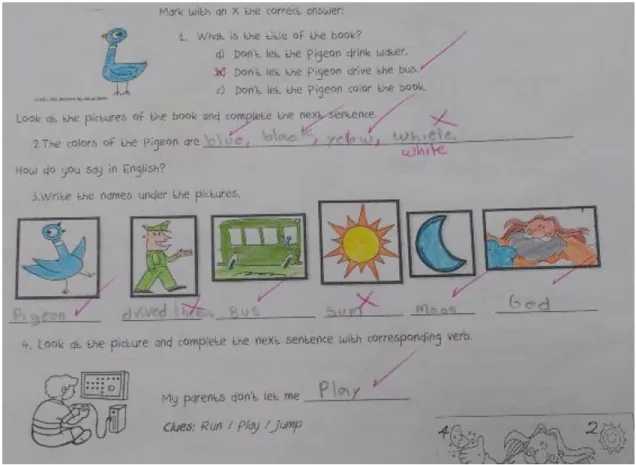
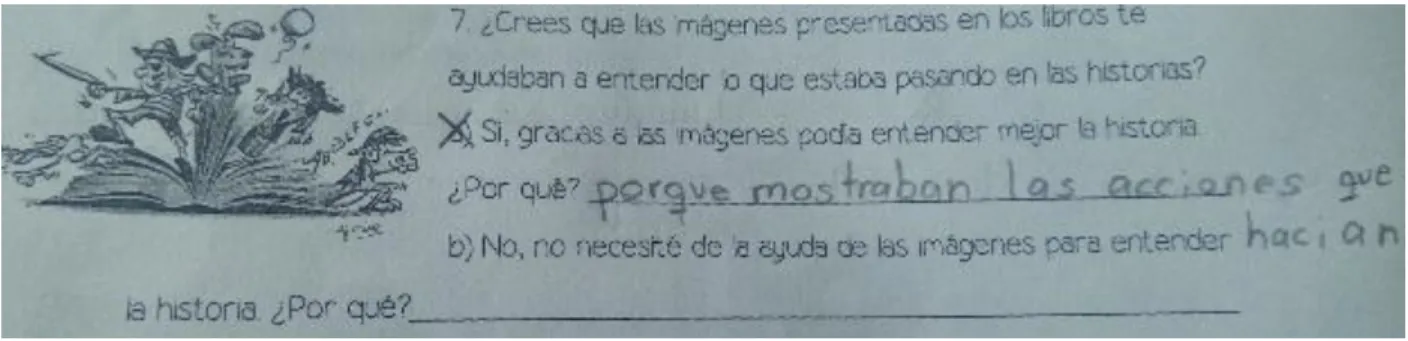
(10) CHILDREN PICTURE BOOKS TO IMPLEMENT A FIRST APPROACH TO WRITING. recopilaron mediante notas de campo, encuestas y artefactos realizados por los estudiantes. En cuanto a los resultados se evidenció que los libros ilustrados para niños no solo lograron acercar a los estudiantes a procesos de escritura sino además se lograron procesos de lectura interrelacionados con la escritura guiada. El uso de imágenes acompañadas de texto ratificaron una vez mas su utilidad en la comprensión de los libros pero además funcionaron como apoyo a la escritura de textos y como motivadores de conductas estratégicas de escritura en los niños. Respecto a la escritura guiada, se evidenció que permitió seguir el proceso de escritura de los estudiantes y a su vez familiarizarlos con estrategias tales como la retroalimentación, la autocorrección, entre otros. Palabras clave: Escritura guiada; Libros ilustrados para niños; Educación EFL; habilidades de escritura; escritores principiantes.. 2.
(11) CHILDREN PICTURE BOOKS TO IMPLEMENT A FIRST APPROACH TO WRITING. Contenido Chapter 1: Introduction ................................................................................................................... 7 1.1. Introduction to the study ......................................................................................... 7. 1.2. Context .................................................................................................................... 7 1.2.1 Local Context .............................................................................................. 7 1.2.2 Institutional Context .................................................................................... 8 1.2.3 Participants .................................................................................................. 8 1.2.4 Diagnosis ..................................................................................................... 9. 1.3. Rationale of the study ........................................................................................... 12. 1.4. Statement of the problem ...................................................................................... 13. 1.5. Research Question ................................................................................................ 15. 1.6. Objectives ............................................................................................................. 15 1.6.1 General Objective...................................................................................... 15 1.6.2 Specific Objectives.................................................................................... 15. 1.7. Conclusion ............................................................................................................ 16. Chapter 2: Theoretical Framework & State of the Art ................................................................. 17 2.1. Introduction ........................................................................................................... 17. 2.2. Theoretical Framework ......................................................................................... 17 2.2.1 Picture Books ............................................................................................ 17 2.2.2 Guided Writing.......................................................................................... 18 2.2.3 Reading as input ........................................................................................ 19. 2.3. State of the art ....................................................................................................... 19. 2.4. Conclusion ............................................................................................................ 22. Chapter 3: Research Design .......................................................................................................... 23 3.
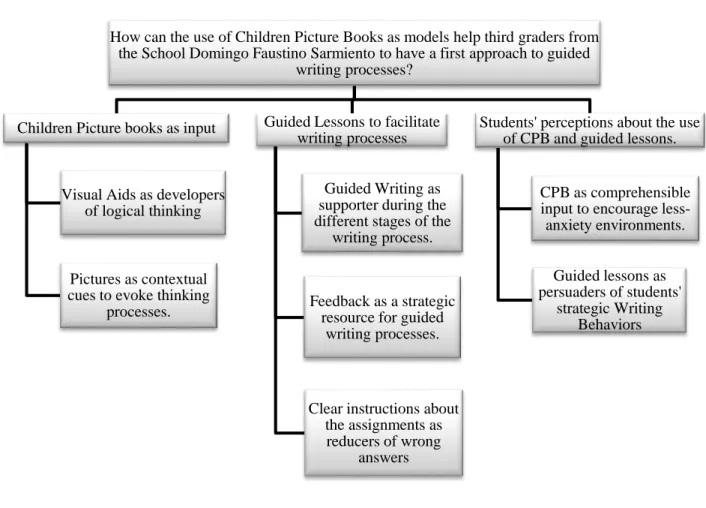
(12) CHILDREN PICTURE BOOKS TO IMPLEMENT A FIRST APPROACH TO WRITING. 3.1. Introduction ........................................................................................................... 23. 3.2. Type of study ........................................................................................................ 23. 3.3. Data management procedures ............................................................................... 24. 3.4. Data analysis methodology ................................................................................... 25. 3.5. Ethical Considerations .......................................................................................... 26. 3.6. Conclusion ............................................................................................................ 26. Chapter 4: Pedagogical Intervention and Implementation............................................................ 27 4.1. Introduction ........................................................................................................... 27. 4.2. Intervention proposal ............................................................................................ 27 4.2.1 Vision of Language ................................................................................... 30 4.2.2 Vision of Learning .................................................................................... 31. 4.3. Instructional design ............................................................................................... 31 4.3.1 Lesson planning ........................................................................................ 32 4.3.2 Timetable................................................................................................... 34. 4.4. Significance of the results ..................................................................................... 35. 4.5. Conclusion ............................................................................................................ 35. Chapter 5: Data Analysis and Findings ........................................................................................ 36 5.1. Introduction ........................................................................................................... 36. 5.2. Procedures for data analysis.................................................................................. 36. 5.3. Categories of the analysis ..................................................................................... 38 5.3.1 Category 1. Children Picture Books (CPBs) books as input ..................... 38 5.3.2 Category 2. Guided Lessons to facilitate writing processes. .................... 48. 4.
(13) CHILDREN PICTURE BOOKS TO IMPLEMENT A FIRST APPROACH TO WRITING. 5.3.3 Category 3. Students' perceptions about the use of CPB and guided lessons. ...................................................................................................... 58 Chapter 6: Conclusions ................................................................................................................. 65 6.1 Limitations ................................................................................................................. 67 6.2 Recommendations ...................................................................................................... 67 References ..................................................................................................................................... 69 Appendices ...................................................................................................................................... 1. Tables and figures Table 1: Table 1. Children Picture Books used in the pedagogical intervention………….........26 Table 2: Intervention Proposal Chart …………………………………………………………...29 Table 3: Lesson Planning Chart…………………………………………….……….…………...31 Table 4: Timetable…………………………………………………………………………….…33 Figure 1: Categories and Subcategories emerging from the data analysis………………………37 Figure 2: Artifact Session number 3.………………………………………………….…………39 Figure 3: Artifact Session Number 4……………………………………………….……………41 Figure 4: Survey Number 2 ……………………………………………………………...………42 Figure 5: Artifact Session Number 4…………………………………………………………….44 Figure 6: Artifact Session Number 5 ……………………………………………………………46 Figure 7: Survey Number 2……………………………………………....………………………47 Figure 8: Survey Number 2…………………………………………………………..……..……49 Figure 9: Survey Number 2…………………………………………………………..……..……49 Figure 10: Survey Number 2………………………………………………………....……..……50. 5.
(14) CHILDREN PICTURE BOOKS TO IMPLEMENT A FIRST APPROACH TO WRITING.. Figure 11: Artifact Session Number 6 ……………………………………………....……..……51 Figure 12: Artifact Session Number 12 …………………………………………………...…….53 Figure 13: Survey Number 2……………………………………………………..……..……….54 Figure 14: Artifact Session Number 13…………………………………………..……..……….55 Figure 15: Artifact Session Number 11…………………………………………..……..……….56 Figure 16: Survey Number 2……………………………………………………..……..……….58 Figure 17: Survey Number 2……………………………………………………..……..……….59 Figure 18: Survey Number 2……………………………………………………..……..……….61. 6.
(15) CHILDREN PICTURE BOOKS TO IMPLEMENT A FIRST APPROACH TO WRITING.. Chapter 1: Introduction 1.1. Introduction to the study This action research was intended to encourage students’ guided writing skill through the. use of Children Picture Books, without denying that this process should always be accompanied by reading as a form of input. This chapter presents elements such as the context in which this study was carried out, the diagnosis of the results obtained from the data collection instruments such as surveys and field notes; the rational of the study which presents studies that have been advanced regarding the problems detected in the diagnosis, and finally, the statement of the problem which describes the issues of the study accurately and completely. 1.2. Context 1.2.1. Local Context. The School Domingo Faustino Sarmiento is located in the locality of Barrios Unidos, in Rio Negro neighborhood; it is a public school with mix or co-educational school. Children there are between 1 and 3 strata. It is a school with a Major in Commercial and Financial Operations Accounting and in Community Recreation, in partnership with higher education, strengthening of English as a foreign language, the defense of human rights and the environment accessing the technological, technical and scientific most advanced knowledge (I.E.D Domingo Faustino Sarmiento, 2016). 7.
(16) CHILDREN PICTURE BOOKS TO IMPLEMENT A FIRST APPROACH TO WRITING.. 1.2.2 Institutional Context The School’s PEI is "Calidad Educativa para la formación integral y laboral"(I.E.D Domingo Faustino Sarmiento, 2016, p.7). In general terms, the main objective of the school is to educate students in an integral and working manner through educational quality. About the institutional horizon, the school proposed a mission and vision that aimed at building and experiencing in the students learning processes of human development which involves respecting diversity. Institutionally, the school has as purpose the training of people with human and professional qualities. 1.2.3 Participants Students from second grade (group 202) were children between six and nine years old. In this classroom, there were thirty students. The observation was made when they were in second grade (2016), and the intervention was made when they were in third grade, group 302 (2017). The attendance of students usually was constant; the only remarkable aspect is that at the beginning of the observations, a new student came to join the group, so this student was catching up on all academic activities. This group was characterized by being a very active group and they enjoyed activities that involve singing and moving (Appendix A). In general terms, they had good discipline; however, there were some students that presented problems in terms of attention. This pair of students was always located at the back of the classroom as a strategy to keep them separated from the rest of the group so that they did not distract the others. Moreover, they were always doing different activities from the ones required by the teacher such as playing with toys, or drawing on their notebooks, or simply doing nothing. Other important aspects to mention are that there were students that needed more time to work. 8.
(17) CHILDREN PICTURE BOOKS TO IMPLEMENT A FIRST APPROACH TO WRITING. through the information given to them and that one of them had difficulties with reading and writing. In this sense, this group of students needed special attention by the mentor teacher. According to surveys applied (Appendix E), most of the children lived with their parents; however, there were students who lived either with their mothers or fathers and others that lived with a relative such as aunts or grandparents. On the other hand, students showed a preference for working in groups rather than working individually, and a preference for the continuous support and guidance of their teacher (Appendix D). Regarding student’s preferences and likes, in their free times, the majority of them enjoyed doing activities such as playing, singing, drawing, coloring, reading stories and watching movies. Another aspect taken from the surveys was that the majority of them had access to technologies such as computers, the Internet, and television (Appendix H). 1.2.4 Diagnosis The information was collected applying field notes, surveys, a diagnostic test of the four language skills, and informal conversations with the mentor teacher about the population of this study. Firstly, the data generated by the informal conversations with the mentor teacher (second grade 2016-2) indicated that this group did not have a formal English class, they did not follow a syllabus. However, it should be mentioned that the mentor-teacher of the next grade (third grade 2017) had a formal English class and a syllabus with the subjects expected to be covered during that year. Even though this group had the opportunity to attend a classroom called "immersion room" where they were given English lessons, it was taken as an extra-class activity implying that students attend eventually. As a result of that, children could not practice any skills of the language frequently.. 9.
(18) CHILDREN PICTURE BOOKS TO IMPLEMENT A FIRST APPROACH TO WRITING. Nevertheless, the mentor teacher made a great effort to practice speaking through songs with them which also favored vocabulary acquisition. To do this, the teacher tried to teach different songs, in collaboration with the immersion teacher, through which they reviewed vocabulary and expressions that were usually used in the classroom such as greetings, fruits, and action verbs. These songs were always sung by the students before starting the English class while the teacher corrected pronunciation and reminded the vocabulary they forgot. Additionally, the teacher always tried to recycle vocabulary of the previous classes (Appendix B). Secondly, the data gathered in the field notes suggested that in this classroom and in general throughout the school there was a lack of materials (Appendix A). This issue could be attributed to the absence of formality of the English class. As a consequence, this group did not have a syllabus to follow for the English class, neither guide books nor access to other books in English. It is noteworthy that, the teacher in charge showed great interest in decorating the empty walls of the classroom, but the school did not provide her the resources to do so. On the other hand, there was an extrinsic motivation in this group since students worked for the prize and not because it really interested them (Appendix A). It is remarkable to mention that songs were present during all classes in different perspectives such as a tool to persuade students to participate in class, to improve pronunciation, and as sources of vocabulary. However, even when students learned vocabulary through them, they were not learning how to use it in context or in real situations. Thirdly, the data generated by the diagnosis test (Appendix F and I ) indicated that in terms of grammar and vocabulary, most of the students remembered the vocabulary which they were familiar with as the one used in the test. It is noteworthy that tests and field notes also showed that clarity in the instructions that were given to students played a very important role when students were developing activities. Consequently, when the instructions given to students 10.
(19) CHILDREN PICTURE BOOKS TO IMPLEMENT A FIRST APPROACH TO WRITING. were unclear, they were not interested in doing the exercises, while if the instructions were given in a slowly and clearly way, students were involved in the activities (Appendix C). In regards to the listening section of the test, it was the part in which students performed better, perhaps because the pronunciation of words was very similar to its writing. On the contrary, the reading and writing part seemed to be the most difficult activities for them to develop; it suggested that it was due to the fact that although the vocabulary used in the reading was familiar to them, they had not used it in long sentences or read it in a text. As a result, several explanations and clarifications of the exercise had to be carried out so that students could develop it. However, as the reading text was similar to the written text, it was easier for them to fill the gaps, taking into account that it worked as a model to follow for them. It should be mentioned that the writing part of the diagnosis was based on the Guided written activities proposed by Scott and Ytreberg (1995) where they contemplated Fill-in exercises “as useful activites, especially at the beginner stages” (p.72) which was the case of the population of the study. Regarding the speaking part, the majority of them read the text aloud with some problems of pronunciation in long words such as favorite but after some corrections, they started pronouncing correctly. Nevertheless, there were some students that did not make any effort to correct the pronunciation mistakes and continued doing the same; it could be because there was no reward for doing it so. In general terms, the data appeared to suggest that less attention is given to the writing skill in this classroom. The data showed that in terms of vocabulary, grammar and speaking the students could be successful; this may be because these were the most practiced skills in English class and to which the teacher had devoted more attention. By contrast, less worked skills such as writing and reading were more difficult for them and required more time and attention for its. 11.
(20) CHILDREN PICTURE BOOKS TO IMPLEMENT A FIRST APPROACH TO WRITING. development. Therefore, one could say that until the beginning of this research, students had not had the opportunity to have a first approach to reading or writing activities in English. 1.3. Rationale of the study Several studies have been conducted to improve any of the four skills in English and some. of them have attempted to improve writing skill specifically. The next studies focus their attention on this skill and some of them worked with children as population. The first research paper focused on Spanish writing development in children, that have advanced studies in fostering children as readers and writers of their own texts. Such is the case of Ruiz’s article (2014) that focused on the development of the imagination of children and their writing expression, which made it similar to the objectives of this project. Additionally, this study showed the functional aspect of children's literature to encourage children to write their own texts and that allow children to play with their imagination. In the same line, Yate (2013) presented teaching of writing as a social exercise and collaborative work. An important aspect of this article was the use of Spanglish as a mediator between the two languages of students and as a strategy to express their own ideas even if they did not have enough vocabulary to do it. On the other hand, this article also noted the importance of the instructions in the process of assigning tasks to students at the time of writing and the role of the student poses as an important aspect when teachers were working with children. However, it should be mentioned that this study was conducted in a bilingual school and that they had more hours of English. On the other hand, Chairena (2007) proposed the use of images as a good strategy to teach writing descriptive text; the author pointed out some of the advantages of using images in writing processes and the importance of choosing suitable pictures that work with children students’ needs and knowledge. 12.
(21) CHILDREN PICTURE BOOKS TO IMPLEMENT A FIRST APPROACH TO WRITING. So far, however, there has been little discussion about improving writing skill while this is carried out as an interrelated process with reading or in which reading works as a form of input. Based on the diagnosis applied, students presented a lack of writing skill in English as well as in reading. That is why this project proposed the implementation of guided writing lessons in the classroom through the use of children picture books that work as input to create their own short texts. Furthermore, this pedagogical proposal aimed at contributing to reaching the Basic Standards of Competences in Foreign Languages proposed for third graders (Ministerio de Educación, 2006) Besides, developing strong writing skill becomes necessary and important in children’s language learning processes. It is, however, a very difficult skill to learn and master and even more for children who have not had a first approach to it. Nonetheless, getting a head start with some simple activities can help them to develop their writing skill, while they are interacting with Children Literature. In this context, this pedagogical proposal suggested implementing Guided Writing Lessons in order to be able to monitor, guide and support students’ processes, As well as the implementation of Children Picture Books (CPBs) as comprehensible input that not only helped students in developing writing skill, but also in generating less-anxiety environments. 1.4. Statement of the problem Based on several observations and a diagnostic applied during the first sessions of the. intervention to second graders at a public school, it was detected that their foreign language learning processes were affected by several issues. First, the limitations in terms of materials and time dedicated to the English class. Second, children were not exposed to real situations where they could learn the vocabulary in use, thus, the communicative aspect of language was left aside and instead, words were taught out of context. Thirdly, they did not practice writing and reading skills in their classes which became the focus of the present research. 13.
(22) CHILDREN PICTURE BOOKS TO IMPLEMENT A FIRST APPROACH TO WRITING. It was noted that less attention was given to writing skill, what has resulted in grammar and spelling mistakes in the performing of this skill. Even when they knew how to say some usual expressions in English, most of the students were not able to write them correctly. In this sense, this research aimed to be a first approach to writing experiences in which children could communicate their ideas accurately, as well as they usually do orally. Furthermore, it could allow students to be aware of the structures of the expressions they usually used and, of course, of the new ones they could learn by written. What make the situation more complex was that the observed classes were always dedicated to teaching several vocabularies but the absence of short texts, or even sentences to be read was remarkable. In the same way, writing activities were not practiced in class, although some activities carried out during observations involved some kind of writing, these were no more than filling gaps with one or two words which do not allow children to be creative because all they had to write were the expected answers. As a result, they never had exercises where they could create something of their own even though it must be very short according to their English level. So far, in order to cover the gaps found as much as possible, it was proposed the implementation of books, writing workshops, among other visual aids that served to supplement the lack of material, to provide vocabulary in context, and of course, to carry out interrelated reading and writing processes. With these problems in mind, this research proposed to implement a meaningful and motivating strategy of guided writing through the use of Children Picture Books as models in which students could have a first approach to writing experience. In this context this pedagogical project aimed at using Children Picture Books as a a form of input while they started to create. 14.
(23) CHILDREN PICTURE BOOKS TO IMPLEMENT A FIRST APPROACH TO WRITING. their own short texts. It should be mentioned that, CPBs should serve as models considering that in the diagnosis it was observed that children were good at following models. Additionally, CPBs could allow children to interact with real contexts and situations using native language expressions. At the same time, they could have the opportunity to create and illustrate their own texts while they were creating short expressions which help them to use vocabulary in specific contexts. 1.5. Research Question How can the use of Children Picture Books as models help third graders from the School. Domingo Faustino Sarmiento to have a first approach to guided writing processes? 1.6. Objectives 1.6.1 General Objective -To determine the impact of using Children Pictures Books as models to implement a first. approach to guided writing processes in third graders from the School Domingo Faustino Sarmiento. 1.6.2 Specific Objectives -To describe students responses to the use of Children Picture Books as models to write short texts. -To identify students responses when reading and guided writing are used as interrelated processes. -To explore students perceptions of the use of Children Picture Books and Guided Writing Lessons.. 15.
(24) CHILDREN PICTURE BOOKS TO IMPLEMENT A FIRST APPROACH TO WRITING. 1.7. Conclusion In general terms, this research aimed to propose a strategy for guided writing through the. use of picture books. This idea came from the challenge that teachers face nowadays that is to seek alternatives and proposals that fill students’ needs and preferences to make of writing a fun exercise and see in reading a motivating element to create short texts.. 16.
(25) CHILDREN PICTURE BOOKS TO IMPLEMENT A FIRST APPROACH TO WRITING.. Chapter 2: Theoretical Framework & State of the Art 2.1. Introduction This section of the project describes the theoretical constructs that supported this. proposal, as well as some studies related to the topic. The selected articles worked on the same subject of this project because these aimed to work with guided writing as a strategy to improve students’ writing skill and some others that worked with Picture Books as a learning tool. On the other hand, some of these studies worked with EFL learners in different contexts and were studies based on action research methodology. 2.2. Theoretical Framework 2.2.1 Picture Books Before discussing about Picture Books, it is necessary to discuss the significance of. children's literature and what it might mean to them. Keifer (2008) states that “quality children’s literature is considered an art-form through its combination of carefully crafted language, expressive images and sensitive design”(p.9). In this sense, children's literature is constituted as a form of art that arouses sensitive and aesthetic experiences in children, while developing reading processes and environments more pleasant, enjoyable and fun for them. Within the wide range of children's literature, the selected for this study were Picture Books taking into account that this kind of literature creates an inseparable relationship between text and image that makes the stories easier to understand for children and in some cases the story can be read only following the sequence of images presented in the books. On the other hand, Picture books present stories in real situations, in specific contexts that can be inferred by 17.
(26) CHILDREN PICTURE BOOKS TO IMPLEMENT A FIRST APPROACH TO WRITING. children through the correct analysis of the images. According to Bransford & Johnson (1972), Pictures provide contextual cues that allow viewers [children] to interpret, to organize and even to create ideas behind the context. In addition, the use of pictures can help learners, in this case, children, to create a less-anxiety environment, taking into account that writing in a foreign language can be a stressful and anxiety-provoking process for learners. In this regard, Krashen (1987) states in his Affective Filter hypothesis that learners with high motivation, selfconfidence, a good self-image, and a low level of anxiety and stress have more possibilities to be successful in second language acquisition process. On the contrary, those with low motivation, low self-image, and high levels of anxiety/stress can form a “mental block” that prevents comprehensible input from reaching the language acquisition part of the brain. 2.2.2 Guided Writing As Rivers (1989) states "learning to write is not a natural development like learning to speak"(p.307) In this sense, the process of learning to write needs to be a guided exercise, and even more when it takes place in an EFL children classroom, that in this case are beginner writers who have not had a first approach to writing or reading in English. Hyland (2002) proposed that teachers may give models to students in order to help them to create their compositions. He added that “guided writing is the model of language provided by a functional approach to teaching helps to identify children’s strengths and to make clear suggestions as to how they can make their texts more effective (p. 103). Consequently, guided writing constitutes a strategy that not only helps students to create more effective texts but also helps teachers to identify writing strengths and weaknesses in children’s writing skill and to give them the corresponding feedback. Oczkus (2007) added that guided writing is an instructional writing context chiefly teaching the writing process through modeling, support, and practice. In this sense, guided. 18.
(27) CHILDREN PICTURE BOOKS TO IMPLEMENT A FIRST APPROACH TO WRITING. writing not only allows teachers to follow the processes of learning how to write in English but also to accompany and support students through the different stages of the writing process. This strategy fits students’ needs because they are all the time guided and monitored by the teacher from the first stage to the last stage of the process. 2.2.3 Reading as input According to VanPatten (2003) input is the language that is heard or read by a learner with a communicative intent. In this regard, this study aims to give students a classroom interaction in the L2 by several reading lessons in which they can interact with the language presented in picture books in a communicative way. Additionaly, VanPatten (2003) established that comprehension burden can be eased when there is a simplification of input and children picture books follows this simplification since they use shorter sentences and more common or known vocabulary. On the other hand, Stotsky (1983) presented several studies examining the influence of Reading upon Writing. These studies showed that providing reading experiences in place of grammar study or additional writing practice was more beneficial to improve writing. The author concluded that betters readers tend to produce better-written texts than poorer readers In this context, this study aims to see in reading not only a role of a model but also will be considered as input for acquisition. 2.3. State of the art The different articles and investigations reviewed in this study provided different. information in regards to the focus of this research because all of them aimed to work on writing skill and some of them used guided writing as strategy to achieve it; in fact some of them worked with Colombian population from district schools, and were based on action-research methodology.. 19.
(28) CHILDREN PICTURE BOOKS TO IMPLEMENT A FIRST APPROACH TO WRITING. As it was mentioned above, the writing process proposed in this study was accompanied by reading as input and as a role model for students. In this context, Guiterrez, Puello, and Galvis (2015) pointed out to the importance of incorporating a reading component in each of the stages of their study taking into account that good readers are usually better writers than those who read less. Similarly, in their research article, Cuesta and Rincon (2009) stated that it was important to incorporate a stage in which students can reflect upon their own mistakes and self-correct them before writing the final version. This methodology agrees with Gutierrez (2015) research article since in their study students made some drafts, with their corresponding feedback, before reaching the final text writing. On the other hand, Gonzales, Saenza, Bermeo and Chaves (2013) proposed collaborative learning as a motivator of students’ roles and reactions as well as task completion and language construction when they were asked to work in groups to create a text. In this study, students started assuming different tasks subdivisions, contributed to their group with his/her ideas and helped their classmates by providing oral and written feedback. Likewise, in terms of the picture aids benefits, Chairena (2007) insisted on the use of images as a good strategy for writing; the author pointed out some of the advantages of using images in writing processes. Some of them were that the images provide students with accurate and real data of the things they are writing about like color, shape, size, among others; with images, they do not need to imagine what they are writing about but more than that, they actually see it. However, the author pointed out that although at their age children are curious at anything, teachers should be cautious with the pictures selected taking into account that these should be suitable to the students’ needs and knowledge.. 20.
(29) CHILDREN PICTURE BOOKS TO IMPLEMENT A FIRST APPROACH TO WRITING. Finally, in his research article Gibson (2008) pointed out some strategic writing behaviors such as rereading, self-correction, self-talk and use of resources that helped students to their own processes of writing. Students used rereading to regulate their own attention to writing, to monitor, to self-correct and clarify their own ideas; self-talk was used to spelling support when they had “a difficult-to-spell word, they verbalized phonemes or syllables”(Gibson 2008, p.118); and in terms of the use of resources, students consulted their own texts when they did not know how to spell a word. So far, however, the problem of the ongoing project has not been considered before in the studies presented. The aforementioned research recognized the advantages of using pictures when writing but far too little attention has been paid to children picture books as forms of input. In this sense, although children picture books have been widely used in several studies, there has been limited use on the development of writing skill or even less, used as models. In addition, these studies have only been carried out in a certain number of areas which do not include EFL beginner children who have not had a first approach to writing or reading in English; on the contrary, these studies worked with a population that had already knowledge of the language. On the other hand, no study has examined the implementation of guided writing strategy accompanied by children picture books as models to implement a first approach to writing in English. Moreover, although there were much research about the importance of incorporating reading in writing processes, few of them focused on reading as a form of input or models. So it is necessary to make deep research on the gains obtained when reading and writing are used as interrelated processes.. 21.
(30) CHILDREN PICTURE BOOKS TO IMPLEMENT A FIRST APPROACH TO WRITING. 2.4. Conclusion In general terms, this chapter presented the description of the theoretical constructs that. support this proposal, as well as some studies related to the topic of this project. These studies worked as a basis for the creation of the proposal that will be presented in the following chapters.. 22.
(31) CHILDREN PICTURE BOOKS TO IMPLEMENT A FIRST APPROACH TO WRITING.. Chapter 3: Research Design 3.1. Introduction This chapter discusses the methodology that was used in this study. The first section. describes the type of study, followed by the data collection instruments. The next section describes the data management procedures, and the subsequent section explains the data analysis methodology. 3.2. Type of study This was a qualitative action research project that aimed to propose an alternative change. to the problematic situation that students were facing in the classroom in terms of language learning. According to Waterman (2001) “action research is a period of inquiry, which describes, interprets and explains social situations while executing a change intervention aimed at improvement and involvement” (p.11). In this case, the problematic situation that this project aimed to change was the absence of English writing experiences in the classroom. According to Elliott (1991), there are four phases that have to be followed in action research: The first phase is named planning; this is the first approach to the research problem or problematic situation of the population. This was developed through the observations of classes with their correspondent field notes, and the application of data collection instruments such as surveys and diagnosis test (2016-2). The second phase is named action, in this phase the researcher designs and applies the pedagogical proposal that on this occasion, aimed to implement a first approach to writing, in this case, guided writing, by using Children Picture Books as input (2017-1). The third is named observation, in this phase, the data are collected, 23.
(32) CHILDREN PICTURE BOOKS TO IMPLEMENT A FIRST APPROACH TO WRITING. contrasted and compared to create a possible hypothesis that answers the research question proposed. Those data collection instruments helped the researcher to gather sufficient information for the analysis procedures (2017-1). The fourth phase is named reflection, in this last stage the researcher reflected on the results of the study and presented the correspondent conclusions (2017-2). 3.3. Data management procedures 3.3.1.1. Field Notes. Field notes are the written records of classroom observations materialized in a chart where the most important aspects, in terms of methodology of the class, student behavior, skill level, student-teacher relationships, among others, are expressed. According to Johnson (2012) field notes “help you notice details you might not otherwise have noticed. And as you make many observations over time, patterns begin to emerge from the data” (p.3). In this study, the information gathered from the field notes helped to analyze the most relevant aspects of students’ performance during the interventions in terms of writing development. 3.3.1.2. Surveys. Surveys are one of many ways to effectively determine the viewpoints of students on different topics (Felstead et al., 2005; Porter, 2006; Timmerman, 2002; Wang & McNamara, 1997). Surveys help to identify customer’s expectations, measure satisfaction levels, and determine specific areas for improvement. During this study two surveys were applied. The first was applied at the beginning of the research as way to approach to the students’ needs and likes in order to create a proposal that fits to those preferences. On the other hand, the second survey took place at the end of the interventions with the aim of knowing the students' perceptions regarding the use of Children Pictures Books, guided lessons, and in general terms, about the 24.
(33) CHILDREN PICTURE BOOKS TO IMPLEMENT A FIRST APPROACH TO WRITING. process carried out during the English Classes (See Appendix G). These surveys were used to reflect upon the interventions and to determined the effectiveness of the proposal, the materials and the methodology that was used. 3.3.1.3. Artifacts. According to the definition of McGreal (1984), artifacts are usually tools or ornaments that include all instructional materials employed by teachers to facilitate student learning. They may vary from commercial textbooks, workbooks, supplementary texts, and maps to audiovisual aids, films, study guides, questions sheets, worksheets, quizzes, tests, and so on. Indeed, they are all the materials that students use as a part of the learning experience. In this study, student’s artifacts were the different written texts that students created step by step during the interventions. These artifacts were useful to analyze students’ responses and to assess students’ learning processes in terms of writing. 3.4. Data analysis methodology The approach used for data analysis was grounded-theory approach taking into account. that the research used the emergent information to group the data, then look for relationships and transform it into findings (Patton, 2002). This approach implies building the theory from the organization, analysis, and interpretation of the data collected (Patton, 2002). The first step was to make an exhaustive analysis of the data collected through triangulation in order to check the validity and reliability of the data sources. The aim of this step was to build up a list of relevant topics that have arisen from the data sources. In this step, the researcher organized the information in charts that helped to contrast and compare the results as Freeman (1998) proposed. Those relevant topics were marked with different colors to identify repetitions.. 25.
(34) CHILDREN PICTURE BOOKS TO IMPLEMENT A FIRST APPROACH TO WRITING. The next step was to do an “open coding” analysis in order to find categories. In this step color coding also worked as a strategy to organize and classify the information into categories. According to Faiola and Debloois (1988), color coding can aid memory and enhance the understanding of information; thus, all data in this study were organized by colors to better guide the researcher in defining categories. Once, the preliminary categories had emerged, the data were subjected to a process of axial coding (Strauss & Corbin, 1990) in order to state the main categories of the study which summarized the results of the analysis of the categories and relevant topics previously identified. And finally, the data were displayed in a process of selective coding to established the final categories that answered the research question. 3.5. Ethical Considerations It is important to underline that this piece of research was developed with the consent of. parents of the students. In these consent forms, they voluntarily gave the permission to carry out this research by observing their children and collecting data from them. Likewise, the directives of School Domingo Faustino Sarmiento were informed about the aims and objectives of the study. Additionally, none of the surveys applied to participants contained degrading, discriminating or any other unacceptable language that could be offensive to any members of the sample group. It is also important to mention that, the instruments such as workshops and surveys, were designed to collect information directly related to the research question, and without asking them private or personal information. Lastly, all the works that were not of the authorship of the researcher, were cited using APA referencing system. 3.6. Conclusion In general terms, this chapter introduces aspects such as the type of study, data analysis. methodology and data management procedures that helped to organize and analyze the 26.
(35) CHILDREN PICTURE BOOKS TO IMPLEMENT A FIRST APPROACH TO WRITING. information gathered during the application of the proposal. Now, the researcher will move on to present the chapter four that describes the Pedagogical Intervention and implementation of the proposal, among other aspects that were relevant to the study.. Chapter 4: Pedagogical Intervention and Implementation 4.1. Introduction In this chapter, the researcher presents the pedagogical intervention and the. implementation of this study. In general terms, these lines discusses the vision of learning and language, the instructional design, the timetable, and the significance of the results. 4.2. Intervention proposal Three books were selected as the basis to present the findings in this paper (see Table 1).. During the intervention, students read the picture books with the support of worksheets in the classroom. It should be mentioned that it was a reading aloud exercise done by the teacher considering that she had to model what was happening in the story and in the first two books she had to act as the Pigeon. Likewise, every time they read a new story, the teacher explained and identified the structures from the books that students could use on their written texts. Children Picture Book. Summary. Topics discussed in class. Don´t let the Pigeon Drive. The story is about a bus driver. Characteristics of Children. the Bus. that has to leave so he asks the Picture Books. reader not to allow the pigeon. Things your parent don´t let. to drive the bus. The Pigeon. you do.. tries to convince the reader. Vocabulary and structures. with many excuses to let it. about greetings, animals, bus,. 27.
(36) CHILDREN PICTURE BOOKS TO IMPLEMENT A FIRST APPROACH TO WRITING. drive the bus, but children. bus driver, colors, parts of the. should always say No!. body, numbers, verbs such as (write, drive, think, among others) Inference from images and known vocabulary. The Pigeon wants a Puppy. The story is about a Pigeon. The pet you really want to. that really wants a puppy, but. have.. once it received the animal, it. Vocabulary and structures. changed its mind.. about greetings, pets, colors, numbers, alphabet, parts of the body. Wh questions (Inference from images and known vocabulary) Verb to be / pronouns. Sleepy Kittens. It’s a puppet book from the. Vocabulary and structures. movie Despicable Me,. about family, animals, verbs, numbers, parts the house, food, months. Introducing myself.. Table 1. Children Picture Books used in the pedagogical intervention. 28.
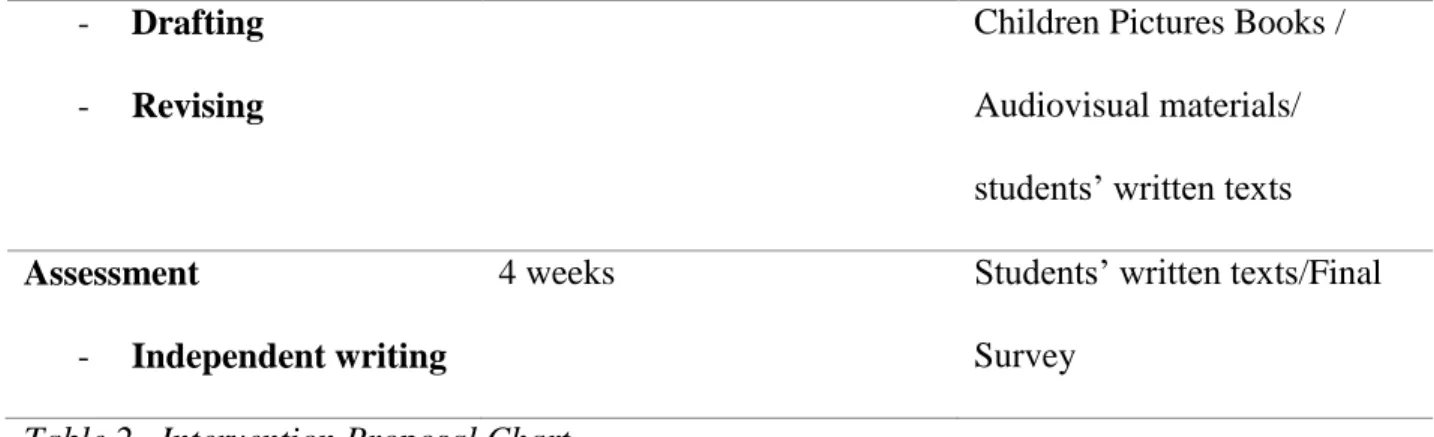
(37) CHILDREN PICTURE BOOKS TO IMPLEMENT A FIRST APPROACH TO WRITING. The research was developed in three stages. The first was called sensitization; in this stage, the main objective was to familiarize and contextualize students with Picture Books because eventually, these were the input or models for their writings. It should be mentioned that this phase was intended to serve as a source of vocabulary and structures. At this stage, some workshops/writing assignments were applied to start working on the writing skill but at this point, grammatical accuracy or coherence was not required. These workshops were always designed taking information from the books and also sticking to the topics required by the mentor-teacher. The second stage was called Orientation stage; in this phase, students started to refine their writing by creating sentences instead of words. To do this, the teacher introduced students the context of the stories, the characters, and all the aspects the teacher considered relevant to make the story understandable. In this regard, the teacher provided students with more tools to help them achieve improvements in their writings. Additionally, more attention was devoted to structure, grammatical accuracy, coherence, and clarity. The last stage is called Assessment; in this phase, the workshops and written texts were assessed devoting more attention to structure, grammatical accuracy, coherence and clarity in the students’ writing assignments and workshops. It should be clarified that this phase was adjusted to the needs and levels that the children reached for that moment. ACTIVITY. TIME (12 weeks). RESOURCES. Sensitization. 4 weeks. Children Picture Books/. -. Audiovisual materials/. Pre-Writing. workshops/ Orientation. 4 weeks. Workshops / Children. 29.
(38) CHILDREN PICTURE BOOKS TO IMPLEMENT A FIRST APPROACH TO WRITING. -. Drafting. Children Pictures Books /. -. Revising. Audiovisual materials/ students’ written texts. Assessment -. Students’ written texts/Final. 4 weeks. Survey. Independent writing. Table 2. Intervention Proposal Chart. Table 2 presents a summary of the intervention, however, it should be mentioned that it took more weeks than the ones proposed taking into account that the students had no knowledge of the language and also that this proposal was their first approach to writing. 4.2.1 Vision of Language According to Tudor (2001), the language “is a system, and mastering this system (or parts of it at least) is a prerequisite for any meaningful form of communication”(p.50). The author states that language as a linguistic system offers a variety of practical advantages especially in situations where students are not in regular, functionally oriented contact with the language, which was the case of this study. Additionally, “a system based approach”(p.50) allows teachers to introduce at least a sample of the language to be structured and presented to the students [children] in a pedagogical way. The author stated that teachers can not divide the language into pieces and try to sum of its parts when teaching, instead of that, they should use it as whole considering that language is “a complex phenomenon which operates at several levels simultaneously”(p.50). In this sense, language as a linguistic system fulfilled the targets of the research taking into account that the elements of language worked in the interventions were. 30.
(39) CHILDREN PICTURE BOOKS TO IMPLEMENT A FIRST APPROACH TO WRITING. presented through the use of Picture Books that not only contextualize the vocabulary learned but gave students authentic and situated learning situations. 4.2.2 Vision of Learning Tudor (2001) defined experiential learning as the use of the target language not only for communicative purposes but also as a means of learning in its own right. The author argued that This may clearly involve students using language which they may not have fully mastered, and contrasts with other more ‘traditional’ approaches which emphasize part practice (i.e. isolating parts of the whole for explicit study and learning) leading up in a more or less controlled manner to integrated language use for communicative purposes. (Tudor, 2001, p.78-79). According to the author statements, this vision of learning fulfilled the objectives of the research considering that it adapts to the needs of a population that in this case does not master the language completely. Likewise, it deals with the idea of a controlled manner to integrated language use for communicative purposes, that in this case were to produce more effective writing text. Moreover, the author states that most experiential approaches rest on the following five principles: message focus, holistic practice, the use of authentic materials, the use of communication strategies and the use of collaborative learning. This piece of research found in the five principles proposed by Tudor (2001) the support to cover the goals of working with the whole of the language and not in an isolated way. 4.3. Instructional design The instructional design of this study was developed by proposing several lesson plans. that were divided into three stages, see Table 2, based on the model proposed by Douglas (2000).. 31.
(40) CHILDREN PICTURE BOOKS TO IMPLEMENT A FIRST APPROACH TO WRITING. In addition, these three stages will be complemented by the phases proposed by the Department for Children, Schools and Families from the UK (2007) about Guided Writing Lessons. The first stage is called pre-writing; this stage encourages the generation of ideas which can happen in different ways such as reading. In this study, the pre-writing stage was developed by introducing to the students the Children Picture Books (input). This first stage also worked as a familiarization phase with the genre of the texts while the teacher helped students to identify the structures, vocabulary, and techniques used in the books. In this first stage, students had the opportunity to capture ideas from the books that provided them the models and content that could use throughout their writing processes. The next stage is called drafting; in this phase, students started exploring their ideas and organizing them into written texts that were checked by the teacher giving them the correspondent feedback. In this phase, the teacher was demonstrating the writing process in order to model students what they had to do. The last stage is called revising; as its name indicates in this phase, students reflected upon their own texts taking into account the feedback provided by the teacher. In this phase, the teacher supported students’ writing processes by correcting mistakes, refining ideas, among others; that helped them to rewrite their texts including improvements. In this last stage, students had the opportunity to experience an independent writing in which they could apply the strategies and skills gained during the previous stages. 4.3.1 Lesson planning Lesson Planning Chart Date 1st and 2nd. Activities. Resources. In this session, the main objective was to familiarize students with the project, the researcher, and the books.. Book: Don’t let the pigeon drive the bus!. 32.
Figure
+7


Documento similar
First, a correlational analysis was conducted to examine the extent of the relations between (a) transactional writing beliefs and the quality of the joint written synthesis
Also, simulations of a dynamic information-based control model for route selection were performed and compared to results of participants using a haptic device.. Results of
To answer this question, we conducted an observational study in which a group of elderly users from a rural community tested a social network that includes most Internet services
To this end, this study departed from the following research questions (RQ): (1) What types of writing errors can be spotted in first year tertiary students in a History CLIL
The analysis revealed significant differences in categories such as word count, clout, emotional tone, or analytical thinking when comparing the texts written by an
The mechanism for providing ingress filtering compatibility and some of the traffic engineering tools support legacy hosts, while the mechanism for establishing new communications
Government policy varies between nations and this guidance sets out the need for balanced decision-making about ways of working, and the ongoing safety considerations
Since writing complexity increases from one text to the other in the four studies performed (e.g. from a short writing task to a bachelor dissertation), the possibilities
