
Co occurring increases of calcium and organellar reactive oxygen species determine differential activation of antioxidant and defense enzymes in Ulva compressa (Chlorophyta) exposed to copper excess
15
0
0
Texto completo
(2) 1628 A. Gonzalez et al. enzyme of the octadecanoid pathway lipoxygenase (LOX) (Bate et al. 1994; Howles et al. 1996; La Caméra et al. 2004). The phenylpropanoid pathway produces multiple families of phenolic compounds with antimicrobial, antioxidant and other biological activities (Dixon 2001) and the octadecanoid pathway leads to the synthesis of oxylipins with antipathogenic and regulatory activities (Howe & Schilmiller 2002; Blée 2004). Regarding responses induced by abiotic stress in plants, ozone triggers a NADPH oxidase-dependent biphasic oxidative burst in Arabidopsis thaliana that activates antioxidant and defense enzymes (Schraudner et al. 1998; Mahalingam et al. 2006). On the other hand, ozone as well as absicic acid (ABA) treatment, dessication, cold, heat, salinity, ultraviolet (UV) light and anoxia induce intracellular calcium release and the activation of antioxidant enzymes (Knight, Trewavas & Knight 1997; Clayton et al. 1999; Lecourieux, Ranjeva & Pugin 2006; Hu et al. 2007). In this sense, the treatment of maize seedlings with ABA or H2O2 induces an increase in calcium which is required for the activation of SOD, AP and GR gene expression (Hu et al. 2007). Regarding stress by heavy metals, cadmium induced a NADPH oxidase-dependent accumulation of extracellular hydrogen peroxide (eHP) in tobacco cells and lead promoted the production of SA in Vicia faba root segments (Olmos et al. 2003; Romero-Puertas et al. 2004; Garnier et al. 2006; Pourrut et al. 2008). In addition, a delayed wave of SA was triggered by cadmium in mitochondria of tobacco cells (Garnier et al. 2006). However, it has been recently shown that cadmium inhibits NADPH oxidase activity in purified plasma membranes and induces H2O2 and SA production in isolated mitochondria (Heyno, Klose & Krieger-Liszkay 2008). Thus, it is possible that ROS accumulation in response to cadmium may occur mainly in organelles. Regarding copper stress, it was shown that it triggers the activation of NADPH oxidase in isolated membranes of plant cells (Quartacci, Cosi & Navari-Izzo 2001; Raeymaekers et al. 2003), enhances the production of SA in yeast mitochondria (Liang & Zhou 2007) and induces the release of intracellular calcium in tobacco cells (Inoue et al. 2005). In addition, copper, unlike cadmium, produces. OH by reacting with H2O2 as part of the Fenton reaction. Until now, there is no information about coordinated responses of ROS and calcium induced by copper stress in plants, neither about their involvement in the activation of antioxidant and/or defense enzymes. In macroalgae, much less is known on the biochemical responses to biotic and abiotic stresses. Some studies have addressed the responses to desiccation (Collén & Davison 1999; Burritt, Larkindale & Hurd 2002) and heavy metals (Collén, Pedersén & Colepicolo 2003; Ratkevicius, Correa & Moenne 2003; Contreras, Moenne & Correa 2005) in the field. Increases in ROS and activation of several antioxidant enzymes were detected in most cases (Burritt, Larkindale & Hurd 2002; Contreras et al. 2005). It was determined that copper induces in the brown seaweeds Lessonia nigrescens and Scytosiphon lomentaria a single peak of iHP at 2 h of. copper exposure and only L. nigrescens showed SA accumulation (Contreras et al. 2009). On the other hand, it was reported that strontium induces calcium release in the green microalga Eremosphaera viridis (Bauer et al. 1998) as does osmotic stress in the zygote of the brown macroalga Fucus serratus (Coelho et al. 2002). Among marine macroalgae, the opportunistic species Ulva compressa (Chlorophyceae) is known for being highly tolerant to metals in general, and to copper in particular (Say, Burrows & Witton 1990; Ratkevicius et al. 2003). In fact, U. compressa from copper-enriched environments not only accumulated the metal but also activated the antioxidant enzyme AP and increased the synthesis of ascorbate (ASC), which was accumulated as dehydroascorbate (DHA) (Ratkevicius et al. 2003). As in the case of plants, there is no information about the effects of copper stress on calcium release and ROS production and their involvement in the activation of antioxidant and/or defense enzymes in marine algae. Thus, in this work, we analysed the occurrence and kinetics of copper-induced intracellular calcium release and the nature, cellular location and kinetics of ROS accumulation as well as their involvement in the activation of antioxidant enzymes (AP, GR and GST) and defense enzymes (PAL and LOX) in the marine alga U. compressa.. MATERIALS AND METHODS Algal and seawater sampling U. compressa was collected in Cocholgüe (36°40′S), a nonimpacted site of southern Chile (Ratkevicius et al. 2003), during spring 2008 and transported to the laboratory in sealed plastic bags in a cooler at 4 °C. Algal samples were rinsed three times in sterile filtered seawater and cleaned twice for 1 min using a Branson 3200 (Danbury, CT, USA) ultrasound bath to remove epiphytic bacteria and organic debris. Seawater was obtained from Quintay (33°12′S) in central Chile, filtered through 0.2 mm pore size membrane filters and stored in darkness at 4 °C.. In vitro cultures U. compressa was cultured in 0.2 mm filtered seawater from Quintay, or in seawater containing 10 mM CuCl2 (Merck, Darmstadt, Germany), which corresponds to 635 mg of copper L-1. Culture medium was aerated and changed every 24 h. Triplicates of each treatment were cultured at 12 °C, 12:12 h photoperiod and 40–50 mmol m-2 s-1 irradiance. After sampling, material was treated with 100 mM Tris-HCl pH 8.0–10 mM ethylenediaminetetraacetic acid (EDTA) as standard rinsing step prior to different analyses.. Detection of calcium release U. compressa (1 g of fresh weight) was incubated in 10 mL of filtered seawater (control) and 1 g of alga in 10 mL filtered seawater containing 100 mM ryanodine for 40 min. Half of the control algae were transferred to seawater. © 2010 Blackwell Publishing Ltd, Plant, Cell and Environment, 33, 1627–1640.
(3) Calcium and ROS as signals in Ulva compressa 1629 without copper, and half to seawater with 10 mM CuCl2. Half of the ryanodine-treated lamina were transferred to seawater without copper and half to seawater with 10 mM CuCl2 and cultivated for 0 to 24 h and 2 to 7 d. At each experimental time, three lamina of each sample were incubated with 20 mM Fluo-3AM (Molecular Probes, Invitrogen, Eugene, OR, USA) for 30 min and washed three times in filtered seawater to remove the excess of the fluorophor. The lamina were visualized by confocal microscopy using an Axiovert 100 confocal microscope (Carl Zeiss, Oberkochen, Germany), an emission wavelength of 488 nm from an argon laser and a filter of 505–550 nm for fluorescence detection. The intensity of fluorescence was quantified in 30 cells of each lamina using LSM510 software of the confocal microscope.. 10 mM copper for 0 to 24 h and 2 to 7 d, in triplicate. A sample of 1.5 g was incubated in 100 mL of Tris–HCl buffer pH 7.0 containing 100 mM hydroethidine (Molecular Probes, Invitrogen) for 1 h at room temperature. Algal tissue was rinsed in seawater, blotted dry, weighed, frozen in liquid nitrogen and homogenized in a mortar with addition of 5 mL of 40 mM Tris–HCl buffer pH 7.5. The homogenate was centrifuged at 20 600 g for 15 min and the supernatant was recovered. Fluorescence of the clear extract was determined in a LS-5 spectrofluorometer (Perkin-Elmer) using an excitation wavelength of 480 nm and an emission wavelength of 590 nm. SA level was expressed as nanomoles of 2-hydroxy ethidium (2OH-E) using the extinction coefficient of 2OH-E (x = 9.4 mM-1 cm-1).. Detection of antioxidant and defense enzymes Detection of eHP eHP levels were determined incubating 5 g of fresh weight of U. compressa in 100 mL of seawater without copper or with 10 mM CuCl2 and incubated for 0 to 24 h and 2 to 7 d. At each experimental time, three samples of 1 mL of seawater was removed, added to 1 mL of 100 mM Tris–HCl pH 7.0 containing 100 mM Amplex Red (Invitrogen, Eugene, OR, USA) and 2 U mL-1 of horseradish peroxidase (Invitrogen) and incubated at room temperature for 5 min. The absorbance was determined at 570 nm using a Genesys 5 spectrophotometer (Spectronic, Milton Roy Co., Waltham, MA, USA). H2O2 level was calculated as nanomoles of resorufin using the extinction coefficient of resorufin (e = 54 mM-1 cm-1) but was expressed as nanomoles of H2O2 which are equivalent to nanomoles of resorufin.. Detection of iHP iHP levels were determined by cultivating 30 g fresh weight of U. compressa in 1 L of seawater without copper or with 10 mM copper for 0 to 24 h and 2 to 7 d, in triplicate. A sample of 1.5 g was incubated in 100 mL of Tris–HCl buffer pH 7.0 containing 10 mM 2′, 7′ dichlorohydrofluorescein diacetate (DCFH-DA, Calbiochem, San Diego, ca, USA) for 45 min at room temperature. Algal tissue was rinsed in seawater, blotted dry, weighed, frozen in liquid nitrogen and homogenized in a mortar with addition of 5 mL of 40 mM Tris–HCl buffer pH 7.0. The homogenate was centrifuged at 20 600 g for 15 min and the supernatant was recovered. Fluorescence of the clear extract was determined in a LS-5 spectrofluorometer (Perkin-Elmer, Norwalk, CT, USA) using an excitation wavelength of 488 nm and an emission wavelength of 525 nm. H2O2 level was expressed as nanomoles of 2′,7′ dichlorofluoresecein (DCF) using a calibration curve prepared with 0 to 500 nanomoles of DCF (Sigma, St. Louis, MO, USA).. U. compressa (30 g of fresh weight) was cultivated in 1 L of seawater without copper (control) and with 10 mM copper, in triplicate. Samples were collected after 6, 12 and 24 h, and 2, 3, 4, 5, 6 and 7 d of exposure. Protein extracts from U. compressa were obtained as described by Ratkevicius et al. (2003) as well as CAT, GP, AP, DHAR and GR antioxidant enzymes activities detection. GST activity dependent on 1-chloro 2, 4 dinitrobenzene (CDNB, Sigma) was determined in 1 mL of reaction mixture containing 100 mM phosphate buffer pH 7.0, 0.5 mM GSH, 1 mM CDNB and 50 mg of protein extract. The increase in absorbance at 340 nm due to GSH-CDNB adduct synthesis was monitored for 1 min. GST activity was calculated using the extinction coefficient of the GSHCDNB adduct (e = 9.6 mM-1 cm-1). PAL activity was determined in 1 mL of reaction mixture containing 100 mM phosphate buffer pH 7.0, 13 mM phenylalanine and 40–80 mg of protein extract at 40 °C. The increase in absorbance, due to cinnamic acid accumulation, was monitored at 290 nm for 45 min. PAL activity was calculated using the extinction coefficient of cinnamic acid (e = 17.4 mM-1 cm-1). LOX activity was determined in 1 mL of reaction mixture containing 100 mM phosphate buffer pH 7.0, 0.4 mM arachidonic acid and 25 mg of protein extract. The increase in absorbance due to the accumulation of conjugate dienes was monitored at 234 nm for 10 min. LOX activity was calculated using the extinction coefficient of conjugated dienes (e = 25 mM-1 cm-1). Additional LOX assays were also conducted using 0.4 mM of linoleic and linolenic acids. Glucose-6-phosphate dehydrogenase (G6PDH) activity was determined in 1 mL reaction mixture containing 40 mM Tris–HCl pH 8.2, 4 mM glucose, 0.6 mM NADP+, 5 mM MgCl2 and 50 mg of protein extract. The increase in absorbance due to NADPH accumulation was monitored at 340 nm for 5 min. G6PDH activity was calculated using the extinction coefficient of NADPH (e = 6.2 mM-1 cm-1).. Detection of intracellular SA. Treatment with ROS and calcium inhibitors. SA were determined by cultivating 30 g of fresh weight of U. compressa in 1 L of seawater without copper or with. Diphenylene iodomium (DPI, Sigma) is an inhibitor of flavin-containing enzymes as plasma membrane NADPH. © 2010 Blackwell Publishing Ltd, Plant, Cell and Environment, 33, 1627–1640.
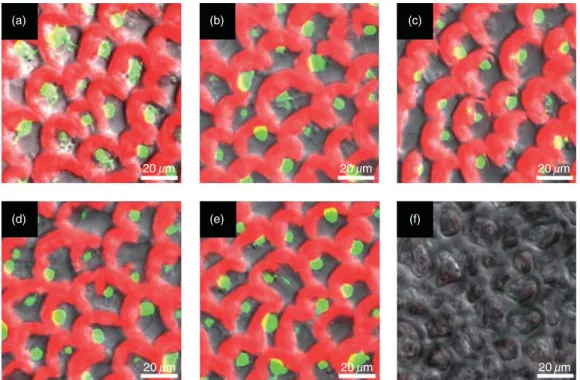
(4) 1630 A. Gonzalez et al. oxidase, mitochondrial complex I and II and chloroplast photosystem I ferredoxin:NADP oxidoreductase (Majander, Finel & Wikstrom 1994; Li & Trush 1998; Onda & Hase 2004; Ooyabu et al. 2008). Thus, for specific inhibition of organellar electron transport chains, the inhibitor of mitochondrial complex III, antimycin A (AA, Sigma), and the inhibitor of the photosystem II, 3-(2,3-dichlorophenyl)1,1-dimethylurea (DCMU, Sigma-Aldrich, Milwaukee, WI, USA), were used. U. compressa (30 g fresh tissue) was incubated in 100 mL of filtered sea water containing 10 mM AA, 20 mM DCMU, 10 mM AA and 20 mM DCMU, 10 mM DPI or 100 mM ryanodine (Alexis Biochemicals, San Diego, CA, USA) for 60 min, in triplicate. Algae were transferred to 1 L of seawater without copper or with 10 mM CuCl2 and incubated for 3 h to detect eHP,3 and 12 h to detect iHP,7 d to detect SA and 12 h or 7 d to detect antioxidant and defense enzyme activities.. Detection of cell viability Three lamina of U. compressa were incubated in 500 mL of filtered seawater containing 5 mM of Scyto-13 (Molecular Probes, Invitrogen) for 45 min, a fluorophor that stains nuclei of viable cells. A lamina of the alga was visualized by confocal microscopy using an Axiovert 100 confocal microscope (Carl Zeiss), emission wavelengths of 488 nm from an argon laser and 525 nm from a neon laser and a filter of 505–530 nm for fluorescence detection.. (a). Statistical analysis Significant differences were determined by two-way analysis of variance (anova) followed by Tukey’s multiple comparison tests (T). Differences between mean values were considered to be significant at a probability of 5% (P < 0.05) (Zar 1999).. RESULTS Detection of cell viability after treatment with increasing concentrations of copper Thalli of U. compressa cultivated with 0–50 mM of added copper for 7 d and then in seawater without copper addition for 7 additional days showed normal cell viability, as indicated by their green nuclei stained by Syto-13 fluorophor and chloroplasts normal in shape and fluorescence (Fig. 1a– e). In contrast, cells of thalli cultivated with 100 mM of added copper displayed collapsed nuclei and chloroplasts (Fig. 1f). Thus, copper additions of 0–50 mM are sub-lethal for U. compressa, and thus, 10 mM of added copper was selected for subsequent experiments.. Detection of copper-induced calcium release Copper stress induced an increase in intracellular calcium in U. compressa which was inhibited by ryanodine (Fig. 2a– c). Calcium release showed a triphasic pattern with maximal. (b). 20 mm. (d). (c). 20 mm. (f). (e). 20 mm. 20 mm. 20 mm. 20 mm. Figure 1. Visualization by confocal microscopy of cell viability in Ulva compressa cultivated in seawater without added copper (a), or with 5 mM (b), 10 mM (c), 25 mM (d), 50 mM (e) and 100 mM (f) of added copper for 7 d and then cultivated for 7 additional days in seawater without added copper. Green fluorescence of nuclei indicates cell viability and red fluorescence corresponds to chloroplast autofluorescence The white bar represents 20 mm. © 2010 Blackwell Publishing Ltd, Plant, Cell and Environment, 33, 1627–1640.
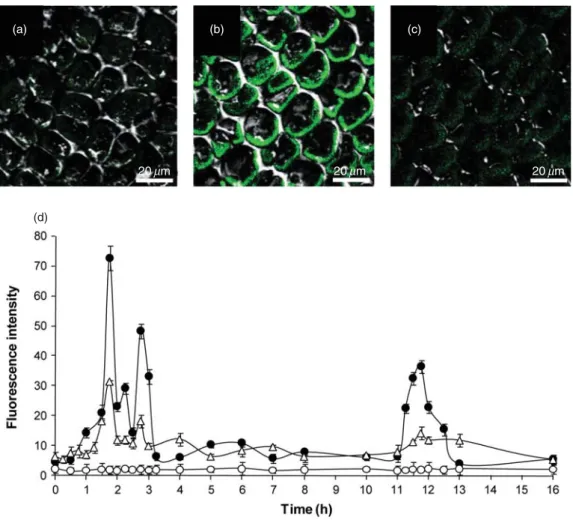
(5) Calcium and ROS as signals in Ulva compressa 1631. (a). (b). (c). 20 mm. 20 mm. 20 mm. (d). Figure 2. Visualization by confocal microscopy of intracellular calcium release in Ulva compressa incubated in seawater without copper addition (a), with 10 mM copper (b), treated 100 mM ryanodine and cultivated with 10 mM copper (c) for 12 h. Green fluorescence indicates calcium release (b). The level of intracellular calcium is expressed as fluorescence intensity (d) in samples incubated without copper (white circles), with 10 mM copper (black circles) and treated with 100 mM ryanodine and incubated with 10 mM copper (white triangles) for 0 to 16 h. Symbols represent mean values of three independent replicates ⫾ standard deviation.. levels at 2, 3 and 12 h which decreased 57, 60 and 66%, respectively, with 100 mM ryanodine (Fig. 2d).Algae treated with ryanodine and cultivated without copper showed the same level of intracellular calcium as those cultivated without ryanodine and without copper (data not shown). The level of intracellular calcium reached the control level at 13 h of copper exposure and remained unchanged until day 7 (data not shown).. completely inhibited by DPI (72%) reaching control level (Fig. 3b). Algae treated with ROS inhibitors and cultivated without copper showed the same level of eHP as those cultivated without inhibitors and without copper (data not shown). This shows that copper-induced eHP is produced mainly in organelles and it is also dependent on NADPH oxidase activity.. Detection of copper-induced iHP accumulation Detection of copper-induced eHP accumulation The accumulation of eHP showed a monophasic pattern in U. compressa cultivated with copper reaching a maximal level of 12.4 nmoles g-1 of fresh tissue after 3 h of culture compared with the control (Fig. 3a). eHP accumulation decreased to reach the control level at 6 h of copper exposure and remained unchanged until day 7 (data not shown). The accumulation of eHP was completely inhibited by DPI (Fig. 3a). Mean values of eHP at 3 h of copper exposure decreased 36% with AA, 40% with DCMU, 58% with the mixture of both organellar inhibitors and was. The accumulation of iHP showed a biphasic pattern during the first 12 h of exposure to copper, with a first peak of 1 nmoles g-1 of fresh tissue after 3 h followed by a second peak of 1.3 nmoles g-1 fresh tissue after 12 h (Fig. 4a). A sharp decline was recorded after 14 h of exposure, although the lowest level was still twice the basal level. Subsequent decline was gradual and continued until the basal level was reached after 48 h of exposure (Fig. 4a), a condition that persisted to the end of the experiment (day 7, data not shown). Incubation of U. compressa with DPI resulted in complete inhibition of both peaks (Fig. 4a). Mean values of. © 2010 Blackwell Publishing Ltd, Plant, Cell and Environment, 33, 1627–1640.
(6) 1632 A. Gonzalez et al.. Figure 3. Levels of extracellular hydrogen peroxide in Ulva compressa cultivated in seawater without copper addition (white circle), with 10 mM copper (black circle), treated with 10 mM diphenylene iodomium (DPI) and cultivated with 10 mM copper (white triangle) for 0 to 24 h (a). The level of hydrogen peroxide was determined in the alga cultivated without copper (C-), with 10 mM copper (C+) and treated with 10 mM antimycin A (AA), 20 mM 3-(2,3-dichlorophenyl)-1,1-dimethylurea (DCMU), the mixture of the latter inhibitors (AA + DCMU) or 10 mM DPI and cultivated with 10 mM copper for 3 h (b). The level of hydrogen peroxide is expressed in nanomoles per gram of fresh tissue (FT). Bars and symbols represent mean values of three independent replicates ⫾ standard deviation. Different letters indicate significant differences (P < 0.05).. H2O2 at 3 h of copper exposure decreased 41% with AA, 52% with DCMU, 66% with the mixture of organellar inhibitors and was completely with DPI (88%) reaching control level (Fig. 4b). In addition, mean values of H2O2 at 12 h of copper exposure decreased 48% with AA, 51% with DCMU, 67% with the mixture of organellar inhibitors and was completely by DPI (69%) reaching control level (Fig. 4c). Algae treated with ROS inhibitors and cultivated without copper showed the same level of iHP as those cultivated without inhibitors and without copper (data shown). Thus, copper-induced iHP is produced exclusively in organelles.. Detection of copper-induced SA accumulation The accumulation of SA did not increase during the first 3 d (Fig. 5a), but from day 3 onwards, they increased rapid and significantly, with no evidence of reaching a plateau at the end of the experimental period (Fig. 5a). DPI almost completely inhibited SA accumulation (Fig. 5a). The accumulation of SA at day 7 of copper treatment decreased 54% with AA, 60% with DCMU, 69% with a mixture of organellar inhibitors and was not. completely inhibited with DPI (84%) (Fig. 5b). Algae treated with ROS inhibitors and cultivated without copper showed the same level of SA as those cultivated without inhibitors and without copper (data not shown). Thus, a small fraction of SA is due to NADPH oxidase activity (15%) and another small fraction originates via Fenton reaction (7%).. Detection of antioxidant enzymes activities and effect of ROS and calcium inhibitors AP activity increased during the first 3 d from 0.04 to 13 mmoles min-1 mg-1 protein, which represents a 325 times increase, to then undergo an exponential increase, reaching the exceptional activity of 654 mmoles min-1 mg-1 protein (16 350 times increase) at the end of the experiment (Fig. 6a). AP activity was almost completely inhibited by DPI at day 7 of copper treatment (Fig. 6a). Mean values of AP activity was 61% inhibited by antimycin A, 71% by DCMU, 75% by the mixture of organellar inhibitors, 90% by DPI and was not inhibited by ryanodine after 7 d of copper treatment (Fig. 6b). GR activity, on the other hand, showed a sustained increase from day 1, reaching. © 2010 Blackwell Publishing Ltd, Plant, Cell and Environment, 33, 1627–1640.
(7) Calcium and ROS as signals in Ulva compressa 1633. Figure 4. Levels of intracellular hydrogen peroxide peroxide in Ulva compressa cultivated in seawater without copper addition (white circle), with 10 mM copper (black circle), treated with 10 mM diphenylene iodomium (DPI) and cultivated with 10 mM copper (white triangle) for 0 to 96 h (a). The level of hydrogen peroxide was determined in the alga cultivated without copper (C-), with 10 mM copper (C+) and treated with 10 mM antimycin A (AA), 20 mM 3-(2,3-dichlorophenyl)-1,1-dimethylurea (DCMU), the mixture of the latter inhibitors (AA + DCMU) or 10 mM DPI and cultivated with 10 mM copper for 3 h (b) or 12 h (c). The level of hydrogen peroxide is expressed in nanomoles per gram of fresh tissue (FT). Bars and symbols represent mean values of three independent replicates ⫾ standard deviation. Different letters indicate significant differences (P < 0.05).. 0.85 mmoles min-1 mg-1 of protein extract (14 times increase) at day 7 (Fig. 6c) and was moderately inhibited by DPI (Fig. 6c). GR activity was 22% inhibited by antimycinA, 32% by DCMU, 44% by the mixture of organellar inhibitors, 64% by DPI and 13% by ryanodine after 7 d of copper treatment (Fig. 6d). GST activity, on the other hand, increased from 0.03 to 0.34 mmoles min-1 mg-1 of protein extract after 24 h exposure (11 times increase) decreasing to the basal level after 5 d to remain stable to the end of the experiment (Fig. 6e). This activity was moderately inhibited by DPI (Fig. 6e). GST activity was 42% inhibited by antimycinA, 50% by DCMU, 58% by the mixture of organellar. inhibitors, 54% by DPI and 27% by ryanodine after 12 h of copper treatment (Fig. 6f).. Detection of defense enzymes activities and effect of ROS and calcium inhibitors PAL activity showed a constant increase in individuals of U. compressa cultivated with copper (Fig. 7a) from 2.9 to 40 nmoles min-1 mg-1 of protein extract after 7 d of exposure (14 times increase) and was not inhibited by DPI (Fig. 7a). PAL activity was not inhibited by AA, DCMU, the mixture of organellar inhibitors or DPI but was 38% inhibited. © 2010 Blackwell Publishing Ltd, Plant, Cell and Environment, 33, 1627–1640.
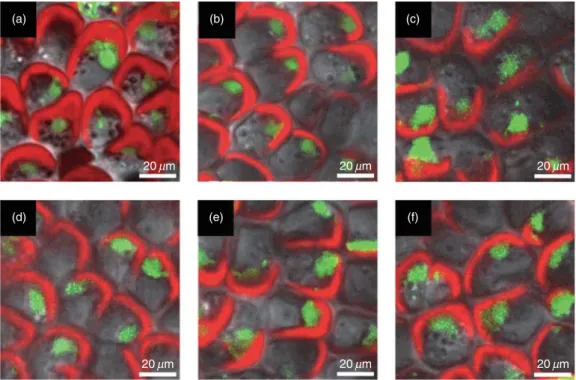
(8) 1634 A. Gonzalez et al.. Figure 5. Levels of intracellular superoxide anions in Ulva compressa cultivated in seawater without copper addition (white circle), with 10 mM copper (black circle), treated with 10 mM diphenylene iodomium (DPI) and cultivated with 10 mM copper (white triangle) for 0 to 7 d (a). Level of superoxide anions was determined in the alga cultivated without copper (C-), with 10 mM copper (C+) and treated with 10 mM antimycin A (AA), 20 mM 3-(2,3-dichlorophenyl)-1,1-dimethylurea (DCMU), the mixture of the latter inhibitors (AA + DCMU) or 10 mM DPI and cultivated with 10 mM copper for 7 d (b). The level of superoxide anions is expressed in nanomoles per gram of fresh tissue (FT). Bars and symbols represent mean values of three independent replicates ⫾ standard deviation. Different letters indicate significant differences (P < 0.05).. by ryanodine after 7 d of copper treatment (Fig. 7b). LOX activity, on the other hand, was detected only with arachidonic acid as substrate (Fig. 7c). The arachidonic acid-dependent LOX activity increased from 4.4 to 20 mmoles min-1 mg-1 of protein extract after 12 h of exposure (4.5 times increase) and showed a sharp decline after 12 h to reach the basal level at day 5 and it was not inhibited by DPI (Fig. 7c). LOX activity was not inhibited by AA, DCMU, the mixture of organellar inhibitors or DPI but was. 34% inhibited by ryanodine after 12 h of copper treatment (Fig. 7d).. Detection of cell viability after treatment with inhibitors and G6PDH activity Cell viability of U. compressa was analysed after 5 d of culture in control conditions (Fig. 8a), with copper only. © 2010 Blackwell Publishing Ltd, Plant, Cell and Environment, 33, 1627–1640.
(9) Calcium and ROS as signals in Ulva compressa 1635. Figure 6. Activities of antioxidant enzymes ascorbate peroxidase (AP) (a), glutathione reductase (GR) (c) and glutathione-S-transferase (GST) (e) in Ulva compressa cultivated without copper (white circles), with 10 mM copper (black circles), treated with 10 mM diphenylene iodomium (DPI) and cultivated with 10 mM copper (white triangles) for 0 to 7 d. Activities of AP (b), GR (d) and GST (f) were determined in the alga cultivated without copper (C-), with 10 mM copper (C+) and treated with 10 mM antimycin A (AA), 20 mM 3-(2,3-dichlorophenyl)-1,1-dimethylurea (DCMU), the mixture of the latter inhibitors (AA + DCMU), 10 mM DPI or 100 mM ryanodine (RYA) and cultivated with 10 mM copper for 7 d (b,d) or 12 h (f). Activities of AP, GR and GST are expressed as micromoles per minute per milligram of protein. Bars and symbols represent mean values of three independent replicates ⫾ standard deviation. Different letters indicate significant differences (P < 0.05).. (Fig. 8b) and with copper using individuals treated with the inhibitors AA (Fig. 8c), DCMU (Fig. 8d), the mixture of organellar inhibitors (Fig. 8e) or DPI (Fig. 8f). Algal cells were viable in all cases as their nuclei were green-stained by. Syto-13 fluorophor. In addition, the activity of the NADPHproducing enzyme G6PDH involved in basal metabolism (i.e. ribose synthesis) showed a constant activity of 0.35 mmoles min-1 mg-1 of protein extract that fluctuated. © 2010 Blackwell Publishing Ltd, Plant, Cell and Environment, 33, 1627–1640.
(10) 1636 A. Gonzalez et al.. Figure 7. Activities of phenylalanine ammonia lyase (PAL) (a) and lipoxygenase (LOX) (c) in Ulva compressa cultivated without copper (white circles), with 10 mM copper (black circles), treated with 10 mM diphenylene iodomium (DPI) and cultivated with 10 mM copper (white triangles) for 0 to 7 d. Activities of PAL (b) and LOX (d) were determined in the alga cultivated without copper (C-), with 10 mM copper (C+) and pre-treated with 10 mM antimycin A (AA), 20 mM 3-(2,3-dichlorophenyl)-1,1-dimethylurea (DCMU), the mixture of the latter inhibitors (AA + DCMU), 10 mM DPI or 100 mM ryanodine (RYA) for 7 d (b) or 12 h (d). Activity of PAL is expressed in nanomoles per minute per milligram of protein, whereas that of LOX is expressed in micromoles per minute per milligram of protein. Bars and symbols represent mean values of three independent replicates ⫾ standard deviation. Different letters indicate significant differences (P < 0.05).. only marginally during 7 d of copper exposure and was not inhibited by DPI (data not shown).. DISCUSSION Calcium release co-occurs with H2O2 accumulation This work shows that copper stress induced a triphasic release of intracellular calcium which was inhibited by ryanodine and co-occurred with the monophasic accumulation of eHP and the biphasic accumulation of iHP. The co-occurrence of calcium release and organellar H2O2 accumulation suggests that both responses might be coordinated and that calcium release may originate in organelles. In this sense, it is known that calcium is stored in mitochondria of animal cells, as in endoplasmic reticulum, and that there is a cross-talk between calcium and ROS since an enhanced. accumulation of mitochondrial ROS increases calcium release (Feissner et al. 2009). Thus, it is possible that a crosstalk between ROS and calcium could take also place in mitochondria and/or chloroplasts of U. compressa. The inhibition of calcium release in U. compressa by ryanodine indicates that copper-induced calcium release involves ryanodine-sensitive channels, mainly located in the endoplasmic reticulum, and a calcium-induced calcium release mechanism. It is important to point out that calcium release was only partially inhibited by ryanodine indicating that another type of calcium channels may also participate in copper-induced calcium release in our algal model (i.e. inositol triphosphate-sensitive channels, among others). Another interesting point is that the first peak of calcium did not coincide with those of H2O2, suggesting that this initial increase in calcium could participate in the activation of NADPH oxidase that is partially responsible for eHP accumulation and SA (see below).. © 2010 Blackwell Publishing Ltd, Plant, Cell and Environment, 33, 1627–1640.
(11) Calcium and ROS as signals in Ulva compressa 1637. (a). (b). (c). 20 mm. (d). 20 mm. (e). 20 mm. (f). 20 mm. 20 mm. 20 mm. Figure 8. Visualization by confocal microscopy of cell viability in Ulva compressa cultivated in seawater without copper (a), with 10 mM copper (b), treated with 10 mM antimycin A (c), 20 mM 3-(2,3-dichlorophenyl)-1,1-dimethylurea (d), the mixture of the latter inhibitors (e) or 100 mM ryanodine (f) and cultivated with 10 mM copper for 5 d. Green fluorescence of nuclei indicates cell viability and red fluorescence corresponds to autofluorescence of chloroplasts. The white bar represents 20 mm.. eHP and iHP is mainly produced in organelles The monophasic increase of eHP was mainly due to organellar H2O2 accumulation, but it was also a consequence of NADPH oxidase activity. This contrasts with results showing that cadmium-induced eHP is derived from NADPH oxidase activation in tobacco cells and alfalafa seedlings (Olmos et al. 2003; Garnier et al. 2006; OrtegaVillasante et al. 2007). However, it was recently reported that cadmium inhibits NADPH oxidase activity in isolated soybean plasma membranes and induces the production of H2O2 in purified potato mitochondria (Heyno et al. 2008) which is in accord with our results in U. compressa. It is possible that organellar H2O2 may reach the extracellular medium using aquaporin channels that are present in organelle and plasma membranes (Bienert et al. 2007). The biphasic increase of iHP was exclusively due to organellar H2O2 accumulation. This biphasic behaviour is similar to that registered in ozone-treated Arabidopsis plants where maximal levels were also registered at 3 and 12 h, but in this case, H2O2 accumulation was due to NADPH oxidase activity (Clayton et al. 1999). The biphasic behaviour of iHP accumulation in U. compressa contrasts with the monophasic increase of iHP in the brown macroalgae S. lomentaria and L. nigrescens cultivated with 100 mg L-1 of copper for 4 d where maximal levels of iHP were registered at 2 h of copper exposure (Contreras et al. 2009). An intriguing point related with H2O2 accumulation in U. compressa is that the effect of mitochondrial and chloroplast inhibitors is not additive indicating that. mitochondrial ETC inhibition induces partial inhibition of chloroplast ETC and vice versa. This suggests the occurrence of a metabolic communication between both compartments and the participation of molecule(s) produced in one compartment that can reach the other. In this sense, it has been shown that chloroplast and mitochondria can communicate through the malate:oxaloacetate shuttle (Yoshida, Terashima & Noguchi 2007). In chloroplasts, the excess of reducing power (NADPH) produced in response to high light is used as substrate by NADP-malate dehydrogenase to synthesize malate from oxaloacetate. Malate is then transported from the chloroplast to the mitochondria by the malate:oxaloacetate shuttle and used by NADmalate dehydrogenase to synthesize NADH which is incorporated in mitochondrial complex I. In this way, the excess of reducing power produced in the chloroplast is transferred to mitochondria. Such communication may also occur in the opposite direction (i.e. from mitochondria to chloroplasts) explaining that a reduction in electron transport in one compartment can reduce electron transport in the other. Then, it is possible that this organellar communication may also occur in U. compressa.. A retarded wave of SA is mainly produced in organelles Copper stress also induced a retarded wave of SA in U. compressa which was mainly due to organellar SA accumulation and only a minor fraction originated from NADPH oxidase activity and Fenton reaction.The temporal. © 2010 Blackwell Publishing Ltd, Plant, Cell and Environment, 33, 1627–1640.
(12) 1638 A. Gonzalez et al. accumulation of SA differs from that of eHP and iHP since it began at day 3 and increased until day 7. Interestingly, the accumulation of SA is temporally coincident with the increase of lipoperoxides (data not shown) which suggests that SA increase may be involved in lipoperoxides accumulation. The accumulation of SA in U. compressa may be due to the overwhelmingness of mitochondrial and chloroplast SOD which cannot completely detoxify SA that are mainly produced in mitochondrial complex I and III and chloroplast photosystem I (Siraki et al. 2002; Asada 2006).. Activation of antioxidant enzymes is differentially triggered by ROS and calcium In U. compressa, the activation of antioxidant enzymes is dependent on ROS increase and, in some cases, on intracellular calcium release. In particular, the increase in AP activation is exclusively ROS dependent since its activation was almost completely inhibited by DPI and not inhibited by ryanodine. This contrasts with results obtained in maize leaves where increase in intracellular calcium induced by ABA is required for the activation of AP gene expression (Hu et al. 2007). In addition, GR activity is dependent on ROS increase production and calcium release in U. compressa which is in accord with the calcium-dependent activation of GR gene expression in maize leaves treated with ABA and H2O2 (Hu et al. 2007). Furthermore, GST activity is also dependent on ROS increase and calcium release in U. compressa which is in agreement with the requirement of calcium for the activation of GST gene expression in A. thaliana seedlings treated with ozone (Clayton et al. 1999).. Activation of defense enzymes is triggered by calcium In addition, the activation of defense enzymes PAL and LOX depends exclusively on calcium release in U. compressa. PAL activity has been detected in the red macroalga Chondrus crispus (Bouarab et al. 2004) and in a green macroalgae (this work) indicating that this enzyme is present in marine macroalgae. This contrasts with genomic data suggesting that PAL encoding gene may not be present in algae since it was not detected in green and red microalgae genomes (Emiliani et al. 2009). Regarding calcium release and PAL activation in terrestrial plants, it was recently shown that methyl jasmonate induces calcium release in grapevine cells and that calcium is involved in the activation of PAL gene expression (Faurie, Cluzet & Mérillon 2009). In U. compressa, copper stress induced a sustained activation of PAL which is similar to that reported in potatoes (Reyes & Cisneros-Zeballos 2003) and lettuces (Kim et al. 2007) where wounding and exposure to methyl jasmonate also resulted in a persistent increase in this enzyme activity. In the latter studies, it was additionally demonstrated that the steady increase in PAL activity led to the accumulation of phenolic compounds with antioxidant capacity (Reyes & Cisneros-Zeballos 2003; Kim et al. 2007). This is consistent. with the accumulation of phenolic compounds detected in U. compressa (data not shown) which are probably involved in buffering oxidative stress induced by copper stress. In this context, it has been shown that some phenolic compounds and derived polyphenols have antioxidant capacity (i.e. Grace & Logan 2000; Moore et al. 2005) and metal-binding properties (i.e. Lavid et al. 2001). On the other hand, the transient increase in LOX activity was dependent on calcium release and not on ROS accumulation. The transient activation of LOX in U. compressa contrasts with the situation found in brown macroalgae where copper induces a sustained activation of LOX in L. nigrescens and a LOX activity that reached a constant level in S. lomentaria (Contreras et al. 2009). Interestingly, LOX in U. compressa only uses arachidonic acid as substrate, as it was shown in the brown macroalgae L. nigrescens and S. lomentaria (Contreras et al. 2009). This contrasts, with results in the red macroalga C. crispus where LOX also uses linolelic/linoleic acid as substrates, as in terrestrial plants (Bouarab et al. 2004). Finally, in U. compressa, the activity of G6PDH which is involved in ribose synthesis and produces NADPH did not change in response to copper stress or during the treatment with DPI, indicating that basal metabolism was probably not affected by copper stress in this alga.. CONCLUSIONS This work shows that copper stress triggers a triphasic release of intracellular calcium which co-occurs with a monophasic increase of eHP and a biphasic accumulation iHP. In addition, copper induces a retarded wave of SA which is not accompanied by calcium release. The accumulation of eHP occurred mainly in organelles but was also due to NADPH oxidase activity, that of iHP occurred exclusively in organelles and that of SA occurred mainly in organelles but was also due to NADPH activity and to the Fenton reaction. ROS accumulation and calcium release determined the differential activation of antioxidant and defense enzymes. In particular, AP activation was only ROS-dependent, PAL and LOX activities were exclusively calcium dependent and GR and GST required calcium and ROS as triggering signals.. ACKNOWLEDGMENTS This work was funded by FONDECYT 1085041 and DICYT from Universidad de Santiago de Chile to A. Moenne and FONDAP-Conicyt 1501-0001 sub-program 7 and ICA to J. A. Correa.. REFERENCES Asada K. (2006) Production and scavenging of reactive oxygen species in chloroplast and their functions. Plant Physiology 141, 391–396. Baker J.C. & Orlandi E.W. (1997) Active oxygen in plant pathogenesis. Annual Review in Phytopathology 33, 299–321.. © 2010 Blackwell Publishing Ltd, Plant, Cell and Environment, 33, 1627–1640.
(13) Calcium and ROS as signals in Ulva compressa 1639 Bate N.J., Orr J., Ni W., Meromi A., Nadler-Hassar T., Doerner P.W., Dixon R., Lamb C.J. & Elkind Y. (1994) Quantitative relationship between phenylalanine ammonia-lyase levels and phenylpropanoid accumulation in transgenic tobacco identifies a rate-limiting step in natural product synthesis. Proceedings of the National Academy of Sciences of the United States of America 91, 7608–7612. Bauer C.S., Plieth C., Bethmann B., Popescu O., Hansen U.P., Simonis W. & Schonknecht G. (1998) Strontium-induced repetitive calcium spikes in a unicellular green alga. Plant Physiology 17, 545–557. Bienert G.D., Möller A.L.B., Kristiansen K.A., Schulz A., Möller I.M., Schjoerring J.K. & Jahn T.P. (2007) Specific aquaporins facilitate the diffusion of hydrogen peroxide across membranes. Journal of Biological Chemistry 282, 1183–1192. Blée E. (2004) Impact of phyto-oxylipins in plant defense. Trends in Plant Science 7, 315–321. Bouarab K., Adas F., Gaquerel E., Kloareg B., Salaün J.P. & Potin P. (2004) The innate immunity of a marine red alga involves oxylipins from both the eicosanoid and octadecanoid pathways. Plant Physiology 135, 1838–1848. Burritt D.J., Larkindale J. & Hurd K. (2002) Antioxidant metabolism in the intertidal red seaweed Scitosiphonia arbuscula following dessication. Planta 215, 829–838. Clayton H., Knight M.R., Knight H., McAinsh M.R. & Hetherington A.M. (1999) Dissection of the ozone-induced calcium signature. The Plant Journal 17, 575–579. Coelho S.M., Taylor A.R., Ryan K.P., Sousa-Pinto I., Brown M.T. & Brownlee C. (2002) Spatiotemporal patterning of reactive oxygen production and Ca+2 wave propagation in Fucus rhizoid cells. The Plant Cell 14, 2369–2381. Collén J. & Davison I.R. (1999) Reactive oxygen metabolism in intertidal Fucus spp. (Phaeophyceae). Journal of Phycology 35, 62–69. Collén J., Pedersén M. & Colepicolo P. (2003) Induction of oxidative stress in the red macroalga Gracilaria tenuistipitata by pollutant metals. Archives of Environmental Contamination and Toxicology 45, 337–342. Contreras L., Moenne A. & Correa J.A. (2005) Antioxidant responses in Scytosiphon lomentaria (Phaeophyceae) inhabiting copper-enriched coastal environments. Journal of Phycology 41, 1184–1195. Contreras L., Mella D., Moenne A. & Correa J.A. (2009) Differential responses to copper-induced oxidative stress in the marine macrolagae Lessonia nigrescens and Scytosiphon lomentaria (Phaeophyceae). Aquatic Toxicology 94, 94–102. Desikan R., Hancock J.T., Coffey M.J. & Neill S.J. (1996) Generation of active oxygen in elicited cells of Arabidopsis thaliana is mediated by a NADPH oxidase-like enzyme. FEBS Letters 382, 213–217. Dixon R.A. (2001) Natural products and plant disease resistance. Nature 411, 843–847. Emiliani G., Fondi M., Fani R. & Gribaldo S. (2009) A horizontal gene transfer at the origin of phenylpropanoid metabolism: a key adaptation of plants to land. Biology Direct 4, 7. Faurie B., Cluzet S. & Mérillon J.M. (2009) Implication of signaling pathways involving calcium, phosphorylation and active oxygen species in methyl jasmonate induced defense responses in grapevine cell cultures. Journal of Plant Physiology 166, 1863– 1877. Feissner R.F., Skalska J., Gaum W.E. & Sheu S.S. (2009) Crosstalk signaling between mitochondrial Ca+2 and ROS. Frontiers in Bioscience 14, 1197–1218. Fujita M., Fujita Y., Noutoshi Y., Takahashi F., Narusaka Y., Yamagushi-Shinozaki K. & Shinozaki K. (2006) Crosstalk between abiotic and biotic stress responses: a current view from. the points of convergence in the stress signaling networks. Current Opinion in Plant Biology 9, 436–442. Garcia-Brugger A., Lamotte O., Vandelle E., Bourque S., Lecourieux D., Poinssot B., Wendehenne D. & Pugin A. (2006) Early signaling events induced by elicitors of plant defenses. Molecular Plant-Microbe Interactions 19, 711–724. Garnier L., Simon-Plas F., Thuleau P., Agnel J.P., Blein J.P., Ranjeva R. & Montillet J.L. (2006) Cadmium affects tobacco cells by a series of three waves of reactive oxygen species that contribute to cytotoxicity. Plant, Cell & Environment 29, 1956–1969. Grace S.C. & Logan B.A. (2000) Energy dissipation and radical scavenging by the plant phenylpropanoid pathway. Philosophical Transactions of the Royal Society in Biological Sciences 355, 1499–1510. Hammond-Kosack K.E. & Jones J.D.G. (1996) Resistance genesdependent plant defense responses. The Plant Cell 8, 1773–1791. Heyno E., Klose C. & Krieger-Liszkay A. (2008) Origin of cadmium-induced reactive oxygen species production: mitochondrial electron transfer versus plasma membrane NADPH oxidase. New Phytologist 179, 687–699. Howe G.A. & Schilmiller A.L. (2002) Oxylipin metabolism in response to stress. Current Opinion in Plant Biology 5, 230–236. Howles P.A., Paiva N.L., Sewalt V.J.H., Elkind N.L., Bate Y., Lamb C.J. & Dixon R.A. (1996) Overexpression of L-phenylalanine ammonia-lyase in transgenic tobacco plants reveals control points flux into phenylpropanoid biosynthesis. Plant Physiology 112, 1617–1624. Hu X., Jiang M., Zhang J., Zhang A., Lin F. & Tan M. (2007) Calcium-calmodulin is required for absicic-acid induced antioxidant defense and functions upstream and downstream of H2O2 production in leaves of maize (Zea mays) plants. New Phytologist 173, 27–38. Inoue H., Kudo T., Kamada H., Kimura M., Yamaguchi I. & Hamamoto H. (2005) Copper elicits an increase in cytosolic free calcium in cultured tobacco cells. Plant Physiology and Biochemistry 43, 1089–1094. Jabs T., Tshöpe M., Colling C., Halbrock K. & Scheel D. (1997) Elicitor-stimulated ion fluxes and O2- from the oxidative burst are essential components in triggering defense gene activation and phytoalexin synthesis in parsley. Proceedings of the National Academy of Sciences of the United States of America 94, 4800– 4805. Kim H.J., Fonseca J., Choi J.H. & Kubota C. (2007) Effect of the methyl jasmonate on phenolic compounds and carotenoids of romaine lettuce (Lactuca sativa L.). Journal of Agriculture and Food Chemistry 55, 10366–10372. Knight H., Trewavas A.J. & Knight M.R. (1997) Calcium signaling in Arabidopsis thaliana responding to drought and salinity. The Plant Journal 12, 1067–1078. Kurusu T., Yagala T., Miyao A., Hirochika H. & Kuchitsu K. (2005) Identification of a putative voltage-gated Ca+2 channel as a key regulator of elicitor-induced hypersensitive cell death and mitogen-activated protein kinase activation in rice. The Plant Journal 42, 798–809. La Caméra S., Gouzhert G., Dohndt S., Hoffmann L., Fritig B., Legrand M. & Heitz T. (2004) Metabolic reprogramming in plant innate immunity: the contribution of the phenylpropanoid and oxylipin pathways. Immunological Reviews 198, 267–284. Lavid N., Schwartz A., Tel Yarden O. & Or E. (2001) The involvement of polyphenols and peroxidase activities in heavy-metal accumulation by epidermal glands in waterlily (Nymphaeaceae). Planta 212, 323–331. Lecourieux D., Mazars C., Pauly N., Ranjeva R. & Pugin A. (2002) Analysis and effects of cytosolic free calcium increases in response to elicitors in Nicotiana plumbaginifolia cells. The Plant Cell 14, 2627–2641.. © 2010 Blackwell Publishing Ltd, Plant, Cell and Environment, 33, 1627–1640.
(14) 1640 A. Gonzalez et al. Lecourieux D., Ranjeva R. & Pugin A. (2006) Calcium in plant defence-signalling pathways. New Phytologist 171, 249–269. Li Y.L. & Trush M.A. (1998) Diphenyleneiodonium, an NAD(P)H oxidase inhibitor, also potently inhibits mitochondrial reactive oxygen species production. Biochemical and Biophysical Research Communications 253, 295–299. Liang Q. & Zhou B. (2007) Copper and manganese induce yeast apoptosis via different pathways. Molecular Biology of the Cell 18, 4741–4749. Mahalingam R., Jambunathan N., Gunjan S.M., Faustin E., Weng H. & Ayoubi P. (2006) Analysis of oxidative signaling induced by ozone in Arabidopsis thaliana. Plant, Cell & Environment 29, 1357–1371. Majander A., Finel M. & Wikstrom M. (1994) Diphenyleneiodonium inhibits reduction of iron-sulfur clusters in the mitochondrial NADH-ubiquinone oxidoreductase (complex I). Journal of Biological Chemistry 269, 21037–21042. Mittler R., Vanderauwer A.S., Gollery M. & Van Breusegem F. (2004) Reactive oxygen gene network of plants. Trends in Plant Science 9, 490–498. Moore J.P., Westall L., Ravenscroft N., Farrant J.M., Lindsey G.G. & Brandt W.F. (2005) The predominant polyphenol in the leaves of the resurrection plant Myrothamnus flabellifolius, 3, 4, 5 tri-Ogalloylquinic acid, protects membranes against desiccation and free radical-induced peroxidation. Biochemical Journal 385, 301– 308. Ogasawara Y., Kaya H., Hiraoka G., et al. (2008) Synergistic activation of the Arabidopsis NADPH oxidase AtrbohD by Ca+2 and phosphorylation. Journal of Biological Chemistry 283, 8885–8892. Olmos E., Martínez-Solano J.R., Piqueras A. & Hellín E. (2003) Early steps in the oxidative burst induced by cadmium in cultured tobacco cells (BY-2 line). Journal of Experimental Botany 54, 291–301. Onda Y. & Hase T. (2004) FAD assembly and thylakoid membrane binding of ferredoxin:NADP+ oxidoreductase in chloroplast. FEBS Letters 564, 116–120. Ooyabu J., Ohtsuka M., Kashino Y., Hiroyuki K. & Satoh K. (2008) The expression pattern of NAD(P)H oxidases and the cyclic electron transport pathway around photosystem I of Synechocystis sp. PCC6803 depend on growth conditions. Bioscience Biotechnology and Biochemistry 72, 3180–3188. Ortega-Villasante C., Hernández L.E., Rellán-Alvarez R., Del Campo F.F. & Carpena-Ruiz R.O. (2007) Rapid alteration of cellular redox homeostasis upon exposure to cadmium and mercury in alfalfa seedlings. New Phytologist 176, 96–107. Pourrut B., Perchet G., Silvestre J., Cecchi M., Guiresse M. & Pinelli E. (2008) Potential role of NADPH oxidase in early steps of lead-induced oxidative burst in Vicia faba roots. Journal of Plant Physiology 165, 571–579. Quartacci M.F., Cosi E. & Navari-Izzo F. (2001) Lipids and NADPH-dependent superoxide production in plasma membrane vesicles from roots of wheat grown under copper deficiency or excess. Journal of Experimental Botany 52, 77–84.. Raeymaekers T., Potters G., Asard H., Guisez Y. & Horemans N. (2003) Copper-mediated oxidative burst in Nicotiana tabacum L. cv. bright yellow 2 cell suspension cultures. Protoplasma 221, 93–100. Ratkevicius N., Correa J.A. & Moenne A. (2003) Copper accumulation, synthesis of ascorbate and activation of ascorbate peroxidase in Enteromorpha compressa (L.) Grev (Chlorophyta) from heavy metal-enriched environments in northern Chile. Plant, Cell & Environment 26, 1599–1608. Reyes L.F. & Cisneros-Zeballos L. (2003) Wounding stress increases the phenolic content and antioxidant capacity of purple-flesh potatoes (Solanum tuberosum L.). Journal of Agriculture and Food Chemistry 51, 5296–5300. Romero-Puertas M.C., Rodríguez-Serrano M., Corpas F.J., Gómez M., Del Rio L.A. & Sandalio L.M. (2004) Cadmium-induced subcellular accumulation of O2- and H2O2 in pea leaves. Plant, Cell & Environment 27, 1122–1134. Say P.J., Burrows I.G. & Witton B.A. (1990) Enteromorpha as a monitor of heavy metals in estuaries. Hydrobiologia 195, 119– 126. Schraudner M., Moeder W., Wiese C., Van Camp W., Inzé D., Langebartels C. & Sandermann H. (1998) Ozone-induced oxidative burst in the ozone biomonitor plant, tobacco Bel W3. The Plant Journal 16, 235–245. Siraki A.G., Pourahmad J., Chan T.S., Khan S. & O’Brien P.J. (2002) Endogenous and endobiotic induced reactive oxygen species formation by isolated hepatocytes. Free Radical Biology and Medicine 32, 2–10. Tavernier E., Wendehenne D., Blein J.P. & Pugin A. (1995) Involvement of free calcium in action of cryptogein, a proteinaceous elicitor of hypersensitive reaction in tobacco cells. Plant Physiology 109, 1025–1031. Torres M. & Dangl J.L. (2005) Functions of the respiratory burst oxidase in biotic interactions, abiotic stress and development. Current Opinion in Plant Biology 8, 397–403. Van Breusegem F., Bailey-Serres J. & Mittler R. (2008) Unraveling the tapestry of networks involving reactive oxygen species in plants. Plant Physiology 147, 978–984. Varnier A.L., Sanchez L., Vatsa P., et al. (2009) Bacterial rhamnolipids are novel MAMPs conferring resistance to Botrytis cinerea in grapevine. Plant, Cell & Environment 32, 178–193. Wojtazsek P. (1997) Oxidative burst: an early plant defense response to pathogen infection. Biochemical Journal 322, 681– 692. Yoshida K., Terashima I. & Noguchi K. (2007) Up-regulation of mitocondrial alternative oxidase concomitant with chloroplast over-reduction by excess light. Plant Cell Physiology 48, 606– 614. Zar J. (1999) Biostatistical Analysis, 4th edn. Prentice Hall Editors, Englewood Cliffs, UK. Received 11 March 2010; received in revised form 5 April 2010; accepted for publication 6 April 2010. © 2010 Blackwell Publishing Ltd, Plant, Cell and Environment, 33, 1627–1640.
(15) This document is a scanned copy of a printed document. No warranty is given about the accuracy of the copy. Users should refer to the original published version of the material..
(16)
Figure


+2
Documento similar
B. The 192 µM dose led to a reduction in the total leaf area and leaf thickness in both species, although more strongly so in white lupin. In the latter species it was also
Energy-dispersive X-ray microanalysis showed the cell walls to be the main area of Cu binding in the inner and outer cortex and infected zone of white lupin
In summary, we have developed the first catalytic enantioselective synthesis of cyclobutylboronates, catalyzed by a chiral phosphine-copper(I) complex. The method
The formation of mitochondrial reactive oxygen and nitrogen species may lead to endothelial dysfunction by the activation of the vascular and phagocy- tic NOXs through protein kinase
The advocates of this view have argued that operator-based formalizations of English sentences are inadequate for the purposes of natural language semantics because they
fluorescent dyes) for in vivo imaging of living tissues are: i) permeation of a substrate is not required, making non-invasive techniques for in vivo monitoring of ROS/redox
However, in the case of copper, hundreds of complexes based on picolinic acid derivatives have been prepared, giving rise to molecular complexes [20, 21]
In the second chapter of this Doctoral Thesis we have developed a stereospecific copper-catalyzed substitution reaction of propargylic ammonium salts with
