
Dialogue in ELT Group Based thesis supervision: an exploratory case study
103
0
0
Texto completo
(2) ii.
(3) Abstract. This thesis reports an exploratory case study of the use of dialogues in a group-based thesis supervision process in an English language teaching master’s programme in a public Mexican university. The main purpose of this study was to investigate how these dialogical interactions occurred and how they influenced participants’ perspectives on this experience. The data were collected via observations, interviews, and a focus group. Observations were carried out throughout the 2016 autumn semester and focused on a 7-student group under thesis supervision. A focus group and individual interviews were done to further understand dialogue occurrences and influence on participants’ perceptions. The research found that dialogue –in this case- was triggered and centred by artefacts. Artefacts served as twofold mediators; they mediated participants’ understanding of their projects and participants’ project explanation to others. Using a framework based on both Bereiter and Scardamalia’s (2007) and Innes’ (2007) categorisations, findings revealed that although different types of dialogue were used in the research group supervision, the use of each particular type of dialogue depended largely on the stage of the thesis process. In addition, participants reported that group-based thesis supervision provided a meaningful experience that modified their perception on thesis supervision and collaborative work. Finally, group-based thesis supervision seems to offer an alternative to individual thesis supervision that could benefit participants. It encouraged students not only to further improve their projects but also provided a source of motivation, modelling, and a sense of community in the complex process of thesis writing.. iii.
(4) Acknowledgements. As it is well known, the success of any project depends largely on the encouragement and guidance of many others. That is why I would like to take this opportunity to express my gratitude to the people who were instrumental in the completion of this thesis. I would like to express my deepest appreciation to my advisor Professor Fátima Encinas Prudencio for her support, wisdom, and tireless assistance which were determinant for the completion of this research project. My sincere thanks also go to Professor Roberto Criollo Avendaño, Professor Moisés Escudero Perales and Professor Verónica Sánchez Hernández. I am extremely grateful for their valuable and constructive suggestions that enriched this thesis. It was a real pleasure to have worked with them throughout the development of this research project at its different stages. Finally, I would like to thank to the participants of this study. I feel so blessed to have shared this journey with them and witnessed every milestone of their work. I am so thankful for the opportunity that they gave me; I did not only observe their development but also learned from them, with them, and through them. This thesis is the result of a beautiful collaboration, creativity, and inspiration. Thank you to everyone involved in all levels.. iv.
(5) This thesis is dedicated to my family. To my mum whose role in my life has been an inspiration and a model full of strength and courage to never give up. To Camila, Fernando, Valeria, and Mateo who give a lovely meaning to life. To Joe whose thoughtful conversations and questioning help me understand life; words alone would not express how thankful I am. To all my friends -especially Lupita and Marisol whose help was fundamental to embark on this master’s journey- for letting me experience life with them. And finally, to all the people that I have met along the road for tempting me to become a better version of myself.. v.
(6) Table of Contents Abstract. iii. Acknowledgements. iv. Dedications. v. List of Tables. x. List of Figures. x. CHAPTER ONE: INTRODUCTION 1.0 Introduction. 1. 1.1 A link between language, dialogue and research supervision. 2. 1.2 Significance of the study. 3. 1.3 Purposes. 5. 1.4 Research questions. 6. 1.5 Research Methodology. 6. 1.6 Potential ethical issues. 7. 1.7 Conclusion. 7. CHAPTER TWO: LITERATURE REVIEW 2.0 Introduction. 9. 2.1 Knowledge building. 9. 2.1.1 Knowledge building from socio-cultural and socio-cognitive perspectives. 10. 2.1.1.1 Scaffolding and vicarious learning. 12. 2.1.1.2 Artefacts and symbolising capability. 14. 2.2 Community of practice. 16. 2.2.1 Identity. 18. 2.2.2 Discourse and practices. 19. vi.
(7) 2.2.3 Artefacts 2.3 Dialogue. 19 19. 2.3.1 Features of dialogue. 24. 2.3.2 Levels of dialogue. 26. 2.3.2.1 Recitation. 27. 2.3.2.2 Teacher-mediated dialogue. 27. 2.3.2.3 Teacher-managed debate. 28. 2.3.2.4 Independent small group discussion. 29. 2.3.2.5 Problem solving dialogue. 30. 2.4 Previous studies. 31. CHAPTER THREE: RESEARCH METHODOLOGY 3.0 Introduction. 34. 3.1 Research approach. 34. 3.2 Research design. 35. 3.3 Data collection strategies. 37. 3.3.1 Observations. 37. 3.3.2 Interviews. 38. 3.4 Participants. 38. 3.5 Data collection procedures. 39. 3.5.1 Observations. 39. 3.5.2 Interviews. 40. 3.6 Analysis. 40. CHAPTER FOUR: FINDINGS 4.0 Introduction. 43. 4.1 Oral presentations and artefacts as triggers of dialogue. 43 vii.
(8) 4.2 Overview of sequences of dialogue and interpretations from the focus group. 46. 4.3 Categorisation of dialogue sequences. 51. 4.3.1 Teacher-mediated dialogue. 52. 4.3.2 Debate. 53. 4.3.3 Problem solving dialogue. 55. 4.3.3.1 Simple link between the content and the project. 57. 4.3.3.2 Suggestions for ways to analyse or categorise the project in theoretical terms. 58. 4.3.3.3 Unsupported opinion –good or bad- about the project. 60. 4.3.3.4 Identifying specific issues facing the project and its problems. 61. 4.3.3.5 Identifying or analysing issues facing the project and its problems. 62. 4.3.3.6 Putting forward suggestions for dealing with problems. 64. 4.4 Participants’ insights. 66. 4.4.1 Meaningful dialogues. 66. 4.4.2 Models. 69. 4.4.3 Research group supervision as a turning point. 71. 4.4.4 Impact in further activities. 73. CHAPTER FIVE: CONCLUSIONS 5.0 Introduction. 76. 5.1 Findings of the study. 76. 5.1.1 Artefacts as dialogue triggers. 77. 5.1.2 Types of dialogue characteristic of thesis supervision. 78. 5.1.3 Peers’ presentations as models. 79. 5.1.4 Thesis supervision as a turning point. 79. viii.
(9) 5.2 Discussion. 80. 5.3 Research contributions. 81. 5.3.1 Background theory. 81. 5.3.2 Pedagogical implications. 82. 5.4 Limitations and suggestions for further research. 83. 5.5 A Final thought. 84. References. 86. Appendix Appendix A: Agenda of individual interviews. 92. ix.
(10) List of tables 2.1. Previous studies on research group supervision. 31. 4.1. Sample selection. 44. 4.2. Types of dialogue during the sessions. 52. 4.3. Socratic questioning. 53. 4.4. Debate. 54. 4.5. Debate 2. 54. 4.6. Problem-solving dialogue type distribution. 56. 4.7. Making connections between the content and the project. 57. 4.8. Making connections between the content and the project 2. 58. 4.9. Suggestions for ways to analyse or categorise the project in theoretical terms. 59. 4.10. Suggestions for ways to analyse or categorise the project in theoretical terms 2. 59. 4.11. Unsupported opinions. 60. 4.12. Identifying specific issues facing the project and its problems. 61. 4.13. Identifying specific issues facing the project and its problems 2. 61. 4.14. Analysing specific issues facing the project and its problems. 63. 4.15. Analysing specific issues facing the project and its problems 2. 63. 4.16. Suggestions for dealing with problems. 65. 4.17. Suggestions for dealing with problems 2. 65. 4.18. Summary of participants´ most meaningful sessions. 67. List of figures 4.1. Interactions’ trigger. 45. 4.2. Sequences of dialogue throughout the sessions. 46. x.
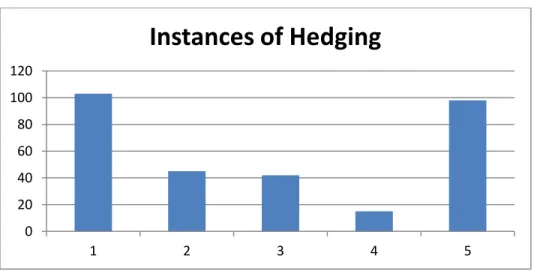
(11) 4.3. Participation in dialogue throughout the semester. 49. 4.4. Hedging. 50. xi.
(12) Chapter I. Introduction Creating and disseminating knowledge are two of the main purposes of universities (Boyd & Grant, 2017; Drenan & Clarke, 2009). These objectives are achieved when academics research and share such activity with other specialists and the community. In Mexico, such aims are reflected on the policies of different institutions of higher education. In a nutshell, universities promote the development of professionals and researchers with the objective of bringing benefits to the communities where these institutions are located. In addition, these research practices are often strengthened by scholars working along with students (BUAP, 2017; UNAM, 2017; UQROO, 2017). These statements have a stronger meaning when they are applied to graduate and postgraduate education since it is at these levels that most of the research is done (Boyd & Grant, 2017; Drenan & Clarke, 2009). The English Language Teaching (ELT) field is no exception. As reported by Ramirez-Romero and Dzul-Escamilla (2013), in Mexico most ELT research comes from public universities – especially from undergraduate and graduate thesis projects as part of an initial stage of researchers’ careers (Ramírez-Romero & Pamplón, 2012). Therefore, it is relevant to explore how academics and students share a joint practice when writing a thesis – the thesis supervision process. Research supervision aims to develop both students’ research skills and a standard quality achievement of the thesis. This entails experienced academics guiding students to apply and utilise research in their professional practice (Drenan & Clarke, 2009). Research supervision, then, is considered an essential component in any thesis project. Nonetheless, although the goal of research supervision is clear, the course of action taken by research supervisors and students varies as a result of different factors (Lee, 2008). In general, many academics consider supervision as an individual endeavour; in other words, a practice that 1.
(13) involves a one-to-one interaction (Dysthe, Samara & Westrheim, 2006). Despite this traditional view, alternative strategies are emerging and moving from a prescriptive to a collaborative model that emphasises dialogical interactions within group-based thesis supervision, which is the main focus of this study. After this overview, this chapter is structured as follows: first, it presents a link between language, dialogue, and research supervision and the concept of dialogue in the knowledge-building process. Next, the research questions are stated and supported by a brief description on the research context which reports studies on research supervision and dialogue. Following this, the purposes of this study as well as its significance are presented. In the next section, the methodology is briefly described. Finally, some potential ethical issues concerning the participants of this project are explained. 1.1 A Link between Language, Dialogue and Research Supervision Language is an essential component of any human activity. Through speaking, writing, reading or even thinking, individuals use the language resources they possess to achieve their objectives. The International Bureau of Education (2017) acknowledges the fundamental role of language not only as a means of communication but also in teamwork, critical thinking, and problem-solving processes. These processes are achieved through dialogue, which is a type of language use that allows individuals to analyse and evaluate any issue through its deep-understanding, achieving, and resolution attributes. Therefore, dialogue is claimed to be an essential part of communication. People use the word dialogue in various senses and in all contexts of life. Concisely, it refers to the interaction among individuals to come to an agreement. It is also the means to peacefully communicate with others (Wegerif, 2017; Vitanova, 2013). Hence, the term is used to denominate all the practices through which individuals work with each other to 2.
(14) achieve common objectives. This notion permeates academic contexts in which there is an increasing call for collaborative work through dialogue. However, although the conceptions of dialogue seem common knowledge, there is still not sufficient clarity as to what the word dialogue exactly means in an academic context. Wegerif (2017) observes that the idea of dialogue is widely used under a range of different cognates: dialogic inquiry, dialogic instruction, dialogic learning, and dialogic pedagogy. This notion has influenced education for a long time and has triggered different investigations. For instance, Bereiter and Scardamalia (2007) propose a classification of five levels of dialogue depending on the way the interaction occurs; Innes (2007) suggests a typology of problem-solving dialogue in regards of different purposes. Because each type of dialogue aims to reach different objectives, there is a need to understand how such dialogues are used in different education processes. Research supervision has been proposed as a dialogic interaction, therefore it seems appropriate to utilise Bereiter and Scardamalia’s index to describe it. Consequently, this study focused on exploring how different levels of dialogue occur in the thesis supervision process as well as the impact that dialogic interactions may have on participants. 1.2 Significance of the study There is an increasing interest in education research. A number of researchers (among others, Borg 2007; Burns, 2014; Ramírez-Romero & Pamplón, 2012) claim that education practitioners should engage with research due to its beneficial effects on teaching and learning. There is, then, an increasing research movement not only in general education but also in English Language teaching (Burns, 2014).This movement might have been the result of conceiving research as a means to explore particular situations and make informed. 3.
(15) decisions. That is why this engagement with and in research is often believed to have the potential to enhance and improve the quality of education. Besides its quality-enhancing characteristic, research helps to picture what is happening in the ELT context. Ramírez-Romero and Pamplón (2012) point out that most of the ELT research done in Mexico comes from individual theses. Theses aim students to put into practice a set of skills developed through different courses. They also entail supervisors and students working together to carry out such task. Because supervision of students’ research and writing processes is an important aspect of teaching and learning at universities, it should be understood in lights of theories of knowledge and learning as well as theories of communication and text (Dysthe & Westrheim, 2003). The importance of working with others when researching has been acknowledged by different academics (Burns, 2009; Griffee, 2012; Bereiter & Scardamalia, 2008; Drenan & Clarke, 2009; Boyd & Grant, 2017). However, despite this recognition, it is still unclear how research supervision interactions actually occur as most studies approach either supervisors (Lee, 2008) or students’ perspectives (Drenan & Clarke, 2009; Boyd & Grant, 2017) or even the implementation of new research supervision strategies as group supervision (Dysthe, Samara, & Westrheim, 2006). On the other hand, studies that aimed to describe actual interactions in the classroom took place at undergraduate programmes and focused on problem-solving dialogue in task based activities (Innes, 2007), and identifying different levels of dialogue used in an English language class (Morfinez-Cortes, 2013). Because there is a niche regarding how actual interactions occur in research group supervision, this study aims to achieve the purposes described in the next section.. 4.
(16) 1.3 Purposes Since research has been considered as a means to improve practices in education, I believe that it is worthwhile to carry out studies on how research is done with others –especially in group-based thesis supervision. Although there exists a massive amount of literature on how to do research –approaches, research designs, ways to start, relevance of working with others, and research supervision; there is still the gap in the depiction of actual interactions during the research supervision process. As claimed by Dysthe and Westrheim (2003), research supervision needs to be understood in light of knowledge and learning theories as well as theories of communication and text. From this perspective, the description of how thesis students work with others might provide new insights about research supervision. Additionally, the idea of collaborative work in research supervision might prove helpful in the development of thesis projects held by students as a requirement to graduate. Although there is increasing work on the use of dialogue as a means of in-depth communication and knowledge building, its use in the research supervision is still unclear. Therefore, as a student of a master’s programme required writing a thesis for graduation purposes, I am interested in understanding the process of collaborative work, especially dialogue, in the group-based thesis supervision process that master’s students go through. That is why the purposes of this study are: To provide an overview of the features and relevance of using dialogue in a group-based thesis supervision as well as the implications it may have on the individuals taking part in them. To explore how dialogical processes occur between a supervisor and students when working on thesis supervision.. 5.
(17) To provide insights that may change pedagogical practices in research supervision. In order to accomplish these goals, a set of questions needs to be stated. These questions will focus the enquiry of this research and guide the research methodology for this project. The aim of the next section is to provide information about them. 1.4 Research Questions Taking into consideration that interactions in group-based thesis supervision have not been studied, this investigation aims to answer three questions focused on the use of dialogue in a Master in ELT group-based thesis supervision. RQ1: How does dialogue occur in a community of thesis students and their supervisor? RQ1.1: What kinds of dialogue do thesis students, their peers, and their supervisor have throughout the research supervision process? RQ2: How do these students perceive the use of dialogue in the development of their research projects? This study aimed to explore how dialogue occurs during a semester of group-based thesis supervision process. It also attempted to understand how dialogue is triggered as well as to identify the different types of dialogue used by students and their supervisor during their thesis writing processes. The research methodology of this study is explained in the next section. 1.5 Research Methodology Since the aim of this study is to explore how dialogical interactions occur among thesis students and their supervisor, a qualitative approach will be used. This exploration will allow further understanding how dialogue occurs among participants in the thesis 6.
(18) supervision and picturing not only the settings where dialogue occurs but also its effects on participants. The research questions will be answered through a case study design in which the strategies of data collection will be: observations, a focus group, and interviews with the participants. Analyses will be based on typifying the interactions identified according to Bereiter and Scardamalia’s and Innes’s categories; analysing MA students’ opinions about the preliminary results through a focus group; and examining participants’ insights through content analysis. All these components will be further described in chapter III. 1.6 Potential Ethical Issues As in any research project, ethical issues might arise during the development of this study. Due to its nature, Creswell (2012) observes that there are particular issues concerning case studies. First, the way a researcher gains access to the people and sites to be studied is one of the biggest concerns. It is important to bear in mind that in a case study which uses ethnographic data collection strategies directly with and from the participants, the researcher needs to assure that participants are aware of the data collection. Furthermore, since researchers observe interactions in its natural context, they need to be respectful to all the people participating as well as the sites in which observation is carried out. In the same way, the researcher needs to obtain permission to record and use data preserving participants’ dignity and privacy. All these issues were taken into consideration when developing the project as research supervision is considered by most as a very private matter. 1.7 Conclusion In this chapter, the relevance of research supervision was pointed out as well as the need to understand how dialogic interactions occur in it. As discussed previously, there are still gaps to be covered. Nevertheless, this research focuses only on dialogue as a fundamental 7.
(19) feature of research supervision and tries to cover that gap: the exploration not only of perceptions but also of dialogic interactions occurring within a group-based thesis supervision context. Thus, this study may provide findings for the use of dialogue in the group-based thesis supervision in ELT. In this thesis, I shall approach the use of dialogue in a community of practice involved in research supervision. The first chapter provides background information to support the research questions and purposes of this investigation. Chapter two offers the theoretical foundation on which this study is based: socio-cultural and socio-cognitive theories. It also approaches literature regarding three concepts: knowledge building, communities of practice, and dialogue. Chapter three describes the design and the approach of this research, on the one hand; on the other, it describes the data collection strategies as well as the way data were analysed. Chapter four presents the results obtained from the analysis. Finally, chapter five discusses the findings regarding the literature presented in chapter II and its possible pedagogical implications.. 8.
(20) Chapter II Literature Review. Research can be considered as a dialogue with other experts. The reason to claim this is that research is based on what other academics have done to build new perspectives and knowledge. Therefore, voices of the past help to construct new versions of knowledge in the present. The integration of different voices is seen in literature reviews, for instance; they represent and show the different theories on which studies are constructed. However, research does not take into consideration only voices of the past; it also regards the voices of the people who work together –such as thesis supervisors and their supervisees during the research process. This study is not the exception and considers three main concepts to support its theoretical foundation. First, it approaches the notion of knowledge building; then, it addresses its nature from two different perspectives – socio-cultural and the Social Cognitive Theory- regarding four features: scaffolding and vicarious learning, and artefacts and symbolising capability. Finally, it discusses the main concept of this work: dialogue and its five levels. 2.1 Knowledge Building The notion of knowledge building has been a relevant issue in current education since it entails the use of available knowledge resources in the construction of new and meaningful knowledge. Its conception is the result of understanding a variety of practices and has undergone different shifts. Scardamalia and Bereiter (2003) observe that the term knowledge building is barely defined and, consequently, its uses are not very consistent. That is why for some it is conceived as another way of naming learning; whereas for others it represents a complex process in which students use their available resources to create new versions of knowledge. In other words, the former conception refers to a synonym of 9.
(21) learning; while the latter approaches the idea of knowledge-building as a sophisticated way of producing knowledge. Stahl (2000) offers an inclusive definition of knowledge building, stating that it should be understood as a social process with multiple phases. This social process does not only have an impact on personal but also on social knowledge-building levels. This view allows understanding the process as an eventual and not as one-singleoccasion development. Gan and Zhu (2007) hold the view that knowledge-building is the process concerning both: how to help learners to acquire a specific set of knowledge and skills, and also helping them to use such knowledge and skills to be creative and contribute to the creation of new knowledge. However, although these attributions offer a conception about knowledge building, it is important to characterise its processes. There are various processes underlying knowledge building. Stahl (2000) categorises them in two main groups: social knowledge building and personal understanding. The author suggests that in both categories there exist transformative processes and products of such processes connected through a dialogical constitution of the social and the personal. Although I could explain each of these processes in great detail, I consider that for the purposes of this study it is more relevant to approach the personal and social elements of knowledge building from two theories that have had a big impact on current practices: socio-cultural and socio-cognitive theories. However, it is not my intention to address all the components of each theory; rather, I shall approach the nature of knowledge, the social factor of learning, and the productive elements as they are seen from both lenses. 2.1.1 Knowledge Building from socio-cultural and socio-cognitive perspectives Human development has been studied from different perspectives; nonetheless, there exist two that seem to dominate current tendencies: socio-cultural and socio-cognitive 10.
(22) approaches (Schunk, 2012; Ferrari, Robinson & Yasnitsky, 2010; Vielma & Salas, 2000). Socio-cultural theories – belonging to the constructivism trend - consider that development is influenced by cultural and historical elements. In other words, much of what individuals construct as their knowledge is based on social processes which become a sort of private speech (Schunk, 2012). These notions are constructed on Vygotsky’s socio-cultural theory (1978), which claims that higher mental functions are the result of social interactions. An interpretation of this conception is offered by Johnson and Golombek (2011). These authors report that Vygotskian socio-cultural perspectives support the idea that human cognition is fundamentally built through social interaction. From this perspective, cognition emerges from external social participation and becomes, little by little, internalised as psychological tools for thinking. Hence, this transformation is initially mediated by other people or cultural artefacts that facilitate the regulation of learners’ psychological tools and, at the same time, foster learners’ independent regulation of such activities. In this transformation, language, as a social and psychological product, contributes and mediates mental development through social interactions and learners are viewed as constructors (Van Compernolle, 2015). This transformation entails learners putting into practice different competencies to adjust emergent knowledge with others. In this sense, competencies are not located only inside one’s brain; they can be verbalised and co-constructed through social interaction and artefacts. Another relevant feature is that contexts shape and are shaped by social interaction, which reflects the influence of cultural factors on acts of socialisation. That is why, in the words of Schunk (2012), learning is situated in personal, cultural, and environmental contexts. Like socio-cultural theory, Social Cognitive Theory (SCT) aims to explain how people go through developmental changes within a social environment. As any other theory 11.
(23) that regards this development, the SCT has its own perceptions on what human nature is and on how it is shaped by basic features like motivation and behaviour. It was proposed by Bandura (1989) and conceives development as a life-long process. This theory takes into consideration psychological, biological, and experiential conditions as enhancers and sustainers of human capabilities. According to Bandura (1989), the model of causation explains developmental changes. This model has three different components: behaviour, personal factors, and environmental influences. These three determinants operate together and influence each other. However, the fact that they operate together does not mean that they influence each other in the same way since they are not of equal strength. Furthermore, their influence does not occur all simultaneously. As the author suggests, causal factors take time to first influence other factors and then to trigger reciprocal influences. Although these two theories are very profound and complex, I shall consider four features from them: scaffolding and vicarious learning, and artefacts and symbolising capability. 2.1.1.1 Scaffolding and Vicarious Learning The ways through which knowledge is constructed vary according to each paradigm. For socio-cultural theories, scaffolding is an important element that is done through social interaction and represents support and guidance in learning (Bruner, 1984). The idea of scaffolding means that more knowledgeable adults or peers guide the learning of less experienced peers. In education, this idea entails the adequate support that teachers give to their students so that they learn successfully (Verenikina, 2008). Accordingly, van Compernolle (2015) observes that the idea of scaffolding is based on one of the main tenets of the socio-cultural theory: learning is first interpersonal and, through mediation, it is eventually internalised to have an intrapersonal function. This last notion emphasises the 12.
(24) idea that learning occurs as a result of the interaction between more experienced people and those who are moving from a lower to a higher state of knowledge. For the SCT, learning is a process that implies both the social and the cognitive elements to move to higher levels. From this view, language plays an important role since it “becomes not only a means of communication but also shapes the form of thought” (Bandura, 1989, p 14). This theory conceives the process as either vicarious or enactive learning through modelling. Vicarious learning (Bandura, 1989) refers to the ability to learn from others’ experiences. It allows the processes of cognitive and social development to be quicker and guarantees the learning of experiences that do not occur in immediate environments. In contrast, enactive learning requires learners to have actual experiences. According to Schunk (2012), enactive learning implies learning from the consequences of one’s actions. As the author also suggests, when learners are to develop complex skills a combination of vicarious and enactive learning is desired since it provides a rich source of modelling. In the process of learning, modelling plays an important role since it allows learning through observation. Observation fosters the acquisition of knowledge, rules, skills, strategies, beliefs, and attitudes (Schunk, 2012). Through observation, learners perceive information about the usefulness and appropriateness of behaviours and their consequences; modelling can also promote knowledge in a wide number of people who do not need to have actual experiences to learn but learn through symbolic experiences (Bandura, 1989). Hence, symbolic environments become powerful in present-day human lives. Symbolic environments do not only provide with modelled patterns of thought and behaviour, but also with patterns that go beyond people’s immediate environments. In sum, modelling has a strong influence on how people develop. Modelling can encourage the acquisition of 13.
(25) competencies, cognitive skills, and behaviour patterns, motivate by inhibiting or disinhibiting, and arising emotions (Bandura, 1989). Although these processes belong to different theories, I believe that they share features and explain the same development through different lenses. For instance, they both agree on the idea that there needs to be two kinds of participants –more experienced and less experienced ones. However, they see the processes from different perspectives; on the one hand, the socio-cultural theory emphasises the role of the more experienced person scaffolding the less experienced one, in other words, the relevance of social interaction to mediate learning. On the other hand, the SCT emphasises the ability of the individual to learn from others modelling. Even when they take different stances, I think that they complement each other; neither the guidance nor the vicarious capability on their own guarantees knowledge building; there must be an active work from both sides to succeed in the learning process. 2.1.1.2 Artefacts and Symbolising Capability Artefacts and symbols are the outcomes of social interaction and modelling. These outcomes can be considered the result of cognitive processes through social mediation. The socio-cultural theory holds the view that artefacts are cultural mediational means (van Compernolle, 2015). They are called mediational means due to its meaning-making attribution. In words of Vygotsky (1986), cognitive change results from using cultural tools in social interactions and from internalising and mentally transforming these interactions. In addition, in Vygotsky’s (1978) notion of mediation, such artefacts are central to humans’ abilities to modulate their own behaviour, cognition, and emotion. From a Vygotskian perspective, it is through this process of ‘heuristic development’ that humans achieve a deep control over their own behaviour and thus some degree of agency. For these reasons, 14.
(26) people use artefacts to develop the figured aspects of their identities and thus manage their own feelings, thoughts, behaviour, and actions on a broad scale. From a SCT perspective, symbols may be in some way the equivalent to artefacts. According to Bandura (1989), symbols enable humans to understand their environment since they –humans- cannot take everything as they see it. Symbols are mediation tools and affect cognitive structures and the way people behave (Bandura, 1989). In turn, cognitive structures determine the environment that people will observe, the meaning that they will give to it, how long its effects will last, the emotion and motivation it will cause, and how the information got from it will be organised. Symbols are used to represent passing experiences through verbalisation and imagination. These representations serve as guides to judge and act; they also serve as means of thought. Experiences provide the substance for though; whereas thought influences how one views experiences. That is how one understands causal relationships and constructs knowledge. Schunk (1999) observes that learning is transforming information from the social environment to self-regulate one’s actions; in other words, learning is the internalisation of social variables to self-influence one’s behaviour. Knowledge and thinking are essential tools to solve problems through cognition (Bandura, 1989). However, mere thinking cannot on its own be the source of any mediation. That is why I believe that artefacts or symbols are important in the construction of one’s version of the world. Symbolisation gives foundation to other human characteristics; artefact creation expresses the views of the emerging knowledge. As I discussed in this section, knowledge building is a process that requires many other processes. It is not possible to deny that it entails both social and cognitive elements. That is why I consider that it is fundamental to take into consideration socio-cultural and 15.
(27) socio-cognitive theories. It was not my intention to present them as opposite but as complimentary theories. Both will allow explaining how different practices –especially dialogue- occur. In the next section I shall approach the construct of communities of practice and how they are also connected to these theories. 2.2 Community of Practice Current notions on learning have aimed to change different habits in the classroom. It is well known that learning was conceived as an individual matter. This conception led to the practice of teaching and learning in individualistic ways. However, these notions have evolved and given room to a more social conception of learning. That is how communities of practice started to permeate practices in education. The idea of community of practice has its roots in the attempts of anthropology and social theories to explain the nature of human learning. Wenger (2010) states that in a nutshell, a community of practice is a simple social system. The author further explains that this notion cannot be conceived on its own but as an element of a broader social framework of learning. Hildreth and Kimble (2000) define communities of practice as a group of professionals who are aware of their connection to one another. This connection is the result of the exposure to a shared kind of situations, the pursuit to understanding them, and acquiring such knowledge. Wenger, McDermott and Snyder (2002) hold a similar view and declare that communities of practice refer to groups of people sharing a concern and deepening and understanding it through interaction on an ongoing basis. Authors differ in ideas when stating what the theory underlying communities of practice is. On one hand, Wenger (2010) claims that communities of practice were born from anthropology and social theories. In this case, social theories seem to have a strong influence on communities of practice. Singh and Richards (2006) observe that a course 16.
(28) room, for instance, has social participation structures that enhance or inhibit learning opportunities and that are tied to artefacts, identities, and the cultural space in which it occurs. Considering these features, the authors conceive the course room as a community of practice with socio-cultural roots. On the other hand, Couros (2003) reports that initial ideas of social learning theory are attributed to a more socio-cognitive perspective. From this view, Bandura’s (1977) social learning theory emphasises the relevance of observational and modelling behaviours, and attitudes and emotional reactions to others. Unlike socio-cultural theories of learning, this theory viewed the same development as a behaviourist and cognitive process resulting from the continuous reciprocal interaction between behaviour, cognition, and environmental influences. For these reasons, Corous (2003) affirms that Bandura’s theory complements both ideas from behaviourist and socioconstructivist movements. Learning in a community of practice implies a dual process of meaning making. As Wenger (2010) states, personal participation is a key element since social life allows engaging in activities, conversations and reflections. As a result of this social life, participants have their own outcomes and learning can be considered as meaningful. That is why meaningful learning in social contexts requires participation and “reification” (Wenger, 2010) which means making it into an object. According to the author, participation and reification allow negotiating and renegotiating meaning; in other words, both processes create a link between the cognitive and the social, the individual and the collective. The notion of community of practice can be used in different contexts. Singh and Richards (2006) characterise its use in the language teacher education course room. Although their assumptions about communities of practice in the course room can be true 17.
(29) for different contexts, the characterisation of the LTE course room as well as their participants allow applying the abstract into real situations. The authors suggest four features that involve all the elements previously mentioned: identity, discourse, artefacts, and practices. 2.2.1 Identity According to Couros (2003), identity is a fundamental element in an individual’s participation in social processes. Although this author conceives identity as the result of changing who an individual is and creating a story within the community, Singh and Richards (2006) acknowledge that identities exist even before the learning experience occurs. As these authors declare, learners bring powerful ideologies, discourses and practices into the course room which makes a group heterogeneous. Wenger (2010) seems to share this view when stating that the focus of social learning is not the displacement of the person. In other words, each individual has unique experiences that will influence the dynamics of the social interaction. However, all these authors agree on the idea that identity is not something that is set in stone; learning means becoming. In words of Wenger (2010), learning does not mean acquiring skills and information, it is “becoming a certain person, a knower in a context where things are negotiated” (p.2). Singh and Richards (2006) hold the same view when claiming that identities can be “woven through ideologies to find meaning in becoming” (p.4). For these reasons, identities should be considered as endless ideology-construction depending on previous ways of thinking and present social interactions as key factors that shape them.. 18.
(30) 2.2.2Discourse and Practices Social interaction needs to regard specific objectives in order to be profound and constructive. For these reasons there are social participation structures that strengthen or inhibit learning opportunities. As Singh and Richards (2006) declare, these participation structures entail both discourse and activities that shape the life of the course room and the way meaning and knowledge are built. These activities might require specific cultural practices that are the result of a longitudinal experience of negotiation, contribution, knowledge enhancement, understanding, and reflection. Practices and discourse will be further developed in the third section that considers dialogue in this chapter. 2.2.3Artefacts Artefacts are tools that mediate thinking. This concept is taken from Vygotsky’s sociocultural theory and understood as the result of both social and cognitive processes. Couros (2003) declares that artefacts are ways of talking about a changing ability to experience life and world in a meaningful way. Hence, the production of any sort of knowledge in relation to the system can be considered as an artefact. As a result of collective and individual learning, artefacts strengthen emerging knowledge. That is why Singh and Richards (2006) point out that learning is tied to artefacts since they empower the different practices learners have in the course room. 2.3 Dialogue The notion of dialogue is one that involves different features regarding the particularities of the situation in which it occurs. Its multifaceted nature allows studying it from a wide variety of perspectives going from simple information exchanges up to policy making practices. Due to this characteristic, Carbaugh (2013) suggests that the specific arena in which dialogue is to be investigated does not matter, it will surely offer insights into the 19.
(31) multiple scenes in which it is practised. In order to approach this concept, I shall first offer a view about the different conceptions that have been given to dialogue. Then, I will try to focus on the particular sense that dialogue will have in this study. Finally, I will address some characteristics that – I believe- are essential to the practice of dialogue. There are different ideas about dialogue; however, I will start by offering a basic definition which considers the word itself and its roots. In essence, the word dialogue is formed by two roots coming from the Greek words dia and logos. Burbules (1993) reports that dia means through, whereas logos can be translated to word or meaning. From these roots, it is understood that dialogue is a flow of meaning. In addition, the author observes that there exists another meaning for the word logos. As he points out, in the most ancient meaning of the word, logos meant to gather together. This more in-depth meaning suggests an intimate relation among things in the natural world. Therefore –and considering the latter meaning of the word logos- dialogue might be better understood as the flow of meaning through a relationship. This definition is only one among many others which I shall introduce next. Current research on dialogue often views this idea from a Bakhtinian stance (Wegerif, 2017). For Bakhtin (1984), dialogue is not only a verbal rejoinder between speakers or writers; yet, it is a way of perceiving the world and human beings’ positions in the world. This perception of the world gives a special role to language through considering it a real-life speech phenomenon. That is why Bakhtin states that “in dialogue a person not only shows himself outwardly, but he becomes for the first time what he is” (p. 252). Bakhtin further develops this idea by saying that consciousness can only be experienced through dialogue. The author writes “I am conscious of myself and become myself only while revealing myself for another, through another, and with the help of another” (p. 287). 20.
(32) This statement suggests that there exists a relationship between one’s cognition and that one of the other through a social interaction carried out by means of language. Johnson (2004) considers these views to point out that from the Bakhtinian perspective “higher mental functioning is not only inner speech in a Vygotskian sense but it is inner dialogue” (p. 127). Although these assumptions have not been acknowledged until recent times (Wegerif, 2017; Vitanova, 2013), it can be helpful to understand the fundamental notions underlying other conceptions of dialogue depending on the different contexts in which it develops. Since communication allows human beings to live and survive, they can be defined through their communicative practices. It is this idea that underlies different conceptions of dialogue. Vitanova (2013) observes that people often think of dialogue as something positive and synonym to humans’ good will. As she points out, dialogue is a practice that takes place in our daily lives; for instance, we dialogue when we talk to friends or colleagues. In addition, the author explains that in this common use of the word, dialogue implies the interaction of, at least, two interlocutors. Another general definition of dialogue is offered by the Institute of Dialogue Studies (2013). In this definition, dialogue is thought as a meaningful exchange interaction that occurs among people. In doing so, people from different social, cultural, political, religious, and professional backgrounds would increase their understanding. This all-inclusive feature has led to the idea that dialogue is a powerful term and form of action in academic, linguistic, and cultural communities (Carbaugh, 2013). Furthermore, Carbaugh (2013) acknowledges that dialogue often activates local and cultural expectations and motives which might modify the conception of dialogue in different contexts.. 21.
(33) Although most research concerning dialogue shows it as a purely beneficial process, some academics question its nature. In addressing the meaningful nature of dialogue, Elsdon-Baker (2013) observes that it is important not to presuppose the outcomes of any process or to deny the possibility of other mechanisms of action. This academic argues that the word meaningful is, by itself, an idea that suggests that all dialogue is meaningful, desirable, and positive. Moreover, as he points out, it seems that this definition of dialogue leaves no room for wondering whether dialogue can have negative impacts or if there are other mechanisms rather than engaging people in dialogue. One more observation is made by Shirkhani, Jamali-Nesari and Feilinezhad (2015). These authors claim that all kinds of speech might be considered dialogic since they imply exchange of information containing others’ voices. Therefore, too much dialogue might create paralysis of action, relativism or even cynicism. One last asseveration is offered by Innes (2007). The author acknowledges that although most people might advocate for the use of dialogue, dialogic discourse is very difficult to achieve. Hence, it is in very few occasions that it occurs successfully. For that reason, it is important to define the context in which dialogue takes place. For the purpose of this study, I will approach the notion of dialogue in educational contexts. Dialogue is a fundamental characteristic of pedagogy. Different academics agree on this idea and have addressed it through different lenses (Wegerif, 2017; Burbules, 1993; Isaacs, 1999; Miranda, 2011; Singh & Richards, 2006; Vella, 1995). A common idea among these authors is that dialogue is something that one does with others. Burbules (1993) suggests that dialogue is a symbiotic communicative relationship that requires not only cognitive but also emotional compromise. In this sense, one depends on the other in a meaningful interaction that entails cognition and emotion from both sides. A similar view is offered by Vella (1995). The author explains that dialogue assumes two human beings as 22.
(34) subjects of their own learning which would be the result of sharing data, experiences, and questions to transform the knowledge they are examining. Considering this argument, it can be assumed that one of the results of dialogue is transformation, which has been addressed by different scholars under the name of reflection. Dialogue is also considered as a way of thinking together. Isaacs (1999) states that through thinking together people can enquire and come to deeper understandings. As a result of this comprehension, participants may also become aware of their realities and change them through a reflective talking and listening process (Miranda, 2011). However, dialogue does not only allow thinking together but also a way to reaffirm or reshape previous knowledge. As Singh and Richards (2006) explain, learners can validate their own knowledge and beliefs through dialogic interaction. In addition, these academics claim that dialogue does not always involve spoken interaction but it can also entail interaction through journals or online communication. This last notion seems to reinforce Bakhtin’s belief that language is a social, interactive, and evaluative event since it is formed and reformed through social interaction. Dialogue involves both the social and cognitive nature of human beings. As Shirkhani, Jamali-Nesari and Feilinezhad (2015) report, dialogue is a process of communication to change meaning. In other words, new versions of meaning are born only when one listens to different opinions and adds one’s voice to produce a new meaning. Innes (2007) shares this idea and claims that dialogic discourse is the specific mechanism for construction of useful ideas. Nonetheless, dialogue is not all about agreement. JamaliNesari (2015) claims that although dialogue is a means to listen to different voices, it evokes room for argumentation. The author further explains that even when people tend to resist and confront, it is also possible to make meaning out of argumentation. The 23.
(35) acknowledgement of personality within social groups is an important aspect, among others, that features dialogue. For the purpose of this study, I will consider dialogue as a goal driven, oral or written interaction requiring social and cognitive effort among individuals to create new knowledge, understand through questioning others’ views in depth or strengthen previous knowledge. In the next section, I shall present the aspects that are fundamental for dialogue to take place. 2.3.1 Features of Dialogue Dialogue entails more than what we can imagine. Although we might think that this practice assures a common agreement, it should be also considered that the same notion leaves room for opinions that differ from what one believes. So, it is important to mention that there are elements that define dialogue as an open-to-all-opinions process. This vision does not aim to propose dialogue as a sappy agreement among individuals; rather as a critical interaction in which participants make use of their different sources to understand in depth and co-build new meaning. According to Burbules (1993) there are different practices that underlay dialogue and, at the same time, define human beings as human beings. These practices are language, reasoning, morality, and social organisation, which I shall briefly depict next. Language is a tool that entails social and cognitive processes simultaneously. Regarding its social aspect, Bakhtin (1981) points out that the nature of language is dialogical. This means that language is used and created when we talk with others, but at the same time it is something that brings previous meanings with it to create a new one. As the author states, due to language one can meet past and present speakers. In considering the cognitive aspect, Mercer (2000) claims that although the relationship between thought 24.
(36) and language has been greatly acknowledged, there also exists a strong relationship between language and what the author defines as “thinking-together”. In other words, people use language to make sense of their different experiences and share this information across generations. Burbules (1993) shares this view when saying that language is not only the means to have dialogue but also its outcome which does not only include our voice but also the voices of many others. Reasoning is closely related to the aptitude to solve problems, reach a conclusion, contrast different views, and take different paths. Burbules (1993) holds the view that there exist different environments that depend on multiple factors: social circumstances, how people think and behave, and how people react to what others do. That is why individuals need to be open, flexible, and sensitive. This feature allows people to be innovative and adaptable to create, share, and consider new ideas that eventually will bring new collective reflections on different actions (Mercer, 2000). Morality is an essential feature of dialogue. It allows to define whether any behaviour is acceptable or not during the process of interacting with others to build new meaning. Burbules (1993) observes that communication is linked to values since it requires compromise, respect, and care from both locator and interlocutors. In addition, the author suggests that people taking part in dialogue aim to promote equality and willingness to consider others’ points of view. These components seem to allow people to have an effective interaction due to different reasons. Since participants are willing to consider others’ perspectives, the endeavour of dialogue becomes a more intimate relationship in which one respects and cares about the other. Social organisation might be considered as the outcome of communication and politics. Democracy comes to play a fundamental role in this conception since social 25.
(37) organisation is not believed to be sustained by the act of voting but by conceiving it as an environment of equality, respect, and public discourse. Dewey (1916) considers that a social organisation is a democracy in which small groups collaborate with each other to reach shared objectives. At a micro level, Mercer (2000) holds the view that a social organisation might be a community of enquiry and practice where members work together to achieve greater goals than what they could achieve on their own. These four characteristics seem to influence dialogue and might differ according to the type of dialogue created in every particular situation. 2.3.3 Levels of Dialogue As stated earlier, learning in education might be the result of different types of interaction that occur through language. Innes (2007) observes that these interactions are influenced by a variety of knowledge conceptions. Thus, if professors believe that knowledge is transmitted to learners, they will use different kinds of interaction from those used by teachers believing that knowledge is built in an active and collaborative process. These notions might be the ideas underlying practices like lecturing or face-to-face dialogue. Although the conception of knowledge strongly influences the kind of interaction in the classroom, Bereiter and Scardamalia (2007) offer an alternative explanation considering Vygotsky’s sociocultural theory. According to these authors, the shift from individual to community ways of work relies on the Vygotskyan ideology that a child’s development appears twice: at a social level and at a cognitive level. This might explain the presence of both types of interaction and at the same time gives room for the typology of dialogue that they offer: recitation, teacher-mediated dialogue, teacher-managed debate, independent small group discussion, and authentic problem-solving discourse.. 26.
(38) 2.3.3.1Recitation Reciting means to cite again, to repeat, and to tell over and over. In the classroom, this type of interaction follows an initiation-response-evaluation (IRE) pattern (Mehan, 1979). Gutierrez (1993) explains that this discourse pattern is characterised by the teacher’s selection of the student-speaker who should provide the right answer. In addition, the author declares that there is no acknowledgement for students’ attempts to introduce subtopics, expand or elaborate their answers. According to Bereiter and Scardamalia (2007), this traditional communication occurs between teacher and students and consists of an oral examination done by the teacher. It has been considered one of the most prevalent practices in classrooms and its value is still questioned by different academics (Zhang-Waring, 2009). Recitation is a way to elicit specific information from students. As Nystrand (1997) observes, when teachers carry out this examination, they have a strong tendency to avoid controversial topics. That is why complex information is simplified into small bite-sized pieces that students can easily recall. The author further explains that since recitation usually entails people recalling what others have said, students show little enthusiasm for this pattern of interaction because it is superficial, mindless and, consequently, quickly forgotten. 2.3.3.2 Teacher-Mediated Dialogue Teacher-mediated dialogue can be considered an expansion of the IRE pattern; nonetheless, it has different features. Bereiter and Scardamalia (2007) suggest that this type of discourse, unlike recitation, has a logical, purposeful, and constructive sequence of units. In this sense, the teacher is still in charge of calling on students to participate and guiding them through. 27.
(39) questions. Since questioning is the main means to lead students, this type of discourse is believed to be a Socratic questioning. Socratic questioning is a type of free discussion when compared to recitation. Burbules (1993) points out that this interaction is mediated by the professor’s limited set of questions. In doing so, the professor is able to take students to a pre-established knowledge that otherwise they would not be able to reach on their own. Paul and Elder (2006) observe that this type of dialogue is systematic, disciplined and deep due to is proving function. As the authors suggest, through Socratic questioning a professor proves the meaning, justification or logical strength of a claim, position or line of reasoning. For this reason, it is mainly used to address foundational concepts, principles or theory issues. Finally, Bereiter and Scardamalia (2007) suggest one more function for Socratic questioning in education. As these authors claim, this level of dialogue allows teachers to identify students’ extent of knowledge on a given topic. In doing so, teachers are able to establish the more appropriate prompts for students to reach a particular notion of knowledge. Nevertheless, the fact that the teacher is the hub of the interaction makes academics question the freedom learners have to explore other subtopics and their creativity to develop their own versions of knowledge. 2.3.3.3Teacher-Managed Debate Debates are interactions in which participants have the opportunity to consider multiple points of view and arrive to a conclusion. In words of Freeley (2000), debates are processes in which participants enquire and advocate as a result of a proposition. In education, teacher-managed debates are discussions that occur after a presentation. According to Bereiter and Scardamalia (2007), teachers are on the sideline in this type of dialogue. In. 28.
(40) other words, teachers are no longer the hub through which all discourse passes since the nature of the debate provides the structure of the discourse. Debating is a type of dialogue that requires students’ active participation. Kennedy (2007) emphasises this notion when stating that learning becomes effective through students’ active analysis, discussion, and application of content in meaningful ways. The author also mentions the development of critical thinking since debates entail the provision of reasoned arguments. In this sense, I believe that it is important to bear in mind the nature of debating. According to Burbules (1993), the goal of a debate is not that one of agreement or difference conciliation, but that one in which students are to defend their positions as clear as possible and acknowledge the existence of different views. Accordingly, the author states that the real nature of a debate is to appreciate others’ perceptions; these perceptions are made of the strongest arguments a student can elaborate and stand for in front of others. If all these features are met, the results will reflect on the origination of new information and the deep understanding of the same topic. 2.3.3.4 Independent Small Group Discussion Small group discussion can be considered as any situation in which dialogue and collaboration are at the core of the learning situation. Although this might give the idea that the professor is an absent figure, the teacher is still the key to this type of learning; however, the role of the teacher changes from being directive and informative to facilitator and coordinator (Mills & Alexander, 2013). Small groups are places where informal discussions take place. Bereiter and Scardamalia (2007) claim that in these situations teachers propose the topics and monitor students’ interactions. In order to accomplish small group discussions, teachers need to define the goals of the group, outline the tasks to be done, and assign different roles to the 29.
(41) members of the group (Vella, 1995). When small groups meet these features, they become places of dialogic peer interaction. Nystrand (1997) holds the view that small groups are dialogic-dependent since students’ interactions, concerning the substance of the lesson, can create the appropriate conditions to take risks, dare, complain, argue, clarify or question. Vella (1995) summarises this notion when stating that small groups are places where students learn from each other, practise their freedom and autonomy, cooperate, and accept one anothers’ ideas. This level of dialogue allows practising recitation, teacher-mediated dialogue, and teacher-managed debate. However, Bereiter and Scardamalia (2007) also mention that it is at this level of dialogue that students start to move away from the teacher’s direction. This might mean that small group discussion gives room to be creative and, hence, finds different ways to build knowledge. 2.3.3.5 Problem-Solving Dialogue Problem-solving dialogue is closely related to cooperative enquiry in authentic contexts within a community of practice (Innes, 2007). Unlike small-group discussion, problemsolving dialogue entails students’ active participation to build their own knowledge. Innes (2007) observes that this level of dialogue is widely used in colleges and universities as a result of more socio-cultural theories. Bereiter and Scardamalia (2007) have a similar conception about this. As the authors mention, this level of dialogue is intended to progress through explaining, planning or even designing something. For these qualities, this level of dialogue requires creativity and critical thinking to be able to take part in social exchanges as a result of higher levels of cognition; nevertheless, this should not be understood as a cognitive-driven activity, but as a process in which cognition affects social interaction and social interaction affects cognition. 30.
(42) Compromise is a relevant feature of this level of dialogue. Bereiter and Scardamalia (2007) express that at this level of dialogue; students care about a problem and engage in the activity in a way that goes beyond any other school exercise. Knowledge-building discourse has as its main objective the production and improvement of public knowledge and represents the kind of discourse observed in mature-creating teams. This last level of dialogue has not been described in terms of discourse patterns but in terms of the final goals. It seems that the main emphasis is on community dynamics that supports epistemic invention. This would entail students identifying points of growth, creating their own possible explanations and solutions, and proving them through empirical research, constructive use of authoritative sources and knowledge-building dialogue. 2.3. Previous Studies on Research Group Supervision Research supervision has been identified by the Organization for Economic Co-operation and Development (OECD) as an area in higher education in need of improvement (Dysthe & Westrheim, 2003). Despite this recognition, it is still unclear how research supervision interactions actually occur as most studies approach either supervisors (Lee, 2008) or students’ perspectives (Drenan & Clarke, 2009; Boyd & Grant, 2017); or even the implementation of new research supervision strategies (Dysthe, Samara, & Westrheim, 2006). Table 2.1 summarises different studies related to research group supervision. 2.1Previous Studies on Research Group Supervision Author and year Abdallah, F., Hillerich, K., Romero, V., Topp,. What they wanted to know From a supervisor’s point: What are the challenges that can arise. What is known about the topic Roles and relationships within research supervision. Supervisor’s. How the question is answered Revision of the literature and an interview with a supervisor. Answer. There are two types of challenges: formal issues and content issues.. Significance of the study Although studies on research supervision address graduate and 31.
(43) E. & Wnuk, K. (2010). Dysthe, O. & Westrheim K. (2003). Akister, J., Williams, I. & Maynard, A. (2009). O’Neil, S., Schurink, W. & Stanz, K. (2016). during the course of supervising a research work? How to overcome them? How did the combination of supervision groups, student groups and individual supervision function as support for master’s students’ research and writing processes? What effect did this have, if any, on the quality of the thesis and the completion rate? What is the effectiveness, if any, of individual and group supervision from the perspectives of students experience and the learning outcomes?. and supervisee’s expectations Practical issues. What are the benefits of group supervision?. Formality issues are related with organization, ways to communicate, roles.. Sociocultural theories Dialogism Communities of practice. Net-based questionnaire and individual interviews. Student evaluations. Supervision groups are powerful mediating tools. The two types of group function differently but supplement each other. Multiple perspectives secure better supervision. The role of the dissertation at undergraduate education. Semistructured questionnaire and a focus groups. Dyad supervision Alternative supervision methods Minority of. Autoethnographic study from 2004 to 2015. Selfobservations. Students in group supervision felt more prepared than those in individual supervision. Group supervision fosters enthusiasm and decreases students’ isolation. The benefits are: relating to others’ work, adding structure to ideas, taking responsibility,. post-graduate supervision mainly, the same principles may apply to undergraduate levels Research supervision has been identified by OECD as an area in higher education in need of improvement and this study offers a model for this improvement.. It is important to find alternatives to one to one research supervision.. Although many schools use formalized ways of supervision; small group 32.
(44) studies on group supervision. Ghadirian, L., Sayarifard, A., Majdzadeh, R., Rajabi, F. & Yunensian, M. (2014). What are the challenges in thesis supervision from both students and faculty members’ points of view?. Thesis supervision. Success depending on quality of supervision. and selfreflections, artefacts of supervision practice, observations and field notes, interviews, informal conversations, e-mails Interviews and focus group discussions. and affording opportunities to explain and express. supervision may offer an alternative may have positive effects on group practices.. Challenges are: supervisory knowledge and skills, atmosphere, regulations related to supervision, and monitoring and evaluation.. Supervision is the most important factor in success of students’ research programmes. Therefore, challenges need to be identified and addressed.. On the other hand, studies that aimed to describe actual interactions in the classroom took place at undergraduate programmes and focused on problem-solving dialogue in task based activities (Innes, 2007), and identifying different levels of dialogue used in an English language class (Morfinez-Cortes, 2013). As discussed above, there is a need to understand how actual interactions occur and how research group supervision affects participants’ perceptions. Therefore, the aims of this study were to identify the types of dialogue that took place during the supervision process in order to see how participants were affected, if so. The next chapter will approach the research methodology to answer such questions.. 33.
(45) Chapter III: Research Methodology Research findings are considered the outcome of a set of different logical procedures. Among these procedures, the methods used to gather and analyse data are important since they allow understanding information through particular theoretical lenses to answer the research questions. The study undertaken for this thesis aimed to explore and identify the use of dialogue as well as participants’ emerging conceptions through an ongoing process of thesis group supervision. That is why such aims were approached through a research methods strategy that will be described in this chapter. First, the approach and design of research will be presented. Secondly, the context and participants will be addressed. Next, the instruments used to gather data will be approached as well as the strategies to collect and analyse data. Finally, a conclusion will be offered at the end of this chapter. 3.1 Research Approach Understanding the social world has been one of the main concerns in research. That is why information is collected and analysed through small and manageable logical steps to make sense of it and gain knowledge on the issue to be investigated (Creswell, 2012). Since the aim of this investigation was to study how dialogue occurred in a community of practice formed by MA thesis writers and supervisors, a qualitative approach was used. Among the reasons to have chosen a qualitative approach, there are three that seem to be suit the aims of this study: the scope of qualitative enquiry, the qualitative data collection strategies, and its ways of analysis. Qualitative research aims to explore an issue to offer a detailed understanding. In words of Creswell (2012) the exploration of words or images helps to create larger meanings which explain social interactions. Richards (2003) holds a similar view when saying that qualitative research strongly contributes to the understanding of the social 34.
(46) world. In addition, Richards (2003) states that the qualitative approach to research helps to explore the complexities of our social world to get close to what actually happens. In other words, qualitative studies do not manipulate the world to make something occur, but seek to comprehend the patterns of people’s behaviours. For these reasons, the author claims that qualitative studies are person-centred approaches that depend on the lived world. One more academic that has addressed the nature of qualitative studies is Erickson (1998). The author conceives qualitative studies as interpretive due to their interest in human meaning in social life. Erickson (1998) claims that interpretive research tries to provide information on what happens in social action in a particular setting; the meaning of such actions to the actors involved in them; the way these happenings are organised in patterns; how the same happenings relate to other systems outside the setting, and how daily life might be compared to other ways of organising. These conceptions on interpretive studies support the next sections. 3.2 Research Design Research is purposeful, carefully and thoughtfully designed. Although an approach offers a specific idea about the nature of the study, there is still the need to define how data will be gathered to answer the research questions. Griffee (2012) and Yin (1994) hold the view that a research design contains the appropriate directions to answer research questions through empirical data. Accordingly, Creswell (2012) further explains that research designs are specific procedures that cover three main aspects: how data are to be collected, the way it will be analysed, and how it will be reported. Taking into consideration these claims and the objectives of this study, a case study design will be used to know how dialogue occurs in the research supervision process of group of students and how such dialogue has an impact on them. 35.
Figure


+2

Documento similar
Based on the previous premise, this research presents the case study of an Ecuadorian distance learning university that aims to identify the communication factors that
Based on this theoretical framework and the review of previous research in the use of mobile technologies, this article addresses the uses and consumption of tablet
The performance of ceramic MFCs using cathodes based on different types of binders 303. was also evaluated in terms of urine treatment
This research provides a multi-dimensional approach to the study of children’s’ social participation, based on six children’s lifestyles factors (i.e. family dialogue, risky
Based on the preceding discussions, the study posits hypotheses and research questions in terms of four dependent variables of gender effects on mobile advertising
In Figure 72, we show a simple model of an escalation process in response operations based on data form both case studies, Elbe Flood and Schiphol Fire.. The model is an
In this contribution, a novel learning architecture based on the interconnection of two different learning-based 12 neural networks has been used to both predict temperature and
In this Section we shall identify the group of affine transformations of S 1 and R, namely SL(2, R), and we shall derive the CWT on both spaces in a unified manner, based on
