
Cooperative learning based strategies to faster speaking confidence through the participation in an online radio show
143
0
0
Texto completo
(2) FOSTERING CONFIDENCE IN SPEAKING THROUGH PARTICIPATING IN A RADIO SHOW 2. Cooperative Learning-based strategies to foster speaking confidence through the participation in an online radio show. A research report submitted for the degree of Master in English Language Teaching – Autonomous Learning Environments. Directed by: Professor Liliana Cuesta Master in ELT – Autonomous Learning Environments Department of Foreign Languages and Cultures Universidad de la Sabana Chía, Colombia. June, 2010.
(3) FOSTERING CONFIDENCE IN SPEAKING THROUGH PARTICIPATING IN A RADIO SHOW 3. This research report is the result of my own work and includes nothing that was done in collaboration with others.. Nubia Consuelo Lemos Tello (Signature). Acknowledgements: I would like to thank all the tutors, professors, and all the academic team who I have influenced my personal and professional life all through these years of learning. Mainly, I want to thank to the Master’s Professors especially to my thesis director Professor Liliana Cuesta who supported me and gave me all her wisdom, attention and time. Also, I want to thank Dr. Sonia Jimenez and Dr. Pedro Maldonado for their professionalism and vision to start this amazing project. Likewise, I would like to thank my students because they were my inspiration and their motivation and commitment support the success of this study. Finally, I want to acknowledge the invaluable support of my parents, Mrs. Leonor Tello and Mr. Eliécer Lemos. Their encouragement and faith in all the projects I have carried out in my life is the best gift that I have received and this project is part of my gift back for them..
(4) FOSTERING CONFIDENCE IN SPEAKING THROUGH PARTICIPATING IN A RADIO SHOW 4. ABSTRACT. This action research project was conducted to foster speaking confidence through the participation of 8th graders from la Chucua School in cooperative learning-based strategies by means of the creation of an online radio show. The project theoretical support regards speaking confidence, based on the foundation of anxiety in language learning, the use of radio in schools for academic purposes and to improve the relationships that sometimes impede students to participate in oral activities because of their peers’ reactions. The project also relates to the stages and elements of radio, and various cooperative learning strategies. Data collection instruments included a student survey, teacher’s journals and students’ artifacts, which were composed of the audio recordings of the radio show. A combination of Inductive Analysis, Grounded Theory and Trend Analysis was considered as the most appropriate research design analysis tools to conduct the data analysis. Results indicate that the research process was a positive experience to prompt students’ speaking confidence through the use of technology, evidenced in the participation in each stage of the creation of a radio show, including planning, recording, editing and listening to their final product on the web, as well as an opportunity to support and improve the teacher’s performance, becoming a facilitator for the students, in terms of giving a guidance that allowed them to make decisions, instead of imposing them. Students were encouraged to use technological tools like Audacity™, Winamp™ and ShoutCast™ as valuable academic resources for the production of a radio show. The implementation of these tools enabled the teacher to get in touch with new learning devices and strategies to foster learners’ confidence.. Key Words: Speaking, confidence, online, radio, show, Cooperative Learning, technology,.
(5) FOSTERING CONFIDENCE IN SPEAKING THROUGH PARTICIPATING IN A RADIO SHOW 5. RESUMEN. Este proyecto de. investigación-acción se desarrolló. para fomentar la confianza en la. producción oral a través de la participación de estudiantes de grado octavo del IED La Chucua basada en estrategias de aprendizaje cooperativo a través de la creación de un programa de radio en internet. El marco teórico del proyecto incluye el concepto de confianza en la producción oral, fundamentado en el principio de ansiedad en el aprendizaje de la lengua, el uso de la radio en instituciones educativas con propósitos académicos y convivenciales, las etapas y los elementos de la radio y estrategias de aprendizaje cooperativo. Los instrumentos de recolección de datos incluyeron el uso de una encuesta para estudiantes, diarios del docente y producciones de los estudiantes, las cuales incluyen las grabaciones del show. Para el análisis de datos, se realizó una combinación entre Análisis Inductivo, Teoría Fundamentada y Análisis de Tendencia. Los resultados indicaron que la investigación fue una experiencia positiva para estimular la confianza de los estudiantes en su producción oral a través del uso de la tecnología, evidenciada en la participación durante cada etapa de la creación de un programa de radio, incluyendo las fases de planeación, grabación, edición y la escucha del producto final en la red. Fue también una oportunidad para apoyar y fortalecer el trabajo del docente, modificando su rol, de transmisor de conocimiento a uno de facilitador, al darles orientación a los estudiantes para tomar decisiones sin necesidad de imponerlas. Los estudiantes utilizaron. herramientas tecnológicas como AudacityTM, WinampTM y. ShoutCastTM como recursos académicos útiles para la producción de un programa de radio. La implementación de estas herramientas permitió al docente implementar el uso de nuevos dispositivos y estrategias de aprendizaje para promover la confianza en los estudiantes..
(6) FOSTERING CONFIDENCE IN SPEAKING THROUGH PARTICIPATING IN A RADIO SHOW 6. Palabras clave: Producción oral, confianza, en línea, radio, programa, Aprendizaje Cooperativo, tecnología..
(7) FOSTERING CONFIDENCE IN SPEAKING THROUGH PARTICIPATING IN A RADIO SHOW 7. CONTENT page CHAPTER 1: Introduction. 9. Statement of the problem. 9. Research Question. 10. Research Objectives. 10. Rationale. 11. CHAPTER 2: Theoretical Framework. 13. CHAPTER 3: Research Design. 28. Type of research. 28. Teacher’s role. 29. Context. 30. Participants. 34. Data Collection Instruments. 36. Data Collection Procedures. 38. CHAPTER 4: Pedagogical Intervention. 41. CHAPTER 5: Data Analysis and Findings. 48. CHAPTER 6: Conclusions. 78.
(8) FOSTERING CONFIDENCE IN SPEAKING THROUGH PARTICIPATING IN A RADIO SHOW 8. Limitations. 80. Pedagogical Implications. 83. Further Research. 83. References. 86. Appendices. 90.
(9) FOSTERING CONFIDENCE IN SPEAKING THROUGH PARTICIPATING IN A RADIO SHOW 9. CHAPTER 1: Introduction. Statement of the problem This action research study addressed to get speaking confidence through the production and participation in an online radio show. Based on former needs analysis developed with the target group, I discovered that students were not motivated to speak English. I also found out that they were anxious when they were required to speak in the target language during the class sessions. I also noticed they were constant users of digital technologies, like mp3 and mp4 players. The aforementioned reasons indicated I had good reasons to initiate this study. The target group is formed by twelve eighth graders that study at La Chucua School, a state school located in the South-East of Bogotá. This project is relevant to the English secondary schools educational community as it is an evidence of the reflective process that the teacher-researcher encompassed while designing an instructional strategy to deal with oral production problems in the classes. The study began with the identification of the reasons that motivate students to avoid participating in oral activities, and evolved to the design of an action plan that helped students to overcome this difficulty. Furthermore, the study is itself an opportunity for other teachers (in and outside the school) to reconsider and reflect about their methodologies and see how the use of information and communication technologies (ICTs) can support their practices aiming at the enrichment of their learners processes in personal and academic domains. These group difficulties were confirmed in their daily work all through the academic year when they were required to describe situations, to ask and answer questions and use the classroom language taught in former years. I discovered a strong need to encounter.
(10) FOSTERING CONFIDENCE IN SPEAKING THROUGH PARTICIPATING IN A RADIO SHOW 10. meaningful activities that motivated students to assume a more active role in the classroom by making decisions and changing certain attitudes that have been a motivational constraint to improve their own oral production. According to Jenkins, et al, cited by Gillies (2007), designing and implementing cooperative learning-based activities benefit students because they—with the support of the teacher—can improve their self-esteem, a safe learning environment, and accordingly, the motivation to succeed in the classroom activities and to get better outcomes (Gillies, 2007, p. 1).. Research Question The close observation of the situation in the target research group and the identification of the weaknesses and performance levels, as well as a possible improvement plan, have allowed me to consider the following question: To what extent can cooperative learning-based strategies—participating in an online radio show—foster speaking confidence in 8th graders from La Chucua School?. Research Objectives After identifying the action research question, it was necessary to establish the general objective: •. To determine the effect of the interpersonal and small-group skills strategy in the enhancement of English speaking confidence in a group of eighth graders through an online radio show. In order to achieve this objective, some specific objectives were set up:.
(11) FOSTERING CONFIDENCE IN SPEAKING THROUGH PARTICIPATING IN A RADIO SHOW 11. • To identify the reasons why students do not feel confident when speaking in the target language. •. To create a strategy derived from interpersonal and small-group cooperative learning principles through team and individual decision- making interventions.. • To use students knowledge about radio language to develop English speaking confidence.. Rationale One of the areas identified as most problematic in the target group is the one regarding SPEAKING. The observation of the different class lessons evidences that students do not like participating in speaking activities or paying attention when the teacher speaks in English. Likewise, some students demand to be allowed to speak in the native language, because— according to their opinion—they do not understand the messages derived from those conversations. As a result, the students´ oral production is not meaningful and is very short. I have discovered that forcing students to speak in English has not given any positive results; most of them have assumed a reluctant attitude, expressing that they do not know how to do it, or stating that they are going to do inappropriately (“I am going to do it wrong, teacher”). These situations have suggested me the students’ lack confidence, and this fact has not permitted them to develop their speaking skills. A special aspect that I have noticed in these students is that they like using their mp4 players all the time. They love music, but also they love listening to some radio stations like “La Mega”, or “Radio Activa” (Colombian radio stations), not only because of the music, but also because of the topics and chat sessions developed during the shows. It is common.
(12) FOSTERING CONFIDENCE IN SPEAKING THROUGH PARTICIPATING IN A RADIO SHOW 12. looking at the learners reproducing the comments that the radio shows’ presenters make. They seem to have borrowed the expressions, jokes, comments and have incorporated them in their daily jargon. This observation was useful to develop an action plan that started encouraging them to decide about a topic of their interest and develop activities that invited them to work on the matter they need to deal with (gaining speaking confidence). These students have previous training in radio show production for school environments. Additionally, there are free resources in the Internet that encourage the creation of own radio stations, from shows to entire radio station productions. This brief contextualization suggests the usefulness to take advantage of these resources in order to focus on speaking problems. In the following chapters, the reader will find other related aspects regarding the study: Chapter Two presents the theoretical framework of the project, which includes relevant theories about confidence in speaking, elements of radio language, radio show production, and principles of cooperative learning theories. Chapter Three contains a description of the Research Design. Chapter 4 displays the Pedagogical Intervention detailing how the activities were developed and how the data was collected. Chapter Five shows the analysis of the data collected and the study findings. Chapter Six presents the Conclusions, Pedagogical Implications and Further Research. Bibliography and Appendixes are included at the end of the document..
(13) FOSTERING CONFIDENCE IN SPEAKING THROUGH PARTICIPATING IN A RADIO SHOW 13. CHAPTER 2: Theoretical Framework. Based on the conscientious observation through years of teaching and on a reflective analysis upon my personal experience as a language learner and user, three areas have been identified to initiate an action research like the one proposed in this study. First of all, it was necessary to identify the possible reasons that produce the lack of confidence in students when speaking. Secondly, it was pertinent to understand and evaluate the importance that radio has acquired in the schools, especially about its influence on educational matters in a community of users who attempt to establish a good socialization environment, and find manners to sort academic problems out through discussion, sharing and reflection with a target audience.. Finally, it was necessary to identify the key elements regarding the. cooperative learning instructional strategy that guided the study. All of above is going to be analyzed based on the following authors: Douglas Brown (2007), Frida Díaz-Barriga and Gerardo Hernández (2007), Educational Broadcasting Corporation (2004), Robyn Gillies (2007), Rebecca Hughes (2002), Alma Montoya and Lucelly Villa (2006), Rebecca Oxford (1990 – 2002), Youth Radio (2008) and Miguel de Zubiría (2005) Furthermore, some previous studies in the fields that strengthen this action research project were analyzed: William Urrutia and Esperanza Vega (2010), Claudia Yanive Prieto (2007), Diana Cárdenas and María Deisy Robayo (2001), Yen-Li Chou (2004), and Montha Songsiri (2007) Confidence in Speaking In the case of La Chucua school—, the amount of students in each class group (about 40) does not permit teachers to closely monitor all of their performances.
(14) FOSTERING CONFIDENCE IN SPEAKING THROUGH PARTICIPATING IN A RADIO SHOW 14. On the other hand, it has been established that one of the factors which influences the lack of confidence in 8th graders is the one regarding anxiety. Brown (2007) stated that anxiety—being a result of self-esteem, self-efficacy, inhibition and risk—becomes the biggest affective factor in language acquisition (Brown, 2007, p.161). For Spielberger (1983) and Scovel (1978, cited by Brown, 2007, p. 161), it is a subjective feeling of tension, apprehension, nervousness and worry, in concordance with frustration, self-doubt, and apprehension. These conditions were identified by Urrutia and Vega (2010) in their action research study developed in a public school in Bogotá. In their previous findings (before the implementation), the participants pointed out that speaking was the most difficult skill to develop due to shyness, fear of humiliation and lack of vocabulary to put in practice. (Urrutia & Vega, 2010,p. 20). These insights have been observed in the 8th graders from la Chucua School. In order to understand what happened with the students when they had to face on oral activities, it is necessary to approach to the types of anxiety. Horwitz (2001) and Oxford (1999) have helped Brown to identify two types of anxiety, depending on the level or the situation: trait anxiety, defined as the most common tendency to be anxious, and in a situational level, the state anxiety, which means an anxiety produced because of a specific event or situation. Considering this typology of anxiety, it is important for the teacher to survey the reasons, draw conclusions about the kind of anxiety his/her students have, in order to design an action plan and apply certain strategies that permit students to use such anxiety levels as challenging opportunities to expand their learning. Brown has categorized three components of foreign languages anxiety as follows: (1) Communication apprehension, arising from learners’ inability to adequate express mature thoughts and ideas.
(15) FOSTERING CONFIDENCE IN SPEAKING THROUGH PARTICIPATING IN A RADIO SHOW 15. (2) Fear of negative social evaluation, arising from a learner’s need to make a positive social impression on others (3) Test anxiety, or apprehension over academic evaluation” (Horwitz, 2001 and Oxford, 1999, as cited by Brown, 2007, p. 162). The first level refers to the individual level of anxiety in real or anticipated communication. The second one relates to others’ opinions, product of unfavorable impressions, which result shows the learners’ avoidance to situations in which they are observed and the underestimation feelings in regards to their performance, evaluated by others. The third level refers to the anguish feelings a person has before, during or after an exam with a sense of “blanking out”. The former assumptions suggest that anxiety appears when learners experience apprehension in a situation that requires the use of the target language and they do not feel skillful enough to perform themselves as confident speakers. Consequently, the correlation between anxiety and performance arises. The observations of the sessions with the target group evidenced that they tended to experience a trait anxiety because—as I formerly mentioned—students have created a feeling of not being able to speak appropriately in the target language. Oxford (2002) quoted that language anxiety occurs when learners must perform in the target language and they assume that the teacher expects the best.. Additionally, this. phenomenon happens due to several factors that influence language learning, especially the setting; this setting can be seen as informal (language on the streets), or formal (academic). Without the appropriate management, anxiety would be a real problem for the student. In addition, Oxford proposed two effects that anxiety might produce in the learning process: Harmful anxiety, related to the negative form that the learners react to the situation, decreasing their participation and arousing their performance; and contrastively, helpful.
(16) FOSTERING CONFIDENCE IN SPEAKING THROUGH PARTICIPATING IN A RADIO SHOW 16. anxiety, that refers to the fact of having control to assist the learning process. This anxiety works as an “alert” sign which challenges learners to work on fostering their competences (Oxford, 2002, p. 59). It is important to take into account that, according to the author, unsuccessful language learners usually present lower self-esteem which does not permit to have control of their skills and performance. Krashen (1987) established that the best outcome occurs when there is an environment that allows the learner to forget about anxiety when the affective filter is low, as cited by Brown (2007). Consequently, the learners feel comfortable and receptive when receive the input in the learning environment. On the contrary, a stressful environment provokes in learners a feeling of being forced to produce before they are ready to do the task, blocking the processing of input. Some research studies in this topic (Hughes, 2002, Songsiri, 2007, Chou: 2004) have demonstrated that promoting speaking in the classroom implies for teachers the establishment of a confident setting. An example of this was demonstrated by Chou (2004) in a research study about promoting speaking skills for Asian communities where learners did not feel confident for giving opinions because of religious restrictions. In this study, five phases were designed: (a) A diagnosis of learners’ level of strategy use. (b) An identification of knowledge about socio-affective strategies. (c) An implementation of collaborative learning technique (Chamot, 1999, as cited by Chou). (d) An exercise of self evaluation about the relevance of those strategies; and (e) A students’ outcome, related to the fact that they become autonomous and confident learners..
(17) FOSTERING CONFIDENCE IN SPEAKING THROUGH PARTICIPATING IN A RADIO SHOW 17. The outcome of the project pointed out the importance of incorporating socioaffective strategies into the classroom in such way that students recognize them and take advantage of them in their daily life. In this way, they become less dependent on the teacher. Likewise, the cooperative works that Chou (2004) set up (in the stage called by her “Hands-on practice”) suggest us that it is possible to set an environment to foster speaking confidence, through collaborative or cooperative work. Going back to Urrutia’s and Vega’s study (2010), students expressed that their favorite strategies to develop the English class were games and any type of activity that let them think that they were not in the classroom and English was not seen as a class or subject (Urrutia & Vega, 2010, 20). After annotating and scrutinizing the gathered data, these authors categorize two perspectives: Students’ perspective and teachers’ perspective. Students’ perspectives included fourteen items that argue the relevance of games to improve oral skills; the games have supported the participants to overcome shyness, and the improvement of self-confidence to express themselves (Urrutia & Vega, 2010, 23). These insights demonstrated the importance of creating a “safe” environment to learn. Hughes (2002) also suggested the importance of environment for acquiring confidence in speaking. She concluded that the main disciplines which can help foster this confidence are pragmatics, socio-linguistics and ethno-linguistics. According to her, these areas share the significance of the relationship between language and social interaction. Likewise, she presented a set of materials that can help teachers provide students elements to activate their speaking, such as particular expressions in conversations and their purposes (Hughes, 2002, p. 50). A traditional way used to promote interaction in second or foreign language learning is the implementation of role-play and drama activities. Cárdenas and Robayo (2001) built up a.
(18) FOSTERING CONFIDENCE IN SPEAKING THROUGH PARTICIPATING IN A RADIO SHOW 18. research study for 3rd graders in a public school in Bogotá. Their concern used to be the same of mine: Lack of oral production in the sessions. After analyzing the collected data, these teachers concluded that the role plays and drama activities were feasible strategies to develop speaking in appealing and meaningful ways because they permit students to use the language in real live situations. Students´ participation was massive and their interest both, in their performances and in their classmates’ improved. At the same time, students were able to internalize and use expressions learned in class in informal contexts. An aspect that the teacher-researchers recommended for further research regarded the importance of complementing the strategy with realia, in order to create an appropriate environment that allows students to participate and produce naturally (Cárdenas & Robayo, 2001, 13). In the case of the present action research study, realia includes elements to set up radio shows: recording devices, players, editing software and the platform to upload the show. Additionally, the recording sessions in the school radio station room gave students the sense that their roles are radio broadcasters. Songsiri (2007) also researched about fostering speaking confidence in the Mongkut’s Institute of Technology North Bangkok, with Thai Engineering students. Her research was conducted in two cycles: in the first one, learner-center techniques were applied as strategies to motivate students to speak. The activities included “My favourite song” and “Coffee Break”, among others. According to Songsiri, learner-center education demands from students the development of negotiation leadership, but it does not mean that they work without the teacher’s assistance. The teacher’s role is determined as facilitator, a participant in the negotiation process, and she cited Richard-Amato (2003) to support this principle under participatory language teaching, defined as strategies that the teacher apply to perform different roles to meet student needs (Richard-Amato, 2003, as cited by Songsiri, 2007, p. 16). The connection done between Songsiri’s study (2007) and mine is that the role of the teacher.
(19) FOSTERING CONFIDENCE IN SPEAKING THROUGH PARTICIPATING IN A RADIO SHOW 19. is significant since negotiation was one of the factors that facilitated the environment that would promote speaking confidence. Through the negotiation, the students decided upon aspects that they found relevant to have a better performance in the different shows. Taking into account that the aforementioned authors stated the importance of nurturing an appropriate learning environment to reduce the anxiety in students, my objectives with the present study pointed out to set up an instructional strategy that permitted 8th graders to foster their confidence in speaking. Based on the fact that—they have chosen “Radio Show” 1 as the topic for their English class project—this strategy became the pathway to reach my study objectives. School Radio Based on the experience in several public schools in Bogotá led by Montoya and Villa, and their team work (2006), and later by the “Subsecretaría de Calidad y Pertinencia: Dirección de Ciencia, Tecnología y Medios Educativos” in the Secretaría de Educación of Bogotá, it has been demonstrated that when students speak without being observed, (with the use of the microphone to express themselves), their fears diminish and they recognize that they can produce commercial-like shows. Furthermore, they are capable to produce meaningful products, taking into account that they know the context of their audience, their needs and problems (Montoya & Villa, 2006, p. 13) “Children Radio” (n.d.), an English company which promotes the use of radio in schools, has identified additional advantages to incorporate this media tool in education: (1) To foster listening and speaking.. 1. “Radio Show” is the name of the project. At the beginning of the school academic year (2009), I gave them several topics to work in English class. They decided the one related to radio..
(20) FOSTERING CONFIDENCE IN SPEAKING THROUGH PARTICIPATING IN A RADIO SHOW 20. (2) To include use of language, music, and drama. (3) To promote content based learning (e.g. To learn how to produce a radio show). (4) To contextualize the community. (5) To promote participation of diversity (e.g. people with Down syndrome). (6) To integrate different subjects or disciplines. Being aware of the importance to use radio at school implies thinking of two aspects to achieve the purpose of this action research study: Radio Language For Montoya and Villa (2006), school radio is not only the studio and the microphone; radio broadcasting is the dynamics between words, imagination, creation, music, and sound effects. These elements permit users to narrate stories, tell about real life and experiences. In other words, the radio becomes a valuable way of expression and collaboration. For these authors, the resources are the easiest aspects to take into consideration. The aspects necessary and relevant to work on are exercise and practice. According to these authors, radio language refers to the way of codifying a message. It makes reference to the ways in which people give sense to messages through technical tools. Thus, the broadcasters reach the target audience and at the same time, the audience feels identified with the audio product (Montoya & Villa, 2006, p. 33). Montoya and Villa (2006) as part of the team that has led the incorporation of radio in public schools in Bogotá have determined the following elements of radio language: (1) Music (2) Words.
(21) FOSTERING CONFIDENCE IN SPEAKING THROUGH PARTICIPATING IN A RADIO SHOW 21. (3) Silences (blanks) (4) Sound effects Radio Production According to Montoya and Villa (2006), the production of a radio show starts with the moment when an original, creative, smart and sense idea comes out. This idea must be recreated with language elements in order to achieve the expected reply by the audience (Montoya & Villa, 2006, p. 90). “Youth Radio” (2008), another foundation interested in promoting the radio in young people presented the stages to produce a radio show: (1) Pre-production stage: The team shares ideas and decide on them, planning projects, looking and setting up the tools, and practices skills that are needed to carry out their radio show. This phase often involves making a list of the characters they want to interview, the scenes they want to present, and the sound effects and music necessary to support the stories. (2) Production Stage: Students do the show according to the plan made in the previous stage. They use recording devices to take key scenes and look for material they need. The goal is to record scenes where something meaningful occurs in the community. Another task is to look for music, and sound effects that they consider relevant to include. (3) Post-Production Stage: All of these materials are organized into an outline. The teams review all of the elements they have collected and select the pieces they decided to use in their stories. Once students have chosen their best clips, scenes, and sounds, they edit them in an order that makes sense logically..
(22) FOSTERING CONFIDENCE IN SPEAKING THROUGH PARTICIPATING IN A RADIO SHOW 22. (4) Distribution: It refers to the decision about the most accurate strategy to stories; it means how to give to know to the audience. Additionally, teachers must prepare them for the different audience response possibilities of (positive or negative). For this action research study, the first tool for distributing students’ productions was the online broadcasting platform “Shoutcast™ 2”. The physical radio station was an alternative possibility in the project. Internet Radio or webcasting Kozamernik and Mullane (2009) have stated that radio programs are not only available from terrestrial networks, but also by other means, like satellite, cable or mobile phones. The growth of the internet has affected mass media, and these changes in radio technologies have had an unexpected impact because radio has become not only just radio, but also “associated metadata, synchronized slideshows and even short video clips” (Kozamernik & Mullane, 2009). Consequently, radio is not longer a linear broadcasting. Audio files are available from backup and stored locally in the same web page for future use. Since this action research project is focused on fostering speaking confidence, I can establish that the recording and storage of audio files permitted students to have a look at their performance and constantly evaluate it. Some advantages that Kozamernik and Mullane (2009) have found of Internet Radio over the traditional way of mass media are: (1) Internet radio is a relatively new way to experience listening to music and shows via computer. Consumers (or final users) have a more active role because they are able to. 2. ShoutCastTM is defined by Wikipedia as a “cross-platform software for streaming media over the Internet. SHOUTcast Radio is a related web site which provides a directory of SHOUTcast servers”. (Wikipedia, Retrieved May 12).
(23) FOSTERING CONFIDENCE IN SPEAKING THROUGH PARTICIPATING IN A RADIO SHOW 23. search and select the content that they prefer; between what is currently being broadcasted and what is archived. (2) Internet Radio expands the selection of service providers. It means that for those who are interested in broadcasting there a lot of free and low-cost hosting services. (3) In addition to the former idea, one can see an outstanding increase of Internet radio stations, and consequently, there has been a wide array of possibilities to find different genres, styles and content. Additionally, there are not barriers to public transmission. As a result, everybody, every community is potentially able to become a global player and create a radio station. These insights strengthened the possibility to get speaking confidence by means of online radio since the students would find a meaningful and appealing way to be listened to and to express their feelings and thoughts using the target language. With Internet radio, almost everything might be broadcasted. In the same way, Compaine and Smith (2001) conducted a research that allowed them suggest that Internet radio has contribute to accept the diversity, measuring the level of variety being created by Internet radio broadcasters. This variety is explained in terms of program formats, correspondent with the variety of audiences. The study demonstrated that audiences have access to different formats, channels, languages, and content basically because of the low costs and because the Internet radio broadcasters have added new options that has been permitted the expansion of the radio industry, but also an opportunity for those who want to express themselves. This concept regarding the enhancement of diversity was helpful in this action research, especially for those students who think that what they express was not important or relevant for the others. Internet Radio is then seen as an opportunity to change the way to be listened to..
(24) FOSTERING CONFIDENCE IN SPEAKING THROUGH PARTICIPATING IN A RADIO SHOW 24. Shoutcast According to Wikipedia (2010), SHOUTcast® is defined as a “cross-platform software for streaming media over the Internet. SHOUTcast Radio is a related web site which provides a directory of SHOUTcast servers”. This software mainly accepts content in mp3 or High Efficacy Advance Audio Coding systems (HEAAC) and to broadcast an archive, and media player software is necessary, and Winamp™ is the one that works better. (See Appendix 13). By combining a reliable platform and effective software, a sort of radio stations can be easily created.. Cooperative Learning I decided to review the literature about socio-affective strategies for learning based on the considerations made by Ausubel (1976) in his meaningful learning pedagogical focus (as cited by Zubiría, 2005, p. 144). Cooperative learning is one of the strategies for establishing such socio-affective focus (Díaz-Barriga & Hernández, 2002). Cooperative learning increases the sense of belonging, self-esteem, and sense activity, and as result, learning becomes a joyful process (Díaz-Barriga & Hernández, 2002, p. 102 – 103). Given that speaking is a process that entails interaction, the present action research project intends to apply these socio-affective strategies in contexts that prevent lack of confidence in speaking. There is a concept that is closely related to cooperative learning: Educational interaction. Coll and Sole (1990, as cited by Diaz-Barriga & Hernández) quoted that educational interaction presents situations where the members of a team act simultaneously and reciprocally in an specific context to reach a task or a learning content in order to achieve defined objectives. In this case, the teacher’s role is that of mediator between the contents and the production of the activities. The teacher’s role in this study is seen as a facilitator who is familiar with the tools that aid the attainment of the goals (Internet radio) by providing.
(25) FOSTERING CONFIDENCE IN SPEAKING THROUGH PARTICIPATING IN A RADIO SHOW 25. students with the information to manage the necessary software to produce the radio show. Additionally, the teacher acts as a facilitator to guide students in the process of writing scripts, practicing, providing feedback, and encouraging them to be confident when speaking through practice activities, ensuring them to have an environment where they can feel confident to speak. On the other hand, McGroarty (1989, as cited by Olsen and Kagan, 1992) identified some benefits of planning and implementing cooperative learning activities in acquiring English: (a) an increase of frequency and variety of second language practice through interaction, (b) the possibility for the development or use of the first language in ways that support cognitive development that permits second language skills, (c) the opportunities to integrate language with content-based instruction, and (d) the opportunities for students to assume an active role. These additional benefits in language acquisition were supported by Prieto’s research study (2007), focused on the improvement of oral production through cooperative learning activities in students of 11th grade of Patria School (Bogotá, Colombia). The study findings displayed a new attitude in participants despite the fact students were reluctant to join groups and felt uncomfortable to participate in speaking activities. After the implementation stage, the students recognized several reasons to work in teams. The main benefits received from cooperative learning activities were: (1) Students learned through teaching. In other words, their role changed. (2) Students’ concept of group work evolved. (3) The students recognized that an improvement in speaking mainly depends on practicing by interacting and noticing their own and others’ progresses. Her experience also highlighted the importance of maintaining some principles in order to be successful with this strategy: Small groups are required, different levels of ability.
(26) FOSTERING CONFIDENCE IN SPEAKING THROUGH PARTICIPATING IN A RADIO SHOW 26. should be considered in the group, establish or agree group rules, to work on one skill for each stage, and to evaluate students’ performance. (Prieto, 2007, p. 85). Based on the above, base or long term groups were set up, applying Johnson´s, Johnson´s and Holubec’s proposal (1999, as cited by Díaz-Barriga & Hernández). Base groups are heterogeneous groups with permanent members which establish responsible relationships and their objectives are to permit that members give each other support, help, and the necessary cheer in order to have a better performance. Likewise, the benefits that Gillies (2007) mentioned when setting up cooperative learning groups were also considered: (a) Positive interdependence among group members, referring to the need that students have to contribute to their teams in order to achieve a common goal; (b) Use of interpersonal and small-groups, where students learn how to communicate their ideas among the other members, and at the same time, they learn how to recognize their other members’ ideas, establish agreements and manage conflicts. Another benefit defined by Gillies: the promotion of interaction. Gillies affirmed that being involved in group work; students can see each other and can participate in face-to-face discussions about the team task. Cooperative learning provide opportunities to develop personal rapport that, activates willingness to help each other by listening what is needed to be said in a way that every idea is considered (Gillies, 2007, p. 29) The lessons that have been planned for the present study focuses on working the interpersonal and small-group skills proposed by Gillies (2007): INTERPERSONAL AND SMALL-GROUP SKILLS Actively listening to each other Stating ideas freely Accepting responsibility for one’s behavior. SMALL-GROUP SKILLS Taking turns Sharing tasks Making decisions democratically Trying to understand the other person’s persperctive Providing constructive criticism Clarifying differences Table 1: Cooperative learning skills.
(27) FOSTERING CONFIDENCE IN SPEAKING THROUGH PARTICIPATING IN A RADIO SHOW 27. According to Smith and MacGregor (1992), students create something new with information and ideas that they already have gotten. This is crucial in learning processes. For these authors, when students work together, they take advantage of their own experiences, and—through agreements—decide on strategies to reach the goals (Smith & MacGregor, 1992, p. 1). The research studies presented above show the necessity to know first who our students are. This is to say, what their interests and needs are. Besides, socio-affective strategies are effective alternatives to accelerate speaking competence and motivation. For large groups—on the other hand—research studies demonstrated that it is relevant to design a strategy in order to address interaction in groups and pairs. Alternatively, it is important to guide students in the implications of forming academic teams. Contemplating the former theoretical constructs, it is important to draw attention to the fact that achieving speaking confidence could be feasible if appropriate strategies and a well designed environment are conceived.. It is possible to infer that by using software for. producing online radio shows could be a motivation to work cooperatively in a team in order to foster speaking confidence. What is more, the inclusion of technology in the classroom should act as a strategy that enable participants to discover their interests, weaknesses and strengths involved in the development of a successful learning process. Based on this theoretical framework, the next step is to establish an action plan for implementation..
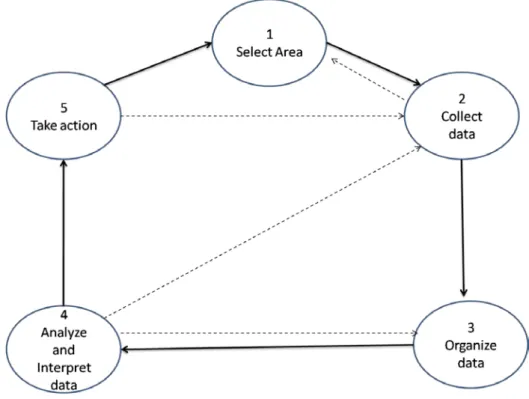
(28) FOSTERING CONFIDENCE IN SPEAKING THROUGH PARTICIPATING IN A RADIO SHOW 28. CHAPTER 3: Research Design. This chapter provides a detailed view of the different procedures that occurred during the present study. The topics that this chapter covers are: Type of study, where the type of research carried out is explained; Researcher’s Role which explains the teacher’s participation during the process; the Context where the project took place; the Participants (students); an explanation of the Data Collection instruments; and finally, the explanation of the Data Collection procedures.. Chart 2: Research design summary. Type of research The present study is classified as an Action Research one because the purpose, according to Mills (2007) is to conduct a reflective practice, effective impact in the target population, and improving students’ outcomes, based on data collected (Mills, 2007, p. 5)..
(29) FOSTERING CONFIDENCE IN SPEAKING THROUGH PARTICIPATING IN A RADIO SHOW 29. Figure 1: The Action Research Cycle (Calhoun, 1994, as cited by Mills, 2007). However, Ferrance’s action research typology (2000), suggests that this study is also classified as Individual Teacher Research, taking into account that the teacher—as researcher—focuses on a specific problem (lack of confidence when speaking), and proposes a strategy to deal with it (production of radio). The impact of this type of research regards the reformulation of the curriculum and the syllabuses, more focused on an equivalence of skills than on content (Ferrance, 2000, p. 3). Teacher’s role The teacher’s role in this action research is significant since the teacher is a facilitator of cooperative learning practices. The teacher also plays the role of a researcher. It is possible to use the dimension orientation that Freeman (1988) proposed, and the roles that this dimension embodies. It can be said that roles mainly regard Doing and the activist. What it is expected from the present study is to understand a current situation (why students do not speak in the target language), by doing something organized (letting them to.
(30) FOSTERING CONFIDENCE IN SPEAKING THROUGH PARTICIPATING IN A RADIO SHOW 30. create radio shows or sections of radio shows), based on something that it has already been observed (students’ rapport for players and radio shows that they listen to). As teacher, the roles go beyond that just observing, but acting (Duckwordth, 1987, as cited by Freeman: 1998, p. 180.) Likewise, the teacher’s role changes at the end of the implementation stage to Telling and the Storyteller, due to the state of the teacher as a researcher who is sharing findings based on the answer to the research question to a group of participants (school) and the academic community that monitored the study (La Sabana University). The purpose of attaining these roles suggests the provision of future guidelines to those who are interested in dealing with similar situations in the English classroom.. Context IED La Chucua is a public school, located in Kennedy Zone. The school was founded in 1976 as part of “Escuela Nueva” 3, one of the mayoralty’s programs at that time, with groups of elementary school. In 2000 the school was founded as an institution that offered pre-school, elementary and high school levels. Currently it has about 1300 students per shift. Its morning shift has three groups of pre-school with approximately twenty students each, thirteen groups of primary school (two in each grade), fifteen in high school (two groups in 6th, 7th, 8th, and 9th grades, and three in 10th and 11th). The majority of their families belong to stratum 2 and 3, and they usually live in the surrounding neighborhoods.. 3. Escuela Nueva: It is a pedagogical model established in 70´s especially designed to offer elementary education in rural zones, where a teacher was in charge of three grades (1th, 2nd, and 3rd) and another teacher in charge of the rest ( 4th and 5th grades). The groups were small in each group (about 10 students)..
(31) FOSTERING CONFIDENCE IN SPEAKING THROUGH PARTICIPATING IN A RADIO SHOW 31. The morning shift starts at 6:30 am and finishes at 12:30 pm, divided into four periods of 80 minutes. There is a break-time of 30 minutes after the first two periods. English teaching context: In pre-school and first cycle (1th, 2nd, and 3rd grades), there are not English classes due to the lack of teachers’ training. There is only a teacher specialized in second language who is in charge of 4th and 5th grades. The students from 6th grade have three periods of 80 minutes per week; from 7th to 11th grades students have two periods. There is not a course book, but there is some material in the library that teachers often use. The classes are given in Spanish because there is resiliency in students and some teachers to use the target language. Lessons are mainly focused on vocabulary acquisition and reading comprehension. Consequently, students’ level is A1 (according to the CEF, 2001); some of 9th, 10th, and 11th graders are reaching A2. They are false beginners. Beliefs For La Chucua community, language is the most important means of communication. In fact, communication is an area that is intended to be developed for students. In general terms, L1 has a relevant importance at school, following up PILEO 4 program In spite of the fact that national policies insist in the importance of acquiring a foreign language, English is still seen as a non-appreciated a subject. Its relevance regards the ICFES 5 results. However, community members do acknowledge that a language is learned by practicing and using it, but their sense of awareness is not developed. Such relationship with the educational culture limits their expectations to continue with university education.. 4. PILEO: Plan Nacional de Lectura, Escritura y Oralidad (National plan of literacy: Reading, writing and oral skills). 5. ICFES: It is the Colombian Institution that promotes the University education. At the end of the high school, students are asked to take a test that grades their knowledge in different disciplines. Based on the results, they have the possibility to access to universities (even with a scholarship) to study the careers they prefer..
(32) FOSTERING CONFIDENCE IN SPEAKING THROUGH PARTICIPATING IN A RADIO SHOW 32. Because of the laxity of Colombian current evaluation laws, students do not take advantage of the opportunities that the teachers provide; instead, they take courses in private institutions (especially English courses) when they realize the requirements to access to some Universities. Institutional Aims Based on La Chucua School Philosophy and its Mission and Vision, the main institutional aims are: 1. Student will be active participants of the community which will foster their development of learners’ talents and skills. 2. Students will become skillful in communicative, investigative, critical, and creative dimensions. 3. Students will be tolerant, autonomous and democratic, responding to the society challenges in local, regional, and national levels. La Chucua is a public school. Working almost three years there, empowers me to envision this experience as a challenge to be faced, as a possibility to overcome constraints and impediments, and at the same time as a learning opportunity to create strategies to overcome difficulties Additionally it is necessary for me to take into consideration some ethical principles underpinning the study. Constraints There is certain lack of information about the process of research development, and consequently, there are not enough research experiences; just some projects developed in agreement with some local institutions like Universidad Distrital Francisco José de Caldas in Bogotá - Colombia and Cámara de Comercio de Bogotá - Colombia. With the advent of the.
(33) FOSTERING CONFIDENCE IN SPEAKING THROUGH PARTICIPATING IN A RADIO SHOW 33. 1994 Colombian Law of Education (115) schools were considered to develop projects, specifically, the Institution Educational Project 6. Conducting research studies is a quite recent issue in Colombian public schools. Another constraint regards the lack of motivation in students. The 230 National Decree, and some ambiguities generated by the interpretation of the Law 115 as to evaluation levels, have impeded students to assume a commitment in their education. Students’ low performances, their lack of commitment and corresponding low scores grades constitute an evidence to it. They know that the mentioned law somehow permits them being approved to the next grade, even without the competences required. This is evident in everyday classes, the results, their attitudes and some parents´ demands about the fact that their sons and daughters must approve. Fortunately, the evaluation policies changed in Colombia. However, motivating students is still a challenge since they are in a sort of transition between the old educational system and the new one. Impediments The most significant were resources. In this particular study, it was necessary to think about some tools that were not available: A tape recorder (or mp3, a source to record voices), the software for creating the radio station show, or the availability in the computers room. It was necessary to be creative to overcome that kind of impediments. Finally, it is pertinent to reflect about ethical considerations. So, one of the strategies must be focused on acting ethically. For doing so, the procedure followed, based on Winter, (1998, as cited by O’Brien) was: (1) To consult the authorities (Head Master and Coordinators), and committees (Area or subject staff).. 6. Cristancho, V. (1994). Ley 115 de 1994. Normas Básicas del Educador, 199..
(34) FOSTERING CONFIDENCE IN SPEAKING THROUGH PARTICIPATING IN A RADIO SHOW 34. (2) To ask parents for the permission to record their sons and daughters and use the material to analyze for the research. (3) Being respectful if one of the students does not want to participate, or if any mother or father does not permit to do so. (4) Being responsible for the confidentiality of the students’ testimonies and productions.. Photograph 1: La Chucua School, Secondary section. Participants The participants of this action research study were the students of group 802 from La Chucua School. The study started with 38 students about 13 years old, but—because of changes occurred in the new academic year (some students moved to another school and some new came to the group), the study finished with 12 students. The group receives two sessions of eighty minutes per week (160 min.). The most common materials to use in class are study guides, handouts (provided by the teacher); books, dictionaries, texts from the Internet or “Encarta”, handcrafting materials, etc. (provided by students). They follow the book “Teenagers™” (Norma Publishers). There are ten copies in the library..
(35) FOSTERING CONFIDENCE IN SPEAKING THROUGH PARTICIPATING IN A RADIO SHOW 35. The sessions are planned according to the Ministry of Education standards 7 in English language education, which are adapted according to students’ level in the school. Their English level is about A1: They can use familiar everyday expressions and very basic phrases. They can interact in a very simple way8, but they do not feel confident speaking. In the class, the teacher talking- time is high. They are encouraged to participate orally, and the teacher is still in the process of increasing students-speaking time. In this moment, students are in the stage of producing just through monosyllables like “yes”, “no”, and isolated words. On the other hand, they have difficulties of recalling vocabulary, especially verbs. They are always asking the teacher for the English spelling of the words worked in previous lessons. Additionally –and after considering weaknesses and strengths identified in the institutional evaluation of the subject results last year- English teachers decided to work with projects, in order to increase students’ motivation and performance levels. In the case of the target group of this study, it was decided they would work with the topic “Radio Show”. The aim with this kind of strategy is to encourage learners to use or apply what they are learning in English class in a topic that is of their interest, but at the same time, to increase vocabulary about a specific area, subject or topic, in this case, the related language to a “Radio show” All topics proposed in the content plan are connected with the project topic.. 7. 8. Ministerio de Educación Nacional (2006). Estándares Básicos en Lenguas Extranjeras: Inglés.. Council of Europe (2002). Common Reference Levels. Common European Framework of Reference for Languages: Learning, teaching, assessment. U.K.: Cambridge University Press, 24.
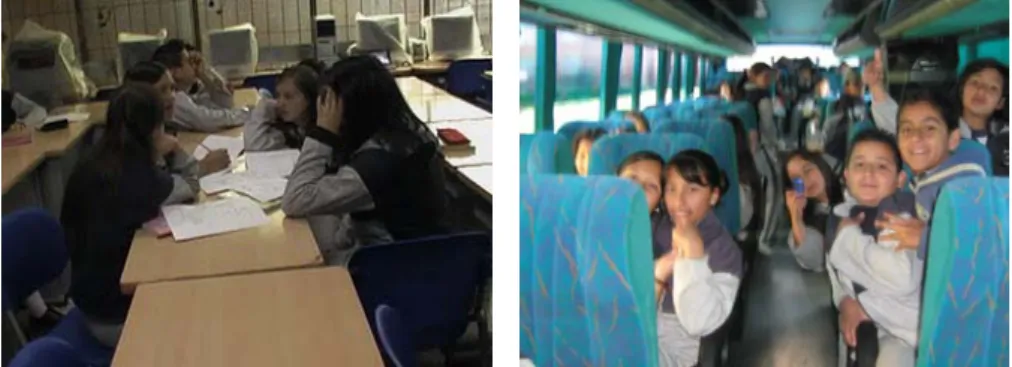
(36) FOSTERING CONFIDENCE IN SPEAKING THROUGH PARTICIPATING IN A RADIO SHOW 36. Photographs 2 and 3: 8th grade students. Data Collection Instruments The data collection instruments chosen in order to carry out this project are: students’ artifacts (video and audio recordings), teacher’s journals, initial and a final survey.. Table 3: Data sources.. The data collection instruments chosen for carrying out this project are surveys (initial and final), teacher’s journals, video and audio recordings (see Appendices 3 – 6)..
(37) FOSTERING CONFIDENCE IN SPEAKING THROUGH PARTICIPATING IN A RADIO SHOW 37. Surveys According to Given (2008), the importance of surveys is connected to the systematic way to gather data from an amount of individuals in order to corroborate generalizability of the results and also—being applied at the beginning and at the end of the implementation, “to examine long term trends” (Given, 2008, p. 846). For the present study, the confirmation regarded the idea that students felt unconfident speaking in the target language and the long term trends refers to what the participants think were the aspects they have fostered. Previous to the implementation, the survey was applied to the whole group. The questions included there had as purpose to find the possible reasons why the students feel unconfident speaking in English. After the implementation, a new survey was applied in order to consider what students thought about the project, in terms of the relevance. It was applied to the twelve students who finished participating in the project. Additionally, it was necessary to compare researcher’s observations with students’ thoughts and opinions. Audio recordings The rationale of using audio recordings in this study is pointed out by Given (2008), who states that it offers support to the teacher’s journals and also—for this action research project—to provide evidence of what participants expressed in the video recordings. Thus, audio recordings became not only the source of the sections of the radio show; it was also seen as data collection instrument, given that additional information would be included there, that evidenced the students’ confidence. This instrument was applied during the implementation. The transcriptions were registered in a form (Given, 2008, p. 40). Video recordings According to Given (2008), video recordings offer moving images to details of the interaction and behavior of the participants during the implementation. For this study, the.
(38) FOSTERING CONFIDENCE IN SPEAKING THROUGH PARTICIPATING IN A RADIO SHOW 38. approach (Given, 2008, p. 917) applied was Researcher-generated because the researcher chose the subject and the content of the video. Video recordings were done at the end of the implementation. The main purpose is to look for students’ impressions about their own performance. Those videos were made after students’ recordings. The transcriptions were registered in a form. Teacher’s journals According to Sagor (2005), journals are important during the period of implementation because it keeps a lot of information (as complement of the other instruments) which would be useful at the end of this process. He states that the more observations the researcher collect in the journal, the more information will be available when analyzing data started. (Sagor, 2005, 108). An advantage that Sagor states of using journals is the freedom to write the notes. It was helpful because in this case, the researcher was also the teacher; this fact implied doing different tasks during the implementation, and the journals were elaborated at the end of each lesson. During each lesson (giving input, planning the section of the show and recording), I registered my observations after participants did the activities. At the end, I compared with the identified aspects in the audio and video recordings.. Data collection procedures The process of data collection was evidenced in three moments or stages during the research process. These stages were called: Pre-Implementation, Implementation, and PostImplementation. The instruments were applied in the different stages..
(39) FOSTERING CONFIDENCE IN SPEAKING THROUGH PARTICIPATING IN A RADIO SHOW 39. STAGE Pre-Implementation. Implementation. INSTRUMENT Initial Survey Audio Recordings (Complemented with field notes) Video Recordings (Complemented with field notes) Teacher’s Journals Lesson Plans: 3 Including: Input session (1) Planning sessions (2) Recording sessions (1) Editing sessions (2: One in class and the other at home if possible). Final Survey Video-recordings (interviews) Radio Show online Table 4: Stages in the process of applying instruments. Post-Implementation. The pre-implementation stage was the beginning of the process. The purpose to apply an initial survey was to encourage students to identify the reasons that impeded them to feel confident when speaking in English. As for the Implementation stage, there was an introductory session where students formed the groups, assigned a name for the team and established some rules to work in team. These rules were shared in open class and agreed for all groups. Based on the results of the initial survey, three lessons were planned: -. Comparing people. -. Tips for vacations. -. Interviews. Each lesson included the following sessions: -. A session to provide input (Language). -. Two sessions for planning (including a radio topic workshop and the opportunity for students to plan their shows).
(40) FOSTERING CONFIDENCE IN SPEAKING THROUGH PARTICIPATING IN A RADIO SHOW 40. -. A session for recording. -. Two sessions for editing: a face-to-face session and an independent work at home. After the recording session, each group listened to the show, then the members. were interviewed, and the interview was video recorded. The interviews were somehow informal, and students had the opportunity to express freely and in the native language their opinions about their performance. In the post- implementation stage, the students who finished the project filled in a final survey, and the show was uploaded in the platform to be broadcasted online..
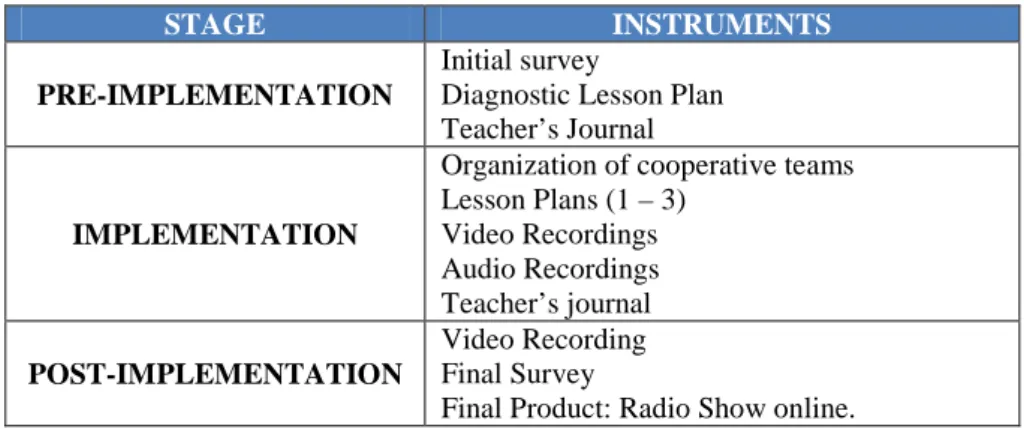
(41) FOSTERING CONFIDENCE IN SPEAKING THROUGH PARTICIPATING IN A RADIO SHOW 41. CHAPTER 4: Pedagogical Intervention. This study fostered students to be more motivated in speaking and feel that the classroom is a healthy environment that allows them to take advantage of technology while they are engaged in interactional and active learning processes. In so doing, identifying the reasons why the students did not like participating in oral activities, seeking for the most appropriate cooperative learning strategies, designing the strategy, and put it in practice were the steps that would permit answering the research question. As mentioned in the previous chapter, the instruments used to collect the data were surveys (initial and final), audio and video recordings, and teacher’s journal. Besides, three lessons were planned to observe and make use of the instruments already mentioned. These steps were grouped in three stages: Pre-Implementation, Implementation, and Post-Implementation. This is the description of the three stages: STAGE. INSTRUMENTS Initial survey Diagnostic Lesson Plan PRE-IMPLEMENTATION Teacher’s Journal Organization of cooperative teams Lesson Plans (1 – 3) Video Recordings IMPLEMENTATION Audio Recordings Teacher’s journal Video Recording POST-IMPLEMENTATION Final Survey Final Product: Radio Show online. Table 5: Stages in the process and instruments designed.. Pre-Implementation Stage This stage has as purpose to identify the reasons that impeded students to feel confident when participated in oral activities. To do so, a survey was applied in a printed version. The survey included eleven questions which purpose was to determine the reasons why students did not participate in oral activities..
(42) FOSTERING CONFIDENCE IN SPEAKING THROUGH PARTICIPATING IN A RADIO SHOW 42. A skill-focused lesson plan was designed to observe the participants in action and also to identify the facts or situations that made students feel unconfident in oral activities. The teacher journal was implemented in order to record the students’ performance during this first activity, always focusing the observations on the speaking confidence. After reading and analyzing the first insights, the next step consisted on looking for the most appropriate cooperative learning strategies. Connecting theory and practice was crucial in this issue. In other words, observing not only the lesson previously mentioned, but also going back to the different sessions with the group (for example, those for ICELT 9 teaching practices or for written reflections), and reading about the different cooperative learning strategies allowed the identification of the strategies that would help reach the general objective and consequently, to answer the research question. Implementation Stage This stage began with the organization of the cooperative teams to set up the groups and introduce the strategies expected to be developed (interpersonal and small-group skills), as well as encouraging the participants to agree their own rules and functions. Likewise, three skill-focused lesson plans were designed to conduct the process of speaking confidence acquisition. These lessons were closely related to the course syllabus and they were developed considering the sessions allotted time. Each lesson included input, planning, recording and editing sessions. In the input sessions, students were introduced to the grammar and vocabulary topic (e.g: Using future for planning activities); during the planning session, the students drew decisions about their show (or show section) wrote the script and tried the show; in the recording session, each team performed the show, and finally, during the editing. 9. ICELT: In-Service Certificate in English Language Teaching..
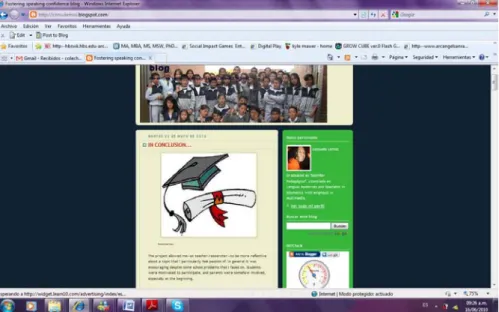
(43) FOSTERING CONFIDENCE IN SPEAKING THROUGH PARTICIPATING IN A RADIO SHOW 43. session, the students decided on how to include the music, evaluated which chunks include or delete. At the beginning of the project, it was planned to video record the different stages. These recordings would become as an additional aid for the teacher-researcher to gather evidence of the speaking confidence behaviors. Unfortunately, the video recordings produced more anxiety in the students, so the video recordings were implemented at the end of the recording session, where the students were interviewed. These interviews’ purpose was to illustrate the opinion of the students regarding their own achievements. The audio recordings—performed in the lessons recording stage—facilitated the search of evidence that demonstrated the speaking confidence in the participants. Similar to the pre-implementation stage, each implementation lesson was observed and the observations were reported in the teacher’s journals. Additionally, a blog (http://consulemos.blogspot.com) to record the reflections about the study and a schedule of the activities to implement in the project was a strategic tool to avoid interference with planned school activities.. Figure 2. Action Research Blog..
(44) FOSTERING CONFIDENCE IN SPEAKING THROUGH PARTICIPATING IN A RADIO SHOW 44. The reflections—product of the data collected—were presented in the blog, as well as the difficulties experienced during this stage. Post-Implementation Stage The focus of this stage was to pull together and classify all the data collected to be analyzed. In particular, the video recordings were watched one more time in order to complement. the. teacher’s. journals,. a. final. online. survey. (available. at. http://www.encuestafacil.com ) was displayed for students to fill in, the final show was edited and set up. All of above permitted to conduct the following steps: • To analyze the data collected. • To start writing the reflection regarding the way that the research question was answered. At the same time, the creation of the online radio station by using the platform SHOUTcast® was set up. Because of time constraints, few students participated in uploading the ratio station in the web. That is why a tutorial was created for the rest of the group. (Appendix 13).
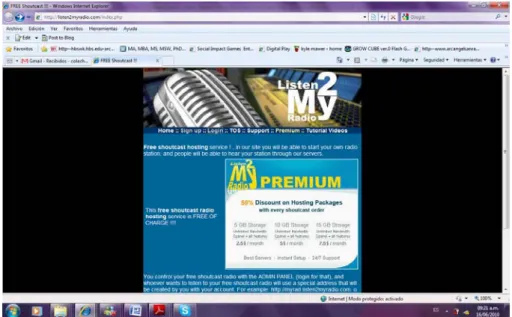
(45) FOSTERING CONFIDENCE IN SPEAKING THROUGH PARTICIPATING IN A RADIO SHOW 45. Figure 3: Online Radio station. The link of the online radio station is http://listen2myradio.com/radio.php?ipp=87.117.197.145&port=12953&ch=1407&radioname =letspeakchucuakids&rrr111=listen2myradio.com&radio_id=768740. The recordings are not strictly schedule momentarily, but it can be eventually listened to from 8 to 11 pm in the night (Colombian Time) because some adjustments in terms of turns to broadcast are still being decided by the students and I. This is the timeline that was followed for this project:.
(46) FOSTERING CONFIDENCE IN SPEAKING THROUGH PARTICIPATING IN A RADIO SHOW 46. Activity/Date. FEBRUARY – JUNE 2009. AUGUST 2009. SEPTEMBER 2009. FEBRUAR 2010. Step 1: Initiation Topic choice Research question – Version 1 Step 2: Preliminary Investigation Bibliography check Constructs Presentation of first proposal Step 3: Literature review Checking resources and constructs documents. Writing document Step 4: Design of action plan Deciding on instruments and procedures Timeline – First version Writing research proposal - Version 2 Step 5: Implementation design Revision research proposal Step 6: Monitoring/data collection Step 7: Analysis and interpretation of data Step 9: Sharing findings. Table 6: Timeline. MARCH 2010. APRIL 2010. MAY 2010. JUNE 2010.
(47) FOSTERING CONFIDENCE IN SPEAKING THROUGH PARTICIPATING IN A RADIO SHOW 47. Implementation Activities Lesson Plans Three lesson plans were designed to help students to create the shows. Their purpose was to take advantage of the concepts and competences already and currently worked in class (vocabulary, grammar) as an input to create the scripts that would give them the confidence and the meaningfulness to do the show. The topics of the lessons were: -. Comparing people.. -. Recommendations for Vacations. -. Interviews. (See appendix 7) Workshops It was necessary to plan and apply some workshops in order to get familiar with the radio language and the radio production. Three workshops were developed in class and two as independent work (at home). The topics presented in class were: -. Radio Elements.. -. Radio Language: Useful expressions.. -. Editing: Using Audacity™..
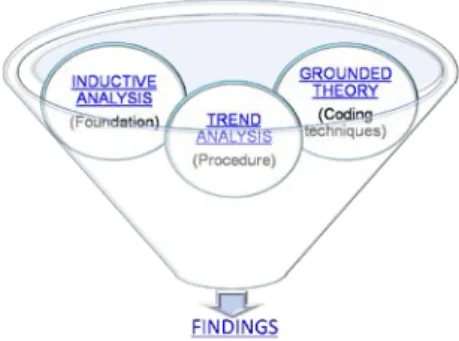
(48) FOSTERING CONFIDENCE IN SPEAKING THROUGH PARTICIPATING IN A RADIO SHOW 48. CHAPTER 5: Data Analysis and Findings. In this chapter an account of the piloting process and the study findings is presented. An ethical principle that conducted the data analysis regards applying techniques of theoretical sensitivity. According to Corbin and Strauss (1990), these techniques avoid researcher’s assumptions and “look beyond the literature if we are to uncover phenomena and arrive at new theoretical formulations” (Corbin and Strauss, 1990, p. 76). It is important because it is easy to take data for granted, for example, students’ expressions or comments, notes taken while developing the activities need to be considered again and ask if what these expressions or notes are the same for the participants and the researcher. In order to do so, additional questions or analysis in depth based on expressions or words around is necessary.. Sources of data As mentioned in the third chapter, four instruments were piloted for this action research project: Surveys, Audio and Video Recordings and Teacher’s Journals. Description of the Data Analysis Methods For this action research a blend of three approaches were applied: The foundation of Quinn’s Inductive Analysis, the procedure of Sagor’s Trend Analysis and the coding techniques proposed by Corbin and Strauss in Grounded Theory. This decision was made as product of an exhaustive exploration in order to solve better the action research question. It was found that each isolated approach might not respond to it and did not fit enough with the qualitative type of research and most of the data collected. This combination of approaches is explained later..
(49) FOSTERING CONFIDENCE IN SPEAKING THROUGH PARTICIPATING IN A RADIO SHOW 49. Quinn (2002) stated that Inductive analysis consists on the identification of patterns, categories and themes of analysis from the data emerging, instead of imposing before the data collection (Quinn, 2002, p. 56). From these specific observations and findings, the theory is constructed or formulated. The specific areas of development that are relevant to register must be connected to the research question, and also with the constructs that rule the study. According to Sagor (2005), when analyzing data, the researcher must explain the different events or elements through it. These elements include settings, people involved, conflicts and themes. The emerging explanation is always pointing out the research question, reflecting on two aspects: Identifying changes occurred, and understanding the factors that contributed to these changes. It was also complemented with Inductive Analysis, taking into account that all the elements identified (patterns, categories and themes of analysis) emerge from the data, instead of imposing before data collection. (Quinn, 2002) In Trend Analysis, Sagor (2005) proposed three Action – Change – Relationship (ACR) questions that must be answered to make a precise analysis: ACR Question 1: WHAT DID WE DO? It consists on reconstructing the facts occurred during the implementation, considering four aspects: If the theory of action was followed as written, the researcher needs to establish what the fashion that the theory implemented was, and the reasons why the elements of the theory and the significant actions taken from the original theory were omitted or changed. Sagor (2005) stated that identifying the actions that a phenomenon produced permits the researcher predicting what might occur in the future. ACR Question 2: WHAT CHANGES OCCURRED REGARDING THE ACHIEVEMENT TARGETS?.
(50) FOSTERING CONFIDENCE IN SPEAKING THROUGH PARTICIPATING IN A RADIO SHOW 50. By answering the question, the researcher explains the achievement target during the course of the project, comparing and contrasting trends in and the influence received by external factors. In this stage a record of certain actions that could have a differential influence in the results is presented. In other words, this question consists on looking for each separate independent source for information on changes in reaching what is expected with the study. Reaffirming with other sources and establishing the relationship among them is necessary. This process is called triangulation. ACR Question 3: WHAT WAS THE RELATIONSHIP BETWEEN ACTIONS TAKEN AND ANY CHANGES IN PERFORMANCE ON THE TARGETS? In this phase, the findings are used in order to answer the previous questions. Then, it is necessary to identify changes in performance in the data and in this way, it is possible to determine the pattern or patterns that are closely related to the actions or situations that could explain such changes. Grounded theory is basically the inductive development of theory, based on the collection of data. According to Corbin & Strauss (1990), grounded theory consists on reading and re-reading the collected data and identifying certain variables, called categories, as well as the relationship among them. The categories are identified by means of following process of coding. This is the aspect of grounded theory used in the present study. These authors defined coding as the operations where data is broken down, conceptualized and reorganized in different ways. Saldana (2009) describe a code as a word or short phrase that represents an attribution for a portion of language-based or visual data (Saldana, 2009, p.3)..
Figure

+7

Documento similar
Of sixty-four studies of cooperative learning methods that pro- vided group rewards based on the sum of group members' individual learning, fifty (78%) found
In relation to the learning strategies scales, EMI students have better learning strategies due to metacognitive self- regulation, time study management and effort regulation
motivation and interest; to encourage their active participation in learning experiences; to explore a constructivist approach in which students build their own learning
The study was designed to investigate the usage and its frequency of language learning memory strategies by those students who are learning English as a
The data for learning self-regulation (higher values in this variable mean that the students used more strategies oriented to learning goals) is coming from the
In this context, the cooperative learning is one of the techniques that fosters this change, since it suggests new manners of learning with work methods that characterize
According to Gil (2010), cooperative learning is defined as a learning process based on group work, collective construction of knowledge and the development of mixed
On the other hand, the participants’ subjective perception of the task of specifying requirements from the catalogue of reusable requirements was generally better in
