https://doi.org/10.1007/s00394-018-1743-9 ORIGINAL CONTRIBUTION
Net contribution and predictive ability of the CUN-BAE body fatness
index in relation to cardiometabolic conditions
Veronica Davila‑Batista1,2,3,12 · Antonio J. Molina1,2 · Laura Vilorio‑Marqués1 · Leila Lujan‑Barroso4,5 · Fernanda de Souza‑Teixeira6 · Rocío Olmedo‑Requena3,7 · Jorge Arias de la Torre3,8 · Lidia García‑Martínez1 · Laura Álvarez‑Álvarez1 · Heinz Freisling9 · Javier Llorca3,10 · Miguel Delgado‑Rodríguez3,11 · Vicente Martin1,2,3
Received: 16 February 2018 / Accepted: 24 May 2018 © The Author(s) 2018
Abstract
Background The CUN-BAE (Clínica Universidad de Navarra-Body adiposity estimator) index is an anthropometric index based on age, sex and body mass index (BMI) for a refined prediction of body fatness in adults. CUN-BAE may help detect metabolically unhealthy individuals with otherwise normal weight according to BMI or waist circumference (WC). The aim of this study was to evaluate whether CUN-BAE, independent of its components (BMI, age and sex), was associated with cardiometabolic conditions including arterial hypertension, diabetes mellitus and metabolic syndrome (MetS).
Methods The ENRICA study was based on a cross-sectional sample of non-institutionalized men and women representative of the adult Spanish population. Body weight, height, and WC were measured in all participants. The residual of CUN-BAE (rCUN-BAE), i.e. the part of the index not explained by its components, was calculated. The associations of CUN-BAE, rCUN-BAE, BMI and WC with hypertension, diabetes and MetS were analysed by multivariate logistic regression, and the Akaike information criterion (AIC) was calculated.
Results The sample included 12,122 individuals. rCUN-BAE was associated with hypertension (OR 1.14, 95% CI 1.07–1.21) and MetS (OR 1.48, 1.37–1.60), but not with diabetes (OR 1.05, 0.94–1.16). In subjects with a BMI < 25 kg/m2, CUN-BAE
was significantly associated with all three outcome variables. CUN-BAE was more strongly associated with the cardiometa-bolic conditions than BMI and WC and fit similar AICs.
Conclusions The CUN-BAE index for body fatness was positively associated with hypertension, diabetes and MetS in adults independent of BMI or WC. CUN-BAE may help to identify individuals with cardiometabolic conditions beyond BMI, but this needs to be confirmed in prospective settings.
Keywords Body fatness · CUN-BAE · BMI · Hypertension · Diabetes · Metabolic syndrome
Abbreviations
AHT Arterial hypertension BF Body fat
BMI Body mass index
CUN-BAE Clínica Universidad de Navarra-Body adi-posity estimator, Gómez-Ambrosi equation DM Diabetes mellitus
MetS Metabolic syndrome
rCUN-BAE CUN-BAE residual was calculated with age and BMI as the independent variable and CUN-BAE as the dependent variable rCUN-BAE2 CUN-BAE residual was calculated with
age and WC as the independent variable and CUN-BAE as the dependent variable WC Waist circumference
Background
Excess adiposity is estimated to cause 4 million deaths and approximately 4.9% of years of life lost worldwide, and the relationships with cardiometabolic conditions including metabolic syndrome, type 2 diabetes, and cardiovascular
Electronic supplementary material The online version of this article (https ://doi.org/10.1007/s0039 4-018-1743-9) contains supplementary material, which is available to authorized users. * Veronica Davila-Batista
diseases are well established [1]. Moreover, the prevalence of obesity is continuing to increase worldwide [2, 3].
In the general population, the most widely used meas-ures to define excess body fatness (BF) are body mass index (BMI) and waist circumference (WC). These anthropomet-ric indicators have been criticized because they do not take into account important factors involved with adiposity, in particular age, sex, or race [3–5]. The use of more accurate methods to assess body fatness in large epidemiological studies, such as dual-energy X-ray absorptiometry (DXA) or air-displacement plethysmography (Bod-Pod) is hampered by high costs. Therefore, there is great interest in accurate and cost-efficient indicators of BF that can predict disease risk better than BMI or WC.
A recently developed alternative anthropometric method that deserves special consideration is the CUN-BAE (Clínica Universidad de Navarra-Body Adiposity Estimator) index. This estimator of percentage of body fat is based on BMI, sex and age of Caucasian subjects [6]. Previous CUN-BAE assessments showed a stronger correlation with cardiovas-cular risk factors related to adiposity than BMI or WC [7–9]. The CUN-BAE index may help detect individuals who are of normal weight according to BMI, but are metabolically unhealthy [10, 11]. In this regard, the CUN-BAE index has already been used as an anthropometric measure to try to reach a consensus on the definitions of metabolic health [12].
However, since CUN-BAE is based on BMI, sex and age, its relationship with cardiometabolic conditions may be due to the components of this indicator. Knowing whether a composite index, such as the CUN-BAE index, adds a sig-nificant predictive ability of cardiometabolic risk apart from its components is relevant.
The aim of this study was to evaluate the independent and net contribution of the body fatness estimator, CUN-BAE, in the prediction of cardiometabolic conditions in Spanish adults.
Materials and methods
Study design
This report is based on the Study on Nutrition and Car-diovascular Risk in Spain (ENRICA study) [13], a cross-sectional study performed between 2008 and 2010 with a national representative sample of 12,948 non-institution-alized adults in Spain. The participants were selected by multistage cluster sampling. First, the sample was strati-fied by province and municipality size. Then, clusters were randomized by municipalities and census section. Finally, households were selected by random telephone dialling in each section.
For this study, we selected Caucasian participants with complete available anthropometric information (6.4% par-ticipants in the ENRICA study were excluded).
Ethical considerations
All participants signed a written informed consent. The ENRICA study protocol was approved by the Clinical Research Ethics Committees of the University Hospital La Paz in Madrid and Hospital Clínic in Barcelona.
Study variables
Data on anthropometry, blood pressure and biological sam-ples were collected during two home visits. Further, a tel-ephone interview with a structured questionnaire on lifestyle and other variables of interest was carried out [13].
Anthropometric measurement
Body weight, height and WC were measured twice in each subject by trained staff according to standard conditions [13,
14] using electronic scales (model Seca 841, precision to 0.1 kg) and portable extendable stadiometers (model Ka We 44,444 Seca). BMI was calculated as weight in kilograms divided by squared height in metres: kg/m2. The
classifica-tion of BMI was defined by the World Health Organizaclassifica-tion [2]: normal weight < 25 kg/m2, overweight ≥ 25 kg/m2 and
obesity ≥ 30 kg/m2. WC was measured in centimetres using
flexible, inelastic belt-type tapes. The standard CUN-BAE was calculated using the equation suggested by Gómez-Ambrosi et al. [7]: %BF = − 44.988 + (0.503 × age) + (10.689 × sex) + (3.172 × BMI) − (0.026 × BMI2) + (0.181 × BMI × sex) − (0.02 × BMI × age) − (0.005 × BMI2 × sex) + (0.00021 × BMI2 × age), where age is measured in years and sex was codified as 0 for men and 1 for women.
Outcomes
Blood pressure was measured with validated automatic sphygmomanometers (model Omron M6) according to standardized procedures. In summary, two sets of blood pressure readings (with three measured) were separated by 90 min. Arterial hypertension (ATH) was defined as sys-tolic blood pressure ≥ 140 mm Hg, diassys-tolic blood pres-sure ≥ 90 mm Hg, and/or current treatment with an antihy-pertensive drug [15].
Biochemical markers in blood and urine were obtained after a 12-h fasting period [16]. Diabetes mellitus (DM) was defined following recommendations of the Ameri-can Diabetes Association [16, 17] as a 12-h fasting serum glucose ≥ 126 mg/dl, glycosylated haemoglobin
(HbA1c) ≥ 6.5%, or treatment with oral antidiabetic drugs or insulin [16, 17].
Serum high-density lipoprotein cholesterol was measured by elimination/catalase using the direct method, and triglyc-erides were measured using the glycerol phosphate oxidase method (ADVIA de Siemens).
Metabolic syndrome (MetS) includes physiological indicators such as systolic blood pressure ≥ 130 mmHg, diastolic ≥ 85 mmHg or treatment with antihypertensive medication, impaired glucose (a fasting blood glucose level ≥ 100 mg/dL or treatment with antidiabetic drugs), ele-vated triglycerides (≥ 150 mg/dL), low serum levels of high-density lipoprotein (HDL < 40 mg/dL in men or < 50 mg/dL in women) and abdominal obesity (WC ≥ 102 cm in men and ≥ 88 cm in women). The diagnosis of MetS was based on the presence of at least three of these five criteria, using the International Diabetes Federation consensus [18].
Other variables
The following variables were considered as potential con-founders: age, sex, education level (categories were based on the Spanish education system: primary school, secondary school, and higher education), civil status (single, married, and separated/divorced/widower), smoking (current, past, and never) and alcohol intake (never drinkers, former drink-ers, moderate drinkdrink-ers, and heavy drinkers).
Statistical analysis
Descriptive analyses of sociodemographic and lifestyle char-acteristics, anthropometric data and cardiometabolic disease by sex were carried out using common procedures.
Estimation of the residual CUN‑BAE (rCUN‑BAE)
The rCUN-BAE was estimated through the residual method [19, 20]. In a linear model, we regressed the BMI and age as independent variables and the CUN-BAE index as the dependent variable. We then computed the rCUN-BAE: dif-ference between observed CUN-BAE figures and those pre-dicted by the model; by definition, residuals have zero cor-relation (are orthogonal) with the observed CUN-BAE. The residuals were calculated separately for men and women. Thus, the rCUN-BAE may contribute to the body fat estima-tor developed by Gomez-Ambrosi independently of the BMI and age elements.
Additionally, residual CUN-BAE values were estimated using WC and age (rCUN-BAE2) to ensure that associations between the percentage of total body fat and outcomes were independent of abdominal body fat.
Statistical model
We used multivariate logistic regression models to estimate associations of anthropometric measurements (CUN-BAE, BMI and WC) with AHT, DM and MetS. All analyses were a priori stratified by sex. The exposure variables were ana-lysed both on the original scale and per 1-SD increment and, in supplementary analyses, as categorical variables using quartiles. Linear trend tests were performed.
Three different multivariate logistic models were fit sepa-rately for each of the three cardiometabolic conditions. For these, a crude model was fit separately for each of the three
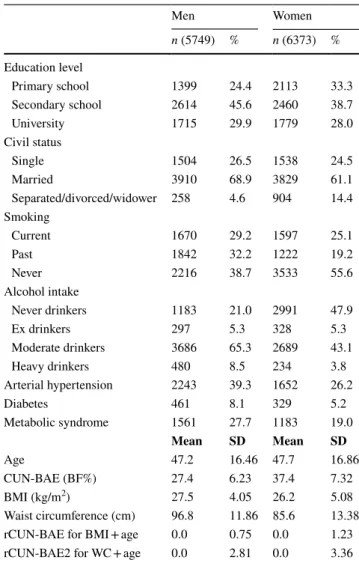
Table 1 Baseline characteristics of the study population
BMI body mass index (km/m2)
CUN-BAE Clínica Universidad de Navarra-Body Adiposity Estimator calculated using the Gómez-Ambrosi equation (body fat %)
WC waist circumference (cm)
rBAE and rBAE2: residual BAE and residual CUN-BAE2. Residuals were calculated with separate sex-specific linear regression models with age and BMI or WC as the independent vari-ables and CUN-BAE as the dependent variable
Men Women n (5749) % n (6373) % Education level Primary school 1399 24.4 2113 33.3 Secondary school 2614 45.6 2460 38.7 University 1715 29.9 1779 28.0 Civil status Single 1504 26.5 1538 24.5 Married 3910 68.9 3829 61.1 Separated/divorced/widower 258 4.6 904 14.4 Smoking Current 1670 29.2 1597 25.1 Past 1842 32.2 1222 19.2 Never 2216 38.7 3533 55.6 Alcohol intake Never drinkers 1183 21.0 2991 47.9 Ex drinkers 297 5.3 328 5.3 Moderate drinkers 3686 65.3 2689 43.1 Heavy drinkers 480 8.5 234 3.8 Arterial hypertension 2243 39.3 1652 26.2 Diabetes 461 8.1 329 5.2 Metabolic syndrome 1561 27.7 1183 19.0 Mean SD Mean SD Age 47.2 16.46 47.7 16.86 CUN-BAE (BF%) 27.4 6.23 37.4 7.32 BMI (kg/m2) 27.5 4.05 26.2 5.08 Waist circumference (cm) 96.8 11.86 85.6 13.38
rCUN-BAE for BMI + age 0.0 0.75 0.0 1.23
Fig. 1 Odds ratio for the asso-ciation per 1-SD increment of standard anthropometric measure with cardiometabolic conditions, by sex. a Odds ratio for the association of anthropo-metric measures with arterial hypertension. b Odds ratio for the association of anthropomet-ric measures with diabetes. c Odds ratio for the association of anthropometric measures with metabolic syndrome. Odds ratio (Model 1) was adjusted for age, education level, civil status, alcohol drinker and current smoker; age not into the CUN-BAE analyses were not adjusted for age because age was already included in the CUN-BAE. 1-SD One standard deviation, BMI body mass index (km/m2),
CUN-BAE Clínica Universidad de Navarra-Body Adiposity Estimator (body fat %), WC waist circumference (cm)
A
B
exposure measures, and multivariable models were adjusted for the potential confounders including level of education, civil status, alcohol consumption, smoking status and age for BMI and WC, but without age for CUN-BAE, in which age is already included in the calculation (base Model 1). Additionally, CUN-BAE was analysed within categories of BMI cut-offs.
In a second model, associations of rCUN-BAE together with BMI and age were introduced in combination with con-founding variables of base Model 1. Furthermore, in a third model, the rCUN-BAE2, WC and age were considered as independent variables.
Results are reported as multivariable-adjusted odds ratios (ORs) with 95% confidence intervals (CIs). All reported p values are two-tailed with a statistical significance of
p < 0.05.
Additionally, the Akaike information criterion (AIC) was calculated to determine which model best fits the data.
All analyses were carried out with the Stata/SE 14 soft-ware package (College Station, Texas, USA).
Results
General and anthropometric characteristics of the study pop-ulation by sex are described in Table 1. The study population consisted of 12,122 adult Spanish Caucasian participants, 5749 men (47.4%) and 6373 women. The mean age was 47.4 years (range: 18–96 years; SD 16.67). In this population 32.4% had ATH, 6.6% had DM and 23.1% had MetS. The BMI and WC mean values for men were higher than those among women. Inversely, CUN-BAE, indicative of adipos-ity, showed a lower mean of 27.4% fat in men compared to 37.4% in women.
Pearson’s correlations between anthropometric measures, except for residuals, were moderate-to-strong and varied according to anthropometric indicator and sex (Supplemen-tary Table S1).
Figure 1 shows the separate associations between anthro-pometric measures and cardiometabolic conditions (base Model 1). Standard CUN-BAE, BMI and WC were signifi-cantly positively associated with AHT, DM and MetS. The ORs per 1-SD increment of the cardiometabolic conditions were indicative of a strong association with CUN-BAE than with the other anthropometric measures. Statistically signifi-cant differences were observed by sex. The ORs per 1-SD
Table 2 Odds ratio for the association of anthropometric measures, rCUN-BAE and BMI mutually adjusted, with cardiometabolic conditions using the residual method
ORs* (residual method) were adjusted for rCUN-BAE, BMI and age (continuous variables) and sex only in the model combining men and women (in all: 0 men, 1 woman)
ORs** (residual method) were adjusted for rCUN-BAE, BMI and age plus sex, educational level, civil status, alcohol drinker and current smoker BMI body mass index (kg/m2), rCUN-BAE residual CUN-BAE. Residuals were calculated with separate sex-specific linear regression models
with age and BMI as the independent variable and CUN-BAE as the dependent variables The bold values significance that 95% CI are statistically significant
Model 2 All Men Women
OR* 95% CI OR** 95% CI OR* 95% CI OR** 95% CI OR* 95% CI OR** 95% CI
Arterial hypertension rCUN-BAE 1.14 1.07 1.21 1.14 1.07 1.21 1.17 1.05 1.30 1.18 1.06 1.32 1.18 1.09 1.28 1.15 1.06 1.26 BMI 1.15 1.14 1.16 1.15 1.14 1.16 1.15 1.13 1.17 1.16 1.14 1.18 1.15 1.13 1.17 1.14 1.13 1.17 Age 1.08 1.07 1.08 1.08 1.07 1.08 1.06 1.06 1.06 1.06 1.05 1.07 1.10 1.09 1.11 1.10 1.10 1.11 Sex W 0.46 0.41 0.50 0.43 0.39 0.48 Diabetes rCUN-BAE 1.05 0.95 1.16 1.05 0.94 1.16 0.98 0.82 1.18 0.98 0.81 1.17 1.11 0.98 1.27 1.10 0.96 1.26 BMI 1.14 1.11 1.17 1.14 1.11 1.17 1.12 1.08 1.16 1.12 1.08 1.16 1.16 1.12 1.21 1.15 1.11 1.20 Age 1.07 1.07 1.08 1.07 1.06 1.08 1.07 1.06 1.08 1.06 1.05 1.07 1.08 1.07 1.09 1.07 1.06 1.09 Sex W 0.55 0.47 0.64 0.48 0.40 0.59 Metabolic syndrome rCUN-BAE 1.47 1.36 1.59 1.48 1.37 1.60 1.46 1.26 1.70 1.47 1.26 1.72 1.55 1.41 1.70 1.56 1.42 1.73 BMI 1.35 1.33 1.37 1.35 1.33 1.38 1.39 1.36 1.43 1.40 1.36 1.43 1.34 1.31 1.37 1.34 1.30 1.37 Age 1.05 1.04 1.05 1.05 1.04 1.05 1.04 1.03 1.04 1.04 1.03 1.04 1.07 1.06 1.07 1.07 1.06 1.08 Sex W 0.56 0.50 0.62 0.51 0.45 0.57
increment of CUN-BAE were indicative of an association with ATH (OR 1-SD = 2.38, 95% CI 2.20–2.57 in men; OR 3.17, 95% CI 2.89–3.48 in women), DM (OR 2.14, 95% CI 1.89–2.42 in men; OR 2.90, 95% CI 2.47–3.40 in women) and MetS (OR 4.75, 95% CI 4.28–5.27 in men; OR 5.65, 95% CI 5.01–6.37 in women).
Results for the original scale and categorical analyses are shown in Supplementary Table S2. The highest categories of CUN-BAE, BMI and WC (q1 vs q4) were significantly associated with an increase in cardiometabolic conditions, showing similar associations by sex. All categories showed a significant linear trend.
Table 2 shows the associations between rCUN-BAE and the outcomes. The rCUN-BAE, after being mutual-ity adjusted for BMI and age (Model 2), was significantly associated with AHT (OR 1.14, 95% CI 1.07–1.21) and MetS (OR 1.48, 95% CI 1.37–1.60). In contrast, rCUN-BAE was not associated with DM. Supplementary Table 3 shows the results for rCUN-BAE2 accounting for WC and age (Model 3). The OR for rCUN-BAE2 was also indicative
of significant association with AHT and MetS. In addition, rCUN-BAE2 was associated with DM.
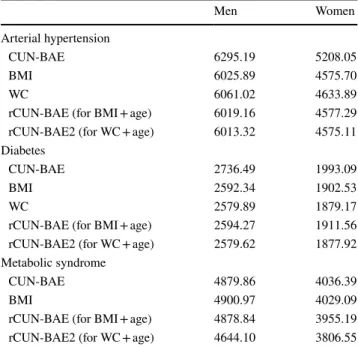
A slightly better predictive fit according to AIC was obtained for models using rCUN-BAE2 (Table 3).
Table 4 shows the results of the CUN-BAE analyses within categories of BMI. In subjects with a normal BMI (< 25 kg/m2), CUN-BAE was strongly associated with
car-diometabolic conditions, with an OR per 1-SD increment of AHT of 6.73 (95% CI 5.29–8.55), OR per 1-SD increment of DM of 4.10 (95% CI 2.43–6.94) and OR per 1-SD incre-ment of MetS of 7.36 (95% CI 4.86–11.16). Additionally, in overweight and obesity BMI categories, CUN-BAE was also significantly positively associated with cardiometabolic conditions (Table 4).
Discussion
In this representative cross-sectional sample of Spanish adults, we found that CUN-BAE was significantly positively associated with cardiovascular conditions independent of its components (BMI, age and sex). To date, this is the first study to evaluate the net effects of the body fatness estima-tor CUN-BAE.
The CUN-BAE equation takes into account age, sex and BMI [7]. These classic variables are well established to be consistent cardiometabolic risk factors. In the current study, the residual rCUN-BAE values, together adjusted for BMI, age and sex, were associated with AHT and MetS. Therefore, constant values of the CUN-BAE equation add information, independent of its design components. The rCUN-BAE pro-vided similar estimates in men and women. Both the BMI and rCUN-BAE models had similar adjusted estimates using AIC. However, rCUN-BAE did not have a statistically sig-nificant relationship with DM. Most likely, the sum of the elements age, sex and BMI explains the association between CUN-BAE and DM. However, rCUN-BAE2 was associated with all cardiometabolic conditions examined, including a positive association with DM. Thus, the AIC model values were similar, but a little higher in the adjusted models using rCUN-BAE2 than in those using rCUN-BAE, BMI and WC. Other authors observed that CUN-BAE had a strong corre-lation with metabolic markers such as glucose, HOMA and leptin [6, 9, 21, 22]. Therefore, rCUN-BAE may capture the consequences of excess adiposity, at least AHT and MetS, that are not justified by BMI, sex and age.
In this study, the CUN-BAE equation by Gomez-Ambrosi [6] showed a stronger significate association with the cardiometabolic conditions examined than BMI or WC. Similarly, previous studies have shown that CUN-BAE could be a useful index for cardiovascular conditions [6, 8, 9, 12]. In this line with this, CUN-BAE has been shown to better correlate with BF% than BMI [7, 22, 23].
Table 3 Post-estimation Akaike information criterion (AIC)
All models were adjusted for age, education level, civil status, alcohol drinker and current smoker; the standard CUN-BAE analyses were not adjusted for age because age was already increased in the CUN-BAE. Estimate of the odds ratio for the associated of anthropometric measures with cardiometabolic conditions, in agreement with contin-uous variable models
AIC Akaike information criterion, BMI body mass index (km/m2),
CUN-BAE Clinica Universidad de Navarra-Body Adiposity Estimator (body fat %), WC waist circumference (cm), rCUN-BAE CUN-BAE residual were calculated with age and BMI as the independent vari-able and BAE as the dependent varivari-ables, rBAE2 CUN-BAE residual were calculated with age and WC as the independent variable and CUN-BAE as the dependent variables
Men Women
Arterial hypertension
CUN-BAE 6295.19 5208.05
BMI 6025.89 4575.70
WC 6061.02 4633.89
rCUN-BAE (for BMI + age) 6019.16 4577.29
rCUN-BAE2 (for WC + age) 6013.32 4575.11
Diabetes
CUN-BAE 2736.49 1993.09
BMI 2592.34 1902.53
WC 2579.89 1879.17
rCUN-BAE (for BMI + age) 2594.27 1911.56
rCUN-BAE2 (for WC + age) 2579.62 1877.92
Metabolic syndrome
CUN-BAE 4879.86 4036.39
BMI 4900.97 4029.09
rCUN-BAE (for BMI + age) 4878.84 3955.19
Furthermore, we should highlight that body fat is an active endocrine organ that affects the inflammatory state and circulating hormone levels, such as leptin, as well as insu-lin resistance and levels of triglycerides, cholesterol and oestrogens. Excess adiposity stimulates the inflammatory response of the body, potentially contributing to the crea-tion of an environment that encourages changes associated with these metabolic conditions [3, 24].
The CUN-BAE equation was developed according to the Bod-Pod method to design a better predictor for body fatness. The author’s objective in designing the CUN-BAE equation was to develop a better predictor of metabolic health factors and identify a phenotype of metabolically
unhealthy individuals [7]. The individuals who have a normal BMI, but are metabolically unhealthy could be an interesting risk group to identify. In this study, among the individuals identified as non-overweight or non-obese according to BMI cut-off points, increasing CUN-BAE was significantly associated with all cardiometabolic conditions, and this association was stronger in women than in men. In the NHANES study using DXA, CUN-BAE was the best predictor of BF% among the BMI-built equations. Therefore, CUN-BAE has come to be of special consideration as an estimate of BF in non-Hispanic whites and in females [23].
One of the strengths of this study is the representativeness of the sample of the adult population of Spain. In addition,
Table 4 Odds ratio for the association of CUN-BAE with cardiometabolic conditions, within BMI categories
OR odds ratio (standard multivariable method, Model 1) was adjusted for education level, civil status, alco-hol drinker, current smoker and sex
1-SD one standard deviation increment, BMI body mass index (km/m2), %BF percentage of body fat,
CUN-BAE Clinica Universidad de Navarra-Body Adiposity Estimator, Gómez-Ambrosi equation (body fat %) CUN-BAE Categories of BMI
< 25 kg/m2 25–30 kg/m2 ≥ 30 kg/m2 OR 95% CI OR 95% CI OR 95% CI Arterial hypertension All Continuous 1.33 1.29 1.38 1.38 1.34 1.43 1.14 1.10 1.17 1-SD 6.73 5.29 8.55 8.14 6.67 9.93 2.30 1.90 2.79 Men Continuous 1.26 1.19 1.33 1.33 1.28 1.38 1.10 1.06 1.14 1-SD 4.19 3.03 5.80 5.84 4.63 7.37 1.80 1.41 2.31 Women Continuous 1.41 1.33 1.48 1.49 1.41 1.57 1.17 1.12 1.22 1-SD 12.09 8.29 17.63 18.36 12.37 27.24 3.09 2.27 4.21 Diabetes mellitus Al Continuous 1.24 1.14 1.34 1.38 1.30 1.46 1.16 1.12 1.20 1-SD 4.10 2.43 6.94 8.03 5.44 11.85 2.74 2.17 3.45 Men Continuous 1.24 1.12 1.39 1.37 1.27 1.47 1.17 1.11 1.22 1-SD 3.89 1.98 7.67 7.05 4.48 11.11 2.61 1.93 3.53 Women Continuous 1.23 1.09 1.39 1.38 1.24 1.54 1.16 1.10 1.22 1-SD 4.52 1.86 10.96 10.84 4.91 23.93 2.97 2.04 4.30 Metabolic Syndrome All Continuous 1.35 1.27 1.44 1.38 1.33 1.43 1.18 1.15 1.22 1-SD 7.36 4.86 11.16 7.90 6.29 9.92 3.04 2.49 3.72 Men Continuous 1.23 1.13 1.35 1.33 1.28 1.39 1.17 1.12 1.23 1-SD 3.71 2.14 6.43 6.02 4.59 7.89 2.70 2.07 3.54 Women Continuous 1.46 1.33 1.60 1.46 1.37 1.55 1.19 1.14 1.24 1-SD 16.06 8.24 31.29 15.73 10.18 24.30 3.55 2.61 4.83
anthropometric data and blood pressure were acquired for all study participants. In this regard, the ENRICA study has the highest response rate (51%) as evaluated by the European Health Examination Survey [25].
Methodologically, we used the residual method to assess the additional contribution of a composite index apart from its components [19, 26–28]. The estimation of residu-als is commonly used to study nutrients adjusted by total caloric intake [19, 29], and now this method is beginning to be more commonly used to examine abdominal vs over-all obesity [20, 29–31]. However, the ENRICA study is a cross-sectional study, and the results should be interpreted cautiously due to limitations related to the establishment of the direction of the causal relationship between variables. Further, there could be bias due to confounding variables associated with cardiometabolic condition such as physical activity levels or their diet. Such a bias could be inflated by the high proportion of overweight or obesity in this study if these individuals differed significantly in their activity or dietary behaviour from the source population. However, other national surveys also show that more than half of the adult Spanish population are overweight or obese. Another possible limitation of this study is that the sample included only Caucasian people; therefore, these results may not be applicable to other ethnicities. An inherent limitation of the body fatness estimator CUN-BAE is that the equation was developed using a sample acquired for other purposes, and that most of the individuals included in the study performed a low level of physical activity. Nevertheless, CUN-BAE presented a high correlation with BF measured by DXA in other studies.
Conclusions
The CUN-BAE index for body fatness was associated with cardiometabolic conditions in adults independent of BMI or WC. CUN-BAE may help to identify individuals with cardiometabolic conditions beyond BMI, but this needs to be confirmed in prospective settings.
Acknowledgements We acknowledge Dr Fernando Rodríguez Artalejo for his help and generosity. As well as, we expressed our gratitude with Dr Esther García Esquinas and all members of the ENRICA working group for gifting the project data and collaboration. Verónica Dávila-Batista: predoctoral contract financed by the Junta de Castilla y León (Spain) and the European Social Fund (EDU/1083/2013), and she also has obtained a CIBERESP grant for a stay in international research center.
Author contributions VM directed the study; analysed the data: VDB AJM LLB; wrote the manuscript: VDB LVM LGM JAT MD. Con-ceived, performed and designed the study: VM VDB JLL MD; contrib-uted to the supervision of the study and critical analysis of the article: VM AJM ROR FST LAA HF.
Funding The ENRICA study was funded and financed by Sanofi-Aventis. Specific funding for this analysis came from the governmen-tal Spain FIS PI12/1166 and PI11/01379 projects and from the “UAM Chair in Epidemiology and Control of Cardiovascular Risk”. Compliance with ethical standards
Conflict of interest The authors declare that they have no competing interests.
Open Access This article is distributed under the terms of the Crea-tive Commons Attribution 4.0 International License (http://creat iveco mmons .org/licen ses/by/4.0/), which permits unrestricted use, distribu-tion, and reproduction in any medium, provided you give appropriate credit to the original author(s) and the source, provide a link to the Creative Commons license, and indicate if changes were made.
References
1. The GBD 2015 Obesity Collaborators (2017) Health Effects of overweight and obesity in 195 countries over 25 years. N Engl J Med 377:13–27. https ://doi.org/10.1056/NEJMo a1614 362
2. Wold Health Organization (2016) WHO|obesity and overweight. Fact sheet 311. Updated June 2016. In: WHO. http://www.who. int/media centr e/facts heets /fs311 /en/. Accessed 11 Sep 2017 3. Haslam DW, James WPT (2005) Obesity Lancet 366:1197–1209.
https ://doi.org/10.1016/S0140 -6736(05)67483 -1
4. Heymsfield SB, Peterson CM, Thomas DM et al (2016) Why are there race/ethnic differences in adult body mass index-adiposity relationships? A quantitative critical review. Obes Rev 17:262– 275. https ://doi.org/10.1111/obr.12358
5. Frankenfield DC, Rowe WA, Cooney RN et al (2001) Limits of body mass index to detect obesity and predict body composition. Nutrition 17:26–30
6. Gómez-Ambrosi J, Silva C, Galofré JC et al (2012) Body mass index classification misses subjects with increased cardiometa-bolic risk factors related to elevated adiposity. Int J Obes 36:286– 289. https ://doi.org/10.1038/ijo.2011.100
7. Gómez-Ambrosi J, Silva C, Catalán V et al (2012) Clinical use-fulness of a new equation for estimating body fat. Diabetes Care 35:383–388. https ://doi.org/10.2337/dc11-1334
8. Martín V, Dávila-Batista V, Castilla J et al (2016) Comparison of body mass index (BMI) with the CUN-BAE body adiposity estimator in the prediction of hypertension and type 2 diabe-tes. BMC Public Health 16:82. https ://doi.org/10.1186/s1288 9-016-2728-3
9. Vinknes J, Nurk K, Tell E G, et al (2017) The relation of CUN-BAE index and BMI with body fat, cardiovascular events and diabetes during a 6-year follow-up: the Hordaland Health Study. Clin Epidemiol Volume 9:555–566. https ://doi.org/10.2147/ CLEP.S1451 30
10. Stefan N, Schick F, Häring H-U (2017) Causes, characteristics, and consequences of metabolically unhealthy normal weight in humans. Cell Metab 26:292–300. https ://doi.org/10.1016/j. cmet.2017.07.008
11. Dávila-Batista V, Gómez-Ambrosi J, Fernández-Villa T et al (2016) Escala colorimétrica del porcentaje de grasa corporal según el estimador de adiposidad CUN-BAE. Atención Primaria 48:422–423. https ://doi.org/10.1016/j.aprim .2015.09.003
12. Phillips CM, Dillon C, Harrington JM et al (2013) Defining met-abolically healthy obesity: role of dietary and lifestyle factors.
PLoS One 8:e76188. https ://doi.org/10.1371/journ al.pone.00761 88
13. Rodríguez-Artalejo F, Graciani A, Guallar-Castillón P et al (2011) Rationale and methods of the study on nutrition and cardiovascu-lar risk in Spain (ENRICA). Rev Española Cardiol 64:876–882.
https ://doi.org/10.1016/j.rec.2011.05.023
14. Gutiérrez-Fisac JL, Guallar-Castillón P, León-Muñoz LM et al (2012) Prevalence of general and abdominal obesity in the adult population of Spain, 2008–2010: the ENRICA study. Obes Rev 13:388–392. https ://doi.org/10.1111/j.1467-789X.2011.00964 .x
15. Banegas JR, Graciani A, de la Cruz-Troca JJ et al (2012) Achieve-ment of cardiometabolic goals in aware hypertensive patients in Spain: a nationwide population-based study. Hypertension 60(4):898–905
16. Navarro-Vidal B, Banegas JR, León-Muñoz LM et al (2013) Achievement of cardiometabolic goals among diabetic patients in Spain. A nationwide population-based study. PLoS One (4):e61549. https ://doi.org/10.1371/journ al.pone.00615 49
17. American Diabetes Association (2008) Standards of medical care in diabetes–2008. Diabetes Care 31:S12–S54. https ://doi. org/10.2337/dc08-S012
18. Alberti KGMM., Eckel RH, Grundy SM et al (2009) Harmo-nizing the metabolic syndrome: a joint interim statement of the International Diabetes Federation Task Force on Epidemiol-ogy and Prevention; National Heart, Lung, and Blood Institute; American Heart Association; World Heart Federation; Int Circ 120:1640–1645
19. Willett W, Stampfer MJ (1986) Total energy intake: implications for epidemiologic analyses. Am J Epidemiol 124:17–27 20. Ngueta G, Laouan-Sidi EA, Lucas M (2014) Does waist
cir-cumference uncorrelated with BMI add valuable information? J Epidemiol Commun Health 68:849–855. https ://doi.org/10.1136/ jech-2014-20400 5
21. Gómez-Ambrosi J, Silva C, Galofré JC et al (2011) Body adiposity and type 2 diabetes: increased risk with a high body fat percentage even having a normal BMI. Obesity 19:1439–1444. https ://doi. org/10.1038/oby.2011.36
22. Amirabdollahian F, Macdonald-Clarke CJ, Lees EK et al (2016) Traditional and novel correlates of adiposity and cardiometabolic risk among young healthy adults in the North West of England. Proc Nutr Soc 75:E230. https ://doi.org/10.1017/S0029 66511 60024 57
23. Cui Z, Truesdale KP, Cai J, Stevens J (2014) Evaluation of anthro-pometric equations to assess body fat in adults. Med Sci Sport Exerc 46:1147–1158. https ://doi.org/10.1249/MSS.00000 00000 00021 3
24. López-Jiménez F, Cortés-Bergoderi M (2011) Obesity and the Heart. Rev Española Cardiol 64:140–149. https ://doi. org/10.1016/j.rec.2010.10.011
25. Aromaa A, Koponen P, Tafforeau J et al (2003) Evaluation of Health Interview Surveys and Health Examination Surveys in the European Union. Eur J Public Health 13:67–72
26. Hu FB, Stampfer MJ, Rimm E et al (1999) Dietary fat and coro-nary heart disease: a comparison of approaches for adjusting for total energy intake and modeling repeated dietary measurements. Am J Epidemiol 149:531–540
27. McGee D, Reed D, Yano K (1984) The results of logistic analyses when the variables are highly correlated: An empirical example using diet and CHD incidence. J Chronic Dis 37:713–719. https ://doi.org/10.1016/0021-9681(84)90040 -7
28. Savitz DA, Barón AE (1989) Estimating and correcting for con-founder misclassification. Am J Epidemiol 129:1062–1071 29. The Emerging Risk Factors Collaboration, Wormser D, Kaptoge
S, et al (2011) Separate and combined associations of body-mass index and abdominal adiposity with cardiovascular disease: col-laborative analysis of 58 prospective studies. Lancet 377:1085– 1095. https ://doi.org/10.1016/S0140 -6736(11)60105 -0
30. Freisling H, Arnold M, Soerjomataram I et al (2017) Comparison of general obesity and measures of body fat distribution in older adults in relation to cancer risk: meta-analysis of individual par-ticipant data of seven prospective cohorts in Europe. Br J Cancer 116:1486–1497. https ://doi.org/10.1038/bjc.2017.106
31. Hu FB (2008) Obesity epidemiology. Oxford University Press
Affiliations
Veronica Davila‑Batista1,2,3,12 · Antonio J. Molina1,2 · Laura Vilorio‑Marqués1 · Leila Lujan‑Barroso4,5 · Fernanda de Souza‑Teixeira6 · Rocío Olmedo‑Requena3,7 · Jorge Arias de la Torre3,8 · Lidia García‑Martínez1 · Laura Álvarez‑Álvarez1 · Heinz Freisling9 · Javier Llorca3,10 · Miguel Delgado‑Rodríguez3,11 · Vicente Martin1,2,3 1 The Research Group in Gene-Environment and Health
Interactions (GIIGAS), University of León, León, Spain
2 Instituto de Biomedicina (IBIOMED), University of León,
León, Spain
3 CIBER of Epidemiology and Public Health (CIBERESP),
Madrid, Spain
4 Unit of Nutrition and Cancer, Cancer Epidemiology
Research Program, Catalan Institute of Oncology-IDIBELL, L’Hospitalet de Llobregat, Barcelona, Spain
5 Department of Nursing of Public Health, Mental Health
and Maternity and Child Health, School of Nursing, Universitat de Barcelona, L’Hospitalet de Llobregat, Barcelona, Spain
6 Exercise and Neuromuscular System Research Group,
Superior School of Physical Education, Federal University of Pelotas, Pelotas, Brazil
7 Department of Preventive Medicine and Public Health,
Instituto de Investigación Biosanitaria de Granada (Ibs.Granada), Complejo Hospitalario Universitario de Granada, University of Granada, Granada, Spain
8 Agency for Health Quality and Assessment of Catalonia
(AQuAS), Barcelona, Spain
9 Section of Nutrition and Metabolism, International Agency
for Research on Cancer (IARC-WHO), Lyon, France
10 Universidad de Cantabria, IDIVAL, Santander, Spain 11 Universidad de Jaén, Jaén, Spain
12 Área de Medicina Preventiva y Salud Pública, Facultad de
Ciencias de la Salud, Universidad de León, 24071 León, Spain