
Female Participation in International Law: A Gender Analysis of the United Nations Edición Única
106
0
0
Texto completo
(2) INSTITUTO TECNOLÓGICO Y DE ESTUDIOS SUPERIORES DE MONTERREY. CAMPUS MONTERREY. ESCUELA DE GRADUADOS EN ADMINISTRACIÓN PUBLICA Y POLÍTICA PUBLICA. Los miembros del comité de tesina recomendamos que el presente proyecto de tesina presentado por la Lic. Susana Catalina Peña Paras sea aceptado como requisito parcial para obtener el grado académico de:. Maestra en Derecho Internacional. Comité de Tesina:. Sinodal. Sinodal.
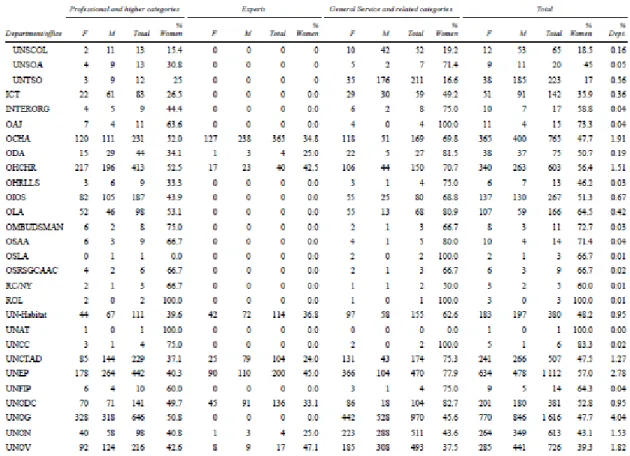
(3) Female Participation in International Law: A gender analysis of the United Nations. Index Table of abbreviations and acronyms ......................................................................................................... 1 Introduction ................................................................................................................................................. 5 Chapter 1: Theoretical Approaches and a Historic Perspective. ................................................................. 9 1.1. Feminist perspectives on International Law ............................................................................... 9. 1.2 A historic perspective on women´s participation in the United Nations ........................................ 16 1.2.1 1975: The International Women´s Year .................................................................................. 21 1.2.2 1976-1985 The United Nations Decade for Women. .............................................................. 22 1.2.3 1995:The Beijing Conference .................................................................................................. 24 Chapter 2: Efforts towards an increase of female participation. ............................................................... 27 2.1 Article 8 of the Charter of the United Nations ................................................................................ 27 2.2 General Assembly Resolutions and Recommendations by the Secretary-General ......................... 32 2.3 Resolution 1325 on “Women, Peace and Security” ........................................................................ 39 2.4 Staff Selection special measures ..................................................................................................... 45 Chapter 3: Female participation at the United Nations. ............................................................................ 49 3.1 Female participation at the Secretariat............................................................................................ 49 3.2 Concentration of women in social areas. ........................................................................................ 55 3.3 Female participation at the General Assembly and Security Council............................................. 60 3.3.1 The General Assembly ............................................................................................................ 60 3.3.2 The Security Council ............................................................................................................... 63 Chapter 4: Considerations on female participation in the United Nations ................................................ 67 4.1 Why is it important to ensure an equal participation of women in the UN? ................................... 67 4.1.1 Women participation as a way to provide a gender perspective. ............................................. 69 4.1.2 Elimination of Discrimination against Women in the United Nations .................................... 73 4.2 An evaluation of new proposals oriented to increase female participation .................................... 74 4.3 Obstacles and barriers in the United Nations.................................................................................. 78 Conclusions............................................................................................................................................... 83 References................................................................................................................................................. 89 Annexes .................................................................................................................................................... 95 Table I. Percentage of women in the Professional and higher categories from 1998 to 2008 .......... 95 Table II. All staff under contract with the United Nations Secretariat by Department, category and gender 2009. ..................................................................................................................................... 95 Table III. Presidents of the Security Council 2000-2009 ................................................................. 97.
(4) Table of abbreviations and acronyms. Table of abbreviations and acronyms Abbreviation/acronym. Explanation. AMISOM. African Union Mission in Somalia. ASG. Assistant-Secretary-General. BINUB. United Nations Integrated Office in Burundi. BONUC. United Nations Peacebuilding Support Office in the Central African Republic. CEDAW. Convention on the Elimination of All Forms of Discrimination against Women. CNMC. Cameroon-Nigeria Mixed Commission. CTED. Counter-Terrorism Committee Executive Directorate. CSW. Commission on the Status of Women. DESA. Department of Economic and Social Affairs. DDA. Department of Disarmament Affairs. DFS. Department of Field Support. DGACM. Department for General Assembly and Conference Management. DM. Department of Management. DM/CMP. Capital Master Plan Office. DM/OCSS. Office of Central Support Services. DM/OHRM. Office of Human Resources Management. DM/OPPBA. Office of Programme Planning, Budget and Accounts. DM/OUSG. Office of the Under-Secretary-General. DM/SECCOM. Secretariats of the Fifth Committee, the Advisory Committee on Administrative and Budgetary Questions, the Board of Auditors and Panel of External Auditors and the Independent Audit Advisory Committee. DPA. Department of Political Affairs. DPI. Department of Public Information. DPKO. Department of Peacekeeping Operations. DSS. Department of Safety and Security. ECA. Economic Commission for Africa. 1|.
(5) Table of abbreviations and acronyms ECE. Economic Commission for Europe. ECLAC. Economic Commission for Latin America and the Caribbean. ECOSOC. Economic and Social Council. EOSG. Executive Office of the Secretary-General. ESCAP. Economic and Social Commission for Asia and the Pacific. ESCWA. Economic and Social Commission for Western Asia. ETHICS. Ethics Office. FAO. Food and Agriculture Organization. FM/DFS. Field missions administered by the Department of Field Support. FPMS. Field Personnel Management System. ICSC. International Civil Service Commission. ICT. Office of Information and Communications Technology. ICTR. International Criminal Tribunal for Rwanda. ICTY. International Tribunal for the Former Yugoslavia. IMIS. Integrated Management Information System. INTERORG. Inter-organizational bodies, including the secretariat of the Joint Inspection Unit. ICJ. International Court of Justice. ILO. International Labor Organization. ITC. International Trade Centre UNCTAD/WTO. IWY. International Women´s Year. JAC. Joint Advisory Committee. JIU. Joint Inspection Unit. LRA. Office of the Special Envoy of the Secretary-General for Lord’s Resistance Army-affected Areas. MINURCAT. United Nations Mission in the Central African Republic and Chad. MINURSO. United Nations Mission for the Referendum in Western Sahara. MINUSTAH. United Nations Stabilization Mission in Haiti. MONUC. United Nations Organization Mission in the Democratic Republic of the Congo. MSTAH. Mission staff temporarily assigned to Headquarters. NFLS. Nairobi Forward-Looking Strategies. OAJ. Office of Administration of Justice. OCHA. Office for the Coordination of Humanitarian Affairs. ODA. Office for Disarmament Affairs. OHCHR. Office of the United Nations High Commissioner for Human Rights. 2|.
(6) Table of abbreviations and acronyms OHRLLS. Office of the High Representative for the Least Developed Countries, Landlocked Developing Countries and Small Island Developing States. OIOS. Office of Internal Oversight Services. OLA. Office of Legal Affairs. OMBUDSMAN. Office of the Ombudsman. OSAGI. Office of the Special Adviser on Gender Issues and Advancement of Women. OSAA. Office of the Special Adviser on Africa. OSLA. Office of Staff Legal Assistance. OSRSG/CAAC. Office of the Special Representative of the Secretary-General for Children and Armed Conflict. PFA. Beijing. Declaration. and. Platform. for. Action. for. Equality,. Development and Peace RC/NY. Regional Commissions New York Office. ROL. Rule of Law Unit. SASG. Office of the Special Adviser of the Secretary-General on Cyprus. SESG. Office of the Special Envoy for the Great Lakes region. UNAMA. United Nations Assistance Mission in Afghanistan. UNAMI. United Nations Assistance Mission for Iraq. UNAMID. African Union-United Nations Hybrid Operation in Darfur. UNAT. United Nations Administrative Tribunal and its secretariat. UNCC. United Nations Compensation Commission. UNCTAD. United Nations Conference on Trade and Development. UNDOF. United Nations Disengagement Observer Force. UNDP. United Nations Development Programme. UNDW. United Nations Decade for Women. UNEP. United Nations Environment Programme. UNFICYP. United Nations Peacekeeping Force in Cyprus. UNFIP. United Nations Fund for International Partnerships. UNFPA. United Nations Population Fund. UN-Habitat. United Nations Human Settlements Programme. UNHCR. Office of the United Nations High Commissioner for Refugees. UNICEF. United Nations Children’s Fund. UNIFIL. United Nations Interim Force in Lebanon. UNIIIC. United Nations International Independent Investigation Commission. UNIPSIL. United Nations Integrated Peacebuilding Office in Sierra Leone. 3|.
(7) Table of abbreviations and acronyms UNITAR. United Nations Institute for Training and Research. UNJSPF. United Nations Joint Staff Pension Fund. UNLB. United Nations Logistics Base in Brindisi, Italy. UNMIK. United Nations Interim Administration Mission in Kosovo. UNMIL. United Nations Mission in Liberia. UNMIN. United Nations Mission in Nepal. UNMIS. United Nations Mission in the Sudan. UNMIT. United Nations Integrated Mission in Timor-Leste. UNMOGIP. United Nations Military Observer Group in India and Pakistan. UNOCI. United Nations Operation in Côte d’Ivoire. UNODC. United Nations Office on Drugs and Crime. UNOG. United Nations Office at Geneva. UNOGBIS. United Nations Peacebuilding Support Office in Guinea-Bissau. UNOMIG. United Nations Observer Mission in Georgia. UNON. United Nations Office at Nairobi. UNOPS. United Nations Office for Project Services. UNOTIL. United Nations Office in Timor-Leste. UNOV. United Nations Office at Vienna. UNOWA. United Nations Office for West Africa. UNPOS. United Nations Political Office for Somalia. UNRCCA. United Nations Regional Centre for Preventive Diplomacy for Central Asia. UNSCO. Office of the United Nations Special Coordinator for the Middle East Peace Process. UNSCOL. Office of the Special Coordinator of the Secretary-General for Lebanon. UNSOA. United Nations Support Office for the African Union Mission in Somalia. UNRWA. United Nations Relief and Works Agency for Palestine Refugees in the Near East. UNTSO. United Nations Truce Supervision Organization. USG. Under-Secretary-General. WFP. World Food Programme. 4|.
(8) Introduction. Introduction. The present paper intends to analyze the female participation in the United Nations; more specifically the efforts made by the United Nations through its history oriented to ensure equal representation of men and women in the Secretariat, as well as in the General Assembly and the Security Council. Thus, this research will first identify and study the mechanisms implemented by the United Nations; consequently, it will analyze the female representation on the United Nations. As a result, a further study of the efficacy and impact of the mechanisms within the organization can be made. Article 8 of the Charter of the United Nations, states the responsibility of the state governments to ensure the presence of women at all levels of the system´s hierarchy and in all areas of international affairs. This article aims to achieve equality for men and women inside the United Nations system. In order to comply with what is prescribed by the Article 8, commitment from senior management is needed. Many permanent missions to the United Nations and to other international organizations have no women among their diplomats and very few at senior levels. The situation is similar at expert meetings and conferences, such as the World Food Conference, that establishes international and global goals, agendas and priorities. Organizations of the United Nations system, for instance the United Nations Children’s Fund (UNICEF), and various economic, political and military structures at the regional level have become important international public employers, but women have remained a minority concentrated in positions at the lower levels of the administration (Convention on the Elimination of All Forms of Discrimination against Women vol. 1249 U.N.T.S p.13, 1981). Even more, and as this study will show, the majority of the women participating in public activities are confined to issues such as culture, environment, children and health. At the same time, women become excluded from finance, budgetary control and conflict resolution areas. Stereotyping also works as an obstacle to women. Opportunities to engage in international work are often denied to women, based on assumptions about their domestic responsibilities that will prevent them from successfully fulfilling their appointment. As a result, many crucial decisions on global issues, such as peacemaking and conflict resolution, military expenditure and nuclear disarmament, foreign aid and 5|.
(9) Introduction. economic restructuring, are taken with limited participation of women (General Recommendation No. 23, Political and Public life, 1997). The measures implemented so far by the United Nations have proved only partially successful in the sense that the female participation in the Secretariat of the UN has increased, albeit if barely in a small percentage. The senior level of management must be held responsible for hiring and promoting more women, while the member states must commit to propose qualified women to fill in the vacancies at Professional and Directory levels, as well as including women in their national delegations at the Security Council and the General Assembly. Besides commitment, in order to achieve the goals of equal participation, practical measures with its corresponding implementation plans and mechanisms that appraise the impact of these measures are in order. The central argument of this study is that although there have been different efforts oriented to increase the participation of women at different levels of the Secretariat, the reality of its composition is that there is still a striking underrepresentation of women in this body. Furthermore, there are few opportunities for women and men, on equal terms, to represent governments at the international level and to participate in the work of international organizations such as the United Nations. To a certain extent, this is the consequence of structural barriers and obstacles in the system of international organizations and the failure of an accurate implementation of the strategies and incentives that guarantee an equal participation of men and women in decision-making positions. The relevance of this paper lies in that it is pertinent to evaluate the importance behind the efforts dedicated by the Commission on the Status of Women, the Economic and Social Council, the General Assembly and the Secretary-General of the United Nations. It is necessary to question the significance of guaranteeing an increasing female participation within the United Nations administration and the organs of national representation. This research will try to answer the following questions through the different chapters. How was the issue of female underrepresentation first identified and approached? Which are the measures taken within the United Nations in order to ensure an equal participation of men and women? In which way have they been successful (or not)? Do women have the opportunities to access the decision-making positions within the Secretariat of the United Nations and the main organs of the UN with national 6|.
(10) Introduction. representation (General Assembly and the Security Council)? What is the importance or the impact of increasing the female participation in the Secretariat and in the national delegations at the General Assembly and the Security Council? What are the main obstacles and structural barriers that women face in the United Nations? The methodology used in this paper is the legal method, more specifically the historical method. This method can be applied trough the analysis of the legal mechanisms devised by the United Nations, such as the Charter of the UN, the Resolutions and Recommendations. The historical method can provide a work out of the legal evolution of the character of the inner necessity, in the present case fulfilling with what is prescribed in the founding document of the United Nations (Ruckert, 2006). Parallel to this, there are feminist methodologies applied in international law that attempt to expose and question the limited bases of international law claim to objectivity and impartiality (Charlesworth, 1999). One of them, used in this paper, is known as “searching for silences”. This method intends to identify the silences of women in international law, due to the lack of female participation in the science field, as well as the practice field, in order to expose the experiences and voices of women in international law. Trough the study of the female participation in the United Nations, this study aims to identify the presence of women in this major international organization that contributes to the making of Conventions, Conferences and Treaties, and what later become sources of the international law. The first chapter will present the main theory that supports this study, feminist approaches to international law. The main authors of this analysis of international law identify the absence of women within and by the international legal order and intend to contribute to the understanding of international law and the global inequity of women. In the first chapter is also presented a historical perspective on women´s participation in the United Nations, where it’s discussed the first years of the United Nations trough the perspective of women participation; the road to the awareness of the situation of women in the United Nations and the first steps taken to put women on equal footing with men in the United Nations. The second chapter will identify and analyze the main efforts taken in the United Nations oriented to enhance the participation of women in the UN. The mechanisms 7|.
(11) Introduction. discussed in this chapter are the Article 8 of the Charter of the United Nations, the Resolution 1325 and its corresponding action plan of implementation, the General Assembly Resolutions which established the goal percentages of female participation in the Secretariat of the United Nations, the Recommendations made by the Secretary-General and the special measures of the Staff Selection that are advocated to the recruitment of new personal and the promotion within the United Nations Secretariat. The third chapter presents the more recent data on the participation of women in the Secretariat, the General Assembly and the Security Council. For the analysis of female participation in the Secretariat, the data taken in consideration is the one concerning the composition of the Secretariat of the year 2009 and a comparison of the advancement of the situation of women from the year 1998 to the year 2008. The main aspects of analysis in this section is the concentration of women in the lower levels of the Professional category and the congregation of women in the social areas, with a defined absence in the political and security areas. In the analysis concerning the Security Council and the General Assembly it is evaluated the participation of women on the six main Committees of the General Assembly, as presidents of the annual sessions of the General Assembly and as Presidents of the Security Council, heading its national delegations. The fourth and final chapter analyses the relevance of the efforts advocated to reach the target of equal participation of women at all the levels of the Secretariat and questions the importance of increasing the participation of female ambassadors in the General Assembly and in the Security Council. This chapter discusses as well the main obstacles and barriers that women staff at the United Nations face in order to improve their chances of advancing in the hierarchy of the Secretariat of the United Nations and to enhance the participation of women in areas such as safety and security, political affairs and trade. Finally, women form over half the world´s population, and their voices should be heard in the decision making positions of the global organizations. Likewise, women should be included in both the decision making positions and economic and military matters, multilateral and bilateral diplomacy, and be part of official delegations to international and regional conferences.. 8|.
(12) Chapter 1: Theoretical Approaches and a Historic Perspective.. Chapter 1: Theoretical Approaches and a Historic Perspective.. 1.1 Feminist perspectives on International Law. The ambit of the international legal order has grown significantly since the middle of the twentieth century to include the large number of states, the activities of international intergovernmental institutions and, to some extent, those groups and individuals within nation states. International governmental organizations and nongovernmental organizations have emerged as distinct players in the international community. Even though there is an increasing global interdependence and the emergence of new players on the international level, “international law is still predominantly made and implemented by states” (Malanczuk, 2002, p. 2). For example, only states can be members of the United Nations, only states are entitled to call upon the UN Security Council if there is a threat to international peace and security and only states may appear before the International Court of Justice (ICJ). International organizations are, to a large extent, dependent upon states and their willingness to support them. According to Peter Malanczuk, the concept of the “international legal system” refers to the principles and rules of international law with a higher legal status than the other parts of international law, the actors that play in the international legal order, as well as the scope of activity of these actors, such as social, economic, peace and security (2002). The basic question in international law has been whether a truly universal system of law is possible at all under the conditions of a divided world with such deep cleavages in values, interests and perceptions. A consistent feature of the international law system remains in the absence of any central authority that enjoys exclusive power to create, monitor and implement law. Thus, the “efficacy of many principles of international law depends upon their translation into national legal systems” (Karns & Mingst, 2004, p. 33). This is considered as one of the critical challenges of international law. The continuing development in the theory of international law has attracted critical attention from a series of loosely related critical approaches that share a certain distance on 9|.
(13) Chapter 1: Theoretical Approaches and a Historic Perspective.. some matters from mainstream international legal theory. These theories emanate from the same core problem: the extent to which the law reflects the perspective and the values of white males, and the resulting effects in citizens and on members of the profession who are not white males (Bix, 2004). A feminist perspective takes a serious intellectual approach to the experiences, actions and ideas of women and girls (Enloe, 2004). Feminist scholars have identified new areas of investigation in the struggle over the appropriate demarcation of boundaries between the national/international and public/private realms; for example, the growth and expansion of a discourse on women’s human rights, along with the rise of the application of international human rights law in diverse societies. The codification of women’s human rights in conventions such as CEDAW inevitably challenged the demarcation of boundaries between what was international and domestic, public and cultural/private (Steans, 2003). There are many definitions of gender. For once, in its most common usage, the term “gender” means the cultural difference between women and men, based on the biological division between male and female. The development of the social science has provided a new definition of gender, focusing not on the differences, but in the relations. Gender would be considered a matter of the social relations within individuals and groups act; a pattern in our social arrangements, in the everyday activities or practices which those arrangements govern (Connell, 2009). Like other social structures, gender is multi-dimensional; it is not just about identity, work, power, or sexuality, but rather all of these things at once. Gender patterns may remarkably differ from one cultural context to another, but are still gender. Gender arrangements are reproduced socially, not biologically, and are always changing as human practice creates new situations (Connell, 2009). The concept of gender emphasizes “the relational nature of categorizations of male and female, and signals the importance of not taking either as given or necessarily natural” (Youngs, 2004). Gender is neither an expression of biology, nor a fixed dichotomy in human life. Gender may be also defined as a set of variables, socially and culturally constructed relational characteristics. Power, autonomy, rationality, activity, and public are stereotypically associated with masculinity while their opposites, weakness, dependence, emotionality, passivity and private are associated with femininity. Both women and men 10 |.
(14) Chapter 1: Theoretical Approaches and a Historic Perspective.. assign a more positive value to the masculine characteristics which denote a culturally dominant ideal type (Thickner, 2002). A gender analysis exposes and questions the stereotypical gender representations and demonstrates their negative consequences. Gender social relationships are relationships of power; and it is through these hierarchical relationships that male power and female subordination are sustained, albeit in various degrees across time and place (Thickner, 2002). Both women and gender have therefore been identified by feminist analyses as problematically absent from mainstream approaches and essential to understanding the dynamics of the relations occurring in the international sphere. International law has largely resisted feminist analysis. Issues that apply merely to the state as an abstract entity, such as sovereignty, territory and use of force, can, in a first approach, seem gender free. Nevertheless, when international law is considered relevant to individuals, as is the case of human rights, a new analysis from a feminist perspective is developed. The contribution of feminist legal theory, being a mode of analysis, rests in the progressive development of international law. A first feminist approach to international law implies that “we live in a world in which men of all nations have used the statist system to establish economic and nationalist priorities to serve male elites, while basic human, social and economic needs are not met” (Charlesworth, Chinkin, & Wright, 1991, p. 615). International institutions, such as the United Nations, currently echo these same male priorities. One of the first articles concerning an analysis of international law from a feminist perspective is “Feminist Approaches to International Law” by Chinkin, Charlesworth and Wright. In this article, the authors argue that both the structures of international lawmaking and the content of the rules of international law privilege men. Even if women´s interest are somewhat acknowledged, they are marginalized. Therefore, the authors consider that international law is a thoroughly gendered system. Women are at the margins of the international legal system; their participation in the development of international legal principles is minimal and the international legal order appears impervious to the realities of women´s lives. Whenever women come into focus at all in the international law they are viewed in a very limited way, chiefly as 11 |.
(15) Chapter 1: Theoretical Approaches and a Historic Perspective.. victims, particularly as mothers, or potential mothers, and accordingly in need of protection. Modern international law is both androcentric and eurocentric in its origins, and as a result, it has assimilated many assumptions from western legal thinking. These assumptions comprise patriarchal legal institutions and the societal division into public and private spheres that relegates women´s concerns to the private area. A feminist perspective is needed in order to expose the invisibility of women and to fundamentally restructure the traditional international law discourse and methodology in order to incorporate alternative world views. The development of feminist jurisprudence in recent years has made rich and fruitful contribution to legal theory. Furthermore, “few areas of domestic law have avoided the scrutiny of feminist perspectives, which have exposed the gender bias of apparently neutral systems of rules” (Charlesworth, Chinkin, & Wright, 1991, p. 613). Feminist transformation of the international law would involve more than refining or reforming the existing law. The theorists of a feminist analysis of international law seek to reconceive international law, rather than destroy it, to “alter the image of the world” and to change the way of thinking about international law and international relations. The reconceptualization starts with a critique of statehood (Koskenniemi, 1995). States not only happen to prefer policies that privilege men and marginalize the concerns of women; statehood, as a concept and political structure, is gendered, patriarchal and hierarchical. The organization of the state, both nationally and internationally, privileges male voices and concerns (Charlesworth in Koskenniemi, 1995). Hilary Charlesworth, in the book of Dorinda Dallmeyer “Reconceiving reality, women and International law”, advocates for a feminist state that would create informal cooperative networks across state boundaries, protect the weak and promote the role of non-state interests and actors. As discussed before, the primary subjects of international law are states, and in an increasing fashion, international organizations (Malanczuk, 2002). Charlesworth, Chinkin, and Wright affirm that the structures of power within the governments of the states are overwhelmingly masculine; in a few states women occupy positions of power, and they represent only a small percentage compared to men. In international organizations the situation is very similar; its structures reflect the state´s patriarchal forms. Women are 12 |.
(16) Chapter 1: Theoretical Approaches and a Historic Perspective.. either “unrepresented or underrepresented in the national and the global decision-making processes” (1991, p. 622). International organizations allow states to act collectively and achieve their objectives. The structures of international organizations replicate those of the states, and limit women to insignificant and subordinate roles. Even in the United Nations, where the achievement of nearly universal membership is regarded as a major success in the international community, this universality does not apply to women. The Group on Equal Rights for Women in the United Nations has observed that gender discrimination is practiced on the United Nations personnel policies “every week, every month, every year” (Lewis, 1985, p. 167). Women are frequently excluded from major decision making positions in international institutions, despite the impact of those decisions on the female global population. Although, partly due to the International Women´s Year and the United Nations Decade for Women, since 1985 there has been an improvement on the situation of women in the United Nations and its specialized agencies. In 1985 was estimated that at the rate of change it will take almost until 2021 to reach equal participation, meaning reaching a 50/50 distribution of men and women at the General Service, Professional and Director Category (Lewis, 1985). The main concern of international organizations is to represent in an equal way the diversity of the international community. In the bodies with special functions regarding the creation and progressive development of international law, such as the International Court of Justice, critics have frequently pointed out that the distribution of judges on the Court does not represent the main forms of civilization and the principal legal systems of the world. Nevertheless, there is not an expressed concern of the representation of women, half of the world´s population. The same sensitivity should be extended much further to include the gender of representatives. One of main feminist concerns in international law has been to rectify the exclusion of women from the most prestigious international positions and to devise a strategy for how to reform the regime to ensure that it better accommodates women´s concerns (Chinkin, Wright, & Charlesworth, 2005). While the major institutions of the international legal order that wield political power nationally and internationally are ordered by men, the issues that traditionally 13 |.
(17) Chapter 1: Theoretical Approaches and a Historic Perspective.. concerned men will be seen as general human concerns. On the other hand, “women´s concerns” such as sex discrimination, domestic violence, and sexual degradation are cosigned to a separate sphere and tend to be ignored. The scientific basis of the public/private distinction continues to have a strong grip on legal thinking. The language of the public/private distinction is built into the language of the law itself; law operates within the public or male realm in opposition to the domestic, private, female sphere. Law regulates the work place, the economy and the distribution of political power, while law intervention in the home has long been regarded as improper. Whereas women are assigned to the private or domestic sphere, associated with reproduction and the raising of children, men have dominated public life, which is respected and honored. Despite women's central role in sustaining the family and society and their contribution to development, the activities of the private sphere are considered inferior in many societies. Being excluded from the public life, they do not participate in the decision-making process, which nonetheless determine the pattern of their daily lives and the future of societies (General Recommendation No. 23, Political and Public life, 1997). Traditionally, international law was regarded as operating only in the public spheres between nation-states. However, Charlesworth, Chinkin and Wright argue that the definition of certain principles of international law “rests and develops on the distinction between the public and the private sphere” (1991, p. 627). Therefore, it privileges the male world view and supports male dominance in the international legal order. The assumption that underlies all law is that the public/private distinction is real and human society can be separated into two distinct spheres. International human rights law is not an exception. This division is an ideological construct, rationalizing the exclusion of women form the sources of power. Likewise, it also makes it possible to maintain repressive systems of control over women without interference from human rights, which operate in the public sphere. By going further than the division of public/private that rationalize the analysis of power, human rights language can be used to describe serious forms of repression that go beyond the narrow vision of international law. The Convention on the Elimination of All Forms of Discrimination against Women (CEDAW) is the most prominent international normative instrument recognizing the 14 |.
(18) Chapter 1: Theoretical Approaches and a Historic Perspective.. special concerns of women. As of 2010, the Convention has been ratified by 186 states out of the 192 members of the United Nations (Convention on the Elimination of All Forms of Discrimination against Women vol. 1249 U.N.T.S p.13, 1981). Although the Convention goes further than simply requiring equality of opportunity, the definition of discrimination implies that women and men are the same. Article 1 of the Convention defines the term “discrimination against women” as: "… any distinction, exclusion or restriction made on the basis of sex which has the effect or purpose of impairing or nullifying the recognition, enjoyment or exercise by women, irrespective of their marital status, on a basis of equality of men and women, of human rights and fundamental freedoms in the political, economic, social, cultural, civil or any other field.” [Emphasis added] (Convention on the Elimination of All Forms of Discrimination against Women vol. 1249 U.N.T.S p.13, 1981) This notion of equality and equality of opportunity accept the general applicability of a male standard: equality is defined as being like a man. Catharine MacKinnon, in her book Toward a Feminist Theory of the State, affirms that man has “become the measure of all things” (1989, p. 220). Therefore, equality can be achieved by legally requiring the removal of identifiable barriers to the rise of women to the same status of men. In accordance, equality would be achievable within the social and legal structures as they are now. Nevertheless, that definition of equality ignores the many real differences and inequities between the sexes and the significant barriers to their removal. Charlesworth, Chinkin, & Wright propose a definition of equality as not the “freedom to be treated without regard to sex, but freedom from systematic subordination because of sex” (1991, p. 632). The Women´s Convention is an ambiguous offering. It establishes a much weaker implementation procedures than those of other human rights instruments of apparently universal applicability such as the International Convention on the Elimination of All Forms of Racial Discrimination. More than 70 member states have made a significant number of reservations and declarations of understanding when becoming parties of the CEDAW. The pattern of reservations to the CEDAW underlines the inadequacy of the present normative structure of international law. The international community is prepared 15 |.
(19) Chapter 1: Theoretical Approaches and a Historic Perspective.. to “formally acknowledge the considerable problems of inequality faced by women, but only, if member states are not required as a result to alter patriarchal practices that subordinate women” (Charlesworth, Chinkin, & Wright, 1991, p. 634). Therefore, the limited scope of the Convention is restricted by the reservations to the state parties.. Feminist approaches to international law are concerned with the presence of women in the structures and international organisms and investigating the role that genders plays in the construction of international law. Since the publications of the first articles and books on feminist perspectives on international law in the 1990´s, some ideas have been absorbed into the rhetoric of international law. Nevertheless, feminist issues have been marginalized. Likewise, the theory of feminist analysis of international law finds itself full of contradictions, such as: “how can the critical project in international be conceptualized by exposing its gendered biases and hierarchies, while seeking its widest possible application and enforcement?” (Chinkin, Wright, & Charlesworth, 2005, p. 44). Feminist explorations in international law require critique, theorizing, law reform, legal challenges, advocacy, education, exploration and groundwork. Through conventions, declarations, standard setting, United Nations resolutions, challenges before international courts and tribunals, women have highlighted obstacles within international law to the protection of women´s right to fair work practices and sustainable development. However, until international law focuses on all people and peoples, not just the powerful few, it will be subject to a sexed and gendered subjectivity, reinforcing a system of male power.. 1.2 A historic perspective on women´s participation in the United Nations. In the period between the World War I and the World War II there was the common shared perception that diplomacy was exclusively men´s arena. Women were considered as passionate and impartial, therefore, not suitable for managing the international affairs. Diplomats needed what were considered as “male qualities” such as impartiality and imperturbability (Winslow, 1995).. 16 |.
(20) Chapter 1: Theoretical Approaches and a Historic Perspective.. Although, in appearance, governments were working towards an elimination of discrimination against women in creating the United Nations Charter, their actions reflected the discrimination practiced in the national institutions. The all-male senior management within United Nations was reluctant to accept changes and allow women to perpetrate the traditionally male preserved area. Article 101, paragraph 3, of the United Nations Charter prescribes that the “paramount consideration in the employment of the staff and in the determination of the conditions of service shall be the necessity of securing the highest standards of efficiency, competence, and integrity” [Emphasis added] (United Nations Charter). At the same time, the Secretary-General is required to pay due regard to the importance of recruiting the staff on as wide a geographical basis as possible. Nevertheless, article 8 of the Charter mentions that there shall be no restrictions on the eligibility “of men and women to participate in any capacity and under conditions of equality in its principal and subsidiary organs” Article 8 of the Charter of the United Nations (signed in 1945) makes all positions in the United Nations equally open to men and women, and after an attempt to remove it by those opposed to any special endorsement of women eligibility, was incorporated into the final text of the Charter. This article is considered a highly significant achievement on the cause of advancement of women. Nonetheless, in the early years of the United Nation, article 8 was ignored and it was not until the 1970´s when this article was given appropriate recognition (Pietila H. , 2007). In the United Nations founding conference, the Commission on the Status of Women (CSW) was initially set up as a sub-commission of the Commission on Human Rights, contrary to the wishes of the participating women. The issue of creating the CSW as a separate entity under the Economic and Social Council (ECOSOC) created considerable struggle. The importance of the CSW being an independent commission rested on the belief that women would be able to proceed more quickly under a Commission of their own, rather than in the Commission of Human Rights, where their proposals would have to line up with many other issues. At the second session of ECOSOC, the first chair of the Sub-Commission on the Status of Women managed to push through a resolution establishing the CSW as an autonomous entity. In 1947, the Commission on the Status of Women was able to 17 |.
(21) Chapter 1: Theoretical Approaches and a Historic Perspective.. commence its operations as an autonomous Commission. As an independent commission, the proposals made by the CSW “gained a totally different weight and significance, and the Commission was entitled to set its own agenda, decide its own priorities, and report and make proposals directly to ECOSOC” (Pietila H. , 2007, p. 13). Mr. Humphrey, the first director of the UN Secretariat's Division of Human Rights stated on the Commission that, compared to any other United Nations body, the CSW was personally committed to its objectives and acted as a lobby for the women of the world. Furthermore, Humphrey affirmed that “there was no more independent body in the UN. Many governments had appointed…as their representatives women who were militants in their own countries” (Morsink, 1991, pp. 231-232). In the inaugural session of the General Assembly in London, 1946, the issue of women´s rights appeared as a prominent item in the international agenda. Women served on eleven of fifty-one national delegations, meaning that only eleven women participated in the first session of the General Assembly as delegates or advisors to delegations1. They prepared a document entitled “An Open Letter to the Women of the World”. This letter called on women to take “an important opportunity and responsibility” (An Open Letter to the Women of the World, 1946) to promote the goals of the United Nations in their respective countries. The letter, the first formal articulation of women´s voices in the United Nations, was delivered to the General Assembly by Eleanor Roosevelt, delegate of the United States. Nevertheless, this letter was neither discussed, nor formally adopted. In the first years of the United Nations, women professionals were few in number, and they were mainly employed in low paying jobs such as secretaries and clerks. In 1949, by suggestion of a member of the Commission on the Status of Women, was published the first study concerning the levels and percentages of positions occupied by women in the United Nations. This study demonstrated that women were more commonly engaged in general service jobs in comparison with men (1,270 women compared to 621 men). On the other hand, of 1, 678 positions of professional jobs, only 393 were taken by women and of 1. In the first session of the General Assembly only five women were serving as delegates: Eleanor Roosevelt for the United States, Minerva Bernardino for the Dominican Republic, Jeane McKenzie for New Zealand, Evdokia I. Uralova for the USSR and Ellen Wilkinson for the United Kingdom. The other six women participating were as alternates or advisors on the delegations from Czechoslovakia, Denmark, France, Greece, Netherlands and Norway.. 18 |.
(22) Chapter 1: Theoretical Approaches and a Historic Perspective.. which, only 11 women were in a position of senior management. The study showed that only 23 out of 588 delegates at the fourth session of the General Assembly were women. No more than four delegations were headed by women, while eight women served as alternates. The other eleven female participants were advisors. The evidence emerged by this study resulted in political pressure for women´s employment and equal treatment in the United Nations by the CSW and other women´s international nongovernmental organizations. The CSW urged the Secretary-General to “hire and promote qualified women to senior management positions and to eliminate gender discrimination in United Nations rules and regulations” (Winslow, 1995, p. 119). Secretary-General Hammerskjold replied to CSW that “women´s emancipation had not progressed far enough to find women qualified enough for United Nations jobs”. The awareness of the situation of women in the United Nations resulted in a case against marginalizing bureaucratic practices within the organization. By the 1970´s, the pressure for putting women staff on equal footing with male colleagues increased considerably due to the rising number of women’s organizations and movements (Winslow, 1995). For the first time, the recommendations made by the CSW on staffing were being seriously considered. An ad hoc group was formed in the Secretariat to lobby for gender equality. This group, headed by Patricia Tsien, focused on discriminatory rules and regulations, challenging Staff Rule 107.5, under which women employees were not eligible to take their spouses on trips at United Nations expense, a benefit available to male staff for their wives. The United Nations Administrative Tribunal (UNAT) stated that by making a distinction between wife and husband in connection with home leave travel expenses, the rules made a distinction by reason of sex between staff members contrary to the principle in Article 8 of the Charter of the United Nations. The staff union, aided by the ad hoc group, called for eliminating all discriminatory conditions of service based on sex. In 1971, the newly appointed Secretary-General, Kurt Waldheim, faced demands from many quarters to increase the proportion of women in the Secretariat and in senior positions. After 30 years of the founding of United Nations, there was not even one woman in a high level position. It was until 1972, that the Secretary-General appointed Helvi Sipilä. 19 |.
(23) Chapter 1: Theoretical Approaches and a Historic Perspective.. from Finland as the first female United Nations Assistant Secretary-General, the highest position occupied by a woman in the UN. Nevertheless, opposing the bureaucracy was not easy. The system in the United Nations for redressing grievances is controlled by the administration. There is a complex machinery for airing staff complaints and is mainly advisory and decisions are often delayed or evaded by the administration. A feminist activist and lawyer with experience in the grieving procedure of the United Nations, Diana Boernstein, asserted that most of the UN administrative decisions were made collectively. Numerous complaints resulted from a series of actions or idleness over the years, rather than from a specific administrative action. This grievances were concerning to obstacles within the system that left women in a disadvantageous position in relation to men. Diana Boernstein affirmed also that the few brave women who decided to file gender discrimination cases faced massive and humiliating retaliation. Filing a sex discrimination case was an intolerable burden that took a great amount of courage and determination. This particular situation can explain why such a few cases were brought before United Nations grievance panels such as the UNAT. In 1972, a colloquium was convened by the Institute for Training and Research (UNITAR) in order to discuss the situation of women. The colloquium of the UNITAR made recommendations on “rules and regulations, recruitment, placement, assignment, conditions of work, and separation from service for women within the system of the UN” (Winslow, 1995, p. 121). For the colloquium was prepared in advance a background report, describing the situation of women in the Secretariat with data in staffing by gender based on the personnel roster. The report intended to identify ways to improve the recruitment, placement and assignment of women. Among other particular details, the report documented the fact that the higher the level, the smaller the percentage of women professionals in the United Nations (Jordan, 1976). In 1971, only 17 percent of the professional staff, including those at the middle-management level were women. On the other hand, most of the women occupied the lowest professional levels in the hierarchy of the United Nations. Moreover, the data obtained by the report rebutted the perception that women dropped out after a few years of a United Nations staff career. 20 |.
(24) Chapter 1: Theoretical Approaches and a Historic Perspective.. The majority of women staff occupied positions in the General Service category. While these women were qualified for higher posts, they tended to accept clerical positions due to several reason: they didn’t realized their potential, were anxious to work for the United Nations and for non U.S. citizens that wished to work in New York, this was a way to get a work permit in the United States. Nevertheless, some hoped to advance to the professional category. In some cases, they are promoted to the professional level after long service and experience; but a majority of women remained in clerical positions and suffered frustration due to the lack of their advancement.. 1.2.1 1975: The International Women´s Year The International Women´s Year (IWY) is an example of how an NGO initiative was taken up by the United Nations and achieved a great impact and further mobilization. The IWY was proposed by the Women´s International Democratic Federation through the CSW. The main purpose of the year was to bring the needs and views of women to the attention of the United Nations system and the world (Pietila H. , 2007). The General Assembly declared 1975 as the International Women´s Year, aiming to attract attention on the status of women, both within the United Nations system and in the Member States. Women´s organizations welcomed the IWY with enthusiasm as an opportunity for women´s problems to finally be considered. The International Women´s Year became the scaffold in which women´s issues could be the object of global attention and at the same time, it could bring back to the table previously ignored aspects of many issues. As a part of the International Women´s Year, the ad hoc group presented on International Women´s Day, 8 March 1975, to the Secretary-General a petition signed by over 2,000 staff members. This petition generated greater awareness of gender issues in the United Nations administration and the wider UN community. In addition, this petition led to the formation of a subcommittee on women of the Joint Advisory Committee (JAC) that will have the purpose of advising the executive heads of United Nations entities on promoting equitable representation of women. The success of the IWY exceeded all expectations and it made the women of the world aware of the existence and potential of the United Nations to work as a platform for 21 |.
(25) Chapter 1: Theoretical Approaches and a Historic Perspective.. the advancement of their aims and aspirations. It provided women´s NGOs operating inside and outside the United Nations system, with an additional boost in their efforts.. 1.2.2 1976-1985 The United Nations Decade for Women. The IWY was followed by the United Nations Decade for Women (UNDW) (19761985). The process that started at the conference in Mexico City in 1975 was continued by the Copenhagen conference in 1980 and unfolded itself fully at the conference in Nairobi in 1985. The point of departure for the Decade for women was the World Plan of Action, established during the conference in Mexico, and set the goals and objectives for the whole decade. This was followed by the Copenhagen Programme of Action for the Second Half of the Decade and the Nairobi Forward-Looking Strategies (NFLS), which had the task to draw conclusions about the experiences and obstacles of the UNDW. These conferences formed together a consistent policy process to proceed systematically for the advancement of women towards the year 2000. The NFLS represented in many ways a turning point concerning the history of women in the United Nations (Pietila & Vickers, 1990). The NFLS recognize women as intellectuals, policy-makers, decision makers, planners and contributors, and beneficiaries of development and compel Member States and the United Nations to take this into consideration in policy and practice. The Nairobi strategies also postulates the view that women wish to influence how all issues are handled, and not just women´s issues, within the United Nations system and its world conferences. One of the major achievements of the Decade was that the situation of world´s women was better mapped than before. New information was gathered; figures and statistics were more accurate, with more of them giving figures separately for men and women. The pivotal role of women in areas such as population and food, and some of the invisibilities started to be visualized (Pietila & Vickers, 1990).. In 1978, the United Nations administration established a goal of 25% women in professional United Nations posts by 1982. Secretary-General Kurt Waldheim, in 1979 on the occasion of the International Women's Day, qualified the equality of opportunity for women and men in the Secretariat as, of necessity, a long process, but also an irreversible 22 |.
(26) Chapter 1: Theoretical Approaches and a Historic Perspective.. one. Likewise, he affirmed the commitment of the United Nations in establishing equality of opportunity and an equitable balance of posts at all levels for women and men in the Secretariat. He noted that the objective of 25 percent of representation of women was by no means the ultimate ones. He foresaw that in time, the goal percentage would change, “as times change, so will the objectives” (Statement by Secretary-General to meeting on International´s Women's Day, 1979). In 1979, an examination was introduced for the General Service staff to gain access to the professional level jobs. The exam was taken majorly by women. As a result of this exam, between two to five women in General Service positions advanced yearly to junior professional positions. The exams benefited the advancement of women, giving them the chance to access the professional ranks through competitive rather than political channels. During the 1980´s, the Staff Council elected its first female president, Suzanna Johnson. Likewise, the Secretary-General appointed two women as Assistant for SecretaryGeneral, and in 1984, the General Assembly approved a high level coordinator for the Improvement of the Status of Women. In the same decade, the United Nations administration acquired a new goal: by 1990, at least 30 percent of the professional posts should be occupied by women. In 1989, the administration reestablished a focal point on women in the United Nations Secretariat. Personnel officers met with United Nations delegations to solicit female candidates for positions in areas such as economics, were women were greatly underrepresented. The heads of departments were asked to designate focal points to pinpoint the main obstacles to recruiting and promoting women in each department. In the 1990´s the Office of Personnel issued an instruction to all heads of departments calling for special emergency measures in order to attain the 30 percent target previously established and to increase the number of women in senior management. Even more, the Office of Personnel proposed that 50 percent of vacant jobs should be assigned for women. Reacting to these measures, male staff members complained about reverse discrimination. However, Kofi Annan, head of the Office of Personnel, responded that the objective “was not merely to give preferential treatment, but to make a deliberate attempt to correct imbalance” (Winslow, 1995, p. 127).. 23 |.
(27) Chapter 1: Theoretical Approaches and a Historic Perspective.. In 1990, the former Ad Hoc Group on Equal Rights for Women, now named Group on Equal Rights for Women, met with Secretary-General de Cuellar, members of the CSW and the General Assembly to rethink to rethink the strategy for achieving the 30 percent target and to establish new targets for the upcoming years. The General Assembly increased the targeted percent to 35 and for increasing the women in jobs of middle management level and above. Nevertheless, it was Secretary-General that proposed the most radical policy to date to remove gender imbalance in the Secretariat. De Cuellar specified that where the percentage of women did not conform to 35 percent overall and 25 percent at the professional levels, vacancies in all cases were to be filled by a female candidate, while there was a women candidate with the qualifications necessary for the vacancy. Furthermore, the positions were to remain vacant until all efforts had been made to find a suitable woman.. 1.2.3 1995:The Beijing Conference The Beijing Conference was considered a massive success in terms of size and results. It was attended by delegations of 189 governments, with 17,000 participants consisting of government delegates, NGO representatives, journalists and officials from all the organizations of the UN system. The official document adopted by the Beijing Conference is known as the Beijing Declaration and Platform for Action for Equality, Development and Peace (PFA).The emphasis of this document was not only on achieving equality and eradicating discrimination, but also on the empowerment of women so that they become full and equal partners in all decision-making processes. The Beijing PFA compiled, supplemented and specified the previously adopted decisions into a coherent Platform for Action. The PFA discusses violence against women, men´s equal responsibility as sexual partners sharing family responsibilities as well as reproductive rights of women. It demanded that these issues were to be taken into account as part of the international agenda and addressed everywhere around the world. By unanimously adopting the Beijing PFA in 1995, the Member States of the United Nations committed themselves to incorporate effectively a gender perspective in the mainstreaming throughout their operations, policies and decision making. This is perhaps the major 24 |.
(28) Chapter 1: Theoretical Approaches and a Historic Perspective.. consequence of the Beijing Conference, as it integrates a gender discourse in the political agenda and insists in the idea that the equal participation and impact of women in society becomes not only their legitimate right, but also a social and political necessity for achieving a more balanced and sustainable development (Pietila H. , 2007). The concept of gender played an important part in the Beijing Conference. The term “gender” was disputed among government representatives; the issue was not only regarding words and concepts, it was about recognizing the perceptions and understandings concerning the relationships of men and women in society and culture. It was until the drafting process of the Beijing PFA that the concept of gender became accepted United Nations language.. In 1991 for the first time, two women candidates were considered to succeed de Cuellar as Secretary-General; Margaret Thatcher and Gro Harland Brundtland. Although neither Thatcher, nor Brundtland were elected, and Boutros Boutros-Ghali was confirmed as the new Secretary-General, in the same year Sadako Ogata was proposed to head the UN High Commissioner for Refugees and Dr. Nafis Sadik was confirmed as head of the UN Fund for Population Activities. However, the proportion of women in the highest levels of the United Nations does not increase in a permanent way. In 1993 there was only one woman and fourteen men at the level of Assistant of Secretary-General. Despise their organized efforts within the Secretariat women still face barriers to advancement. Stephen Lewis, Ambassador and Permanent Representative of Canada to the United Nations, affirmed that “progress in the field of women´s opportunities and rights in this arena….is so minutely incremental, it´s like a parody of social change” (1985, p. 166). According to Kristen Timothy, in “Women, politics and the United Nations”, one of the reasons that explain why women are frequently passed over for promotion in the United Nations may be “their reluctance to play by the rules of the game” (Winslow, 1995, p. 124). This meaning that while women may want to change the system, to enter the higher levels of the Secretariat, they have to play by the rules of the game. Additionally, United Nations´ politics are believed to be a “man´s game”, so any woman willing to get to the top of the hierarchy has to abide by the rules established previously by men.. 25 |.
(29) Chapter 1: Theoretical Approaches and a Historic Perspective.. Another feature of the UN´s male defined organizational culture is discriminatory language. Within the UN system, feminist have identified language as a symbol and a tool of “male dominance” due to the fact that labels for positions of authority tend to be masculine. An example of this is term “chairman” in the six main committees of the General Assembly. The CSW members, through collective pressure, began to introduce the gender free term “chairperson”. As of today the term “chairman” is used whenever a man occupies the post, while “chairperson” is used when there is a woman filling that position.. 26 |.
(30) Chapter 2: Efforts towards an increase of female participation.. Chapter 2: Efforts towards an increase of female participation.. As previously mentioned, during the 1980´s the United Nations conferences and the UN Decade for Women challenged the United Nations to practice what its Charter and Resolutions prescribed. Some of the members of the ad hoc group campaigned for affirmative action in order to enable women in the United Nations to exercise more influence that they had in the past. Through the years, there have been several efforts in the United Nations oriented to increase the female participation as staff of the United Nations, particularly in the seniorlevel and decision making positions. There are 4 main sources of mechanisms that work to ensure an equal participation of women and men in the United Nations: Article 8 of the United Nations Charter, since the 1970´s, General Assembly Resolutions and the Recommendations made by the Secretary-General and endorsed by the General Assembly, Resolution 1325 of the Security Council and the special measures of Staff Selection. Each mechanism has a different impact within the United Nations system, in the sense that they can be binding or merely recommendations, they can be addressed to the SecretaryGeneral, to the Member States, to the special agencies within the system of the United Nations or the main organs of the United Nations.. 2.1 Article 8 of the Charter of the United Nations. At the founding of the United Nations, the advancement of women was not a policy priority. Although article 8 is a specific reiteration of the principle of nondiscrimination, it became the basis for a legal framework aiming at gender equality. Article 8 prescribes equal rights for men and women in all United Nations bodies and was included in the Charter of the United Nations as a way to ensure the legitimacy of women as permanent staff members of international organizations. Article 8 states:. 27 |.
(31) Chapter 2: Efforts towards an increase of female participation.. “The United Nations shall place no restrictions on the eligibility of men and women to participate in any capacity and under conditions of equality in its principal and subsidiary organs” [emphasis added] (United Nations Charter). Some delegates of the 1945 San Francisco Conference considered the provision superfluous and deemed absurd to include anything so “self-evident” in the Charter. This can be explained because the right to choose delegates and representatives to international organizations rests in member states, and this freedom of choice is not to be impeded in any way (Winslow, 1995). In the end, and despite its limitations and the reluctance of certain delegates, a number of feminists working under the umbrella of the Inter American Commission on the Status of Women and the recently established Commission on the Status of Women, succeeded in having non-discrimination on the grounds of gender written in the Charter. Curiously, article 8 is phrased in negative (“the United Nations shall place no restrictions”) rather than to an affirmative obligation to include women within the system of the United Nations. In comparison, in the Covenant of the League of Nations, Article 7, paragraph 3 was stated that “All positions under or in connection with the League, including the Secretariat, shall be open equally to men and women”. In this respect, the disposition included in the League of Nations, a clear statement, was more progressive than the one in the Charter of the United Nations, which restricts itself to a negative. This is qualified as a “weak approach” and is considered partially responsible for the fact that it took until the 1970´s for the United Nations to take a leading role in the promotion of women´s rights (Von Schorlemer, 2002, p. 233). Article 8 gives neither an indication, of which instruments should be used to achieve its goals, nor who is will be rendered responsible, therefore, it is rendered rather vague. Even more, it does not express clearly what is expected of the United Nations. It leaves open the question whether equal treatment of women is required with regard to all possible posts within the United Nations system, including national delegations at United Nations conferences. It may be inferred that it only addressees the United Nations Secretariat, and not the United Nations member States. From a legal point of view, it only concerns equal rights of men and women regarding the positions in the United Nations system. Various organs adopted a wide 28 |.
(32) Chapter 2: Efforts towards an increase of female participation.. interpretation presuming that Art. 8 accords equal treatment within the whole United Nations machinery. The CSW has promoted from its very beginning an expansive interpretation, applicable to the international Secretariat as well as applicable to the United Nations delegations, and addresses the member States with respect to the participation of women in the General Assembly, in the commissions, committees and conferences. However, it may be maintained that Art. 8 do not create a binding obligation for member States to consider the principle of non-discrimination in recruiting men and women for their delegations. Despite its limitations, Article 8 raised general awareness for gender aspects in the system of the United Nations, and serves as the cornerstone of a wide spectrum of gender-related activities of the United Nations.. Mullan v. Secretary-General Case Due to the general character and vague legal content of Article 8, United Nations practice played an important role for the final legal understanding of the norm. Concerning further interpretation of the article 8, the case Mullan v. Secretary-General, is an important reference. In this case, the United Nations Administrative Tribunal (UNAT) declared that Article 8 was a rule creating a legal obligation on the United Nations organs; in particular it was seen as the obligation of the Secretary-General of the United Nations to implement Article 8. This approach is reflected by the fact that non-discrimination between men and women became an important reference in the specialized agencies of the United Nations. In this case the applicant had claimed payment of travel expenses for her husband in connection with her home-leave to Argentina. The applicant contended that in prescribing different conditions for payment of travel expenses in respect of spouses of male and female staff members, staff rule 107.5 was inconsistent with Article 8 of the Charter. Upon rejection of her claim, she addressed a memorandum to the SecretaryGeneral, requesting him to review that decision. Under Staff Rule 107.5 a female staff member is entitled to payment of her spouse's travel expenses only if he is a “dependent husband”. She alleged that even though her husband was not a dependant within the meaning of Staff Rule 103.24, under such rule, a non-dependent wife of a staff member is entitled to accompany her husband at the expense of the Organization, whereas a non29 |.
(33) Chapter 2: Efforts towards an increase of female participation.. dependent husband does not benefit in the same way. Therefore, she affirmed that the Staff Rule seemed to be “…in contradiction of the fundamental principle of equality of rights as laid down in the Charter, specifically in Article 8, and in other international instruments.” (Mullan v. Secretary-General of the United Nations, 1972, p. 133). The applicant also maintained that the mentioned staff rule runs counter to the principle of equal remuneration and equal conditions of employment, in the sense that the rule denies female staff members a benefit which can be claimed automatically by male staff members regardless of the earning capacity of their wives. The Tribunal rejected the application, holding that the part of the rule 107.5(a) that entitled a female staff member to payment of her husband travel expenses only if he was “dependent husband” was consistent with Staff Regulation 7.1. Nevertheless, the Tribunal stated that by making a distinction between wife and husband for the payment of travel expenses in connection with home leave, the Staff Rules established a distinction that would appear contrary to the principle of equal conditions of employment enunciated in Article 8 of the Charter. The Tribunal stated that while is also the responsibility of the Secretary-General to implement the principle with regard to payment of a spouse´s travel under staff regulation 7.1, his discretion must be exercised in accordance with Article 8 of the Charter (Repertory of Practice of United Nations Organs Supplement No 5 (1970 1978)). On October 1972, the General Assembly requested the Secretary-General to submit a study on those provisions of the Staff Regulations and staff Rules of the United Nations whose application might in certain cases give rise to discrimination between staff members on grounds of sex. The Secretary-General submitted a report in which he concluded that the existing Staff Regulations and Rules contained a number of distinctions based on sex, providing differential treatment of men and women in regard to travel entitlements and payment. The Secretary-General proposed two amendments to the Rules and Regulations, consisting of changes on the rules to ensure equal treatment of staff members of both sexes in regard to travel expenses, irrespective of the dependency status of the spouse, and repatriation grant.. 30 |.
Figure
+3

Documento similar
Before offering the results of the analysis, it is necessary to settle the framework in which they are rooted. Considering that there are different and
Even though the 1920s offered new employment opportunities in industries previously closed to women, often the women who took these jobs found themselves exploited.. No matter
To this end, the Secretary-General of the United Nations and the current Chairman of OAU have held consultations with the two parties to the conflict in
The widespread dissemination of an educational model with such high levels of demand does not seem easy. However, in the Report to the United Nations on the implementation
During her mission, the Independent Expert raised issues relating to the realization of, in particular, the right to have access to, contribute to and participate in cultural life,
The budget provides for the deployment of 203 military observers, 27 military contingent personnel, including 7 staff officers, 6 United Nations police officers, 102
The present report is submitted pursuant to Security Council resolution 2440 (2018), by which the Council extended the mandate of the United Nations Mission for the Referendum
In the “big picture” perspective of the recent years that we have described in Brazil, Spain, Portugal and Puerto Rico there are some similarities and important differences,
