
Individual versus interactive task based performance through voice based computer mediated communication
20
0
0
Texto completo
(2) Gisela Granena. Individual versus Interactive Task-Based Performance. Kanagy, & Falodun, 1993) and SCMC contexts (Blake, 2000; Smith, 2003). Research suggests that information gap tasks (see Long, 1980) requiring a two-way exchange of information are among the most effective in promoting interactional modifications (Doughty & Pica, 1986; Pica, et al., 1993; Varonis & Gass, 1985). Taking advantage of the versatility that characterizes information gap tasks, Pica, Kang, and Sauro (2006) developed “form-focusing information gap tasks” (p. 308). These are information gap tasks whose completion requires attention to low-salience grammatical forms. Building on the work by Pica et al. (2006), the present study applied a form-focusing information gap task to a computer-mediated language learning environment and investigated whether individual or interactive task performance conditions affect language development differently. This is a relevant question to consider when designing online language courses, which typically rely on asynchronous (and mostly written) individual language practice, especially now that recently developed open-source interactive speaking tools are available (e.g., SpeakApps project). These tools can optimize task-based computer-mediated oral interaction among language learners by giving them access to different sources of input (e.g., sets of information) that need to be shared in order to complete a task successfully. These tools have opened a whole new range of possibilities to promote synchronous interactive language practice online. LITERATURE REVIEW Focus on Form through Interaction in SCMC Focus on form helps learners perceive, comprehend, and ultimately internalize L2 words, forms, and structures (Long, 1991). A substantial body of research (for a review, see Sauro, 2011) has shown that SCMC does facilitate processes such as noticing, uptake, and learner-initiated talk about language forms (Swain & Lapkin, 1998), and that it can result in improved L2 knowledge or production. Regarding the occurrence of focus on form in online contexts, Lee (2002, 2008) showed that, despite the overall predominant focus on meaning and fluency, L2 learners used a variety of strategies for negotiation such as requests for help, clarification requests, and self-correction in SCMC. Similarly, Geng and Takatsuka (2009) and Yilmaz and Granena (2010) found that L2 learners assist one another in attending to language forms through collaborative dialogue in SCMC. These results suggest that focus on form does occur in online contexts, although it seems to occur less frequently than in F2F contexts (Loewen & Reissner, 2009). Regarding the learning outcomes of focus on form in SCMC, de la Fuente (2003) and Smith (2004) showed steady gains in receptive and productive vocabulary knowledge in SCMC tasks where learners were required to negotiate the meaning of unknown lexical items. Payne and Whitney (2002) also found greater accuracy of vocabulary and grammar in oral language use after participating in chatroom sessions, a finding that suggests that L2 oral proficiency can be indirectly developed through chatroom interaction (see also Payne & Whitney, 2002). Improved L2 outcomes have also been reported by studies that have investigated instructional interventions such as corrective feedback through SCMC. For example, Sauro (2009) and Yilmaz (2012) both found that implicit and explicit corrective feedback types are helpful in SCMC. Specifically, metalinguistic information in Sauro (2009) and recasts and explicit correction in Yilmaz (2012) resulted in significant learning gains over control conditions. Only Loewen and Erlam (2006) found no significant advantage for feedback conditions over control conditions in SCMC. Their study, however, unlike others that found a clear advantage for feedback, looked at small group interaction instead of pair interaction. In addition, according to the authors, the participants might have not been developmentally ready to benefit from corrective feedback, as suggested by their low pre-test scores on the target form, the English regular past tense. The findings reported above indicate that computer-mediated communication (CMC) has positive impacts on L2 learning. However, all the findings reported belong to text-based SCMC studies. Indeed, most CMC studies have looked at text-based interactions via a variety of text chat tools. Some studies have investigated bimodal interactions combining text and voice chat (Blake, 2005; Collentine, 2009), but. Language Learning & Technology. 41.
(3) Gisela Granena. Individual versus Interactive Task-Based Performance. research on voice chat alone, either audio-conferencing or video-conferencing, especially in its synchronous modality, is scarce, despite the pedagogic potential of this type of CMC in online distance education courses which typically lack interactive speaking practice. The few studies that have looked at voice-based SCMC have compared text versus voice chat interactions or synchronous versus asynchronous voiced-based CMC. Satar and Ozdener (2008) found that secondary school L2 learners improved their speaking skills both after text-based and voice-based (audio only) chat sessions. There were no significant differences in learning gains between the two chat groups, but the participants in the text chat group reported significantly lower anxiety levels. The authors concluded that both text and voice chat are equally effective and can result in speaking gains as long as learners are guided by appropriate language learning tasks. Volle (2005) compared asynchronous and synchronous voice-based (audio only) activities and found significant oral proficiency gains in both. Jepson (2005) looked at repair moves in text- and voice-chat interactions. Repairs included clarification requests, confirmation checks, comprehension checks, selfrepetitions, and incorporations. The results showed a significantly higher number of repairs in voice chats (audio-conferencing). Finally, Yamada and Akahori (2009) compared different conferencing systems, video-conferencing displaying both interlocutors’ images, video-conferencing displaying only one of the two interlocutors’ image, and audio-conferencing. They found that the presence of one’s own image promoted self-correction, while the presence of the partner’s image helped understand the partner’s degree of comprehension and their intended meaning. The findings of these comparison studies suggest not only that voice chat is as effective as text chat from the point of view of learning gains, but also that it may promote more modified interaction as learners make sure that their information is accurate and understood. The fact that this interaction takes place orally, unlike text chat, can have additional learning benefits that can also be found in F2F communication. One of these is the opportunity to practice pronunciation skills and to self-repair and engage in meaning negotiation resulting from breakdowns related to pronunciation. Other learning benefits are in the areas of turn adjacency conventions and discourse coherent structures (Jepson, 2005), which voice exchanges share with F2F communication. Finally, when voice chat takes place through video-conferencing, learners can take advantage of and learn from the use of non-verbal cues. The potential advantages of the voice SCMC medium as a means for improving oral L2 proficiency, however, will ultimately and largely depend on the creation of optimal psycholinguistic environments for language learners (Doughty & Long, 2003). There is a need for technological options to go hand-in-hand with pedagogical and psycholinguistic considerations. One of the ways in which technology can be guided by such considerations is through the use of tasks—and among these, tasks that SLA research has shown to be effective in promoting L2 learning. The use of appropriate tasks can also minimize the concerns raised against voice chat in comparison to text chat, such as the fact that voice chat may increase anxiety among learners (Satar & Ozdener, 2008) and that some learners may take control of the interaction (Hampel & Hauck, 2004). Form-focusing Tasks SLA interaction research has shown that task design variables are the most important factors influencing learners’ participation, interactional processes, and learning outcomes (e.g., Doughty & Pica, 1986; Pica & Doughty, 1985). Specifically, information gap tasks (Long, 1980) have been shown to set up favorable conditions for L2 learning to occur by promoting meaning negotiation and ensuring more equal participation from learners (Pica et al., 1993). In these tasks, learners hold complementary information they need to exchange verbally in order to reach a specific goal. These features help decrease learners’ anxiety by guiding them through the task with a specific goal in mind and all the information they need for successful task completion. They also ensure more balanced opportunities for learners to participate in the interaction. However, as pointed out by Pica et al. (2006), information gap tasks fail to draw attention. Language Learning & Technology. 42.
(4) Gisela Granena. Individual versus Interactive Task-Based Performance. to forms that lack salience because these are rarely the focus of negotiation in such a meaning-focused context. In an attempt to draw learners’ attention to low-salience forms that are difficult to learn, Pica et al. (2006) proposed “form-focusing information gap tasks” (p. 308), information gap tasks that involve text comparison and whose completion requires the use of low-salience grammatical forms. Their study, which included six pairs of intermediate-level learners of English, indicated that form-focusing information gap tasks have attention-promoting features, which resulted in the participants’ noticing and awareness of the low-salience language forms investigated (articles and determiners, pronouns and connectors, and verb and modal morphology). These findings suggest that form-focusing tasks can be successfully implemented in a F2F environment. The Current Study Following Chapelle’s (1997) claims that computer-mediated language learning materials and practices should be informed by theoretical paradigms and methodologies from the field of SLA, the present study applied form-focusing information gap tasks as proposed by Pica et al. (2006) to a computer-mediated language learning environment and investigated whether individual or interactive performance conditions affect language development differently. The type of computer-mediated communication investigated was voice chat, given the scarcity of research carried out in this modality and its potential to improve speaking abilities in authentic spontaneous unplanned conditions. Because language learning online takes place mostly via asynchronous individual practice, this study set out to compare learning gains from formfocusing information gap tasks carried out individually and interactively (i.e., synchronously) in pairs. Previous research has looked at the effects of participating in interaction and has shown that being actively involved in interaction, as opposed to observing interaction take place, leads to greater learning gains (Mackey, 1999). Research has also shown that interaction in small groups or pairs is more effective than interaction in larger groups (Long & Porter, 1985) and that pairs generate more language and language-related episodes than small groups (Lasito & Storch, 2013). Another comparison worth investigating, especially relevant to inform the design of online language courses, is whether individual or interactive online task performance conditions are more beneficial for language learners. To the best of my knowledge, the only study that investigated this issue in a computer-mediated learning environment was conducted by Tare et al. (2014). The study, which focused on text chat, compared interactive chat versus independent writing conditions in a sample of 25 intermediate-level learners of Russian. Both conditions were matched in terms of language input, time, and required production. The findings of the study revealed that pre-to-post learning gains were greater in the interactive condition in vocabulary knowledge and oral production. No differences were found between the two groups in writing accuracy or complexity. The authors concluded that their findings supported the benefits of interaction in online language learning environments via the Internet, online tools, or mobile applications and that text chat could be easily implemented to enhance foreign language learning in any context. Given the growing interest in distance language learning and the availability of recently developed tools for content management in synchronous oral communication (e.g., SpeakApps), there is a need to investigate whether interaction through a voice-based modality facilitates L2 learning compared to individual work, which is the default in online language courses. Research Questions The three research questions which guided this study were the following: 1. Do L2 learners who carry out a form-focusing information gap task in a computer-mediated environment show any language gains in modals, past tense verbs, or connectors? 2. Do L2 gains differ for learners who carry out a form-focusing information gap task individually. Language Learning & Technology. 43.
(5) Gisela Granena. Individual versus Interactive Task-Based Performance. and interactively (via voice chat)? 3. Do L2 gains differ depending on type of L2 form? METHOD Participants A total of 126 EFL learners (32% male and 68% female; between age 19 and 38; mean age: 28.5 years; SD: 5.21) participated in the study. Ninety of them were assigned to the individual condition (33% male and 67% female; mean age: 28.6 years; SD: 5.41) and 36 to the interactive condition (28% male and 72% female; mean age: 28.4 years; SD: 4.76).1 Participants were native speakers of Spanish taking an intermediate-level English course online (the equivalent to a B1.1 level according to the Common European Framework of Reference) at a Spanish university. They were taking the course as a degree requirement, for personal development, or for professional development and volunteered to participate in the study in exchange for extra credit. Target Structures Three target structures that were essential for task completion (Loschky & Bley-Vroman, 1993) were chosen for the study: past tense, modal verbs, and connectors. The rationale behind this choice was the fact that these forms are low-salience forms and, therefore, difficult to acquire for L2 learners (DeKeyser, 2005). Low-salience forms are characterized by one or more of the following: low perceptibility, limited transparency between them and the meanings or functions they encode, or wide ranging functionality (Pica, 2012). The past tense (e.g., arrived, achieved), and bound inflections for tense and aspect in general, are difficult to notice. Modals and connectors, on the other hand, lack transparency of function and meaning and are wide ranging in functionality. Modal verbs such as may and should can be used to give advice, predict, and argue, and connectors such as however or so can stand for different meanings, which makes these forms have low reliability of form-meaning mapping (DeKeyser, 2005). According to Long (1996), this type of redundant grammar features cannot be learned through a pure focus on meaning. For example, Pica et al. (2006) reported that forms such as “articles and pronouns, modal verbs, and bound inflections for tense and aspect were seldom the focus of classroom negotiation” (p. 307). They explained that errors related to these forms or the absence of these forms altogether was rarely addressed. Instead, meaning negotiation typically focused on lexical items and the clarification of information. This makes forms such as the past tense, modals and connectors good candidates for the form-focusing task used in the current study, which aimed at drawing learners’ attention to these forms, their function and meaning. Although these three structures were chosen for their limited perceptual salience or functional transparency, they may not be equally difficult for Spanish learners to acquire. Problems with the acquisition of the regular past tense by Spanish speakers (e.g., Brutten, Mouw, & Perkins, 1986) have been attributed to the perception and production of the -ed morpheme, since Spanish is not a language with consonant clusters in word-final position. Modal verbs and connectors (or conjunctions) are not inflectional, but free functional morphemes. This makes them more perceptually salient, even if they are redundant features that convey structural or grammatical information. However, the meaning of the past tense is transparent when compared to the complexity of modal verbs in terms of function and meaning. Also, connectors—even if not so wide-ranging in meaning and function as modals—can stand for different meanings and, in addition, there is no one-to-one correspondence with the equivalent Spanish forms. The low salience of each of the structures is, therefore, due to different factors (i.e., low perceptibility, limited transparency between form and meaning or function, or wide ranging functionality).. Language Learning & Technology. 44.
(6) Gisela Granena. Individual versus Interactive Task-Based Performance. Pre- and Post-test Measures Participants were administered a cloze test as a pre-test and post-test measure using Quia Web, a website to create online educational activities (see Appendix A). Following Pica et al. (2006), the cloze passage given as the main treatment task was the same as the one given as pre- and post-test. The cloze had 24 gaps, eight for each of the three target structures in the study. For each participant, there were eight critical (target) items and 16 distracters. For example, for a learner in the Connectors group, connectors were critical and the past tense and modal verbs worked as distracters, whereas for a learner in the Modals group, modal verbs were critical and the past tense and connectors worked as distracters. Treatment Tasks Three jigsaw versions of a text giving various tips for a job interview were created for the study, one for each target structure (past tense, modals, and connectors). A jigsaw task involves a set of unordered sentences that learners have to reorder. Like Pica et al. (2006), each jigsaw had an A and a B version. This means that the jigsaw included a spot-the-difference component. The A and B versions differed in that sentences in each of the versions could be either the same as in the original text or different. If different, the sentence contained a form inconsistent with the meaning of the original text. Following Pica et al. (2006), no truly ungrammatical forms were included (e.g., wented) in order to encourage participants to attend to form, function, and meaning relationships as they decide which version of the text is the right one. For example, in order to choose between wented and went, participants would not have to focus on form, function, and meaning relationships. Simply by being familiar with the past form of the verb to go they would be able to make a choice. However, in order to choose between go and went, participants would have to pay attention to how these forms encode function and meaning in the sentence or text in question. Each text consisted of eight short paragraphs (350 words in total). Each paragraph (either in version A or B) contained a form inconsistent with the meaning of the text or with the original text. The treatment had two steps. In step one, participants were asked to read the original text and to think of a suitable title. The purpose of this first step was to familiarize participants with the text while engaging them in a meaning-focused activity. This step was the same for participants in the individual and the interactive condition. In step two, participants were provided with either the version for the past tense, modal verbs, or connectors. Each version of the text consisted of an unordered set of paragraphs. In the interactive condition, each participant was provided with a different set (A or B), whereas in the individual condition, each participant was provided with the two sets (A and B). There were eight differences in the two sets, one per paragraph, targeting the past tense, modal verbs, or connectors. Some participants had a paragraph that was identical to that in the original text, while others had a paragraph that had been modified. Participants were instructed to first choose the order of the paragraphs as they appeared in the original text.2 Then, they were asked to choose the version of each paragraph that was the most accurate and precise one (A or B) and to give reasons for their choice. The two components of choosing (choosing the order of the paragraphs, which involves text reconstruction, and choosing between different paragraphs, which involves comparison) were aimed at giving learners opportunities to notice the forms in different ways. According to Pica et al. (2006), “when choosing sentence order, the learner’s noticing of forms, form differences, and gaps is incidental to the choice; in choosing between different sentences, such noticing is implicit but nonetheless more directly related to the choice” (p. 316). In the interactive condition, participants were asked to complete steps 1 and 2 orally in pairs. In the individual condition, participants were asked to complete these two steps individually. Instead of giving a reason for their choices, they were asked to think of a reason for their choices that they could explain to their teacher. Procedure Students were given the pre-test as a warm-up activity preceding unit four in their syllabus. Three weeks. Language Learning & Technology. 45.
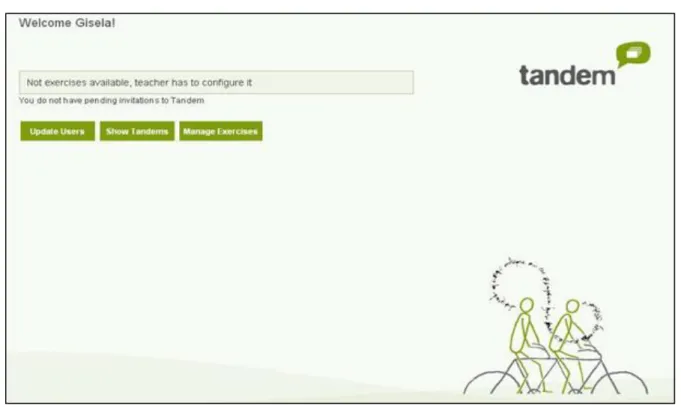
(7) Gisela Granena. Individual versus Interactive Task-Based Performance. later, they were offered the opportunity to earn extra credit for doing additional practice as part of a language study. The first 126 students who signed up were randomly assigned into one of three groups under individual task performance conditions up to a maximum of 30 participants per group, or to one of three groups under interactive task performance conditions up to a maximum of 12 participants per group. Participants in each of the groups in the individual condition, one per target structure, were given a link where they could complete the form-focusing information-gap task (the jigsaw) individually. Qualtrics, a web-based survey tool developed at the University of Maryland, was used to create the individual version of the task. This tool allowed presenting step one and step two in the treatment separately, without allowing participants to go back to previous screens (see Appendix B). Time on task for participants in the individual condition was 13.90 min on average (SD = 5.96). For the interactive version of the task (see Appendix C), the Tandem tool was used, a content management system for synchronous oral tasks available through SpeakApps (see Figure 1).3 Tandem connects a pair of students, assigns each student a role, and allows providing different sets of information to each student (i.e., Student A, Student B). Students recorded their conversations and sent the audio files to their teacher. Time on task for participants in the interactive condition was 14.42 min on average (SD=4.49). Both the individual and the interactive versions of the task finished with a link to the immediate post-test, which all participants had to complete individually. The pre-test and post-test were scored for accuracy. One point was allocated for every blank in the cloze filled in correctly, regardless of spelling mistakes.4. Figure 1. Welcome screen of the Tandem tool. RESULTS Table 1 and Table 2 show the pre-test, post-test, and gain scores for each of the three target structures in the individual condition and the three target structures in the interactive condition (one for each target structure), calculated as proportions (0–1.0). Scores in each group conformed to normality, according to Kolmogorov-Smirnov (K-S) tests (p > .05).. Language Learning & Technology. 46.
(8) Gisela Granena. Individual versus Interactive Task-Based Performance. Table 1. Descriptive Statistics for Pre- and Post-test Scores in the Individual Condition Target structure Modals Past Tense Connectors. Pre-test. Post-test. Pre-to-Post Gains. Mean. SD. Mean SD. Mean SD. .42 .27 .43. .21 .22 .20. .61 .60 .78. .19 .32 .35. .28 .28 .26. .26 .29 .24. Table 2. Descriptive Statistics for Pre- and Post-test Scores in the Interactive Condition Target structure Modals Past Tense Connectors. Pre-test. Post-test. Pre-to-Post Gains. Mean. SD. Mean SD. Mean SD. .45 .27 .28. .10 .21 .16. .76 .88 .79. .31 .60 .51. .18 .13 .19. .23 .28 .17. In order to test whether pre-to-post gains were statistically significant, a mixed factorial analysis of variance (ANOVA) was conducted with two within-subjects factors5 , Time (pre-test and post-test) and Target Structure (modals, past, and connectors), and one between-subjects factor, Condition (individual and interactive). This analysis further determined whether there were differences depending on the type of performance, individual versus interactive (as shown by an interaction between Time and Condition), or type of target structure (as shown by an interaction between Time and Target). The results revealed that Time was a significant factor (F(1, 120) = 224.133, p < .001, ηp 2 = .65)6 , which indicated that participants in both individual and interactive conditions had improved significantly between pre- and post-test. In addition, the interactions between Time and Condition, on the one hand, and Time and Target structure, on the other, were also significant (F(1, 120) = 12.411, p = .001, ηp 2 = .09, and F(2, 120) = 6.469, p = .002, ηp 2 = .10 , respectively). These results further showed that the individual and interactive conditions had not improved equally (.47 as the average overall gain score in the interactive condition versus .29 in the individual condition) and that the gains in the three target structures were not comparable between pre-test and post-test (.26 for modals versus .47 for the past tense versus .43 for connectors). Follow-up tests to the significant two-way interactions were conducted. First, Bonferroni adjusted independent t-tests were run comparing individual and interactive conditions on each of the target structures. The two conditions did not differ when modal verbs were the target (t(40) = 1.302, p = .201). Differences were significant, however, for the past tense (t(40) = 2.742, p = .009) and marginally significant for connectors (t(40) = 1.986, p = .054). In both cases, participants in the interactive condition outperformed participants in the individual condition (.60 vs. .32 as average gain scores in the case of the past tense, and .51 vs. .35 in the case of connectors). Two separate ANOVAs were then computed as follow-up tests to the significant interaction between Time and Target. The first ANOVA compared pre-to-post learning gains in the interactive condition according to target structure. The results showed that target structure was a significant factor (F(2, 33) = 4.858, p = .014). Pairwise comparisons with Bonferroni correction further showed that gain scores for modal verbs (.31) were significantly lower than gain scores for the past tense (.60, p = .012) and connectors (.51, p = .032), whereas the difference between gain scores for the past tense and connectors was not significant (p = .319). In the individual condition, the results for target structure did not reach statistical significance (F(2, 87) = 2.891, p = .061), meaning that gain scores were roughly Language Learning & Technology. 47.
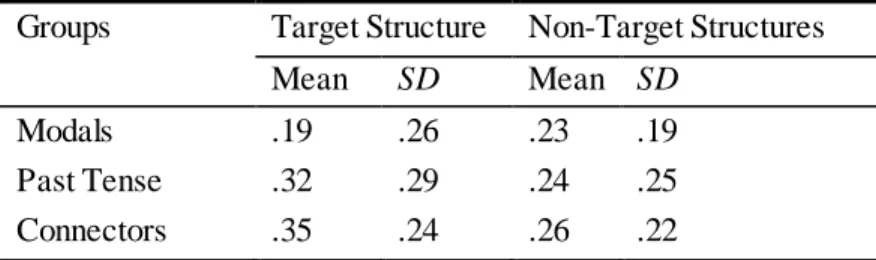
(9) Gisela Granena. Individual versus Interactive Task-Based Performance. comparable in the three structures. However, the pattern was similar to that observed in the interactive condition. The lowest pre-to-post learning gains corresponded to modal verbs (.19), followed by the past tense (.32), and connectors (.35). A last analysis was performed to compare gain scores on the target structure participants had received treatment on versus gain scores on the target structures that were included as distracters in the pre- and post-test measures (i.e., non-target structures). As a reminder, participants in the interactive and individual conditions that were assigned modal verbs as the target structure were also tested on the past tense and connectors as distracters. Participants that were assigned the past tense as the target structure were also tested on modal verbs and connectors as distracters. Participants that were assigned connectors as the target structure were also tested on modal verbs and the past tense as distracters. Table 3 and Table 4 display the gain scores on target and non-target structures in the individual and interactive conditions, respectively. Table 3. Descriptive Statistics for Gain Scores in the Individual Condition Groups Modals Past Tense Connectors. Target Structure. Non-Target Structures. Mean. SD. Mean SD. .19 .32 .35. .26 .29 .24. .23 .24 .26. .19 .25 .22. Table 4. Descriptive Statistics for Gain Scores in the Interactive Condition Groups Modals Past Tense Connectors. Target Structure. Non-Target Structures. Mean. SD. Mean SD. .31 .60 .51. .23 .28 .17. .34 .40 .33. .12 .18 .21. Paired-samples t-tests revealed that participants in the interactive condition that had the past tense or connectors as target structures scored significantly higher on these structures than on non-target structures (t(11) = 2.563, p = .026, and t(11) = 2.923, p = .014, respectively), whereas participants that had modal verbs as the target structure did not score higher on this structure than on non-target structures (t(11) = -0.540, p = .600). The same results were found for the individual condition. The participants with the past tense and connectors as their respective target structures had significantly greater learning gains on these two structures than on non-target structures (t(29) = 2.578, p = .015, and t(29) = 2.221, p = .034, respectively). On the other hand, those participants with modal verbs as the target structure did not show greater gains for this structure than for non-target structures (t(29) = -0.732, p = .470). To summarize, participants’ scores on the target structures improved significantly from pre-test to posttest, regardless of whether they performed form-focusing tasks in an interactive or individual condition. Participants in the interactive condition outperformed those in the individual condition. Specifically, they scored significantly higher on two of the target structures: the past tense and connectors. These were also the structures with the highest scores in each of the conditions. When the target structure was modal verbs, pre-to-post learning gains were not significantly higher than for non-target structures, neither in the interactive nor individual condition. Carrying out the task interactively also did not result in any greater gains than doing it individually when the target was modal verbs.. Language Learning & Technology. 48.
(10) Gisela Granena. Individual versus Interactive Task-Based Performance. DISCUSSION Building on Pica et al. (2006), who proposed “form-focusing information gap tasks” (p. 308) as a way to draw learners’ attention to low-salience forms that are difficult to master, this study applied a formfocusing information gap task to a computer-mediated environment and investigated whether individual or interactive task performance conditions affect language development differently. Three target structures were examined: modal verbs, the past tense, and connectors. Six groups of participants were randomly assigned to one of the three target structures under either an interactive or individual condition. The first research question asked whether carrying out a form-focusing information gap task in a computer-mediated environment would result in any learning gains. The results showed statistically significant pre-to-post learning gains in all three target structures, regardless of whether participants were in an individual or interactive condition and regardless of target structure. These results support the wellestablished effectiveness of information gap tasks in SLA (Long, 1980), whether working alone or with another learner, and particularly the effectiveness of form-focusing information gap tasks as an instrument to help learners acquire low-salience L2 forms by drawing their attention to these forms while engaged in meaning-focused L2 use. As Pica et al. (2006) argued, the versatility of these tasks allows adjusting them to particular learning problems, to language forms that are difficult to acquire and that rarely become the focus of meaning negotiation in interaction. The key task feature that can explain the contribution of these tasks to the development of low-salience L2 forms is task-essentialness (Loschky & Bley-Vroman, 1993). These are tasks that require comprehension and production of particular linguistic features that learners must attend to in order to complete the task successfully. According to Loschky and Bley-Vroman (1993), when a grammar aspect is essential to meaning, learners will have to process that grammar aspect and its function. This may lead them to notice gaps in their knowledge, which may lead in turn to a restructuring of that knowledge through the formation of new hypotheses about that particular linguistic form and its function. It is important to point out, as Loschky and Bley-Vroman argue, that these are not grammatical exercises where grammatical accuracy is part of the task instructions, but information gap tasks where a grammar aspect is essential to meaning and to the communication task. Although learning gains from pre-test to post-test were significant in all the performance conditions, the results revealed an interaction between type of performance condition and gains. Those participants under interactive task performance conditions outperformed participants under individual conditions. This provided a positive answer to the second research question, which asked whether carrying out a formfocusing information gap task individually or interactively would lead to differences in learning outcomes. According to these results, interaction is a further facilitative condition for SLA, in addition to the use of form-focusing information gap tasks. The benefits of interaction were already formalized in the Interaction Hypothesis by Long (1981, 1996) and several interactionist studies have shown that completing tasks interactively has L2 advantages over completing them individually (e.g., Gass & Varonis, 1994; Mackey, 1999). This has been related to the interactional processes that spontaneously arise in communicative exchanges between learners or learners and native speakers and that promote noticing of language features (Pica et al., 1993). In a similar line, Loschky and Bley-Vroman (1993) argued that information gap tasks that require the exchange of information create the potential for “communicatively oriented feedback on structural accuracy” (p. 132)—the second criterion, in addition to task-essentialness, that according to them contributes to facilitate grammatical development. As learners decide which language form they need, they may provide each other with valuable feedback on the correctness of their hypotheses. Therefore, the benefits of interaction would add on to the benefits of L2 learning tasks where a successful outcome depends on comprehension or production of information expressed with a particular language form. The fact that the learners in the individual condition also improved significantly from pre-test to post-test suggests that the task was successful in promoting noticing of the target structure. The greater learning gains in the interactive condition indicate that. Language Learning & Technology. 49.
(11) Gisela Granena. Individual versus Interactive Task-Based Performance. noticing in the context of interaction provides greater benefits through the verbalization and discussion of language options. The joint activity might have also allowed learners to pool their resources. Extracts 1 to 3 show examples of learners’ negotiations, one for each target structure. As can be seen, the task was successful in encouraging participants to attend to form, function, and meaning relationships. In order to choose between the two forms, participants had to pay attention to how these forms encoded function and meaning in the sentence in question. Extract 1 (connectors). Student 1: (reads his paragraph) Student 2: (reads her paragraph) the different word is when or while. I think that while is better because is in the same time, the actions are the same time. Student 1: Yes, yes the actions are matching in the time yes. Student 2: Yes. Student 1: I think the same, while is a better option here. Extract 2 (past tense). Student 1: I didn’t understand did you try or tried? Student 2: Tried in past. Student 1: In past. Student 2: Past action. Student 1: So I have try in present. Student 2: I think it’s a past action you tried the your shoes before. Student 1: Because it’s an action in the past time, you are at home now, in present and before you were in the shoe store no? Student 2: Yes. Student 1: So I have the wrong sentence and you have the right sentence. Extract 3 (modals). Student 1: In the last sentence… Student 2: In my step it say shouldn’t. Student 1: In your step shouldn’t and in my can’t. Student 2: Ok. Student 1: It’s better shouldn’t no? Student 2: I think is better can’t because if you cannot turn off your cell phone before remember to mute it now, shouldn’t is a recommend no? Student 1: Yes, I think is better can’t because is a option. Student 2: Should is a obligation and can is a recommend. Student 1: If you cannot turn off your cell phone, is not a strong obligation, is a recommend, is better can’t. Student 2: I think is better.. Language Learning & Technology. 50.
(12) Gisela Granena. Individual versus Interactive Task-Based Performance. A recent study that also investigated differences in learning gains between individual and interactive task performance conditions, Tare et al. (2014), reported the same research findings as the present study. In their study, which focused on text chat, intermediate-level learners of Russian either completed a task interactively via text chat or completed the task alone via independent writing activities. The participants that were given the opportunity to interact in pairs showed greater learning gains in vocabulary knowledge, as measured by a Vocabulary Knowledge Scale, and in amount of oral production. Specifically, the interactive group produced more runs and spoke for a longer duration of time. These results suggest that the benefits of carrying out a task interactively can happen in different modalities (text chat and oral chat) and that L2 learning gains can take place in various language domains simultaneously. However, the benefits of carrying out a form-focusing information gap task interactively did not equally apply to the three target structures investigated. The study found a significant interaction between learning gains and target structure, providing a positive answer to the third research question, which asked whether differences in L2 gains would differ depending on target structure. The three structures investigated were modal verbs, the past tense, and connectors. These structures were selected for their low salience, either because they are difficult to perceive or lack transparency of function or meaning. They belong to the category of functors, involving inflections, auxiliary verbs, articles, prepositions, and conjunctions, and defined by Brown (1973) as “forms that mark grammatical structures and carry subtle modulatory meanings” (p. 75). The results showed that gains were greater for the past tense and connectors than for modal verbs. Also, the participants in the interactive condition scored significantly higher on the past tense and marginally higher on connectors, but there were no significant differences between participants in the interactive and individual conditions for modal verbs. These results suggest that form-focusing information gap tasks were not successful in promoting the development of modal verbs, not even under the interactive condition. An anonymous reviewer suggested that the reordering of paragraphs involved in the first step of the task could have increased the salience of past tense forms and connectors, maybe because these forms were more task essential than modals to complete this part of the task. An alternative explanation for these findings could be the degree of difficulty of modal verbs compared to the difficulty of the past tense and connectors. According to DeKeyser (2005), there are three factors involved in determining grammatical difficulty: complexity of form, complexity of meaning, and complexity of form-meaning relationship. In the case of modal verbs (e.g., must, can, should, may, and might), both complexity of meaning and complexity of form-meaning relationship are higher than in the case of the past tense and connectors. Modal verbs are in fact considered among the most problematic grammatical items for L2 learners (Palmer, 1974, 1990) and “one of the most difficult structures that you as an ESL/EFL teacher will have to deal with” (Celce-Murcia & Larsen-Freeman, 1983, p. 80). Regarding complexity of meaning, modals are characterized by the abstractness and vagueness of their semantic functions (Thompson, 2002). Most of them express both deontic meanings such as obligation, intention, or permission (e.g., You must finish your homework) and epistemic meanings associated with truth conditions and assessment of degrees of certainty (e.g., You must be John’s sister). This, in turn, means that there is no one-to-one relation between form and meaning and, therefore, lack of transparency regarding form-meaning mapping. The past tense and connectors, on the other hand, are semantically more transparent. The past tense inflection is difficult to perceive, but semantically unambiguous. Connectors such as but, although, or so may be difficult from the point of view of the syntactic structure they require, but they indicate logical relations that are semantically quite transparent, even if abstract. In the context of the form-focusing information gap task used (a jigsaw based on a text), the greater semantic transparency of the past tense and of connectors may have made them easier to spot and correct than modal verbs. In order to promote the development of modal verbs, L2 learners would probably need a combination of instructional interventions including rich elaborated input and negative feedback, in addition to task-based interaction. These are factors claimed to contribute to a psycholinguistically. Language Learning & Technology. 51.
(13) Gisela Granena. Individual versus Interactive Task-Based Performance. optimal L2 learning environment (Doughty & Long, 2003). Finally, a word is in order regarding the use of voice chat and its particular affordances for educational use. It has been argued (e.g., Brandt & Jenks, 2013) that the voice SCMC medium, even though it may be more similar to F2F than text chat, creates some interactional problems that do not take place in F2F communication or text chat. According to Brandt and Jenks (2013), in online spoken communication, problems can arise such as overlapping talk, possibly followed by silence, failure to identify the speaker, or difficulty gaining the right to talk. These problems, however, are mostly found in particular voice SCMC contexts, such as multi-party chat rooms, where several participants gather at the same time and which allow for new chat room members in once talk has started. While this setting may also be beneficial for language learners, the tool investigated in the current study opens a new range of possibilities as a voice SCMC medium and avoids several of the constraints pointed out by Brandt and Jenks (2013). CONCLUSION In order to learn a L2, learners need opportunities to participate in conversation (Long, 1980, 1996). Research in CMC has shown that interaction makes learners pay attention to form in a variety of ways that promote L2 learning (for a review, see Sauro, 2011). However, studies have looked at text-based rather than voice-based interaction. Given the growing interest in distance language learning (primarily asynchronous) and the availability of recently developed tools for synchronous oral communication, the present study investigated whether interaction through this modality (and tool) facilitates L2 learning. The type of task used a form-focusing information gap task as a research treatment, which was suggested by Pica et al. (2006) as a way to draw learners’ attention to low-salience forms that are difficult to master. The results showed that learners’ performance on a cloze test improved from pre-test to post-test regardless of target structure and condition (individual or interactive). However, learners in the interactive condition outperformed learners in the individual condition when the target structure was the past tense or connectors. No differences were observed in the case of modal verbs. These results support the beneficial effects of learner-learner interaction via voice-based CMC, but suggest a differential effect depending on the transparency of function and meaning of the grammatical structure. Since the outcome measure employed was a cloze test, further research should investigate whether learning gains can also be observed in oral production and other types of measures. Similarly, research should determine to what extent gains are retained by means of delayed post-tests. Finally, future research comparing interactive and individual performance conditions should carefully design the experimental conditions to be comparable on all aspects except for the variable under investigation. In the current study, although participants in both conditions were required to think of a reason for their choices in the spot-the-difference component of the task, no evidence that control participants actually did so could be gathered, which poses a limitation to the findings of the study. Overall, the findings of this study can inform distance language learning program design decisions by showing that there are technological options available (e.g., SpeakApps) that make task-based L2 oral interaction possible. These tools can compensate for the asynchronicity of communication characteristic of distance language learning, as well as provide an invaluable opportunity for conversation practice outside of the F2F classroom. In addition to the technological options that make oral interaction possible, the form-focusing information gap tasks investigated in the current study proved to be effective in promoting the development of L2 learning abilities. These tasks differ from others typically used in the interactionist paradigm in that they not only elicit output, but also provide input in the form of text. This feature makes them suitable to practice both written and oral receptive skills as well as productive skills, unlike other tasks which lack textual input, such as picture-based spot-the-difference tasks. The range of possibilities these tasks offer not only for F2F communication, but also for online instruction, is one of the most relevant implications of this study.. Language Learning & Technology. 52.
(14) Gisela Granena. Individual versus Interactive Task-Based Performance. APPENDIX A. Cloze Test Used as Pre-test and Post-test STEP 1 If you apply for a job, you ______be called for an interview so be proactive and prepare yourself ______ strategically and mentally for the event. First, talk to people who ______ their dream and now have a job. They can give you good advice! STEP 2 You ______ also buy new clothes and shoes. Choose a pair of shoes that go well with your clothes. ______, make sure they are comfortable. Even if you ______ them on at the shoe store when you bought them, wear them at home to get used to them. STEP 3 Now, it’s the night before you rock ‘n’ roll! It is important that you get a good night’s sleep. ______ go to bed early and be sure to set your alarm clock before falling asleep. You ______ miss a job opportunity if you ______ the alarm! STEP 4 You’re ready to go! Leave home early. You think you ______ get to the interview location on time, ______ you might not. Can you imagine the stress you would feel if you ______ at the interview destination and it was the wrong place? STEP 5 Greet the receptionist politely and enthusiastically (say hello). ______ remember to thank all the people that ______ you feel welcome while you are waiting. If you ______ turn off your cell phone, remember to mute it! STEP 6 When you arrive at the interview room, shake your interviewers’ hands firmly ______ you smile. If the interviewers ______ your answers when they ask you questions, they will smile too. Make a positive impression and your chances (opportunities) of getting the job ______ increase dramatically! STEP 7 As the interview draws to a close (finishes), interviewers ______ ask you if you have any questions for them. ______ create the right impression by asking at least one question that you ______ before the interview. STEP 8 Finally, you do not ______ to follow-up a job interview (no further or additional action is required), ______ it helps if you send a thank you note to the employers that just ______ you. Express your appreciation for the interview, reiterate your qualifications, and show your interest in working for their company.. APPENDIX B. Instructions Given to Participants in the Individual Condition (Past Tense Group) SCREEN 1 Welcome! This is a module with several activities. Please, move from one activity to another by clicking. Language Learning & Technology. 53.
(15) Gisela Granena. Individual versus Interactive Task-Based Performance. on the small arrow that you will see at the end of every page (on the right). Important: You will not be allowed to go back. SCREEN 2 The purpose of this activity is to help you become more accurate and precise in your speaking and writing, and to organize information more carefully. For this first task, please read the following 8 STEPS and think of a suitable (appropriate) title. SCREEN 3 Please complete the following two tasks: Task 1: Compare each of the sentences on the left with each of the sentences on the right and choose the sentence that is more accurate and precise. There is always ONE DIFFERENCE between the two sentences. Think of a reason why you think the sentence on the left or the right is more accurate and precise. Task 2: Decide on the right order of the sentences, from 1 to 8. A. STEP _______ You’re ready to go! Leave home early. You think you will get to the interview location on time, but you might not. Can you imagine the stress you would feel if you arrived at the interview destination and it was the wrong place?. A. STEP _______ You’re ready to go! Leave home early. You think you will get to the interview location on time, but you might not. Can you imagine the stress you would feel if you arrive at the interview destination and it was the wrong place?. B. STEP _______ You should also buy new clothes and shoes. Choose a pair of shoes that go well with your clothes. In addition, make sure they are comfortable. Even if you try them on at the shoe store where you bought them, wear them at home to get used to them.. B. STEP _______ You should also buy new clothes and shoes. Choose a pair of shoes that go well with your clothes. In addition, make sure they are comfortable. Even if you tried them on at the shoe store where you bought them, wear them at home to get used to them.. C. STEP _______ If you apply for a job, you may be called for an interview so be proactive and prepare yourself both strategically or mentally for the event. First, talk to people who achieved their dream and now have a job. They can give you good advice! D. STEP _______ Now, it’s the night before you rock ‘n’ roll! It is important that you get a good night’s sleep. So, go to bed early and be sure to set your alarm clock before falling asleep. You may miss a job opportunity if you forget the alarm! E. STEP _______ Finally, you don't have to follow up a job interview (no further or additional action is required), but it helps if you send a thank you. C. STEP _______ If you apply for a job, you may be called for an interview so be proactive and prepare yourself both strategically or mentally for the event. First, talk to people who achieve their dream and now have a job. They can give you good advice! D. STEP _______ Now, it’s the night before you rock ‘n’ roll! It is important that you get a good night’s sleep. So, go to bed early and be sure to set your alarm clock before falling asleep. You may miss a job opportunity if you forgot the alarm! E. STEP _______ Finally, you don't have to follow up a job interview (no further or additional action is required), but it helps if you send a thank you. Language Learning & Technology. 54.
(16) Gisela Granena. note to the employers that just interviewed you. Express your appreciation for the interview, reiterate your qualifications, and show your interest in working for their company. F. STEP _______ When you arrive at the interview room, shake your interviewers’ hands firmly while you smile. If the interviewers liked your answers when they ask you questions, they will smile too. Make a positive impression and your chances (opportunities) of getting the job will increase dramatically! G. STEP _______ As the interview draws to a close (finishes), interviewers could ask you if you have any questions for them. Therefore, create the right impression by asking at least one of the questions that you prepare before the interview. H. STEP _______ Greet the receptionist politely and enthusiastically (say hello). Also, remember to thank all the people that made you feel welcome while you are waiting. If you can't turn off your cell phone, remember to mute it! SCREEN 4. Individual versus Interactive Task-Based Performance. note to the employers that just interview you. Express your appreciation for the interview, reiterate your qualifications, and show your interest in working for their company. F. STEP _______ When you arrive at the interview room, shake your interviewers’ hands firmly while you smile. If the interviewers like your answers when they ask you questions, they will smile too. Make a positive impression and your chances (opportunities) of getting the job will increase dramatically! G. STEP _______ As the interview draws to a close (finishes), interviewers could ask you if you have any questions for them. Therefore, create the right impression by asking at least one of the questions that you prepared before the interview. H. STEP _______ Greet the receptionist politely and enthusiastically (say hello). Also, remember to thank all the people that make you feel welcome while you are waiting. If you can't turn off your cell phone, remember to mute it!. Please click on the link and complete the fill-in-the-blanks exercise individually. Fill in (complete) each of the blanks with 1 word.. APPENDIX C. Instructions Given to Participants in the Interactive Condition. SCREEN 1 The purpose of this activity is to help you become more accurate and precise in your speaking and writing, and to organize information more carefully. SCREEN 2 For this first task, please read the following text and, with the help of your partner, think of a suitable (appropriate) title. A general title is OK. SCREEN 3 Now complete the following two tasks: Task 1: Compare each of your paragraphs (steps) with your partner’s. There is always one word that is different. Find the word and choose which word (either Student A or Student B’s) is more accurate and precise for the paragraph in question. Agree with your partner on one choice and explain why.. Language Learning & Technology. 55.
(17) Gisela Granena. Individual versus Interactive Task-Based Performance. Task 2: Decide on the right order of the sentences (steps), from 1 to 8. SCREEN 4 Please click on the link and complete the fill-in-the-blanks exercise individually. Fill in (complete) each of the blanks with 1 word.. NOTES 1.. The higher number of participants in the control condition responded to convenience reasons, given that administering the task individually was easier than pairing students up at a day and time of their convenience for each of the target structures investigated.. 2.. Please note that reordering the paragraphs did not necessarily involve recalling the original text, since it was possible to reorder them based on their meaning and world knowledge about the steps involved in a job interview.. 3.. SpeakApps is a European research project coordinated by the Universitat Oberta de Catalunya and headed by Dr. Christine Appel. The platform was funded by the European program Lifelong Learning and aims to provide language teachers with tools to help improve L2 learners’ oral skills online.. 4.. An anonymous reviewer pointed out that the scoring method should have taken into account form, function, and meaning, given that these were all subjects of investigation. The scoring method employed focused on the form, which had to be correct for the context in question. It was assumed that a correct form for a given context already took into account both correct function and meaning.. 5.. As a reminder, both the pre-test and post-test measures included the three target structures, and this is why Target was a within-subjects (or repeated measures) variable. However, each participant only received treatment on one of the three structures, depending on group assignment. In other words, two of three structures worked as distracters in the tests.. 6.. For partial eta squared (ηp 2 ), a small effect size is .01 ≤ ηp 2 < .06, medium is .06 ≤ ηp 2 < .14, and large is ηp 2 ≥ .14.. REFERENCES Blake, R. (2000). Computer mediated communication: A window on L2 Spanish interlanguage. Language Learning & Technology, 4(1), 120–136. Retrieved from http://llt.msu.edu/vol4num1/blake/default.html Blake, R. (2005). Bimodal CMC: The glue of learning at a distance. CALICO Journal, 22(3), 497–511. Blake, R. (2009). The use of technology for second language distance learning. Modern Language Journal, 93(S1), 822–835. Blake, R., & Zyzik, E. (2003). Who’s helping whom? Learner/heritage-speakers’ networked discussions in Spanish. Applied Linguistics, 24(4), 519–544. Brandt, A., & Jenks, C. J. (2013). Computer-mediated spoken interaction: Aspects of trouble in multiparty chat rooms. Language@Internet, 10, article 5. Retrieved from http://www.languageatinternet.org/articles/2013/Brandt. Language Learning & Technology. 56.
(18) Gisela Granena. Individual versus Interactive Task-Based Performance. Brown, R. (1973). A first language: The early stages. Cambridge, MA: Harvard University Press. Brutten, S. R., Mouw, J. T., & Perkins, K. (1986). The effects of language group, proficiency level, and instruction on ESL subjects’ control of the d and z morphemes. TESOL Quarterly, 20(3), 553–559. Celce-Murcia, M., & Larsen-Freeman, D. (1983). The grammar book: An ESL/EFL teacher’s course. Rowley, MA: Newbury House. Chapelle, C. (1997). CALL in the year 2000: Still in search of research paradigms? Language Learning & Technology, 1(1), 19–43. Retrieved from http://llt.msu.edu/vol1num1/chapelle/default.html Collentine, K. (2009). Learner use of holistic language units in multimodal, task-based synchronous computer-mediated communication. Language Learning & Technology, 13(2), 68–87. Retrieved from http://llt.msu.edu/vol13num2/collentine.pdf De la Fuente, M. (2003). Is SLA interactionist theory relevant to CALL? A study on the effects of computer-mediated interaction in L2 vocabulary acquisition. Computer Assisted Language Learning, 16(1), 47–81. DeKeyser, R. M. (2005). What makes learning second-language grammar difficult? A review of issues. Language Learning, 55(S1), 1–25. Doughty, C., & Long, M. H. (2003). Optimal psycholinguistic environments for distance foreign language learning. Language Learning & Technology, 7(3), 50–80. Retrieved from http://llt.msu.edu/vol7num3/doughty/ Doughty, C., & Pica, T. (1986). “Information gap” tasks: Do they facilitate second language acquisition? TESOL Quarterly, 20(2), 305–325. Duff, P. (1986). Investigating tasks in language learning. Language Learning, 23(3), 45–56. Gass, S., & Varonis, E. (1994). Input, interaction, and second language production. Studies in Second Language Acquisition, 16(3), 283–302. Gass, S., Mackey, A., & Ross-Feldman, L. (2005). Task-based interactions in classroom and laboratory settings. Language Learning, 55(4), 575–661. Geng, Z., & Takatsuka, S. (2009). Task-based peer-peer collaborative dialog in a computer-mediated learning environment in the EFL context. System, 37(3), 434–446. Hampel, R., & Hauck, M. (2004). Towards an effective use of audio conferencing in distance language courses. Language, Learning & Technology, 8(1), 66–82. Retrieved from http://llt.msu.edu/vol8num1/hampel/default.html Hatch, E. (1978). Second language acquisition: A book of readings. Rowley, MA: Newbury House. Jepson, K. (2005). Conversations—and negotiated interaction—in text and voice chat rooms. Language Learning & Technology, 9(3), 79–98. Retrieved from http://llt.msu.edu/vol9num3/jepson/default.html Lasito, & Storch, N. (2013). Comparing pair and small group interactions on oral tasks. RELC Journal, 44(3), 361–375. Lee, L. (2002). Synchronous online exchanges: A study of modification devices on nonnative discourse interaction. System, 30(3), 275–288. Lee, L. (2008). Focus-on-form through collaborative scaffolding in expert-to-novice online interaction, Language Learning & Technology, 12(3), 53–72. Retrieved from http://llt.msu.edu/vol12num3/lee.pdf Loewen, S., & Erlam, R. (2006). Corrective feedback in the chatroom: An experimental study. Computer Assisted Language Learning, 19(1), 1–14.. Language Learning & Technology. 57.
(19) Gisela Granena. Individual versus Interactive Task-Based Performance. Loewen, S., & Reissner, S. (2009). A comparison of incidental focus-on-form in the second language classroom and chatroom. Computer Assisted Language Learning, 22(2), 101–114. Long, M. H. (1980). Input, interaction, and second language acquisition. (Unpublished doctoral dissertation). University of California, Los Angeles, CA. Long, M. H. (1981). Input, interaction, second-language acquisition. In H. Winitz (Ed.), Native language and foreign language acquisition (pp. 259–278). New York, NY: New York Academy of Sciences. Long, M. H. (1991). Focus on form: A design feature in language teaching methodology. In K. de Bot, D. Coste, C. Kramsch, & R. Ginsberg (Eds.), Foreign language research in crosscultural perspective (pp. 39–52). Philadelphia, PA: John Benjamins. Long, M. H. (1996). The role of the linguistic environment in second language acquisition. In W. Ritchie & T. Bhatia (Eds.), Handbook of second language acquisition (pp. 413–468). San Diego, CA: Academic Press. Long, M. H., & Porter, P. A. (1985). Group work, interlanguage talk, and second language acquisition. TESOL Quarterly, 19(2), 207–227. Loschky, L., & Bley-Vroman, R. (1993). Grammar and task-based methodology. In G. Crookes & S. Gass (Eds.), Tasks and language learning: Integrating theory and practice (pp. 122–167). Clevedon, UK: Multilingual Matters. Mackey, A. (1999). Input, interaction, and second language development: An empirical study of input, interaction, and second language development. Studies in Second Language Acquisition, 21(4), 557–588. Palmer, F. R. (1974). The English verb. London, UK: Longman. Palmer, F. R. (1990), Modality and the English modals 2nd Edition, London, UK: Longman. Payne, J. S., & Whitney, P. J. (2002). Developing L2 oral proficiency through synchronous CMC: Output, working memory, and interlanguage development. CALICO Journal, 20(1), 7–32. Pellettieri, J., (2000). Negotiation in cyberspace: The role of chatting in the development of grammatical competence. In M. Warschauer & R. Kern. (Eds.), Network-based language teaching: Concepts and practices (pp. 59–86). New York, NY: Cambridge University Press. Pica, T. (2012). Naturalistic and instructed language learning. In P. Robinson (Ed.), The Routledge encyclopedia of second language acquisition (pp. 455–458). London, UK: Routledge. Pica, T., & Doughty, C. (1985). Input and interaction in the communicative language classroom: A comparison of teacher-fronted and group activities. In S. Gass & C. Madden (Eds.), Input in second language acquisition (pp. 115–132). Rowley, MA: Newbury House. Pica, T., Kanagy, R., & Falodun, J. (1993). Choosing and using communication tasks for second language research and instruction. In G. Crookes & S. Gass (Eds.), Tasks and second language learning (pp. 9–34). Clevedon, UK: Multilingual Matters. Pica, T., Kang, H., & Sauro, S. (2006). Information gap tasks: Their multiple roles and contributions to interaction research methodology. Studies in Second Language Acquisition, 28(2), 301–338. Pica, T., Lincoln-Parker, F., Paninos, D., & Linnet, J. (1996). Language learners’ interaction: How does it address the input, output, and feedback needs of L2 learner? TESOL Quarterly, 30(1), 59–84. Smith, B. (2003). Computer-mediated negotiated interaction: An expanded model. Modern Language Journal, 87(1), 38–57.. Language Learning & Technology. 58.
(20) Gisela Granena. Individual versus Interactive Task-Based Performance. Smith, B. (2004). Computer-mediated negotiated interaction and lexical acquisition. Studies in Second Language Acquisition, 26(3), 365–398. Satar, H. M., & Ozdener, N. (2008). The effects of synchronous CMC on speaking proficiency and anxiety: Text versus voice chat. Modern Language Journal, 92(4), 595–613. Sauro, S. (2009). Computer-mediated corrective feedback and the development of second language grammar. Language Learning & Technology, 13(1), 96–120. Retrieved from http://llt.msu.edu/vol13num1/sauro.pdf Sauro, S. (2011). SCMC for SLA: A research synthesis. CALICO Journal, 28(2), 369–391. Swain, M., & Lapkin, S. (1998). Interaction and second language learning: Two adolescent French immersion students working together. Modern Language Journal, 82(3), 320–337. Tare, M., Golonka, E., Vatz, K., Bonilla, C., Crooks, C., & Strong, R. (2014). Effects of interactive chat vs. independent writing on L2 learning. Language Learning & Technology, 18(3), 208–227. Retrieved from http://llt.msu.edu/issues/october2014/tareetal.pdf Thompson, M. (2002). Modals in English language teaching. Retrieved from http://www.telusplanet.net/linguisticsissues/modalsinteaching.html Varonis, E. M. & Gass, S. (1985). Non-native/Non-native conversations: A model for negotiation of meaning. Applied Linguistics, 6(1), 71–90. Volle, L. M. (2005) Analyzing oral skills in voice e-mail and online interviews. Language Learning & Technology, 9(3), 146–163. Retrieved from http://llt.msu.edu/vol9num3/pdf/volle.pdf Yamada, M., & Akahori, K. (2009). Awareness and performance through self- and partner’s image in videoconferencing. CALICO Journal, 27, 1–5. Retrieved from https://www.calico.org/memberBrowse.php?action=article&id=776 Yilmaz, Y. (2012). The relative effects of explicit correction and recasts on two target structures via two communication modes. Language Learning, 62(4), 1134–1169. Yilmaz, Y., & Granena, G. (2010). The effects of task type in synchronous computer-mediated communication. ReCALL, 22(1), 20–38.. Language Learning & Technology. 59.
(21)
Figure

Documento similar