
Omani school supervisor perspectives of contextual factors impacting upon students’ limited English proficiency: an exploratory study
10
0
0
Texto completo
(2) Rahma Al-Mahrooqi, Christopher Denman & Faisal Al-Maamari. It is for these reasons that English has officially assumed such an important position in Oman’s education system since it was first expanded to the national level following His Majesty Sultan Qaboos’s assumption of the throne in 1970. Given its importance to education in the country and its dominance across a wide variety of domains, English has become an essential asset for employability and employment in the Omani job market. A good command of English and a communicative ability in the language form a competitive advantage for getting a good job. In fact, Al-Issa (2007) highlights the centrality of English to education and employment in the country by stating: “Oman needs English – the only official foreign language in the country, as a fundamental tool for ‘modernization’, ‘nationalization’ and the acquisition of science and technology” (pp. 199-200). In addition to these potential benefits, English is also important for the internationalization of higher education institutions both within Oman and around the world. According to Renard (2010), for Omani tertiary institutions to function effectively in an increasingly globalized world, they must “continue to make significant investment in English to enable full involvement in global academic networks that function in English” (p. 3). This investment, Renard claims, is based on the fact that English remains the preeminent language of science, scholarship, and engagement with the world’s academic community. As a result, tertiary-level staff and students must be fluent in the language. In most scientific fields, English is the primary language of knowledge dissemination and international journals usually publish in English. Even in the Middle East where Arabic is widely spoken, English tends to be the key tool of academic discourse with it even being positioned in some cases as the key for academic exchange between Arab Gulf universities (Denman, 2014, pp. 96-97). However, despite the importance of English to Omani society, graduates of Omani public schools are often reported as lacking the kinds of linguistic and communicative abilities in the language that are demanded by both higher education and the world of work (Al-Mahrooqi & Asante, 2010; Moody, 2009). As a result, most high school graduates upon entering tertiary education are required to enrol in English foundation programs (Al-Issa, 2011) for periods that usually extend between six months and two years. This enrolment naturally lengthens the amount of time these graduates spend attempting to complete their studies – often in English-medium colleges – and therefore has a negative effect on the nationalization of the workforce or what is locally termed “Omanization”. Moreover, because many Omani school graduates struggle with their English studies, they are often unable to enter prestigious universities in the country and may also not have the language skills that many businesses, especially those in the private sector, demand. A number of reasons have been offered for Omani school graduates’ weaknesses in English despite the large investment, in terms of teacher training, curriculum reform, and curriculum development, that the system has received over the past decade or so. These have been offered as including contextual factors such as national culture, the community, family, parents, and peers (Al-Mahrooqi, Al-Maamari, & Denman, 2015), among many others (Al-Busaidi, 1995; Al-Toubi, 1998). Given the officially recognized position of English as a driver of Omanization and as a key plank in increasing Oman’s participation in the global economy, the current exploratory research was deemed necessary to understand more about the ways in which these contextual factors relate to Omani school graduates’ development of English language skills. In order to achieve this, eight Omani public school system EFL supervisors responded to an on-line openended question about the contextual factors they believed caused Omani school students to graduate with low English language proficiency. 1. Literature review 1.1.. Context and language learning. A number of authors highlight the ways in which contextual factors can exert an important influence on language learning (Canagarajah, 1993; Holliday, 1994; Van Lier, 1988). For instance, Freeman and Johnson (1998) claim that the teaching context acts as a “socio-cultural terrain” in which teaching and learning take place. Bax (2003) adds that effective teaching in the EFL classroom is shaped not only by teaching methodology, but also by contextual factors such as student needs, the school culture, existing syllabuses, language-in-education policies, and the wider socio-political setting in which learning and. 60. International Journal for 21st Century Education, vol. 3.1, 2016, 59-68. ISSN: 2444-3921.
(3) Omani school supervisor perspectives of contextual factors impacting upon students’ limited English proficiency…. teaching is situated. Toohey (2007) adds that teachers are not agentive in their own right but are constrained by specific societal factors such as the institutional culture in which they teach. A number of studies highlight the importance of these contextual factors. For example, LoCastro (1996) observes how the socio-cultural context can have a negative effect on the implementation of communicative language teaching approaches in largely monolingual Japan. According to the author, a major problem hindering the implementation of this approach in the country is that other aspects of the education system, such as the system of entrance exams, are often at odds with the push for more communicative teaching in EFL classes. As a result, Japanese English teachers are pressured to prepare students for university entrance exams and thus pay little attention to the educational discourse on the importance of adopting communicative, learner-centred approaches. Toohey (2007) also stresses the need for curriculum planners to take into account the influence of cultural factors such as the institutional culture in which teaching takes place and the way this may either impose constraints or enable their agency. Stritikus (2003) notes the influence of socio-cultural factors in curriculum reform by stating that teachers do not respond to national curricular reforms through the policy itself, but rather to other factors that include their teaching context, their beliefs and attitudes towards pedagogy, and their political and personal ideologies. Bax (2003) summarises several contextual factors that exert an important influence on language teaching and learning. These include teachers’ personal contexts (their individual differences, learning styles and strategies, personal motivation), the school culture (group, dynamics, class, environment, school environment), the societal culture (status of teachers and students, attitudes and behaviours of parents, the local environment including communities), and the national culture (political, religious, social and national context). According to Gardner’s (1979, 1983, 1985) highly influential socio-educational model, language can be acquired in both formal and informal contexts. The formal context here refers to the classroom that helps pupils to learn to be both linguistically competent and functionally bilingual. Traditionally speaking, drill and practice, audio-visual methods, and translation and grammar exercises were common learning approaches in the ESL/EFL classroom and teaching was formal and direct, even though these approaches have largely fallen out of favour in the learner-centred, communicative-focused language classrooms that now dominate English education in many parts of the world. In contrast, an informal learning context is one in which no formal structure is in place to support language learning and can be conceived of as involving such activities as watching a foreign language movie or reading a foreign language magazine primarily for entertainment. However, despite the informal nature of these activities, their intended outcome remains to extend skills in the language. The socio-cultural context in which learning is situated plays an important role in language acquisition. For instance, Gardner (1985, 2010) states that, in those cultures where the target language is valorized, learners will be more motivated to become actively engaged in learning it. In addition to the classroom itself, the school also plays an important role in promoting positive attitudes towards learning a language. The influence of the school environment, which includes staff, students, principals, and parents, can be viewed as an important contextual factor that influences attitudes towards the language and the realization of effective language learning and teaching (Lamie, 2005). This context, in addition to the learner’s cultural background (Ramírez, 1995), also helps define learners’ willingness to communicate (WTC) in the target language. Peng (2007) reports that students’ L2 willingness to communicate could be influenced by such contextual factors as group cohesiveness, which here is defined as the commitment of learners to work together in achieving the best outcomes in class. WTC in the EFL classroom is also influenced by teacher support. Peng continues that L2 communication in the classroom is boosted by teachers’ dedication to, and skills in providing, both linguistic and nonlinguistic aids to foster a warm and wholesome classroom environment. In addition, WTC also depends on how teachers manage the class, what teaching styles they employ, and what tasks they design for a particular class (Peng, 2007, p. 258), in addition to the influence of peers’ and parents’ attitudes towards the potential utility and value of the language itself. Language anxiety, which can be conceived of as the discomfort or negative emotional arousal anticipating or accompanying communication in the target language, has also been reported as affecting L2 WTC. On the other hand, risk-taking students were found to be more willing to communicate. Risk-. International Journal for 21st Century Education, vol. 3.1, 2016, pp. 59-68. ISSN: 2444-3921. 61.
(4) Rahma Al-Mahrooqi, Christopher Denman & Faisal Al-Maamari. taking is the learners’ tendency to use the target language regardless of uncertain outcomes (Peng, 2007, p. 257). According to MacIntyre, Clement, Dörnyei and Noels (1998), language teaching should ultimately foster learners’ willingness to engage in communication and to talk in order to learn. The authors continue that this “readiness to enter into discourse” (p. 547) could be viewed as encompassing L2 learners’ linguistic, cognitive, affective and cultural readiness, with it therefore beneficial to incorporate their sociocultural backgrounds into the classroom to build upon their level of preparedness to communicate in the target language. However, this incorporation can be difficult to achieve in those contexts where English has only a minimal presence in wider society and is not used as a second language or lingua franca. Zhu (2003) notes that this is a situation that is common across large parts of China, with students in less-developed areas of the country in particular having few opportunities to use English for social and vocational purposes. In settings similar to these, the author recommends the creation of English-language environments within schools themselves which can include the use of English songs, an “English Day” celebration, English-language contests and carnivals and so on. In this way, a socio-linguistic environment conducive to English-language learning can be realized at the school level even when the school setting itself is outside of what would typically be described as a “supportive” socio-cultural environment. 1.2.. English and education in Oman. One firm belief guiding recent reforms to the teaching of English in Omani government schools is that English’s role as the modern world’s international language cannot be denied and its importance as the medium through which the sciences, information technology, technical advancement, communication, international relations, politics and a host of other fields are mediated (Altbach, 2010; Bisong, 1995; Crystal, 1992; Graddol, 2006; Phillipson, 1992) will continue for the foreseeable future. The widespread nature of this belief is apparent in the fact that a seemingly ever-increasing number of governments around the world prescribe the teaching of English in their schools as a first, second or foreign language. As highlighted above, Omani policy makers have intrinsically linked the country’s modernization and development with English. Hence, the language has emerged in the country as not only important as a mediator of science and technology and communication with the rest of the world, it is also regarded as a platform from which Oman can propel itself to the front rank of developments across the globe. In addition to the value of English as a means for Oman and Omanis to engage in communication with the international community, the presence of a large foreign workforce in the sultanate to assist in the process of development and modernization means that English has also become essential as a lingua franca and as the language of a large number of domains including private enterprise, trade, health care, banking, tourism, higher level education and so on (Charise, 2007). It is in consideration of these exigencies that English is now taught from the first grade in Basic Education schools where previously it was introduced during grade four. Indeed, private schools teach English to their students from kindergarten. Despite the extensive nature of the Basic Education reforms that were introduced to the country from academic year 1998/1999 on a gradual basis, school students English language levels are still reported as being largely unsatisfactory for their future academic and professional purposes. Although the new education system brought with it a different education model that supported communicative teaching methodologies, students continue to leave school with limited English skills and around 90% of all graduates have been reported as requiring English-language foundation studies for anywhere between three months to two yeas upon entering university (Al-Mamari, 2011; Carroll, Razvi, & Goodliffe, 2009). The apparent failure of the public education system to develop learners’ English proficiency to an appropriate level has been reported by researchers such as Al-Mahrooqi, Al-Maamari and Denman (2015), Al-Busaidi (1995), Moates (2006), Al-Mahrooqi (2012), Al-Issa (2011), and Moody (2009, 2012). Investigations into the reasons for such low levels of proficiency suggest a number of challenges including teachers and the quality of teaching, student-related factors, the education system, the curriculum, and the context in which English language education in the country takes place. Government schools in Oman are, despite far-reaching reforms, still failing to equip Omani students with the English language skills they need to be successful in their academic and professional careers. This failure has been well documented (Al-Busaidi, 1995; Al-Issa, 2011; Al-Mahrooqi, 2012; Moates, 2006;. 62. International Journal for 21st Century Education, vol. 3.1, 2016, 59-68. ISSN: 2444-3921.
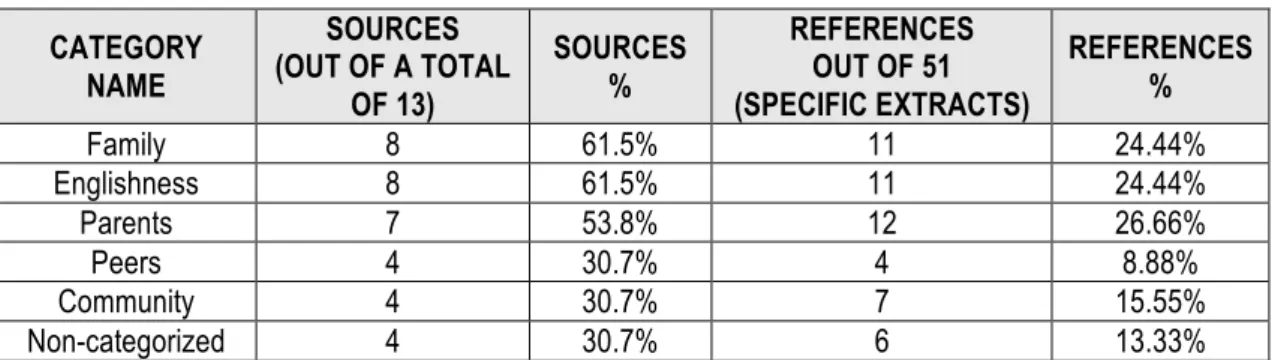
(5) Omani school supervisor perspectives of contextual factors impacting upon students’ limited English proficiency…. Moody, 2009, 2012) and the number of factors potentially associated with it include teachers, students, parents, supervisors, administrators, the education system itself, and the curriculum. While Al-Mahrooqi, Al-Maamari and Denman (2015) offer a nation-wide examination of the potential influence of these factors on the limited development of Omani school graduates’ English proficiency, the current study sought to focus on the potential impact of one area that, as of yet, has only received minimal investigative attention – contextual factors. In order to achieve this, this exploratory research examined the potential impact of the contextual factors of culture, community, family, parents, and peers on Omani school graduates’ development of English language skills. 2. Methodology A group of Omani government school supervisors that were involved in a large-scale nation-wide investigation (see Al-Mahrooqi, Al-Maamari, & Denman, 2015) were contacted through email and asked to volunteer in the current study. Those who expressed a desire to participate, after being reminded of issues of confidentiality and anonymity, were sent a link to an on-line form that contained the following openended question in English: • What contextual-factors cause Omani school students to graduate from school with low English language proficiency? Participants were asked to respond to the question within a 2-week data collection period and were reminded that their responses could be as extensive or as short as they desired. Once the data collection period was finished and the on-line form closed, all responses were collected in a series of text documents and analysed with NVivo through the application of a theoretical framework formed by the literature related to the contextual factors offered above. Thirteen supervisor participants volunteered to take part in the current research. Of these, eight were male and 5 were female. The vast majority of participants (n = 10) came from the governorate of Batinah South, while one participant each was drawn from Batinah North, Musandam, and Al Dhahera. Eleven participants were regional supervisors, one was an English supervisor and one was an acting supervisor. Nine participants held bachelor’s degrees, while the remaining four had master’s level degrees. Most participants (n = 5) had between 16 and 20 years of experience, while one had between 0 and 5 years, two had between 6 and 10 years, two had between 11 and 15 years, and three participants had between 21 and 25 years of experience. The vast majority of participants had received their highest level qualifications either between 2001 and 2005 (n = 5) or between 2006 and 2010 (n = 6). One participant each received their highest level degree between 1995 and 2000 and between 2011 and 2015. Although 13 participants agreed to take part in this part of the research and completed their demographic details accordingly, only 8 provided a complete response to the open-ended question. Thematic analysis was used to analyse the data, with particular attention paid to emerging themes and areas of overlap and divergence between participant responses. 3. Results and Discussion Analysis of the data revealed a number of emergent themes related to the influence of contextual factors that displayed a high degree of overlap with the literature. That is, participants offered family, Englishness, parents, peers, and the community as being the most important contextual factors contributing to Omani school graduates’ limited development of English language proficiency. Table 1 examines the number of responses associated with these themes in terms of both source, or the number of respondents that mention these factors, and references which refer to how many times these responses were mentioned across the data. The table suggests that, whether factors are examined by source or reference, supervisors believed that three main contextual factors contributed to the limited English language proficiency of Omani public school graduates. These factors are family (61.5%, 24.44%), parents (53.8%, 26.66%), and Englishness (61.5%, 24.44%). Factors related to learners’ communities (30.7%, 15.55%) and peers (20.70%, 8.88%) also featured in this table, though their level of coverage was roughly half of the first three factors. In addition to these, other factors (30.7%, 13.33%) not associated with these five main categories were also mentioned.. International Journal for 21st Century Education, vol. 3.1, 2016, pp. 59-68. ISSN: 2444-3921. 63.
(6) Rahma Al-Mahrooqi, Christopher Denman & Faisal Al-Maamari. Table 1: Emergent themes. CATEGORY NAME Family Englishness Parents Peers Community Non-categorized. SOURCES (OUT OF A TOTAL OF 13) 8 8 7 4 4 4. SOURCES % 61.5% 61.5% 53.8% 30.7% 30.7% 30.7%. REFERENCES OUT OF 51 (SPECIFIC EXTRACTS) 11 11 12 4 7 6. REFERENCES % 24.44% 24.44% 26.66% 8.88% 15.55% 13.33%. The five contextual factors featured in Table 1 can be classified into two main groups: actors in the context (including peers, parents, family and community) and nature of context (in this case, Englishness). Englishness here refers to the closeness between English and its importance and use in this predominantly Arabic-speaking country. A closer examination of the data reveals attitudes that highlight the importance of these factors in contributing to learners’ limited English language skills upon graduation. For example, supervisors indicated that some of the participants’ parents and the community in which they live may hold English language learning and English language teachers in low esteem. For example, one participant stated: Families and societies do not reflect a respectful view on teachers. Therefore, the new generation do not respect learning and teachers which creates a wide gap between teachers and learners Another participant claimed that, “Some students come from backgrounds which do not value English language so students tend not to give much concern in learning the language”. Respondents related these negative views of both English language learning and of EFL teachers in Oman to parents’ limited education levels and their subsequent low English language proficiency. Respondents also referred to the importance of a lack of family, parent and community support for school students to learn English, in addition to the lack of opportunities in the community to use the language. Participants added that parents’ lack of interest in their children’s learning in general, and the limited conversation that takes places about learning and education between children and their parents, also contributes to school students’ limited English language development. For example, one supervisor stated, “Some parents do not follow up their children’ learning and progress. They do not cooperate with language teachers to overcome the challenges encountered by their children”. With regards to Englishness as a theme that emerged from the data, almost without exception there appeared a very strong agreement among respondents about the fact that there is little opportunity for learners to engage in English outside of the classroom in Oman. Supervisors claimed that this was the case because English, despite its dominance across a large number of domains in the country, remains a foreign language as only Arabic has legal status in the country under Oman’s common law. Further, respondents posited the concept of context as it relates to Englishness as operating at two levels: (1) the perceptions of the community about the lack of importance of English and the lack of purpose in learning it; and (2) the limited real opportunities to practice English in context. For instance, one supervisor maintained that, “[Learners’] social environment is not English [in] public places, shops, hospitals… So the students have few possibilities to practice. This reduced space helps for less linguistic inquisitiveness about using a foreign language”. It must be noted that the lack of reference to the concept of ‘culture’ by participants is an interesting omission in itself. That is, even though culture has been widely offered in the literature as one of the most important contextual factors impacting upon language learning, only one participant mentioned this as a contributor to Omani school students’ limited English language skills. Other factors that were offered by supervisors as contributing to this issue included the widespread use of languages other than English, such as Urdu, Swahili, and Baluchi, in Oman, students involvement in family farms and the fishing. 64. International Journal for 21st Century Education, vol. 3.1, 2016, 59-68. ISSN: 2444-3921.
(7) Omani school supervisor perspectives of contextual factors impacting upon students’ limited English proficiency…. industry, especially in more rural and remote settings, and a lack of interest in learning in general. In addition to these factors, supervisors also offered the lack of co-operation between ministries and the limited use of media and other technology in the classroom as important contributors. 4. Conclusions Findings from the exploratory study reported here suggest that Omani public school system EFL supervisors believe that families, parents, and Englishness are the most important contextual factors impacting upon Omani high school graduates’ limited English proficiency. Respondents maintained that negative family and parent attitudes towards English, in addition to their lack of understanding of the language’s importance for their children’s academic and professional futures, help create a context in which learners often fail to see the point of studying English and hold negative attitudes towards it. Parents’ attitudes towards learning a second or foreign language are often posited as an important factor associated with learner motivation and attitudes (Gardner, 1988) and, as such, the negative attitudes reported here may contribute to the limited development of Omani school students’ English language skills. Perhaps as a result of these attitudes, supervisors claimed that parents were also unlikely to become involved in their children’s English language studies and rarely spoke with them about their progress in the subject – findings that are similar to those reported in the literature (Al-Harrasi & AlMahrooqi, 2014; Al-Mahrooqi, Denman, & Al-Maamari, in press). Moreover, similar attitudes were also ascribed to the wider community in relation to responses associated with the theme of Englishness. A number of participants claimed that, in addition to negative community attitudes towards English, students also experienced limited opportunities to practice the language outside of school. Adding to this concern, supervisors stated that the community often held negative views of English teachers in Oman and that the traditional levels of respect extended to teachers in this still relatively traditional Arab society are beginning to disappear. While this contention is one that is open to debate, it should be noted that Al-Mahrooqi, Al-Maamari, and Denman (2015) reported a number of stakeholder groups, including parents, students, administrators, supervisors, and even ELT teachers themselves, believed that teachers represented an important contributor to Omani school graduates’ limited development of English language skills. The belief that EFL teachers in Oman have an important influence on poor language learning outcomes, therefore, may imply that these stakeholder groups do, in fact, hold negative attitudes towards those working in the profession, even though Denman (2014) reported opposite findings with Omani EFL teachers at the tertiary level. While the influence of peer factors, including unmotivated peers who display little interest in learning English, were also highlighted by supervisors as influencing poor English language learning outcomes, interestingly, culture was only mentioned by one respondent as having an negative impact. Cultural factors, perhaps most famously encompassed by Gardner’s (1988) term “socio-cultural milieu”, are often posited as being among the most important contextual contributors to learning a second or foreign language. This is often especially the case in those Muslim-majority countries where students may consider the normative baggage associated with the English language to represent a threat to their traditional socio-cultural values (Rahman, 2005). However, the fact that cultural factors were not identified by participants here as being an important contributor to learners’ limited development of English skills suggests that English language education in Omani schools is being implemented in a culturallyappropriate way that meets the specifications outlined by the Ministry of Education (2004, 2010). 5. References Al-Busaidi, K. (1995). English in the labor market in multilingual Oman with special reference to Omani employees. Unpublished Doctoral Dissertation, University of Exeter, Exeter, England. Al-Harrasi, S. & Al-Mahrooqi, R. (2014). Investigating Omani parents’ involvement in Their children’s schooling. European Journal of Scientific Research, 117(2), 272-286. Al Issa, A. (2007). An ideological discussion of the implications of implementing a “flexible” syllabus for ESL policy in Sultanate of Oman. RELC Journal, 38(2), 199-215.. International Journal for 21st Century Education, vol. 3.1, 2016, pp. 59-68. ISSN: 2444-3921. 65.
(8) Rahma Al-Mahrooqi, Christopher Denman & Faisal Al-Maamari. Al-Issa, A. (2011). Advancing English language teaching research in Gulf Cooperation Council states’ universities. MJAL, 3(2), 60-77. Al-Mahrooqi, R. (2012). English Communication skills: How are they taught at schools and universities in Oman. English Language Teaching, 5(4), 124-130. Al-Mahrooqi, R., Al-Maamari, F., & Denman, C.J. (2015). Public school graduates and their weakness in English: Stakeholder perspectives. Report. Unpublished report, Deanship of Research, Sultan Qaboos University, Muscat, Oman. Al-Mahrooqi, R., & Asante, C. (2010). Promoting autonomy by fostering a reading culture. In R. AlMahrooqi & V. Tuzlukova (Eds.). The Omani ELT symphony: Maintaining linguistic and sociocultural equilibrium (pp. 477-494). Muscat: Sultan Qaboos University Academic Publication Board. Al-Mahrooqi, R. & Denman, C.J., & Al-Maamari, F. (in press). Omani parent’s involvement in their children’s English education. SAGE Open. Al-Mahrooqi, R., & Tuzlukova, V. (2010). Introduction: ELT strategies and trends in Oman. In R. AlMahrooqi and V. Tuzlukova (Eds.). The Omani symphony: Maintaining linguistic and sociocultural equilibrium (pp.13-29). Muscat: SQU Academic Publication Board. Al-Mamari, A. (2011). Analyzing results of placement tests in private higher education institutions. Unpublished report, Ministry of Higher Education, Muscat, Sultanate of Oman. Al-Toubi, S.S. (1998). A perspective on change in the Omani ELT curriculum: Structural to communicative. Unpublished Master’s Thesis, University of Bristol, Bristol, England. Altbach, P. (2010). Notes on the future of SQU: Comparative perspectives. In Sultan Qaboos University (Ed.) Towards a long-term strategic plan for Sultan Qaboos University: Proceedings of the international workshop (9-10 November 2010) (pp. 3-9). Muscat: Sultan Qaboos University Press. Bax, S. (2003). The end of CLT: A context approach to language teaching. ELT Journal, 57(3), 278-287. Bisong, J. (1995). Language choice and cultural imperialism. ELT Journal, 49(2), 129-132. Canagarajah, A.S. (1993). Critical ethnography of a Sri Lankan classroom: Ambiguities in opposition reproduction through ESOL. TESOL Quarterly, 27, 601-626.. to. Carroll, M., Razvi, S., & Goodliffe, T. (2009). Using foundation program academic standards as a quality enhancement tool. A paper presented at INQAAHE 2009. Retrieved from http://www.oac.gov.om/ge/ogn Charise, A. (2007). ‘More English, less Islam?’: An overview of English language functions in the Arabian/Persian Gulf. Retrieved from The University of Toronto, Department of English: http://www.chass.utoronto.ca/~cpercy/courses/eng6365-charise.htm Clarke, M. (2007). Language policy and language teacher education in the United Arab Emirates. TESOL Quarterly, 41(3), 583-591. Crystal, D. (1992). An encyclopaedic dictionary of language and languages. Oxford: Blackwell Publishers. Denman, C.J. (2014). A case study of Omani English-language instructors’ attitudes towards English and towards native speakers of English in an Omani university. Unpublished Doctoral Dissertation, University of Southern Queensland, Toowoomba, Australia. Freeman, D. & Johnson, K. (1998). Reconceptualing the knowledge-base of language teacher education. TESOL Quarterly 32(3), 397-417. Gardner, R. C. (1979). Social psychological aspects of second language acquisition. In H. Giles & R. St. Clair (Eds.). Language and social psychology (pp. 287-301). Oxford: Blackwell.. 66. International Journal for 21st Century Education, vol. 3.1, 2016, 59-68. ISSN: 2444-3921.
(9) Omani school supervisor perspectives of contextual factors impacting upon students’ limited English proficiency…. Gardner, R. C. (1983). Learning another language. A true social psychological experiment. Journal of Language and Social Psychology, 2, 219-39. Gardner, R.C. (1985). The attitude/motivation test battery. Technical Report. Ontario: University of Western Ontario. Gardner, R.C. (1988). The socio-educational model of second language learning: assumptions, findings and issues. Language Learning, 38, 101-126. Gardner, R.C. (2010). Motivation and second language acquisitions: The socio-educational model. New York: Peter Lang. Graddol, D. (2000). The future of English? A guide to forecasting the popularity of the English language in the 21st century. London: British Council. Graddol, D. (2006). English next: Why global English may mean the end of ‘English as a foreign language’. London: British Council. Holliday, A. (1994). Appropriate methodology and social context. Cambridge: Cambridge University Press. Jones, G., Martin, P., & Ozog, A.C. (1993). Multilingualism and bilingual education in Brunei. Journal of Multilingual and Multicultural Development, 14(1&2), 39-58. Kachru, B.B. (1992). The second diaspora of English. In T. W. Machan & C. T. Scott (Eds.), English in its social contexts: Essays in historical sociolinguistics (pp. 230-252). New York: Oxford University Press. Kachru, B.B. (1998). English as an Asian language. Links and Letters, 5, 89-108. Kim, L.S. (2003). Multiple identities in a multicultural world: A Malaysian perspective. Journal of Language, Identity and Education, 2(3), 137-158. Lamie, J. (2005). Evaluating change in English language teaching. New York: Palgrave Macmillan. LoCastro, V. (1996). English language education in Japan. In H. Coleman (Ed.). Society and the language classroom (pp. 40-58). Cambridge: Cambridge University Press. MacIntyre, P.D, Clement, R., Dörnyei, Z., & Noels, K.A. (1998), Conceptualising willingness to communicate in a L2: A situational model of L2 confidence and affiliation. The Modern Language Journal, 82(4), 545-62. Ministry of Education. (2004). National report on quality education in Oman. Muscat: author. Retrieved from http://www.ibe.unesco.org/International/ICE47/English/Natreps/reports/oman_part_1.pdf Ministry of Education. (2010). The English language curriculum framework. Muscat. Moates, J. (2006). Final report. Muscat: Ministry of Education. Moody, J. (2009). A neglected aspect of ELT in the Arabian Gulf: Who is communication between? In L.J. Zhang, R. Rubdy, L. & Alsagoff (Eds.). Englishes and literatures-in-English in a globalized world. Proceedings of the 13th International Conference on English in Southeast Asia (pp. 99-119). Singapore: National Institute of Education, Nanyang Technological University. Moody, J. (2012). A critique of the concept of EFL in the Arabian Gulf countries. In A. Mullis, I. V., Martin, M. O., & Foy, P. (2008). International mathematics report. Chestnut Hill, MA: TIMSS & PIRLS International Study Center. Peng, J.E. (2007). Willingness to communicate in an L2 and integrative motivation among college students in an intensive English language program in China. University of Sydney Papers in TESOL, 2, 33-59. Phillipson, R. (1992). Linguistic imperialism. Oxford: Oxford University Press.. International Journal for 21st Century Education, vol. 3.1, 2016, pp. 59-68. ISSN: 2444-3921. 67.
(10) Rahma Al-Mahrooqi, Christopher Denman & Faisal Al-Maamari. Rahman, T. (2005). The Muslim response to English in South Asia: With special reference to inequality, intolerance, and militancy in Pakistan. Journal of Language, Identity and Education, 4(2), 119-135. Ramírez, A.G. (1995). Creating contexts for second language acquisition: Theory and methods. New York: Longman. Renard, O. (2010). Towards a long-term strategic plan for Sultan Qaboos University: Proceedings of the international workshop (9-10 November 2010). Muscat: Sultan Qaboos University’s Academic Publications Board. Sinno, Z.S. (2008). The impact on language learning of Lebanese students’ attitudes towards English in the context of globalization and anti-Americanism. Unpublished Doctoral Dissertation, University of Leicester, UK. Retrieved from https://lra.le.ac.uk/bitstream/2381/4234/1/2008SirajSinnoZedd.pdf.pdf Stritikus, T.T. (2003). The interrelationship of beliefs, context and learning: The case of a teacher reacting to language policy. Journal of Language, Identity and Education, 2, 29-52. Toohey, K. (2007). Autonomy/agency through socio-cultural lenses. In A. Barfield & S. Brown (Eds.), Reconstructing autonomy in language education (pp. 231-243). Basingstoke, England: Palgrave Macmillan. Tuzlukova, V. & Al-Mahrooqi, R. (2010). Culture-based curriculum dimensions. In R. Al-Mahrooqi & V. Tuzlukova (Eds.), The Omani ELT symphony: Maintaining linguistic and socio-cultural equilibrium (pp. 33-70). Muscat: Sultan Qaboos University Academic Publication Board. Van Lier, L. (1988). The classroom and the language leaner. London: Longman. Zhu, H. (2003). Globalisation and new ELT challenges in China. English Today, 76(19/4), 36-41.. Fecha de recepción / Received: 10/03/2016 Fecha de aceptación / Accepted: 22/05/2016. 68. International Journal for 21st Century Education, vol. 3.1, 2016, 59-68. ISSN: 2444-3921.
(11)
Figure
Documento similar
The present study investigated the sexual double standard and rape supportive attitudes, factors that may contribute to an increased risk of the perpetration of sexual aggression in
The questionnaire includes questions on demographic information, students’ behaviours and attitudes towards self-medication practices, students’ health status and health
The study was designed to investigate the usage and its frequency of language learning memory strategies by those students who are learning English as a
In this study, based on the same students as this study, it was found that a positive attitude of the school and teachers towards parents could explain evolutions in parent
The aim of this paper is to demonstrate that reading authentic literary material in the English as a Foreign Language (EFL) classroom can improve students’ language learning skills as
language gains in English according to the type of program they
Critical period effects in second language learning: The influence of maturational state on the acquisition of English as a second language.. Encyclopedic dictionary of
Critical Period effects in second language learning: The influence of maturational state on the acquisition of English as a Second Language.. The high school achievement of
