
TítuloEuropean Society of Cardiology Heart Failure Long‐Term Registry (ESC‐HF‐LT): 1‐year follow‐up outcomes and differences across regions
22
0
0
Texto completo
(2) Abstract Aims. The European Society of Cardiology Heart Failure Long‐Term Registry (ESC‐HF‐LT‐R) was set up with the aim of describing the clinical epidemiology and the 1‐year outcomes of patients with heart failure (HF) with the added intention of comparing differences between participating countries. Methods and results. The ESC‐HF‐LT‐R is a prospective, observational registry contributed to by 211 cardiology centres in 21 European and/or Mediterranean countries, all being member countries of the ESC. Between May 2011 and April 2013 it collected data on 12 440 patients, 40.5% of them hospitalized with acute HF (AHF) and 59.5% outpatients with chronic HF (CHF). The all‐cause 1‐year mortality rate was 23.6% for AHF and 6.4% for CHF. The combined endpoint of mortality or HF hospitalization within 1 year had a rate of 36% for AHF and 14.5% for CHF. All‐cause mortality rates in the different regions ranged from 21.6% to 36.5% in patients with AHF, and from 6.9% to 15.6% in those with CHF. These differences in mortality between regions are thought reflect differences in the characteristics and/or management of these patients. Conclusion. The ESC‐HF‐LT‐R shows that 1‐year all‐cause mortality of patients with AHF is still high while the mortality of CHF is lower. This registry provides the opportunity to evaluate the management and outcomes of patients with HF and identify areas for improvement. Keywords Heart failure; Registry; Acute; Chronic; Survival; Outcomes. Introduction Worldwide, an estimated 26 million people suffer from heart failure (HF). 1 Acute HF (AHF) is a complex, heterogeneous clinical syndrome characterized by a rapid onset of signs and symptoms of HF that is often life‐threatening and requires urgent therapy.2,3 The prevalence of chronic HF (CHF) is increasing.1 In the USA and Europe, HF is responsible for a large proportion of deaths, as well as for diverse morbidity that leads to diminished quality of life in affected patients.4 Despite significant advances in diagnosis and therapy over the past 20 years, HF patients still have a poor long‐term prognosis.1,5 The cost of HF health care is high and increasing4 and there has been an increase in CHF‐related hospitalizations, reaching more than 1 million per year in both the USA and Europe.1 In pursuit of optimal care, the management of HF patients should be guided by protocols that clinical trial evidence has shown to be beneficial. 5-7 Registries can help improve care by both contributing evidence and monitoring compliance with existing guidelines. In the past, European surveys or registries of CHF or AHF patients8,9 have suffered from a number of limitations with regard to the extent to which different countries have been represented and the completeness with which patients' clinical histories were captured. Within the EURObservational Research Programme of the European Society of Cardiology (ESC), the ESC HF Pilot Survey aimed to describe the clinical epidemiology and 1‐year outcomes of CHF and AHF outpatients and inpatients, and to validate the performance and quality of its data structures, data collection procedures, and organization with a view to the establishment of the present long‐ term registry,10 the ESC HF Long‐Term Registry (ESC‐HF‐LT‐R). The ESC‐HF‐LT‐R, which has an improved structure and in which all the national cardiology societies belonging to the ESC were invited to participate,10,11 has as its primary objective the description of both the clinical epidemiology of HF outpatients and inpatients in European and Mediterranean countries, and the diagnostic and therapeutic processes used in the care of these patients (including the organization of HF management programmes). It is a prospective, multicentre, observational registry of patients referred to cardiology centres within ESC affiliated countries. The countries currently represented are Austria, Bosnia and Herzegovina, Bulgaria, the Czech Republic, Egypt, France, Greece,.
(3) Hungary, Israel, Italy, Latvia, Lithuania, Poland, Portugal, Romania, Serbia, Slovakia, Slovenia, Spain, Sweden, and Turkey. The aims of the present study were to assess the 1‐year outcomes of patients with AHF and patients with CHF, and to identify prognostic predictors of these outcomes .10. Methods Participating centres, study design, and clinical setting Each participating country was asked to select a number of cardiac centres approximately proportional to the country's population (as close as possible to one centre per two million inhabitants), approximately 20% of which should consist of centres providing cardiac surgery, 30% that do not provide cardiac surgery but do provide interventional cardiology, and 50% community centres providing neither cardiac surgery nor interventional cardiology. Participating centres enrolled patients in the registry on a one‐day‐per‐week basis. All outpatients with CHF seen at the clinics and those admitted to hospital for AHF (either pre‐existing or new‐onset HF) for whom intravenous therapy (diuretics, inotropes or vasodilators) was needed, were included. There were no specific exclusion criteria, with the exception of age, which had to be greater than 18 years. Patients were followed up in accordance with the usual practice of the centres, with the exception of a mandatory follow‐up visit at 12 months to collect information on morbidity and mortality. In cases where the patient was unable to reach the clinical centre, a phone call replaced this follow‐up clinical visit. Participation in the ESC‐HF‐LT‐R had been approved by each local institutional review board in accordance with its country's legislation. No data were collected before the patient received detailed information and gave signed informed consent. Random audits were conducted in each participating country. In this 1‐year follow‐up analysis, patient data of the best 12 consecutive recruitment months for each country were used for the analyses. The countries represented in the registry were grouped in six geographical regions as follows: Northern Europe (Lithuania and Sweden); Eastern Europe (Bosnia and Herzegovina, Bulgaria, the Czech Republic, Hungary, Latvia, Poland, Romania, and Slovakia); Western Europe (Austria and France); Southern Europe (Greece, Italy, Portugal, Serbia, Slovenia, Spain, and Turkey); the Middle East (Israel); and North Africa (Egypt). Statistical analysis Descriptive statistics were used to summarize frequency tabulations (n, %) and distributions [mean, standard deviation (SD), median, interquartile ranges]. All the results were summarized overall and by subgroup populations. Categorical variables are presented as percentages, while continuous variables are presented as means and SD plus median and interquartile range (IQR). Categorical variables were compared by the chi‐square test and continuous variables by a non‐parametric test (Kruskal–Wallis test). Baseline characteristics and type of treatments are also reported stratified by area of enrolment (Eastern, Middle East, Northern, North African, Southern, and Western). Plots of Kaplan–Meier curves for time to all‐cause death and time to all‐cause death or HF hospitalization were performed. In addition, these plots were divided into outpatients with CHF and inpatients with AHF. Plots of cumulative incidence of HF hospitalization considering competing risks of death in the two groups are presented..
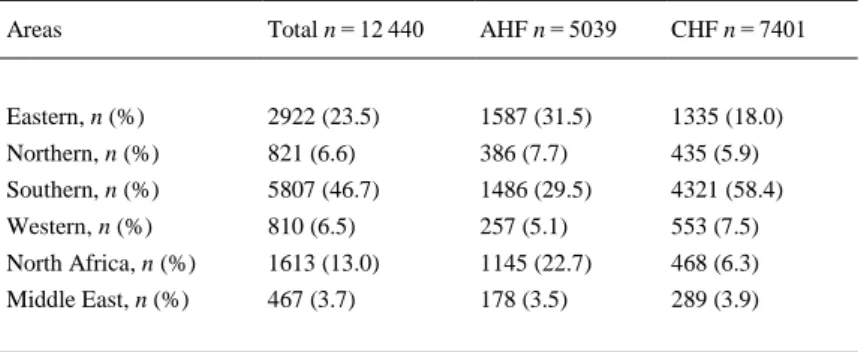
(4) All variables at entry that were statistically significant at univariate analysis and variables considered of relevant clinical interest were included in the multivariable model (Cox model) to identify the independent predictors of all‐cause death from study entry to 1‐year follow‐up, separately for AHF and CHF. Age, systolic blood pressure, body mass index (BMI) and ejection fraction (EF) were considered as continuous variables while the remaining were considered as categorical variables. Analyses were performed with program R (Vienna University of Economics and Business Administration, Vienna, Austria) and the package Hmisc (Vanderbilt University, Nashville, TN, USA). A P‐value <0.05 was considered statistically significant.. Results Of the 12 785 patients eligible for inclusion in the registry between April 2011 and April 2013, 12 440 gave informed consent and were included in this study. Of these, 5039 (40.5%) were inpatients hospitalized with a diagnosis of AHF and 7401 (59.5%) were outpatients with CHF. At 1 year, 341 AHF patients had been lost to follow‐up (6.7%), along with 228 CHF patients (3%) (Figure 1). The mortality rate during the initial hospitalization event for AHF was 4.9% (249 out of 5049).. Figure 1 European Society of Cardiology (ESC) Heart Failure Long‐term 1‐year follow‐up flow diagram. ‘Inpatients’, acute heart failure patients; ‘Outpatients’, chronic heart failure patients; Pts, patients; FU, follow‐up.. Southern Europe and Turkey contributed 46.7% of the study's patients, Eastern Europe 23.5%, North Africa 13%, Northern Europe 6.6%, Western Europe 6.5%, and the Middle East 3.7%. Most regions contributed more CHF than AHF patients, but 71% of North African patients and 54% of Eastern European patients were AHF patients (Table 1)..
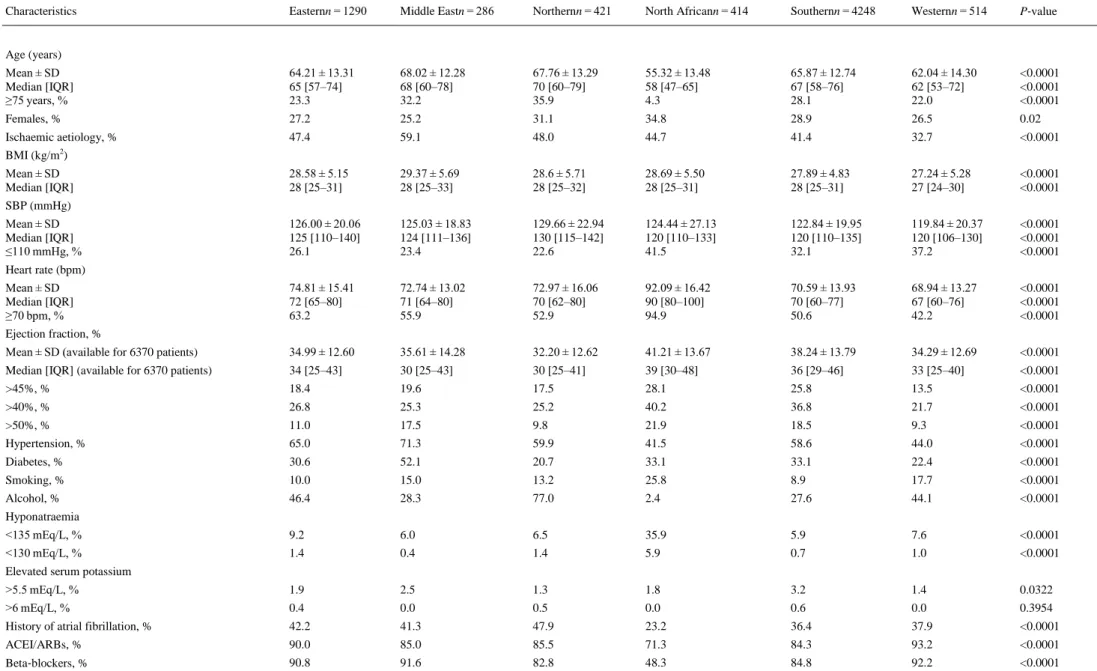
(5) Table 1. Geographic areas and patients included Areas. Total n = 12 440. AHF n = 5039. CHF n = 7401. Eastern, n (%). 2922 (23.5). 1587 (31.5). 1335 (18.0). Northern, n (%). 821 (6.6). 386 (7.7). 435 (5.9). Southern, n (%). 5807 (46.7). 1486 (29.5). 4321 (58.4). Western, n (%). 810 (6.5). 257 (5.1). 553 (7.5). North Africa, n (%). 1613 (13.0). 1145 (22.7). 468 (6.3). Middle East, n (%). 467 (3.7). 178 (3.5). 289 (3.9). AHF, acute heart failure; CHF, chronic heart failure.. Baseline characteristics The baseline characteristics of the 4449 AHF and 7173 CHF patients who neither died nor were lost to follow‐up, and for whom 1‐year follow‐up data were available, are reported in Table 2. Hospitalized (AHF) patients were older than outpatients; a greater percentage of them were women (37.4% vs. 28.8%); a smaller percentage had a systolic blood pressure (SBP) ≤110 mmHg (25.2% vs. 31.0%), and a larger percentage had preserved EF, defined as EF >45% (33.4% vs. 23.2%). More than half of AHF patients had an ischaemic aetiology, and 44.2% exhibited mitral regurgitation, as against only 25.8% of CHF patients. Common co‐morbidities [atrial fibrillation, diabetes mellitus, hypertension and chronic obstructive pulmonary disease (COPD)] were more frequent among AHF patients, as also were smoking (16% vs. 11.2%), hyponatraemia (sodium <135 mEq/L in 19.5% and <130 mEq/L in 5.42% vs. 8.23% and 1.14%, respectively, among CHF patients) and hyperkalaemia (potassium >5.5 mEq/L in 4.44% vs. 2.64%). Pulmonary and/or peripheral congestion was present in 84.8% of AHF and 74.4% of CHF patients. Patient's demographic and baseline characteristics in the individual regions are summarized in Table 3 for CHF patients and in Table 4 for AHF patients. For CHF patients there were significant between‐region differences. North African patients were younger than those of other regions, had higher heart rates, a greater percentage were women, a greater percentage smoked. In addition, preserved EF, hyponatraemia and SBP ≤110 mmHg were all more frequent, while both angiotensin‐converting enzyme inhibitors (ACEI)/angiotensin receptor antagonists (ARBs) and beta‐blockers were used less frequently. Middle Eastern and North European patients were older than those of other regions and greater percentages had an ischaemic aetiology (59.1% and 48.0%, respectively). Alcohol consumption was most prevalent among North European patients. The use of implantable devices was also quite different: implantable cardioverter defibrillators (ICDs) or cardiac resynchronization therapy with defibrillation (CRT‐D) were used by 21.3% of West European patients, 20.6% of Middle Eastern patients, and 18.5% of South European patients compared with only 0.2% of North African patients (Table 3)..
(6) Table 2. Demographics and other basal characteristics of the study population completing the 1‐year follow‐up AHF n = 4449. CHF n = 7173. P‐value. Mean ± SD. 69.35 ± 12.98. 64.89 ± 13.30. <0.0001. Median [IQR]. 71 [61–79]. 66 [57–75]. <0.0001. ≥75 years, %. 38.9. 26.0. <0.0001. Females, %. 37.4. 28.8. <0.0001. Mean ± SD. 28.67 ± 5.39. 28.10 ± 5.04. <0.0001. Median [IQR]. 28 [25–31]. 28 [25–31]. <0.0001. Mean ± SD. 133.45 ± 28.17. 123.78 ± 20.73. <0.0001. Median [IQR]. 130 [110–150]. 120 [110–136]. <0.0001. 25.2. 31.0. <0.0001. Mean ± SD. 90.82 ± 25.27. 72.70 ± 15.29. <0.0001. Median [IQR]. 88 [73–102]. 70 [62–80]. <0.0001. ≥70 bpm, %. 82.7. 55.2. <0.0001. 40.42 ± 14.89 39.00 [30–52] 33.4 41.6 25.7. 37.21 ± 13.62 35.00 [28–45] 23.2 33.2 16.3. <0.0001 <0.0001 <0.0001 <0.0001 <0.0001. NYHA III–IV, %. 85.2. 25.2. <0.0001. Pulmonary or peripheral congestion, %. 84.8. 74.4. <0.0001. Third heart sound, %. 31.8. 5.6. <0.0001. Peripheral hypoperfusion/cold, %. 14.9. 3.4. <0.0001. Mitral regurgitation, %. 44.2. 25.8. <0.0001. Aortic stenosis, %. 8.9. 3.9. <0.0001. Alcohol, %. 33.2. 32.4. 0.60. Smoking, %. 16.0. 11.2. <0.0001. 19.5 5.42. 8.23 1.14. <0.0001 <0.0001. >5.5 mEq/L, % >6 mEq/L, %. 4.44 1.44. 2.64 0.455. <0.0001 <0.0001. Heart failure history with previous hospitalization, % Heart failure history without previous hospitalization, % New‐onset heart failure. 30.3 40.6 29.1. 41.1 48.9 10.0. <0.0001. Heart failure diagnosis >12 months, %. 54.8. 64.2. <0.0001. Ischaemic heart disease, %. 53.8. 43.1. <0.0001. Atrial fibrillation, %. 44.0. 37.7. <0.0001. Diabetes mellitus, %. 39.0. 31.9. <0.0001. PAD, %. 13.7. 12.4. 0.04. Hypertension, %. 65.6. 58.3. <0.0001. COPD, %. 20.1. 13.9. <0.0001. Sleep apnoea, %. 3.2. 5.3. <0.0001. Previous stroke/TIA, %. 12.5. 9.5. <0.0001. Renal dysfunction, %. 25.3. 18.4. <0.0001. Hepatic dysfunction, %. 7.7. 3.4. <0.0001. Depression, %. 7.4. 7.7. 0.65. PM, %. 6.4. 5.8. 0.28. Age (years). BMI (kg/m2). SBP (mmHg). ≤110 mmHg, % Heart rate (bpm). Ejection fraction (%) Mean ± SD (available for 9198 patients) Median [IQR] (available for 9198 patients) >45%, % >40%, % >50%, %. Sodium <135 mEq/L, % <130 mEq/L, % Potassium. AHF, acute heart failure; CHF, chronic heart failure; SD, standard deviation; IQR, interquartile range; BMI, body mass index; SBP, systolic blood pressure; NYHA, New York Heart Association; PAD, peripheral artery disease; COPD, chronic obstructive pulmonary disease; TIA, transient ischaemic attack; PM, pacemaker..
(7) Table 3. Comparison of baseline and demographic characteristics among regions. Chronic heart failure patients who completed the 1‐year follow‐up Easternn = 1290. Middle Eastn = 286. Northernn = 421. North Africann = 414. Southernn = 4248. Westernn = 514. P‐value. Mean ± SD Median [IQR] ≥75 years, %. 64.21 ± 13.31 65 [57–74] 23.3. 68.02 ± 12.28 68 [60–78] 32.2. 67.76 ± 13.29 70 [60–79] 35.9. 55.32 ± 13.48 58 [47–65] 4.3. 65.87 ± 12.74 67 [58–76] 28.1. 62.04 ± 14.30 62 [53–72] 22.0. <0.0001 <0.0001 <0.0001. Females, %. 27.2. 25.2. 31.1. 34.8. 28.9. 26.5. 0.02. Ischaemic aetiology, %. 47.4. 59.1. 48.0. 44.7. 41.4. 32.7. <0.0001. 28.58 ± 5.15 28 [25–31]. 29.37 ± 5.69 28 [25–33]. 28.6 ± 5.71 28 [25–32]. 28.69 ± 5.50 28 [25–31]. 27.89 ± 4.83 28 [25–31]. 27.24 ± 5.28 27 [24–30]. <0.0001 <0.0001. 126.00 ± 20.06 125 [110–140] 26.1. 125.03 ± 18.83 124 [111–136] 23.4. 129.66 ± 22.94 130 [115–142] 22.6. 124.44 ± 27.13 120 [110–133] 41.5. 122.84 ± 19.95 120 [110–135] 32.1. 119.84 ± 20.37 120 [106–130] 37.2. <0.0001 <0.0001 <0.0001. 74.81 ± 15.41 72 [65–80] 63.2. 72.74 ± 13.02 71 [64–80] 55.9. 72.97 ± 16.06 70 [62–80] 52.9. 92.09 ± 16.42 90 [80–100] 94.9. 70.59 ± 13.93 70 [60–77] 50.6. 68.94 ± 13.27 67 [60–76] 42.2. <0.0001 <0.0001 <0.0001. Mean ± SD (available for 6370 patients). 34.99 ± 12.60. 35.61 ± 14.28. 32.20 ± 12.62. 41.21 ± 13.67. 38.24 ± 13.79. 34.29 ± 12.69. <0.0001. Median [IQR] (available for 6370 patients). 34 [25–43]. 30 [25–43]. 30 [25–41]. 39 [30–48]. 36 [29–46]. 33 [25–40]. <0.0001. >45%, %. 18.4. 19.6. 17.5. 28.1. 25.8. 13.5. <0.0001. >40%, %. 26.8. 25.3. 25.2. 40.2. 36.8. 21.7. <0.0001. >50%, %. 11.0. 17.5. 9.8. 21.9. 18.5. 9.3. <0.0001. Hypertension, %. 65.0. 71.3. 59.9. 41.5. 58.6. 44.0. <0.0001. Diabetes, %. 30.6. 52.1. 20.7. 33.1. 33.1. 22.4. <0.0001. Smoking, %. 10.0. 15.0. 13.2. 25.8. 8.9. 17.7. <0.0001. Alcohol, %. 46.4. 28.3. 77.0. 2.4. 27.6. 44.1. <0.0001. <135 mEq/L, %. 9.2. 6.0. 6.5. 35.9. 5.9. 7.6. <0.0001. <130 mEq/L, %. 1.4. 0.4. 1.4. 5.9. 0.7. 1.0. <0.0001. >5.5 mEq/L, %. 1.9. 2.5. 1.3. 1.8. 3.2. 1.4. 0.0322. >6 mEq/L, %. 0.4. 0.0. 0.5. 0.0. 0.6. 0.0. 0.3954. History of atrial fibrillation, %. 42.2. 41.3. 47.9. 23.2. 36.4. 37.9. <0.0001. ACEI/ARBs, %. 90.0. 85.0. 85.5. 71.3. 84.3. 93.2. <0.0001. Beta‐blockers, %. 90.8. 91.6. 82.8. 48.3. 84.8. 92.2. <0.0001. Characteristics. Age (years). BMI (kg/m2) Mean ± SD Median [IQR] SBP (mmHg) Mean ± SD Median [IQR] ≤110 mmHg, % Heart rate (bpm) Mean ± SD Median [IQR] ≥70 bpm, % Ejection fraction, %. Hyponatraemia. Elevated serum potassium.
(8) Table 3. Comparison of baseline and demographic characteristics among regions. Chronic heart failure patients who completed the 1‐year follow‐up Characteristics. Easternn = 1290. Middle Eastn = 286. Northernn = 421. North Africann = 414. Southernn = 4248. Westernn = 514. P‐value. Aldosterone blockers, %. 62.2. 38.8. 51.0. 50.2. 53.3. 48.4. <0.0001. ICD, %. 14.2. 20.6. 4.5. 0.2. 18.5. 21.3. <0.0001. CRT‐P, %. 3.5. 2.1. 3.8. 0.0. 2.1. 2.3. 0.0006. CRT‐D, %. 15.8. 19.2. 5.0. 0.2. 10.5. 14.3. <0.0001. AHF, acute heart failure; CV, cardiovascular; HF, heart failure; CHF, chronic heart failure..
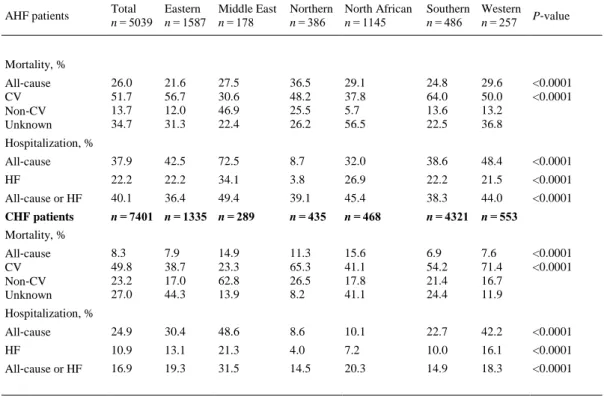
(9) Table 4. Comparison of baseline and demographic characteristics among regions. Acute heart failure patients who completed the 1‐year follow‐up Easternn = 1429. Middle Eastn = 167. Northernn = 346. North Africann = 960. Southernn = 1305. Westernn = 242. P‐value. Mean ± SD Median [IQR], ≥75, %. 68.90 ± 12.37 70 [61–78] 36.5. 75.11 ± 11.88 77 [70–84] 59.3. 73.65 ± 12.59 76 [67–83] 54.0. 61.64 ± 11.93 62 [56–70] 12.4. 72.71 ± 11.78 75 [66–81] 51.0. 74.39 ± 13.65 77 [66–85] 57.0. <0.0001 <0.0001 <0.0001. Females, %. 37.8. 43.1. 38.7. 29.7. 41.0. 40.5. <0.0001. Ischaemic aetiology, %. 53.8. 54.5. 51.0. 68.3. 46.7. 38.0. <0.0001. 28.50 ± 5.55 28 [25–31]. 29.39 ± 5.24 29 [26–32]. 30.04 ± 4.92 29 [26–33]. 29.84 ± 5.00 29 [26–33]. 28.06 ± 5.12 27 [25–31]. 27.45 ± 6.56 27 [24–30]. <0.0001 <0.0001. 132.87 ± 27.98 130 [115–150] 23.9. 142.30 ± 27.33 140 [125–161] 12.6. 136.63 ± 30.62 130 [120–150] 15.5. 134.00 ± 30.43 130 [110–150] 30.5. 132.57 ± 26.34 130 [111–150] 24.9. 132.31 ± 28.40 130 [111–150] 24.8. 0.0006 0.0006 <0.0001. 87.09 ± 24.78 80 [70–100] 79.3. 85.65 ± 20.72 81 [71–97] 79.0. 85.42 ± 24.70 80 [68–98] 69.0. 102.38 ± 21.60 100 [90–110] 97.0. 88.45 ± 26.07 83 [70–100] 78.9. 84.95 ± 26.52 78 [68–98] 73.1. <0.0001 <0.0001 <0.0001. Mean ± SD (available for 2828 patients). 37.34 ± 14.32. 44.06 ± 14.16. 36.29 ± 13.10. 38.43 ± 12.31. 44.55 ± 16.18. 41.54 ± 16.29. <0.0001. Median [IQR] (available for 2828 patients). 35 [25–50]. 43 [30–60]. 38 [26–47]. 35 [30–44]. 45 [30–60]. 42 [30–55]. <0.0001. >45%, % >40%, % >50%, %. 28.5 36.7 19.2. 44.2 51.0 38.8. 26.3 44.7 10.5. 19.8 29.2 15.0. 46.4 53.4 38.4. 41.6 50.9 32.3. <0.0001 <0.0001 <0.0001. Hypertension, %. 70.3. 91.0. 62.8. 45.6. 71.5. 71.1. <0.0001. Diabetes, %. 36.6. 55.7. 31.8. 45.5. 38.5. 29.8. <0.0001. Smoking, %. 12.6. 19.8. 14.0. 26.4. 13.3. 9.5. <0.0001. Alcohol, %. 44.8. 45.5. 75.4. 1.0. 37.7. 28.9. <0.0001. 17.0 3.4. 14.0 4.2. 23.0 8.1. 24.0 8.2. 17.0 3.6. 18.0 5.8. 0.0015 <0.0001. >5.5 mEq/L, % >6 mEq/L, %. 4.8 1.7. 4.3 0.6. 6.1 1.5. 2.1 1.0. 4.2 1.2. 4.2 1.7. 0.0289 0.6201. History of atrial fibrillation, %. 46.8. 49.1. 61.0. 24.8. 49.0. 49.6. <0.0001. ACEI/ARBs, %. 66.7. 60.5. 80.3. 68.1. 62.7. 66.8. 0.0043. Beta‐blockers, %. 69.4. 73.0. 80.3. 34.3. 51.0. 63.9. <0.0001. Characteristics. Age (years),. BMI, kg/m2 Mean ± SD Median [IQR] SBP (mmHg) Mean ± SD Median [IQR] ≤110, % Heart rate (bpm) Mean ± SD Median [IQR] ≥70, % Ejection fraction, %. Ejection fraction. Hyponatraemia <135 mEq/L, % < 130 mEq/L, % Elevated serum potassium.
(10) Table 4. Comparison of baseline and demographic characteristics among regions. Acute heart failure patients who completed the 1‐year follow‐up Characteristics. Easternn = 1429. Middle Eastn = 167. Northernn = 346. North Africann = 960. Southernn = 1305. Westernn = 242. P‐value. Aldosterone blockers, %. 40.5. 12.0. 45.1. 41.5. 27.0. 19.9. <0.0001. ICD, %. 8.6. 3.6. 5.2. 0.1. 4.5. 6.8. <0.0001. CRT‐P, %. 1.0. 0.0. 0.9. 0.2. 0.4. 1.3. 0.05. CRT‐D, %. 4.2. 7.2. 6.4. 0.0. 2.5. 6.0. <0.0001. SD, standard deviation; IQR, interquartile range; BMI, body mass index; SBP, systolic blood pressure; ACEI, angiotensin‐converting enzyme inhibitor; ARB, angiotensin receptor blocker; ICD, implantable cardioverter defibrillator CRT‐P, cardiac resynchronization therapy with pacemaker; CRT‐D, cardiac resynchronization therapy with defibrillation..
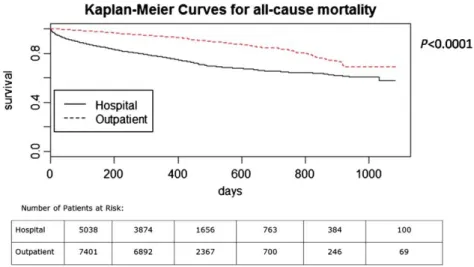
(11) Generally similar between‐region differences in baseline characteristics and treatment were found among AHF patients. North African patients were younger than others (only 12.4% were 75 years or older, compared with 36.5% in Eastern Europe, and more than 50% in the other regions); they had higher heart rates, and ischaemic aetiology, smoking and SBP ≤110 mmHg were all more frequent. In contrast, with a rate of 19.8%, preserved EF was less frequent among North African patients than among others. Diabetes and hypertension were more frequent among Middle Eastern patients than among others, while the highest rates of alcohol consumption and atrial fibrillation were found among North European patients (Table 4). Follow‐up Owing to between‐country differences in the starting date of enrolment, there were varying follow‐up times in the entire study group: median follow‐up time was 373 days, with 9.7% having more than 2 years' follow‐up. Figure 2 shows the Kaplan–Meier curves for all‐cause mortality in AHF and in CHF patients, Figure 3 shows the cumulative incidence curves for hospitalization for HF, and Figure 4 shows the Kaplan‐Meier curves for the combined event of all‐cause mortality or hospitalization for HF. The all‐cause 1‐year mortality rate was 23.6% among AHF patients [95% confidence interval (CI) 22.4–24.8%], and 6.4% among CHF patients (95% CI 5.8–6.9%). The corresponding figures for HF hospitalization were 18.7% (95% CI 17.5–19.9%) and 9.9% (95% CI 9.2–10.6%), respectively, while the rates of the combined event (death or hospitalization for HF) were 36% among AHF patients (95% CI 34.6–37.4%) and 14.5% among CHF patients (95% CI 13.6–15.3%).. Figure 2 Kaplan–Meier curves for all‐cause mortality in acute heart failure and chronic heart failure patients..
(12) Figure 3 Cumulative incidence plots of heart failure (HF) hospitalization in acute heart failure and chronic heart failure patients.. Figure 4 Kaplan–Meier curves for the combined event of all‐cause mortality and heart failure (HF) hospitalization in acute heart failure and chronic heart failure patients.. Table 5 reports statistics on mortality, causes of death, and hospitalization rates. Among all AHF patients, 51.7% of all deaths were attributed to cardiovascular causes and 13.7% to non‐ cardiovascular causes, while no causal attribution was made in 34.7%. Some 37.9% of these patients were rehospitalized at least once for some cause, and in 22.2% of these readmissions the cause was HF. The incidence of all‐cause death or rehospitalization for HF was 40.1%..
(13) Table 5. Causes of death of all subjects Total Eastern n = 5039 n = 1587. Middle East n = 178. Northern North African n = 386 n = 1145. Southern Western P‐value n = 486 n = 257. 26.0 51.7 13.7 34.7. 21.6 56.7 12.0 31.3. 27.5 30.6 46.9 22.4. 36.5 48.2 25.5 26.2. 29.1 37.8 5.7 56.5. 24.8 64.0 13.6 22.5. 29.6 50.0 13.2 36.8. <0.0001 <0.0001. All‐cause. 37.9. 42.5. 72.5. 8.7. 32.0. 38.6. 48.4. <0.0001. HF. 22.2. 22.2. 34.1. 3.8. 26.9. 22.2. 21.5. <0.0001. All‐cause or HF. 40.1. 36.4. 49.4. 39.1. 45.4. 38.3. 44.0. <0.0001. CHF patients. n = 7401 n = 1335 n = 289. n = 435. n = 468. n = 4321. n = 553. 8.3 49.8 23.2 27.0. 7.9 38.7 17.0 44.3. 14.9 23.3 62.8 13.9. 11.3 65.3 26.5 8.2. 15.6 41.1 17.8 41.1. 6.9 54.2 21.4 24.4. 7.6 71.4 16.7 11.9. <0.0001 <0.0001. All‐cause. 24.9. 30.4. 48.6. 8.6. 10.1. 22.7. 42.2. <0.0001. HF. 10.9. 13.1. 21.3. 4.0. 7.2. 10.0. 16.1. <0.0001. All‐cause or HF. 16.9. 19.3. 31.5. 14.5. 20.3. 14.9. 18.3. <0.0001. AHF patients. Mortality, % All‐cause CV Non‐CV Unknown Hospitalization, %. Mortality, % All‐cause CV Non‐CV Unknown Hospitalization, %. AHF, acute heart failure; CV, cardiovascular; HF, heart failure; CHF, chronic heart failure.. Because of the above‐mentioned heterogeneity of follow‐up times, the regional statistics presented in Table 5 do not allow meaningful direct comparisons between regions (the percentages listed are percentages with respect to all subjects included in the study or all subjects who died regardless of their follow‐up times). The influence of region was evaluated in the Cox regression, which showed older age, lower SBP, lower EF, geographical region (North African vs. Southern), New York Heart Association (NYHA) class III or IV, the presence of pulmonary or peripheral congestion, aortic stenosis, non‐ischaemic aetiology, diabetes mellitus, COPD, previous stroke or transient ischaemic attack, renal dysfunction, hepatic dysfunction, and use of a CRT pacemaker (CRT‐P) or CRT‐D to be independent predictors of 1‐year all‐cause mortality (Table 6)..
(14) Table 6. Predictors of all‐cause of mortality in acute heart failure (AHF) patients (multivariable analysis) Variable: AHF (Hospital). HR (95% CI). P‐value. Age (every 5 years: IQR 55–60). 1.24 (1.19–2.29). <0.0001. SBP (every 5 mmHg: IQR 110–115). 0.95 (0.94–0.97). <0.0001. Ejection fraction (every 5%: IQR 30–35). 0.94 (0.91–0.97). <0.0001. Region (NAfr: S)*. 2.71 (2.15–3.41). <0.0001. NYHA III–IV (yes vs. no). 1.50 (1.11–2.03). 0.0086. Pulmonary or peripheral congestion (no vs. yes). 0.68 (0.51–0.91). 0.0095. Aortic stenosis (yes vs. no). 1.54 (1.24–1.92). 0.0001. Ischaemic aetiology (yes vs. no). 0.68 (0.58–0.79). <0.0001. Diabetes mellitus (yes vs. no). 1.20 (1.03–1.39). 0.0192. COPD (yes vs. no). 1.28 (1.08–1.51). 0.0043. Previous stroke/TIA (yes vs. no). 1.26 (1.03–1.54). 0.0225. Renal dysfunction (yes vs. no). 1.52 (1.29–1.78). <0.0001. Hepatic dysfunction (yes vs. no). 1.57 (1.28–1.93). <0.0001. CRT‐D (yes vs. no). 1.64 (1.16–2.31). 0.0053. HR, hazard ratio; CI, confidence interval; IQR, interquartile range; SBP, systolic blood pressure; NYHA, New York Heart Association; COPD, chronic obstructive pulmonary disease; TIA, transient ischaemic attack; CRT‐D, cardiac resynchronization therapy with defibrillation. * S is the reference. The CI of the other regions compared with S are not significant. P‐value refers to the factor region as a whole. The total number of death events was 790/3021 (26.2%).. Among all CHF patients, 49.8% of deaths were of cardiovascular origin, 23.2% of non‐ cardiovascular origin, and 27% of unknown origin (Table 5). The all‐cause hospitalization rate was 24.9%, and the rate of hospitalization for HF was 10.9%. The incidence of the combined event of all‐cause death or hospitalization because of HF was 16.9%. Cox analysis showed older age, lower BMI, lower SBP, geographical region (Southern vs. North European), NYHA class III or IV, the presence of pulmonary or peripheral congestion, third heart sound, aortic stenosis, atrial fibrillation, peripheral vascular disease, renal dysfunction, and absence of ICD implantation to be independent predictors of 1‐year all‐cause mortality (Table 7)..
(15) Table 7. Predictors of all‐cause of mortality in congestive heart failure (CHF) patients (multivariable analysis) Variable: CHF (outpatient). HR (95%CI). P‐value. Age (every 5 years: IQR 55–60). 1.11 (1.04–1.18). 0.0007. BMI (every 1 kg/m2: IQR 25–26). 0.95 (0.93–0.98). 0.0005. SBP (every 5 mmHg: IQR 110–115). 0.94 (0.91–0.97). 0.0001. Region (N: S)*. 0.47 (0.25–0.90). 0.0204. NYHA III–IV (yes vs. no). 1.93 (1.50–2.49). <0.0001. Pulmonary or peripheral congestion (no vs. yes). 0.39 (0.26–0.60). <0.0001. Third heart sound (yes vs. no). 1.54 (1.07–2.20). 0.0186. Aortic stenosis (yes vs. no). 1.70 (1.12–2.59). 0.0135. Atrial fibrillation (yes vs. no). 1.45 (1.13–1.86). 0.0033. PAD (yes vs. no). 1.62 (1.19–2.19). 0.0019. Renal dysfunction (yes vs. no). 1.41 (1.09–1.83). 0.0080. ICD (yes vs. no). 0.67 (0.46–0.98). 0.0414. HR, hazard ratio; CI, confidence interval; IQR, interquartile range; BMI, body mass index; SBP, systolic blood pressure; NYHA, New York Heart Association; PAD, peripheral artery disease; ICD, implantable cardioverter defibrillator. * S is the reference. The CI of the other regions compared with S are not significant. P‐value refers to the factor region as a whole. The total number of death events was 302/2599 (11.6%).. Pharmacological treatment Statistics on the medication prescribed for CHF patients at baseline and 1‐year follow‐up are presented in Table 8. At the baseline visit ACEI/ARBs were prescribed for 89.2% of patients, and for slightly fewer at the 1‐year follow‐up (86.5%), whereas the percentage of patients treated with beta‐blockers increased slightly from 88.9% to 89.1%. Prescription of mineralocorticoid receptor antagonists (MRAs) remained essentially stable (59.3% at baseline and 59.1% 1 year later). Digitalis prescription fell from 23.0% to 20.9%, prescription of antiplatelet agents from 48.6% to 47.0%, and prescription of diuretics from 83.1% to 81.2%. However, there were significant increases in the prescription of oral anticoagulants (from 42.4% to 43.6%), ivabradine (from 8.4% to 10.3%), and amiodarone (from 13.8% to 15.6%). The baseline to 1‐year differences in the prescription of statins, nitrates and calcium channel blockers were not statistically significant..
(16) Table 8. Pharmacological treatment of chronic heart failure patients during outpatient visit and at 1 year During visit. At 1 year. P‐value. ACEI/ARBs, %. 89.2. 86.5. <0.0001. Beta‐blockers, %. 88.9. 89.1. 0.0001. MRAs, %. 59.3. 59.1. 0.2755. Diuretics, %. 83.1. 81.2. <0.0001. Digitalis, %. 23.0. 20.9. 0.0035. Statins, %. 60.9. 63.2. 0.2599. Antiplatelet, %. 48.6. 47.0. 0.0030. OAC, %. 42.4. 43.6. 0.0253. Amiodarone, %. 13.8. 15.6. <0.0001. Ivabradine, %. 8.4. 10.3. <0.0001. Nitrates, %. 19.4. 18.5. 0.6295. Calcium channel blockers, %. 11.3. 10.7. 0.2044. ACEI, angiotensin‐converting enzyme inhibitor; ARB, angiotensin receptor blocker; MRA, mineralocorticoid receptor antagonist; OAC, oral anticoagulation.. Table 9 shows statistics for the medications prescribed for AHF patients at discharge and at 1‐ year follow‐up. Prescription of ACEI/ARBs rose significantly from 77.0% at discharge to 79.1% 1 year later, and prescription of MRAs rose from 53.9% to 56.5%, while the use of digitalis fell from 25.9% to 23.6%, that of antiplatelet agents fell from 60.8% to 60.5%, that of oral anticoagulants fell from 42.7% to 40.7%, that of nitrates from fell 31.9% to 31.0%, and that of calcium channel blockers fell from 15.9% to 15.3%. There were no statistically significant differences between baseline and 1‐year follow‐up prescription of ivabradine, statins, amiodarone, beta‐blockers, or diuretics.. Table 9. Pharmacological treatment of acute heart failure patients at discharge and at 1 year At discharge. At 1 year. P‐value. ACEI/ARBs, %. 77.0. 79.1. 0.0003. Beta‐blockers, %. 72.6. 77.8. 0.1211. MRAs, %. 53.9. 56.5. 0.0416. Diuretics, %. 83.9. 86.4. 0.1735. Digitalis, %. 25.9. 23.6. <0.0001. Statins, %. 57.8. 62.1. 0.1579. Antiplatelet, %. 60.8. 60.5. <0.0001. OAC, %. 42.7. 40.7. 0.0014. Amiodarone, %. 13.6. 13.6. 0.3097. Ivabradine, %. 3.2. 3.1. 0.6485. Nitrates, %. 31.9. 31.0. <0.0001. Calcium channel blockers, %. 15.9. 15.3. <0.0001. ACEI, angiotensin‐converting enzyme inhibitor; ARB, angiotensin receptor blocker; MRA, mineralocorticoid receptor antagonist; OAC, oral anticoagulation..
(17) Discussion The ESC‐HF‐LT‐R analysed AHF and CHF patients who were treated at the same hospitals by the same physicians and who had been followed up for 1 year. The loss‐to‐follow‐up rate, which is overall less than 5%, is acceptable for an observational study and allows confident inference of conclusions on clinical evolution, therapies and patient outcomes. The main findings of the study are: (i) the all‐cause 1‐year mortality rates in the pool of participating countries were 23.6% for AHF and 6.4% for CHF; (ii) the 1‐year rates of hospitalization because of HF were 18.7% for AHF and 9.9% for CHF; (iii) the 1‐year incidence rates of the combined event ‘all‐cause mortality or HF hospitalization’ were 36% for AHF and 14.5% for CHF; (iv) there are significant between‐ region differences in both the clinical characteristics of HF patients and their outcomes. One‐year outcomes All‐cause mortality among AHF patients is high, with 4.9% dying during the index hospitalization and 23.6% within 1 year. These rates are higher than in the ESC HF Pilot Survey, in which the 1‐year all‐cause mortality rate was 17.4%. This increase does not seem to have resulted from more countries and regions being included in the ESC‐HF‐LT‐R than in the Pilot Survey, because all‐cause death rates were higher than 21% in all regions (and in all countries), whereas in the Pilot Survey this figure was exceeded only in the Southern region of that study (Greece, Italy, and Spain). Over half of all deaths were of cardiovascular origin. Unlike the death rate, the 1‐year rate of rehospitalization for HF was lower in this study than in the Pilot Survey (22.2% vs. 43.9%). However, this fall was insufficient to prevent the incidence of the combined event of death or HF hospitalization being higher in the present study, with 40.1% compared with 35.8% in the Pilot Survey.10 Thus, improvement in the management of HF patients who need hospitalization is urgently needed. The predictors of all‐cause mortality among AHF patients in this study were similar to those found in previous studies, in which older age, lower blood pressure, hepatic or renal dysfunction, previous stroke, diabetes, COPD, aortic stenosis, lower EF, and pulmonary or peripheral congestion were all predictive of an adverse outcome. 6,10,12-15 These observations reinforce recommendations that patients only be discharged when signs of congestion have completely resolved. Unexpectedly, an ischaemic aetiology was found to be more favourable for AHF patients than a non‐ischaemic aetiology. This finding needs further investigation. Although there were numerous between‐region differences in AHF patient characteristics, the only region with a risk of all‐cause death differing significantly from that of the reference region (Southern region) was North Africa. The higher risk in this region may be related to North African AHF patients being younger and having higher heart rates, and to the less frequent use of beta‐ blockers, ACEI/ARBs and ICDs in that region. The mortality of CHF patients was significantly lower than that of AHF patients, and a little lower than was observed in the Pilot Survey (6.4% vs. 7.2%). Overall, nearly 50% of all deaths were of cardiovascular origin. The incidence of the combined endpoint of all‐cause death or hospitalization because of HF was a little lower than in the Pilot Survey (14.5% vs. 17.6%). 10 As in the case of AHF, the predictors of death for CHF patients were similar to those observed in previous studies: older age, lower SBP, lower body weight, pulmonary or peripheral congestion, aortic stenosis, atrial fibrillation, diabetes, peripheral artery disease, and renal dysfunction.10,16 These observations highlight the need to treat congestion intensively in CHF patients as well as in AHF patients; signs of congestion were found in 74.4% of the CHF patients..
(18) Despite between‐region differences, in many respects the only region with a risk of all‐cause death differing significantly from that of the reference region was Northern Europe, where the risk was lower. No baseline characteristics were identified that might explain this difference. The relatively high P‐value of 0.02 suggests the possibility of a type 1 statistical error, especially as the numbers of outpatients and countries in Northern Europe (435 and 2, respectively) were considerably smaller than those in Southern region (4321 and 9). There nevertheless appears to be an opportunity for further fruitful research here. Pharmacological therapy at baseline and 1 year later The frequency of prescription of guideline‐recommended medications for CHF patients (ACEI/ARBs, beta‐blockers, and MRAs) was quite high, and its maintenance at 1 year follow‐up indicates excellent adherence of patients to disease‐modifying therapies. However, it must be borne in mind that these patients were probably enrolled in selected centres with extensive experience in the field of HF. Differences between regions The substantial between‐region differences in demographic characteristics and therapeutic practices, the latter of which are in keeping with the significant differences in HF management organization between different ESC countries (especially between developed and developing countries),17 may partly explain differences in patient outcomes such as the relatively low mortality rates of Southern and Eastern Europe, which are similar to those recently observed in Italy.18 With regard to the results for North Africa, where the study group was younger and contained a larger proportion of women than elsewhere, higher death rates among both AHF and CHF patients may be attributable in part to the very much less frequent use of guideline‐recommended medical therapies for HF with reduced EF (e.g. ACEI/ARB, beta‐blockers, ICD, and CRT), a shortcoming shared by other low‐ and middle‐income countries.19. Alternatively, higher mortality rates in AHF may simply reflect differences in the criteria for admission to hospital, such as were observed in a recent clinical trial.20 Either way, better strategies for HF management are clearly needed in these countries. In contrast, it is tempting to speculate that the low rate of hospitalization for HF in Northern Europe may result from greater availability of HF disease management programmes, especially those with nursing staff involvement.21-23 The wide between‐region differences in the use of implantable devices (ICDs and CRTs), which for ICDs ranges from 0.2% of patients in North Africa to 21.3% in Western Europe, possibly have multifactorial causes involving patient characteristics, resource availability, and reimbursement structures. Several substudies of the ESC‐HF‐LT‐R are currently underway, including specific analyses of AHF, atrial fibrillation, BMI, anaemia, kidney disease, or reduced vs. preserved EF, among others..
(19) Limitations It must be acknowledged that this study has some important limitations. First, although the criteria for HF are well established in the ESC Guidelines, 2 cases included in the ESC‐HF‐LT‐R are diagnosed by local physicians and are not validated centrally. Second, even though consecutive enrolment is required by the Registry protocol, we cannot guarantee that this requirement is actually respected in all centres; indeed, doubts in this regard are raised by observed differences in HF patient numbers between centres of similar overall volume. Third, although it was required that centres be selected taking into account the population of the country in which they are located, their technological level, resources, and geography, representativeness is always an issue in observational studies. Fourth, patients are enrolled only from among those admitted to cardiology wards or seen in cardiology outpatient clinics, thus not considering HF patients seen in other units, such as emergency or internal medicine services (this may have contributed to the relatively low prevalence of HF with preserved EF). Fifth, there is no central committee for the establishment of causes of death, and in this study there were a significant number of deaths of unknown cause. Last, but not least, several major European countries, including Germany and the UK, did not contribute to the ESC‐HF‐LT‐R.. Conclusions The ESC‐HF‐LT‐R has overcome at least some of the limitations of previous HF registries, creating a large network of centres and countries that, it is hoped, are representative of the region served by the ESC. The results of the present study, in comparison with those of previous studies, show that 1‐year mortality is still high among AHF patients but has fallen slightly among CHF patients; this difference in trend may reflect, on the one hand the absence of new therapies for AHF in recent years, and on the other the increasing use of therapies shown to improve survival among CHF patients. Significant between‐region differences in 1‐year outcomes may result from major differences in the severity of HF and in therapy, these being attributable to differences in medical practices, available resources, and health system structure. The ESC‐HF‐LT‐R provides an opportunity for better awareness of the management and outcomes of patients with HF, and for the identification of areas for improvement.. Supplementary Information Additional Supporting Information may be found in the online version of this article: Appendix S1. Committees and investigators. Table S1. Distribution of centres among countries and type of centres. Table S2. Distribution of centres among geographical regions and type of centres. Table S3. Distribution of patients (AHF or CHF) among countries and type of centres. Table S4. Distribution of patients (AHF or CHF) among geographical region and type of centres. Acknowledgements The Executive Committee of the study had full access to the data and takes complete responsibility for the integrity and the accuracy of the data analysis. The authors would like to thank Renato Urso for the statistical help..
(20) Funding The Survey was funded by the ESC. Each participating national cardiology society was given a grant of €10 000 to help with the organizational needs of national network implementation. Since the start of EORP, the following companies have supported the programme: Abbott Vascular International (2011–2014), Amgen (2012–2015), AstraZeneca (2014–2017), Bayer (2013–2018), Boehringer Ingelheim (2013–2016), Boston Scientific (2010–2012), The Bristol Myers Squibb and Pfizer Alliance (2014–2016), The Alliance Daiichi Sankyo Europe GmbH and Eli Lilly and Company (2014–2017), Gedeon Richter Plc. (2014–2017), Menarini Int. Op. (2010–2012), MSD‐ Merck and Co. (2011–2014), Novartis Pharma AG (2014–2017), ResMed (2014–2016), Sanofi (2010–2011), and SERVIER (2012–2015).. Conflict of interest: M.C.L. reports grants from Servier, and grants and personal fees from Novartis; U.D. reports Honoraria and consultancy fees from Novartis; R.F. reports grants from Irbtech, personal fees from Merck Serono and Amgen, and grants and personal fees from Servier, Novartis, and Boehringer Ingelheim; J.H. reports fees for lecturing and consulting from Servier, and fess for lecturing from Novartis; A.P.M. reports grants from Novartis, Bayer and Cardiorentis; A.M. reports grants and personal fees from Adrenomed, personal fees from Novartis, Orion, Roche, Servier, Cariorentis and ZS Pharma, and grants from MyCartis and Critical diagnostics; M.M. reports personal fees from Bayer, Novartis, Servier, and MAST Therapeutics. The other authors have no conflicts of interest to disclose.. References 1.. 2.. 3.. 4.. Ponikowski, P, Anker, SD, AlHabib, KF, Cowie, MR, Force, TL, Hu, S, Jaarsma, T, Krum, H, Rastogi, V, Rohde, LE, Samal, UC, Shimokawa, H, Budi Siswanto, B, Sliwa, K, Filippatos, G. Heart failure: preventing disease and death worldwide. ESC Heart Failure 2015; 1: 4– 25. McMurray, JJ, Adamopoulos, S, Anker, SD, Auricchio, A, Bohm, M, Dickstein, K, Falk, V, Filippatos, G, Fonseca, C, Gomez‐Sanchez, MA, Jaarsma, T, Køber, L, Lip, GY, Maggioni, AP, Parkhomenko, A, Pieske, BM, Popescu, BA, Rønnevik, PK, Rutten, FH, Schwitter, J, Seferovic, P, Stepinska, J, Trindade, PT, Voors, AA, Zannad, F, Zeiher, A; Task Force for the Diagnosis and Treatment of Acute and Chronic Heart Failure 2012 of the European Society of Cardiology, Bax, JJ, Baumgartner, H, Ceconi, C, Dean, V, Deaton, C, Fagard, R, Funck‐Brentano, C, Hasdai, D, Hoes, A, Kirchhof, P, Knuuti, J, Kolh, P, McDonagh, T, Moulin, C, Popescu, BA, Reiner, Z, Sechtem, U, Sirnes, PA, Tendera, M, Torbicki, A, Vahanian, A, Windecker, S, McDonagh, T, Sechtem, U, Bonet, LA, Avraamides, P, Ben Lamin, HA, Brignole, M, Coca, A, Cowburn, P, Dargie, H, Elliott, P, Flachskampf, FA, Guida, GF, Hardman, S, Iung, B, Merkely, B, Mueller, C, Nanas, JN, Nielsen, OW, Orn, S, Parissis, JT, Ponikowski, P; ESC Committee for Practice Guidelines. ESC guidelines for the diagnosis and treatment of acute and chronic heart failure 2012: the Task Force for the Diagnosis and Treatment of Acute and Chronic Heart Failure 2012 of the European Society of Cardiology. Developed in collaboration with the Heart Failure Association (HFA) of the ESC. Eur J Heart Fail 2012; 14: 803– 869. Ambrosy, AP, Fonarow, GC, Butler, J, Chioncel, O, Greene, SJ, Vaduganathan, M, Nodari, S, Lam, CS, Sato, N, Shah, AN, Gheorghiade, M. The global health and economic burden of hospitalizations for heart failure: lessons learned from hospitalized heart failure registries. J Am Coll Cardiol 2014; 63: 1123– 1133. Yancy, CW, Jessup, M, Bozkurt, B, Butler, J, Casey, DE, Drazner, MH, Fonarow, GC, Geraci, SA, Horwich, T, Januzzi, JL, Johnson, MR, Kasper, EK, Levy, WC, Masoudi, FA, McBride, PE, McMurray, JJ, Mitchell, JE, Peterson, PN, Riegel, B, Sam, F, Stevenson, LW, Tang, WH, Tsai, EJ, Wilkoff, BL; American College of Cardiology Foundation; American Heart Association Task Force on Practice Guidelines. 2013 ACCF/AHA guideline for the management of heart failure: a report of the American College of Cardiology Foundation/American Heart Association Task Force on Practice Guidelines. J Am Coll Cardiol 2013; 62: e147– e239..
(21) 5.. 6.. 7.. 8.. 9.. 10.. 11.. 12.. 13.. 14.. Dickstein, K, Vardas, PE, Auricchio, A, Daubert, JC, Linde, C, McMurray, J, Ponikowski, P, Priori, SG, Sutton, R, Veldhuisen, DJ; Committee for Practice Guidelines of the European Society of Cardiology; ESC Committee for Practice Guidelines (CPG). 2010 focused update of ESC Guidelines on device therapy in heart failure: an update of the 2008 ESC Guidelines for the diagnosis and treatment of acute and chronic heart failure and the 2007 ESC Guidelines for cardiac and resynchronization therapy. Developed with the special contribution of the Heart Failure Association and the European Heart Rhythm Association. Eur J Heart Fail 2010; 12: 1143– 1153. Cioffi, G, Mortara, A, Di Lenarda, A, Oliva, F, Lucci, D, Senni, M, Cacciatore, G, Chinaglia, A, Tarantini, L, Metra, M, Maggioni, AP, Tavazzi, L; Italian Acute Heart Failure Survey. Clinical features, and in‐hospital and 1‐year mortalities of patients with acute heart failure and severe renal dysfunction. Data from the Italian Registry IN‐HF Outcome. Int J Cardiol 2013; 168: 3691– 3697. Nieminen, M, Bohm, M, Cowie, M, Drexler, H, Filippatos, G, Jondeau, G, Hasin, Y, Lopez‐ Sendon, J, Mebazaa, A, Metra, M, Rhodes, A, Swedberg, K, Priori, SG, Garcia, MA, Blanc, JJ, Budaj, A, Cowie, MR, Dean, V, Deckers, J, Burgos, EF, Lekakis, J, Lindahl, B, Mazzotta, G, Morais, J, Oto, A, Smiseth, OA, Garcia, MA, Dickstein, K, Albuquerque, A, Conthe, P, Crespo‐ Leiro, M, Ferrari, R, Follath, F, Gavazzi, A, Janssens, U, Komajda, M, Morais, J, Moreno, R, Singer, M, Singh, S, Tendera, M, Thygesen, K; ESC Committee for Practice Guideline (CPG). Executive summary of the guidelines on the diagnosis and treatment of acute heart failure: the Task Force on Acute Heart Failure of the European Society of Cardiology. Eur Heart J 2005; 26: 384– 416. Komajda, M, Follath, F, Swedberg, K, Cleland, J, Aguilar, J, Cohen‐Solal, A, Dietz, R, Gavazzi, A, Van Gilst, WH, Hobbs, R, Korewicki, J, Madeira, HC, Moiseyev, VS, Preda, I, Widimsky, J, Freemantle, N, Eastaugh, J, Mason, J; Study Group on Diagnosis of the Working Group on Heart Failure of the European Society of Cardiology. The EuroHeart Failure Survey programme – a survey on the quality of care among patients with heart failure in Europe. Part 2: treatment. Eur Heart J 2003; 24: 464– 474. Nieminen, MS, Brutsaert, D, Dickstein, K, Drexler, H, Follath, F, Harjola, VP, Hochadel, M, Komajda, M, Lassus, J, Lopez‐Sendon, JL, Ponikowski, P, Tavazzi, L; EuroHeart Survey Investigators; Heart Failure Association, European Society of Cardiology. EuroHeart Failure Survey II (EHFS II): a survey on hospitalized acute heart failure patients: description of population. Eur Heart J 2006; 27: 2725– 2736. Maggioni, AP, Dahlstrom, U, Filippatos, G, Chioncel, O, Crespo Leiro, M, Drozdz, J, Fruhwald, F, Gullestad, L, Logeart, D, Fabbri, G, Urso, R, Metra, M, Parissis, J, Persson, H, Ponikowski, P, Rauchhaus, M, Voors, AA, Nielsen, OW, Zannad, F, Tavazzi, L; Heart Failure Association of the European Society of Cardiology (HFA). EURObservational Research Programme: regional differences and 1‐year follow‐up results of the Heart Failure Pilot Survey (ESC‐HF Pilot). Eur J Heart Fail 2013; 15: 808– 817. Maggioni, AP, Anker, SD, Dahlstrom, U, Filippatos, G, Ponikowski, P, Zannad, F, Amir, O, Chioncel, O, Leiro, MC, Drozdz, J, Erglis, A, Fazlibegovic, E, Fonseca, C, Fruhwald, F, Gatzov, P, Goncalvesova, E, Hassanein, M, Hradec, J, Kavoliuniene, A, Lainscak, M, Logeart, D, Merkely, B, Metra, M, Persson, H, Seferovic, P, Temizhan, A, Tousoulis, D, Tavazzi, L; Heart Failure Association of the ESC. Are hospitalized or ambulatory patients with heart failure treated in accordance with European Society of Cardiology guidelines? Evidence from 12 440 patients of the ESC Heart Failure Long‐Term Registry. Eur J Heart Fail 2013; 15: 1173– 1184. Ambrosy, AP, Vaduganathan, M, Mentz, RJ, Greene, SJ, Subacius, H, Konstam, MA, Maggioni, AP, Swedberg, K, Gheorghiade, M. Clinical profile and prognostic value of low systolic blood pressure in patients hospitalized for heart failure with reduced ejection fraction: insights from the Efficacy of Vasopressin Antagonism in Heart Failure: Outcome Study with Tolvaptan (EVEREST) trial. Am Heart J 2013; 165: 216– 225. Ambrosy, AP, Pang, PS, Khan, S, Konstam, MA, Fonarow, GC, Traver, B, Maggioni, AP, Cook, T, Swedberg, K, Burnett, JC, Grinfeld, L, Udelson, JE, Zannad, F, Gheorghiade, M; EVEREST Trial Investigators. Clinical course and predictive value of congestion during hospitalization in patients admitted for worsening signs and symptoms of heart failure with reduced ejection fraction: findings from the EVEREST trial. Eur Heart J 2013; 34: 835– 843. Sarma, S, Mentz, RJ, Kwasny, MJ, Fought, AJ, Huffman, M, Subacius, H, Nodari, S, Konstam, M, Swedberg, K, Maggioni, AP, Zannad, F, Bonow, RO, Gheorghiade, M; EVEREST investigators. Association between diabetes mellitus and post‐discharge outcomes in patients hospitalized with heart failure: findings from the EVEREST trial. Eur J Heart Fail 2013; 15: 194– 202..
(22) 15.. 16. 17.. 18.. 19.. 20. 21.. 22.. 23.. Wong, YW, Thomas, L, Sun, JL, McMurray, JJ, Krum, H, Hernandez, AF, Rutten, GE, Leiter, LA, Standl, E, Haffner, SM, Mazzone, T, Martinez, FA, Tognoni, G, Giles, T, Califf, RM. Predictors of incident heart failure hospitalizations among patients with impaired glucose tolerance: insight from the Nateglinide And Valsartan in Impaired Glucose Tolerance Outcomes Research study. Circ Heart Fail 2013; 6: 203– 210. Kydd, A, Pugh, PJ. Perils of weight loss: the advantage of being obese in patients with heart failure. Expert Rev Cardiovasc Ther 2009; 7: 263– 267. Seferovic, PM, Stoerk, S, Filippatos, G, Mareev, V, Kavoliuniene, A, Ristic, AD, Ponikowski, P, McMurray, J, Maggioni, A, Ruschitzka, F, Veldhuisen, DJ, Coats, A, Piepoli, M, McDonagh, T, Riley, J, Hoes, A, Pieske, B, Dobric, M, Papp, Z, Mebazaa, A, Parissis, J, Ben Gal, T, Vinereanu, D, Brito, D, Altenberger, J, Gatzov, P, Milinkovic, I, Hradec, J, Trochu, JN, Amir, O, Moura, B, Lainscak, M, Comin, J, Wikström, G, Anker, S; Committee of National Heart Failure Societies or Working Groups of the Heart Failure Association of the European Society of Cardiology. Organization of heart failure management in European Society of Cardiology member countries: survey of the Heart Failure Association of the European Society of Cardiology in collaboration with the Heart Failure National Societies/Working Groups. Eur J Heart Fail 2013; 15: 947– 959. Tavazzi, L, Senni, M, Metra, M, Gorini, M, Cacciatore, G, Chinaglia, A, Di Lenarda, A, Mortara, A, Oliva, F, Maggioni, AP; IN‐HF (Italian Network on Heart Failure) Outcome Investigators. Multicenter prospective observational study on acute and chronic heart failure: one‐year follow‐up results of IN‐HF (Italian Network on Heart Failure) outcome registry. Circ Heart Fail 2013; 6: 473– 481. Callender, T, Woodward, M, Roth, G, Farzadfar, F, Lemarie, JC, Gicquel, S, Atherton, J, Rahimzadeh, S, Ghaziani, M, Shaikh, M, Bennett, D, Patel, A, Lam, CS, Sliwa, K, Barretto, A, Siswanto, BB, Diaz, A, Herpin, D, Krum, H, Eliasz, T, Forbes, A, Kiszely, A, Khosla, R, Petrinic, T, Praveen, D, Shrivastava, R, Xin, D, MacMahon, S, McMurray, J, Rahimi, K. Heart failure care in low‐ and middle‐income countries: a systematic review and meta‐analysis. PLoS Med 2014; 11:e1001699. McMurray, JJ, O'Connor, C. Lessons from the TOPCAT trial. N Engl J Med 2014; 370: 1453– 1454. Strömberg, A, Martensson, J, Fridlung, B, Levin, L‐A, Karlsson, J‐E, Dahlström, U. Nurse‐care heart failure clinics improve survival and self‐care behaviour in patients with heart failure. Results from a prospective, ramdomised trial. Eur Heart J 2003; 24: 1014– 1023. McDonagh, TA, Blue, L, Clark, AL, Dahlstrom, U, Ekman, I, Lainscak, M, McDonald, K, Ryder, M, Strömberg, A, Jaarsma, T; European Society of Cardiology Heart Failure Association Committee on Patient Care. European Society of Cardiology Heart Failure Association Standards for delivering heart failure care. Eur J Heart Fail 2011; 13: 235– 241. Eapen, ZJ, Reed, SD, Li, Y, Kociol, RD, Armstrong, PW, Starling, RC, McMurray, JJ, Massie, BM, Swedberg, K, Ezekowitz, JA, Fonarow, GC, Teerlink, JR, Metra, M, Whellan, DJ, O'Connor, CM, Califf, RM, Hernandez, AF. Do countries or hospitals with longer hospital stays for acute heart failure have lower readmission rates?: Findings from ASCEND‐HF. Circ Heart Fail 2013; 6: 727– 732..
(23)
Figure

![Table 2. Demographics and other basal characteristics of the study population completing the 1‐year follow‐up AHF n = 4449 CHF n = 7173 P‐value Age (years) Mean ± SD 69.35 ± 12.98 64.89 ± 13.30 <0.0001 Median [IQR] 71 [61–79] 66 [57–75] <](https://thumb-us.123doks.com/thumbv2/123dok_es/7421559.387091/6.892.152.740.117.1106/table-demographics-characteristics-study-population-completing-follow-median.webp)
+7




Documento similar
