
Enhancing metacognitive reading awareness in blended environments
125
0
0
Texto completo
(2) Running head: ENHANCING METACOGNITIVE READING AWARENESS. Enhancing Metacognitive Reading Awareness in Blended Environments Yira Elizabeth Lizcano Rojas Universidad de La Sabana Chía, Colombia. This research report is the result of my own work and includes nothing that was done in collaboration with others. Name: Yira Elizabeth Lizcano Rojas Signature:. 2.
(3) ENHANCING METACOGNITIVE READING AWARENESS. 3. Enhancing Metacognitive Reading Awareness in Blended Environments. Yira Elizabeth Lizcano Rojas. Research report submitted in partial fulfillment of the requirements for the degree of Master in English Language Teaching for Self-directed Learning (Online Program). Directed by: Alethia Bogoya Department of Foreign Languages and Cultures Universidad de La Sabana Chía, Colombia June, 2015.
(4) ENHANCING METACOGNITIVE READING AWARENESS. 4. Abstract This study shows the results of an action research study about the effects of using a blended methodology to develop the reading metacognitive awareness of 19 low-proficiency students from a public school in Ibague, Colombia. Seven sessions were carried out during two months and a half for a total of 21 hours. The metacognitive reading strategies taught directly were chosen based on the MARSI (Metacognitive Awareness of Reading Strategies Inventory) questionnaire applied during the pre-stage. The mixed method was used to analyze the data. The researcher measured the learners‟ reading performance and the frequency of use of the reading strategies by means of a pre and post reading test and the MARSI. On the other hand, data collection instruments such as teacher‟s journal, students‟ reading logs and interviews, were used to measure the participants‟ reading metacognitive awareness and the effect of using technology enhanced language learning activities. The quantitative analysis shows that the interventions did not have a significant impact on the overall students‟ reading proficiency. The qualitative analysis indicates that the blended methodology helped learners to increase their metacognitive awareness as they were able to plan, monitor and self-evaluate their reading process. Key words: reading, metacognition and blended learning..
(5) ENHANCING METACOGNITIVE READING AWARENESS. 5. Resumen Este proyecto de investigación-acción muestra los efectos de aplicar el modelo de aprendizaje combinado para desarrollar procesos metacognitivos en la lectura, en 19 estudiantes con bajo dominio de inglés, en un colegio público de Ibagué, Colombia; desarrollándose siete sesiones durante dos meses y medio, por 21 horas. Las estrategias metacognitivas de lectura, enseñadas directamente, se eligieron antes de la intervención, con base en el cuestionario MARSI (Inventario sobre estrategias metacognitivas de lectura). El enfoque método- mixto permitió analizar los datos. El investigador midió el rendimiento de lectura y la frecuencia de uso de estrategias de lectura, implementando una prueba de lectura previa y posterior, y el MARSI. Se usaron instrumentos de recolección de datos como el diario del profesor, registros de lectura de estudiantes y una entrevista; midiendo los niveles de metacognición en lectura, y el efecto de actividades de aprendizaje del idioma basadas en la tecnología. El análisis cuantitativo muestra en general, que las intervenciones no tuvieron un impacto significativo en las habilidades de lectura. El análisis cualitativo indica que el modelo de aprendizaje combinado, ayudó a los estudiantes a aumentar su metacognición al planificar, supervisar y auto-evaluar su proceso de lectura. Palabras clave: lectura, metacognición y aprendizaje combinado..
(6) ENHANCING METACOGNITIVE READING AWARENESS. 6. Declaration I hereby declare that my research report entitled: Enhancing Metacognitive Reading Awareness in Blended Environments . is the result of my own work and includes nothing which is the outcome of work done in collaboration except as declared and specified in the text;. . is neither substantially the same as nor contains substantial portions of any similar work submitted or that is being concurrently submitted for any degree or diploma or other qualification at the Universidad de La Sabana or any other university or similar institution except as declared and specified in the text;. . complies with the word limits and other requirements stipulated by the Research Subcommittee of the Department of Languages and Cultures;. . has been submitted by or on the required submission date.. Date: June 23, 2015 (Digital) Signature: Print Name: Yira Elizabeth Lizcano Rojas.
(7) ENHANCING METACOGNITIVE READING AWARENESS. 7. Table of Contents Abstract ......................................................................................................................................4 Resumen .....................................................................................................................................5 Table of Contents ........................................................................................................................7 List of Figures .............................................................................................................................9 Table of Tables ...........................................................................................................................9 List of Appendices .................................................................................................................... 10 List of Abbreviations................................................................................................................. 12 Chapter One: Introduction ......................................................................................................... 13 Statement of the Problem ....................................................................................................... 14 Research Question ................................................................................................................. 17 Research Objectives .............................................................................................................. 17 Rationale ............................................................................................................................... 17 Chapter Two: Literature Review ............................................................................................... 20 Reading Comprehension ........................................................................................................ 20 Reading strategies .................................................................................................................. 23 Metacognition ....................................................................................................................... 26 Blended Learning .................................................................................................................. 30 State of the Art ...................................................................................................................... 31 Chapter Three: Research Design ............................................................................................... 36.
(8) ENHANCING METACOGNITIVE READING AWARENESS. 8. Type of Study ........................................................................................................................ 36 Researcher‟s Role .................................................................................................................. 37 Context .................................................................................................................................. 38 Participants ............................................................................................................................ 40 Ethical considerations ............................................................................................................ 41 Instruments for Data Collection Procedures ........................................................................... 41 Instrument 1: Reading comprehension test. ............................................................................ 43 Instrument 2: Metacognitive awareness of reading strategies inventory MARSI. ................... 44 Instrument 3: Students‟ reading log. ...................................................................................... 45 Instrument 4: Teacher‟s journal. ............................................................................................ 45 Instrument 5: Focus-group interview ..................................................................................... 45 Data Collection Procedures.................................................................................................... 46 Design and Validation of the Instruments and Procedures ...................................................... 47 Chapter Four: Pedagogical Intervention .................................................................................... 50 Instructional Design ............................................................................................................... 50 Planning the Intervention ....................................................................................................... 56 Chapter Five: Data Analysis ...................................................................................................... 59 Procedures of Data Analysis .................................................................................................. 59 Quantitative analysis.............................................................................................................. 59 Students‟ reading skills. .................................................................................................. 60.
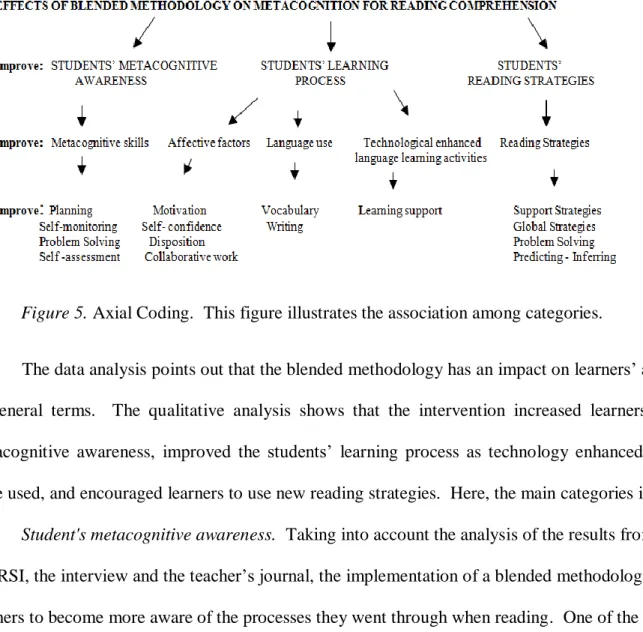
(9) ENHANCING METACOGNITIVE READING AWARENESS. 9. Qualitative analysis................................................................................................................ 65 Open coding. .................................................................................................................. 66 Axial coding. .................................................................................................................. 72 Qualitative and quantitative analysis. .............................................................................. 76 Chapter Six: Conclusions ......................................................................................................... 77 Pedagogical Implications ....................................................................................................... 80 Limitations ............................................................................................................................ 81 Further research ..................................................................................................................... 81 References ................................................................................................................................ 83 Appendices ............................................................................................................................... 93 List of Figures Figure 1. Lesson stages.. ........................................................................................................... 57. Figure 2. Pre and post-tests results by answer. .......................................................................... 62. Figure 3. Pre and post-reading tests results.. ............................................................................. 63. Figure 4. Pre-test and Post-test Box plots. ................................................................................. 64. Figure 5. Axial Coding. ............................................................................................................ 73. Table of Tables Table 1 Research Design Framework ........................................................................................ 36. Table 2 Number of hours for English Classes ........................................................................... 39.
(10) ENHANCING METACOGNITIVE READING AWARENESS. 10. Table 3 Triangulation Matrix..................................................................................................... 42. Table 4 Research Timeline ........................................................................................................ 53. Table 5 Reading Strategies with the Lowest Frequency of Use .................................................. 56. Table 6 Collecting and Analyzing Data ..................................................................................... 59. Table 7 Reading Tasks results during the class .......................................................................... 60. Table 8 Descriptive Statistics .................................................................................................... 61. Table 9 The Inferential Statistics of the Paired Samples T test ................................................... 65. Table 10 Paired Sample Statistics .............................................................................................. 65. Table 11 Focus-group Interview Codes ..................................................................................... 66. Table 12 Preliminary Categories, Codes and Samples ............................................................... 67. Table 13 Categories, Sub-categories and Codes related to Constructs and the Research Question. ................................................................................................................................................. 72. List of Appendices Appendix A Principal´s Consent Letter ..................................................................................... 93. Appendix B Parents´ Consent Letter ......................................................................................... 94. Appendix C Pre and Post-test .................................................................................................... 95.
(11) ENHANCING METACOGNITIVE READING AWARENESS. 11. Appendix D Metacognitive Awareness Reading Strategies Inventory - MARSI ...................... 101. Appendix E Reading Log in Class (RN) .................................................................................. 103 Appendix F Student‟s Reading Log Online (CY) .................................................................... 104 Appendix G Teacher‟s Journal ................................................................................................ 105. Appendix H Focus-group Interview ........................................................................................ 106. Appendix I Lesson Plan .......................................................................................................... 107. Appendix J Implementation on Edmodo.com .......................................................................... 110. Appendix K Mid-term Evaluation ........................................................................................... 114. Appendix L Transcript of the Focus-group Interview .............................................................. 116. Appendix M Codes from Interview ......................................................................................... 120. Appendix N Properties and Dimensions of Categories............................................................. 121. Appendix O Comparing the Frequency of Use of the Strategies Promoted during the Intervention. ............................................................................................................................................... 122. Appendix P Comparing Test Results and Frequency of Use of Reading Strategies .................. 122. Appendix Q Comparison between Pre and Post-tests by Answer ............................................. 124. Appendix R Results of Pre and Post tests ................................................................................ 125.
(12) ENHANCING METACOGNITIVE READING AWARENESS List of Abbreviations Abbreviations. Meaning. CALLA. Cognitive Academic Language Learning Approach. CEFR. Common European Framework of Reference for Languages. CERLALC. Centre for research on Latin America and the Caribbean. DANE. National Administrative Department of Statistics. ETS. Educational Testing Service. FL. Foreign Language. ICFES. Colombian Institute for Promotion of Higher Education. ICT. Information and Communications Technology. INEM. National Institution of Diversified Education. MARSI. Metacognitive Awareness of Reading Strategies Inventory. OECD. Organization for Economic Co-operation and Development. TELL. Technology Enhanced Language Learning. TOEFL. Test of English as a Foreign Language. 12.
(13) ENHANCING METACOGNITIVE READING AWARENESS. 13. Chapter One: Introduction Global citizens are always looking for answers to their questions and trying to find how to overcome their difficulties and improve their quality of life. Literacy has always been relevant to be successful and nowadays with a growing use of Information and Communications Technology (ICT) it is easier to find useful information for different contexts and needs. Grabe and Stoller (2002) state that “productive and educated citizens will require even stronger literacy abilities… and the age of technology growth is likely to make greater, rather than lesser, demands on people‟s reading abilities” (p. 1). This fact highlights the need of strengthening students‟ reading comprehension skills to interpret, evaluate, analyze, and infer target information to make important decisions, when the information is both written either in the mother tongue or a foreign language. According to Grabe and Stoller (2002), L2 reading ability, particularly with English as the “L2, is already in great demand as English continues to spread as the language of science, technology and advanced research” (p. 2). From that perspective, young people who navigate in this ocean of information need to develop reading comprehension skills, especially Colombian teenagers who have shown low levels of reading comprehension in L1 and L2 in different standardized tests, such as the one administered by the Colombian Institute for Promotion of Higher Education (ICFES). Consequently, English teachers as reflective practitioners need to identify, adapt, implement, and evaluate different strategies to help learners to develop their reading skills. Teachers might also encourage learners to be aware of their learning process, and the actions they need to undertake to improve their performance. It would be important to observe the effects of developing metacognitive awareness through direct instruction; as Flavell (1979) claims, children who do more cognitive monitoring.
(14) ENHANCING METACOGNITIVE READING AWARENESS. 14. would learn more effectively both in and out of school than children who do less, and this situation would contribute to increase learners‟ reading comprehension. Therefore, this action research aims to describe and analyze to what extent eleventh graders at INEM Manuel Murillo Toro School might improve their reading comprehension after the implementation of metacognitive reading activities by using a blended methodology that involves technology enhanced language learning activities, using the web 2.0 tool Edmodo and face to face activities. These learners will have the opportunity to get direct instruction to use reading strategies and to develop metacognition for reading comprehension. According to Urquhart and Frazee (2012), “metacognition is the ability to think about and control the thinking process before, during, and after reading. Students who have learned metacognitive skills can plan and monitor their comprehension, adapting and modifying their reading” (p. 4). Statement of the Problem International examinations such as the Programme for International Student Assessment (PISA), have shown that Colombian students do not do well on reading comprehension; being this area the one with the lowest results. According to the Organization for Economic Cooperation and Development (OECD, 2014), “Shanghai-China, Hong Kong-China, Singapore, Japan and Korea are the five highest-performing countries and economies in reading in PISA 2012” (p.4). Meanwhile, Colombia obtained 403 points which is lower than the score obtained by 53 countries. 51% of the Colombian examinees did not achieve the basic level of competence, and 31% were placed in level 2. This means that just 3 out of 10 learners can notice important information in a text and are able to identify the main idea, make simple inferences, contrast and compare. “These low levels of performance tend to be coupled with low levels of engagement.
(15) ENHANCING METACOGNITIVE READING AWARENESS. 15. with school and – as observed in PISA 2009 – with low levels of engagement with and commitment to reading” (OECD, p.9). This general perspective can be exemplified by the reality of certain public schools such as the INEM Manuel Murillo Toro in Ibague, where most of the learners do not obtain the expected results in the internal tests administered by the school, which involve reading comprehension. These learners undertake an exam at the end of every academic term, every 3 months, in which they have to answer about 90 multiple choice questions based on some readings that correspond to different knowledge areas such as mathematics, social sciences, etc. Results indicate that only about 30% of the learners approve these exams. Most of the teachers of the institution have come to the conclusion that these results are a direct consequence of the learners‟ low levels of reading comprehension. Furthermore, one subject with a 60 percent of failure is English, mainly because there is not an approach to enhance the development of reading comprehension skills at school and many learners do not like reading; additionally there are some students who lack engagement towards academic issues. There is enough evidence English is taught by following the bottom-up model, often referred to as the „common sense approach,‟ (Goodman, 1967, p. 135), in which learners create long lists of vocabulary items which are largely not retained and become dependent on a dictionary and/or a teacher rather than becoming independent readers; in addition, learners think that reading comprehension means translating the texts into Spanish. In some cases, the reading tasks take more time than the expected because of the lack of reading comprehension ability as well as the lack of knowledge of reading strategies. Traditionally, English classes at this school have had a strong teacher-centered methodology and a grammatical focus. However, there have been some changes in the teaching.
(16) ENHANCING METACOGNITIVE READING AWARENESS. 16. approach, based on the National bilingual program policies and the language standards of the Ministry of Education (2006), which seek to improve the quality of education in Colombia. ICFES administers a national and standardized test high school students need to take by the end of their last year at school. According to these results, schools were classified in the following categories until 2014: very superior, superior, high, medium, low, lower, and much lower. The school INEM Manuel Murillo Toro achieved a medium level classification in the state examinations for the years 2008 to 2010; whereas for the years 2011 to 2013, the school was classified in the high category (ICFES, 2014). The results for the English test demonstrate a constant behavior with 7 points out of 10 since 2008 to 2013 with an average of 120 examinees in the last 5 years. Eleventh graders of the institution have achieved the A1 (Common European Framework of Reference for Languages [CEFR]) language level.. Meanwhile, other public. institutions in the city with similar socio-economic characteristics such as Liceo Nacional achieved a Superior level in 2012 and 2013 in the general test and 8 points in the English test with 125 examinees. The school Leonidas Rubio achieved Very Superior category, in the years 2011-2012-2013 with 9 points in English test and 52 examinees. Despite the fact these institutions share many commonalities such as learners‟ socioeconomic levels and the influence of the family conditions for childrearing, the results differ significantly. This situation encourages teachers to find new strategies to help learners to improve their levels of reading comprehension. In addition, the OECD‟s report suggests that “one promising approach is to encourage teachers and students to reflect on solution strategies when dealing with subject-specific problems in the classroom” (p.33)..
(17) ENHANCING METACOGNITIVE READING AWARENESS. 17. Research Question Taking into account the facts mentioned previously, this action research intends to answer the following research question: What are the effects of using a blended methodology that involves technology enhanced language learning activities and face to face activities aimed at developing metacognition for reading comprehension in eleventh-graders at INEM Manuel Murillo Toro School? Research Objectives This study aims at: (1) examining the effects of using a blended methodology to develop reading comprehension activities; (2) increasing learners‟ metacognitive awareness while doing reading comprehension tasks; (3) encouraging learners to monitor and evaluate their reading comprehension progress. Rationale Nunan (1999) highlights the importance of developing reading comprehension skills; he states that “unlike speaking, reading is not something that every individual learns to do. An enormous amount of time, money, and effort is spent teaching reading in elementary and secondary schools around the world, more time is spent in teaching reading than any other skill” (p. 249). Considering the previous fact as well as Colombian learners‟ low levels of reading comprehension shown in standardized tests as SABER 11, especially, the learners at school INEM Manuel Murillo Toro, it is relevant to explore new methodologies to enhance the development of reading skills, and at the same time increase learners‟ engagement towards the development of reading tasks..
(18) ENHANCING METACOGNITIVE READING AWARENESS. 18. According to the researcher‟s experience, eleventh grade students at INEM Manuel Murillo Toro are not very skillful at implementing reading strategies before, during, and after reading a text in English. They also tend to translate the text into Spanish by using their dictionary or the application Google translator. During the diagnosis phase, many learners demonstrated low levels of reading comprehension. Urquhart and Frazee (2012) state that ineffective readers often do not realize they should be doing something while reading; they are unaware that they play an active role in their own learning process. In fact, learners at school do not have an active role when reading, they do not perform actions that allow them to analyze the text or infer some information, and they do not discuss the text. They do not outline a plan to achieve their purposes and they never reflect on their performance, they just expect teachers‟ instructions and evaluation. These learners have low metacognitive levels. Learners at school INEM Manuel Murillo Toro need to develop their metacognitive awareness at reading. They demonstrated low levels of awareness in a diagnosis stage, in which they showed their lack of knowledge of metacognitive strategies; learners stated they did not implement reading strategies when reading texts in English; they mainly used translators to try to understand the contents. The purpose of this action research, through which the teacher looks systematically and critically at their own classrooms practices (Bauman & Duffy-Hester, 2000), is to help eleventh graders acquire effective reading comprehension strategies as well as metacognitive strategies to plan, monitor and evaluate their reading process and be able to observe their progress. Learners will have the opportunity to develop their cognitive skills, and understand and choose the reading strategies they consider the most effective for comprehending a text; additionally, teachers and learners will take advantage of using ICTs..
(19) ENHANCING METACOGNITIVE READING AWARENESS. 19. Furthermore, it is important that learners identify and set both academic and personal goals for each task they perform. By developing a more learner-centered approach, learners will have the opportunity to make decisions and contribute more responsibly to the improvement of their literacy skills; which might be reflected in better results on internal and external tests. This experience might have a positive impact not only on the learners‟ context; it can also encourage other teachers from different schools with similar issues to improve their pedagogical practice, by implementing new strategies and approaches. Learners might be able to make their own decisions about improving their reading skills and the language acquisition process; they might be aware of their progress, and gradually become independent learners, who are able to get new skills needed for their higher education and their personal improvement. Additionally, this research would allow INEM School to gradually become a leader in the region by sharing its experiences to promote effective reading in young learners, which might motivate other schools to implement similar methodologies and improve reading performance in the region. The second chapter will present the theoretical support and the state of the art in order to frame this study, by considering the literature review about the main constructs of this research, and some studies carried out either locally or internationally, relevant to the research topic..
(20) ENHANCING METACOGNITIVE READING AWARENESS. 20. Chapter Two: Literature Review This chapter offers a comprehensive overview of some theories and concepts related to the reading comprehension process, reading skills and metacognitive strategies, and blended learning; as the constructs that support this research. Brown (2000) defines a construct as “an attribute, proficiency, ability, or skill that happens in the human brain and is defined by established theories” (p. 9) In addition, some studies about the development of reading comprehension skills are analyzed with the purpose to observe the results of similar experiences in different contexts. Reading Comprehension. There are different theories and studies about reading comprehension, some of them highlight reading purposes, the different approaches to reading, and the cognitive processes involved. Grabe and Stoller (2002), affirm that “reading researchers have developed mental images of the overall reading process into which they incorporate new findings and assess the value of new claims” (p.3). Those reading experts have clarified the abilities involved in reading comprehension and their development over time. As Nunan (1999) states, “for hundreds of years, being literate has been the mark of an educated person, and nowadays some children spend up to twelve years in school and do not become literate” (p.25); consequently, there is an interest not only in identifying the causes of this fact, but also in finding strategies to overcome it. According to the Survey of Cultural Consumption, conducted by the National Administrative Department of Statistics (DANE) in 2012, 48% of Colombians over 12 years read a book. This percentage varies between 48 and 54 for different regions of the country; 50% of Colombians read magazines and 63% read newspapers..
(21) ENHANCING METACOGNITIVE READING AWARENESS. 21. In addition, 34.5% of the population aged 12 stated that were teachers who created them the habit of reading, 29.1% on their own initiative, and 21.2% reported not having the habit of reading. Regarding the average hours spent reading books for pleasure or entertainment; it shows that men spend on average 5.5 hours on weekdays and 2.8 hours on the weekend, while women spend 5.1 hours on weekdays and 2.6 hours on weekends (DANE, 2013).. Meanwhile, there are countries in Latin America such as Argentina, Chile and Uruguay with high levels of schooling and early urbanization, whose averages of books read per year are about five per inhabitant. In other countries, such as Brazil, Mexico and Colombia, the levels are two to three books per year (El Espectador.com, 2013). According to the Centre for research on Latin America and the Caribbean (CERLALC, 2011) “reading is essential in improving the technical and scientific education levels of the population, supporting the creation and transmission of knowledge, cultural development of the nation” (p.23). Within this context, there is a challenge to improve reading habits in Colombia. It is also necessary to help learners to develop thinking skills such as application, analysis, synthesis and evaluation. Furthermore, Urquhart and Frazee (2012) remark that the field of reading has evolved in the past 20 years, being necessary to look beyond the definition of reading as a way to draw information from a text and to form an interpretation of that information. At first, some insights related to reading purposes were considered as they make part of the decisions people make when beginning to read (Urquhart & Frazee, 2012). Learners might realize they read for pleasure or for developing academic tasks; which would allow them to make some decisions before, while, and after reading. This is indeed, part of the metacognitive processes that allow learners to plan a reading task as a first step, by setting personal goals and identifying possible benefits and outcomes..
(22) ENHANCING METACOGNITIVE READING AWARENESS. 22. Rivers and Temperly (1978) identify some reading purposes such as obtaining instructions on how to perform some tasks, keeping in touch with different people, knowing when or where something will take place, and for enjoyment or excitement. Moreover, Grabe and Stoller (2002) establish a different classification by considering reading a task done to search for simple information, through scanning the texts for specific information, and skimming the text for general understanding. Taking these views into consideration and the needs of the young learners at INEM Manuel Murillo Toro, this research will focus on reading for general comprehension. Grabe and Stoller (2002) also state that this purpose is the most basic one for reading and it is actually more complex than commonly assumed. “A skilled fluent reader requires very rapid and automatic processing of words, strong skills in forming a general meaning representation of main ideas, and efficient coordination of many processes under very limited time constraints” (p.14). In addition, Nunan (1999) affirms that “reading is an interactive process that involves the exploitation of linguistic knowledge, and real world knowledge” (p. 268). Furthermore, those processes have been grouped in different models explained by many researchers through metaphorical interpretation. Those models are bottom up, top-down and interactive model. The first model, called „Bottom-up‟, is described by Goodman (1967) as “the common sense notion” (p.3). In this model, “reading is a precise process involving exact, detailed, sequential perception and identification of letters, words, spelling patterns, and larger language units” (p. 1). The reader does not develop a complex cognitive process of reading to analyze the text. The second one is top-down reading process, which is directed by reader goals and expectations. According to Grabe and Stoller (2002), in this process “the reader has a set of expectations about text information and samples enough information from the text to confirm or.
(23) ENHANCING METACOGNITIVE READING AWARENESS. 23. reject these expectations” (p. 3). As for the interactive model, Grabe and Stoller (2002) describe it as taking useful ideas from a bottom- up perspective and combining them with key ideas from a top-down view. These researchers state that word recognition needs to be fast and efficient but background knowledge is a major contribution to text understanding, as is inferencing and prediction, whereby, the development of higher cognitive skills through a student-centered process of comprehension might be possible. Reading strategies. According to Pearson and Gallagher (1983) instruction of reading comprehension requires learners to be engaged in the process in order to become independent learners; additionally, Prensky (2005) highlights that twenty-first century students may require more dynamic and differentiated options for reading to stay engaged. Some studies in learning strategy applications indicate that students taught to use new strategies can become more effective learners. For instance, in a study conducted by O‟Malley, Chamot, Stewner-Manzanares, Küpper, and Russo (1985), second language learners were taught to use learning strategies such as note taking, cooperation and functional planning, for vocabulary, listening comprehension, and formal speaking tasks using academic content. The results showed that learning strategy instruction was most effective for enhancing the development of second language skills and through different ESL activities, additionally, students tended to use strategies most often with less complex language tasks. Other researcher such as Bransford, Brown, and Cocking (2000) show the usefulness of direct language learning strategies instruction, given that effective instruction enables children to build on previous knowledge through inquiry and increased metacognitive reasoning. Chamot and O'Malley (1994) worked on a project called Cognitive Academic Language Learning.
(24) ENHANCING METACOGNITIVE READING AWARENESS. 24. Approach (CALLA). It consists of five-phases namely introducing, teaching, practicing, evaluating, and applying learning strategies. Learners had the opportunity to select and apply learning strategies in order to enhance their responsibility and independency. This approach takes into account the cognitive theory proposed by Anderson (1985), which describes both second language acquisition and learning strategies. Anderson makes a distinction between declarative knowledge and procedural knowledge. Declarative knowledge is defined by O'Malley and Chamot (1990) as “a special type of information in long term memory that consists of knowledge about the facts and things that we know” (p. 229). Procedural knowledge is the knowledge that consists of the things that we know how to do and CALLA model relies on those principles (Chamot & O'Malley, 1994). In fact, this approach provides important elements to develop new procedures in class, aiming at involving learners in an effective development of cognitive processes. This study highlights the importance of establishing specific stages through direct instruction to foster the acquisition of reading strategies. Furthermore, direct instruction is a popular teaching methodology that is used by teachers to facilitate learning and might allow learners‟ training on reading strategies through different stages such as introducing and presenting the strategy, developing some activities to be acquainted with it, practicing, incorporating, working independently, and finally, evaluating its effectiveness. Direct instruction is teacher directed and follows a definite structure with specific steps to guide pupils toward achieving clearly defined learning outcomes. The teacher maintains the locus of control over the instructional process and monitors pupils' learning throughout the process. Benefits of direct instruction include delivering large amounts of information in a timely manner. Also, because this model is teacher directed, it lends.
(25) ENHANCING METACOGNITIVE READING AWARENESS. 25. itself to designing instruction that is developmentally appropriate to pupils' ages and stages. (Direct Instruction, n.d.) Moreover, Grabe and Stoller (2002) state that “the goal of reading instruction is not to teach individual reading strategies but rather to develop strategic readers, a development process that requires intensive instructional efforts over a considerable period of time” (p. 81). Nevertheless, Schunk (2000) states that many studies show students can learn strategies and apply them effectively, but fail to maintain their use over time, because they do not implement the strategies for different settings, or do not understand how to modify their use with different content, or they think using the strategies take too much effort. Some of the most common strategies used by skilled readers (Grabe & Stoller, 2002, p.83) are: . Specifying a purpose for reading. . Previewing the text. . Predicting the contents of the text or section of text. . Connecting text to background knowledge. . Summarizing information. . Rereading On the other hand, Nassaji (2007) inquires how background knowledge and the principles. underlying its use and interaction with other sources of information should be conceptualized in L2 reading; regarding this fact, it is also important to revise the impact of schema theory on the development of reading comprehension strategies. Anderson (1977) explains the Schema theory as the integration of the new ideas learned into the reader‟s network of ideas; having as an impact on the reader‟s framework of knowledge, adding connections to his/her prior.
(26) ENHANCING METACOGNITIVE READING AWARENESS. 26. understanding of the world. This theory also suggests that background information and prior knowledge are essential to learning in general (Marzano, 2004) and text comprehension in particular (Tracey & Morrow, 2006). Metacognition According to Koda (2005), the foreign language reading task “is the product of a complex information-processing system, involving a constellation of closely related mental operations. Each operation is theoretically distinct and empirically separable, serving an identifiable function” (p.19). Based on that insight, it is important for learners to be aware of the different processes they undertake while reading and to improve their reading comprehension skills, as well as to design their own path to achieve their goals and overcome difficulties. Taking this into consideration, it is relevant to support learners to build up metacognitive awareness. Metacognition refers to the process of knowing what you know and being aware of your own cognitive processes; Flavell (1976) mentions the following: In any kind of cognitive transaction with the human or non-human environment, a variety of information processing activities may go on. Metacognition refers, among other things, to the active monitoring and consequent regulation and orchestration of these processes in relation to the cognitive objects or data on which they bear, usually in service of some concrete goal or objective. (p. 232) Metacognition involves a set of strategies, which support making decisions such as directing, improving, increasing, monitoring, etc. what you know. Flavell (1979) mentions that the process of metacognitive monitoring occurs through the actions and interactions of four classes of interrelated phenomena: Metacognitive knowledge, metacognitive experiences, goals,.
(27) ENHANCING METACOGNITIVE READING AWARENESS. 27. and actions. Metacognitive monitoring allows the individual to analyze, evaluate, and make decisions about how the task goals are achieved. Without this monitoring, “there is not guidance about how to regulate learning” (Zimmerman & Schunk, 2001). Foreign language reading tasks, which are not yet automatized, require metacognitive monitoring in order to regulate reading and comprehension of a text. According to Urquhart and Frazee (2012), the reader‟s comprehension depends heavily on metacognition, to think about and control the thinking process before, during, and after reading. They remark that students who have learned metacognitive skills can plan and monitor their comprehension accordingly to their purposes, and they can also adapt and modify their reading. Besides, ineffective readers do not perform any action while reading except moving their eyes across the page; consequently, those readers need to be taught appropriate methods to monitor their understanding and how to select and use appropriate “fix-up” strategies when needed (Caverly, Mandeville & Nicholson, 1995). Therefore, there should be a distinction between two processes: knowing that cognitive reading strategies exist (declarative knowledge) and knowing how (procedural knowledge) to implement these strategies effectively and retaining text information (Baker & Brown, 1984; Koda, 2005). Chamot et al. (1999) classify the metacognitive strategies into four categories: planning, problem solving, monitoring, and evaluating. Moreover, Anderson (2002, p.1) defines metacognition as "thinking about thinking” and he states that understanding and controlling cognitive process may be one of the most essential skills teachers can help second language learners develop.. Anderson proposes the following five main components for metacognition:.
(28) ENHANCING METACOGNITIVE READING AWARENESS. 28. 1) Preparing and planning for learning: Learners set their own goals and the way to achieve them with the help of the teacher. The purpose is to motivate learners to become consciously aware of their progress; hence students' motivation for learning would be increased.. 2) Selecting and using learning strategies: In this stage learners should be taught not only about learning strategies but also when to use them and how to use them.. 3) Monitoring strategy use: By examining and monitoring their use of learning strategies, students have more chances of success in meeting their learning goals.. 4) Orchestrating various strategies: Learners have the possibility to combine strategies, and make decisions about the actions they consider important to develop a task.. 5) Evaluating strategy use and learning: In this stage learners can observe their progress and how efficiently they implemented the strategies to achieve the goals.. Metacognition also involves different fields to consider; Clegg (n.d., p.8) states that when you think about metacognition in school learning, you are also asking yourself about knowledge or cognition. As a consequence, teachers might analyze different fields such as learning styles, and the learning strategies to be implemented accordingly to learner‟s needs and their level of autonomy to make decisions when planning and monitoring cognitive processes. It is also important to analyze how researchers measure metacognition. According to Mokhtari and Reichard (2002), “there are relatively few instruments to measure students‟ awareness and perceived use of reading strategies while reading for academic purposes” (p. 250). They designed the Metacognitive Awareness of Reading Strategies Inventory (MARSI) “to assess 6th- through 12th-grade students‟ awareness and perceived use of reading strategies while.
(29) ENHANCING METACOGNITIVE READING AWARENESS. 29. reading academic or school-related materials” (p. 251). The major purpose of this instrument is to assess the degree to which students are aware of reading processes and to identify their goals, needs and intentions when reading. Mokhtari and Reichard (2002) state: The development of the MARSI was guided by several efforts, including (a) a review of recent research literature on metacognition and reading comprehension, (b) the use of expert judgment with respect assignment and categorization items with the inventory, (c) insights gained from existing reading strategies instruments regarding format and content, and (d) the use of factor analyses to examine the structure of the scale. (p. 251) The MARSI contains 30 items which are classified into three factors or subscales: . Global reading strategies: It contains 13 items and represents the strategies oriented toward a global analysis of text.. . Problem solving strategies: It contains 8 items which are oriented around strategies to solve problems when the text becomes difficult to read.. . Support reading strategies: This group contains 9 items related to the use of reference materials and support strategies. Furthermore, Mokhtari and Reichard (2002) remark that “the relationship between self-. reported reading ability and strategy usage provides preliminary evidence of construct validity” (p. 253). They also state that skilled readers would use strategies more frequently; in particular, highly skilled readers would use global and problem solving strategies more frequently than less skilled readers. They recommend to use the MARSI as a pretest and posttest in studies aimed at evaluating the impact of instruction on students‟ awareness and use of strategies while reading; and using the results obtained for enhancing assessment, instruction, or conducting classroom or clinical research..
(30) ENHANCING METACOGNITIVE READING AWARENESS. 30. Blended Learning Garrison and Kanuka (2004) define blended learning as “the thoughtful integration of classroom face-to-face learning experiences with online learning experiences” (p. 96), facilitating lifelong learning and including technology-based practices in the curriculum. Mcdonald (2006) found that asynchronous tools such as email and conferencing benefit reflection, timeliness or flexibility. The opportunities for discussion through asynchronous computer conferencing, promote reflection and a more student-centered approach. The flexibility in terms of "attendance" at tutorials allows learners to develop self-directed learning, in terms of time management, independent work and goal achievement. Swan (2001) attributes the success of blended learning experiences to the interactive capabilities of Internet communication technology; in addition, a clear and consistent course structure, an instructor who interacts frequently and constructively with students and a valued and dynamic discussion are key factors in the success of online courses. Different technological tools can be identified to support reading comprehension process. According to Harris, Mishra and Koehler (2009) “appropriate and effective instruction with technology is best planned considering students‟ content-related learning needs and preferences primarily, selecting and applying technologies only in service of that curriculum-based learning” (p.403). Warschauer and Whittaker (1997, p. 1) proposed five guidelines to help teachers in the implementation of the Internet in EFL/ESL classrooms: 1) Consider your goals carefully, 2) Think integratively, 3) Do not underestimate the complexity, 4) Provide necessary support, and 5) Involve students in decisions..
(31) ENHANCING METACOGNITIVE READING AWARENESS. 31. Additionally, Salomon, Globerson and Guterman (1989) found that technology could be used as a scaffolding tool to assist students in functioning in their zone of proximal development as well as providing metacognitive like guidance as they read. In this study, they found that students seemed to develop transferable skills that generalized to other reading tasks, suggesting a broad improvement in literacy. Carr, Crocco and Gallego (2011) examined the benefit of Technology Enhanced Language Learning (TELL) on students‟ language learning, at the Southern California University during one university term. They evidenced that incorporating TELL was a positive experience for many participants, especially in the areas of comfort and enjoyment, and increased confidence in using technology. There are some studies related to the effect produced by the implementation of ICTs on the development of reading comprehension tasks. On the one hand, Abdi (2013) investigated the effectiveness of using hypertext materials on reading comprehension ability of learners as compared to the normally written materials. The findings of this research on 49 Iranian EFL learners indicate that those participants who worked hypertext materials gained more reading comprehension ability compared to those who used non-digital materials. “It is suggested that the result of this study, therefore, might be used by language teachers who are interested in integrating Internet technology in language teaching” (p. 558). Furthermore, Magliano et al. (2005) compared a paper-based reading instruction program to its computer-based counterpart and found that the latter induced students to use more effective reading strategies which could be transferred to future reading tasks. State of the Art This subsection incorporates some similar and relevant researches on the main topic of this study, which had been carried out internationally and locally in order to have some views.
(32) ENHANCING METACOGNITIVE READING AWARENESS. 32. concerning the applicability of this methodology in similar contexts. As this action research aims to support learners of secondary education who have demonstrated a passive role while reading, to improve their reading comprehension performance by increasing their metacognitive awareness; it is also necessary to identify some studies that show the need and the advantage of this type of implementation to help learners to become active readers. Koda (2005) establishes a clear conceptual foundation for research on L2 reading competence and its acquisition within well-defined, empirically testable frameworks. She focuses on different kinds of readers; by dealing with individual differences (what characteristics define good and bad readers), and the role of metacognitive processes in strategic reading. According to Koda (2005), strategic readers are able to “monitor reading process carefully, take immediate steps when encountering comprehension problems, are aware of their own cognitive and linguistic resources and capable of directing attention to the appropriate clue in anticipating, organizing, and retaining text information” (p. 204). Pressley and Afflerbach (1995) remark that skilled readers tend to be aware of what they are reading; they have a reading purpose, and they have a set of tentative plans or strategies to solve potential problems and for monitoring their comprehension of textual information. Ellis (2004) states that self-efficacy and confidence in language learning "has more to do with how learners perceive their ability as language learners and their progress in relation to the particular context in which they are learning" (p. 543). Additionally, Koda (2005) points out that the foreign language reading task “is the product of a complex information-processing system, involving a constellation of closely related mental operations. Each operation is theoretically distinct and empirically separable, serving an identifiable function” (p. 19)..
(33) ENHANCING METACOGNITIVE READING AWARENESS. 33. Some studies inform the effect of enhancing metacognition in learners while developing reading comprehension tasks. Zhang‟ (2001) reported on a study of 10 Chinese EFL readers' metacognitive knowledge of strategies in learning to read EFL in the People's Republic of China (PRC). The study found a strong link between students' metacognitive knowledge and L2 reading achievement. The successful readers experienced comprehension-oriented beliefs, thinking, and behaviors and strategies in reading, whereas less successful peers seemed to be focused on basic language processing, such as decoding at the word level. Additionally, Cubukcu (2008) investigated the reading comprehension and vocabulary achievement of 130 third-year university students in Dokuz Eylul University in Turkey. The purpose of the study was to determine the effectiveness of systematic direct instruction of multiple metacognitive strategies designed to assist students in comprehending text. The study confirmed that “reading comprehension could be developed through systematic instruction in metacognitive language learning strategies. Leavitt‟s study (2010) examined patterns of metacognition in twenty-two students of French from the University of Notre Dame and Indiana University South Bend. “This examination provided insight into the strengths, weaknesses, and efficacy of students‟ reading in a foreign language, and it suggested that most of participants‟ metacognition focused on the monitoring of reading comprehension that takes place in the act of reading, while metacognitive planning and evaluation were less-frequent occurrences” (p. 38). Besides, the Metacognitive Awareness of Reading Strategies Inventory (MARSI) questionnaire validated by Mokhtari and Reichard (2002), has been implemented in different studies to measure learners‟ metacognitive awareness and to identify the most common reading strategies used by learners. For instance, Karbalaei (2010) used it to explore whether there were any significant differences in the metacognitive awareness and perceived use of reading.
(34) ENHANCING METACOGNITIVE READING AWARENESS. 34. strategies between EFL and ESL college students (96 Iranians and 93 Indians) while reading academic materials. The results indicated that both groups evidenced similar patterns of strategy awareness and reported usage when reading college-level materials in English. Moreover, Eluemuno (2013) investigated the effect of metacognitive skills on academic performance of senior secondary school in Anambra state, Nigeria. The study revealed a positive relationship between metacognitive skills and academic performance such that developing metacognitive skills of a student will lead to the improvement of his/her academic performance in English Language (p. 678). Furthermore, Lan, Lo, and Hsu (2014) examined the effects of metacognitive strategy instruction on students‟ reading comprehension in computerized reading contexts. They reported the findings from a meta-analysis of 17 studies of metacognitive strategy instruction on students‟ reading comprehension in computerized reading contexts. At first, Lan et al. (2014) found that metacognitive strategy instruction seems to be more effective in assisting students in comprehending scientific texts; secondly, regulation is deemed as a more effective form of instruction; thirdly, students who received instruction did not necessarily outperform their counterparts, and students‟ reading abilities played an interesting role. Additionally, the metacognitive strategy instruction appeared to benefit students in aspects other than comprehension (e.g., motivation) (p.198). It is considered that the 21st century learners have developed an effective use of ICTs; for example, Montalvo‟s study (2013) in a Colombian public school, focused on the implementation of some reading strategies to foster reading comprehension and self-directed learning, and the use of blogs. She reported, that “the use of technology and the teaching of phased explicit reading strategies, such as types of texts, finding the main idea, and summarizing, improved.
(35) ENHANCING METACOGNITIVE READING AWARENESS. 35. students' reading comprehension” (p.3). However, the results might have had a variation when learners had to develop independent work on their free time. Therefore, it is expected that the participants of this study may experience a variation in their reading behavior after getting acquainted with the use of some metacognitive and reading strategies. Ridley, Schutz, Glanz and Weinstein (1992) reported that metacognitive strategies include "taking conscious control of learning, planning and selecting strategies, monitoring the progress of learning, correcting errors, analyzing the effectiveness of learning strategies, and changing learning behaviors and strategies when necessary" (p. 295). The effects of applying a new methodology may impact learners‟ awareness about reading process in EFL and may impact the perceptions of the teachers who focus on traditional teaching practices and who aim to get acquainted with new methodologies. The following chapter will describe the research design for this study, examining the researcher‟s role, the context and the participants, the collection instruments and procedures. It will also incorporate information about the validation of instruments and the procedures followed..
(36) ENHANCING METACOGNITIVE READING AWARENESS. 36. Chapter Three: Research Design This chapter contains the research design framework, which includes the type of study, context, teacher's role, participants, and type of data collection instruments. This information is summarized in Table 1 and later on described in detail. Table 1 Research Design Framework. Type of study. Action Research. Context. I.E. INEM Manuel Murillo Toro, a public high school located in Ibagué, Colombia. Participants. 19 low-proficiency students, ages 16 to 18, with A1 English level. Data collection instruments. Pre and Post Reading Test, Pre and Post Survey, Mid-term Reading test, Focus Group Interview, Student's Reading Log, and Teacher's Observation Schema. Type of Study. This study follows the main characteristics of action research, which according to Richards (1998) takes its name from two central processes: a data gathering component (the research element) and an action component. These two processes facilitate “the reflective cycle” and improve “professional action” (Wallace, 1998). Additionally, Nunan and Bailey (2009) define action research as a systematic, iterative process in which the researcher identifies an issue; thinks and plans an appropriate action; then the researcher conducts the action and observes the outcomes; reflects on the outcomes; and repeats these steps again..
(37) ENHANCING METACOGNITIVE READING AWARENESS. 37. Furthermore, Burns (1999) states that “action research offers a valuable opportunity for teachers to be involved in research which is felt to be relevant, as it is grounded in the social context of the classroom and the teaching institution, and focuses directly on issues and concerns which are significant in daily teaching practice” (p.17). Grabe and Stoller (2002) highlight that action research “permits to examine reading in practical terms and explore practical alternatives to reading instruction in our own classrooms, with our own students, at our own pace” (p.158). As learners‟ needs are identified, the implementation process might become more effective and might help learners to improve their reading proficiency. Researcher’s Role Nunan and Bailey (2009) remark that the significance of classroom action research relies on the fact that it is conducted by classroom practitioners who investigate some aspects of their own practice, and are able to change and improve what goes on in the classroom. On that basis, the teacher in this study takes advantage of the action research process to observe her practice, learners‟ responses to a particular reading teaching technique, and reading tasks assuming the roles of researcher, and facilitator of the learning process. Being a facilitator means that the teacher helps learners to construct meaning, and provides them with collaborative opportunities to discover new actions for learning. As Grabe and Stoller state, “what is appealing about the action research process is that there is always room for simplicity, flexibility and practicality” (p. 159); the teacher researcher performs different roles through the design and implementation of the interventions. In a learner-centered environment teachers identify learners‟ skills as well as the their needs in order to achieve the lesson goals; based on that, teacher can also be an encourager at trying and combining new methodologies such as the use of ICTs for independent work..
(38) ENHANCING METACOGNITIVE READING AWARENESS. 38. The researcher also has the role of an examiner and an evaluator by being acquainted with learners‟ needs and classroom variables to make changes in the process, as well as evaluating learners‟ progress. In addition, Cohen and Manion (1985) describe action research as small-scale interventions “in the functioning of the real world” (p. 208), which involves sometimes the collaboration of teachers and other researchers. In this specific case, the researcher had the support of a research circle to make decisions during all the stages of the research, and take actions on the process through a direct communication in which some issues concerning the research approach were discussed, and the experience of other researchers allowed the teacher researcher to frame all the intervention. Context. This study will be implemented in the educational institution INEM Manuel Murillo School. INEM Manuel Murillo is a public school located in Ibague, which offers pre-school education, primary, and secondary education, as well as adult programs for a population of about two thousand students from different neighborhoods. The school provides an important emphasis on diverse subject areas including Science and Mathematics, Accounting, Humanities, Civil Constructions, Metal Mechanics, Wood Industry, and Systems for tenth and eleventh graders. Students explore and develop their skills for continuing higher education studies or finding a job after finishing school. The number of hours for English classes depends on the educational levels and the emphasis. This is information is shown in Table 2..
(39) 39. ENHANCING METACOGNITIVE READING AWARENESS Table 2 Number of hours for English Classes Grade / Emphasis. Time frame per week. Primary. 2 hours. 6th to 9th th. 3 hours th. 10 and 11 - Science & Mathematics and Humanities. 3 hours. 10th and 11th – Accounting, Civil Constructions, Metal Mechanics,. 2 hours. Wood Industry and Systems. The Institutional Educational Project of this school follows the Colombian National Constitution and the 115 General Education Law (1994). For designing the syllabus of the English subject, during the last four years, teachers have taken into account the principles of the National Bilingual Program 2004-2019, which was designed to improve the communicative competence of EFL in all the educational levels. There have been some attempts to incorporate the Guide Nº 22 of the Ministry of Education, which contains the National Basic Standards of communicative competence in English (2004), based on the CEFR; and the teachers have chosen some general standards to be included in the syllabus, however the learning activities designed for some grades do not comply with these standards. Additionally, the English level of some learners who start secondary education is below what it should be; therefore, these learners have to start acquiring basic concepts and familiarizing with the language in sixth grade. The English standards are essential for English teachers, managers, and parents of the educational community; they clearly delineate the abilities and competences that students are expected to develop in order to achieve the goal of the National Bilingual Program. The main goal is that Eleventh graders achieve an intermediate.
(40) ENHANCING METACOGNITIVE READING AWARENESS. 40. level of English proficiency (Level B1, according to CEFR), which allows them to communicate effectively in real situations. Moreover, the English program is also subjected to the beliefs, knowledge, opinions and experiences of a diverse group of teachers; including teachers from primary education, English teachers, and the general coordinator. Besides, some changes in the program made annually are based on the results of the standardized test Saber 11 and the learners‟ needs to improve their language proficiency. Participants. The participants of this study will be 19 eleventh graders, 4 boys and 15 girls between 16 to 18 years old. This group belongs to the humanities approach; which means, students take classes such as philosophy, literature, and communication studies. The English class, as it was mentioned before, has an intensity of 3 hours per week. As for the students‟ learning style, 60% of them prefer to use visual aids and can be classified as visual learners; 40% of them are auditory learners who like talking and discussing the different topics presented in the class. Learners enjoy communicating their ideas and preferences. Most of them belong to low socio economic levels and therefore do not have a computer at home to do homework. About 40% of the learners have shown low levels of interest in second language acquisition and low language proficiency; consequently, the results in the English exams administered by the school at the end of each academic term are below level (2 points of the 5 in average). The pre-test applied as part of the diagnosis activity showed that students had low- reading proficiency levels, according to these results and others coming from.
(41) ENHANCING METACOGNITIVE READING AWARENESS. 41. internal examinations students‟ English level is A1 (CEFR); besides, these learners have not received any specific training on how to read in the second language.. Finally, a high number of students lack commitment and responsibility with regards to academic issues; however, those learners express their interest and motivation to use ICTs and learn about topics related to their personal lives or technology at the beginning of the year when signing the pedagogical agreement.. Ethical considerations. Before developing this research at INEM Manuel Murillo Toro School, it was necessary to notify the school‟s principal in order to obtain his permission and support for carrying out this study. The learners‟ parents were also informed and notified about the process to be undertaken. The researcher sent the corresponding consent letters to the school‟s principal and the learners‟ parents (see appendices A & B), who signed and authorized their children to be part of research process. The implementation was planned for the third and fourth terms, during the English classes. The activities indeed had to be adapted to the contents of the syllabus in order not to alter the curriculum and fulfill its main goals. The results of the study were used for research purposes; however some of the tasks learners developed during the classes were taken into account as part of the learners‟ formative assessment and they counted as part of their final grades. Finally, the names of the participants were changed for letters to protect their identity.. Instruments for Data Collection Procedures Grabe and Stoller (2002) state that “researchers can devise data-collection procedures that complement normal classroom routines, or may use approaches that are viewed as intrusive.
(42) 42. ENHANCING METACOGNITIVE READING AWARENESS. because they are not part of the normal classroom routine” (p.167). Action research includes qualitative research methodologies such as journals, interviews, and questionnaires, which are collected in the participant‟s setting. Considering that researchers can use more than one datacollection technique as part of action research, this study also includes the analysis of quantitative data obtained from reading tests applied in different moments, before, during and after the implementation. According to Cresswell (2014), a combination of approaches provides a more complete understanding of a research problem. This is achieved by the integrating quantitative and qualitative data. Burns (1999) states that multidimensional data collection methods allow a variety of data collection tools and the perspectives of different participants in the research context. The data can be „triangulated‟ or can be tested out against each other. Table 3 Triangulation Matrix Research Question What are the effects of using a blended methodology that involves technology enhanced language learning activities and face to face activities aimed at developing metacognition for reading comprehension in eleventh-graders at INEM Manuel Murillo Toro School?. Research Objectives To increase learners‟ metacognitive awareness while doing reading comprehension tasks. To examine the effects of using a blended methodology to develop reading comprehension activities. To encourage learners to monitor and evaluate their reading comprehension progress.. Source 1 Reading Comprehension test: Pre-test Post-test. Data Sources Source 2 Source 3 “Metacognitive Students‟ Awareness of reading Reading Log. Strategies Inventory” MARSY. Source 4 Teacher‟s journal. Source 5 Focus Group interview.
(43) ENHANCING METACOGNITIVE READING AWARENESS. 43. “Triangulation is one of the most commonly used and best known ways of checking for validity. The aim of triangulation is to gather multiple perspectives on the situation being studied” (Burns, 1999, p. 163). In this case, “the perspectives from the teacher and learners, in order not to rely on any single source of data, interview, observation, or instrument” (Mills, 2003, p. 52). Table 3 debriefs the triangulation matrix, which shows the sources that allow the researcher to gather the information for this study and be more confident about the analysis. Instrument 1: Reading comprehension test. In order to measure the learners‟ reading ability, students answered the same reading comprehension test at the beginning of this study (pre-test) and at the end of the implementation (post-test). The same test was used to ensure the validity of the research. According to Golafshani (2003), validity reveals “whether the means of measurement are accurate and whether they are actually measuring what they are intended to measure” (p. 559). Learners answered an excerpt from TOEFL (Test of English as a Foreign Language) Junior test, which measures learners‟ English proficiency levels according to the CEFR. This is a test released by ETS (Educational Testing Service) and taken directly from ETS webpage, which guarantees the quality of the test; this organization is devoted to educational research and assessment, it creates some of the most well-known and widely used educational assessments in the world. The TOEFL Junior test is an objective and reliable measure of students' English communication skills, ETS developers argue that based on the rich heritage of the TOEFL test and best practices in English-language testing, TOEFL Junior tests can help teachers identify learners‟ strengths and challenges. This test consists of 20 questions that were analyzed before applying the test to guarantee this instrument addresses the competencies that the Ministry of Education expects eleventh graders to develop (see Appendix C). By comparing each question.
Figure




+2
Documento similar
The expansionary monetary policy measures have had a negative impact on net interest margins both via the reduction in interest rates and –less powerfully- the flattening of the
Critical Period effects in second language learning: The influence of maturational state on the acquisition of English as a Second Language.. The high school achievement of
The aim of this paper is to demonstrate that reading authentic literary material in the English as a Foreign Language (EFL) classroom can improve students’ language learning skills as
Moreover, results showed that catalase, guaiacol peroxi- dase, and ascorbate peroxidase activities were stimulated in the different tissues of cucumber plants which highlight
the correct sequence of actions to achieve a specific goal, thus enhancing sequential skills that are recognized as very important for cognitive development since the
• RQ 1 : Are most of the existing software development models conceived from a technical perspective, lacking a prescription of specific activities to jointly
In order to answer research question number 5, that is to say, to what extent students with higher productive vocabulary knowledge acquire more vocabulary than those with
Additionally, in today's changing and highly competitive business environment, sustainable supply chains appear in the literature as one of the most significant activities
