
Challenges in economic valuation of wetland protection under climate change impacts
178
0
0
Texto completo
(2)
(3)
(4)
(5) DOCTORAL THESIS · 2015 Doctoral Programme in Applied Economics. CHALLENGES IN ECONOMIC VALUATION OF WETLAND PROTECTION UNDER CLIMATE CHANGE IMPACTS Michela Faccioli Thesis supervisor: Antoni Riera Font Thesis supervisor: Catalina M. Torres Figuerola Thesis tutor: Antoni Riera Font. Doctor by the Universitat de les Illes Balears.
(6)
(7) To my family In memory of my beloved grandparents.
(8)
(9) Our duty to the whole, including the unborn generations, bids us to restrain an unprincipled present-day minority from wasting the heritage of these unborn generations.. Theodore Roosvelt A Book-Lover’s Holidays in the Open, 1916.
(10)
(11) ACKNOWLEDGEMENTS My first words of acknowledgement are for my supervisors, Dr. Antoni Riera Font and Dr. Catalina M. Torres Figuerola, who have helped and supported me during the process of this doctoral thesis. Without their advice, professionalism, encouragement, dedication and patience this work would not have been what it is. From them I have learnt that all defeats represent opportunities and that research is no closed process. I also want to thank Prof. Nicholas Hanley for giving me the opportunity of working with him during the visiting research stay that I have undertaken at the Department of Geography and Sustainable Development at the University of St. Andrews (Scotland). I am also grateful for the fruitful comments I have received from him along this research work. A few words of gratitude need also to go to Dr. Laure Kuhfuss, from the University of St. Andrews, for some helpful comments in the last chapters of my doctoral thesis. I am indebted with Dr. Àngel Bujosa Bestard for having introduced me into the world of programming with Matlab and being constantly available when I needed help. I can not forget to thank my colleagues at the Economic Analysis of the Impact of Tourism (AEIT) research group and the Applied Economics Department at the University of the Balearic Islands for providing me with financial and technical support, crucial to undertake this doctoral work. This research has mainly been funded through a scholarship. xi.
(12) within the FPU program of the Ministry of Education, Culture and Sport (ref. AP2010-3810) and through the Special Action program of the Government of the Balearic Islands (ref. AAEE025/2012). I want to thank the Director of S’Albufera Natural Park, Maties Rebassa, and the rest of the staff for their collaboration, especially, during the primary data gathering. I appreciate also the work of the four surveyors involved in the project, Ms. Barbara von Siebenthal, Ms. Mari Carmen Burgueño Martinez, Ms. Ruth Muñoz Florit and Mr. Pere Josep Pons Vives, who have carried out the interviews with visitors. I have no words to thank my parents, Emilia and Pergiuseppe, and my sister, Veronica, for their support and love during these years. Despite being thousands of kilometers away, they have been with me all the time with their constant encouragement and trust. I want to express my gratitude and love especially to my life companion, Federico. He, more than anyone, knows what this doctoral thesis has meant to me. Seeing his eyes full of proud in the face of each accomplishment and full of confidence during each difficult moment has been the energy I needed for never giving up despite all the obstacles I have encountered along the path.. xii.
(13) ABSTRACT The conservation of humid lands emerges as a priority within the social debate. Given the contribution of wetlands to sustain human well-being, their protection in the face of increasing anthropogenic stresses is perceived as socially desirable. This is especially true in the face of climate change (CC), which is expected to become the major source of wetlands’ deterioration in the future. In this sense, to be welfare-maximizing, policy design should be guided by knowledge about the valuation of the social benefits of wetlands’ protection. In this framework, while the valuation task becomes a crucial tool to better inform policy-makers, it is also associated with some challenges. These are due to the fact that CC is a future time-persistent problem and its impacts are expected to be complex, inherently uncertain and extended over the long- and very long-term. Regardless of the fact that these aspects are anticipated to affect social welfare, their role in stated preference valuation has been largely underexplored. To shed some light on these issues, three are the research questions addressed in this thesis. First, the trade-offs between the social value of avoiding different and complex wetland impacts. Second, the effect on the social preferences for preservation measures of incorporating information about the inherent uncertainty of environmental processes. Third, the role of sustainability issues by examining whether social preferences for. xiii.
(14) policies having their benefits in the long- and very long-term are nondeclining. To answer these questions, a choice experiment has been undertaken in S’Albufera wetland (Mallorca, Spain). In specific, the valuation exercise has been designed to consider: separate attributes for the complex impacts of CC, alternative scenarios of probability of impacts’ occurrence to express inherent uncertainty and different time horizons in the long- and very long-term. Results have shown that complexity, inherent uncertainty and sustainability issues are relevant aspects. Individuals overall care about the impacts of CC on wetlands, even though they assign unequal values to the different impacts considered, suggesting substitution and complementarity patterns that are useful for the design of environmental policies. Respondents are sensitive to the inherent uncertainty associated with the natural variability of CC effects. They also care about sustainability issues, by equally valuing preservation in the long-term and very long-term, due to a concern for the well-being of future generations. These findings are important not only to better inform wetland management under CC, but also to guide stated preference valuation practitioners. Indeed, results show that the challenges associated with valuation in the face of time-persistent environmental problems, like CC, need to be carefully considered, given that ignoring them can have important social welfare implications.. xiv.
(15) RESUMEN La conservación de las zonas húmedas ocupa un lugar central en el debate social. Y es que dada su contribución al bienestar humano y ante la creciente presión antropogénica, su protección se percibe hoy día como socialmente deseable. Este hecho adquiere, si cabe, más importancia ante el cambio climático (CC), un fenómeno que se prevé se convierta en la principal fuente de deterioro de los servicios ecológicos que proporcionan las zonas húmedas. Así las cosas, en un intento de maximizar el bienestar social, resulta fundamental apoyar la toma de decisiones públicas con un conocimiento detallado de las preferencias sociales y, en particular, del valor que la sociedad asigna a la protección de estas zonas. En este contexto, a pesar que la valoración económica resulta una herramienta fundamental para mejorar la toma de decisiones, no hay que obviar que lleva implícitos importantes desafíos. No en balde, el CC es un problema persistente en el tiempo y sus efectos son, por definición, complejos, inherentemente inciertos y se extienden desde el presente al futuro más cercano y más lejano. Todos estos aspectos, independientemente de la influencia que se espera tengan en el bienestar social, han sido poco explorados en los estudios de valoración basados en preferencias declaradas. En este sentido, en un intento de mostrar la influencia que ejercen estos aspectos en los ejercicios de valoración económica, el presente trabajo gira. xv.
(16) alrededor de tres preguntas. En primer lugar, se examinan los componentes del valor social de políticas encaminadas a evitar los complejos y variados impactos del CC. En segundo lugar, se estudia el efecto que la incorporación de información sobre la incertidumbre inherente a los procesos ecológicos tiene sobre las preferencias sociales. Y en tercero y último lugar, se analizan cuestiones relacionadas con la sostenibilidad, y concretamente, si las preferencias sociales por políticas que tienen beneficios en el largo plazo y muy largo plazo son nodecrecientes. Para abordar estas cuestiones, se ha realizado un experimento de elección en la zona húmeda de S’Albufera (Mallorca, España). En particular, el ejercicio de valoración se ha diseñado teniendo en cuenta: diferentes atributos para capturar la complejidad de los impactos del CC, escenarios alternativos de probabilidad de ocurrencia de los impactos, para expresar la incertidumbre inherente a los procesos ecológicos, y diferentes horizontes temporales. Los resultados han mostrado que la complejidad, la incertidumbre inherente y la sostenibilidad son aspectos relevantes. En general, los individuos se preocupan por los impactos del CC en las zonas húmedas, aunque asignan valores diferentes a los atributos considerados, sugiriendo patrones de sustitución y complementariedad útiles a la hora de diseñar políticas ambientales. Así mismo, se confirma que los individuos son sensibles a la incertidumbre inherente asociada a la variabilidad natural de los efectos del CC, a la vez que se muestran sensibles a las cuestiones relacionadas con el bienestar de las generaciones futuras, valorando igual la preservación en el largo plazo como en el muy largo plazo. Estos resultados son importantes no sólo para informar la gestión de zonas húmedas en un contexto de CC, sino también para guiar los expertos de valoración basados en preferencias declaradas. De hecho, los resultados confirman que los desafíos específicos asociados a problemas ambientales persistentes, como el CC, se deben tener en cuenta en los ejercicios de valoración.. xvi.
(17) RESUM La conservació de les zones humides ha esdevingut un tema rellevant en el debat social. I és que atesa la seva contribució en el benestar humà, la seva protecció davant la creixent pressió antropogènica es percep avui dia com a socialment desitjable. Aquest fet adquireix, si cal, més importància davant el canvi climàtic (CC), un fenomen que es preveu es converteixi en la principal font de deteriorament dels serveis ecològics que proporcionen les zones humides. Així les coses, en un intent de maximitzar el benestar social, esdevé fonamental recolzar la presa de decisions públiques amb un coneixement detallat de les preferències socials i, en particular, del valor que la societat assigna a la protecció d’aquestes zones. En aquest context, tot i que la tasca de valoració econòmica esdevé una eina fonamental per a millorar la presa de decisions, no cal obviar que també du implícits importants desafiaments. No debades, el CC és un problema persistent en el temps i els seus efectes són, per definició, complexos, inherentment incerts i s’estenen des del present al futur més proper i més llunyà. Tots aquests aspectes, independentment de la influència que s’espera tinguin en el benestar social, han estat poc explorats en els estudis de valoració basats en preferències declarades. En aquest sentit, en un intent de mostrar la influència que exerceixen aquests aspectes en els exercicis de valoració econòmica, el present treball gira al voltant de tres punts. En primer lloc, s’examinen els components del. xvii.
(18) valor social de polítiques encaminades a evitar els complexes i variats impactes del CC. En segon lloc, s’estudia l’efecte que la incorporació d’informació sobre la incertesa inherent als processos ecològics té sobre les preferències socials. I en tercer i darrer lloc, s’analitzen qüestions relacionades amb la sostenibilitat, i concretament, si les preferències socials per polítiques que tenen beneficis en el llarg termini i en el molt llarg termini són no-decreixents. Per abordar aquestes qüestions, s’ha realitzat un experiment d’elecció en la zona humida de S’Albufera (Mallorca, Espanya). En particular, l’exercici de valoració s’ha dissenyat tenint en compte: diferents atributs per capturar la complexitat dels impactes del CC, escenaris alternatius de probabilitat d’ocurrència dels impactes, per expressar la incertesa inherent als processos ecològics, i diferents horitzons temporals. Els resultats suggereixen que la complexitat, la incertesa inherent i la sostenibilitat són aspectes rellevants. En general, els individus es preocupen pels impactes del CC en les zones humides, encara que assignen valors diferents als atributs considerats, tot suggerint patrons de substitució i complementarietat útils alhora de dissenyar polítiques ambientals. Així mateix, es confirma que els individus són sensibles a la incertesa inherent associada amb la variabilitat natural dels efectes del CC i, alhora, es mostren sensibles a les qüestions relacionades amb el benestar de les generacions futures, valorant igual la preservació en el llarg termini com en el molt llarg termini. Aquests resultats són importants no només per informar la gestió de zones humides en un context de CC, si no també per guiar els experts en exercicis de valoració basats en preferències declarades. De fet, els resultats mostren que els desafiaments específics associats a problemes ambientals persistents, com el CC, s’han de tenir en compte en els exercicis de valoració.. xviii.
(19) LIST OF PUBLICATIONS Faccioli, M., Riera, A., Torres, C.M. (2015). Valuing the recreational benefits of wetland adaptation to climate change: a trade-off between species’ abundance and diversity. Environ. Manage. 55(3): 550-563. LICENSE AGREEMENT: License Number. 3662980802920. License date. Jul 06, 2015. Licensed content publisher. Springer. Licensed content publication Environmental Management Licensed content title. Valuing the Recreational Benefits of Wetland Adaptation to Climate Change: A Trade-off Between Species’ Abundance and Diversity. Licensed content author. Michela Faccioli. Licensed content date. Jan 1, 2014. Volume number. 55. Issue number. 3. Type of Use. Thesis/Dissertation. Portion. Full text. Number of copies. 7. Author of this Springer article. Yes and you are the sole author of the new work. Order reference number. None. Title of your thesis / dissertation. Challenges in economic valuation of wetland protection under climate change impacts. Expected completion date. Nov 2015. Estimated size(pages). 160. xix.
(20)
(21) THESIS SUPERVISION CERTIFICATE. Dr. ANTONI RIERA FONT and Dr. CATALINA M. TORRES FIGUEROLA, of the UNIVERSITY OF THE BALEARIC ISLANDS, DECLARE: that the thesis entitled CHALLENGES IN ECONOMIC VALUATION OF WETLAND PROTECTION UNDER CLIMATE CHANGE IMPACTS, presented by MICHELA FACCIOLI to obtain a doctoral degree, has been completed under our supervision and meets the requirements to opt for an International Doctorate. For all intents and purposes, we hereby sign this document. Signatures. Antoni Riera Font. Catalina M. Torres Figuerola. Palma de Mallorca, [13/09/2015]. xxi.
(22)
(23) CO-AUTHORS’ AGREEMENT. Dr. ANTONI RIERA FONT and Dr. CATALINA M. TORRES FIGUEROLA, as coauthors of the following article:. Faccioli, M., Riera, A., Torres, C.M. (2015). Valuing the recreational benefits of wetland adaptation to climate change: a trade-off between species’ abundance and diversity. Environ. Manage. 55(3): 550-563.. DECLARE: that we accept that Ms. MICHELA FACCIOLI presents the cited article as the principal author and as a part of her doctoral thesis and that said article cannot, therefore, form part of any other doctoral thesis. And for all intents and purposes, we hereby sign this document.. Signatures. Antoni Riera Font. Catalina M. Torres Figuerola. Palma de Mallorca, [13/09/2015]. xxiii.
(24)
(25) ACRONYMS BAU CBA CC CE CL CV ECBA EU IIA LR MCDA RPL RUM SEU SP WTP. Business-As-Usual Cost-Benefit Analysis Climate Change Choice Experiment Conditional Logit Contingent Valuation Environmental Cost-Benefit Analysis Expected Utility Independence from Irrelevant Alternatives Likelihood-Ratio Multi-Criteria Decision Analysis Random Parameter Logit Random Utility Maximization Subjective Expected Utility Stated Preference Willingness To Pay. xxv.
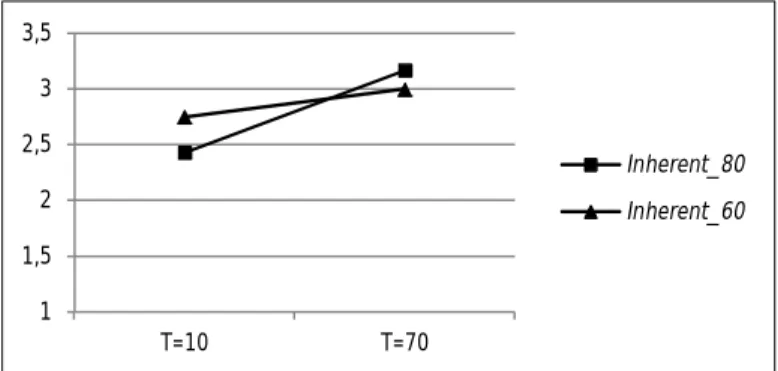
(26)
(27) LIST OF TABLES Table 1. Description of the attributes and their levels Table 2. RPL model estimations Table 3. Mean and standard deviation of the marginal WTP per attribute Table 4. Mean marginal WTP for XSPEC under different levels of XGEN and XTIME(less) Table 5. Part-worth utility maximizing number of ‘specialist’ bird species under different levels of XGEN and XTIME(less) Table 6. Attributes’ description and their levels Table 7. Levels of the ‘specialist’ bird species attribute Table 8. Levels of the ‘specialist’ bird species attribute under each scenario Table 9. Results from RPL models under No_Inherent, Inherent_80 and Inherent_60 scenarios Table 10. Mean marginal value of E(XSPEC) under No_Inherent, Inherent_80 and Inherent_60 scenarios Table 11. Mean marginal value of E(XSPEC) for different levels of XTIME(less) and XGEN Table 12. Levels of the ‘specialist’ bird species attribute Table 13. Levels of the ‘specialist’ bird species attribute under each inherent uncertainty scenario Table 14. Other attributes’ description and their levels Table 15. Results from RPL models for T=10 and T=70 under. xxvii. 20 27 30 32 33 50 52 54 60 62 64 81 82 83 86.
(28) Inherent_80 Table 16. Results from RPL models for T=10 and T=70 under Inherent_60 Table 17. Mean marginal value of E(XSPEC) for T=10 and T=70 under Inherent_80 and Inherent_60 Table 18. Reasons underlying respondents’ choices for T=70 Table 19. Mean marginal value of E(XSPEC) for T=10 and T=70 as a function of XTIME(less) and XGEN. xxviii. 87 89 90 91.
(29) LIST OF FIGURES Figure 1. Bootstrapped mean marginal WTP for XSPEC and XGEN over 1,000 replications Figure 2. Mean marginal value of E(XSPEC) for T=10 and T=70 in Inherent_80 and Inherent_60. xxix. 31 88.
(30)
(31) INDEX Acknowledgements Abstract Resumen Resum List of publications Thesis supervision certificate Co-authors’ agreement Acronyms List of tables List of figures. xi xiii xv xvii xix xxi xxiii xxv xxvii xxix. 1. Introduction. 1. 2. Valuing the recreational benefits of wetland adaptation to climate change: a trade-off between species’ abundance and diversity 2.1. Introduction 12 2.2. Case study description 15 2.3. Methodology 18 2.3.1. Choice experiment design 19 2.3.2. Statistical modelling 22 2.4. Results 25 2.4.1. Descriptive statistics 25 2.4.2. Choice experiment results 26 2.5. Discussion and conclusions 33. xxxi.
(32) 3. Delivering inherent uncertainty information in stated preference methods: a framework to estimate preservation benefits 3.1. Introduction 40 3.2. Analysis of risk preferences in the stated preference 43 literature: a review 3.3. Data source and methodology 49 3.3.1. Data source 49 3.3.2. Delivering information about outcome 51 uncertainty linked to inherent uncertainty 3.3.3. Modelling approach 56 3.4. Results 59 3.5. Discussion and conclusions 66. 4. Do we care about sustainability? An analysis of time sensitivity of social preferences under environmental time-persistent effects 4.1. Introduction 72 4.2. Time sensitivity in the environmental stated preference 76 valuation literature 4.3. Methodology 79 4.3.1. The choice experiment application 79 4.3.2. Modelling choices 83 4.4. Choice experiment results 85 4.5. Discussion and conclusions 93. 5. Conclusions. 99. Appendix. 109. Bibliography. 125. xxxii.
(33) 1. INTRODUCTION Wetlands –including marshes, fens, peatlands or coastal areas– are amongst the most complex and unique, as well as amongst the world’s most biologically productive ecosystems. They lie at the intersection between aquatic and terrestrial habitats, as they are seasonally or permanently covered by water, which they receive as inflows from groundwater, surface waters and precipitations. As a result of these water inputs, they are continuously nourished with nutrients, minerals, sediments, gases and organic materials, responsible for triggering a long chain of biogeochemical transformations that support a complex net of wildlife (Keddy 2010). Indeed, wetlands are within the biodiversity-richest habitats, cradles of species of plants and animals, such as invertebrates, fishes, amphibians and most importantly birds (Cherry 2011). Because of the ecological characteristics of wetlands, they are also amongst the most important ecosystems for people. Indeed, they supply disproportionately more goods and services supporting human well-being than most other systems (Hayal et al. 2012). They contribute to provide food, timber and fiber and to store and supply water for human use, as they represent natural water sinks which collect water and slowly release it thanks to the extraordinary capacity of wetlands’ soils to absorb and retain more water than other ecosystems’ soils. For this reason, humid lands also play an important part in controlling water flood and flows, as well as in recharging groundwaters. Additionally, they are crucial in regulating water. 1.
(34) CHALLENGES IN ECONOMIC VALUATION OF WETLAND PROTECTION UNDER CLIMATE CHANGE IMPACTS. quality, as they contribute to water purification and detoxification, thanks to the role of especially wetlands’ vegetation in filtering inflows and in retaining and assimilating nutrients and pollutants (McLaughlin and Cohen 2013). Wetlands also contribute to carbon sequestration, by trapping it in large quantities in wetlands’ soils, such that they play a central part in the mitigation of carbon emissions and, hence, of global warming (Jenkins et al. 2010). They regulate local weather and temperature fluctuations, by affecting heat, evapotranspiration, precipitation and humidity patterns, and they contribute to erosion control especially because of the stabilizing action of the vegetation’s root system (Gedan et al. 2011). Concerning the supporting services, they provide habitats for resident and migratory species and they sustain soil formation, through sediment retention and accumulation of organic matter, as well as nutrient cycling, by storing, recycling, processing, and acquiring nutrients. They are also increasingly important for the supply of cultural services including recreational, educational and spiritual experiences, relying on the aesthetic value and on the flora and fauna species of wetlands. The fact that these ecosystems can provide multiple services and goods has encouraged a high interest in wetlands. It is not by chance that mankind has been constantly attracted by humid lands, such that most of socio-economic activities have been, and still are, organized in the proximity of wetland areas (Schnaiberg et al. 2002). However, the often public good nature of wetlands and of their resources –frequently available for free– has prevented society from recognizing the true scarcity of these ecosystems, thus leading to an over-demand for their associated services and to the over-degradation of these habitats. In fact, wetlands have become amongst the most threatened and degraded ecosystems by human-induced action (Lotze et al. 2006). Within the primary anthropogenic pressures on wetlands, land conversion and drainage for agricultural or other human-related development are to be considered. In this sense, the fertile and productive nature of these. 2.
(35) INTRODUCTION. ecosystems together with the high opportunity costs of their conservation instead of development, have led during the 20th century to the conversion and loss of more than 50% of wetlands, currently extending over 1,280 million ha at global level. Another prominent source of stress for wetlands is represented by excessive nutrient loading from residential, industrial and especially agricultural activities, being responsible particularly over the last four decades of generating eutrophication problems in humid lands. Increasing freshwater withdrawal from humid lands also plays a central role in the destabilization of these ecosystems by reducing the amount of water available to maintain the ecological character of many inland wetlands. On the top of these, other sources of stress for wetlands are: infrastructural development, including the construction of dams or dykes, channels or roads, which have been responsible for major alterations in wetlands’ water flows, sediment transfer, connectivity and habitat disruption; the leakage of polluting substances; and the introduction of invasive alien species (Millennium Ecosystem Assessment 2005). While these represent the major human-induced pressures that wetlands have suffered over the past and still suffer in the present, additional stresses are expected to appear in the future. This is the case of climate change (CC), which is projected to become the number one source of wetlands’ loss and degradation in the 21st century. This is not only because CC will contribute to amplify current humaninduced impacts on humid land ecosystems (Johnson et al. 2005; Edwards and Winn 2006), but also because these stresses will last over an extended period of time. Indeed, CC is anticipated to exert its influence over the present century and most likely also beyond it, due to the long-lived radiative forcing of greenhouse gases responsible for changes in the climate system (Solomon et al. 2010). Especially alterations in precipitation and temperature regimes are anticipated to become the major stresses on wetlands by intensifying current pressures on water quantity and quality, to which wetlands are highly sensitive, given these ecosystems’ reliance on specific hydrological conditions. Examples of CC-intensified stresses on. 3.
(36) CHALLENGES IN ECONOMIC VALUATION OF WETLAND PROTECTION UNDER CLIMATE CHANGE IMPACTS. water in wetlands include further changes in base flows, alterations in hydrological depth and in seasonal inundation patterns, sea level rise or increased flooding (Erwin 2009). CC-related hydrological imbalances are anticipated to be particularly sharp in wetlands located in the Mediterranean region, a CC hotspot. Here, projections are of outstanding temperature increases, precipitation rates decreases and higher frequencies of extreme events, such as droughts and heavy rain episodes. These are expected to strengthen the already high anthropogenic pressures on freshwater resources in this region, currently due to elevated population density and growth, agricultural exploitation and tourism (Candela et al. 2009). Hence, particularly sharp CC-intensified stresses on water resources are expected to have detrimental effects especially for prevalently freshwater wetlands in this region –such as Doñana wetland or S’Albufera of Mallorca in Spain, the Po floodplain in Italy, some areas of the Camargue humid land in France, the Prespa Lakes in the Balkans or the Ichkeul Lake in Tunisia. Especially in this context, CC-induced impacts are expected to result in the intensification of current negative pressures on wetland-dependent flora and fauna species. In specific, they are expected to intensify losses in both species’ abundance and diversity. The first one will be the result of an accelerated decline in both the population of plants and animals and the extinction of species, regardless of the type. The second one will appear from a process of substitution, in which less vulnerable species will replace more vulnerable ones. As a result, not only a quantitative but also, and even more importantly, a qualitative loss of species will take place, which contributes to a progressive homogenization of these highly heterogeneous wetlands. This acquires special importance because Mediterranean wetlands, and especially freshwater ones, represent a world’s biological hotspot with a wide variety of species and high rates of endemism (Mediterranean Wetlands Observatory 2012a).. 4.
(37) INTRODUCTION. Beyond the fact that some regions will be more affected than others, forecasted CC-induced impacts on wetlands are expected to be detrimental at global level and they are anticipated to generate considerable welfare losses for society. This is because, under CC, wetlands will overall decrease their capacity to supply the great number of ecosystem services that contribute to human wellbeing. In this sense, the livelihood, economic system, social cohesion, security, health of people are expected to be greatly endangered by the further degradation of humid lands. Projections are that the survival of entire communities will be at stake; economic activities, including agriculture, tourism, energy generation, will be weakened; the security of individuals will be threatened by increased flooding probability; and health will be impoverished due to the spread of water-borne diseases (Russi et al. 2013). The prospect of social welfare losses under CC has motivated an increasing preoccupation among policy-makers concerning the need for management solutions oriented to guarantee wetlands’ conservation and public use. In other words, it has particularly put in evidence the urgency of designing and implementing CC adaptation policies, consisting in anticipatory measures oriented to avoid or reduce CC-induced negative impacts to support the supply of ecosystem services for humans (Füssel 2007; Pielke et al. 2007). In this sense, given that current policy measures will be insufficient to counteract CC-intensified pressures, policy-makers will be obliged to strengthen their efforts on current management practices in different key areas at the core of wetland management systems. These mostly refer to water management –including flood control or water quality management–, vegetation management –including controlled burning or silvicultural management– and wildlife management –including invasive species control or species reintroduction– (Sorolla 2011). Though, the design of CC adaptation policies needs to be based on the knowledge about the social benefits associated with policy implementation if the aim is to minimize welfare losses for society. This is because. 5.
(38) CHALLENGES IN ECONOMIC VALUATION OF WETLAND PROTECTION UNDER CLIMATE CHANGE IMPACTS. information about the social preferences for alternative management practices of preservation of wetland ecosystems can guide planners in decision-taking based on the social desirability of interventions. Hence, it allows to take decisions based on principles of welfare-maximization and, consequently, of efficiency. Information on social preferences is required to better inform policy-makers not only to design CC adaptation policies, but also to prioritize interventions, which acquires special interest particularly in a context in which shrinking public budgets are available for conservation purposes. For these reasons, knowledge about the social benefits of environmental policies is more and more demanded by public bodies, as increasingly formalized by regulations. For instance, in the Convention on Wetlands of International Importance, also called Ramsar Convention (1971), the need for knowledge about the full range of benefits provided by humid lands has been deemed necessary for the ‘wise use of wetlands and their resources’, namely for sustaining the supply of these ecosystems’ services for human wellbeing. Given that most of the social benefits of wetland protection are invisible to markets and, thus, they are normally not taken into account, non-market valuation techniques are required to identify the social value of preserving these ecosystems’ goods and services and to place them on policy-makers’ agenda (Turner et al. 2008). Among these methods, the stated preference (SP) techniques, namely the contingent valuation (CV) and especially the choice experiment (CE), need to be considered. They usually rely on the construction of simulated markets in which a good or a bundle of nonmarket goods are offered at a given price and individuals are required to express their preferences. By working with hypothetical contexts, these methods allow to obtain information about social preferences for environmental quality states that people have not previously experienced, such as CC impacts. To inform policy-makers about the social benefits of proposed environmental changes, preferences are commonly expressed in monetary terms. In the case of the CV method, individuals are usually displayed different bids for a proposed environmental quality variation and. 6.
(39) INTRODUCTION. they are asked each time whether they would accept or reject the bid. Modelling this information allows to estimate their willingness to pay (WTP), which reflects preferences for the environmental good of interest. Instead, in the CE, individuals are presented with some alternatives, described in terms of different attributes –including a monetary one– with different levels and organized into choice sets, among which respondents are required to choose their most preferred option. By observing and modeling how people change their preferred alternative in response to variations in the attributes’ levels, information can be obtained about the monetary value of each non-monetary attribute. This way, the CE allows disentangling the WTP for each possible level of each non-monetary attribute within the framework of one unique experiment, while the CV only allows identifying an overall welfare measure for the hypothetical scenario considered (Hanley et al. 1998; Hoyos 2010). Regardless of the centrality of the SP analysis, the contribution of this literature to policy-making has been limited. Indeed, only few studies have taken an economic valuation approach to the analysis of the social benefits of wetlands’ conservation in a CC context. In specific, these studies have prevalently focused on the benefits of limiting surge-related problems and therefore they have helped to better inform policy-makers concerning welfare-maximizing flood control interventions (O’Garra and Mourato 2013; Yue and Swallow 2014). Despite the contribution of these papers to efficient wetland decision-making, their focus is believed to be only partial, since they have not considered the implications of dealing with an environmental problem with time-persistent effects when examining the social benefits of wetland policies. In other words, they have traditionally neglected that the time-persistent impacts of CC will be complex and multi-faceted and that the benefits of adaptation policies to counteract them will arise in the future, which is uncertain, and over different time periods, in the long- but more importantly in the very long-term. This is regarded as a limitation because these aspects are starting to be pointed out as important determinants of social preferences.. 7.
(40) CHALLENGES IN ECONOMIC VALUATION OF WETLAND PROTECTION UNDER CLIMATE CHANGE IMPACTS. In this context, despite the prevalent approach has been to assume certainty, research within the SP literature has increasingly been concerned with examining social preferences in a context in which environmental policy outcomes are uncertain, meaning in the presence of outcome uncertainty (Dekker and Brouwer 2010; Brouwer and Schaafsma 2013; Veronesi et al. 2014). In particular, it has found that uncertainty around policy effectiveness, which is assumed to depend on management changes, social, political, economic environments or on the uncertainty around ecosystems’ dynamics, should be considered in social preference analysis. Indeed, by finding that WTP for policies aimed at reducing environmental problems is sensitive to the probability of outcome achievement, these studies have shown that assuming certainty may have important implications for the analysis of a policy’s social return if events are not as expected. However, despite research in this direction seems promising, it is still incomplete. These studies have focused on the fact that outcome uncertainty can be controllable by policy-makers’ intervention through increasing scientific research and knowledge about ecosystems’ functioning. In this sense, they have provided useful information about social preferences to better inform wetland planners on the social benefits of reducing the risks to which wetlands are exposed, as recommended by the Ramsar Convention on Wetlands (Ramsar Convention Secretariat 2010a). Though, despite it is true that outcome uncertainty can be controlled and reduced to some extent, these studies have so far overlooked that it also displays an uncontrollable and irreducible component, associated with the inherent uncertainty of environmental processes, which depends on the variability of natural systems and the randomness of environmental dynamics. In this sense, while inherent uncertainty is unpredictable and uncontrollable, it is nevertheless still possible to forecast how critical the situation might be, namely how serious could be the risk of overstepping critical loads, thresholds or ecosystems’ resilience. Given this, examining the role of. 8.
(41) INTRODUCTION. inherent uncertainty on social welfare can be relevant to better inform policy-makers on the management of environmental systems when the situation is characterized by so many unknown variables. Therefore, understanding the role of inherent uncertainty on social preferences represents a first important challenge for the valuation of wetland conservation in contexts of time-persistent effects, like CC. Besides being sensitive to inherent uncertainty, wetland policy benefits might also depend on the timing of the improvement. Evidence in this direction especially comes from outside the SP valuation literature and it shows that people prefer sooner to delayed rewards (Almansa and Calatrava 2007; Pindyck 2007; Hanley and Barbier 2009). However, there is still lack of consensus on the time sensitivity of social preferences, which might induce to make wrong assumptions, with important social welfare implications, especially in a context of time-persistent environmental effects. This is the case of CC, which is projected to take place in the longterm and especially in the very-long term. Then, there is an urgent need to assess the time sensitivity of preferences of current generations for measures oriented to avoid environmental impacts in the long-term and the very long-term, concerning the present and the future generations, respectively. Such information can be useful for wetland planners to design policies to counteract time-persistent effects taking not only efficiency, but also inter-generational equity into account. Indeed, current generations might care about wetlands’ preservation also in the very long-term because they may be willing to give future generations at least the same welfare opportunities from nature preservation, associated with both use and non-use of the environment. In other words, they might assign a non-declining weight to wetlands’ protection in the very long-term with respect to the long-term due to sustainability concerns. In this sense, it is expected that sustainability issues play an important role, given the increasing demand by the public for sustainable policies, especially in wetlands, as formalized by the Third. 9.
(42) CHALLENGES IN ECONOMIC VALUATION OF WETLAND PROTECTION UNDER CLIMATE CHANGE IMPACTS. Meeting of the Conference of the Contracting Parties (1987), which calls for the need for a sustainable use of these ecosystems. Hence, examining the role of sustainability concerns in explaining the time sensitivity of social preferences represents another important challenge to the valuation of wetland protection in the face of CC time-persistent impacts. In this framework, the present doctoral thesis, organized into three papers, will address some issues that are expected to be relevant for the analysis of social preferences for CC adaptation policies in wetlands, by means of a CE application undertaken in S’Albufera humid land in Mallorca (Spain). Three are the research questions taken into account. First, this thesis examines the trade-offs between the social preferences for alternative CC adaptation policies, oriented to avoid the complex and multifaceted CCinduced impacts in terms of losses in wetland-dependent species’ abundance and diversity. Second, it investigates the implications for social welfare of delivering information about inherent uncertainty. Third, it analyzes the role of sustainability concerns in explaining the time sensitivity of social preferences. Answering these questions aims to better inform policy-makers in the design of adaptation policies in the face of the challenges of CC in wetland areas. However, in addition to this, it also aims to contribute to the environmental SP literature. This is because especially the effects of inherent uncertainty and timing of environmental impacts on social preferences have been largely underexplored issues, not only in a context of wetland adaptation but also in a wider framework of environmental management (Glenk and Colombo 2013; Meyer 2013). Hence, by shading some light on the welfare relevance of these dimensions, another purpose of this doctoral work is to catch the attention of SP practitioners and public decision-makers for the promotion of further debate and investigation around these challenging issues. Despite the expected contributions of this research, its limitations and possible extensions also need to be discussed. This will be the purpose of the last chapter.. 10.
(43) 2. VALUING THE RECREATIONAL BENEFITS OF WETLAND ADAPTATION TO CLIMATE CHANGE: A TRADE-OFF BETWEEN SPECIES’ ABUNDANCE AND DIVERSITY CC will further exacerbate wetland deterioration, especially in the Mediterranean region. On the one side, it will accelerate the decline in the populations and species of plants and animals, this resulting in an impoverishment of biological abundance. On the other one, it will also promote biotic homogenization, resulting in a loss of species’ diversity. In this context, different CC adaptation policies can be designed: those oriented to recovering species’ abundance and those aimed at restoring species’ diversity. Based on the awareness that knowledge about visitors’ preferences is crucial to better inform policy makers and secure wetlands’ public use and conservation, this paper assesses the recreational benefits of different adaptation options through a CE study carried out in S’Albufera wetland (Mallorca). Results show that visitors display positive preferences for an increase in both species’ abundance and diversity, although they assign a higher value to the latter, thus suggesting a higher social acceptability of policies pursuing wetlands’ differentiation. This finding acquires special relevance not only for adaptation management in wetlands but also for tourism planning, as most visitors to S’Albufera are tourists. Thus, given the growing competition to attract visitors and the increasing demand for high environmental quality and unique experiences, promoting wetlands’ differentiation could be a good strategy to gain competitive advantage over other wetland areas and tourism destinations.. 11.
(44) CHALLENGES IN ECONOMIC VALUATION OF WETLAND PROTECTION UNDER CLIMATE CHANGE IMPACTS. 2.1.. Introduction. Wetlands –including marshes, fens, peatlands or coastal areas– are not only among the richest ecosystems in biodiversity, but also among the most fragile environments (Russi et al. 2013). Indeed, they are subject to a process of continuous deterioration driven by anthropogenic pressures such as infrastructure development and land conversion, water withdrawal, eutrophication and pollution, overharvesting and overexploitation (Seilheimer et al. 2009; Elliott et al. 2014). Recent studies show that most of these impacts will be exacerbated under CC, especially those related to alterations in water quantity and quality (Cross et al. 2012; Krauss et al. 2014; Tong et al. 2014). The increase in temperatures and the change in precipitation rates forecasted at a global level are projected to perturb hydrological equilibria in wetlands, this resulting in variations in the seasonal pattern of water levels, altered flooding, recharge and discharge of aquifers, and sea level rise (IPCC 2013a). Given wetlands’ dependence on water conditions, CC-derived impacts will further accentuate the deterioration of these ecosystems (Erwin 2009). This is especially true for wetlands located in the Mediterranean region, as it represents a CC hotspot (Giorgi and Lionello 2008). Further degradation of humid lands is expected to intensify current negative repercussions on wetland-dependent species. On the one hand, it will accelerate both the decline in populations of plants and animals and the extinction of species, this resulting in an impoverishment in biological abundance (Amezaga et al. 2002; Johnson et al. 2005; Cuttelod et al. 2008). Indeed, most of organisms will be unable to adapt to the environmental perturbations, thereby they will not naturally develop sufficient physiological and behavioral responses to cope with changed conditions (Doney et al. 2012). On the other one, it will also promote biotic homogenization, that is, the process through which many ‘specialist’ species are replaced by few ‘generalist’ ones (Dawson et al. 2003; Lemoine et al. 2007; Lougheed et al. 2008; Willis et al. 2008; Araújo et al. 2011; Mediterranean Wetlands. 12.
(45) VALUING THE RECREATIONAL BENEFITS OF WETLAND ADAPTATION TO CLIMATE CHANGE. Observatory 2012b; Garssen et al. 2014). Indeed, CC-induced degradation will alter species’ composition by accentuating the current differences across species in terms of their capacity to adapt to disturbances. In this sense, Clavel et al. (2010) state it will constrain the adjustment potential not only of the species relying on few environmentally stable habitats (‘specialist’ species), but also of those occupying a wider habitat range (‘generalist’ species). As the former are less resilient and hence more vulnerable to environmental disturbances, this will result in a substitution pattern leading not only to a quantitative but also, and even more importantly, to a qualitative loss of species, which will generate a loss of species’ diversity.1 This phenomenon is forecasted to reduce the original heterogeneity of wetlands, thus accentuating the current process of homogenization particularly experienced by Mediterranean humid lands. In this context, welfare losses are expected especially for visitors, who increasingly appraise wetlands for their biological abundance and diversity (Millennium Ecosystem Assessment 2005). To avoid or minimize these welfare losses, that is, to secure wetlands’ public use and conservation, the design of adaptation policies should be of high priority for wetlands’ managers.2 In this sense, and by strengthening efforts on current management practices, decision-makers can opt for different strategies to counteract the abovementioned CC-induced impacts on wetlanddependent species. Indeed, they can pursue to recover species’ abundance, thus taking action to avoid a quantitative loss of species, regardless of the species’ type. Also, they can seek to preserve original wetlands’ heterogeneity, thus acting against biotic homogenization by undertaking measures to avoid the quantitative loss of many ‘specialist’ species. Although both strategies contribute to the goals of conservation 1. Throughout the manuscript, a loss of species’ diversity refers to the qualitative rather than the quantitative implications of species’ loss. 2 Note that we refer to adaptation policies as planned measures engineered by human interventions on the environment. This should not be confounded with the concept of environmental adaptation, which refers to the autonomous responses to CC by organisms and ecosystems through natural, physical and biological processes (Hobday et al. 2009).. 13.
(46) CHALLENGES IN ECONOMIC VALUATION OF WETLAND PROTECTION UNDER CLIMATE CHANGE IMPACTS. and public use, the latter type of policy has been argued to be more desirable from an ecological point of view. Indeed, it contributes to achieve more complex and healthier, hence more resilient, ecosystems (Norberg et al. 2008; Robledano et al. 2010). In addition, it allows promoting wetlands’ differentiation which could represent a good strategy to gain competitive advantage given the growing competition among wetlands to attract visitors and their increasing demand for high environmental quality and unique experiences (Secretariat of the Ramsar Convention on Wetlands and World Tourism Organization 2012). In this context, adaptation policies should be not only feasible but also socially acceptable. Thus, knowledge about the economic value users assign to species’ diversity and abundance in wetlands is crucial to guarantee the design of welfare-maximizing interventions. Unfortunately, research on adaptation to CC-derived impacts in the context of wetlands has mainly focused on the issue of species’ abundance rather than diversity. Most of studies have been concerned with policies aimed at counteracting the loss of species from a quantitative perspective without consideration of the species’ type (Nicholls and Hoozemans 1996; El-Raey 1997; Mortsch et al. 2006; Snoussi et al. 2008; Ayache et al. 2009; Jeppesen et al. 2011; Withey and van Kooten 2011). Wetland adaptation studies dealing with the loss of species’ abundance and diversity have been scarce (Anthony et al. 2009; Palmer et al. 2009; Kingsford 2011). Also, it seems that wetland adaptation literature has paid little attention to the analysis of the social acceptance of policies, thus overlooking efficiency issues in their design. To our knowledge, research on the economic valuation of the benefits of species’ conservation in wetlands has only given guidance on welfare-maximizing management practices outside the context of CC adaptation. Examples of this are Birol et al. (2009) and Rolfe and Windle (2010), which have focused on species’ diversity, and Birol et al. (2010) and Luisetti et al. (2011), which have dealt with species’ abundance issues.. 14.
(47) VALUING THE RECREATIONAL BENEFITS OF WETLAND ADAPTATION TO CLIMATE CHANGE. In this framework, this study analyses visitors’ preferences for two types of adaptation policies: those oriented towards a quantitative recovery of species and populations and those pursuing a restoration of the species’ diversity. This way, it not only adds to the scarce adaptation research focusing on a loss of species’ diversity but also it includes a welfare-based analysis of adaptation measures. More specifically, it allows prioritizing socially desirable wetland management practices due to the joint economic valuation of species’ abundance and diversity, which is of great relevance when budgets allocated for environmental conservation are shrinking (Christie et al. 2006). By assuming policies aimed at preserving original wetlands’ heterogeneity are more desirable, the hypothesis that visitors assign a higher value to ‘specialist’ species-abundant rather than to ‘generalist’ species-abundant wetlands, is tested for. To do this, preferences of visitors to S’Albufera wetland (Mallorca), an outstandingly vulnerable site to CC stresses in the Mediterranean (Candela et al. 2009), are examined through a CE. The structure of the chapter is as follows. Next section describes S’Albufera wetland case study. Then, the methodology is highlighted, with a description of the main steps of the CE design and the statistical model employed for data analysis. Afterwards, sample descriptive statistics and model results are reported. A discussion and conclusions section ends the paper.. 2.2.. Case study description. S’Albufera is the largest wetland in the Balearic Islands, with 1,646.38 ha protected by law.3 It is placed at the coastal plain of an extensive water catchment area in the North East of Mallorca and it is nourished by surface. 3. Decree-Law No. 4/1998 of the Ministry of Agriculture and Fisheries of the Balearic Islands th (January 28 ). 15.
(48) CHALLENGES IN ECONOMIC VALUATION OF WETLAND PROTECTION UNDER CLIMATE CHANGE IMPACTS. runoff waters, precipitations, underground springs and sea water (Parc Natural de S’Albufera de Mallorca 2005). The prevalently freshwater nature of this wetland makes it different from most Mediterranean coastal 4 humid lands at the time it supports diverse and abundant flora and fauna species of international importance (Sato and Riddiford 2008). Bird species are its major natural asset. In this sense, there is a community of ‘specialist’ species that find in S’Albufera their ideal habitat, including both sedentary and migratory birds regularly moving to this site for breeding during spring or stopping over during winter. Additionally, ‘generalist’ bird species can also be watched which are not exclusively found in S’Albufera but migrate to this wetland or even establish there sedentarily, as they are better adapted to the growing salinization process of the site. Indeed, S’Albufera ecosystem has been experiencing considerable humaninduced stresses over the years, which have mostly affected its hydrological conditions. Water quantity and quality reaching the wetland are influenced by (i) the nitrates from intensively used agricultural fertilizers in the surrounding areas; (ii) the waste waters from inefficient – and sometimes saturated– watershed’s sewage treatment plants; (iii) the sea water spilling through the underground pipes responsible for the cooling system of the thermal power station Es Murterar, placed near the park; and (iv) the unsustainable freshwater extraction for agricultural, residential and tourism consumption. In specific, this latter source of stress has been considerably increasing over the last years mainly due to the sustained growth in tourist arrivals to Mallorca, one of the leading Mediterranean tourism destinations (Riddiford et al. 2014). The humaninduced pressures affecting S’Albufera are common sources of stress in Mediterranean wetlands and have generally been responsible for an increasing process of eutrophication and salinization of their waters (García et al. 2011; Marco-Barba et al. 2013).. 4. [http://www.medwetlands-obs.org/node/33 accessed in September 2015]. 16.
(49) VALUING THE RECREATIONAL BENEFITS OF WETLAND ADAPTATION TO CLIMATE CHANGE. Especially salinization, one of the major threats for freshwater ecosystems (Jin 2008), is expected to be further intensified in S’Albufera under CC. Indeed, increased temperatures and decreased precipitations forecasted for the western Mediterranean region are anticipated to lead to an additional decline in freshwater volumes (Candela et al. 2009). This, coupled with an increased sea water intrusion, is expected to elevate the concentration of salt in waters with repercussions over plant and animal species. Overall, current impacts in terms of declines in flora and fauna richness and biomass, shifts towards salt-tolerant communities and the inhibition of seeds germination are anticipated to be accentuated in the future (Waterkeyn et al. 2008). However, the most serious effect on S’Albufera ecosystem is expected to be the decrease in the number of ‘specialist’ bird species, which will generate a loss in the site’s species’ diversity. CC will also be responsible of increasing stresses over migratory bird species –especially spring ones– by shifting their migration timing (Tingley et al. 2009). This phenomenon has been well documented for the case of the Mediterranean (Robson and Barriocanal 2011). The projected rise in temperatures in their home region is expected to stimulate their advanced departure, such that they will arrive earlier to S’Albufera for resting and breeding. In this context, they might not find the optimal nesting conditions, such as peak food availability, thus being forced to abandon the site. As a result of this, the abundance of both ‘specialist’ and ‘generalist’ migratory bird species in S’Albufera is expected to decline. Drops in both bird species’ abundance and diversity under CC are expected to generate welfare losses especially for visitors. Indeed, visitors to S’Albufera have steadily grown in number since the declaration of the wetland as a Natural Park in 1988 (Espais de Natura Balear – Conselleria de Medi Ambient 2008), attracted by a wide range of nature-based recreation activities (contemplation of nature, sport, bird watching, etc.). In this context, management practices aimed at counteracting the human-. 17.
(50) CHALLENGES IN ECONOMIC VALUATION OF WETLAND PROTECTION UNDER CLIMATE CHANGE IMPACTS. induced stresses experienced by the park have been implemented by managers to guarantee the wetland’s conservation and hence wetland’s demand by visitors. In particular, over the last 15 years, water management interventions have been undertaken to control for seawater intrusion and to favor the diffusion of freshwater throughout the channels of the park, as the best way to recover ‘specialist’ bird species. Additionally, managers have undertaken policies oriented to creating optimal nesting and breeding conditions to increase the chances of attracting migratory bird species to S’Albufera, regardless of whether they are ‘specialist’ or ‘generalist’. Vegetation diversity actions –through the use of cattle and horses– have also been carried out to maintain landscape heterogeneity and restore the environmental conditions in sensitive areas, such as the riverbank wood and the dune system.. 2.3.. Methodology. Measuring visitors’ welfare changes associated with CC-derived impacts requires the use of SP methods. This is because SP techniques allow valuing non-market goods by constructing hypothetical scenarios that have not been previously experienced by individuals, as it happens when it comes to projected variations in climate and their derived impacts. In this context, among the SP techniques, the CE is considered to be more appropriate than the CV method. Indeed, the CV only allows assessing the effect of a single attribute on utility. In contrast, the CE allows estimating the value of a set of multiple attributes simultaneously considered. In specific, for each attribute or a combination of them, it allows measuring the related welfare changes over a range of possible outcomes (Hanley et al. 2001), thus better informing policy-makers. In a CE, each attribute takes different levels, whose combination allows generating diverse hypothetical scenarios or alternatives, which are grouped into choice sets presented to respondents. From each choice set, individuals are asked to select their most preferred alternative and, through the statistical analysis of. 18.
(51) VALUING THE RECREATIONAL BENEFITS OF WETLAND ADAPTATION TO CLIMATE CHANGE. responses, preferences for different attributes can be inferred. In case the cost of the alternative is also presented to respondents, the monetized value individuals assign to each attribute can be obtained (Hanley et al. 1998). 2.3.1. Choice experiment design The first step in the development of the CE study consisted of the identification of the relevant management attributes and their levels, which were selected after consultation with S’Albufera managers and experts. Agreement was reached on the fact that, unless current management efforts are strengthened, CC will mainly provoke a reduction in the number of ‘specialist’ and ‘generalist’ bird species of the wetland. Thus, two environmental management attributes were considered: 1) the change in the number of ‘specialist’ bird species to reflect the effects of CC-induced salinization on species’ diversity; and 2) the change in the number of ‘generalist’ migratory bird species to capture the impacts on species’ abundance of CC-intensified shifts in migration timing. Additionally, based on the results of previous visitors’ satisfaction surveys in S’Albufera, the levels of efforts to manage congestion and facilities in the wetland were found to be relevant for users, this motivating the inclusion of two non-environmental attributes in the CE. As a proxy for the degree of congestion, the waiting time for a seat in an observation cabin set to facilitate birds’ viewing was used –with longer (shorter) waiting times associated to a greater (smaller) number of visitors and hence to higher (lower) congestion levels. To reflect wetland services, the number of rest-stop benches in the park was employed. Finally, a cost attribute was included, consisting of an entrance fee for adult visitors. The appropriateness of the selected attributes and levels was tested in focus group sessions with park visitors. Table 1 describes the attributes and their levels used in this application.. 19.
(52) CHALLENGES IN ECONOMIC VALUATION OF WETLAND PROTECTION UNDER CLIMATE CHANGE IMPACTS. Table 1 Description of the attributes and their levels Attribute. Description. Levels. ‘Specialist’ bird species. Change in the number of ‘specialist’ bird species (with respect to current level). +5 b 0 c -10. ‘Generalist’ migratory bird species. Change in the number of ‘generalist’ migratory bird species (with respect to current level). +5 b 0 c -10. Waiting time. Waiting time for a seat in an observation cabin. About 3 minutes b About 7 minutes c About 15 minutes. Rest-stop benches. Number of rest-stop benches throughout the park. Triple current number b Double current number c Keep current number. Entrance Fee. Entrance fee per adult visitor and trip (in euros) (BAU level: 0 euros). a. a. a. a. a. 4, 8, 12, 16, 20, 24. b. c. Attribute levels resulting from a high ( ), moderate ( ) or no increase ( ) in management efforts.. After the identification of the relevant attributes, experimental design techniques were employed to combine the attribute levels to generate the alternatives and the choice sets. Among the different methods, the Defficient Bayesian design was considered as the most superior approach (Rose and Bliemer 2009) and it was employed to create 18 profile combinations, generated by using the Ngene software (version 1.1.1). Each choice set consisted of three options: two alternatives showing improvements in at least one attribute, as a result of strengthened management efforts; and a third option, kept constant across choice sets, representing the business-as-usual (BAU) scenario that would occur in 10 years under CC if management efforts were not strengthened.5 The number of choice sets per individual was reduced by blocking the 18 profile combinations into 3 groups, randomly assigned across respondents, such that only 6 choice sets per person were considered. 5. An example of choice set is shown in the Appendix (Sample choice card 1).. 20.
(53) VALUING THE RECREATIONAL BENEFITS OF WETLAND ADAPTATION TO CLIMATE CHANGE. To present choice sets to respondents, a questionnaire was designed 6 consisting of 5 sections. The first one was aimed to identify the visitors’ profile, with specific questions designed for Mallorcan residents and tourists. The following section was focused on gaining knowledge about the visitors’ recreational behavior in S’Albufera. The third block described the CC-induced environmental impacts and the possible solutions park managers could adopt to counteract them. Next block was devoted to the choice of alternatives. Follow up questions were also included to identify possible protest answers within the sample. The survey concluded with some questions about the visitors’ socio-demographic profile. Data were collected by contacting individuals on-site to participate in the survey. They were randomly drawn from some pre-defined strata, discriminating the visitors’ population of S’Albufera of 18 years of age or older according to their home country. To maximize visitors’ participation, the surveying process was conducted during the peak visitation season of the park –i.e. between April the 15th and June the 30th, 2013– by trained interviewers. Taking into account a population of 23,172 visitors, 4 representative sub-samples were drawn. To each of them a different probabilistic scenario of CC impacts’ occurrence was presented. A total of 1,271 surveys were collected across the 4 subsamples. For the purposes of this study, and following common practice in the SP literature, the focus was on the sub-sample of visitors facing a BAU scenario described by CC impacts assumed to happen with a probability of 100%. The sample size for this application, consisting of 322 visitors, was obtained by considering a confidence interval of 95% and a sample error of 5.47%.. 6. A copy of the survey is reported in the Appendix.. 21.
(54) CHALLENGES IN ECONOMIC VALUATION OF WETLAND PROTECTION UNDER CLIMATE CHANGE IMPACTS. 2.3.2. Statistical modelling Preference analysis in a CE is performed through the use of statistical models relying on the random utility maximization (RUM) theory (McFadden 1974). In this sense, individuals’ choices are modeled by assuming respondent n chooses the alternative j providing him with the highest utility level ( ) from a set of options. Given that is only partly observed by the researcher, it is specified by considering a stochastic ( ) in addition to a deterministic component ( ): =. (. , _. (1). , )+. where and _ are respectively the non-monetary and monetary attributes of the alternative, are the parameters to be estimated and represents the error term capturing all the unobserved factors affecting individuals’ choice but unknown to the researcher. In a CE, it is common to first model preferences by considering the conditional logit (CL), the simplest RUM model, identified under the assumption that the error follows a type I extreme value distribution and is independently and identically distributed (McFadden 1974).7 Under the usual premise that utility is linear-in-parameters, the probability of choice of the alternative within a set of options under the CL is: Pnj =. (2). ∑ ∊. However, the random parameter logit (RPL) model is increasingly used as a superior modelling approach with respect to the CL due to its higher flexibility. Its major advantage over the CL is that of dealing with individualspecific preference heterogeneity, which is accounted for by incorporating 7. Under the CL, the independence from irrelevant alternatives (IIA) property holds, this involving that the relative probability of choosing one option over another is independent of the presence or absence of other alternatives.. 22.
(55) VALUING THE RECREATIONAL BENEFITS OF WETLAND ADAPTATION TO CLIMATE CHANGE. random parameters in the utility specification (McFadden and Train 2000; Train 2009). For each parameter specified as random, a vector of individual-specific coefficients is estimated, where each coefficient ( ) is defined as the sum of a population’s mean and an individual-specific deviation from this mean. The vector of individuals’ coefficients is described by means of a continuous random density function, (·), provided that the RPL assumes that the source of heterogeneity affecting the parameter is unknown. To identify the distribution of (·), a parameter for both the mean and standard deviation need to be estimated. Given that, the probability for individual to choose alternative under the RPL is: (. Pnj =∫. ∑ ∊. ) (. ). (. (3). )d. Due to the superiority of the RPL model over the CL, only the results of the former will be reported in this study. Indeed, the result of a likelihood-ratio (LR) test (468.53) suggested we should reject, at 1% significance level, the null hypothesis that the RPL performed as well as the CL model, showing that it rather better fitted the data.8 To specify the utility function in both models, main effects and two-way interactions have been considered. Concerning the main effects, both the environmental attributes (change in the number of ‘specialist’ bird species and ‘generalist’ migratory ones) and the cost attribute have entered the utility function as continuous variables. However, only this latter has been assumed to have linear effects on utility.9 In contrast, the nonenvironmental attributes (waiting time and rest-stop benches) have been specified as dummies. As these two attributes have three levels each, it has been possible to test for the presence of non-linear effects on utility.. 8 9. The estimation results for the CL model are available from the authors upon request. Note that quadratic effects have also been specified for the two environmental attributes.. 23.
(56) CHALLENGES IN ECONOMIC VALUATION OF WETLAND PROTECTION UNDER CLIMATE CHANGE IMPACTS. Regarding the interaction effects, a squared term for each environmental attribute has also been incorporated to test for the hypothesis of nonlinear attribute effects on utility (Luisetti et al. 2011; Torres et al. 2011). Additionally, an interaction term between the ‘specialist’ bird species attribute and the ‘generalist’ migratory one has been included to check whether the expected benefits obtained from a marginal increase in one bird category depend on the level of the other one. Interactions between environmental and non-environmental attributes have also been considered. In particular, an interaction between ‘specialist’ bird species and waiting time reduction has been specified to check whether the level of congestion affects preferences for environmental improvements, as shown in Torres et al. (2009). Estimating the utility effect of this interaction can provide policy-relevant information, given the increasing number of users to S’Albufera and the fact that the peak visitation period of the wetland partly overlaps with the high season of tourist inflows to Mallorca. Equation 4 describes the utility function used to model CE responses in this study: =. +. +. (. +. +. +. where. ·. and. + ). (. (. +. ). ) (. (4). ). +. ·. +. +. reflect the levels of the ‘specialist’ and. ‘generalist’ migratory bird species attributes;. (. ). is a dummy. variable taking value 1 for less than 15 minutes waiting time, and 0 otherwise; are dummies, taking ( ) and ( ) value 1 for doubling and tripling the number of benches with respect to current level, respectively, and 0 otherwise; is the cost attribute.. 24.
(57) VALUING THE RECREATIONAL BENEFITS OF WETLAND ADAPTATION TO CLIMATE CHANGE. To value welfare changes associated to a variation in a given non-monetary attribute, the WTP formula for compensating variation presented in Hanemann (1984) has been considered. To test for the hypothesis of this study, welfare estimates need to be compared. To this aim, T-tests have been employed based on simulated WTPs, which have been obtained by means of the bootstrapping technique due to its advantages over alternative methods, as discussed in Hole (2007). Given that the focus of this study is on ‘specialist’ bird species, Equation 5 reports the WTP formula for a unit increase in , based on the utility specification in Equation 4. Superscripts 1 and 0 indicate the attribute levels after the change and in the initial reference situation, respectively. =−. 1. +. (. +. ·. +. ·. 2.4.. Results. 2.4.1.. Descriptive statistics. [. (. −. ). −. ). ( (. (5). − ). (. ) −. )]. As common when it comes to the analysis of wetlands’ users (Lee 2011), the descriptive statistics of the sampled individuals shows they can be viewed as nature-based visitors in the terms described by Shrestha et al. (2007), Luo and Deng (2008) and Arnegger et al. (2010). Indeed, most of them were non-residents (84.47%), mostly motivated to travel to Mallorca for nature enjoyment (44.12%) and displaying a longer mean length of stay (10.79 days) than that of the average traveler to the island over the same. 25.
(58) CHALLENGES IN ECONOMIC VALUATION OF WETLAND PROTECTION UNDER CLIMATE CHANGE IMPACTS. 10. period (6 days). On average, S’Albufera visitors tended to be middle-aged (53 years old), had a high education level (50.16% finalized university or post-graduate studies) and belonged to the upper middle class (monthly average net household income was between 3,000 and 4,000 euros). They also showed repeat visitation rates to the park (69.39% of residents yearly visited S’Albufera an average of 2.26 times and 53.73% of non-residents had visited the park an average of 3.67 times over the last 5 years) and to other humid lands, especially within their region (with a mean of 25 visits per year). Most of users visited S’Albufera to ‘contemplate and enjoy nature’ (42.86%), while 29.19% engaged in a more specific activity like ‘bird-watching’. Visitors were also found to generally travel in small groups (52.17%) and they were environmentally aware. Indeed, 37.27% of them were members of environmental groups, 23.29% belonged to a birding organization, 53.11% regularly consumed organic food, 98.14% separated waste for recycling and 36.95% collaborated with some non-governmental organizations. 2.4.2.. Choice experiment results. After invalid and protest questionnaires were eliminated from the sample, 298 out of 322 surveys were considered for estimation.11 These provided a total of 1,788 observations for estimation purposes, as each individual faced 6 choice sets. CE responses were initially modeled by means of a CL. However, the results from the Hausman-McFadden test suggested we 10. Data provided by the Agència del Turisme de les Illes Balears for the II trimester of 2013 [http://www.caib.es/sacmicrofront/archivopub.do?ctrl=MCRST865ZI154103&id=154103 accessed in September 2015]. 11 Surveys were considered invalid when some missing responses were detected in the section concerning the choice of the alternatives due to the respondent’s lack of cooperation or when the surveyor considered the respondent was insincere. Protests included those questionnaires in which the choice of the BAU alternative was motivated by one of the following reasons: ”I am already paying for wetlands’ conservation”, “Others should pay” and “I don’t trust the local authorities”.. 26.
Figure


Documento similar
Dentro de estos informes económico-financieros se ha conseguido información sectorial sobre aspectos tales como la posición de crecimiento económico, liquidez, equilibrio
(Fuente: elaboración propia a partir de la base de datos SABI). Como se puede observar, el Activo No Corriente se ve incrementado en los últimos años ya que las
En cuanto a Fini podemos ver como el endeudamiento a corto plazo tiene mayor peso en casi todo el periodo, esto no es así en el año 2018, ya que en ese año hay un aumento de las
Analizando la situación del ratio de autonomía financiera en comparación con el sector de actividad, recogido en el gráfico 42, observamos que la empresa Dialprix a pesar de mostrar
A niveles generales, se ve que las tres empresas no tienen un elevado nivel de carga financiera tal como muestra el gráfico 19, quedando Pedro Díaz por
Valuation of these benefits, in term of willingness to pay to avoid environmental deterioration, is useful to quantify the economic benefits derived from the
Esto evidencia que la empresa Hijos de Juan Gil goza al momento de mayor liquidez y poder adquisitivo con respecto a sus competidores, además ha evolucionado mejor que sus
In this thesis, a large-sample application of the Variable Infiltration Capacity (VIC) model has been carried out for a representative number of headwater catchments located in Spain
