
Social security in the English Speaking Caribbean
298
0
0
Texto completo
(2)
(3) Interamerican Conference on Social Security Genaro Borrego - Estrada President Maria Elvira Contreras - Saucedo Secretary General Alvaro Carranza - Urriolagoitia Director of CIESS. Technical Coordination of the Secretariat General Ma. del Carmen Alvarez - García Pedro Cervantes - Campos Ana Luz Delgado - Izazola Augusto Octavio Jimenez - Duran Francisco Martinez - Narvaez Antonio Ruezga - Barba This book was published by the Secretariat General of the Interamerican Conference on Social Security. The statements contained in this book are solely those of the authors and do not necessarily express any official opinion or endorsment by the Interamerican Conference on Social Security. The contents of this book can be reproduced in any form when the source of information is mentioned Copyright 1995 by the Interamerican Conference on Social Scurity. ISBN 968-7346-35-3.
(4) Social Security in the English Speaking Caribbean.
(5) DATA ENTRY CLERKS EDMUNDO ALVAREZ FLORES NOEMI DE LA CERDA RODRIGUEZ ROCIO ESPINOSA CASTRO JULIO A. GALVAN ZARATE ARGELIA MARTINEZ RAMOS.
(6) Social Security in the English Speaking Caribbean. Research and selection by Ana Luz Delgado - Izazola, M. Soc. Sc.. Monographic Series 19. Interamerican Conference on Social Security Secretariat General.
(7) CONTENTS Message from the Secretary General Preface. i y. Social Security in: Anguilla. 1. Antigua & Barbuda. 23. The Bahamas. 43. Barbados. 105. Belize. 139. British Virgin Islands. 155. Dominica. 167. Jamaica. 187. St Christopher and Nevis. 197. St Lucia. 221. St Vincent and the Grenadines. 245. Trinidad and Tobago. 259.
(8) MESSAGE FROM THE SECRETARY GENERAL.
(9) iii The I nteramerican Conference on Social Security (CISS) is a specialized international agency that was instituted in 1942. At present, the Conference is formed by 59 Social Security institutions of 35 countries of the Americas. lts main objective is that of promoting the collaboration and exchange of experiences amongst member institutions in order to improve, expand and develop social security services to benefit the different populations in America. Mr. Genaro Borrego-Estrada, President of the CISS, suggested, according to its Bylaws and Regulations, to develop an Editorial Program, which includes the "Monographic Series", with the aim of disseminating the historical background, development, and current situation of Social Security in every member country. Following this program, the Secretariat General of the Conference has pubiished this book on Social Security Schemes in the English- speaking Caribbean, with the valuable support and information from: Anguilla Antigua & Barbuda. Anguilla Social Security Board Antigua and Barbuda Social Security Scheme Bahamas The National Insurance Board National Insurance Office Barbados Social Security Board Belize Social Security Board British Virgin Islands Dominica Social Security Dominica Ministry of Labour, Social Security & Jamaica Sports Social Security Board Saint Christopher & Nevis National Insurance Scheme Saint Lucia National Insurance Scheme Saint Vincent & the Grenadines National Insurance Board Trinidad & Tobago The Secretariat hopes that this publication will be an incentive and an acknowledgement to those who are committed to develop and strengthen social security within the English-speaking Caribbean region.. Maria Elvira Contreras-Saucedo Secretary General.
(10) PREFACE.
(11) vii The study is the result of a comprehensive research effort initiated by the Interamerican Conference on Social Security (CISS). It represents an unenviable attempt to gather and put together information on the basic characteristics of Social Security Schemes (SSS) in the Caribbean. It follows upon a similar undertaking for the Latin American countries. The stages in the evolution of the schemes from informal to formalised organisations from-friendly societies and mutual funds, to provident funds, then social security schemes/national insurance schemes - are outlined. According to the findings, in all cases, provision is made for the basic social insurance benefits (including sickness, maternity and retirement). Of note however, is that in at least one (1) country (Jamaica), only limited coverage is provided for maternity. In other cases, employment injury is not yet covered by the social insurance/social security schemes and unemployment insurance as a social security undertaking is not prevalent in the Caribbean. It nnay well be that the latter is yet another reflection of the wider environment impacting upon and/or moulding the social security schemes in the region. Here we call to mind the general struggle with the issue of unemployment. Interestingly enough, the region has also seen an increasing interest being shown in the possibility of the introduction of national health insurance. Again, this has emerged within the wider context of Central Governments' health expenditure being no longer adequate for the financing of the public health sector(s). In some cases the social security schemes are being looked to for the provision of administrative/technical, and even financial support for the proposed national health insurance schemes. More than ever, therefore, it seems that if there were ever a doubt, Social Security Schemes are being seen as potential power players with the possible capacity to alleviate some of the problems facing governments (in some cases), and the macro economy in others (unemployment, health). The suggestion has also been made that the social insurance/social security schemes and the social welfare divisions (in those countries where they are now separate) could benefit from some amount of merging. With the Social Security Schemes being the overall administrative body..
(12) It would seem that within such a context, the administrators of Social Security Schemes would need to examine their schemes carefully. To arrive at a crystal clear understanding of the foundations, philosophy and policies of the individual schemes. It may also become increasingly important that some agreement be arrived at as to extent to which philosophy should inform policy. It is with this in mind that the present study seems to be a most welcome effort. The nature of the undertaking required / necessitated the intimate involvement of the social security practitioners in the various Caribbean islands. The level of co- operation which was received, with administrators sending in information on Social Security Schemes seems to auger well for the continued cooperation and combination of efforts of Social Security Schemes in the region. It also seems to suggest an eagerness to share and earn from the experience of neighbouring schemes. It is hoped that the document will be an invaluable source of information on the Social Security Schemes themselves and researchers both within and outside of the region.. Kelvin Urquhart Co-ordinator Sub-region IV September, 1995..
(13) SOCIAL SECURITY IN ANGUILLA.
(14) SOCIAL SECURITY IN ANGUILLA. 3. CONTENTS. 1.1 HISTORICAL PANORAMA. 5. 1.2 CREATION AND EVOLUTION OF THE SOCIAL SECURITY INSTITUTION. 5. 1.3 EXISTING TYPES OF INSURANCES Short-Term Benefits Branch: Long-Term Benefits Branch:. 6 6 6. 1.4 FINANCING MECHANISMS Short-term Benefits Branch Long-term Benefits Branch. 6 6 7. 1.5 ADMINISTRATIVE MODALITIES. 8. 1.6 MODELS OF HEALTH CARE. 10. 1.7 APPENDICES. 11. 1.8 ORGANIZATIONAL CHART. 22.
(15) SOCIAL SECURITY IN ANGUILLA. 5. 1.1 HISTORICAL PANORAMA There was no formal system of Social Security in Anguilla before the 1980's. However, Anguillians had some knowledge of the operation of Social Security Schemes in other countries for many years before that decade, as a number of Anguillian families had members who had worked abroad and who received pensions in Anguilla in their retirement years, and spouses and surviving children benefitted from payments made overseas. In Anguilla though, the care of the needy was very much Ieft up to the closely knit family structure and the church. The only form of Government input was in the area of Social Assistance, a small weekly payment to old and destitute persons called "poor relief'.. 1.2 CREATION AND EVOLUTION OF THE SOCIAL SECURITY INSTITUTION On November 3, 1980, The Government of Anguilla, under the leadership of then Chief Minister James Ronald Webster, introduced legislation in the form of the Social Security Ordinance N° 13 of 1980 which established the legal framework for the Social Security Scheme. After the passage of supplementary leg islation and preparatory administrative work, 1 January 1982 was designated as the appointed day for the introduction of the Scheme. The Scheme commenced operation on January 1, 1982. Regulations made underthe Ordinance were substantially amended in 1986. The Anguilla Social Security Scheme has grown, both in terms of acceptance as a needed social institution, and in its financial strength, with each year of its existence. The reserves of the fund are now approaching the EC$34 million mark and over 6,500 employed persons and their families are covered by the Scheme as it continues to provide protection against the uncertainties of life. (EC$1 = US$0.37).
(16) SOCIAL SECURITY IN THE ENGLISH SPEAKING CARIBBEAN. 6 1.3 EXISTING TYPES OF INSURANCES The Scheme provides comprehensive income security coverage in the form of the following benefits: Short-Term Benefits Branch: 1. 2. 3. 4.. Sickness Benefits Maternity Benefits Maternity Grants Funeral Grants. Long-Term Benefits Branch: 1. 2. 3.. Age Benefits Invalidity Benefits Survivors Benefits. The Scheme covers all employed persons in Anguilla between the ages of 15 and 65. The Scheme is financed by the employers' and employees'contributions, presently 10% of insurable earnings are equally borne by employers and employees.. 1.4 FINANCING MECHANISMS The nature of benefits determines the appropriate financial system to be employed. Short-term Benefits Branch The pay-as-you-go system, the financial system which is commonly employed for short-term benefits, including administrative expenditure, is used to finance this branch. This is used on account of the tendency of the relative cost of these benefits to fluctuate within a fairly narrow range each year, and permits the contribution rate to be kept relatively stable for long periods of time..
(17) SOCIAL SECURITY IN ANGUILLA. 7 Under this system, the current rate of contribution is set ata level estimated to meet current expenditure on benefits and expenses and to provide a margin to build up a contingency reserve sufficient to meet additional costs due to unfavorable fluctuations in the experience. The target level of the contingency reserve under this system is normally set at the average of 6 months' expenditure. If the actual cost of the branch consistently exceeds the expected levels, an adjustment of the contribution rate is necessary. Excess contingency reserves arising from actuarial experience being more favorable than expected are sometimes transferred to other benefit branches. Either of these steps is normally taken on the basis of recommendations arising from an actuarial review.. Long-term Benefits Branch For long-term benefits in non-mature schemes like Anguilla's, the scaled premium system of finance is recommended. Under this system the contribution rate is fixed at such a level that income from contributions and investments are expected to exceed the expenditure on benefits and administration for a period of years referred to as the period of equilibrium. The annual excess of income over expenditure is accumulated in a technical reserve, which should not decrease during the period. The Social Security Contributions Regulations 1981 stipulate that the total contribution rate is 10% of insurable earnings. Employers contribute 5% of the employee's wages, which is matched by 5% from the employee. There is an upper limit of $3000 per month or $693 aboye which no further contributions are paid; there is no lower limit below which no contributions are paid. The income from contributions is allocated to the different branches in proportion to the stipulated contribution rates: 81.25% of contribution income is allocated to the long-term benefit branch, 15% is allocated to the short-term benefit branch, and 3.75% is allocated to the Social Security Development Fund (from which socially desirable projects are financed)..
(18) SOCIAL SECURITY IN THE ENGLISH SPEAKING CARIBBEAN. 8 Income from investment of reserves is allocated to the different branches in proportion to the stated amount of reserves at the end of the preceding year. The investment of the Anguilla Social Security Fund is entrusted to the Board by the Social security Ordinance (Section 14). The investment function of the Board however is largely delegated to its Investment Committee. Funds is largely delegated to its Investment Committee. Funds surplus to current demand are thereford invested by the Director in accordance with the general or specific direction of the Investment Committee. The Social Security (Financing and Accounting) Regulations provide guidelines for the investment of funds. Investment in land or buildings is subject to approval of the House of Assembly. Investment in property of securities outside Anguilla is subject to the direction of the Minister responsible for Social Security alter he has obtained concurrence of the Financial Secretary.. 1.5 ADMINISTRATIVE MODALITIES The subject of Social Security Currently falls under the portfolio on the Minister of Finance. The Minister is responsible for appointing five persons to the Social Security Board. The Social Security Board is a corporate body established under the Social Security Ordinance N°13 of 1980. All funds are vested in the Board, and it may exercise all powers, rights, authorities and functions conferred upon it by the Ordinance. The Board consists of: a. b. c. d. e.. The Director of Social Security; a Representative of Government; an Employers' Representative; an Employees' Representative; an Independent Member (who may be a Government employee, an employer or an employed person)..
(19) SOCIAL SECURITY IN ANGUILLA. 9 The Minister shall designate one member of the Board to act as Chairman. Members of the House of Assembly (Parliament) are not eligible for appointment to the Board. The Director of Social Security is appointed by the Governor in Council (Cabinet) as the Chief Administrative Officer of the Board. All other staff of the Social Security Office are employed by the Board. The Board currently has a full-time staff complement of sixteen (See the Organizational Chart attached). The Board also employs, part-time a Custodian (not shown on the chart). The Ordinance provides for the setting up of various committees of the Board, principally an Investment Committee to give specific or general directions on the investment of surplus funds. The Investment Committee is comprised of four members: a. b. c. d.. the Chairman of the Board who shall be Chairman of the Committee; the Director of Finance; a person knowledgeable in investment matters nominated by the Minister; and The Director of Social Security.. The Social Security (Decisions and Appeals) Regulations 1981 established an Appeal Tribunal drawn from Members of the Social Security Board for the purpose of hearing appeals from persons dissatisfied with decisions given by the Director or any authorized person in relation to benefits and contributions. The Appeal Tribunal consists of: a. b. c.. the Member representing Government, who shall act as Chairman of the Tribunal; the Member representing Employers; the Member representing Employees..
(20) SOCIAL SECURITY IN THE ENGLISH SPEAKING CARIBBEAN. 10. 1.6 MODELS OF HEALTH CARE At present, the Anguilla Social Security Scheme is not in any way involved in the delivery of health care in Anguilla. The Government operated Health Care System consists of one 36 bed hospital and 5 Health Clinics, and there are a number of private medical practioners. However, there is growing dialogue involving Social Security on the question of the financing of health care, and it is probable that by the end of this decade some form of National Health Insurance, involving the Social Security Scheme, will exist in Anguilla. Social Security will, in any event, not be involved in the delivery of Health Care, only in the insurance aspect of any National Health Insurance programme that may be created..
(21) SOCIAL SECURITY IN ANGUILLA. 11. 1.7 APPENDICES. COVERAGE STATISTICS ANNUAL REGISTRATION OF EMPLOYEES (1984 - 1994) YEAR. TOTAL. MALE. FEMALE. 1984 1985 1986 1987 1988 1989 1990 1991 1992 1993 1994. 278 262 344 522 544 544 489 366 405 361 400. 128 121 183 327 307 289 265 203 212 176 199. 150 141 161 195 237 255 224 163 193 185 201. INSURED PERSONS BY AGE GROUP AND SEX AS AT 31 DEC 1994. AGE. 15-19 20-24 25-29 30-34 35-39 40-44 45-49 50-54 55-59 60-64 65 & Over TOTALS. 1 i. MALE. %. FEMALE. %. TOTAL. %. 153 465 628 695 553 352 239 141 138 109 127. 2.4 7.2 9.7 10.7 8.5 5.4 3.7 2.2 2.1 1.7 2.0. 158 414 527 551 431 313 170 122 95 62 43. 2.4 6.4 8.1 8.5 6.6 4.8 2.6 1.9 1.5 1.0 0.7. 311 879 1155 1246 984 665 409 263 233 171 170. 4.8 13.6 17.8 19.2 15.2 10.3 6.3 4.1 3.6 2.6 2.6. 3600. 55.5. 2886. 44.5. 6486. 100.0.
(22) SOCIAL SECURITY IN THE ENGLISH SPEAKING CARIBBEAN. 12. 1994 MATERNITY BENEFIT COMPLETED CASES. AGE GROUPS. NUMBER OF CASES ALLOWED. NUMBER OF DAYS PAID. AMOUNT OF BENEFIT. 15-19. 3. 234. 3,423. 20-24. 23. 1792. 50,539. 25-29. 34. 2641. 89,898. 30-34. 23. 1805. 71,098. 35-39. 10. 770. 28,329. 40-44. 2. 156. 4,744. 96. 7,398. 244,031. TOTALS. FUNERAL GRANT During 1994, $30,400 was paid to beneficiaries in respect of 19 claims for funeral grant. AGE PENSION To date there are 50 persons in receipt of age pension. The nninimum age pension is $120 per week. INVALIDITY BENEFIT There are 4 persons currently receiving invalidity benefit. SURVIVORS BENEFIT There are 24 persons in receipt of survivors benefit..
(23) SOCIAL SECURITY IN ANGUILLA. 13. 1994 SICKNESS BENEFIT COMPLETED CASES MALE AND FEMALE CASES. AGE GROUPS. NUMBER NUMBER NUMBER NUMBER AMOUNT OF OF CASES OF CASES OF CASES OF COMPLETEDDISALLOAED ALLOWED BENEFIT BENEFIT PAID DAYS PAID. AVERAGE AVERAGE AMT. OF NO DAYS BENEFIT PAID PER PAID PER CASE CASE. 15-19. 19. 7. 12. 121. 1831.86. 10.1. 152.66. 20-24. 121. 16. 105. 1100. 33676.01. 10.5. 320.72. 25-29. 126. 15. 111. 1767. 58901.17. 15.9. 530.64. 30-34. 105. 16. 89. 1115. 38163.90. 12.5. 428.81. 35-39. 116. 15. 101. 1135. 41380.57. 11.2. 409.71. 40-44. 75. 14. 61. 688. 19374.80. 11.3. 317.62. 45-49. 28. 4. 24. 288. 10673.67. 12.0. 444.74. 50-54. 19. 3. 16. 229. 6514.71. 14.3. 407.17. 55-59. 24. 3. 21. 538. 20490.05. 25.6. 975.72. 60-64. 9. 1. 8. 47. 1386.87. 5.9. 173.36. 65& over. O. O. O. O. O. O. 642. 94. 548. 7028. 232,393.61. 12.8. TOTALS. AVERAGE COST PER DAY. $ 33.07. 424.08.
(24) SOCIAL SECURITY IN THE ENGLISH SPEAKING CARIBBEAN. 14. 1994 SICKNESS BENEFIT COMPLETED CASES MALE CASES. AGE GROUPS. NUMBER NUMBER NUMBER NUMBER AMOUNT OF CASES OF CASES OF CASES OF OF COMPLETED DISALIONED AL LOWED BENEFIT BENEFIT PAID DAYS PAID. AVERAGE AVERAGE AMT. OF NO DAYS BENEFIT PAID PER PAID PER CASE CASE. 15-19. 7. 3. 4. 15. 288.94. 3.8. 72.24. 20-24. 43. 10. 33. 327. 10478.83. 9.9. 317.54. 25-29. 33. 3. 30. 270. 12456.25. 9.0. 415.21. 30-34. 30. 8. 22. 236. 9354.34. 10.7. 425.20. 35-39. 34. 3. 31. 232. 9809.74. 7.5. 316.44. 40-44. 24. 7. 17. 136. 6160.58. 8.0. 362.39. 45-49. 14. 1. 13. 207. 8446.49. 15.9. 648.73. 50-54. 6. 1. 5. 22. 702.79. 4.4. 140.56. 55-59. 14. 1. 13. 370. 15412.62. 28.5. 1185.59. 60-64. 1. 3. 1. 5. 109.60. 5.0. 206. 37. 169. 1820. 73220.18. 10.8. TOTALS. AVERAGE COSI PER DAY. $ 40.23. 433.26.
(25) SOCIAL SECURITY IN ANGUILLA 15. 1994 SICKNESS BENEFIT COMPLETED CASES FEMALE CASES. AGE GROUPS. NUMBER NUMBER NUMBER NUMBER AMOUNT OF OF CASES OF CASES OF CASES OF COMPLETED DISALLOWED ALLOWED BENEFIT BENEFIT PAID DAYS PAID. AVERAGE AVERAGE AMT. OF NO DAYS BENEFIT PAID PER PAID PER CASE CASE. 15-19. 12. 4. 8. 106. 1542.92. 13.3. 192.67. 20-24. 78. 6. 72. 773. 23197.18. 10.7. 322.18. 25-29. 93. 12. 81. 1497. 46444.98. 18.5. 573.39. 30-34. 75. 8. 87. 879. 28809.56. 13.1. 429.99. 35-39. 82. 12. 70. 903. 31570.83. 12.9. 451.01. 40-44. 52. 7. 44. 552. 13214.22. 12.5. 300.32. 45-49. 14. 9. 11. 81. 2227.18. 7.4. 202.47. 50-54. 13. 2. 11. 207. 5811.92. 18.8. 528.36. 55-59. 10. 2. 8. 168. 5077.43. 21.0. 634.68. 60-64. 8. 1. 7. 42. 1277.27. 8.0. 162.47. 65 & over. O. O. O. 437. 57. 379. 5208. 159173A9. 13.7. 419.98. TOTALS. AVERAGE COST PER DAY. $ 30.56.
(26) SOCIAL SECURITY IN THE ENGLISH SPEAKING CARIBBEAN. 16. DURATION OF ILLNESS BY AGE GROUPS 1994 FEMALE CASES AGE GROUPS. 7 OR LESS DAYS. 8 - 14. 15 -21. 22 - 28. 29 - 35. 36 - 42. 15 - 19. 3. 4. 0. 0. 0. 0. 20 - 24. 46. 16. 2. 4. 0. 2. 25 - 29. 51. 14. 3. 2. 2. 30 - 34. 40. 10. 6. 1. 35 - 39. 43. 7. 2. 40 - 44. 24. 8. 45 - 49. 7. 50 - 54. 43- 49. 50 - 90. 91 OR MORE TOTALS DAYS. 1. 0. 8. 1. 0. 1. 72. 0. 1. 2. 6. 81. 2. 2. 2. 3. 1. 67. 5. 4. 3. 3. 3. 70. 3. 2. 1. 3. 3. 44. 2. 1. 1. 0. 0. 7. 2. 0. 0. 1. 0. 1. 11. 55 - 59. 2. 4. 1. 0. 0. 0. 1. 8. 60 - 64. 3. 4. 0. 0. 0. 0. TOTALS. 226. 71. 18. 15. 10. 10. 11. 7. 7. 12. 10. 379.
(27) SOCIAL SECURITY IN ANGUILLA. 17. DURATION OF ILLNESS BY AGE GROUPS 1994 MALE CASES 91 OR MORE TOTALS DAYS. 7 OR 1.1:SS DAYS. 8 - 14. 15 -21. 22 - 28. 29 - 35. 36 - 42. 15 - 19. 4. 0. 0. 0. 0. 0. 20 - 24. 21. 7. 1. 0. 1. 0. 1. 2. 25 - 29. 19. 7. 2. 1. 0. 0. 0. 1. 30 - 34. 12. 6. 1. 2. 0. 0. 35 - 39. 21. 6. 1. 3. 0. 0. 40 - 44. 11. 4. 0. 1. 0. 0. 1. 17. 45 - 49. 6. 2. 1. 0. 2. 1. 1. 13. 50 - 54. 4. 1. 0. 0. 0. 0. 0. 0. 55 - 59. 5. 9. 0. 0. 0. 1. 0. 2. 60 - 64. 1. 0. 0. 0. 0. 0. TOTALS. 104. 36. 6. 7. 3. 2. AGE. CalPS. 43- 49. 50 - 90. 4 33 0. 30 22. 1. 31. 5 2. 1. 0. 3. 6. 13. 2. 169.
(28) SOCIAL SECURITY IN THE ENGLISH SPEAKING CARIBBEAN. 18. DURATION OF ILLNESS BY AGE GROUPS 1994 MALE AND FEMALE CASES 7 OR LESS DAYS. 8 - 14. 15 -21. 22 - 28. 29 - 35. 36 - 42. 43- 49. 50 - 90. 15 - 19. 7. 4. 0. 0. 0. 0. 0. 1. 0. 12. 20 - 24. 67. 23. 3. 4. 1. 2. 2. 2. 1. 105. 25 - 29. 70. 21. 5. 3. 2. 0. 1. 3. 6. 111. 30 - 34. 52. 16. 7. 3. 2. 2. 2. 4. 1. 89. 35 - 39. 64. 13. 3. 8. 4. 3. 3. 3. 0. 101. 40 - 44. 35. 12. 3. 3. 1. 4. 0. 3. 0. 61. 45 - 49. 13. 4. 2. 1. 2. 1. 1. 0. 24. 50 - 54. 11. 3. 0. 0. 1. 0. 0. 1. 16. 55 - 59. 7. 7. 1. 0. 1. 0. 2. 3. 21. 60 - 64. 4. 4. 0. 0. 0. 0. 0. 8. TOTALS. 330. 107. 24. 22. 14. 12. 12. 548. AGE GRCLFS. 8. 19. 91 OR MORE TOTALS DAYS.
(29) SOCIAL SECURITY IN ANGUILLA. 19 SUMMARY OF BENEFITS ANGUILLA SOCIAL SECURITY SCHEME WEEKS OF TYPE OF OTHER BENEFIT INSURABLE CONDITIONS EMPLOYMENT. RATE OF BENEFIT. DURATION OF BENEFIT. Sickness benefit. 26 8 in last 13. Incapable. 60% of average insurable earnings in last 13 weeks. From 4th day Maximum 26 weeks. Maternity allowance. 26 20 in last 39. Confinement 60% of average of insurable earnings in last 39 weeks. From 6 weeks before confinement. of work. Maximum 13 weeks Lump sum. Maternity grant. 26. Confinement EC$250. Invalidity pension. 150. Invalidity. 30% of average insured earnings + 1% for each 50 weeks in excess of 500 60% upper ceiling. Invalidity grant. 50. Invalidity. 6 times average weekly ins. earnings for each 50 weeks. Age 65. 250-299 weeks : 15% 300-349 : 18% : 21% 350-399 : 24% 400-449 : 27% 450-499 : 30% + 500 + 1% for each 50 weeks. Age pension 250. Until death. Lump sum. Minimum: EC$120 per week Maximum: 60% of ins.earnings.
(30) SOCIAL SECURITY IN THE ENGLISH SPEAKING CARIBBEAN. 20 Summary of benefits (cont.). TYPE OF BENEFIT. WEEKS OF. OTHER INSURABLE CONDITIONS EMPLOYMENT. RATE OF BENEFIT. DURATION OF BENEFIT. (Over 55 on appointed day). 150. 150-199: 200-249: 250-299: 300-349:. Age grant. 50. Age 65. Funeral grant. 26. Death of EC $1600 insured, spouse or child. Survivor's pension. 150 OR In receipt of age or invalidity pension. Widow (a) over 40 (b) under 40 and: (b1) invalid; (b2) + child; or (b3) pregnant (c) under 40 no children. 10.5% 13.75% 17% 23.25% + 3% for each 50 weeks. 6 times average Lump sum weekly ins. earnings for each 50 weeks. 2/3 of rate of age or invalidity pension paid or payable Minimum: EC $80 per week. (payable only for 1 year). Widower Married 3 years, invalid and maintained by wife Survivor's dependant pension. Dependent child of deceased. 1/3 of rate of survivors' pension Minimum: EC$27 per week.
(31) SOCIAL SECURITY IN ANGUILLA. 21. Summary of benefits (cont.) TYPE OF BENEFIT. WEEKS OF. OTHER INSURABLE CONDITIONS EMPLOYMENT. RATE OF BENEFIT. DURATION OF BENÉFIT. Orphans' pension. No surviving parents or step-parent. 2/3 of rate of survivor's pension Minimum: EC$54 per week. Parents' pension. Parents of deceased wholly or mainly maintained by him. 1/3 of rate of survivor's pension Minimum: EC$27 per week. As for survivor's pension. 2/3 of age grant. Survivors' grant. 50. Survivor's dependant grant. 1/3 of survivor's grant. Orphan's grant. 1/3 of survivor's grant. Parents grant. 1/3 of survivor's grant. Lump sum.
(32) SOCIAL SECURITY IN THE ENGLISH SPEAKING CARIBBEAN. 22. 1.8 ORGANIZATIONAL CHART. ANGUILLA SOCIAL SECURITY ADMINISTRATION AS AT DECEMBER 31, 1994. SOCIAL SECURITY BOARD. DIRECTOR. DEP. DIRECTOR. MGR, FINANCE. ACCTS OFF. CASHIER. MGR, BENEFITS. INT. AUDITOR BOARD SEC.. CONTRIBS/SYS OFF.. BENEFITS CLERK. CONTRIBS CLKS (3). COMPLIANCE OFF .. INSPECTORS (2). SECRETARY. NOTES 1. The Director is an Ex-Officio Member of the Social Security Board. 2. The Manager, Finance and Accounts is also responsible for the statistics function. 3. The Board also employs, part-time, a Custodian (not shown on this Chart)..
(33) SOCIAL SECURITY IN ANTIGUA AND BARBUDA.
(34)
(35) SOCIAL SECURITY IN ANTIGUA AND BARBUDA. 25. CONTENTS 1.1 HISTORICAL OVERVIEW PRIOR TO THE INCEPTION OF SOCIAL SECURITY SCHEME. 27. 1.2 CREATION AND EVOLUTION OF THE SOCIAL SECURITY SCHEME. 28. 1.3 TYPES OF EXISTING BENEFITS 3.1.1 SHORT-TERM BENEFITS 3.1.2 LONG - TERM BENEFITS. 29 30 33. 1.4 MEDICAL BENEFITS SCHEME. 36. 1.5 APPENDICES. 37. 1.6 REFERENCES. 40.
(36)
(37) SOCIAL SECURITY IN ANTIGUA AND BARBUDA. 27 1.1 HISTORICAL OVERVIEW PRIOR TO THE INCEPTION OF SOCIAL SECURITY SCHEME In a Society developed, or under developed, there is always a problem of having to support those who cannot support themselves. Governments of Antigua and Barbuda were saddled with such social problems as there were several sectors of employment who were without any form of organized protection. In fact only the establish sector of the public service had guaranteed protection which ensured payment of benefits during sick periods and pension on retirement. The other sectors such as farmers, construction workers, domestic helpers and non-establish public sector were left without protection, consequently creating high levels of social burdens. Some approaches that were applied to assist this unattractive stage of indigence were 1.. Free medical care from the public hospital. 2.. Fiennes Institute where the poor were fed and sheltered. 3.. Poor Relieve, this was small cash payments to persons who had their own shelters. Some assistance were also had from churches and friendly societies, but while these approaches assisted, they could not solve all the problems. In the continued quest for solutions, Trade Unions were formed, so that organized groups negotiated better working conditions and retirement programmes. It was at this point that the wisdom of having workers contributing to a retirement programme was found, and accordingly a Provident Fund Act was passed in 1972, which made provision for a lump sum payment on retirement, but on review, this provision was found to be highly inadequate, as a result the Act never became operational..
(38) SOCIAL SECURITY IN THE ENGLISH SPEAKING CARIBBEAN. 28. 1.2 CREATION AND EVOLUTION OF THE SOCIAL SECURITY SCHEME As the search for new discoveries continued the reality of a full fledged Social Security Scheme was discovered, and the Act was passed in 1972, giving birth to a compulsory contributory scheme by both employees and employers. The Act requires that a Board of Control be established comprising of seven members: Two representing the government; Two representing employers, Two representing employed persons, and a technical advisor being the Director. The Board is a corporate body with its own autonomy, the funds are vested in the Board. The Scheme is funded by contributions from the wages or salaries of employees ata rate of 3% of weekly or monthly earnings, subject to ceiling of $1040.00 per week or $4500.00 per month for the private sector. While public sector contributes 2%. Employers provide 5% of said earnings. The contributing rate of 3% and 5% were applicable to all employees and employers from the inception of the scheme in 1972 and were never increased. However, in August of 1991 the public sector employees rate was reduced from 3% to 2% so as to eliminate them from sickness benefit. The ceillings on which contributions were based have been adjusted accordingly:. 1978. Weekly $230 - $345. Monthly $1000 - $1500. 1986. $345 - $575. $1500 - $2500. 1993. $575 - $1040. $2500 - $4500.
(39) SOCIAL SECURITY IN ANTIGUA AND BARBUDA. 29 1.3 TYPES OF EXISTING BENEFITS. Benefits are classified in two categories: Short Term and Long Term. Short Term 1. Sickness Allowance 2. Maternity Allowances 3. Maternity Grants 4. Funeral Grants 5. Age Grants 6. Invalidity Grants 7. Survivors Grants. Long Term 1. Age Pension 2. Invalidity Pensions 3. Survivors Pensions 4. Age Assistance Pensions. The following are the qualifying conditions and rates of benefits; also Appendix (I) number of benefits by categories, and Appendix (II) cost of benefits by categories..
(40) SOCIAL SECURITY IN THE ENGLISH SPEAKING CARIBBEAN. 30 3.1.1 SHORT - TERM BENEFITS Sickness Allowances A sickness allowance is payable to a worker who is sick, due to other than an employment injury, and who (a) is age 16 or older and under age 60, (b) has paid contributions for at least 26 weeks in his lifetime, (c) has paid contribution for at least 8 weeks of the last 13 weeks immediately preceding the week in which the sickness began, and (d) was working the day immediately preceding the day that sickness began.. Maternity Allowances A maternity allowance is payable to a worker who (a) is pregnant, (b) has paid contributions for at least 26 weeks in the last 52 weeks immediately preceding the week from which benefits are claimed, but which in no case can be earlier than the week that is six weeks before the week of expected confinement.. 3.. Maternity Grants. A maternity grant is payable to a worker (orto the spouse of a worker) who has given birth to a child, if prior to the birth, she (or her husband) has paid contributions for at least 26 weeks in the 52 weeks period that immediately precedes the sixth week before confinement.. 4.. Funeral Grants. A funeral grant is payable with respect to the death of a worker who, at the time of his death, had paid contributions for at least 26 weeks in his life time. A funeral grant is also payable with respect to the death of an age or invalidity pensioner..
(41) SOCIAL SECURITY IN ANTIGUA AND BARBUDA. 31 5. Age Grants An age grant is payable to a worker who (a) has paid at least 52 weeks of contributions, (b) has reached age 60, and (c) does not qualify for an age pension.. 6. Invalidity Grants An Invalidity grant is payable to a worker who (a) is under age 60, (b) has paid at least 52 weeks of contributions, (c) is found to be an invalid, and (d) does not qualify for an Invalidity pension.. 7. Survivors Grants Survivors grants are paid with respect to the death of a worker who (a) had paid at least 52 weeks of contributions, and (b) on whose account the survivors do not qualify for pensions.. The amounts of benefits payable upon entitlement are as follows: 1. Sickness Allowances The amount of a sickness allowance is equivalent to 60 percent of the insured earnings in the last three Calendar Months preceding the month in which the sickness began. The total amount is divided by 13 (or by the smaller number of weeks actually worked, but no less than 8) to obtain the weekly rate of benefits and this in turn is divided by 6 to arrive at the daily rate of benefits. Benefits are payable from the fourth day of sickness (to worker who have been continuosly sick for at least three days) and for no more than a maximum of twenty-six weeks.. 2. Maternity Allowance The amount of a maternity allowance is equivalent to 60 percent of the insured earnings in the 52 week period specified in the conditions required.
(42) SOCIAL SECURITY IN THE ENGLISH SPEAKING CARIBBEAN. 32. for entitlement. The total amount is divided by 52 (or by the smaller number of weeks actually worked, but no less than 26). Benefits are paid for 13 weeks starting, at the earliest, 6 weeks before the week of expected confinement. Benefit payments stop, if the worker returns the employment.. 3. Maternity Grants The amount of a maternity grant is $400 per child.. 4. Funeral Grants The amount of a funeral grant is $2,000.. 5. Age Grants The amount of an age grant is equivalent to 75 percent of the total contributions paid by the worker and by the employer on his behalf. The amount of the grant cannot be less than $1,000.. 6. Invalidity Grants The amount of an invalidity grant is equivalent to 75 percent of the total contributions paid by the worker and by the employer on his behalf. The amount of the grant cannot be less than $1,000.. 7. Survivors Grants The amount of survivors grant is equivalent to 75 percent of the total contributions paid by the deceased worker and by the employer on his behalf. The amount of all survivors grant based on one death cannot total less than $1,000..
(43) SOCIAL SECURITY IN ANTIGUA AND BARBUDA. 33 3.1.2 LONG - TERM BENEFITS 1. Age Pensions An age pension is payable to a workerwho: (a) has attained the pensionable age of 60 and (b) has paid at least 500 weeks of contributions (a"full age pension), or has paid at least 350 weeks of contributions (a "reduced age pension"), or has paid at least 156 weeks of contributions and who first paid contributions before January 1975 (a "transitional age pension").. 2. Invalidity Pensions An invalidity pension is payable to a workerwho: (a) is under the pensionable age of 60, (b) is an invalid (but not as a result of employment injury), (c) is not receiving a sickness allowance, and (d) has paid at least 500 weeks of contributions (a "full invalidity pension"), or has paid at least 350 weeks of contributions (a "reduced invalidity pension"), or has at least 156 weeks of contributions (a "transitory invalidity pension").. 3. Survivors Pensions A survivors Pension is payable to a widow, widower, and/or child of a deceased person who at the time of his death: (a) was an age pensioner or an invalidity pensioner, or (b) had paid at least 156 weeks of contributions. A widow's pension is payable to a widowwhose marriage had lasted at least 3 years and who at the time of her husband's death had attained age 50 (the pension is payable for life). If Their marriage had lasted less than 3 years, or if the widow is under age 50 at the time of her husband's death, the pension is payable for one year). A widower's pension is payable to a widower whose marriage had lasted at least 3 years and who at the time of his wife's death was an invalid wholly maintained by her (the pension is payable until he recovers). A widow's or widower's pension will terminate earlier than indicated aboye if the widow or widower remarries or cohabitates as wife or husband with another individual..
(44) SOCIAL SECURITY IN THE ENGLISH SPEAKING CARIBBEAN. 34 A dependent child pension is payable to a child who at the time of death of an insured parent: (a) was under age sixteen, or (b)was under age eighteen and a full-time student, or (c) was invalid (regardless of his age). The pension is payable until the child attains age sixteen, or attains age eighteen (if a full-time student), or recover (if an invalid).. 4. Age Assistance Pensions An age assistance pension is payable to a person who (a) on 1 st December 1993 had attained the age of 65 years (or age 60, if blind or unable to earn his livelihood) and (b) was citizens of Antigua and Barbuda who ordinarily resided in Antigua and Barbuda for at least fifteen years, or (c) who ordinarily resided in Antigua and Barbuda for at least twenty years, and (d) whose total annual income in less than $5,000.. The amounts of benefits payable upon entitlement is as follows: 1. Age Pensions The annual amount of a full age pension is based on the worker's average annual insured earnings in the five Calendar Years of highest earnings in the last ten Calendar Years immediately preceding the year in which the worker attained age 60. The amount payable is equivalent to twenty-five percent of the average insured earnings, plus one percent for every full set offiftyweeks of contributions in excess of the first 500 weeks of contributions. The monthly rate of pension payment is equivalent to one twelfth of the annual amount; but cannot be more than fifty percent of average insured earnings, nor less than a $227.50 minimum. The monthly amount of a reduced age pension is computed in the same manner as that of a full age pension, but it is then reduced in proportion to the number weeks of contributions that the insured persons is short of the 500 weeks required for a full age pension. The monthly amount of a transitional age pension is computed in the same manneras that of a full age pension, but it is subject to a minimum of $136.50 and to a maximum of $227.50..
(45) SOCIAL SECURITY IN ANTIGUA AND BARBUDA. 35 2. Invalidity Pensions The amount of a full, reduced or transitory invalidity pension is calculated in the same manner as for a full, reduced, or transitional age pension, but it is computed with reference to the Calendar Year of invalidity occurrence (rather than the Calendar Year of age 60 attaintment).. 3. Survivors pensions The amount of a survivor pension is based on the amount of the pension that the deceased worker was receiving, or of the invalidity pension that the deceased would have been entitled to receive, if he had become entitled to it at the time of his death. The amount of a widow's or widower's pension is equivalent to 50 percent of the basic amount; while that for a dependent child or for an orphan is equivalent to a twenty or forty percent, respectively, of the basic amount. The monthly amounts are subject to minimums of $136.50 for a widow orwidower, to $45.50 for a dependent child and $91.00 for a full orphan. The total amount of survivors pensions payable as the result of a worker's death cannot exceed one hundred percent of the basic amount.. 4. Age Assistance Pensions The amount of an age assistance pension is $136.50 per month. The Director shall subject to the provisions of the Act and the general direction of the Board, be responsible for the administration of the scheme, Appendix (III) shows the number of registered employees and employers and Appendix IV the physical structure of the organization. The operations are computerize and conducted from the single office which is located on Upper Long street in St. John's with a staff complement of 88. The sister island of Barbuda is serviced by monthly visits of an inspector, mailing of documents and telephone communications..
(46) SOCIAL SECURITY IN THE ENGLISH SPEAKING CARIBBEAN. 36 1.4 MEDICAL BENEFITS SCHEME Apart from the Social Security Scheme, medica! care is administered through an organization known as the Medical Benefits Scheme whose Act was passed in 1978. This is funded by contributions from employers and employees ata rate of 3 1/2% of the employees earnings on ceilings similar to that of Social Security. It provides benefits for contributors between the ages of 16 years and 60 years, with special provisions for persons under 16 years and over 60 years. The Benefits are: 1. Supplying of medicine through its pharmacy 2. Refund of cost for medicine which is not available through its pharmacy 3. Part payment for hospital operations 4. Cost of x-rays, laboratory test and electro-cardiograms. For the supply of medicine the following diseases are considered. a. Hypertension b. Diabetes c. Cardiovascular conditions d. Cancer e. Sickle-cell Anaemia f. Leprosy g. Certified Lunacy h. Glaucoma i. Asthma.
(47) SOCIAL SECURITY IN ANTIGUA AND BARBUDA. 37. 1.5 APPENDICES. Appendix I NUMBER OF BENEFITS BY CATEGORIES FROM 1991-1994 Years. Sickness Benef it. Maternity S urywor's Maternity Benet it Grant Grant. Age Grant. Invalidity Grant. Funeral Grant. 1991. 6843. 593. 10. 1992. 4102. 693. 1993. 4961. 1994. 5074. Age Pension. 'nye' id ity Pension. S urywor's Age Pension Assistance Pension. 606. 52. 0. 83. 165. 10. 74. 1. 690. 60. 1. 103. 208. 9. 148. 644. 7. 650. 66. 0. 136. 203. 17. 67. 250. 699. 10. 716. 44. 1. 136. 254. 18. 91. 414. -. Appendix II COST OF BENEFITS BY CATEGORIES. Years 1990 1991 1992 1993. Age Assistance Pension. Maternity Allowance. Sickness Allowance. Invalidity Grant. Survivors Grant. $-. $1,233,060 1,296,730 1,480,053 1,520,762. $2,584,286 2.167,090 1,245,771 1,570,007. $-. $3,781. 33,443. 4,329 1,823. Appendix II COST OF BENEFITS BY CATEGORIES. Years 1990 1991 1992 1993. Invalidity Pension. Old Age Pension. Survivors' Pension. Age Grant. Funeral Grant. Maternity Grant. $73,364 96,269 123,978. $4,398,163 5,091,429 5,801,451. $345,706 425,116 478,546. $127,774 128,393 159,914. $41,550 43,968 49,400. $38,967 38,340 41,929. 214,898. 7,453,710. 576,419. 122,564. 148,455. 146,370.
(48) SOCIAL SECURITY IN THE ENGLISH SPEAKING CARIBBEAN. 38 Appendix III. NO. OF EMPLOYEES REGISTERED FROM 1990-1994 Years. No. of Employees Registered. 1990. 1929. 1991. 1814. 1992. 1763. 1993. 1661. 1994. 1972. Total number of Registered Employees as at December, 1994 - 51,170.. NO. OF EMPLOYERS REGISTERED FROM 1990-1994 Years. No. of Employers Registered. 1990. 174. 1991. 175. 1992. 134. 1993. 197. 1994. 204. Total number of Registered Employees as at December, 1994 - 4777..
(49) SOCIAL SECURITY IN ANTIGUA AND BARBUDA. 39 Appendix IV Board of Control. Director. Deputy Director. Financial Controller. Human Resources & Public Relations. Manager Compliance. Manager Data Processing. Interna! Auditor. Chief Securityi Officer. Data En ry 1. Supervisor Benefits. Supervisor Accounts. Supervisor Mortgage Collechons. Chief Inspector. Supervisor Compliance. Supervisor Registration. Supervisor Information. Da a Entry 2.
(50) SOCIAL SECURITY IN THE ENGLISH SPEAKING CARIBBEAN. 40 1.6 REFERENCES. Listing of Antigua & Barbuda Social Security Act, Regulations & Amendments: 1.. An Act to establish Social Security Fund - N° 3 of 1972.. 2.. Registration of Employed Persons & Employer - N° 16 of 1972.. 3.. Registration of Employed Persons & Employers Amendment - N° 12 of 1973.. 4.. Collection of Contributions - N° 13 of 1973.. 5.. Social Security Amendment Act, 1973 - N° 24 of 1973.. 6.. Benefits, Funeral Grant - N°39 of 1973.. 7.. Benefits, Age Pensions & Grant - n° 40 of 1973.. 8.. Benefits, Survivors - N° 41 of 1973.. 9.. Benefits, Sickness - N° 42 of 1973.. 10. Benefits, Maternity - N° 43 of 1973. 11. Contributions, Miscellaneous Provisions - N° 11 of 1974. 12. Determination of Reserved Questions - N° 12 of 1974. 13. Modification of Insurance Status and Voluntary I nsurance - N°13 of 1974. 14. Benefits, Invalidity Pension and Grants - N° 22 of 1977. 15. Collection of Contributions Amendment - N° 29 of 1978. 16.. Benefits, Invalidity Pension and Grants Amendment - N° 30 of 1978..
(51) SOCIAL SECURITY IN ANTIGUA AND BARBUDA. 41 17. Benefit, Sickness Amendment - No. 31 of 1978, 18. Benefits, Maternity Amendment - N° 32 of 1978. 19. Benefits, Maternity Amendment - N° 33 of 1978. 20.. Benefits, Funeral Grant Amendment - N° 34 of 1978.. 21.. Benefits, Survivors Amendment - N° 35 of 1978.. 22.. Benefits, age Pensions and Grants Amendment - N° 36 of 1978.. 23.. Registration of Employed Persons and Employers Amendment - N° 37 of 1978. 24.. Determination of Questions - N° 5 of 1979.. 25.. Self-Employed - N° 25 of 1981. 26.. Self-Employed Persons Amendment - N°17 of 1984.. 27.. Benefits, Invalidity Pension and Grants Amendment - N° 25 of 1986.. 28.. Benefits, Matrernity Amendment - N° 26 of 1986. 29.. Benefits, Survivors Amendment - N° 27 of 1986.. 30.. Benefits, Age Pensions and Grants Amendment - N° 28 of 1986. 31.. Benefits, Funeral Grant Amendment - N° 29 of 1986.. 32.. Collection of Contributions Amendment - N° 30 of 1986.. 33.. Benefits, Sickness Amendment - N° 15 of 1987.. 34.. An Actto amend the social Security Act, 1992, (N°3 of 1972)- N°2 of 1988.. 35.. Benefits, Sickness Amendment - N° 29 of 1991..
(52) SOCIAL SECURITY IN THE ENGLISH SPEAKING CARIBBEAN. 42 36. Collection of Contribution Amendment - N° 30 of 1991. 37. The Social Security (Amendment) Act, 1993 - N° 22 of 1993. 38. Benefits, Old Age Assistance - N° 35 of 1993. 39. Collection of Contributions Amendment - N° 36 of 1993. 40.. Benefits, Maternity Amendment - N° 37 of 1993.. 41. Benefits, funeral Grant Amendment - N° 38 of 1993. 42. Benefits, survivors Amendment - N° 39 of 1993. 43.. Benefits, Invalidity Pensions and Grants Amendment - N° 40 of 1993.. 44. Benefits, Age Pension and Grants Amendment - N° 41 of 1993. 45. Benefits, Old Age Assistance Amendment - N° 50 of 1993..
(53) SOCIAL SECURITY IN THE BAHAMAS.
(54)
(55) SOCIAL SECURITY IN THE BAHAMAS. 45. CONTENTS 1.1 THE DEVELOPMENT AND ORGANIZATION OF THE SOCIAL 47 SECURITY SYSTEM OF THE BAHAMAS 47 INTRODUCTION 1.2 THE COMMONWEALTH OF THE BAHAMA ISLANDS PHYSIOGRAPHY THE GOVERNMENT EDUCATION HEALTH EMPLOYMENT. 47 48 48 49 50 53. 1.3 THE EVOLUTION OF SOCIAL SECURITY IN THE BAHAMAS. PRE-SOCIAL SECURITY YEARS HISTORICAL DEVELOPMENT TO THE INTRODUCTION OF THE NATIONAL INSURANCE SCHEME THE BASIC OBJECTIVES OF THE SCHEME THE INTRODUCTION OF THE NATIONAL INSURANCE SCHEME THE NATIONAL INSURANCE SCHEME OF THE BAHAMAS - A UNIQUE PROGRAMME COMPULSORY ASPECTS OF THE SCHEME REGISTRATION REGISTRATION NUMBER ADMINISTRATION. 54 54 57 59 61 63 63 63 64 64. 1.4 GROWTH AND DEVELOPMENT OF THE NATIONAL INSURANCE SCHEME. 66. 1.5 BENEFITS SUBSEQUENT IMPROVEMENTS IN BENEFITS. 66 66.
(56) SOCIAL SECURITY IN THE ENGLISH SPEAKING CARIBBEAN. 46 1.6 ASSISTANCES. 71. 1.7 CONTRIBUTIONS AND COMPLIANCE. 72. 1.8 THE NATIONAL INSURANCE FUND APPORTIONMENT OF INCOME, ADMINISTRATIVE AND OTHER EXPENDITURE, 1992:. 74. 1.9 INVESTMENTS. 76. 1.10 SUMMARY. 77. 1.11 REFERENCES. 78. 1.12 APPENDICES. 81. 75.
(57) SOCIAL SECURITY IN THE BAHAMAS. 47. 1.1 THE DEVELOPMENT AND ORGANIZATION OF THE SOCIAL SECURITY SYSTEM OF THE BAHAMAS. INTRODUCTION This national monograph examines firstly, the historical development, organization and administration of the social security system ofthe Bahamas, against a backdrop of an understanding of the country's geophysical structure end socio-economic conditions. The paperwill look at the financial strength of the National Insurance Board; review the stability, investment pattern and consistent growth of the National I nsurance Fund; the discussion will then focus on recent legislative changes and their effect on the Scheme.. 1.2 THE COMMONWEALTH OF THE BAHAMA ISLANDS. ISLANDS OF THE COMMONWEALIII or THE BAIIAIDAS. ABAGO GRANO GAMMA nEnnv IRIANOS. RIV' INIOVIDENCEr xv.. IEUIIIEQA. 1115L4 ISIAND SAN. ANOITOS. e. 1 111VADOR ~num GAY LONG ISIANO. T'UNJO NI ANO f... wor. D. AGUANA MAIIIII". TstA9 A. CHI INA GntrIT MAMÁ.
(58) SOCIAL SECURITY IN THE ENGLISH SPEAKING CARIBBEAN. 48 PHYSIOGRAPHY The Commonwealth of the Bahamas is an archipelagic nation of approximately 700 islands and cays, stretching like a chain covering almost 100,000 square miles of the Atlantic Ocean. The Bahamas lie just 50 miles east of the Coast of Florida (USA), and extends 750 miles south eastward within 50 miles of the islands of Hispaniola which is shared by Haiti and the Dominican Republic (1, 4, 5) The total land area of the Bahamas is approximately 5,382 square miles. The low-lying islands are composed mainly of calcareous sand with very little top soil. Additionally, there is scarcity of potable water on many of the islands. Due to these features, only a very few of the larger islands are inhabited (see page 47 for map of the Bahamas 'stands). (1, 4, 5) In 1990, the total population of the Bahamas was 254,509 and over 67.5% of this total, or 172,196, was concentrated on New Providence Island where the Capital City, Nassau is located. New Providence has a population density of 2,152.45 per square mile, the density for all The Bahamas is 47.40 per square mile, with Andros Island (the largest Island), having a population density of 3.56 per square mile. Of the total population in 1990, 124,992 were males and 130,103 were females; this represented an increase of 23,518 and 22,372 respectively over the 1980 census figures. The estimated population of the Bahamas for 1993 was 269,000 See Appendix I, page 81, for the percentage distribution of population by islands for the 1990 and 1980 censuses. (2, 3, 4, 5) The inhabited islands are so scattered, and some of the settlements (villages) are so sparsely populated that infrastructural development and delivery of essential services have always been both a very complex and a very expensive undertaking for the Bahamas.. THE GOVERNMENT The Bahamas is a former British Colony and became a fully independent, sovereign nation on 10th July, 1973. The Bahamas has experienced almost three centuries of Parliamentary democracy which is based on the British (Westminister) system..
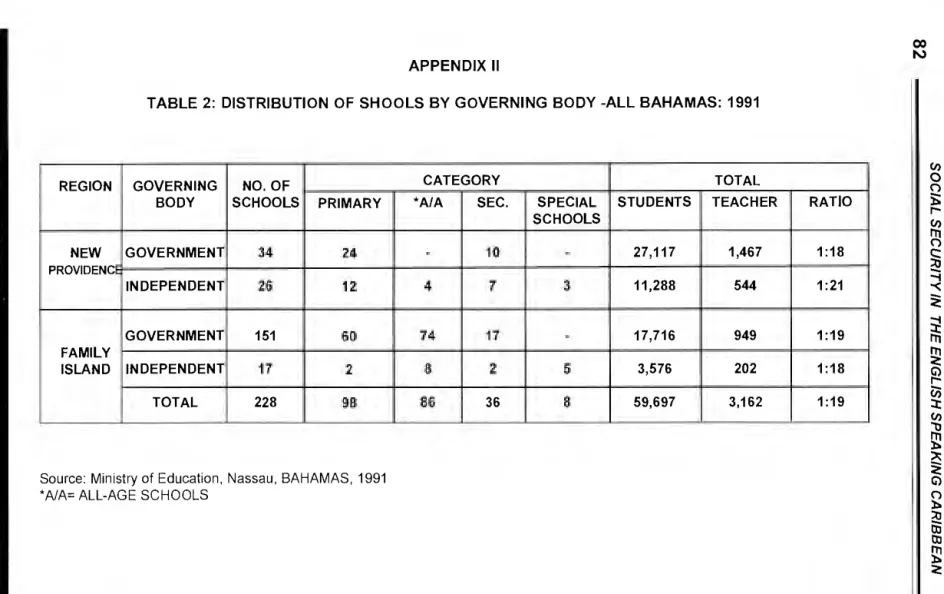
(59) SOCIAL SECURITY IN THE BAHAMAS. 49 The Constitution of the Bahamas, consist of fundamental principies which provide for the protection of the basic rights and freedoms of its citizens. The Constitution provides for representative government, with a Prime Minister and a Cabinet of Ministers having responsibility for the day-to day conduct of their respective Ministries (Departments). (1, 3, 4, 5) The Three divisions of government as set out in the Constitution are: Parliament, The Executive Branch and The Judiciary.. EDUCATION Bahamian education is under the jurisdiction of the Minister and the Ministry of Education. Education is compulsory between the ages of five and 14 years; however, most students remain in school until age 17 to complete their secondary education. Education may be obtained from public (free), or private independent schools (fees payable), from grades 1 through 12. There are 228 schools in the Bahamas, 98 of which are primary schoolsgrades 1 through 6; 86 of which are all-age schools-grades 1 through 9; 36 are secondary schools - grades 7 through 12; and there are eight (8) special schools which cater to students with special needs, for example, deaf, blind and the mentally retarded. See appendix II, page 82, for the distribution of schools in the Bahamas. (2, 3, 4, 8). There are six (6) institutions offering higher education in the Bahamas. These are: The College of the Bahamas (COB), a two year liberal arts college established in 1974 by the Bahamas Government; the University of the West Indies (regional), affiliated with the Bahamas since 1960; The Bahamas since 1960; The Bahamas Hotel Training College, which offers undergraduate studies in hotel management; the Industrial Training Programme established by the government in cooperation with industry to provide basic trade skills; the University of Miami (Bahamas), affiliated with the College of the Bahamas since 1978; and the College of St. Benedicts/ St. John's University, Bahamas extension programme, affiliated with The Bahamas since 1974. In 1992, the total enrolment in educational institutions in The Bahamas was 60,312. (3, 4, 5, 6, 8)..
(60) SOCIAL SECURITY IN THE ENGLISH SPEAKING CARIBBEAN. 50 The Literacy rate for The Bahamas was 97.0% in 1990, up from 91.6% in 1980. (5). HEALTH The health care system of The Bahamas falls under the purview of the Minister and Ministry of Health and Environment (MOHE). The mission statement for the Mohe states that: "The goal of the health system for the Commonwealth of The Bahamas is to con tribute to improvement in the quality of life, and thereby to add to the opportunity for residents of The Bahamas to live a productive life of physical, mental and social wellbeing and not merely the absence of disease and infirmity. To this end, the health system provides for an appropriate mix of promotive, preventive, curative, rehabilitative and environment health services, as well as for health education for providers and the general public." (9,10).. A number of current principies guide the delivery of health services, viz.: Comprehensiveness -The health system includes a broad spectrum of activities directed to promotion, disease prevention, education for providers and the public, illness diagnosis, treatment, rehabilitation, environmental health and the development of coordinated health policy. The system also encourages continuity and flexibility among the various parts. Accountability -The health system is built on principies of universality and accessibility; providers and consumers therefore have a mutual obligation to use finite resources appropriately and responsibly. Cost Effectiveness - The provision of health services is concerned with the optimal balance among cost, appropriateness and quality of care, and efficient utilization of services. Equity - Each individual has an equal opportunity to attain a healthy life and to have access to appropriate health care services..
(61) SOCIAL SECURITY IN THE BAHAMAS. 51 Quality - Health care is concerned with the quality of life, which emphasizes adding "life to years", not just "years to life". Health care, furthermore, involves quality of care, which implies timely, competent and considerate provision of services. Informed Choices - Public involvement is fundamental to the health system. Each individual is entitled and encouraged to take and active part in the decisions and choiceswhich affect his or her life. Individuals are also expected and given an opportunity to provide input into the level, extent and development of health care services in their community. Commitment to the Future - Investment decisions are continually required to ensure excellence of the system and its ability to meet future challenges. Health promotion, reduction of environmental hazards, health research and planning investment in human capital through education of providers, and innovation in the origin and financing of health care are key areas of investment and commitment to the future. the process of making investment decisions may involve re-allocation of existing resources as well as allocation of new resources, both within and beyond the formal health care system. (9,10) Primary health care in The Bahamas is provided through a network of 107 community and satellite clinics, strategically located throughout the country, operated by the MOHE through its Public Health Department. In New Providence, this network of clinics are supported by one large, privately operated clinic - the Agnes Hardecker Laboratory and Children's Clinic, which is owned and operated by the Roman Catholic Diocese of the Bahamas. These clinics vary in size, complexity and scope of services from new, modern, purpose-built complexes, fully equipped with in-patient facilities, dental, pharmaceutical and X-ray departments, to one (1) room in a community building. Eleven (11) of these community health clinics have been constructed and equipped by the National Insurance Board of The Bahamas, with funds over $13 million - from its Medical Benefits Branch. These large, modern, well appointed clinics are located on the islands of Abaco (2), Andros (3), Cat Island (1), Crooked Island (1), Long Island (1), and New Providence (3)..
(62) SOCIAL SECURITY IN THE ENGLISH SPEAKING CARIBBEAN. 52. three (3) more clinics are presently under construction on the islands of Andros, Bimini and San Salvador. When completed, they too will be turned over, fully equipped, to the MOHE (7, 11, 12, 13). Specialist clinics, secondary and tertiary care are available on New Providence and to a lesser extent, Grand Bahama. There are five (5) Hospitals in The Bahamas; three (3) are government owned and operated, and two (2) are private. These include: The Princess Margaret Hospital - A large, 484-bed, government owned and operated facilityon Shirley Street neardown-town Nassau. In-patient departments include among others: Medical, Surgical, Gastroenterology, Maternity, Cardiology, Ophthalmology, orthopaedic, Obstetric, Urology, Paediatrics, Gynaecology, Neurology, Ear, Nose and throat, Intensive Care and Burns, as well as two (2) private wards. Ambulatory departments include -Accident and Emergency, Dialysis, Laboratory (including) blood bank), X-ray, Physiotherapy, General Practice and Specialty Clinics, Dental and Pharmacy. ii. The Sandilands Rehabilitation Centre - A combination 133-bed Geriatric Hospital, and 344-bed Psychiatric Hospital, situated in Sandilands Village - the eastern district of New Providence. Some of the departments include: Geriatric, Child and Family Guidance Centre, detoxification/Evaluation Unit, Alcoholic Unit, Maximum Security Unit and Day Hospital Features.. iii. The Rand Memorial Hospital - A government owned/operated 90bed facility on east Atlantic Drive in Freeport, Grand Bahama. Some ofthe departments with specialist coverage include: Medical, Surgical, Obstetric and Gynaecology, Paediatrics, Psychiatry, Pathology, Radiology and Clinical Labs as well as Accident and Emergency.. iv. Doctors Hospital - A privately owned/operated, acute 72-bed hospital on the corners of Shirley Street and Collins Avenue near downtown Nassau. The following medical specialties are available: Ear, Nose and Throat, General Surgery, Orthopaedic Surgery, Obstetrics and Gynaecology, Interna' Medicine, Family Medicine, Gastroenterology, Ophthalmology, U rology, Cardiology, Intensive.
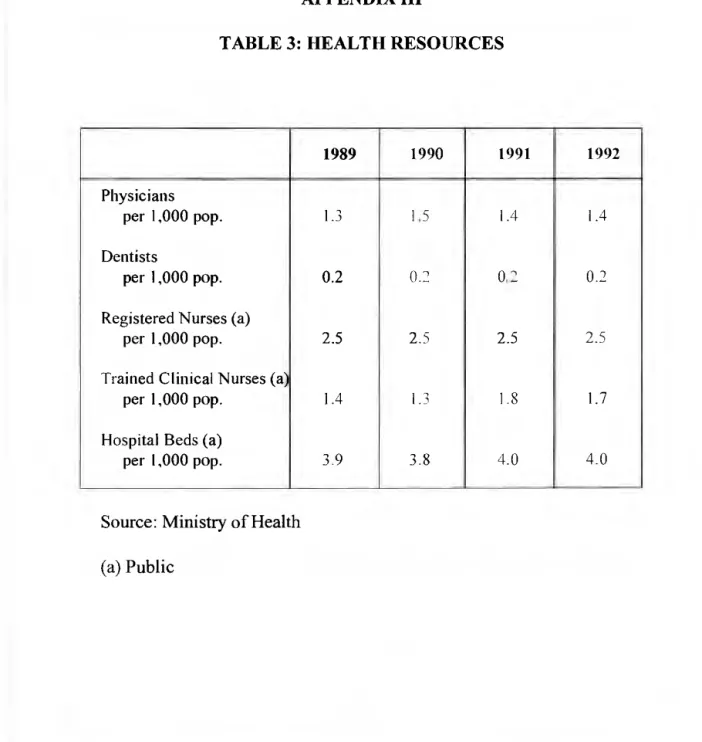
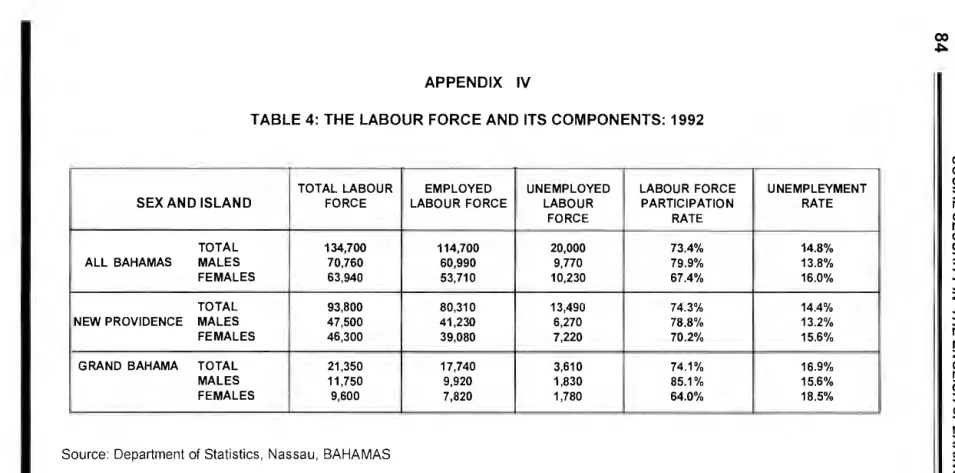
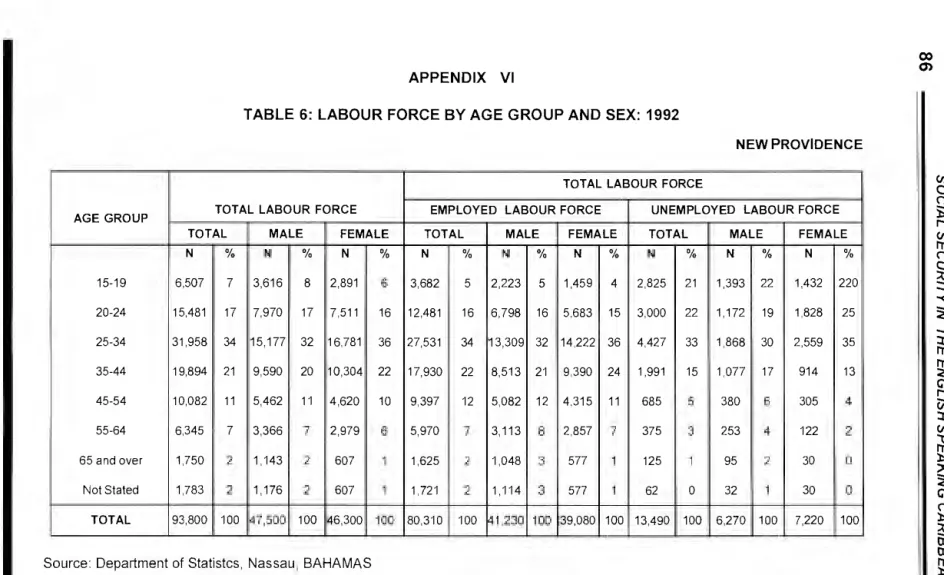
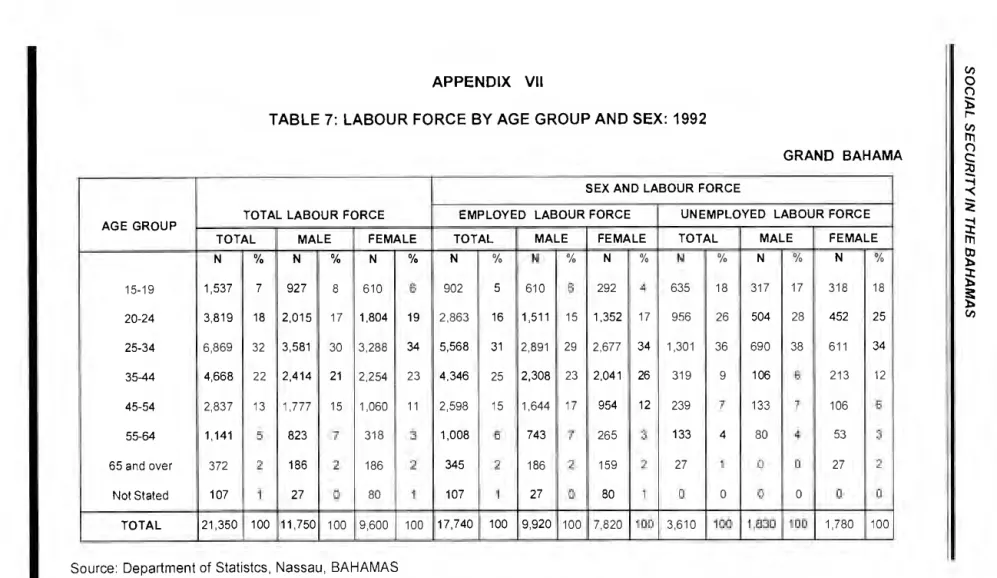
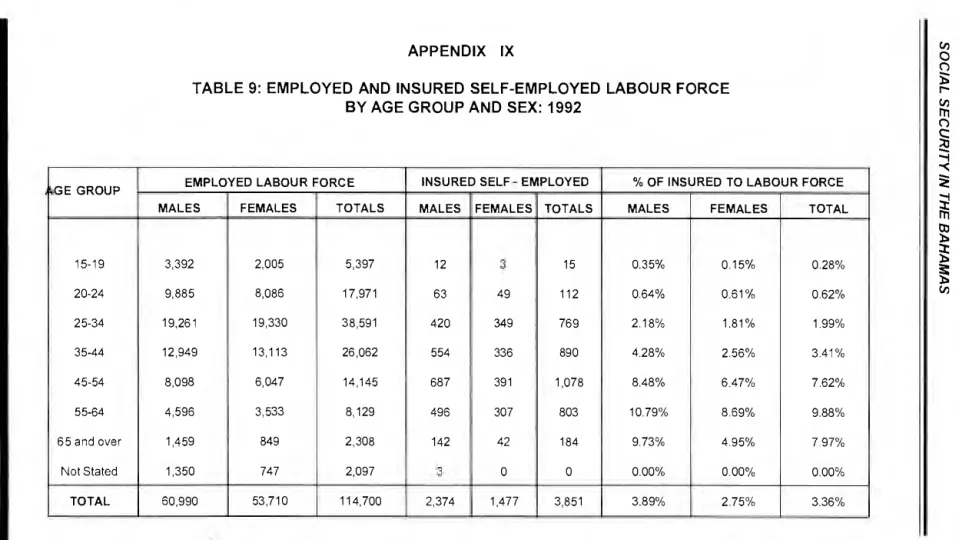
(63) SOCIAL SECURITY IN THE BAHAMAS. 53 Care, Radiology and Emergency Medicine as well as Pharmacy, Clinics Laboratories and Blood Bank. y. The Lyford Cay Hospital/The Bahamas Heart Institute - A privately owned/operated, 14-bed hospital in Lyford Cay in the western district of New Providence. The hospital is affiliated with the Duke Medical Centre in North Carolina and the Miami Heart Institute on Miami Beach, Florida (4, 9, 10). See Table 3, Appendix III, on page 83 for Health Resources. (4) There is a nominal fee for health care services from government facilities, however, no one is den ied care because of an inability to pay. Cost for private health care services varíes depending on whether the care is in a private or semi private room and on the nature of the condition/medical specialities involved. Coverage of such care is generally by means of individual health insurance. there is a wide range of insurance providers in The Bahamas. (4, 9, 10) Life expectancy at birth for 1990 in The Bahamas was 68.32 years for males and 75.28 females. (4). EMPLOYMENT The Bahamas has an adequate supply of skilled and semi-skilled labour suitable for most trades and professions. in 1992, the total employed labour force was 113,500. In 1992, there were 114,700 economically active persons in The Bahamas. Of this total, 82,650 or 67.49 percentwere in New Providence; 19,030 or 16% were in Grand Bahama and 17,270 or 14 percentwere in the other Family Islands. see Appendix IV through VII pages 84 to 87, for the Labour Force by Age, Locale and Sex. Those omitted included: housewives; students; persons in institutions; persons who are dependent on others; and persons who are unable to be economically active because of long term iII health. See Appendix VIII through XI, pages 88 - 91, for the Employed Labour Force and Specific Characteristics by Age Group and Sex, 1992. There is a relatively, large pool of unskilled immigrant workers, many of whom are living and working in The Bahamas illegally,.
(64) SOCIAL SECURITY IN THE ENGLISH SPEAKING CARIBBEAN. 54 who are primarily deployed in the agriculture, construction and domestic fields. (2, 3, 4, 5) With a per capita GDP of $11,633, The Bahamas is a stable, middle income, developing nation whose economy is based mainly on tourism and offshore banking. Tourism generates about 50 per cent of the total GDP and employs directly or indirectly, more than half of the total work force. (4) The Bahamian dollar is on par with the US dollar B$1=US$1.. 1.3 THE EVOLUTION OF SOCIAL SECURITY IN THE BAHAMAS. PRE-SOCIAL SECURITY YEARS One of man's greatest quest from primitive years, has been to find means to protect himself from the consequences of illness, accident, misfortune, death of the breadwinner, and other hazards of life. Prior to the introduction of the more formal arrangements of social security, there were various kinds of communities that provided him with some form of social and economic protection. (19) It is interesting to trace the early moves toward the development of national social security in nnany of the English-speaking Caribbean countries. "Thrift Institutions", "Friendly Societies", and "Mutual Aid Associations" were part of the pattern of life during the nineteenth and the early part of the twentieth centuries. Whilst the ideas for these came mostly from overseas, they were given a very distinctive West Indian flavour, and the "Susu", which to this day under various names remains a part of West Indian mutual aid, sprang from the African community itself. (20) Early social security developments included the setting up of welfare institutions, relief for the poor and the indigent, and a workmen's compensation legislation in 1916. (20) In The Bahamas, there were various charitable organizations that arranged sick aid, burial of the dead, and welfare benefits on a co-operative basis using membership dues and taxes. These organizations were know as.
(65) SOCIAL SECURITY IN THE BAHAMAS. 55 "Friendly Societies", "Lodges", "Burial Societies" and clubs. Churches of various denominations also made contributions to relieve the sufferings of their parishioners as best they could. It was not until the early years of this century, that more formal arrangements were made by government tocare for the poor and needy. (15) Some of these arrangements were: 1.. The Pauper Ration The earliest legislation that can be found is The Rules of November, 1915, which gave the Relieving Officer of The Bahamas General Hospital, the authority to issue aid to the indigent who applied for it. The rules have been amended considerably over the years, but in effect they remain as quoted under Section 6 of the Health Services Act (Chapter 215), which states: "Subject to any Rules prescribed by the Minister, medical and surgical attention and requisites shall be supplied by the department at public expense to: (a) such poor or indigent persons as may need and apply for them". (15). When the Minister of Health had this responsibility, rations were issued monthly at the Princess Margaret Hospital to New Providence recipients. and shipped quarterly to Family Island Commissioners for distribution in their respective districts. Early in 1969, the Ministry of Labour and Welfare assumed responsibility for Pauper Rations (poor relief). (15) 2.. OId Age Pension On July 16, 1956, a select committee was appointed in the House of Assembly (Parliament), to consider the advisability of introducing the payment of a pension to aged persons. This committee reported to the House in the form of a Bill on June 11, 1957, and the Old Age Pension Act was passed on June 17, 1957. Provisions were made to pay females attaining age 60 years and males 65 years -10 shillings per week. In 1963, the payment was increased to 15 shillings and on January 1, 1967, a further increase to $3 a week was approved.. 3.. Disability Allowance As far can be accurately ascertained, disability allowance was introduced in 1967. The sum of $50,000 was approved by Cabinet on.
(66) SOCIAL SECURITY IN THE ENGLISH SPEAKING CARIBBEAN. 56 September 27, in the form of a special warrant (N°126), for persons who suffered a temporary or permanent disablement and who did not qualify for old age pension. The payment was $3 a week. (15) 4.. Family and Child Care In the early 1940's Nurse Eunice "Birdie" Tyler, affectionately known as "Mother Tyler", operated the Goodwill Centre for girls on Quarry Mission Road. It is said that she received some assistance from Government, but it is a known fact that community support maintained the Centre until 1946 when Nurse Tyler was forced to close for lack of funds (15) The Bahamas Christian Brotherhood was the first group on record to openly and specifically work and agitate for child care in The Bahamas. This organization found sympathetic ears at Government House, where the Child Protection Committee was first formed and encouraged. This Committee was organized during the administration of Governor Murphy and held its first meeting in May, 1949. (15) The Bahamas Red Cross also supplied welfare services for children in need from the early 1940's. Their District Nursing Service and I nfant Welfare Clinics were a greatsupport to the community, and eventually, Government assumed the burden of these two services. The first Child Care Officer (Mrs. Frances Ledee), was a Welfare Officer employed bythe Red Cross and detailed to work under the supervision and direction of the Child Protection Committee. (15) In November, 1950, the Children and Young persons Protection Rules were gazetted. The Act which was later passed, enabled the Minister of Welfare to accept into his care on a Fit Person Order, children committed by the Juvenile Court. Such children include those who have been found to be neglected, ill-treated, or who have committed an offence, but because of some factors in the family situation are felt to be better dealt with in this way. These are children who are generally placed in Foster Homes, The Children's Emergency Shelter, Ranfurly Home, the Elizabeth Estates Children's Home, the Bilney Lane Children's Home, and the Industrial School..
(67) SOCIAL SECURITY IN THE BAHAMAS. 57 The Ministry of Welfare was authorized to pay up to a maximum of ten dollars($10) per child weekly in maintenance allowance. Today, the Ministry of Social Development also gives assistance to persons on probation and annual grants to the Salvation Army, Children's Emergency Hostel, Ranfurly Home, the Elizabeth Estates and Bilney Lane Children's Homes, as well as to Senior Citizens Homes. (25). 5.. Assistance to Destitute Out Islanders This assistance was the responsibility of the Ministry of Out Islands Affairs prior to ministerial portfolio changes in 1969, when it was transferred to the Ministry of Labour and Welfare. Assistance was provided on a small scale to: i destitute out islanders who could not qualify for old age pension because of age; ii renovate or rebuild dwelling houses that were unfit for habitation; iii disabled persons who were unemployable; iv fire victims; flood victims; and vi hurricane victims. Assistance was also given to shipwrecked seamen and to discharged prisoners. (15). HISTORICAL DEVELOPMENT TO THE INTRODUCTION OF THE NATIONAL INSURANCE SCHEME In The Bahamas, the only public provision apart from employers' schemes and those of charitable institutions, were Workmen's Compensation (1943), old age non-contributory pensions (1952), an administrative scheme of public assistance for temporary or permanent invalids (1967), and welfare schemes for children in need of care and protection (1947). (17).
(68) SOCIAL SECURITY IN THE ENGLISH SPEAKING CARIBBEAN. 58 Alter careful review, the government carne to the conclusion in 1969, that these schemes, except for children's care and protection, were inadequate, fragmented and needed to be substituted by a modern system of social security. Preliminary informal discussions in Geneva that year, revealed the International Labour Organization's (ILO)willingness to assist; and in 1970, the Government sought the assistance of the ILO, through the United Nations Development Programme (UNDP), with a study on the feasibility of introducing a comprehensive social security scheme for Bahamians. (15,17) In 1971, the I LO issued a report (I LO/TAP/BAHAMAS/R1) to the government of the Commonwealth of the Bahamas on the planning of social security. This report of the ILO mission, called for an accelerated programme of action. It stated in part: "The establishment of a comprehensive social security scheme on a contributory basis represents the major new instrument for achieving income security for the working population. Parallel to it, an overhaul and an improvement of welfare and assistance measures should be actively pursued to reach the poorest sections of the population which may not immediately benefit from a social security scheme designed to meet the needs of the employed population". The report further stated that, "the economic, social and administration conditions of the Bahamas fullyjustify the encouragement of an accelerated social security programme as a means of contributing to raising living standards throughout the country". (21) That same year, the government appointed an Advisory Committee comprising representatives of government, trade unions and employers, with terms of reference to recommend, among other things, the most acceptable and comprehensive form of social security for the Bahamas. The Joint Advisory Committee had the assistance of three (3) experts from the ILO, dealing respectively with administration, finance and actuarial matters. The Joint Advisory Committee held a number of meetings, and after a considerable amount of hard work, produced not only an interim and final report, but a draft of an Enabling Bill providing the legislative framework for the generation of regulations containing the details ofthe various components.
(69) SOCIAL SECURITY IN THE BAHAMAS. 59 of the Scheme. This Enabling Bill was passed into law on 12th December, 1972, and carne to be known as the National Insurance Act, 1972.. CHAPTER 320 STATUTE LAWS OF THE BAHAMAS 1987 THE NATIONAL INSURANCE ACT. "AN ACT TO ESTABLISH A SYSTEM OF NATIONAL INSURANCE PROVIDING PECUNIARY PAYMENTS IN RESPECT OF SICKNESS, INVALIDITY, MATERNITY, RETIREMENT, DEATH, INDUSTRY INJURY AND DISABLEMENT AND DEATH FROM INDUSTRY INJURY, MEDICAL CARE, AND OF SOCIAL ASSISTANCE FOR INSURED AND OTHER PERSONS NOT QUALIFYING FOR SUCH PAYMENTS AS OF RIGHT AND FOR PURPOSES CONNECTED WITH OR INCIDENTAL TO THE MATTERS AFORESAID.. 21 of 1972 12 of 1974 7 of 1981 3 de 1984 10 de 1986. (12th December, 1972) (Commencement: Provisions other than provisions relating to self-employed: 7th October, 1974; Provisions relating to self-employed persons: 5th April, 1976)". Currently with the passage of the Bill into law, the JointAdvisory Committee, with expert advice, drafted 12 sets of regulations dealing with the detailed technical aspects of the Scheme. Ten (10) sets of these regulation were approved by both Chambers of the Legislative in 1974, and the remaining two sets were similarly approved in 1975.. THE BASIC OBJECTIVES OF THE SCHEME The basic objectives of a comprehensive National Insurance Scheme for the Bahamas were to provide income security during the contingencies of: temporary sickness; permanent invalidity ; maternity of female workers; retirennent from work on account of age; loss of support through the death of a the death of a breadwinner; loss of work, wholly or partially, as a result of employment injury or loss of support owing to the death of a breadwinner.
(70) SOCIAL SECURITY IN THE ENGLISH SPEAKING CARIBBEAN. 60 as a result of employment injury; and the need for medical care for a person suffering from employment injury. It should be noted that the ILO's Report did not recommended the provisions of: (1) general family allowances; (2) unemployment benefit; or (3) insurance for the cost of medical care for the population as a whole. The magnitude of the Scheme as outlined, was in itself a massive undertaking, and it was felt that to include more at that stage would be too much. Nevertheless, the National Insurance Scheme in its present form represents a radical departure from the previous system(s) of social welfare protection. The Scheme was designed, and is intended to take into account some of the basic social problems confronting the people of the Bahamas, and find workable solutions through mutual cooperation. The Scheme was developed out of an awareness of the need for change; the recognition of an expanding economic system, and a feeling of responsibility for all the people of the Commonwealth of The Bahamas. In its present stage, the National Insurance Scheme represents a commitment of still greater efforts and accomplishments in the years ahead. The National Insurance Scheme is designed to embrace within its scope, all employed and self-employed persons aboye the upper limit of compulsory school age. It was however, applied first to employed persons and only after the initial phase was firmly established, was it extended to the selfemployed. Provisions was also made for voluntary contributions by persons no longer employed or self-employed. The National Insurance Scheme of The Bahamas therefore, consists of a three part programme: (i). General Benefits Programme, provided under a social insurance concept. (ii). an Assistance Programme, provided under a social welfare concept; and. (iii). an Industrial Benefits Programme, which replaced the former Workmen's Compensation Act, under which injured workers are.
(71) SOCIAL SECURITY IN THE BAHAMAS. 61 provided a wide range of benefits, including free-medical-care to the injured worker.. THE INTRODUCTION OF THE NATIONAL INSURANCE SCHEME The introduction of the National Insurance Scheme was carefully timed so that it was not brought into force all at once, but rather in stages on a set time-table as follows: 1.. The first stage or the "First Appointed Doy" was on 7th October, 1974. on that day: (a). the National Insurance Act and 10 sets of the Regulations were brought into force;. (b). all employed persons (and their employers) were brought compulsorily into the Scheme and payment of contributions by these persons became mandatory;. (c). the Old Age Pensions Act was repealed and replaced by the National Insurance Act;. (d). all persons in receipt of Old Age Pension, under the Old Age Pensions Act, and other persons granted public assistance administratively, that is, invalidity assistance and survivors' assistance, were covered under special provisions ofthe National Insurance Scheme, which provides for financial assistance to be granted to persons who do not qualify for benefits. Persons applying for assistance after this date became subject to a "test of resources" to determine their eligibility for the assistance.. Introduction of the Benefits began with Sickness Benefit - First Benefit payable on the 7th April, 1975, to insured persons who had paid 26 contributions. This contribution condition continued up to the 7th October, 1975, when it went on a "sliding scale" of one (1) additional contribution for each week up to the 13th March, 1976, when the scale leveled off at the basic requirement of 50 paid contributions. The maximum and minimum payable in 1975 was $56.
Figure

+7



Documento similar