
Association of physical activity with muscular strength and fat free mass in adolescents; The HELENA Study
27
0
0
Texto completo
(2) *. HELENA Study Group. Note: The content of this paper reflects only the authors’ views and the rest of HELENA study members are not responsible for it. Co-ordinator: Luis A. Moreno. Core Group members: Luis A. Moreno, Fréderic Gottrand, Stefaan De Henauw, Marcela González-Gross, Chantal Gilbert. Steering Committee: Anthony Kafatos (President), Luis A. Moreno, Christian Libersa, Stefaan De Henauw, Jackie Sánchez, Fréderic Gottrand, Mathilde Kersting, Michael Sjöstrom, Dénes Molnár, Marcela González-Gross, Jean Dallongeville, Chantal Gilbert, Gunnar Hall, Lea Maes, Luca Scalfi. Project Manager: Pilar Meléndez. 1. Universidad de Zaragoza (Spain) Luis A. Moreno, Jesús Fleta, José A. Casajús, Gerardo Rodríguez, Concepción Tomás, María I. Mesana, Germán Vicente-Rodríguez, Adoración Villarroya, Carlos M. Gil, Ignacio Ara, Juan Revenga, Carmen Lachen, Juan Fernández Alvira, Gloria Bueno, Aurora Lázaro, Olga Bueno, Juan F. León, Jesús Mª Garagorri, Manuel Bueno, Juan Pablo Rey López, Iris Iglesia, Paula Velasco, Silvia Bel. 2. Consejo Superior de Investigaciones Científicas (Spain) Ascensión Marcos, Julia Wärnberg, Esther Nova, Sonia Gómez, Esperanza Ligia Díaz, Javier Romeo, Ana Veses, Mari Angeles Puertollano, Belén Zapatera, Tamara Pozo. 3. Université de Lille 2 (France).
(3) Laurent Beghin, Christian Libersa, Frédéric Gottrand, Catalina Iliescu, Juliana Von Berlepsch. 4. Research Institute of Child Nutrition Dortmund, Rheinische Friedrich-WilhelmsUniversität Bonn (Germany) Mathilde Kersting, Wolfgang Sichert-Hellert, Ellen Koeppen. 5. Pécsi Tudományegyetem (University of Pécs) (Hungary) Dénes Molnar, Eva Erhardt, Katalin Csernus, Katalin Török, Szilvia Bokor, Mrs. Angster, Enikö Nagy, Orsolya Kovács, Judit Répasi. 6. University of Crete School of Medicine (Greece) Anthony Kafatos, Caroline Codrington, María Plada, Angeliki Papadaki, Katerina Sarri, Anna Viskadourou, Christos Hatzis, Michael Kiriakakis, George Tsibinos, Constantine Vardavas Manolis Sbokos, Eva Protoyeraki, Maria Fasoulaki. 7. Institut. für. Ernährungs-. und. Lebensmittelwissenschaften. –. Ernährungphysiologie. Rheinische Friedrich Wilhelms Universität (Germany) Peter Stehle, Klaus Pietrzik, Marcela González-Gross, Christina Breidenassel, Andre Spinneker, Jasmin Al-Tahan, Miriam Segoviano, Anke Berchtold, Christine Bierschbach, Erika Blatzheim, Adelheid Schuch, Petra Pickert. 8. University of Granada (Spain) Manuel J. Castillo Garzón, Ángel Gutiérrez Sáinz, Francisco B. Ortega Porcel, Jonatan R Ruiz, Enrique García Artero, Vanesa España Romero, David Jiménez Pavón, Cristóbal Sánchez Muñoz, Victor Soto, Palma Chillón, Jose M. Heredia, Virginia Aparicio, Pedro Baena, Claudia M. Cardia, Ana Carbonell..
(4) 9. Istituto Nazionalen di Ricerca per gli Alimenti e la Nutrizione (Italy) Davide Arcella, Giovina Catasta, Laura Censi, Donatella Ciarapica, Marika Ferrari, Cinzia Le Donne, Catherine Leclerq, Luciana Magrì, Giuseppe Maiani, Rafaela Piccinelli, Angela Polito, Raffaela Spada, Elisabetta Toti. 10. University of Napoli "Federico II" Dept of Food Science (Italy) Luca Scalfi, Paola Vitaglione, Concetta Montagnese. 11. Ghent University (Belgium) Ilse De Bourdeaudhuij, Stefaan De Henauw, Tineke De Vriendt, Lea Maes, Christophe Matthys, Carine Vereecken, Mieke de Maeyer, Charlene Ottevaere 12. Medical University of Vienna (Austria) Kurt. Widhalm,. Katharina. Phillipp,. Sabine. Dietrich,. Birgit. Kubelka. Marion Boriss-Riedl. 13. Harokopio University (Greece) Yannis Manios, Eva Grammatikaki, Zoi Bouloubasi, Tina Louisa Cook, Sofia Eleutheriou, Orsalia Consta, George Moschonis, Ioanna Katsaroli, George Kraniou, Stalo Papoutsou, Despoina Keke, Ioanna Petraki, Elena Bellou, Sofia Tanagra, Kostalenia Kallianoti, Dionysia Argyropoulou, Katerina Kondaki, Stamatoula Tsikrika, Christos Karaiskos. 14. Institut Pasteur de Lille (France) Jean Dallongeville, Aline Meirhaeghe, Szilvia Bokor, Nathalie Fievet, Louisa Goumidi. 15. Karolinska Institutet (Sweden).
(5) Michael Sjöstrom, Patrick Bergman, María Hagströmer, Lena Hallström, Mårten Hallberg, Eric Poortvliet, Julia Wärnberg, Nico Rizzo, Linda Beckman, Anita Hurtig Wennlöf, Emma Patterson, Lydia Kwak, Lars Cernerud, Per Tillgren, Stefaan Sörensen. 16. Asociación de Investigación de la Industria Agroalimentaria (Spain) Jackie Sánchez-Molero, Elena Picó, Maite Navarro, Blanca Viadel, José Enrique Carreres, Gema Merino, Rosa Sanjuán, María Lorente, María José Sánchez, Sara Castelló. 17. Campden & Chorleywood Food Research Association (United Kingdom) Chantal Gilbert, Sarah Thomas, Elaine Allchurch, Peter Burguess. 18. SIK - Institutet foer Livsmedel och Bioteknik (Sweden) Gunnar Hall, Annika Astrom, Anna Sverkén, Agneta Broberg. 19. Meurice Recherche & Development asbl (Belgium) Annick Masson, Claire Lehoux, Pascal Brabant, Philippe Pate, Laurence Fontaine. 20. Campden & Chorleywood Food Development Institute (Hungary) Andras Sebok, Tunde Kuti, Adrienn Hegyi. 21. Productos Aditivos SA (Spain) Cristina Maldonado, Ana Llorente. 22. Cárnicas Serrano SL (Spain) Emilio García. 23. Cederroth International AB (Sweden).
(6) Holger von Fircks, Marianne Lilja Hallberg, Maria Messerer. 24. Lantmännen Food R&D (Sweden) Mats Larsson, Helena Fredriksson, Viola Adamsson, Ingmar Börjesson. 25. European Food Information Council (Belgium) Laura Fernández, Laura Smillie, Josephine Wills. 26. Universidad Politécnica de Madrid (Spain) Marcela González-Gross, Agustín Meléndez, Pedro J. Benito, Javier Calderón, David Jiménez-Pavón, Jara Valtueña, Paloma Navarro, Alejandro Urzanqui, Ulrike Albers, Raquel Pedrero, Juan José Gómez Lorente.. The Corresponding Author has the right to grant on behalf of all authors and does grant on behalf of all authors, an exclusive licence on a worldwide basis to the BMJ Publishing Group Ltd and its Licensees to permit this article (if accepted) to be published in BJSM editions and any other BMJPGL products to exploit all subsidiary rights, as set out in our licence. http://bjsm.bmjjournals.com/ifora/licence.dtl.
(7) ABSTRACT Objective: To analyze the association of objectively assessed physical activity (PA) with muscular strength and fat free mass in adolescents, and to determine whether meeting the current PA recommendations is associated with higher levels of muscular strength and fat free mass. Subjects/Methods: The present cross-sectional study comprised 363 Spanish adolescents (180 females) aged 12.5-17.5 years. PA was assessed by accelerometry and expressed as average PA (counts/min), and min/day of inactive, light, moderate, vigorous and moderate to vigorous PA (MVPA). MVPA was dichotomized into <60 min/day and 60. Upper body muscular strength was measured with the handgrip strength test, and lower body muscular strength was measured with the standing broad jump, squat jump, counter movement jump and Abalakov tests. Fat free mass was measured by DXA. Results: We observed positive associations between vigorous PA and all the lower body muscular strength tests except for the counter movement jump in males. PA was not associated with fat free mass in both males and females. Male adolescents engaged in at least 60 min/day MVPA performed better in the standing broad jump test. Conclusions: The findings of the present study suggest that only vigorous PA is associated with muscular strength, particularly lower-body muscular strength in male adolescents.. Keywords: Physical activity; Muscular strength; Fat free mass; Accelerometer; Adolescents..
(8) INTRODUCTION There is compelling evidence highlighting the role of muscular strength in the performance of exercise and activities of daily living as well as in improving health and preventing disease in adult population1 2 In young people, high levels of muscular strength are associated with a healthier cardiovascular profile and higher levels of bone mineral content.3 Prospective studies showed that muscular strength improvements from childhood to adolescence are inversely associated with central adiposity, yet there is limited evidence on the associations with other cardiovascular disease risk factors such as systolic blood pressure or blood lipids and lipoproteins.1 Fat free mass is the major predictor of muscular strength.4. A loss of muscle mass with aging is thought to contribute to the development of functional limitations and disability in old age, which may partially explain the association between strength and mortality.5 Fat free mass is a strong predictor of bone mineral content,6 7 and has an independent effect on insulin sensitivity and glucose disposal.8-12 Age-specific resistance training improves muscular strength through increases in fat free mass, optimization in motor unit recruitment and synchronization and metabolic adaptations of muscle fiber.13 Resistance training is currently recommended by the major health organizations for improving health and fitness.2 14 15 During adolescence, muscular strength is influenced by gender, body composition (i.e., fat free mass) and pubertal status. Several studies have reported that daily physical activity (PA) provides an important stimulus over musculoskeletal system that could be capable of improving muscular strength by increasing fat free mass.16-18 We have previously reported that meeting current PA recommendations is associated with a better cardiorespiratory fitness in adolescents,19 but is unknown whether it is also associated with a higher muscular strength and fat free mass..
(9) The existence of some contradictory findings, the lack of objective assessment of PA in relation to muscular strength and fat free mass, and the fact that most of the studies have not controlled the influence of potential confounders like body composition or pubertal status, make necessary further studies analyzing the association of PA with muscular strength and fat free mass. Therefore, the purpose of the present study was to determine the association of objectively assessed PA with muscular strength and fat free mass in a sample of Spanish adolescents participating in the HELENA-CSS (Healthy Lifestyle in Europe by Nutrition in Adolescence Cross-Sectional Study). We also determined whether meeting the current PA recommendations20 was associated with higher levels of muscular strength and fat free mass..
(10) RESEARCH METHODS AND PROCEDURES Subjects The HELENA-CSS is a multi-centre, cross-sectional study performed in 10 European cities that was designed to obtain reliable and comparable data in a sample of European adolescents.21 The present study comprised 363 (180 females and 183 males) adolescents from Zaragoza (Spain) with valid data for at least one muscular strength test, fat free mass by Dual Energy X-ray Absorptiometry (DXA) and objectively assessed PA. After receiving complete information about the aims and methods of the study, all adolescents and their parents or guardians signed the informed written consent. All participants were recruited at schools and met the general HELENA-CCS inclusion criteria: age range 12.5-17.5 years, not participating simultaneously in another clinical trial and be free of any acute infection lasting less than 1 week before the inclusion.21 The study was performed following the ethical guidelines of the Declaration of Helsinki 1961 (revision of Edinburgh 2000). For the Spanish sample, the study protocol was approved by the Research Ethics Committee of the Government of Aragón (CEICA; Spain). Complete description of ethical issues and good clinical practice within the HELENA-CSS can be found elsewhere.22 Physical Activity A uni-axial accelerometer (Actigraph MTI, model GT1M, Manufacturing Technology Inc., Fort Walton Beach, FL, USA) was used to assess PA. Adolescents were instructed to place the monitor underneath the clothing, at the lower back, using an elastic waist band and wear it for seven consecutive days. They were also instructed to wear the accelerometer during all time awake and only to remove it during water based activities. At least three days of recording with a minimum of 8 hours registration per day was set as an inclusion criterion. In this study, the time sampling interval (epoch) was set at 15 seconds. Average PA was defined.
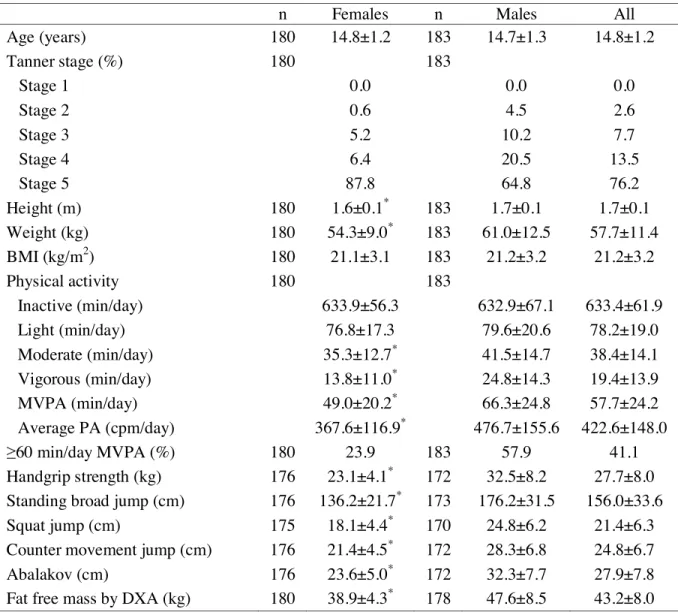
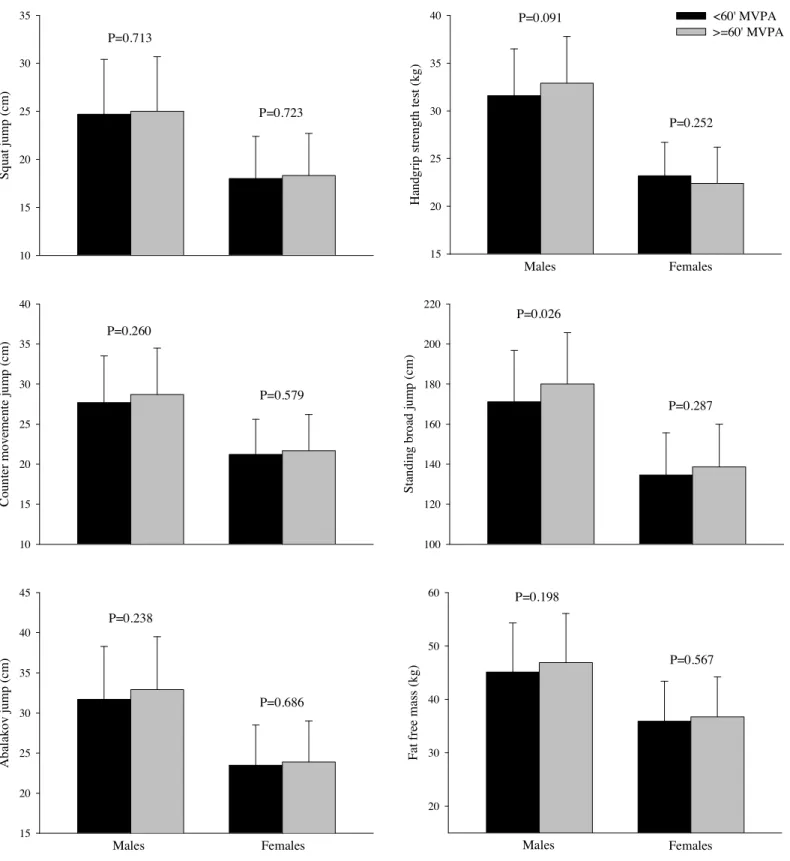
(11) as the sum of recorded counts per epoch divided by total daily registered time expressed in minutes. Time spent in inactivity and light intensity PA was defined as the sum of time (in minutes) per day in which counts per minute (cpm) were <500 and 500-1999 respectively. The time engaged at moderate PA [3-6 metabolic equivalents (METs)] was calculated based upon a cut-off of 2000-3999 cpm which is approximately equivalent to a intensity of a brisk walk (4.5 km/h).23 The time engaged at vigorous PA (>6 METs) was calculated based upon a cut-off of 4000 counts per minute. Also, the time spent in at least moderate intensity level (>3 METs) was calculated as the sum of time spent in moderate and vigorous PA (MVPA). The cut-offs to define the intensity categories are similar to those used in previous studies.24 MVPA was dichotomized into <60 and. 60 min/day according to the recent guidelines. launched by the U.S. Department of Health and Human Services and other medical institutions.20 Muscular strength Muscular strength was assessed as previously reported by Ortega et al.25 Upper body muscular strength was measured with the handgrip strength test.26 Lower body muscular strength was measured with the standing broad jump, the Abalakov, the squat jump and the counter movement jump tests. The scientific rationale for the selection of these tests, as well as their reliability have been previously published.27 28 Physical examination The physical examination methods followed in the HELENA-CSS has been described in detail by Nagy et al.29 In brief, body height was measured to the nearest 0.1cm with a stadiometer SECA 225 while adolescents were standing barefoot. Body mass was determined to the nearest 0.05kg using a balance scale SECA 861 with the subject in their underwear. Body mass index (BMI) was calculated as body mass (kg) divided by height (m) squared..
(12) Pubertal status was evaluated by experienced physicians according to the criteria of Tanner and Whitehouse.30 Fat free mass Total fat free mass was assessed by DXA using a paediatric version of the software (QDRExplorer, Hologic Corp., Software version 12.4, Waltham, MA). The DXA was calibrated using a lumbar spine phantom as recommended by the manufacturer, and adolescents were scanned in supine position. Analysis of total fat free mass was performed using the extended research mode according manufacturer’s manual. Statistical analysis Data are presented as means ± standard deviation unless otherwise stated. Gender differences were assessed by one-way analysis of variance. Relationships of different indicators of PA (i.e., inactive, light, moderate, vigorous, MVPA, and average PA) with muscular strength tests (i.e., handgrip strength, standing broad jump, squat jump, counter movement jump and Abalakov) were analysed in separate linear regression models that always retained age, pubertal status and fat free mass as confounders. Relationships between PA and fat free mass were analysed by linear regression analysis after controlling for age and pubertal status. Since we observed a significant interaction effect for gender in the association of PA with muscular strength and fat free mass (all P<0.05), all analyses were performed separately for males and females. Differences in muscular strength (i.e., handgrip strength, standing broad jump, squat jump, counter movement jump and Abalakov tests) by time spent at MVPA (<60 vs 60 min/day) were analysed by one-way analysis of covariance (ANCOVA). MVPA was entered as fixed factor, muscular strength tests were entered as dependent variables and age, pubertal status and fat free mass were entered as covariates. We performed the same analyses with fat free mass as dependent variable and age and pubertal status as confounders. All the analyses.
(13) were performed using the Statistical Package for Social Sciences (SPSS, v. 16.0 for WINDOWS; SPSS Inc, Chicago) and the level of significance was set to <0.05..
(14) RESULTS The characteristics of the study population by sex are shown in Table 1. Males showed higher levels of muscular strength and fat free mass, and were more physically active than females (all P<0.001). The prevalence of males achieving at least 60 min/day MVPA was also higher than in females (57.9 vs 23.6% respectively, P<0.001). In females there was no association between PA and any strength test after controlling for age, pubertal status and fat free mass (Table 2). In males, vigorous PA was positively associated with the squat jump and the Abalakov tests as well as with the standing broad jump test (Table 2). In both males and females, PA was not associated with fat free mass after controlling for age and pubertal status (Table 2). Further controlling for muscular strength tests did not alter the results (data not shown). Male adolescents engaged in at least 60 min/day MVPA had higher levels in the standing broad jump test (Figure 1), whereas the other muscular strength tests as well as fat free mass were similar across MVPA categories (Figure 1). The results remained the same after removing fat free mass as a confounder..
(15) DISCUSSION The results of the present study suggest an association between vigorous PA and muscular strength in males but not in females. Among the studied PA variables, only vigorous PA was positively associated with lower body muscular strength (i.e., squat jump, Abalakov and standing broad jump tests) in males. This study also indicates that, except for standing broad jump test in males, meeting the current PA recommendation of 60 min/day MVPA does not ensure higher levels of muscular strength. Gender differences observed can be, at least in part, due to the differences in the relative time spent in vigorous PA by males and females. In fact, vigorous PA represents in males a 35.8% of the MVPA but only 25.5% in females. Furthermore, no association was observed between PA variables and fat free mass or between meeting/not meeting PA recommendations and fat free mass in the studied adolescents. The relationship of PA with muscular strength and fat free mass remains poorly understood especially in young people. Cross-sectional studies showed contradictory findings probably due to lack of objective assessment of PA and proper control for potential confounders (e.g., fat free mass or pubertal status). Sallis et al.31 found a weak relationship between a complex PA index and the pull-ups test in 274 boys and 254 girls aged 10 years. Similarly, Katzmarzyk et al.32 analyzed 356 boys and 284 girls (9-18 years) from the Québec Family Study and found a weak association between PA and static strength of the legs in a maximal voluntary isometric contraction at a knee angle of 90° and a low no significant association between PA and sum of 6 skinfolds. Ara et al.18 showed in 114 prepubertal boys (9.4±1.5 years) that participation in at least 3 hours per week of extracurricular physical activities and sport competitions was associated with higher squat jump performance and lower fat mass levels compared with non-participants. In contrast, Buchheit et al.33 showed no association between PA measured by accelerometry and counter movement jump test in a sample of 67 preadolescents. Foo et al.34 observed in 283 Chinese adolescent girls (15.0±0.9).
(16) a significant positive association of PA assessed by questionnaire with handgrip strength and fat free mass. Andersen et al.35 studied a representative Danish sample of 545 boys and 704 girls (15-19 years) and did not find any association between the kind of transport to school (e.g., passive, walking or cycling) and the performance in the Abalakov jump test. Longitudinal studies are scarce, showing unequal trends in the evolution of muscular strength and fat free mass in relation to PA. Andersen36 in a 2 years follow-up study with 259 randomly selected adolescents (16.5 years old) showed that changes in PA were not related to changes in arm extensor strength. Vicente-Rodriguez et al.16 analyzed fat free mass and muscular strength (e.g., counter movement jump and knee extension) in 28 children (17 soccer players 8.7±0.4 years and 11 nonphysically active 9.4±0.3 years) over a 3.3 years period and found a higher increase of the fat free mass in soccer players but no differences were observed in relation to muscular strength. Similarly, Baquet et al.37 studied 158 adolescents during 4 years (11-16 years) and showed that increasing or decreasing PA was not associated with changes in the performance of the standing broad jump test. Kanehisa et al.38 studied 12 tennis players (10.7-13.2 years) during 2 years showing a higher development in torque generation capability during high-velocity knee extensions than non-athletes. BaxterJones et al.17 examined longitudinally for 6 years 228 students (8-15 years) from the Saskatchewan Pediatric Bone Mineral Accrual Study and found a significant positive influence of the PA assessed by questionnaire on the development of fat free mass assessed by DXA. Likewise, Stenevi-Lundgren & Daly39 in a 12-month prospective controlled schoold based exercise intervention showed that increasing the amount of moderate intensity PA from 60 to 200 min/week was associated with an increase in lower limb peak muscle strength and fat free mass in 53 prepubertal females (7-9 years). Regardless of the evident gender differences, our results do not show any relationship between PA and fat free mass, and suggest that after controlling for the fat free mass,.
(17) vigorous PA is the minimum physical stimulus able to enhance muscular strength. Probably, the level of androgens in males and the differential timing of growth between genders during adolescence may partially explain these gender differences.40-43 Meeting the PA recommendations was not associated with higher levels of muscular strength or fat free mass, especially in females, which may indicate that other type of stimulus (e.g., regular sport participation or specific strength training) are needed in order to improve muscular strength and fat free mass.44 45 Due to our study design (cross-sectional), it is not possible to infer a causal relationship of PA with muscular strength or fat free mass. Although we controlled for several potential confounders, we cannot be certain that other unmeasured confounders such as the type of PA, nutrition or genetic factors do not have influenced our observations. The use of accelerometry to assess PA, the inclusion of different muscular strength tests, and the study of fat free mass measured by DXA are strengths of this study. The findings of the present study add new information about the association of PA with muscular strength and with fat free mass, and suggest that PA of high intensity is the only PA variable associated with greater muscular strength despite none of the PA variables studied are related with higher levels of fat free mass. In addition, our findings suggest that meeting the current PA recommendations does not ensure higher levels of muscular strength or fat free mass in adolescents. Further interventional studies examining other PA variables like type of PA and/or genetic factors, in addition to PA, muscular strength components and fat free mass are still needed for a better understanding of these associations in youth..
(18) ACKNOWLEDGMENTS The HELENA Study took place with the financial support of the European Community Sitxth RTD Framework Programme (Contract FOOD-CT: 2005-007034). This work was also partially supported by the European Union, in the framework of the Public Health Programme (ALPHA project, Ref: 2006120), the Swedish Council for Working Life and Social Research (FAS), and the Spanish Ministry of Education (EX-2007-1124, EX-2008-0641). The content of this paper reflect only the authors’ views and the European Community is not liable for any use that may be made of the information contained therein.. Competing interest None to declare.. What is already known on this topic: Muscular strength is considered an important marker of health already in young people. There are some contradictory findings about the influence of daily physical activity over muscular strength, probably due to the fact that most of these studies have not controlled the influence of potential confounders like pubertal status or fat free mass.. What this study adds: The present study shows that only vigorous PA is associated with muscular strength, particularly lower-body muscular strength in male adolescents, even after controlling for age, pubertal status and fat free mass..
(19) REFERENCES 1. Ruiz JR, Sui X, Lobelo F, Morrow JR, Jr., Jackson AW, Sjostrom M, et al. Association between muscular strength and mortality in men: prospective cohort study. BMJ 2008;337:a439. 2. Pollock ML, Franklin BA, Balady GJ, Chaitman BL, Fleg JL, Fletcher B, et al. AHA Science Advisory. Resistance exercise in individuals with and without cardiovascular disease: benefits, rationale, safety, and prescription: An advisory from the Committee on Exercise, Rehabilitation, and Prevention, Council on Clinical Cardiology, American Heart Association; Position paper endorsed by the American College of Sports Medicine. Circulation 2000;101(7):828-33. 3. Ortega FB, Ruiz JR, Castillo MJ, Sjostrom M. Physical fitness in childhood and adolescence: a powerful marker of health. Int J Obes (Lond) 2008;32(1):1-11. 4. Maughan RJ, Watson JS, Weir J. Strength and cross-sectional area of human skeletal muscle. J Physiol 1983;338:37-49. 5. Melton LJ, 3rd, Khosla S, Crowson CS, O'Connor MK, O'Fallon WM, Riggs BL. Epidemiology of sarcopenia. J Am Geriatr Soc 2000;48(6):625-30. 6. Vicente-Rodriguez G, Urzanqui A, Mesana MI, Ortega FB, Ruiz JR, Ezquerra J, et al. Physical fitness effect on bone mass is mediated by the independent association between lean mass and bone mass through adolescence: a cross-sectional study. J Bone Miner Metab 2008;26(3):288-94. 7. Vicente-Rodriguez G, Ara I, Perez-Gomez J, Dorado C, Calbet JA. Muscular development and physical activity as major determinants of femoral bone mass acquisition during growth. Br J Sports Med 2005;39(9):611-6. 8. Tresierras MA, Balady GJ. Resistance training in the treatment of diabetes and obesity: mechanisms and outcomes. J Cardiopulm Rehabil Prev 2009;29(2):67-75..
(20) 9. Houmard JA, Egan PC, Neufer PD, Friedman JE, Wheeler WS, Israel RG, et al. Elevated skeletal muscle glucose transporter levels in exercise-trained middle-aged men. Am J Physiol 1991;261(4 Pt 1):E437-43. 10. Poehlman ET, Dvorak RV, DeNino WF, Brochu M, Ades PA. Effects of resistance training and endurance training on insulin sensitivity in nonobese, young women: a controlled randomized trial. J Clin Endocrinol Metab 2000;85(7):2463-8. 11. Dela F, Larsen JJ, Mikines KJ, Ploug T, Petersen LN, Galbo H. Insulin-stimulated muscle glucose clearance in patients with NIDDM. Effects of one-legged physical training. Diabetes 1995;44(9):1010-20. 12. Ebeling P, Bourey R, Koranyi L, Tuominen JA, Groop LC, Henriksson J, et al. Mechanism of enhanced insulin sensitivity in athletes. Increased blood flow, muscle glucose transport protein (GLUT-4) concentration, and glycogen synthase activity. J Clin Invest 1993;92(4):1623-31. 13. Folland JP, Williams AG. The adaptations to strength training : morphological and neurological contributions to increased strength. Sports Med 2007;37(2):145-68. 14. Behm DG, Faigenbaum AD, Falk B, Klentrou P. Canadian Society for Exercise Physiology position paper: resistance training in children and adolescents. Appl Physiol Nutr Metab 2008;33(3):547-61. 15. Bernhardt DT, Gomez J, Johnson MD, Martin TJ, Rowland TW, Small E, et al. Strength training by children and adolescents. Pediatrics 2001;107(6):1470-2. 16. Vicente-Rodriguez G, Ara I, Perez-Gomez J, Serrano-Sanchez JA, Dorado C, Calbet JA. High femoral bone mineral density accretion in prepubertal soccer players. Med Sci Sports Exerc 2004;36(10):1789-95..
(21) 17. Baxter-Jones AD, Eisenmann JC, Mirwald RL, Faulkner RA, Bailey DA. The influence of physical activity on lean mass accrual during adolescence: a longitudinal analysis. J Appl Physiol 2008;105(2):734-41. 18. Ara I, Vicente-Rodriguez G, Jimenez-Ramirez J, Dorado C, Serrano-Sanchez JA, Calbet JA. Regular participation in sports is associated with enhanced physical fitness and lower fat mass in prepubertal boys. Int J Obes Relat Metab Disord 2004;28(12):1585-93. 19. Ortega FB, Ruiz JR, Hurtig-Wennlof A, Sjostrom M. [Physically active adolescents are more likely to have a healthier cardiovascular fitness level independently of their adiposity status. The European youth heart study]. Rev Esp Cardiol 2008;61(2):123-9. 20. U.S. Department of Health and Human Services. http://www.health.gov/PAGuidelines/ 21. Moreno LA, De Henauw S, Gonzalez-Gross M, Kersting M, Molnar D, Gottrand F, et al. Design and implementation of the Healthy Lifestyle in Europe by Nutrition in Adolescence Cross-Sectional Study. Int J Obes (Lond) 2008;32 Suppl 5:S4-11. 22. Beghin L, Castera M, Manios Y, Gilbert CC, Kersting M, De Henauw S, et al. Quality assurance of ethical issues and regulatory aspects relating to good clinical practices in the HELENA Cross-Sectional Study. Int J Obes (Lond) 2008;32 Suppl 5:S12-8. 23. Andersen LB, Harro M, Sardinha LB, Froberg K, Ekelund U, Brage S, et al. Physical activity and clustered cardiovascular risk in children: a cross-sectional study (The European Youth Heart Study). Lancet 2006;368(9532):299-304. 24. Ekelund U, Anderssen SA, Froberg K, Sardinha LB, Andersen LB, Brage S. Independent associations of physical activity and cardiorespiratory fitness with metabolic risk factors in children: the European youth heart study. Diabetologia 2007;50(9):1832-40..
(22) 25. Ortega FB, Artero EG, Ruiz JR, Vicente-Rodriguez G, Bergman P, Hagstromer M, et al. Reliability of health-related physical fitness tests in European adolescents. The HELENA Study. Int J Obes (Lond) 2008;32 Suppl 5:S49-57. 26. Ruiz JR, Espana-Romero V, Ortega FB, Sjostrom M, Castillo MJ, Gutierrez A. Hand span influences optimal grip span in male and female teenagers. J Hand Surg [Am] 2006;31(8):1367-72. 27. Castro-Pinero J, Artero EG, Espana-Romero V, Ortega FB, Sjostrom M, Suni J, et al. Criterion-related validity of field-based fitness tests in youth: A systematic review. Br J Sports Med 2009. 28. Ruiz JR, Ortega F, Gutierrez A, Meusel D, Sjöström M, Castillo M. Health-related fitness assessment in childhood and adolescence: a European approach based on the AVENA, EYHS and HELENA studies. J Public Health 2006;14(5):269-277. 29. Nagy E, Vicente-Rodriguez G, Manios Y, Beghin L, Iliescu C, Censi L, et al. Harmonization process and reliability assessment of anthropometric measurements in a multicenter study in adolescents. Int J Obes (Lond) 2008;32 Suppl 5:S58-65. 30. Tanner JM, Whitehouse RH. Clinical longitudinal standards for height, weight, height velocity, weight velocity, and stages of puberty. Arch Dis Child 1976;51(3):170-9. 31. Sallis JF, McKenzie TL, Alcaraz JE. Habitual physical activity and health-related physical fitness in fourth-grade children. Am J Dis Child 1993;147(8):890-6. 32. Katzmarzyk PT, Malina RM, Song TM, Bouchard C. Physical activity and healthrelated fitness in youth: a multivariate analysis. Med Sci Sports Exerc 1998;30(5):70914. 33. Buchheit M, Platat C, Oujaa M, Simon C. Habitual physical activity, physical fitness and heart rate variability in preadolescents. Int J Sports Med 2007;28(3):204-10..
(23) 34. Foo LH, Zhang Q, Zhu K, Ma G, Greenfield H, Fraser DR. Influence of body composition, muscle strength, diet and physical activity on total body and forearm bone mass in Chinese adolescent girls. Br J Nutr 2007;98(6):1281-7. 35. Andersen LB, Lawlor DA, Cooper AR, Froberg K, Anderssen SA. Physical fitness in relation to transport to school in adolescents: the Danish youth and sports study. Scand J Med Sci Sports 2008. 36. Andersen LB. Changes in physical activity are reflected in changes in fitness during late adolescence. A 2-year follow-up study. J Sports Med Phys Fitness 1994;34(4):390-7. 37. Baquet G, Twisk JW, Kemper HC, Van Praagh E, Berthoin S. Longitudinal follow-up of fitness during childhood: interaction with physical activity. Am J Hum Biol 2006;18(1):51-8. 38. Kanehisa H, Kuno S, Katsuta S, Fukunaga T. A 2-year follow-up study on muscle size and dynamic strength in teenage tennis players. Scand J Med Sci Sports 2006;16(2):93-101. 39. Stenevi-Lundgren S, Daly RM, Linden C, Gardsell P, Karlsson MK. Effects of a daily school based physical activity intervention program on muscle development in prepubertal girls. Eur J Appl Physiol 2009;105(4):533-41. 40. Beunen G, Malina RM. Growth and physical performance relative to the timing of the adolescent spurt. Exerc Sport Sci Rev 1988;16:503-40. 41. Malina RM, Bouchard C, Bar-Or O. Growth, maturation, and physical activity. 2nd ed. Champaign, Ill: Human Kinetics, 2004. 42. Bouchard C, Shephard RJ, Stephens T. Physical activity, fitness, and health consensus statement. Champaign, IL: Human Kinetics Publishers, 1993. 43. Bouchard C. Exercise, fitness, and health : a consensus of current knowledge. Champaign, IL: Human Kinetics Publishers, 1990..
(24) 44. Vicente-Rodriguez G, Dorado C, Ara I, Perez-Gomez J, Olmedillas H, DelgadoGuerra S, et al. Artistic versus rhythmic gymnastics: effects on bone and muscle mass in young girls. Int J Sports Med 2007;28(5):386-93. 45. Vicente-Rodriguez G, Dorado C, Perez-Gomez J, Gonzalez-Henriquez JJ, Calbet JA. Enhanced bone mass and physical fitness in young female handball players. Bone 2004;35(5):1208-15..
(25) Table 1. Characteristics of the study adolescents by gender.. Age (years) Tanner stage (%) Stage 1 Stage 2 Stage 3 Stage 4 Stage 5 Height (m) Weight (kg) BMI (kg/m2) Physical activity Inactive (min/day) Light (min/day) Moderate (min/day) Vigorous (min/day) MVPA (min/day) Average PA (cpm/day) 60 min/day MVPA (%) Handgrip strength (kg) Standing broad jump (cm) Squat jump (cm) Counter movement jump (cm) Abalakov (cm) Fat free mass by DXA (kg). n 180 180. 180 180 180 180. 180 176 176 175 176 176 180. Females 14.8±1.2 0.0 0.6 5.2 6.4 87.8 1.6±0.1* 54.3±9.0* 21.1±3.1 633.9±56.3 76.8±17.3 35.3±12.7* 13.8±11.0* 49.0±20.2* 367.6±116.9* 23.9 23.1±4.1* 136.2±21.7* 18.1±4.4* 21.4±4.5* 23.6±5.0* 38.9±4.3*. n 183 183. 183 183 183 183. 183 172 173 170 172 172 178. Males 14.7±1.3. All 14.8±1.2. 0.0 4.5 10.2 20.5 64.8 1.7±0.1 61.0±12.5 21.2±3.2. 0.0 2.6 7.7 13.5 76.2 1.7±0.1 57.7±11.4 21.2±3.2. 632.9±67.1 79.6±20.6 41.5±14.7 24.8±14.3 66.3±24.8 476.7±155.6 57.9 32.5±8.2 176.2±31.5 24.8±6.2 28.3±6.8 32.3±7.7 47.6±8.5. 633.4±61.9 78.2±19.0 38.4±14.1 19.4±13.9 57.7±24.2 422.6±148.0 41.1 27.7±8.0 156.0±33.6 21.4±6.3 24.8±6.7 27.9±7.8 43.2±8.0. DXA indicates Dual energy X-ray Absorptiometry; MVPA, Moderate to vigorous physical activity; PA, physical activity. *P. 0.001.
(26) Table 2. Regression analysis of physical activity (PA) with squat jump, counter movement jump, Abalakov, standing broad jump and handgrip strength tests after controlling for age, pubertal status and fat free mass, and between PA and fat free mass after controlling for age and pubertal status.. Females Dependent variable Squat jump Females, n=168 Males, n=163. Predictors Inactivity Light PA Moderate PA Vigorous PA MVPA Average PA Counter movement jump Inactivity Females, n=169 Light PA Males, n=165 Moderate PA Vigorous PA MVPA Average PA Abalakov Inactivity Females, n=169 Light PA Males, n=165 Moderate PA Vigorous PA MVPA Average PA Standing broad jump Inactivity Females, n=169 Light PA Males, n=166 Moderate PA Vigorous PA MVPA Average PA Handgrip strength Inactivity Females, n=169 Light PA Males, n= 165 Moderate PA Vigorous PA MVPA Average PA Fat free mass Inactivity Females, n=173 Light PA Males, n=176 Moderate PA Vigorous PA MVPA Average PA MVPA indicates moderate and vigorous PA.. 0.032 0.097 0.077 -0.012 0.043 0.026 0.097 0.128 0.122 0.068 0.115 0.084 0.037 0.072 0.139 0.062 0.122 0.094 -0.058 0.043 0.134 0.042 0.108 0.103 -0.067 0.094 -0.032 -0.109 0.080 -0.072 0.023 -0.001 -0.011 0.045 0.018 0.023. Males P 0.680 0.216 0.326 0.883 0.591 0.739 0.207 0.097 0.117 0.383 0.142 0.280 0.639 0.358 0.079 0.434 0.124 0.236 0.447 0.572 0.084 0.587 0.165 0.182 0.316 0.165 0.645 0.110 0.243 0.289 0.750 0.984 0.881 0.540 0.808 0.752. 2. R change 0.001 0.009 0.006 0.000 0.002 0.001 0.009 0.016 0.014 0.004 0.013 0.007 0.001 0.005 0.018 0.004 0.014 0.008 0.003 0.002 0.017 0.002 0.011 0.010 0.004 0.009 0.001 0.011 0.006 0.005 0.001 0.000 0.000 0.002 0.000 0.001. 0.033 -0.100 0.000 0.140 0.080 0.073 0.059 -0.143 -0.030 0.101 0.041 0.030 0.104 -0.067 -0.027 0.154 0.073 0.067 0.090 0.089 0.061 0.187 0.143 0.123 -0.096 0.033 0.032 0.062 0.054 0.075 -0.095 0.065 0.107 0.040 0.084 0.091. P 0.645 0.216 0.998 0.047 0.261 0.305 0.375 0.058 0.664 0.126 0.541 0.658 0.115 0.368 0.687 0.017 0.269 0.311 0.161 0.223 0.352 0.003 0.026 0.055 0.038 0.534 0.503 0.180 0.249 0.109 0.141 0.376 0.106 0.538 0.194 0.157. R2 change 0.001 0.008 0.000 0.019 0.006 0.005 0.003 0.016 0.001 0.010 0.002 0.001 0.011 0.003 0.001 0.024 0.005 0.004 0.008 0.006 0.003 0.035 0.020 0.015 0.009 0.001 0.001 0.004 0.003 0.005 0.009 0.003 0.011 0.002 0.007 0.008.
(27) 35. 40. <60' MVPA >=60' MVPA. P=0.091. Squat jump (cm). 30. 25. P=0.723. 20. 15. Handgrip strength test (kg). P=0.713 35. 30. P=0.252. 25. 20. 10. 15. 40. 220. Males. Females. P=0.026. 35. 200. 30. P=0.579. 25. 20. Standing broad jump (cm). Counter movemente jump (cm). P=0.260. 180. P=0.287 160. 140. 15. 120. 10. 100. 45. 60. P=0.198. P=0.238 40. 35. P=0.686. 30. 25. Fat free mass (kg). Abalakov jump (cm). 50. P=0.567 40. 30. 20 20. 15. Males. Females. Males. Females. Figure 1. Muscular strength tests and fat free mass by time spent at moderate and vigorous physical activity (MVPA). Values are mean and standard deviation..
(28)
Figure
Documento similar
Objective: The aim of the present study was to examine: (1) the prevalence of tooth loss in persons living in community dwellings and (2) the strength of the association
This study aims to: (1) create an explanatory model to establish the relationships between moderate- vigorous physical activity time, screen time, family support, and peer support
In the NHANES I Epidemiologic Follow-Up Study, recreational physical activity was inversely associated with body mass index, average 10-year weight change, and risk of
However, the more I worked with elite athletes from different sport disciplines (not only MA&CS) in sports testing, strength and conditioning and rehabilitation,
Compressive strength and splitting tensile strength results indicated that addition of SF into mixtures extensively developed the matrix structure and improvements were noted with
Incorporation of fly ash, slag and silica fume provides a better performance as a blended concrete in the evolution of compressive strength, the increase in the strength was in
Physical properties of the materials, Hydraulic conductivity test, drying shrinkage, compressive strength of concrete cube, and tests on beams were determined and the
Calculated energy splittings E(I )-E(I − 2) in MeV in the ground band of 44 Ti as a function of the strength of the (a) isoscalar pairing interaction and of the (b) isovector
