
The role of peer feedback in oral communicative tasks for young adult learners
125
0
0
Texto completo
(2) THE ROLE OF PEER FEEDBACK IN ORAL COMMUNICATIVE TASKS FOR YOUNG ADULT LEARNERS. The role of peer feedback in oral communicative tasks for young adult learners. By: Kai Leander Spies. Submitted in fulfillment of the requirements for the degree of Master in English Language Teaching –Autonomous Learning Environments. Directed by: Pedro Maldonado. Master in English Language Teaching –Autonomous Learning Environments Department of Foreign Languages and Cultures Universidad de La Sabana Chía, 2012. 2.
(3) THE ROLE OF PEER FEEDBACK IN ORAL COMMUNICATIVE TASKS FOR YOUNG ADULT LEARNERS. This research report is the result of my own work and includes nothing that was done in collaboration with others. Name: Kai Leander Spies. 3.
(4) THE ROLE OF PEER FEEDBACK IN ORAL COMMUNICATIVE TASKS FOR YOUNG ADULT LEARNERS. 4. ACKNOWLEDGEMENTS I would like to thank my professor Liliana Cuesta, my thesis director Pedro Maldonado, and all of the Masters teaching stuff for the efforts and support given during the process of this research project..
(5) THE ROLE OF PEER FEEDBACK IN ORAL COMMUNICATIVE TASKS FOR YOUNG ADULT LEARNERS. 5. ABSTRACT This study investigated the effects of peer feedback on lexical variety within oral communicative skills for young adult language learners. Sixteen learners with the language level A2 (according to the Common European Framework) participated in this project. Students worked on different speaking tasks during one semester in which they evaluated their partners´ performance by means of specifically designed peer feedback rubrics. Students were involved actively in the process of giving feedback and were to analyze their partners´ performance. It was found that peer feedback can be a very effective strategy when learners have the chance to work with feedback from peers who share a common language level. This type of feedback proved to be more understandable for students than teacher correction. However, the results of the project also suggested that students did not feel sufficiently confident to give feedback to their partners because of their own low language level. This action research project also showed that this approach for feedback requires active involvement by learners. Keywords: peer feedback, oral communicative tasks, communicative language learning, learners´ autonomy.
(6) THE ROLE OF PEER FEEDBACK IN ORAL COMMUNICATIVE TASKS FOR YOUNG ADULT LEARNERS. 6. RESUMEN Este estudio investigó los efectos de la retroalimentación entre compañeros en la variedad léxica como parte de las habilidades comunicativas para jóvenes adultos aprendices de la lengua inglesa. 16 estudiantes con el nivel del idioma A2 (según el Marco común europeo de referencia para las lenguas) participaron en este proyecto de investigación. Los participantes trabajaron en una variedad de tareas comunicativas con rúbricas para la retroalimentación entre compañeros, las cuales eran específicamente diseñadas para las tareas. Ellos debían estar involucrados activamente en el proceso de dar y recibir dicha retroalimentación y debían pensar en y analizar el desempeño de sus compañeros. Los datos se recolectaron mediante una encuesta, reflexiones de los estudiantes y grupos focales, y posteriormente se analizó la información teniendo en cuenta la Teoría Fundamentada en Datos (Grounded Theory). Los resultados indicaron que la auto-eficacia de los estudiantes y la efectividad de la retroalimentación entre compañeros están muy relacionados lo que. Además se observó que la falta de la auto-eficacia de los estudiantes fue una dificultad al trabajar de manera más eficiente con la mencionada estrategia de retroalimentación. Por otro lado, el proyecto demostró que la retroalimentación entre compañeros permitió a los estudiantes involucrarse activamente en las tareas comunicativas y ser más independientes en su proceso de aprendizaje. Palabras claves: retroalimentación entre compañeros, tareas comunicativas, aprendizaje comunicativo de idiomas, aprendizaje autónomo.
(7) THE ROLE OF PEER FEEDBACK IN ORAL COMMUNICATIVE TASKS FOR YOUNG ADULT LEARNERS. TABLE OF CONTENTS Chapter 1 Introduction…………………………………………………………………….9 1.1 Problem Statement…………………………………………………………….…10 1.2 Research Objectives………………………………………………………..…….11 1.3 Justification………………………………………………………….…………...12 Chapter 2 Theoretical Framework………………………………………………...………14 2.1 Feedback………………………………………………………………...………..16 2.2 Peer Feedback………………………………………………………….…..……..19 2.3 Findings of other research projects……………………………………..…...….....22 2.4 Fluency……………………………………………………………….….....….….24 2.5 Fluency and Lexical Variety………………………………………….……...……25 2.6 Lexical Variety………………………………………………………..…..…….…26 Chapter 3 Research Design……………………………………………………………....….28 3.1 Researcher´s role………………………………………………………….……….31 3.2 Participants………………………………………………………………….……..31 3.3 Context………………………………………………………………………….…33 3.4 Data Collection Instruments………………………………………….……………34 3.4.1 Diagnostic Test………………………………………………….……….35 3.4.2 Recordings during the implementation……………………….………….35 3.4.3 Final Test……………………………………………………..…………..35 3.4.4 Surveys……………………………………………………………..….....35 3.4.5 Students´ logs……………………………………………………….…...37 3.4.6 Audio Recordings……………………………………………………….39 3.4.7 Focus Groups……………………………………………………………40 3.5 Design and Validation…………………………………………………………….41 Chapter 4 Pedagogical Intervention......................................................................................42 4.1 Pre-Stage………………………………………………………………………….42 4.2 While Stage……………………………………………………………………….42 4.3 Post Stage…………………………………………………………………………43 4.4 Description of Implementation……………………………………………………44 4.5 Educational Background……………………………………...…………………..45 4.6 Pedagogical Approach…………………………………………………………….45 4.7 Communicative Approach……………………………………………..……….…45 4.7.1 Tasks in the Communicative Approach…………………………………46 4.8 Instructional Design…………………………………………………………...….48 4.9 Material…………………………………………………………………...………52. 7.
(8) THE ROLE OF PEER FEEDBACK IN ORAL COMMUNICATIVE TASKS FOR YOUNG ADULT LEARNERS. Chapter 5 Data analysis and findings……..……………………..…………………….….53 5.1 Grounded Theory……………………………………….…………………….…53 5.2 Design and Validation Process………………………….…………………….…54 5.3 Procedures for data analysis…………………………….…………………….…57 5.4 Data management………………………………………………………….….…59 5.5 Data reduction………………………………………………………….…….….60 5.6 Data display and verification……………………………………………….…....61 5.7 Triangulation………………………………………………………………...……62 5.8 Active involvement in peer feedback to reach learners´ autonomy……..……….66 5.8.1 Lexical Variety…………………………………………………..……..72 5.9 Low self-efficacy as a barrier for effective peer feedback……………………….74 Chapter 6 Conclusions and pedagogical implications……………………………………..81 6.1 Active learners´ involvement in peer feedback to reach learners´ autonomy….…81 6.2 Low self-efficacy as a barrier for effective peer feedback……………………….83 6.3 Pedagogical implications………………………………………………………….85 6.3.1 Limitations…………………………………………………………..….86 6.3.2 Further Research………………………………………………………..88 Bibliographical References…………………………………………………………………90 Appendices…………………………………………………………………………….…….98 Appendix A Consent Letter…………………………………………….……………98 Appendix B Lesson plan sample………………………………………….…….…....99 Appendix C Timeline…………………………………………………………….…..102 Appendix D Learning guide sample……………………………………………...….103 Appendix E Sample 1 Peer feedback rubric…………………………………………105 Appendix F Sample 2 Peer feedback rubric…………………………………………106 Appendix G Initial survey results……………………………………………...…….107 Appendix H While Stage survey sample 1……………………………………..……109 Appendix I While Stage survey sample 2………………………………………..….112 Appendix J Students´ logs sample………………………………………………..….116 Appendix K Focus group sample transcription…………………………………..….117 Appendix L Sample transcription of a speaking performance while stage……........121 Appendix M Sample analysis of 3 transcriptions…………………………………....122. 8.
(9) THE ROLE OF PEER FEEDBACK IN ORAL COMMUNICATIVE TASKS FOR YOUNG ADULT LEARNERS. 9. Chapter 1 - Introduction Feedback in the English language classroom is a topic which, in general terms, is taken into consideration by many language teachers as it enables learners to work on mistakes or errors. The traditional way of providing feedback is from teacher to student and can be given in the form of affective (learner´s utterance is either being accepted or stopped) or cognitive (learner is asked to alter his or her utterance) feedback (Brown, 1998, p. 273). However, persons other than the teacher can give feedback. Learners can work together on tasks and help each other by providing peers with feedback. This type of feedback is called peer feedback and will be investigated here using action research. The strategy peer feedback was chosen as it allows the learners to get involved in their own learning process instead of relying to the instructor. It has been found it is not recommended to interrupt learners for feedback purposes, especially in the area of speaking. Harmer (2007) states that although “most students want and expect us to give them feedback on their performance, the immediate and constant correction of all errors is not necessarily an effective way of helping course participants improve their English” (p.143).. For instance, by a constant intervention in learners´ speaking. performances, they might be interrupted in their process of gaining fluency skills in their speaking. To avoid this, a series of specifically designed rubrics were used as basic tools. The aim of the procedure is to investigate the effects of peer feedback on oral communicative tasks. Although a great variety of research projects have been conducted concerning peer feedback, such as those by Rollinson (2005) and Gielen, et al. (2010), these projects were conducted in.
(10) THE ROLE OF PEER FEEDBACK IN ORAL COMMUNICATIVE TASKS FOR YOUNG ADULT LEARNERS. 10. relation within the area of writing. This study will analyze how the mentioned strategy to feedback influences oral communicative tasks. 1.1 Problem Statement Effective approaches for giving feedback have always been a challenging topic in the area of ELT. Lee (2009) mentions this issue in her article “Feedback revolution – What gets in the way?” Although feedback is given in most English language classrooms, it is not clear whether the feedback is effective for learners. In the area of speaking, an abundance of feedback is intrusive to the process of improving fluency skills (Harmer, 2007). Similar to what happens in language institutions and universities world-wide, the issue of feedback is also a matter of concern at La Sabana University in Colombia. Learners in this context need to improve on weak points in their language learning. Feedback serves as both a necessary and relevant tool to work on those skills. However, in order for feedback to be effective, strategies have to be found which enable learners to efficiently use the feedback as well as to get them actively involved. Furthermore, language learners tend to have difficulties when it comes to speaking tasks in the classrooms.. Learners have problems expressing their ideas using an advanced lexical. variety. Initially, this was seen through personal observations of students in the classroom. After these first impressions, a diagnostic test was conducted in which difficulties with the use of lexical variety were found. The test demonstrated that participants repeatedly used the same vocabulary; therefore, there is a need to improve lexical variety. Lexical repetition reduced learners´ oral fluency as they were not able to express their ideas in a varied way..
(11) THE ROLE OF PEER FEEDBACK IN ORAL COMMUNICATIVE TASKS FOR YOUNG ADULT LEARNERS. 11. Furthermore, learners in the above-mentioned context have the tendency to take a passive role when it comes to feedback. They wait for feedback that comes from the teacher without being involved in it. This assumption is based on personal observations in the classroom conducted in June of 2010. Therefore, peer feedback is used in this study to aim for a type of feedback that involves students in an active learning process. Li, Liu and Steckelberg (2010) illustrate peer feedback or peer assessment as an innovative strategy that aims to empower students and foster active learning. This way of working with feedback can be called innovative especially in terms of speaking. The strategy supports them in working effectively with feedback instead of taking a passive role in the procedure. The difficulties in the area of foreign language learning related to feedback leads to the following action research question: How can peer-feedback of oral communicative tasks for young adult learners affect their lexical variety in speaking?. 1.2 Research Objectives General To analyze the effects of peer feedback on oral communicative tasks Specific -. To observe the effects of peer feedback on lexical variety in oral communicative tasks. -. To examine learners´ attitudes towards peer feedback in oral communicative tasks.
(12) THE ROLE OF PEER FEEDBACK IN ORAL COMMUNICATIVE TASKS FOR YOUNG ADULT LEARNERS. 12. This action research project analyzed the effects of peer feedback in oral communicative tasks for young adult learners. By shifting the importance from traditional feedback towards peer feedback in speaking tasks, the relationship between these two variables was investigated. Peer feedback provides an alternative to the traditional feedback by allowing students to interact during their learning process and by raising awareness of students´ problems in speaking. In other words, the focus of feedback is changed by students´ active participation. In this study peer feedback was used to work on learners´ fluency skills in terms of lexical variety. The decision to work with peer feedback was based on Boud (1990, as cited in Wen and Tsai, 2006) who argues that alternative forms of feedback should be developed in order to improve student learning. According to this author, alternative methods of assessments including self, peer, and collaborative assessments, are designed to develop active, autonomous, responsible, and reflective learners. To achieve this, the action research project conducted here was to study the effects of peer feedback that support learners in an actively involved role in the feedback process. Instead of waiting for instructors´ comments, learners had to be active in giving feedback to their partners. This helps students reflect about their partners´ performance in speaking.. 1.3 Justification Feedback is an essential factor in language learning. This project investigated how peer feedback affects participants´ oral fluency in terms of lexical variety. Lee (2009) found that most teachers are aware that feedback is a necessary tool to improve students´ language learning.
(13) THE ROLE OF PEER FEEDBACK IN ORAL COMMUNICATIVE TASKS FOR YOUNG ADULT LEARNERS. 13. process but the topic is far from simple. Feedback can be quite intrusive for areas of language learning such as speaking, as the learners´ process of gaining fluency might be disrupted. According to Brown (1998), too much feedback can lead to “a barrage of interruptions, corrections, and overt attention to malformations often leads learners to shut off their attempts at communication.” (p.274) To avoid this, the researcher designed a process by which the students would give and receive feedback to and from their partners. The aim was to have them actively involved in the process of improving lexical variety when conducting oral communicative activities. The need to work on improving lexical variety was identified by a diagnostic test as a problematic area for the learners at La Sabana University. The relationship between oral fluency and lexical variety will be further explained in chapter two.. To work with other forms of feedback on students´ fluency, it is not sufficient to make learners work with an alternative strategy to feedback. Providing students with supportive tools may eventually help in this process. For this purpose, specifically designed rubrics (see Appendix E) were used by the students to provide partners with feedback and to think and participate actively in working on specific tasks and activities..
(14) THE ROLE OF PEER FEEDBACK IN ORAL COMMUNICATIVE TASKS FOR YOUNG ADULT LEARNERS. 14. Chapter 2 – Theoretical Framework In this chapter, the constructs of the project will be explained in further detail.. The. implementation is based on the communicative approach in which learners have the possibility to take an active part in their learning process. Furthermore, according to Brown (1998), “a great deal of the use of authentic language is implied in communicative language teaching, as teachers attempt to build fluency.” (p. 242) As this project is related to participants´ oral fluency, the communicative approach offers appropriate background for this action research project. Learners ultimately have to use the language, productively and receptively, in unrehearsed contexts (Brown, 1998). According to Harmer (2007), the communicative approach aims to involve the learners in meaningful-focused communication tasks in which the teacher should not intervene to stop the activity. However, learners also have to be guided and supported in the communicative approach to take benefit from it. In the implementation of this action research project, the learners themselves were responsible for support and guidance in the speaking tasks. This took place by the use of peer feedback in which the focus lay clearly on the students, who were to provide their partners with constructive feedback.. Peer feedback aims for active. involvement of the learners, as they are required to think and to assess their partners´ production or performance, and is therefore appropriate in terms of combining with the communicative approach. Research on feedback in the classroom has been conducted extensively. For example, Lee (2009) searched for strategies on how teachers can apply feedback most effectively. She found that teachers´ readiness towards changes of feedback is necessary to make a meaningful and relevant learning procedure possible. She highlighted that “feedback strategies cannot work without teachers” (p. 10). Lee believes that teachers´ readiness to innovate in their classroom is.
(15) THE ROLE OF PEER FEEDBACK IN ORAL COMMUNICATIVE TASKS FOR YOUNG ADULT LEARNERS. 15. essential to find strategies which can be applied in the classroom effectively. This belief represents an essential factor for this research project, as students will work with an alternative to the traditional role of feedback (teacher-student).. There are different strategies within feedback, one of them being peer feedback, which is provided by the learners themselves. This feedback strategy is not only investigated in the context of language learning, but also in contexts such as a technology application course. Li, Liu and Steckelberg (2010) investigated the effects of peer feedback and found that it was more helpful for learners when they gave feedback than when they received feedback by teachers. Li, Liu and Steckelberg argued that “data analysis indicated that when controlling for the quality of the initial projects, there was a significant relationship between the quality of peer feedback students provided for others and the quality of the students´ own final projects.” (p. 3) Involving learners actively in the process of giving feedback proved to be helpful for their own development. However, they found that, contrary to giving the learners feedback, there was no significant relationship between the peer feedback students received and the quality of their own final projects. Even though these results are from a different context, the similarities to the language context are relevant to this research as Li, Liu and Steckelberg focused on effects of peer feedback on learning behavior. The findings of their project were used to compare and analyze with the ones of the project which was conducted here..
(16) THE ROLE OF PEER FEEDBACK IN ORAL COMMUNICATIVE TASKS FOR YOUNG ADULT LEARNERS. 16. The constructs of this project will be the following: a) feedback, b) peer feedback, c) fluency, and d) lexical variety. Various research studies in the field will also be examined. 2.1 Feedback Black and William (1998) illustrate that feedback may have more effects on students´ work than any other component in the classroom. It allows teachers to improve a learners´ production to be either correct in its grammatical form and / or its meaning. Feedback is an important factor in the area of English language teaching and allows teachers to show learners where they have to improve and what they have to work on, which makes it part of formative assessment (Harmer, 2007). In language acquisition, feedback is used to deliver high quality information to students about their learning and “to provide opportunities to close the gap between current and desired performance” (Nicole and MacFarlane-Dick, 2004).. According to Siewert, (2011, p. 18). feedback lets students know whether the response was correct and appropriate. Feedback can affect learners positively by being constructive.. Here, the learner benefits from precise. recommendations which support the student in his or her learning process.. Constructive. feedback aims for students to be able to perceive their own ability and to make their errors work for them and not against them (Brown, 1998, p. 273). This means that learners must see feedback as a source for improvement in which they see their errors and should proceed on them in order to avoid them in the future. Furthermore, feedback is able to make the students think of their productions. A learner might be asked to adjust, alter, or modify his or her production (Brown, 1998). Teachers can ask their learners to re-think their utterances so that the students themselves have to be aware of their mistakes..
(17) THE ROLE OF PEER FEEDBACK IN ORAL COMMUNICATIVE TASKS FOR YOUNG ADULT LEARNERS. 17. These facts demonstrate that, depending on how it is applied in the classroom, feedback affects language learners.. Several researchers have stated that feedback facilitates second. language acquisition (Gass, 2003; Gass, Mackey and Pica, 1998; Gass and Varonis, 1994; Long, 1996; Pica, 1994, Pica, 1996). Nassaji (2009) adds that feedback fosters second language acquisition by means of modification and negotiation strategies in the course of communication. However, most research on feedback has been conducted in connection with written tasks. Through the years, feedback and error treatment have evolved. When feedback was seen traditionally as the avoidance of errors, it developed a more tolerant attitude concerning errors in the learning process (Brown, 1998). One of the first models for communication feedback came from Vigil and Oller (1976). They separated feedback into affective and cognitive feedback. Affective feedback involves the teacher motivating the learner to go on with his/her utterance. This allows the sender to attempt to communicate (Brown, 1998). A teacher might also stop the learner early in the beginning of his/her attempt if the message contains an error. In the case of cognitive feedback, either the utterance may be accepted or the learner may be asked to alter the utterance.. Cognitive feedback has to be well-balanced to be effective;. otherwise the learner will be interrupted in his or her process. Brown (1998, p. 274) illustrates this in the following way: “The most useful implication of Vigil and Oller´s model for a theory of error treatment is that cognitive feedback must be optimal to be effective. Too much negative cognitive feedback – a barrage of interruptions, corrections, and overt attention to malformations – often leads learners to shut off their attempts at communication. (…).
(18) THE ROLE OF PEER FEEDBACK IN ORAL COMMUNICATIVE TASKS FOR YOUNG ADULT LEARNERS. 18. On the other hand, too much positive cognitive feedback – willingness of the teacherhearer to let errors go uncorrected, to indicate understanding (…) – serves to reinforce the errors of the speaker-learner.” Furthermore, Brown (1998) distinguishes between corrective feedback and metalinguistic feedback. Corrective feedback refers to an ill-formed or incomplete utterance in an unobtrusive way. Metalinguistic feedback describes the act of giving comments, information, or questions related to the well-formedness of the student´s utterance. Most action research projects with feedback as their topic refer to it in relation to writing tasks. Lee (2009) found that teachers need to be more aware of the importance of feedback and should receive specific training sessions in which they gain familiarity with it. In this study, the importance of finding different ways of feedback is shown. Another finding from Lee´s project was that teachers should be provided with several resources in order to give learners effective and constructive feedback on their learning process. These resources could be scaffolds, rubrics, or evaluation forms for self, peer, and teacher evaluation. In this action research project, a specific peer-correction format (see Appendix E) was used that learners applied to oral communicative tasks. Participants benefited from this format because they were able to give feedback without being restricted to feedback from the teacher. The format used in this project was a rubric designed to make peer feedback tangible for the participants. This rubric was applied to allow learners to assess their partners in the classroom..
(19) THE ROLE OF PEER FEEDBACK IN ORAL COMMUNICATIVE TASKS FOR YOUNG ADULT LEARNERS. 19. 2.2 Peer Feedback In peer feedback, contrary to feedback provided by the teacher, students themselves get involved in the procedure of commenting on their partner´s work. This is a specific class of feedback which aims to make learners aware of their own and their partners´ learning process. Peer feedback is defined by Liu and Carless (2006, p. 280) in the following words: “a communication process through which learners enter into dialogues related to performance and standards”. Liu and Carless show that students have to participate with their partners when working with peer feedback. Thus, students can learn from errors committed by peers. Students have to actively think during the assessment and must be willing to listen to critiques by their peers. They will use the critiques to improve weak points in the foreign language. Rollinson (2005), who wrote an article about peer feedback on writing, mentioned that learners are able to give useful feedback to their peers. His results were obtained by taking into consideration other research projects in which comments given by peers were found valid (Rollinson, 1998). Nevertheless, there is also skepticism towards peer feedback. One of the critical points in working with peer feedback is students´ lack of trust in their peers´ responses. Zhang (1995) illustrated this: “lack of trust in the accuracy, sincerity and specificity of the comments of their peers” (Rollinson, 2005, p. 24). This demonstrates that peer feedback has a broad spectrum of both positive and negative features. This feedback approach will be investigated in the area of speaking so that a thorough image of the effects of peer feedback on speaking can be obtained. This refers to both positive and negative influences on speaking..
(20) THE ROLE OF PEER FEEDBACK IN ORAL COMMUNICATIVE TASKS FOR YOUNG ADULT LEARNERS. 20. Peer feedback has also been the focus of former action research projects, such as the project “Assessor or Assessee: How student learning improves by giving and receiving peer feedback” by Li, Liu and Steckelberg (2010).. Cheng and Warren (1999) state (as cited in Liu and. Steckelberg 2010) that peer assessment becomes a strategy for formative assessment and a tool for reflection by students. Receiving and especially providing feedback to partners involved in the learning process implies reflection and makes students think of their partners´ performance. This approach is used in this study in order to trigger an active instead of passive role of the learners when it comes to feedback. According to further studies, learners who were involved in related projects stated that peer feedback made them think more about their own and their partners´ development (Stefani, 1994). Advantages and disadvantages of peer feedback will be investigated in this action research project, as well as implications for this approach in order to gain a complete picture of the effects of peer feedback. Another research project related to the topic of peer feedback was conducted by Rollinson in 2005. The benefits as well as the implications of peer feedback were investigated. Rollinson (2005) claims that in several research projects peer feedback has proved an effective tool in the language classroom. However, there have been also doubts in terms of its use and those are mostly related to the trustworthiness of peers. Learners might think that only a teacher or someone who knows more about the language than themselves is able to judge or give them advice. Nevertheless, there is a variety of reasons why peer feedback is yet used in language classrooms. Rollinson (1998) found in a previous study about peer feedback that 80% of comments by peers were valid, and only 7% were potentially damaging. These results referred to the writing learning process. The focus of this study will be peer feedback in speaking. This.
(21) THE ROLE OF PEER FEEDBACK IN ORAL COMMUNICATIVE TASKS FOR YOUNG ADULT LEARNERS. 21. feedback procedure allows a potentially high level of response and interaction between peers (Rollinson, 2005) and allows learners the possibility to negotiate meaning. In his most recent work (2005), Rollinson found that learners can benefit from peer feedback if certain factors are given, including age, cultural background, class size, and interlanguage level. Wen and Tsai (2006) conducted their research on a related topic. They focused their research project on attitudes of learners towards peer assessment. In their work, they cite Boud (1990) saying that “formative assessment is usually neglected, and alternative assessments should be developed in order to improve student learning” (p. 28). They found that learners´ attitudes towards this strategy of feedback were positive; however, the participants related peer assessment with a technical tool of learning rather than with a learning aid. One of the alternative forms of assessment mentioned in the quotation is peer feedback which in this case aims to involve the learners in language learning. One of the purposes of this research project is to apply an alternative strategy of feedback to allow learners take an active role in feedback. They are to think and get involved in their partners´ oral productions during the implementation sessions. In their section “Further Research” was stated that the effects of peer feedback on learners´ attitudes are to be investigated to obtain new findings. Li, Liu and Steckelberg (2010) pointed out that peer feedback is a process in which students evaluate the performance or achievements of peers. Furthermore, they state that this innovative approach or strategy aims to empower students and fosters active learning. Peer feedback may therefore give language teachers the possibility to trigger students´ reflection on their own language acquisition process..
(22) THE ROLE OF PEER FEEDBACK IN ORAL COMMUNICATIVE TASKS FOR YOUNG ADULT LEARNERS. 22. Another consideration that must be taken into account in peer feedback is of an ethical point of view. Students have to be shown the importance of giving constructive feedback, while at the same time keeping to rules of etiquette. To have an effective feedback process, students need to give their assessments to their peers in a respectful and honest way. 2.3 Findings of other research projects Li, Liu and Steckelberg (2010) investigated how students´ learning is improved by giving and receiving peer feedback in the context of a technology application course for teacher education students. In their project they found that peer feedback affected the learners´ final products significantly. They were able to improve their own products by taking into account their partners feedback. The researchers mentioned assertions that indicated positive influence for active learning during the students´ learning process. However, a direct relationship between the receiving of peer feedback and the results of the learners´ final products could not be found. Lee (2009) found in her research project “Feedback revolution” that there is an explicit need to increase teachers´ awareness of the importance of feedback. She also stated that more teacher training sessions for the improvement of feedback have to be found. These findings were the basis for the research conducted here, as it reveals common weaknesses in the language classroom concerning feedback. Although feedback is most commonly given in the classroom, the project revealed that it still can and must be improved in terms of usefulness for the learners. Here, one possible way of providing an alternative way of feedback, peer feedback, is to be investigated..
(23) THE ROLE OF PEER FEEDBACK IN ORAL COMMUNICATIVE TASKS FOR YOUNG ADULT LEARNERS. 23. In a project conducted by Rollinson in 1998, it was found that peer feedback on writing provided valid results. Eighty percent of the comments from peers in the classroom were found valid and only 7% were considered potentially damaging for the writing process which illustrated that peer feedback was a helpful tool for the participants in this project. Another project which was conducted by Rollinson in 2005 showed that peer feedback is a time-consuming activity. However, he pointed out that peer feedback, when the learners have been trained previously, can be an effective tool for evaluating learners. The emphasis lies on the fact that the learners have to become familiar with the procedure. This is accomplished by the instructor explaining and demonstrating the benefits of peer feedback to language learners. This way, learners can see a clear purpose for giving peers feedback. However, the study also mentioned that this type of feedback requires a number of factors to be effective. Some of these factors are classroom size, cultural background, and interlanguage level. The statements above contradict former doubts about peer feedback that learners might not have the necessary knowledge to give feedback to their peers. Rollinson (2005) mentions that learners tend not to trust a person to correct their own productions who does not necessarily have a higher language level. The results show that this negative attitude towards peer feedback of learners does not always have to apply in praxis. Again, the former findings serve as a basis for this research project. In a study that compared peer and teacher feedback, Gielen, Tops, Dochy, Onghena and Smeets (2010) investigated whether peer feedback can be an alternative for traditional feedback given by the teacher. They found that the extensions of peer feedback had significant long-term.
(24) THE ROLE OF PEER FEEDBACK IN ORAL COMMUNICATIVE TASKS FOR YOUNG ADULT LEARNERS. 24. learning effects, which occurred as the learners gave more attention to the feedback provided. This could be an advantage for the strategy of peer feedback. Furthermore, Lobatón (2010) conducted an action research project in relation to peer interaction. Although peer interaction is not the same as peer feedback, the focus in both lies in participants who work together. Peers working together represent an important area of the current study. The researcher investigated peer interaction in an English language classroom in a Colombian learning context. One of the findings of this project was that the learners gained vocabulary and pronunciation by interacting with partners. They found meaningful relationships between topics in the language classroom and topics which they were learning in their undergraduate programs. The fact that vocabulary was influenced represents an interesting basis for this action research project. 2.4 Fluency Fluency is one of the complementary principles of communicative techniques (Brown 1998). It is also one main aim to achieve when learning a foreign language as it enables the speaker to express his or her ideas. This is the process of peripheral, automatic, and attention-processing of the bits and pieces of language and is thus an ultimate communicative goal for language learners (Wood, 2001). By Wood´s definition it can be seen that fluency is a complicated part of language learning, especially when it comes to speaking skills. Fluency is also the product of speech and determines how the listener perceives the speakers´ performance.. This can be. subdivided into factors such as speech speed, hesitations in the speech, or lexical variety..
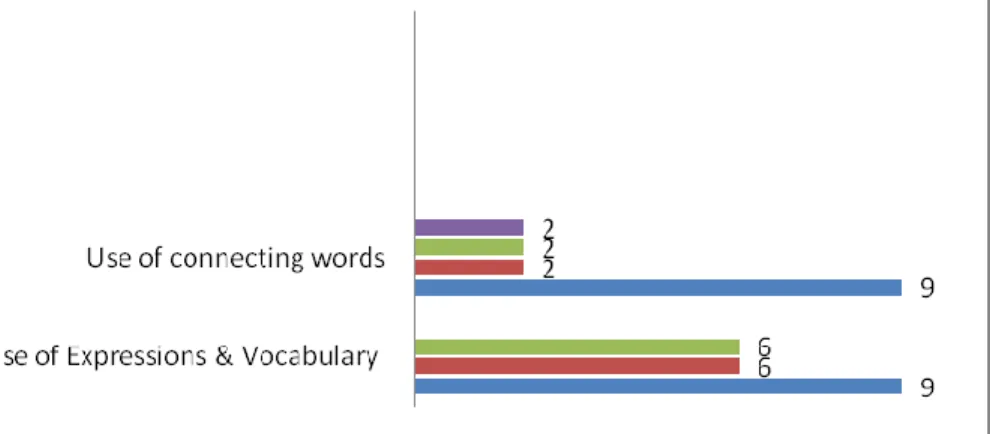
(25) THE ROLE OF PEER FEEDBACK IN ORAL COMMUNICATIVE TASKS FOR YOUNG ADULT LEARNERS. 25. Fluency is influenced by factors such as difficulty of a task (Tavakoli and Skehan, 2005), environmental circumstances, and personal feelings. 2.5 Fluency and Lexical Variety In this section of the chapter, the connection of fluency to lexical variety will be investigated. First, the connection is not the most common. Several authors (Ano, 1998; Thornbury, 2005) who addressed speaking, explain fluency as something that refers to pauses in speech or the speed of a speaker. Nation and Newton (2009), on the other hand, state that fluency cannot only be measured by the speed of the speech. They argue that increased fluency also involves changes in the nature of the knowledge of language. Nevertheless, fluency has always been a broad topic and that makes it difficult to find a reliable measurement of it. Freed (1995) and Fulcher (1996) state that the definition of fluency is unclear. Tavakoli (2011) defined fluency by the term “global oral proficiency”. Nevertheless, it was essential for this project to measure fluency with a tool that represents it appropriately and is able to give tangible results from participants´ process in speaking tasks. Lexical variety, a part of oral fluency, was identified as a weak area for the participants. Fulcher (1996) mentions that frequent repetitions of lexica are one factor that makes the learner appear less fluent in his or her speech. This shows that the lack of lexical variety is closely related to the speakers´ fluency skills.. Another point which. influences the speakers´ fluency in oral expression is speech coherence. Speech coherence is affected by the use of connecting words, one of the criteria used in the peer feedback rubrics. In this project, peer feedback rubrics in which both lexical expressions and vocabulary, as well as connecting words, were used to help learners evaluate their partners on the speaking tasks and to involve them actively in the activities..
(26) THE ROLE OF PEER FEEDBACK IN ORAL COMMUNICATIVE TASKS FOR YOUNG ADULT LEARNERS. 26. Fluency, as mentioned above, is a rather broad term but can be narrowed by a variety of categories. Ano (1998) listed some of them in her article “Fluency and Accuracy in the Spoken English of Japanese High School Learners”: The total number of words spoken in a fixed time The number of silent pauses for thinking The number of repetition of words, phrases, or clauses The number of repair or reformulation for correction Mean length of utterance As highlighted in bold, the item “number of repetition of words, phrases or clauses” is relevant for the issue investigated in this research as it enables the researcher to narrow fluency down to one specific factor to measure. 2.6 Lexical Variety Lexical variety illustrates the scope of vocabulary that is used by a speaker. A broad lexical variety, therefore, reduces constant repetition in language use. A diagnostic test in speaking, which was conducted in the beginning of this action research project and in which the participants showed their initial level in speaking, demonstrated that participants lacked variety in vocabulary. They had problems with appropriate vocabulary when they spoke. For instance, students repeatedly used the same words to express their ideas. Thornbury (2005) has studied the different viewpoints of the number of words a speaker knows. He makes a difference between words which are actually used (productive vocabulary) and words which are recognized by the learner (receptive vocabulary). By the use of productive vocabulary the speaker has the.
(27) THE ROLE OF PEER FEEDBACK IN ORAL COMMUNICATIVE TASKS FOR YOUNG ADULT LEARNERS. 27. possibility of applying the words in the speech and to express his / her ideas with a variety of words. Receptive vocabulary, on the other hand, allows the learner to understand the words used by his or her partner without necessarily being able to use them themselves. One of the goals of this project was for participants to increase productive vocabulary to improve their spoken discourse..
(28) THE ROLE OF PEER FEEDBACK IN ORAL COMMUNICATIVE TASKS FOR YOUNG ADULT LEARNERS. 28. Chapter 3 – Research Design Action research gives language teachers the chance to find possible ways to improve the problem areas by taking action. It is necessary to think critically about our students´ learning process and especially about how we can help them proceed more effectively while acquiring the second language. To begin, the process of action research will be defined here in a more detailed way. Research has been traditionally based on “formulating hypothesis and testing them statistically, developing scales and questionnaires, attempting to control for extraneous variables by using control groups, and striving to generalize from one sample to an entire population” (Auerbach and Silverstein 2003, p. 8). However, the approaches of conducting research have changed over the time. More recently, the importance of subjective experience diversity has increased in applying research. As quantitative research is not always appropriate for a study, qualitative research has gained in importance, especially in the field of language learning. Qualitative research offers the advantage of taking into account human situations, experiences, and behaviors that are inherently subjective. For this reason, qualitative researchers aim to understand the research context from the inside rather than from the outside, which Burns (1999) describes as the emic perspective. This perspective is mentioned by Watson-Gegeo (1988, as cited in Burns, 1999).. Qualitative research is to offer descriptions, interpretations, and. clarifications of naturalistic social contexts (Burns, 1999). Furthermore, one important aspect in qualitative studies is to foster insights and implications which provide bases for further studies. Another important difference to quantitative studies is that generalizations are not commonly.
(29) THE ROLE OF PEER FEEDBACK IN ORAL COMMUNICATIVE TASKS FOR YOUNG ADULT LEARNERS. 29. obtained. Qualitative studies in most cases refer to a specific context such as a population at a specific institution or university. Action research started to become popular in the late nineteenth century in education reform movements and other social reform initiatives (McKernan, 1996). Educators who wanted to make positive progress began to challenge the orthodoxy of the scientific research methods in the field of education (Burns, 1999). Action research does not only give us the chance to look for problematic areas in language learning, but also helps teachers develop professionally. It is used to turn problems into positive rather than negative experiences (Wallace, 1998). There are many ways to search for classroom solutions and action research is only one strategy. One solution could be talking to teacher colleagues as an effective way of looking for answers for issues in the classroom. However, action research supports systematic collection of data in order to analyze and report findings. The findings are used to make decisions for future classes (Wallace, 1998). Many researchers have defined the terminology in different ways. Carr and Kemmis (1986) stated the following definition: Action research is simply a form of self-reflective enquiry undertaken by participants in social situations in order to improve the rationality and justice of their own practices, their understanding of these practices and the situations in which the practices are carried out. (Carr & Kemmis, 1986, p. 162).
(30) THE ROLE OF PEER FEEDBACK IN ORAL COMMUNICATIVE TASKS FOR YOUNG ADULT LEARNERS. 30. In other words, Carr and Kemmis (1986) pointed out that action research is a practical approach of obtaining findings that could contribute to amending the students´ learning difficulties. If we take a closer look at this definition, it is clear that action research implies the following characteristics: First, the procedure takes place on a contextual, small-scaled, and localized basis and investigates a specific situation (Burns, 1999). Furthermore, it should provoke a reflection on findings that were results from an investigation. Reflection on data-collection is an essential part of research as the results not only show the investigator facts but trigger a critical thinking process about how and why the results appeared. The findings are to be used for changes in the classroom and should be the motivation for the project. They are the end-product of an investigation the researcher conducted to find possibilities to improve aspects of the classroom praxis. Furthermore, the research should aim to improve the students´ results in the classroom. The present project´s goal is to reduce weaknesses in speaking skills in terms of fluency and lexical variety. Constant peer feedback aims to improve participants´ speaking skills during work with partners..
(31) THE ROLE OF PEER FEEDBACK IN ORAL COMMUNICATIVE TASKS FOR YOUNG ADULT LEARNERS. 31. 3.1 Researcher´s role In this project, the researcher´s role is of a constant monitor and instructor who provides the learners with guidelines in their process of speaking. The researcher also observes and analyzes the impact of peer feedback on oral communicative tasks in terms of fluency. To make this possible, the instructor needed to be sure the criteria for effective peer feedback was given to students. Before starting the implementation sessions, it was essential to make learners familiar with the strategy of peer feedback. Learners were provided with a training session in which the strategy of peer feedback was explained. Furthermore, the use of rubrics to give feedback was explained, so the purpose of the strategy became clear for the learners. One part of the implementation sessions was held at the language resource center “Studium” at La Sabana University. The students worked at these sessions with computers and with the software program Audacity™, which was used to record learners´ oral productions. In order to guarantee an effective working procedure, it was important for the instructor to be near the learners to clear up doubts and answer questions concerning the use of the software. Also, observation and monitoring of the participants was essential in order to keep on track of their current learning process. 3.2 Participants The learners of this group had a pre-intermediate language level and were studying in level three of the university´s English proficiency program. The proficiency program consists of levels one to seven, level one being the lowest and level seven being the highest. Level three within this program corresponds to an A2 level according to the Common European Framework..
(32) THE ROLE OF PEER FEEDBACK IN ORAL COMMUNICATIVE TASKS FOR YOUNG ADULT LEARNERS. 32. The learners of this group had different backgrounds as they study various undergraduate programs. The group consisted of 23 students. Six of them were involved in the communication program, eight learners study law, and the rest of the group studies either engineering, psychology, or nursing. They were aged between 17 and 19 years. Most of the learners were in their first or second semester in the university and had some previous knowledge of the English language and had the possibility of studying English in their high schools. However, they were generally used to a passive role in their learning process, which was observed in the first sessions of the class. They preferred to listen to the explanations of the teacher rather than to get involved in an active learning process. This is an attitude that this project aims to change by means of applying peer correction strategies to their speaking skills. The members of the group had four classes a week, each session took one hour. The material used for this level and for the class was in most cases the course book “Cutting Edge PreIntermediateTM by Pearson Education”.. Furthermore, the online platform of the university. “VirtualSabanaTM” was used for different workshops in order to develop speaking skills.. The syllabus of each of the levels within the proficiency program is designed by the directives of the foreign language department. Exams take place at the end of each of the three terms and include reading, listening, speaking, and writing. Apart from the classes, in which content for the exams are covered, additional materials for the program´s required competencies are to be found on “VirtualSabanaTM”..
(33) THE ROLE OF PEER FEEDBACK IN ORAL COMMUNICATIVE TASKS FOR YOUNG ADULT LEARNERS. 33. In this level, students are to be able to identify and use language structures such as Past Simple, Past Continuous, and Present Perfect. Furthermore, there is the need to express their ideas orally for the purposes of the proficiency program. By working on the participants´ oral fluency skills, they had the additional benefit of obtaining higher results on their exams.. The participants in the project interacted when they were explicitly asked to do so; however, they did not tend to speak freely in the second language and were very dependent on the teacher in the classroom. Some of the students had a more advanced level of speaking in terms of pronunciation and fluency than other learners in the group. When the learners of this group were given a task, they worked on it in a group and were generally able to fulfill and understand the tasks.. 3.3 Context Learning environment The investigation was applied at University La Sabana with young adult language learners. The average age of the learners was 17 – 19 years. Lack of oral communicative skills in the English language is a common problem. The reasons for these difficulties can be very different. On the one hand, as the groups in the learning environment tend to have more than 20 students, several learners may feel intimidated when it comes to speaking. This occurs especially with learners who do not feel secure in the foreign language. The students of the department of.
(34) THE ROLE OF PEER FEEDBACK IN ORAL COMMUNICATIVE TASKS FOR YOUNG ADULT LEARNERS. 34. foreign languages and cultures are from different educational backgrounds and therefore the profiles of each of the learners differ to a great extent.. The department sets a focus on the use of technology in the students´ language learning process, which involves a constant use of the online platform VirtualSabanaTM . Technological tools such as AudacityTM were used for the implementation sessions. In these sessions, learners became more familiar with technological tools related to language learning. The use of technology and VirtualSabanaTM supported the participants in providing necessary information for their exams. The learners, after having taken the seven required levels of the proficiency program, are expected to have an upper-intermediate/advanced level of the English language.. 3.4 Data collection instruments In order to collect the data used for this research project, reliable and effective instruments that give clear information about the learners before and after applying the project had to be identified. Different non-observational tools provided the data collection for this project: a) surveys, b) focus groups and c) students´ journals. Burns (1999) states that non-observational tools result in data that are essentially introspective, that is, they invite personal and individual accounts of events, attitudes, and beliefs. Furthermore, by means of audio-recordings, the learners´ oral productions were documented in terms of a diagnostic test, a final test, and other tests during a variety of the sessions during the implementation of the action research project..
(35) THE ROLE OF PEER FEEDBACK IN ORAL COMMUNICATIVE TASKS FOR YOUNG ADULT LEARNERS. 35. 3.4.1 Diagnostic Test The diagnostic test was applied before the implementation started.. The participants were. applying a speaking quiz at the end of the first term of the semester, in which a lack of lexical variety was found. The learners worked in pairs and talked about their first vacations when they left home. The instructor had a monitoring role in this process as the participants made questions to each other which their partners answered. 3.4.2 Recordings during the implementation Participants were working on speaking activities during the whole semester in which the implementation was conducted. Peer feedback rubrics were used in all of these sessions to provide the learners with the necessary tools to give their partners feedback on their speaking performance. 3.4.3 Final Test In a final speaking test, the learners were given one topic which they had to discuss with one partner. These performances were recorded and transcribed to eventually compare them with the results of the diagnostic test to have a clear picture how the process of the implementation affected the participants´ lexical variety in speaking. 3.4.4 Surveys Surveys could be defined and explained as a tool that gathers a sample of data or opinions considered to be representative of a whole.. They are used in order to collect data in a. standardized format from a probability sample of the population. In the case of this research.
(36) THE ROLE OF PEER FEEDBACK IN ORAL COMMUNICATIVE TASKS FOR YOUNG ADULT LEARNERS. 36. project, surveys are used as a cross-sectional measurement. Survey data will be applied to one specific point in time, not over various points in time. The objective of surveys is to obtain data for the population investigated. Surveys imply some factors which are to be taken into account when designing them. It is essential that the questions which will be raised, “will lead to the kind of information being sought” (Burns, 1999, p. 129). By means of these questions, data is to be obtained which will relate to the research question. Furthermore, the language level of the learners has to be considered. For that reason, the questions of a survey for learners with a low language level have to be very direct and easy to understand so that misunderstandings can be reduced. Burns states that questions should be as short as possible, so that learners know exactly what they are expected to answer. As this project was done with a group of learners of a pre-intermediate English level, it has to be considered that while administering the survey to the students there might be problems in understanding. As above-mentioned, the questions used for the survey have to be stated in a very clear and understandable way in order to avoid misunderstandings or confusions. Surveys require more preparation time than interviews or other non-observational instruments as the researcher needs to be confident that the questions can be interpreted independently as well as easily and unambiguously (Burns, 1999). However, the researcher might save time in the analysis of surveys, as the designed questions have established options. These may make analysis easier than in open-ended question formats, like focus groups or open-ended questionnaires..
(37) THE ROLE OF PEER FEEDBACK IN ORAL COMMUNICATIVE TASKS FOR YOUNG ADULT LEARNERS. 37. This data-collection instrument was used before the practical intervention was started as an initial survey, so students had the possibility to express their feelings and opinions about their general process of language acquisition. It was conducted as an online survey, which learners had to answer at home. During this stage of the implementation, the learners answered an additional survey in which they had to reply to a variety of questions concerning their feelings of their own process in the implementation sessions. The survey was applied in Spanish to make sure learners understood the questions. This survey was conducted to obtain the participants´ feelings and impressions of their process and took place when they had already the possibility to have worked on various implementation sessions. As above-mentioned, the survey was conducted in Spanish in order to guarantee a sufficient comprehension of the questions which should guarantee valid data. A sample of this instrument can be found in the section appendices (Appendices H & I). During the implementation, it became clear that one additional tool was necessary to obtain data, which would ensure the ongoing learning process of the students. For this reason, students´ logs were added to the data collection tools. 3.4.5 Students´ logs The students´ logs that were used in this implementation were short reflections of the learners after four of the implementation sessions. They were used to gather the learners´ feelings during the process. The students were asked the following questions:.
(38) THE ROLE OF PEER FEEDBACK IN ORAL COMMUNICATIVE TASKS FOR YOUNG ADULT LEARNERS. 38. A) In your opinion, what effect did your feedback have on your partner? B) How did you feel when you gave feedback? C) Was the feedback from your partner helpful? D) Was it helpful for you to give your partner feedback?. Wallace (1998, p. 63) mentions a variety of advantages of logs. These advantages will be listed here: They provide an effective means of identifying variables that are important to individual teachers and learners. They serve as a means of generating questions and hypothesis about teaching and learning processes. They enhance awareness about the way a teacher teaches and a student learns. They are an excellent tool for reflection. They are simple to conduct. They provide a first-hand account of teaching and learning experiences. They are the most natural form of classroom research in that no formal correlations are tested and no outside observer enters the classroom dynamic. They provide an on-going record of classroom events and teacher and learner reflections..
(39) THE ROLE OF PEER FEEDBACK IN ORAL COMMUNICATIVE TASKS FOR YOUNG ADULT LEARNERS. 39. They enable the researcher to relate classroom events and examine trends emerging from the diaries. These factors encouraged the researcher to choose students - logs as the data collection method of the implementation sessions. From students´ logs it was possible to observe the exact process in a more detailed way directly after the sessions. Although surveys are a helpful and necessary tool for the project, it was more effective to investigate learners´ reactions closely during the process. 3.4.6 Audio-recordings Audio recordings were used as observational tools in an initial diagnostic test, a final test, and in different implementation sessions. They were used to observe the actual learners´ performance. Burns (1999) mentions audio recordings as a technique for capturing in detail naturalistic interactions and verbatim utterances. Comparing audio with video recordings, it can be observed that audio recordings do not intervene to such a strong extent in the learner´s productions as video recordings do. Carmel Brown (1995, as cited in Burns, 1999, p. 95), points out that “although participants may still be self-conscious about the presence of the recording equipment, audio recording is clearly less intrusive than video recording and familiarity with the presence of the equipment is likely to occur much more quickly.” For this reason, audiorecordings were preferred in the implementation of this action research project. The results of these audio recordings of the initial and final test were transcribed entirely and the audio recordings of the implementation sessions were transcribed to a certain extent. During the implementation sessions, one part was recorded in the classroom by the teacher who went to the.
(40) THE ROLE OF PEER FEEDBACK IN ORAL COMMUNICATIVE TASKS FOR YOUNG ADULT LEARNERS. 40. pairs working on the tasks and the other part was recorded in the language resource center “Studium” at La Sabana university. The learners had to record their performance with the voice recording software “Audacity”. 3.4.7 Focus Groups Focus groups are basically very similar to interviews; however, they are applied with more than one person. The importance of focus groups lies on interactional patterns between the interviewed persons.. They give several advantages of focus groups when conducting a. qualitative research study and they include the orientation to a particular field of focus to generate hypotheses derived from the insights and data from the group. Focus groups have the aim to gather qualitative data. Furthermore, they achieve in-depth description. As interviews, focus groups enable the researcher to get data out of spoken speech and insights from more informal feelings of the participants, which might not be seen by applying instruments such as surveys. The researcher is able to have direct and personal contact with the class members who are involved in the research project. Focus groups were used in this action research project in order to collect data after the practical intervention has been completed. Focus groups are used to gather data for impacts from the project noticed by the participants. The focus groups were applied in groups of three people and were an effective way of getting the students´ opinions and avoiding intimidations that might occur with a greater number of students. By applying them in a reduced number, each focus group had a personal touch and resulted in data that is clear and substantial for analysis..
(41) THE ROLE OF PEER FEEDBACK IN ORAL COMMUNICATIVE TASKS FOR YOUNG ADULT LEARNERS. 41. Furthermore, the focus groups (see sample in Appendix K) were held in the Spanish language and can be found in translated excerpts in the chapter “Data analysis and findings”. 3.5 Design and Validation Before the instruments were used in the implementation sessions, they were reviewed and piloted, taking into account comments by the director of the project and by the research instructor. The first instrument that was designed was the survey. Here, the questions were raised with the help of the mentioned research instructor and were then piloted. This took place by asking the questions to colleagues in the university in order to make sure that they were clearly understandable for the language learners. It was important that the questions were not only clear to the researcher but to the participants involved. These questions were also shown to people who were no professionals in teaching to obtain a neutral view point. As far as the students´ logs were concerned, it was decided that the students had to have a clear guideline for the use of them. For this reason, they were provided with four questions which were to support the students in writing their short reflections about their process during the implementation sessions. The idea of using students logs occurred within the implementation stage as the researcher realized that there was the need for an additional instrument to obtain data that showed the participants´ current feelings and impressions. Furthermore, these students´ logs allowed the researcher to react on participants´ suggestions or on doubts as they were asked to provide their honest impressions of the implementation. The questions of the students´ logs were revised before the implementation sessions by colleagues to guarantee clarity as it occurred for the surveys..
(42) THE ROLE OF PEER FEEDBACK IN ORAL COMMUNICATIVE TASKS FOR YOUNG ADULT LEARNERS. 42. Chapter 4 – Pedagogical Intervention In this chapter, the way of applying the strategies used for this project will be looked at with more detail. Observations from the classroom demonstrated that participants had difficulties in speaking because of several reasons. These reasons can be originated from lack of awareness of correct structures; lack of interest in the subject that affects their motivational behavior, and various other impacts. The implementation took place in a pre-stage, a while-stage and a poststage. 4.1 Pre-Stage The learners were introduced to the learning strategy of the project and were working on initial activities with peer feedback. Participants were guided towards an approach in which they had the possibility to work with their partners instead of relying on the class instructor. The concept of peer feedback was explained to them and participants worked on first activities in which they could learn how to listen to their partners in order to eventually provide them with feedback. 4.2 While-Stage Here, the learners were working in most cases in pair work on relevant topics, in which they used specific rubrics to give their partners feedback. Furthermore, the learners were given learning guides in which they were introduced step by step towards the production phase of their speaking performance. The topics were taken according to the course syllabus of La Sabana University to relate the speaking tasks to the extrinsic purposes of the proficiency program. These are to obtain high results in the exams of the corresponding level, which take place at each of the three academic terms of the semester..
Figure
Documento similar
Government policy varies between nations and this guidance sets out the need for balanced decision-making about ways of working, and the ongoing safety considerations
No obstante, como esta enfermedad afecta a cada persona de manera diferente, no todas las opciones de cuidado y tratamiento pueden ser apropiadas para cada individuo.. La forma
Through the analysis of the Basque protest lip dub and the videos of police misconduct filmed by civilians we have tried to highlight the emerging role of
In the “big picture” perspective of the recent years that we have described in Brazil, Spain, Portugal and Puerto Rico there are some similarities and important differences,
Astrometric and photometric star cata- logues derived from the ESA HIPPARCOS Space Astrometry Mission.
For what corresponds to the predictions of the positive feedback treatment with the fundamental value is 65, we observe that the distribution of the individual
Given the much higher efficiencies for solar H 2 -generation from water achieved at tandem PEC/PV devices ( > 10% solar-to-H 2 energy efficiency under simulated sunlight) compared
Even though the 1920s offered new employment opportunities in industries previously closed to women, often the women who took these jobs found themselves exploited.. No matter
